Lord My Chef Daily Recipe for the Soul by Fr. Nicanor F. Lalog II Monday in the Fourth Week of Easter, 27 April 2026 Acts 11:1-18 <*((((>< + ><))))*> John 10:11-18
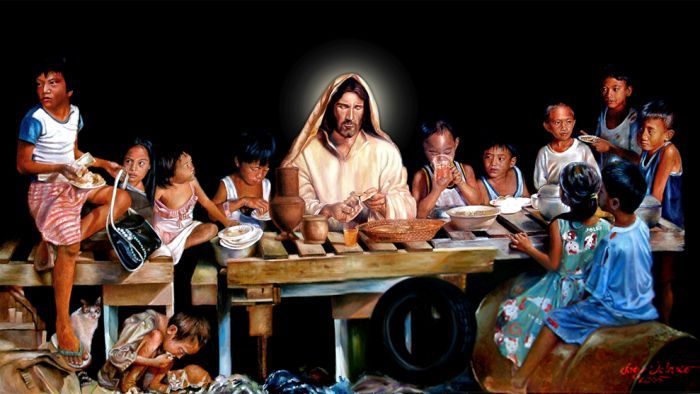
Photo by author, the Sofia Hagia, Istanbul, Turkiye, 12 November 2025.
I miss you, Lord Jesus Christ; I miss reaching out to others in prayer, sharing you with them. Like Peter in Joppa.
The Apostles and the brothers who were in Judea heard that the Gentiles too had accepted the word of God. So when Peter went up to Jerusalem the circumcised believers confronted him, saying, “You entered the house of uncircumcised people and ate with them.” Peter began and explained it to them step by step, saying, “I was at prayer in the city of Joppa…” (Acts 11:1-5).
Lord Jesus, continue to work in me, most especially, let me see you working in others too, right in their hearts, especially those different from us not only physically but most especially in background and beliefs; remind me often that God's grace cannot be contained nor limited among us nor in a particular location only; may this Easter season be an occasion for us to change how we see one another as you yourself had said, "I have other sheep that do not belong to this fold" (John 10:16).
There are so many things I need to change in myself, Jesus, our Good Shepherd especially those so different from what I have been used to like in meeting you, seeing you, and following you. Amen.
Lord My Chef Sunday Recipe by Fr. Nicanor F. Lalog II Fourth Sunday of Easter, Cycle A, 26 April 2026 Acts 2:14, 36-41 ><}}}*> 1 Peter 2:20-25 ><}}}*> John 10:1-10
Photo by author, 09 February 2026, Museo Valenzuela.
In the next three Sundays beginning today, our gospel readings will bring us back to Jesus Christ’s teachings before his passion and death because all his pronouncements then are clearest when seen in the light of his resurrection.
As we have mentioned last Sunday, it does not really matter that many or everyone would see the Risen Lord in order to believe him. Like what Jesus had told Thomas the other Sunday, blessed are those who believe without having seen him while last week we have realized in the story of the two disciples returning to Emmaus that the mystery and beauty of Easter is found in the “breaking of bread” when our eyes are opened to recognize Christ who immediately vanishes. This breaking of bread is not just the Holy Eucharist but includes our many experiences when we too experience brokenness in life like the Jews addressed by Peter after the Pentecost.
Then Peter stood up with the Eleven, raised his voice, and proclaimed: “Let the whole house of Israel know for certain that God has made both Lord and Christ, this Jesus whom you crucified.” Now when they heard this, they were cut to the heart, and they asked Peter and the other apostles, “What are we to do, my brothers?” (Acts 2:14, 36-37)
“The Road to Emmaus” painting by Ronald Raab, CSC, from ronaldraab.com.
What a beautiful expression by Luke, “they were cut to the heart” that means they were stirred, they were moved deep inside to a great reality, to a truth that led to their conversion.
It is in our own brokenness when our eyes are opened, our hearts are cut that we find Jesus and become converted.
Despite the scathing words of Peter on their sins on having Jesus crucified, the people did not feel “guilty” in the negative sense of being hopelessly mired in sin. The same thing is true with us: there are moments in life we realize deeply, truly feeling the hurt of having offended God in our many sins that actually lead us to conversion and be transformed into a better person as a disciple of Christ. True contrition does not stop in the realization and admission of our sins; true contrition always leads to conversion. Though we are broken, we are not scattered. In fact, it is in our being broken that we become one, we become whole in Jesus Christ.
Guilt buries, conversion liberates because we find Jesus as the true gate to life who leads us to freedom. In Jesus as our gate in life, we enter a new phase of being free and faithful and loving.
So Jesus said again, “Amen, amen, I say to you, I am the gate for the sheep. All who came before me are thieves and robbers, but the sheep did not listen to them. I am the gate. Whoever enters through me will be saved, and will come in and go out and find pasture. A thief comes only to steal and slaughter and destroy; I come so that they might have life and have it more abundantly” (John 10:7-10).
Photo by Dra. Mylene A. Santos, MD, at Katmon Nature Sanctuary & Beach Resort in Infanta, Quezon, 03 April 2024.
Every fourth Sunday of Easter is known as the Good Shepherd Sunday. Only John has this section of Jesus teaching actually to the Pharisees of himself as the Good Shepherd following the controversy in his healing of the man born blind on a Sabbath day.
But before Jesus spoke of his being the Good Shepherd, he first identified himself as the “gate” where the shepherd and the sheep pass through, the direct opposite of the Pharisees and priests of their time who have taken upon themselves as the final standard and arbiter of what is good and holy, of actually usurping the role of God but so stern, so strict. And impersonal.
Hence, the distinction by Jesus in this passage between “thieves and robbers” like his enemies and himself as “the gate” and “the shepherd”.
Whenever I bless homes, I always begin at the door. From the many house blessings I have made, I am not really impressed with the modern, “minimalist” doors with sleek metal handles. What fascinates me most are simple doors with bold colors like lively red or blue. For me, a door is something that exudes with security and protection, not necessarily massive, evoking power.
Photo by author, Angels’ Hills Retreat Center, Tagaytaty City, April 2025.
That’s Jesus Christ for me as the gate. My security and protection.
However, still with house blessings, I have always wondered why we Filipinos even abroad are so fond of two things so peculiar just to us: first is having a regular kitchen often for display and a dirty kitchen for daily use and second, side doors to pass through because the main door is kept locked, used only for visitors.
I think they both reveal something about our spirituality wherein we recognize Jesus our gate, our door, our shepherd yet, we still desire to have other doors and gates, perhaps even shepherds like buddhas and amulets we hung in our homes.
This we find when we examine our inner selves, the cacophony of negative voices that fill us, even entertain us like jealousy, envy, anger, resentment, bitterness, greed, and lust. There are times despite our having faith in Christ, we are filled with more negative than positive like curse than blessing, revenge than reconciliation, war than peace, and worse of all, death than life.
Photo by author, Sacred Heart Novitiate, Novaliches, QC, 20 March 2026.
Where are they coming from?
Very often, we take them for granted, allowing them to percolate inside us until they boil and burst that we hurt others, most of all, our selves in the process.
“I come so that they might have life and have it more abundantly.”
Jesus our door, our gate, our Good Shepherd invites us anew this Sunday to remain in him, to stay with him. Jesus calls us to break free from these other doors and gates that trap us within so that we may be free and faithful. Most of all, be more loving in the real sense.
Jesus invites us to examine our lives today, before having him and after having him. Like what Peter tells us in the second reading, we are reminded of the new freedom we have in Christ: “By his wounds you have been healed. For you had gone astray like sheep, but you have now returned to the shepherd and guardian of your souls” (1Pt.2:24-25).
During the Last Supper, Judas (not the Iscariot) asked Jesus why he would appear only to them and not to everyone and he replied with mysterious words, speaking about love and keeping his commandments so that he and the Father would dwell on his disciples (Jn.14:23-24). Actually, in speaking that way, Jesus was showing his disciples who include us today that his revelation is not about public display of power but of personal relationship in him based on love. In the whole discourse of Jesus during their last supper from the perspective of John, what is most essential is the love of Jesus and the love of his disciples. And this we shall explore in the next two Sundays before Jesus ascends into heaven.
Again, there is no need to see Jesus physically; the more we love, the more we believe, the more we see him in our hearts. Most especially when we pass only in him as our gate, our door to life and fullness. Amen.A blessed week ahead to everyone.
Photo by author, Sacred Heart Novitiate, Novaliches, QC, 20 March 2026.
Lord My Chef Sunday Recipe for the Soul by Fr. Nicanor F. Lalog II Third Sunday of Easter, Cycle A, 19 April 2026 Acts 2:14, 22-23 ><}}}*> 1Peter 1:17-21 ><}}}*> Luke 24:13-35
Photo by author, view from Jerusalem Temple, May 2019.
We heard last Sunday Jesus Christ’s coming to his disciples on the evening of Easter and a second time eight days later when Thomas was present, reminding us how Easter is a story of coming and believing, of believing and coming.
This Sunday we find an opposite movement and direction in the two disciples leaving Jerusalem in disbelief at the death and resurrection of Jesus Christ.
That very day, the first day of the week, two of Jesus’ disciples were going to a village seven miles from Jerusalem called Emmaus, and they were conversing about all things that had occurred. And it happened that while they were conversing a debating, Jesus himself drew near and walked with them, but their eyes were prevented from recognizing him (Luke 24:13-16).
“The Road to Emmaus” painting by Ronald Raab, CSC, from ronaldraab.com.
Easter is also about leaving in disbelief. Not necessarily because of not believin like Thomas last Sunday.
Cleopas and the other disciple were leaving Jerusalem in disbelief which our Filipino language adequately express in “hindi makapaniwala” and “matay ko mang isipin” that both indicate a strong sense of belief with a dash of doubt because the story, the event, or the very person involved is beyond comprehension.
Or, bigger than reality like Jesus Christ and his very mystery of love for us.
Many times, we could not believe how good and loving God can be to us, so personal, so real and true but how can it be he “allows” bad things to happen to us or in the world.
Like the two disciples going home to Emmaus, we walk away from God to distance from him and everything and everyone to find our selves and see the real picture of what is going on when times are rough for us.
Those are the times we silently tell ourselves “this could not be happening” especially when it is so difficult, so unbelievable simply because – we believe. Hence, our usual litany of striving to be good, of serving the poor and needy, of going to Mass every Sunday, of always praying…
Look back in our many experiences in life when we could have died or have lost more or could have been a total wreck. Amazingly, despite our being in the opposite direction in life, consciously or unconsciously, that is when we feel more blessed. That’s when we are able to declare with conviction, “hindi ako pinabayaan ng Diyos, napaka-buti ng Diyos, and binigay niya pa rin ang lahat”. This is what the first reading reminds us of Peter’s speech before the Jews at Pentecost, at how God never left us, sending us Jesus Christ as fulfillment of his promise to Abraham and David.
Modern painting of the road to Emmaus from the internet.
Like in the road to Emmaus, Jesus journeys with us in the opposite direction only to bring us back to Jerusalem filled with joy by reminding us how everything that happens in our lives, Jesus had gone through the same sufferings too as foreshadowed and explained in the Sacred Scriptures.
Here we are reminded of the importance of personal prayer which is more than the mere recitation of prayers but having a relationship in God who never leaves nor abandons us.
Most of all, here we are reminded too of how the Sunday Eucharist opens ourselves to Christ’s reality and loving presence among us as experienced by the two disciples after Jesus had broken bread with them. It is called a Holy Communion because in that “breaking of bread”, we share in our common experiences of suffering and death. That we are not alone. Most of all, that we too like others rise to new life in Jesus Christ who suffered, died, and rose to life first for us.
It can happen that our eyes too are prevented from recognizing Jesus like Cleopas and companion on the road to Emmaus because of our many fixations in life like that blessings can only be in positive things like good health, security like steady income, a rising career or a profitable business and endeavor.
But, experience has taught us so many times that blessings are not only found in good things but even in bad or negative ones like sickness, failures, losses and death. And when we look back, they were not really that bad at all because it was in our failures and losses, sickness and deaths when we realized and learned most in life.
Notice how Luke succinctly narrated the breaking of bread in the home of Cleopas in Emmaus, it was so swift unlike the building up of drama along the road to Emmaus. It was so simple because that’s how things happen in life too – so quick that the simplest things and gestures, even so bad can suddenly become so loaded with meanings that we realize God’s loving presence in us.
“Supper at Emmaus” by renowned painter Caravaggio. See the emotion depicted by Caravaggio with his trademark of masterful play of light and shadows. At the center is the Risen Lord blessing the bread that caught the two disciples who are seated in disbelief, one outstretching his arms and the others pushing back in his chair. The third character in the painting is the innkeeper unaware of the significance of the gesture of Jesus. It was at this instance that the two disciples recognized Christ as the travelling man with them to Emmaus.
During the COVID pandemic, on the first Sunday of lockdown when there was no public Mass, I started a motorized procession of the Blessed Sacrament in my former parish by mounting our big monstrance on the roof of a parishioner’s truck. I announced the route of our procession during our online Mass that Sunday and people waited.
What an amazing sight of the people’s deep faith in God as they knelt and bowed before the Blessed Sacrament whether on the main highway or the inside streets. Some were crying while everyone was deep in prayer.
There lies the great mystery of Easter: Jesus need not appear to us in person because as he vanishes in the Blessed Sacrament, that is when we recognize him!
In the most simple gestures of the Mass under the most simple signs of bread and wine, Jesus vanishes from our outward view and through this vanishing our interior or inner recognition opens up that we “see” him in the many instances he had touched us especially in our “heart-breaking” experiences in the past, our Emmaus road.
Photo by Ms. Anne Ramos, 22 March 2020, Bagbaguin, Sta. Maria, Bulacan.
We know with certainty that “it is the Lord” – Dominus est – present in every breaking of bread because part of the Easter mystery tells us deep within that it is only in his vanishing that he truly becomes recognizable to us. That is why we have to stop all those “theatrics” in our liturgy as noted by many netizens this past Holy Week and Easter. Unknown to many priests and their alalays, the more we have gimmicks in the Mass or even in our sacred spaces, the more we “displace” and remove Christ.
After an hour every Sunday, we leave the Mass and go back to our usual way of life, facing life’s many challenges. Peter reminds us in the second reading to hold on to that “faith and hope in God” who gave us Jesus Christ, “the spotless unblemished lamb.”
Let us not forget this mystery of Easter that, the more Jesus vanishes, the more we recognize him because Jesus is more than enough than anybody or anything else especially when we in our Emmaus experience. Let us pray like Cleopas and companion “Stay with us, Lord” so we may show him in our witnessing especially when we could not find him in others. Amen.
From Facebook, 21 April 2021: “There is an urgency to announce the Joy, the joy of the Risen Lord.”
Quiet Storm by Fr. Nicanor F. Lalog II, 05 April 2026
Photo by author, La Mesa Dam seen from Seventh floor of Our Lady of Fatima University in Lagro, QC, 12 March 2026.
Every year on my birthday, I go on a personal silent retreat. A vacation with the Lord. As I turned 62 last March that is said to be truly when one is considered “old”, I felt like those women not finding Jesus in the tomb at Easter when an angel told them, “He is not here, for he has been raised just as he said. Come and see the place where he lay” (Mt.28:6).
From then on, March 16-21, I have opted not to blog daily, preferring to rest and pray more until I find Jesus anew in my blogging
It was only on this Easter evening after returning from another retreat during the Holy Tridum that I have started to write anew, feeling like Cleopas and his companion sadly walking home to Emmaus, feeling Jesus is not here.
Photo by author, Sacred Heart Novitiate, Novaliches, QC, 20 March 2026.
I have been writing my homilies for 28 years since my ordination as a deacon. As an “old school” plus the fact of my being a former journalist, I have always been writing in preparing homilies and talkds for the people. That is why I always wear polo with a small pocket to put my small notebook and pen.
After discovering the internet in 2000, I began sending weekly homilies as emails to family, relatives, friends every Sunday to help them prepare for Sunday Mass.
Then in 2018 while head of the diocesan commission on social communications, I started this blog, Lord My Chef, to evangelize more people faster. It has always been clear with me that writing is a gift from God that I must use for his greater glory so that more people may experience even in the net his joy and mercy, healing and forgiveness, and loving presence.
Moreover, I have intended Lord My Chef to be “Spiritual recipes for the soul to gladden your heart” with daily recipes that are homilies expressed in prayer with straight homilies on Sundays and special feasts.
But lately, there was no more gladness in me.
Blogging has become tiring, even stressful.
No more joy as demands replaced the love I used to have in writing.
Because I have been self-centered.
Photo by author, Sacred Heart Novitiate, Novaliches, QC, 20 March 2026.
During my recent retreat, I also felt like Judas Iscariot betraying Jesus in exchange of the statistics of my posts, foolishly competing with myself comparing the daily, weekly, monthly and yearly metrics of my posts.
And yes, many times I felt sad why so few “like” my posts unlike other bloggers I follow and visit.
As I prayed before the Blessed Sacrament on the first day of my retreat last March, I felt being hit so hard in my heart by the Holy Spirit, of how I have been like Simon Peter denying Jesus so many times in my blogs supposed to be about him but have become more about myself.
Noble intentions are never enough because no matter how great and good are our plans even our efforts but when God is nowhere, then it is nothing.
It is a farce because despite the statistics and tangible results we have on whatever we do but if our hearts remain empty and far from God, it is nothing.
St. Paul said it so clearly in the 13th chapter of his first letter to the Corinthians, “If I have not loved, then I am nothing.”
That night, I wrote on my journal what I told Jesus in my colloquy, “I pray to blog, not for God.”
There was shame but also peace and freedom in my heart that night.
Photo by author, Sacred Heart Novitiate, Novaliches, QC, 20 March 2025.
Finally, I have found what – or who – was missing in my blogs and life itself that I have become so tired, confused, even many times lost.
God.
Some times, we can feel so well in life, obeying and doing God’s will but still feel something missing deep inside.
Or something isn’t right at all.
We may feel so happy but never fulfilled. Even successful as seen by others but not fruitful personally deep inside.
Because we lack Jesus in us and in our work and mission or ministry.
It happens when we consciously or unconsciously shift focus and attention into ourselves and other factors aside from God who is the very essence and reason of our mission and undertaking.
Worst, we may be acting or living already as if we are God.
No more Jesus who is our voice, our word, our point of view.
Most of all, our Message.
That’s the good news of Easter with Mary Magdalene and the other Mary: though they have seen the death and burial of Jesus, they still came to the tomb to anoint him with perfumes and oil. Why when he was already dead and buried in the tomb?
Because they missed him a lot, and must have mostly believed he would rise again
Is it not what we also feel with our departed loved ones, asking God even for a short glimpse or fleeting feeling to see them again for us to be assured they are here.
When the angel told Mary Magdalene and the other Mary that Jesus is not here, he was telling them too he is out there, so alive somewhere we have to find and follow.
And that is how I now feel about my blogging: Jesus is not here.
Because Jesus is risen, calling me to find him first in my blogs.
And inviting me to follow him in new directions in my ministry so that perhaps, I may write new things, new experiences, and new life in him. Amen.
*So grateful to fellow bloggers I follow and admire who have helped me find God in their writings especially Rainer, Nicola, Daryl Madden, Sr. Rene, and Pinoy Transplant in Iowa.
Empty tomb concept from iStockphoto.com, April 2022.
Lord My Chef Recipe for Holy Saturday, 04 April 2026
Photo by author, Sacred Heart Novitiate, Novaliches, QC, 20 March 2026.
A blessed Holy Saturday to you.
One of the most unforgettable scenes of COVID-19 pandemic when it started in the summer of 2020 was like what we have every Holy Saturday – empty streets with everyone away.
And silent.
What a blessed Holy Saturday we have again today like six years ago as we are in the midst of another worldwide crisis in oil prices due to the US-Israeli war against Iran, inviting us to rediscover the beauty and value of silence.
Because holiness is found in silence, the very language of God.
In the Bible, silence always precedes God’s appearances and revelations:
From the Book of Genesis in the story of creation when there was nothing – therefore, silent – to John’s gospel that said, “In the beginning was the word” to indicate there was only silence until “the word became flesh” (Jn.1:1, 14) in Jesus Christ who was totally silent during his growing up years in Nazareth and later frequently went into deserted places to rest and pray in silence during his ministry.
Photo by author, Sacred Heart Novitiate, Novaliches, QC, 20 March 2026.
Here we find in Jesus that holiness is first found in silence and in rest, when we listen more to God to do his will.
On that first Holy Saturday when Jesus was buried in a tomb, the whole creation came to full circle.
See how after completing creation, God rested on the seventh day and made it holy (Gen.2:3) while Jesus was laid to rest on the seventh day too after completing his mission of salvation.
Silence and rest always go together.
This we vividly find in our Filipino word for rest which is magpahinga that literally means “to be breathed on”, to be filled with God which is what holiness is all about.
Like in the creation of the first man who was breathed on by God to be alive, Jesus breathed on his disciples locked in the upper room after greeting them with peace twice on the evening of Easter.
Silence is not being quiet, not an emptiness when we shut off all sounds and noise.
Silence is actually a fullness, of trying to listen to all sounds and noise in order to distinguish which to listen to. It is in silence when we hear our true selves, when we understand and feel others and most especially become one in God.
That is why when we rest, we return to Eden, like the garden where Jesus was buried.
Now in the place where he had been crucified there was a garden, and in the garden a new tomb, in which no one had yet been buried. So they laid Jesus there because of the Jewish preparation day; for the tomb was close by(John 19:41-42).
Photo by author, Sacred Heart Novitiate, Novaliches, QC, 20 March 2026.
What a lovely image of God’s rest and silence in Eden and of Jesus laid to rest at a tomb in a garden because to rest in silence is to stop playing God as we return to him as his image and likeness again.
Today let us cultivate anew the practice of silence, of listening to the various sounds around us and within us and most of all, trying to listen to the most faint, the softest sound that is often the voice of God within us, reassuring us that in the midst of his silence, he never leaves us, that with him we are rising again to new life like Jesus Christ.
Let us be like those women who rested on the sabbath when Jesus was laid to rest. That like them, we may trust God more by being true to ourselves even in the midst of this oil crisis.
Photo by author, Sacred Heart Novitiate, Novaliches, QC, 20 March 2026.
The women who had come from Galilee with him followed behind, and when they had seen the tomb and the way in which his body was laid in it, they returned and prepared spices and perfumed oils. Then they rested on the sabbath according to the commandment(Luke 23:55-56).
Imagine the more difficult situation those women were into during that time. But they dared to rest in silence in the Lord. Unlike us today worried only with prices of oil and other goods, without threats at all to our lives.
Silence is the domain of trust; people afraid of silence are afraid to trust.
Perhaps that explains why almost everyone is glued with their cellphones or stuck with earphones and EarPods to have each one’s own world, unmindful of others.
On the other hand, the most trusting people are the silent ones. And always, the most loving ones too.
Let us pray:
Help us to be silent today, O God our Father as we remember your Son Jesus Christ’s Great Silence – Magnum Silentium – when he was “crucified, died and was buried; he descended to the dead and on the third day he rose again.” Breathe on us your Spirit of life and joy, O God as we rest in you, listening to your voice within us so that we may follow always Jesus Christ's path to Easter in the Cross. Amen.
Photo by author, Sacred Heart Novitiate, Novaliches, QC, 20 March 2026.
Lord My Chef Recipe by Fr. Nicanor F. Lalog II Holy Monday, 30 March 2026 Isaiah 42:1-7 +++ John 12:1-11
Photo by author, Sacred Heart Novitiate, Novaliches, QC, 20 March 2026.
Here is my servant whom I uphold, my chosen one with whom I am pleased, upon whom I have put my spirit; he shall bring forth justice to the nations, not crying out, not shouting, not making his voice heard in street. A bruised reed he shall not break, and a smoldering wick he shall not quench... (Isaiah 42:1-3).
Lord Jesus Christ, our Suffering Servant, let me be your servant too: open my eyes and free me from whatever prison holding me in darkness like Judas your betrayer at Bethany: many times I break a bruised reed, quenching a smoldering wick by looking more at people than seeing you in them, counting things instead of appreciating persons.
Jesus our Suffering Servant, only you can bring peace and justice in this world troubled with wars waged everywhere but especially right in our hearts; fill me with your Spirit so I can love you more and be loving like you silently doing your work. Amen.
Photo by author, Sacred Heart Novitiate, Novaliches, QC, 20 March 2026.
40 Shades of Lent by Fr. Nicanor F. Lalog II Fifth Sunday in Lent, Cycle A, 22 March 2026 Ezekiel 37:12-14 +++ Romans 8:8-11 +++ John 11:1-45
“The Raising of Lazarus” by Italian painter and architect Giotto di Bondone (1266-1337), fresco inside the Scrovegni Chapel in Padua, Italy via commons.wikimedia.org.
We now come to the final Sunday of our Lenten journey into Easter with John still as our guide telling us Jesus Christ’s raising to life of his friend Lazarus who had been dead for four days.
The raising of Lazarus is a prelude for the greatest sign of all by Jesus as the Christ – his Resurrection at Easter after his Passion and Death on good Friday. Though very long, it is a lovely story that speaks of Jesus Christ’s deep friendship with us by being most present in our most painful suffering of all which is death of a loved one as well as our many “deaths” in life.
And like in every true friendship, Jesus invites us like the sisters of Lazarus, Martha and Mary, to believe in him.
When Martha heard that Jesus was coming, she went to meet him; but Mary sat at home. Martha said to Jesus, “Lord, if you had been here, my brother would have not died. But even now I know that whatever you ask of God, God will give you.” Jesus said to her, “Your brother will rise.” Martha said to him, “I know he will rise, in the resurrection on the last day.” Jesus told her, “I am the resurrection and the life, whoever believes in me, even if he dies, will live, and everyone who lives and believes in me will never die. Do you believe this?” She said to him, “Yes, Lord. I have come to believe that you are the Messiah, the Son of God, the one who is coming into the world” (John 11:20-27).
When Mary came to where Jesus was and saw him, she fell at his feet and said to him, “Lord, if you had been here, my brother would not have died.” When Jesus saw her weeping and the Jews who had come with her weeping, he became perturbed and deeply troubled… (John 11:32-33).
Jesus said, “Take away the stone.” Martha, the dead man’s sister, said to him, “Lord, by now there will be a stench; he has been dead for four days.” Jesus said to her, “Did I not tell you that if you believe you will see the glory of God?” (John 11:39-40)
“The Raising of Lazarus”, 1311 painting by Duccio de Buoninsegna from commons.wikimedia.org
“Lord, if you had been here, my brother would not have died.” We are all like Martha and Mary who believed in Jesus Christ. Both expressed to Jesus their faith in him, of believing in him and his powers.
To believe is the starting point of every relationship. With God and with others.
It usually begins in our mind, in our intellect. We believe because we know and have learned their names and backgrounds, their likes and dislikes, and a host of others things. We can truly be friends with others even by believing only with our intellect that is why we understand their predicament and situations, the way they react. Almost everything, we know and have known that we are still the best of friends. Including with God.
Martha exemplified that kind of believing.
Martha is good. If she is the same “Martha, Martha” mentioned by Luke whom Jesus visited, she was well meaning like most of us.
She believed in Jesus. In God. In the scriptures when she told Jesus she knew Lazarus would rise along with all the dead in the resurrection on the last day.
Jesus never argued because it was good. Same with us.
Our friends do not argue nor break away from us with our kind of believing. After all it is reasonable and sane. But, believing from the mind, from the intellect is not enough. For a more intimate and engaging relationship in friendship, believing has to deepen and take root in our heart.
Believing leads to love.
Whatever kind of love, it starts in believing.
We love because we believe as we have claimed last Sunday.
But, believing and loving do not stop there.
How deeply, how truly we believe indicate how deeply, how truly we love.
Photo by author, Sacred Heart Novitiate, Novaliches, QC, 20 March 2026.
Without any intentions of comparing and pitting the two sisters against each other on who is better, John presents to us where believing leads us.
Like Martha, Mary expressed how she believed in Jesus and his powers by telling him “Lord, if you had been here, my brother would not have died.”But it was not merely coming from her mind, from her head, from what she knew of Jesus but more of how she felt with Jesus.
Notice at the start of this long story (verse 2) how John described Mary as the one who anointed Jesus – six days after this raising of Lazarus – with perfumed oil and dried his feet with her hair as expression of her faith and love for the Lord on his burial. Getting some help from Luke’s account again, we find Mary’s level of believing as deeper and matured when she chose to seat at the Lord’s feet to listen to his teachings when he came to visit them.
Mary came to Jesus with her total self – unashamed to weep in front of the Lord. She spoke no words, showed no clues of her “theology” like Martha’s faith seeking understanding by studying the scriptures.
It was Mary’s heart that spoke to Jesus that he was “perturbed” twice and “deeply troubled” seeing her. Even the Jews with her felt the Lord so moved by her that led us to the final scene of this beautiful story.
Feel the revelations at the cave where Lazarus was buried:
When Jesus asked the stone removed from the cave, Martha stepped in. And it was reasonable of her. We do it so often in various occasions like in funerals and deathbeds.
That was when Jesus reminded her, “Did I not tell you that if you believe you will see the glory of God?”
Everybody fell dead silent.
Jesus then prayed aloud briefly to the Father, shouting for Lazarus to come out – alive, still covered with cloth. End of scene.
What’s next?
You tell me. Tell me how much you believe Jesus, how much you love Jesus. And how much you love like Jesus especially when everything, everyone is dead, dead silent, dead still for many reasons.
Photo by author, Sacred Heart Novitiate, Novaliches, QC, 20 March 2026.
How much do we believe in Jesus, the resurrection and life?
Think of our many deaths in life. Not only in losing a beloved but our very own deaths – when we were buried and dead to sin and failures, disappointments and losses like the Israelites thrown into exile that Ezekiel the Prophet described in the first reading. What a beautiful imagery of God raising us to life, opening our graves of sins and failures, weaknesses and darkness, breathing into us his spirit, now better. Or maybe still struggling in life.
Believing in Jesus is believing like Martha and Mary most especially, unashamedly pouring out our pains and griefs to Jesus, baring our battered hearts and souls to him because we have felt, we have experienced his very passion and death in our own life, with those we love and serve.
In these trying times, Jesus invites us to believe more than ever in him by believing also with those severely affected by the hard times like the jeepney drivers and minimum wage earners. Let us try to live in spirit as St. Paul reminds us in the second reading by feeling their struggles, their fears, their sufferings so that they may not cry, “Lord, if you were here our families would have not gone hungry, would have not died” because we his disciples were here for them.
That is believing in Jesus the resurrection and life – being present with those suffering and dying. Solidarity.
Jesus is not asking us to think nor understand their pains and miseries. He is asking us to feel within us their pains and miseries so that like Mary we can bring Jesus to them and raise them to new life. Let us pray:
Lord Jesus Christ, before all these pains and sufferings came to me, you were there first to suffer and die for me on the Cross. Let me love you more by loving others especially those also in pain and suffering. Amen.
40 Shades of Lent by Fr. Nicanor F. Lalog II Fourth Sunday in Lent (Laetare Sunday), Cycle A, 15 March 2026 1 Samuel 16:1b, 6-7, 10-13a + Ephesians 5:8-14 + John 9:1-41
Artwork from thecripplegate.com.
We continue our Lenten journey with John still as our guide this fourth Sunday known as “Laetare Sunday” for “Rejoice Sunday” because we are fast approaching the end of the Lenten journey to celebrate Easter – but not that too easily.
More than that the path is still long, what makes the journey difficult is our own “blindness” that we fail to see and recognize Jesus as the light who had come to illumine us. His healing of the man born blind shows Jesus precisely in the exercise of the mission given him by the Father that John made clear in his gospel prologue about the coming of God’s Word, the Christ, as the light that enlightens everyone which the darkness refuses to accept (Jn.1:5, 9-10).
In a similar manner when Jesus told the Samaritan woman last Sunday that he is the living water who quenches our deepest thirsts in life, he clearly declared in this healing of the man born blind that he is “the light of the world … who had come so that those who do not see might see” (Jn.9:5, 39). But, unlike in the story of the Samaritan woman, Jesus appears only at the start and the end of the scene of our gospel this Sunday. And the most amazing part is how the man born blind eventually turned out to be the one who led those in the crowd including us today in realizing why Jesus indeed is the light of the world.
Photo by author, 25 February 2026, National Shrine of Our Lady of Fatima, Valenzuela City.
This beautiful story of the healing of the man born blind is like a huge painting or a tapestry best seen by slowly going through certain sections and details little by little until we see the whole picture.
As he passed by he saw a man born blind from birth. His disciples asked him, “Rabbi, who sinned, this man or his parents, that he was born blind?” Jesus answered, “Neither he nor his parents sinned; it is so that the works of God might be made visible through him” (John 9:1-3).
Actually, the man born blind wasn’t the only one blind in the story: everyone else is blind led by the Apostles themselves who are like us today always looking for someone to blame, a scapegoat for all the miseries in life. Everyday we repeat in various forms their question “Rabbi, who sinned, this man or his parents, that he was born blind?”
Its worst part is how we continue to insist like them with the Pharisees and those in the crowds in molding Jesus into the person or God we want him to be, either so stern at one end or too lax at the other extreme to accommodate our own ideas who God is.
The late American Trappist monk Thomas Merton wrote that God is not an “object” like a thing our minds can comprehend or grasp, saying that such attitude in seeing God leads to a false, idolatrous understanding of God. According to Merton, God is a pure “Who” and “Thou” we experience in silent prayers, a reality we experience and meet in ourselves and with others.
Maybe that explains why more than half of the wars going on today in various parts of the world are sadly because of religion!
How ironic that in this mass-mediated world where people practically live in social media, the more we see and expose everything, the more we have become blind, forgetting that the deepest truths and realities in life are hidden from our eyes that only our hearts can see. Hence, like the Pharisees and scribes of Jesus’ time, we still demand signs from God about his reality. In the first reading, we find God reminding Samuel and us to go beyond material things and outside appearances “because man sees the appearance but the Lord looks into the heart” (1 Sm.16:7).
Worst of all blindness is our being blind to those closest to us like family. Notice that John specifically mentioned how the parents of the man born blind refused to attest to their own son’s miraculous healing by Jesus for fear of reprisals from the temple authorities. Like them, we are blinded by power, wealth and prestige. Likewise, we are divided by affiliations and labels with public and moral issues nowadays decided not in its merits of truth and veracity but in its sheer number of followers. Talents and genius take the backstage to whatever viral and trending seen as the best, as the “in” thing. As a result, the more we are plunged into darkness despite the 24/7 “lights” of the world.
Photo by author, January 2025.
Interspersed in the amusing exchanges and conversations among the crowd with the man born blind after his healing by Jesus, we see now why Christ is the light of the world: because he brings hope amid darkness in life.
When Jesus heard they had thrown him out, he found him and said, “Do you believe in the Son of Man?” He answered and said, “Who is he, sir, that I may believe in him?” Jesus said to him, “You have seen him and the one speaking to you is he.” He said, “I do believe, Lord,” and he worshipped him (John 9:35-38).
It was in the ensuing drama in the conversations that followed after his healing that John assembled the beautiful pattern of the light of Christ shining through the man born blind as he joyfully and enthusiastically spoke of Jesus. It must have been dark for the healed blind man of being questioned and even laughed at by the Pharisees and crowd, and worst, not supported by his own parents; yet, despite all these, he held on as he affirmed his faith in Jesus as a prophet who had healed him because finally he had found a glimmer of hope and meaning in life. Recall now what St. Paul says in the second reading of our own moments in darkness, of how Jesus our light had enlightened us.
Many times in life our knowledge and experience of God do not happen instantly but slowly, little by little. And like that blind man who was healed, there are even times we could be already in front of Jesus without realizing it was already him because he comes in disguises – often in darkness of failures and sufferings, in our blindness in sin.
Photo by author, La Union, 09 January 2026.
It is in those moments of darkness and blindness we see and realize the light of Christ because that is when we experience hope and meaning in life.
The joy of this fourth Sunday is found in Jesus Christ like shafts of light filling us with hope within amid the darkness and failures, sufferings and pain we go through in life. Jesus is the light of the world because light is brightest in darkness like the stars at night.
When we hope, we believe, then we love despite the suffering we are going through because deep in our hearts we know something good is happening, that darkness is not the final say in life but light when everything becomes clear. In the healing of the man born blind, Jesus offers us hope for something good and better. Without hope, we stop loving because we have darkness within, finding no sense at all in living that we destroy, even kill. With Christ, even a glimmer of light can pierce the wall of darkness to lead us to life and meaning. Amen. Have a blessed week ahead sharing the light of Christ with others, especially those blinded within.
40 Shades of Lent by Fr. Nicanor F. Lalog II Third Sunday in Lent, Cycle A, 08 March 2026 Exodus 17:3-7 +++ Romans 5:1-2, 5-8 +++ John 4:5-42
Photo by author, an old well somewhere in the desert of Egypt, May 2019.
We continue our lenten journey from the wilderness of temptations of Jesus to the high mountain of his transfiguration. As we have claimed since Ash Wednesday, life is a daily Lent, an inner journey that takes us into different directions that surprise us like this Sunday when Jesus entered an “enemy territory” and even spoke with a Samaritan woman!
It is a very long story but a lovely one with so many layers filled with inexhaustible meanings for us today.
Jesus came to a town of Samaria called Sychar, near the plot of land thart Jacob had given to his son Joseph. Jacob’s well was there. Jesus, tired from his journey, sat down there at the well. It was about noon. A woman of Samaria came to draw water. Jesus said to her, “Give me a drink.” His disciples had gone into the town to buy food. the Samaritan woman said to him, “How can you, a Jew, ask me, a Samaritan woman, for a drink?” (For Jews use nothing in common with Samaritans.) Jesus answered and said to her, “If you knew the gift of God and who is saying to you, ‘Give me a drink,’ you would have asked him and he would have given you living water” (John 4:5-10).
Jesus and Samaritan Woman, AI-illustration from stock.adobe.com.
Imagine Jesus going into “enemy territory”. That’s how much Jesus loves us. He goes directly where we are most empty and dark, even tired and exhausted, lost and alienated, perhaps when we are deep into sin like that Samaritan woman who had to fetch water at noon to avoid the Marites, the gossipers speaking about her sixth husband.
It is very clear that what we have here is more than a geographical setting but a revelation of God’s immense love (and thirst) sending Jesus for us all especially the sinners and those neglected by the society, living in the margins like women and children, the poor and the elderly.
We are that Samaritan woman always hiding from everyone even from ourselves, hoping the decay and wounds within us can be hidden or simply be gone. And that is why like that Samaritan woman, we keep on going back to our “well” of comfort and false securities and affirmations to draw “water” that would quench our deeper longings and desire in the heart like mercy and forgiveness
Jesus knew the Samaritan woman was coming at that time. In engaging her into a conversation, the woman opened up and realized her deeper needs she had always been disregarding or setting aside for a long time, hoping there could be a perfect time to fix everything in her.
With Jesus, every day is a perfect day. He does not beat around the bush. He talks straight but never judgmental, calling a spade a spade. No need to soften the impact as we are wont in doing and saying. That is why our responsorial psalm today says it so well, “If today you hear the voice of the Lord, harden not your hearts.”
Let Jesus come into your heart. Don’t be afraid to speak openly. Complain like the Israelites in the wilderness in the first reading. Was it wrong? Not really. Like us, the Israelites complained to God not because we are mad at him but actually because we believe in him. We know he alone can do something to our situation and problem. He alone can quench our thirst not just for water but inner thirst.
Photo by author, Third Week of Lent 2019, Parokya ni San Juan Apostol at Ebanghelista, Bagbaguin, Sta. Maria, Bulacan.
The woman left her water jar and went into the town… (John 4:28)
This is what the Samaritan woman realized in conversing with Jesus: more than the waters of pretensions and false affirmations of friends, the alibis and rationalizations we make, the noise we cover the truths within us, the well will eventually dry up until finally we have to confront and face our true selves in Christ right there in our hearts.
Why wait when we can do it now, this Lent?
Going back in the first reading, we see our situation: our inner longings that deep inside we cry out to God because we believe only him can hear us and satisfy us.
Have you realized this inverse proportionality with God? We come to God because we have nothing, convinced that only God can give what we need. God comes to us always especially when we foolishly believe we have everything that is actually nothing because he knows so well only him can fulfill us.
God knows this so well. As St. Paul tells us in the second reading, “For Christ, while we are still helpless, died at the appointed time for the ungodly. Indeed, only with difficulty does one die for a just person, though perhpas for a good person one might even find courage to die. But God proves his love for is in that while we were still sinner Christ died for us” (Rom.5:6-8).
This Sunday, we have come to celebrate this Eucharist believing only Jesus can fulfill our deepest longings in life. Let us leave our jars that hide our many pretensions and false securities, our doubts and dilly-dallying in life. Empty yourself in Jesus, let him fill you for he is the Living Water.
The water in the well invites us to confront our true selves – no alibis, no ifs nor buts. Be our true self to realize we are an empty jar. Which kind of water you wish to be filled with, of the world or of Christ? Have a blessed week and let us pray:
Lord Jesus Christ, you have given me with a jar filled with fresh, living water I have wasted for so long to be filled with the world's water of fame and wealth and power; You know everything about me, Jesus: forgive me, refresh me in your love and mercy, in your words and loving presence; fill me with yourself the only Living Water that may flow and be shared with others so thirsty and untidy with sin. Amen.
40 Shades of Lent by Fr. Nicanor F. Lalog II Friday, Second Week in Lent, 06 March 2026 Genesis 37:3-4, 12-13, 17-28 + + + Matthew 21:33-43, 45-46
Photo by author, Sacred Heart Novitiate, Novaliches, QC, March 2023.
As we come to nearly closing this second week in Lent, forgive us Lord Jesus Christ for the many times we have claimed everything as our own: Lent is when we return back to God our Father the life we have all stolen and destroyed in the process.
It tears apart my heart, O Lord, that scene when Jacob's sons conspired to kill, later sold Joseph their own brother because of jealousy and sadly, how this still happens among us as brothers and sisters, "Judah said to his brothers: 'What is to be gained by killing our brother and concealing his blood? Rather, let us sell him to these Ishmaelites, instead of doing away with him ourselves. Afer all, he is our brother, our own flesh.' His brothers agreed. They sold Joseph to the Ishmaelites for twenty pieces of silver" (Genesis 37:26-28).
Forgive us, Lord in owning each other like a thing, an object to be possessed than a subject to be loved and respected like when we rejoice at the summary execution of criminals, when people argue in favor of abortion and contraceptives negating the value of life, when some insist on same sex unions and gender reorientation disregarding the sanctity of the human body.
Photo by author, from Dominus Flevit Church overlooking Jerusalem, May 2017.
It is the same pride that consumes us when we think of our selves, of our very lives, of this planet itself and universe as if we own everything, laying claim on everything and everyone; forgive us, Father for being so arrogant with our misplaced confidence and familiarity in our sense of ownership and possession of "your vineyard" entrusted to us.
We have not only defied you, Father in disregarding the prophets you have sent to gather from us your share of produce from your vineyard we have now usurped; worst of all, we have killed your Son Jesus Christ, not giving him the respect due to him, "Finally, he sent his son to them, thinking, 'They will respect my son.' But when the tenants saw the son, they said to one another, 'This is the heir. Come, let us kill him and acquire his inheritance.' They seized him, threw him out of the vineyard, and killed him" (Matthew 21:37-39).
Every time we sin, whenever we disrespect others especially the sick and the weak, whenever we discredit someone not present with us in a gathering, when we are unfaithful and we betray those we have promised to love and to serve, we steal your vineyard, Father, we kill your Son and Heir, we claim as ours without realizing the truth we have nothing at all for we are mere stewards.
Photo by author, Sacred Heart Novitiate, Novaliches, QC, March 2025.
Lord Jesus, you have given me with so much - life and talents, experiences and fulfillment family and friends not to own nor possess like things but gifts to be shared; I return them to you so you may use them and me according to your will. Amen.