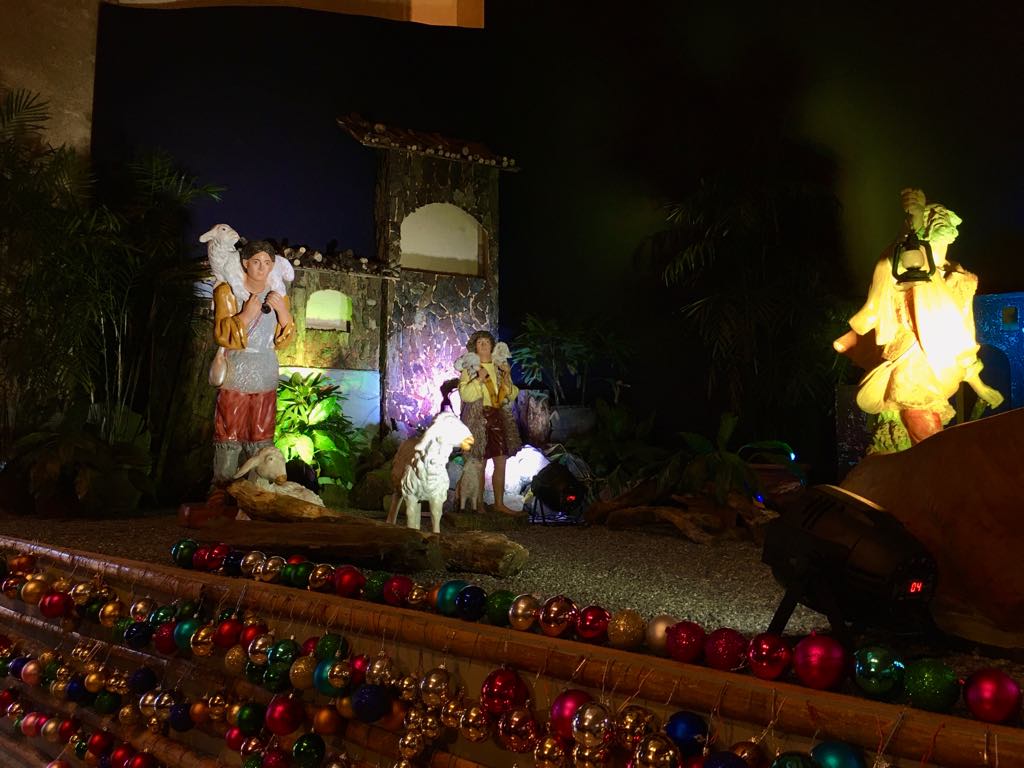
Presence and Love of Christ

The Lord Is My Chef Sunday Recipe for the Soul by Fr. Nicanor F. Lalog II
Week XXIII, Cycle A in Ordinary Time, 06 September 2020
Ezekiel 33:7-9 /// Romans 13:8-10 /// Matthew 18:15-20
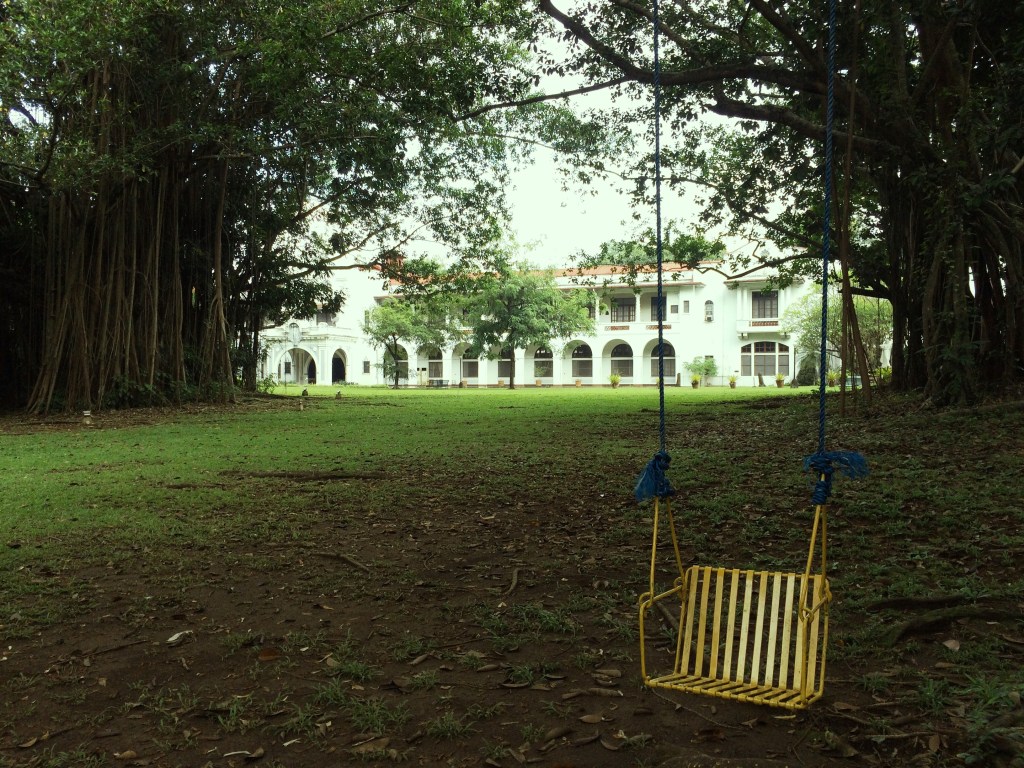
Photo by Mr. Gelo N. Carpio, January 2020.

For the next three Sundays beginning today, our liturgy directs our gaze to the nature of the Church as the mystical Body of Jesus Christ. For today we hear from Matthew how we as a church or a community of believers are signs of the presence and love of Jesus Christ.

Recall how two weeks ago at Caesarea Philippi Jesus called Simon as “Peter” (“Rock”) to head his “church”, giving him the keys to the kingdom of heaven that whatever he binds on earth shall be bound in heaven and whatever he looses on earth shall be loosed in heaven (Mt.16:17-19).

Matthew is the only evangelist so particular in using the term “church” that he devoted chapter 18 of his gospel on its nature, collecting and giving some of the Lord’s teachings about community life to his own group of disciples or early church.

And off he went to start with the most important part of community life:

Jesus said to his disciples: “If your brother sins against you, go and tell him his fault between you and him alone. If he listens to you, you have won over your brother. If he does not listen, take one or two others along with you… If he refuses to listen to them, tell the church. If he refuses to listen even to the church, then treat him as you would a Gentile or a tax collector… Again, amen, I say to you, if two of you agree on earth about anything for which they are to pray, it shall be granted them by my heavenly Father. For where two or three are gathered together in my name, there am I in the midst of them.”

Matthew 18:15-16, 17, 19-20
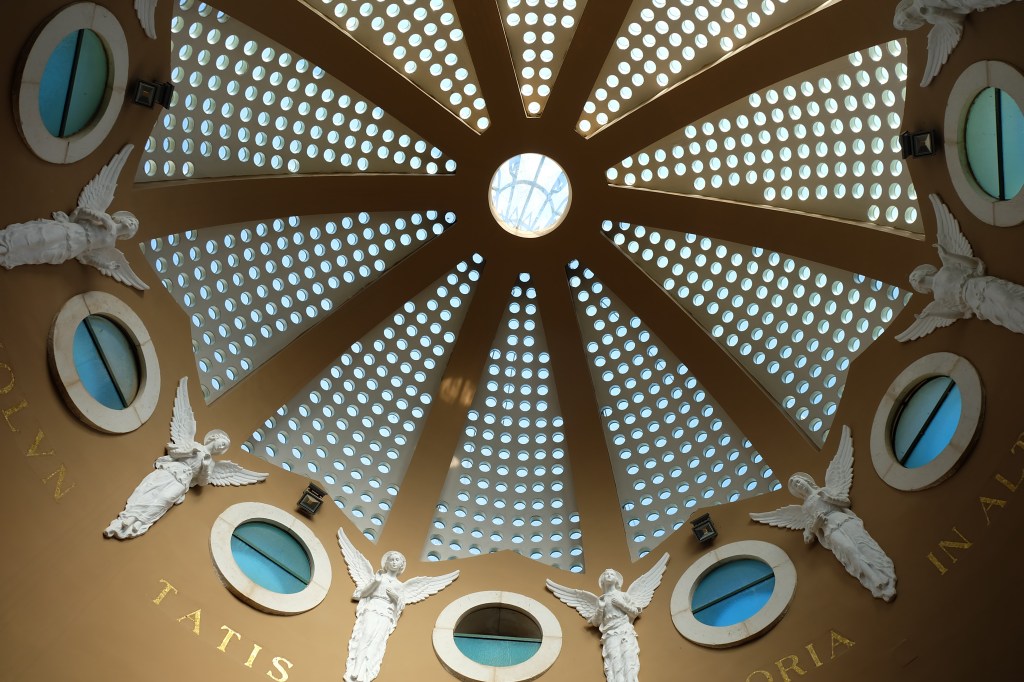
Photo by author, dome of the Malolos Cathedral, 2019.

Presence of Jesus in the love and unity of community

In a very short teaching taking a step by step method, Jesus tells us today how our mutual love shall always take precedence above all in our community life as his disciples and sign of presence.

Though we do not find in our gospel this Sunday the word “love”, it is clearly the Lord’s lesson for today: it is mutual love for one another that must guide everyone specially in the delicate matter of fraternal correction when one is going wayward in his/her path of life.

This explains why Jesus spelled out step by step how we correct others primarily because we love, not because we are better than them or that we have such authority or task and duty. Paul beautifully says it in our second reading:

Brothers and sisters: Owe nothing to anyone, except to love one another; for the one who loves another has fulfilled the law. Love does no evil to the neighbor; hence, love is the fulfillment of the law.

Romans 13:8, 10

But of course, we need to clarify that all these lessons of love from the Lord and Paul are based on the love of Jesus Christ who clearly mandated us during his last supper how we must love:

I give you a new commandment: love one another. As I have loved you, so you should love one another. This is how all will know that you are my disciples, if you have love for one another.

John 13:34-35

What makes this loving one another a “new commandment” is loving like Jesus Christ, unlike the pagans in ancient times that are still imitated to this day even by many among us who are also Christians. So often we find specially in media how love is portrayed as mere feelings like physical attraction that always leads up to sex, devoid of any sanctity and inner beauty at all.

St. Augustine called it “disordered love” when we become self-centered and selfish, directing our love solely to attaining what pleases us that we use persons and love things like money.

Love is not just a feeling but a decision, a choice we make and affirm every day specially when times are very rough and tough for us like when we are not loved in return.

Most of all, love is when we find somebody else we can love more than ourselves (Thomas Merton). This is the kind of love that Jesus and Paul as well as all the other saints speak of: the self-sacrificing love Christ showed us when he offered himself on the cross for the forgiveness of our sins.
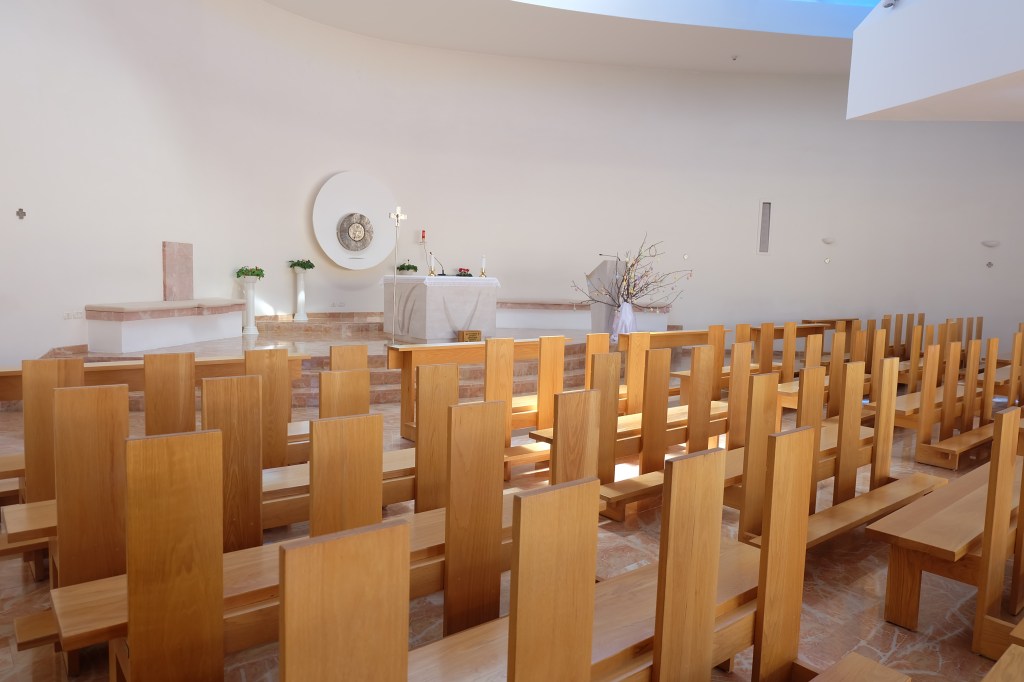
Photo by author, Chapel of the Monastery of the Sisters of Perpetual Adoration of the Blessed Sacrament at the Milk Grotto in Bethlehem where the Holy Family hid before fleeing to Egypt to escape Herod’s order to massacre the Holy Innocents, May 2019.

Love of Jesus builds, not destroys

Applying the law of love to our community is the most severe test of our being disciples of Jesus when we are challenged to be sincere in our love by hating what is evil and holding on to what is good like blessing those who persecute us, foregoing vengeance against those who have wronged us along with other expressions of mutual love in our community that Paul tells us in Romans 12:9-21.

In teaching us mutual love for one another in a step by step manner, it may seem to be a duty that one must follow in the church. It may even sound as contradictory that Jesus seems to be commanding us to strictly follow his law of command because no law can ever impose love.

However, when we try to reflect the ending of his teachings today – “For where two or three are gathered together in my name, there am I in the midst of them” – we find Jesus not ordering us to love but asking us our love because he loves us. He comes to us, grants our prayers because he loves us; therefore, when we love, when we gather as his disciples, we become his presence. And that is when our prayers are most effective because Jesus is in our midst!

Jesus and his love always build people and community; without him and his love, all we have is destruction and divisions. Hence, love is the only debt we owe to anyone. Love as a debt and “duty” is never paid back because the more we love, the more we have love, the more we are indebted to Jesus. It is the only debt that is never burdensome; in fact, the opposite happens when we refuse to love – we are burdened, life becomes heavy and so difficult.

This is what Ezekiel is telling us in the first reading: we are a “watchman”, a brother’s keeper of everyone. St. Pope Gregory the Great wrote a beautiful homily on being a watchman:

Note that a man whom the Lord sends forth as a preacher is called a watchman. A watchman always stands on a height so that he can see from afar what is coming. Anyone appointed to be a watchman for the people must stand on a height for all his life to help them by his foresight.

Office of Readings, Memorial of St. Pope Gregory the Great, 03 September
Photo by author, sunset inside our parish, 25 August 2020.

In the Church, those designated as watchman of the flock of Jesus is the Bishop or episkopos in Greek that means watcher or overseer. It is the bishop’s duty to always be above others in the loving service of the Church that sometimes out of love for Christ, he has to discipline those going astray as instructed in our gospel today, “If he refuses to listen even to the church, then treat him as you would a Gentile or a tax collector”, that is, excommunication or suspensions and other measures not meant to punish but to convert and correct the sinner.

Next Sunday, Matthew deepens our lesson on mutual love when he presents us the teachings of Jesus on how often we must forgive our brother or sister who repeatedly sins against us.

See my dear reader, how after presenting to us who is Jesus Christ last month, in how much he loves us and seeks us, these following Sundays we are challenged by the Lord to be like him – loving and merciful – to truly keep our relationship with him.

It is the first Sunday of September, the -ber months that tell us Christmas is around the corner. But, it seems we are still in a long haul in this pandemic. Having a vaccine will not totally eradicate COVID-19 nor guarantee us this won’t happen again in the future because the disease that is truly plaguing us until now is our refusal to love and live as brothers and sisters in Christ. Let us give it a try. Slowly. Jesus is not rushing us. All he is asking us is be open to his words expressed earlier in our responsorial psalm: “If today you hear his voice, harden not your hearts.”

Have a heart and have a blessed, lovely week, everyone!

Love: the Spirit of God

The Lord Is My Chef Breakfast Recipe for the Soul by Fr. Nicanor F. Lalog II
Friday, Memorial of St. Pius X, Pope, 21 August 2020
Ezekiel 37:1-14 >><)))*> || >><)))*> ||+|| <*(((><< || <*(((><< Matthew 22:34-40
Photo by author, Jewish cemetery outside Old Jerusalem, May 2019.

Together with the psalmist today I sing to you, O God our Father: “Give thanks to the Lord, for his love is everlasting.”

Yes, O Lord, your love is everlasting, your fidelity is so true and whatever that is good for us, there is no stopping you from doing it because of your love for us.

Thank you for fulfilling this promise you made to Ezekiel your prophet in the Old Testament:

Thus says the Lord God: O my people, I will open your graves and have you rise from them, and bring you back to the land of Israel. Then you shall know that I am the Lord, when I open your graves and have you rise from them, O my people! I will put my spirit in you that you may live, and I will settle you upon your land; thus you shall know that I am the Lord.

Ezekiel 37:12-14

Through the Passion, Death, and Resurrection of Jesus your Son, you have indeed opened our graves and put your spirit upon us for we have been dead to sin but now raised to life in Christ.

Unfortunately, many of us have turned into spiritual “zombies” by being dead to sin again – lifeless and therefore loveless!

Revive your Spirit in us, O God, the spirit of love that Jesus poured on us.

Let us love you beyond words and letters of your laws but in flesh and blood by being loving to our brothers and sisters, in loving you by loving others.

May we continue the work of St. Pius X whose papal motto was “Renew all things in Christ” by returning to you in Jesus through the Blessed Sacrament and the Holy Eucharist.

St. Pius X came at a crucial stage in Church history in the early 1900’s when the world was experiencing great changes and revolutions not only in many nations but most especially in the thinking and outlook of people of his time — exactly like today, Lord.

May we restore all things in you, Lord Jesus by awakening in us anew the basic spirit of love through kindness and generosity to one another specially in this time of the pandemic.

We also remember today the assassination of Benigno S. Aquino Jr. who had offered us his life because he believed we “Filipinos are worth dying for.”

As our nation slid back to darkness these past decade, help us, O Lord, to rise again, to be filled with life and love for one another, for our nation and our future generation by being selfless and honorable before one’s self, others, and you. Amen.

Photo by Dra. Mai B. Dela Peña, Carmelite Monastery, Israel, 2014.

Living in the presence of Christ

The Lord Is My Chef Breakfast Recipe for the Soul by Fr. Nicanor F. Lalog II
Wednesday, Memorial of St. Martha, 29 July 2020
1 John 4:7-16 >><}}}*> ))+(( <*{{{><< John 11:19-27
Photo by author, Sacred Heart Novitiate, Novaliches, Quezon City, 2018.

Thank you very much Lord Jesus Christ is sending us holy women like St. Martha whose Memorial we celebrate today. Seven days ago we celebrated the feast of her younger sister St. Mary Magdalene.

How nice of you coming to visit families, even calling brothers and sisters as your disciples like St. Peter and St. Andrew, St. James the Greater and St. John, and now, St. Martha and her siblings St. Mary and St. Lazarus.

What a beautiful reminder for us today so busy with other people like friends and clients and everybody else except family: that you always come first in the family, among husband and wife, parents and. children, and siblings.

Most of all, in the life of St. Martha, you remind us of the need to be present in you and with you every time you come for a visit.

Jesus said to her, “Your brother will rise.” Martha said to him, “I know he will rise, in the resurrection on the last day.” Jesus told her, “I am the resurrection and the life; whoever believes in me, even if he dies, will live, and anyone who lives and believes in me will never die. Do you believe this?” She said to him, “Yes, Lord. I have come to believe that you are the Christ, the Son of God, the one who is coming into the world.”

John 11:23-27

Many times, Lord Jesus, you come to us to be present with us but we are always absent from you like St. Martha.

Like her, so often we are working for you, doing for you, so busy because of you without realizing you prefer us to be doing your work by first being present in you.

There are times, we overthink of your words and of your thoughts we forget the present moment like when you told St. Martha that her brother Lazarus would rise again: we believe in our minds than in our hearts that we look more into the future than in the present moment when our departed loved ones can be truly present with us in you.

As we keep ourselves preoccupied with so many tasks here on earth, teach us also, sweet Jesus like St. Martha that in the resurrection of the dead, we shall all be present in you and with you as the one serving us all in the heavenly banquet. May we choose wisely what is most important like her sister St. Mary. Amen.

From Pinterest.

New normal is not normal

Quiet Storm by Fr. Nicanor F. Lalog II, 28 July 2020
Photo by Mr. Raffy Tima of GMA-7 News, March 2020

Experts have been telling us since the start of this COVID-19 pandemic that our lives would no longer be the same like before 2020. Even if a new vaccine and more effective treatment are discovered to fight this disease, life on this planet is definitely changed.

But, for better or for worse?

That is the most important challenge of this pandemic next to finding a vaccine and cure or treatment against it: that we seize this unique opportunity from COVID-19 to “reset” or “refresh” the world so we can all start anew by correcting the mistakes and excesses of the past to finally kickoff a true and meaningful growth and development among peoples, especially the poor and marginalized.

Photo from TurboSquid.com

This we can start – or restart – by immediately deleting from our vocabulary and consciousness that word we have been erroneously using since summer, “new normal”.

New normal is abnormal because norms or standards like morality always remain.

Washing of hands frequently, covering one’s mouth and nose when sneezing and coughing, not spitting everywhere are not new normal. Cleanliness has always been the norm since the beginning that we have that saying always true, “Cleanliness is next to Godliness”.

Praying every day, individually and as a family especially the Holy Rosary is not a new normal. Connecting with the Divine has always been the norm of man since the beginning even before Jesus Christ came to the world.

More than half a century ago, the late Fr. Patrick Peyton has been saying, “The family that prays together, stays together; and the world at prayer is a world at peace.” Praying has always been the norm in our lives.

Normal or norms do not change because they are the standard measure. Even before COVID-19 came, normal temperature has always been 37 degrees Celsius, 12-inches make a foot, and so on and so forth.

So, please forget this abnormality of referring to our new way of living as “new normal” because it is not new at all.

Worst, this usage of the term “new normal” courtesy of the media, politicians, and policy makers is a dangerous indication of unconsciously or subconsciously perpetuating our excesses of the past that the Wuhan virus have rightly exposed: too much greed especially among capitalists, materialism and consumerism, and individualism.

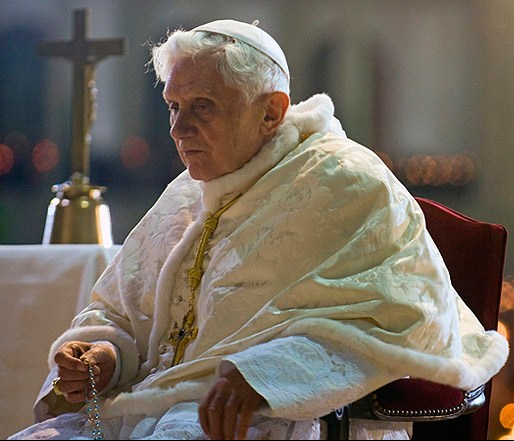
From vaticannews.va

Pope emeritus Benedict XVI had long been speaking against these by describing it as “dictatorship of relativism”.

Acceptance of this term or concept that was actually coined at the aftermath of the 2007 financial crisis indicates that we are miserably not learning the lessons of this global crisis.

Our sights remain myopic, even blinded in looking at this pandemic without realizing at all how this was spawned by our own excesses and sins. Long before we have been told to maintain physical or social distancing to stop spread of the new corona virus, we have long been distant from one another. We have been spending more time with our computers and smartphones, trying to connect with friends and everyone in various social media platforms unmindful of the persons seated near us. “Table for one” in restaurants is fast becoming the order of the day than the exception to the rule.

My point is, accepting everything now as the new normal is also accepting wholesale the new ordering of things going on that continues to neglect the weakest and poorest among us. We are only perpetuating an error and worst an evil among us that we have refused to examine closely in the past.

This “new normal” is a conditioning concept that pushes the marginalized and disadvantaged people deeper into misery as the daily news tells us. Unconsciously to many of us, “new normal” is an excuse even a justification for the continued poverty and slavery of the weak and disadvantaged.

What a shame that while so many countries are suffering from COVID-19 like ours, Beijing is flexing its muscles around the world economically and militarily – right in our seas!- as if they are not bothered at all by this virus that came from their own province of Wuhan.

A very interesting read I have found last month was written by Nigerian Chime Asonye who rightly claims that “the new normal” “should not be the lens through which we examine our changed world”.

The ‘new normal’ discourse sanitizes the idea that our present is okay because normal is regular. Yes, there may be public health challenges, but these are issues that can be managed. We accept life under the omnipresent threat of disease as ordinary. But what exactly is normal about this pandemic? It is not normal for society en masse to be isolated, but if this is normal, then we are supposed to have control of the situation. Even if we feel loss or despair, we are expected to get used to it — accepting that this morbid reality is now standard.

https://www.weforum.org/agenda/2020/06/theres-nothing-new-about-this-new-normal-heres-why/

COVID-19 can serve both as a catharsis to our past excesses and a watershed for a brighter future.

The old system, or what people refer to as “normal” before in the world had erroneously set is not working, plainly wrong and abusive; why continue or import it into this coming new period?

As the pandemic rages on it gives us a chance to reimagine the world by tracing history, not forgetting it.

We should revel in the discomfort of the current moment to generate a ‘new paradigm’, not a ‘new normal’. Feeling unsettled, destabilized and alone can help us empathize with individuals who have faced systematic exclusions long-ignored by society even before the rise of COVID-19 — thus stimulating urgent action to improve their condition. For these communities, things have never been ‘normal’.

https://www.weforum.org/agenda/2020/06/theres-nothing-new-about-this-new-normal-heres-why/

COVIDS-19 is definitely not a punishment from God but a result of man playing God.

And like in the past, whether in world history or in our own lives when things go wrong even worst, God ensures to make ways that anything bad happening to us would always lead to something good.

Photo by author, Christmas 2019 in our Parish.

See how providential in the sense that microscopic viruses are reminding us that true power is not in being big but in being small, not in being strong but being weak — the very example of God to us when he became human like us more than 2000 years ago.

Unfortunately, his lessons remain unheeded up to our time even among us in the Church.

It is a most welcomed change in the midst of this pandemic that the Vatican last week issued new guidelines through the Congregation for the Clergy (directed to us priests) for the world’s parishes that can help us respond adequately to the challenges of this crisis (http://press.vatican.va/content/salastampa/en/bollettino/pubblico/2020/07/20/200720a.html).

But, that will require another blog.

For the meantime, please stop using that abnormal term “new normal”.

A blessed Tuesday to everyone!

Let Christ possess us

The Lord Is My Chef Sunday Recipe for the Soul by Fr. Nicanor F. Lalog II
XIIIth Sunday in Ordinary Time, Year A, 28 June 2020
2 Kings 4:8-11, 14-16 >><)))*> Romans 6:3-4, 8-11 >><)))*> Matthew 10:37-42
Photo by author, Dome of the Chapel of Nativity at Shepherd’s Field, Bethlehem, the Holy Land, May 2019.

Jesus continues his lessons to us his disciples being sent to look for the “lost sheep of Israel”, to be not afraid for he is with us in this journey and mission. But, it is not enough that we have Jesus on our side and be present among us: we have to allow Jesus to take possession of us completely!

From having no fear because Jesus is here, Christ now deepens his presence by inviting us to be possessed by him, to be in communion with him.

Jesus said to his disciples: “Whoever loves father and mother more than me is not worthy of me, and whoever loves son or daughter more than me is not worthy of me; and whoever does not take up his cross and follow after me is not worthy of me. Whoever finds his life will lose it, and whoever loses his life for my sake will find it.”

Matthew 10:37-39
Photo by author, processional Cross at the altar, 2019.

The Mystery of the Cross

Discipleship in Jesus Christ is more than a total allegiance to him who is neither a demanding nor exacting Lord and Master for he does not arbitrarily impose himself upon us.

Nothing like that of subservience but something more lofty because it is wrapped in a mystery — a mystery of love freely given and shared to us by God even if we do not deserve it all. Remember the mystery of the Blessed Trinity four Sundays ago (June 07)?

Ever since, God has never imposed himself upon us, that we should love him back in return for he does not really need our love. He gave us the gift of freedom so that we may love him freely for he never imposes on us.

And here lies the beauty of discipleship, of this relationship we have with God that is based solely on love expressed to us in the most personal manner by giving us his Son Jesus Christ who suffered and died on the Cross but rose again on Easter. This we were reminded by the Solemnities of the Body and Blood of Jesus and of his Sacred Heart last June 14 and 19 respectively.

Now you see my dear readers the clearer picture of our liturgical celebrations expressing our concrete experiences of being loved by God in Jesus Christ most especially during times of trials and sufferings like in this COVID-19 pandemic.

It is Christ who made the initiative to be one with us in our pains and sufferings; God did not remove our crosses in life but made them holy in his Son Jesus Christ so that every time we go through life’s many difficulties, we share in the Lord’s Passion, Death, and Resurrection.

That is why, we are invited to take and carry our cross every day for it is through the Cross we are saved. It is not enough to simply believe in the person of Jesus but we need to accept and embrace his Cross because it is through which he had won our salvation by dying on it and rising again.

This is easier said than done. It is so difficult to love Jesus more than our loved ones like family and friends. And it is most difficult to love the Lord more than our selves, when we have to let go of our plans and agenda.

Letting go and letting God in itself is already crucifying — but that is when this mystery of Christ’s love and of his Cross deepens further when we lose ourselves in him!

Celebrating Mass without te congregation during the ECQ, March-April 2020.

Possessed by Christ

To be possessed by Jesus is to receive God and his gift of salvation through the mystery of Christ and his Cross. Like our Christian life, proclaiming the gospel carries with it the sign of the Cross of Christ.

We are not asked to reenact or reproduce his Crucifixion nor is Jesus asking us to be suicidal or go against our natural aspirations and dreams.

To be possessed by Jesus means we continue to take care of ourselves without neglecting the needs of others.

To be possessed by Jesus means being generous to others in the same manner Jesus has always been generous to us.

To be possessed by Jesus means to realize that every act of self-giving is really an act of receiving!

Photo by author, Malagos Park, Davao City, 2018.

That is the paradox of the Cross, of discipleship in Christ: “Whoever finds his life will lose it, and whoever loses his life for my sake will find it” (Mt.10:40).

And that is also where the mystery of Christ’s love deepens because whatever we give is not really ours but Christ’s.

Every time we give love, it is the love of Jesus.

When we are kind and generous with others, it is the kindness and generosity of Jesus we give and share.

When we are patient and understanding to others, it is still the patience and understanding of Jesus in us.

Even if we give and share material things like money, food, clothing… whatever good we share and give are all from Jesus not from us.

And the more we give, the more we receive!

Have you noticed especially during this pandemic how the generous among us are now more blessed?

Wonder no more because you have allowed yourself to be possessed by Jesus Christ!

This is what the woman at Shumen had realized after welcoming the Prophet Elisha into her home in our first reading. She even gave him a room to stay every time he comes for his mission while the Lord provided all her needs, even rewarded her with a son as promised by Elisha.

When we allow Jesus to take over us, when we enter into communion in him and with him in his very life, we become more free to love, we strengthen our relationships with others, we wander less and worry less in life; most of all, we feel lightened in our burdens with the presence of Jesus giving us fullness of life in him.

This is the grace I hope we have seen from this quarantine period, especially those two months of lockdown when were freed from our usual grind and busyness with more time to be silent and still, to pray and reflect on our relationships with God and with others. It was a difficult and very trying period that had given in return a lot of opportunities to others.

Photo by author, Marcos Highway, 2019.

Dead to sin, alive to God

Brothers and sisters: We know that Christ, raised from the dead, dies no more; death no longer has power over him. As to his death, he died to sin once and for all; as to his life, he lives for God. Consequently, you too must think of yourselves as dead to sin and living for God in Christ Jesus.

Romans 6:9-11

It has been four months since houses of worship were ordered closed to help stop the spread of the corona virus. Somehow, the lockdown had made us realize the importance of receiving the Sacraments especially the Holy Eucharist.

But, sacraments are not everything for we have the bigger roles of putting into practice its reality of being the saving presence of Jesus Christ.

Now that lowly life is beginning to go back to its usual grind especially the traffic, soon we might forget again the more important things in life like God and our relationships in our family and friends that it is hoped we have rediscovered during the quarantine period.

That is why I strongly feel the government must now allow Churches to open so the people may experience again God in the sacraments and in our rites and rituals lest they get busy again with so many things only to miss finding anew the meaning of our lives found in silence and stillness before the Cross of Christ.

It is my hope that in this quarantine period, may we find through the Cross of Jesus that when we learn to submit and surrender to him, that is when we truly become free; and, when we lose and give away our lives to him, that is when we gain fullness of life in him. Amen.

A blessed week and a more abundant July to everyone!

Lent is sharing and giving life

40 Shades of Lent, Monday, Week I, 02 March 2020

Leviticus 19:1-2, 11-18 +++ 0 +++ Matthew 25:31-46

Photo by author, Mt. St. Paul Spirituality Center, Baguio City, 03 February 2020.

“Your words, Lord, are Spirit and life.”

Responsorial Psalm

Today, Lord, I borrow your psalmist’s words for they summarize the two beautiful readings on this first Monday of Lent 2020.

Thank you for reminding us that we are your Holy Spirit’s indwelling, that we must be holy for you, O God, are holy (Lev.19:2).

Continue to fill us with your holiness so that we continue to do whatever is good to our brothers and sisters, especially the least among them for whatever we do to anyone, that we do also to you, dear Jesus (Mt.25:40, 45).

May your holy season of Lent remind us that it is our nature to share and give life because we have you Jesus in us.  That’s the implication of those like the sheep on your right side, Lord, who were surprised and could not believe asking “when were you Lord hungry we gave you something to eat, when were you Lord…?” 

When we let your Spirit of holiness animate us, that is when we are never bothered to think of anything else upon seeing the poor and suffering except to love, to practice charity. 

May our Lenten practices of fasting and abstinence, sacrifices and alms-giving empty us of our selves and be filled with you, sweet Jesus, the Word who became flesh to dwell in our hearts for you alone are Life and Spirit. 

Teach us to examine today our attitude towards everyone who may be unknown to us silently poor and suffering.  Let us reacquire that nature in us we fondly refer to as “second-nature” of being kind and charitable to everyone because he/she has you, Jesus, in him/her. 

That need not be difficult for us because in the first place, YOU, O Lord, is in us too!  Amen.

Keep Christmas Alive

The Lord Is My Chef Recipe for the Soul, 01 January 2020

Wednesday, Solemnity of the Blessed Virgin Mary, Mother of God

Numbers 6:22-27 ><}}}*> Galatians 4:4-7 ><}}}*> Luke 2:16-21

Photo by Rev. Fr. Gerry Pascual, Minor Basilica of the Immaculate Conception, Washington DC, 2017.

Today marks the octave or eighth day of Christmas when we celebrate the Solemnity of the Blessed Virgin Mary, Mother of God.

Octave means we extend the celebration of Christmas Day into eight days because one day – December 25 – is not enough to reflect on the meaning and mystery of the Incarnation of the Son of God.

The eighth day also signifies eternity which comes next after the seven days of the week.

Hence, whenever people greet me on this day with a “Happy New Year”, I just say “thank you” and then greet them too with “a blessed Christmas to you” or the usual “Merry Christmas”!

I am not disturbing your peace this Christmas and it is more than my being a “language nerd” – but, if you really want to appreciate more and experience the depth and the joy of Jesus Christ’s birth, stop that happy new year greeting.

The more proper and perfect greeting this January 2020 is still “blessed Christmas” or “Merry Christmas” because it is another year in the Lord Jesus Christ.

And here we find the very important and deeper meaning of Christmas: do not ever forget it is about Jesus Christ. Christmas is not about gifts and bonus, it is not about food and merry making, it is not about vacation and long weekends.

Christmas is all about Jesus Christ, the Son of God who became human like us in everything except sin in order to save us and bring us back to the Father in heaven. In his coming, it is not only us who were made holy but even our time that became “his story”.

Indeed, Jesus Christ is the reason of the Season. Let us maximize in greeting “Merry Christmas” and stop its abrupt ending with the coming of the new year that after all, is based on his birth that is why we call it “Anno Domini” (AD) or “year of the Lord”.

Nativity Scene at the National Shrine of the Minor Basilica of the Our Lady of Mt. Carmel, Quezon City. Photo by author, 30 December 2019.

Why stop greeting everyone with a happy new year

Keep greeting everyone with “a blessed Christmas” or a “Merry Christmas” until January 12, last day of our Christmas Season with the Baptism of the Lord.

In the Philippines, you may continue greeting people with Merry Christmas until January 19, Feast of the Sto. Nino which is an extension of the Christmas Season in our country granted by Rome.

Furthermore, for the lazy among you, you can have the excuse of not removing your Christmas decors until February 02, Feast of the Presentation at the Temple because chronologically, that is the precise moment when Christmas Season ends. That is why, the giant Christmas Tree at the Vatican’s St. Peter’s Square is traditionally removed only on this date.

Also, please stop announcing in churches about the Mass tonight and tomorrow as “New Year’s Mass” because there is no Mass for New Year.

Though our Sacramentary offers prayers for Mass at New Year, the same book stipulates that “this cannot be celebrated on January 1 because it is the Solemnity of the Blessed Virgin Mary, Mother of God.”

Basic reason why we should not be greeting one another with a happy new year on January 1st is the fact that we celebrated our New Year in the Church during the First Sunday of Advent, that Season of four Sundays when we prepare for Christmas.

Remember, Advent has two aspects: from First Sunday of Advent until December 16, our focus is on the Second Coming of Christ or Parousia at the end of time. Nobody knows when it will be, not even Jesus Christ except the Father in Heaven. Then, from December 17 to 24, we enter the second aspect of Advent which is the focus on the first coming of Jesus when he was born in Bethlehem more than 2000 years ago. All the readings on these days center on the events and stories leading to Christ’s birth.

So my dear reader and follower, we start each year in the Church preparing for the coming of the King of kings and we end the year with Solemnity of Christ the King.

To be exact, we start and end each year in Jesus Christ, not in numbers.

Every day of the year is a Christmas in essence, a coming of Jesus Christ.

And for us to continue this beautiful story of Christmas especially on these first 19 days of 2020, the Blessed Virgin Mary, the Mother of Jesus Christ who is true God and true Man, teaches us the way to keep this spirit of bringing the Savior into the world even beyond December 25 and January 1.

The shepherds went in haste to Bethlehem and found Mary and Joseph, and the infant lying in the manger. When they saw this, they made known the message that had been told them about this child. All who heard it were amazed by what had been told them by the shepherds. And Mary kept all these things, reflecting on them in her heart.

Luke 2:16-19
Shepherds approaching the Nativity Scene at the National Shrine of the Basilica of Mt. Carmel, Quezon City. Photo by author, 30 December 2019.

Mary to guide us through another year closer to Jesus

A natural reason we have for cutting short our greetings of Merry Christmas to one another is the very close proximity of December 25 with the New Year. Though the civil calendar also came from the Church, in a sense the start of the year has been made holy by its closeness with Christmas.

Rightly then, all the more we find the reason to keep on greeting Merry Christmas than happy new year!

Notice the sudden shift from the holy and transcendent so evident in just a span of one week that personally, I feel we have to promote all the more a stop in this greeting of happy new year at Christmas Season.

How easily we can forget the wonder and awe of Christ’s birth!

See how from our rich liturgical celebrations of Advent and Christmas then suddenly this last seven days of the year, we turn to pagan practices to usher in the new year?

Have we become like the shepherds who came to Jesus only at his brith and never to be mentioned again in the entire account of St. Luke?

What happened?

A shepherd near the Nativity Scene at the National Shrine and Basilica of Our Lady of Mat. Carmel in Quezon City. Photo by author, 30 December 2019.

Mary guides us to the true meaning of Christ’s birth and of the new year that closely comes after Christmas. See how St. Luke narrated the attitude and disposition of Mary, the Mother of Jesus Christ our Lord and God:

And Mary kept all these things, reflecting on them in her heart.

That’s the problem with our Christmas celebrations: after December 25, we go back to “normal lives” which is more of living without Jesus, of getting into the daily grind of life away from Jesus.

Like us, Mary did not know what was really ahead of her with the birth of Jesus: she had no idea about his being lost at the temple, of his being tempted by the devil, of his being rejected and killed by his own people despite his many healings and other miracles.

Mary simply believed in Jesus. And that is why she is blessed according to Elizabeth, because she believed the words spoken to her would be fulfilled.

Mary had nothing certain about her coming year, of her life except the name to be given to her Son, Jesus which means “God is my Savior”.

The same is true with us! We do not know if we will still be together until December or at least in January 2021. We do not know who would get married this year, who would be migrating to another country, who will hit it big time in business or whatever.

Stop consulting fortune tellers because they know nothing about the future! Only the Father of Jesus knows everything that is going to happen. And he had sent us his Son Jesus to make sure that through everything that is going to happen, none of us would ever be lost (Jn.6:39).

Like Mary, we have only one surety and security this 2020: Jesus Christ, our Lord and God living with us!

Let us focus this year in Jesus Christ and his words of salvation.

And that is the challenge of Christmas of the new year 2020: that every day, despite all the good news and bad news we hear and encounter in life, we make that conscious decision to trust in Jesus that good is coming to us for his name means God is my Savior.

Like Mary, let us lose ourselves every day in this wonderful moment of Christmas of looking at the child Jesus inviting us to be caught up in his joy of coming, to fear not of the new year ahead for he has come precisely to be one with us.

May we stay with him, keep his words in our hearts like Mary by reflecting on their meaning trusting and awaiting their fulfillment.

Let us not leave Jesus like the shepherds, though, they were the first to see the Lord at Christmas, they missed his full glory of resurrection because they never went back to him again.

Have a blessed and Merry Christmas!

From the inside of the Church of the Nativity in Bethlehem, the small doors that require pilgrims to humbly bow first to enter the church and find Jesus. Photo by author, May 2019.

Arising in Christ

The Lord Is My Chef Breakfast Recipe for the Soul

Wednesday, Week XXIII, Year I, 11 September 2019

Colossians 3:1-11 ><)))*> ><)))*> ><)))*> Luke 6:20-26

Petra in Jordan. Photo by author, May 2019.

Lord Jesus Christ, today your apostle Paul calls us to “Think of what is above, not of what is on earth” (Col. 3: 2).

Then, in the gospel also today, you raised your eyes toward your disciples and began your “sermon on the plain” (Lk. 6:20)

What is up there, Lord Jesus, that we have to look up, that you have to raise your eyes looking at us?

When I was young, I was so afraid of heights but I have always wanted to be on top to see the beautiful sights that I did my best climbing trees and walls, even rooftops.

Now I am older, I still yearn to be on top to enjoy the sights but too weak to climb even the stairs.

All I can do now Lord is raise my eyes up to the skies, to treetops and mountains to enjoy the moments of looking up, and most of all, wondering at all your wonderful blessings to me — right here in my heart to find you and see you looking up at me!

What a beautiful lesson today of looking up, of seeing ourselves exalted by you despite our weaknesses and sinfulness. What a wonderful teaching about our new stature as your brothers and sisters, O Jesus, redeemed and loved. What a way of teaching us of our new life in you, dearest Christ and of the need to live accordingly as Christians!

So many times, we look down at ourselves, Lord, forgetting our blessedness in being poor and hungry, weeping and rejected in the name of your love and mercy.

Teach us to realise and value our being blessed in you so that our lives and actions may conform to your beatitudes. Amen.