Facing our fears

The Lord Is My Chef Sunday Recipe for the Soul by Fr. Nicanor F. Lalog II
Twelfth Sunday in Ordinary Time, Cycle A, 25 June 2023
Jeremiah 20:10-13 ><]]]]'> Romans 5:12-15 ><]]]]'> Matthew 10:26-33
Photo from https://edition.cnn.com/2023/06/19/europe/titanic-shipwreck-vessel-missing-intl/index.html.

The recent news this week of the implosion of the submersible “Titan” with the death of its five passengers trying to reach the Titanic wreckage at the bottom of the Atlantic Ocean had elicited a lot of different reactions from various people around the globe.

While I wonder what’s really behind this obsession by some whites with the Titanic, they made me imagine the kind of courage those five men have to dare journey into the bottom of the sea on board their craft despite its highly questionable worth in safety and reliability. At least as I prayed over this Sunday’s gospel, OceanGate’s “Titan” passengers made me examine and contemplate my courage and fears in life both as a person and as a priest.

How much am I willing to risk in pursuing God, in serving his flock? Will I be able to give my life wholly like those five passengers in trying to see the wreckage of the Titanic that sank in 1912?

Jesus said to the Twelve: “Fear no one. Nothing is concealed that will not be revealed, nor secret that will not be known. What I say to you in the darkness, speak in the light; what you hear whispered, proclaim on the housetops. And do not be afraid of those who kill the body but cannot kill the soul; rather, be afraid of the one who can destroy both soul and body in Gehenna. So do not be afraid…

Matthew 10:26-28, 31
James J. Tissot, ‘The Exhortation to the Apostles’ (1886-94) from Getty Images.

Jesus chose his twelve Apostles last Sunday to proclaim his good news of salvation to “the lost house of Israel” after seeing them “tired and troubled, like sheep without a shepherd” (Mt.9:36).

As he sent them to their first mission, Jesus gave them some important instructions which the gospel tells us today and next Sunday. And leading the list of those instructions is the need to take courage when he told them to “fear no one” and twice to “do not be afraid”.

But first, let us clarify that courage is not the same with bravery that often refers to being able to do great feats like those extreme sports we see in social media. Most often, bravery is closely associated with skills like bungee jumping, sky diving, and skateboarding. Courage is different. It is from the Latin word cor or corazon in Spanish, the heart. To fear no one and be not afraid are expressions of courage, of drawing strength from one’s inner core – the heart – where God dwells. To draw strength from the heart which is the core of every person means to give one’s total self, more difficult than just risking a part of ourselves like an arm or a leg that is often the case with bravery.

Secondly, when Christ told his Apostles that included us today to fear no one and do not be afraid, he was not only instructing us to have courage but most of all showing us too the contrast of fear of human beings and the world with the fear of God.
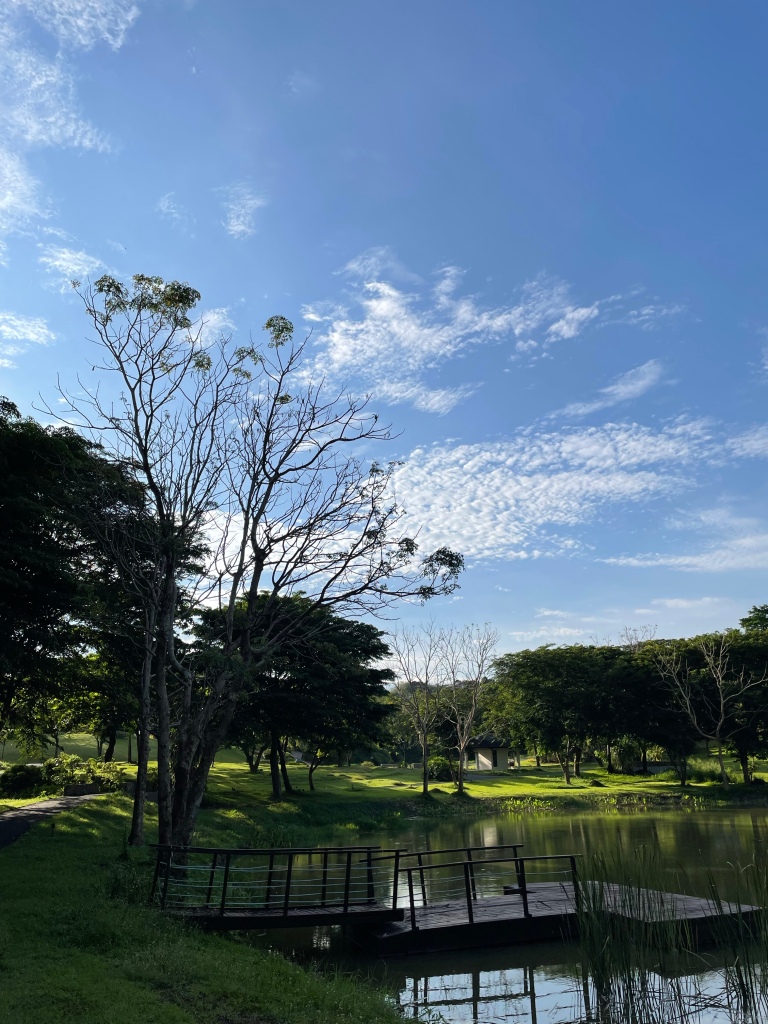
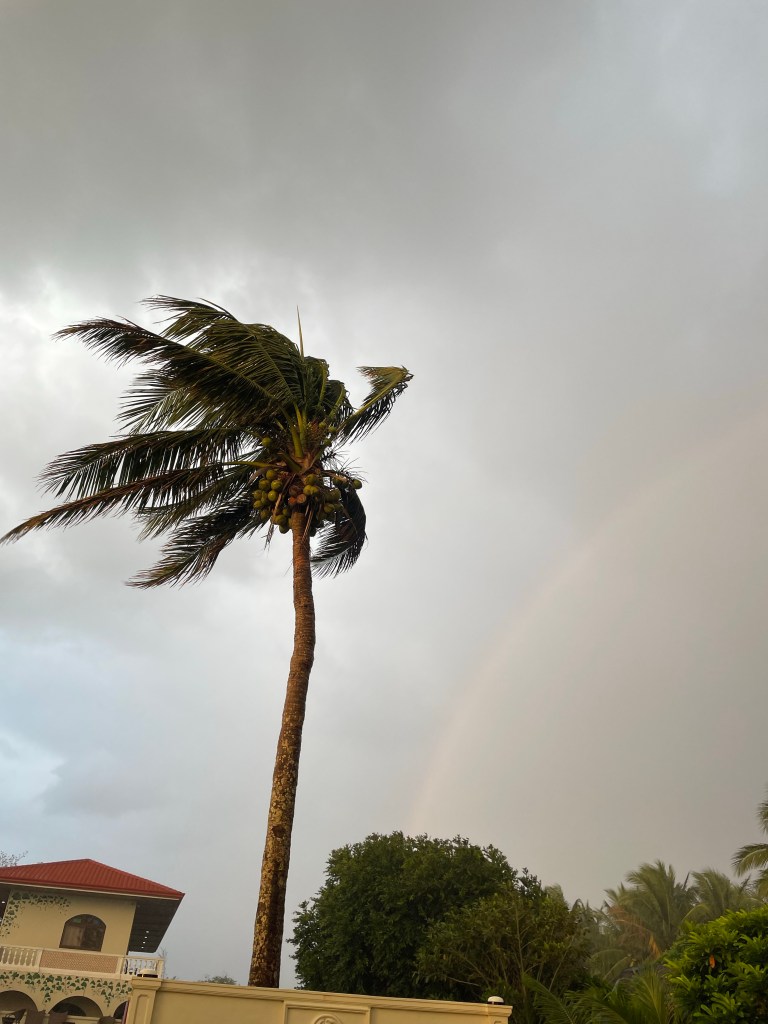
Photo by author, Anvaya Cove, 19 May 2023.

What do I mean?

Courage is not everything. True courage is still having fears – of being afraid of God, of not being able to follow him, not being able to stand by him, of turning away from him in sin as St. Paul reminded us in the second reading. There will always be fears within us but with courage, we face all fears because we realize in our own weaknesses and shortcomings, there is the power and love of God who values us so much than sparrows and knows the number of our hair (vv.29-31).

Most beautiful example is the Prophet Jeremiah who revealed in his book his weaknesses like his being inadequate in himself due to his being timid and hypersensitive. Read the preceding verses before our first reading today to see how Jeremiah could not resist God who had duped/seduced him that he chose to remain faithful despite the great pains and sufferings he had to face as God’s prophet (Jer. 20:7ff). More than the fears of men who were actually his compatriots bent on hurting him, there was still that greater fear of turning away from God who gives him so much strength to overcome his trials in life. Here we find true courage in Jeremiah when amid his great fears for his life, his trust in God becomes a song of praise:

“O Lord of hosts, you who test the just, who probe mind and heart, let me witness the vengeance you take on them, for to you I have entrusted my cause. Sing to the Lord, praise the Lord, for he has rescued the life of the poor from the power of the wicked!”

Jeremiah 20:12-13
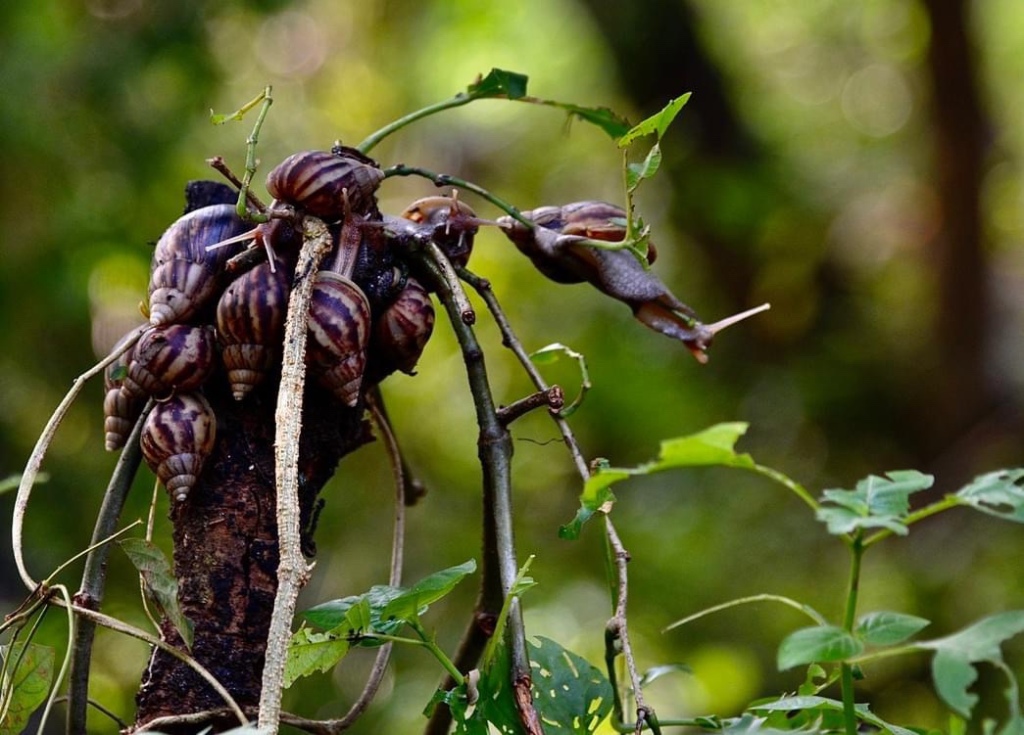
Photo by Dra. Mylene A. Santos, MD in San Antonio, Zambales, 05 June 2023.

What matters most in this life above all is God. Every pursuit we make, no matter how great are the dangers may be, may we have the courage to examine ourselves, our motives: is it for God or for myself? This is the essence of discipleship.

If what we pursue is for God, it would surely bring joy and fulfillment to people though it would entail sufferings and hardships, even death for us. By all means, go for it like Jeremiah and St. Paul and all the saints including the men and women of science and letters who toiled so hard amid great dangers and obstacles to serve God and people.

But, if our pursuit is for money or fame or position – for one’s self – it could bring only a little and fleeting joy, perhaps make a noise in the world or social media for a little while but we end up sorely losing everything, feeling disgusted and more fearful than ever in losing God.

May the Lord grant us the courage to be always true to him and his call. Amen. Have blessed week as you welcome July!


God our confidence

The Lord Is My Chef Sunday Recipe for the Soul by Fr. Nicanor F. Lalog II
Eleventh Sunday in Ordinary Time, Cycle A, 18 June 2023
Exodus 19:2-6 ><}}}}*> Romans 5:6-11 ><}}}}*> Matthew 9:36-10:8
Photo by Ms. April Oliveros at Mt. Pulag, March 2023.

I recently had a long lunch that extended to a longer dinner recently with a good friend who was widowed last January. It was the first time we met again after the funeral of her husband who died three weeks after I had anointed him last Christmas Day.

She was still grieving and yes, angry with God why her husband had to go at an early age. She told me how during her daily prayers she would complain to God, and how she wanted her husband to be still alive, not minding at all of nursing him again.

Likewise, she was worried God might be fed up with her, even mad and angry with her negative feelings and attitudes even though she prays and celebrates Mass more often these days since her husband’s demise.

Photo by Ms. April Oliveros at Mt. Pulag, March 2023.

Does God get angry with us?

The psalmist says, “But you, Lord, are a merciful and gracious God, slow to anger, most loving and true” (Ps. 86:15). If God is slow to anger, does it mean he gets angry, even sometimes?

No. Never.

God does not get angry at all because God is love. God is perfect unlike us who easily get angry and could remain angry over a long period of time because we are imperfect. But God, who is also spirit, does not have emotions, neither gets angry nor irritated with us and yet, always one with us in our feelings especially when we are down in pain and sufferings.

In Christ Jesus who became human like us in everything except sin, God became more one with us to prove his love and oneness for us.

At the sight of the crowds, Jesus’ heart was moved with pity for them because they were troubled and abandoned, like sheep without a shepherd. Then he said to his disciples, “The harvest is abundant but the laborers are few; so ask the master of the harvest to send our laborers for his harvest.”

Matthew 9:36-38
Photo by Mr. Raffy Tima, GMA-7 News, June 2020.

See how Matthew noted that “At the sight of the crowds, Jesus’ heart was moved with pity for them because they were troubled and abandoned, like sheep without a shepherd.” So beautiful. So powerful.

That expression his “heart was moved with pity” is the literal meaning of the Latin word misericordia – mercy in English – that means “a heart moved strongly” like disturbed or thrown off perhaps. More than just a feeling, that virtue of mercy is expressed into compassion which is another Latin word that means “to suffer with” or cum patior. Matthew here is telling us it was more than a feeling for Jesus to have his heart moved with pity but a firm resolve to uplift the crowds because in the first place he has that oneness with them.

Until now in our own time, that heart of Jesus is moved with pity for us whenever he sees us troubled and abandoned, like sheep without a shepherd. Just like my friend grieving the loss of her husband. Or anyone who had lost a beloved, a leg or a part of the body, maybe a job or a career, a dream or a future.

For Jesus, it is always the person who matters that is why his proposal has always been to send us another person, another companion, a fellow to accompany us in our brokenness and darkness. There is his move of gathering us, calling us, and sending us forth to a mission.

Jesus never taught us to ask for more money nor food nor gadgets to solve the problems of the world. Recall his temptation in the desert when he rejected the devil’s challenge to change stones into bread because man does not live by bread alone but with every word from God.

For the world, everything is a problem to be solved, including mysteries of God and of the human person. As we have reflected the past two Sundays, mysteries are not problems and therefore not solvable at all. Mysteries are non-logical realities we must embrace or even allow ourselves to be wrapped with to discover the richness and meaning of this life like God and persons.

When people are down and lost in this life, feeling troubled and abandoned, where do we focus more, to their woes and problems or their very persons? Try thinking of the people you consider as “heaven sent” and helped you in your darkest moments. Are they not the ones who brought out our giftedness as a person, as a beloved child of God with Christ’s gospel?

Photo by author, December 2022 at the National Shrine of Our Lady of Fatima, Valenzuela City.

Problem these days, many people no longer believe in God totally, not giving a care at all with the value and meaning of justification and salvation, of reconciliation and communion in Christ through one another that St. Paul explained in the second reading.

Modern man has become so complacent that he would be saved by a loving and merciful God. It is a wrong kind of confidence because it is a confidence in one’s own powers than in God’s saving act through Jesus Christ as St. Paul preached.

Sad to say, such kind of confidence afflicts mostly the so-called religious and pious ones in the Church, especially us priests and bishops who lose sight of the flock and of Christ in the process. No synod nor meetings and documents would make the local even Philippine Church attuned with the present time unless we the clergy and other disciples must first have our confidence in God, not in ourselves.

How tragic that we are still a Church so steeped in being a hierarchy, lightyears away from being any of the other models of the Church proposed by the late Jesuit Cardinal Avery Dulles: sacrament, herald, communion, and servant. Despite our many denials, priesthood is power and prestige where ministry is more of an office and a privilege. We are more concerned with the call, the vocation of priesthood totally ignoring the Caller, Jesus Christ. Visit any parish and chances are, you find the priest throwing his weight around – literally and figuratively speaking so that the sheep remain without a shepherd.

In the Old Testament, the image of Israel as a lost sheep was the result of failures and even of sins of infidelity of their religious and political leaders. History has proven not only in Israel but everywhere especially the Philippines that when there are failures in leadership in both the political and religious spheres, it is always the common people who suffer most.

Photo by Mr. Mon Macatangga, 12 May 2023.

If we think about it, Jesus could have reacted negatively at the sight of the crowds and even with us today. He could have felt angry and irritated, even annoyed, frustrated and disappointed with how we are wasting all his gifts and grace, his call and his mission. But Jesus chose empathy and sympathy because he always looks into our hearts, into our total person than to our sins and failures, mistakes and errors.

Let us return to our “desert of Sinai” spoken of in the first reading, a reminder of our turning point in life and history when God called and sent us to be a “kingdom of priests, a holy nation” whose confidence is in him alone, not in our very selves nor our programs and structures to find again the many lost sheep of our flock. It is never too late to make a U-turn for God is full of mercy and compassion, slow to anger, loving and true. Amen. Have a blessed week ahead!

Our parish, our priests

The Lord Is My Chef Daily Recipe for the Soul by Fr. Nicanor F. Lalog II
Wednesday in the Tenth Week of Ordinary Time, Year I, 14 June 2023
2 Corinthians 3:4-11   ><}}}}*> + ><}}}}*> + ><}}}}*>   Matthew 5:17-19
Photo by Dra. Mylene A. Santos, MD, 2020.
Lord Jesus Christ,
as we approach the Solemnity
of your Most Sacred Heart,
we pray today for your flock
and their shepherds,
we your priests.

How lovely if we 
your priests could only
speak boldly like St. Paul about
our ministry, our priesthood
in you made manifest in our 
own sufferings and sacrifices,
in our efforts to reach out to everyone,
especially the weak and the sick,
the marginalized and forgotten,
in our being one with you in your
Cross, Lord Jesus.

Brothers and sisters: Such confidence we have through Christ toward God. Not that of ourselves are qualified to take credit for anything as coming from us; rather, our qualification comes from God, who has indeed qualified us as ministers of a new covenant, not of letter but of spirit; for the letter brings death, but the Spirit gives life.

2 Corinthians 3:4-6
Keep us, your priests, 
faithful to your new covenant,
Jesus; let us bring fulfillment
to the many laws we have
by being a leaven for your people
to grow in faith, hope, and love;
set us free from the chains
of legalisms and rubrics
that forget you in every person.

Most of all, let us not forget
to lovingly serve your flock,
your people, O Lord;
may we always be present with
them especially in moments of 
their trials and weaknesses,
when they are seeking directions,
when they are lost and could not
find you.

May they be transformed into your
image, Lord Jesus Christ,
so that like St. Paul we may also
tell our parishioners,
"You are our letter, 
written on our hearts,
known and read by all" (2 Cor. 3:2)
when the works we have done as
your minister, Lord, 
speak for itself.
Amen.

God remembers… don’t quit!

The Lord Is My Chef Daily Recipe for the Soul by Fr. Nicanor F. Lalog II
Tuesday in the Second Week of Ordinary Time, Year I, 17 January 2023
Hebrews 6:10-20     ><]]]]'> + ><]]]]'> + ><]]]]'>     Mark 2:23-28
This prayer I offer 
for those losing hope,
wanting to quit and leave,
losing patience and sense
in all their efforts for the
betterment of others and the world,
for those disappointed or frustrated,
for those always on the distaff side,
always seen as odd and weird
because of their firm stand for
their beliefs and values:
remind them, Father, 
that you are aware of all their
noble efforts for the uplifting
of lives of many,
for their fight for justice
and truth.

Brothers and sisters: God is not unjust so as to overlook your work and the love you have demonstrated for his name by having served and continuing to serve the holy ones.

Hebrews 6:10
Dearest Jesus,
you know so well
how difficult and even
painful to remind people 
of their giftedness,
of their dignity,
of their honor;
many times, we feel tired
and sad at how others see us
and all our efforts for their good;
we are not asking for quick fixes
nor shortcuts for we know that indeed,
doing your work is never easy,
it is always a process;
all we are asking is rest,
a break perhaps
like your apostles one sabbath
who picked the heads of grain;
many times like the Pharisees
people give more emphasis and
importance to rites and rituals,
to rules and laws without any regard
for persons.
Lord Jesus,
remind us always that when
people fail to see our personhood,
our self-dedication to you and
your works,
remind us to never sag in spirits,
to never be sluggish
but instead be filled with more
fire and ardor in doing your work
until they realize that "The sabbath
was made for man, not man for 
sabbath.  That is why the Son of Man
is lord even of the sabbath"
(Mark 2:27-28).
Amen.

Tasting Jesus Christ

The Lord Is My Chef Daily Recipe for the Soul by Fr. Nicanor F. Lalog II
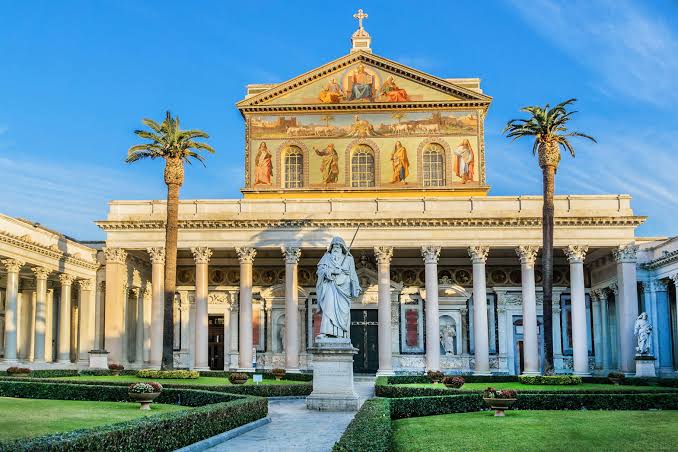
Friday, Memorial of the Dedication of the Basilicas of Sts. Peter and Paul, Apostles, 18 November 2022
Revelation 10:8-11   ><000'> + ><000'> + ><000'>   Luke 19:45-48
Lord Jesus Christ,
as we celebrate today the
memorial of the Dedication of the
last two Basilicas in Rome -
St. Peter's in Vatican and 
St. Paul's Outside the Walls -
you give us a "taste" 
of what is to be your Church,
your Body,
and your accompanying mission.

I took the small scroll from the angel’s hand and swallowed it. In my mouth it was like sweet honey, but when I had eaten it, my stomach turned sour. Then someone said to me, “You must prophecy again about many peoples, nations, tongues, and kings.”

Revelation 10:10-11
Thank you, Lord Jesus Christ,
for the sweet taste, 
for the sensation of being a Christian,
of listening to your words,
of being a Catholic,
of serving you,
of worshipping you,
of being loved by you.
Definitely so sweet indeed
to experience you in the Church!
But everything becomes sour
and bitter when we internalize
your words,
your call,
your mission
for that is when reality happens,
when we realize being your disciple
is a way of life in you,
a way of the Cross,
of giving one's self
to others like
the two pillars of your Church,
St. Peter and St. Paul.
Sometimes, Lord Jesus,
give us a taste of your anger
like when you cleansed the temple; 
let us taste your strong words
when we make the church a den of thieves
literally speaking;
let us have a taste of your discipline
when we dirty your Body,
when we hurt your Body,
and worst, 
when we mutilate your Body,
the Church with our lives so far from
your calling and mission
especially us your apostles.
Let us learn to love and accept
being Christian is savoring both
the sweet and sour tastes of
proclaiming your gospel 
both in words and in deeds.
Amen.

*Photos from en.wikipedia.org.

Without exceptions

The Lord Is My Chef Daily Recipe for the Soul by Fr. Nicanor F. Lalog II
Wednesday in the Twenty-Ninth Week of Ordinary Time, 19 October 2022
Ephesians 3:2-12   ><]]]]'> + ><]]]]'> + ><]]]]'>   Luke 12:39-48
Photo by author, 2021.

Then Peter said, “Lord, is this parable meant for us or for everyone?”

Luke 12:41
Teach me, Lord Jesus,
to be your "faithful and prudent
steward" like St. Paul, "the very
least" of your Apostles you have
called to preach to the Gentiles
your "inscrutable riches" (Eph.3:8);
forgive me, Lord, when many times
in life I take exceptions from your
teachings and instructions, 
having that feeling of entitlement
and even privilege.
Help me realize, dear Jesus,
this wonderful gift you have 
given each one of us of being
called to reveal and make known
to everyone your mystery of
love and mercy, kindness and
compassion; deepen our faith
in proclaiming your good news
of salvation to all so that like
St. Paul, we may "have 
the boldness of speech 
and confidence of access
through faith" in you.
Amen.

Poverty in priesthood

Quiet Storm by Fr. Nicanor F. Lalog II, 01 September 2022
Photo by author, Dominus Flevit Church overlooking Old Jerusalem, 2017.

Along with the vow of celibacy, the vow of poverty has become very contentious even among us priests these days which is very sad that one wonders why they got ordained in the first place if they were not totally sold out to being celibate and poor.

For most people especially Filipinos, how their priests practice poverty weighs more than their fidelity to celibacy, claiming they could understand and forgive priests getting into relationships with women than priests becoming “mukhang pera” (money-faced). For them, a priest falling in love with a woman is natural and therefore, understandable and “forgiveable”; but, a priest who worships money to the point of making his ministry a business endeavor even stealing from the church funds and donation boxes is what people detest most. In some parts of Bulacan and Cavite, they have a saying which is so vulgar to stress this point, “hindi bale madapa and pari sa puki kesa sa piso” (better for a priest to fall on a vagina than peso).

Photo by Ka Ruben, 24 June 2022.

Of course, it is always wrong to break any of these two important vows priests have made along with the third one which is obedience to his bishop because celibacy and poverty are closely related with each other for they both lead us priests to intimacy with God, our Caller. That is why, most often, when a priest has become “mukhang pera”, falling into the trap of money and luxuries, most likely he also has problems with celibacy. Even St. Ignatius had warned in his Spiritual Exercises that money is the first temptation the devil uses against every priest.

Like celibacy, poverty is a spiritual reality that is lived and felt by everyone in the material sense. More than being poor or having less in life, poverty is a choice we make for it to be real.  It is our attitude with material things in life: there are priests with so much and yet still feel poor like in advanced countries where cars and appliances are very common and ordinary while there are those with almost nothing and yet so attached with the little they have or wish to have and possess! One priest may have a brand-new car extensively using it to reach and serve his parishioners while another may have a second-hand car or owner-type jeep he tinkers daily, possessing him in the process. 

In our previous blog, we have mentioned that people should rejoice when their priest gives away their gifts because that means Father is not selfish, acting as the vessel or conduit of God’s graces and blessings to the poor and needy (https://lordmychef.com/2022/08/08/prayerful-requests-of-a-priest-to-parishioners/). 

Photo from inquirer.net, 2021.

Poverty is not a question of how much do we have but more of the question of how much do we share. See that very often, we are preoccupied thinking what we already and must still have without ever thinking how much do we share.

It is in sharing when we truly experience poverty; a priest who hoards everything – even people like benefactors and friends – is a priest in trouble. Here we find the direct relationship of poverty and celibacy: we renounce marriage which is a wonderful kind of wealth in the spiritual sense for something higher and better which is to be solely for Jesus Christ. That is the essence of our poverty, our being poor and empty so that we are wholly for Christ alone and his Church. It is being poor, materially and spiritually do we find our true wealth as priests, Jesus Christ and his Church or “people of God” as Vatican II rightly called.

Like everyone else, no priest can have everything in life; nobody is perfect but it is always the truth that we evade, priests and lay alike. Many people including priests often convince themselves of being self-sufficient, that we are the greatest, the most powerful so that we never ran out of construction projects in the church.  This is the mentality of the “dream-teams” or the “powerhouses” who claim to have everything and yet in reality, they rarely last long nor achieve much.  When everybody feels like a “heavyweight” – literally and figuratively speaking, always throwing their weight around, soon enough, he/she would surely sink. The Greeks call it hubris, another common ailment among us priests.

Photo by author, Capernaum, Israel, May 2017.

In my 24 years in the ministry, I have found and experienced that the key in any community and organization including family, profession and vocation like the priesthood is not in having everything, materially and non-materially speaking like talents and abilities that always end up into a mere show, a “palabas” even if it may be spectacular.  Life is not about dazzling others with our gifts and abilities but finding our limits and poverty. When we focus on what we do not have like our weaknesses and other limitations, our poverty becomes a wealth because that is when we are most creative and productive, achieving more in life.  Why is it when we do not have much on the table that there is always a leftover with everyone feeling satisfied? But when there is a plethora of food, we just feel satiated, filled up but not satisfied? 

Look at how many of our churches have become like birthday cakes that are so kitschy or baduy, tastelessly overdecorated looking like dirty old men (DOMs) and their counterparts, the matronix afflicted with hepatitis with all their gold trimmings. Many parishes are afflicted with a different virus more contagious than COVID without a vaccine where priests go “imeldific” in church decorations and renovations including liturgies that even the Blessed Virgin Mary is turned into a Miss Universe being “crowned” amid all pomp and pageantry. It is the virus of triumphalism with its ugly face of priests have too much of everything except God. The best priest, the holiest priest is often the poorest one, the one with less because that is when we have more of God. It is in poverty – and celibacy – we priests witness Christ’s lesson that “whoever saves his life loses it and whoever loses his life gains it” (Mk. 8:37-38). 

The problem of the priesthood for me is among other things a problem of poverty. I know that not all priests are necessarily committed, by their priesthood, to absolute poverty. But for my own part it seems to me that the two are connected.

To be a priest means, at least in my particular case, to have nothing, desire nothing, and be nothing but to belong to Christ. Mihi vivere Christus est et mori lucrum. In order to have everything, desire to have nothing.

Thomas Merton, The Sign of Jonas, page 191.
Photo by Fr. Howard Tarrayo, August 2021.

Poverty is blessedness because in our weak and fragile humanity, God chose to be one with us so that we can share in his divinity and thereby share in his life.  When we see each other’s wealth, the more we feel so poor and helpless; but when we see each other’s poverty, the more we see each one’s value. And we start enriching each one’s life.  This is the beauty of our poverty as priests when being poor is not to be destitute but be available to God and everyone. No wonder, poverty is the first of all beatitudes taught by Christ, “Blessed are the poor in spirit for theirs is the kingdom of God” (Mt. 5:3).

When we try to have less and become poor, that is when we discover the value of life, of every person created in the image and likeness of God. Then, we begin to share and give, to sacrifice and let go, truly loving one another by being forgiving and merciful and kind like Jesus Christ, “who, though he is God, he did not deem equality with God something to be grasped at but rather emptied himself by being born in the likeness of men” (Phil.2:6-7).

Again, help us your priests live simple lives, to be poor so it would not be difficult for you to support us too. Thank you and God bless!