Lord My Chef Daily Recipe for the Soul by Fr. Nicanor F. Lalog II Monday, Memorial of Sts. Timothy and Titus, 26 January 2026 2 Timothy 1:1-8 <*{{{{>< + ><}}}}*> Mark 3:22-30
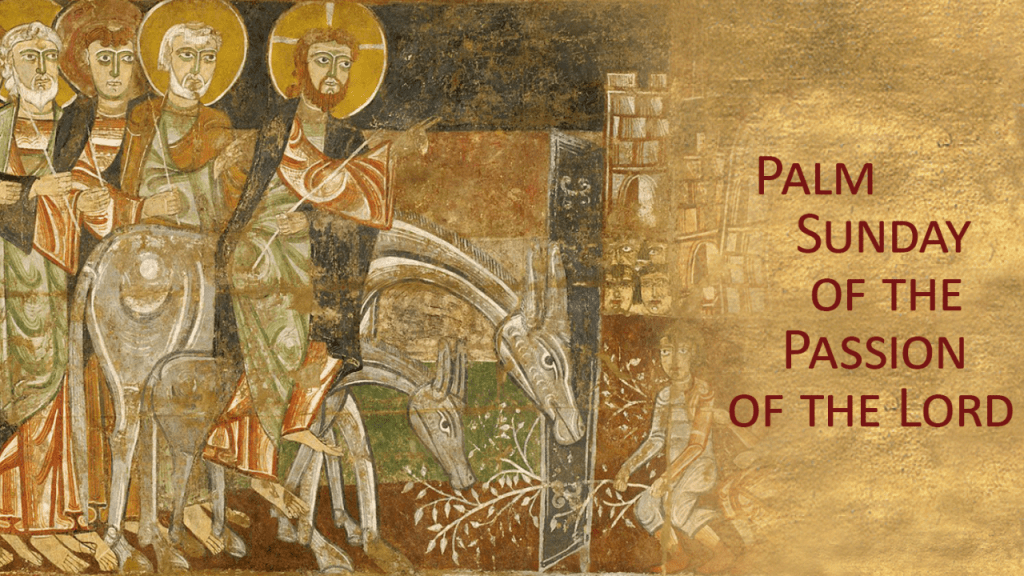
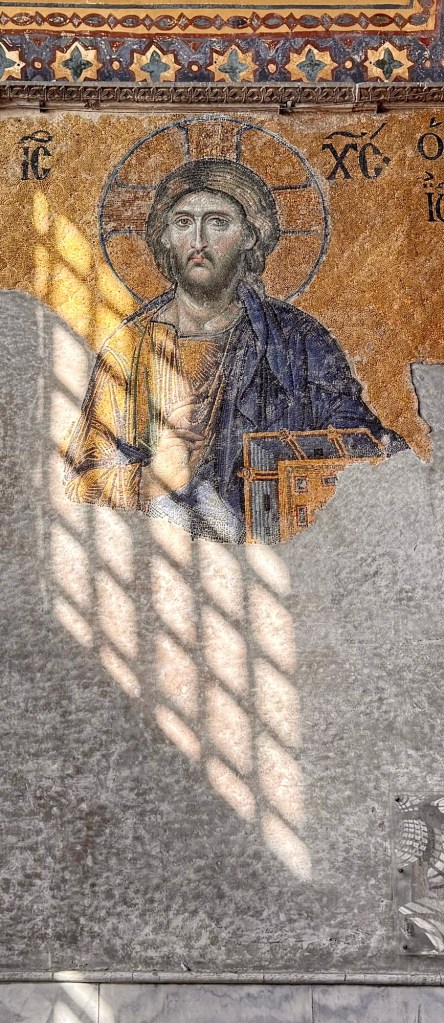
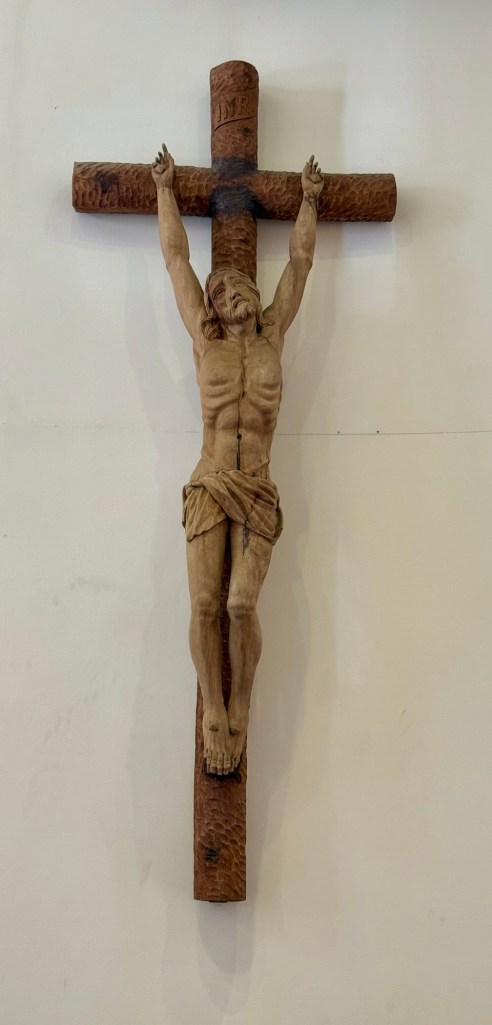
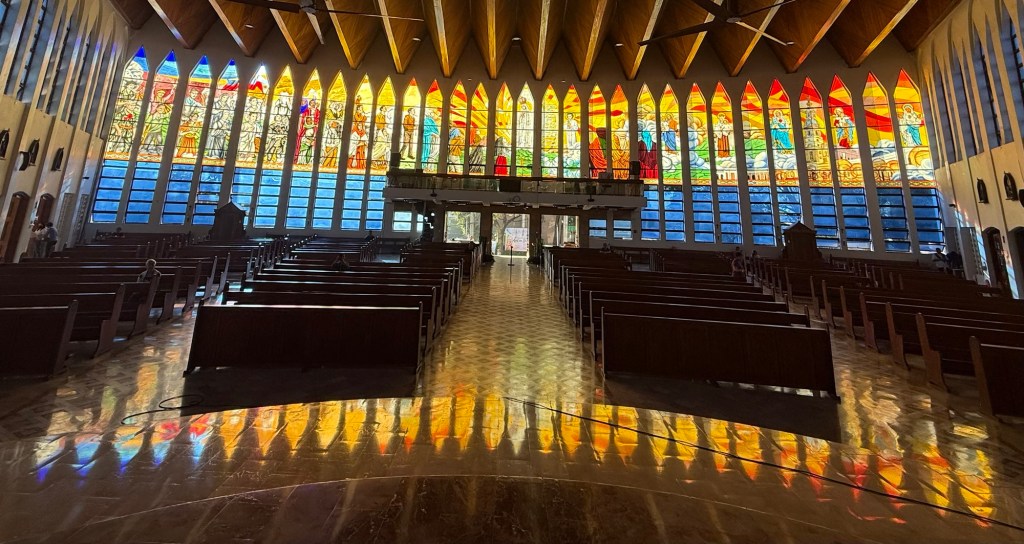
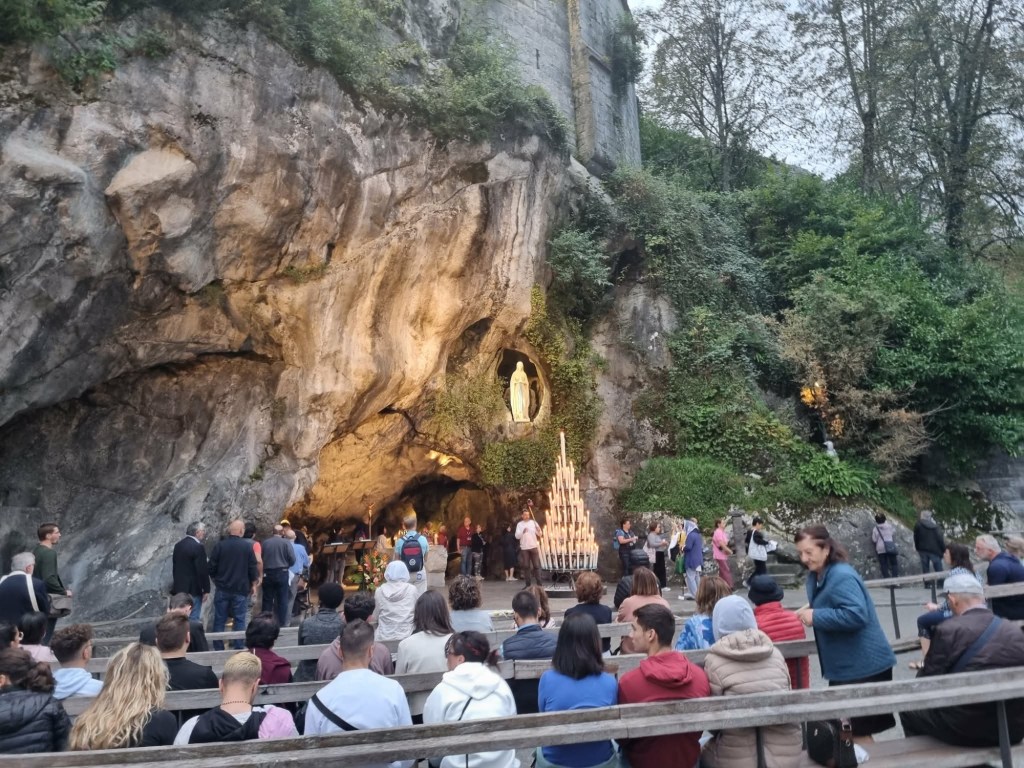
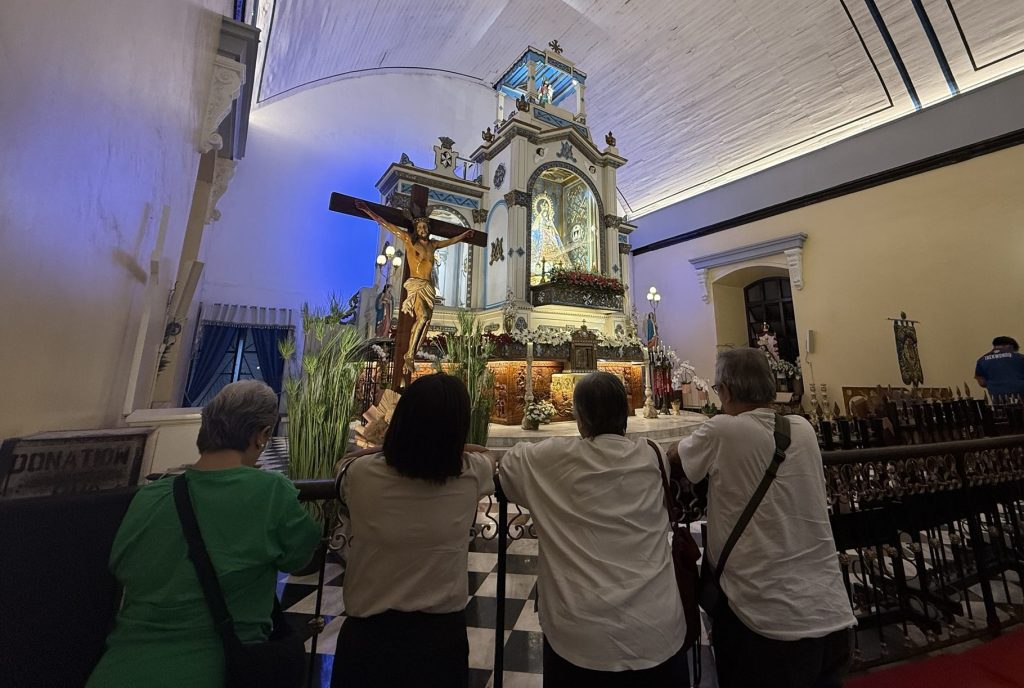
Photo by author, Carmel of the Holy Family Monastery, Guiguinto, Bulacan, 23 January 2026.
Let me not be ashamed of witnessing, of testifying for you, Lord Jesus Christ; let me not be ashamed of you, Jesus in this time when things of God and of virtues and holiness are looked down upon as old fashioned, so conservative, fill me with your "grace, mercy, and peace", Lord like what St. Paul prayed for his disciple Timothy.
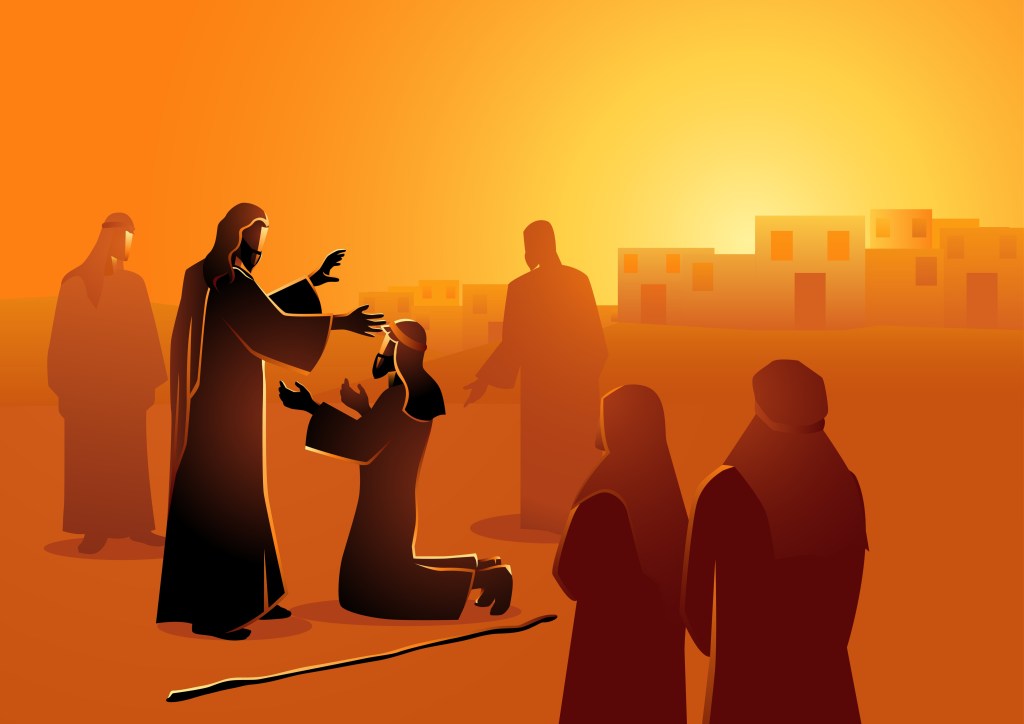
For this reason, I remind you to stir into flame the gift of God that you have through the imposition of my hands. For God did not give us a spirit of cowardice but rather of power and love and self-control. So do not be ashamed of your testimony to our Lord…(2 Timothy 1:6-8).
As I prayed St. Paul's letter to Timothy, I felt as if those very words were spoken too to me by you, Jesus - thank you so much, Lord! I feel shy but so encouraged too because indeed everything we have is a pure grace from you, Jesus; even our calling is a gift you have freely given us, Jesus; that is why, grant me the courage not to be ashamed to proclaim your truth always; grant me the courage not to be ashamed to witness your love and mercy and justice with others especially those with less in life. Amen.
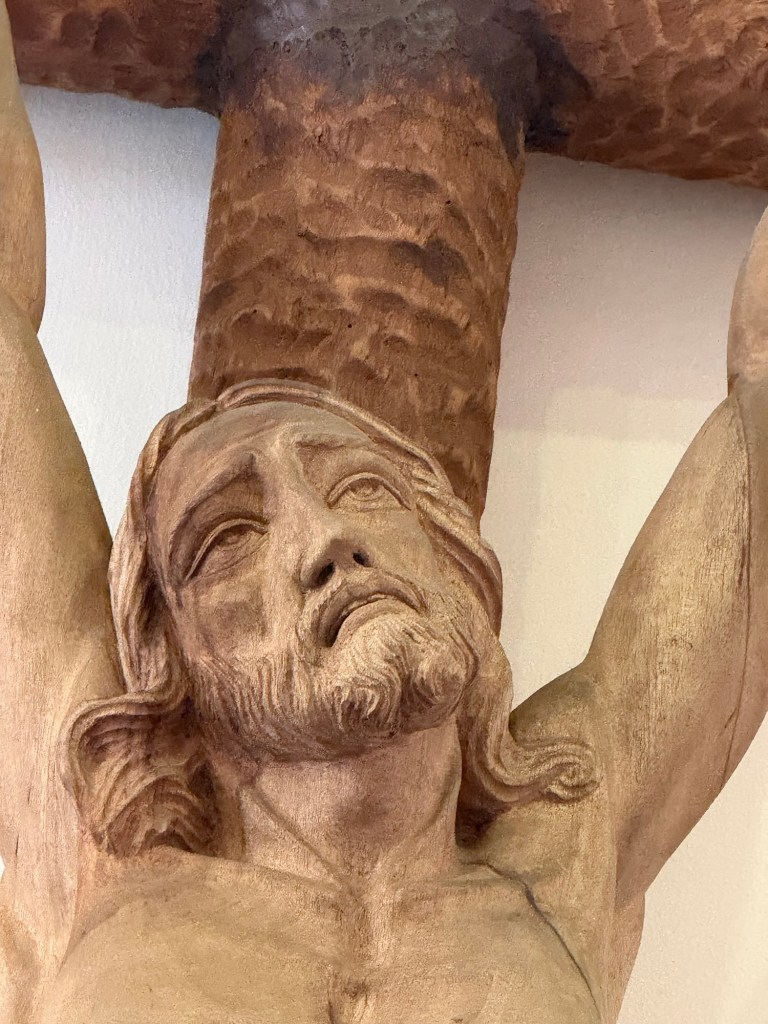
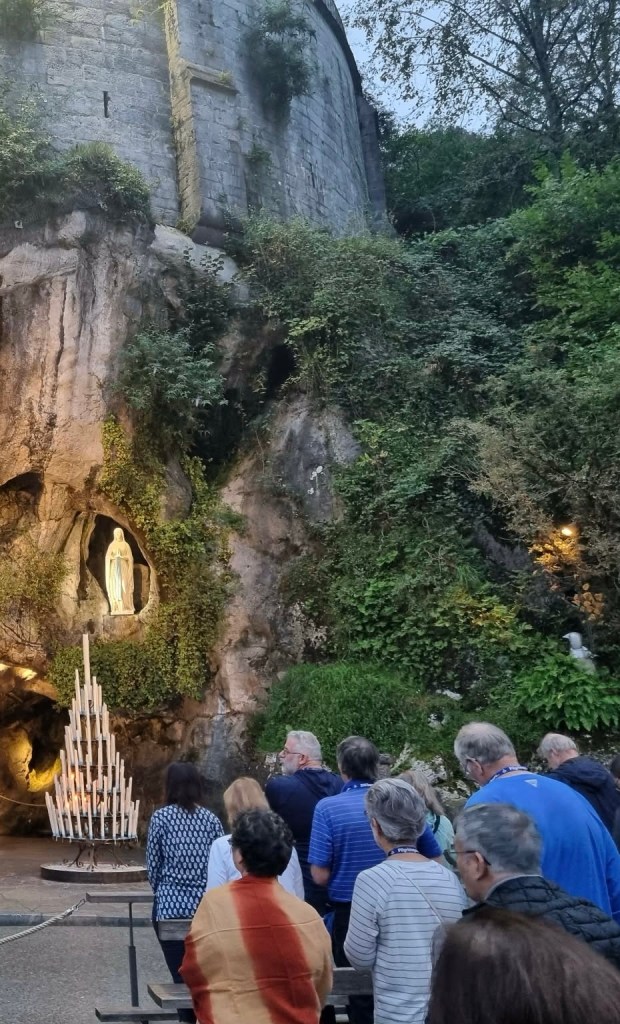
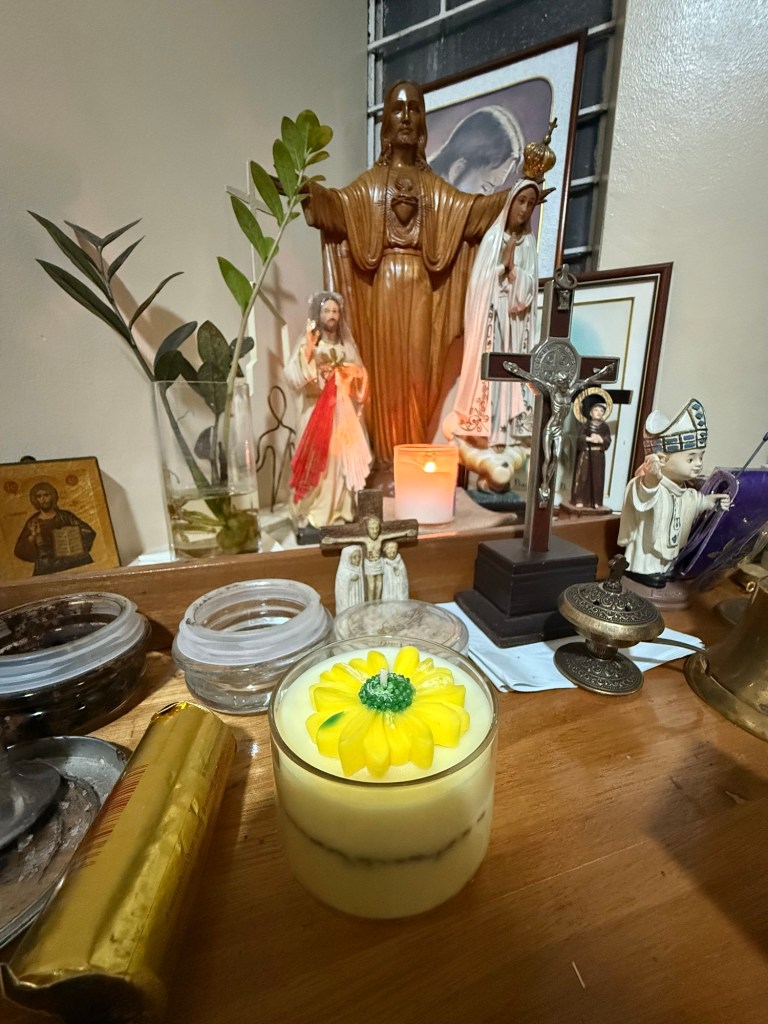
Photo by author, Carmel of the Holy Family Monastery, Guiguinto, Bulacan, 23 January 2026.
Lord My Chef Wedding Recipe by Fr. Nicanor F. Lalog II Homily, Wedding of Ellah and John Victor Santuario de San Jose Parish, Greenhills, Mandaluyong 27 December 2025
A former student in our girls’ high school invited me to officiate her wedding last December 27, 2025; we were supposed to meet December 20 before my Simbang Gabi in our university chapel for my formal invitation when her father died suddenly that same afternoon while on a trip down south with his fellow big-bikers.
Ellah was so devastated with the news, wanting to reset her wedding. She has been working overseas for the past three years and had saved enough for her wedding day. Her only request from her parents who have separated when she was in elementary was for them to be together when she gets married. And they willingly obliged for their unica hija. And then tragedy struck exactly a week before her wedding day that happened to be the feast day of St. John Evangelist, the beloved disciple of the Lord. Sharing with you my homily on that bittersweet day of wedding of a beloved student and funeral of her father.
Congratulations, Ellah and JV on this most joyous day of your lives.
I know, it must be so difficult for you, Ellah but I am so glad that you still pushed through with your wedding today as planned. Your dad would not be happy if you had this postponed.
Showbiz ka rin talaga, Ellah!Parang cine – a wedding and a funeral.
But, let it be clear with you both, Ellah and JV that God willed it for you get married today on the feast of Jesus Christ’s beloved disciple St. John the Apostle and Evangelist. God wanted you to be married this day – not next year nor next month, nor last year. This is the day that the Lord has made for you to seal your love at His altar in this beautiful church because God has great plans for you, Ellah and JV.
Our gospel is so beautiful – the story of Easter when Jesus Christ rose from the dead.
On the first day of the week, Mary Magdalene ran and went to Simon Peter and to the other disciple whom Jesus loved, and told them, “They have taken the Lord from the tomb, and we don’t know where they put him.” So Peter and the the other disciple went out and came to the tomb (John 20:1,2-3).
“The Three Marys” (1910), painting by American Henry Osawa Tanner from biblicalarchaeology.org.
Here we find a most beautiful image of human relationships, of how a woman needs a man, and a man’s readiness to be at her side, to comfort and accompany the woman.
Just like you today, Ellah and JV.
Of course, Mary Magdalene and Simon Peter were both disciples of Jesus. They have no romantic relationships. But, the mere fact that Mary thought of reporting the missing body of Jesus to Peter being the leader of the Apostles speaks a lot to us these days when gender equality is overextended.
A woman needs a man for leadership that is why he is the man of the house. This we find in the rite of putting on veil on the newly-weds: only the head of the woman is covered because in every family, in every couple there is only one head, one leader – the man. Wherever there are two heads, it means there is a monster. There can be no order in any relationship when everyone is the leader or the head. This is most especially true in every couple.
However, let it be clear too that these mutual need of woman for man and man for woman is always governed by love which is more than a feeling but a decision, a meeting of one’s mind and heart. If your read the letters of St. John like what we have in our first reading today, you will realize three important lessons by the beloved disciple about LOVE:
Ellah and JV, remain rooted in God for “God is love.” If there is one thing you have found so clear in your lives since college, Ellah and JV, God has always been there with you. His abiding love never forsake you both, especially in your most trying times. Keep serving Him in your parish, in your lives, in your married life. Handle life with prayer.
Second, St. John tells us that love is not merely said in words but proven in deeds and works.
Walk your talk of “I love you.” One of the things I ask couples preparing for marriage is, who should be the first to greet, to speak when you have an LQ? Sino dapat maunang kumibo kapag nag-away ang mag-asawa o magkasintahan?
Many say it should be the man but I ask them whatever happened to the principle of ladies first? On the other hand, some say whoever caused the quarrel must be the one to apologize but the problem is, would anyone admit fault? The answer is simple but difficult to practice: whoever has more love to give must be the first to blink, must be the first to make the move. Love in any relationship is not a competition. Just keep on loving and loving. Show and make your love felt in actions. Not just words.
Third, very clear with St. John that love is always self-giving.
The true measure that you have loved is when you are able to love somebody else more than yourself. Love is always the giving of self.
In another part of his letter, St. John beautifully wrote that “No one has ever seen God. Yet, if we love one another, God remains in us, and his love is brought to perfection in us” (1Jn.4:12).
Remember, Ellah and JV, Jesus is always between the two of you, not in front nor at your back. Whatever you do to each other, you do it first to Jesus. When you work hard JV and become patient with the tantrums of Ellah, you first become loving to Jesus and then to Ellah. The same with you Ellah: when you take care of JV, when you cook his favorite meal, you are first loving Jesus then JV. But, the moment you become mean to each other, when you become unfaithful to each other, Ellah and JV, you become unloving first to Jesus and then to each other.
Wedding is not everything, Ellah and JV. There will be dark days and difficult times ahead of you, just like now as you grieve at the death of your dad, Ellah.
But, remember Ellah and JV your gospel today: Easter happened when it was dark; the tomb was empty because Jesus had risen from the dead. Like in life, whenever it is dark and empty, hold on to each other Ellah and JV, have faith in God for there in your midst is Jesus Christ.
Never lose hope in life; as I used to teach you Ellah in high school, hopelessness is the opposite of love, not hatred. The moment you find no hope in everyone and in everything, then you stop loving and that is when you start destroying everything and everyone. Never lose that hope and you will always find love, Ellah and JV. God bless you more and blessed Merry Christmas!
Quiet Storm by Fr. Nicanor F. Lalog II, 15 January 2026
Photo by Ar. Philip Santiago, Basilica of the Annunciation, Israel, October 2025.
Two priests and a former nun personally known to me died in our diocese last Sunday. It was also the birthdate of the late Bishop Cirilo Almario, Jr. whom I had remembered in my two early morning Masses on that Sunday, January 11, 2026.
In those two Masses too I mentioned in my homily the retreat I facilitated first week of January with my friends about “ageing gracefully” – my own realizations since joining their ranks as senior citizens last March.
Let me elaborate those two points I have shared with them and in my homily last Sunday.
From forbes.com.
First, let us embrace our being old. Stop saying “when we get old”, pagtanda natin because we are already old. Period. Matanda na tayo.
We cannot reverse our ageing process and it is useless to have all these cosmetic manipulations like dyeing our hair black or stretching our sagging skin and removing those wrinkles.
Embrace old age. It is beautiful and wonderful because it is so good. Our Filipino word for “old” says it all – matanda – which ironically so many women hate to hear as they stress that kalabaw lang ang tumatanda. That is not true.
Our word matanda is from the root word tanda which means “sign” that is why an old person is rightly called matanda because he/she is a sign of God’s goodness, a sign of God’s mercy and love, a sign of God’s beauty and majesty.
Moreover, a matanda is a sign of wisdom and grace that is why when we were young boys, we wanted to be old by putting our dad’s eyeglasses or taste his cigarettes and beer while girls put on their mom’s make up and high heeled shoes. How funny that when we are already old, we resist to accept the fact that we strive to look young again, sometimes ending up as nagmumurang kamatis.
Photo by Mr. Jim Marpa, 2019.
Technically speaking, “old” is actually harsh. Old is something about a past phase that has ran its course like being outdated. Luma in Filipino that connotes stale, passe, lacking relevance and sadly, useless. Just for display purposes. As a person, that is the one we refer to as walang pinagkatandaan. Or huklubang matanda.
To be more specific, the better English term referring to ageing gracefully is ancient that exudes with a sense of timeliness, of being perpetually relevant like the ancient ruins in Rome, Athens, and Jerusalem. Actually, some biblical experts have wanted to rename the “Old Testament” as “Ancient Testament” following this line of thinking.
Photo by author, Ephesus, Turkiye, November 2025.
Things and even persons can rightly be referred to as ancient because of their beauty still intact that inspires us and makes us wonder about life itself. They are not just old sites nor old persons that remind us of the past long gone but ancient because still lovely, “still full of sap and green” as the psalmist extolled the seniors of his time.
Persons who age gracefully like ancient sites stir our inner selves with deeper beauty and realities of life that eyes cannot see. That is perhaps the reason these days many senior men and women are so “in” and considered as attractive.
It is the same wisdom realized by St. Augustine when he wrote about God, “Late have I loved you, O Beauty ever ancient, ever new, late have I loved you. You were within me, but I was outside, and it was there that I searched for you.”
Being ancient -whether as a person or a thing – is something of the inside we must turn to not outside like our skin and physical body. From that inside realization and acceptance of being senior or elderly we experience the grace of ageing because we experience God still present in us, in fact loving us more as he makes as a sign or tanda of his loving presence.
Ageing gracefully is a modern virtue we need to cultivate in this age of instants that glorify youthfulness equated with usefulness. That is why when Pope Benedict XVI resigned from the Papacy in 2013, the more I have come to love and admire him. In his resignation, he taught us the importance of embracing and lovingly accepting our old age when we can no longer adequately perform our many tasks in office even in life itself. It was not a failure nor a surrender in the negative sense but more of a deep courage and trust in God that we accept our being weak and ready to come to him soon.
Photo by author, Pundaquit, San Antonio, Zambales, May 2025.
This brings me to my second realization since turning sigisty years old last year: corollary to embracing old age is accepting death. That is why, as seniors, let us stop saying and thinking of our coming death because we are already dying. Huwag na nating isipin yung “kapag namatay ako” dahil namamatay na nga tayo.
Being senior is doing away with those bucket lists, of thinking about things to do, places to visit before we die. We are already dying and hence, whatever you can do, do it now. There could be no more tomorrow. All we have is the present moment. Anything could happen to us, for better and for worse.
Ageing gracefully is coming to terms with life which leads us to coming to terms with death. Yes, this is easier said than done, but slowly, I am learning and loving it!
Photo by author, Bucharest, Romania, November 2025.
One of the reasons that made me decide to become a priest in the early 1990’s was the conviction that I have felt so deeply God’s love for me as a person in the many experiences I have gone through in life. I felt at that time that by becoming a priest, I could convince more people about the truth and existence of this loving God we have.
I still hold on to that but a year after turning sigisty, becoming sigisty-one in March 22, another fascinating realization I have had is how wonderful this life is. Now that I am old, the more I can boldly claim with conviction that it is good to be alive. Masarap pa rin ang mabuhay! Maganda ang buhay maski mahirap!
Accepting and embracing our ageing, our getting weak, our failing memory are all kinds of dying. And in that midst that we actually live fullest and meaningfully. I don’t know if I can write any further because I ain’t dead yet but… just in case, it was worth the trip. Amen. May you have a fruitful and fulfilling weekend ahead.
Lord My Chef Christmas Eve Recipe, 24 December 2025
Photo by Ar. Philip Santiago, a mural of angels announcing the birth of Jesus Christ to shepherds in the field, Angels’ Field Chapel in Bethlehem, October 2025.
A blessed Merry Christmas, friends ad relatives, especially our followers. In our Monday’s Simbang Gabi when Mary sang her Magnificat during her Visitation of Elizabeth, we reflected how songs not only express our innermost thoughts and feelings but reveal our very person, too.
Allow me this Christmas to share with you a song I have recently heard to reflect on the meaning of Jesus Christ’s birth. The song is called “My Lord Has Come” written in 2010 by Will Todd, a renowned contemporary British composer and pianist who blends melodic classical compositions with jazz elements. Check YouTube to feel its moving music but for now, experience the sense of wonder in its inspiring lyrics.
Shepherds, called by angels,
called by love and angels:
No place for them but a stable.
My Lord has come.
Sages, searching for stars,
searching for love in heaven;
No place for them but a stable.
My Lord has come.
His love will hold me,
his love will cherish me,
love will cradle me.
Lead me, lead me to see him,
sages and shepherds and angels;
No place for me but a stable.
My Lord has come.
Photo by Ar. Philip Santiago, a mural of shepherds as first visitors to the newborn King of kings, Angels’ Field Chapel in Bethlehem, October 2025.
I learned and heard this song last week while researching for materials this Christmas. And the word “stable” struck me.
See its varied meanings. First, “stable” means firm and sturdy, unshakeable like a stable table, stable ground, and stable truth or opinion. But during this period, we know a “stable” also refers to the Nativity scene or creche which we Filipinos call as a Belen that is actually a translation of the Lord’s birthplace of Bethlehem.
In those days a decree went out from Caesar Augustus that the whole world should be enrolled. This was the first enrollment, when Quirinius was governor of Syria. So all went to be enrolled, each to his own town. And Joseph too went up from Galilee from the town of Nazareth to Judea, to the city of David that is called Bethlehem, because he was of the house and family of David, to be enrolled with Mary, his betrothed, who was with child. While they were there, the time came for her to have her child, and she gave birth to her firstborn son. She wrapped him in a manger, because there was no room for them in the inn(Luke 2:1-7).
How lovely that God manifested to us in the most humble way, being born on a manger, at a stable for animals!
And see now why Christmas is the greatest exchange gift of all time when God became human like us born in a stable so that we too may become divine like Him.
But, it is no easy exchange gift we often do in our Christmas parties when we just have to buy gifts that fall within the range of prices we have agreed upon. Jesus Christ the Son of God came not for any price that can be bought and paid by humans for He came with His whole life and being.
Picture the Christmas stable, of how the eternal entered the temporal, the infinite and perfect became flesh and bones and blood among us, so intimate with life and all the mess and chaos of living including death itself. He was born because He loves each one of us immensely.
And listen now to Will Todd telling us, “The Lord has come in a stable… anyone searching for Him – whether angels or shepherds or sages like the Magis, there’s no place except the stable.
Even for me and for us searching for stability in life, meaning in life, direction in life that can be found only in the stable where the Lord has come. How lovely!
In the silence of the darkest night of the year, amid the loud claims of everyone being the greatest and most powerful, the best and brightest, unknown to them the only true great and mighty one is in the stable.
In the gospel we heard too how the shepherds went in haste to visit the newborn Messiah in the stable, rejoicing afterwards at the great sight and good news they have found.
But, how about us today? How sad nobody cares at all to go to the Holy Mass which is actually the modern Christmas stable of Bethlehem which means “house of bread”. Jesus is the Bread of life as He preached later in life in the Gospel of John. On the eve of His death at the Last Supper, Jesus gave Himself as the Bread broken and shared for all lifetime to lead us to eternity.
How sad that we search for life’s meaning and sense in the most unstable of all instances like science and technology, new thoughts and ideas that overextend our rights without any regard for responsibilities and true freedom. If there is anything that merits haste these days, it is the things of God like the Mass and prayers and Sacred Scriptures. Not social media and all those viral and trending reels of our follies and stupidities we love to follow.
Photo by author, Christmas 2021 at Basic Education Department Chapel, OLFU-Valenzuela City.
See also the animals in the Christmas stable especially the ox and donkey who all symbolize our blindness to God who humbly came to us in the stable. Isaiah and the other prophets in the Old Testament lamented how animals particularly the ox and donkey “know” so well where to go when hungry and thirsty which is the stable while we humans wander far because we are so blinded by many things.
Christmas tells us humans to stop looking so far as Will Todd insists in his great composition My Lord Has Come inspired by our readings last night and today: it is only in Bethlehem that we find the true stable reality of life where the Son of God was born so that we now reckon time according to His birth with BC and AD because humans and civilizations do not last. “Jesus Christ is the same yesterday and today and forever” (Hebews 13:8).
Our only stability in life is found in the Christmas stable especially when the nights are dark and long. Amen. A blessed and stable Merry Christmas to you!
Lord My Chef Simbang Gabi Recipe for the Soul by Fr. Nicanor F. Lalog II Wednesday, Simbang Gabi-II, 17 December 2025 Genesis 49:2, 8-10 <*[[[[>< + ><]]]]*> Matthew 1:1-17
Photo by author, December 2023.
Next to the Belen and the Parol, the Christmas Tree stands out as the third leading sign of Christmas especially in our country. Though it was first introduced by the German Lutherans in the 16th century, we Catholics have adopted it too with the Vatican having a giant Christmas Tree every year lighted at St. Peter’s Square in Rome.
The Christmas Tree invites us to remember Jesus who was born in Bethlehem is the true Tree of Life, as it “depicted the tree of paradise and the Christmas light or candle which symbolized Christ, the Light of the world” (Book of Blessings, page 443). Remember also that since ancient time especially among the Anglo-Saxons, trees symbolize our relationships as family and kin that is why we have “family trees” that trace our roots.
And that is what a genealogy is all about.
Photo by author, December 2022.
Matthew along with John opened his gospel account with the origin of Jesus; both felt the need to present right away to their specific audience where the Christ came from. John traced it to eternity as the Word (Logos) while Matthew whose followers were mostly Jewish converts to Christianity presented Jesus as the fulfillment of God’s promise in the Old Testament through their two main personalities, Abraham and David.
The book of the genealogy of Jesus Christ, the son of David, the son of Abraham. Abraham became the father of Isaac, Isaac the father of Jacob, Jacob the father of Judah and his brothers. Judah became the father of Perez and Zerah, whose mother was Tamar (Matthew 1:1-3).
Every year we hear this gospel proclaimed on December 17 which is also the start of the second and final phase of Advent when all our readings and prayers direct our attention to the first Christmas that happened more than 2000 years ago.
For Matthew, it all started with God’s promises to Abraham, the father of all nations and to David, the greatest King of Israel whose royal lineage made the Christ a King, in fact the King of Kings. What is most interesting in Matthew’s genealogy is the fact that with each of those names that sound so funny for many of us today was a true person just like us – so human and so imperfect, even sinful except the Blessed Virgin Mary. Matthew did not sanitize nor photoshop the personalities in the Lord’s genealogy because that is the Good News: it is good to be human that is why the Son of God became one of us in everything as a human being except sin.
This year, I wish to reflect on just one person, Judah.
Jacob called his sons and said to them: “Assemble and listen, sons of Jacob, listen to Israel, your father. You, Judah, shall your brothers praise – your hand on the neck of your enemies; the sons of your father shall bow down to you. Judah, like a lion’s whelp, you have grown up on prey, my son… The scepter shall never depart from Judah, or the maqce from between his legs, while tribute is brought to him, and he receives the people’s homage” (Genesis 49:2, 8-9, 10).
This is the second Christmas me and my siblings are celebrating without both our parents. Our mother died May 2024. Though it was so heavy and difficult for us, everything moved so fast that year. So unlike this 2025.
Photo by author, December 2020.
We never get used to deaths in the family; the pain becomes most painful as we move through the years especially during Christmas as if our Belen would never be complete without a St. Joseph and a Mama Mary. Of course, Christmas and life itself is all about Jesus Christ but it is a different reality and story celebrating this most joyful season without parents. Especially for a priest like me. (No drama intended.)
That is why I felt so drawn in my prayers to Judah in Matthew’s genealogy as one of the great, great, great grandfather of Jesus Christ.
In the first reading, we have Jacob nearing death while they were all in Egypt courtesy of his eleventh son Joseph who rose to power after being sold there by his brothers. Though my mother never gave such speeches when she was nearing death, all her life she used to tell us similar things when we were growing up, of how after she and dad would be gone that I must look after my two sisters and only brother, that we would not quarrel and be loving one another always. I think such habilin as we say in Filipino is common among us Pinoys along with the usual passing on or entrusting of family and properties to the eldet, either the kuya or ate.
But that’s not the case in our first reading because Judah was not the eldest of Jacob’s children with her first wife Leah. Judah was their fourth son with three elder brothers – Reuben, Simeon and Levi with a sister named Dinah. Judah also had six half-brothers from their father’s concubines or later wives: Dan, Napthali, Gad, Asher, Joseph, and Benjamin.
Rembrandt’s 1660 painting of “Judah and Tamar” via en.wikimedia.org
Why was Judah the one anointed by Jacob to lead his family and not the elder sons as it is the norm among Jewish and even Filipino families?
This is where the story gets most interesting: Judah’s Kuya Reuben fell from grace because he had sex with their father’s concubine Bilha whose sons were Dan and Napthali while his Diko Simeon and Sangko Levi were disqualified from leading the family after their bloody revenge for the rape of their sister Dinah.
However, that does not mean Judah was clean and honorable at all!
Matthew told us in his genealogy of Jesus that Judah’s sons Perez and Zerah (twins) were born through Tamar who was actually the wife of Judah’s eldest son Er who died without having any son. As per Jewish tradition, Judah’s second son Onan married Tamar but refused to have a son with her that he “spilled his seed” to the ground – that is, he masturbated! It angered God that he took Onan (that is why masturbation is sinful and also known as “onanism” from Onan).
After losing his two sons because of Tamar, Judah refused to give his third and youngest son Shelah to marry her. So, Tamar devised the plan of pretending a prostitute, luring Judah into bed and have her pregnant with the twins Perez and Zerah. Read Genesis 38 for the full story!
Of Jacob’s sons, Joseph was the most eligible to lead and continue Jacob’s family lineage and not Judah had no credentials at all to speak of as a great man leading his brothers, eventually becoming the father of the Jewish nation from whose name came the word “Judaism”.
“Patriarch Judah”, a Russian Orthodox painting in 1654 from en.wikipedia.org.
Remember too that Judah was totally silent and timid unlike Reuben when his elder brothers planned of killing Joseph because of jealousy; it was him, however, who thought of selling Joseph into slavery to Egypt to make some money.
Judah’s only saving grace came after more than twenty years when Joseph was already a powerful man in Egypt demanded to have Jacob’s youngest son Benjamin as his slave in exchange for them to purchase foodstuff during the famine (Gen. 42). Judah pleaded for Benjamin’s life that Joseph finally revealed himself as their lost brother after he could no longer contain his tears and joy in being reunited with his brothers anew.
Despite all these shady past of Judah, God chose him to continue the family lineage of his father Jacob from whom the Messiah, Jesus came.
Like Judah, we are not the perfect son or daughter, brother or sister in the family.
Like Judah, we are not most qualified for being the favored one or anointed one in the family or in the organization. There is always somebody better than us.
But God’s works in mysterious ways, in ways so different from our own ways. As the saying goes, God does not call the qualified but qualifies his calls. Likewise, God writes straight in crooked lines.
The Simbang Gabi invites us not only to look forward to the birth of the Messiah; in these nine days of prayers and reflections, we also look back to our past to face and embrace, admit and own those shades of darkness in our lives.
Matthew’s genealogy reminds us today that this family tree of faith in Jesus extends down the generations and includes us today. Feel and experience, most of all, celebrate that joy of belonging to God’s living family tree where every branch, every member is loved and cared for. God believes in us that he entrusted to us his Son Jesus Christ. That’s Christmas – God becoming human, infant and weak like us, entrusting himself to our care and love and protection.
This Simbang Gabi, let us remember our family members and other persons who made us feel belonging in this living family tree of Jesus. Let us also pray for those lost family members and friends that Jesus wants us to draw near to his living family tree with our friendship and warmth, forgiveness and acceptance. As you light your Christmas tree tonight, do not forget to share the light and warmth of Jesus Christ, our Tree of Life. Amen. Have a blessed Wednesday!
Lawiswis ng Salita ni P. Nicanor F. Lalog II, Ika-02 ng Disyembre 2025
Larawan kuha ng may-akda sa San Fernando, Pampanga, Nobyembre 2021.
Napansin ko lang kakaiba itong kapaskuhang darating: tahimik si Jose Mari Chan at inagawan ng eksena ng mga mandarambong sa pamahalaan at kongreso na hanggang ngayon nagtuturuan, nagtatakipan habang pinagpipilitan ng isang ginang kakasya raw ang limang-daang piso upang makapag-diwang ng noche buena sa bisperas ng Pasko ang pamilyang Pilipino.
Kaya sumagi sa aking alaala pamaskong awiting aking kinalakhan:
Kay sigla ng gabi, ang lahat ay kay saya Nagluto ang ate ng manok na tinola Sa bahay ng kuya ay mayroong litsonan pa Ang bawat tahanan, may handang iba't-iba
Tayo na, giliw, magsalo na tayo Mayroon na tayong tinapay at keso 'Di ba Noche Buena sa gabing ito? At bukas ay araw ng Pasko
Mga ginigiliw, atin nang mapagtatanto sa awiting ito diwa ng Pasko: ating pagsasalu-salo ng mga kaloob na biyaya at pagpapala na sinasagisag ng noche buena ng pagkakatawang-tao ni Jesu-Kristo noong Pasko; ngunit, paano nga kung sa halip na tulungan lalo mga maliliit tugon ng pamahalaan ay bigyan ng presyo natatanging pagsasalo-salo ng Pilipino tuwing Pasko?
Narito naman makabagong awiting pamasko naghahayag na walang tatalo sa Pasko sa Pilipinas:
May tatalo pa ba sa Pasko ng 'Pinas? Ang kaligayahan nati'y walang kupas 'Di alintana kung walang pera Basta't tayo'y magkakasama Ibang-iba talaga ang Pasko sa 'Pinas
May simpleng regalo na si Ninong at si Ninang Para sa inaanak na nag-aabang Ang buong pamilya ay magkakasama sa paggawa ng Christmas tree Ayan na ang barkada, ikaw ay niyayaya para magsimbang gabi
Muli mga ginigiliw sa saliw ng awiting ito madarama natin diwa at tuwa ng Pasko: wala naman sa handang noche buena ito kungdi sa samahan at pagbubuklod ng pamilya at magkakaibigan katulad ng pagkakatawang-tao ni Jesu-Kristo na pumarito upang tubusin tayo sa ating mga kasalanan at mapunan ating kakulangan ng kanyang kaganapan sa pagmamahalan.
Subalit kay hirap maramdaman pagmamahal ni malasakit nino man tulad ng mga nasa kapangyarihan animo mga maligno at impakto ng mga ghost project kaya Biyernes Santo hindi Pasko pakiramdam ngayon ng maraming Pilipino: wala ang mga ginigiliw na ate at kuya may handang iba't-iba dahil sila ay mga nagsipag-OFW na habang ang mga buwitre at buwaya sa Kongreso nagpapasasa sa kaban ng bayan mula sa dugo at pawis ng mga mamamayan na pinagtitiis sa limang-daang pisong noche buena na kahuluga'y "mabuting gabi" nang pahalagahan ng Diyos ang tao sa pagsusugo niya ng Kristo na patuloy sumisilang sa puso ng bawat nilalang tuwing nagmamahalan at nagbabahaginan na pinapaging-ganap sa hapag ng pakikinabang ng Banal na Misa hanggang sa mesa ng bawat pamilya.
Ngunit papaano na kung pera hindi kakasya sa noche buena? Iyan ang masaklap at nakasusuklam ng limang-daang pisong noche buena: hindi ang halaga ng pera kungdi kawalan ng pagpapahalaga nitong nasa pamahalaan sa dangal ng bawat isa lalo ng mga maliliit at aba na sa halip tulungan maka-ahon o maibsan kanilang hirap at gutom sila pa nga ay ibinaon sa presyo na pang galunggong hindi hamon!
Kaya nakakamiss sa gitna ng nakakainis na mga balita si Jose Mari Chan sa kanyang awiting pamasko na maalala nating palagi Sanggol na sumilang sa Bethlehem sa tuwing masilayan mukha ng bawat kapwa nang walang pasubali hindi sa halaga ng salapi!
Whenever I see girls and boys Selling lanterns on the streets I remember the Child In the manger, as he sleeps Wherever there are people Giving gifts, exchanging cards I believe that Christmas Is truly in their hearts
Let's light our Christmas trees For a bright tomorrow Where nations are at peace And all are one in God
Let's sing Merry Christmas And a happy holiday This season may we never forget The love we have for Jesus Let Him be the one to guide us As another new year starts And may the spirit of Christmas Be always in our hearts
Ngayong Pasko marami ang wala maski limang daang piso at marahil itutulog na lang ang noche buena; tayo nawa maging dahilan ng "mabuting gabi" nila upang tunay nilang maranasan pagsilang ng Kristo sa kumakalam nilang tiyan at sikmura.
Larawan kuha ng may-akda sa Dau, Mabalacat, Pampanga, Nobyembre 2022.
Lord My Chef Daily Recipe for the Soul, 19 November 2025 Wednesday in the Thirty-Third Week of Ordinary Time, Year I 2 Maccabees 7:1, 20-31 ><))))*> + ><))))*> + ><))))*> Luke 19:11-28
Lady of Sorrows from a triptych by the Master of the Stauffenberg Altarpiece, Alsace c. 1455; photo from fraangelicoinstitute.com.
What a lovely phrase, dear Jesus for today for us all especially mothers and all women: "womanly heart, manly courage."
At this time when a wayward daughter and sister viciously attacks her own brother in total disregard of our family values and tradition, not to mention the need for decency and respect as well as a little sanity too, here comes out in the open the nobility of many women and mothers as well as men still intact; in this time like during the Maccabean Revolt when many sold their souls to evil for the price of comfort and ease, there are still more like that mother who dare to go against the tide of insanity and folly, indecency and disrespect, most of all, of idolatrous worship through religious leaders of the many sects and cults who use God's name in vain and shameful profit too.
Keep us strong inside, Jesus, to be not afraid in venturing into finding ways of serving you most than being idle in keeping your gifts and talents; teach us anew the virtue of obedience, of docility to authority whether at home and family or in the society in general and in other civil institutions.
Lastly, we pray dear Jesus for all mothers crying in silence these days for the many pains they bear inside their hearts especially those who have lost a child, those betrayed by their own husband or children, those separated from their families due to work and employment, those nursing a sick loved one, those forgotten even by families and societies; grant them a "womanly heart" filled with faith in God and a "manly courage" trusting in you alone. Amen.
Now more than ever, we are proven right: the past administration is the most decadent in our history with its utter lack of respect for life and for women; that its war on drugs was totally a lie. May they “who have contrived every kind of affliction not escape the hands of God” (2 Maccabees 7:31).
Lawiswis ng Salita ni P. Nicanor F. Lalog II, Ika-18 ng Nobyembre 2025
Larawan mula sa starforallseasons.com
Hindi ko po napanood ang pelikulang iyan noong 1982 pero usap-usapan dahil daw sa sobrang ganda lalo ng aming mga mommy at tita na libang na libang sa Betamax. First year college ako noon at sa sobrang sikat ng pelikulang iyan, isang drayber ang nagpinta sa jeepney niyang nasasakyan ko patungong Recto ng signage na “gaano kadulas ang minsan?”
Pero iba po ang kuwento ko sa inyo. Hindi pelikula o pakuwela kungdi sa Bibliya.
Naalala ko ang pelikulang iyan dahil sa Unang Pagbasa sa Misa ngayong araw ng Martes mula sa ikalawang aklat ng Macabeo kung saan ang isang nobenta anyos na Hudyo, si Eleazar ay hinimok ng kanyang mga kaibigan na kunwari ay kumain ng baboy upang hindi siya patayin ng mga paganong mananakop.
Mas gusto ko ang salin sa Ingles nang sabihin ni Eleazar sa kanyang mga kababayan na patayin na lang siya ngayon din kesa magkunwari pa. Aniya ano ang mabuting halimbawa ang maiiwan niya sa mga kabataan kung sa kanyang katandaan ay magtataksil siya sa Diyos sa pagkain ng ipinagbabawal.
“At our age it would be unbecoming to make such a pretense… should I thus pretend for the sake of a brief moment of life, they would be led astray by me, while I would bring shame and dishonor on my old age” (2 Maccabees 6:24, 25).
Ito yung nagustuhan kong sinabi ni Eleazar, should I thus pretend for the sake of a brief moment of life?”
Iyon yung matindi sa sinabi niya, pretend for the sake of a brief moment of life.
Magkukunwari o magsisinungaling ba ako maski minsan sandali sa buhay ko?
Hindi ba kadalasan iyan ang palusot natin mula pa noong panahon nina Eba at Adan marahil? Minsan lang naman titikim… minsan lang naman gagawin… minsan lang naman nagkamali o nagkasala.
Totoo naman minsan-minsan ay sablay ating mga desisyon at nasasabi. Hindi rin maiwasan minsan minsan ang pagkakasala at pagkakamali. Pero, iyon nga ang punto ni Eleazar marahil upang ating pagnilayan, gaano kadalas ang minsan?
Yung minsan-minsan na iyan ang nakakatakot dahil madalas ang minsan katumbas ay wala ng wakas. Minsan ka lang magkamali o magkasala o magkunwari, maaring ikawasak o gumuho at maglaho lahat ng ating mga plano at pangarap na ilang taong pinagpagalan at pinagpagurang mabuti. Kadalasan, marami sa ating mga sablay sa buhay ay dahil lang sa binale-walang minsan.
Mapapatawad tayo ng Diyos sa ating mga kasalanan pati ng ating mga kapwa tao subalit, yung minsang pagkakamali o pagkakasala ay hindi na maibabalik ang dating kaayusan. Madalas yang minsang pagkakamali o pagkakasala ay mayroong tinatawag kong “irreversible consequences”.
Kapag ikaw ay nakapatay o maski nga lang masangkot sa krimen ng murder, siguradong maiiba ang takbo ng iyong buhay. Tiyak iyon, kahit na ika’y matapagtago at hindi makulong dahil habang buhay kang uusigin ng iyong konsiyensiya. Iyang minsan lang na pagkakamali dala ng init ng ulo o kalasingan ay hindi na mababago ng gaano mang kataimtim na pagsisisi dahil hindi na maibabalik ang buhay na nawala.
Ikalawang halimbawa na palagi kong sinasabi sa mga kabataan noon pa man na mayroong irreversible consequences ay ang mabuntis ng wala sa panahon. Patatawarin kayo ng Diyos maging ng inyong mga magulang ngunit kapwa ang babae at lalake maiiba na takbo ng buhay pagkatapos ng minsang pangyayari. Mapanagutan man o hindi.
LAOAG CITY, PHILIPPINES – MAY 08: A dog walks past campaign posters supporting presidential candidate Ferdinand “Bongbong” Marcos Jr. in a residential neighborhood on May 08, 2022 in Laoag City, Philippines. The son and namesake of ousted dictator Ferdinand Marcos Sr., who was accused and charged of amassing billions of dollars of ill-gotten wealth as well as committing tens of thousands of human rights abuses during his autocratic rule, has mounted a hugely popular campaign to return his family name to power. Ferdinand “Bongbong” Marcos Jr. enjoys a wide lead in opinion polls against his main rival, Vice President Leni Robredo, owing to a massive disinformation campaign that has effectively rebranded the Marcos dictatorship as a “golden age.” Marcos is running alongside Davao city Mayor Sara Duterte, the daughter of outgoing President Rodrigo Duterte who is the subject of an international investigation for alleged human rights violations during his bloody war on drugs. (Photo by Lauren DeCicca/Getty Images)
Ikatlong halimbawa naisip ko ngayon lang ay ang maling pagboto sa bawat halalan.
Isang lingkod ng simbahan ang nagtanong sa akin na pagtitiisan na lang daw ba natin ang kasalukuyang pangulo gayong sinabi na ng kapatid nitong siya ay adik?
Bagamat batid kong siya ay DDS, pinagsikapan ko pa ring pagpaliwanagan. Sabi ko sa kanya, sila lang ang magtitiis, hindi kami kasi sila lang ang bumoto sa tambalang BBM at Sara noon.
Hindi sila nakinig sa sinasabi at paliwanag nating iba ang kandidato sa pagkapangulo at bise nito.
Ganyan kako ang demokrasya, parang pag-aasawa: hindi ka nakinig sa paliwanag ng iba, tapos nagkamali ka sa iyong pinili – aba, pagtiiisan mo. Minsan ka lang nga gumawa ng desisyon ngunit hindi mo sinuring mabuti ni pinagdasalan, pagdusahan mo. Ganun talaga. Kaya hindi uubra ang pagpapababa sa kasalukuyang pangulo na katulad ng sinasabi ng ilan na magdiborsiyo ang mag-asawa dahil minsan lang nagkamali.
Huwag tayong palilinlang sa minsan. May kasabihan sa Ingles na the devil is in the details: nasa mumunting bagay o detalye ang demonyo na mismong uri ng ating minsan na madalas ituring lang naman.
Pag-aralang mabuti mga bagay-bagay lahat na may kinalaman sa pagpapasya na makaka-apekto sa takbo ng buhay natin. Hindi maaring sabihin minsan lang dahil kung madalas ang minsan-minsan, bisyo na iyan!
Pagnilayan po natin yung minsan… gaano kadalas yung ating minsan na sa atin ay nagpahamak? Salamuch kaibigan. God bless!
Lord My Chef Daily Recipe for the Soul, 01 November 2025 Saturday, Solemnity of All Saints Revelation 7:2-4, 9-24 ><]]]'> 1 John 3:1-3 ><]]]'> Matthew 5:1-12
Thousands of people arrive to pray at the graves of their relatives at a cemetery during the annual observance of All Saint’s Day in Manila on November 1, 2019. Millions of Filipinos flocked to cemeteries to visit and pray at the graves of their loved ones to mark the holiday. Photo by Ted Aljibe, AFP.
Many are amused even some of us Filipinos why all roads lead to cemeteries during this time of the year to celebrate the Solemnity of All Saints when remembering our departed loved ones actually falls on the following day, November 2.
There’s nothing wrong with this tradition except that people forget celebrating Mass on All Saints’ Day which is the essence of the feast ranked as a Solemnity, the highest in our liturgy. Offer a Mass first for your departed loved ones on November 1 before going to the cemetery!
More than the close connections of All Saints’ Day and All Souls’ Day in its theology and tradition, our celebration of these two feasts collectively referred to as Undas is the classic tension of our experiences of heaven on earth, of the here and not yet, of the mixture of joy and sadness within us when we remember our dead best expressed in our grief and mourning.
When Jesus saw the crowds, he went up the mountain, and after he had sat down, his disciples came to him. He began to teach them, saying: “Blessed are the poor in spirit, for theirs is the kingdom of heaven. Blessed are they who mourn, for they will be comforted” (Matthew 5:1-4).
From forbes.com, 2019.
In a world that thrives and promotes so much fun and merry-making, our second beatitude is difficult to understand or even grasp in this time of faith in a mass-mediated culture.
What is “blessed” with grieving and mourning or crying when you have lost a loved one, like a parent or a child or a friend?
Pope Benedict XVI explained in his book “Jesus of Nazareth” there are two kinds of mourning that the gospels offer us exemplified by the two most extreme of the Apostles, Judas Iscariot who betrayed Jesus and, Simon Peter who denied the Lord thrice (pp.86-89).
Photo by author, Church of St. Anne, Jerusalem, Israel, May 2017.
This first kind of mourning as shown by Judas Iscariot is when one has lost hope, succumbing to the miseries of losing a beloved and becomes mistrustful of love that leads to self-destruction. It is the worst kind of mourning that eats away and destroys man within just like Judas Iscariot who hanged himself (see Matt. 27:3-5).
The second kind of mourning according to Pope Benedict XVI that Jesus must be referring to as “blessed” in his Beatitudes which leads to salvation is when the mourning is caused by an encounter with the truth that leads to conversion like what happened to Simon Peter when he was struck by the gaze of Jesus that he burst into healing tears and cleansed his soul to enable him to begin anew in his life in the Lord (see Lk.22:60-61,62).
This will have its lovely conclusion eight days after Easter before Jesus ascended into heaven when he asked Simon Peter thrice, “Do you love me?” (Jn.21:15ff.) to remind him of that episode that eventually pushed him to follow Christ unreservedly “by taking care of his sheep”. Guided by these thoughts of Pope Benedict XVI, let us see reflect the blessedness of weeping…
Blessed are those who weep because that means they have love in their hearts. Deaths and bad news that befall our loved ones sadden us, even jolt us with deep pain that move us to console them, to suffer with them, and to be one with them by reconnecting with them and their loved ones like when we go to a funeral or a wake.
This did not happen with Judas Iscariot. The little love he had in his heart when he realized his sin was completely wiped out when he chose to surrender totally to evil, finding no more hope for forgiveness and reconciliation with Jesus.
Photo by Mr. Jay Javier, September 2024.
Never lose hope in Jesus. Seek that love in your heart. Seek Jesus in that tiny voice telling you to always come home to him. Do not be shy nor ashamed of your loss and failure. Keep that fire of love in Jesus burning.
Do not let grief overcome and consume you, wiping out the embers of love left in your heart with the loss of a loved one. Life goes on in Jesus and in that same love we have in our hearts that surprisingly even grows deeper as we move on after the death of a loved one.
In the recent ghost projects scam by government and elected officials, we too felt the pain of loss too in the billions of pesos stolen from us. We are deeply affected because we love the Philippines; let us keep that love for the country burning within us by taking concrete steps against corruption while preventing opportunists from plunging us into chaos.
Blessed are those who weep because more than the love they have in their hearts, they have been loved first of all. We weep and grieve the death of a beloved family member or relative or friend because of the love they have given us, of the kindness they have shown us, and the care they have lavished upon us.
Simon Peter did not merely have love in his heart; he was so loved by Christ!
Luke dramatically described to us how Peter’s eyes met the merciful and loving eyes of Jesus while he was denying the Lord. It must have struck him so hard that immediately he felt contrition for his sin, feeling strongly the need to reform himself and reconnect with the Lord. He could not let the imperfect love he has in his heart to just go to waste that is why when he wept bitterly on that Holy Thursday evening, it was not the end but the beginning of another chapter in his beautiful story of love for Jesus. It was precisely what he meant when he told Jesus at Tiberias, “Lord, you know everything; you know that I love you” (Jn.21:17) – that despite his weaknesses and failures, he loves Jesus, he tries so hard to love Jesus in his little ways.
There’s a saying that “If you have love in your heart, you have been blessed by God; if you have been loved, you have been touched by God.” We are blessed in mourning our departed loved ones because through them, we felt being touched by God. That is why we have to move on after every death – so we may love more those left around us for them to feel God’s loving touch too!
Residents of Hagonoy Bulacan walk their way to flooded portions of premise surrondings St. Anne Parish as they protest this was following exposes of flood control anomalies. The Bulacan has been under scrutiny for receiving multi million worth of flood control projects but still suffers severe flooding. (Photo by Michael Varcas)
Blessed are those who mourn because that is when we actually stand for what is true and good, for what is just and right.
When we weep, it does not mean we have lost; in fact, even in the face of apparent loss like Jesus on the Cross, mourning is the most firm expression of our belief in what is right and just, and what is true and good.
According to Pope Benedict, this blessed mourning that leads to salvation is found at the death of Jesus Christ where his Mother, the Blessed Virgin Mary stood by the foot of his Cross with the beloved disciple and other women (Ibid.,p. 87). At the Cross, Mary showed us that mourning is blessed because it is the strongest expression of our solidarity with Christ, of our going against evil and sin.
In this world when conformity to whatever “everyone is doing” is the rule of the game like corruption, dishonesty, infidelity, and lies, mourning and weeping with the victims of oppression and persecution and corruption too can be our strongest signs of protest and resistance against the prevailing evils of our time. When we weep and mourn for victims of violence and evil, that is when we become God’s instruments of his comfort to his people, when we strengthen them in their pains and sufferings.
To comfort means “to strengthen” – from the Latin cum fortis, “with strength”. When we mourn and stand by those weeping and suffering, we are blessed because that is when we resolve to live and love more like Christ on the Cross.
Photo by Dra. Mai B. Dela Peña, Mt. Carmel, Israel, 2015.
What are your griefs today?
Blessed are you in your weeping not only in having love in your heart but most of all, for being loved. Dwell in the love of God in Jesus Christ like the saints who have gone ahead of us, resisting all evils and temptations to sin for the Lord comforts us his people always. Amen.A blessed All Saints’ Day to you! Fr. Nicanor F. Lalog II, Our Lady of Fatima University, Valenzuela City
*This is based on our previous blog in 2022. Salamuch.
Lord My Chef Daily Recipe for the Soul, 20 October 2025 Monday in the Twenty-Ninth Week of Ordinary Time, Year I Romans 4:20-25 <*((((>< + ><))))*> Luke 12:13-21
Photo by author, Jerusalem, May 2017.
Someone in the crowd said to Jesus, “Teacher, tell my brother to share the inheritance with me.” He replied to him, “Friend, who appointed me as your judge and arbitrator?” (Luke 12:13-14)
Lord Jesus, I felt I am that "someone in the crowd" asking you to tell my brother to share the inheritance with me and honestly, I felt so stunned with your answer.
I was shocked and surprised, could not speak a word to explain to you my side of the story but wholly, I felt so liberated. I felt so free, finally. Because your reply was so reassuring, with you even calling me a "friend".
How foolish for us to be so engaged with material pursuits in life that never truly give us fulfillment except success which is so relative; so true are your words, Jesus: "one's life does not consist of possessions."
Lord Jesus, teach me to let go of my many possessions that actually possess me and make me unfree; instead of possessions, let me have relationships - with you in others; like Abraham, give me the grace to know you so that in knowing you, I may value the truest treasure that remains forever and ever. Amen.