Christmas is God at home with us; are we at home with God?

The Lord Is My Chef Sunday Recipe for the Soul by Fr. Nicanor F. Lalog II
Feast of the Holy Family, Cycle C, 29 December 2024
1 Samuel 1:20-22, 24-28 ><)))*> 1 John 3:1-2, 21-24 ><)))*> Luke 2:41-52
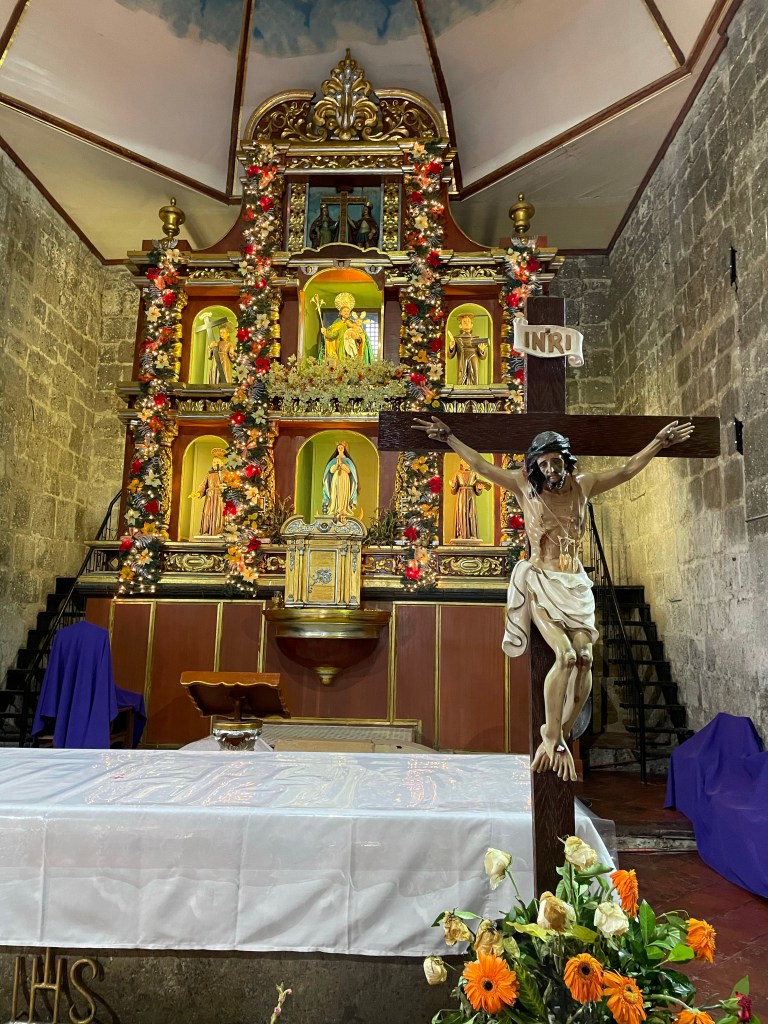
Photo by author of a depiction of the Holy Family near the main door of St. Joseph the Worker Parish in Pacdal, Baguio City, 28 December 2024.

You must have heard of the classic song “A House Is Not A Home” composed by the great tandem of Burt Bacharach and Hal David recorded by Dionne Warwick in 1964 for a movie of the same title. It went back to charts in 1981 when the late Luther Vandross covered it in his first album.

It is a very lovely ballad of a love lost, teaching us that indeed, “a house is made of walls and beams while a home is made of love and dreams”.

A chair is still a chair
Even when there's no one sitting there
But a chair is not a house
And a house is not a home
When there's no one there to hold you tight
And no one there you can kiss good night

A room is still a room
Even when there's nothing there but gloom
But a room is not a house
And a house is not a home
When the two of us are far apart
And one of us has a broken heart

But, in the Hebrew language and Jewish thought, the word “house” in itself connotes relationships. There are no distinctions between a house and a home for them that is why we find Jesus claiming the temple as His Father’s house.

Pope Francis opening the Jubiliee Door at St. Peter’s in Rome to launch the start of the Jubilee Year of 2025. Photo by Maurix/Gamma-Rapho via Getty Images.

In fact, the first letter of the Hebrew word for God (Yahweh) is actually shaped as a door or a house. That is why there is the blessing of church doors in dioceses today worldwide following the blessing and opening of the Jubilee Door at St. Peter’s in the Vatican by Pope Francis last Christmas Eve to launch the Jubilee Year. The Jubilee Door signifies our passing through, an entering into a relationship with God.

In John’s gospel we find Jesus as an adult using the word “house” twice when He cleansed the temple, telling everyone to “stop making my Father’s house a marketplace” (Jn.2:16) and at their last supper when He assured the disciples, “In my Father’s house there are many dwelling places or rooms” (Jn.14:2).

The only other occasion Jesus used the word “house” to mean the same thing as John was when He was found by His parents in the temple as we heard today on this Feast of the Holy Family.

Each year Jesus’ parents went to Jerusalem for the feast of Passover, and when he was twelve years old, they went up according to festival custom. After they had completed its days, as they were returning, the boy Jesus remained behind in Jerusalem, but his parents did not know it. After three days they found him in the temple… When his parents saw him, they were astonished, and his mother said to him, “Son, why have you done this to us? Your father and I have been looking for you with great anxiety?” And he said to them, “Why were you looking for me? Did you not know that I must be in my Father’s house?” But they did not understand what he said to them (Luke 2:41-43, 46, 48-50).

“The Finding of the Savior at the Temple” painting by William Holman Hunt (1860) from en.wikipedia.org.

We find in the story of the finding of Child Jesus in the temple that even at a very young age, Jesus had always been clear with His oneness in God by always referring to the temple as His “Father’s house”.

As we have reflected in December 19 in Luke’s first Christmas story, the annunciation of John’s birth to his father Zechariah while incensing at the temple in Jerusalem during a major Jewish feast that Christmas begins in the church where we gather to praise and worship God as a community. See how this Sunday after Christmas our many empty pews in the church. How sad that many Catholics after Christmas have totally disregarded the Sunday Mass, going to all the vacation spots here and abroad with many of them having no qualms at all that this is the “day of the Lord”, a Sunday obligation.

Again, here is Luke in his artistic narration of Christmas into Christ’s adolescence insisting on us the importance of communal worship and prayer. Not surprising that of the four evangelists, Luke is the one who presented Jesus always at prayer as an expression of His oneness or communion in the Father and he wants us hearers of his gospel account to cultivate that same communion with God in Jesus, with Jesus, and through Jesus.

Christmas is essentially Jesus Christ becoming human so that God may be “at home” with us humans as John beautifully wrote in his prologue we heard last Christmas Day, “And the Word became flesh and made his dwelling among us” (Jn.1:14).

But, are we at home with God in Jesus?

Photo by author, the small entrance door leading to the Church of the Nativity in Bethlehem where one needs to bow low literally and figuratively to enter Christ’s birthplace.

On this Feast of the Holy Family, our gospel reminds us this Sunday of how even Mary and Joseph had trouble with their adolescent son Jesus like most parents these days, a kind of family conflict so familiar with many people everywhere.

What a lovely scene today this Christmas season amid widespread reports of child kidnappings and so many children caught in the middle of many conflicts among adults like wars in many parts of the world and worst, right inside every family, right in their house, or homes where there are no relationships at all.

Luke was a physician who understood very well the anguish and sufferings of many people, especially parents during his time that continue to these days. In narrating to us this sad episode of his Christmas stories when Jesus was lost but eventually found in the temple, Luke is assuring us that despite all the darkness and troubles that engulf many families today, we have a very loving, personal God in Christ always with us.

Photo by author, picture taken from the inside of the Church of the Nativity in Bethlehem of its small entrance door.

Mary and Joseph did not understand what Jesus meant that He must be at His Father’s house but it did not deter them from exploring its meaning so that only Mary with John and two other women remained with Christ at the foot of the Cross on that Good Friday.

How lovely that Mary and those others at the foot of the Cross were the ones truly “at home” with the Lord, in the Lord! The same thing speaks so true with Joseph who in his silence was so “at home” with God in Jesus, whether awake or asleep. He kept that relationship with God alive through Mary and those others around him especially Jesus.

As an adult approaching His pasch, Jesus assured His disciples including us today of having a dwelling place or room in His Father’s house in heaven – that, despite our many sins, God would never cut off His ties with us in Jesus, with Jesus! That is how God loved us so much as the author of the Letter to the Hebrews reminds us “God is greater than our hearts and knows everything” (1Jn.3:20).

Like Hanna the mother of the child Samuel, let us start cultivating this relationship with God even while still very young. It does not really matter if we destroy and cut it so often; what matters is we keep on trying to let it grow anew for it is and would never ever get lost again. Thanks to Christmas!

That is why I personally insist in my homilies and writings that we keep greeting everyone with a Merry Christmas until January 12, the Feast of the Baptism of the Lord that closes the Christmas season. It is still Christmas after all!

Photo by author, Chapel of the Angel of Peace, RISE Tower, Our Lady of Fatma University, Valenzuela City, Christmas 2024.

Like Mary and Joseph, let us keep coming back to God symbolized by Jerusalem and its temple now replaced with our churches. Let us go back to prayer and to Sunday Masses to find Jesus again present in the signs and symbols of the liturgy and most of all, in everyone present celebrating His coming.

Let us continue the story of Christmas with our relationships with God through others, of our being at home with the Father in Jesus Christ who “advanced in wisdom and age and favor before God and man” (Lk.2:52) after this episode which closed Luke’s Christmas account.

Let us be at home with God and with one another in Jesus, with Jesus, and through Jesus. May you continue to have blessed Christmas Season. Amen.
Immaculate Conception is God making room in us; do we make a room for God too?

The Lord Is My Chef Daily Recipe for the Soul by Fr. Nicanor F. Lalog II
Monday, Solemnity of the Immaculate Conception of Mary, 09 December 2024
Genesis 3:9-15, 20 ><}}}}*> Ephesians 1:3-6, 11-12 ><}}}}*> Luke 1:26-38
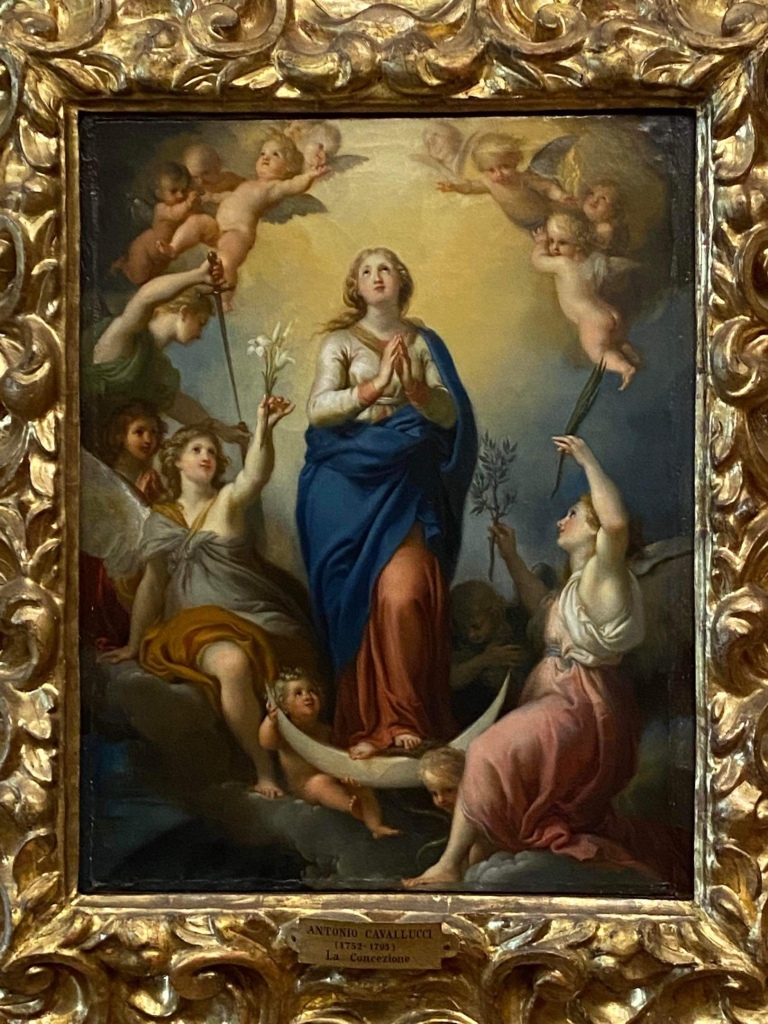
Photo by Rev. Fr. Gerry Pascual at Palazzo Borromeo, Isola Bella, Stresa, Italia 2019.

The Solemnity of the Immaculate Conception of the Blessed Virgin Mary is one of the most awaited feasts in our predominantly Catholic Christian country due to its timing that is so close to Christmas as well as our deep devotion to the Blessed Mother.

Yet, it is also the most problematic because every year, the biblical passage we hear in its celebration is the Annunciation of the Birth of Jesus Christ that is held on March 25 so that people often confuse the December 8 Solemnity as Mary’s Immaculate Conception of Jesus. Of course, there is no direct quotation in the bible of Mary’s Immaculate Conception for it is a fruit of long process of deliberations and reflections in the Church that was finally made official in 1854 as a Dogma.

For those still confused, today’s celebration is when Mary was immaculately conceived in St. Anne’s womb through the merits of Jesus in all eternity, being freed from any stain of original sin so that she may bear our Savior, the Son of God, all-perfect, into the world who is the Christ.

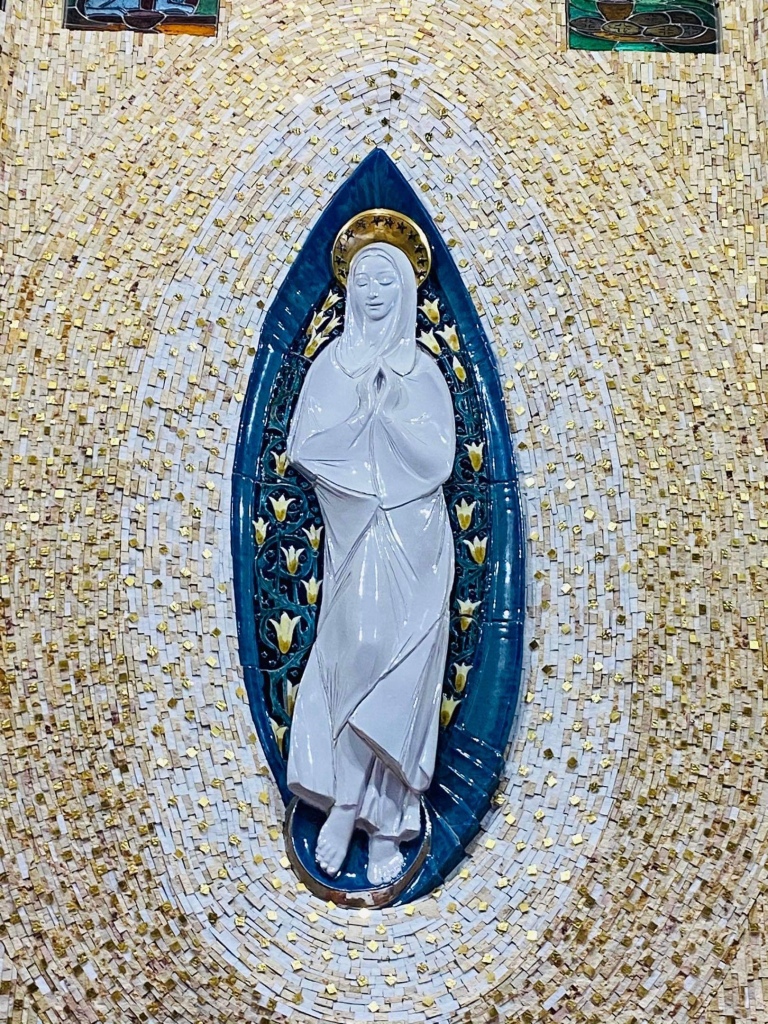
Photo by Rev. Fr. Gerry Pascual of Iba, Zambales at Santuario di Greccio, Rieti, Italy in 2019.

Mary was chosen by God to be His Son’s Mother not because of her having any special traits but purely out of God’s goodness. It is a beautiful story that continues to happen daily we hardly notice nor recognize when God intervenes into our time to bless us not because we deserve to be blessed but simply out of His immense love for us.

This is what we celebrate in the Immaculate Conception of the Blessed Virgin Mary: we have a very loving God making a room among us so we may dwell and live in His grace since the very beginning of time.

In the bible and in spirituality, the words room and dwelling actually refer to communion of man and God. In fact, the first letter of God’s name “Yahweh” is shaped like a door of a house in Hebrew writing. At the last supper, Jesus told the Twelve that in His Father’s house are many rooms where He shall go first to prepare one for us all. It is not a literal room but a relationship with God that begins here.

In Genesis, paradise as dwelling place of Adam and Eve was more of their oneness with God they have destroyed with sin.

God truly loves us, never gave up on us when He sent Jesus Christ to redeem us to take us back to Him by renewing that relationship with Him. It had always been part of the divine plan even before the fall of man as reflected by St. Paul in the second reading, “as he chose us in him, before the foundation of the world, to be holy and without blemish before him” (Eph. 1:4).

Every December 8 (or 9, like today when the solemnity falls on a Sunday), we hear Luke’s beautiful account of the annunciation of Christ’s birth because it also conveys to us the same message of the Immaculate Conception of Mary who made a room too for God in her self.

The angel Gabriel was sent from God to a town of Galilee called Nazareth, to a virgin betrothed to a man named Joseph, of the house of David, and the virgin’s name was Mary (Luke 1:26-27).

“Cestello Annunciation” by Botticelli painted in 1490; from en.wikipedia.org.

The scene preceding this is the annunciation of John’s birth to Zechariah during the Jewish major feast of Yom Kippur or Day of Atonement at the temple in Jerusalem. Observe Luke’s account and we see how God entered through human activities in that scene. Nakisabay, naki-ride on ang Diyos sa takbo ng panahon noon nang ibalita ang pagsilang ni Juan Bautista.

In the Annunciation of the birth of Jesus, it was different: it was God setting everything on His own as we feel from Luke’s solemn reportage. The five major “W’s” of news were there present, namely, who (Mary), what (birth of Jesus), where (Nazareth), when (sixth month of Elizabeth’s pregnancy) and why (Jesus to save the world).

With Mary in Nazareth, the major event was the Annunciation itself of Christ’s birth. It is the entrance of the eternal God into the temporal and finite time of man. That is why we pray the Angelus thrice a day, to sanctify our day as we remember that great event of God becoming human like us in Jesus. (Sadly, so few people pray the Angelus these days, giving more importance to social media, video games and noon time shows or news programs.)

Mary’s Immaculate Conception actually had its fullness in the Annunciation when Mary said yes to God by making a room for Jesus in herself and in her life that led to Christ’s birth and fulfillment of His mission of salvation for us. We see this also in Joseph as narrated by Matthew.

God made everything possible to restore this relationship through Mary who had to be immaculately conceived in order to be the room who would receive His Son Jesus Christ.

Photo by author, left side of the facade of the Basilica of the Annunciation in Nazareth, Holy Land, May 2019.

Nazareth is the only major place in the New Testament never mentioned in the Old Testament unlike Bethlehem, the birthplace of Jesus and actually His very root being from the lineage of King David was mentioned many times in the Old Testament.

Nazareth was Mary’s hometown, obscured and unknown like her. After returning from Egypt, the angel told Joseph to bring the Holy Family there to avoid Herod, son and namesake of his father who ordered the massacre of children in Bethlehem upon learning from the Magi the birth of the new king of Israel, Jesus Christ. Though officially from Bethlehem, Jesus grew up in Nazareth that is why the people refused to acknowledge Him as the Messiah who would come from Bethlehem.

Nazareth was so insignificant at that time that it was the butt of jokes in Israel. When one of the Lord’s early disciples Philip told Nathanael (Bartholomew) that they have found “the one about whom Moses wrote in the law” as the Messiah, Jesus of Nazareth, Nathanael replied, “Can anything good come from Nazareth?” (Jn.1:45-46). Jesus did not reprimand Nathanael for his comment because it was true, even praising him as a true Israelite without guile!

Photo by author, Nazareth Square, Holy Land, may 2019.

In the first reading, it was God who chose paradise as dwelling of Adam and Eve; in the New Testament, it was God anew who chose the obscured town of Nazareth as the room and dwelling of His Son Jesus Christ, so perfectly jibed with Mary also obscured, so young and perhaps no voice nor say in the Jewish society at that time.

That is how God works, always in silence, often choosing people and places so insignificant in human standards to eventually display His glory like in Mary.

Inasmuch as the Immaculate Conception is God making a room for us to dwell in Him in Mary, God needs also our cooperation and participation in the process. It is not a one-shot deal but an ongoing process, something that continues and most of all, we cultivate and nurture. It is a gift freely given by God, reminding us of our original state and being as clean and pure.

Like Mary, do we have a room for Jesus within us to come especially in this world so preoccupied with man’s pride and achievements? Let us reclaim our original status and pure and clean children of God in making a room for Him in our lives today. Amen.

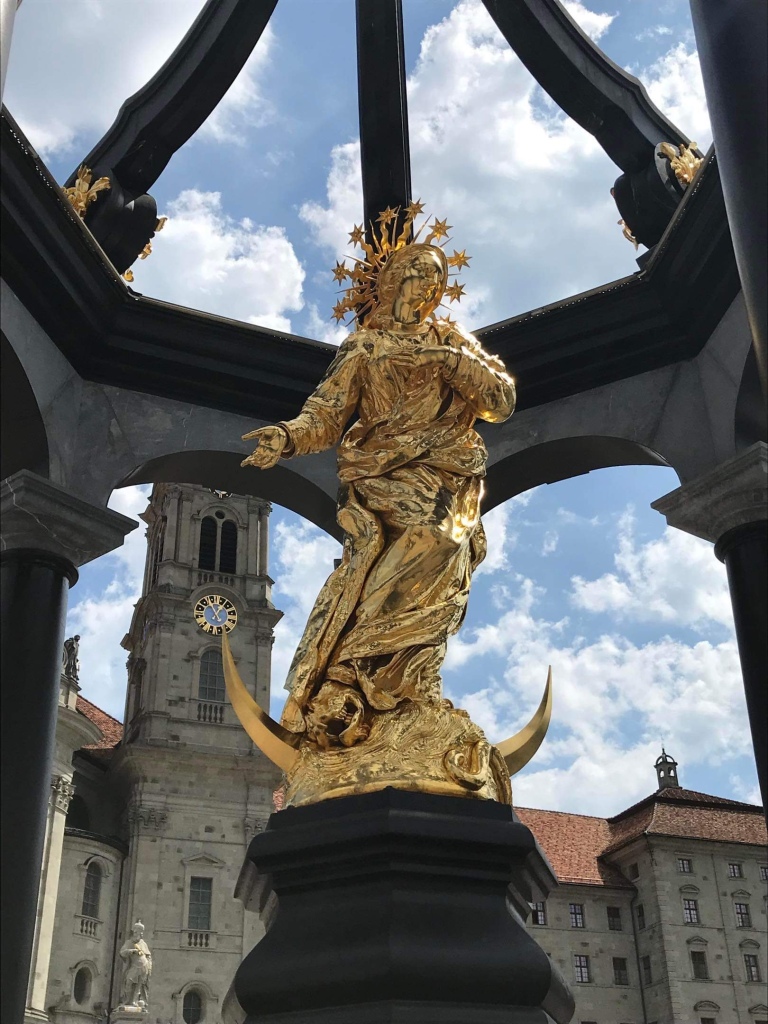
Photo by Fr. Gerry Pascual of Iba, Zambales at Einsiedeln Abbey, Einsiedeln, Switzerland, 2019.

Becoming a “yeast” for others

The Lord Is My Chef Daily Recipe for the Soul by Fr. Nicanor F. Lalog II
Monday, Memorial of St. Peter Claver, Priest, 09 September 2024
1 Corinthians 5:1-8 <*((((>< + ><))))*> Luke 6:6-11
Photo by Life Of Pix on Pexels.com
God our loving Father, 
make me a yeast,
a leaven for your people,
bringing them into
a community,
a communion.

Do you not know that a little yeast leavens all the dough? Clear out the old yeast, so that you may become a fresh batch of dough, inasmuch as you are unleavened. For our Paschal Lamb, Christ, has been sacrificed. Therefore, let us celebrate the feast, not with the old yeast, the yeast of malice and wickedness, but with the unleavend bread of sincerity and truth (1 Corinthians 5:6-8).

Many times, 
we in the Church fail
to recognize the importance
of corporate witness to
the Gospel as one body;
many times,
we pretend to be blind
and deaf and mute
in the evil pervading among us,
afraid of hurting others feelings,
worst, afraid of being unmasked
in living a double standard life;
straighten our lives,
Lord Jesus like that man
with a withered hand in the synagogue;
straighten our paths to your
righteousness as we discern
justice and mercy and love
whenever there are some
of us on the wrong side of the road.
Like St. Peter Claver
who called himself a
"slave of the slaves forever"
in his pioneering work among the
African slaves in in Colombia,
grant us the grace of courage
and strength to dare start the
impossible of being a yeast,
a leaven to the people
transforming them into
witnesses of your Gospel.
Amen.
Photo by Nadin Sh on Pexels.com

The gift of communion

The Lord Is My Chef Daily Recipe for the Soul by Fr. Nicanor F. Lalog II
Wednesday, Feast of St. Thomas, Apostle, 03 July 2024
Ephesians 2:19-22 <*{{{{>< + ><}}}}*> John 20:24-29
From the the Catholic Diocese of Little Rock, Arkansas, dolr.org.
Praise and glory to You,
God our Father
for your gift of the Church,
the Body of Christ built on the
foundation of the Apostles as a
community of faith,
hope,
and love!
Thank You for the gift
of St. Thomas also known as
Didymus; though he was not
present on the evening of Easter
when the Risen Lord appeared
to his fellow disciples,
he joined them eight days
later to be with them,
most especially with Jesus;
what a beautiful gesture
of him who could not
believe of the Resurrection;
what a gift of courage for him
to submit himself to actual tests
to prove to himself that
Jesus had risen;
most of all,
his goodwill to be one
in communion
with his brother Apostles
and Lord Jesus.

Brothers and sisters: You are no longer strangers and sojourners, but you are fellow citizens with the holy ones and members of the household of God, built upon the foundation of the Apostles and prophets, with Christ Jesus himself as the capstone. Through him the whole structure is held together and grows into a temple sacred in the Lord, in him you also are being built together into a dwelling place of God in the Spirit (Ephesians 2:19-22).

Let us keep those words
of St. Paul, dear Jesus,
"Through him
the whole structure
is held together
and grows into a temple
sacred in the Lord,
in him you also are being built
together into a dwelling place
of God in the Spirit":
what will happen if we
destroy this communion
in You and with You through
one another?
What could have happened
if St. Thomas remained adamant
with his "doubts" and never came to join
the other Apostles on that eighth day after
Easter?
Caravaggio’s painting “The Incredulity of St. Thomas” (1602) from en.wikipedia.org.
Lord Jesus Christ,
teach me to have the
healthy doubts of St. Thomas,
to dare test himself,
not You nor others,
to find You, the Truth;
grant us the humility to
accept and embrace
not only your wounds
but also those wounds
of our fellow disciples
because the twofold communion
with God and with one another
is inseparable -
wherever communion with God
in the Father, and the Son,
and the Holy Spirit is destroyed,
the root and source of our communion
with each other is destroyed too;
whenever we do not live communion
among ourselves, communion with
God is not alive and true either.
Like St. Thomas,
enlighten us with your light
and truth, Jesus,
to see you
among one another
to live in communion.
Amen.

St. Thomas the Apostle,
Pray for us!

What “joins” us?

The Lord Is My Chef Easter Recipe for the Soul by Fr. Nicanor F. Lalog II
Tuesday in the Sixth Week of Easter, 07 May 2024
Acts 16:22-34 <*((((>< + ><))))*> John 16:5-11
Photo by author, Sacred Heart Novitiate, Novaliches, QC, March 2023.

The crowd in Philippi joined in the attack on Paul and Silas, and magistrates had them stripped and ordered them to be beaten with rods. After inflicting many blows on them, they threw them into prison and instructed the jailer to guard them securely.

Acts 16:22-23
Lord Jesus,
thank You for joining us
in our humanity,
in everything except sin
so that we too are able
to join You in Your
divinity.
Unfortunately,
most often we join
the wrong causes,
the wrong people,
the sinful and evil ways
of the world
instead of joining You
and Your works.
Until now
this scene in Philippi
continues in our days
when we join others
in bringing down
those doing good,
to hurt and put
to shame
those doing Your work.
Teach us, Jesus,
to join,
to connect,
to link,
to unite,
and to attach
ourselves
with You,
in You
and through You
like the jailer of
St. Paul
who chose to join
life and light
than join his masters
in evil;
keep us attuned
always to the Holy Spirit
to be aware
and conscious always
of Your ways and moves
we must follow
so that eventually at the end
of this journey on earth,
we join You in
eternal life.
Amen.
Photo by author, Sacred Heart Novitiate, Novaliches, QC, March 2023.

Re-con-nect

Quiet Storm by Fr. Nicanor F. Lalog II, 18 March 2024
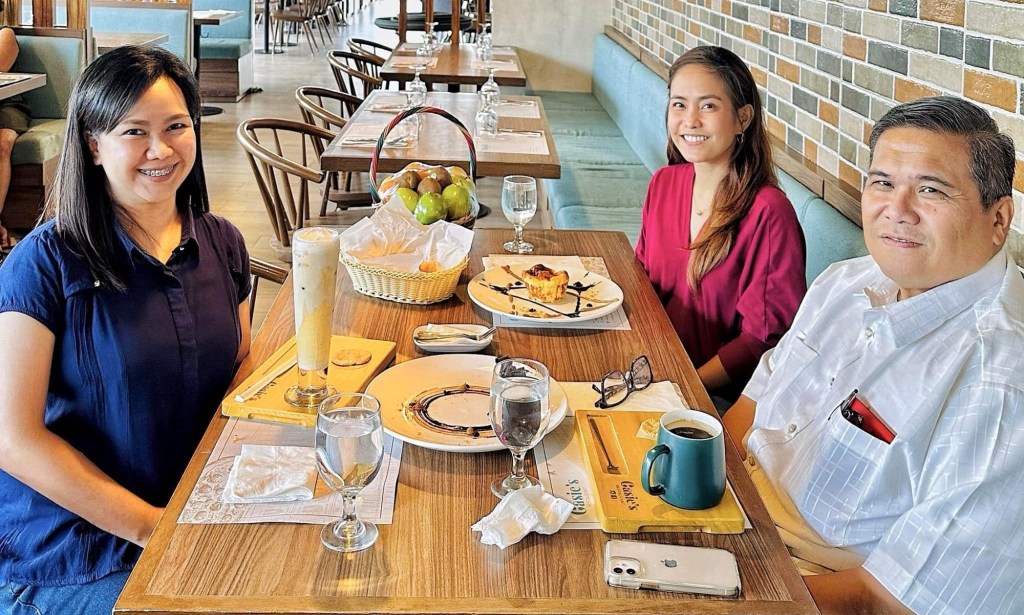
A sweet Sunday reconnecting with my former students, Karen and Kweenie.

Had a very wonderful impromptu get together this Sunday with two former students from our girls’ high school in Malolos. But more than having a blast from 25 years we have known one another because Karen had been my student since her elementary school way back in 1998, it was for me a wonderful reconnection as Kweenie noted on our way home after our long lunch.

Reconnection.

The word remained in my mind last night until today as I began my annual personal retreat just before my 59th birthday on Friday. When Karen brought up the idea of having lunch just to see each other, I felt it was more than a coincidence but part of God’s plan for my retreat, which is essentially, a reconnection of the highest order.

And here are my random thoughts on reconnecting before my vacation with the Lord starts tonight.

Photo by author, Baguio City, 12 July 2023.
Connect.
From the Latin words, "con" for "with"
and "nectere" or "to bind",
to connect is to bind together;
to fuse, to make as one.
To unite.
Opposite of being connected
is to be separated.
To be alone.
To be apart.
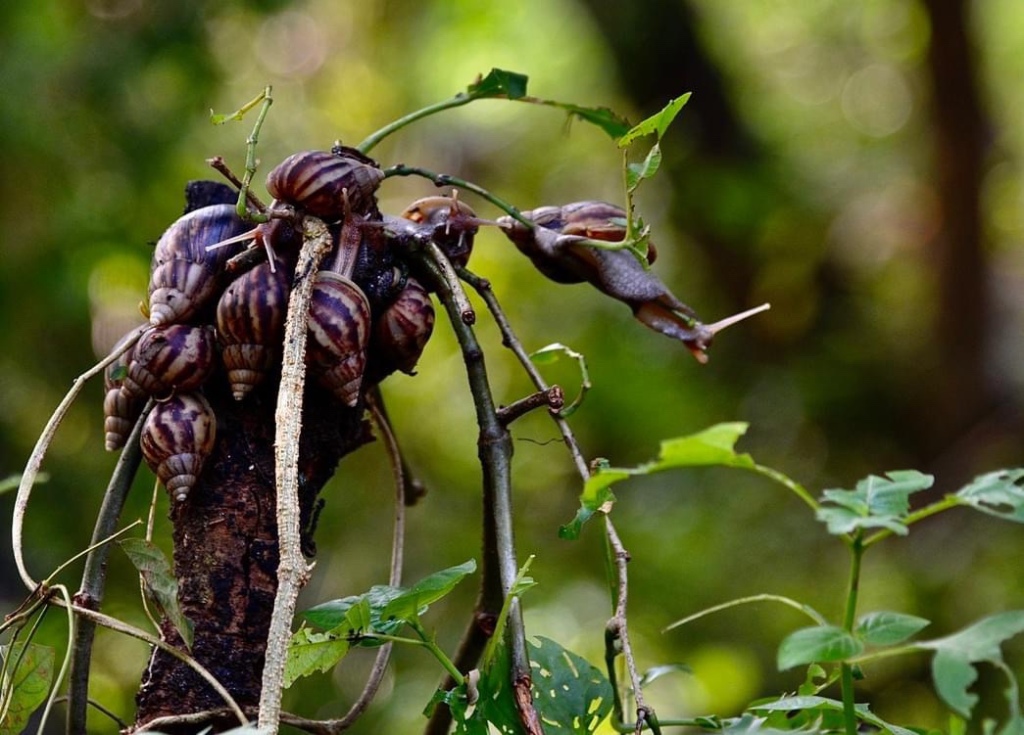
Photo by Dra. Mylene A. Santos, MD, in France, 2022.
God designed nature to be connected:
animal species gather together
as herds and schools and flocks
everywhere while flowers bloom
facing the sun and other plants
as twigs and vines extend so that they
cover everything while trees though
standing apart reach out to other
trees with their tops always bending
towards another tree.
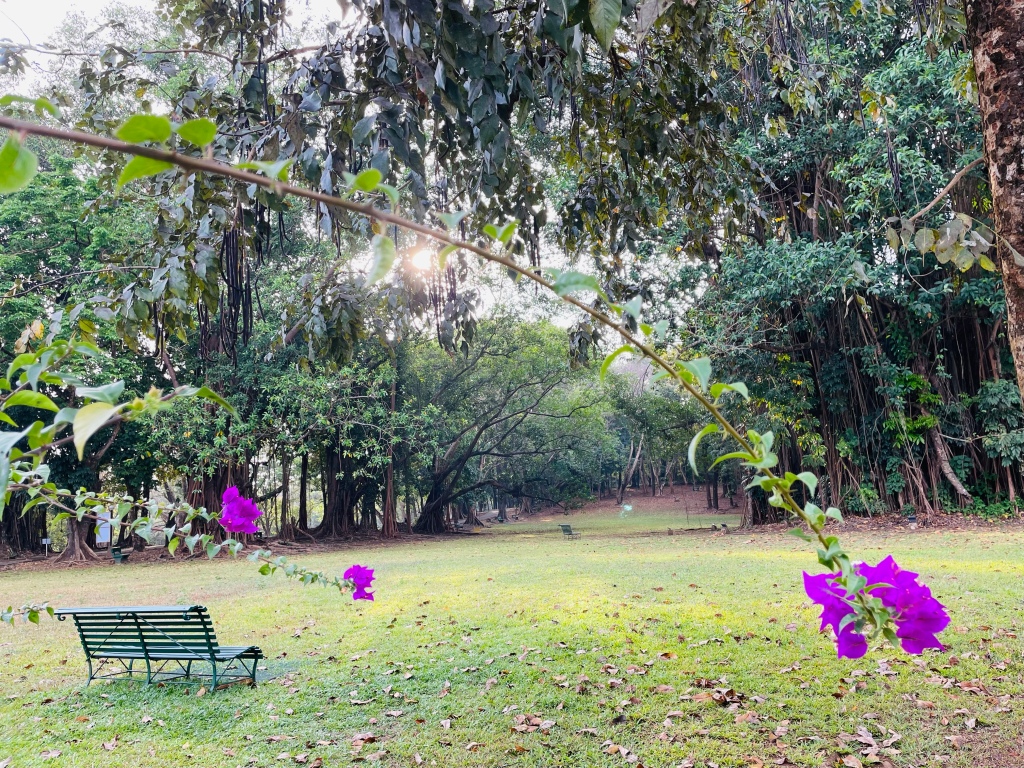
Photo by author, Sacred Heart Novitiate, Novaliches, QC, 20 March 2023.
How unfortunate 
that we humans
who were ironically
the only ones created in God's
"image and likeness"
are the ones who tend to separate
always
from God and one another -
beginning with one's self;
many times in our many "connections"
when we spread ourselves so much
as being scattered,
we get disconnected with
self,
others,
and God.

Wherever there is disconnection,
there is also sin when connections
are severed,
cut-off, and destroyed.
Photo from en.wikipedia.org, “Creation of Adam” by Michaelangelo at the Sistine Chapel, the Vatican.
God is the most vital of all
of our connections; He is in fact
THE connection because
He is our life;
to be separated from Him
means sickness or death,
even damnation as in hell;
that is why Jesus came
so that we may reconnect
with God,
with self,
and with others.
Photo by author in Baras, Rizal, January 2021.
To be connected,
to reconnect is to be whole
again;
getting connected
happens when there is
acceptance of being separated,
when we are humble enough
to say sorry with those
connections we have
abused or taken for granted,
neglected and rejected;
reconnection happens
when we realize that
everything -
time,
place,
people,
and God
are interconnected
as one
big whole
that no matter how small
we may be in this vast universe,
we matter.
That's when we find
meaning and purpose
and direction;
not far from that,
we find and experience
fullness
amid the
many brokenness.

Lord Jesus,
keep me connected
with you,
with others,
and with my very self.
Amen.
Photo by author, Sacred Heart Novitiate, Novaliches, QC, 18 March 2024.

Sobra na, tama na!

Lawiswis ng Salita ni P. Nicanor F. Lalog II, Ika-26 ng Setyembre 2023
Larawan mula sa redditt.com ng iskulturang pinamagatang “Love” ni Ukrainian artist Alexander Milov naglalarawan ng inner child sa bawat isa sa atin na ibig palaging makipag-ugnayan sa kapwa.

Hindi po tungkol sa pulitika ang aking lathalain kungdi ukol sa tila lumalabis nang pagkahumaling ng mga tao sa computer at mga makabagong teknolohiya. Sa aking palagay ay sumusobra na pagsaklaw ng teknolihiya sa ating buhay at nawawala na ating pagkatao. Hindi ako magtataka na bukas makalawa, magkakatotoo na nga yata yung dating ipinangangamba na pananakop ng mga robot sa ating buhay o mismo sa ating mga tao!

Ang katotohanan po ay tumigil na akong kumain sa mga fastfood restaurant hindi dahil sa magastos at unhealthy nilang pagkain at inumin kungdi ang mga nakaka-inis na sisteng kailangang pa akong umorder nang nagpipindot sa mga screen nila ng kakanin gayong may mga crew naman sila.

Minsan pauwi ako mula sa pagmimisa sa lamay sa patay sa Bulacan. Hindi ako gaanong nakakain kaya dumaan ako sa McDonald’s sa Nlex Drive and Dine. Ayokong mag-drive thru para doon na rin makapagpahinga ng konti sabay pagpag na rin maski hindi ako naniniwala doon.

Sising-sisi ako at dumaan pa ako doon; sana nga pala ay nag-drive thru na lang ako kasi naman ay ganito po ang nangyari.

Larawan mula sa news.abs-cbn.com

Pagpasok ko sa McDonald’s doon ay tumambad sa akin ang mga higanteng screen na doon daw oorder. Kasinglaki ni Ronald McDonald yung mga screen pero hindi sila friendly kasi natakot ako. Aminado akong tanga at walang alam sa mga iyon. Hindi po ako techie. Kahit naka-iPhone ako, inaamin kong hindi ko pa rin alam hanggang ngayon kung paano ito gamitin. Di ko naintidihan yang mga hacks na iyan.

Wala akong nagawa kungdi sumunod sa crew na naka-ngiti naman. Binasa ko instructions. Pindot dito, pindot doon. Ewan ko. Naghalo na rin siguro gutom at katangahan, pabalik-balik ako sa simula at hindi maka-order. Mayroon akong nakasabay na engot din at lumapit sa amin yung guwardiya upang tulungan kami. Nawalan na ako ng ganang kumain sa inis sa screen, sa sarili ko na rin, at sa pamunuan ng McDonald’s. Bakit hindi na lang kinuha order ko kesa pinahirapan pa ako doon sa electronic counter na yun?

Bakit kailangang pilitin ang lahat na gumamit ng computer para sa pag-order? Hindi ba naiisip ng mga fastfood na ito na mayroong mga taong hindi pa rin gamay at handa sa gayong uri ng transsaksiyon? Ang pinaka-ayoko sa sisteng ito ng modernisasyon na ang lahat ay automated at computerized ay nawawala ang ating “pagkatao”, iyon bang human touch at humanness ika sa Inggles.

Larawan mula sa NLEX.

Sa expressway ay mauunawaan ko pa dahil upang mapabilis ang biyahe, mainam ang RFID. Ngunit may mga pagkakataon na hindi ako nagmamadali na pagkaraan ng nakakapagod na pagmamaneho sa trapik, ang ibig ko lang ay mayroong makitang isang kapwa-tao. Yung bang madama lang yung “warmth of another human person” ay malaking bagay na rin upang mapawi pagod at stress, na para bang nagsasabing hindi ka nag-iisa. Noong dati ay nakakausap ko pa ng kaunti mga teller sa Nlex sa paniniwala na makapagpasaya lang ako ng isa pang nilalang na maaring bigat na bigat sa problema. Ngayon, wala na yung koneksiyon na iyon kaya hindi kataka-taka, marami sa atin ang disconnected sa isa’t-isa maging sa sarili! Kaya sabog maraming tao ngayon. Siguro kung maibabalik lang natin marami nang nawalang human interaction, mababawasan yang mga road rage sa lansangan.

Isang nakakamiss para sa akin ang magpunta sa bangko at pumila, makahunta ilang mga tao doong kakilala pati na ang manager at magagandang teller. Iyon ang wala sa electronic banking. Totoong convenient at mabilis ang pagbabangko gamit ang cellphone o computer ngunit napaka-impersonal! Iyon na ba ang mahalaga sa atin ngayon, kaginhawahan kesa ugnayan sa kapwa tao?

Pakikipag-ugnayan ang layon ng komunikasyon. Para sa akin, ang pinakamagandang paglalahad ng kahulugan ng komunikasyon ay mula sa Pastoral Instruction na Communio et Progressio sa pagpapatupad ng dokumento ng Vatican II sa social communication na Inter Mirifica:

Communication is more than the expression of ideas and the indication of emotion. At its most profound level it is the giving of self in love. Christ’s communication was, in fact, spirit and life.

Communio et Progessio, #11

Sa lahat ng nilalang ng Diyos, tao lamang ang kanyang binahaginan ng kanyang kapangyarihang makipagtalastasan o komunikasyon. Ang aso ay tumatahol, pusa nagme-meow at ang baboy ay nag-o-oink-oink. Ngunit ang tao, nagsasalita, nangungusap. Naiintindihan, nauunawaan. At kapag nangyari iyon, nagkakaroon ng ugnayan at kaisahan. Communication, tapos communion.

Hindi ito nangyayari sa computer. Manapa, madalas pakiwari ko ay inuulol tayo ng mga ito! Ano kalokohan yung alam mo namang AI (artificial intelligence) o robot ang “kausap” mo tapos sasagot ka sa kahon na “I am not a robot”? At, mantakin mong utusan ka ng Waze o Google map na pakiwari mas alam niya lahat kesa iyo?

Kaya siguro maraming high blood din ngayon kasi nga kapag sumablay mga teknolohiyang ito lalo na ang mahinang signal, tapos na lahat ng usapan. Sa gayon, walang napagkakayarian, walang napagkakasunduan kaya wala ring kaisahan.

Ito rin ang hindi ko magustuhan sa ipinagmamalaki ng dati kong upisina at network, iyong kailang AI-sportscasters.

larawan mula sa gmanetwork.com.

Heto na yata ang rurok ng kalabisan sa pagkamaliw ng karamihan sa teknolohiya. Unang tanong natin dito ay ano po ba ang turing ng mga kumpanyang gumagamit nito sa kanilang mga taga-tangkilik? Tayo ba ay pinahahalagahan pa nila at ipinauubaya na lamang tayo sa mga robot?

Higit sa maraming mahuhusay na tagapagbalita, sa ganang akin walang puwang sa newscast o ano mang uri ng pagbabalita ang mga AI dahil ang komunikasyon ay ugnayan. Communication is a relationship, lalo na balita at isports. Kahit na maperfect pa ang teknolohiyang iyan, hindi mapapalitan at di dapat mapalitan ang tao sa pakikipag-ugnayan sa kapwa tao.

Ikalawa, ano ang dahilan para magkaroon ng AI na sportscaster? Magmalaki? Magyabang? Ano pa kaya gusto ng GMA-7 gayong wala na silang kalaban?

At dapat nilang asikasuhin ay mabigyan tayo ng buhay na mga programa, coverage na umaantig sa aming pagkatao, kayang hipuin kaibuturan ng aming sarili upang madama tuwa at lungkot ng bawat tagumpay at kabiguan saan mang larangan ng buhay. Maramdaman nating hindi tayo nag-iisa sa pag-aasam ng tagumpay at kaunlaran dahil mayroong kaming mga kalakbay sa biyaheng ito ng buhay. Iyon ang kahulugahan ng integrated news – buo. Paanong naging integrated news kung hindi naman tao ang sportscaster nila? Hindi ba doon pa lamang ay sira na ang kabuuan? Sila ba ay mayroong puso para ituring na Kapuso?

Ang kailangan ay isang kapwa na makakasama sa buhay lalo na sa media. Sa Inggles, tawag doon ay companion. Mula sa dalawang salitang Latin, cum na ibig sabihi’y with o kasama at panis na kahulugan ay bread o tinapay; sa literal na salin, ang companioncum panis – ay kahati sa tinapay. “Someone you break bread with.” Ang tinapay naman ay tanda ng ating sarili, ng ating buhay. .

Samakatwid, ang companion o kasama ay isang kapwa na nagbabahagi ng kanyang sarili sa kapwa upang mabuhay din. Iyan ang dangal at karangalan ng pagbabalita na sadya namang maipagmamalaki ng GMA News mula marami nilang mahuhusay na newscasters at reporters. Kaya lahat ay nalungkot nang pumanaw si G. Mike Enriquez na naging bahagi ng buhay ng maraming kababayan natin sa kanyang estilo ng pagbabalita. Taong-tao siya, ika nga.

Larawan kuha ng may-akda, Our Lady of Fatima University, Valenzuela City, 13 Setyembre 2023.

Kaya rin naman sa Banal na Misa, ang tawag doon ay Banal na Komunyon, ang pagbabahagi at pagtanggap sa Katawan ni Kristo sa anyo ng tinapay. Nakiisa sa atin si Jesus sa lahat ng bagay sa ating katauhan liban sa kasalanan tulad ng gutom at uhaw, lungkot at hapis, kabiguan maging sakit at kamatayan upang makabahagi niya tayo sa kanyang buhay at tagumpay.

Walang ganyang umiiral sa mga AI na ito at computerization ng mga sistema sa ating buhay. Sana ay isaalang-alang ito ng mga negosyante at umuugit sa mga industriya lalo na sa media. Ang masakit na katotohanan kasi ay kunwari ay kaunlaran at kadalian o convenience ang kanilang dahilan (para kanino?) kungdi kitang kita naman, pera lang ang suma total. Sa gayon, sa landas na ito ng pagiging impersonal na kalakaran ng maraming bagay gamit ang teknolohiya, unti unti rin tayong nade-dehumanize, nawawala katauhan. Kapag nawala ang katauhan, ano ang pumapalit? Alam na natin iyan. Salamuch po.

Face-to-face with our face

The Lord Is My Chef Daily Recipe for the Soul by Fr. Nicanor F. Lalog II
Wednesday in the Seventeenth Week of Ordinary Time, Year I, 02 August 2023
Exodus 34:29-35   >><)))*> + >><)))*> + >><)))*>   Matthew 13:44-46
Photo by Mr. Jim Marpa, 2019.
God our loving Father,
let our face reflect your
glory and majesty,
your love and mercy
like Moses as described
in our first reading today.

How lovely
and awesome too
that after meeting
with you face to face,
the skin of Moses'
face was radiant
that they were afraid
to approach him;
very clearly
you have left traces
of you on his face
whereas we on the other
hand, despite our
coming to you,
listening to your word,
and receiving your Son
Jesus in the Eucharist,
our face remain the same?

More sad is how
we could not find
or refuse to recognize
your face on everyone's face
especially those nearest
to us like family and friends;
despite our
coming to you,
listening to your word,
and receiving your Son
Jesus in the Eucharist,
our face could not reflect
the joy of finding you, Lord,
like a hidden treasure
buried in the field or
a fine pearl finally
found by a merchant.
God our Father,
let us face squarely
our problem with our
face; it is not merely
the skin nor its lines
nor its glow that
creams and cosmetics
may hide for sometime;
like you and Moses
meeting face-to-face
in your tent,
may we realize
whatever is found
in our face is a reflection
of what is truly inside 
our hearts,
when there is union
of life and love
that happens
in our union in you
through Jesus Christ.
Amen.

Jesus our home, our tahanan

The Lord Is My Chef Sunday Recipe for the Soul by Fr. Nicanor F. Lalog II
Fifth Sunday in Easter-A, 07 May 2023
Acts 6:1-7 ><}}}*> 1 Peter 2:4-9 ><}}}*> John 14:1-12
Photo by Ms. April Oliveros, March 2023, Mt. Pulag.

From being our “gate” as the Good Shepherd last week, Jesus today introduces himself as our “home”, our dwelling by being “the way and the truth and the life”. Our scene is still at the last supper with Jesus teaching his disciples including us today with some of his important lessons expressed in words so touching and full of mysteries.

Jesus said to his disciples: “Do not let your hearts be troubled. You have faith in God; have faith also in me. In my Father’s house there are many dwelling places. If there were not, would I have told you that I am going to prepare a place for you? And if I go and prepare a place for you, I will come back again and take you to myself, so that where I am you also may be.”

John 14:1-3

Though the apostles were still at a loss at the meaning of the words spoken by Jesus that night, they knew and felt something so bad would happen, that life for them would no longer be the same as before that troubled them so deeply inside.

To be troubled here means more than the feeling but experience itself of confrontation with the power of evil and death, when we get that existential feeling of our mortality, when we feel so helpless in a situation, asking “paano na ito?” or “paano na kaya ako/kami?” Like the apostles that night, we too have been into similar situations of being troubled deep inside when we realize in no uncertain terms something so sweeping is happening, altering our lives “forever” like when we or a loved one is diagnosed with cancer, gets a stroke, or has to undergo a major surgery of the heart or brain, and losing a loved one.

Jesus is telling us this Sunday like on that holy Thursday evening to stand firm because these evil and death will just have momentary control over us, a passing over that is why we have to summon all our strength and courage, confidence and perseverance in him as he himself had already triumphed with his own passion, death, and resurrection.

And that is the good news! Jesus had won over all our worst fears like death. It is the gift of Easter, of the Lord’s Resurrection right there inside our hearts, already in our very core we only need to recover by abiding in him always. But before going any further, let us first confront one important lesson this gospel scene offers us: When are we really most troubled in life?

Photo by Ms. April Oliveros, March 2023, Mt. Pulag.

When we examine the many troubles we have been through, we find that more than the difficult and harsh situations we have faced were the many troubles within our very selves. What really trouble us most are not those outside us but within us. These are those little guilt feelings we used to take for granted, little details in life we used to ignore and dismiss as nothing for so long that suddenly now under our very nose as so serious, so important after all.

The most troubling experience of all is when we realize how we have wasted so many opportunities to love and be kind, to be more forgiving and understanding, when we know we have done something wrong and have done nothing to rectify it. We are troubled when outside conditions throw us into situations that make us confront not only death and evil but our very selves that suddenly, we feel unprepared and inadequate especially sickness and death that both surely come. Always.

And here is the big difference: Jesus was not surprised, was never caught unaware of his pasch because all his life he has been one in the Father and one with us. See in all four gospel accounts how Jesus had total control over everything that is why he was so prepared for his passion, death and resurrection because he never turned away from the Father and anyone in need of healing, of forgiveness, of comfort, of his presence. Jesus never turned away from his very essence, his mission which is oneness in the Father and oneness with us his beloved.

Jesus was so at home, so to speak, with himself and with the Father that he never fell into sin despite the devil’s temptations nor the scheming traps and plots of his enemy. This is what Jesus is telling us of preparing a room for us in the Father’s house, that we be at home with our true selves in the Father in him.

We are most troubled when we are not home, literally and figuratively speaking. And sadly, many times as we have experienced in this pandemic that even in our own homes we could not be at home because we are detached and away from our families and loved ones.

“In my Father’s house there are many dwelling places… Do you not believe that I am in the Father and the Father is in me? The words that I speak to you do not speak on my own. The Father who dwells in me is doing his works.”

John 14: 2, 10
Photo by author, Katmon Nature Sanctuary & Beach Resort, 04 March 2023.

The word “dwelling” is a favorite of John especially in this part of his gospel. For John, dwelling is more than a home but unity of Jesus and the Father as well as unity of Jesus and his disciples including us. In his prologue he spoke of Jesus as the Word who became flesh and “dwelled” among us. So beautiful an imagery of the Son of God living among us, being one with us and in us, not just physically present but through and through like going through our human experiences except sin.

To dwell is not just to reside but most of all to abide in Christ, to be united, to be one in him which he would say in the following chapter when he identified himself as the true vine and we are his branches.

Therefore, to dwell is to be one, to commune in the Lord. That is why heaven is not just a place but a condition, a being of eternal union with God where Jesus assures us of a dwelling. And because Jesus is our dwelling, our home, that is why he is also our way because he alone is the truth and the life.

Now, if anyone lives in Jesus, he/she lives in the Father too as he clarified with Philip who asked him to show them the Father and that would be enough.

How lovely that Jesus taught these lessons of unity and oneness in him and the Father and with one another in the context of the table, of a meal.

Here we find his last supper was not just a prelude to his coming Passion, Death and Resurrection but to his Ascension into heaven too when Jesus was already speaking of his entrance into a new and higher level of relating with the Father and with us his disciples, his Body as the Church.

This “dwelling” continues in our Eucharistic celebrations especially the Sunday Mass and even right in our own homes too during meal time. And there lies the challenge of our gospel this Sunday.

The first major problem in the early church came in the context of the table when “the Hellenists complained against the Hebrews because their widows were being neglected in the daily distribution” (Acts 6:1) of food. The Hellenists were the Jews who have lived outside Israel that when they returned home, they have become so alienated because of language barriers even of outlook in life. The Apostles resolved the issue by ordaining the first seven deacons.

It is interesting that the word “deacon” came from the Greek word diakonia which means “to serve at the table”. In Latin, diakonia is ministerium which is service in the table too. How lovely that to serve is actually rooted in the table found in homes!

We say home is where the heart is. In that case, God is our home. Jesus is our dwelling. We are troubled when we are not at home with God in Jesus and with our own families. Any problem at home takes priority in us too because family is important to us. How sad that some people could reject their own family without realizing that no matter what happens to us, it is still our family who would save us and stand by us in the end. This is what St. Peter’s was saying in the second reading of Jesus being the stone rejected to become the cornerstone when often we dismiss our family but in the end remain with us when our chips are down.

This Sunday, let us go home in Jesus our true home found in our own families. Home in Filipino is tahanan from the root word tahan which means to stop crying. To dwell in Filipino is manahan, from the same root too. We stop crying in our home because that is where we find security and comfort, love and acceptance, most of all, life and direction. Amen. Have a blessed week ahead!