The Lord Is My Chef Breakfast Recipe for the Soul by Fr. Nicanor F. Lalog II
Wednesday, Week XVII, Year I in Ordinary Time, 28 July 2021
Exodus 34:29-35 ><]]]]*> + ><]]]]*> + ><]]]]*> Matthew 13:44-46
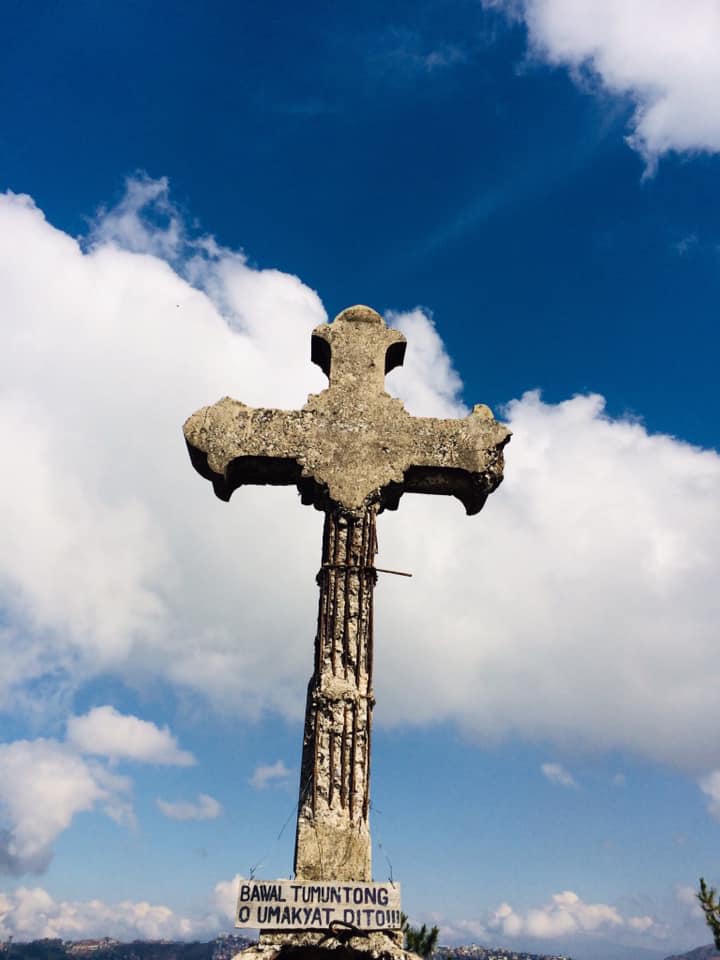
Photo by author, Church of Dominus Flevit overlooking Jerusalem, 2017.
How lovely are your words today,
God our loving Father
leading us the way closer to you
through your Son Jesus Christ!
So many times, you lead us to
many detours in life, to many
coming and going in order to
savor your loving presence.
How can we not appreciate
and be awed like your people
in the wilderness who witnessed
your immense majesty
on the face of Moses you met
frequently inside your tent
putting on and off the veil
that eventually played a role in our faith.
As Moses came down from Mount Sinai
with the two tablets of the commandments
in his hands, he did not know that the skin
of his face had become radiant
while he conversed with the Lord.
Whenever Moses entered
the presence of the Lord to converse
with him, he removed the veil until
he came out again. On coming out,
he would tell the children of Israel all
that had been commanded. Then the
children of Israel would see that the skin
of Moses' face was radiant; so he would
put again the veil over his face until
he went in to converse with the Lord.
(Exodus 34:29, 34-35)
In your eternal wisdom, dear Father,
you eventually removed that veil
in the coming of your Son Jesus Christ
so we can go nearer to you than ever
to be one with you in him
through him, and with him
by going through the same process
of going in and going out.
Jesus said to his disciples:
"The Kingdom of heaven
is like a treasure buried in a field,
which a person finds
and hides again,
and out of joy goes and sells
all that he has and buys the field.
Again, the Kingdom of heaven
is like a merchant
searching for fine pearls.
When he finds a pearl of great price,
he goes and sells all that he has
and buys it."
(Matthew 13:44-46)
We pray, O Lord, we remain focused
in you alone, learning to adapt,
willing to let go whatever we hold so that
even if we do not see you face to face
like your beloved disciple in the empty tomb
that Easter morn, we may still believe
even if we only see the veil that covered your face,
wrapped neatly into one place. Amen.
The Lord Is My Chef Breakfast Recipe for the Soul by Fr. Nicanor F. Lalog II
Tuesday, Week XVII, Year I in Ordinary Time, 27 July 2021
Exodus 33:7-11; 34:5-9, 28 ><]]]]'>><]]]]'>><]]]]'> Matthew 13:36-43
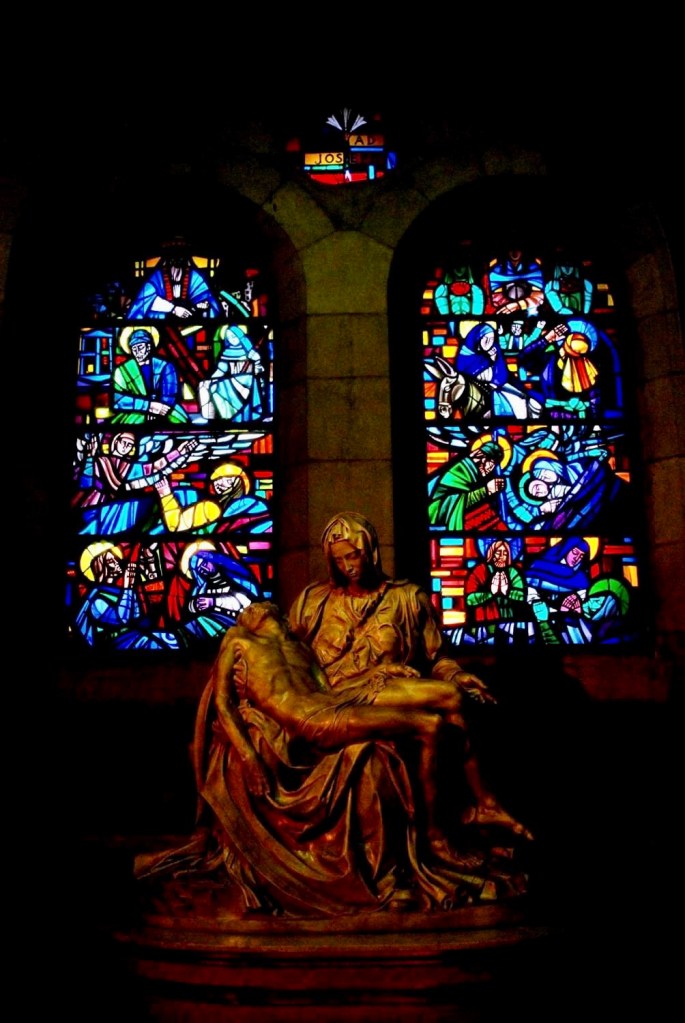
Photo by author, 2020.
As Moses entered the tent,
the column of cloud would come down
and stand at its entrance while the Lord
spoke with Moses.
The Lord used to speak to Moses
face to face, as one man speaks to another.
(Exodus 33:9, 11)
God our Father,
you never fail to surprise us;
thank you very much for
our first ever Olympic gold
last night after another usual
frustrating afternoon at the SONA.
Hidilyn's record-breaking
performance last night
at the Tokyo Olympics
tells us the same thing
when Moses would enter
your tent to converse with you:
Nothing can replace
hard work and discipline;
there can be no substitute
to sound mind and sound body
in order to achieve every goal
that we set in life and in public.
He said in reply,
"He who sows good seed
is the Son of Man,
the field is the world,
the good seed are
the children of the Kingdom.
The weeds are the children
of the Evil One,
and the enemy who sows them
is the devil. The harvest
is the end of the age, and
the harvesters are angels."
(Matthew 13:37-39)
Give us the discipline
and perseverance, Lord Jesus
to always enter your presence
in prayer like Moses inside the tent
at the wilderness meeting God,
face to face, to face and fight evil.
Let us desire more silent moments
with the you, O Lord in order to
listen more to your words
that are not only transformative
but most of all, performative
in keeping us steadfast with your laws against sin.
We pray, O God
for our decision-makers and leaders,
for us all to always seek your will
by entering your presence in silent prayers
so we may hear clearly your words
and see your face. Amen.
The Lord Is My Chef Breakfast Recipe for the Soul by Fr. Nicanor F. Lalog II
Monday, Memorial of Sts. Joachim and Anne, Parents of BVM, 26 July 2021
Sirach 44:1,10-15 ><]]]]*> + <*[[[[>< Matthew 13:16-17
Photo by Mr. Jim Marpa, 2018.
"Old age is the final stage
of human maturity and a sign
of God's blessing."
(St. John Paul II, Letter
to the Elderly, 01 October 1999)
God our loving Father,
today we remember
the elderly among us
in celebration of the Memorial
of St. Joachim and St. Anne,
parents of the Blessed Virgin Mary,
grandparents of our Lord
Jesus Christ.
Thank you for their many gifts
that without them, we won't be
here at all while at the same time,
life for us will be not this easy
and comfortable without their
many sacrifices and efforts
we may never know
or even experience.
"Their bodies are peacefully laid away,
but their name lives on and on."
(Sirach 44:11)
Teach us, O Lord, to put a stop
to the wrong and evil mentality
of our time that gives priority
to human usefulness and productivity
that lead to contempt
for the later years of life
that make older people wonder
if their lives are still worthwhile.
Help us recover, merciful Father,
the correct perspective on life
as a whole that leads to eternity
for which we are all preparing for,
guided by the elderly among us
who share with us their wisdom
and maturity of the past
on which our present is firmly rooted.
"But, blessed are your eyes,
because they see, and your ears,
because they hear. Amen,
I say to you, many prophets
and righteous people longed
to see what you see but
did not see it, and to hear
what you hear but did not hear it."
(Matthew 13:16-17)
We pray most especially, dear God
on this day for the young people
to remain close to the elderly
with much love and generosity,
for them to realize how older people
can give them much more
than they can imagine
to grasp life's meaning.
Make us remember to keep
your only commandment with
the promise of blessing at old age
to honor our father and mother
by welcoming the elderly,
by helping them in their old age, and most
specially, by upholding their dignity as your
most unique gift to humanity. Amen.
It is a very “bed weather” these days here in Metro Manila, so perfect for family gatherings, sharing stories and of course, music from the yesteryears like the Beatles‘ 1966 classic romantic love song composed by Paul McCartney, Here, There and Everywhere.
To lead a better life, I need my love to be here
Here, making each day of the year
Changing my life with a wave of her hand
Nobody can deny that there's something there
There, running my hands through her hair
Both of us thinking how good it can be
Someone is speaking
But she doesn't know he's there
As I have mentioned in my homily this Sunday, this classic love song had inspired me to dwell on the demonstrative pronouns used in our gospel today when Jesus conversed with his apostles Philip and Andrew before feeding the more than 5000 people from just five loaves of bread and two pieces of fish (https://lordmychef.com/2021/07/24/when-where-and-there-are-persons-not-locations/).
McCartney admits that it is one of his favorite compositions of all time which happens to be his only song truly appreciated by his fellow composer John Lennon.
The song jibes so well with our gospel this Sunday wherein the here, there and everywhere do not merely refer to locales and locations; there are times when these demonstrative pronouns point to particular persons like in this song, McCartney’s girlfriend at that time, Ms. Jane Ashley.
Jesus remains true as our here, there and everywhere in our lives, in everything that we need. When Jesus asked Philip where can they buy food for the crowd, his where was not actually a place like a store or bakeshop but himself. It was as if telling Philip and everyone of us today, where can you find solace and peace in this time of pandemic? Where else but in Christ alone!
Every where is where God is, where Jesus is!
I want her everywhere
And if she's beside me
I know I need never care
But to love her is to need her everywhere
Knowing that love is to share
Each one believing that love never dies
Watching their eyes
And hoping I'm always there
Going back to McCartney, his relationship with Ashley did not bloom after she caught him cheating on her, in fact while in bed with another woman as the story went. He would get involved with other women that ended in divorce but probably found his here, there and everywhere most with his third wife Linda with whom he remained married until her death in 1998 due to cancer.
In today’s gospel, we find the downside of demonstrative pronouns replacing persons, when we see and value more our very selves and things than others like Andrew who never bothered to ask the name of the boy who gave his five loaves and bread and two fish that Jesus took to do his miracle.
This time of calamity, may we find in Jesus our every where as our source of strength to guide others there to safety. Have a blessed week ahead!
*We have no desire of infringing the copyrights of this song and video except to share its beautiful message and hope brighten the day of everyone.
Sa tuwing umuulan,
unan at higaan ating tinutunguhan
lahat ang hanap ay kapahingahan
sa gitna ng panahong malamig
at kay inam ipahinga pagod na
katawan at isipan habang may
ilan sa ating ay walang masilungan
walang uuwiang kama na malamig
ni upuang mahalumigmig
habang ang iba naman
lagaslas ng ulan sa loob at
labas ng tahanan ay pareho lang
dahil sa butas butas na bubungan
barong-barong na tirahan.
Sa tuwing umuulan,
mga tiyan at sikmura
mabilis kumalam kahit
puno ng laman
kaya naman kay raming dahilan
tumungo sa kalan at magluto
ng mga pagkaing masarap
tikman tuwing umuulan
pinaiinit nanlalamig na katawan
nagigising mga kalamnan
habang mayroon namang ilan
kape lang ang nakakayanan
maibsan lang lamig at kalam
ng tiyan na walang laman.
Sa tuwing umuulan
huwag sana natin makalimutan
ang maraming walang masilungan
ni matulugan dahil kanilang mga
pinananahanan nasira o lumubog
sa baha na dala ng ulan;
Sa tuwing umuulan
huwag sana natin makalimutan
ang maraming kapatid natin
wala nang damit at gamit
wala ding pagkaing mainit
ni tubig na malinis
pagkakasakit tinitiis
inaasam pagsikat ng araw kinabukasan.
Sa tuwing umuulan
tayo ay manalangin
upang ipagpasalamat mga
biyaya at pagpapala natin
na tayo ay magkakapiling
nakakatulog ng mahimbing
nakakakain ng mga paboritong lutuin;
tangi ko lang hiling
lubusin ating pananalangin
bukod sa pagtulong at pagdamay natin
dagdagan ating pandamdam
huwag maging manhid
iwasan pagpopost ng pagkain
dahil sadyang di maganda ang dating
sa panahon at buhay
ay napakakulimlim.
The Lord Is My Chef Sunday Recipe for the Soul by Fr. Nicanor F. Lalog II
Sunday XVII-B in Ordinary Time, 25 July 2021
2 Kings 4:42-44 ><]]]]*> Ephesians 4:1-6 ><]]]]*> John 6:1-15
Photo by Mr. Raffy Tima of GMA7-News, Batanes after a storm, 2018.
Beginning today until August 22, 2021, our Sunday gospel will be from the sixth chapter of John who continues last week’s scene of the great crowd following Jesus and his disciples to a deserted place in order to rest after returning from their first mission.
We were told by Mark how Jesus was “moved with pity” upon seeing the people who were “like sheep without a shepherd” that he taught them with so many things (Mk.6:34); after teaching them, Jesus fed them – about 5000 men excluding children and women – from just five loaves of bread and two pieces of fish with a lot of leftovers gathered that filled 12 wicker baskets!
It is a very beautiful story found in all four gospel accounts but it is only in John’s gospel where we are presented with a more complete and detailed story of the event followed by Jesus Christ’s “bread of life discourse” at Capernaum. Let us focus at the conversations among Jesus, Philip, and Andrew before the miracle where they used the demonstrative pronouns “where” and “there” that indicate deeper meanings.
The Jewish feast of Passover was near. When Jesus raised his eyes and saw that a large crowd was coming to him, he said to Philip, “Where can we buy enough food for them to eat?” He said this to test him, because he himself knew what he was going to do. Philip answered him, “Two hundred days’ wages worth of food would not be enough for each of them to have a little bit.” One of his disciples, Andrew, the brother of Simon Peter, said to him, “There is a boy here who has five barley loaves and two fish; but what good are these for so many?”
John 6:4-9
Photo from iStock/Studio-Annika.
When all directions point to Jesus – but we miss!
While praying over today’s gospel, one song kept playing in my mind, the Beatles’ 1966 classic love song by Paul McCartney, Here, There and Everywhere. It is a very lovely music, so unique in many aspects that it is also McCartney’s most favorite as a member of the Fab Four.
What struck me with this Beatles hit are the demonstrative pronouns here, there and everywhere used not to point at directions but to a person, the girlfriend of McCartney at that time he so loved who would also be his Here, There and Everywhere!
To lead a better life, I need my love to be here
Here, making each day of the year
Changing my life with a wave of her hand
Nobody can deny that there's something there
There, running my hands through her hair
Both of us thinking how good it can be
Someone is speaking
But she doesn't know he's there
The same is so true with Jesus today asking Philip “Where can we buy enough food for them to eat?”
Jesus was not asking for a store in that deserted place to buy and get food for the people. John tells us that Jesus said this to test Philip because “he himself knew what he was going to do”. He wanted Philip to look deeper, to see beyond places and things even if his answer was correct, that “two hundred days’ wages worth of food would not be enough for each of them to have a little bit.”
When odds are against us, when things are beyond us and humanly impossible, where do we go to?
Of course, we go to God!
Where else do we go when we are in deep or great troubles?
We go to prayers, we go to church, we go to the prayer room or Adoration Chapel, or wherever there is peace and silence where we can be with God.
When this pandemic started, where did we go during lockdown? To God with our online Masses at home, daily praying of the Rosary with the whole family. But when the quarantines were eased, we suddenly forgot God, regarding every where as merely a place, a location.
Every where is where God is, where Jesus is!
From Facebook, May 2020.
We now come to that second demonstrative pronoun in the same scene before the miraculous feeding of five thousand said by Simon Peter’s brother Andrew who told Jesus, “There is a boy here who has five barley loaves and two fish; but what good are these for so many?”
How unfair that the boy who actually had Jesus working on his miraculous feeding of the crowd with those five barley loaves and two fish he had given was merely referred by Andrew as there or here!
See how Andrew did not bother to ask the boy’s name because during that time, any male kid had no any significance at all except by the time they reached 13 years of age for the bar mitzvah, when boys begin to read the Torah. In fact, John noted in this narrative how the children and women were not even counted to show their grave error at that time of giving importance only to men.
How sad the same thing continues to our own time when we are taken for granted as a person, reduced to mere statistics, to mere numbers, to there and here!
Despite our insistence on the use of inclusive terms for all, it seems that the more we have actually degraded the human person into objects as we personified objects. Listen to commercials and newscasts to realize what I mean: food is described as “masarap siya” while typhoon is referred to as “siya ay lalabas ng Philippine Area of Responsibility” while persons are made into objects like handsome men called “yummy” or “delicious”. No wonder, people have become like food, good only when young and fresh but when old, discarded like trash! Sometimes, people are labelled like ice cream as “flavor of the month” or “all-time favorite” when rich and famous while ordinary folks are called “dirty ice cream”.
There is always a person to be respected and recognized in every here and there!
Let us heed St. Paul in the second reading telling us “to live in a manner worthy of the call” we have received as beloved children of God “with all humility and gentleness, with patience, bearing with one another through love, striving to preserve the unity of the spirit through the bond of peace” (cf. Eph. 4:1-3).
How sad that we cannot even look at one another as a brother and a sister, even in our own family circles because we are so focused on the bread, that is, the money and wealth we could get for ourselves. And that is the great irony in this scene: the boy was willing to let go of his five loaves of bread and two pieces of fish yet Andrew did not notice at all the face, the personhood of the boy so kind to share what he had, thinking more of others than himself!
What a tragedy in our time, in our own family and circle of friends, at work and in school, even in our parish community when some people would give more value to things than persons, who would rather maintain or keep their honor and dignity at the expense of others.
Photo by Marc Angelo Nicolas Carpio, January 2020, Bagbaguin, Santa Maria, Bulacan.
When the “where” and “there” of Jesus meet on the Cross
This story of the multiplication of bread occupies an exceptional place in all four gospels. However, it was only John who added a long discourse preached by Jesus at Capernaum after this event to reveal its full meaning.
For John, the multiplication of bread is more than a miracle but a sign, a revelation of supernatural power above the ordinary pointing to Jesus as the Christ, the Son of God who is the bread from heaven who had come down to nourish us in this journey of life to eternity like during the time of Moses in the wilderness. Or like Elisha in the first reading, Jesus multiplied the loaves of bread to satisfy the hunger of not just 100 people but over 5000 with leftovers of 12 wicker baskets.
Photo by author, March 2020.
We are reminded of other instances in the Old Testament like the Jewish feast of Passover as backgrounds of this sign by Jesus in the deserted place as a prelude to the sign of the Holy Eucharist he instituted on Holy Thursday that we celebrate daily especially on Sundays as one body, one family. This in turn will reach its highest point on Good Friday as the ultimate sign Jesus Christ’s loving presence when his being the “where” and “there” of God would be revealed in the final sign of the Crucifixion that many would still miss to recognize.
That is why in the next four weeks, we shall hear John narrating to us the discourse by Jesus to explain the full meaning of this multiplication of bread in that deserted place.
When the people saw the sign he had done, they said, “This is truly the Prophet, the one who is to come into the world.” Since Jesus knew that they were going to come and carry him 0ff to make him king, he withdrew again to the mountain alone.
John 6:14-15
Let us “capture” Jesus in the Holy Communion of the Mass later when the priest holds high the Body of Christ saying, “Behold the Lamb of God, behold him who takes away the sins of the world. Blessed are those called to the supper of the Lamb.”
Here in the Mass, it is very clear this is where Jesus is, where we get the real food to eat. Tell it to everyone, point unto Jesus, there is the Lamb of God who takes away the sins of the world like John the Baptist. Most of all, it is in the the Holy Mass where Jesus is present here, there, and everywhere – in his words proclaimed, Body and Blood shared, and with everyone celebrating!
The Lord Is My Chef Breakfast Recipe for the Soul by Fr. Nicanor F. Lalog II
Friday, Week XVI, Year I, 23 July 2021
Exodus 20:1-17 ><]]]]'> + ><]]]]'> + ><]]]]'> Matthew 13:18-23
“The Sower” by Van Gogh from commons.wikimedia.org
It has been raining for a week,
loving God and Father.
Farmers and sowers must be so
delighted to come out in the fields
to sow their seeds while we stay home
trying to keep ourselves dry and warm.
Help us to make room for you, dear Father,
to open up ourselves to the seeds
of your presence that come to us daily
in your words in the Sacred Scriptures.
Let us be like the fertile soil in the parable
by Jesus "who hears the word and
understands it, who indeed bears fruit
and yields a hundred or sixty or
thirtyfold." (Matthew 13:23)
Your seed is always good
springing into life wherever it falls
for you alone, O God, is good!
How lovely it is to imagine
that all Ten Commandments sprang up
from just one seed that is YOU, dear Father -
You are the seed we always reject
when You are the seed we all need.
Whenever we choose to commit sin,
we take on other strange gods
and idols besides You that
we worship and follow.
May we open ourselves to You, God
welcoming you like a seed into our little room
so we may find home in You when it blooms.
Amen.
The Lord Is My Chef Breakfast Recipe for the Soul by Fr. Nicanor F. Lalog II
Thursday, Feast of St. Mary Magdalene, Disciple of Jesus, 22 July 2021
Song of Songs 3:1-4 ><]]]]'> ><]]]]'> ><]]]]'> John 20:1-2, 11-18
Painting by Giotto of the Risen Lord Jesus Christ appearing to St. Mary Magdalene from commons.wikimedia.org.
I wonder, dearest Lord Jesus,
why did you appear to Mary Magdalene
on that Easter morning
but not to Peter and John
who also rushed to the scene?
Mary stayed outside
the tomb weeping.
And as she wept,
she bent over into the tomb
and saw two angels in white
sitting there, one at the head
and one at the feet where
the Body of Jesus had been.
(John 20:11-12)
It was the second time
Mary Magdalene had come
to your tomb that early morning;
when she found it empty,
she rushed to Peter;
when they found it still empty,
John believed and left with Peter
but Mary remained and stayed,
weeping, hoping to find
your body, dearest Lord.
And the angels said to her,
"Woman, why are you weeping?"
She said to them,
"they have taken my Lord,
and I don't know whey they laid him."
When she had said this,
she turned around
and saw Jesus there,
but did not know it was Jesus.
Jesus said to her, "Woman,
why are you weeping?
Whom are you looking for?"
She thought it was the gardener
and said to him, "Sir, if you carried him
away, tell me where you laid him,
and I will take him." Jesus said to her,
"Mary!" She turned and said to him
in Hebrew, "Rabbouni," which means
Teacher. (John 20:13-16)
O sweet Jesus,
forgive us
when we fail to see you,
when we miss you coming
as we never stay long
to await you in the empty tombs
of our sadness and failures,
broken dreams and
disappointments and sickness;
teach us to stay longer,
to grieve in you, pour out in you
our hurts and aches,
pains and sorrows;
like that Bride in the
Song of Songs
let us be intense in seeking you
by patiently awaiting you,
remaining in you that we may also say,
"I had hardly left them when I found him
whom my heart loves." (Song of Songs 3:4)
When love among friends
and one another is real,
surely our beloved would appear
only on a higher, different level
of recognition unlike before;
this is the lesson we can glean
from St. Mary Magdalene
when Jesus called her by name,
asking her to touch him not
because at Easter
we have been raised higher
in Christ, much beloved than before.
Let us answer your call,
dear Lord, to proclaim your gospel to all
despite the troubles we have had before.
Grant us the courage
to change our ways and follow you
like St. Mary Magdalene
who had remained pristine and clean
assuring every sinner with a saintly future. Amen.
A former classmate and friend from elementary school suddenly died of a heart attack last week. At his wake, everybody was saying of how they wish to die ahead of everybody just like Larry. “Mas gusto ko ako yung mauna” was the trending line of everyone’s conversation that there seemed a surge in courage with everyone bravely claiming readiness to die.
For me, it was like a déjà vu when suddenly it flashed to my mind our school discussions how we would prefer to die first than our parents. As kids, we were so afraid of living without parents that we deemed it better to be the first ones to die.
But, it did not mean we were not afraid of death nor of dying nor of living, too. We were just kids then.
Now that we have passed the half century mark of living, fast approaching the senior age, I think we know better the realities of life.
And of death.
On the surface, it seems that facing death and dying require super graces especially courage as we go into the threshold of the great unknown. But on deeper reflections, we realize that in dying, it could be really true that we have nothing to fear but fear itself because when we die, we don’t feel it anymore and would not even know it at all!
Death and dying can easily come to our minds when we are so hard pressed in life, when sufferings and pains are so unbearable that death wrongly becomes an escape, a cowardice than a courage no matter how hard others would romanticize it.
Yes, it takes a lot of courage to accept and face death
but much more courage is needed to live than to die.
Yes, it takes a lot of courage to accept and face death but much more courage is needed to live than to die.
Living is different because it is filled with paradoxes unlike death that is clearly “the end” and the start of the great unknown, with or without God.
But for us believers, for those with faith in God, living in itself is already a tremendous grace to overcome all fears and difficulties of being alive than being dead.
More than ten years ago, I lost my best friend from high school to cancer. When he was first diagnosed, he cried a lot whenever we would visit him, clearly indicating his fears of dying. Six months after receiving intensive treatment from one of the best hospitals in the country, Gil finally accepted the inevitable after his doctors said his cancer cells were “so aggressive”.
On that final week of his life, I visited him thrice when I noticed a marked change in Gil as he would no longer cry, looking so calm and serene, so composed even in his manner of speaking. This time, I was the one who cried a lot whenever he spoke to me of his “habilin” or reminders upon his death. That is when I realized how God gives the courage needed to face death once the dying accepts it and surrenders one’s self to Him our Maker. That is when death becomes peaceful and a blessing too when the dying is able to make peace with everybody and with God almighty.
Photo by Ms. Ria De Vera, June 2021.
When somebody dies, we cry not only because of the pain of separation. Deep inside us is the fear of living alone without them. That is why we need more courage to live than to die because when you die, you do not feel anymore.
The pain of death is more felt by those living than by those dying, especially those blessed to have prepared for it like my friend Gil as they already knew where they were going while those left behind are still at a loss for directions in life.
Living, facing life’s challenges requires tough courage. Real courage.
Our drive or will to live and survive shows the great amount of courage and strength we muster from deep within we never knew we even have at all! That is why after hurdling every challenge we faced in life, we wonder how we did it, how we made it.
From Facebook, May 2020.
That’s because of courage.
Congratulate yourself! You are good. You are doing well.
Those bruises and scars are badges of courage, medals of valor in fighting, in living this life that prepares us to fullness in heaven with God.
For as long as you feel pains and sufferings, hardships and difficulties… you are alive! Rejoice and celebrate life! Make the most of it. You can surely make it because you are alive.
And there lies the beauty and greatness of life – we are enormously blessed to be alive, blessed with courage to go on living because we are meant for something. We have a mission. Do not lose sight of that immense blessing.
When Jesus faced his death, it was not cowardice but courage because his dying was meant to lead us all to living fully in him. Jesus is life himself when he said “I am the resurrection and life” (John 11:25).
On the Cross, Jesus showed us the realities of life- of joys and pains, of sickness and health, of poverty and wealth, of light and darkness, most of all, of life and death in our daily dying to old self and rising to new life.
On the Cross, Jesus showed us that life is living in courage that comes from him to be like him: standing for what is true and good, for what is just and fair, and most of all, for loving another more than one’s self!
"The real test of courage is in living, not in dying",
according to the the Italian playwright
and poet Vittorio Alfieri (1749-1803).
“The real test of courage is in living, not in dying”, according to the the Italian playwright and poet Vittorio Alfieri (1749-1803).
Stop wishing and praying for death for it will surely come.
At the moment, activate that courage in you and start living life to the fullest.
Coming to terms with death is coming to terms with life and vice-versa. For us to have the courage to face death when that time comes means to have the courage first of all in living. It is a grace always in our heart which is in Latin called “cor”, the root of the word courage itself, meaning “coming from the heart”.
Have the heart – and courage to see and experience the many joys and beauty of life waiting for you! Don’t miss them.
The Lord Is My Chef Breakfast Recipe for the Soul by Fr. Nicanor F. Lalog II
Wednesday, Week XVI, Year I in Ordinary Time, 21 July 2021
Exodus 16:1-5, 9-15 ><]]]]'> + <'[[[[>< Matthew 13:1-9
Photo by Mr. Jim Marpa, 2018.
Every day God,
we pray to you
"Our Father in heaven
hallowed be thy name...
Give us each day
our daily bread"
without realizing the daily bread
you give us that truly nourishes us:
your words of truth and of life
that became flesh in Jesus Christ.
On that day, Jesus went out of the house
and sat down by the sea.
Such large crowds gathered around him
that he got into a boat and sat down,
and the whole crowd stood along the shore.
And he spoke to them at length in parables.
(Matthew 13:1-3)
Thank you very much, dear God
for listening to our prayers,
in giving us the food we need
to nourish our bodies
and your words that sustain us
especially in these trying times.
May we hunger more
for this daily bread from heaven,
listening attentively,
fulfilling your words as you willed them so.
Then the Lord said to Moses,
"I will now rain down bread
from heaven for you.
Each day the people are to go out
and gather their daily portion;
thus will I test them,
to see whether they follow
my instructions or not."
(Exodus 16:4)
But most of all, O God
teach us to be like you: to be more
selective in our listening,
to be more circumspect with what
to hear and process wherein
we listen more on essential things
that matter most than on trivial
and mundane words that are
divisive, preventing our growth
and maturity in our relationships.
If you would listen and act
on everything we say, especially
our grumblings and complaints,
no one among us would still be alive;
but you are kind and understanding,
unlike us who listen more on petty
than essential things said by others.
May we be like the good soil
that is open to listen and nurture
words that build and give life. Amen.