That most sweet 4-letter word, “Dear”

Quiet Storm by Fr. Nicanor F. Lalog II, 02 August 2022
Photo from https://krugsstudio.blogspot.com/2016/07/does-anyone-write-letter-anymore.html

Two amusing anecdotes happened with me recently that reminded me of this four-letter word rarely used these days that is so powerful yet very endearing and lovely, and so touching too. It is the word dear we often use in writing letters, at least for my fellow 57 year-olds and above.

Let’s begin with the more recent incident that happened yesterday when I went walking again after a one week break due to toxic schedules. I felt funny walking yesterday while stretching my arms and moving my head with everyone asking me what have happened that I was absent for so long. When I returned to the parish for a break, I met our Rector Fr. Elmer and told him to write me an “excuse letter” that says, “Dear Everyone: Please excuse Fr. Nick for not being able to walk last week due to pastoral reasons” which I would show whoever would ask me again of my long absence.

Photo by Eva Bronzini on Pexels.com

That was how I remembered – while still walking – something so stupid when I was in grade 3 after I had asked my dad to write me an excuse letter to my teacher after being absent due to a fever. Despite my failing memory at times, I vividly remembered yesterday that scene of how my dad took his yellow pad and removed the blue cap of his Bic Orange FINE BILLE CARBURE ball pen to write my excuse letter in just a minute which he asked me to read aloud.

That’s when problem arose: I protested to my dad why he wrote the word “Dear” in addressing my teacher!

Hindi ko malaman kung anong katangahan o kalokohan pumasok isip ko nung umagang iyon at hindi ko ma-take sinulatan ng daddy ko yung Grade 3 adviser namin ng “Dear Ms. Legaspi”? Kasi, akala ko noon yung “dear” ay para lang sa asawa at kasintahan. Akala ko nanliligaw daddy ko kay ma’am… Gara ano?

My dad, who has always been so cool, simply took off his glasses, grinned at me, impishly smiled and explained that “dear” was the standard salutation in letters. But I was adamantly holding on to my conviction that “dear” had romantic undertones that should not be used in writing excuse letters as I remained seated on our sofa, not touching my excuse letter and making face until my mom came to explain things to me, assuring me that it was ok with her for my dad to write my teacher with “Dear”.

Corny? Weird?

Yes, I am both corny and weird but as I matured – getting more corny and more weird than ever – I have come to keep that love affair with the word “dear” so alive and well with me. I use it to address not only friends and relatives, colleagues and acquaintances, but most especially God in my daily prayer blogs as I have learned that it expresses a special kinship, a special relationship that is so honorable and dignified.

Maybe it is no coincidence that dear is also a synonym for expensive, a direct opposite of cheap. It is very interesting that in Filipino, the words dear and expensive are translated as “mahal”, the opposite of cheap or “mura”. Mahal is love. From mahal comes mahalaga, equivalent to English as valuable and important. Things that are dear and expensive are always valuable.

Photo by Suzy Hazelwood on Pexels.com

The same is true when you address anyone with the salutation “Dear” – he or she is loved and valued with respect and honor.

Maybe, one reason we have lost the art of letter writing is not just due to computers and text messages but because we no longer value persons that much unlike before. There is something so special, so touching inside when one receives a letter or a card or even a postcard that makes you feel so good inside because you were thought of, remembered and cared for.

Gladden the heart of someone today by writing him/her with a short note saying hi or anything by starting with the word “Dear”. Try it. It feels good too to the letter writer.


Now, the very first incident that reminded me of the word “dear” happened the other Monday afternoon when I was called to our hospital for an Anointing of the Sick by the family of a patient who was transferred from the ICU to a regular room. Actually, I have visited the patient that Sunday before at the ICU, anointed him with Holy Oil and even gave communion to his family.

Photo by Daan Stevens on Pexels.com

When I arrived at the hospital room and saw again the wife seated on a wheelchair, crying like when I saw her at the ICU a day earlier, I realized it was not really the patient who needed me but his wife who could not accept the hard truth her husband was dying. So, I asked the other family members to leave the room as I counseled the wife to let go of her husband, to speak to him and tell him how much she loved him, not to worry about her, and most of all, to forgive him and say sorry as well for her sins to him.

The patient was 80 years old, so thin and pale, dependent on life-support system while the wife was 78 years-old who could barely walk except for very short distances. After a while of crying, the wife told me she was ready to speak to her husband to tell him those words we have rehearsed: “I love you”, “I forgive you”, “I am sorry” and “I now give you to Jesus, go and don’t worry about me.”

While assisting her to the bedside of her husband, I asked her how they called each other and, before answering me, she bowed her head, wiped her nose, and softly said, “dear”.

“Ah, dear po pala tawagan ninyo” as I led her closer to him.

Please forgive me… when I heard the woman told me how they called each other as “dear”, I felt the mischievous child in me giggling, so tickled with joy as I heard the woman almost whispering to her husband, “Dear… I love you”, “Dear…I forgive you for your sins against me”, “Dear… I give you back to God. I’m ok now.” What a kilig moment!

I felt like in a movie with two elderly couples together, the husband at the threshold of eternity with his loving wife calling him perhaps for the last time as “dear”. What a precious moment indeed when the patient responded by opening his eyes, making me wonder how he would say the word “dear” to his wife too!

The following day, the patient died peacefully. Most likely, after hearing again that lovely and assuring word, “Dear” by his wife. How I felt so dearly loved and blessed by God in answering his call to counsel the wife and return to anoint the man with Holy Oil for his final journey back home.

Thank you, my dear friends for bearing with me! Have a blessed, dearly loved week!

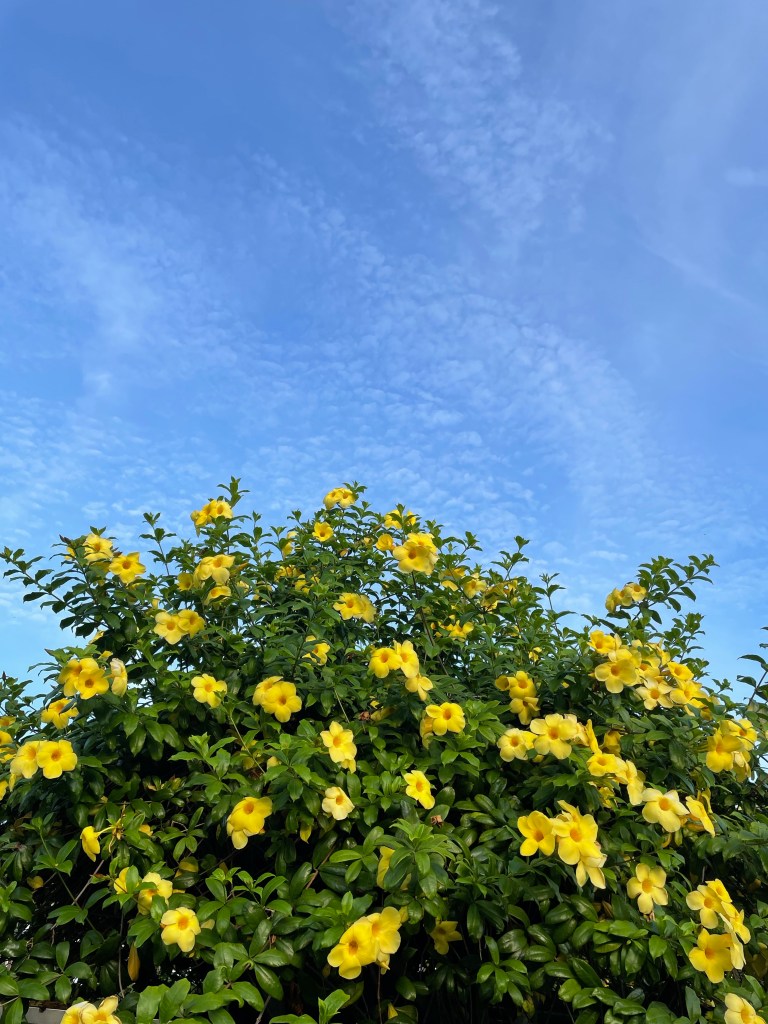
Photo by Mr. Chester Ocampo, springtime in Japan, 2017.

God is the reason

The Lord Is My Chef Sunday Recipe for the Soul by Fr. Nicanor F. Lalog II
Eighteenth Sunday in Ordinary Time, Cycle C, 31 July 2022
Ecclesiastes 1:2, 2:21-23 ><}}}*> Colossians 3:1-5, 9-11 ><}}}*> Luke 12:13-21
My former parish, photo by Mr. Gelo Nicolas Carpio, January 2020.

Last Friday I officiated at the funeral Mass of a younger first cousin; a week earlier, I had anointed him with Oil for the Sick with general absolution of his sins, commending him to God as he was afflicted with a rare disease that attacks the autoimmune system.

It is one of the difficult part in our lives as priests, when sickness and death come closest at home considering that fact that I officiated his wedding about 20 years ago and baptized his eldest son now grown up. That is why our readings today are so timely for me because my cousin Gilbert was only 49 when he died, being the most silent and “goodest” of my cousins who never got into any trouble nor any sickness while we were growing up together in Bocaue, Bulacan. How I felt like Qoheleth, saying….

Vanity of vanities, says Qoheleth, vanity of vanities! All things are vanity. Here is one who has labored with wisdom and knowledge and skill and yet another, who has not labored over it, must leave the property. This is also vanity and a great misfortune.

Ecclesiastes 1:2, 2:21
Photo by author, Pangasinan, April 2022.

Qoheleth is what the author calls himself which is not a proper name but a function of a speaker or a preacher to an assembly which is in Latin ecclesia; hence, it is called the Book of Ecclesiastes.

Despite the tone of his message of “vanity of vanities”, the author is not a “kill joy” or KJ who is provoking a culture of pessimism; in fact, he is trying to search for what truly lasts, for the Absolute good who is God. We have seen how in literature and music that poems and songs of despair are often the most beautiful because the anguish we feel can paradoxically be expressions of our burning desire for something, someone more permanent, more lasting and unchanging – who else and nothing else but God who is not vanity!

If we try to own every line of Qoheleth and reflect deeply on it, we somehow feel a strong similarity with our own cries of despair in life when nothing matters anymore especially with the lost of a loved one, or something so precious that deep inside us we felt with certitude that only God could fill that void.

Yes, all is vanity if we are cut off from God, when all our efforts and our very lives are separated from him because he alone is the Reason. Everything, everyone is meaningful because of God. That is why in the second reading, St. Paul is asking us to “seek what is above, where Christ is seated at the right hand of God” (Col.3:1).

In this world where everything is measured in popularity, in being viral or trending that are all vanities because of their temporariness, so many have fallen into the trap of empty promises of modern lifestyles. See how despite the affluence we now enjoy, we have become more empty in life, more alienated from each other even from one’s self, lacking in meaning and depth in life and existence. Sometimes, results can be fatal when people realize what they have been seeing and hearing in media are not at all true and so far from reality that death becomes an escape than a direction that leads us to the Absolutely Perfect, God and eternal life.

Someone in the crowd said to Jesus, “Teacher, tell. my brother to share the inheritance with me.” He replied to him, “Friend, who appointed me as your judge and arbitrator?” Then he said to the crowd, “Take care to guard against all greed, for though one may be rich, one’s life does not consist of possessions.” Then he told them a parable.

Luke 12:13-16
Photo by Dr. Mylene A. Santos, MD, 2020.

Like Qoheleth, here we find Jesus acting like a “kill-joy” to the man requesting his help to have his share of the inheritance. His responses seems so abrupt and worst of all, very cold! But, it was not really addressed to the man asking the Lord’s intervention. Notice how Luke tells us Jesus addressing the man as “friend” before turning to the “crowd”.

Jesus is still on his way to Jerusalem and saw another opportunity today to teach the people – the crowd – not just the man asking his help of something of high importance in this life which is of being “rich in what matters to God” (Lk.12:21).

Jesus is just and fair, so loving and merciful, very mindful of our needs; however, in the light of the previous gospel scenes we have reflected, we find that Jesus concerns himself only in what matters to God. He does care about our bodily and material needs that he assures us to not worry so much about these because God will never forsake us.

Jesus had come not to be our judge and arbiter on matters about our material and worldly concerns like getting rich and famous and other vanities in life; Jesus came to teach us about what matters to God like love and mercy, kindness and care, justice and freedom. Jesus came to teach us ways of how we may inherit eternal life!

We do not have to spell out and enumerate one by one these things that matters to God of which Jesus is most concerned with; eventually, as we journey with him in life, as we carry our cross, we realize slowly in life these things that matter to God are for sure not material possessions, most often things that matter after death.

That is the grace we find ironically in every death – when somebody dies, we realize deep inside what truly matters to God. As they say, death is the best equalizer in life. And best teacher.


Last week we have the beautiful series of readings from the Book of the Prophet Jeremiah, teeming with life and assurances of love and protection from God. We see how the loving hands of God are like of the potter who molds us into fine earthen vessels of his majesty and glory.

Photo by author, March 2019.

Sometimes we sink into so much self-pity when things are not turning out according to our plans in life, forgetting how God loves us so much, of how he uses even the most tragic and painful events in our lives for our own good because he believes in us.

Yes. God believes in you! Everything is vanity without him, without you!

Would you rather spend everything just for a piece of land or some money or level of fame than living in peace, the greatest gift we can all have in life? That is the whole point of God in telling Jeremiah about being a clay in the potter’s hand – many times in our lives we have to be crushed and mashed, even reduced to being grounded for us to emerge finer and refined, better and more beautiful than before.

Recall those trying days of the past when you chose to bear it all, to be silent and patient. Maybe for a while or a few moments our opponents seemed to have won, or have the upper hand but in the long run, we find we are more fruitful, we are more peaceful because everything and everyone has become meaningful in God. That is because we love.

Photo by Pixabay on Pexels.com

Of all that things that matter with God that we should be rich is love. Love, love, love. As the Beatles said, all you need is love! True. Sometimes it could be foolish to love, to let go of things and insults and pains and hurts.

But, God is greater than our hearts (1 Jn.3:20) and can never be outdone in generosity.

The more we love, the more we are given with more love. That is when we become truly rich in what matters to God. Amen.

Have a blessed week ahead, everyone!

Walking our talk

The Lord Is My Chef Daily Recipe for the Soul by Fr. Nicanor F. Lalog II
Friday in the Fourteenth Week of Ordinary Time, 08 July 2022
Hosea 14:2-10   ><]]]'> + ><]]]'> + ><]]]'>   Matthew 10:16-23
Photo by Dr. Mylene A. Santos, MD in France, March 2022.
Another week is closing,
another brand new week coming
but here I am, O God, still undecided,
dilly-dallying when to follow you,
when to change my ways,
when will I ever be true
in walking my talk; this time,
may I take with me my words
of contrition, of decision to turn
away from sin and follow your path
in Jesus Christ your Son.

Thus says the Lord: Return, O Israel, to the Lord, your God; you have collapsed through your guilt. Take with you words, and return to the Lord, say to him, “Forgive all iniquity, and receive what is good, that we may render as offerings the bullocks from our stalls.”

Hosea 14:2-3
Grant me, O Lord, 
the courage to be wise as the serpent 
and gentle as the dove in this world 
so filled with wolves and other
predators out for a kill with 
their seductive temptations
to rule and dominate; may I always
have the presence of mind to think
what is fair and just, true and good
that I may not be tempted to take 
shortcuts in life; inspire me to innovate
and be creative in proclaiming 
and living out the gospel of Jesus 
in this highly modern and complex
world; most of all, keep me faithful
to you, to always walk your path
for you are the way, the truth and 
the life.

Let him who is wise understand these things; let him who is prudent know them. Straight are the paths of the Lord, in them the just walk, but sinners stumble in them.

Hosea 14:10
There is no other way
to life, Lord, except you 
and this is the reason why
so many want to remove you,
to delete you from life, from
the world so that they can do
what is most pleasing to themselves
without realizing nor admitting
the collapse and slow death
they are experiencing.
Amen.

Finding our directions in life

The Lord Is My Chef Daily Recipe for the Soul by Fr. Nicanor F. Lalog II
First Friday in Week XIII of Ordinary Time, 01 July 2022
Amos 8:4-6, 9-12   ><))))*> + ><))))*> + ><))))*>   Matthew 9:9-13
Photo by author, 14 May 2022 in Los Baños, Laguna.
Glory and praise to you,
God our loving Father for this
brand new month of July 2022:
new beginning, new batch of 31
days filled with your wonderful 
surprises, filled with life and joy!
Grant us, dear Father,
with sense of directions in you
through Jesus Christ your Son;
like Matthew, may we have the grace
to respond to his call to follow him;
help us realize like Matthew
that life is not about having 
wealth and every thing money can buy
but finding meaning and 
directions in life in you.
Forgive us, O Lord, 
when affluence and comforts
overtake us that we forget you
and the people around us
like the people of Israel at the time
of Amos who "trampled upon the needy
and destroyed the poor of the land"
(Amos 8:4); all the sad conditions
happening then still happen today when
nobody cares at all about Sunday worship
nor with honesty in trading and work.

Yes, days are coming, says the Lord God, when I will send famine upon the land: Not a famine of bread, or thirst for water, but for hearing the word of the Lord. Then shall they wander from sea to sea and rove from north to the east in search of the word of the Lord, but they shall not find it.

Amos 8:11-12
Continue to speak to us, Lord,
for without your words,
we are lost like many of those
among us today, "wandering from sea
to sea, roving from north to the east"
searching for your words,
searching for meaning and
directions in life.
Amen.

Praying to fulfill Christ’s prayer for us

The Lord Is My Chef Daily Recipe for the Soul by Fr. Nicanor F. Lalog II
Thursday After Pentecost, Feast of Jesus Christ, Our Eternal Priest, 09 June 2022
Hebrews 2:10-18   ><]]]]'> + ><]]]]'> + ><]]]]'>   John 17:1-2, 9, 14-26
Photo by author, Garden of Gethsemane, Israel, May 2017.
O dearest Lord Jesus Christ,
our Eternal Priest and Savior,
thank you so much for praying 
for us your disciples, 
thank you for consecrating us
to the Father in truth, most of all,
thank you for praying for our
protection against the evil one
(John 17:14-19).
How lovely it is that you, 
O Lord, personally prayed for us!
It is so touching, so humbling.
But most blessed of all, 
dear Jesus, is how you have
fulfilled yourself your prayer
said at the Last Supper right
away the following day on the Cross.

Therefore, he had to become like his brothers in every way, that he might be a merciful and faithful high priest before God to expiate the sins of the people. Because he himself was tested through what he suffered, he is able to help those who are being tested.

Hebrews 2:17-18
Forgive us, Jesus
when we especially your ordained
priests live so detached from you,
when we have forgotten your priesthood
is for others, not for us; when we think
more of our comfort and well-being,
enslaved by the lures of the world,
from flesh to the latest gadgets and 
even way of life.
Forgive us, Jesus
when we especially your ordained
priests forget the very essence of
your victimhood as Priest, 
offering your very self, flesh and blood,
to nourish the people when we escape
and deny all kinds of pains and sufferings,
or the Cross itself.
Continue to pray for us, 
Lord Jesus Christ, 
our Eternal Priest that like you,
we your disciples especially us
your ordained priests may 
imitate you, live like you,
suffer like you so that we may rise
to new life like you.
Pray that we may fulfill your prayers
for us in words and in deeds.
Amen.
Photo from gettyimages.com.

Beauty and blessedness at sunrise

Quiet Storm by Fr. Nick F. Lalog II, 05 May 2022
Photo by author, sunrise at the Lake of Tiberias (Galilee) in Israel, May 2019.

Our gospel last Sunday spoke of the Risen Lord’s third appearance to his disciples at the Lake of Tiberias. No one, except the beloved disciple recognized Jesus standing at the shore after he had told them to cast their net to the right side of the boat that led to their plentiful catch of fish.

When it was already dawn, Jesus was standing on the shore; but the disciples did not realize that it was Jesus. Jesus said to them, “Children, have you caught anything to eat?” They answered him, “No.” So he said to them, “Cast the net over the right side of the boat and you will find something.” So they cast it, and were not able to pull it in because of the number of fish. So the disciple whom Jesus loved said to Peter, “It is the Lord.” When Simon Peter heard that it was the Lord, he tucked in his garment, for he was lightly clad, and jumped into the sea.

John 21:4-7
Photo by author, sunrise at Lake of Tiberias, May 2017.

I love the way it is narrated. What a wonderful interplay of realities, of John the beloved recognizing Jesus standing at the shore upon seeing the many fish caught in their net!

The story speaks of the beauty of every sunrise many of us seem to take for granted, of how so many of us miss the beautiful sight and silence of the morning. It is a story of every new day filled not only with promises but in itself a blessing we can surely experience when we first recognize Christ present in us.

That is perhaps one problem with us who always prefer spectacular sights and events to find God.

Unlike sunset, sunrise does not have radiant displays of colors and shades. It is very simple which is the lesson of Easter to us, of how our great God comes to us in the simplest moments of life. Recall too that Jesus was born in the middle of the darkest night of the year when everyone was asleep and rose from the dead very, very early in the morning that no one had seen! And here lies one of the wonderful mysteries in life – the hiddenness of God!

It is in God’s hiddenness that we can find him not because he is hiding but inviting us to be hidden in him too. That is the beauty of sunrise when you have to wake up early to see the beauty of life unfolding, awaiting something we are totally unaware of what is going to happen next. It is easier to wait for the sunset because you have been up and going the whole day; you just have to stop and pause for a while to await the sun going down.

Photo by Ms. Jo Villafuerte, sunrise at Atok, Benguet, September 2019.

Sunrise is different. It is like awaiting a total stranger, compared with sunset after we have befriended the the day about to end.

Every morning when we wake up, we do not know what is in store for us. Some people are excited, others are not while the rest simply got the blues or too lazy to work and study that they would rather sleep more.

Maybe that is why sunrise is more subdued with its hues and shades. Like God, sunrise is so kind, very accommodating with everyone, no spectacular display of colors so that one could buy his own time on whether to go out and move or snuggle more in bed, alone or with somebody else.

Like a beloved someone or God himself, sunrise looks soft and calm, reassuring everyone the day ahead would be just fine for us all.

Its light is so gentle, though bursting filled with life but never insistent to the eyes, so gentle. This we feel in our favorite word and activity every morning – breakfast – which came from the literal “breaking of fast” the night before by the monks in the monasteries. We can feel this gentleness of sunrise in that Christian hymn Morning Has Broken, whether you sing it or listen to Cat Steven’s cover or to its original Gaelic Scottish tune. And along this line, we find sunrise as the sweetest breaking of all in Angela Bofil’s 1981 love song Break It To Me Gently.

Photo by author, sunrise at Camp John Hay, Baguio City, November 2018.

Sometimes, sunrise can be a bit wild, bursting with light that can penetrate one’s soul with its light traveling so fast, eager to cover the whole surrounding with the good news of life coming.

Think of the Beatles’ 1969 Here Comes the Sun with its lovely guitar introduction, assuring everyone, especially your beloved “little darling” that “it’s all right” with “smiles returning to the faces.”

Photo by author, sunrise at Bolinao, Pangasinan, 20 April 2022.

That is the most beautiful part of catching the sunrise when all is silent with you all alone, listening to Jesus whispering, “Little darling, it’s all right” because whatever had happened yesterday, with all your sins and mistakes, are all forgotten and forgiven. Today is a new beginning, like what he told Peter in last Sunday’s gospel when he asked him thrice, “Simon, son of John, do you love me?”

Photo by author, sunrise at Bolinao, Pangasinan, 20 April 2022.

Peter was distressed that Jesus had said to him a third time, “Do you love me?” and he said to him, “Lord, you know everything; you know that I love you.” Jesus said to him, “Feed my sheep… And when he had said this, he said to him, “Follow me.”John 21:17, 19

John 21:17, 19

It is said that whatever one feels in describing the sunrise is one’s perception of love – warm and refreshing, joyful and so alive, filled with hopes and raring to go.

Sunrise is beautiful because it is when we experience closest with our truest self, with those most faithful and loving to us, and most of all, with God, our very root and being. Every morning is the fulfillment of Zechariah’s prophecy of each of us becoming a John the Baptist whose name means “graciousness of God.” This we pray every morning in the Benedictus (cf. Lk.1:68-79):

In the tender compassion of our God
the dawn from on high shall break upon us, 
to shine on those who dwell in darkness and the
     shadow of death,
and to guide our feet into the way of peace.

May you be blessed every morning, every day of the week. Amen.

Photo by Ms. Jing Rey Henderson, sunrise at Dumaguete City, Negros Oriental, 27 April 2022.

Easter is making our lives whole again in Christ

The Lord Is My Chef Daily Recipe for the Soul by Fr. Nicanor F. Lalog II
Thursday in the Second Week of Easter, 28 April 2022
Acts 5:27-33   ><))))*> + <*((((><   John 3:31-36
Photo by author, 20 April 2022.
Lord Jesus Christ,
in this season of Easter,
help me make my fragmented
life whole again in you.
So many times, I feel like 
the many members of the
Sanhedrin in the first reading
today demanding so many things
from myself that I fail to obey God;
grant me the courage like of Peter
and the Apostles who boldly declared,
"We must obey God rather than men"
(Acts 5:29). 
Like Nicodemus in the gospel,
I am still afraid to come to you
in broad daylight, still hiding in the
night because I am afraid of what
people would say and tell about me
in being faithful to you, in being one
with you.

Whoever believes in the Son has eternal life, but whoever disobeys the Son will not see life, but the wrath of God remains upon him.

John 3:36
To believe in you, dear Jesus,
is to enter into a relationship with
you at the center; to believe in you
is to live and abide in you, Lord.
And that is why our lives are fragmented:
we are so divided and broken because
we follow the world, not you; we are
easily tempted and enticed to the 
many lures of pleasures the world
offers that only leave us more empty,
and more lost.
This season of Easter,
help me go back to you, Lord,
in prayers and silence;
let me focus on you again.
Amen.

Praying for joy and wisdom

The Lord Is My Chef Daily Recipe for the Soul by Fr. Nicanor F. Lalog II
Monday, Memorial of St. Cyril, Bishop and St. Methodius, Monk, 14 February 2022
James 1:1-11   ><]]]]*> + ><]]]]*> + ><]]]]*>   Mark 8:11-13
Photo by Ms. Jo Villafuerte, 2019.
So many people today, O Lord,
are so busy and excited, being  
Valentine's day, a day of the heart
when sweethearts speak sweet 
nothings, giving flowers to
express their love to their beloved.
I can't blame them, O Lord,
for being taken for a ride in this
highly commercialized world that
has become more stressful;
people have been suffering from
so many forms of difficulties and 
trials that for many, they try to 
escape momentarily.

Consider it all joy, my brothers and sisters, when you encounter various trials, for you know the testing of your faith produces perseverance. And let perseverance be perfect, so that you may be perfect and complete, lacking in nothing.

James 1:2-4
Teach, O Lord, to consider it true
joy and a blessing in disguise every
trial we go through in life; inasmuch as
we greatly dislike inconvenience and 
sufferings, failures and powerlessness,
poverty and sickness, may we recall 
yesterday's Beatitudes, that true
blessedness and joy come from going
through these difficulties that bring out
the best in us through time than the 
instant gratifications and feel-good 
offered by the world.
Grant us the wisdom to appreciate
the trials that come our way, producing
in us the depth and maturity that lead 
to fulfillment and perfection; may we
stop looking for outward signs like 
those Pharisees who kept on debating
with Jesus without any intentions of 
being open to find and accept him.
Amen.
Brothers Saints Cyril and
Methodius,
Pray for us!

Malapit sa Diyos, naglalapit sa Diyos

Lawiswis Ng Salita ni P. Nicanor F. Lalog II, Ika-02 ng Pebrero 2022
Kapistahan ng Paghahandog kay Jesus sa Templo
Malakias 3:1-4 ><}}}}*> Hebreo 2:14-18 ><}}}}*> Lucas 2:22-40
Larawan mula sa crossroadinitiative.com.

Ngayon ang ika-40 araw mula ng Pasko ng Pagsilang ng Panginoong Hesus sa Bethlehem, Kapistahan ng Paghahandog sa Kanya sa Templo ng kanyang mga magulang na sina Maria at Jose.

Bukod tangi lamang itong salaysay na matatagpuan sa ebanghelyo ni San Lucas sapagkat ibig niyang ipakita noon sa kanyang mga mambabasa at mga taga-sunod na pumarito si Hesus para sa lahat ng tao, hindi lamang sa mga Hudyo.

Una itong pinagdiwang ng mga Kristiyano sa Jerusalem at lumaganap sa Silangan noong taong 500 kung saan ito tinawag sa wikang Griyego na “Ypapante” na ibig sabihi’y ang “Pagtatagpo” nina Hesus at ng dalawang matanda sa templo na sina Simeon at Anna.

Mula Silangan, umabot ang pagdiriwang na ito sa Europa na nakilala bilang kapistahan din ng Paglilinis ni Maria o “Purification of Mary”. Sa France, nagkaroon ng seremonyas ang mga Kristiyano ng pagbabasbas at pagsisindi ng mga kandila bago pumasok ng simbahan bilang pagkilala kay Hesus na tanglaw ng mundo ayon sa pahayag ni Simeon sa templo, “Liwanag itong tatanglaw sa mga Hentil, At magbibigay-karangalan sa iyong bayang Israel” (Luc. 2:32).

Kaya nang makarating sa Roma ang tradisyong ito noong taong 800, ito rin ang ginawang seremonya ni Papa Sergio I kaya tinagurian itong Candelaria (kandila). Makalipas ang mahigit isang libong taon noong 1962 sa Vatican II, ibinalik sa tunay na pangalan ito bilang Kapistahan ng Paghahandog sa Templo ngunit pinanatili ng mga obispo ang tradisyon ng pagbabasbas at pagsisindi ng mga kandila upang ipakita na si Hesus ang tunay na liwanag sa mundo sa aakay sa atin pabalik sa Diyos.

Kuha ni G. Cristian Pasion, Pasko ng Pagkabuhay, 2021.

Mahalaga na ating mapagnilayang muli at makita sa panahong ito na si Hesus ang tanging liwanag sa ating buhay na tumatanglaw sa gitna ng maraming artipisyal na mga ilaw, mga ilaw na ang binibigyang liwanag ay mga tao at kung sinu-sinong ibig na maging sikat o ibig kilalanin.

Ito yaong mga artipisyal na ilaw ng mga kamera at media na ang pinakikita o ang tinatampok bilang “highlight” ay mga karangyaan, kapangyarihan, katanyagan at mga kapalaluan sa mundo.

Inaanyayahan tayo ng kapistahang ito na tularan sina Simeon at Anna na inabangan buong buhay nila si Hesus na siyang tunay na liwanag ng ating buhay na dapat din nating hanapin, lapitan at sundan.

May isang tao noon sa Jerusalem, ang pangala’y Simeon. Matapat at malapit sa Diyos ang lalaking ito at naghihintay sa katubusan ng Israel. Sumasakanya ang Espiritu Santo na nagpahayag sa kanya na hindi siya mamamatay hangga’t hindi niya nakikita ang Mesiyas na ipinangako ng Panginoon.

Lucas 2:25-26

Bukod sa tanging si San Lucas lamang ang may kuwento ng tagpong ito, mayroon din siyang ginamit na kataga na hindi ginamit ng sinumang manunulat ng Bagong Tipan o maging ng alin mang aklat sa buong Bibliya.

Ito yung salitang naglalarawan kay Simeon bilang , “malapit sa Diyos” na sa Inggles ay “devout”.

Alam na natin yung salitang “righteous” o “matapat” na ginamit din ni San Mateo upang ilarawan si San Jose bilang taong matuwid o banal na tumutupad sa mga batas at alituntunin ng kanilang relihiyon.

“Simeon’s Moment” ni American illustrator Ron DiCianni mula sa  http://www.tapestryproductions.com.

Ngunit iyong “malapit” o “devout” sa Inggles o “deboto” sa pangkaraniwang pananalita, tanging si San Lucas lamang ang gumamit niyon sa buong Bibliya. Apat na ulit niya itong ginamit: minsan sa ebanghelyo na ating napakinggan at tatlong ulit sa ikalawang aklat niyang sinulat, Gawa ng mga Apostol.

Mas maliwanag ito sa Inggles nang tawagin ni San Lukas ang mga Hudyong pumunta sa Jerusalem noong Pentecostes bilang mga “devout Jews” o “mga taong palasamba sa Diyos” (Gawa 2:5); tinawag din niyang mga “devout men” o “mga taong may takot sa Diyos” yaong mga naglibing sa ating unang Martir na si San Esteban (Gawa 8:2); at sa pagsasalaysay ni San Pablo ng kanyang pagbabalik-loob, ginamit na salita muli ni San Lucas sa kanyang kuwento upang ilarawan si Ananias bilang “a devout observer of the law” o “taong may takot sa Diyos” (Gawa 22:12).

Alalaong-baga, para kay San Lucas, ang isang “devout” na tao, o wika nga natin deboto ay isang taong malapit sa Diyos dahil siya ay mayroong takot sa Diyos kaya tumutupad sa Kanyang mga utos! Hindi lamang sila matapat o faithful kungdi mayroong malinis na puso at laging handang tumupad ng buong tapang sa kalooban ng Diyos.

Kaya nga sa ating mga Pinoy, ang deboto ay taong malapit, yaong mayroong matalik na ugnayan sa Diyos at sa kapwa!

Sila yaong mga kaibigang maaasahan, mayroong sariling kusa at hindi naghihintay na pagsabihan pa kung ano ang gagawain. Mayroong sariling-palo katulad nina Simeon at Anna na kusang naghihintay, lumalapit sa Diyos at Panginoon.

“Presentation at the Temple” painting ng Italian Renaissance artist Andrea Mantegna noong 1455; hawak ni Mari ang Banal na Sanggol habang si San Jose naman sa gitna ay nakatingin kay Simeon na mayroong balbas na puti. Larawan buhat sa wikipedia.org.

Nadadalisay ang ating pagiging malapit sa Diyos sa isang buhay-panalangin na kung saan mayroong disiplina sa pagdarasal na hindi lamang mga salitang inuusal ng bibig kungdi sinasapuso.

Masdan paanong sinabi ni San Lucas sina Simeon at Anna na palaging nasa templo nananalangin. Higit sa lahat, ang pananalangin ay kaisahan sa Diyos kaya nabatid kaagad ng dalawang matanda na dumating na si Hesus sa pag-uudyok sa kanila ng Espiritu Santo.

Katulad din yan ng pagkakaroon ng matalik na kaibigan: palagi kayong nag-uusap, nagbabahaginan at nag-uunawaan kaya mayroong kaisahan.

Ang pagiging malapit sa Diyos o deboto ay hindi lamang pagaalaga at pagkolekta ng mga imahen at aklat dasalan kungdi pumapaloob sa kalooban ng Diyos na siyang sinasabi ni propeta Malakias sa unang pagbasa na biglang darating ang Panginoon sa kanyang templo na siyang ating mga sarili.

Gayun din naman, ang taong malapit sa Diyos palaging malapit sa kapwa, lalo na sa mga maliliit at nahihirapan sa buhay gaya ng mga may-sakit at kapansanan. Pagmasdan paanong kinilala ni Simeon mga magulang ni Hesus sina Maria at Jose. Binigyan niya ng halaga kanyang mga kapwa-tao hindi lamang ang Panginoong Hesus.

Ang tunay na kaibigang matalik ay yaong naglalapit sa atin sa Diyos at kabutihan, hindi kasalanan at kapahamakan. Nakakatagpo natin si Hesus sa ating mga kapwa tao gaya ng sinasabi ng may-akda ng sulat sa mga Hebreo na ating napakinggan.

Higit sa lahat, ang taong malapit sa Diyos o isang deboto ay puno ng tuwa at kagalakan. Damang-dama ang tuwa at galak nina Simeon at Anna nang makatagpo at makalong si Hesus na sa sobrang tuwa nila sila’y handa nang mamatay.

Iyon ang tunay na palatandaan ng malapit at nakatagpo sa Diyos: puno ng tuwa na anuman ang sapitin sa buhay, hindi niya alintana ang mga takot at pangamba, maging kamatayan sapagkat ito ang maghahatid sa tunay na paglapit at pagbuklod sa Ama kay Kristo Hesus. Amen.

Larawan kuha ng may-akda, Santo Niño Exhibit sa katedral ng Malolos, Enero 2022.

Each of us an “Emmanuel” too!

The Lord Is My Chef Simbang Gabi Recipe by Fr. Nicanor F. Lalog II
Saturday, Day 3, 18 December 2021
Jeremiah 23:5-8   ><}}}*> + <*{{{><   Matthew 1:18-25
Photo by author, Baguio Cathedral, January 2018.

We have just concluded the “Year of St. Joseph” last December 8 but it seems due to the pandemic, we have not celebrated truly enough to realize the virtues and person of the most silent character in the New Testament, St. Joseph.

We find no story in the gospels with St. Joseph either speaking or conversing with anyone at all. At least the Blessed Virgin Mary conversed with the angel during the Annunciation and spoke to Jesus her Son upon finding him at the Temple and at the wedding feast at Cana. St. Joseph was totally silent and most of all, could sleep soundly despite the tremendous stress he must have gone through! Truly a man of great faith and trust in God!

This is how the birth of Jesus Christ came about. When his mother Mary was betrothed to Joseph, but before they lived together, she was found with child through the Holy Spirit. Joseph her husband, since he was a righteous man, yet unwilling to expose her to shame, decided to divorce her quietly. Such was his intention when, behold, the angel of the Lord appeared to him in a dream and said, “Joseph, son of David, do not be afraid to take Mary your wife into your home. For it is through the Holy Spirit that this child has been conceived in her.”

Matthew 1:18-20
Photo from vaticannews.va, December 2020.

Notice how Matthew presented the climax of his genealogy not only with the coming of Jesus Christ at the end but also in his lineage to St. Joseph he described as “a righteous man” and addressed by the angel in a dream as “son of David”.

In him we find that expression “silent water runs deep” so very true. Imagine the maturity and deep spirituality of St. Joseph being called as a righteous man or a holy man which for the Jews is one who obeys the Laws of Israel.

But in this scene of the Annunciation of Christ’s birth to him in a dream, Matthew goes deeper into what is to be holy as more than obeying the the Laws but most of all, abiding by the will of God always as described in many instances in the Old Testament like the Book of Psalms. If holiness were simply an adherence to the Laws, St. Joseph would have not decided to silently leave Mary found pregnant with a child not his; in their laws, she would have been shamed in public which St. Joseph avoided in trying to leave her silently. For him, higher than the letters of the law was the welfare and well-being of Mary and her Child that until then he did not know was the Christ.

At the same time, here we find the deep spirituality of St. Joseph: compared with Mary to whom the angel appeared and spoke in person while with St. Joseph, the angel appeared only in a dream. He had a more difficult situation discerning whether his dream was real or not, which we all experience upon waking up from a dream so real!

Only a man with deep spirituality, so attuned with God like St. Joseph could perceive the divine in fact while at the same time discern it as very true the will of God that “When Joseph awoke, he did as the angel of the Lord had commanded him and took his wife into his home. He had no relations with her until she bore a son, and he named him Jesus” (Mt.1:24-25).

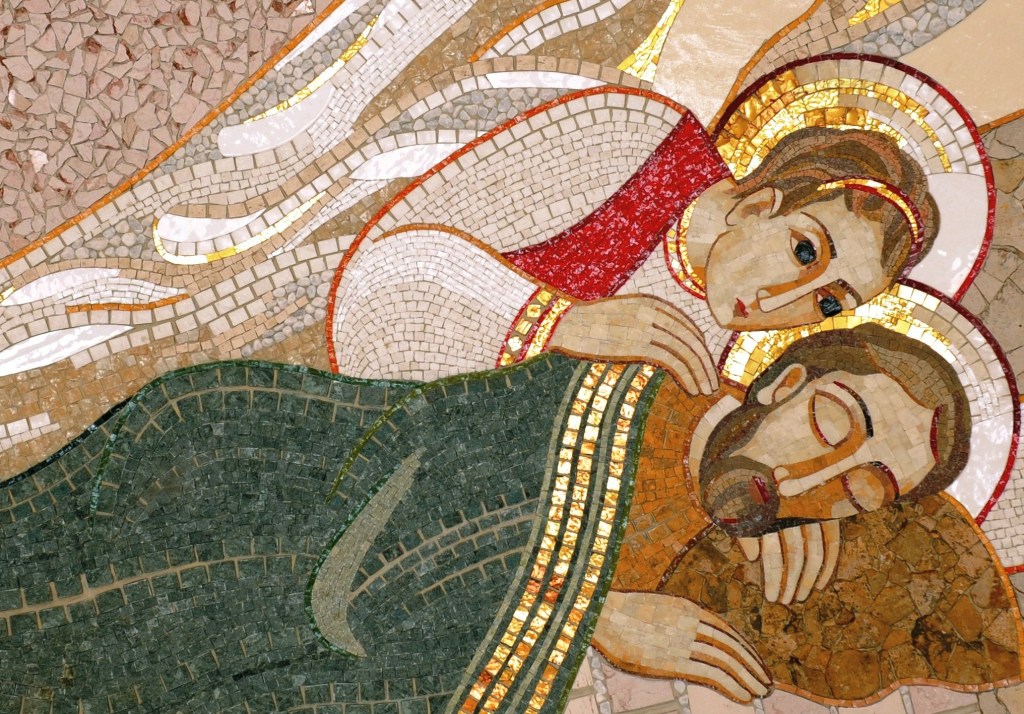
Photo by Arch. Philip Santiago, mosaic of the Annunciation to Joseph at the Shrine of St. Padre Pio in San Giovanni di Rotondo, Italy, 2017.

In a very concise manner – like our very silent saint and foster father of Jesus – Matthew presents to us in this short story of the Annunciation of the Birth of Jesus to St. Joseph all the critical and essential elements about the mystery of the Incarnation.

As we have reflected yesterday at the genealogy, Matthew now goes deeper into the humanity and divinity of Jesus Christ as the fulfillment of the Old Testament promises of God. This he beautifully presented also through the person of St. Joseph, a reminder of the need for us to be vessels of God’s graces and instruments of God’s works.

St. Joseph showed in this brief scene the true meaning of holiness, of being whole by seeking to find ways to bring into unity their laws and love and persons, something which Jesus Christ would keep on elaborating in his entire ministry, like his favorite expression “Sabbath was created for man, not man for sabbath.”

See how he tried to give more importance to Mary whom he loved so much that he was intent in not putting her to shame and harm. And upon listening and discerning the angel’s message to him in a dream, he obeyed everything, showing us the unity of the laws in love long before Jesus came to show it on the Cross himself. In accepting God and Jesus, St. Joseph had to take Mary; and in taking Mary, Jesus came into the world.

Here we are challenged by the example of St. Joseph that we too become an Emmanuel in the sense that in our lives, we become the sign that God-is-with-us specially in this time of the pandemic and with coming elections next year. We need to pray more deeply and be attuned with God for his divine will that always takes unexpected turns, so different from our own ways and methods.

Photo by author, 15 December 2021.

To be an Emmanuel like Jesus and St. Joseph, one has to be definitely pro-life, one who values life and every person, regardless of his/her status in life.

Like St. Joseph, let us learn to be silent for God and be louder with our actions, always choosing and standing for life and for every person’s dignity.

Like St. Joseph, he chose from the very start the value of Mary as a person which is the hallmark of Jesus as Emmanuel, the God who became human to be with us because it is good to be human. Amen.