When we are lost, then found

Quiet Storm by Fr. Nicanor F. Lalog II, 17 April 2023
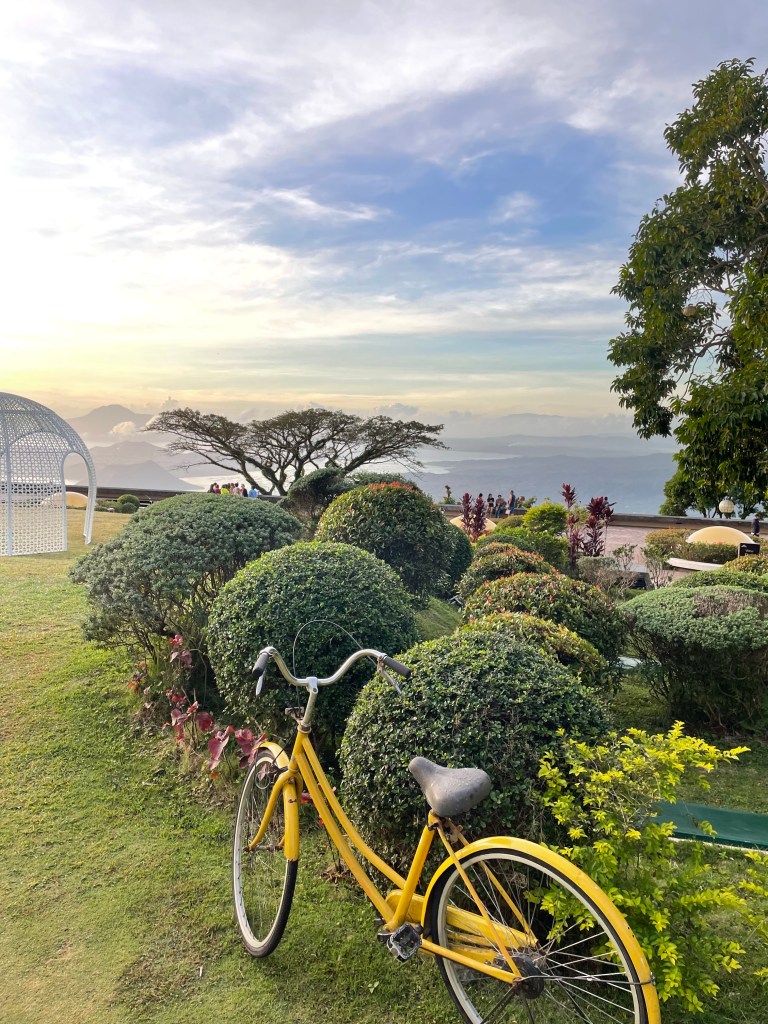
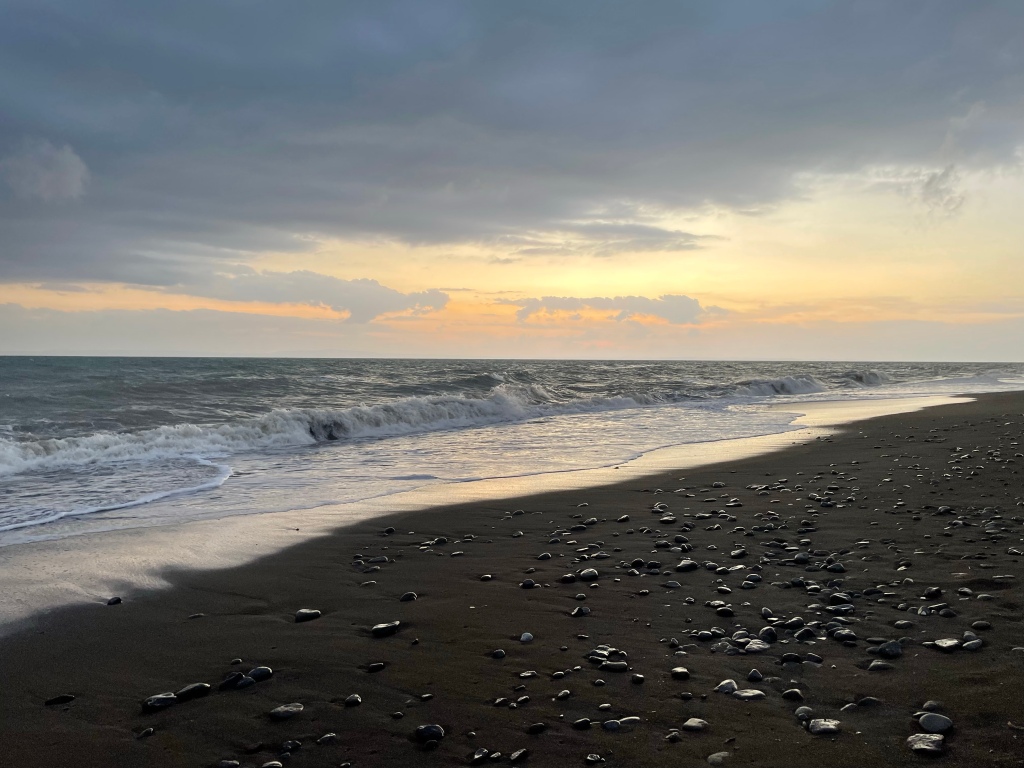
Photo by author, 08 February 2023, Taal Vista Hotel, Tagaytay City.
We all know 
that feeling happening
more often lately
a foreboding of senility?
when we go like crazy
why can't we see suddenly
some things we have
held or kept momentarily
until we sound the alarm
and call everyone
to join in the search
but still nowhere to be found.
It could be the key
or the glasses or the phone
that in exasperation
we say begone
only to make us
forlorn figures
in our own home
or tiny room
but sometimes too soon
other times would take
too long, our lost 
things are suddenly found!
Is it part of the riddle
of that black hole they call
when missing things
suddenly appear
without being sought
much less thought?
But here is the thrill:
when things even persons
are missing,
are we not the ones
who are lost
and waiting to be found?
More than the
naked shouts of eureka
is our profound joy
when missing things
even persons suddenly
appear because the truth
is, we were the ones lost
and could not be found
in our cluttered minds
and hearts shut and closed
by our fears and doubts, 
anxieties and insecurities.
In this life
far wider than the world
where planes still go missing
amid modern technologies
and endless searching,
could it be that we are 
missing our bearings
as beings, forgetting 
God and others when we are
lost to our own beliefs or
locked in our small world
of lies and prejudice?
To find those missing 
persons or things dear to us
it might help if we first lose
whatever is holding us
for the world is so wide
for anyone or anything 
to just disappear 
they surely must be here
awaiting for our hearts 
to be clear until we hear
that sweet voice
giving us peace within. 

On the evening of that first day of the week, when the doors were locked, where the disciples were, for fear of the Jews, Jesus came and stood in their midst and said to them, “Peace be with you.” When he had said this, he showed them his hands and his side. The disciples rejoiced when they saw the Lord. 

John 20:19-20
Photo by PhotoMIX Company on Pexels.com

Roots

Quiet Storm by Fr. Nicanor F. Lalog II, 10 April 2023
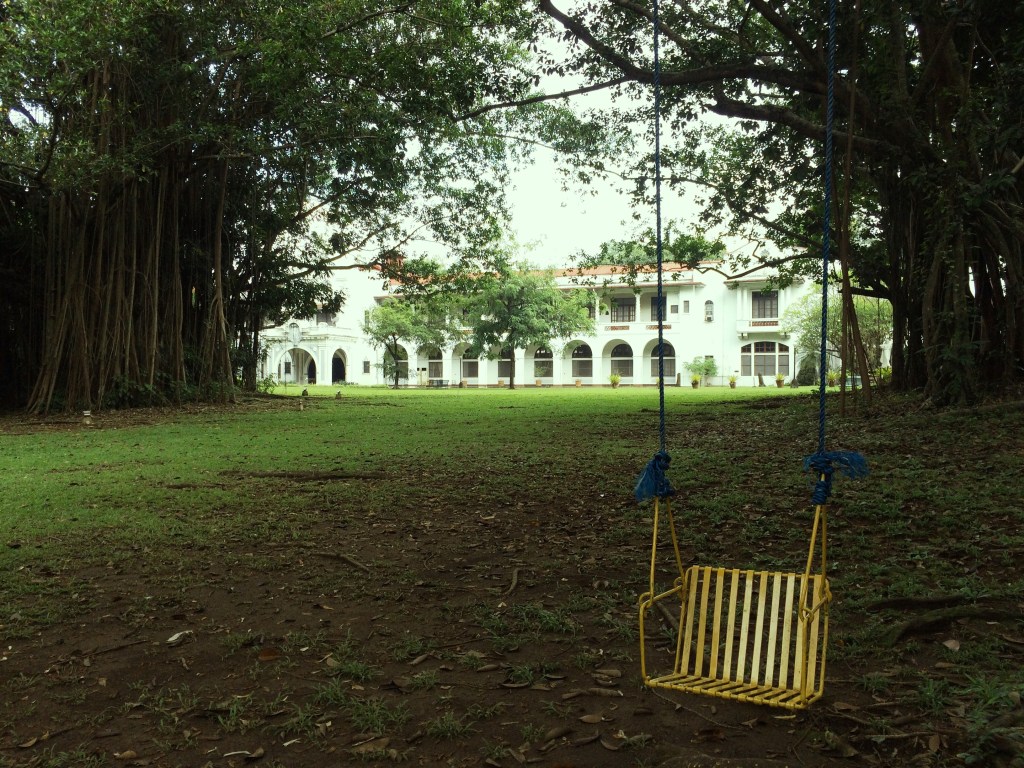
A photo-reflection of our rootedness in God while at the Sacred Heart Novitiate last March 20-22, 2023.
In the lush rolling hills of Novaliches
that is now fast disappearing are
23 hectares of pastureland and mini forests 
inside the Sacred Heart Novitiate
of the Society of Jesus.

Thank God it had opened
anew its doors to retreatants like me
wishing to have a "vacare Deo"
or vacation in the Lord.
A retreat
or a vacare Deo
is a return to our roots,
God.

While preparing for the formal
start of my retreat last March 20,
I felt the roots of the many trees
speaking to me
 in this Bethel of mine
where like Jacob in
Genesis 28:10-19,
I met God.
Sometimes,
I wrestled with Him
like Jacob too
in Peniel/Penuel
(Gen. 32:23-33).
How interesting
the words "true" and "truth"
along with its cousin "trust"
came from the old English
"treowe"
for tree.
According to experts,
the Anglo-Saxons worshipped trees
they called "treowe"
because they evoked firmness
and solidness;
the more rooted is the tree,
the more firm does it stand.
Like truth.
Whatever that is true, firmly standing
like a tree or treowe always has extensive 
network of roots, creating linkages
and interconnections from which came
that image of the 
"family tree".
When there are interconnections,
linkages,
there are relationships.
People with the most
wonderful relationships
are also the truthful ones
because they are trustworthy.
Reliable.
Like God.
Our root.
Our rootedness
who connects us with
everyone.
When we are rooted
and grounded in God,
nothing can ever disturb us
like a big, big, tree.
We can withstand all storm,
bear the sun's heat
remaining firm
and aglow
 with God's majesty
in daytime and in darkness.

Lovelier than the tree,
thank God
for creating me.
Hallelujah!

Fulness in emptiness

The Lord Is My Chef Sunday Recipe for the Soul by Fr. Nicanor F. Lalog II
Easter Sunday, Cycle A, 09 April 2023
Acts 10:34, 37-43 ><}}}"> Colossians 3:1-4 ><}}}"> John 20:1-9
Photo by author, sunrise at Katmon Nature Sanctuary & Beach Resort, Bgy. Binulusan, Infanta, Quezon, 04 March 2023.

Blessed happy Easter everyone! Rejoice, the Lord is Risen! I know it is very difficult to greet everyone with Happy Easter compared with Merry Christmas primarily due to our weather. Most of all, because Easter is so empty unlike Christmas so filled with many signs and symbols, even with gifts and other things.

But that is the mystery – and joy – of Easter.

Emptiness. Even nothingness.

Because when we are empty, when we have nothing, that is when God fills us with his abundance.

On the first day of the week, Mary of Magdala came to the tomb early in the morning, while it was still dark, and saw the stone removed from the tomb. So she ran and went to Simon Peter and to the other disciple whom Jesus loved, and told them, “They have taken the Lord from the tomb, and we don’t know where they put him.”

John 20:1-2
Photo from GettyImages/iStockphoto.

How amazing that we Filipinos are so fond of using the expression “wala lang” for nothing or empty. When a man texts a woman with a simple hi or hello plus the words, wala lang, do not believe him because that’s something! There is something in simply texting you out of the blue! Meron yun kasi di ka niya text kung wala talaga.

In the provinces if you come for a lunch or dinner, whether there is an occasion or none, it is common to hear the hosts especially the poorer ones apologizing for not having a lot of food when in fact there are more than two viands like the freshest fish and vegetables we urbanites miss most. They would always say, “wala po kaming nakayanan, mahina po ang ani/huli, pasensiya na po.” Such kind of superb graciousness among us Filipinos in the provinces is so ordinary.

Perhaps, it is a beautiful sign we have imbibed from our deep faith in Jesus Christ who was nowhere to be found inside the empty tomb.

His absence from the empty tomb meant he was present somewhere. That was what Magdalene implied when she said “They have taken the Lord from the tomb, and we don’t know where they put him” (Jn.1:2).

Though the tomb was empty, Jesus was not missing at all. He had risen from the dead! In fact later, they would meet him along the way and that very evening too until his ascension into heaven.

Emptiness and nothingness can be positive or negative.

Positive emptiness means nothingness for God who alone suffices. There is an inner feeling of emptiness for something or Someone bigger, greater. That is how a man feels when he texts a woman of his dream with wala lang: he feels empty and nothing without her! The same with God. St. Augustine perfectly said it, “my heart is restless until it rests in you, O Lord.”

Henry Osawa Tanner’s painting, “The Three Marys” (1910), photo from biblicalarchaeology.org.

Easter is positive emptiness: Jesus is no longer in the tomb because he is risen. It is the definitive sign we have been freed from the clutches of evil and sin, of death and decay. Death is not the final statement in life. The gospel at Easter Vigil is more picturesque when Matthew narrated how Magdalene saw an angel seated on the empty tomb of Jesus, a beautiful reminder of how suffering and death have become Christ’s crowing glory. From being a tomb to becoming a Throne!

Every time we experience pains and sufferings, of emptiness and nothingness in life that all we could do is surrender everything to God like Jesus on the Cross, that is positive emptiness. We know for sure and feel it inside us that there is something in this nothingness. That is why never say “walang-wala ako” (I got nothing) because we always have God in us.

Positive emptiness/nothingness is the virtue of hope which is not positive thinking that things would get better. In fact, to have hope in God is to believe and accept that things could get worst like Jesus during the days leading to his arrest and crucifixion because to hope is believe that even if everything is lost, there is always God loving us in the end.

Hope is positive emptiness because it is creating a space within us for God and for others in love. Positive emptiness and nothingness is seeking God right in that emptiness like Peter and John running into the tomb after learning it was empty because we love, we have a relationship that continues after one is gone and not seen.

That ultimately is what positive emptiness/nothingness is all about, love.

It is similar to that feeling at the end of a movie when we refuse to stand and leave the cinema because we believe – we hope – there is still another final scene, there is still a coming sequel to what we have seen. We are not totally saddened with the end of the movie as we strongly feel, there would be a part two, a part three, and a part four which has been the trend all these years of the great movies of our youth! How funny that after exhausting the sequels, there came also the prequels. Why? Because we have all established a relationship, a love among us the fans of a movie franchise like Star Wars or Die Hard and its creators.

Photo by Ms. April Oliveros, Mt. Pulag, 25 March 2023.

That is what Easter is all about. We do not simply give up for life’s many sufferings and pains, trials and tribulations because we feel and know deep inside we have Jesus Christ who have risen from the dead. We are emptied daily in order to be filled with Jesus himself every day too. There is no need to see much things. Enough to feel deep inside like what Peter explained to the people at the first reading. Their very lives proved amid the physical emptiness or absence of Jesus in the world that Jesus was present, was Someone with Something.

This is the great challenge for us these days. More and more people are spending the Holy Week and Easter in the beach or somewhere else to bond as family where they could see more of each other and see more sights than the ordinary we have during this time of the year at home and in the parish that are usually bland and dry. More people prefer to go somewhere here and abroad in the hope of still being able to pray and celebrate the sacraments there because they feel empty here at home. We really hope they have positive emptiness than negative emptiness.

Negative emptiness is feeling empty amid the plethora of things and pleasures in life. Many times these days due to mobility, it is so easy to go hiking to the mountains or to some exotic destinations to fill the emptiness we have inside, to search for our “lost selves” (hanapin ang sarili). But very often, after some time of relief, the same emptiness and nothingness occurs. Nothing happens because what we really have is positive emptiness, our desire for God, the most essential in life who cannot be replaced by anything at all.

Negative emptiness is seeking things, sights and sounds, things of the senses to fill up curiosities, to settle doubts, to find happiness not realizing it is totally different from joy and fulfillment.

Negative emptiness is insisting on holding on to what can be seen, to what is tangible despite the inner directions we have been feeling inside toward God. For some time, we can refuse to follow its directions but there are times, positive emptiness and nothingness impose itself on us like when there is death or serious illness in the family. At first, it can be scary, so frightening but eventually, liberating like in the experiences of the first disciples of Jesus.

May we heed St. Paul’s words this Easter from the second reading, “Brothers and sisters: If then you were raised with Christ, seek what is above, where Christ is seated at the right hand of God” (Col. 3:1).

Dearest Lord Jesus,
grant us the grace to seek and find
you in emptiness and nothingness,
even in darkness;
many times, our senses blur 
our sight of you;
how sad that even in our celebrations
we are so fascinated with all the colors
and antics in the rituals and processions 
we keep in our cameras and cellphones
but never in our hearts and memories
that soon enough, they fade, we forget
and see them only as pictures
bereft of meaning because it lacked relationship;
let us see you more beyond 
to have sights and insights
as well as hindsight and foresight
of your loving presence
in emptiness and nothingness
because what we have and keep
is your relationship,
your love and mercy.
Amen.

Only God can quench our thirst

Quiet Storm by Fr. Nicanor F. Lalog II
The Seven Last Words, 05 April 2023
Photo by author, Chapel of the Holy Family, Sacred Heart Novitiate, Novaliches, Quezon City, 2014.

After this, aware that everything was now finished, in order that the scripture might be fulfilled, Jesus said, “I thirst.” There was a vessel filled with common wine. So they put a sponge soaked in win on a sprig of hyssop and put it up to his mouth.

John 19:28-29

This is one of the remarkable scenes in the fourth gospel, our Lord Jesus Christ feeling thirsty, the second time as recorded by John. The first was in the town of Sychar in Samaria when Jesus sat by Jacob’s well at noon and asked a Samaritan woman who came to draw water, “Give me a drink” (Jn. 4:7). A beautiful conversation followed between Jesus who was thirsty and the Samaritan woman, thirsting for God, for love and mercy.

Unlike being hungry for food which we can always bear because its feeling is localized in the stomach that we can easily forego by catching some sleep, thirst is different. When we are thirsty, we feel our whole body sapped dry even to our fingertips that we feel so weak, even affecting our mental faculties. That is why, thirst means more than physical but something deeper that concerns our very soul and being.

Here we find Jesus truly human, thirsting not just for water like us but most of all, for love and attention.

See also that for John, water is one of the most significant signs of Jesus Christ. His first “sign” as John would call his miracles was at the wedding feast at Cana when Jesus turned water into wine. After that wedding, Nicodemus came to Jesus at night where he first mentioned the need to be born in water and spirit (Jn. 3:5). It was after that night when Jesus went to Sychar and asked water from the Samaritan woman with whome he identified himself as “the living water (Jn. 4:10)”.

Here again is Jesus thirsty, but not just asking for water.

How foolish are we in responding to him like the Roman soldiers who gave him an ordinary wine. Worst, there are times we give him tepid, or perhaps turbid water that tastes so awful like that ordinary wine offered by the Romans at Golgotha.

Here is our living water, Jesus Christ who promised that “whoever drinks the water I shall give will become in him a spring of water welling up to eternal life” (Jn. 4:14) thirsting for us, for our love and attention because he alone can quench our thirsts in life.

Jesus is the wife and mother who thirsts for the love and affection of her unfaithful husband and wayward son or daughter who think only of themselves.

Jesus is the husband and father who thirsts for simple calls and expressions of concern from his family those back home while toiling abroad or in the high seas as an OFW or thirsting for understanding and care from those around him when he forgets so many things due to Alzheimer’s or paralyzed by a stroke or handicap.

Jesus is the young man or woman who thirsts for time and presence of a sibling or parents who could not find meaning and directions in life despite the money, clothes and gadgets the world offers.

Jesus is the person nearest to you thirsting for warmth and company, or simply a smile or a friendly gaze that assures him or her that “you are welcomed”.

Let us not be like those Roman soldiers or that Samaritan woman looking for material water to give Jesus present in every person we meet. Many times, the best water is found inside our hearts, deep in our souls where Jesus dwells with his abounding love and mercy, kindness and forgiveness. Let us thirst more for Jesus for he alone can quench our thirsts!

Let us pray:

Dearest Lord Jesus,
forgive me
when I quench my thirst
with things the world offers
that often leave me 
more thirsty,
more dry,
more empty;
let me have more of YOU
to share more of YOU
our living water 
who quenches our
deepest thirsts
for life's meaning
and fulfillment.
Amen.
Photo by Mr. Jim Marpa, 2018.

Our sins, our relationships

Quiet Storm by Fr. Nicanor F. Lalog II
The Seven Last Words, 01 April 2023
Photo by author, Chapel of the Holy Family, Sacred Heart Novitiate, Novaliches, Quezon City, 2014.

When they came to the place called the Skull, they crucified him and the criminals there, one on his right, the other on his left. Then Jesus said, “Father, forgive them, they know not what they do.”

Luke 23:33-34

Such is “the breadth, and length, and depth, and height of Christ’s love for us all” (Eph. 3:18-19) that right upon His crucifixion, Jesus begged God for our forgiveness. And that was not only for those who nailed Him on the cross on that Good Friday but also for us today who continue to crucify Him whenever we destroy our relationships.

In the Jewish thought, “to know” is not just of the mind but of the heart because to know is to have or enter into a relationship with others. Hence, Jesus begged first for our forgiveness when crucified because if there is something we must “know” above all is the fact that we are brothers and sisters in Him, one family in God our Father.

Every time there is a breakdown in our relationships, when we destroy our ties with one another, that is when we sin and know not what we do. And crucify Jesus anew.

We sin and know not what we do when we hurt those dearest to us – our mom and dad, sisters and brothers, relatives and friends – when we speak harsh words to them, calling them names, denigrating their persons as things.

We sin and know not what we do when we betray the trust of those with whom we promised to love forever, keep their secrets and protect them like your husband or wife, your children, your BFF, your student, your ward.

We sin and know not what we do when we lose hope in persons around us, choosing to do them evil because we thought they could no longer change for better, that they could never learn and overcome life’s pains and tragedies, that they could no longer get well from an illness or, sadly, because they are old and dying.

We sin and know not what we do when we cheat on those true to us, when we hide from those open to us, when we back stab those who believe and support us.

We sin and know not what we do when we abuse and use those people we are supposed to serve and protect, when we regard persons as objects to be possessed even if we do not know them personally.

Is there anyone whom you might have hurt in words or in deeds which you might not be aware of?

Who are the people who cause you pains and sufferings, who do not know what they are doing?

Let us pray:

Lord Jesus Christ,
I am sorry in crucifying You again,
when I know not what I am doing
like hurting the people You give and send me
to experience your love and mercy,
your trust and confidence
your kindness and fidelity;
I pray also for those who make me
suffer physically and emotionally,
those who do not know what they are doing;
help us build again 
our many broken relationships;
make us humble and true;
let us believe in Your love
expressed by our family and friends
and by everyone who cares for us.
Amen.
Photo above is a sculpture called “Love” by Ukrainian artist Alexander Milov he created in 2015 showing two adults after a disagreement sitting with their back to each other while their inner child in both of them wanting to connect. A beautiful expression of how we are all interconnected and related as brothers and sisters. This Holy Week, let us mend and heal our broken relationships, let the inner child within us come out and simply say “I am sorry” or “I forgive you” and most especially, “I love you”. Photo from reddit.com. See also our blog, https://lordmychef.com/2023/01/14/the-human-child-mystery-of-gods-love/.

On being kind

40 Shades of Lent by Fr. Nicanor F. Lalog II
Friday in the Second Week of Lent, 10 March 2023
Genesis 37:3-4, 12-13, 17-28   >>> + <<<   Matthew 21:33-43, 45-46 
Photo by author, Anvaya Cove, Bataan, January 2023.

Being kind is more than being good. The word “kind” is from the old English kin – as in kindred or kinsfolk or same family, clan, or tribe. A kind person is someone who treats you as a kin, a family and not as an alien or a stranger. “Hindi ka naman iba sa amin” as we would say in Tagalog (“You are not different from us”). It is perhaps the most Christian word in the English language as it refers to our belonging to one big family with God as our Father and everyone a brother and a sister in Christ.

Unfortunately, kindness has become a rarity in our world today that has become so unkind where we feel so “different” as in “iba” in Tagalog even right in our own family like in the experience of Joseph in our first reading today.

They said to one another: “Here comes the master dreamer! Come on, let us kill him and throw him into one of the cisterns here; we could say that a wild beast devoured him. We shall then see what comes of his dreams.”

Genesis 37:19-20

Most often, it is jealousy that makes people unkind like with the elder brothers of Joseph. This is expressed in our name-calling as we refuse to acknowledge someone as our kin by giving them aliases like Joseph referred to by his brothers as “master dreamer”. We Filipinos have all kinds of aliases and codes for the family members we hate like “bruha”, “demonyo”, “Hudas” or even “Hitler”. The more mean, the better, without us realizing how our jealousies expressed in name-calling deteriorate into sinister plots against our own kin. It is the most unkindest kind of unkindness demonstrated in the selling of Joseph:

Judah said to his brothers, “What is to be gained by killing our brother and concealing his blood? Rather, let us sell him to these Ishmaelites, instead of doing away with him ourselves. After all, he is our brother, our own flesh.” His brothers agreed. They sold Joseph to the Ishmaelites for twenty pieces of silver. (Gen.37:26-28).

Genesis 37:26-28
Photo by author, Infanta, Quezon, 04 March 2023.

This is the tragedy now going on in our family when we call our parents and siblings as “mom” and “dad”, “kuya” and “ate” yet at the same time, disrespect them in our thoughts and deeds! See the absurdity of Judah in concluding, “after all, he is our brother, our own flesh” that they sold him! He miserably missed the whole point that if Joseph were their brother and own flesh, all the more he should have cared and saved him even from being sold to slavery right there!

This is the curse of many fraternities in our universities. Even worst than Judah, there are some fratmen blinded by their rites and rituals of initiations that they have forgotten or have become oblivious to the meaning of brotherhood or fraternity. The most incomprehensible of all is with every death happening among their brods, still the same story of silence and cowardice happening with all attempts to hide their heinous crimes.

It is a tragedy we also participate daily in our homes when we regard our family as kin yet at the same time disregard all kindness and respect due to our parents and brothers and sisters, or to husband and wife. What an unkind world we have when we cheat on one another with our infidelity and betrayals, when we stab each other with harsh words of suspicions without bases at all as well as our never ending sumbatan.

Jesus himself shows us in his parable of the wicked tenants the face of this “unkindest kind of being unkind” springing not only from jealousy but from our self-centeredness and self-righteousness.

“when the tenants saw the son, they said to one another, ‘This is the heir. Come, let us kill him and acquire his inheritance.’ They seized him, threw him out of the vineyard, and killed him.”

Matthew 21:38-39
Photo by author, Infanta, Quezon, 04 March 2023.

What an unkind world when after recognizing one another as a kindred, instead of being kind and respectful, of having malasakit, like the wicked tenants we use our ties and kinships as bases for murderous and other evil plots against those we know and closest to us.

It is disheartening and frustrating when our social media are filled with moral aspersions as well as downright accusations so harsh that could sometimes get into one’s nerves, hurting our sensibilities. True, charity is never imposed and respect has to be earned but kindness is demanded of us because being kind is the hallmark of a person’s goodness.

Our responsorial psalm captures the reason why we must always be kind, “Remember the marvels the Lord has done.” And here lies the warning to those unkind, “When the Lord called down a famine on the land and ruined the crop that sustained them, he sent a man before them, Joseph, sold as a slave” (Ps. 105:16-17).

The story of Joseph the Dreamer never fails to move us of how in the end, his brothers wept in shame upon meeting him as their brother whom they have sold into Egypt. As Jesus said too to the chief priests and Pharisees of his time, “Did you never read in the Scriptures: the stone that the builders rejected has become the cornerstone; by the Lord has this been done, and it is wonderful in our eyes?” (Mt.21:42).

This season of Lent, let us try to bring back kindness in our hearts, in our words, in our thoughts and in our deeds even if others are not kind to us. Sometimes, kindness has a way of teaching us the importance of this virtue that may not be always be so kind at all. Amen.

Photo by author, Infanta, Quezon, 04 March 2023.

We are all part-ners in Christ

The Lord Is My Chef Daily Recipe for the Soul by Fr. Nicanor F. Lalog II
Thursday in the Fifth Week of Ordinary Time, Year I, 09 February 2023
Genesis 2:18-25   <*(((>< <*(((>< + ><)))*> ><)))*>   Mark 7:24-30
Photo by author, Sacred Heart Novitiate, Novaliches, QC, 2017.
Indeed, O God, as you have said
in the beginning, "It is not good for the man
to be alone" (Genesis 2:18) and yet,
so often in life, we choose to be alone,
by ourselves, thinking only of our own
good and personal interest.
Very often we forget that you have
created us all as "suitable partner"
of one another.

May we always keep in mind this 
fundamental truth and reality
that each one of us is a part-ner
of another; that every person we meet
in this life is your gift.

May we always keep that sense of awe
and joy, of excitement in meeting,
in discovering the other person as
my part-ner, somebody like me
created in your image and likeness,
with same equal dignity taken from the 
ribs to show we are at par with everyone;
most of all, like the ribs, may we take care
of each one of us,
protect each one from harm
in the same manner the ribs
safely secure the vital organs
of the body like heart, lungs, 
kidneys, and liver.
Like that Syro-Phoenician woman
who begged Jesus to heal 
her possessed daughter,
may we always come to you
O Lord certain of the fact
that every person is loved
by you for we too 
came from you
and shall return to you.
Amen.

Jopay, kumusta ka na?

Lawiswis Ng Salita ni P. Nicanor F. Lalog II, Ika-13 ng Enero 2023
Photo by Pixabay on Pexels.com
Kumusta?
Paborito nating pagbati
pero ano nga ba ating minimithi?
Mausisa kalagayan ng binabati,
madama kanyang pighati kung sakali,
O sadyang bukambibig lang
dahil wala tayong masabi?
Minsan sa aking 
pagpakumpisal ng mga kabataan,
kinumusta ko isang dalagita
at sukat bigla na lamang 
siyang naluha!
Sa pag-asang mapipigil 
kanyang pag-iyak, muli ko siyang
kinamusta nang kami'y nakaupo na
ngunit, bagkus ay lalong bumaha 
kanyang mga luha!
Sa pagitan ng mga hikbi
at pagpahid ng kanyang mga mata
siya ay nangingiti, nagsusuri 
kung bakit nga siya umiiyak?
Akala ko'y nasisiraan ng bait
o may dala-dalang hapdi at pait
mula sa malalim na sugat o sakit
gaya ng ibang nakausap ko na;
ilang sandali pa nang siya ay
mahimasmasan sa pag-iyak
inamin niya sa akin
bakit siya umiiyak 
at ito ang kanyang sinabi: 
wala naman kasi sa kanya
ay nangangamusta
o nagaalala 
kung napano na siya!
Nang sandaling iyon
nagbalik sa aking alaala
mga pagkakataon
ako ay kinakamusta
ng iba maski sa simpleng text
na wala akong pagpapahalaga
sa pagaakala
wala lang silang masabi;
iniiwan ko sila sa "seen zone"
at sasagutin lang kung
may oras at pagkakataon
di alintana nilaan nila
sa akin na panahon;
pinakamainam nga palang
pagbati itong "kumusta ka"
gaya ng sa kanta na "Jopay,
kumusta ka na?" kasi
 nagpapahayag ito
ng pagkakandili at pagmamahal
na salat na salat ngayon sa mundo!
Sa pangungumusta
maraming iba pang Jopay
ang nabubuhayan, nabibigyan
 ng pag-asa na sila naaalala
kahit tila nalimot na.
Sabi nga sa kanta
"Jopay, kumusta ka na?"
kasi maski mukha tayong masaya
 mabibigat ating mga dala-dala
at kadalasan ang tanging nagpapagaan
 ay ang simpleng pagbati ng
Kumusta?
*Tingnang ating
tula ng nakaraan,
"Jopay"
https://lordmychef.com/2022/12/29/jopay/
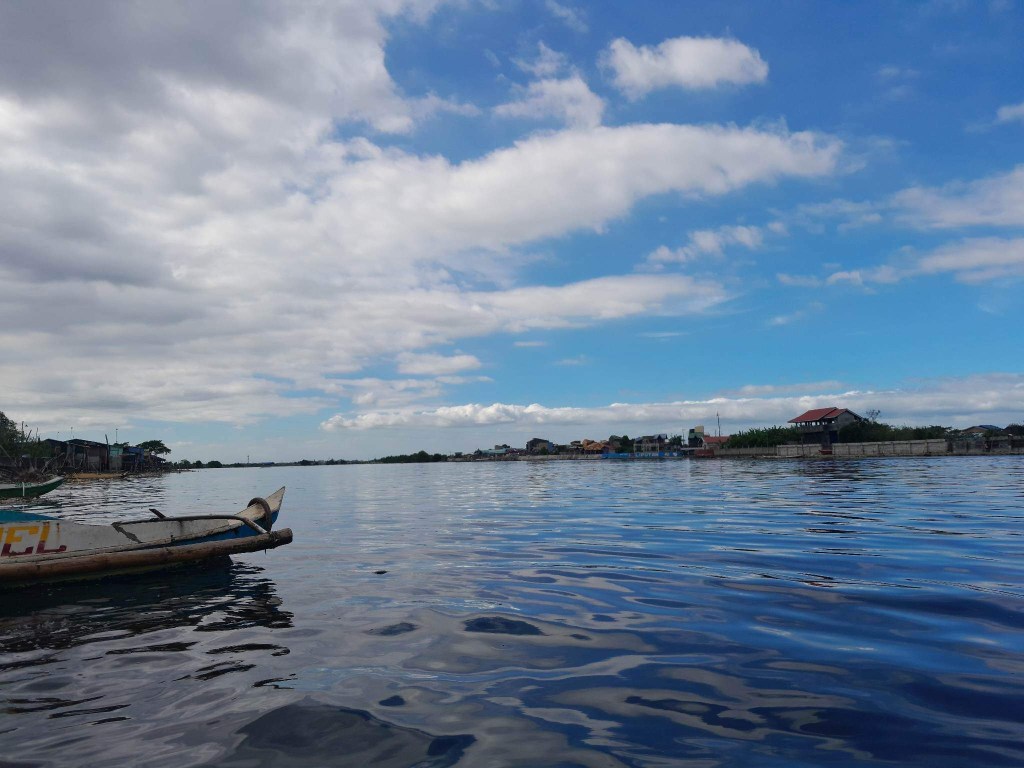
Larawan kuha ni G. John Ryan Jacob, Isla ng Liputan, Meycauayan, Bulacan, 10 Enero 2023.