Speaking plainly in Christ

The Lord Is My Chef Sunday Recipe for the Soul by Fr. Nicanor F. Lalog II
Twenty-third Sunday in Ordinary Time, Cycle B, 08 September 2024
Isaiah 35:4-7 ><}}}}*> James 2:1-5 ><}}}}*> Mark 7:31-37
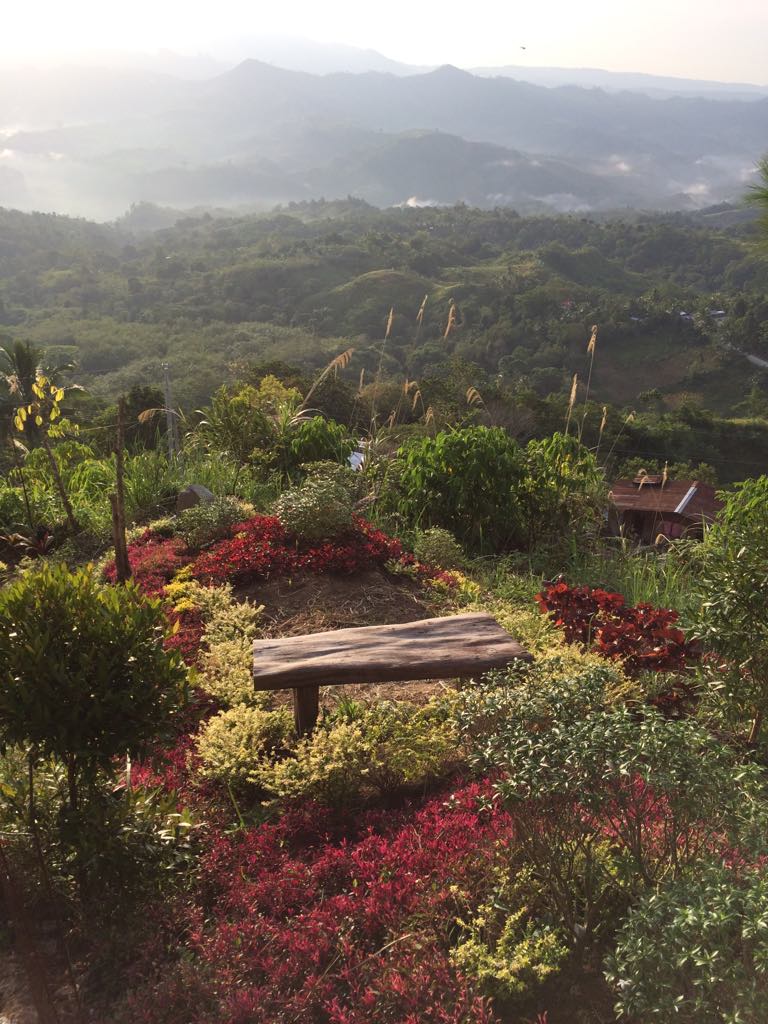
Photo by author, sunrise at Galilee, the Holy Land, 2017.

Thank God the rains have finally stopped here in Metro Manila and nearby provinces but the flood remains widespread as we brace for two more weather disturbances due this week.

So timely is our gospel this Sunday that reminds us of something so essential during calamities, the need to speak plainly and clearly.

Image from crossroadsinitiative.com.

Again Jesus left the district of Tyre and went by way of Sidon to the Sea of Galilee, into the district of Decapolis. And people brought to him a deaf man who had a speech impediment and begged him to his hand on him. He took him off by himself away from the crowd. He put his finger into the man’s ears and, spitting, touched his tongue; then he looked up to heaven and groaned, and said to him, “Ephphatha!” – that is, “Be opened!” – And immediately the man’s ears were opened, his speech impediment was removed, and he spoke plainly (Mark 7:31-35).


"...and he spoke plainly."

From forbes.com, 2019.

Think of our many misunderstandings and quarrels happening in these days of modern means of communications. How ironic that in this age of instant and wireless communications so accessible to everyone, the more we have misinformation and miscommunications.

No one seems to be speaking plainly and clearly anymore because we have been so blinded by the many images and colors competing for our attention, becoming deaf and mute due to the cacophony of sounds we hear even from machines and things that speak. Instead of life becoming easier and convenient in this age of social media and modern technologies, it has become so complicated like Facebook as more and more of us becoming deaf and mute to the realities within and around us.

I have just checked the internet today to find out that there are now over 7.2 billion cellphones in the world as of June 2024, a figure that accounts for about 90% of the global population now at 8 billion. Of course, it does not mean that 90% of the peoples across the world own a cellphone but we can just imagine how this little gadget has become the new “god”, a baal of the modern world everybody worship and follow. Jesus comes to us today, inviting us to separate ourselves from everything mundane even for a few hours to experience Him and His healing of our own deafness and blindness.

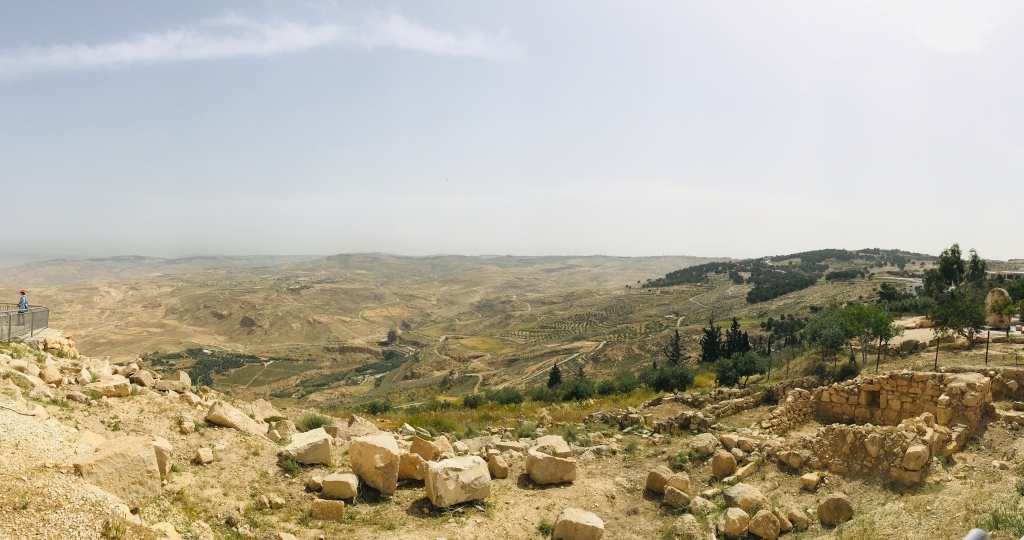
Photo by author, shore of Galilee, 2017.

Once again we find Mark guiding us in Jesus Christ’s itinerary that is often so quick and most of all, not really a destination found in maps but within us.

From Gennesaret last Sunday when Pharisees and scribes from Jerusalem questioned Him about the disciples’ non-compliance with their rites of washing and cleansing, Jesus swiftly moved to visit the pagan territories of Tyre and Sidon, making a stop-over at Decapolis where He healed a deaf-mute. Those pagan territories are not mere locations nor sites in the Holy Land but areas within each one of us, our very person who have forgotten God completely even on Sundays as we worship so many other gods running our lives.

Jesus is now visiting us in our own paganism, asking us to separate ourselves even for a while from everything to experience humanity, our human-ness, our being one with God who is the very basis and foundation of our lives.

We are probably one of those people in Decapolis who begged Jesus to heal the nameless deaf-mute or most likely, ourselves the deaf-mute needing healing by Jesus! This healing of the nameless deaf-mute is a parable of the cure of another kind of deafness and speech impediment afflicting us these days that only grace can heal.

Photo by author, wailing wall of Jerusalem, 2017.

Recall how last Sunday Jesus reminded us of checking into our motivations, on what is inside us in doing things. Jesus was not actually against rites and rituals but simply wants us to do things for the glory of God.

Today, Jesus separates us from our daily routines, from the mundane to touch us, to breathe on us His spirit so we can be more attuned with Him and therefore reflect Him in our lives by opening us – Ephphatha – to speak plainly again of God’s love and mercy, of life’s beauty, of our own giftedness.

To “speak plainly” like that healed deaf-mute at Decapolis is to be able to put into actions the words of Jesus Christ. To “speak plainly” is more than verbally pronouncing words and sounds but most of all touching others with our kindness and love. To “speak plainly” is to hold the hands of those afraid to move on in life after a failure, to caress a sick’s forehead or feet, to hug and embrace the lonely and lost, to be present with those in grief and in pain. To “speak plainly” is to be a presence of God to everyone especially strangers, the elderly, the weak and the helpless.

To “speak plainly” first of all requires us to be opened to God’s words. The gospel accounts teem with many instances of Jesus reminding His disciples that include us today of taking into our hearts to understand and put into practice His words. In the second reading, St. James reminds us how we have become deaf and blind of each other that we behave so badly because we have been so molded by worldly standards even in the church:

My brothers and sisters, show no partiality as you adhere to the faith in our glorious Lord Jesus Christ. For if a man with gold rings and in fine clothes comes into your assembly, and a poor person in shabby clothes also comes in, and you pay attention to the one wearing the fine clothes and say, “Sit here, please”, while you say to the poor one, “Stand there”, or “sit at my feel”, have you not made distinctions among yourselves and become judges with evil designs (James 2:1-4)?

Photo by author at Dominus Flevit church outside Jerusalem, 2017.

Think of our many rules and regulations, of our so many documents not only in government but even in the Church. Do they speak plainly?

Many times, we have so much rites and rituals as well documents and laws everywhere that are far from God and from the people, speaking so eloquently of lofty thoughts that are empty, so far from realities that have become only a burden to many, mostly the poor and the powerless.

How sad that those in power, both civil and ecclesiastical authorities have only complacent ears, oblivious to the din from below, the very voice of God among the ordinary people. They have not only turned deaf to the voice of the masses but have even forgotten God’s name in the process! The Apostle Paul gives us the most wonderful lesson about “speaking plainly” of God’s mystery by proclaiming more of Christ crucified than using the world’s “sublimity of words or wisdom” (cf. 1 Cor. 2:1-5).

Photo by author, 2017.

This is the tragedy among us modern Christians today, of us denying even totally unaware of our own deafness, of being mute not able to speak plainly of God in Jesus Christ who came to fulfill Isaiah’s prophecy in the first reading to heal the sick, to strengthen the weak and afraid, and to redeem us held captive by the world’s lies and evil.

Let Ephphatha be our prayer too this Sunday to heal us of our deafness so we may speak plainly again of God’s love and mercy and kindness. Amen. Have a blessed week ahead, everyone!

What moves you?

The Lord Is My Chef Sunday Recipe for the Soul by Fr. Nicanor F. Lalog II
Twenty-Second Sunday in Ordinary Time, Cycle B, 01 September 2024
Deuteronomy 4:1-2, 6-8 ><}}}*> James 1;17-18, 21-22, 27 ><}}}*> Mark 7:1-8, 14-15, 21-23
Photo by author, Sacred Heart Novitiate, Novaliches, QC, 20 March 2024.

After five Sundays of journeying with John, we now return to Mark’s Gospel and shall continue to read it through the 33rd Sunday before we cap the current liturgical calendar with the Solemnity of Christ the King on November 24, 2024.

Oh yes! It’s beginning to feel like Christmas but the liturgy cautions us this Sunday through Mark that there are still many things we have to fix and cleanse in our hearts in the remaining stretch of the year, particularly our motivations in doing things. After dwelling on the “bread of life discourse” from John for five Sundays that gave us time to examine our faith, Mark brings us now to the other side of the lake in Gennesaret to listen to a discussion about the Jewish customs and traditions of ritual cleansing and washing in chapter seven.

When the Pharisees with some scribes who had come from Jerusalem gathered around Jesus, they observed that some of his disciples ate their meals with unclean, that is, unwashed, hands. For the Pharisees and, in fact, all Jews, do not eat without carefully washing their hands, keeping the tradition of the elders. So the Pharisees and scribes questioned him, “Why do your disciples not follow tradition of the elders but instead eat a meal with unclean hands?” He responded, “Well did Isaiah prophesy about you hypocrites, as it is written: This people honors me with their lips, but their hearts are far from me; in vain do they worship me, teaching as doctrines human precepts. You disregard God’s commandment but cling to human tradition” (Mark 7:1-3, 5-8).

Photo by author, St. Scholastica Spirituality Center, Tagaytay City, 20 August 2024.

It is easy to see in this scene how Mark must have tried to explain the many Jewish rituals and traditions that was a source of clashes among Jewish and pagan converts to Christianity in the early Church like circumcision and of eating of meat offered to gods. These were finally resolved in the Council of Jerusalem in year 50 when the Apostles acted upon instructions by the Holy Spirit “not to place on the pagan converts any burden beyond these necessities” (Acts 15:28).

However, it is unfair and a misreading to limit ourselves to this as a lesson in history because the practices criticized in this scene continue among us when we focus on the externalities of any ritual and tradition while missing their more essential and deeper meanings. Worst of all is the strong temptation among us to believe that by our actions and good deeds, like the Pharisees and scribes of that time, we make ourselves worthy of God or of anyone!

That is why Christ’s teaching in this Sunday gospel on the hypocrisy of the Pharisees and scribes of that time refers also for us today.

From Facebook, 29 August 2024.

From the halls of Congress to our own homes, classrooms and offices, pulpits and parish halls, we find many of us acting like the Pharisees and scribes who have come from Jerusalem to test and intimidate Jesus through people around us and under us by flexing their muscles in insisting strict adherence to their rituals and traditions that were passed on from Moses we have heard in the first reading. Observe how the Pharisees and scribes capitalized on these as “tradition of the elders” without really going into its very core and essence because they have forgotten or were totally unaware of Moses’ reminder that faithful observance of the Law and its tradition and rituals is a form of witnessing to God before all the peoples.

Observe them carefully, for thus you will give evidence of your wisdom and intelligence to the nations, who will hear of all these statues and say, “This great nation is truly wise and intelligent people. For what great nation is there that has gods so close to it as the Lord our God, it is to whenever we call upon him? Or what great nation has statutes and decrees that are as just as this whole law which I am setting before you today?” (Deuteronomy 4:6-8)

Photo by author, St. Scholastica Spirituality Center, Tagaytay City, 20 August 2024.

Every adherence and compliance to the Laws, to its accompanying rites and rituals must come from the heart, a result of the conversion of heart, of purification of one’s heart, especially the celebration of the liturgy we refer to as “the summit and font of our Christian life”. Every Mass celebration is an outflowing of what is in our hearts, beginning with the priest as celebrant.

But, what is the reality we have? As we concluded last Sunday Jesus Christ’s “bread of life discourse”, we realized the “shocking truths” of so many Catholics who have totally stopped coming to Sunday Masses, of some priests not giving the proper respect in prayerfully celebrating the Eucharist and the other Sacraments, and of most faithfuls just simply coming without seriously taking part in the Mass. That is why this gospel scene applies to us this time too as Jesus asks us, do we understand the things we are doing in the Church? What is in our hearts in doing these?

He summoned the crowd again and said to them, “Hear me, all of you, and understand. Nothing that enters one from outside can defile that person; but the things that come out from within are what defile. “From within people, from their hearts, come evil thoughts, unchastity, theft, murder, adultery, greed, malice, deceit, licentiousness, envy, blasphemy, arrogance, folly. All these evils come from within and they defile” (Mark 7:14-15, 21-23).

Photo by author, St. Scholastica Spirituality Center, Tagaytay City, 20 August 2024.

This Sunday, Jesus is inviting us to a new perspective at looking at things, not just from what is clean and not clean, or simply what is good and evil, what is traditional and modern; Jesus wants us to examine our motivations, of what is in our hearts in doing things, anything and everything.

Ultimately, it is a question of who is in our heart, Jesus or somebody else or another thing?

It is reality versus hypocrisy. Reality is the truth and meaning that things, events, persons, most of all, of our very selves have before God and for God. It is in this reality that we must scrutinize to strip ourselves naked of the hidden hypocrisies, the many masks and alibis we use to justify our selves.

Photo by author, 13 August 2024.

I have something to confess to you, my dear followers: I have been sick these past three weeks with different ailments. All my lab tests were good. Doctors find nothing wrong with my body with everything normal.

Last Tuesday I saw my longtime doctor for my scheduled check-up. As I explained everything to her, I broke down in tears as I admitted the fact I am in denial stage of my mom’s passing last May. I have repressed my griefs, trying to fill in the void within me with workloads as if I am still young that finally, it manifested in my body. That same Tuesday evening, I dreamt of my mom: she looked younger and healthier without signs of stroke but she wore a black dress and looked to have cried. I hugged her tightly in my dream, we cried together as I said sorry to her, promising that I would finally come home even if it hurts me to see her room empty.

Two days after that, we celebrated John the Baptist’s passion with a reading from Mark telling us of the “grudge” Herodias had on him that led to his beheading. Many times, grudges and other negative things that Jesus cited in today’s gospel not only cover us but actually destroy us, eating us up in the process. The festering negativities in our hearts cannot be hidden, eventually erupting like blisters, not only hurting others around us but most especially us.

In the Mass, Jesus knows very well we are not worthy with our hypocrisies to receive Him but only say the word, we are healed. And blessed to cleanse ourselves. Let us pray:

God our loving Father,
"all good giving and every perfect gift
is from You with whom there is no
alteration or shadow caused by change";
empty our hearts of pride and evil
to welcome Jesus your Word
who became flesh to dwell inside us
so that we may be "doers of the word
not just hearers" (James 1:17, 22)
by being more loving to others
without any strings attached.
Amen.

Eating well, living well

The Lord Is My Chef Sunday Recipe for the Soul by Fr. Nicanor F. Lalog II
Twentieth Sunday in Ordinary Time, Cycle B, 18 August 2024
Proverbs 9:1-6 ><}}}}*> Ephesians 5:15-20 ><}}}}*> John 6:51-58
Photo by author, James Alberione Center, QC, 15 August 2024.

It is our fourth consecutive Sunday listening to the sixth chapter of John’s gospel that opened with the miraculous feeding by Jesus of more than five thousand people in a deserted place; Jesus fled from there, went back in Capernaum where people caught with Him and disciples as He began three Sundays ago His “Bread of Life” discourse now getting deeper while the drama among the crowd is heating up.

From murmuring last Sunday about Jesus who said “I am the bread that came down from heaven” (Jn.6:41), the people today quarreled among themselves after Jesus said “I am the living bread that came down from heaven; whoever eats this bread will live forever; and the bread that I will give is my flesh for the life of the world” (Jn. 6:51).

Photo by author, James Alberione Center, QC, 15 August 2024.

Notice the beautiful contrast of reactions by people to Jesus: from murmuring last Sunday, they sank deep into quarreling while Jesus leveled up to “the living bread from heaven” from merely “the bread from heaven” last week. For us to live well, we have to eat well by having Jesus Himself as our food and drink.

The Jews quarreled among themselves, saying, “How can this man give us his flesh to eat?” Jesus said to them, “Amen, amen, I say to you, unless you eat the flesh of the Son of Man and drink his blood, you do not have life within you. Whoever eats my flesh and drinks my blood has eternal life, and I will raise him on the last day. For my flesh is true food, and my blood is true drink. Whoever eats my flesh and drinks my blood remains in me and I in him. Just as the living Father sent me and I have life because of the Father, so also the one who feeds on me will have life because of me” (John 6:52-57).

Photo by Ms. Ria De Vera in Banff, Alberta, Canada, 07 August 2024.

Eating is the most common human activity anywhere, any time. Human life basically revolves around eating as we have seen since time immemorial how we have progressed following our search for food. We work to feed ourselves and loved ones. Without food, we die. Food is so essential that there is always food to share in our gatherings.

That is why Jesus chose the bread and wine as the signs of His living presence among us in the Holy Eucharist He established during the Last Supper on Holy Thursday. In the Eucharist, Jesus elevated the most ordinary human activity of eating as most sublime and Divine. In the Holy Mass, we share in Christ’s Body and Blood so we too may share our very selves with one another.

When Jesus said in Capernaum that the bread He is giving is His own flesh with His blood as drink, He was already preparing the people for the Eucharist while at the same time teaching them that eating is not everything. We have to eat well to live well. When tempted by the devil in the wilderness, Jesus right away taught us to remember that man does not live by bread alone but with every word from God. At the start of this discourse last August 04, Jesus challenged the people, “Do not work for the food that perishes but for the food that endures for eternal life, which the Son of Man will give you” (Jn.6:27).

Photo by Ms. Ria De Vera in Banff, Alberta, Canada, 07 August 2024.

Many times, we get so used in our many activities that unconsciously, we miss life itself as we punish ourselves with exhaustion and sickness as well as emptiness.

Food is not just something that fills our stomach but must also lead into our heart and soul. Observe any cuisine and you get a taste of the culture and people it represents, even with strong hints of its geographical origin. In the first reading we find how the Book of Proverbs personified Wisdom as God to remind us that though He is transcendent and so above us, God is easily accessed even in the most ordinary instances like eating.

Wisdom has built her house, she has set up her seven columns; she has dressed her meat, mixed her wine, yes, she has spread her table. She has sent out her maidens; she calls from the heights out over the city: “Let whoever is simple turn in here; to him who lacks understanding, I say, Come, eat of my food, drink of the wine I have mixed! Forsake foolishness that you may live; advance in the way of understanding” (Proverbs 9:1-6).
How lovely is that part of God calling us to come like Jesus in the gospel when He said “come to me all who are burdened” or when He ordered to “let the children come to me”. Is it not the same thing we say when we are about to eat, to come and get it?

Sadly these days, we seem to have retrogressed in our manner of eating. Social media rightly labeled it as “food porn” when we are flooded with everything about food and drinks minus its deeper meanings. Food is sadly seen in its material aspect that eating is more on filling the stomach, forgetting the soul because we have totally forgotten God and the people around us. No wonder that despite the growing food production and plethora of food we have these days, many still starve while the rest of us remain lost in life, more sick.

Photo by Ms. Ria De Vera in Banff, Alberta, Canada, 07 August 2024.

See, my dear friends, the great coincidence on the very Sunday Jesus began his bread of life discourse, it was also the opening of the Paris Olympics with a mockery of the Last Supper that led us into a kind of “quarrel” as organizers and their supporters insisted it wasn’t the Last Supper at all despite the clear indications and proofs.

“How can this man give us his flesh to eat?” Suddenly, we heard anew that same question by the people in Capernaum to Jesus reechoed in the Olympics at the capital city of the Church’s so-called “eldest daughter”, France. Of course, we know this bread of life discourse by Jesus refers to the Holy Eucharist and surely, the many defenders of the Paris Olympics are aware for many of them are Catholics. But, Jesus must have willed this gospel be proclaimed at this time coinciding with the Olympics for us to evaluate anew our faith in Him because at the very core of this bread of life discourse is the mystery of faith.

“How can this man give us his flesh to eat?” In the gospel of Luke, we find a similar question by Mary at the Annunciation that is filled with faith, “How can this be?” (Lk.1:34); but today, like in Capernaum as exemplified by the Paris Olympics, that question is a renewed refusal to believe in the words of Jesus Christ. Worst of all as we noted earlier in our perceptions of food and eating these days, that question shows modern man’s insistence on everything material, totally disregarding our spiritual nature.

Photo by Ms. Ria De Vera in Banff, Alberta, Canada, 07 August 2024.

Like in Capernaum, many people today who refuse to believe Christ’s words resort to malicious and insidious arguments that it becomes useless to really converse with them as they would rather insist on their grossly material understanding and perception of life these days. Many prefer to quarrel these days than accept life’s many mysteries not merely seen nor tasted by the senses but experienced and realized through faith in God.

Life for them has become merely material which in Greek is bios as in biology. There is another Greek word for life which is zoe that refers to the eternal, divine life of God that Jesus repeatedly used in our gospel today.

Like last Sunday, Jesus did not engage Himself into debating with the crowd in Capernaum by simply repeating the words living and life to emphasize the total acceptance of Him – Body and Blood – in faith: “I am the living bread… my flesh for the life of the world. Just as the living Father sent me and I have life because of the Father, so also the one who feeds on me will have life because of me.” These are the very same words too, life and living that Jesus would mention before His Passion and Death as well as after His Resurrection because eating His flesh and drinking His blood is to share in His life that is also the fullness of life. It is only in Christ Jesus can we find fulfillment in life. Let us pray:

Lord Jesus Christ,
help me watch carefully
how I live, not as a fool
but as wise as St. Paul taught
us today in his letter to the Ephesians;
let us not be intoxicated
with life's pleasures and worldly pursuits
but let us be filled with the Holy Spirit.
Amen.

Photo by author, 15 August 2024.

An august month, not a ghost month

Quiet Storm by Fr. Nicanor F. Lalog II, 09 August 2024
Photo by author, Parish of the National Shrine of Our Lady of Fatima, Valenzuela City, 24 July 2024.

I was recently asked to bless a little store the other day, the seventh day of August. My schedule was toxic with another appointment in another city but the owner begged because she believed it is the most auspicious date for blessing.

How I wanted to ask her why have a blessing at all if you believe in luck than in God? Para wala nang gulo, I blessed her store but explained the meaning of blessing and of superstitions during the rites. It is one of those occasions when all we can do is sigh, saying haynaku and Juice colored!

What a sad reality in our Catholic Christian country where the kind of religiosity that binds most of us is more on rites and rituals but lacking in roots and spirituality, centered on ourselves to be assured of every kind of material blessings, forgetting all about the very object of faith who is God expressed in our concern for one another.

And in the light of all these things going on especially the never ending topics in social media, we ask, pera pera na lang ba talaga ang lahat sa buhay natin?

From catholicapostolatecenter.org.

Consider the name of this month August which was borrowed from the Roman Caesar Augustus that signifies reverence or to hold someone in high regard. As an adjective, august means “respected and impressive” like when we say “in this august hall of men and women of science”.

August is not a ghost month nor any other month of the year.

Like the days of the week, every month is a blessed one. No day nor date nor time is malas because these were all created by God who is all good. Nothing bad can come from God. Period.

Moreover, when God became human like us in the coming of Jesus Christ, life has become holy, filled with God, debunking those ancient beliefs of the Divine being seen in various cosmic forces. Pope Benedict explained this so well in his second encyclical:

Photo by author, St.Scholastica Retreat House, Baguio City, 2023.

In this regard a text by Saint Gregory Nazianzen is enlightening. He says that at the very moment when the Magi, guided by the star, adored Christ the new king, astrology came to an end, because the stars were now moving in the orbit determined by Christ[2]. This scene, in fact, overturns the world-view of that time, which in a different way has become fashionable once again today. It is not the elemental spirits of the universe, the laws of matter, which ultimately govern the world and mankind, but a personal God governs the stars, that is, the universe; it is not the laws of matter and of evolution that have the final say, but reason, will, love—a Person. And if we know this Person and he knows us, then truly the inexorable power of material elements no longer has the last word; we are not slaves of the universe and of its laws, we are free. In ancient times, honest enquiring minds were aware of this. Heaven is not empty. Life is not a simple product of laws and the randomness of matter, but within everything and at the same time above everything, there is a personal will, there is a Spirit who in Jesus has revealed himself as Love[3]. (#5, Spe Salvi (Saved in Hope) by Pope Benedict XVI, 30 November 2007)

Photo by author, Sacred Heart Novitiate, Novaliches, QC, 20 March 2024.

I love this part of his encyclical, “It is not the elemental spirits of the universe, the laws of matter, which ultimately govern the world and mankind, but a personal God governs the stars, that is, the universe; it is not the laws of matter and of evolution that have the final say, but reason, will, love—a Person.”

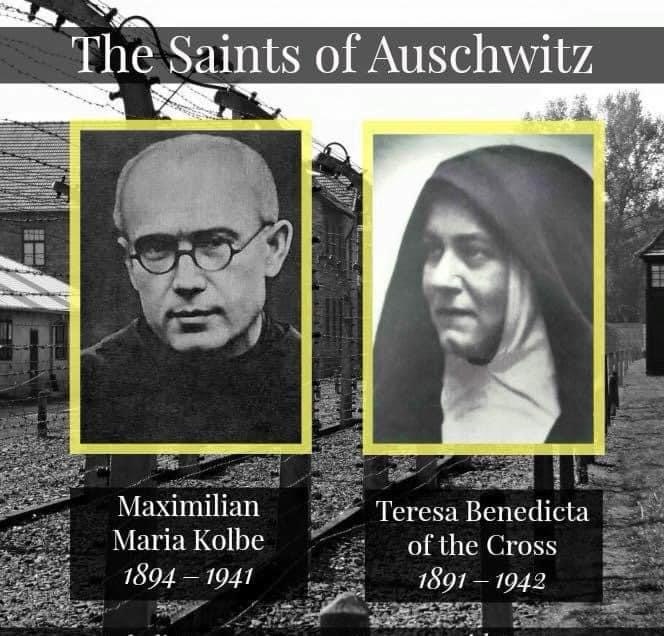
It was this Person of Jesus Christ why so many great men and women then and now have abandoned their previous ways of life to lead holy lives even in the face of death. Very interesting in this modern time are two great saints we celebrate on this month of August, St. Teresa Benedicta of the Cross (August 09) and St. Maximilian Kolbe (August 14) who died at the gas chambers of Auschwitz during the Second World War. Let’s reflect first on St. Teresa Benedicta whose memorial we celebrate today.

Photo from FB page of Scott Hahn, 09 August 2024.

St. Teresa Benedicta is the German philosopher Edith Stein. She came from a prosperous Jewish family gifted with great mind becoming one of the first female university student and later professor in Germany.

An associate of the famed Edmund Husserl of the philosophical method of phenomenology, St. Teresa Benedicta became an atheist during her teenage years; but, upon further studies and prayer, converted into Catholicism, becoming a Carmelite nun where she adopted her new name. She wrote that “Those who seek truth seek God, whether they realize it or not“.

She actually had all the chances to leave for South America and then to Switzerland to escape the Nazis but opted to stay in their monastery in the Netherlands with her younger sister Rosa who had also converted as Catholic and joined the Third Order Carmelite. When they were arrested on August 2, 1942, she told her, “Come, Rosa… we go for our people.”

St. Teresa Benedicta honored her Jewish roots by dying among them as a martyr of Christ, one who had “learned to live in God’s hands” according to Sr. Josephine Koeppel, OCD, a translator of much of her works. According to various accounts, St. Teresa Benedicta showed great inner strength by encouraging her fellow prisoners to have faith in God while helping in looking after the small children when their mothers were so distressed to do so. One woman who survived the war wrote: “Every time I think of her sitting in the barracks, the same picture comes to mind: a Pieta without the Christ.”

Dying ahead of her in Auschwitz on August 14, 1941 was St. Maximilian Kolbe, a Franciscan priest who was arrested for his writings against the evil Nazis. It was actually his second time to be arrested.

When a prisoner had escaped from the camp, authorities rounded up ten men to die in exchange of the lone escapee. Fr. Kolbe volunteered to take the place of a married man with children. They were all tortured and starved in order to die slowly in pain. A devotee of the Blessed Virgin Mary, St. Maximilian was injected with carbolic acid on the eve of the Assumption after guards found him along with three other prisoners still alive, without any signs of fear like screaming but silently praying.

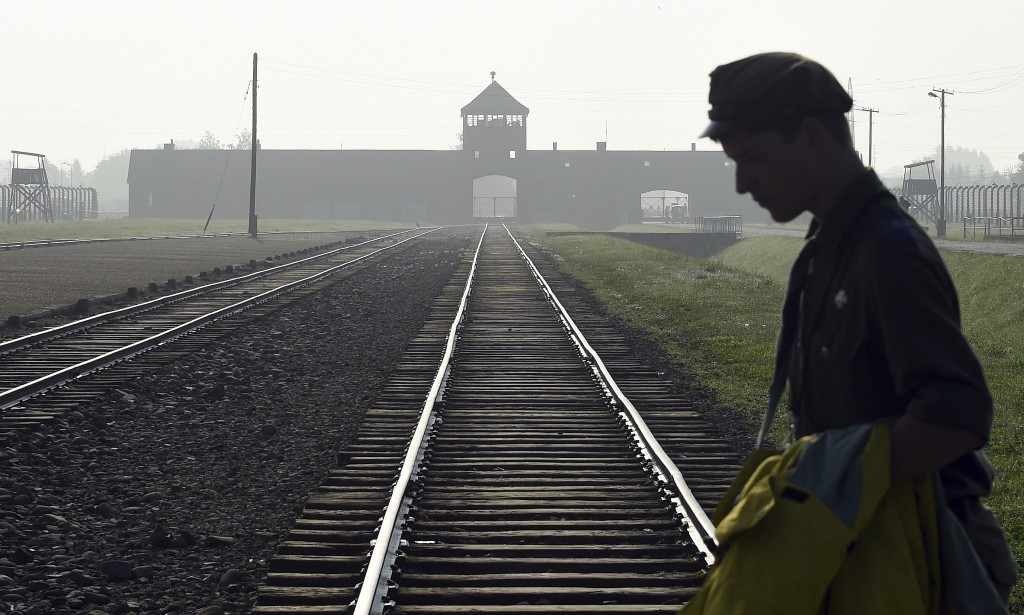
Photo of Auschwitz from Google.

We no longer have gas chambers but atrocities against human life continue in our time, hiding in the pretext of science and laws. Until now, men and women, young and old alike including those not yet born in their mother’s womb are hunted and killed to correct what many perceived as excesses and wrongs in the society. Just like what Hitler and his men have thought of the Jews at that time.

The Nazi officers and soldiers of Auschwitz remind us the true “ghosts” and evil spirits of our time sowing hatred and deaths are people who may be well-dressed, even educated in the best schools, and come from devout or “normal” families. They sow evil every day without choosing any particular month, blindly following orders without much thinking and reflections or introspection.

Photo by author, James Alberione Center, QC, 08 August 2024.

Many times, they insist on following or speaking the truth – a truth so empty of the person of Jesus Christ. As we have been saying amid this growing trend of wokism and inclusivity that have badly infected the Olympics, people tend to exaggerate the truth they believe or follow when actually, they are just exaggerating themselves.

By the lives of the many great saints of August, or of any other month for that matter, we are reminded that holiness is not being sinless but simply being filled with God, being converted daily to the truth of Jesus Christ by allowing that holiness to spill over and flow onto others with our lives of authenticity expressed in charity and mercy, kindness and justice, humility and openness with one another.

Let us make every month holy and blessed with our good deeds to make everyone aware of Christ’s presence among us. Have a blessed weekend!

What we can do in the work of God

The Lord Is My Chef Sunday Recipe for the Soul by Fr. Nicanor F. Lalog II
Eighteenth Sunday in the Ordinary Time, Cycle B, 04 August 2024
Exodus 16:2-4, 12-15 ><}}}}*> Ephesians 4:17, 20-24 ><}}}}*> John 6:24-35
Photo by author, Lake of Galilee, the Holy Land, May 2017.

We are now back in Capernaum where Jesus used to frequently teach in its synagogue during His ministry.

Remember last Sunday how Jesus fled from the crowd when He felt them wanting to take and make Him a king upon seeing His miraculous feeding of over five thousand people from five loaves of bread and two pieces of fish with a lot of leftovers. The people looked for Him and found Him in Capernaum, the setting of all of our gospel scenes these four Sundays of August.

There at Capernaum was a beautiful exchange in the conversation between Jesus and the people that eventually led to the Bread of Life discourse of the Lord in this sixth chapter of John’s gospel. Remember too that for John, the miracles Jesus performed were signs that pointed to Him as the Christ. Hence, this important reminder to the crowd who have sought Him that day as well as to us living in these interesting times today:

“Do not work for food that perishes but for the food that endures for eternalnlife, which the Son of Man will give you. For on him the Father, God, has set his seal.” So they said to him, “What can we do to accomplish the works of God?” Jesus answered and said to them, “This is the work of God, that you believe in the one he sent” (John 6:27-29).

Photo by author, tourists and pilgrims alike at the ruins of the Capernaum synagogue, May 2017.

“Do not work for food that perishes but for the food that endures for eternal life, which the Son of Man will give you.”

Jesus knows very well the importance of work for us humans, of how hard we have to work to earn our daily bread, to buy and pay for things so needed in life. But, these earthly food we are all busy working for can sustain us only for a life timeas we very well know that we surely die one day.

There is another food that is more essential that “endures for eternal life” we can only receive from Jesus Himself – His words and His Body and Blood in the Holy Eucharist which is the “summit of Christian life.”

Of course, we have to work for this food because it does not come on its own. We must receive and welcome this food as a gift of Jesus Christ whom the Father has sent. We have to work and exert efforts to pray and listen to God’s words, to wake up early and prepare ourselves for the Sunday Mass and other devotions we have. Hence, the second question of the crowd to Jesus:

“What can we do to accomplish to the works of God?”

Photo by Mr. Boy Cabrido, Quiapo Fiesta 2024.

Very striking here is their eagerness to know what they can do to have that food that “endures for eternal life.”

Are we not the same with our desire to really know things about religion and spirituality or just anything we heard to be so good?

It sounded so much like that same zeal displayed by a young man who approached Jesus and asked, “Good teacher, what must I do to inherit eternal life?” (Mk.10:17). Nothing is wrong with this attitude of openness to God but, the problem is when we expect the work to be given to us is something like a shortcut or easy access in having that “food that endures for eternal life” like that young man. Sometimes, we ask self-serving questions about faith and religion not only for the benefits we can have but also for fame like that young man who proudly declared to Jesus he had followed all commandments since childhood; but, when the Lord told him to go and sell his properties to give it to the poor and come follow him, his face fell and left sad. This eventually would become the scene in Capernaum as we shall see in the coming Sundays.

For now, let us reflect on Christ’s answer to the crowd’s question.

“This is the work of God of God, that you believe in the one he sent.”

Photo by author, Mass in Capernaum, May 2017.

This will be the start of the revelation of the true motives of the crowd who have come looking for Jesus. Last Sunday, we reflected how they have followed Jesus because of the many signs they have seen from Him like healing of the sick and raising to life the dead daughter of Jairus.

Slowly we see this Sunday the conceit and pride in their hearts, and perhaps within us too! Jesus is neither proposing new works to accomplish and fulfill in God’s name nor alter or change the commandments given through Moses. As the Christ or Anointed of God, Jesus is demanding complete faith in Him!

It was a most unique and unprecedented demand by Christ from the people then and now, asking us all to have total commitment in Him whom we believe. Whatever we want to do or do not want to do depends entirely in our imitation of Jesus Christ.

Like last Sunday, it is the very person of Jesus Christ that is being stressed here that unfortunately, even the closest disciples Philip and Andrew failed to “see” when they saw more of the problem with the crowd and the scarcity of bread and fish they have. They did not see Jesus despite their having witnessed and experienced His many miracles like us today.

Instead of being humble, the crowd asked Jesus for signs He can do so they would believe Him, even challenged Him with the works by Moses in the desert in feeding their ancestors with manna in their wandering. Like in resisting the temptations of the devil in the wilderness, Jesus declared the basic truth people often forget: the manna fed to the people was not the work by Moses alone but entirely and truly by God the Father in heaven!

This is something we must always remember: the work we have in this life is not ours but God’s so that in everything we do and say, it is God who is proclaimed and made known for He alone can fulfill us in Jesus who said today in closing our gospel scene, “I am the bread of life, whoever comes to me will never hunger, and whoever believes in me will never thirst” (Jn.6:34).

Jesus is the bread from heaven sent down to us by God, prefigured by the manna in the first reading we have heard, the food who brings us to fulfillment in God expressed during the Last Supper that was confirmed the following Good Friday at His Crucifixion.

Life is a call from God for us to do our part in His work through Jesus Christ. We need to collaborate with Him, in Him and through Him as He had declared at the Last Supper to “do this in memory of me.” That is why it is so sad and deplorable how the people behind the opening show of the Paris Olympics made a mockery of the Lord’s Supper. (Even if we shall accept their explanations it wasn’t about the Last Supper, it was still a show so ugly and tasteless, an affront to any person.)

What is most undeniable is the pride of the people behind the Paris Olympics including their defenders who insist until now how everything is clearly about “what can we do” like the proud crowd with Jesus in Capernaum.

What was supposed to show the wonderful contributions and achievements of France to the world in terms of culture and intellectual advancements have all crumbled into a disgraceful display of what is now wrong in France and even the Western world. They have exaggerated the relative truths they hold on to exaggerate themselves. In their claims of being inclusive, they have become exclusive and divisive, so far from the “sign” of the Olympics. Very sad but still, may you all have a blessed week ahead. It is a Sunday, go celebrate Mass with your family and loved ones. Let us pray:

God our loving Father,
thank you in giving us Jesus Christ
your Son as our bread from heaven;
remind us always not about
what we can do or must do
for we just do your work
here on earth but to simply
remember and keep in mind
we are your children in Christ,
to "stop living in the futility of our minds
by putting away our old self
of corrupted and deceitful desires
renewed in the spirit of our minds,
to put on our new self in Christ",
created male and female
"in your way in righteousness
and holiness of truth"
(Ephesians 4:17, 22-24)
Amen.

To love is to be small to be a part of the other person

A wedding homily for Sir Vicente R. Santos III & Ms. Jillian Bianca Carpio
St. Michael the Archangel Parish, Bonifacio Global City, Taguig, 12 July 2024
Tobit 8:4b-8 >><}}}}*> + <*{{{{><< John 15:9-12
Photo by author in La Trinidad, Benguet, 12 July 2023.

Congratulations, Sir Teng and Mam Jill on your wedding day. Your decision to get married in the Church is an expression of love itself because love is a decision, not just a feeling. Making a decision to get married is a choice to be small, to be broken into pieces to be united, to be one with the other person, your beloved.

Every time we make that decision to love, we renounce our very selves, our selfishness. The truest sign that we love is when we are able to love somebody more than our self; and to grow in love is to always choose the other person by a daily renunciation of one’s self which Ben&Ben sang so well, “Mahiwaga… pipiliin ka sa araw-araw…”

Photo by author, Camp John Hay, 12 July 2023.

This we saw in our first reading in the beautiful prayer by Tobiah with Sarah on their honeymoon when he mentioned God’s original plan in Genesis in creating woman as a suitable partner of man.

The root word of “partner” is part. A part is always small that makes up the whole. Every whole is made up of small parts.

A part-ner means you are both a part of each other and you both have to be small in order to be whole as married couple.

In that beautiful story of Tobiah and Sarah, we find them choosing to become small in order to become part of the bigger whole, of each other, and of God.

Tobiah is the son of Tobit who lived in exile in Nineveh, the capital of Assyria that had conquered Israel in the Old Testament. Tobit used to be wealthy but had a reversal of fortunes later in life made worse with his going blind. He sent his son Tobiah to Media to collect a debt from a fellow Jew with hopes he could also find there a bride for himself among their kindred.

God then sent Archangel Raphael who disguised as a traveler to Tobiah who was so kind to welcome him as companion. On their way to Media, Tobiah was attacked by a large, strange fish while taking a bath at the Tigris River. Tobiah was able to subdue the creature while Raphael instructed him to take out its heart, liver and gall due to its medicinal properties. Tobiah obeyed Raphael and they proceeded to Media to collect the debt owed to his father. There he met and fell for a Jewish woman named Sarah.

But, there was a major problem with Sarah: she had been widowed seven times because the devil Asmodeus would always come and kill her husband just before their honeymoon!

Engraving of Raphael instructing Tobiah to gut the fish by Georg Pencz (1543) from en.wikipedia.org.

Raphael pushed Tobiah to still marry Sarah, teaching how to drive away the devil Asmodeus on their honeymoon by burning the heart and liver of the strange fish he had killed. Tobiah followed Raphael’s instructions and Asmodeus was finally driven away that is why we have this scene of them praying in thanksgiving for their marriage. (This is the reason St. Raphael is portrayed with a fish and why arbularyos burn fish intestines to drive away evil spirits.)

Tobiah returned home to present his wife Sarah to his parents in Nineveh; Raphael again instructed Tobiah to apply the dried gall of the fish onto the eyes of his father Tobit to regain his sight. Amid their celebrations for Tobit’s healing and Tobiah’s marriage, Raphael revealed himself as God’s archangel sent to them to bring their healing which is the meaning of the name Raphael, “God has healed”.

See how Tobiah and Sarah, as well as Tobit even Archangel Raphael chose to be small and humble before God and everyone, to play mere parts in the grand plan of God in their lives. They were all willing to be humble and small.

Photo by author, St. Michael Archangel Parish, BGC, Taguig City, 12 July 2024.

Sir Teng and Mam Jill, you were sent for each other by God like St. Raphael to Tobiah and Sarah and Tobit. Handle your life with prayer. Always invite Jesus into your life as a married couple just like today you when you invited Him to bless your wedding. Do not forget to celebrate Mass every Sunday, to pray daily, as much as possible together as husband and wife.

True greatness is in becoming small like a little child as Jesus Christ repeatedly told His disciples. In this world where we compete on being the biggest and most powerful, God tells us the key to fulfillment is in being small, being humble, to become a part of the whole. The greatness of every person depends on the measure of his or her ability to share because it is only in participating in the whole does one becomes truly great.

Marriage is becoming small to become one. Husband and wife cannot be one unless they let go of themselves first. Marriage is not a competition of who has more love to give and share but simply of loving and loving, giving and giving.

When you reflected Sir Teng on what to do with your life and realized you will never be complete without Mam Jill, that is being small, that is truly loving because you are willing to let go of yourself to be a part of Jill.

Remember, there’s no perfect husband nor perfect wife but you can be the ideal husband, the ideal wife by forgetting yourself through daily conversion in Jesus Christ who gave His total self out of love for us. And you do not have to die on the cross literally, Sir Teng and Mam Jill.

Photo by Irina Iriser on Pexels.com

Sir Teng, the ideal husband is someone who is deaf. Bingi. You know how women are. They talk a lot as they remember everything in detail even from long, long time ago. The moment Mam Jill starts talking, play deaf. So you don’t quarrel or debate.

Mam Jill, the idal wife is someone who is blind. Bulag. Problem with women is you see everything, kahit wala naman, may nakikita pa rin mga babae. When you see something with Sir Teng, play blind. Wala yun. Mabait siya talaga.

You two were brought together by your love for the French language. Every language is made up of small parts called letters used to form words put together in a sentence to express a thought or a feeling so we can communicate.

But, “communication is more than the expression of one’s thoughts and feelings; at its most profound level, it is the giving of self in love like Jesus Christ on the Cross” (Communio et Progressio #11)… just like every husband and wife too.

So, be small, Sir Teng and Mam Jill for you to remain in love, to grow in love, and be great in love. Amen.

Photo by author, 2018.

Desiring God

The Lord Is My Chef Sunday Recipe for the Soul by Fr. Nicanor F. Lalog II
Seventeenth Sunday in Ordinary Time, Cycle B, 28 July 2024
2 Kings 4:42-44 ><}}}}*> Ephesians 4:1-6 ><}}}}*> John 6:1-15
Residents wade through knee to waist-deep flood along P. Florentino Street in Quezon City on July 24, 2024. Photo by Maria Tan, ABS-CBN News

There is a new kind of storm sweeping us these days, more disastrous and silently wreaking havoc among us especially in our relationships with one another. It is a kind of storm borne out materialism that had given rise to other thoughts that have left us more lost and empty in life.

Photo from sunstar.com.ph, 22 July 2024.

More powerful than typhoon Carina was that storm in Cebu when a celebrity had a waiter stand in front of him simply for addressing him a “sir”, not as “mam” as he claimed to be a “beautiful” transwoman. The storm swept the whole social media on Monday with negative reactions and memes even from LGBTQ members. Many women rose to speak against this insistence by some in introducing wokism in the country for the sake of inclusivity which is nothing else but an exaggeration of one’s self and of the truncated truth they know.

*As I wrote this Saturday morning, there came the news of how the Paris Olympics made a mockery of the Lord’s Supper with a drag show in its opening ceremony. What a shame on France!

Photo from rappler.com.

Right after the devastation by the habagat, many were shocked to find Sen. Gil Puyat Avenue in Makati changed into “Sen. Gil Tulog” for an advertising stunt. Again, it flooded social media with criticisms that reached the Mayor of Makati who ordered the signages removed with the city official who approved it reprimanded.

Here we find two recent storms indicating how eroded our value system has become. Both are symptoms of our sick society that have allowed these to creep into our social consciousness on the pretext of inclusivity and creativity along with other western idiotic thoughts displayed in the opening of the Paris Olympics. The incidents show how some people have become so conceited without any sense of respect at all to God and to others, whether alive or deceased, as well as lack of sense of history.

Photo by author, Parish of the National Shrine of Our Lady of Fatima, Valenzuela City, 24 July 2024.

Sorry for the long introduction. I only wish to invite you my dear friends to stop for a while and honestly ask ourselves this question: what are we pursuing in life these days? 

Beginning today until the next four Sundays of August, all our Gospel accounts will be from John’s sixth chapter that opens with the story of the feeding of more than five thousand people. It is the continuation of last Sunday’s gospel scene when Mark narrated how Jesus invited the Twelve to a “deserted place to be by themselves” only to be followed by a vast crowd of people “like sheep without a shepherd.”  

Jesus went across the Sea of Galilee. A large crowd followed him, because they saw the signs he was performing on the sick. Jesus went up on the mountain, and there he sat down with his disciples. The Jewish feast of Passover was near (John 6:1-4).

The beloved disciple’s account of the event is so rich with many signs that point us closer to Jesus Christ.

Keep in mind that the miracles of Jesus in the fourth gospel are called “signs” because they were not just extraordinary things done like some form of magic; for John, the miracles of Jesus were signs that point and reveal superior realities of the highest order, of God Himself in Christ. This is difficult to understand unless our pursuits are clearly on God and not something else.

Photo by author, Fatima Avenue, Valenzuela City, 25 July 2024.

In his brief introduction of the scene, John tells us that if we really want to find and experience liberation from all the problems besetting us as individuals and as a nation, we must first pursue God, not our self-interests and well-being. See how John declared the great number of people pursued Jesus due to the “the signs he was performing on the sick” that they must have found hope and life in Him amid their many sufferings.

How sad many people today spend and waste time in social media and other material things forgetting the persons around them. In the pursuit for money and fame, persons are made into objects to be possessed; perhaps this is the reason of the growing number of many kamotes and pabebes in our time – the objectification of people, when persons are degraded into mere objects. It is an utter lack of respect for others which only shows too the lack of self-respect among many of us because we have lost our rootedness in God.

Do we still have that desire for God which leads us to higher ideals like virtues and qualities that make us more human and humane?

Photo By: FlickrBrett Streutker from catholic365.com.

Pursuing God is not just celebrating the Sunday Mass or praying often but applying these holy activities into our daily lives to experience and find Him working in us and through us in our daily life. As we have reflected last Sunday, the more we get closer to God, the closer we must get with others too!

Many times we are like Philip and Andrew, two of the closest Apostles of Jesus that even if we go to Mass every Sunday or even daily, we never meet Christ at all because we are so absorbed with ourselves and the world. Philip and Andrew saw only saw the huge problem before them, they saw what they lacked – bread – but never found Jesus Christ Himself as the answer to their problem despite their having witnessed His many healings and raising to life of the dead daughter of Jairus.

When Jesus raised his eyes and saw that a large crowd was coming to him, he said to Philip, “Where can we buy enough food for them to eat?” He said this to test him, because he himself knew what he was going to do. Philip answered him, “Two hundred days’ wages worth of food would not be enough for each of them to have a little.”  One of his disciples, Andrew, the brother of Simon Peter, said to him, “There is a boy here who has five barley loaves and two fish; but what good are these for so many (John6:5-9)?”

I love that small detail by John that “Jesus knew what he was going to do”, of how the Lord was merely testing them in asking where to buy bread. 

From psephizo.com

It does not really matter how Jesus multiplied the loaves of bread. What was very clear was the presence of Jesus, the Son of God who can do anything!

It was His person that was most important in this scene set when “The Jewish feast of Passover was near” which would later explain to us the meaning of the Last Supper and Good Friday. It is the very person of Jesus Christ who matters always in life. Recall our most trying moments in life when we have given up hopes but suddenly something happened and everything was reversed that we are still here, very much alive. Until now we are clueless how it all happened except that deep within our hearts, it is only Jesus whom we find as the answer and reason for everything.

In the first reading we heard how Elisha the prophet was given with twenty barley loaves of bread he gave to feed one hundred people that had plenty of leftovers.

Photo by Onnye on Pexels.com

Again, we are not told how Elisha multiplied the loaves of bread but one thing was very clear: the barley loaves were given by the man from Baal-shalisha as an offering to God through Elisha. The man clearly desired and pursued God that he baked those bread from “the first fruits, and fresh grain in the ear” of his bountiful harvest (2 Kgs.4:42). It was a thanksgiving offering for God that made wonders not only for him but for everyone. If we could just do the same in desiring God first of all!

Remember what Jesus told the devil during His first temptation in the wilderness, “One does not live by bread alone, but by every word that comes forth from the mouth of God” (Mt.4:4).

There in the deserted place, miracle happened because everyone desired God first by listening to the teachings of Jesus. When Jesus saw them opening to God’s words, He then fed them with bread and fish. This week, let us pursue God more sincerely by foregoing our usual pursuits for comfort and easy life so that Jesus may multiply whatever we have. Let us pray:

God our loving Father
who is over all and through all
and in all (Ephesians 4:6):
empty us of our pride
that make us pursue worldly
things like wealth, fame, and power;
let us desire You alone
in Jesus Christ so that we may
find You again in our hearts
and on the face of one another
we meet in this world that has become
so empty, hostile and unkind.
Amen.
Photo by author, view of Jerusalem from the Church of Dominus Flevit, May 2017.

Rest is to be close with Jesus, close with others

The Lord Is My Chef Sunday Recipe for the Soul by Fr. Nicanor F. Lalog II
Sixteenth Sunday in Ordinary Time, Cycle B, 21 July 2024
Jeremiah 23:1-6 ><}}}}*> Ephesians 2:13-18 ><}}}}*> Mark 6:30-34
Photo by author, Katmon Nature Sanctuary &Beach Resort, Infanta, Quezon March 2023.

After being sent “two by two” last Sunday, the Apostles now return to Jesus, reporting “all they had done and taught.”  What a beautiful gospel scene this Sunday, supposed to be our day of rest that begins in God and must be rooted in God.

The apostles gathered together with Jesus and reported all they had done and taught.  He said to them, “Come away by yourselves to a deserted place and rest a while.”  People were coming and going in great numbers, and they had no opportunity even to eat.  So they went off in the boat by themselves to a deserted place (Mark 6:30-32).

Last Sunday we were reminded to rediscover the family and friends sent with us “two by two” in this life while today the Lord wants us to be aware of our need to rest in order to rediscover Him first of all, then one’s self and others.

Unfortunately, many people today have entirely forgotten the meaning and importance of rest that we succumb to all kinds of sickness related with stress and fatigue. In fact, Filipino workers were recently ranked as the second worst in terms of work-life balance in a worldwide survey. One factor it cited is the lesser paid vacation leaves our workers have compared with their counterparts in other countries. 

Photo by author, Sonnenberg Resort, Davao City, 2017.

Rest is not only stopping from work to be recharged like cellphone batteries; we are not things like robots and drones sent out simply for a task that once achieved, no more.  We are inter-related persons meant to form bonds and unity, a family and a community. That is the result of our being sent on a mission to share God’s creative works leading to our union in Him with others. 

God rested and made Sabbath holy after creation because He had completed all His works that were all good; we, on the other hand, merely participate in His creative works. That is why no matter how hard we push ourselves with our work, we can’t completely finish them as more things to do come along the way, making us bored or stressed out because we could no longer find life but simply routine. We have been so focused on accomplishing many things as if we are the savior of the world (messianic complex) that we feel so important, bloating our ego. That is when we start literally throwing our weight to those around us like in those reels of road rage. The sad part of this is how we eventually hurt the people we love and supposed to serve like the shepherds of the Old Testament that God through Jeremiah had accused to have “misled and scattered” the people of Israel (Jer.23:1).

Photo by author, border between Jordan and Israel, May 2019.

Today, Jesus is inviting us to “Come away by yourselves to a deserted place and rest a while (Mk.6:31)” to remind us that in everything we do in this life, what matters most is not the task but us, the persons we love and care for, and Christ who is our only fulfillment in life. 

Like the apostles, we have to return to Jesus precisely because our mission, our work is not ours but Christ’s. We need to return to Jesus every Sunday in the Eucharist when we are nourished by His words and strengthened by His Body and Blood to sustain us in our mission.

Rest is neither doing nothing like sleeping all day or doing anything we like that we forget God and in the process, our very self and others. Rest is a time of conversion when we lay aside our plans and agenda by returning to God so that we could have focus again in this life. Rest is actually to be filled with God, to be holy.

This we find expressed perfectly in our Filipino word for rest which is pahinga from the root hinga or breath that is spiritus in Latin. To rest in Filipino is mag-pa-hinga that literally means hingahan, to be breathed on. Genesis tells us how God breathed on man to be alive after creating him while in John’s Gospel we find Jesus breathed on His apostles after greeting them with peace twice on the night of Easter when He appeared to them at the Upper Room. From here we get that beautiful imagery of rest as being breathed on by God – mag-pa-hinga sa Diyos – which is to be closer with God!

Here now is the challenge and best part of the good news this Sunday: the more closer we get to God in Jesus and through Jesus especially on Sunday our day of rest, the more we must get closer with others. The more we pray, the more we rest in the Lord, the more we serve, the more we love.

Mark told us how Jesus invited the Twelve to “come away by yourselves to a deserted place and rest a while” but the people saw them and even got earlier to the other side of the lake!

When he disembarked and saw the vast crowd, his heart was moved with pity for them, for they were like sheep without a shepherd and he began to teach them many things (Mark 6:34).

Photo by author in the Holy Land, 2019.

Rest is more than the amount of time spent “resting” but the disposition to be with the Lord, to be one with Him that we become holy like Him. That moment when Jesus led the Twelve to rest was already a “rest” for Him that resulted in serving more the people who have followed them.

Jesus being moved with pity for the people indicated His rest and communion with the Father expressed in His oneness with the suffering people who were like sheep without a shepherd. Jesus has always been one with the Father right from the very start until His death on the Cross where He declared “It is finished” and commended His total self to the Father.

The truest sense of us having a real rest, of getting closer with God is when we get closer with others especially those entrusted to our love and care like our loved ones and those who are poor and sick.

Problem these days among us priests including laypeople is our wrong idea about rest; we do not really rest at all but simply indulge in pleasures that are many times scandalous for being godless and unmindful of other people. True rest makes our hearts natural to be aware of the sufferings of others, to be one with them or at least take their plight into consideration in our rest.

We can only say “mission accomplished” to rest when we are one with God through others that St. Paul explains in the second reading at how Jesus Christ reconciled us all through the Cross, “putting an enmity to death by it” (Eph. 2:16). Next Sunday, this we shall see when after teaching and healing the people in that deserted place, Jesus would feed the crowd of over 5000 people from just a few loaves of bread and pieces of fish.

Let us rest in the Lord to prepare our hearts and souls as well as our tired body to be filled with God so we can fill others too with Him. Let us pray: 

Lord Jesus Christ,
we live in a highly competitive world
of 24/7 wherein everyone is so busy
that we forget You and the persons
You have entrusted to us;
remind us we are not the Messiah
nor a superhero to save the world;
we can only do as much in this life
as God had accomplished all for us
in You, the Christ;
let us take two or three
even five steps backwards
to let You, Jesus,
do your work in us.
Amen.

Marriage, a choice & a gift of Christ

Quiet Storm by Fr. Nicanor F. Lalog II, 15 July 2024
Photo by Irina Iriser on Pexels.com

It is very disappointing that the recent statement of the CBCP on divorce was so unusually soft, trying to balance everything like walking on a thin line, very cautious of not stepping on whoever’s feet or hurting their feelings.

What is most sad is how this statement so watered down unlike the bishops’ previous pronouncements in the last elections supporting a candidate. It is so frustrating for us Catholics when our bishops have repeatedly crossed boundaries getting into partisan politics supporting many election candidates when on this part of our nation’s history they are tepid in standing by the Lord’s flock under attack by fierce and intense pro-divorce lawmakers and supporters. This is the crucial moment when our bishops should rally us more in defending our stand against divorce being the last country where it is still illegal.

We shall have another piece on that later as we continue today our sharing of our past wedding homilies we hope can help you be clarified why we must oppose the divorce bill. Of course, we cannot impose our stand against divorce but we make it clear to everyone why we are against it. After all, it is an informed choice we make guided by the grace of God and the Holy Spirit.

Here is our homily at the wedding at the Manila Cathedral on January 16, 2006 of our very good friend from UST’s the Varsitarian, Dra. Chona T. Capulong and Mr. Stephen Kemp of Kansas.


Photo by Pixabay on Pexels.com

Twenty three years ago and less than 50 pounds today, our friend and former managing editor Chona had a column at the Varsitarian called “Choice Cuts.”

I will never forget her column with its very catchy title, so well written and most of all, more than 20 years later today, the gospel she had chosen for her wedding speaks about choosing, about choices, Jesus told his disciples, “It was not you who chose me, but I who chose and appointed you to go and bear fruit that will remain…” (John 15:16).

Today we are so blessed to have been called and chosen by Chona and Stephen to be present in this most joyous day of their lives when they pledge their love for each other before God and His people. Let me stress on those words of Jesus saying how we are all “called and chosen to bear fruit.”

So beautiful.

Photo by Pixabay on Pexels.com

God calling and choosing us to bear fruit. The all-knowing God making a choice for us and should we be glad and grateful for that!?

When God calls and chooses us, He does not remove our freedom which is the ability to choose what is good, not simply whatever you want. What happens is that when God calls and chooses us, this gift of freedom is actually enhanced because the Ultimate Good shows us what’s best for us.

That God choosing us rather than us choosing Him is evidently true in friendships and marriage. Chona is from this city of Manila, thousands of kilometers from Wichita, Kansas where Stephen comes from.

How they have met and be in love is a long story; what matters is the choice made by God for them and how they cooperated in that choice.

Most often, whenever we make a choice, it is oriented towards success and triumph. We always make it a point that it would be advantageous for us and most of all, easy and convenient because as much as possible, we want lesser problems and lesser risks.

Being successful, whether in life or in marriage or in business is characterized and based on strength and powers, of how we are able to control situations and bend them to our own advantage. It is about power.

On the other hand, when God makes a choice for us, it is different.

When God makes a choice for us, it is always difficult and never convenient, slow and time-consuming. Most of all, God’s choice always entails sacrifices from our part because, it is so good that we have to be emptied first in order to receive such a beautiful gift like marriage.

When God makes a choice for us, it is always based on our weakness and vulnerabilities. God is not concerned with our being “successful” but more with being fruitful because in this life, especially in marriage, it does not really matter what or how much we have achieved but what have we become.

We may have all the wealth and power in the world, all the success but, what have we become?

Have we been more loving, more forgiving, more understanding, more generous, more honest, more faithful?

Bearing fruit is different from being successful in the sense that when God makes the choices for us, He makes us into better persons, becoming the best husband or best wife or the best person in the world. This He does by letting us come to terms with our own weaknesses and vulnerabilities, emptying ourselves of these impurities and being filled by God’s goodness and holiness.

Being fruitful in marriage means being able to understand and accept, even own because of love the shortcomings of a spouse or of those around us. Being fruitful in life or in marriage is being able to bear all the pains and hardships of life because like in gardening, it is the constant pruning of trees and plants that lead to more blossoms and fruits. It is being like Jesus Christ who willingly accepted His Cross because of His great love for us. He did not remove the Cross but made it holy instead.

Photo by Joseph Kettaneh on Pexels.com

Chona and Stephen, this wedding is already a fruit of that call and choosing by Jesus on you. After so many pains and hurts as well as sacrifices from both of you, this day had finally come for both of you to stand before the altar of God and offer yourselves to His plans and choices. This is not the end but the beginning of more pains and hurts and sacrifices.

I am not scaring you, Chona and Stephen; however, may this wedding be an assurance for for both of you that, although there would be more problems and difficulties and trials waiting for you along the way of your married life, be assured of the great glory and fruitful life ahead for both of you.

Continue to cooperate with God’s choices for you by leading a life of faith, hope and love rooted in prayers. Jesus had called and chosen you, Chona and Stephen; Jesus would always be with you because He knows what’s best for you. Amen.


Stephen died a few years ago before the COVID pandemic but our friend Chona had remained firm in her faith in God, raising their daughter into a lovely young lady she is now. Last week, Chona told me how proud and happy she is her daughter is going to take her college abroad, away from her!

So glad that despite her fears as a mother, she had allowed her daughter to study abroad, believing, of course, it is God’s choice for her to eventually become a better woman someday. May we be faithful not only in our duties and responsibilities but especially with the people entrusted to us by God whom He had chosen to become parts of our lives.

Married life is being surprised always in order to believe and to keep loving

Quiet Storm by Fr. Nicanor F. Lalog II, 08 July 2024
Photo by Deesha Chandra on Pexels.com

Love is more than a feeling; it is a decision we make and renew daily especially when expressed in marriage. It is indeed very difficult but the most wonderful thing about being human. That is the reason why the first miracle of Jesus happened at a wedding in Cana and not in any festivity in the temple or a synagogue.

When couples love and keep that love alive, they level up in their existence, becoming holy like God because love, after all, is a gift from God. To be holy in a state of life is not being sinless but simply being filled with God, being open to God, to His surprises in order for us to believe in Him more and continue to love more.

Do not let divorce thwart this beautiful gift and plan of God to many men and women He calls to share in His love in marriage. Divorce will never solve the problems of married couples as it does not consider the spiritual and deeper human aspects of married life. Divorce is just intent on ending marriage that eventually result to more problems especially to the children.

Here is our sixth wedding homily exactly a year ago when my nephew Immi exchanged “I do” with Pat at the Manila Cathedral. We hope this may lead others to a deeper appreciation of marriage being a gift from God we have to care and protect.


All praise and thanksgiving to God our loving Father for this day, Immi and Pat! This is the day God had set to be your wedding day. Not last year, not next month nor any other day except this seventh day of July 2023.

Photo by Pixabay on Pexels.com

Jesus Christ said in our gospel today, “It was not you who chose me, but I who chose you and appointed you to go and bear fruit that will remain, so that whatever you ask the Father in my name he may give you” (John 15:16).

Surprised? Yes, Immi and Pat, you have both felt God surprising you many times since you met each other, mysteriously weaving your lives seamlessly together that today you are before Him at this altar to pledge your love for each other.

That is what I wish to share with you this afternoon: keep that element of surprise in your lives together, Immi and Pat. Never lose that sense of wonder because it is when we are surprised that we start to believe; when we believe, we get closer and then we love. The more we love, the more we are surprised and the more we believe until that love matures into more than feelings but a decision and commitment to love until death.

Hindi ba, Immi and Pat, that is why you are here today because you have finally decided to grow together in this love because you believe in each other and most of all in God?

There were many occasions you were both surprised at the twists and turns in your lives as individuals, beginning at how you got to know each other in the office.

Hindi naman love at first sight iyon. Hindi nga kayo magka-type pareho kaya nag-aasaran kayo palagi.

Photo by Ms. Jo Villafuerte, Atok, Benguet, 01 September 2019.

You were opposites but the more you were surprised in discovering new things about each other, the more you gravitated to each other, the more you believed in each other, surprisingly realizing that actually, you are not opposites but shared a lot in common.

That’s when you became good friends caring for each other, conversing more often with topics getting deeper like plans and views in life until one day, Pat had so much of these surprises as she juggled many things in her life and asked to speak with you, Immi, to avoid confusion and complicate things further in your friendship.

Wala pa siyang sinasabi maliban sa “mag-usap tayo” and you just told her, “Let’s go out on a date”. Iyon na yun! Kayo na! Dehins na hangout, date na. Wow, tamis!

The problem in our time is that everything, everyone is exposed. Even overexposed!

With social media all around us, everything is shown and displayed for all to see, leaving no room at all for surprises.

Many people these days want everything to be certain. Lahat segurista na ngayon.

No more surprises, no more faith because many of us have stopped believing. Remember, “Faith is the realization of what is hoped for and evidence of things not seen” (Heb. 11:1). That is why, when we are surprised, we believe; as we believe more and get surprised more, we love.

Immi and Pat, always have faith, believe and be surprised with each other and with God.

The world tells us, “to see is to believe” but our faith teaches us, “believe so that you would see.” Remember when Jesus told Thomas a week after Easter, “Blessed are those who have not seen and have believed “(John 21:29b)?

Keep that childlike attitude in you of being surprised always, of having that sense of awe and wonder. That is why kids believe and trust always.

Photo by author, 2019.

Being surprised is being open with the simple realities of life, of the joys of being alive and sharing this life with a special someone in love. Being surprised is being open to getting hurt because we believe there is that special someone who would always take care of us, with whom we can be our true selves no matter what. Being surprised is being open to the realities and ecstasy of loving and of being loved in return. Being surprised is believing in God who is a God of surprises because he loves us so much.

In the Book of Genesis, we find Jacob falling asleep at Bethel with a stone as his pillow, dreaming of a stairway to heaven. It was so good because he saw God and his angels ascending and descending the stairway to heaven that upon waking up, Jacob had that sense of wonder and awe, “Truly the Lord is in this spot, although I did not know it!” (Gen.28:16). Jacob was surprised. Then he believed. And loved and served God. In 1971, we heard Jimmy Page and Robert Plant singing, “makes me wonder” over and over in their hit Stairway to Heaven.

But, Edith Piaf said it best in 1946, of how she was surprised in finding love with her classic song La vie en rose. No, I will not sing it but will just read it to remind you God’s many surprises for you, Immi and Pat.

I thought that love was just a word
They sang about in songs I heard
It took your kisses to reveal
That I was wrong, and love is real

Hold me close and hold me fast
The magic spell you cast
This is la vie en rose

When you kiss me heaven sighs
And though I close my eyes
I see la vie en rose

When you press me to your heart
I’m in a world apart
A world where roses bloom
And when you speak, angels sing from above
Everyday words seem to turn into love songs

Give your heart and soul to me
And life will always be
La vie en rose.

Immi and Pat, God has a lot of surprises for you. Remain faithful with each other, remain faithful to Jesus Christ who has called and chosen you. Have Christ always between you in your relationship. Pray, believe and have trust in Him so you both would see more surprises, more life, more love in your married life. God bless you, Immi and Pat! Amen.

For those wishing to listen and perhaps use this classic piece, here is its English version.

From YouTube.com