Lord My Chef Daily Recipe for the Soul, 10 September 2025 Wednesday, Twenty-third Week in Ordinary Time, Year I Colossians 3:1-11 <*((((>< + ><))))*> Luke 6:20-26
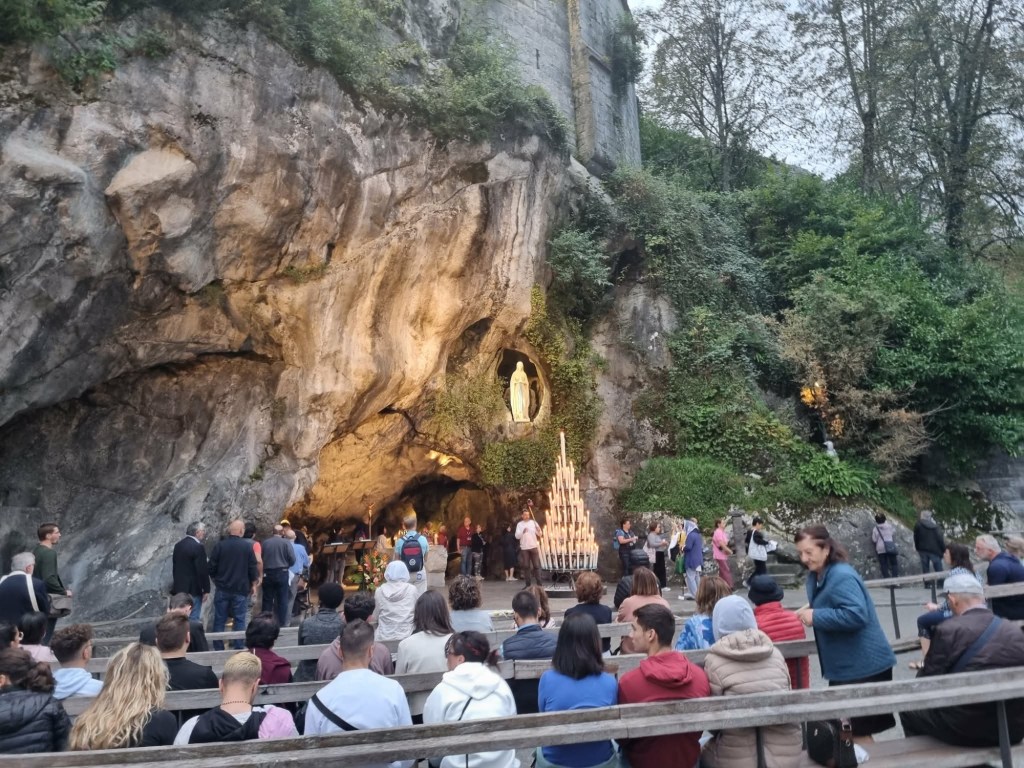
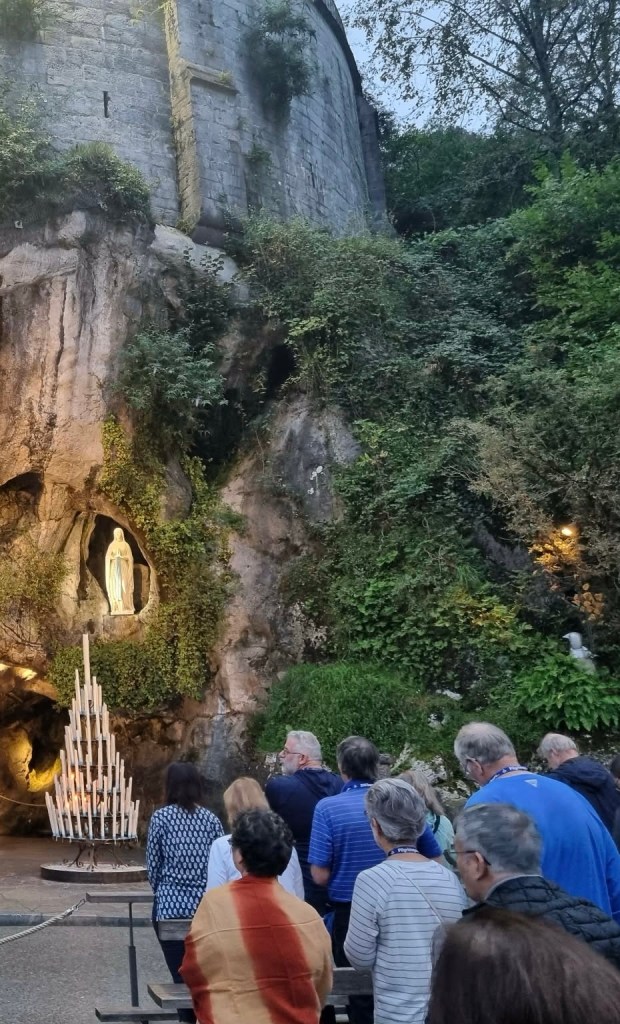
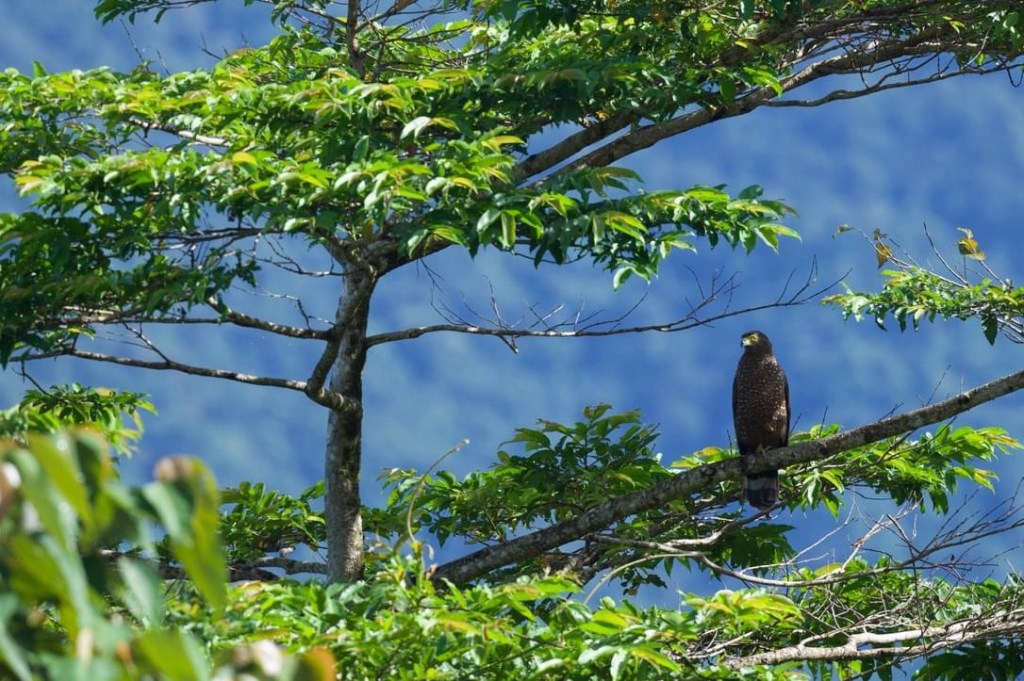
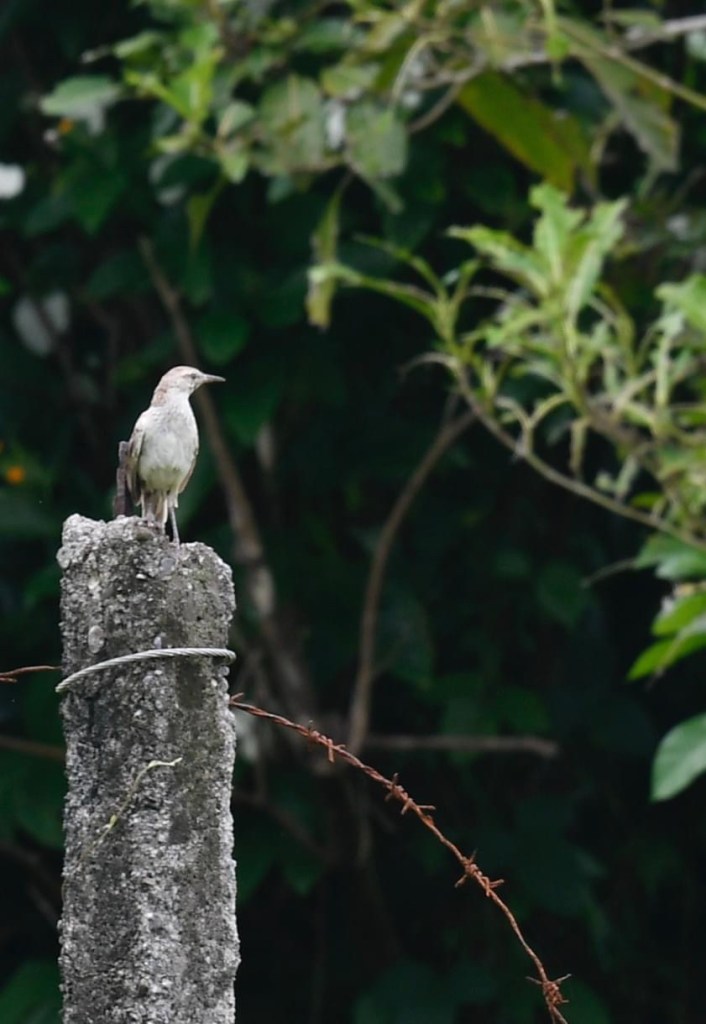
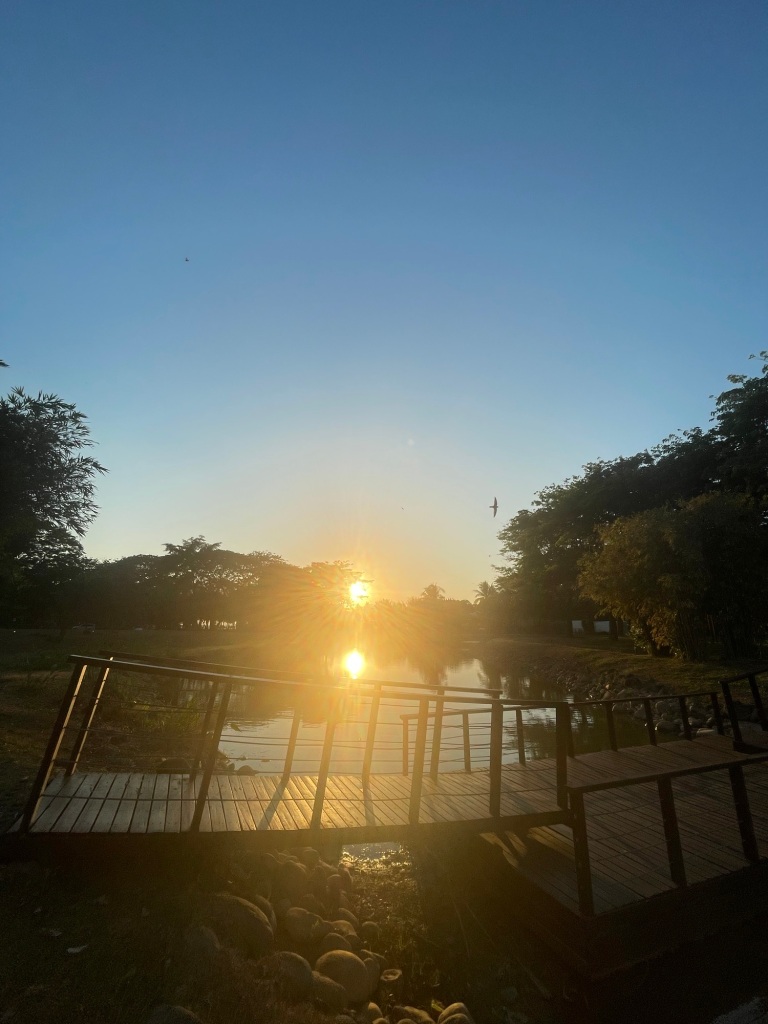
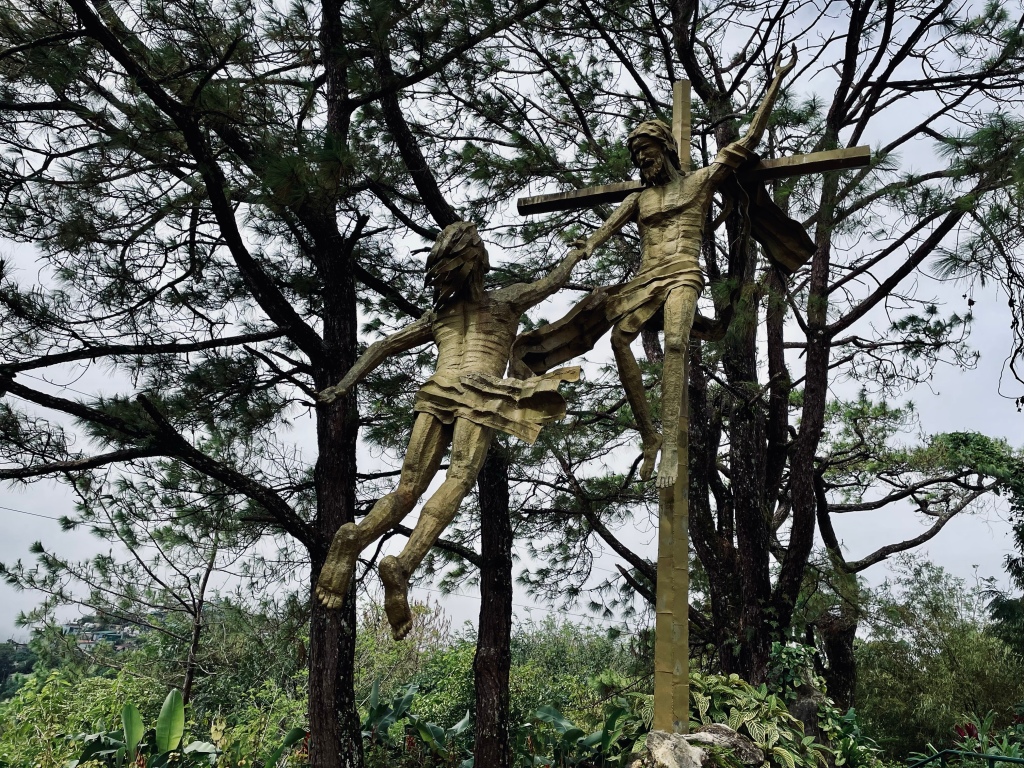
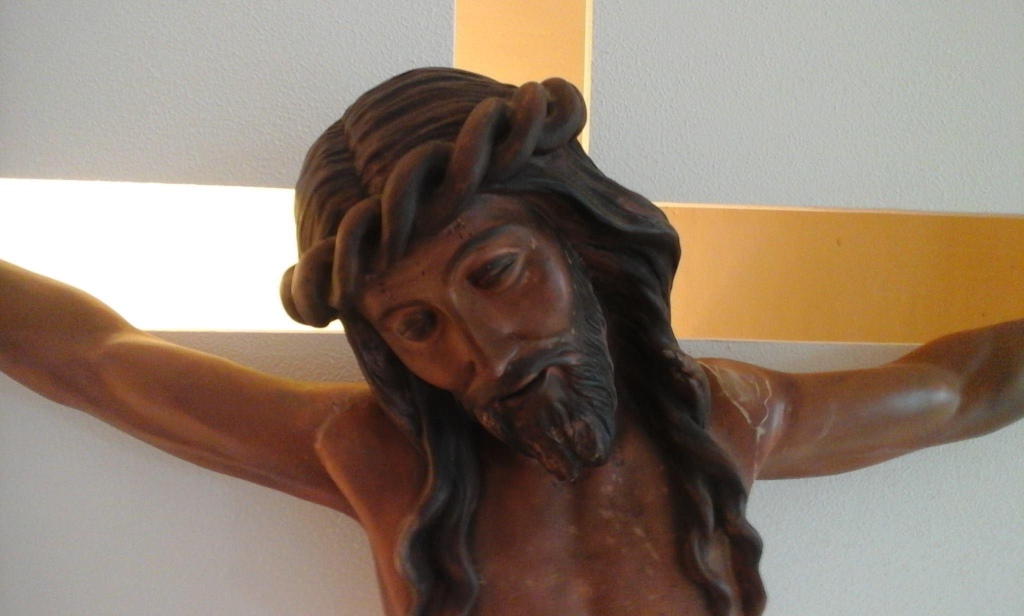
Photo by Dra. Mylene A. Santos, MD, September 2022.
How lovely are your words today, Lord Jesus Christ that pertain about heights.
In the first reading, St. Paul invites us to seek what is above, think what is above while in the gospel you O Lord looked up to us your disciples.
“Brothers and sisters: If then you were raised with Christ, seek what is above, where Christ is seated at the right-hand of God. Think of what is above, not of what is on earth” (Colossians 3:1-2).
Raising his eyes toward his disciples Jesus said: “Blessed are you who are poor, for the Kingdom of God is yours” (Luke 6:20).
Your beatitudes lifted us up, dear Lord changed radically the way we must see life and its meaning so that we may aspire to follow St. Paul's teachings; before pointing our sights up to heaven in you, Jesus, you first looked up to us despite our miseries and sins. If we could just imagine this great honor, then perhaps we would no longer doubt nor question your beatitudes; help us, Lord Jesus to remember this great honor you have given us of lifting us up to you in our poverty and hunger, grief and exclusion, insults and denunciations; help us Lord to set our sights up to you so we may live your beatitudes by finding and seeing you among those below us and with us. Amen.
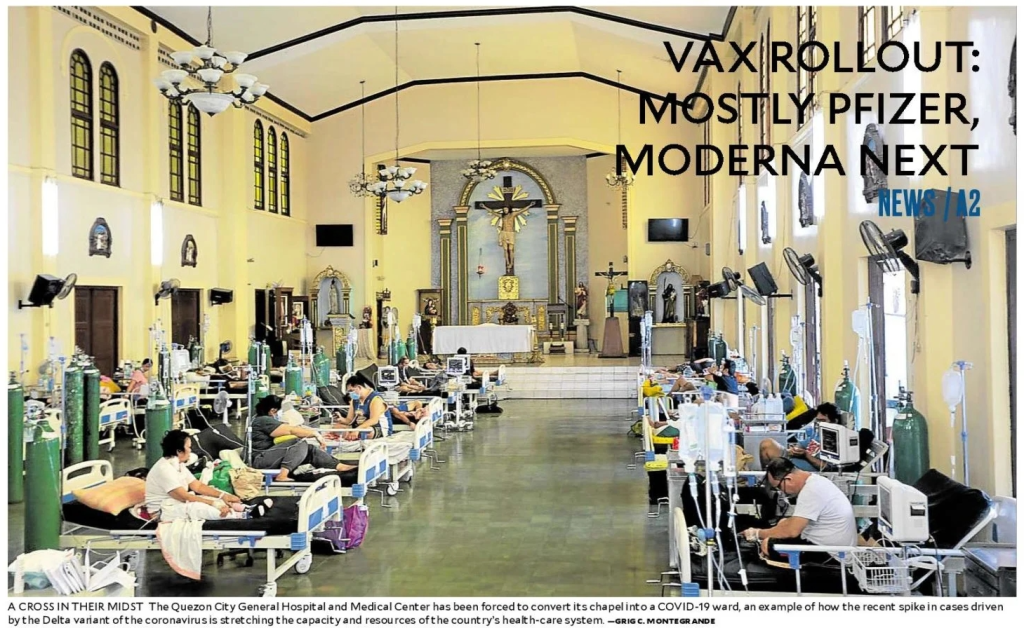
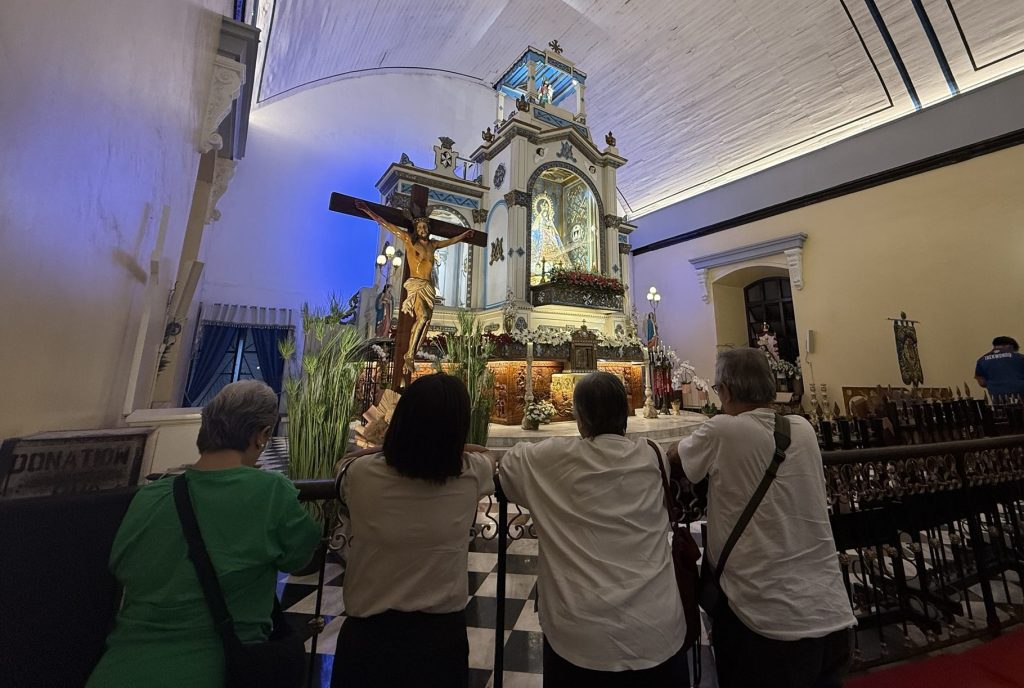
Photo by Dra. Mylene A. Santos, MD, September 2022.
Lord My Chef Sunday Recipe, 31 August 2025 Twenty-Second Sunday in Ordinary Time, Cycle C Sirach 3:17-18, 20, 28-29 ><}}}*> Hebrews 12:18-19, 22-24 ><}}}*> Luke 14:1,7-14
“Meal in the House of a Pharisee” 1886-1896 painting by James Tissot from brooklynmusueum.org.
For the next three Sundays beginning today, Luke gathered teachings of Jesus Christ all set on the dining table, a sort of some “table talks” about the great banquet in the end of time and how we could all get in to share in the eternal meal with the Father.
On a sabbath Jesus went to dine at the home of one of the leading Pharisees, and the people there were observing him carefully. He told a parable to those who had been invited, noticing how they were choosing the places of honor at the table (Luke 14:1, 7).
I love the way Luke presented this scene when he said “the people there were observing Jesus carefully” while the Lord told them a parable after “noticing how they were choosing places of honor at the table.”
How lovely! People observe, Jesus notices.
As it had happened in every instances of gatherings with Jesus, people carefully observed him, trying to find something to accuse him in of disregarding their traditions and laws like healing the sick on a sabbath day. They have “boxed” and judged Jesus as a dissident and a trouble-maker among them in his apparent disregard of laws and traditions.
Photo by author, Manila Club, BGC, June 2025.
In a funny twist, Luke tells us in this scene the immense love of Jesus then and now for everyone that despite his noticing and knowing everything in us, he neither counted those things against us nor ever judged us. How sad many of us with that habit of putting God in a box like a cop keeping tabs of our infractions when in fact God simply noticed our actions and behavior to invite us to become better without any judgment at all.
Keep in mind this scene reveals to us its context of the heavenly banquet which took place after the sabbath services at the synagogue where Jesus participated, hosted by a Pharisee, a VIP of the synagogue and of the society at that time. It was a party where every who’s who was supposed to be present, with everyone competing for the best seats closest to the host. And so, Jesus the keen observant but never judgmental used the occasion to teach us the essence of humility to make it to heaven or eternal life that is signified by a wedding banquet like that big meal he attended.
“When you are invited by someone to a wedding banquet, do not recline at table in the place of honor. A more distinguished guest than you may have been invited by him… For everyone who exalts himself will be humbled, but the one who humbles himself will be exalted” (Luke 14:8, 11)
These past Sundays, we have seen Christ’s insistence of the Father’s desire to have everyone welcomed into heaven by giving us some instructions of what to do to gain eternal life.
This Sunday while in a big party, Jesus took the occasion to teach us the value of humility to get into heaven. From doing, Jesus now moves into being, our disposition and attitude to make it into heaven where what matters most is not where we are seated but where we stand. Recall how Jesus reminded the brothers James and John with their mother that he has nothing to do with the seating arrangements prepared by the Father in heaven after she requested her two sons to be seated beside him when he comes into his glory.
Heaven is more of where we stand with Jesus where his virtue of humility is most pronounced when he “humbled himself, becoming obedient to death, even death on a cross” (Phil.2:8). That is why St. Augustine taught that “humility is a sign of Christ”, a revelation of Jesus that allows us to recognize him our Lord and Master leading us to the Kingdom of heaven without any feelings of inferiority and despair.
On the Cross which he prefigured at his Last Supper, Jesus showed himself as the most humble of all who went to life’s lowest point of suffering and dying to meet us as he noticed everything in us to lift us up and be like him, humbly standing in our sufferings. It is on the Cross that we find humility as the basic and essential requirement to get into the heavenly banquet of the Lord.
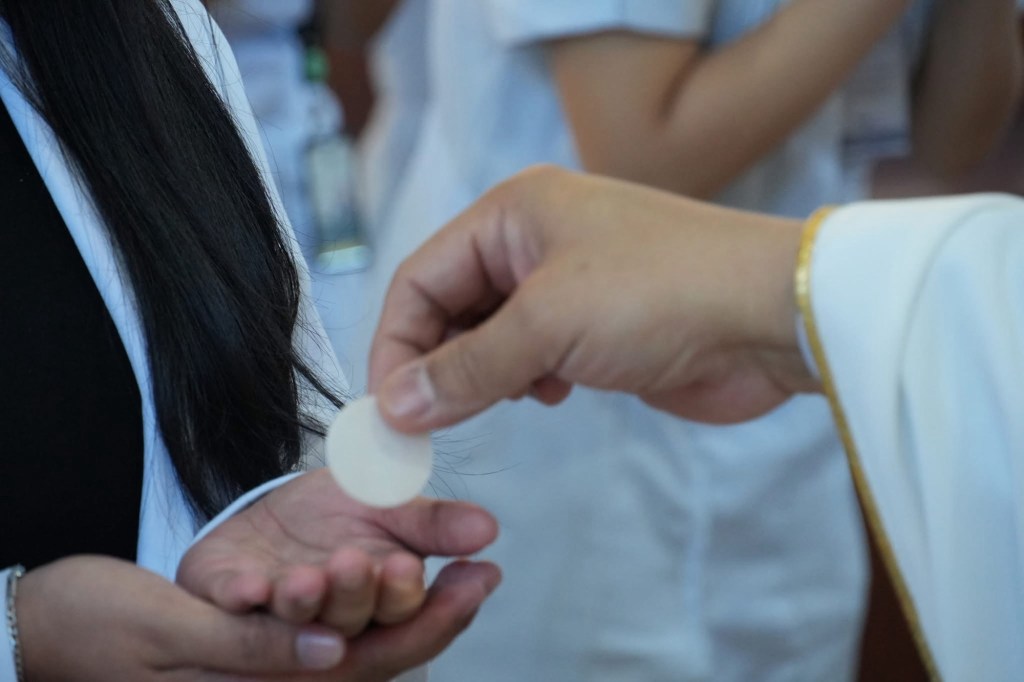
Very often when we examine our state of humility, what comes to our mind are the many negativities we have like our sins and failures, vices and weaknesses, our being unworthy. But, that is when we bow down most to beg for Christ’s mercy like before the Holy Communion when we pray, “Lord, I am not worthy to receive you under my roof but only say the word and I shall be healed.”
That is both the humility of Jesus and of us humans so vividly expressed at the washing of the feet after the Last Supper. Normally, we look up to Jesus in heaven but at the washing of feet, like every time we receive Holy Communion, we take the higher position, looking down at him not with pride but with all humility because Jesus humbled himself first before us. Here we find humility as seeing ourselves the way Jesus sees us – weak and sinful, yet so loved and forgiven. This is what Ben Sirach taught us in the first reading: humility is the fundamental attitude of wisdom because it opens us to the splendor of God when we find our self-worth and value too!
Without humility, it is either we see only the best or the worst in us as a person, without God, without others.
This is the bigger issue with the “nepo babies” now being bashed on social media after flaunting their wealth and ostentatious lifestyles. Their posts were far from inspiring, at most are tasteless and most convulsive. All we have noticed in their posts is their pride not only in lacking humility but most precisely in not finding value in themselves. Sadly but I dare say they are the ugliest and most pitiable persons because they find value only in wealth and things, not in themselves as persons. Hence, the flaunting of their possessions that only make them so pathetic because along that came their utter disregard for others especially the poor who suffer most with their parents’ greed for money through corruption.
Humility is always uplifting in the positive sense, not looking at others as below us but to realize despite our sins and weaknesses, we are loved, we are noticed as a person so worthy, so valuable. When we are humble, then we become joyful too because we are assured of love and acceptance despite our flaws. This is the gist of the message to us this Sunday of the author of the Letter to the Hebrews: unlike the Israelites in the Old Testament who were so fearful to approach God who spoke to them with thunder and lightning, we can get close to God in Jesus who humbled himself to be one with us by dying on the Cross.
True humility keeps us rooted with our selves, with others and with God. It is this rootedness best expressed in the Sunday Eucharist that we are able to follow Jesus in his journey to Jerusalem and eventually into heaven in all eternity. Amen.Have blessed Sunday and most blessed September too!
Photo by the Marketing Office, Our Lady of Fatima University, Valenzuela City, June 2025.
Lord My Chef Sunday Recipe for the Soul, 24 August 2025 Twenty-first Sunday in Ordinary Time, Cycle C Isaiah 66:18-21 ><}}}*> Hebrews 12:5-7, 11-13 ><}}}*> Luke 13:22-30
Phot by author of pilgrims trying to enter through the narrow door of the Church of the Nativity in Bethlehem, the Holy Land.
Anyone who had gone on a pilgrimage to the Holy Land must have heard the story of the fabled “narrow door” at the entrance of the Church of the Nativity in Bethlehem, of how it was reduced into that small door a very long time ago to prevent pilgrims from bringing their horses and camels inside the church that made a lot mess and stench.
Photo by author, narrow doors from the inside of the Church of the Nativity in Bethlehem, the Holy Land, May 2019.
That little door of the Church of the Nativity later became symbolic of the humble gesture of bowing low first to enter and see the Savior’s birthplace, eventually heaven as Jesus had been teaching us these past Sundays.
We are now in the final installment of the teachings by Jesus about the coming End, of what must we do to gain eternal life. He is now halfway through his long journey to Jerusalem since he started eight Sundays ago.
Along the way, he had met every kind of people, proclaiming to them the same message – that the kingdom of God is at hand where everyone is welcomed like what Isaiah prophesied in the first reading.
Jesus passed through towns and villages, teaching as he went and making his way to Jerusalem. Someone asked him, “Lord, will only a few people be saved?” He answered them, “Strive to enter through the narrow gate, for many, I tell you, will attempt to enter but will not be strong enough. After the master of the house had arisen and locked the door, then will you stand outside knocking and saying…” (Luke 13:22-25).
Photo by author, Angels’ Hills Retreat Center, Tagaytay City, April 2025.
In his teachings these past three Sundays, Jesus had been warning us against too much focus on things of the world that perish like material wealth, telling us to be more concerned of things of heaven that lead to eternal life. He had been clear that it would not be easy at all with the demands of being his disciples.
It was in this context that someone in the crowd asked Jesus today on his way to Jerusalem if only a few people would be saved. The question sounds very amusing not only because Jesus had always been clear that heaven does not come cheap as we must learn to renounce our self, take up his cross and follow him. That someone in the crowd who asked that question is actually us! And we know so well why until now we keep asking that same question: because we lack the discipline within to truly follow Christ. We always want what is easy and convenient, preferring shortcuts, avoiding sacrifices, as much as possible, no pains and sufferings. Hence, despite our knowing what it takes to gain eternal life, we still keep on doing the opposite.
It is the same with our physical well-being wherein we know so well what is healthy but we still keep doing, eating and drinking what is unhealthy. The sad truth of this lack of discipline in our body and soul is how we start shaping ourselves only when we are already sick and close to dying! That is when we feel sorry and start telling God like those in the parable that “we ate and drank in your company.”
Jesus had no intentions of dodging the question of that someone – and us in many occasions when we realize how difficult it is to follow his path of simplicity and humility, of love and kindness, of mercy and forgiveness. See how he neither gave a number nor a percentage of those who would be saved in the End. Jesus simply told the people including us today to do everything to make it into the Kingdom of God that is like a “narrow gate” and a “locked door”.
Following Jesus is more than being in his company but more of being like him. On this final Sunday of his teaching on the End, of entering the Kingdom of God in eternity, Jesus reminds us to shape up, body and soul so that we can squeeze ourselves into heaven’s “narrow gate” and “locked door”. Here we find again the second reading giving us more light into the meaning of the gospel this Sunday.
Brothers and sisters, you have also forgotten the exhortation addressed to you as children: “My son, do not disdain the discipline of the Lord or lose heart when reproved by him; for whom the Lord loves, he disciplines; he scourges every son he acknowledges.” Endure your trials as discipline… At the time, all discipline seems a cause not for joy but for pain, yet later it brings the peaceful fruit of righteousness to those who are trained by it. So strengthen your drooping hands and your weak knees. Make straight the paths for your feet, that what is lame may not be dislocated but healed (Hebrews 12:5-7, 11-13).
Discipline is a word so misunderstood these days that too often, it is frowned upon, even feared by many. In this age of so much “freedom” without any regard to “responsibility”, discipline has become its main casualty.
From the Latin verb discere which is “to learn” and “to follow”, its noun form disciplina means teaching or learning from which came the word discipulus for disciple, a follower or a pupil. Therefore, a person of discipline is one who follows or obeys teachings. Contrary to the wrong idea of many today that discipline limits freedom which they see as the ability to do whatever one wishes, the more disciplined a person is, the more free the person actually becomes!
When we discipline ourselves in every aspect of our lives like in food and drink intake, in using our time wisely, in budgeting our money and resources among other things, the more we become free to many other things in life. Remove discipline and do whatever you like in your life, eventually you become “unfree” because definitely you will miss your responsibilities and obligations like studies in school and duties at home and the office.
The same is true in our spiritual life: without discipline like prayer life, disorder and sin happen. It is discipline that literally and figuratively shapes us into persons able to squeeze through the narrow gate and locked door of freedom and salvation!
Photo by author, St. Catherine Monastery, Mt. Sinai, Egypt, May 2019.
In following the reflection of the author of Hebrews, we find that discipline is not just a human effort but the work of God too. As St. Augustine wrote, “grace builds on nature” – the more we discipline ourselves, the more blessed we become because God’s grace and gifts in us are perfected. See how discipline is like a built-in “app” God installed in each of us to ensure that we have all the means to reach heaven in Jesus Christ.
Looking back to the past four weeks, we find Jesus as the perfect example of a disciplined person, of leading a disciplined life focused on the mission from the Father. Since he started this long journey, Luke noted in chapter nine how Jesus was “resolutely determined” to go to Jerusalem, teaching us along the way to be like him focused on things of heaven than of earth, always vigilant of the coming End. Since the resumption of Sundays in Ordinary Time last July 06, Luke showed Jesus frequenting the synagogue on sabbath to worship and to preach. Most of all, Jesus prayed a lot which prompted his disciples to ask him to teach them how to pray too. Our celebrating the Sunday Mass in the church is a discipline of highest order because every Eucharistic celebration is a dress rehearsal of our entrance into heaven. Always come until we all gather together in eternity. Amen. Have a blessed and disciplined week ahead everyone. Fr. Nicanor F. Lalog II, Our Lady of Fatima University, Valenzuela City (lordmychef@gmail.com).
Quiet Storm by Fr. Nicanor F. Lalog II, 18 March 2025
While I was processing my many realizations and lessons about perspectives and point of view (POV) following our team-building activities over the weekend, the venue’s architecture fascinated me, particularly its solid design of the staircase. I felt they all conveyed to me the very thoughts percolating in me that day of how our perspectives affect our communications, for better or for worst (https://lordmychef.com/2025/03/17/on-the-road-to-my-60th-perspectives-and-pov/).
Where we stand on the staircase is our POV – above on top, at the middle stop or at the bottom part. But how we look at the staircase reveals our perspectives, either we are looking up from or looking down to the floor that can have different impact with others.
The perspectives and views from that experience in Canyon Woods Resort Club in Batangas remained with me until Monday when I arrived at the Sacred Heart Novitiate in Novaliches where I have been going on my personal retreat since 2016.
Stairs at the new Blessed Peter Faber Hall.
It was another lesson in perspectives. They were the same stairs that have been there for almost 75 years with some younger at 30 years which I have seen and walked on the past nine years but it was only now that I have recognized their unique beauty.
And lessons.
Stairs at the main and oldest building at the Sacred Heart Novitiate leading to its chapel at the second floor.
Things change greatly when we see them from the top and from below. The same sights can evoke fear and dangers, or joy of being challenged to climb the flight of stairs.
View from top upon exit from the chapel, same stairs, different perspective.
Perspectives also change especially when we use the modern apps in cameras and phone cameras today like the iPhone 16 I am using lately.
Access ramp at the Faber Hall directly leading to the modern Chapel of the Holy Family.
One can change perspectives by simply editing a photo to change its “mood” to soften or strengthen its impact. Or, change its color to the traditional Black & White I have always loved.
B&W photos evoke simplicity and mystery at the same time. They converse with viewers as if inviting you to provide the “colors”. See the “ironing board” or plantsahan under the stairs that remind us of home.
Our focus and point-of-view convey different perspectives of the same objects as seen from different angles. In this shot below of the side stairs to the dorms at the second and third floors of the Blessed Faber Building are very inviting as if leading you to light or enlightenment that is primarily the reason of most people going on recollections and retreats here.
There is the sense of openness, of opening to God too not only with emphasis on the light that falls on each step but also in revealing the back or bottom part of the stairs, there is the perspective of courage to bare what’s inside. Or underneath. A sense of sincerity.
What’s in a stairway? There were the stairs that caught my attention in Batangas because it was my first time to be there at Canyon Woods Resort Club.
But, here again in my “happy place”, my “Bethel” where like Jacob I “wrestle” with God in prayers every year? Why my attention?
Blame it partly to my anticipation for the coming Netflix documentary on Led Zeppelin whose masterpiece Stairway to Heaven had made a tremendous impact on me as a child growing up in the 1970’s.
During that time, I have heard older people saying rock music was of the devil but I wondered why, if Led Zeppelin was diabolic, were they singing something about the heaven like Stairway to Heaven?
Stairs to the second floor dorm of the Sacred Heart Novitiate, 17 March 2025.
Later on in Grade 5 and 6 in the late 70’s, I heard our religion teachers that included nuns at St. Paul College-Bocaue spoke about Jacob’s dream of a “stairway to heaven”.
Immediately, I realized rock music isn’t bad at all!
And so, after classes I would come home early enough ahead of my father so that I could listen to DZRJ-AM that played all the classic and modern rock music of that time along with Juan Dela Cruz Band and other Pinoy rakistas.
A cozy resting place for souls trying to reach heaven at the mezzanine room of a spiritual director, Sacred Heart Novitiate, Novaliches, QC, 17 March 2025.
Good that I did not listen to some aunts who insisted that I could not become a priest if I followed rock music which did not hinder at all my listening to God about my priestly calling. In 1998, I was ordained priest while still rockin and rollin’ with Led Zep, Steely Dan and other rock bands.
As a priest turning sigisty (60) soon and 27 years in the ministry, my perspective on stairs have evolved: as a priest, my job is to lead others to heaven – whatever song they may be singing. God bless everyone!
Quiet Storm by Fr. Nicanor F. Lalog II, 04 November 2024
Photo by author, Nagsasa Cove, San Antonio, Zambales, 19 October2024.
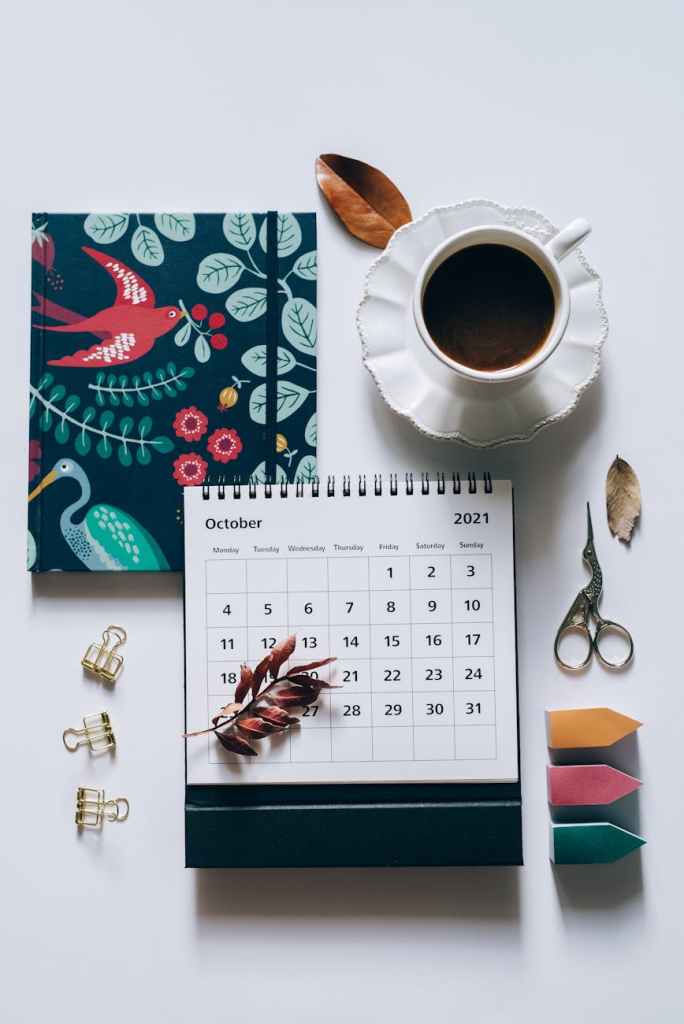
Lately I have noticed my getting delayed of turning calendars in my room. Normally, I would be late for only a day or two but since June, it has sometimes taken even weeks. Worst was September when it was already about to end when I noticed my calendars stuck in August!
There are three calendars in my room: first is the large type given away by hardware stores located at the back of my entrance door which I could read from my bed with its big fonts; second is an average-sized religious calendar with pictures of saints and dates of their feast I keep in the closet so I would see every morning when I put on my clothes; and the third one is a table calendar on my desk where I work. That’s the only one updated and most used but the other two bigger ones, I fear are slowly becoming obsolete to me like the alarm clock (because I always wake up ahead of its alarm).
As I age, calendars along with watches seem to be irrelevant with me.
Personally, it is ironic because I have long kept a sort of relationship with calendars, keeping them along with some planners since college in the 1980’s. I don’t know why. Basta – I love looking at old calendars, giving me that sense of joy within when I literally look back in time, recalling the reminders and important events I have jotted on them decades ago.
But now, sadly as I recall this major change in me, I feel to have lost that “lovin’ feeling” I used to have with calendars that have been replaced, of all things, by medicines.
You read it right. I now reckon time, especially the months not with calendars anymore but with maintenance meds I take daily – 30 days – to keep my sugar, blood pressure and cholesterol in control as well as my prostrate to remain “gentle”. Once a week, usually on a Monday morning, I fill my medicine dispenser with all the meds I will be taking from Sunday to Saturday.
It always funny when I do this weekly ritual like playing sungka: there are times I wonder with some irritation why my meds are getting fewer. That is when I realize the month is almost over and I have to buy again another 30 pieces of my meds for the next 30 days. And that is how I now count the days of each month…
Whenever I would do this ritual, Mitch Albom’s novel “The Time Keeper” comes to mind, reminding me of the value of time we often take for granted. I cannot recall in which part of the novel where one of the characters realized that “the reason God limits our days is to make each one precious.” Very true. It is said that “it is not time that is passing by but you who are passing by” because we cannot bring back time we have wasted with its opportunities to grow and learn, to live and love, to celebrate and laugh.
Lately I have been thinking if I am just going through a phase as I approach the age of 60 that would be in March next year. Is this part of getting old, of maturing?
Most likely.
Photo by author, Nagsasa Cove, San Antonio, Zambales, 19 October2024.
How funny, even stupid how we have kept ourselves busy all our lives, complaining about time when time has always been on our side.
Maybe one of the reasons why elder people mellow as they age is that we are no longer so concerned with time as something separate from us, divided into parts we try to gather and hold because the truth is, time is the reality itself, we are a being-in-time, not distinct from us nor apart, but always our wholeness. It does not really matter if it is the past or the future but always the here and the now, the present.
Time in its entirety is a cosmic reality within us which we cannot fully grasp yet. Not yet. That’s what we call heaven, which is already here but not yet. And achievable. Let me explain.
It seems to me that at the age of 59, our main task in life is to live fully in each moment. Though I would admit I am afraid of dying, death is something we must befriend. Coming to terms with life is coming to terms with death, and vice versa. When that happens, then, we have arrived truly in life. That’s heaven, Just in time. This we experience so well when we truly love as this anonymous saying tells us:
Time is fast for those who rush; Time is slow for those who wait; Time is not for those who love.
“Time is not for those who love” is what the Greeks refer to in their other word for time called kairos or “fullness of time”. It is the time of the Lord, when we are one with God in Jesus Christ. It is that moment when everything falls into its right places which I believe is what Paulo Coelho referred to in one of his novels “when the whole universe conspires in your favor.”
The other word for time by the Greeks is kronos from which the word chronology came from to refer to the the succession and measurement of time in seconds, minutes, hours, days, weeks, months and years; kairos is the fullness of time. Again, from Albom’s “The Time Keeper”, there is this line that says, “If you you are measuring life, you are not living it.” Same thing holds true with time; if we keep on measuring it, we shall never have it nor enjoy it.
Photo by author, Nagsasa Cove, San Antonio, Zambales, 19 October2024.
While there in Nagsasa Cove, one of the songs that kept playing at the back of my mind was Steely Dan’s Time Out Of Mind from their 1980 album Gaucho. Despite the critics’ insistence of its strong links with heroin use which I have never tried, it is one of my top favorite songs by the Steely Dan gods, Donald Fagen and the late Walter Becker. Oh how I imagined them telling me this…
Son you better be ready for love On this glory day This is your chance to believe What I've got to say Keep your eyes on the sky Put a dollar in the kitty Don't the moon look pretty
Our world has become so complicated like Facebook. It is all palabas, a show. No meaning nor substance at all because we have been trying to capture and keep time instead of allowing it to capture us, envelop us so we can move more freely with it within to discover more of the outside. No stress, no pressures. No calendars too!
Just time out of mind. Thank you for bearing with me.
Quiet Storm by Fr. Nicanor F. Lalog II, 10 May 2024
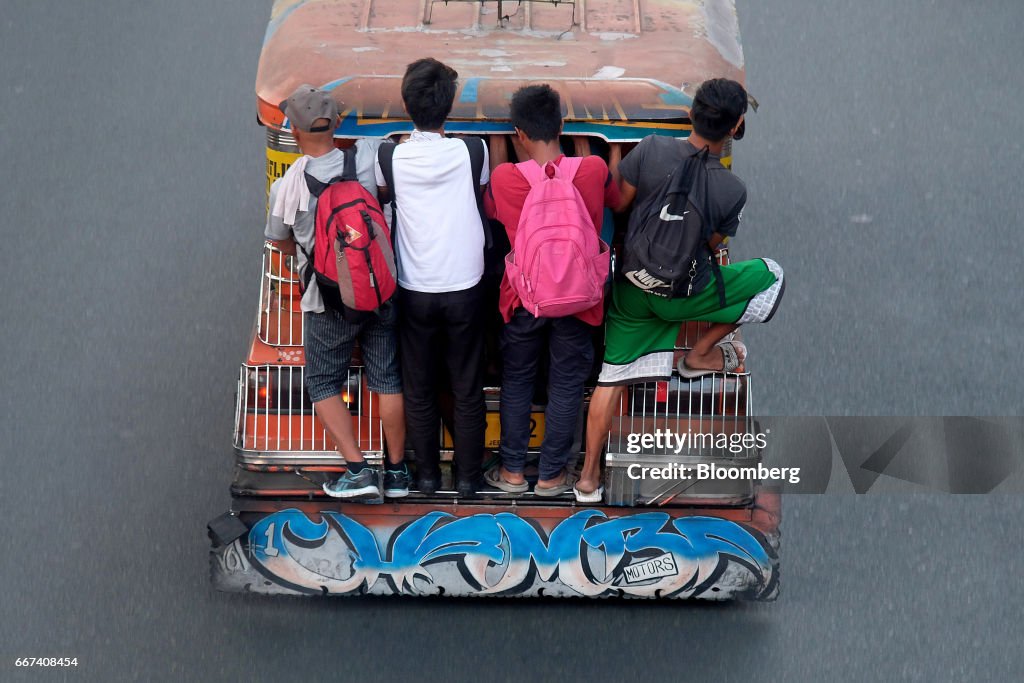
Photo by Veejay Villafranca/Bloomberg via Getty Images
My most vivid image of mommy’s love for me is from June 1979 when I bid her goodbye in her sari-sari store on my way to the high school seminary. That was the last time I felt I was a kid, her child, when she hugged me tightly, then held my head and kissed me as she fixed by combed hair, telling me “magpapakabait ka doon, anak.”
She had always been against my entering the seminary, saying I was too young to know about the priesthood. She did all the scare tactics to me: “hindi ka mag-aasawa, isda at tuyo araw-araw ang ulam ninyo, hindi masarap pagkain doon…” She finally allowed me to enter the seminary on second year high school I believe after my dad had silently persuaded her.
It was funny because on my fourth year before graduation, I felt I was not ready yet for the major seminary that was eventually confirmed by the results of my entrance exam (psychological tests actually) to San Carlos Seminary that it was suggested I better leave the seminary.
My mother Corazon before their wedding in 1964.
Tama nga si mommy.
It was from then on when we had that kind of not so smooth mother-son relationship. I felt far from her as she would always say something to my plans and decisions. She was not really a contravida but more of an oppositionist. That is why when I felt my vocation anew later in 1988, I never told her about it until I was about to go back to the seminary. That time, there was no more hugging and kissing maybe because I was already an adult, a man bigger and stronger than her.
But what was most memorable for me now that she is gone was the scene every time I would go back the seminary and later to my assignments as a priest.
Whenever I would tell her “mommy, uuwi na po ako”, she would say while smiling, “e nasa bahay ka, paano ka pa uuwi?”
That happened so often that she sounded so corny but still, thank God, I never tired explaining to her, “uuwi sa seminaryo” later to Malolos then to Bagbaguin and now to Fatima. She never failed to banter with me with her dry humor and stroke during those moments of my leaving home. I think she was telling me in those every good bye of ours that my home would always be her, my family. That is why after her body was taken from her room last Tuesday morning, the scene that struck me most on her death was her empty room, vacant big bed.
As I left home pauwi sa Fatima, the morning sunshine were so lovely as it softly brightened mommy’s empty room as she is now “home” in heaven with daddy.
Overall, I feel so joyful and grateful in my mother’s demise. She left so peacefully in her sleep as I have prayed to God daily. The outpouring of love and sympathies and friends are beyond our expectations or imaginations. But, there is that fear, a dread in me about coming home, finding her room empty, telling me she is gone.
Mommy’s room is now empty but our hearts are so full of her love, of her memories, of her gift of self.
During the pandemic, I begged God not to take my mom yet. I told God I was not ready because she was primarily the reason I “go home”. As I reflect on the meaning of that image of her empty room, I realized that it is not about going home but coming home. We go home to the house and place but we come home to persons, to family and friends.
Pag-uwi in Tagalog which is literally coming home. Not going home. Because when we leave, we say uuwi also as we come home to our new home.
We Filipinos express both our kinship and Christian faith in our goodbyes.
Our professor in liturgy Msgr. Andy Valera used to tell us we never say aalis na ako or “I am leaving” because that means we are angry. It is very rude and should never be said when saying goodbye in any Filipino gathering. Instead, we say next to uuwi na ako either tutuloy na ako or mauna na ako. But, how can we make tuloy which is to enter when we are in fact leaving? And why say mauna na ako which means I’ll go ahead when nobody is going with you?
Photo by author.
According to Msgr. Andy, our coming home indicates our theology of heaven: we all come home, uwi to heaven our true home that is why when we leave our gatherings we say tutuloy na ako because in the end, we enter heaven. Most of all, we say mauna na ako because nobody knows who is next to die.
What a beautiful lesson I just realized now after mommy had died; even if she’s gone and her empty is room, I will still come home to my sisters and brother, nieces and nephew, relatives and neighbors.
How lovely that despite the pain and emptiness death creates in us here on earth is also the grace of God to fill each others heart with His loving presence and joy as we await our final coming home to Him with our departed loved ones in heaven.
Jesus told his disciples: “Do not let your hearts be troubled. You have faith in God; have faith also in me. In my Father’s house there are many dwelling places. If there were not, would I have told you that I am going to prepare a place for you? And if I go and prepare a place for you, I will come back again and take you to myself, so that where I am you also may be.”
John 14:1-3
The best way to come home to heaven is to come home often to our family and friends not only to dine and celebrate but most of all, to praise and thank God in prayers, especially the Sunday Mass. God bless everyone!
Lawiswis ng Salita ni P. Nicanor F. Lalog II, Ika-21 ng Marso 2024 Ikalawang Huling Wika ni Jesus sa Krus
Larawan kuha ng may-akda sa Mirador Jesuit Retreat House sa Baguio City, Agosto 2023.
Ang ikalawang wika ni Jesus sa Krus:
Tinuya siya ng isa sa mga salaring nakabitin, at ang sabi, “Hindi ba ikaw ang Mesias? Iligtas mo ang iyong sarili, pati na kami!” Ngunit pinagsabihan siya ng kanyang kasama, “Hindi ka ba natatakot sa Diyos? Ikaw may pinarurusahang tulad niya! Matuwid lamang na tayo’y parusahan nang ganito dahil sa ating mga ginawa; ngunit ang taong ito’y walang ginawang masama.” At sinabi niya, “JESUS ALALAHANIN MO AKO KAPAG NAGHAHARI KA NA.” Sumagot si Jesus, “SINASABI KO SA IYO: NGAYON DI’Y ISASAMA KITA SA PARAISO.”
Lukas 23:39-43
Muli ay ating namnamin ikalawang wika ni Jesus doon sa Krus pagkapako sa kanya. Nauna niyang sinambit ay kapatawaran; ngayon naman kanya itong sinundan ng pangako ng langit o paraiso.
At iyon ay agad-agad na, ora mismo! Wika nga ng mga bata, “now na”! Hindi mamaya pagkamatay nila ni Jesus o sa Linggo sa kanyang pagkabuhay. Malinaw na sinabi ni Jesus kay Dimas, “SINASABI KO SA IYO: NGAYON DI’Y ISASAMA KITA SA PARAISO.”
Tantuin ninyo mga ginigiliw ko na sa ebanghelyo ayon kay San Lukas, namutawi lamang sa mga labi ni Jesus ang pangakong ito ng paraiso noong siya ay nakabayubay sa krus at hirap na hirap. Wala siyang pinangakuan ng langit nang siya ay malaya at malakas na nakakagalaw, naglilibot at nangangaral.
Alalaong-baga, pumapasok tayo sa langit kasama si Jesus sa sandaling kasama din niya tayong nagtitiis, nagdurusa, nagpapakasakit dahil sa pagmamahal doon sa Krus!
Ang krus ang pintuan papasok sa langit o paraiso.
Madalas naiisip natin kapag nabanggit o narinig ang katagang langit at paraiso ay kagalakan, kawalan ng hirap at dusa. Basta masarap at maayos sa pakiramdam, langit iyon sa atin. Kaya mga addict noon at ngayon kapag sila ay sabog at nasa good trip, iyon ay “heaven” dahil wala silang nadaramang problema at hirap sa buhay.
Larawan kuha ng may akda, 2023.
Kaya hindi rin kataka-taka na ang gamot nating laging binibili ay pain killer – konting sakit ng ulo o kasu-kasuan, naka-Alaxan kaagad. Noong dati ay mayroong shampoo na “no more tears” dahil walang hilam sa mata.
Gayon ang pananaw natin sa langit. At tumpak naman iyon kaya nga sa pagbabasbas ng labi ng mga yumao, dinarasal ng pari, “Sa paraiso magkikitang muli tayo. Samahan ka ng mga Santo, kahit mayroong nauuna, tayo rin ay magsasama-sama upang lagi tayong lumigaya sa piling ng Diyos Ama. Amen.”
Nagmula ang salitang paraiso sa katagang paradiso na tumutukoy sa kaloob-loobang silid ng hari ng Persia (Iran ngayon) kung saan tanging mga pinagkakatiwalaang tao lamang ang maaring makapasok kasama ang royal family. Kaya nang isalin sa wikang Griyego ang mga aklat ng Bibliya, hiniram ang katagang paradiso ng mga taga-Persia at naging paraiso upang tukuyin ang langit na tahanan ng Diyos na higit pa sa sino mang hari sa mundo.
Ngunit, katulad ng silid na paradiso ng hari ng Persia, hindi lahat ay basta-basta na lamang makakapasok ng paraiso. Alalahanin nang magkasala sina Eba at Adan, pinalayas sila ng Diyos at mula noon ay nasara ang paraiso; muli itong nabuksan kay Kristo nang sagipin niya tayo doon sa krus na nagbunga sa pagwawalang-sala sa ating mga makasalanan. Dahil sa krus ni Jesus, tayo ay naging karapat-dapat patuluyin sa paraiso. Sa tuwing ating tinatanggap ang krus ni Kristo, tayo ay nagiging tapat sa Diyos sa pamamagitan ng pagmamahal at paglilingkod sa kapwa. Noon din tayo pumapasok ng paraiso.
Sa panahong ito na wala nang hanap ang karamihan kungdi sarap at kaluguran, ipinaaalala sa atin ni Jesus sa ikalawang wika na ibig niya tayong makapiling ngayon din sa paraiso kung tayo ay mananatiling kasama niya sa pagtitiis at pagpapakasakit sa ngalan ng pag-ibig sa Diyos at kapwa.
Sa panahong ito na dinidiyos masyado ang katawan at sarili upang maging malusog, malakas at kung maari ay manatiling bata at mura ang edad, pinapaalala ni Jesus sa kanyang ikalawang huling wika sa krus na sino mang nasa banig ng karamdaman pati na yaong mayroong kapansanan ay unti-unti na ring pumapasok ng langit ngayon din sa kanilang tinitiis na hirap at sakit.
Sa panahong ito na lahat ay pinadadali at hanggat maari iniiwasan ano mang hirap at dusa, pinapaalala ni Jesus sa kanyang ikalawang huling wika na sa ating pagsusumakit sa maraming tiisin at pasanin sa buhay na ito, noon din tayo pumapasok sa paraiso kahit na kadalasan ito ay nagtatagal sa paghihintay.
Larawan kuha ng may-akda, 2018.
Noong pandemic, natutunan natin na hindi lahat ng tinuturing ng mundo na negatibo ay masama kasi noong mga panahong iyon, iisa ating dasal tuwing tayo ay sasailalim ng COVID test na sana ay “negative” tayo, hindi ba? Noon natutunan natin yung negative ay positive. At iyon mismo ang kahulugan ng krus ni Kristo!
Para sa atin, ano mang mahirap, masakit tulad ng krus ay negatibo ngunit kung tutuusin, ang krus ay hugis positibo o “plus sign” (+) at hindi minus (-); kaya, ano mang hirap at pagtitiis sinasagisag ng krus ay mabuti dahil hindi ito nakakabawas bagkus nakapagdaragdag sa ating pagkatao na naghahatid sa atin sa kaganapan at paglago. Sa suma total, eka nga, sa paraiso!
Ang mga tiisin at pagsubok sa buhay ang nagpapatibay at nagpapabuti sa atin upang maging karapat-dapat makapasok sa paraiso at makapanahan ang Haring magpakailanman – ngayon din, ora mismo, now na!
Kaya, manalangin tayo:
Panginoong Jesus, bago pa man dumating lahat nitong aming tiisin at pasanin sa buhay, nauna ka sa aming nagtiis at nagpasan ng krus noong Biyernes Santo; nauna kang nagpakasakit at namatay noon sa Krus dahil sa pagmamahal sa amin; kaya, patatagin mo ako sa aking katapatan at pananampalataya sa Iyo upang manatiling kaisa mo sa krus ng kalbaryo ng buhay upang ngayon din Ikaw ay aking makapiling, makasama sa Paraiso. Amen.

The Lord Is My Chef Daily Recipe for the Soul by Fr. Nicanor F. Lalog II Feast of the Baptism of the Lord, 08 January 2024 Isaiah 55:1-11 <*{{{{>< + ><}}}}*> Mark 1:7-11
How lovely, dear God our Father, that at the start of work and classes this 2024, we heard from Mark the start of his gospel where he told us the baptism of your Son Jesus, the fulfillment of your promises of old announced by his precursor, John the Baptist.
On coming out of the water he saw the heavens being torn open and the Spirit, like a dove descending upon him. And a voice came from the heavens, “You are my beloved Son; with you I am well pleased.”
Mark 1:10-11
Oh how I love that part of Mark's narration of "the heavens being torn open", so evocative of your power, almighty Father of intervening into our lives, of rending the sky to come down upon us to bring order, to bring peace, to bring salvation in Jesus! At the end of his gospel, Mark spoke anew of how Jesus at his last breath “rending” the curtain at the sanctuary of the temple was torn in two from top to bottom (Mk.15:38).
Everyday you open the heavens for us, dear Father in Christ Jesus, calling us your beloved children, pouring upon us all your blessings not only the material things we need but all good things we need to live fully as you have told Isaiah in the first reading:
Thus says the Lord: All you who are thirsty, come to the water! You who have no money, come, receive grain and eat; come, without paying and without cost, drink wine and milk! Heed me, and you shall eat well, you shall delight in rich fare. Come to me heedfully, listen, that you may have life. I will renew with you the everlasting covenant, the benefits assured to David. For my thoughts are not your thoughts, nor are your ways my ways, says the Lord… so shall my word be that goes forth from my mouth; my word shall not return to me void, but shall do my will, achieving the end for which I sent it.
Isaiah 55:1-3, 8, 11
Loving Father, let us not reject your call and invitation in Christ Jesus to be one with him in this world; forgive us when most often, we think of the difficulties in keeping your commandments without realizing they are "not burdensome" (1 John 5:3) because the more we sin, the more life gets harder and difficult for us.
Let us hold on your assurance of love on this feast of the Lord's baptism, of how your favor rests upon us in Christ Jesus; let us heed your calls so we may see you rending the heavens apart, coming to our rescue, coming to our aid in your loving presence. Amen.
The Lord Is My Chef Daily Recipe for the Soul by Fr. Nicanor F. Lalog II Friday in the Thirty-fourth Week of Ordinary Time, Year I, 01 December 2023 Daniel 7:2-14 ><]]]]'> + ><]]]]'> + ><]]]]'> Luke 21:29-33
God our loving Father, open our eyes to see beyond this world, to have vision not just sights; like Daniel your Prophet and Jesus your Son, enable us to see beyond material things that are superficial in nature.
Let us see not the future but see the deeper realities of life and of this world, to identify and recognize the beasts among us and within us that enslave us to sin; let us have the vision of your grand plans for us in heaven as we aspire to build a more humane society here on earth by seeing and sharing in the vision of Jesus Christ of life's fulness found only in you, O God; let us see your vision of timeless values taught and and exemplified to us by Jesus on the Cross.
May we remain focused on Jesus Christ and his Second Coming while in this world that is passing even in the midst of dryness and emptiness of life. Amen.
Lawiswis ng Salita ni P. Nicanor F. Lalog II, Ika-14 ng Nobyembre 2023
Larawan kuha ng may-akda, San Juan, La Union, Hulyo 2023.
Noong ako ay bagong pari, maraming pagkakataon na para ako nahihiya o nababagabag kapag iyong aking dinalaw na may sakit ay pumanaw pagkaraan ko siya pahiran ng Banal na Langis. Binibiro kasi ako palagi ng mga tao na huwag ko silang dadalawin kapag sila ay nagkasakit dahil sa halip na mabuhay pa, baka sila ay mamatay kaagad.
Napawi na lamang aking pagkabagabag nang ipaliwanag sa akin ng dati kong kura, ang yumaong Padre Nanding Ersando na ikagalak ko raw kung pumanaw ang pinahiran ko ng Banal na Langis dahil nakapaghatid ako ng kaluluwa sa langit.
Kaya mula noon ay iyon na aking pinanghawakan lalo na ngayong naglilingkod ako bilang chaplain sa Fatima University Medical Center sa Valenzuela kung saan kada araw ng Linggo ay dinadalaw ko lahat ng pasyente pagkaraan ng Banal na Misa. Madalas sinasabi sa akin ng mga duktor at nars kapag mayroong pumapanaw na “hinintay lang po kayo, Father” kasi matapos ko silang pahiran ng langis o bigyan ng komunyon, bigla silang pumapanaw kahit wala sa ICU.
At nakapagtataka rin naman na sa tuwing mayroong hihiling ng dasal, kumpisal at pagpapahid ng langis, palagi naman ako ay naririto. Bihirang-bihira na mayroong magrequest ng sick call na ako ay wala. Kung sakali mang wala ako sa ospital o pamantasan, tiyak aabutan ko pa ang pasyente pagdating ko at saka papanaw.
Para sa akin, ang mga ito ay malinaw na pagpapahayag ng pag-ibig ng Diyos sa atin na palagi niyang tinitiyak sa langit tayo uuwi sa kahuli-hulihan. Kaya sigurado din ako, mas maraming namamatay ang sa langit napupunta o kaya sa purgatoryo muna kesa sa impiyerno maliban na lamang talaga na ayaw ng sino man sa Diyos. Mismo si Jesus ang nagsabi noon:
“Lalapit sa akin ang lahat ng ibinibigay sa akin ng Ama. At hindi ko itataboy ang sinumang lumalapit sa akin. Sapagkat ako’y bumaba mula sa langit, hindi upang gawin ang kalooban ko, kundi ang kalooban ng nagsugo sa akin. At ito ang kanyang kalooban: huwag kong pabayaang mawala kahit isa sa mga ibinigay niya sa akin, kundi muling buhayin sila sa huling araw.”
Juan 6:37-39
Larawan kuha ng may-akda, San Juan, La Union, Hulyo 2023.
Hindi tatawag ang Diyos ng sino mang hindi handa. Maski ito sa mga namatay ng biglaaan at sa aksidente. Kaya nga sa mga lamayan, madalas makuwento ng mga kaibigan at kaanak kung paanong tila nagpapaalam o naghahabilin ang namatay ilang araw o linggo bago siya pumanaw.
Tayo mismo makakaramdam kung tayo ay papanaw na dahil iyon ay biyaya na kaloob ng Diyos. Totoong totoo ito sa mga nakaratay sa banig ng karamdaman, iyong mga mayroong malubhang sakit (https://lordmychef.com/2023/11/08/giving-permission-to-die/).
Gayon pa man, isa pa ring malaking hiwaga ang kamatayan na kung saan sadyang ang Diyos lamang ang nakababatid kailan darating kanino man. Kaya naman, ang kahalagahan ng pamumuhay ng tunay at ganap palagi sa pag-amin at pagtanggap ng ating pagkatao, kasama na ating mga pagkakasala sa isa’t isa.
Isang bagay napagtanto ko sa buhay na kung kelan natin tanggap na tanggap ang mabuhay, doon din natin natatanggap ang mamatay. Kadalasan takot tayong mamatay kasi marami tayong dapat gawin na hindi pa natin ginagawa o palaging ipinagpapaliban. O, hindi matanggap.
Mahirap kapag marami tayong mga bagahe na dala-dala sa buhay. Mabigat at maganit ang buhay. Walang tuwa at kaganapan. Pero kung mga ito ay ating haharapin at bibitiwan, doon tayo namumuhay ng tunay at ganap kaya sa mabuhay at mamatay, hindi na mahalaga sa atin gaya ng pahayag ni San Pablo (Fil. 1:21-23). Kung saan mayroong kaganapan, naroon ang Diyos, naroon din ang katiwasayan at kapayapaan. Kapag walang kaganapan, tiyak naroon ang mga takot at panghihinayang. Mahirap at mabigat.
Larawan kuha ng may-akda, San Juan, La Union, Hulyo 2023.
Ang langit, maging impiyerno, ay hindi lamang lunan kungdi katayuan sa buhay, kundisyon o sitwasyon. Kung habang tao nabubuhay at dama nating langit ang buhay sa kabila ng mga pasakit, langit nga ang tungo natin kapag namatay. Ngunit kung habang tayo ay nabubuhay at pakiramdam ay impiyerno ang buhay, kahit maraming pera at karangyaan, mga kaibigan at kung sinu-sino kasama natin, impiyerno nga ating tutunguhan.
Ang mabuting balita ay ito: nasa kamay natin ang pagpapasya. Lahat ay ibig pumunta sa langit ngunit, nakahanda ba tayo sa mga bagay-bagay, maging mga tao at kung sinu-sino na kaya nating talikuran at iwanan upang magkaroon ng kapayapaan at katiwasayan sa kalooban?
Madaling sabihin ngunit sa aking napagtanto, ang buhay ay araw-araw na munting pagkamatay sa ating sarili hanggang sa tayo ay masaid at mapuno ng Diyos. Iyon ang kabanalan – mapuno, mapuspos ng Diyos. Hindi ng mga bagay-bagay at kung sinu-sino. Kaya sa kahuli-hulihan, kapag nalagot na ating mga hininga at tayo ay pumanaw, doon na rin ang kaganapan ng pagpasok natin sa langit. Mapagpalang araw sa iyo, Bai!
*Narito isang awit na paborito ko noong dekada 90 mula sa AfterImage.