Jesus is both the Sower and the seed – and so must we!


The Lord Is My Chef Sunday Recipe for the Soul by Fr. Nicanor F. Lalog II
Week XV, Cycle A in Ordinary Time, 12 July 2020
Isaiah 55:10-11 >><}}}*> Romans 8:18-23 >><}}}*> Matthew 13:1-23
“The Sower” painting by Van Gogh, photo from Wikimedia Commons.

Parables constitute the heart of Jesus Christ’s preaching. From the French para bolein which means “along the path”, parables are simple stories with deep realities that must be cracked open through prayers and reflections to uncover its meaning.

In fact, every parable by Jesus is a word of God that is like a seed that must be received, planted, and nurtured so we may eventually see and experience what is within it who is God himself!

On that day, Jesus went out of the house and sat down by the sea. Such large crowds gathered around him that he got into a boat and sat down, and the whole crowd stood along the shore. And he spoke to them at length in parables, saying: “A sower went out to sow. As he sowed, some seed fell on the path, and birds came and ate it up. Some fell on rocky ground, where it had little soil. It sprang up at once because the soil was not deep, and when the sun rose it was scorched, and it withered for lack of roots. Some seed fell among thorns, and the thorns grew up and choked it. But some seed fell on rich soil, and produced fruit, a hundred or sixty or thirtyfold. Whoever has ears ought to hear.”

Matthew 13:1-9
Photo by Onnye on Pexels.com

Jesus, the mysterious seed

Beginning today until the last Sunday of this month of July we shall hear different parables by Jesus taken from this 13th chapter of the gospel according to St. Matthew.

It is very interesting that as Jesus now begins to preach in parables, we also notice his usual usage of this image of the seed, especially of the mustard seed to stress to us what we have mentioned earlier about the significance of parables as simple things with deeper realities. Every seed is so small, easy to overlook and taken for granted. Yet, we all know how every seed is also the presence of what is to come in the future, of something so big and huge that we can never imagine.

That is how Jesus would always portray the Kingdom of God, which is himself, his very person who is always taken for granted but full of mysteries that later in the fourth gospel he would reveal a deeper reality of this seed akin his Cross:

“Truly, truly, I say to you, unless a grain of wheat falls into the earth and dies, it remains alone; but if it dies, it bears much fruit.”

John 12:24

That is the mystery of the seed, the mystery of Christ: something so ordinary we take for granted with immense possibilities when given up, when it dies. In this parable of the sower, Jesus shows us a hint of this profound truth about himself as a mysterious seed, someone who must be broken to die in order to grow and bear fruit.

If we read the full text of today’s gospel, we find Jesus explaining the meaning of this parable and we discover that he himself is both the sower and the seed: he goes out everyday to bring us the good news of salvation, providing us with seeds we must plant so we can have food in the future.

Every seed Jesus sows in us is always good as the first reading assures us.

Thus says the Lord: Just as from the heavens the rain and snow come down and do not return there till they have watered the earth, making it fertile and fruitful… so shall my word; my word shall not return to me void.”

Isaiah 55:10-11

Most of the time, we reflect on this parable on the importance of the soil on which the seed is sown.

This Sunday, let us reflect on what kind of a seed are we, of how we waste or put into good the enormous potentials packed in each of us by God.

Photo by Dids on Pexels.com

“A sower went out to sow. As he sowed, some seed fell on the path, and birds came and ate it up.

Jesus the sower does not make distinctions on different kinds of soil; he just scatters the seeds freely. His words concern everyone.

Unfortunately, there are some of us who do not care at all, as hardened as the path or pavement.

These are the people who has no plans in life, no directions, spending their lives watching days pass without knowing that they are really the ones passing by.

Sometimes, they just go wherever the winds would lead them while once in a while, they step out of themselves a little to join friends or peers wherever they may be going. Eventually they leave when the journey gets farther.

They are literally wasting their lives.

Some fell on rocky ground, where it had little soil. It sprang up at once because the soil was not deep, and when the sun rose it was scorched, and it withered for lack of roots.

They are the “spur of the moment” type who eventually end up as what we call ningas-cogon (a kind of local grass when dried is highly combustible; quick to start fire but quick to extinguish too).

Beware of them who are at the beginning very enthusiastic in every project and endeavor but when the goings get tough and difficult, they are the first to leave.

No roots, no foundations in life. Easy to give up. Just as hard as those seeds on the pavement.

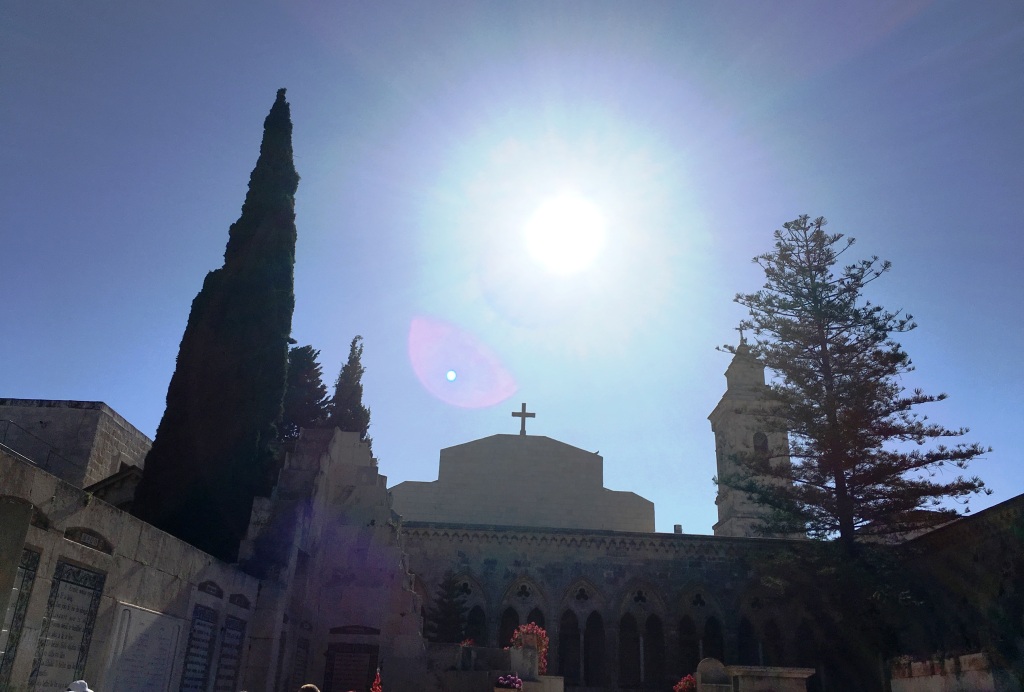
Photo by author at Petra, Jordan, May 2019.

“Some seed fell among thorns, and the thorns grew up and choked it.”

These are the people who thrived a little but eventually the “thorns of the world” choked them that they eventually dried and died.

They are the kind of people we lament and sometimes grieve, wondering what have happened within them that their hearts have suddenly turned away from God and others with their noble causes we used to share with them at the beginning.

Oh, they are well represented in Congress, especially the party-list representatives of various advocacies for the marginalized and less privileged who eventually come out with their true colors and ugly features. Some of them simply stopped thinking and feeling the other persons, blinded with power and wealth selling off their souls completely to any golden calf willing to pay them.

The modern Judas Iscariots.

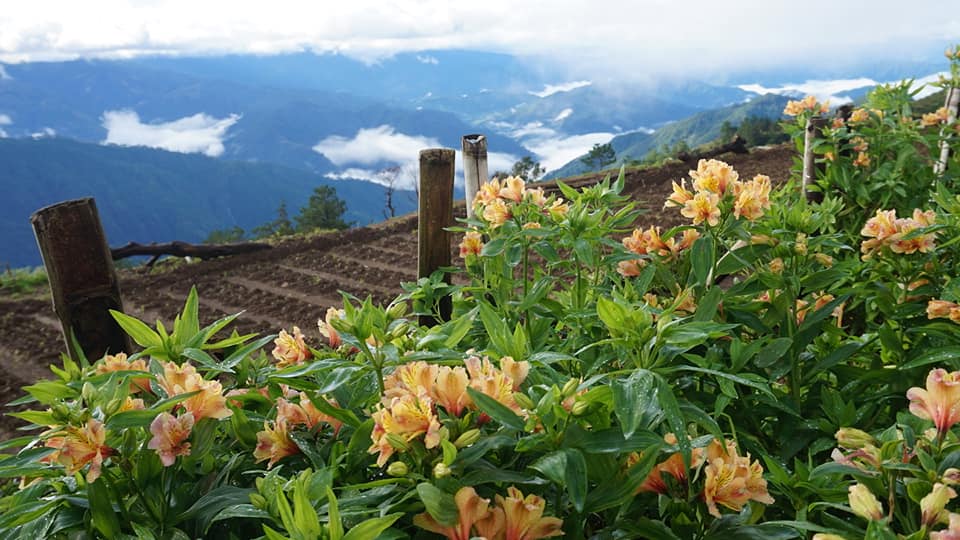
But some seed fell on rich soil, and produced fruit, a hundred or sixty or thirtyfold.

Photo by Ms. Jo Villafuerte, flower farm at Atok, Benguet, 2019.

We now come to the better seeds (because all are good seeds, remember?).

They are the ones who fell on rich soil and produced fruit because they were the ones who willingly gave themselves up to the Sower. They are the ones who let go and let God, those who let themselves “die” and fell on the ground to give way to new life.

They are fruitful, not successful; the former relied on the powers of God, patiently bearing all pains and sufferings while the latter relied on their own powers, own intelligence and even connections that on the surface may seem to have the upper hand but totally empty inside.

The fruitful seeds are those willing to fall and be broken by God according to his divine plan. Many times, what is fruitful to God may be failures to us humans. Being fruitful is not about results and accumulations we have made but what have we become.

Fruitful people are focused on with the future glory to revealed by God through our pains and sufferings as St. Paul reminds us in the second reading today.

Let us not put into waste this good seed sown in us by Jesus Christ, allow it to be cracked open and broken to let the new life within us spring forth and lead us to becoming fruitful. Amen.

A blessed week ahead to everyone!

With God, everything continues; without God, everything ends

The Lord Is My Chef Breakfast Recipe for the Soul by Fr. Nicanor F. Lalog II
Friday, Week XIV, Year II in Ordinary Time, 10 July 2020
Hosea 14:2-10 <*{{{><< <*{{{><< + >><}}}*> >><}}}*> Matthew 10:16-23
Photo by author, Wailing Wall of Jerusalem, May 2019.

Your words today, dear God, hit us hard, very hard especially after we have gravely sinned against you when we have “collapsed through our guilt” (Hosea 14:2). Indeed, without you on our side, everything ends.

And the sad part of this reality is we refuse to listen to you. We have grown so accustomed to our sinful ways, believing more to our selves that we can get away with everything. How foolish, indeed, O Lord that we would not stop until everything collapses and crumbles before us. We have been so drunk with the fleeting pleasures of the world, thinking they are the “real things” we badly need.

Open our eyes, our minds, and our hearts to your love and mercy, Father.

Teach us to be wise to understand your ways and your teachings, your offer of redemption to start anew because with you, everything continues despite some setbacks sometimes.

Let him who is wise understand these things; let him who is prudent know them. Straight are the paths of the Lord, in them the just walk, but sinners stumble in them.

Hosea 14:10

Let us take into our hearts the assurance given us by your Son Jesus Christ not to worry about what to speak or say when persecuted because it is the Holy Spirit who shall be speaking for us, fighting our battles.

Most of all, teach us how to be “shrewd as serpents and simple as doves” (Mt. 10:16) especially in this world and time where sin and lies are glorified and seemingly to be having the “upperhand” in everything, whether in our personal lives or life as a community and a nation.

May we see beyond this world where our lives and stories live on, continuing in you through eternity. Amen.

Photo by author, 2020.

The goodness of God our Father

The Lord Is My Chef Breakfast Recipe for the Soul by Fr. Nicanor F. Lalog II
Thursday, Week XIV, Year II in Ordinary Time, 09 July 2020
Hosea 11:1-4, 8-9 >><}}}*> >><}}}*> >><}}}*> Matthew 10:7-15
Photo by Mr. Jim Marpa, 2019 in Carigara, Leyte.

This is the fourth straight day, O God when you have come to me in the most touching and personal manner through your prophet Hosea. It is so comforting to dwell on the tenderness of your love for me but at the same time so embarrassing too at what I have given back to you.

Thus says the Lord: When Israel was a child I loved him, out of Egypt I called my son. The more I called them, the farther they were from me, sacrificing to the Baals and burning incense to idols. Yet it was I who thought Ephraim to walk, who took them in my arms. I drew them with human cords, with bands of love; I fostered them like one who raises an infant to his cheeks. Yet, though I stooped to feed my child, they did not know I was their healer.

Hosea 11:1-7

These expressions are so true and so lovely, O God! I could feel your personal closeness to me as my Father, feeling all your love and concern for me, teaching me how to walk, taking me into your arms. And most especially that part of being fostered and raised like an infant to a father’s cheeks.

That’s how close you have been to me in many instances but sadly, it is true that the more you called me to stay closer to you, the more I drifted apart from you in sin and evil.

Forgive me, dearest God our Father, in taking you for granted in the same manner we I disregard the love and affection of those closest to me.

And that is where I feel most your personal love for me — when despite my sinfulness and turning away from you, you prefer not to give vent to your “blazing anger” to me because you are God, not human.

In fact, when your Son Jesus Christ came, his first order to his disciples was to cure the sick among us, raise the dead, cleanse lepers and exorcise those possessed by evil spirits. You only have our good always in your mind that we always fail to see or even refuse to accept and believe.

Today, Lord, we ask you for the grace to bask in your goodness and grace! Amen.

Photo by author, Church of the Our Father outside Jerusalem where Jesus taught his disciples the Lord’s Prayer.

When we humans know so much

The Lord Is My Chef Breakfast Recipe for the Soul by Fr. Nicanor F. Lalog II
Tuesday, Week XIV, Year II in Ordinary Time, 07 July 2020
Hosea 8:4-7, 11-13 >><)))*> <*(((><< Matthew 9:32-38
Photo by author, 2019.

Forgive us, O Lord, for the many times we have played gods, knowing too much when in fact we know nothing at all. So often, we never consult you and rely more in our limited understanding and perception of things that in the end lead to more woes and problems for us.

Thus says the Lord: They make kings in Israel, but not by my authority; they established princes, but without my approval. With their silver and gold they made idols for themselves, to their own destruction. Cast away your calf, O Samaria! my wrath is kindled against them. How long will they be unable to attain innocence in Israel? The work of an artisan no god at all; destined for the flames — such is the calf of Samaria! When they sow the wind, they shall reap the whirlwind; the stalk of grain that forms no ear can yield no flour; even if it could, strangers would swallow it.

Hosea 8:4-7

When will we ever learn, Lord?

We always have our own golden calf to worship, turning away from you, the only true God, fount of all life and meaning, grace and fulfillment. We keep doing things according to our plans, each of us desiring to outdo each other, turning away from you.

How sad that whenever you try to intervene and save us or bring us back into the right course of life, we see you more as coming from the devil. Forgive us, Lord, in making it so difficult even for you to be in the right place in our lives for we are so full of ourselves.

And that is really how it is with us: we always feel so troubled and abandoned, like sheep without a shepherd but would never admit it, replacing persons with material things not realizing that life is meant to be lived with people not with things.

Create in us an awareness of your presence, of your love so we may be more attuned with you and the people around us. Amen.

Photo by author of plants growing on rocks at the Holy Land, 2019.

Separations, good and bad…

The Lord Is My Chef Breakfast Recipe for the Soul by Fr. Nicanor F. Lalog II
Monday, Memorial of St. Maria Goretti, Virgin and Martyr, 06 July 2020
Hosea 2:16, 17-18, 21-22 >><)))*> >><)))*> >><)))*> Matthew 9:18-26
Photo by author, procession cross, 2019.

Today, O God our loving Father, your words have invited me to reflect about “separations” — something we are always afraid of, sometimes beyond our control, but one thing for sure, many times needed in life.

Usually, we dread separations because it means being detached, being away from people we love or, situations we are familiar with.

Like with death, the ultimate separation in this life.

While Jesus was speaking, an official came forward, knelt down before him, and said, “My daughter has just died. But come, lay your hand on her, and she will live.” Jesus rose and followed him, and so did his disciples.

Matthew 9:18-19

Death as a separation is most painful when committed in cold blood, like the martyrdom of the young St. Maria Goretti who was only 12 years old when an older neighbor stabbed her to death in their home near Ancona, Italy after she had refused to give in to his sexual advances in 1902.

Death as a separation is painful and sad because it is “the end” in our running story, when we lose somebody so special, so close to us with whom we have special plans and dreams to be together but suddenly gone.

Sickness and diseases also separate us from others.

Often, people regard sickness as a kind of slow death. And here lies its agonizing pain when due to some medical conditions we are separated from others, unable to fully interact and relate with them even if they are near us. Its worst part is how we can only look from afar at the activities and things going on among our brothers and sisters because we are bedridden, stuck on a wheelchair, disabled, or sometimes deep inside us cannot fully integrate because of the sickness within like bleeding or some form of cancer or deafness.

A woman suffering hemorrhages for twelve years came up behind him and touched the tassel on his cloak. She said to herself, “If only I can touch his cloak, I shall be cured.”

Matthew 9:20-21

Thank you for sending us your Son Jesus Christ who have not only come to lead us to life eternal but also to heal our sickness and mediate in bridging the gaps among us and within us.

By giving himself on the Cross, Jesus has made us whole again, brought us together in unity both in time and eternity for nothing can now separate us from you and from others through his immense love poured upon his death.

Photo by author, Petra in Jordan, 2019.

Give us the grace, O Lord of heaven and earth, to seek and follow your voice always, that sometimes, we on our own separate from our daily routines, from others to be one with you in the desert so we may know you more, love you more and follow you more.

Thus says the Lord: I will allure her; I will lead her into the desert and speak to her heart. She shall respond there as in the days of her youth, when she came up from the land of Egypt. I will espouse you in fidelity, and you shall know the Lord.

Hosea 2:16, 17, 22

There are still other forms of separations we experience in life, both good and bad.

Grant us the grace of courage, dear God our Father, to face every separation in life we experience, whether good or bad, permanent or temporary, our choice or imposed upon us — always trusting in the uniting power of your Son Jesus Christ in the Holy Spirit. Amen.

All in God’s hands

The Lord Is My Chef Breakfast Recipe for the Soul by Fr. Nicanor F. Lalog II
Friday, Week XII, Year II in Ordinary Time, 26 June 2020
2 Kings 25:1-12 >>)))*> >>)))*> >>)))*> Matthew 8:1-4
Photo by author, Assumption Sabbath, Baguio City, 2019.

When Jesus came down from the mountain, great crowds followed him. And then a leper approached, did him homage, and said, “Lord, if you wish, you can make me clean.” He stretched out his hand, touched him, and said, “I will do it. Be made clean.” His leprosy was cleansed immediately.

Matthew 8:1-3

Nothing happens in this life without you fully knowing all about it, Lord God almighty. From the air that we breathe, to the rising and the setting of the sun, to everything —- you fully know them all, Lord and you choose to let them work in our favor despite our turning away from you in sins.

Praise and glory to you, God, and we thank you for your goodness to continue to will what is best for us despite our sinfulness.

May we keep this always in our minds and hearts that nothing escapes you; that sometimes, you just let us go on with our lives so we can finally have a taste of what we choose in this life.

And we seem to never ever learn as we continue to be proud before you, refusing to be humble that until the end, we are forced by our wrong and sinful decisions to eat us up, to shame us like Jerusalem that was almost annihilated by the Babylonians after her fall.

You never punish your people; you only will what is good for us — to be healed, to be cleansed, to be saved in Jesus Christ your Son!

May we always come to you, Lord, asking your will and plans for us, as we readily submit to you. Amen.

Lobby of the Assumption Sabbath in Baguio City, 2019.

Nasa Diyos ang awa, nasa tao ang gawa

Lawiswis ng Salita ni P. Nicanor F. Lalog II, Ika-23 ng Hunyo 2020
Larawan kuha ng may-akda sa Marcos Highway pababa ng Baguio, 2019.
Isang kasabihang
ating kinalakhan
at pinananaligan
dahil sa katotohan:
"Nasa Diyos ang awa,
nasa tao ang gawa."
Sa paglipas ng panahon
napansin ko na mayrooon
tila kulang, hindi sang-ayon
tuon at tugon sa nilalayon
nitong kasabihang kinamulatan noon
na kailangang liwanagin ngayon.
Larawan kuha ng may-akda, Katedral ng Malolos, 2019.
Paano kung ang tao
gumawa nang gumawa
sa buong pag-asa
sa kanya ang Diyos ay maaawa
gayong kanyang mga ginagawa
hindi naman sang-ayon ang Bathala?
Kay rami nang binuhos na panahon
lakas at talino ngunit hindi nagkagayon
planong nilalayon
kaya luhaang bubulong
luluhod at didipa sa Panginoon
tapunan siya ng awa sa madaling panahon.
Larawan kuha ng may-akda, Tam-Awan, Baguio City, 2019.
Hindi maikakaila 
walang hindi magagawa
ang Mabathalang Awa ng Diyos
ngunit ito nga iyong hindi nating alintana
sa marami nating ginawa
ang Diyos ay nabale-wala.
Kaya nga hindi ba dapat
bago pa man tao ay gumawa
sa Diyos maunang humingi ng Kanyang awa
upang mabatid ano ibig Niyang ipagawa?
Ito ang diwa nitong ating kasabihan kung saan nauuna
tuwina "nasa Diyos ang awa", saka pa lamang "nasa tao ang gawa"! 

When do we really call on God?

The Lord Is My Chef Breakfast Recipe for the Soul by Fr. Nicanor F. Lalog II
Tuesday, Week XII, Year II in Ordinary Time, 23 June 2020
2 Kings 19:9-11, 14-21, 31-35, 36 ><)))*> <*(((>< Matthew 7:6, 12-14
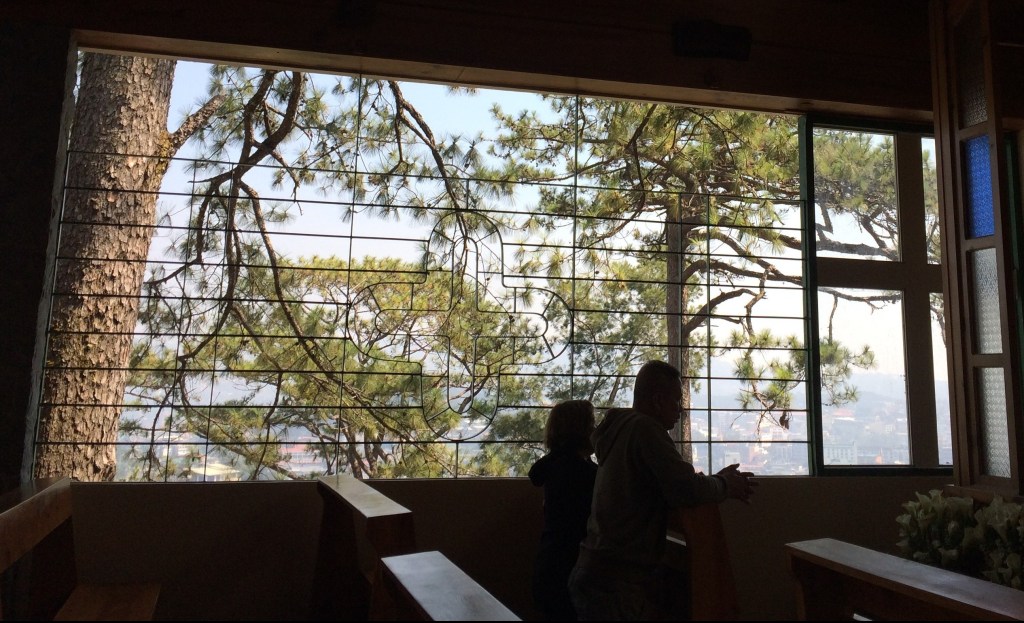
Photo by author, Our Lady of Lourdes Chapel, the Grotto, Baguio City, 2019.

God our loving Father, I have been praying to you for so long, in fact almost in my entire life. But as I prayed over your words for today, it just dawned upon me that every “existential question”: when do I really call on you?

The attitude of your King in Jerusalem struck me while praying, wondering if I have the same attitude of having you first of all when things are not going good in my life.

Hezekiah took the letter from the hand of the messengers and read it; then he went up to the temple of the Lord, and spreading it out before him, he prayed in the Lord’s presence: “O Lord, God of Israel, enthroned upon the cherubim! You alone are God over all the kingdoms of the earth… Therefore, O Lord, our God, save us from the power of this man, that all the kingdoms of the earth may know that you alone, O Lord, are God.”

2 Kings 19:14-15, 19

What a deep faith and intimate relationship with you, Lord, by Hezekiah! He went straight up to you, even presenting to you the letter of the Assyrian king threatening to conquer Jerusalem at that time. He did not mind at all the warnings about the strength and power of the Assyrians because he only had you, Lord, in his mind and in his heart.

So often, Lord, I only come to you after I have exhausted my mind thinking about my problems and situations in life; I come to you when I can no longer find solutions; worst, I come to you after I have tried everything and had failed.

Forgive me, Father, when I only think of you as a last resort — instead of being my first always!

Maybe, that is because before ever coming to you, calling on you, Lord, I try doing things first on my own that is always be easy and quick. I have no patience of waiting and of going through sufferings and inconvenience especially through paths and doors.

Jesus said to his disciples: “Enter through the narrow gate; for the gae is wide and the road broad that leads to destruction, and those who enter through it are many. How narrow the gate and constricted the road that leads to life. All those who find it are few.”

Matthew 7:13-14

Dearest Jesus Christ, you have come among us to bring us closest to the Father and yet we continue to remain far from him. Give us the grace today to be more intimate with God our Father so we may truly be centered on him in life, having him as our personal “default” in every situation, whether good or bad. Amen.

Photo by author, Tam-Awan, Baguio City, 2019.

Jesus is here, have no fear

The Lord Is My Chef Sunday Recipe for the Soul by Fr. Nicanor F. Lalog II
Thirteenth Sunday in Ordinary Time, Year A, 21 June 2020
Jeremiah 20:10-13 ><)))*> Romans 5:12-15 ><)))*> Matthew 10:26-33
Photo by author at Pulilan, Bulacan, January 2020.

Finally, today we can truly feel the Ordinary Time as we celebrate Sunday in shades of green with a new sequence of readings from the gospel of St. Matthew who will guide us in our journey with Jesus this year until the Solemnity of Christ the King in November.

Set after the naming of the Twelve Apostles who were sent to search for the “lost sheep of Israel”, the Lord now warns them of persecutions and dangers; hence, today until the next two Sundays, Christ will encourage his disciples including us to take on the challenges of his mission, assuring us of his loving presence and protection.

Notice how the Lord tells us three times to be not afraid of the mission:

Jesus said to the Twelve: “Fear no one… And do not be afraid of those who kill the body but cannot kill the soul; rather, be afraid of the one who can destroy both soul and body in Gehenna… So do not be afraid; you are worth more than many sparrows.”

Matthew 10:26, 28, 31
Photo by Mr. Jim Marpa, 2018.

The problem with our fears

Christ’s words today suit us so perfectly in this time of the COVID-19 pandemic made worst by the growing social unrests not only in our country but also elsewhere in the world that proves how the Lord’s mission remains unfulfilled in us.

Almost everywhere we hear reports of continued oppression of peoples in various forms of discrimination, disrespect and injustices.

But we do not need to look far to do our mission. We start with ourselves first — for we are the “lost sheep of Israel” in so many ways. All oppression and injustices going on around us are the reflections of what is within us that often result from our fears.

So often, the many fears within us push us to be selfish, forgetting others in the process. And that is when we start hating each other, creating this vicious circle of sufferings as the Jedi Master Yoda warned Anakin Skywalker in “Star Wars Episode One: The Phantom Menace.”

From Google.

We all have fears. It is normal to feel afraid especially when threatened by a grave danger or threat to life.

Being brave, having courage does not mean having no fears; on the contrary, courage is facing one’s fears in life. Cowardice, on the other hand, is refusal to face our fears.

Jesus is asking us today to face our fears with him and in him so we can be free to follow him in his mission.

Facing our fears in Jesus Christ

What are our fears that lead us to anger and hate, that immobilize us to reach out to God and others? Let us examine them in the light of Christ’s reassuring words this Sunday.

“Fear no one. Nothing is concealed that will not be revealed, nor secret that will not be known. What I say to you in darkness, speak in the light; what you hear whispered, proclaim on the housetops.”

Matthew 10:26-27
Photo by author, 2019.

Fear of not being loved and appreciated

One of the things I fear most is not being loved and appreciated, of being neglected and taken for granted.

It is a fear akin with low self-esteem or self-worth that make me afraid of others I deem as better and superior than me.

There are many contributing factors to this fear, mostly not of our own making like growing up in a very strict environment where we are not able to measure up to the expectations of those around us. Sometimes it is due to traumatic experiences that have truly hurt us inside and outside.

As I grew up meeting so many people from various walks of life, including those I looked up and admire including some personalities, I have realized that indeed nobody is perfect. No one has the monopoly of every good thing — looks and intelligence, wealth and health. We all need one another, and we are also needed. And loved as well as appreciated too!

We are all broken and lost, wounded and hurt; no need to fear anyone. What is most important is to always remember God loves us very much — no matter what.

At night before we sleep, do not just count your sins and failures; think also of the good things you have done, people you have helped and made happy. Listen to God thanking you for being so nice with someone. That is what Jesus is telling us to “speak in light” what he said to you in darkness!

Every morning when you wake up, be silent and still, pray and little, listen to God whispering to you the words “I love you… I believe in you” to inspire your for the brand new day. These are the words Jesus is asking you to “proclaim on the housetops”.

Forget those pains inflicted on us by others, in words or in deeds — they must be hurting too, feeling more unloved and unappreciated than us, more fearful than us!

Photo by Juhasz Imre on Pexels.com

Afraid of getting hurt, physically and emotionally

Another fear I always have is being hurt because I might not be able to take or absorb the pains. Worst, adjust to changes and disturbances that may result.

I was a very sickly child when growing up that I dreaded injections and other medical procedures. Aside from getting hurt, I feared that things could never be the same again, altering or disturbing what I have been used to.

But, as I aged fighting many battles in life, enduring so many pains and hurts with some help from family and friends, I have learned that pain is part of growing up. In fact, growing up becomes nicer with more pains and hurts that make us stronger and wiser with the many lessons we can learn. Most of all, pains and hurts have opened up many doorways to new beginnings that made me grow and mature as a person and as a priest.

Indeed, as the Lord had told us, do not be afraid of those who can kill the body but not the soul. It is what is inside that makes us who we really are. Replace those fears with Jesus and dare to get hurt and bruised that may destroy you outside but stronger inside.

Photo by Mr. Jim Marpa, 2019.

Fear of getting lost, of being alone.

This fear has recurred in me lately during this quarantine period when I am all by myself in my parish with no one to talk to or share whatever may be inside me.

Sometimes it is so tempting to just vanish and die than be lost and alone!

Recently I celebrated a funeral Mass for a young man who committed suicide: he came from the Visayas last February to try his luck here in our barrio to work as a helper in a small candy shop. With the imposition of lockdown in mid-March, he lost his job and had to stay with his cousins who were also laid off from work. The teenager grew homesick, getting depressed later that no amount of alcohol of their nightly drinking sessions could give him a sense of mission that he decided to hang himself on a tree while his drinking companions were all drunk.

Sad that nobody had reminded him of his mission in life that he decided to just end it all. He had forgotten not only his dreams and mission but also his parents and six other siblings in the province looking up to him.

Even if we are in our worst situations in life, for as long as we are alive, still breathing, may we never lose that sense of mission from God because that means we are important, that God believes in us in entrusting us with a mission. Truly, we are worth more than a thousand sparrows that God takes care of.

From QuoteMaster.com

Experiencing God in the midst of trials

Life is like a rollercoaster: it is something we all fear but we still keep on riding because it is so fulfilling, very liberating, so exciting. It knocks out all the fears in us, making us so aware of life, of being alive.

That was the experience of the Prophet Jeremiah in the first reading: he would always complain to God of his own inadequacies, especially his many fears for the mission and yet, he could not let go of God’s call because he is so in love with him! He could not resist God like a rollercoaster.

I really hoped the lectionary had included the first three verses to the start of our first reading today:

You duped me, O Lord, and I let myself be duped; you were too strong for me, and you triumphed. All the day I am an object of laughter; everyone mocks me. Whenever I speak, I must cry out, violence and outrage is my message; The word of the Lord has brought me derision and reproach all the day. I say to myself, I will not mention him, I will speak in his name no more. But then it becomes like fire burning in my heart, imprisoned in my bones; I grow weary holding it in, I cannot endure it.

Jeremiah 20:7-9


Jeremiah was a timid man who was also hypersensitive; yet, God called him to an impossible mission. And despite a long process of purifications marked by arrests, imprisonment and public humiliations, Jeremiah remained faithful to his mission to God that later cost his life. Eventually, the more he became great after his death that he is regarded a major prophet in all three major religions of the world, Judaism, Christianity, and Islam.

That is the joy of staying in love with God who is like a rollercoaster: he “seduces” us to come to him and then “scares” us, sometimes “hurts” only in the end to surprise us with greater things beyond our imaginations.

We come to experience God most and closest in darkness and trials where he is so real as another person to us. The key is to let go of our fears in Jesus Christ who was no stranger too to fearful situations.

It is nice to know that the greatest and holiest men and women of God were all like us — people so fearful yet brave enough to face their fears in Christ who never fails to provide us with the courage and strength needed in fulfilling our mission.

A blessed Sunday to all!

Mahal na Puso ni Hesus para sa daigdig na wala nang puso

Lawiswis ng Salita ni P. Nicanor F. Lalog II, Ika-19 ng Hunyo 2020
Napakahirap isipin
masakit tanggapin
sinapit maraming 
kababayan natin
na hanggang ngayon
hindi pa rin nakakauwi
upang sariling pamilya'y
makapiling.
Pinakamasakit nilang
dinanas na sila'y ituring
kaiba sa atin; matagal na 
hindi pinansin
walang nakabatid
sa kanilang mga hinaing
hanggang sa bumantad na lamang
sila sa ating paningin sa TV screen.
Matay ko mang isipin
sa panahon ito ng COVID-19
marami pa rin sa atin
hindi lang sumpungin
pag-uugali'y karimarimarim
salita'y matatalim
nakakasakit ng damdamin
wala na bang buting angkin?
Sa panahong ito ng pandemya
na ang banta ng kamatayan ay tunay na tunay
kabiyak o kapatid, kaibigan o kasamahan
o sino pa man ay tila nalilimutang
kapwa ring nahihirapan, nabibigatan
sa halip na tulungan, iniiwanan;
sa halip na kalooban ay pagaanin
ito'y sinasaktan pati na rin katawan.
Kapistahan ng Kamahal-Mahalang Puso ni Hesus; larawan kuha ni G. Gelo Nicolas Carpio, 19 Hunyo 2020.
Kaya aking dalangin
sana'y tupdin ng Panginoong Hesus 
ating hiling gawin ang mga puso natin
katulad ng kanyang Puso, 
maamo at mahabagin
puno ng kanyang pag-ibig
bawat tibok ay tigib
ng kabutihan Niyang angkin.
Mabuti pa ang puno ng saging
madalas na biro natin: may puso kesa atin!
Sana'y alisin Mo, Hesus, pusong bato namin
palitan ng pusong laman sa Iyo nakalaan
huwag naming panghinayangang kabutihan Mo'y ipamigay
huwag rin kaming maghintay ng Iyong sukling ibibigay
bagkus ay magmahal nang magmahal
hanggang kami'y mamatay at sa Iyong piling mahimlay.

*Mga larawan sa “collage” sa itaas ay mula kay G. Raffy Tima ng GMA News; ang nasa gitna na larawang ng imaheng bato ni Hesus ay mula Google.