Jesus our living bread, life of the world

The Lord Is My Chef Sunday Recipe for the Soul by Fr. Nicanor F. Lalog II
Solemnity of the Most Holy Body and Blood of Jesus Christ, Cycle A, 14 June 2020
Deuteronomy 8:2-3, 14-16 )))+((( 1 Corinthians 10:16-17 )))+((( John 6:51-58
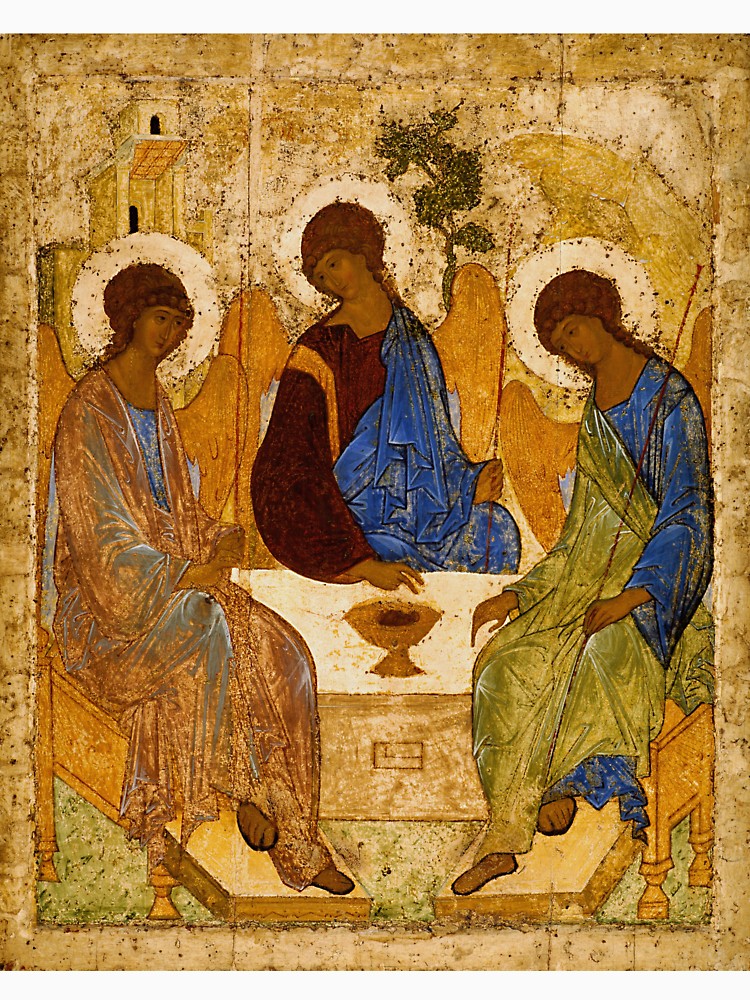
An icon of the Holy Trinity by Russian painter Anton Rublev. Photo from wikipedia.

Above is the beautiful 15th century icon of the Blessed Trinity by Russian painter Anton Rublev. It was based on the Genesis story of God (chapter 18) visiting Abraham at Mamre like angels sharing a meal while in deep conversations, indicating their relationships.

The icon masterfully portrays God as a Trinity of Persons relating with one another in love symbolized by the Eucharistic meal they share.

Most interesting like in most icons is how in this painting the viewer gets involved with the dialogue of the Trinity, thus, becoming the fourth person in the icon present with the Father, the Son and the Holy Spirit like Abraham at Mamre!

I am presenting this icon to you my dear readers and followers to show you the amazing flow of our liturgy these two Sundays as we resumed Ordinary Time on the Monday after Pentecost last month: From the highest truth in our teachings of One God in Three Persons last Sunday, today we have this Solemnity of the Most Holy Body and Blood of Christ to remind us and experience anew that this God we worship and adore is present among us, relating with us in the most personal manner.

Change in name, change of emphasis

Originally known as Corpus Christi or Body of Christ, today’s solemnity was renamed following Vatican II’s reform of the liturgy to give more emphasis on the celebration of the Holy Eucharist that the Preface used before the Consecration is that of Holy Thursday.

Holy Hour in our Parish, Sacred Heart Novena 2020

In the old tradition, focus was more on the Blessed Sacrament – of Jesus Christ reserved in the tabernacle and presented to the faithful for adoration as the Body of Christ, that is, Corpus Christi.

However, when Vatican II changed its name into the “Solemnity of the Most Holy Body and Blood of Jesus Christ”, there was something deeper than the change of name.

The new name challenges us to see the deeper reality of the Holy Eucharist: more than spending time praying before the Blessed Sacrament – though it is good – we are demanded as followers of Jesus Christ to be present like him with others.

Without disregarding the importance of the Blessed Sacrament that have seen a renewed interest among people in this time of corona while churches are closed, Vatican II’s shift in emphasis dares to challenge us disciples of Christ to emulate him in allowing ourselves to be broken for others, to be poured out, offered and shared especially in this time of crisis.

It is in our being broken like the Body of Christ, and poured out like his Blood do we really live the paschal mystery.

Jesus said to the Jewish crowds: “I am the living bread that came down from heaven; whoever eats this bread will live forever; and the bread that I will give is my flesh for the life of the world.” The Jews quarreled among themselves, saying, “How can this man give us his flesh to eat?” Jesus said to them, “Amen, amen, I say to you, unless you eat the flesh of the Son of Man and drink his blood, you do not have life within you.”

John 6:51-53
Photo by Pixabay on Pexels.com

Jesus is the living bread, the life of the world

Our gospel today is not from the Last Supper as we might expect; instead, it is taken from the “Bread of Life discourse” found only in St. John’s gospel which took place after Jesus had fed more than 5000 people in the wilderness from just five loaves of bread and two pieces of fish.

It was a very decisive moment in the ministry of Jesus as far as St. John was concerned; in fact, he refused to call the feeding of 5000 as a “miracle” but as a “sign” that Jesus is the Christ, the awaited Messiah.

Here, we have Jesus speaking clearly, no matter how difficult it may be for his listeners and even for us.

And we wonder, why he spoke that way?

Even today in the Holy Mass, considering the mixed crowd we have in every celebration, the priest is obliged to speak clearly and distinctly the words of Christ at the Last Supper similar to his bread of life discourse, “Take this, all of you and eat it. This is my Body which will be given up for you.”

Jesus always speaks the truth, he always tells us what is true and he never misleads us.

Unlike us when we say something and mean another thing. We always have to speak in ways that has to be deciphered because we really do not mean what we say. Or we are afraid of saying something else because we prefer to please people than stand by what is true.

But not the Lord! From that day until now, Jesus says the same thing and means always the same, that he is always with us, in us, and among us.

And he has proven then and now, time and time again most especially in our personal lives, that indeed Jesus was sent down from heaven as the “living bread” because he is the “life of the world”.

More than the bread from heaven called manna sent by God to the Israelites during their journey in the wilderness into the Promised Land (first reading), Jesus is the bread who sustains us in our new “exodus” and journey into the Father’s house, into fulfillment.

Photo by Mr. Raffy Tima of GMA-7 News of the plight of stranded people opting to wait at an underpass nearest the airport in their desire to get home

Life an Exodus with Jesus leading us

This pandemic and life under quarantine is an exodus in itself calling us to go back to God, to rely solely in him for he alone can save us. That is why he gave us his only Son, Jesus Christ who in turn gave himself totally, Body and Blood to sustain us in this journey or exodus.

Every exodus is always painful but filled with grace because God is most present with us.

That is why we join Masses on television or the internet while others dare to go to churches for the actual celebration of Mass to receive Holy Communion.

We are convinced that Jesus is sustaining us, nourishing us, raising us, helping us, inspiring us in this time of crisis.

And that is why the more we need to pray and even celebrate the Mass because the more we need Jesus Christ as food and drink in this difficult journey.

We can all feel the stress and pressures of the difficulties and uncertainties of this time. Making things worst than the financial and physical sufferings we all go through are the psychological burdens we silently bear that unfortunately others do not seem to think of or even realize.

Mang Dodong who was held for 30 days for not having a quarantine pass while buying fish in Navotas. Photo from GMA News TV.

How sad when others think only of themselves of getting tired, of being hurt, of being misunderstood that they do not care at all with the feelings and well being of those around them like our callous politicians and officials in government and the police.

Sometimes, watching the news can be so depressing when we see all the troubles and sufferings our brothers and sisters have to go through like those stranded in Metro Manila, those separated from their loved ones, those subjected to discrimination because of the COVID-19, those living alone, those who have lost family members and friends, those who have lost many opportunities in life.

But at the same time, the more we are challenged by these sufferings of our people to be like Jesus, to be the living bread, to share with them Jesus who is our very life.

Let us heed the call of St. Paul in the second reading to be one with our brothers and sisters in Jesus Christ in their brokenness, in their sufferings by being present to them in love and kindness, in being more understanding.

We are the Body and Blood of Jesus Christ, his very presence in this world that continues to disregard him, that until now tries to live without him.

May we not fall into that temptation and sin that is largely the reason behind this pandemic: modern man has forgotten that no matter what is our situation in life, we remain poor before God who alone can fulfill our deepest desires and longings.

Despite the many difficulties we face especially with the continued closure of houses of worship, let us continue to work and find creative means in sharing Jesus Christ with others, in coming to him and receiving him in the Holy Communion.

Only Jesus can help us through this pandemic.

In fact, he was the first to die on the Cross by giving us his Body and Blood so that we may live and share his gift of life with others.

A blessed week ahead of you!

Photo by our parish choir member Gelo Nicolas Carpio, our Church at sunset last Sunday.

When we are lost

The Lord Is My Chef Breakfast Recipe for the Soul by Fr. Nicanor F. Lalog II
Saturday, Memorial of St. Anthony of Padua, 13 June 2020
1 Kings 19:19-21 <*(((>< ><)))*> <*(((>< ><)))*> Matthew 5:33-37
Photo by Mr. Jim Marpa, 2019

Glory and praise to you, O Lord Jesus Christ, on this most joyous feast of St. Anthony de Padua, our patron saint for lost items like keys and money. Nobody really knows for sure why he is the one invoked upon whenever we lose something.

But, one thing so beautiful about this most humble saint of great intelligence and gift of speaking is how he leads us back to you, O Lord Jesus and to our loving Father with his teachings and homilies.

He reminds us in his writings to be always be filled and guided by the Holy Spirit in our speech and action.

The man who is filled with the Holy Spirit speaks in different languages. These different languages are different ways of witnessing to Christ, such as humility, poverty, patience and obedience; we speak in those languages when we reveal in ourselves these virtues to others. Actions speak louder than words; let your words teach and your actions speech.

From a sermon by St. Antony of Padua (Office of Readings, June 13)

Most of the time, we are lost because we have become empty of you, Lord, and filled with our very selves, with our ego and pride, insisting on what we know, what we want.

From Pinterest.com

Most of the time, Lord, we are lost that we cannot “mean ‘yes’ when we say ‘yes’, and mean ‘no’ when we say ‘no'” as you reminded us in the gospel today.

Give us the courage like Elisha who accepted God’s call to replace the Prophet Elijah by slaughtering his 12 oxen and cooking them with his plows and yokes to feed the people as he bid goodbye to family and friends for his mission.

In this time of pandemic and many other social problems, we pray for those who feel lost in life without any sense of directions, those who have lost their loved ones to COVID-19 and other illnesses, those who have lost their jobs and means of livelihood, those who have lost their faith — for all of us lost, help us find our way back to you, Lord! Amen.

St. Anthony of Padua, pray for us!

Why are you here?

The Lord Is My Chef Breakfast Recipe for the Soul by Fr. Nicanor F. Lalog II
Friday, Week X in Ordinary Time, Year II, 12 June 2020
1 Kings 19:9, 11-16 ><)))*> ><)))*> ><)))*> ><)))*> Matthew 5:27-32
Photo by author, sunrise at Camp John Hay, Baguio City, November 2018.

At the mountain of the God, Horeb, Elijah came to a cave, where he took shelter… After the fire, there was a tiny whispering sound. When he heard this, Elijah hid his face in his cloak and went and stood at the entrance of the cave. A voice said to him, “Elijah, why are you here?” He replied, “I have been most zealous for the Lord , the God of hosts. But the children of Israel have forsaken your covenant, torn down your altars, and put your prophets to the sword. I alone am left, and they seek to take my life.”

1 Kings 19:9, 12b-14

The rainy season has started, Lord, and we have covered almost half of the year, making it through more than two months of quarantine period and here we are, before you… tired and exhausted, a bit lost, and frankly, your question to Elijah echoes within, stirring our inmost being.

Why are you here?

It is both a mystery and a gift why we are here.

Some of us have lost family and friends these past six months, some to the dreaded disease of COVID-19. Many of us have lost money and time due to the pandemic. This early, 2020 is practically gone for many of us.

Many of us are just awaiting for you, to your tiny voice to tell us what is next.

That is why we are here, Lord.

Like Elijah, we await your coming.

Unlike before when we await dates and occasions, now, we await you, O God for you alone are sure and guaranteed in coming.

Photo from NCCA.

On this day, Lord, we also celebrate our Independence Day that has become more of a festivity than a reality. Forgive us for wasting, for throwing away our country to undeserving people who have all been puppets of foreign powers with same personal interests.

Yet, one reason why we are here is also because we believe we can change our country for the best.

Help us, O God, by cleansing our hearts, purifying our desires and motivations so that we may be more faithful to you.

And that is why we are here, like Elijah.

Awaiting for you.

Please do come quickly!

Marana tha!

Amen.

St. Paul in time of COVID-19: need for pastoral communication

Quiet Storm by Fr. Nicanor F. Lalog II, 11 June 2020
Painting by Raphael (1515) of St. Paul preaching at Areopagus in Athens, Greece. From wikipedia.

With houses of worship still closed despite the opening of most business establishments, here is the final installment of reflection in our series on how the life and teachings of St. Paul may help us in our ministry during this time of COVID-19 amid a perceived government “persecution” of the Catholic Church.

There is no doubt that like during his time, St. Paul would be using modern means of communication to preach the Gospel of Jesus Christ especially in this most trying time of our history, using the internet as the new “Areopagus” with social media in particular.

Then Paul stood up at the Areopagus and said: “You Athenians, I see that in every respect you are very religious. For as I walked around looking carefully at your shrines, I even discovered an altar inscribed, ‘To An Unknown God.’ What therefore you unknowingly worship, I proclaim to you. The God who made the world and all that is in it…”

Acts of the Apostles 17:22-24

Social Communication

Perhaps before we go into our reflection, it is imperative especially for bishops and priests to be reminded anew of some important terms in communications; this is more than about names or nomenclature because for as long these terms of communications are not clear with us, all our evangelization efforts would be askewed as it is now showing with an explosion of online Masses and other religious celebrations.

First priority is to stop using the words “mass media” and even “social media” in our church communications because these are very limited in scope and context.

It is important to note that in the 2000-year history of the Church, it was only in Vatican II that we have issued a conciliar document on communication wherein the Fathers also introduced the term social communication as a new name for communications in the Church.

How sad that there are still bishops and priests using the terms “mass media” or “media” and lately “social media” when more than 50 years ago the Church through the inspiration of the Holy Spirit coined social communication to refer to “the communication of and in human society including all the ways and means used in this process” (Fr. Franz-Josef Eilers, svd, 2009 BISCOM-FABC, Bangkok).

Social communication is a very prophetic term because it is theological and rooted in God who is communication himself, sharing with us his power to communicate so we may also communicate with him and with others. Most of all, God continues to communicate with us and from that lies our task as a Church to communicate him to the world.

This is the reason why we have to keep on using this term “social communication” in our Church communications to keep us Christocentric, meaning, every communication in the Church and by the Church has Jesus as Message.

And that is essentially the kind of communication process followed by St. Paul the Apostle. In fact, reviewing his letters and the various accounts about him would show us that early, this great apostle has been into social communication, specifically “pastoral communication” that is an emerging field in Church communications whose realities have long been espoused by St. Paul himself.

Pastoral Communication

Pastoral communication is anchored on Jesus Christ, the “Good Shepherd” who sets himself as the norm and standard of our Church communications.

Jesus said, “I am the good shepherd. A good shepherd lays down his life for the sheep… I am the good shepherd, and I know mine and mine know me, just as the Father knows me and I know the Father; and I will lay down my life for the sheep.”

John 10:11, 14-15
Photo by Pixabay on Pexels.com

St. Paul has always been very clear with this in all his communications that towards the end of his life, he had beautifully written his disciple this wonderful piece:

Beloved: I charge you in the presence of God and of Christ Jesus, who will judge the living and the dead, and by his appearing and his kingly power: proclaim the word; per persistent whether it is convenient or inconvenient… For I am already being poured out like a libation, and the time of my departure is at hand. I have competed well; I have finished the race; I have kept the faith.”

2 Timothy 4:1-2, 6-7

Communicating Jesus Christ is always about self-sacrifice, about giving of one’s self like our Lord and Master. In whatever form of communication we use, it is always a call to “enflesh” the Word. In short, communication is spirituality that indicates the kind of relationship we have with God. How we reflect that relationship with God in words and in deeds, in our clothings and everything is communication.

Like St. Paul, he was able to offer himself wholly to God as reflected in his writings and preaching because he was more concerned with the needs of the flock and not with his own needs.

And this is where I sadly feel our bishops sorely absent and silent except for just two, Lingayen-Dagupan’s Archbishop Soc Villegas and Manila’s Apostolic Administrator Bishop Broderick Pabillo.

Where are the other bishops?

Business establishments are almost all opening, even dine-in restaurants and yet, until now for no valid reason, the government continues to ban religious mass gatherings except for maximum of ten persons in areas under GCQ.

When are the bishops and priests going to speak out against this and open the churches so people may be spiritually nourished?

What an auspicious time for the clergy and hierarchy to speak against this continued closure of churches as we are on the eve of our 500th year of Christianization when under serious persecution. Has the Church grown timid in the face of an unfriendly government?

Worst are some priests who seem to follow more the secular world in their digital presence but empty of Jesus Christ, concerned only with popularity measured in number of likes and shares as well as followers.

Many of us have become more of personalities than as priests and ministers, unconsciously trying to be more popular than the Lord himself that we no longer have sacrifice of the Mass but a variety show, complete with sound effects and digital characters, some wit dance numbers and raffles!

When God is displaced, then our love is misplaced, then, we lose all communications too.

Communication is more than the expression of ideas and the indication of emotion. At its most profound level it is the giving of self in love. Christ’s communication was, in fact, spirit and life.  In the institution of the Holy Eucharist, Christ gave us the most perfect and most intimate form of communion between God and man possible in this life, and, out of this, the deepest possible unity between men. Further, Christ communicated to us His life-giving Spirit, who brings all men together in unity. The Church is Christ’s Mystical Body, the hidden completion of Christ Glorified who “fills the whole creation”.  As a result we move, within the Church and with the help of the word and the sacraments, towards the hope of that last unity where “God will be all in all”. 

Communio et Progressio # 11
From Google.

Problem with online Masses and religion

Every communication presupposes presence. That is essentially the meaning of God’s “I AM” in the burning bush to Moses and the “I AM” declarations by Jesus in the New Testament, especially in the fourth gospel where we find him saying “I am the good shepherd”.

Even St. Paul in his letters always began with his standard salutations like “I, Paul…” to indicate his very presence among his “parishioners”.

However, in the digital media, presence is not so essential and can even be faked both ways, either by being “taped” or “replayed” by viewers.

And there lies the great danger of online Masses and other celebrations: whether we like or not, online religious celebrations give the impressions on people that God is a “consummable”, a product or a show that can be had when most convenient to us like video on demand or the streamed shows of Netflix.

That is why we have to open churches soon to stop these online Masses except for those in the Cathedrals and in existence long before COVID-19 that cater to the needs of the sick and elderly in their homes.

Pope Francis has always been clear with this, stressing that these online Masses and religious celebrations are very temporary due to the extraordinary situation brought about by the pandemic.

From Pinterest/Aleteia.

Imagine the problem at Corinth that reached St. Paul’s attention, prompting him to write them another letter to reprimand them but at the same time to encourage them to mend their ways. It was a problem of abusing the Eucharist when St. Paul was no longer with them.

It is the same thing happening in many of our online Masses that have become variety shows to impress viewers. Long before we got into this lockdown, many priests have crossed the boundaries without knowing they have made fools of themselves as they rely more on “likes”, on being viral or trending, dishing out shallow reflections covered with cute song numbers, litany of greetings on air, and so many other inanities that Jesus is lost in the process.

Unfortunately, many laypeople are now also having their own digital preaching or evangelization with their own “productions” taking their cue from their showbiz pastors.

If St. Paul were with us today, he would surely write again to express his dismay at the people seeking more of entertainment than having Jesus Christ.

“But I am afraid that, as the serpent deceived Eve by his cunning, your thoughts may be corrupted from a sincere and pure commitment to Christ. For I think that I am not in any way inferior to these “superapostles”. Even if I am untrained in speaking, I am not so in knowledge; in every way we have made this plain to you in all things.

2 Corinthians 11:3, 5-6

Church communication is Jesus Christ and his Cross as St. Paul reminds us in his writings (1Cor.15:1-3); it is never about techniques or gadgets.

Though we need to be present online, the cutting edge of real communication remains in pastoral communication that means being present with others who need us most including those without internet access, witnessing to the values of Jesus in relating with people, bringing people together into a communion and helping them find answers in their search for meaning and directions in life, in making the right choices and in living their convictions and faith.

What we are speaking of are real people, persons and lives that matter so much, more precious than goods and commodities.

Let us not fall into the trappings of this “media revolution” that made one futurologist describe our contemporary society as

Technologically Intoxicated Zone defined by the complicated and often paradoxical relationship between technology and our search for meaning.

John Naisbitt

According to Naisbitt and other experts, while people prefer quick fixes online of everything, from religion to nutrition, while at the same time fearing and worshipping technology that had blurred the distinction of what is real and fake, the more they live their lives distanced and distracted — something we are already seeing even before the coming of social distancing!

To communicate in the Church at this time is to imitate St. Paul: be present for and with the people wherein we help them find their way to God by being their companions and “co-journeyers” in life, witnessing to them the Cross of Jesus Christ with our very lives as an offering and sacrifice, not as a commodity or a show to be “liked” on Facebook and Instagram.

And, lest we forget, it is God whom people must follow and worship, not us.

So be imitators of God, as beloved children, and live in love, as Christ loved us and handed himself over for us as a sacrificial offering to God for a fragrant aroma.

Ephesians 5:1-2
Pope Francis praying before an empty St. Peter’s Square last March 27, 2020 at the height of COVID-19 in Italy.

The kind of people we need in this time of corona

The Lord Is My Chef Breakfast Recipe for the Soul by Fr. Nicanor F. Lalog II
Thursday, Memorial of St. Barnabas, Apostle, 11 June 2020
Acts of the Apostles 11:21-26; 13:1-3 ><)))*> +++ 0 +++ <*(((>< Matthew 5:20-26
Photo by Roberto Nickson on Pexels.com

Thank you very much, O dear Jesus, for the gift of your Apostles who became the foundations of your Church here on earth like St. Barnabas whose Memorial we celebrate today.

Despite his being a “Johnny come lately” replacing your betrayer Judas Iscariot, St. Barnabas proved to be a true apostle with his life of loving service to the early Church.

A Levite Jew from Cyprus who settled in Jerusalem, he was one of the first to embrace your new way of life, Lord, described by St. Luke as “a good man, filled with the Holy Spirit and faith” (Acts 11:24).

What is so wonderful, Lord, is how he lived out the meaning of his name “Barnabas” which is “son of encouragement” or “son of consolation”, exactly the kind of people we need at this time of corona pandemic and of so many social unrests and issues happening.

Send us, Jesus, more “Barnabas” – good men and women filled with your Holy Spirit and faith who would encourage people to do what is good, direct others into reason and understanding through cooperation and collaboration to hurdle all these troubles, not divisions.

Like St. Barnabas who searched and encouraged St. Paul in Tarsus to join the Christians at Antioch in proclaiming your gospel of salvation to those outside Israel including the Gentiles, may we gather and inspire other people into working together in this troubled time instead of fighting each other.

May our words also bring more encouragement to people to rise above each one’s differences in color and language and beliefs to seek what is common so we can collaborate more for peace and common good like what St. Barnabas did in convincing the Christians in Antioch to welcome their former persecutor, St. Paul.

Help us imitate the generosity of St. Barnabas in selling his piece of property so that the Apostles may have the means to provide for the needs of the early Church and thus, consoled the poor and widows.

Most of all, like St. Barnabas who participated at the Council of Jerusalem, may we seek ways in resolving issues among us that may lighten the burdens of people saddled with so many concerns in life without diluting the essence of being your follower, sweet Jesus.

Lastly, like St. Barnabas, may we always have an open heart for reconciling with others, in setting aside past misunderstandings like his falling out with St. Paul to be one again in your most holy name, O Lord Jesus Christ. Amen.

St. Barnabas, pray for us!

From Pinterest.

True greatness is in smallness

The Lord Is My Chef Breakfast Recipe for the Soul by Fr. Nicanor F. Lalog II
Wednesday, Week X, Year II in Ordinary Time, 10 June 2020
1 Kings 18:20-39 ><)))*> ooo + ooo <*(((>< Matthew 5:17-19
View from inside the Old Jerusalem. Photo by author, May 2017.

Jesus said to his disciples: “Amen, I say to you, until heaven and earth pass away, not the smallest letter or the smallest part of a letter will pass from the law, until things have taken place. Therefore, whoever breaks one of the least of these commandments and teaches others to do so will be called least in the Kingdom of heaven. But whoever obeys and teaches these commandments will be called greatest in the Kingdom of heaven.”

Matthew 5:18-19

O Lord Jesus, these are heavy words for things we consider too small, too little that we take them for granted because they do not have much impact unto this big, wide world.

Like the salt you spoke of yesterday when a dash or a pinch can bring out a burst of flavors from food or a taste that can awaken us.

So many times in our lives, we forget the reality that great things always start with small beginnings.

That people who can be trusted with little things can be trusted with great things; and people who cannot be trusted with small things cannot be trusted too with bigger things.

Forgive us, Jesus, when we tend to look into the size and amount and number as bases for our decision and choices in life, when we continue to hold on to the belief the bigger is always better, the more the merrier.

But you, O Lord, are so different: you chose to be small being born as an infant, waiting for 30 years before coming out in public, having only a band of 12 followers who were practically a nobody in the society then, choosing an unleavened bread and ordinary grape wine as signs of your presence and eternal covenant for all time.

And here we are, like the Israelites of the time of Elijah who chose to to be quiet and doubt you because you only had one, old prophet; but when they his saw many counterparts of Baal, they all rooted for the false god whose only edge was number.

Elijah appealed to the people and said, “How long will you straddle the issue? If the Lord is God, follow him; if Baal, follow him.” The people, however, did not answer him. So Elijah said to the people, “I am the only surviving prophets of the Lord, and there are four hundred and fifty prophets of Baal. Give us two young bulls. Let them choose one, cut it into pieces, and place it on the wood, but start no fire. I shall prepare the other and place it on the wood, but shall start no fire. You shall call on your gods, and I will call on the Lord. The God who answers with fire is God.” All the people answered, “Agreed!”

1 Kings 18:21-24

Please forgive us, Jesus, when we would rather go and accept whatever is popular, trending and viral, when we are so concerned with more likes and followers, with whatever is more and bigger without realizing you are so great because you are so small with a little voice so you can dwell inside our hearts.

Let us value whatever is little and small, uphold whatever is tiny and minute because most often you are there with most power. Amen.

Photo by author, Christmas in our parish, 2019.

Aral at turo ng bundok

Lawiswis ng Salita ni P. Nicanor F. Lalog II, Ika-09 ng Hunyo 2020
Ang banal na Bundok ng Sinai sa Ehipto kung saan nakipagtagpo at usap ang Diyos kay Moises. Larawan kuha ng may-akda, Mayo 2019.
Mula 
 kamusmusan 
hanggang kabataan 
maging sa katandaan, palagi 
kong pinag-iisipan ano kaya pakiramdam 
at karanasan maakyat ang kabundukan at mula
doon durungawin nasa ibabang mga lansangan at kapatagan o kaya naman
mula sa gayong kataasan kung mayroong kaibahan kung ako'y tumingala sa kalangitan.
Hindi 
nagtagal aking 
naranasang maakyat ilang 
kabundukan at doon ko natutunan 
pangunahing aral at katotohanan na ang bundok 
ay buhay, isang paglalakbay mga daana'y di tiyak, puno ng mga 
dawag at panganib, hindi lahat ay paahon minsa'y palusong kaya mahalaga 
sa bawat pagkakataon, tuon ay matunton nililingon na taluktok sa dako pa roon.
Iwaksi 
pagmamadali 
gaya ng ating buhay, damhin
paglalakbay sa bundok, tingnan kalikasan
pakinggan sari-saring tunog at huni sa kapaligiran
iyong mararanasan kaluguran at kabutihan, hindi kahirapan;
iwasan o lampasan at iwanan mga hindi kagandahan, panatilihan 
saan man ika'y puno ng kagalakan at kaganapan, sa buhay madalas nating malimutan.
Huwag
kalilimutan tanging
mahalaga lamang ang dalhin
ano mang hindi kailangan ay iwanan
upang huwag mabigatan, mapagaan at mapaluwag
di lamang katawan kungdi pati kalooban dahil ang malaking 
katotohanan, itong bundok ay larawan ng Diyos na sa ati'y umaakit 
sa kanya tayo ay lumapit upang kariktan niya at kabanalan atin ding makamit.
Ang
hiwaga ng
kabundukan katulad 
nitong atin buhay matatagpuan 
sa ating kakayanang iwanan ang lahat,
Diyos ay pagkatiwalaan na Siya ring nagbigay
sa atin ng bugtong Niyang Anak nag-alay ng buhay sa krus 
upang mabuksan pintuan ng kalangitan na ating tunay na tahanan 
madalas nating tinitingnan sa kaulapan halos kalapit ng mataas na kabundukan.

Ang mga bantog na Swiss Alps sa Switzerland. Kuha ni Rdo. P. Gerry Pascual, 2019.

When a small act of kindness is like a pinch of salt

The Lord Is My Chef Breakfast Recipe for the Soul by Fr. Nicanor F. Lalog II
Tuesday, Week X, Year II in Ordinary Time, 09 June 2020
1 Kings 17:7-16 ><)))*> ><)))*> ><)))*> Matthew 5:13-16
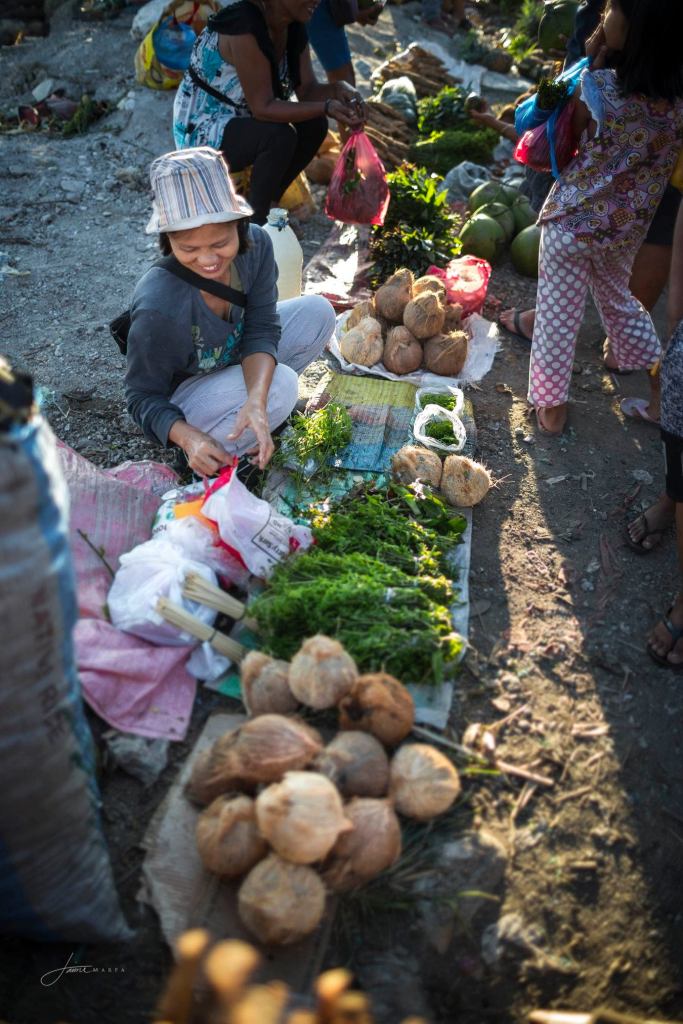
“Tiangge” in Carigara, Leyte; photo by Mr. Jim Marpa, 2019.

When this pandemic struck us and kept us home for two months, Lord, you never failed to bless us with food on our tables. It does not really matter whatever was served but the most important thing is how we have shared meals with family and friends, even with strangers.

And what makes food so glorious and wonderful, Lord, is not merely the food itself, be it meat or poultry, vegetables or fish but the things we take for granted like the people who prepared and gathered together, and not to forget, ingredients that bring out the flavor like the lowly salt.

Jesus said to his disciples: “You are the salt of the earth. But if salt loses its taste, with what can it be seasoned? It is no longer good for anything but to be thrown out and trampled underfoot.”

Matthew 5:13

Like the food we prepare and share, we are good in ourselves because of you, Lord.

But our real goodness comes out when we become kind and generous with others, even a single smile or a pat on a shoulder of someone else can always make a world of difference. Indeed, a small deed is better than the best intention.

Like that widow at Zarephath of Sidon who was so kind and generous enough first to give your prophet Elijah some water and later with a bit of bread.

And you rewarded her kindness with overflowing goodness:

She was able to eat for a year, and Elijah and her son as well; the jar of flour did not go empty, nor the jug of oil run dry, as the Lord had foretold through Elijah.

1 Kings 17:15-16

Teach us, O Lord, to be generous like St. Ignatius of Loyola and make life here on earth more flavorful with just a pinch of salt.

Dearest Lord, teach me to be generous, 
teach me to serve you as you deserve. 
To give and not to count the cost, 
to fight and not to heed the wounds, 
to toil and not to seek for rest, 
to labor and not to seek reward, 
except that of knowing that I do your most holy will. 
Amen.
Photo by author, Our Lady of Mt. Carmel Monastery, Guiguinto, Bulacan, 2019.

St. Paul in time of Covid-19: fighting with the sword of Christ

Quiet Storm by Fr. Nicanor F. Lalog II, 08 June 2020
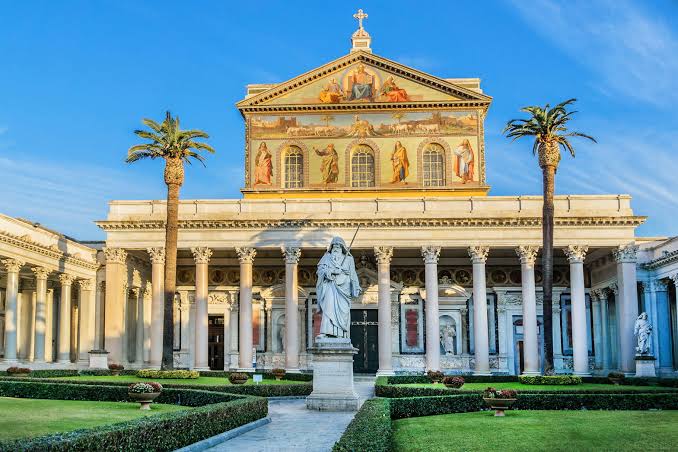
Basilica of St. Paul Outside-the-Walls, Rome, Italy. Photo from Google.

My earliest memory of St. Paul was not really so good; it was even scary.

It was summer of 1972 when we settled in our new house in my mother’s hometown of Bocaue in Bulacan. I was so skinny then (believe me, I can prove this with my pictures) and shy when my mother brought me to apply for Grade 1 at the only Catholic school there known as “SPCB” or St. Paul College Bocaue.

A male, dark teacher wearing those dark glasses like Leopoldo Salcedo clad in a barong interviewed me (the late Mr. Martin De Guzman, aka, Bagyo for typhoon). I cannot recall what he had asked me which I could not answer that made him say I cannot enroll in their school; but my mother angrily told me not to listen to him and, angrier told me to always speak louder.

That’s when I saw the statue of St. Paul at the window of the registrar’s office, eyes so intense while resting his right hand on a sword in front of him with the other hand clutching a bible with the Latin words, “Caritas Christi urget nos” – the love of Christ impels us (2 Cor. 5:14).

I stayed at SPCB for seven years and formed me into who I am today, making me so proud of being a Paulinian. Until now, that image of St. Paul with a sword is etched in my mind reminding me of how he fought so hard for Jesus Christ and his Body, the Church.

The Apostle Paul

Sometimes called the “Thirteenth Apostle”, St. Paul always stressed in his writings and teachings that he was personally called by the Risen Lord to be his Apostle sent to preach the gospel to everyone. That is why Jesus is so central in his life, declaring “whatever gains I had, these I have come to consider a loss because of Christ” (Phil.3:7), desiring only “omnia omnibus” — that is, to “become all things to all men” (1 Cor. 9:22) without any reserve.

As we have mentioned in our earlier reflection, St. Paul’s sole focus in his ministry and very life was the person of Jesus Christ: everything in our lives, especially us priests, is marked essentially by our encounter and communion with the Lord and his Word.

It is only in the light of Christ that we measure every other value in our lives and ministry.

Red Wednesday Mass and prayers in our parish for the Church persecuted last November 2019.

Even in this highly diversified and pluralistic society, while we join hands in promoting and working for a more humane and inclusive society, the more we must stand up for Jesus Christ like St. Paul as quoted by St. Luke while addressing the presbyters of the Church at Ephesus with these words:

“I served the Lord with all humility and with the tears and trials that came to me because of the plots of the Jews, and I did not at all shrink from telling you what was for your benefit, or from teaching you in public or in your homes. I earnestly bore for both Jews and Greeks to repentance before God and to faith in our Lord Jesus Christ… for I did not shrink from proclaiming to you the entire plan of God.”

Acts of the Apostles 20:19-21,27

I am so struck with that word “shrink” that St. Paul used twice to stress his dedication, fervor, and conviction in being centered in Jesus Christ alone. In what aspect did he not “shrink”? Did he raise arms and fought back against his detractors? Did he align with other forces to pursue his mission?

No! St. Paul did not shrink in proclaiming Jesus Christ by fighting back with force or with harsh words but by being more like our Lord and Master — more loving and understanding, more patient and more persevering, yet more intense in insisting the Gospel.

He did not shrink by running away from his detractors or diluting the gospel message by pleasing some powerful people or accommodating prevailing thoughts and culture. As we have mentioned in our previous reflection, St. Paul saw opportunities for the gospel in the midst of the hostile environment he lived during his time.

Despite all the pains and scars he had gone through, one can still find the light of Christ shining in this great apostle who bore everything filled with joy and pride without any complaint.

We are afflicted in every way, but not constrained; perplexed, but not driven to despair; persecuted, but not abandoned; struck down, but not destroyed; always carrying about in the body the dying of Jesus, so that in the life of Jesus may also be manifested in our body. For we who live are constantly being given up to death for the sake of Jesus, so that the life of Jesus may be manifested in our mortal flesh.

2 Corinthians 4:8-11

Standing for Christ and his Church

From 2006 to 2018, I was so blessed to have worked at our Church-run Radio Veritas as a co-host in a morning program once a week and as a host of another show on Saturdays. Aside from bishops and priests, we interviewed experts and advocates in a lot of various topics affecting our faithful in particular and our society in general.

So many times I felt something so wrong when we have to interview whom we considered as “allies” or “kakampi” in some of our advocacies because I have found no single person fully believing in our Church teachings even if some of the issues they fight for jibe with ours.

Can we really ally ourselves with lawmakers and cause-oriented groups fighting capital punishment which we strongly support and yet support artificial means of contraception for population control? Can we align with those fighting repressive laws like this anti-terror bill and yet support same-sex marriage and divorce?

And please, spare us with those labels on these people that they insist on putting on with us priests and bishops: let us keep in mind we are only for Christ, no progressives or liberals, conservatives or whatever.

We are neither lobbyists nor cause-oriented advocates pushing for something because we only stand for Jesus Christ and his Word at the Cross. There can be no any instance of partisan politics or traces of strange bedfellows whatsoever because we are either for or against Jesus Christ:

Jesus said: “Whoever is not with me is against me, and whoever does not gather with me scatters.”

Matthew 12:30

Here lies one of the greatness of St. Paul who never shrunk to other forces except Christ.

St. Paul statue at Malolos Cathedral by renowned ecclesiastical artist Mr. Willy Layug. Photo by Mr. Lorenzo Atienza, June 2019.

What a tragedy especially in our country that no amount of explanations can remove from the thoughts of ordinary people that priests and bishops do not even dabble their hands in partisan politics when it is so glaring they are beholden to these modern charlatans.

What moral ascendancy is left of our being pastors when after speaking against corruption and ineptitude in the government we turn to solicit from the same politicians and bureaucrats not only for parish projects and charities but even for our personal needs like vacations and trips abroad?

How can we reconcile all these immediate reactions by bishops and priests against the anti-terror bill urgently passed by Congress last week when not even a whimper was ever heard from them for the longest time to open our churches to serve the spiritual needs of the people?

Let me clarify like in my previous reflection that I am not saying we must be quiet about social issues; my point is, it must always be primary the Church as the Body of Christ that is primary in all our concerns.

This was very clear with St. Paul because it is the first reality he faced when he was called by Christ:

On his journey, as he was nearing Damascus, a light from the sky suddenly flashed around him. He fell to the ground and heard a voice saying to him, “Saul, Saul, why are you persecuting me?” He said, “Who are you, sir?” The reply came, “I am Jesus, whom you are persecuting.”

Acts of the Apostles 9:3-5

Next to our Lord, it is the Church that St. Paul had considered so much in his activities as subject of his thoughts and reflections. For him, adherence to the Church was directly caused by Jesus Christ himself, not by any chance or moments of realization and conversion.

And see the words of the Lord to him: “I am Jesus, whom you are persecuting.”

He was the first to speak of the Church as the Body of Christ, illustrating for us in his many Letters our being “one in Christ” (Gal.3:28) deeply rooted in the Holy Eucharist, “Because there is one bread, we who are many are one body” (1 Cor.10:17).

Pope Francis blessing the world at an empty St. Peter’s Square last March 27 when COVID-19 was ravaging the whole of Italy and many parts of the world. Photo from Vatican News.

Until now our churches remain closed in many parts of the only Christian nation in this part of the world. It behooves us priests and bishops to first fight and insist, without shrinking, the opening of our houses of worship to allow the people to experience Jesus Christ anew in this pandemic.

Most of all, may the people feel and realize at the resumption of our public Masses that God is truly in us and with us because of our deep communion in our Lord Jesus Christ and with one another when we celebrate the Sacrament of our unity, the Holy Eucharist.

Our final installment of the series this Thursday, “St. Paul in time of COVID-19: Communicating Jesus Christ”.

What’s up on the mountain?

The Lord Is My Chef Breakfast Recipe for the Soul by Fr. Nicanor F. Lalog II
Monday, Week X, Year II of Ordinary Time, 08 June 2020
1 Kings 17:7-16 <*(((>< + ><)))*> Matthew 5:1-12
Mount Sinai range at sunrise, May 2019. Photo by author.

Your words today Lord brought memories of childhood when I would always look up to the mountains, wondering what is up there or how wonderful it must be up there.

As I grew up, that fascination with the mountains remained until I had the chance to climb some of them and learned one very valuable lesson: it is so nice to be up on the mountain but always difficult.

One has to pour in a lot of planning and preparations, most of all, more sacrifices.

There is always that inverse proportionality when it can take so much efforts to ascend, always painstaking while every descent is always less than half the time and energy.

Most of all, every ascent to the mountain calls for trust, a great deal of trust in you, Lord, because anything can happen. In fact, one has to always expect the unexpected when ascending a mountain.

But rewards are so great and the feeling is always liberating and free.

Mt. St. Paul Spirituality Center, La Trinidad, Benguet, 2018 photo by author.

Teach me, Lord, to be like your Prophet Elijah, to always dare to climb mountains, to rely on your providence for water to drink and food to eat because more than these is the nourishment you provide for the soul and being of anyone willing to come near you.

Like your disciples and the crowd who followed you, Jesus, bless me with courage and trust to follow you up every mountain, listening and following your teachings.

When Jesus saw the crowds, he went up the mountain, and after he had sat down, his disciples came to him. He began to teach them, saying: “Blessed are the poor in spirit, for theirs is the Kingdom of heaven.”

Matthew 5:1-4

How blessed indeed, O Lord, to be high up on the mountain with you for heaven is no longer that far, so reachable with you — especially when beside your holy Cross. Amen.