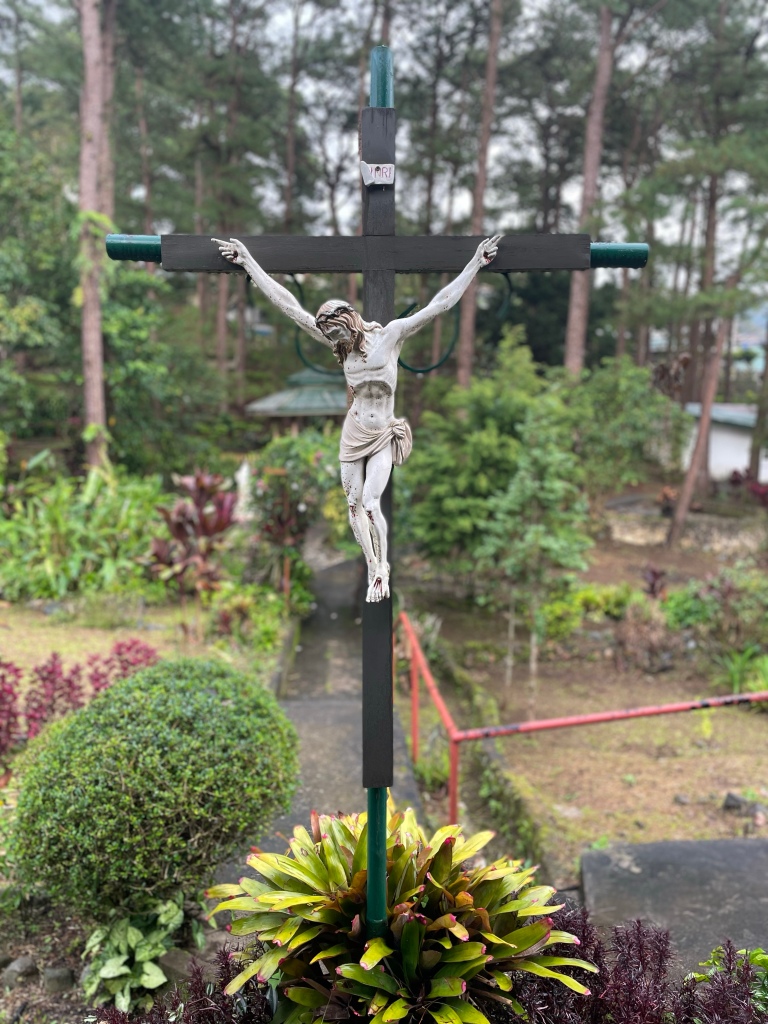
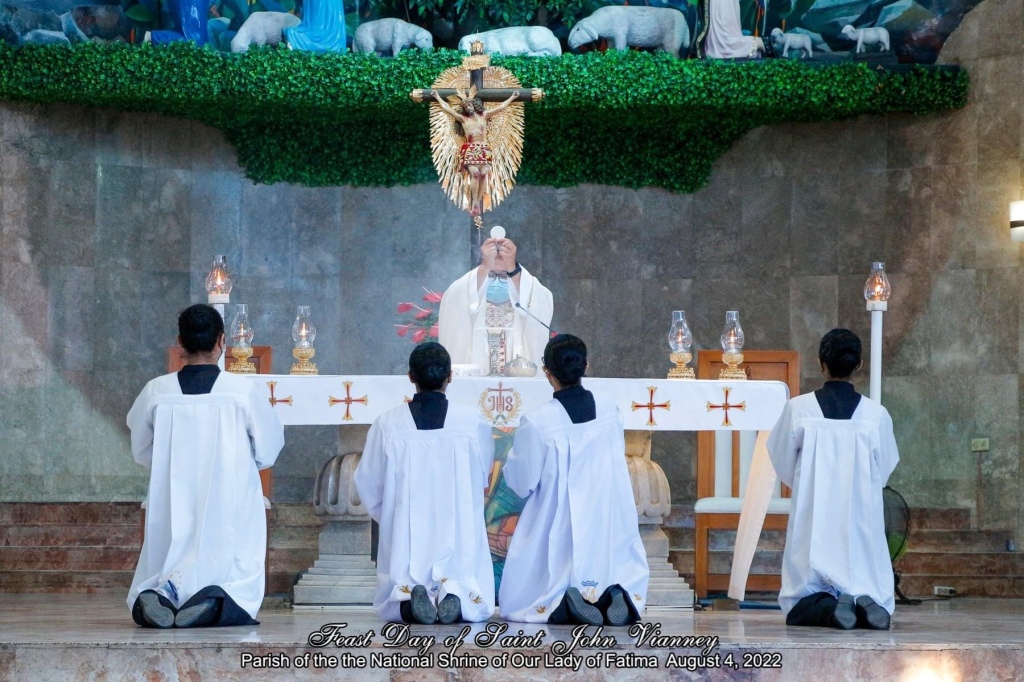
Discipleship, not membership

The Lord Is My Chef Sunday Recipe for the Soul by Fr. Nicanor F. Lalog II
Twenty-sixth Sunday in Ordinary Time, Cycle B, 29 September 2024
Numbers 11:25-29 ><}}}}*> James 5:1-6 ><}}}}*> Mark 9:38-43, 45, 47-48
Photo by author, ongoing works on the stained glass of the National Shrine of Our Lady of Fatima, Valenzuela City, 24 July 2024.

Our Sunday gospel is getting more exciting each week as Jesus gets closer to Jerusalem in fulfillment of His mission with His Passion, Death, and Resurrection.

One thing we see these past Sundays is how Mark followed a certain series of contrasts in the trajectory of his reportage. Note the contrasting scenes with every Sunday as we find today the Twelve appeared united as one unlike last week when they debated on the way who was the greatest among them.

More than that, Mark narrated today two strongly contrasting components of the Lord’s teachings to His disciples about discipleship and membership.

Photo by author in Magalang, Pampanga, 23 September 2024.

First is His tolerance on those who do good even though they do not belong to His fold, telling us to let everyone do what is good because no one has a monopoly of serving.

At that time, John said to Jesus, “Teacher, we saw someone driving out demons in your name, and we tried to prevent him because he does not follow us.” Jesus replied, “Do not prevent him. There is no one who performs a mighty deed in my name who can at the same time speak ill of me. For whoever is not against us is for us” (Mark 9:38-40).

Then in a sudden shift, Jesus severely criticized those who cause scandal, strongly urging His disciples including us today to totally eradicate whatever that leads us to sin and evil. Rejecting sin is discipleship in essence, not membership.

“Whoever causes one of these little ones who believe in me to sin, it would be better for him if a great millstone were put around his neck and he were thrown into the sea. If your hand causes you to sin, cut it off. It is better for you to enter into life maimed than with two hands to go into Gehenna, into the un quenchable fire. And if your foot causes you to sin, cut it off. It is better for to enter into life crippled than with two feet to be thrown into Gehenna. And if your eye causes you to sin, pluck it out. Better for you to enter into the kingdom of God with one eye than with two eyes to be thrown into Gehenna” (Mark 9:42-43, 45, 47).

Jesus teaching his Twelve Apostles, from GettyImages.

What a lively discussion the Twelve must have had that day with Jesus. This scene is a favorite of many Christians when discussing the scriptures, of how they are to be understood and interpreted with our ready excuses that Jesus did not literally mean what He said about cutting off our sinful hand or sinful foot and plucking out our sinful eye.

But, have we really reflected on its meanings and implications to our lives today?

Jesus reminds us this Sunday that discipleship is more than membership because in doing what is good, “the sky is the limit” so to speak. No disciple of Christ can lay claim to a monopoly in doing what is good, serving others; moreover, no disciple of Christ can belittle the good works of others even if they do not belong to the same religion or church.

Photo by author in Magalang, Pampanga 23 September 2024.

When our good deeds become “exclusive” and selective, then, that cease to be good.

Our ability to do good is always a grace of God, a gift poured out upon us by God daily so that we can be more loving and caring, more understanding and forgiving to one another. The moment we forget that, then, we start playing God.

In telling His disciples to let that man exorcize those possessed even he were not among the Twelve was clearly a command for us to recognize all who do good as brothers and sisters even if they do not necessarily share our beliefs and traditions. It is a call to respect one another.

Recall how in John’s gospel Jesus called Himself the Good Shepherd who has other sheep not in this fold. And we cannot deny that many times those who do not belong to our Church or group are doing better in serving others than us who are so entangled with bureaucracy and programs or procedures, not to mention fame and other selfish motives.

This attitude of having a monopoly of ministries and charities is one serious malady afflicting parishes today. Very often, the people with this attitude are the cordon sanitaire of priests who most likely are a Jollibee or a pabida since they were seminarians. They are the epal for short who volunteer in everything leaving nothing else for others to do, eventually spawning more pabida and epal in the church. Many parishioners refuse to serve not because they are lazy nor indifferent nor afraid but simply they are never given a chance to serve due to the monopolistic attitudes of some. It is a sad case of ministry and service based on membership than discipleship.

Photo by author in Magalang, Pampanga 23 September 2024.

Jesus is telling us this Sunday that there should be no divisions in doing good. Allow others to do good! Give them the chance to enter heaven too with their services and charities.

God wants us all to be “prophets” as explained by Moses to Joshua in the first reading when Meldad and Eldad prophesied even though they were not present in the Lord’s meeting tent. Moses rightly identified “jealousy” as one reason for such monopolistic attitude of good works by some believers.

Sin is the only obstacle in doing good, not membership. That is why, Jesus was severely stern in His words, telling how better it is for one causing others to sin to be thrown into the sea with a great millstone around one’s neck. Or, to cut off one’s hand or foot, and pluck out one’s eye that cause anyone to sin.

Photo by author at Fatima Ave., Valenzuela City, 25 July 2024.

If doing good were “sky is the limit” among disciples of Jesus, sin definitely has no room among us.

See how in this Sunday gospel Jesus implied to John and other disciples including us today of the grave sin of pride when we have that attitude of having a monopoly of good works, of relying more on membership than discipleship. It makes us proud and bloats our ego, leading us to more sins along the way until later on, we succumb to what the Greeks called as hubris.

That is why St. James in the second reading instructed us to examine our attitudes on social ills like poverty and inequality because wealth, like fame and glory, are always stained by sin.

A good disciple is always a good member of the Church – or any team and organization for that matter. Most of all, in our own family and circle of friends!


From Caesarea Philippi down to Capernaum that began three Sundays ago, Mark has continued to show us who Jesus really is, as the Christ who invites us with a personal answer to His same question to the Twelve, “who do you say that I am?” (Mk. 8:29).

The contrasts we found in Him today are not opposed to each other like His meekness with the sick and toughness with those who cause sin. Jesus is very open with anyone doing good, being kind and helpful but amid all these contrasts, He remains firm on His demands on discipleship rooted on His Cross, not just membership or being called a Christian.

When we look on His face, on His person, we find integrity and coherence, wholeness and holiness for Jesus is the Christ who had come to make us all divine, to become holy like Him “filled with His spirit” (Num. 11:29). Amen. Have a blessed week and October ahead!

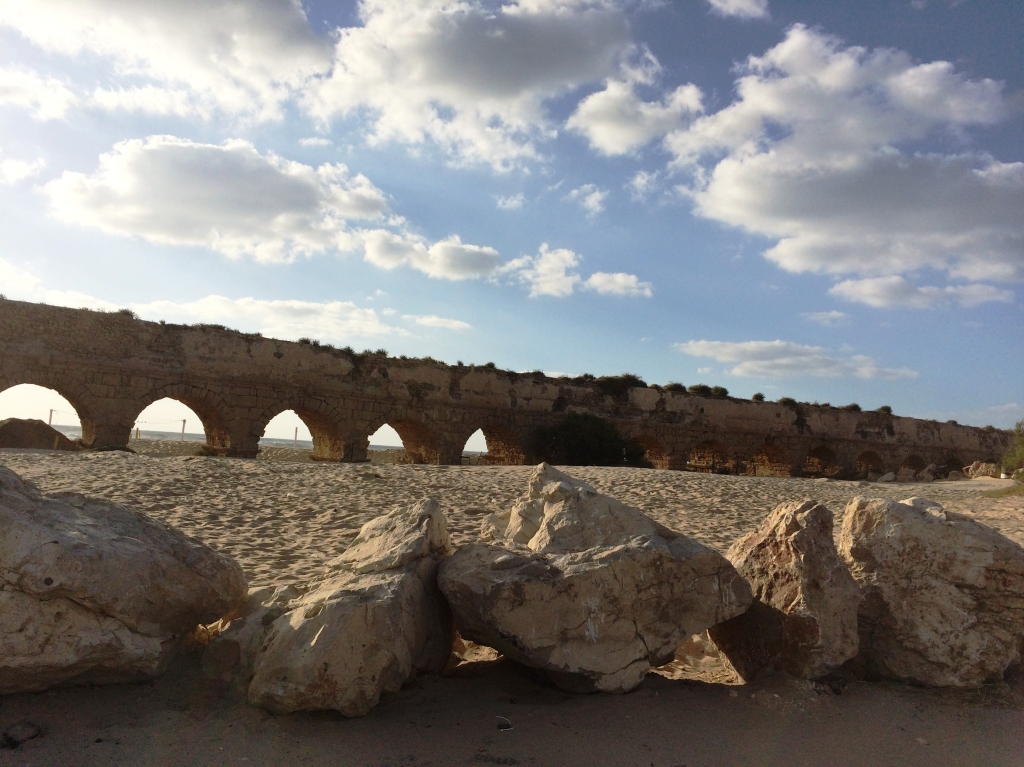
Photo by Ka Ruben, the new stained glass at the National Shrine of Our Lady of Fatima, Valenzuela City, 13 September 2024.

Openly speaking to Jesus

The Lord Is My Chef Sunday Recipe for the Soul by Fr. Nicanor F. Lalog II
Sunday in the Twenty-fifth Week of Ordinary Time, Cycle B, 22 September 2024
Wisdom 2:12, 17-20 ><}}}}*> James 3:16-4:3 ><}}}}*> Mark 9:30-37
Photo by author in Caesarea Philippi, Israel, May 2017.

Time flies so fast these days and so does our gospel reading with Mark telling us in quick succession Jesus journeying south towards Jerusalem, passing through Galilee then making a stopover in a house in Capernaum.

Jesus is now intensifying His teachings to the Twelve – and us too today. For the second time since Sunday after being identified as the Christ, Jesus “spoke openly” of His coming Passion, Death, and Resurrection to His Apostles; but, unlike last Sunday, the Twelve remained silent and instead debated on who among them is the greatest as they grappled on the meaning of their Master’s coming Pasch.

Jesus was teaching his disciples and telling them, “The Son of Man is to be handed over to men and they will kill him, and three days after his death the Son will rise.” But they did not understand the saying, and they were afraid to question him. They came to Capernaum and, once inside the house, he began to ask them, “What were you arguing about on the way?” But they remained silent. They had been discussing among themselves on the way who was the greatest (Mark 9:31-34).

Photo by Ms. Marissa La Torre Flores in Switzerland, August 2024.

Did you notice that beautiful interplay again in the scene with the preceding Sunday?

Last Sunday, Jesus spoke openly of His coming Passion, Death, and Resurrection where Peter reacted by taking Him aside to protest. Jesus rebuked Peter, telling him how he thought in man’s ways than God’s ways.

Today, Jesus spoke openly anew of His coming Pasch but this time, the Twelve fell silent because according to Mark, “they did not understand the saying, and they were afraid to question him.”

Are we not like the Twelve so often with Jesus? We follow Him, we believe Him, we listen to Him but never understand His words and worst, so afraid to question Him?

What do we not understand in His words? Or, is it more of still refusing to accept the reality of His Passion, Death, and Resurrection like Peter last week?

We are afraid to ask Jesus the meaning of His words, of His plans for us not because they have hidden meanings but usually due to our own hidden agendas.

Photo by Mr. Jay Javier, 07 September 2024.

We find it hard to trust Jesus enough unlike the upright in the first reading especially in this age of social media and instant fame and popularity when numbers of “likes” and votes prevail over what is true, good, and beautiful. Real talents, innate goodness and whatever natural are disregarded. That is why I have never watched nor believed in any beauty or singing contest these days because winners are decided not really on their talents or beauty and intelligence but more on the votes they get from viewers and people. Life has become more of a popularity contest often seen in terms of money. Pera pera lang?

This propensity of equating number of votes and likes with what is true and good and beautiful reeks with a lot of those stinky attitudes of the wicked in the first reading. The author of the Book of Wisdom perfectly expressed the inner thoughts and dynamics of the wicked who are intolerant of contradiction in whatever form, most especially unbearable to them is the living reproach and challenge of the life of just persons in their midst. This was fulfilled in Christ Jesus, the Just One of God the wicked men have crucified.

The wicked say: Let us beset the just one, because he is obnoxious to us; he sets himself against our doings, reproaches us for transgressions of the law and charges us with violations of our training… Let us condemn him to a shameful death; for according to his own words, God will take care of him” (Wisdom 2:12, 20).

Photo by Mr. Jim Marpa, 2018.

Jesus Christ’s teaching of the Cross is the perfect spirit of being a child that runs contradictory to the ways of the world. To be like a child these days as Jesus showed the Twelve is to invite sarcasm and ridicule, unacceptable to those who live in the dictates of the world of power and force, wealth and fame that certainly lead to more divisions and destruction.

Jesus invites us this Sunday to “speak openly” to Him like a child filled with trust and enthusiasm to know and learn more about life and its meanings like our doubts and fears, incomprehension and uncertainties.

See how children’s face light up when grown-ups recognize their inquiries even without any explanations at all. The same is most true with Jesus in whom anything that is dull and drab shines brightly when seen in His light.

Photo by author, St. Scholastica Retreat Center, Baguio City,

We cannot escape the scandal of the Cross. To dwell on Easter Sunday without the Good Friday only makes our life journey difficult and tiring without any direction, a waste of time and energy circling around the ways of the world that has always been proven wrong.

The essence of Christ’s Passion, Death, and Resurrection is found in being a child in the same manner Jesus remained the Son of God there on the Cross. He has always been clear with this; though He knew His fate, Jesus was totally free in choosing to suffer and die on the Cross because He fully entrusted Himself to the Father as He prayed before dying on the Cross, “Father, into your hands I commend my spirit” (Lk.23:46).

That beautiful imagery of a child Jesus placed in their midst as He put His arms around him encapsulated perfectly His own Passion and Death:

Then he sat down, called the Twelve, and said to them, “If anyone wishes to be first, he shall be the last of all and the servant of all.” Taking a child he placed it in their midst, and putting his arms around it he said to them, “Whoever receives one child such as this in my name, receives me; and whoever receives me, receives not me but the One who sent me” (Mark 9:35-37).

Photo by Mr. Red Santiago of his son Clyde, January 2020.

Every Sunday, Jesus gathers us in the Eucharist, just like the house in Capernaum where He spoke privately to the Twelve to explain the Cross and being like a child.

Let us not be afraid to speak these openly to Jesus because in our shame or fears of questioning Him, the more we live in rivalries among each other, the more we covet and envy, the more peace becomes elusive because as St. James rightly said, “You do not possess because you do not ask. You ask but not receive, because you ask wrongly, to spend it on your passions” (James 4:2c-3).

Let us gather around Jesus every Sunday, speak openly to Him especially after receiving Him Body and Blood in Holy Communion to cast unto Him all our worries and doubts in life. Let us take time to listen to Him and be imbued with His teachings. Amen. Have a blessed week ahead, everyone.

Jesus openly speaking

The Lord Is My Chef Sunday Recipe for the Soul by Fr. Nicanor F. Lalog II
Twenty-fourth Sunday in Ordinary Time, Cycle B, 15 September 2024
Isaiah 50:5-9 <*{{{{>< James 2:14-18 ><}}}}*> Mark 8:27-35
Photo by Digital Buggu on Pexels.com

There is something very striking with the similarities and differences in our gospel last Sunday and today that greatly reveal to us the person of Jesus Christ whom we all imitate and follow as His disciples.

In Decapolis last Sunday, Jesus separated a deaf man – “took him off by himself away from the crowd” – to heal him by putting his fingers into the man’s ears, then spitted and touched his tongue as he groaned “Ephphatha” – be opened – and the man was healed as “he spoke plainly”.

Further up north of Decapolis which is the chief pagan city of Caesarea Philippi, the Apostle Peter took Jesus away from the crowd after the Lord spoke openly of His coming Passion, Death, and Resurrection.

But unlike the deaf mute healed when separated from the rest, Jesus rebuked Peter as He returned to the crowd as He continued to speak openly of His coming Passion, Death, and Resurrection.

He began to teach them that the Son of Man must suffer greatly and be rejected by the elders, the chief priests, and the scribes, and be killed, and rise after three days. He spoke this openly. Then Peter took him aside and began to rebuke him. At this he turned around and, looking at his disciples, rebuked Peter and said, “Get behind me, Satan. You are thinking not as God does, but as human beings do” (Mark 8:31-33).

Photo by author at Petra in Jordan, May 2019.

I love the contrast of these two events Mark tells us so succinctly without missing details that speak so well of God’s ways and man’s ways, of what is to think and act like Jesus and how the devil tricks us into its devious and insidious ploys.

See also how last Sunday the healed deaf-mute “spoke plainly” in Christ while today we are invited by Mark to “openly speak” like Jesus of life’s sufferings and death.

When God separates us from the rest of the people and our usual routines like what happened at Decapolis last Sunday, it is because He wants us to experience Him more closely, for us to be healed, and for us to touch base with Him anew who is the very root of our being. Like that nameless deaf man, we need to separate once in a while from the world for us to be healed of our many deafness so that we may listen more intently to God’s voice and words right in our hearts, in the scriptures, and in the cries of the poor and suffering among us.

Actually, Jesus was continuing in Caesarea Philippi His method last Sunday of “separating” when He first asked the Twelve “Who do people say that I am?” that prompted them to tell Him the many misconceptions about His identity. In a similar way with the deaf at Decapolis, Jesus took off the Twelve in Caesarea Philippi when He asked them the more specific question “But who do you say that I am?” and Peter rightly answered Him, “You are the Christ.”

Matthew has a similar story probably with some additions from other sources that we find Jesus praising Peter for his answer, entrusting to him the church, and promising him with the key to heaven. The rebuke of Peter would happen later in their journey.

Mark had none of that considering his gospel was Matthew’s basis. We find in Mark’s brief account of Peter’s confession at Caesarea Philippi Perhaps how often just as when we feel so close with God like Peter, it is the same moment when the devil comes to trick us to break away from God and follow our own ways, not His.

Photo by author near ancient city of Caesarea Philippi, May 2017.

The event at Caesarea Philippi gives us clearest sign to identify Jesus as the Christ, that is when Jesus speaks openly of His coming Passion, Death, and Resurrection.

He began to teach them that the Son of Man must suffer greatly and be rejected by the elders, the chief priests, and the scribes, and be killed, and rise after three days. He spoke this openly (Mark 8:31-32).

Jesus never hides us from the realities of life as He speaks “openly” of His Pasch. From Caesarea Philippi, Jesus and the Twelve would head back south towards Jerusalem making a stop over on Mount Tabor for the Transfiguration where Christ’s glory was revealed to Peter, James and John.

It was during His Transfiguration that that Father and the Son made clear that Christ’s glory cannot be separated from the Cross. It was after Caesarea Philippi when Jesus announced thrice to the Twelve His coming Passion, Death, and Resurrection.

Notice too that qualifier “must” – that He “must suffer greatly”.

Just one word but so powerful, showing us the consistency of Jesus in speaking about His Pasch, the Cross, and later its relationship with discipleship, of the need for us to forget ourselves, take up our cross and follow Him.

Our motorized procession of the Blessed Sacrament in our previous Parish at the start of the COVID-19 lockdown in March 2020. Photo by Ms. Anne Ramos.

It saddens me when some priests and people in the Church shy away from talking openly about life’s many sufferings. We recognize their good intentions of not forgetting the beautiful and brighter side of being a Christian but to look at the Cross negatively and all its other implications is totally unChristian.

We cannot disregard the pains and darkness that come in being a disciple of Jesus; the Cross is the life of a disciple because it is the center of Christ’s person and teachings as expressed in yesterday’s Feast of the Exaltation of the Cross. All these “health and wealth” style of many preachers even in the Church are red flags of the devil’s ploy, of Peter separating Jesus from the Cross.

We act like Peter rebuking Jesus in Caesarea Philippi whenever we try to soften or hide, even cover the corruption and abuses going on in the society and families, the Church and our communities. That is clearly thinking in man’s ways not in God’s ways.

We cannot arrive at the truth and beauty of life disregarding the falsehoods and negativities around us. That was the problem with the people in mistaking Jesus as one of the prophets who were seen more as miracle workers who instantly healed them of their sickness.

Photo by author in my previous parish, 2017.

And here lies the danger too to us that we will never be able to have a good answer to Christ’s question “But who do you say I am?” if we avoid the many passion and death of this life in Jesus.

To openly speak like Jesus and embrace the sufferings and death we must endure is our first expression of faith with works we heard in the second reading from James.

To openly speak like Jesus and embrace the sufferings and death we must endure is the fulfillment of the first reading’s Song of the Suffering Servant who is Jesus Himself.

When we openly speak and embrace life’s daily sufferings and deaths like Jesus is to trust completely in God like Him. Let us speak openly of the Cross, of love and mercy, of God like Jesus Christ! Let us pray:

Lord Jesus Christ,
let me continue to follow
you closely by separating
from the rest often
to hear you more,
to love you more,
to trust you more;
let me know you more clearly
so that I may love you more dearly
and follow you more closely
speaking plainly,
speaking openly
without sugarcoating your call,
your Cross.
Amen.

Speaking plainly in Christ

The Lord Is My Chef Sunday Recipe for the Soul by Fr. Nicanor F. Lalog II
Twenty-third Sunday in Ordinary Time, Cycle B, 08 September 2024
Isaiah 35:4-7 ><}}}}*> James 2:1-5 ><}}}}*> Mark 7:31-37
Photo by author, sunrise at Galilee, the Holy Land, 2017.

Thank God the rains have finally stopped here in Metro Manila and nearby provinces but the flood remains widespread as we brace for two more weather disturbances due this week.

So timely is our gospel this Sunday that reminds us of something so essential during calamities, the need to speak plainly and clearly.

Image from crossroadsinitiative.com.

Again Jesus left the district of Tyre and went by way of Sidon to the Sea of Galilee, into the district of Decapolis. And people brought to him a deaf man who had a speech impediment and begged him to his hand on him. He took him off by himself away from the crowd. He put his finger into the man’s ears and, spitting, touched his tongue; then he looked up to heaven and groaned, and said to him, “Ephphatha!” – that is, “Be opened!” – And immediately the man’s ears were opened, his speech impediment was removed, and he spoke plainly (Mark 7:31-35).


"...and he spoke plainly."

From forbes.com, 2019.

Think of our many misunderstandings and quarrels happening in these days of modern means of communications. How ironic that in this age of instant and wireless communications so accessible to everyone, the more we have misinformation and miscommunications.

No one seems to be speaking plainly and clearly anymore because we have been so blinded by the many images and colors competing for our attention, becoming deaf and mute due to the cacophony of sounds we hear even from machines and things that speak. Instead of life becoming easier and convenient in this age of social media and modern technologies, it has become so complicated like Facebook as more and more of us becoming deaf and mute to the realities within and around us.

I have just checked the internet today to find out that there are now over 7.2 billion cellphones in the world as of June 2024, a figure that accounts for about 90% of the global population now at 8 billion. Of course, it does not mean that 90% of the peoples across the world own a cellphone but we can just imagine how this little gadget has become the new “god”, a baal of the modern world everybody worship and follow. Jesus comes to us today, inviting us to separate ourselves from everything mundane even for a few hours to experience Him and His healing of our own deafness and blindness.

Photo by author, shore of Galilee, 2017.

Once again we find Mark guiding us in Jesus Christ’s itinerary that is often so quick and most of all, not really a destination found in maps but within us.

From Gennesaret last Sunday when Pharisees and scribes from Jerusalem questioned Him about the disciples’ non-compliance with their rites of washing and cleansing, Jesus swiftly moved to visit the pagan territories of Tyre and Sidon, making a stop-over at Decapolis where He healed a deaf-mute. Those pagan territories are not mere locations nor sites in the Holy Land but areas within each one of us, our very person who have forgotten God completely even on Sundays as we worship so many other gods running our lives.

Jesus is now visiting us in our own paganism, asking us to separate ourselves even for a while from everything to experience humanity, our human-ness, our being one with God who is the very basis and foundation of our lives.

We are probably one of those people in Decapolis who begged Jesus to heal the nameless deaf-mute or most likely, ourselves the deaf-mute needing healing by Jesus! This healing of the nameless deaf-mute is a parable of the cure of another kind of deafness and speech impediment afflicting us these days that only grace can heal.

Photo by author, wailing wall of Jerusalem, 2017.

Recall how last Sunday Jesus reminded us of checking into our motivations, on what is inside us in doing things. Jesus was not actually against rites and rituals but simply wants us to do things for the glory of God.

Today, Jesus separates us from our daily routines, from the mundane to touch us, to breathe on us His spirit so we can be more attuned with Him and therefore reflect Him in our lives by opening us – Ephphatha – to speak plainly again of God’s love and mercy, of life’s beauty, of our own giftedness.

To “speak plainly” like that healed deaf-mute at Decapolis is to be able to put into actions the words of Jesus Christ. To “speak plainly” is more than verbally pronouncing words and sounds but most of all touching others with our kindness and love. To “speak plainly” is to hold the hands of those afraid to move on in life after a failure, to caress a sick’s forehead or feet, to hug and embrace the lonely and lost, to be present with those in grief and in pain. To “speak plainly” is to be a presence of God to everyone especially strangers, the elderly, the weak and the helpless.

To “speak plainly” first of all requires us to be opened to God’s words. The gospel accounts teem with many instances of Jesus reminding His disciples that include us today of taking into our hearts to understand and put into practice His words. In the second reading, St. James reminds us how we have become deaf and blind of each other that we behave so badly because we have been so molded by worldly standards even in the church:

My brothers and sisters, show no partiality as you adhere to the faith in our glorious Lord Jesus Christ. For if a man with gold rings and in fine clothes comes into your assembly, and a poor person in shabby clothes also comes in, and you pay attention to the one wearing the fine clothes and say, “Sit here, please”, while you say to the poor one, “Stand there”, or “sit at my feel”, have you not made distinctions among yourselves and become judges with evil designs (James 2:1-4)?

Photo by author at Dominus Flevit church outside Jerusalem, 2017.

Think of our many rules and regulations, of our so many documents not only in government but even in the Church. Do they speak plainly?

Many times, we have so much rites and rituals as well documents and laws everywhere that are far from God and from the people, speaking so eloquently of lofty thoughts that are empty, so far from realities that have become only a burden to many, mostly the poor and the powerless.

How sad that those in power, both civil and ecclesiastical authorities have only complacent ears, oblivious to the din from below, the very voice of God among the ordinary people. They have not only turned deaf to the voice of the masses but have even forgotten God’s name in the process! The Apostle Paul gives us the most wonderful lesson about “speaking plainly” of God’s mystery by proclaiming more of Christ crucified than using the world’s “sublimity of words or wisdom” (cf. 1 Cor. 2:1-5).

Photo by author, 2017.

This is the tragedy among us modern Christians today, of us denying even totally unaware of our own deafness, of being mute not able to speak plainly of God in Jesus Christ who came to fulfill Isaiah’s prophecy in the first reading to heal the sick, to strengthen the weak and afraid, and to redeem us held captive by the world’s lies and evil.

Let Ephphatha be our prayer too this Sunday to heal us of our deafness so we may speak plainly again of God’s love and mercy and kindness. Amen. Have a blessed week ahead, everyone!

What moves you?

The Lord Is My Chef Sunday Recipe for the Soul by Fr. Nicanor F. Lalog II
Twenty-Second Sunday in Ordinary Time, Cycle B, 01 September 2024
Deuteronomy 4:1-2, 6-8 ><}}}*> James 1;17-18, 21-22, 27 ><}}}*> Mark 7:1-8, 14-15, 21-23
Photo by author, Sacred Heart Novitiate, Novaliches, QC, 20 March 2024.

After five Sundays of journeying with John, we now return to Mark’s Gospel and shall continue to read it through the 33rd Sunday before we cap the current liturgical calendar with the Solemnity of Christ the King on November 24, 2024.

Oh yes! It’s beginning to feel like Christmas but the liturgy cautions us this Sunday through Mark that there are still many things we have to fix and cleanse in our hearts in the remaining stretch of the year, particularly our motivations in doing things. After dwelling on the “bread of life discourse” from John for five Sundays that gave us time to examine our faith, Mark brings us now to the other side of the lake in Gennesaret to listen to a discussion about the Jewish customs and traditions of ritual cleansing and washing in chapter seven.

When the Pharisees with some scribes who had come from Jerusalem gathered around Jesus, they observed that some of his disciples ate their meals with unclean, that is, unwashed, hands. For the Pharisees and, in fact, all Jews, do not eat without carefully washing their hands, keeping the tradition of the elders. So the Pharisees and scribes questioned him, “Why do your disciples not follow tradition of the elders but instead eat a meal with unclean hands?” He responded, “Well did Isaiah prophesy about you hypocrites, as it is written: This people honors me with their lips, but their hearts are far from me; in vain do they worship me, teaching as doctrines human precepts. You disregard God’s commandment but cling to human tradition” (Mark 7:1-3, 5-8).

Photo by author, St. Scholastica Spirituality Center, Tagaytay City, 20 August 2024.

It is easy to see in this scene how Mark must have tried to explain the many Jewish rituals and traditions that was a source of clashes among Jewish and pagan converts to Christianity in the early Church like circumcision and of eating of meat offered to gods. These were finally resolved in the Council of Jerusalem in year 50 when the Apostles acted upon instructions by the Holy Spirit “not to place on the pagan converts any burden beyond these necessities” (Acts 15:28).

However, it is unfair and a misreading to limit ourselves to this as a lesson in history because the practices criticized in this scene continue among us when we focus on the externalities of any ritual and tradition while missing their more essential and deeper meanings. Worst of all is the strong temptation among us to believe that by our actions and good deeds, like the Pharisees and scribes of that time, we make ourselves worthy of God or of anyone!

That is why Christ’s teaching in this Sunday gospel on the hypocrisy of the Pharisees and scribes of that time refers also for us today.

From Facebook, 29 August 2024.

From the halls of Congress to our own homes, classrooms and offices, pulpits and parish halls, we find many of us acting like the Pharisees and scribes who have come from Jerusalem to test and intimidate Jesus through people around us and under us by flexing their muscles in insisting strict adherence to their rituals and traditions that were passed on from Moses we have heard in the first reading. Observe how the Pharisees and scribes capitalized on these as “tradition of the elders” without really going into its very core and essence because they have forgotten or were totally unaware of Moses’ reminder that faithful observance of the Law and its tradition and rituals is a form of witnessing to God before all the peoples.

Observe them carefully, for thus you will give evidence of your wisdom and intelligence to the nations, who will hear of all these statues and say, “This great nation is truly wise and intelligent people. For what great nation is there that has gods so close to it as the Lord our God, it is to whenever we call upon him? Or what great nation has statutes and decrees that are as just as this whole law which I am setting before you today?” (Deuteronomy 4:6-8)

Photo by author, St. Scholastica Spirituality Center, Tagaytay City, 20 August 2024.

Every adherence and compliance to the Laws, to its accompanying rites and rituals must come from the heart, a result of the conversion of heart, of purification of one’s heart, especially the celebration of the liturgy we refer to as “the summit and font of our Christian life”. Every Mass celebration is an outflowing of what is in our hearts, beginning with the priest as celebrant.

But, what is the reality we have? As we concluded last Sunday Jesus Christ’s “bread of life discourse”, we realized the “shocking truths” of so many Catholics who have totally stopped coming to Sunday Masses, of some priests not giving the proper respect in prayerfully celebrating the Eucharist and the other Sacraments, and of most faithfuls just simply coming without seriously taking part in the Mass. That is why this gospel scene applies to us this time too as Jesus asks us, do we understand the things we are doing in the Church? What is in our hearts in doing these?

He summoned the crowd again and said to them, “Hear me, all of you, and understand. Nothing that enters one from outside can defile that person; but the things that come out from within are what defile. “From within people, from their hearts, come evil thoughts, unchastity, theft, murder, adultery, greed, malice, deceit, licentiousness, envy, blasphemy, arrogance, folly. All these evils come from within and they defile” (Mark 7:14-15, 21-23).

Photo by author, St. Scholastica Spirituality Center, Tagaytay City, 20 August 2024.

This Sunday, Jesus is inviting us to a new perspective at looking at things, not just from what is clean and not clean, or simply what is good and evil, what is traditional and modern; Jesus wants us to examine our motivations, of what is in our hearts in doing things, anything and everything.

Ultimately, it is a question of who is in our heart, Jesus or somebody else or another thing?

It is reality versus hypocrisy. Reality is the truth and meaning that things, events, persons, most of all, of our very selves have before God and for God. It is in this reality that we must scrutinize to strip ourselves naked of the hidden hypocrisies, the many masks and alibis we use to justify our selves.

Photo by author, 13 August 2024.

I have something to confess to you, my dear followers: I have been sick these past three weeks with different ailments. All my lab tests were good. Doctors find nothing wrong with my body with everything normal.

Last Tuesday I saw my longtime doctor for my scheduled check-up. As I explained everything to her, I broke down in tears as I admitted the fact I am in denial stage of my mom’s passing last May. I have repressed my griefs, trying to fill in the void within me with workloads as if I am still young that finally, it manifested in my body. That same Tuesday evening, I dreamt of my mom: she looked younger and healthier without signs of stroke but she wore a black dress and looked to have cried. I hugged her tightly in my dream, we cried together as I said sorry to her, promising that I would finally come home even if it hurts me to see her room empty.

Two days after that, we celebrated John the Baptist’s passion with a reading from Mark telling us of the “grudge” Herodias had on him that led to his beheading. Many times, grudges and other negative things that Jesus cited in today’s gospel not only cover us but actually destroy us, eating us up in the process. The festering negativities in our hearts cannot be hidden, eventually erupting like blisters, not only hurting others around us but most especially us.

In the Mass, Jesus knows very well we are not worthy with our hypocrisies to receive Him but only say the word, we are healed. And blessed to cleanse ourselves. Let us pray:

God our loving Father,
"all good giving and every perfect gift
is from You with whom there is no
alteration or shadow caused by change";
empty our hearts of pride and evil
to welcome Jesus your Word
who became flesh to dwell inside us
so that we may be "doers of the word
not just hearers" (James 1:17, 22)
by being more loving to others
without any strings attached.
Amen.

Eating well, living well

The Lord Is My Chef Sunday Recipe for the Soul by Fr. Nicanor F. Lalog II
Twentieth Sunday in Ordinary Time, Cycle B, 18 August 2024
Proverbs 9:1-6 ><}}}}*> Ephesians 5:15-20 ><}}}}*> John 6:51-58
Photo by author, James Alberione Center, QC, 15 August 2024.

It is our fourth consecutive Sunday listening to the sixth chapter of John’s gospel that opened with the miraculous feeding by Jesus of more than five thousand people in a deserted place; Jesus fled from there, went back in Capernaum where people caught with Him and disciples as He began three Sundays ago His “Bread of Life” discourse now getting deeper while the drama among the crowd is heating up.

From murmuring last Sunday about Jesus who said “I am the bread that came down from heaven” (Jn.6:41), the people today quarreled among themselves after Jesus said “I am the living bread that came down from heaven; whoever eats this bread will live forever; and the bread that I will give is my flesh for the life of the world” (Jn. 6:51).

Photo by author, James Alberione Center, QC, 15 August 2024.

Notice the beautiful contrast of reactions by people to Jesus: from murmuring last Sunday, they sank deep into quarreling while Jesus leveled up to “the living bread from heaven” from merely “the bread from heaven” last week. For us to live well, we have to eat well by having Jesus Himself as our food and drink.

The Jews quarreled among themselves, saying, “How can this man give us his flesh to eat?” Jesus said to them, “Amen, amen, I say to you, unless you eat the flesh of the Son of Man and drink his blood, you do not have life within you. Whoever eats my flesh and drinks my blood has eternal life, and I will raise him on the last day. For my flesh is true food, and my blood is true drink. Whoever eats my flesh and drinks my blood remains in me and I in him. Just as the living Father sent me and I have life because of the Father, so also the one who feeds on me will have life because of me” (John 6:52-57).

Photo by Ms. Ria De Vera in Banff, Alberta, Canada, 07 August 2024.

Eating is the most common human activity anywhere, any time. Human life basically revolves around eating as we have seen since time immemorial how we have progressed following our search for food. We work to feed ourselves and loved ones. Without food, we die. Food is so essential that there is always food to share in our gatherings.

That is why Jesus chose the bread and wine as the signs of His living presence among us in the Holy Eucharist He established during the Last Supper on Holy Thursday. In the Eucharist, Jesus elevated the most ordinary human activity of eating as most sublime and Divine. In the Holy Mass, we share in Christ’s Body and Blood so we too may share our very selves with one another.

When Jesus said in Capernaum that the bread He is giving is His own flesh with His blood as drink, He was already preparing the people for the Eucharist while at the same time teaching them that eating is not everything. We have to eat well to live well. When tempted by the devil in the wilderness, Jesus right away taught us to remember that man does not live by bread alone but with every word from God. At the start of this discourse last August 04, Jesus challenged the people, “Do not work for the food that perishes but for the food that endures for eternal life, which the Son of Man will give you” (Jn.6:27).

Photo by Ms. Ria De Vera in Banff, Alberta, Canada, 07 August 2024.

Many times, we get so used in our many activities that unconsciously, we miss life itself as we punish ourselves with exhaustion and sickness as well as emptiness.

Food is not just something that fills our stomach but must also lead into our heart and soul. Observe any cuisine and you get a taste of the culture and people it represents, even with strong hints of its geographical origin. In the first reading we find how the Book of Proverbs personified Wisdom as God to remind us that though He is transcendent and so above us, God is easily accessed even in the most ordinary instances like eating.

Wisdom has built her house, she has set up her seven columns; she has dressed her meat, mixed her wine, yes, she has spread her table. She has sent out her maidens; she calls from the heights out over the city: “Let whoever is simple turn in here; to him who lacks understanding, I say, Come, eat of my food, drink of the wine I have mixed! Forsake foolishness that you may live; advance in the way of understanding” (Proverbs 9:1-6).

How lovely is that part of God calling us to come like Jesus in the gospel when He said “come to me all who are burdened” or when He ordered to “let the children come to me”. Is it not the same thing we say when we are about to eat, to come and get it?

Sadly these days, we seem to have retrogressed in our manner of eating. Social media rightly labeled it as “food porn” when we are flooded with everything about food and drinks minus its deeper meanings. Food is sadly seen in its material aspect that eating is more on filling the stomach, forgetting the soul because we have totally forgotten God and the people around us. No wonder that despite the growing food production and plethora of food we have these days, many still starve while the rest of us remain lost in life, more sick.

Photo by Ms. Ria De Vera in Banff, Alberta, Canada, 07 August 2024.

See, my dear friends, the great coincidence on the very Sunday Jesus began his bread of life discourse, it was also the opening of the Paris Olympics with a mockery of the Last Supper that led us into a kind of “quarrel” as organizers and their supporters insisted it wasn’t the Last Supper at all despite the clear indications and proofs.

“How can this man give us his flesh to eat?” Suddenly, we heard anew that same question by the people in Capernaum to Jesus reechoed in the Olympics at the capital city of the Church’s so-called “eldest daughter”, France. Of course, we know this bread of life discourse by Jesus refers to the Holy Eucharist and surely, the many defenders of the Paris Olympics are aware for many of them are Catholics. But, Jesus must have willed this gospel be proclaimed at this time coinciding with the Olympics for us to evaluate anew our faith in Him because at the very core of this bread of life discourse is the mystery of faith.

“How can this man give us his flesh to eat?” In the gospel of Luke, we find a similar question by Mary at the Annunciation that is filled with faith, “How can this be?” (Lk.1:34); but today, like in Capernaum as exemplified by the Paris Olympics, that question is a renewed refusal to believe in the words of Jesus Christ. Worst of all as we noted earlier in our perceptions of food and eating these days, that question shows modern man’s insistence on everything material, totally disregarding our spiritual nature.

Photo by Ms. Ria De Vera in Banff, Alberta, Canada, 07 August 2024.

Like in Capernaum, many people today who refuse to believe Christ’s words resort to malicious and insidious arguments that it becomes useless to really converse with them as they would rather insist on their grossly material understanding and perception of life these days. Many prefer to quarrel these days than accept life’s many mysteries not merely seen nor tasted by the senses but experienced and realized through faith in God.

Life for them has become merely material which in Greek is bios as in biology. There is another Greek word for life which is zoe that refers to the eternal, divine life of God that Jesus repeatedly used in our gospel today.

Like last Sunday, Jesus did not engage Himself into debating with the crowd in Capernaum by simply repeating the words living and life to emphasize the total acceptance of Him – Body and Blood – in faith: “I am the living bread… my flesh for the life of the world. Just as the living Father sent me and I have life because of the Father, so also the one who feeds on me will have life because of me.” These are the very same words too, life and living that Jesus would mention before His Passion and Death as well as after His Resurrection because eating His flesh and drinking His blood is to share in His life that is also the fullness of life. It is only in Christ Jesus can we find fulfillment in life. Let us pray:

Lord Jesus Christ,
help me watch carefully
how I live, not as a fool
but as wise as St. Paul taught
us today in his letter to the Ephesians;
let us not be intoxicated
with life's pleasures and worldly pursuits
but let us be filled with the Holy Spirit.
Amen.

Photo by author, 15 August 2024.

Elijah & Jesus with “Lolo and the Kid”

Quiet Storm by Fr. Nicanor F. Lalog II, 13 August 2024
Photo from reddit.com

This is a rejoinder to my Sunday homily I posted here Saturday morning (https://lordmychef.com/2024/08/10/when-we-cry-this-is-enough-god-gives-us-more-than-enough-to-go-on/).

I had published my Sunday homily that Saturday morning when I decided to unwind by watching any movie on Netflix which I do only on weekends. So glad it was the first movie I saw, very related with the story of Prophet Elijah and Jesus Christ’s “Bread of Life Discourse” that Sunday.

First think I liked with Lolo and the Kid is its fast-paced story that revolved around the two characters played by veteran Joel Torre and GMA7’s famed Firefly star Euwenn Mikael Aleta.

Second thing so interesting with me is how Lolo and Kid have no proper names at all (I just learned Lolo’s name was Mario after reading the various write ups) maybe because they stand for all of us who are caught in this great race for money and material things but deep inside longing for the more essential and truly lasting in life like love. And people who love us too, who care for us, and would stand by us.

We are Lolo and Kid who many times have traded our principles for momentary satisfaction but despite our seemingly strong facades of pragmatism and “resourcefulness” or madiskarte as Lolo taught Kid in the movie, deep inside us is still our conscience where God dwells, telling us to pursue good and shun evil. Joel Torre perfectly portrayed this beautiful side in each one of us (with his Ilonggo accent) of keeping a conscience despite our sinfulness, like a soft shell we delicately keep whole and intact inside lest we lose everything in life.

Photo from de.flixable.com

Recall our first reading last Sunday about Elijah fleeing to the mountain from an army pursuing to kill him. Elijah felt a total failure like Lolo and us many times in life when after all our goodwill and love, we are dumped by the very people we care for.

Elijah went a day’s journey into the desert, until he came to a broom tree and sat beneath it. He prayed for death, saying: “This is enough, O Lord! Take my life, for I am no better than my fathers” (1 Kings 19:4).

In one of the scenes of Lolo and the Kid, we find Lolo crying, cursing everyone and murmuring just like in last Sunday’s gospel. As he tried to end his life with a knife, Lolo suddenly heard the cry of an infant from the heap of garbage around him. What a beautiful portrayal of that infant left in the trash like Jesus Christ born on a manger becoming the savior of Lolo, a definitive message of mercy and love from God after his apparent cry of “This is enough, Lord!”

How many times have we found ourselves in the same situation, often in less momentous ones than Elijah or any prophet and saint, crying out to God in the heavens “this is enough”?

But, what is also most true behind every cry of “this is enough” that we make, we continue to believe and to hope in God that there is still a way out of our plight. And very often like in the story of Elijah last Sunday and in that scene in Lolo and the Kid, God comes at the nick of time like that infant crying in the garbage heap, a reminder of life and beauty found within us despite all the dirt we may have around us.

From netflixlovers.it

Here we find the Kid, perfectly played by Euwenn like in Firefly, as the saving grace, the Christ-figure in the movie bringing salvation to Lolo. Kid was “the bread of life from heaven” who “fed” Lolo with life with its meaning and direction. And joy found in Kid, the image of Christ Jesus.

Now, joy according to Jesus at the Last Supper is like a woman at the pangs of childbirth (Jn.16:21-22); it is deeper than happiness. True joy is borne out of self-sacrifice, a fruit of self-denial, of loving somebody more than one’s self. This we find at the end of this moving film.

Now all grown up, Kid finally met again Lolo in the hospital a day after his college graduation. Kid brought Lolo while seated on a wheelchair to visit Taba (another character without a name), their suki in fencing. From there, they went to their usual stop, a videoke bar to eat and drink, singing repeatedly Kenny Roger’s Through the Years.

Then, Lolo died, singing the only tune he knew that summed their beautiful relationship.

Photo from list23.com.

After Lolo’s body was taken out of the videoke bar, Kid opened Lolo’s bag that had a tin can of biscuit filled with old photographs taken with their stolen Polaroid camera. The photos did not merely remind Kid of their happy times together but most especially when they were already apart!

Unknown to Kid, Lolo hid to take photos when he moved to his adoptive parents, from his first ever birthday party to his college graduation! Through the years, Lolo, like God, was always there, present in all of Kid’s milestones in life because he is truly loved.

I have never liked that song Through the Years even when it was a hit during our high school days in 1981 but since Saturday, I have been humming it silently, hearing it inside me as an LSS until now. We hear the song playing throughout the end of the movie with scenes of how Lolo secretly took Kid’s photos filled with love and joy amid the strong current of pain within he had to endure to be far and away yet so near to his beloved apo.

If the Kid is the Christ figure in this film, Lolo is the God-the-Father figure, the One who seems so far from us as if He does not care at all. In Lolo and the Kid, there is that message of God never leaving us wherever we may be, whether we are in the squalor of poverty and sin or in the purity and cleanliness of affluence and grace maybe. God like Lolo to Kid is always with us but never interferes, silently doing many things to ensure that despite our many faults and failures in life, we end up in Him and His love.


We go back to Elijah’s cry of “This is enough, Lord!”, our very same cry like Lolo in the movie.

It is a cry that is also a prayer coming from our innermost being when we feel so saddled with no one to unload our woes except to God – who after all is the very reason why we cry! Watch for Lolo’s soliloquy on this reality we often do.

Photo by author, James Alberione Center, QC, 08 August 2024.

It is a cry of faith so akin with love because to believe and to love go hand in hand. It is during that moment when we feel like giving up to God, crying “this is enough” when in reality we surrender everything to God because we have been caught up by Him that we cannot resist His attraction.

It is that moment when we feel so “fed up with life” but deep inside, we hear God telling us like Lolo with the cries of an infant or like Elijah with an angel instructing him, “Get up and eat, else the journey will be too long for you!” (1 Kings 19:7).

Yes, our life journey is still long but we have a companion in Jesus, our bread of life from heaven, nourishing us, strengthening us, teaching us that essential beauty of love found only in sharing one’s life for the other. As we have said in last Sunday’s homily, it is when we cry “it is enough, Lord” when God gives us more than enough to sustain us sometimes in the form of a good movie like this one. May we have more “bread” like Lolo and the Kid that feeds our soul and gladdens our heart.

*BTW, we are not paid to endorse this movie; simply sharing with you its good news.

What we can do in the work of God

The Lord Is My Chef Sunday Recipe for the Soul by Fr. Nicanor F. Lalog II
Eighteenth Sunday in the Ordinary Time, Cycle B, 04 August 2024
Exodus 16:2-4, 12-15 ><}}}}*> Ephesians 4:17, 20-24 ><}}}}*> John 6:24-35
Photo by author, Lake of Galilee, the Holy Land, May 2017.

We are now back in Capernaum where Jesus used to frequently teach in its synagogue during His ministry.

Remember last Sunday how Jesus fled from the crowd when He felt them wanting to take and make Him a king upon seeing His miraculous feeding of over five thousand people from five loaves of bread and two pieces of fish with a lot of leftovers. The people looked for Him and found Him in Capernaum, the setting of all of our gospel scenes these four Sundays of August.

There at Capernaum was a beautiful exchange in the conversation between Jesus and the people that eventually led to the Bread of Life discourse of the Lord in this sixth chapter of John’s gospel. Remember too that for John, the miracles Jesus performed were signs that pointed to Him as the Christ. Hence, this important reminder to the crowd who have sought Him that day as well as to us living in these interesting times today:

“Do not work for food that perishes but for the food that endures for eternalnlife, which the Son of Man will give you. For on him the Father, God, has set his seal.” So they said to him, “What can we do to accomplish the works of God?” Jesus answered and said to them, “This is the work of God, that you believe in the one he sent” (John 6:27-29).

Photo by author, tourists and pilgrims alike at the ruins of the Capernaum synagogue, May 2017.

“Do not work for food that perishes but for the food that endures for eternal life, which the Son of Man will give you.”

Jesus knows very well the importance of work for us humans, of how hard we have to work to earn our daily bread, to buy and pay for things so needed in life. But, these earthly food we are all busy working for can sustain us only for a life timeas we very well know that we surely die one day.

There is another food that is more essential that “endures for eternal life” we can only receive from Jesus Himself – His words and His Body and Blood in the Holy Eucharist which is the “summit of Christian life.”

Of course, we have to work for this food because it does not come on its own. We must receive and welcome this food as a gift of Jesus Christ whom the Father has sent. We have to work and exert efforts to pray and listen to God’s words, to wake up early and prepare ourselves for the Sunday Mass and other devotions we have. Hence, the second question of the crowd to Jesus:

“What can we do to accomplish to the works of God?”

Photo by Mr. Boy Cabrido, Quiapo Fiesta 2024.

Very striking here is their eagerness to know what they can do to have that food that “endures for eternal life.”

Are we not the same with our desire to really know things about religion and spirituality or just anything we heard to be so good?

It sounded so much like that same zeal displayed by a young man who approached Jesus and asked, “Good teacher, what must I do to inherit eternal life?” (Mk.10:17). Nothing is wrong with this attitude of openness to God but, the problem is when we expect the work to be given to us is something like a shortcut or easy access in having that “food that endures for eternal life” like that young man. Sometimes, we ask self-serving questions about faith and religion not only for the benefits we can have but also for fame like that young man who proudly declared to Jesus he had followed all commandments since childhood; but, when the Lord told him to go and sell his properties to give it to the poor and come follow him, his face fell and left sad. This eventually would become the scene in Capernaum as we shall see in the coming Sundays.

For now, let us reflect on Christ’s answer to the crowd’s question.

“This is the work of God of God, that you believe in the one he sent.”

Photo by author, Mass in Capernaum, May 2017.

This will be the start of the revelation of the true motives of the crowd who have come looking for Jesus. Last Sunday, we reflected how they have followed Jesus because of the many signs they have seen from Him like healing of the sick and raising to life the dead daughter of Jairus.

Slowly we see this Sunday the conceit and pride in their hearts, and perhaps within us too! Jesus is neither proposing new works to accomplish and fulfill in God’s name nor alter or change the commandments given through Moses. As the Christ or Anointed of God, Jesus is demanding complete faith in Him!

It was a most unique and unprecedented demand by Christ from the people then and now, asking us all to have total commitment in Him whom we believe. Whatever we want to do or do not want to do depends entirely in our imitation of Jesus Christ.

Like last Sunday, it is the very person of Jesus Christ that is being stressed here that unfortunately, even the closest disciples Philip and Andrew failed to “see” when they saw more of the problem with the crowd and the scarcity of bread and fish they have. They did not see Jesus despite their having witnessed and experienced His many miracles like us today.

Instead of being humble, the crowd asked Jesus for signs He can do so they would believe Him, even challenged Him with the works by Moses in the desert in feeding their ancestors with manna in their wandering. Like in resisting the temptations of the devil in the wilderness, Jesus declared the basic truth people often forget: the manna fed to the people was not the work by Moses alone but entirely and truly by God the Father in heaven!

This is something we must always remember: the work we have in this life is not ours but God’s so that in everything we do and say, it is God who is proclaimed and made known for He alone can fulfill us in Jesus who said today in closing our gospel scene, “I am the bread of life, whoever comes to me will never hunger, and whoever believes in me will never thirst” (Jn.6:34).

Jesus is the bread from heaven sent down to us by God, prefigured by the manna in the first reading we have heard, the food who brings us to fulfillment in God expressed during the Last Supper that was confirmed the following Good Friday at His Crucifixion.

Life is a call from God for us to do our part in His work through Jesus Christ. We need to collaborate with Him, in Him and through Him as He had declared at the Last Supper to “do this in memory of me.” That is why it is so sad and deplorable how the people behind the opening show of the Paris Olympics made a mockery of the Lord’s Supper. (Even if we shall accept their explanations it wasn’t about the Last Supper, it was still a show so ugly and tasteless, an affront to any person.)

What is most undeniable is the pride of the people behind the Paris Olympics including their defenders who insist until now how everything is clearly about “what can we do” like the proud crowd with Jesus in Capernaum.

What was supposed to show the wonderful contributions and achievements of France to the world in terms of culture and intellectual advancements have all crumbled into a disgraceful display of what is now wrong in France and even the Western world. They have exaggerated the relative truths they hold on to exaggerate themselves. In their claims of being inclusive, they have become exclusive and divisive, so far from the “sign” of the Olympics. Very sad but still, may you all have a blessed week ahead. It is a Sunday, go celebrate Mass with your family and loved ones. Let us pray:

God our loving Father,
thank you in giving us Jesus Christ
your Son as our bread from heaven;
remind us always not about
what we can do or must do
for we just do your work
here on earth but to simply
remember and keep in mind
we are your children in Christ,
to "stop living in the futility of our minds
by putting away our old self
of corrupted and deceitful desires
renewed in the spirit of our minds,
to put on our new self in Christ",
created male and female
"in your way in righteousness
and holiness of truth"
(Ephesians 4:17, 22-24)
Amen.

Desiring God

The Lord Is My Chef Sunday Recipe for the Soul by Fr. Nicanor F. Lalog II
Seventeenth Sunday in Ordinary Time, Cycle B, 28 July 2024
2 Kings 4:42-44 ><}}}}*> Ephesians 4:1-6 ><}}}}*> John 6:1-15
Residents wade through knee to waist-deep flood along P. Florentino Street in Quezon City on July 24, 2024. Photo by Maria Tan, ABS-CBN News

There is a new kind of storm sweeping us these days, more disastrous and silently wreaking havoc among us especially in our relationships with one another. It is a kind of storm borne out materialism that had given rise to other thoughts that have left us more lost and empty in life.

Photo from sunstar.com.ph, 22 July 2024.

More powerful than typhoon Carina was that storm in Cebu when a celebrity had a waiter stand in front of him simply for addressing him a “sir”, not as “mam” as he claimed to be a “beautiful” transwoman. The storm swept the whole social media on Monday with negative reactions and memes even from LGBTQ members. Many women rose to speak against this insistence by some in introducing wokism in the country for the sake of inclusivity which is nothing else but an exaggeration of one’s self and of the truncated truth they know.

*As I wrote this Saturday morning, there came the news of how the Paris Olympics made a mockery of the Lord’s Supper with a drag show in its opening ceremony. What a shame on France!

Photo from rappler.com.

Right after the devastation by the habagat, many were shocked to find Sen. Gil Puyat Avenue in Makati changed into “Sen. Gil Tulog” for an advertising stunt. Again, it flooded social media with criticisms that reached the Mayor of Makati who ordered the signages removed with the city official who approved it reprimanded.

Here we find two recent storms indicating how eroded our value system has become. Both are symptoms of our sick society that have allowed these to creep into our social consciousness on the pretext of inclusivity and creativity along with other western idiotic thoughts displayed in the opening of the Paris Olympics. The incidents show how some people have become so conceited without any sense of respect at all to God and to others, whether alive or deceased, as well as lack of sense of history.

Photo by author, Parish of the National Shrine of Our Lady of Fatima, Valenzuela City, 24 July 2024.

Sorry for the long introduction. I only wish to invite you my dear friends to stop for a while and honestly ask ourselves this question: what are we pursuing in life these days? 

Beginning today until the next four Sundays of August, all our Gospel accounts will be from John’s sixth chapter that opens with the story of the feeding of more than five thousand people. It is the continuation of last Sunday’s gospel scene when Mark narrated how Jesus invited the Twelve to a “deserted place to be by themselves” only to be followed by a vast crowd of people “like sheep without a shepherd.”  

Jesus went across the Sea of Galilee. A large crowd followed him, because they saw the signs he was performing on the sick. Jesus went up on the mountain, and there he sat down with his disciples. The Jewish feast of Passover was near (John 6:1-4).

The beloved disciple’s account of the event is so rich with many signs that point us closer to Jesus Christ.

Keep in mind that the miracles of Jesus in the fourth gospel are called “signs” because they were not just extraordinary things done like some form of magic; for John, the miracles of Jesus were signs that point and reveal superior realities of the highest order, of God Himself in Christ. This is difficult to understand unless our pursuits are clearly on God and not something else.

Photo by author, Fatima Avenue, Valenzuela City, 25 July 2024.

In his brief introduction of the scene, John tells us that if we really want to find and experience liberation from all the problems besetting us as individuals and as a nation, we must first pursue God, not our self-interests and well-being. See how John declared the great number of people pursued Jesus due to the “the signs he was performing on the sick” that they must have found hope and life in Him amid their many sufferings.

How sad many people today spend and waste time in social media and other material things forgetting the persons around them. In the pursuit for money and fame, persons are made into objects to be possessed; perhaps this is the reason of the growing number of many kamotes and pabebes in our time – the objectification of people, when persons are degraded into mere objects. It is an utter lack of respect for others which only shows too the lack of self-respect among many of us because we have lost our rootedness in God.

Do we still have that desire for God which leads us to higher ideals like virtues and qualities that make us more human and humane?

Photo By: FlickrBrett Streutker from catholic365.com.

Pursuing God is not just celebrating the Sunday Mass or praying often but applying these holy activities into our daily lives to experience and find Him working in us and through us in our daily life. As we have reflected last Sunday, the more we get closer to God, the closer we must get with others too!

Many times we are like Philip and Andrew, two of the closest Apostles of Jesus that even if we go to Mass every Sunday or even daily, we never meet Christ at all because we are so absorbed with ourselves and the world. Philip and Andrew saw only saw the huge problem before them, they saw what they lacked – bread – but never found Jesus Christ Himself as the answer to their problem despite their having witnessed His many healings and raising to life of the dead daughter of Jairus.

When Jesus raised his eyes and saw that a large crowd was coming to him, he said to Philip, “Where can we buy enough food for them to eat?” He said this to test him, because he himself knew what he was going to do. Philip answered him, “Two hundred days’ wages worth of food would not be enough for each of them to have a little.”  One of his disciples, Andrew, the brother of Simon Peter, said to him, “There is a boy here who has five barley loaves and two fish; but what good are these for so many (John6:5-9)?”

I love that small detail by John that “Jesus knew what he was going to do”, of how the Lord was merely testing them in asking where to buy bread. 

From psephizo.com

It does not really matter how Jesus multiplied the loaves of bread. What was very clear was the presence of Jesus, the Son of God who can do anything!

It was His person that was most important in this scene set when “The Jewish feast of Passover was near” which would later explain to us the meaning of the Last Supper and Good Friday. It is the very person of Jesus Christ who matters always in life. Recall our most trying moments in life when we have given up hopes but suddenly something happened and everything was reversed that we are still here, very much alive. Until now we are clueless how it all happened except that deep within our hearts, it is only Jesus whom we find as the answer and reason for everything.

In the first reading we heard how Elisha the prophet was given with twenty barley loaves of bread he gave to feed one hundred people that had plenty of leftovers.

Photo by Onnye on Pexels.com

Again, we are not told how Elisha multiplied the loaves of bread but one thing was very clear: the barley loaves were given by the man from Baal-shalisha as an offering to God through Elisha. The man clearly desired and pursued God that he baked those bread from “the first fruits, and fresh grain in the ear” of his bountiful harvest (2 Kgs.4:42). It was a thanksgiving offering for God that made wonders not only for him but for everyone. If we could just do the same in desiring God first of all!

Remember what Jesus told the devil during His first temptation in the wilderness, “One does not live by bread alone, but by every word that comes forth from the mouth of God” (Mt.4:4).

There in the deserted place, miracle happened because everyone desired God first by listening to the teachings of Jesus. When Jesus saw them opening to God’s words, He then fed them with bread and fish. This week, let us pursue God more sincerely by foregoing our usual pursuits for comfort and easy life so that Jesus may multiply whatever we have. Let us pray:

God our loving Father
who is over all and through all
and in all (Ephesians 4:6):
empty us of our pride
that make us pursue worldly
things like wealth, fame, and power;
let us desire You alone
in Jesus Christ so that we may
find You again in our hearts
and on the face of one another
we meet in this world that has become
so empty, hostile and unkind.
Amen.
Photo by author, view of Jerusalem from the Church of Dominus Flevit, May 2017.

“The Closer I Get to You” by Roberta Flack (1977)

The Lord Is My Chef Sunday Music by Fr. Nicanor F. Lalog II, 21 July 2024
Photo by Dra. Mylene A. Santos, MD, Infanta, Quezon, 2020.

We’re back on this lazy but blessed Sunday when our gospel is about rest, “Jesus said to his apostles, ‘Come away by yourselves to a deserted place and rest a while'” (Mk. 6:31).

Rest is first of all going back to God in Jesus Christ who sends us to work, on a mission; rest is being filled with God or “breathed on” by God as we say in Filipino mag-pa-hinga (https://lordmychef.com/2024/07/20/rest-is-to-be-close-with-jesus-close-with-others/).

And we thank God for the gift of music that is the easiest, most affordable and most rewarding manner of rest for us next to prayer and the Mass. Most of all, see that every song, every musical piece is always about love who is God Himself!

For this Sunday, we go back to 1977 with Roberta Flack’s romantic ballad The Closer I Get to You that is more than a song of love but a story of love in itself.

According to Ms. Flack, it was her manager David Franklin’s idea that she record a duet of that song with her college friend Donny Hathaway who was then suffering with clinical depression. Both have worked together earlier in several duets. As a way of helping her friend get over his depression, the song was re-written while Ms. Flack had to make a lot of sacrifices in recording and shuttling between New York City and Chicago where Hathaway was confined to a hospital and had refused to travel.

Hathaway never recovered from his depression and eventually died a few years after the release of their duet in 1978 that became an instant hit, earning praises and had them nominated for Grammy the following year.

Ms. Flack said in an interview that their duet would always be her dedication to Hathaway as she donated all the money earned from that song to Hathaway’s widow and two children.

As we have mentioned in our homily today, rest is getting closer with God and the closer we get to Him, the closer we get with others. That is why Jesus was moved with pity to the vast crowds who have followed them to a deserted place to rest: His oneness with the Father moved Him closer to people especially the poor and the suffering. And that is why we find The Closer I Get to You perfect with our gospel this Sunday: the more we get closer with Jesus, the more we get closer with our family and friends and those in need.

The closer I get to you
The more you make me see
By giving me all you've got
Your love has captured me

I love that first stanza of The Closer I Get to You; it says the very essence of the song which is a gospel in itself. It reminds us of St. John’s first letter when he wrote, “No one has ever seen God. Yet, if we love one another, God remains in us, and his love is brought to perfection in us” (1Jn.4:12).

The more we get closer with anyone, the more we love, because the more our eyes are opened to see others to love. And God becomes more present among us!

It’s a Sunday, go celebrate the Mass and enjoy some beautiful music to remind us of God’s presence among us. Here now is The Close I Get To You…

From YouTube.com