The Lord Is My Chef Daily Recipe for the Soul by Fr. Nicanor F. Lalog II
Tuesday in the Ninth Week of Ordinary Time, Year II, 04 June 2024
2 Peter 3:12-15, 17-18     <*((((><<  +  >><))))*>     Mark 12:13-17
Photo by Dra. Mylene A. Santos, MD, an orange-bellied flowerpecker (Dicaeum trigonostigma) somewhere in the Visayas, December 2023.
Therefore, beloved, since you are forewarned, be on your guard not to be led into the error of the unprincipled and to fall from your own stability.
2 Peter 3:17
Your words of caution
through St. Peter are so timely,
Lord Jesus in this time
of discussions and debate
on the proposed law on divorce;
how sad there are some
supposed to be learned and
knowledgeable, seemingly stable
in their positions as teachers
and educators and journalists
calling for more openness
in the discussions
 of moral and social issues
are the ones who are really
closed to their own thoughts
and ideas they have labeled as
progressive and liberal,
insisting their own interpretations
of Scriptures and moral laws;
what is most sad,
even deplorable at times,
is when they cite so many
thinkers without even citing You,
dear Jesus
 regarding Your own words
and teachings
that are clearly against divorce.
Forgive us, Jesus,
when we look so highly
of ourselves,
believing so much
 to whatever we know
like those Pharisees and
Herodians who banded together
to test You;
keep us humble, Lord
with whatever sense of stability
we feel we have or know;
let us grow in grace by constantly
affirming that feeling and
experience of being
loved by God
and most of all,
to grow in Your knowledge
which is to grow in a deeper
and personal relationship
with You.
dear Jesus.

Lord Jesus,
let us not only fall from our
own stability
but most of all.
may we not mislead
others to joining us in
our follies.
Amen.
The Lord Is My Chef Daily Recipe for the Soul by Fr. Nicanor F. Lalog II
Monday, Memorial of St. Charles Lwanga & Companion Martyrs, 03 June 2024
2 Peter 1:2-7     ><]]]]'> + ><]]]]'> + ><]]]]'> + ><]]]]'>     Mark 12:1-12
Photo by author, Petra in Jordan, May 2019.
Praise and glory to You,
God our loving Father!
What a grace from You
to let us make halfway through 2024
that seemed to have only began
a few months ago!
For some of us,
the past five months have been
so difficult and this sixth month
is a much needed welcome
for rest and hoping
for better things ahead;
for others, may June be
the start of finally fulfilling
those promises we have not kept
all these years
or projects we have not
finished or have neglected;
please, Father, grant us the
grace and peace we have
always sought in life.
Beloved: May grace and peace be yours in abundance through knowledge of God and of Jesus our Lord.
2 Peter 1:2
Help me realize in
Jesus Christ that great
truth I always forget,
that abundant grace and peace
come only from knowledge
of God which is first of all
a personal relationship
with You, O Lord;
so often like most people,
we pursue so much knowledge
of the world to make life
better but not necessarily
meaningful and fulfilling;
like those tenants at the vineyard,
in our too much knowledge,
we have taken for ourselves
ownership of the world -
deciding on who is to live, who is to die,
choosing or creating our own gender,
and worst, destroying the family
with measures like divorce;
forgive us, God our Father,
in deleting You from the world,
insisting we decide on our fate
and future like those tenants who said
to one another, "This is the heir.
Come, let us kill him,
and the inheritance will be ours"
(Mark 12:7).
Make us realize like St. Charles Lwanga and his over 100 companion martyrs in Uganda that knowledge of God is more of the heart than of the head or the emotions; that knowledge of God is doing what is true and good; that knowledge of God is having personal relationship with You in Jesus Christ which leads to following His Way to the Cross of loving service to others. Amen.
The Lord Is My Chef Sunday Recipe for the Soul by Fr. Nicanor F. Lalog II
Solemnity of the Body and Blood of Christ-B, 02 June 2024
Exodus 24:3-8  ><}}}}}*>  Hebrews 9:11-15  ><}}}}}*>  Mark 14:12-16, 22-26
When I was a teacher-administrator of the Immaculate Conception Schoo for Boys (ICSB) in Malolos during my early years in the priesthood, I used to tell my students that in every first date they would have, always bring their girlfriend to a restaurant because what matters most is not the food and drinks but the moments we share together to know each other.
That’s the spirit behind every gathering we host with family and friends. What we really offer our guests are not food and drinks and desserts but our very selves, expressing to them our desire to be closer and intimate in our relationships as family and friends. When we tell them to have more food and drinks including sending home with tons of “Sharon Cuneta”, we actually share to them our selves as food and drinks in the same manner they nourished us with their coming. That’s Filipino hospitality so known even abroad, so appreciated by foreigners as we see in many reels and TikTok in social media.
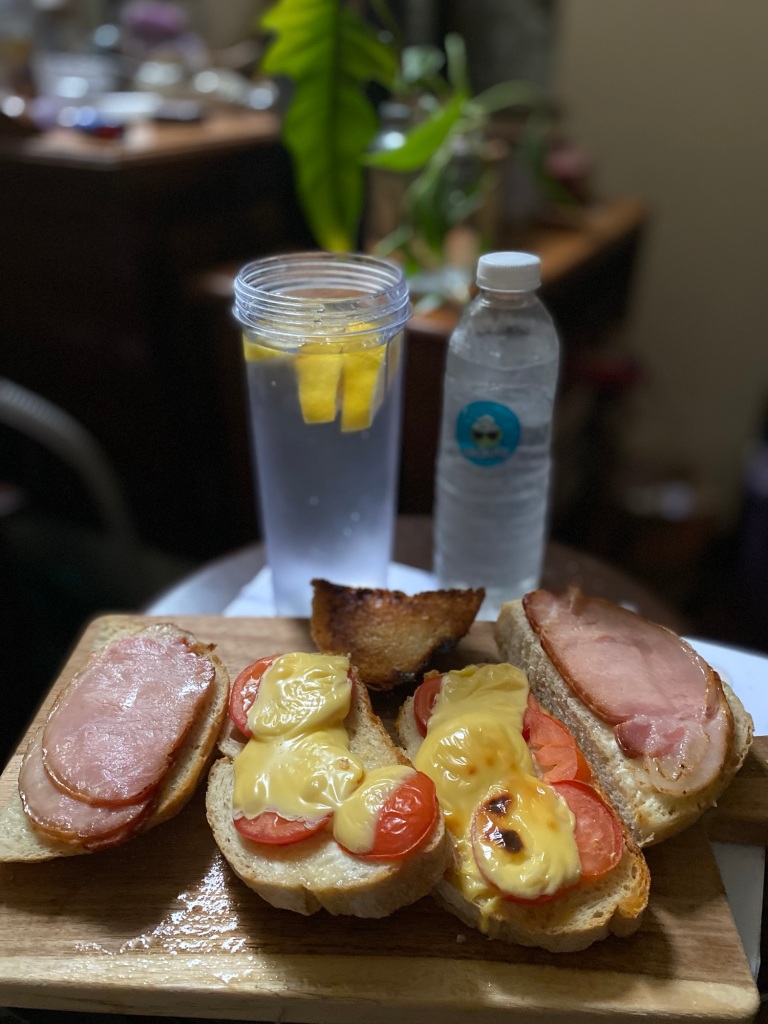
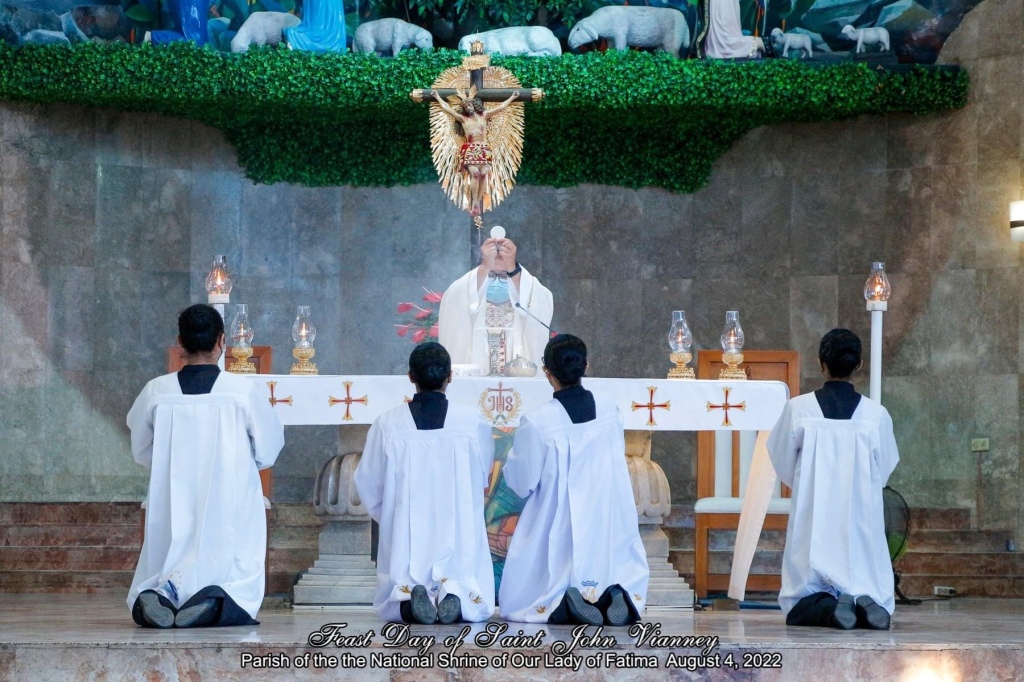
Photo by author, 24 May 2024.
Universally speaking, every meal is more than eating and drinking but of togetherness, of deepening of our bonds as family and friends nourishing each other, becoming food and drinks for one another.
It is the same thing the happens in a more complete and perfect manner whenever we celebrate the Holy Eucharist.
By giving us His very self as Body and Blood, Jesus Christ our host in this sacred meal not only nourishes our spiritual and deepest longings but most of all offers us the most intimate communion possible with others and with God. Jesus is the one who makes everything possible for us to be together, calling us to “come to me, all you who are weary and burdened, and I will give you rest…for I am humble and gentle of heart” (Mt.11:28-30).
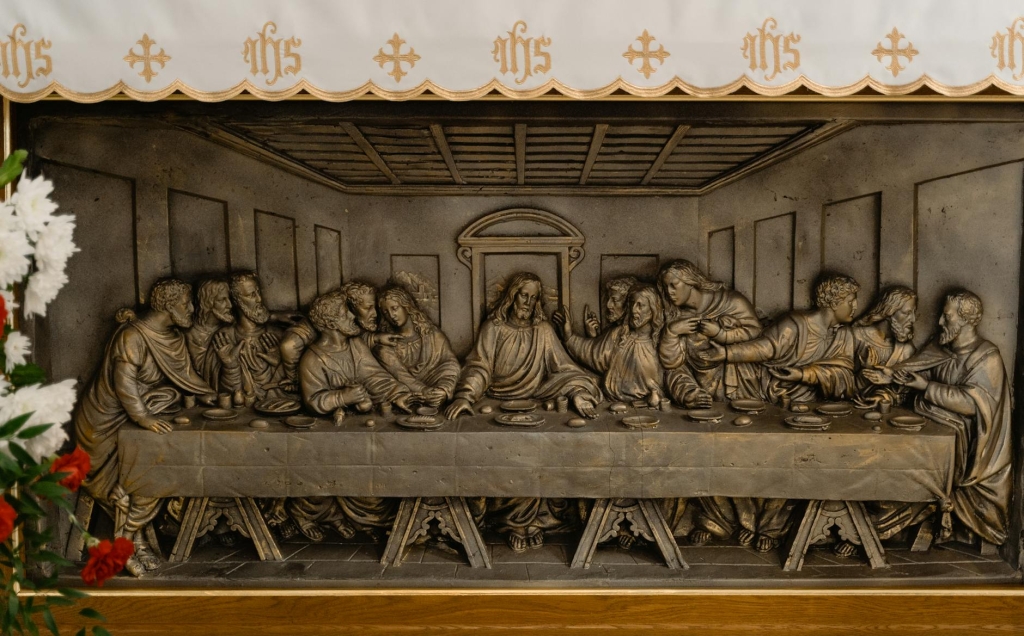
On the first day of the Feast of Unleavened Bread, when they sacrifice the Passover lamb, Jesus’ disciples said to him, “Where do you want us to go and prepare for you to eat the Passover?” He sent two of his disciples and said to them, “Go into the city and a man will meet you, carrying a jar of water. Follow him. Wherever he enters, say to the master of the house, “The Teacher says, ‘Where is my guest room where I may eat the Passover with my disciples?’ Then he will show you a large upper room furnished and ready. Make the preparations for us there.” The disciples then went off, entered the city, and found it just as he had told them; and they prepared the Passover.
See how Jesus personally prepared everything for their Passover meal when He arranged everything with coded messages like following “a man carrying a jar of water” because at that time, it was the woman who fetched water. You cannot find a man carrying a jar of water unless there is something extraordinary like in our gospel today. And that is how much God loves us, always taking the initiative to meet us, to encounter us, to be closest with us.
It is always Jesus Christ who takes the initiative to meet us and bless us like in the Holy Eucharist. Imagine at the start of the Mass, right away He welcomes us even if we are sinners, granting us pardon even before we have asked forgiveness. In the Eucharist, we receive Jesus Christ personally like the apostles at the Last Supper this time under the signs of bread and wine as His Body and Blood, drawing us closer to Him.
That is what really happens in the sacred meal of the Holy Eucharist, a divine communion!
I tell people that after receiving Jesus in the Holy Communion, speak to Him in the most personal manner, tell Him everything whatever you want, including your cries and complaints. But, like in every meal, listen too to Jesus who has always has something so personal to tell us.
Here we find an essential element in every meal, in every conversation, in a covenant: our responsibility, our response to the offer of our host Jesus Christ. This is the meaning of Moses splashing the blood of the animal offerings to the people in sealing their covenant with God: the blood symbolized life or gift of self, our giving of ourselves to God our Lord. Jesus perfected this in the sacrament of the Holy Eucharist as the Letter of the Hebrews tells us:
Brothers and sisters: When Christ came as high priest of the good things that have come to be, passing through the greater and more perfect tabernacle not made by hands, that is, not belonging to this creation, he entered once for all into the sanctuary, not with the blood of goats and calves but with his own blood, thus obtaining eternal redemption. For this reason he is mediator of a new covenant: since a death has taken place for deliverance from transgressions under the first covenant, those who are called may receive the promised eternal inheritance.
Hebrews 9:11-12, 15
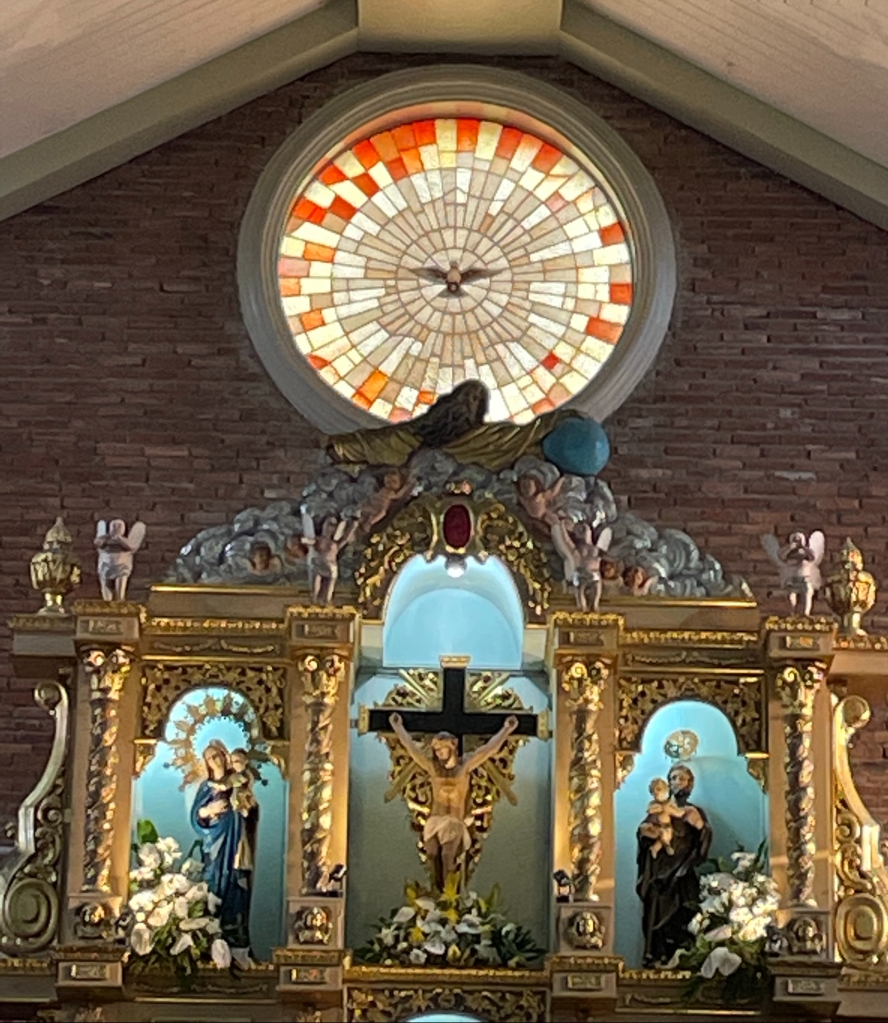
Photo by author, Chapel of St. Francis Xavier, Sacred Heart Novitiate, Novaliches, QC, 20 March 2024.
Here we find the element and essence of sacrifice of Jesus as sacrifice of the Mass. From the Latin words sacra facere that means to make holy or sacred, Jesus offered Himself as a sacrifice for us to make us holy like Him. In the Mass, we do not repeat His sacrifice but makes it present, actual in ourselves.
For us to receive Jesus Body and Blood in the Eucharist, we too give ourselves to Him to become His very presence in the world not only in the community gathered as His mystical Body or Church but most of all, in our union as family and friends like in Marriage. But, remember that the sacrament is not everything. We have responsibilities to nurture, deepen and protect the grace every Sacrament bestows us. What do we give? What do we sacrifice?
My dear friends, that aspect of mortification in sacrifice is accidental. We do not sacrifice or give up something merely to deny ourselves of something good. To sacrifice is not to deprive oneself of life but actually to offer oneself to a higher life. That is why we sacrifice for our loved ones and even for ourselves to achieve our dreams and aspirations. God asks us to sacrifice not because He needs us but in order to make us better, to make us holy, more equipped to keep our end in His covenant. Hence, divorce is contrary to the Eucharist, to the covenant of God.
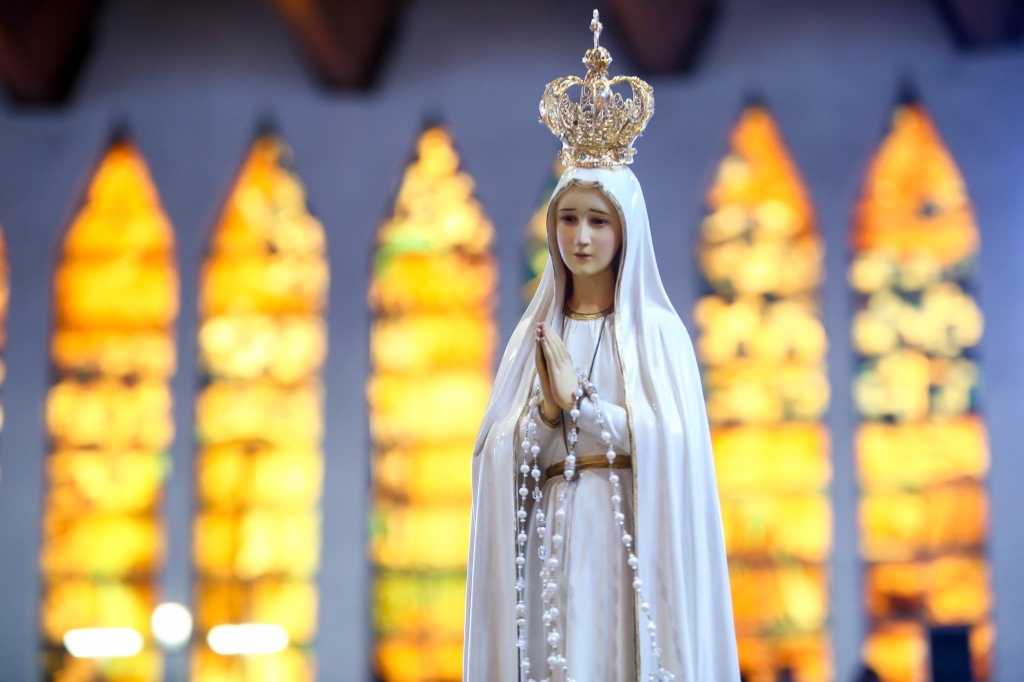
Photo by Ka Ruben, National Shrine of Our Lady of Fatima, Valenzuela City, 2022.
There is no perfect marriage nor perfect couples but every marriage is made in heaven, blessed by God. Problems do happen indeed in many marriages or in life in general but these are of human origins – the hardness of our hearts as Jesus declared, not with the sacrament or with life itself.
Everybody has got to give, has to sacrifice. The best things in life are not free, especially a happy marriage. Or a fulfilling ministry or career or whatever. We have to give ourselves too in the same manner Jesus gave us Himself on the Cross. Problem is we no longer sacrifice in these days of instants that even that most wonderful union of man and woman called marriage is being destroyed by some in the pretext of a solution with divorce.
In celebrating the Solemnity of the Body and Blood of Jesus Christ today, we experience the love and unity of God expressed in last week’s celebration of the Blessed Trinity, of how the three Persons in their mutual giving of self to each other outpoured upon us life and abundant blessings.
Like the three Persons bonded in love, we too can achieve that unity with God and with others through the Holy Eucharist when we too learn to sacrifice, assuring us of God’s presence among us in the ordinary instances in life. Experience God in every movement, in every step as He always takes the initiative to meet us, to be with us so we become like Him.
Let us pray:
Lord Jesus Christ,
You have given me Your total self
in love, Body and Blood
on the Cross and daily in
the sacrifice of the Mass;
You never asked me to give
myself literally: You merely ask me
to be more loving and kind,
to be more forgiving and merciful,
to be more charitable;
what's more, every good deed
I am able to do actually comes from You!
I practically just have to be Your lips,
Your hands, Your limbs, Your Body and Blood
and yet, I could not give up myself to You!
Help me Jesus
to learn to sacrifice,
to offer my body,
my total self to You
through the loving service of others.
Amen.
The Lord Is My Chef Daily Recipe for the Soul by Fr. Nicanor F. Lalog II
Friday, Feast of the Visitation of the Blessed Virgin Mary, 31 May 2024
Romans 12:9-16     ><]]]]'> + >>]]]]'> + >>>]]]]'>     Luke 1:39-56
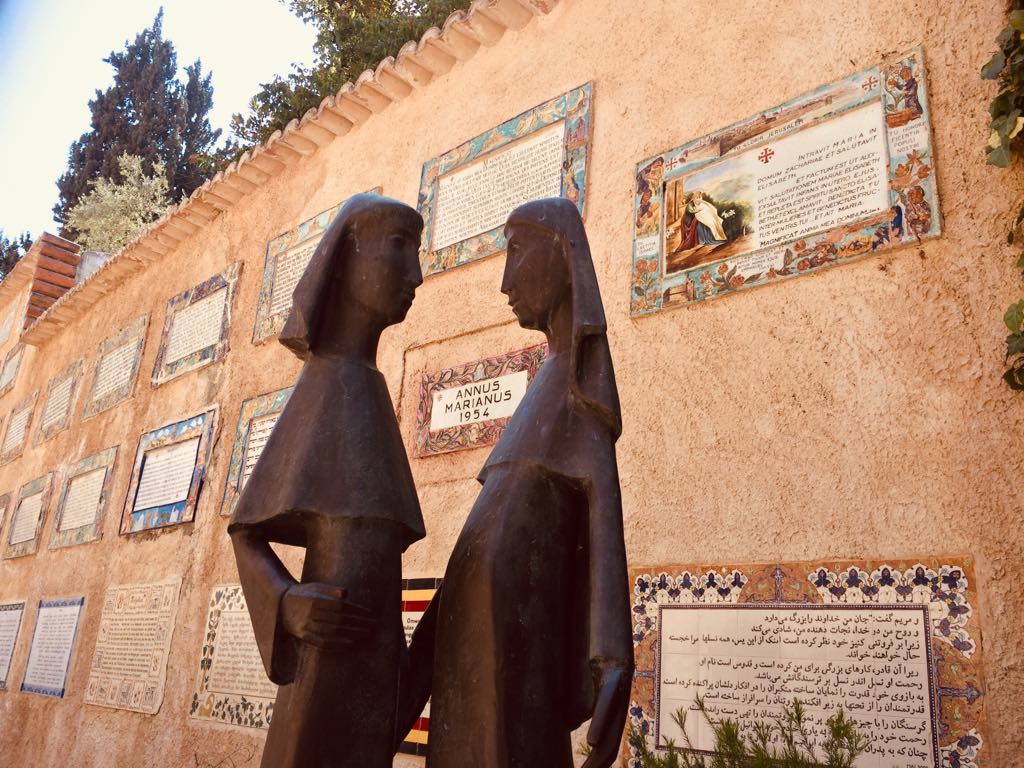
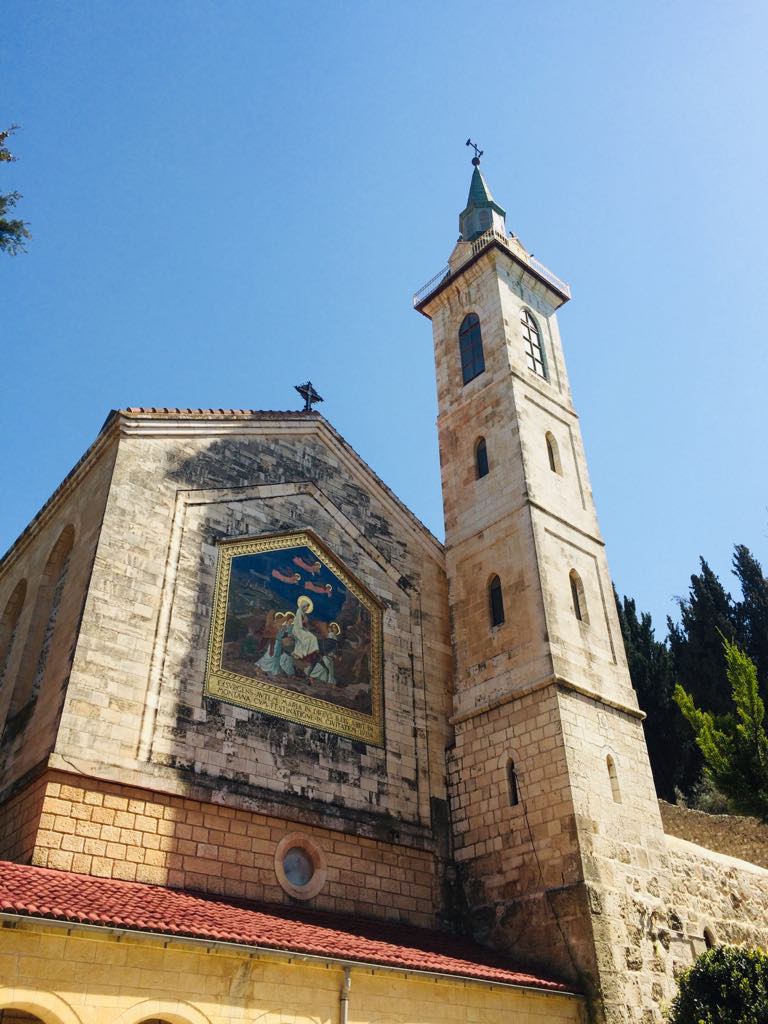
Photo by author, statues of Mary and Elizabeth at the Church of the Visitation in ein-Karem, the Holy Land, May 2017.
What a lovely way to end the month with this feast of the Blessed Virgin Mary’s Visitation of her cousin Elizabeth after starting off May on its very first day with another feast, St. Joseph the Worker that remind us of God’s coming to us in Jesus Christ.
Visit and visitation may seem to be one and the same, sharing the common Latin root word of the verb vide, videre “to see” from which came the word video.
But, a visit is more casual and informal without intimacy at all. We say it so well in Filipino, napadaan lang or just passing by which is more concerned with the place or location and site, not the person there. Napadaan lang ako kaya dinalaw na rin kita (I was just passing by and decided to see you). There was really no intention in seeing the other person there.
Photo by author, Church of the Visitation, Ein-Karem, Holy land, May 2017.
Visitation is more intentional. Mr. Webster described it as a more formal visit commonly used in church language like when bishop and priests come to see their parishioners. This explains why we refer to a chapel as a visita which is actually a small church in remote places that missionaries used to visit for the sacraments. Likewise, visitas became venues too for catechism classes and other religious even social gatherings in places far from the town itself where the parish is usually situated too.
Thus, visitation connotes a deeper meaning because there is an expression or implication at least of care and concern among the people, a kind of love shared by the visitor like Mary to the one visited, Elizabeth.
Visitation is more of entering into someone’s life and personhood as reported by Luke in Mary’s visitation of Elizabeth when “Mary entered the house of Zechariah and greeted Elizabeth” (Lk.1:40). There was a communion and sharing of their common experience of being blessed with the presence of God in their wombs.
Visitation is a sharing, a oneness in the joys and pains of those dear to us. The word becomes more meaningful when we examine its Filipino equivalent pagdalaw from the root word dala or something you bring like food or any gift when visiting relatives and friends. What you bring or dala is called pasalubong from the root salubong that literally means “meeting” or “encounter”. When the visitor and ones visited meet, they salubong.
Here it becomes more colorful and meaningful because more than the gifts we bring or dala in our visitations, we bring our very selves as a gift of presence. In every visitation, it is our very selves we gift, we share with those we visit, offering them our time and talent, joys and sadness and ears and heart to listen to their stories and absorb their woes and whatever they may have to unload upon us.
Photo by author, 2019.
That was what Mary did exactly in her visitation of Elizabeth with an extra gift, the most precious pasalubong to share with everyone, Jesus Christ in her womb, right in her very self and body!
We too are invited every day to be like Mary, a bringer or taga-dala of Jesus Christ to everyone we meet, the best pasalubong we can share with everyone. If we can only be like Mary in our dealings with others, trying to make every encounter a visitation that is a willful bringing and sharing of Christ with others, then we also bring with us God’s tenderness and mercy for this dark world that admires toughness and roughness.
How sad are those news of daily road rages happening almost everywhere, many times resulting in the loss of lives like the recent fatal shooting of a family driver in Makati.
Through the Blessed Mother’s humility and obedience before God, Christ came into the world to make us experience the Father’s tenderness in the many healings and miracles He performed. This tenderness of God in Jesus we saw too in Mary His Mother in the Visitation: Mary visited Elizabeth because she knew and felt her many wounds who for a long time bore no child, living in “disgrace before others” as she had claimed (Lk.1:25). A tender person like Jesus and Mary is one who comes to comfort and heal the wounds of those hurt in life, trying to lullaby the restless and sleepless, never adding insult to injuries.
Photo by author, Sacred Heart Novitiate, Novaliches, QC, 20 March 2024.
One last thing about the Visitation of Mary to her cousin Elizabeth. One of the best things we can experience from visitations and visits of family and friends like during wakes and funerals is that quality of sweetness.
Sweetness always goes with tenderness. It is the essence of God who is love. Anyone who loves is always sweet that always comes naturally from within, bringing out good vibes. It is never artificial like Splenda, always flowing freely and naturally that leaves a good taste and feeling to anyone.
In the Hail Holy Queen, Mary is portrayed as “O clement, O sweet Virgin Mary” to show her sweetness as a Mother. Recently I have seen some posts making a meme (?) of the Hail Holy Queen’s part that says “to you do we cry poor banished children of Eve”. I have not really dealt it with much attention because too often, there are a lot of generation gaps in many posts in social media; I really cannot relate much to the young perhaps due to my age. I just hope that post on the Hail Holy Queen is not derogatory. Back to our reflection…
Tenderness and sweetness are the most God-like qualities we all have but have unconsciously buried deep in our innermost selves, refusing them to surface because of our refusal to love for fears of getting hurt and left behind or lost. When Mary heard Elizabeth’s pregnancy, she simply followed her human and motherly instincts that in fact so Godly that she went in haste to hill country of Judah. How lovely!
Tomorrow it is already June, reminding us all we are halfway through the year. And it would be surprisingly quick that soon, it is already Christmas again! This feast of the Visitation reminds us of Mary’s great role in making Christmas a reality when God almighty became human, little and vulnerable like us to experience His sweetness and tenderness in Jesus Christ. Through Mary.
Let us pray:
God our loving Father,
thank for coming to us,
for staying with us,
not just visiting us;
help us imitate Your Son
Jesus Christ's Mother,
the Blessed Virgin Mary
whose "love is so sincere",
loving one another like Elizabeth
with "mutual affection,
showing honor,
fervent in spirit,
serving the Lord;
help us imitate Mary
to always rejoice in hope,
endure afflictions and
most of all, persevere in prayer"
(cf. Romans 12:9-12)
so we may always bring
Jesus Christ with everyone
we meet.
Amen.
From cbcpnews.net, 13 May 2022, at the Parish of the National Shrine of Our Lady of Fatima, Valenzuela City.
The Lord Is My Chef Daily Recipe for the Soul by Fr. Nicanor F. Lalog II
Thursday in the Eighth Week of Ordinary Time, Year II, 30 May 2024
1 Peter 2:2-5, 9-12     <*((((>< + ><))))*>     Mark 10:46-52
Illustration from linkedin.com.
Teach us, Jesus,
to be like Bartimaeus;
let us admit our blindness
to what true and good and beautiful
that is YOU;
teach us to be like
Bartimaeus to cry out to
You, Jesus,
to wait for You always,
to believe in You as the Only One
who can heal us of our blindness;
most of all,
teach us, Lord,
to leave the side of the streets,
to come to You, Jesus
to the middle of the road
to follow You on the way to
the Cross!
He threw his cloak, sprang up, and came to Jesus.
Mark 10:50
Forgive us, dear Jesus
for being so afraid,
to confront head on
the many ongoing
debates and attacks
against Your teachings
we hold so dearly
like the value of every person,
the inviolability of human life,
the sanctity of marriage;
forgive us, Jesus
when we hide in being "open"
choosing to be silent
just to accommodate the few
noisy people advocating for
too much rights without any
responsibilities,
speaking about equality
without any regard at all for
God and religion,
spirituality and theology.
Let us be like Bartimaeus
shouting louder than ever
amid calls of some to be silent,
to not insist Your teachings on others
when it is indeed the only one
true and just;
let us be like Bartimaeus
by affirming who we are -
"a chosen race,
a royal priesthood,
a holy nation,
a people of his own,
so that we may announce
Your praises who called us out
of darkness into his wonderful
light"
(1 Peter 2:9).
Have pity on us,
Jesus,
we want to see You
and follow You.
Amen.
The Lord Is My Chef Daily Recipe for the Soul by Fr. Nicanor F. Lalog II
Wednesday, Memorial of St. Paul VI, Pope, 29 May 2024
1 Peter 1:18-25     ><}}}}"> + ><}}}}"> + ><}}}}">     Mark 10:32-45
Photo by author, Sacred Heart Novitiate, Novaliches, QC, 20 March 2024.
What a lovely Wednesday
we have, God our loving Father
right in the middle of so many
issues that make us examine our
heart and soul,
what we truly value in this life
as Peter reminds us of how much
You value us so much as a people,
every individual person:
Beloved: Realize that you were ransomed from your futile conduct, handed on by your ancestors, not with perishable things like silver or gold but with the precious Blood of Christ as of a spotless unblemished lamb… You have been born anew, not from perishable but from imperishable seed, through the living and abiding word of God.
1 Peter 1:18-19, 23
Through Your Son
Jesus Christ our Lord,
help us realize dear Father
these truths and realities
of Your immense love
for each one of us
while we waste
and take for granted
the value of human life
especially at its most vulnerable
stages of infancy and old age
as well as the sanctity of marriage;
enlighten our minds and our hearts,
especially those of our lawmakers
and policy makers,
most of all,
the masses who are misled by
so many into believing in the need
for contraceptives and abortions,
and divorce.
Forgive us, dear Jesus
for the "hardness of our hearts"
in insisting our own
rules and laws,
blinded by glory of power
and wealth like the brothers
James and John;
let us heed your call that
"whoever wishes to be great
among you will be your servant"
(Mark 10:43).
In this great period in our history
as a Christian nation when some people
claiming to know more,
claiming to know better
totally disregard facts
and true wisdom from the Spirit
in advocating divorce and other
agenda promoting the "culture of death",
grant us O Lord Jesus Christ
the courage You gave St. Paul VI
to go against the tide by standing firm
on Your truth in upholding human life
by choosing the minority report
"Humane vitae":
St. Paul VI did not mind at all
being maligned and persecuted
even within the Church
for he believed firmly at how You,
O God value every person;
how beautiful that in the end,
You proved him right
when You allowed
St. Paul VI to intercede twice
in the miraculous birth of two babies
recommended by doctors for abortion
due to difficult pregnancy and disability
that eventually paved the way for his
beatification and canonization.
Like St. Paul VI,
let us be rooted in You, O God
as we "dialogue with the modern world"
by leading people to You
in order to find fulfillment
and meaning in life
in the name of Christ.
Amen.
St. Paul VI,
Pray for us!
Pope Paul VI is seen in this portrait made in early 1969 (CNS photo) via wikipedia.org.
The Lord Is My Chef Daily Recipe for the Soul by Fr. Nicanor F. Lalog II
Tuesday in the Eighth Week of Ordinary Time, Year II, 28 May 2024
1 Peter 1:10-16     ><]]]]'> + ><]]]]'> + ><]]]]'>     Mark 10:28-31
Photo by author, Simon Peter before Jesus after their bountiful catch in Galilee, May 2017.
Forgive me Jesus
for being so like Simon Peter,
so irrepressible on many occasions,
saying things without much
thinking and reflection
like in today's gospel
when he bragged to You,
"We have given up everything
and followed you" (Mark 10:28);
let me be aware always that
all that I have,
whatever good I can do
are all because of You, Jesus;
like Simon Peter,
let me grow and mature
in my faith in You
when he wrote us today
"be holy yourselves in every
aspect of your conduct,
for it is written, Be holy
because I am holy"
(1 Peter 1:15-16).
Make me holy, Lord,
fill me with Your Spirit
by first emptying me
of myself,
of my pride,
of my insecurities,
of my sins
in order to be filled
with Your Spirit
so I may truly conform to You
and be Your presence
in the world today;
I know I have not
given that much yet
to You through others
for I still think of myself always;
take away whatever
I still keep and hide to myself
that I am not aware of,
remind me to abandon
and offer everything to You.
Amen.
12th century mosaic from Sicily of Peter drowning from orthodoxartsjournal.org.
The Lord Is My Chef Sunday Recipe for the Soul by Fr. Nicanor F. Lalog II
Solemnity of the Most Holy Trinity-B, 26 May 2024
Deuteronomy 4:32-34, 39-40 ><}}}*> Romans 8:14-17 ><}}}*> Matthew 28:16-20
Photo by author, the Holy Trinity as depicted at the Parish of St. John the Baptist, Calumpit, Bulacan, March 2021.
We are now into the Ordinary Time and for the next two consecutive Sundays we are celebrating three important Solemnities in the next three weeks.
First in these series of Solemnities in Ordinary Time is that of the Most Holy Trinity, the highest truth in our faith which is our belief in One God in three Persons. Contrary to common beliefs, mysteries can be explained and understood, but, not fully well. After all, mysteries are not really meant to be solved but simply be lived and enjoyed like the mystery of the person which is in the heart of the Most Holy Trinity: How can there be three Persons in one God?
Moses said to the people: “Ask now of the days of old, before your time, ever since God created man upon the earth; ask from one end of the sky to the other: Did anything so great ever happen before? Was it ever heard of? Did a people ever hear the voice of God speaking from the midst of fire, as you did, and live? Or did any god venture to go and take a nation for himself from the midst of another nation, by testings, by signs and wonders, by war, with his strong hand and outstretched arm, and by great terror, all of which the Lord, your God, did for you in Egypt before your very eyes?”
Deuteronomy 4:32-34
Photo by author, sunrise at the Lake of Galilee in Israel, May 2019.
Our first reading this Sunday invites us too to examine ourselves and our lives to see how God has been so personal, so relational with us. As we say in Tagalog, “Sigue nga, paano mo naranasan ang Diyos?”
How did you experience God? Was it not just like the way we experienced other people in our relationships?
Very often when we meet people, our tendency to welcome or accept them were a result of their conduct, of their approach to us. If they are kind and good natured and warm, we are easily disarmed and we feel like knowing them.
That is what Moses was telling his people at that time, including us today: recall how personal was God in dealing with us with all His warmth and love because they indicate relationships and therefore, another person to relate with.
“The Trinity” (1425-27), an icon by Russian artist Andrei Rublev from wikipedia.org.
Remember how the books of the bible were written: the first questions the biblical writers asked were not the origins of the world but those asked by Moses today. After they have experienced the kindness and love of God that they eventually asked and reflected on the origins (genesis) of everything on earth and the universe.
In that experience, they felt a relationship with a Father as source of all life like dads giving life as well as protecting life and giving back life to those who may have lost it. That personal experience of God as a Father so loving and caring moved the biblical writers too to ask and reflect on the presence of evil and sufferings as we find in the Wisdom books like the Psalms and the Book of Job.
There is always the primacy of God’s personal relationship and of His conduct towards us humans that prompt us to “know” Him, to believe Him. Like people dear to us, God first revealed Himself to us in the most personal manner through a succession of events and other people we have met and known. That is why when we say “I believe in God”, we not only express a concept but also a relationship. Most of all, in this relationship is a commitment too to get to know God as a person! Before knowing any details about God or people, we first have relationships no matter how little it may be at the start. Later, we get phone numbers and other contact details with people we meet because we feel “committed” to getting to know them more in the future. In a sense, we believe them that is why we keep in touch with them. The same is true with God.
Photo by author, St. Catherine’s Monastery at the foot of Mt. Sinai in Egypt, May 2019.
The word person means “a conscious relating being”. Whether with God or with others, we experience the person and the relationship unfolding through time. There is always first the experience of a conduct like kindness before questions and details of a person come.
That word “kindness” actually indicates a relationship because its root is kin that means “one of us” or “of same tribe”. When we say “he is so kind to me”, it means he treats me as one of his family or his own. In that kindness and whatever good conduct present, there seems to be an “invisible line” linking us with people we meet. Or with God which the Holy Spirit does.
Of the Trinity, the Holy Spirit is the most elusive in nature and yet, it is the most frequently and concretely in contact with us. It is the principle of unity in the Trinity and among us as we have reflected last Pentecost Sunday. Today, St. Paul explains to us how the Holy Spirit as a Person keeps these relationships among us and with God united and strong, enabling us to cry out “Abba” or “Our Father”. It is the Holy Spirit who gives us the courage to keep our relationships as persons and with God especially at this modern time when some people refuse to recognize God and worst, some are bent in deleting God entirely from life.
That is why in today’s gospel, Jesus instructed His disciples including us today to “Go, therefore, and make disciples of all nations, baptizing them in the name of the Father, and of the Son, and of the Holy Spirit, teaching them to observe all that I have commanded you” (Mt.28:19-20). Persons always presuppose relationships; hence, the need to gather others always like what God did and continues to do in His Church.
It has been three weeks since my mother peacefully passed away. People ask me how am I doing. Truth is, I am not so well. I miss mommy so much. It is true we only realize the value of a person after he/she is gone. And it is most difficult with mothers!
Photo by author, Mt. Sinai in Egypt, May 2019.
Every time I come home, I have that strange feeling, wondering deep inside me of that great mystery, how did it happen that it was my mom – just one person – who had left us but our home has become so empty? Since May 7, that image of mommy’s empty room after her body was taken to the funeral had remained in my mind and as days passed, I have noticed how our home has been so hollowed when there are still my siblings and niece staying in the house?
That is the gift of person. A person fills not only spaces and homes but most of all, fills us. Every person fills another person in the same manner God first fills us with His love through persons dearest to us. That is why we believe in God.
Let us have good relationships with others so they may experience God too in their lives. Let us gather in the Father’s love in Jesus Christ to celebrate the gift of life together in the Holy Spirit through one another. Let us pray:
God our loving Father,
thank you for the gift of life,
for my gift of person
and for the gift of so many
persons in my life;
dwell in me, Holy Spirit,
fill me with your fire and life,
animate me with the Son's
justice and love
so that in myself
the mystery
of the Blessed Trinity
be alive.
Amen.
The Lord Is My Chef Daily Recipe for the Soul by Fr. Nicanor F. Lalog II
Friday, Memorial of Our Lady of the Way (Madonna Della Strada), 24 May 2024
James 5:9-12     ><))))"> + ><))))"> + ><))))">     Mark 10:1-12
Photo by author, Santa Maria Della Strada Chapel, Sacred Heart Novitiate, Novaliches, QC, 20 March 2024.
Lord Jesus Christ,
on this 24th of May,
I join the Society of Jesus
in honoring Your Mother
they have affectionately called
Santa Maria Della Strada,
Our Lady of the Way;
thank You for introducing me
to her last year, a wonderful
title of Mary reminding me always
of You, Jesus, who declared Yourself
as "the Way, the Truth, and the Life"
(John 14:6).
Help me, O Lord,
along the way,
to be faithful to You,
keeping in mind the reminders
of St. James today to
"not complain about one another...
to persevere like the prophets...
and do not swear, either by heaven
or by earth or with any other oath,
but let your 'Yes' mean 'Yes' and
your 'No' mean 'No'" (James 5:9, 11, 12).
How timely are Your words,
O Lord, in this world where promises
and oaths are made only to be broken;
make us more sincere in our words,
to really mean what we say,
to be committed and persevering
always in standing by who we are
as children of the Father,
called to love and be merciful
like Him.
We pray for all couples
as well as priests and religious
having crises in keeping
their vows to You, Jesus,
to lovingly serve You among
the people You have entrusted us;
through Mary Your Mother,
our Lady of the Way,
may we find You always Jesus
in every turn and stop we make,
to persevere especially when the
path is so narrow and difficult,
never to turn away when we find
the Cross looming in sight.
Forgive us, dear Jesus,
for the "hardness of our hearts",
especially in those moments
we refuse to listen and even stifle
Your tiny voice of truth and
compassion in our hearts,
when we insist on following our
own ways of pride and power
than Your ways of
peace and justice,
kindness and care;
take away our stony hearts, Lord,
and give us natural hearts
that beat with firm faith,
fervent hope and
unceasing charity and love
in You like Mary,
our Mother.
Amen.
Photo by author, Santa Maria Della Strada Chapel, Sacred Heart Novitiate, Novaliches, QC, 20 March 2024.
The Lord Is My Chef Daily Recipe for the Soul by Fr. Nicanor F. Lalog II
Thursday, Feast of Our Lord Jesus Christ, the Eternal High Priest, 23 May 2024
Hebrews 10:11-18     <*{{{{>< + <*{{{{>< + ><}}}}*> + ><}}}}*>     Mark 14:22-25
Praise and glory to You,
Lord Jesus Christ for reminding us
this Thursday after the Pentecost
of Your call for us to be like You,
our Eternal High Priest,
in gentleness and mercy,
kindness and love;
and the good news is
all these are already in us
when we were baptized
to share in Your priesthood
the Father had promised
to Jeremiah fulfilled in You:
The holy Spirit also testifiesd to us, for after saying: “This is the covenant I will establish with them after those days, says the Lord: ‘I will put my laws in their hearts, and I will write them upon their minds,'” he also says: “Their sins and their evildoing I will remember no more.” Where there is forgiveness of these, there is no longer offering for sin.
Hebrews 10:15-18
Two Sundays ago,
we celebrated Your Ascension
that is more relational in nature
than spatial, the leveling up of
our relationships with You and
with one another that is affirmed
today by this feast of You,
Jesus our Eternal High Priest
and Mediator when You
established the New Covenant
on that Last Supper:
As they were eating, Jesus took bread, and blessed, and broke it, and gave it to them, and said, “Take; this is my body.” And he took a cup, and when he had given thanks, he gave it to them, and they all drank of it. And he said to them, “This is my blood of the covenant, which is poured out for many.”
Mark 14:22-24
Photo by author, Chapel of St. Francis Xavier, Sacred Heart Novitiate, Novaliches, QC, 20 March 2024.
These words, dear Jesus
You fulfilled on the Cross
the following Good Friday;
in Your self-offering on the Cross,
You fulfilled the temple worship
by putting an end to
those bloody sacrifices,
rites and rituals of the Old that
were empty due to the sins
and weaknesses of
the priests and people;
in Your dying on the Cross
as fulfillment of Your words at
the Last Supper as our
Eternal High Priest and Mediator,
You have consecrated us as
Your holy people;
this perfect offering
is what we celebrate,
what we remember,
what we make present daily
in the Holy Eucharist;
help us, therefore, dear Jesus,
to be faithful and true to You
by being more loving with one
another as we face the Father
in the Sacrifice of the Mass
in You, through You and with You
Jesus by sharing in Your Priesthood,
help us laity and priests alike
to be true in our witnessing,
in our loving sacrifices for each other.
Every priest stands daily at his ministry, offering frequently those same sacrifices that can never take away sins. But this one offered one sacrifice for sins, and took his seat forever at the right hand of God. For by one offering he has made perfect those who are being consecrated.
Hebrews 10:11-12, 14
Photo by author, 2023.
Forgive us,
 Your priests and bishops,
dearest Jesus
whom You have called
to act in "persona Christi"
but have become more like
the priests of the Old Testament
so concerned with our
name and position,
power and wealth;
forgive us, Lord Jesus,
when we Your priests and bishops
look and move like matinee idols
or think and speak like managers
than pastors of souls;
forgive us, O Lord,
when we Your priests and bishops
have no more time to kneel daily
be with You in prayers
because we prefer
to socialize and party
with the rich and powerful
that we miserably fail
 in finding You
among the poor
 and the suffering.

Transform us
priests and bishops
to be more like You
Jesus Christ,
our Eternal Priest and Mediator
in thinking,
in speaking,
in doing,
in living,
most especially in loving.

Let us not forget
that You saved mankind
by suffering and dying on the Cross,
not with with programs
and activities
because Your glory
can only be found on the Cross
where death is conquered
and led to life and light.
Amen.