Advent is patient transformation to joy

Lord My Chef Sunday Recipe for the Soul by Fr. Nicanor F. Lalog II
Third Sunday in Advent-A (Gaudete Sunday), 14 December 2025
Isaiah 35:1-6, 10 ><}}}}*> James 5:7-10 ><}}}}*> Matthew 11:2-11
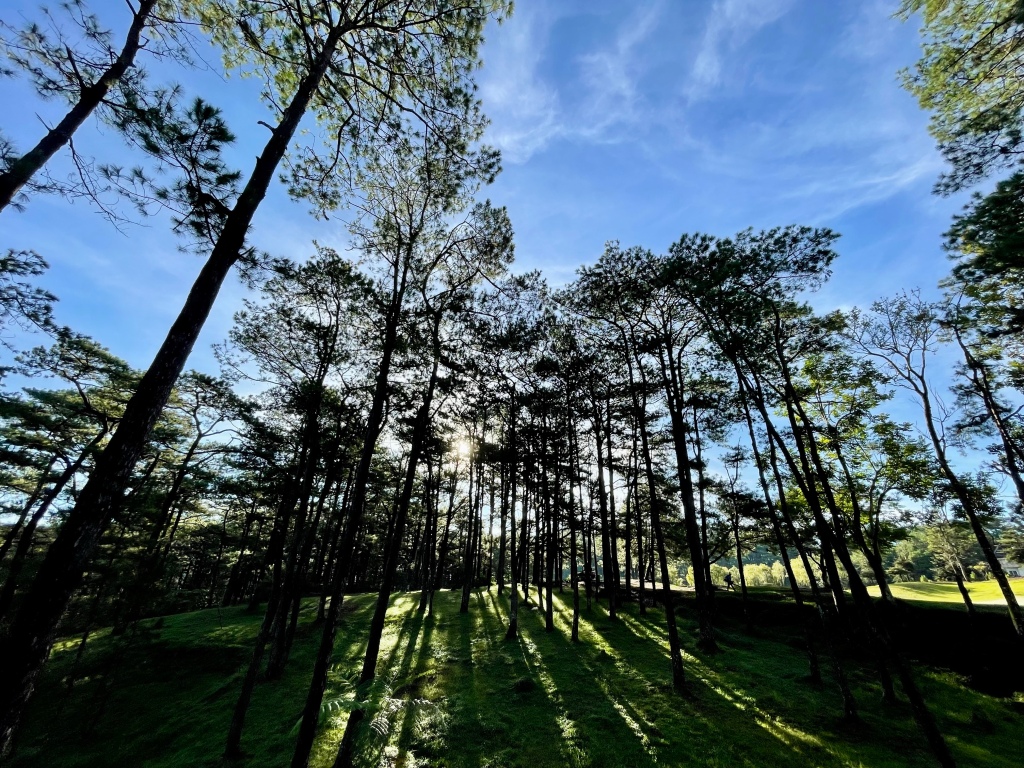
Photo by author, December 2019.

Our churches are bursting in hues of pink this Third Sunday of Advent rejoicing not only in the fast approaching Christmas but most especially in the Lord’s Second Coming already happening in our midst.

Like John the Baptist in today’s gospel who was imprisoned at the time, we could feel in our own waiting for Jesus his saving presence in the many good things happening within us and around us.

When John the Baptist heard in prison of the works of the Christ, he sent his disciples to Jesus with the question, “Are you the one who is to come, or should we look for another?” Jesus said to them in reply, “Go and tell John what you hear and see: the blind regain their sight, the lame walk, lepers are cleansed, the deaf hear, the dead are raised, and the poor have the good news proclaimed to them” (Matthew 11:2-5).

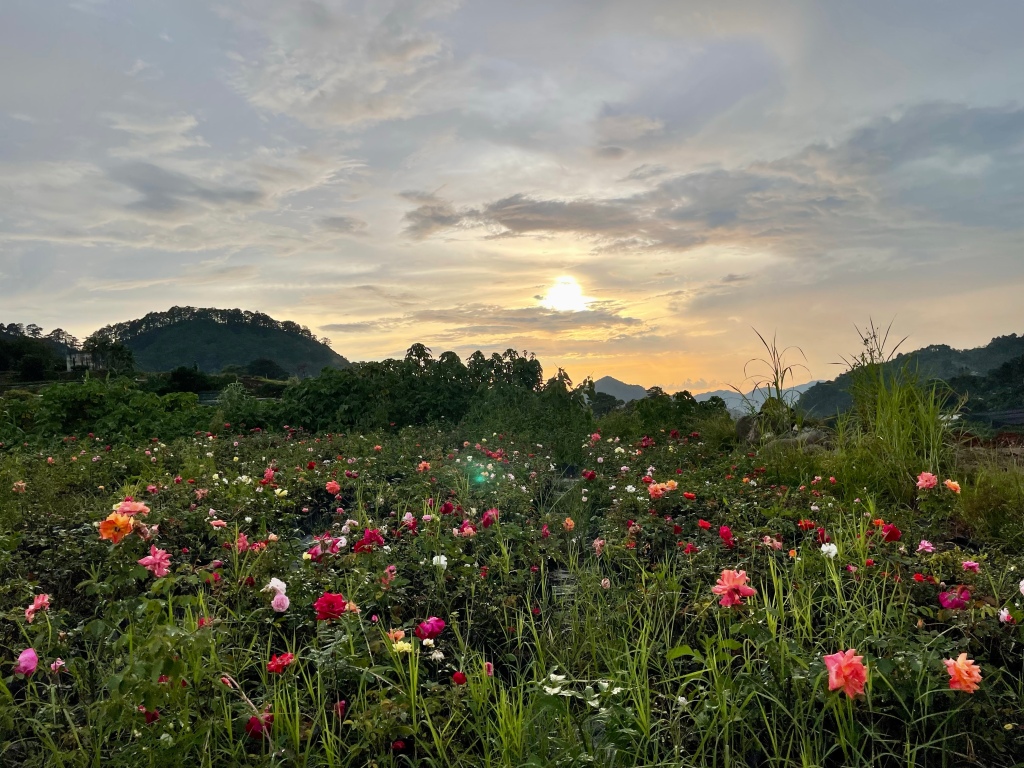
Photo by shy sol on Pexels.com

Remember our reflection last Sunday of John’s preaching in the desert of Jordan signifying our own desert where amid the dryness and emptiness Jesus comes to us, Jesus is most present with us and in us. That is because more than an imagery of nothingness and death, the desert signifies too our intimacy with God. Many times in life, God brings us or allows us to get lost in our own desert to experience his intimacy with us, his immense love for us because when we are sufficient and strong, we rarely feel him nor even desire him. But, when we are like in a desert with nothing, that is when we long for God, and most especially feel him present.

That is why every prophet in the Bible including our Lord Jesus Christ frequented the desert and wilderness to show their intimacy and communion with God. The desert is thus transformed into a greenery filled with life like what Isaiah prophesied in the first reading today:

The desert and the parched land will exult; the steppe will rejoice and bloom. They will bloom with abundant flowers, and rejoice with joyful song. The glory of Lebanon will be given them, the splendor of Carmel and Sharon; they will see the glory of the Lord, the splendor of our God… Then will the eyes of the blind be opened, the ears of the deaf be cleared; then will the lame leap like a stag, then the tongue of the dumb will sing (Isaiah 35:1-2, 5-6).

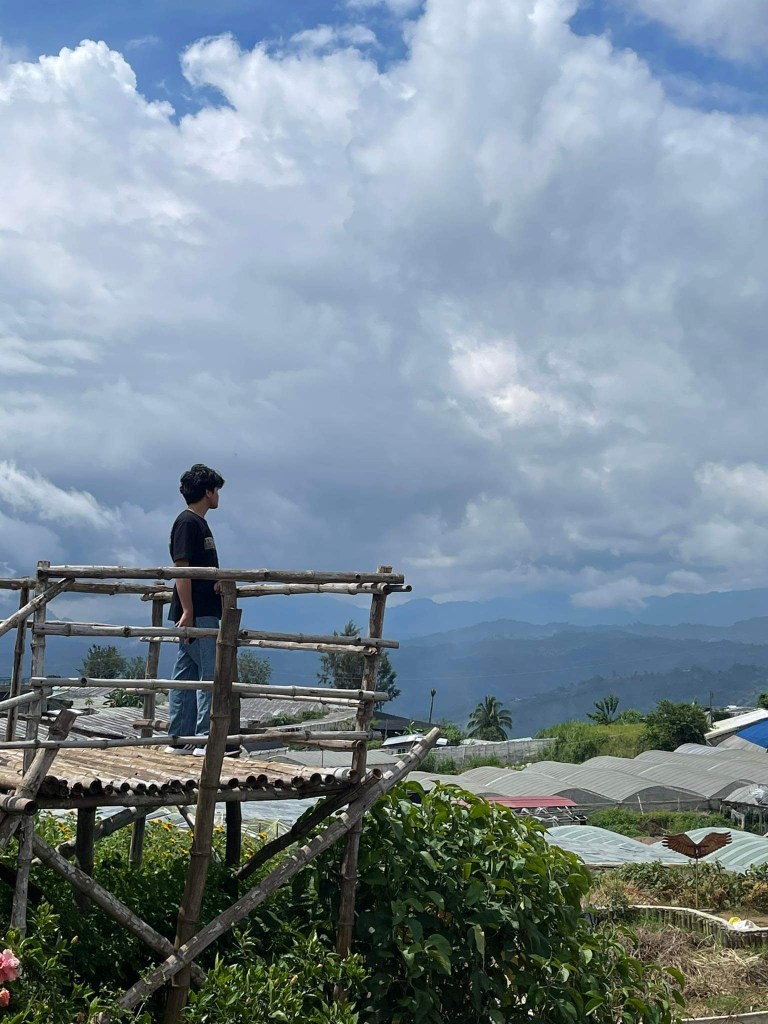
Photo by Walid Ahmad on Pexels.com

See now the transformations found in our readings: in the last two Sundays we heard Isaiah speaking of the dried and barren desert but today he spoke of its transformation into a lush and verdant stretch of land; in the gospel we find John still in the desert, firm and unchanging in his preaching though his situation had changed a lot.

Last Sunday John was freely proclaiming the coming of the Christ in the desert as he sternly warned the Pharisees and Sadducees of their judgment; this Sunday, John was still in the desert but imprisoned awaiting death when he reproached King Herod in taking his brother Philip’s wife Herodias. But despite that clear danger daily hanging on his head, John was not disturbed at all as he patiently awaited the coming of the Messiah that he sent emissaries to Jesus to ask if he is already the Christ.

Here we find something so human in John the Baptist, so much like us when we sort of doubt ourselves not because we lack faith but simply we just want to be sure of what we are hearing, what we have seen, of what God is really doing.

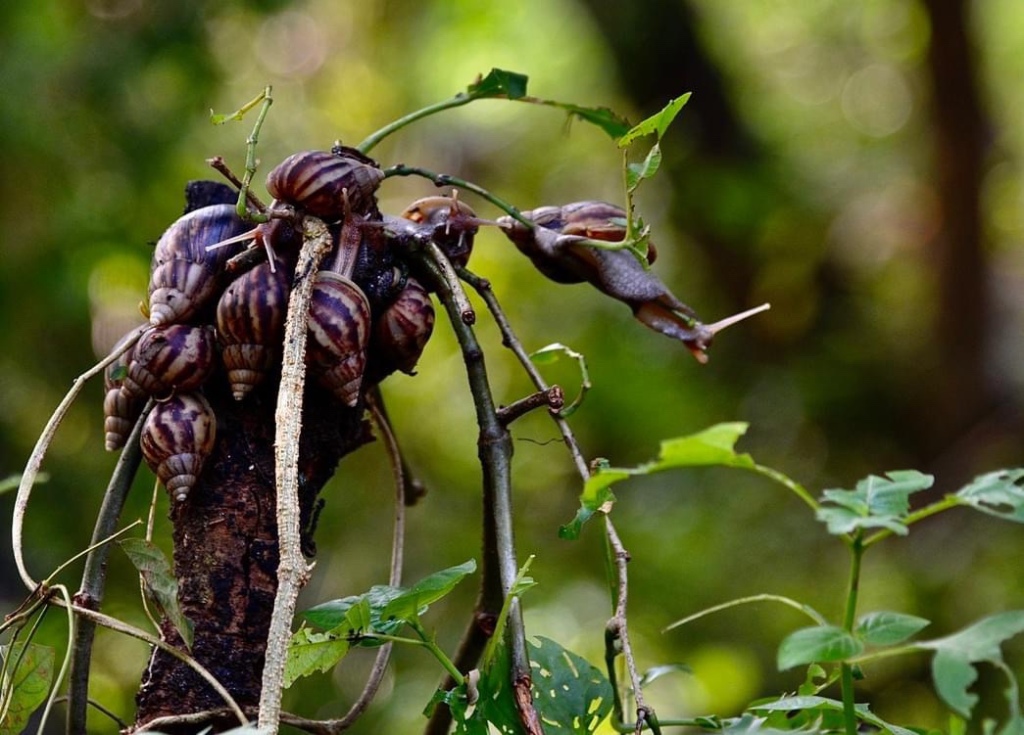
Photo by author, December 2021.

Let it be clear: like John, most often we doubt ourselves not really God when things happen not according to our plans or expectations. Inasmuch as life is a mystery, God is more mysterious! Most of the time, we cannot understand his ways because he moves so differently, even unpredictably from what we know and expect.

Perhaps, John had a different scenario in his mind about the arrival of the Messiah like in the Old Testament tradition of judgment day, of action-packed events punishing evil people. Recall how called the Pharisees and Sadducees “You brood of vipers…Even now the ax lies at the root of the trees. Therefore every tree that does not bear good fruit will be cut down and thrown into the fire (Mt.3:10). 

But something totally different was happening at that time as he heard while in prison – many people and their lives were being transformed. John realized something deeper than expected was going on in Judea and Galilee. And when his emissaries relayed to him the reply of Jesus, John realized that indeed the Christ he was proclaiming had arrived in Jesus. As a prophet well-versed with the scriptures, John found Jesus as the fulfillment of the prophecy by Isaiah when the blind can see, the lame can walk, dead are raised and the good news proclaimed to the poor.

It must have been a Nunc Dimittis experience of Simeon for John that soon enough, he died a martyr ahead of his Lord and Master Jesus Christ. John indeed prepared the way of the Lord in his birth and in his death, showing us the importance of patience in awaiting Christ and in experiencing the joy in his coming.

Be patient, brothers and sisters, until the coming of the Lord. See how the farmer waits for the precious fruit of the earth, being patient with it until it receives the early an the late rains. You too must be patient. Make your hearts firm, because the coming of the Lord is at hand (James 5:7-8).
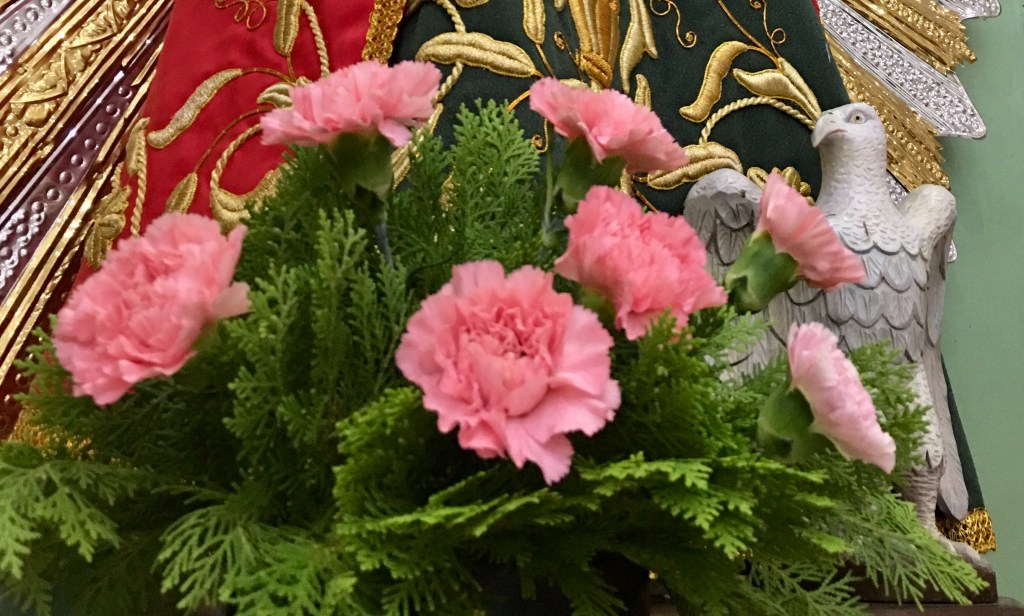
Photo by author, December 2020

Before the COVID pandemic, my brother and I used to rest at Camp John Hay in Baguio where he would buy in one of the shops there a line of local and organic perfumes. His favorite scent was called “Patience” but one time when we went there, it had ran out of stock that he said wryly, “maski ba naman pabango na patience, wala na rin?”

So true! Patience seems to have been almost extinct in this age of instants. Nobody wants to be patient anymore especially if one can have almost everything instantly. Even during the time of the early church, people have been impatient in life that St. James wrote them on the importance of patience in our journey of faith, in awaiting the Lord’s return.

From the Latin word patior that means to suffer, patience is a kind of suffering, of bearing the pain of waiting especially over a long period of time that we doubt if it is still worth the waiting at all. But we fail to “see” or realize as St. James pointed out like the farmer that waiting is never passive nor empty; there is always something wonderful happening that we do not see like the germination, growth and blooming of crops and plants. The more patient we are, the more suffering in waiting, the greater always the joy that comes when our waiting is finally fulfilled!

Advent teaches us this third Sunday that we need to be patient for waiting itself is a holy ground where we experience God’s coming and intimacy. Though patience tests our limits, it transforms us too!

Think of the stalactites and stalagmites in caves formed millions of years by drops of water. Or the great natural wonders of earth that took thousands of years of formation, transformation. Most of all, our very selves. Who we are and what we are today are long years of patient efforts to be healthy or successful or simply be alive. And that’s a great reason to rejoice.
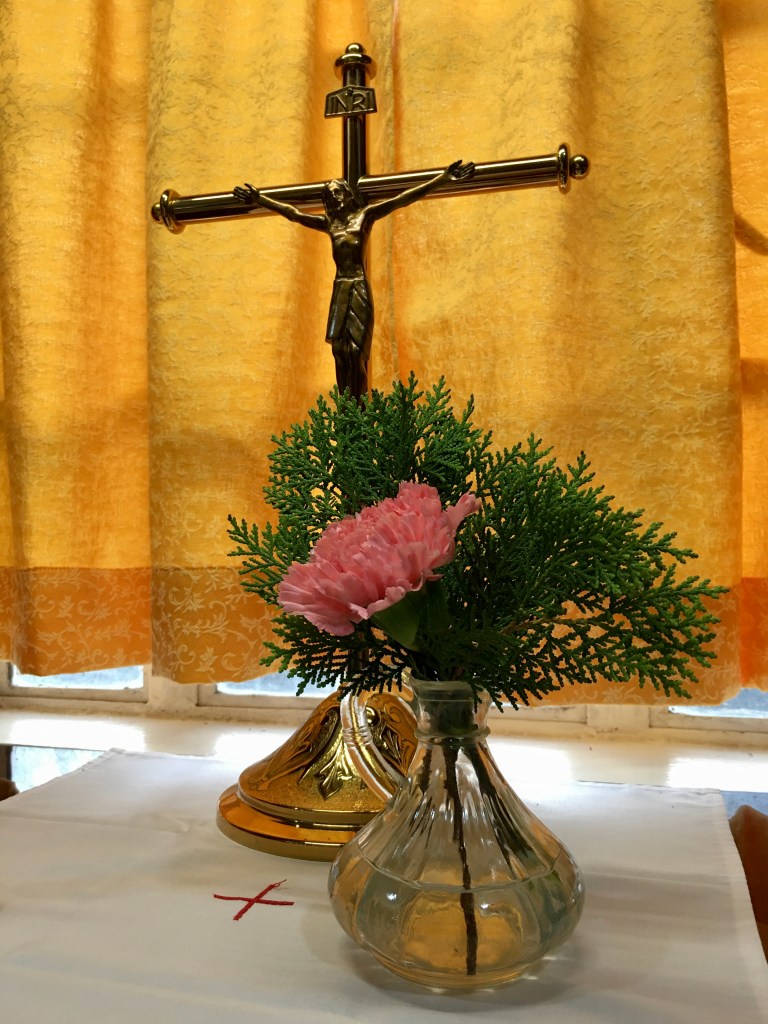
Photo by author, December 2020.

Patience is so difficult to practice like in our daily experiences of horrendous traffic everywhere but with patience, we arrive at our destination. Patience transforms us into better persons and disciples of Jesus, enabling us to rejoice no matter what is the situation we are into. It is in the midst of sufferings and waiting, of patience and impatience that Jesus calls us to experience his silent and steady presence resting upon us like the rains every farmer is so familiar with. Our joy is doubled, becoming a rejoicing when we practice patience in our endeavors, in life itself.

Let me end this reflection with a quotation I memorized as a child on the wall of our former family dentist’s office in Meycauayan, Bulacan that said:

Time is fast for people who rush;
time is slow for people who wait;
time is not for people who love.

The most loving persons are also the most patient ones. Always. And first among them is Jesus Christ who patiently awaits us to return to him so we can experience his joy. Amen. Have a joyful week ahead!

Jesus our light & fulfillment

The Lord Is My Chef Sunday Recipe for the Soul by Fr. Nicanor F. Lalog II
Feast of the Presentation of the Lord, 02 February 2025
Malachi 3:1-4 ><}}}}*> Hebrews 2:14-18 ><}}}}*> Luke 2:22-40
“Presentation at the Temple” painting by Italian Renaissance artist Andrea Mantegna done around 1455; Mary holding Baby Jesus while St. Joseph at the middle looks on the bearded Simeon. The man at the right is said to be a self-portrait of the artist while the woman at the back of Mary could be his wife. Photo from wikipedia.org.

We take a break from our regular Sunday cycle of readings today being the second of February, the Feast of the Presentation of Jesus at the Temple which is also 40 days after His birth. That is why it is technically the end of Christmas when Joseph and Mary left Bethlehem to bring Jesus to the Temple in Jerusalem.

The Presentation of Jesus at the Temple is one of the earliest major feasts celebrated by the Church in Jerusalem in the third century that reached Rome 300 years later with the designation as the Purification of Mary. Years later as it spread to France, it came to be known as Chandeleur, or Candlemas in English speaking countries and Candelaria in Spanish when the blessing of candles with a short procession was incorporated into its liturgy due to that part of Simeon’s Canticle calling Jesus as the “light of the world” (gentiles). Following the reforms of Vatican II in 1969, St. Paul VI brought it back to its original title as the “Feast of the Presentation of the Lord” due to its Christological emphasis while retaining the traditional rite of the blessing of candles and short procession into the church.

In the Eastern Churches, this Feast is called the Encounter or the meeting of Jesus with the two elderly Simeon and Anna who were both promised by God to witness the coming of His promised salvation before they died.

One thing remains clear in its long history of celebrating the Lord’s Presentation is the beautiful assurance and sign of Jesus Christ’s presence among us enlightening us, lighting our paths, meeting us most especially in our old age as our fulfillment in life.

Now there was a man in Jerusalem whose name was Simeon. This man was righteous and devout, awaiting the consolation of Israel, and the Holy Spirit was upon him. It had been revealed to him by the Holy Spirit that he should not see death before he had seen the Christ of the Lord. He came in the Spirit into the temple; and when the parents brought in the child Jesus to perform the custom of the law in regard to him, he took him into his arms and blessed God, saying: “Now, Master, you may let your servant go in peace, according to your word, for my eyes have seen your salvation, which you prepared in sight of all the peoples, a light for revelation to the Gentiles, and glory for your people Israel” (Luke 2:25-32).

Presentation in the Temple painting by Fra Angelico from fineartamerica.com.

For our reflection, let us identify ourselves with Simeon as we dwell on his actions and words in that momentous Presentation of the Lord in the Temple.

From our long gospel account this Sunday, we get a picture of Simeon as an old man; however, not just chronologically speaking in age but also in his feeling isolated and weak deep inside, waiting for so long in faith and in hope for the coming of the Christ who would bring salvation and peace to a troubled world and a troubled self like us. Let us now reflect on Simeon’s action:

"he took him into his arms and blessed God" 
(Luke 2:28)
Photo from crossroadinitiative.com.

Look at the artistry of Luke as a storyteller and a physician who knew so well how people felt when approaching death whether due to an illness or old age like Simeon and Anna. See how Luke had assembled in one scene the two old people meeting the eternally young Son of God in the temple as if telling us not only to meet Jesus Christ but also to take Him into our arms to embrace and carry Him!

To embrace and carry the Infant Jesus like Simeon and Anna is a call for us to transform and level up our way of looking at old age as a reality we must accept and appreciate than hide or avoid with many illusory tactics that only make it more difficult and leave us more fearful.

Be proud of your grey or white hair like George Clooney and Meryl Streep. Don’t be ashamed of those wrinkles for they are our badges of the many wars and battles we have fought in life, regardless whether we have won or lost. One thing is clear though and that is we are still alive. Laugh it off when our memory fails, when we get slow in everything because life is not a race nor a competition but an art that is perfected as we age.

“Simeon’s Moment” by American illustrator Ron DiCianni. From http://www.tapestryproductions.com

Taking to carry Baby Jesus like Simeon and Anna is embracing old age called “ageing gracefully” – a modern virtue that calls us to deepen our prayer life as we realize and accept the fact that it is now our “boarding time” for the final Encounter with the Lord in eternity.

In my previous parish assignment, there were three elderly men I have become friends with until their death. As they declined in their health, they came to me so often and later called for me to hear their Confessions whenever they would suddenly remember sins they have committed when they were younger. It must have been a unique grace from God to have that “Simeon moment” of carrying and embracing Jesus to be cleansed and purified before they have died. And I am convinced in my four years as a hospital chaplain that everyone is gifted with this “Simeon moment” to carry Jesus just before our final Encounter with Him in the afterlife. To carry Jesus is to cultivate a spiritual life centered in prayer like Simeon and Anna and those three friends I had.

Inversely, the young are blessed too with “Simeon moment” when like Mary and Joseph they share the Christ in them with those who are old and weak by accompanying them, understanding them, and bearing with them in their old age. It is only after we have “taken” the Child Jesus into our hands to hold and carry and embrace can we sing praise to God like Simeon:

"Now, Master, you may let your servant 
go in peace, according to your word,
for my eyes have seen your salvation"
(Luke 2:29-30)
A painting of Simeon with the Child Jesus from the dailyprayerblog.blogspot.com

To age gracefully by carrying and embracing the Infant Jesus like Simeon is realizing deep within us that getting old and weak is also part of our celebration of life because that is when we enter Life Himself and when we also let Him enter us completely.

How did Simeon recognize it was the Savior that the two poor couple with a pair of turtledoves or pigeons were presenting in the temple that day?

Long before Joseph and Mary came to offer Jesus at the temple that day, Simeon had already entered into God’s presence in his long period of waiting through prayers and sacrifices. When Mary and Joseph came to the temple to present Jesus, God entered Simeon through the Holy Spirit to recognize the coming of the awaited Christ. Simeon’s prayerful singing of his praise to God while holding the Infant Jesus on that day was the fulfillment and expression of his long fidelity to God, of his being attuned to the Divine presence and promptings all his life.

In this age of instants, nobody waits anymore because many think that waiting is empty, a weakness and a poverty. A waste of time and energy.

The Fourth Joyful Mystery portrayed in the Presentation Chapel of the Basilica of the National Shrine of the Immaculate Conception in Washington DC.

But Simeon shows us the exact opposite in his Canticle. It is in our waiting for God amidst the darkness and nothingness when Jesus really comes like that day in the temple. God is most present and closest with us when all we can do is cry “Lord” or “Jesus” because His very name is already His presence. If we keep that in mind like Simeon, we will surely find and embrace Jesus wherever, whenever.

As we celebrate the Jubilee of Hope this 2025, let us be reminded of Simeon along with the Prophetess Anna who were both Pilgrims of Hope who never lost sight of Christ in the midst of their long waiting. The first and second readings this Sunday assure us that God is coming, God has come in Jesus amid our many darkness and nothingness, weakness and decline.

Like Simeon and Anna, let us await to approach Jesus always for He alone matters most in this life found within us, among our family and friends and the people around us, expressed in love and mercy, kindness and forgiveness, and joy. Just be patient and wait, Jesus will appear for you to take Him and embrace Him in your arms like Simeon. Tell that to Jesus now with your other deep longings and you will not be disappointed. Amen.

Photo by author, sunrise bursting through thick fogs over Taal Lake in Bgy. Dayap Itaas, Laurel, Batangas, 17 January 2025.

Led by the Holy Spirit

The Lord Is My Chef Daily Recipe for the Soul by Fr. Nicanor F. Lalog II
Wednesday in the Twenty-eighth Week of Ordinary Time Year II, 16 October 2024
Galatians 5:18-25 ><))))*> + ><))))*> + ><))))*> Luke 11:42-46
Photo by author, Fatima Ave., Valenzuela City, 25 July 2024.
Lead and guide us,
O Most Holy Spirit;
set us free from "the works
of the flesh: immorality,
impurity, licentiousness,
idolatry, sorcery, hatreds,
rivalry, jealousy, outbursts of fury,
acts of selfishness, dissensions,
factions" (Galatians 5:19-20);
cleanse our nation now facing
the realities of the truth of what we
have long suspected of filth and evil
that have shrouded the past
administration's drug war;
so many lives were lost
and destroyed not only by
the deaths but all the lies
that were glorified;
be the courage and strength,
O Holy Spirit, of those finally
given the chance to stand for what is true
so that never again such reign of
darkness and terror be repeated.
Woe to us
and everyone who continue
to overlook the good of others!

Let your Spirit, dear Jesus,
bear fruit in us with "love, joy,
peace, patience, kindness, generosity,
faithfulness, gentleness, self-control"
(Galatians 5:22-23); fills us with your
Spirit today, Jesus, so we may be
more loving, thinking always of the
good of others above all.
Amen.
Photo by author, Fatima Ave., Valenzuela City, 25 July 2024.

Praying for the patience of Job

The Lord Is My Chef Daily Recipe for the Soul by Fr. Nicanor F. Lalog II
Thursday in the Twenty-sixth Week of Ordinary Time, Year II, 03 October 2024
Job 19:21-27 <*((((>< + ><))))*> Luke 10:1-12
Photo by Mr. Jay Javier, 07 September 2024.
God our loving Father:
Grant me the "patience of Job".
Like him, everyday I go through many
trials and sufferings:
some are of my own-making,
some can be explained and understood,
but most often,
many of them are a mystery,
beyond explanations,
beyond comprehension.
Yes, Lord:
many times I have so many
questions in life that are left
unanswered but like Job,
I believe You alone knows
everything I am going through,
especially the pains and hurts,
the difficulties and hardships.

But as for me, I know that my Vindicator lives, and that he will at last stand forth upon the dust; Whom I myself shall see: my own eyes, not another’s, shall behold him, And from my flesh I shall see God: my inmost being is consumed with longing (Job 19:25-27).

Photo by Pixabay on Pexels.com
Lord Jesus Christ:
Thank you for calling me,
for sending me into your
great harvest;
how lovely are your words,
"The harvest is abundant
but the laborers are few;
so ask the master
to send out laborers
for his harvest" (Matthew 10:2);
so many times,
we think the solution to our
problems are found in things
without knowing nor realizing
what we need are more people
willing to labor with somebody else's
pains and hurts,
people willing to labor
for people so lost in the mysteries
of life saddled with many things
without clear explanations
except to be patient like Job,
trusting that in the end,
our vindication is in You.
Amen.

Nanay Sta. Monica

Quiet Storm by Fr. Nicanor F. Lalog II, 27 August 2024
Photo of St. Monica from the cover of the book “St. Monica Club: How to Wait, Hope and Pray For Your Fallen-away Loved Ones by Maggie Green, Sophia Institute Press, 2019.

Today we celebrate the Memorial of St. Monica, mother of St. Augustine. She has always been associated with her son Augustine who is considered as one of the great saints of the Church with so much impact in our theology and almost every Catholic teaching. It was through the prayers and many sacrifices by St. Monica that St. Augustine was converted to Christianity who eventually became a priest then later as Bishop and Doctor of the Church. That is why during the Vatican II reforms of the liturgy, her memorial celebration was moved from May 4 to August 27, a day before St. Augustine’s memorial too.

Next to the Blessed Virgin Mary, St. Monica is perhaps the best example of motherhood beyond compare. Patron saint not only of wives and mothers, St. Monica is also the Patroness of those seeking patience and victims of abuse.

Most probably, stories about her suffering in silence in being married to an abusive and philandering pagan husband named Patricius were “overextended” to the extent we Filipinos got a very wrong impression of a “martyr” as being a wife who willingly bears without complaints the abuses by her husband.

St. Monica was very far from that kind of “martyr” but was in fact a “martyr” to the truest sense of its meaning from the Greek word martyria that means to witness Jesus Christ. Witnessing for Christ by bearing sufferings does not mean allowing one’s self to be abused freely by anyone; witnessing for Christ is primarily living a life centered on Jesus in prayers that flow into good works and holiness. Martyrdom is overcoming evil with goodness that is why many times, it ends with death – but, it is not as a defeat but as a triumph that leads to conversion of sinners and unbelievers, exactly how Christianity spread before and until now wherever Christians are persecuted.

According to St. Augustine’s own account in his book Confessions, although domestic abuse was prevalent during their time, their ill-tempered father never beat their mother. Her daily prayers especially her frequent going to the Mass with so many acts of charities to the poor irritated their father Patricius and yet led him to respect St. Monica. Eventually, her prayer life that found expressions in her almsgiving and kindness to everyone won the heart of Patricius, calmed his violent tendencies until he finally converted to Christianity before his death.

Before calming and converting her husband, St. Monica first won over her equally difficult to deal with mother-in-law! So, for those having problems with in-laws, St. Monica is the go-to saint for you!

But it is not that easy at all. We need to do the efforts, to cultivate a prayer life and allow God to work in us in order to grow in faith, hope, and love as well as the virtues especially patience. All these aspects of her faith flowed in her remaining so sweet and gentle despite her problematic husband and three children (whom Patricius refused to be baptized as Christians) that she was able to exercise a good influence over abused wives and suffering mothers who were so moved by St. Monica’s example.

Now here is the funny thing that most likely mothers and wives today would surely laugh at – St. Monica’s advise: “If you can master your tongue, not only do you run less risk of being beaten, but perhaps you may even, one day, make your husband better.”

Huwag daw po kuda nang kuda, mga Nanay at mga Misis…

Having spent most of my 26 years as a priest ministering to students and young people (exactly 17 years and counting), I used to tell them how often our mothers’ nagging is actually their love language; they may be saying a lot even without thinking at all but that’s because they love us, they care for us. That is why I find it amazing, so prophetic when Filipino mothers speak the same thing when children come home, hurt and beaten after not listening to their words of caution: “Sinasabi ko na nga ba…!”

Photo from shutterstock.com

Many times, mothers are prophetic; listen to whatever they may be saying because so often, they tell the truth. About us or of then people we go out with.

One thing I miss these days after my mom’s death in May are her words of love and wisdom as well as her nagging with accompanying threats (tatamaan ka sa akin or lalayasan ko kayo). Psychologists say that is wrong for parents to threaten their kids. I don’t really know but from my own experience those were perfectly examples of tough love that made us strong.

Now Mommy or Mamu as we called her since becoming a grandma is gone, no one reminds us or nags us anymore. And the worst part of that is, you have no one to make sumbong. We have lost somebody willing listen to all of our kuda.

That I think makes every mother to suffer a lot because they keep so many of her children’s pains and hurts, including anger and complaints in their hearts: many times they explain but we refuse to listen, accusing her of bias and favoritism. There are times she would say “hayaan mo na lang anak”… she would be talking and talking again of many things.

Every Nanay is a Sta. Monica, suffering in silence because she has always been loving us in silence. Truly, when a mother dies, our links are never cut off from her as if the umbilical cord remains intact. And wireless up to heaven. How funny that we complain often our our mother’s nagging and endless talking but when she becomes silent, we miss her. Now because we are sure she loves us so much.

Sharing with you this most beautiful tribute of four brothers to their Nanay I found last night in the internet now with 4M views. Pray for all mothers today, thank God for their great gift of life.

https://www.facebook.com/share/v/SJHtTEMdeiPdESJh/?mibextid=KsPBc6

We are never empty & alone when waiting patiently even in the dark

The Lord Is My Chef Sunday recipe for the Soul by Fr. Nicanor F. Lalog II
First Sunday in the Season of Advent, Cycle B, 03 December 2023
Isaiah 63:16-17, 19; 64:2-7 ><}}}*> 1 Corinthians 1:3-9 ><}}}*> Mark 13:33-37
Photo by author, National Shrine of Our Lady of Fatima, 08 December 2022.

I was literally waiting the “advent” or coming of my doctors last Thursday as I wrote this homily for this first Sunday of Advent, the new year in our Church calendar. It was a hazy morning with some drizzle when I arrived for my doctors’ appointments.

But, it was a graceful moment too as I rediscovered the virtue of patience by being a patient myself again.

Sick people are called patients precisely because healing requires a lot of patience. Tons of patience in fact, especially if we are incapacitated or too weak to move. And the most difficult part of patience is waiting, from the simple waiting for doctors and nurses, waiting for the end of the day to waiting for our complete healing until we are well again.

Photo by author, First Sunday of Advent 2021, Basic Education Department, Our Lady of Fatima University, Valenzuela City.

The difficult part of waiting is that we are so conscious of time which we find to be flowing so slowly, making us irritable even doubtful if ever the one we are awaiting would ever come or materialize at all. That is why patience has become a virtue so rare these days.

Many people reject, even abhor patience in this age of instants when everybody wants to bear fruit but resent how it takes time to ripen. We want to have everything now na! We do not want to wait because we are no longer contented with whatever comes to us so that we advance our salaries and buy things in credit cards. Worst is this notorious practice of advancing public holidays to other dates closest to weekends to have “long weekend” celebrations. Even Christmas is not spared from our impatience! See how malls and local government buildings, homes and radio stations could not wait after the Halloween with all the lighting of Christmas trees and decors everywhere.

Unknown to us, we are robbing ourselves of very essence of the event of Christ’s coming to us when we manipulate time and its natural flow. When we lose patience, we stop waiting, then we miss the essence of life, of persons, of everything because we think waiting is being empty.

That is not true! Waiting is never empty. On the contrary, waiting is actually fullness because the very fact that we wait means we have.

Photo by author, lanterns for sale in San Fernando, Pampanga, November 2020.

When we were growing up, we loved waiting for dad’s coming home from work. We were filled with joy the moment we heard jeepneys stopping, hoping it was dad. Even if he would come home later in the evening when it was dark, we always felt so sure and excited of his arrival with pasalubong because he was always in our hearts.

That is the greatest joy of patient waiting – it is fullness of love due to our relationships. People who can’t wait, who are impatient are often loners, even complainers because they always feel empty within without any regard at all for relationships. Most likely, they have no relationships at all!

Photo by author, lanterns for sale in San Fernando, Pampanga, November 2020.

The first reading reminds us of this great beauty of patient waiting, of already having God himself within us with Isaiah calling God “our father, our redeemer” that both indicate kinship and relationships with him.

You, Lord, are our father, our redeemer you are named forever.

Isaiah 63:16

Very notable is the word “redeemer” that is go’el in the Hebrew language – the family relative who pays off debts or redeems a foreclosed property so that their family or tribe could keep it.

That is exactly what Jesus came for – to redeem us, to ransom us from our debt we could not repay God which is love. By dying on the Cross, Jesus saved us, redeemed us from the clutches of death and evil to be filled with life again. And that is why he is coming again to ultimately vanish all evil and sin to bring us to new heaven and new earth.

Physically we do not see Jesus but realistically, spiritually, we are certain he is with us, within us. Therefore, our waiting for him is never empty but always full of Jesus precisely due to the relationship we have in him and with him.

Photo by author, Advent 2019 in our former parish.

Waiting for Jesus is an expression of our faith. And we wait with him, just like the apostles in the agony of the garden. Notice how Mark narrated to us this calls for being watchful by Jesus; unlike Matthew, Mark mentions the time of Christ’s coming – at night.

Jesus said to his disciples: “Be watchful! Be alert! You do not know when the time will come… whether in the evening, or at midnight, or at cockcrow, or in the morning. May he not come suddenly and find you sleeping. What I say to you, I say to all: ‘Watch!'”

Mark 13:33, 35-37

This may be a minute detail for us but not for Mark who was the first to write the gospel of Jesus which happens to be the shortest and most concise. Night time in the Bible evokes darkness when evil seems to dominate the time which we continue to think of in the present.

But, we are children of light as St. Paul reminds us in one of his letters. And this Sunday he assures us in the second reading that “God is faithful” who “called us to fellowship” in him through Jesus Christ (1 Cor. 1:9). Let us not be afraid of the dark and long waiting for Jesus because he had conquered it when he walked on water, when he stilled the storm in the sea, when he rose again on Easter. Do not forget too that Jesus was born during the darkest night of the year, a reminder and assurance to us that no matter how dark our lives may be, Jesus is near, Jesus is here. So, have no fear in him, our brother and kin who had saved us!

Photo by author, Advent 2019 in our former parish.

Watch and be on guard on Christ’s coming and presence in darkness because too often, we are the ones who miss the Lord. Keep in mind that it is at night, it is in darkness when it is best to believe in the light. Here, we again find that waiting even in darkness in never empty because that is when we are so sure there would be great light bursting forth soon as Isaiah had prophesied that was eventually fulfilled in Jesus Christ. Sometimes, we get bored even impatient or sleepy waiting for Jesus like the five wise virgins who brought extra oil waiting for the groom to arrive. The key is to remain in Jesus, only Jesus, always Jesus as we pray like John the Beloved, Maranatha, “Come, Lord Jesus!” Amen.

When minus is a plus

The Lord Is My Chef Daily Recipe for the Soul by Fr. Nicanor F. Lalog II
Thursday, Feast of the Exaltation of the Cross, 14 September 2023
Numbers 21:4-9 ><}}}}*> Philippians 2:6-11 ><}}}}*> John 3:13-17
Photo by author, 02 September 2023.

With their patience worn out by the journey, the people complained against God and Moses…

Numbers 21:4
Forgive us,
 God our Father,
for always complaining
even challenging you
when things get
difficult and rough
for us in life;
forgive us,
merciful Father
when our patience
is worn out
by life's journey
that we forget all
your good works,
not seeing the long
distances we have
covered,
the rivers we have crossed,
and mountains and hills
we have overcome
with you,
through you,
in you.

Brothers and sisters: Christ Jesus, though he was in the form of God, did not regard equality with God something to be grasped. Rather, he emptied himself, taking the form of a slave, coming in human likeness; and found human in appearance, he humbled himself, becoming obedient to death, even death on a cross.

Philippians 2:6-8
Empty our hearts
of our pride,
Lord Jesus Christ
and fill us
with your humility,
justice,
and love;
make us realize
Jesus that it is in
being empty
and detached
when we are truly free
and hence, more faithful
and loving without
any encumbersome
or excess baggages
that bog us down
in moving on in life.

For God so loved the world that he gave his only Son, so that anyone who believes in him might not perish but might have eternal life.

John 3:16
Let me love
like you,
dear God:
a love that seeks
relationships
and connections
not isolation
nor self-sufficiency;
let me love
like Jesus,
a love rooted in the Father,
a love that is more than a feeling
but a decision,
a choice made daily,
affirmed in actions of
fidelity and kindness,
obedience and trust;
let me love
like you, O God:
a love that gives life,
other-centered,
veritable/truthful,
and enduring.

Let me love my Cross,
Jesus,
to let me lose
everything in you
and for you
in order to gain
life and you.
Amen.

Waiting for God who is waiting for us

The Lord Is My Chef Daily Recipe for the Soul by Fr. Nicanor F. Lalog II
Monday, Memorial of St. Ignatius of Loyola, Priest, 31 July 2023
Exodus 32:15-24, 30-34   <*((((>< + ><))))*>   Matthew 13:31-35
Photo by author Camp John Hay, Baguio City, 12 July 2023.
Glory and praise to you,
God our loving Father,
our Lord and Master,
our Origin and Home;
thank you for the gift
of St. Ignatius of Loyola
who taught us through his
"Spiritual Exercises" 
to truly pray by seeking
you and only you alone.
Teach me, O Lord, 
to be patient
and persevering
in my prayer life,
to never be contented
with mere feelings and
self-absorption that are 
manipulative like what your people
felt at the foot of Mount Sinai
while awaiting Moses; 
let me be at home
with desolation and dryness,
being still when nothing seems to happen,
 finding you when you seem nowhere,
desiring you most while amid
all of these like in awaiting the
sprouting of a mustard seed
or the leavening of bread
in Christ's parable. 
Many times we feel
we are awaiting you, God 
when actually it is you who
awaits us always to experience
you and your presence,
your love and mercy
if we could just be still and 
silent.  Amen.

St. Ignatius of Loyola,
Pray for us.

Start with Why

The Lord Is My Chef Sunday Recipe for the Soul by Fr. Nicanor F. Lalog II
Sunday in the Sixteenth Week of Ordinary Time, Cycle A, 22 July 2023
Wisdom 12:13, 16-19 ><}}}*> Romans 8:26-27 ><}}}*> Matthew 13:24-30
Photo by author, Bgy. Alno, La Trinidad, Benguet, 11 July 2023.

Start with Why is Simon Sinek’s bestselling book written more than a decade ago about the need to focus on asking first “why” before making any choice and decision in life. I have found it very enlightening and useful even in matters of spirituality and prayers.

This is seen in our readings too this Sunday as we continue to listen to our Lord’s teachings using parables until next week. In all occasions of his teachings, his disciples asked him always Why do you speak to them in parables?” (Mt. 13:10).

As we have explained many times before, parables are simple stories we usually take for granted that reveal to us profound truths about life and our very selves, most especially of God and his kingdom which Jesus had come to proclaim.

The key to unlocking the beauty and lessons within parables is having that spirit of openness and sincerity of heart, especially in asking why which may often take different forms.

Jesus proposed another parable to the crowds, saying: “The kingdom of heaven may be likened to a man who sowed good seed in his field. While everyone was asleep his enemy came and sowed weeds all through the wheat, and then went off. When the crop grew and bore fruit, the weeds appeared as well. The slaves of the householder came to him and said, ‘Master, did you not sow good seed in your field? Where have the weeds come from?'”

Matthew 13:24-27
Photo by Onnye on Pexels.com

It is the question we ask most often, why is there evil at all if God our Creator is good? It is most difficult, even scandalizing when evil happens to us despite our efforts to be better and holy.

Today’s parable of the weeds among the wheat answers those many whys we have in life. It is a beautiful continuation of last Sunday’s parable of the sower that offers us Christians with many insights and challenges for the deepening of our faith and commitment to our mission.

First is our sense of sinfulness. It is one of the most serious problem Christianity, even the whole humanity is facing today. More and more people are losing that sense of sinfulness with so many becoming complacent in their faith and morals, always having reasons and alibis, worst, even justifications in committing sins. Or just about everything!

Today’s parable reminds us to always ask like the slaves, “Master, did you not sow good seed in your field? Where have the weeds come from?”

Photo by author, Bgy. Bahong, La Trinidad, Benguet, 12 July 2023.

Why all the evil in the world today?

How sad that many people have grown cynical with evil, simply accepting its existence in the world as a given reality, to be accepted wholly as if we can do nothing about it. Some even go to the extent of thinking the devil does not exist at all with evil simply existing like weeds?!

Here we find the importance of prayer life when we get to examine our conscience daily, asking why all the evils are happening. From there, we learn humility by examining too how we may have contributed in the commission of evil. Most of all, it makes us aware of that tricky “sins of omission”, of how we might have failed by omitting in doing what is good that have contributed to the spread of evil and sin. It is always easy to look outside blaming others, pointing at others for all the evil happening without seeing our own sins.

Second is the danger of neglect and complacency among us disciples of Christ. See the genius of Jesus as a storyteller when he mentioned that the planting of the bad seed or weeds happened while the Master was asleep, “The kingdom of heaven may be likened to a man who sowed good seed in his field. While everyone was asleep his enemy came and sowed weeds all through the wheat, and then went off. When the crop grew and bore fruit, the weeds appeared as well.”

From Pinterest.com.

In the New Testament, sleep is a metaphor for neglect. Jesus cautions us his disciples that if we are not vigilant and discerning of what we allow to influence us, bad seeds can get planted in our lives, families and relationships, even in the Church and in our ministry!

In some translations, the word used for the weeds is darnel, a kind of weed that looks like the wheat to show how evil works itself into our lives by masking itself to look something as good and harmless for a moment. “Wala namang masama” is our usual excuse until later when that evil is unmasked and revealed, its devastating impact had already wreak havoc on us because we have complacently tolerated its growth for some time.

Remember the saying, the devil is in the details. Likewise, keep in mind that the devil does not merely want us to sin but to eventually destroy our lives! “Be sober and vigilant. Your opponent the devil is prowling around like a roaring lion looking for someone to devour” (1 Pt. 5:8).

Third is Christ’s call for us to be patient but firm in dealing with evil and sin. We live in an imperfect world. There will always be evil and sin like this growing trend called liberalism and wokism that stress everyone’s rights without any regard at all with personal responsibility and accountability. These liberals and wokes who have infiltrated the media and government, maybe even the Church, want the natural order of things be changed like gender and marriage. For them, everything is relative. To each his own like praying the Our Father in a drag version.

Photo by Fr. Pop dela Cruz, San Miguel, Bulacan, 2022.

We have to be patient with them and fight them squarely with more reason and charity, to never stoop down to their level that only shows their weaknesses within.

The author of the Book of Wisdom tells us today how God in his power and might chose to be patient and moderate with us sinners precisely because he is strong; the exercise of strength like being noisy, the flexing of muscles with large gatherings actually indicate weakness.

That is why St. Paul in the second reading reminds us of our own weaknesses too in this time of hope and waiting for Christ’s Second Coming while in the midst of all these evils happening. Hence, our need to pray for the Holy Spirit to enable us to carry out our mission in this world marred by sin.

Here we find again the primacy of prayer life. Not just the recitation of prayers. What St. Paul envisions in our short reading today is the kind of prayer wherein God’s own Spirit is the one interceding for us according to God’s will. Teaching people to pray effectively is one of the most challenging of all pastoral duties because we priests and bishops must first be the ones deep into prayer. When we live in the Spirit, we would always be faithfully in prayer.

Sorry to mention here again our disappointment to our bishops in failing to reflect more on the reasons of upholding the rule that only the priest extends his hands in praying the Our Father. It is fidelity to the liturgy to prevent us from being misled by plain emotions that is already happening like in those “charismatic” Mass and gatherings with emphasis on health and wealth (gagaling, gagaling…siksik, liglig at umaapaw) interspersed with clapping of hands.

Photo by author, Bgy. Alno, La Trinidad, Benguet, 11 July 2023.

Jesus assures us in this parable there will be a time for separation, judgment, and punishment but it is not ours to carry out those actions in the present. Let us continue probing our hearts in prayer. Always start by asking why, not with what we think we know. Many times, as the parables of Jesus tell us, the kingdom of God is found in the simplest things in life like a simple word or a sentence we tend to interpret with our many assumptions. Amen. Have a blessed week ahead everyone!

God moves in mysterious ways

The Lord Is My Chef Daily Recipe for the Soul by Fr. Nicanor F. Lalog II
Friday in the Thirteenth Week of Ordinary Time, 07 July 2023
Genesis 23:1-4, 19; 24:1-8, 62-67   ><]]]'> + <'[[[><   Matthew 9:9-13
Photo by Dra. Mylene A. Santos, MD, in France, 2022.
O God our Father,
your words today are so
beautiful and amazing,
proving to us how you move
in so mysterious ways!
Open our eyes and
our hearts to your movements,
Lord, like Abraham and his steward:
make us trust in your ways and
instructions, to be patient and
persevering in your actions
even if it could take time
and would even involve
long distances to cover.

“Never take my son back there for any reason,” Abraham told him. “The Lord, the God of heaven, who took me from my father’s house and the land of my kin, and who confirmed by oath the promise he made to me… he will send his messenger before you, and you will obtain a wife for my son there.”

Genesis 24:6-7
Grant us the wisdom and prudence,
O God, to balance and find your
holy will and presence especially
in this age of relativism at one end
and fundamentalism at the other extreme;
let us heed your Son Jesus Christ's 
instruction, "Go and learn
the meaning of the words,
I desire mercy, not sacrifice.
I did not come to call the righteous
but sinners" (Mt. 9:13).
In everything,
may we bring your soothing
balm of solace and comfort
among those suffering and lost
for meaning in life like Matthew,
especially those grieving
like Isaac over the death
his mother Sarah.
Amen.