Standing with Jesus, standing like Jesus

The Lord Is My Chef Sunday Recipe for the Soul by Fr. Nicanor F. Lalog II
Third Sunday in Ordinary Time, Cycle C, 26 January 2025
Nehemiah 8:2-4, 5-6, 8-10 ><}}}*> 1 Corinthians 12:12-30 ><}}}*> Luke 1:1-4; 4:14-21

Doctors tell us that prolonged periods of sitting can lead to many health issues like increased risks of heart disease, diabetes, certain cancers, obesity as well as depression. They have been sounding the alarm for several decades with the rise of “couch potatoes” and now had worsened as we get tied to our seats due to continuous use of computers and other gadgets.

Along with this worsening scenario of our prolonged sitting is the growing “competition” among us these days – consciously or unconsciously – for our places of seat in jeepneys and buses or airplanes, in classrooms and offices, on dining tables, in meeting rooms and in churches. People are so concerned where to be seated not realizing that what really matters in life is where we stand than where we sit!

The verb “to stand” evokes firmness and stability not only in the physical sense but also emotionally and spiritually speaking. Very close to it is the word “stance” that indicates our “stand”, of where we “stand” with our beliefs and convictions regarding issues. Before the coming of social media where we often make our stand while seated, there were placards calling us to “make a stand”.

In this age when most people prefer to sit than to stand as well as kneel to pray, our Sunday readings today are very timely as they teem with the words and images of standing for God.

He came to Nazareth, where he had grown up, and went according to his custom into the synagogue on the sabbath day. He stood up to read and was handed a scroll of the prophet Isaiah. He unrolled the scroll and found the passage where it was written… (Luke 4:16-17).

“Jesus Unrolls Book In the Synagogue” painting by James Tissot (1886-1894), brooklynmuseum.org

We now dive into the Sunday Ordinary Time with Luke giving us a glimpse of how Jesus spent a typical sabbath day proclaiming the word of God by first “standing to read.”

It was not the first time Jesus stood to read as He always stood teaching and preaching to the people. Jesus was a man who literally stood for the Father, stood for what is true and good, stood for what is just and fair. Most of all, He stood for all of us that He died on the Cross.

This Sunday as He launched His public ministry in His hometown Nazareth in Galilee, Jesus made it clear that He is the “word who became flesh” as He stood to read the scripture, claiming what He proclaimed from the Prophet Isaiah:

“The Spirit of the Lord is upon me, because he has anointed me to bring glad tidings to the poor. He has sent me to proclaim liberty to captives and recovery of sight to the blind, to let the oppressed go free, and to proclaim a year acceptable to the Lord” (Luke 4:18-19).

Imagine present there. More than being spellbind, there must have been that feeling of fulfillment, of the true reality unfolding as Jesus clearly stood by the word of God because He is the word who became flesh.

Our Filipino word paninindigan evokes it so well like in Pinanindigan ni Jesus ang kanyang ipinahayag (Jesus stood by what He proclaimed). From its root tindig which is “to stand” in English, paninindigan is conviction. Jesus spoke with such conviction and authority that those in the synagogue were amazed with Him. Interestingly, our Filipino synonym for paninindigan is pangatawanan which is from the root katawan or “body” in English. Pangatawanan ang salita is to stand by one’s word, like Pinangatawanan ni Jesus ang Kanyang sinabi (Jesus stood by what He said).

See how our readings this Sunday are so interesting, so beautiful especially for us in the Philippines because the words of “standing” and “body” are related, capturing in our own language discipleship in Christ, our standing for Jesus and His gospel.

“Jesus Unrolls Book In the Synagogue” painting by James Tissot (1886-1894), brooklynmuseum.org

At the end of this scene in the synagogue, Luke told us how Jesus declared as He sat that His words were “fulfilled in your hearing” which amazed the people because Christ “walked the talk” even before this took place.

Anyone wishing to have any kind of fulfillment in life has to first make a stand for whatever he believes in. To walk the talk, one has to stand first. Nothing gets fulfilled by sitting. We have to make a stand for everything and everyone we care and love most.

Like Jesus, we can only bring glad tidings to the poor by standing by their side, standing with them to uplift them. In the same manner, liberty for captives and recovery of sight to the blind can only happen standing, by actually being present with them and never remotely from a distant office or setting where we are comfortably seated. The oppressed can only go free as we proclaim a jubilee like this 2025 when we stand for justice and truth instead of simply affixing our “like” to some posts “standing” for whatever causes.

Photo by author, ambo in our Chapel of the Angel of Peace, RISE Tower, Our Lady of Fatima University, Valenzuela City, 25 December 2024.

In the first reading we find the priest Ezra standing as he proclaimed the words of God from a book recovered after their exile from Jerusalem.

Ezra convinced the people so well in his proclamation of the scriptures that people cried and bowed their heads before finally prostrating themselves to God because they felt and experienced the Scriptures as so true.

The words “standing” and “stood” were repeated thrice to underscore not only the physical posture taken by Ezra and Nehemiah but most of all to indicate their emotional and spiritual bearings.

Going back to our gospel scene, see how before narrating to us Jesus in the synagogue, the Church had rightly chosen to include for this third Sunday the prologue of Luke where he laid down the reason for writing his gospel account – so that we “may realize the certainty of the teachings” about the Christ. In writing his prologue, Luke naturally sat but in mentioning that word “certainty”, he tells us a lot of standing he had to make in completing his two-volume work, the gospel and the Acts.

Here we find that like all the evangelists and saints for that matter, they spent much time standing than sitting, second only perhaps to kneeling or praying.

There is a beautiful prayer attributed to St. Teresa of Avila called “Christ has no body” which goes this way, “Christ has no body but yours, no hands, no feet on earth but yours.”

Can we make a stand for Jesus, stand with Jesus, and stand like Jesus to be His body as St. Paul explained to us in the second reading?

“Brothers and sisters: As a body is one though it has many parts, and all the parts of the body, though many, are one body, so also Christ… Now the body is not a single part, but many” (1 Corinthians 12:12, 14).

Photo by author, Chapel of Angel of Peace, RISE Tower, Our Lady of Fatima University, Valenzueal City, June 2024.

As we embark into this long journey of Ordinary Time with Luke as our guide every Sunday, may we do the work of Jesus by standing along with our fellow believers and disciples.

Together let us make that collective stand for truth and justice, for decency and reason in this time when people are so fragmented, held captive by so many thoughts and beliefs propagated from the arrogant chairs of entitlement by some lazy minds influencing the world remotely. Together we stand and experience life as it is in Jesus Christ, even at His Cross. Amen. Have a blessed week ahead as we close January 2025!

Embracing life’s paradox

The Lord Is My Chef Daily Recipe for the Soul by Fr. Nicanor F. Lalog II
Monday, Week II in Ordinary Time, Year I, 20 January 2025
Hebrews 5:1-10 <*((((>< + ><))))*> Mark 2:18-22
Photo by author, sunrise at St. Paul Spirituality Center, Pico, La Trinidad, Benguet, 06 January 2025.
Praise and glory to you,
God our loving Father!
Thank you for this wonderful
Monday as we pray for one
another, especially to those
still baffled with life's many
mysteries, its many
paradoxes beginning to
appear anew as we dive
into Ordinary Time.

Teach us to take into heart
Jesus Christ's teaching today:

“Likewise, no one pours new wine into old wineskins. Otherwise, the wine will burst the skins, and both the wine and the skins are ruined. Rather, new wine is poured into fresh wineskins” (Mark 2:22).

Help us change our attitudes in life,
Jesus: make us realize that like
your life, our life is always a
mixture of joy and sufferings;
most of all,
make us experience
in your coming into our human reality
as our Eternal High Priest,
you have brought newness and
significance in storage and taste
of wine that symbolizes life itself,
as you put a new vigor of spirit
in celebrating life.
Photo by author, sunset in Atok, Benguet, 27 December 2024.

“Son though he was, he learned obedience from what he suffered; and when he was made perfect, he became the source of eternal salvation for all who obey him…” (Hebrews 5:8-9).

How lovely and
wonderful to realize
how your true humanity,
dear Jesus, actually makes you
more than less an effective Priest
to truly "bridge" us
with the Father and one another;
like you Jesus,
we pray the Father to take away
our pains but in your example
on the Cross,
we learn how God
is actually found in pain!

Change our attitudes
to be like you, Jesus
who came to join
us in our many sufferings
to show us that in our dealing
with our own pain and the pain of others,
that is when we grow
in strength and maturity,
in love and compassion
that eventually lead us
to deeper and true joy
in you our Lord.
Help us embrace 
this paradox of life, Jesus,
that a life devoid of the challenge
of pain is an incomplete life;
and when we are puzzled
by the many sufferings in us
and around us, let us gaze into
your Cross to reflect,
"Why did God not spare
you his own Son?"
Amen.
Photo by author, St. Paul Spirituality Center, Pico, La Trinidad, Benguet, 04 January 2025.

Ordinarily extraordinary

The Lord Is My Chef Daily Recipe for the Soul by Fr. Nicanor F. Lalog II
Monday, Week I in Ordinary Time, Year I, 13 January 2025
Hebrews 1:1-6 <*((((>< + ><))))*> Mark 1:14-20
Photo by author, Mt. St. Paul Spirutality Center, Pico, La Trinidad, Benguet, 04 January 2025.

Brothers and sisters: In times past, God spoke in partial and various ways to our ancestors through the prophets; in these last days, he spoke to us through the Son, whom he made heir of all things and through whom he created the universe, who is the refulgence of his glory, the very imprint of his being, and who sustains all things by his mighty word (Hebrews 1:1-3).

O how lovely and so deep,
dear God are your words
on this first day of Ordinary Time;
they are so touching and personal
yet very ordinary,
common,
and typical.
That is how we take the word
"ordinary" so often -
lacking in special or
distinctive features
that we take for granted
anything ordinary
because it is...
ordinary.
Maybe this is the reason why we
find it so hard to really believe
in you, Father;
when you sent us your Son,
Jesus Christ, the "refulgence" or
reflection of your glory and
"imprint" of your being,
we find him so ordinary
because we wanted someone more,
someone bombastic,
someone so different from us,
not so like us
because we feel so ordinary.
It is so funny and silly
of us, God, that we
cannot accept you in Jesus
who became human like us,
who chose to be ordinary,
preferring to be poor than rich,
simple than complicated
yet so kind, so very much akin to us
in everything except sin;
instead of being honored
and grateful in your choosing
to be ordinary like us,
we rejected him
and us in the process.
Open our minds and our hearts
to your coming to us in Jesus like
the brothers Simon and Andrew,
James and John
who left everything behind to follow
Jesus whom they have found to be
extraordinarily ordinary;
may we find meaning in life
in Jesus your Son in whom
the ordinary is actually the
orderly order of things in life
with you Father always above all.
Amen.
Photo by author, sunrise at Mt. St. Paul Spirituality Center, Pico, La Trinidad, Benguet, 06 January 2025.

Advent & Christmas are a love story

The Lord Is My Chef Daily Recipe for the Soul by Fr. Nicanor F. Lalog II
Simbang Gabi-6 Homily, 21 December 2024
Zephaniah 3:14-18 ><}}}*> + ><}}}*> + ><}}}*> Luke 1:39-45
From Clergy Coaching Network, posted on Facebook 13 December 2023.

Advent and Christmas are a story of love of God’s love for us all that “He gave us His only Son.”  No wonder, it is on this blessed Season when we share gifts, and most of all, our gift of self to others. 

My youngest sister Bing works as an area manager of a Jollibee franchise in Bulacan.  A few years ago before Christmas during our family conversations over dinner, she told us of a story shared by the Jollibee manager at NLEX.  According to her story, two nuns entered their store there with some Dumagats with their driver.  Right away, the store manager noticed how the two nuns were busy “calculating” the meal they have to take until settling for the cheapest, a rice meal of shanghai rolls.  Obviously, the religious sisters have limited budget which did not escape the intuition of the lady manager who offered to treat them to a ChickenJoy meal for free.  But the nuns felt shy and refused the manager’s offer, asking her not to be bothered at all until another woman with two kids in tow interrupted them, giving them ChickenJoy buckets with extra rice enough for the religious sisters and their companions!  The woman refused to be identified and simply said that she too had noticed the nuns trying to budget their limited money that she ordered right away the food.  For her part, the kind manager treated them instead for desserts to complete their meal. 

That’s when my sister said “talagang Pasko na nga” (it’s really Christmas).

From Facebook, 10 December 2024.

Since the start of Advent, we have been advocating that we also remember on those not feeling merry and bright this Christmas for various reasons like having family problems, financial woes, grieving for loved ones, dealing with mental issues or serious sickness of a loved one (see https://lordmychef.com/2024/12/13/advent-is-journeying-like-joseph-mary-to-bring-jesus-in-darkness/).

Yesterday in our reflection on the annunciation of the birth of Christ, we said of the need for us to enter in a dialogue with others to let Christmas happen. Dialogue is not just about improving relationships with others by thinking through issues and problems but more of a way of being with others, of being present with others to experience and feel their situations, exactly what Jesus did in being human like us in everything except sin.

At the annunciation of the Lord’s birth, Mary dialogued with Gabriel unlike Zechariah who was eventually silenced in order to be open to God. True dialogue as an incarnation like Jesus with God and with others can only happen when we are convinced of God’s love for us. Mary went in haste to visit Elizabeth because she felt God’s love in her that she wanted to share it with her cousin right away.

Mary set out in those days and travelled to the hill country in haste to a town of Judah, where she entered the house of Zechariah and greeted Elizabeth (Luke 1:39).

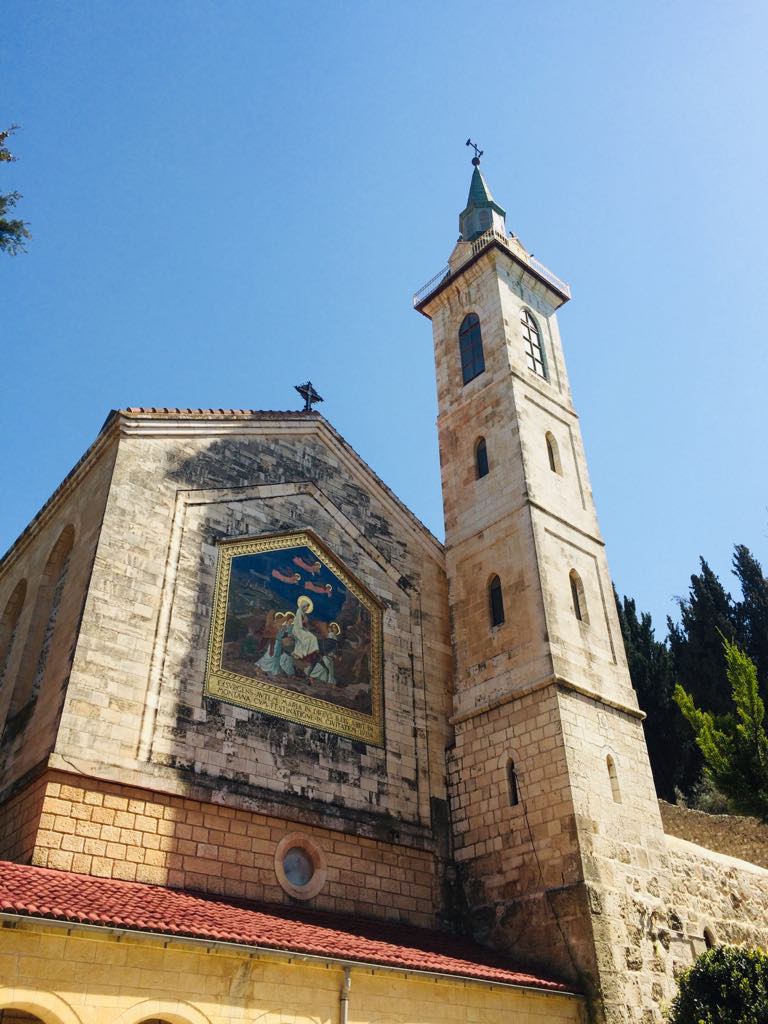
Photo by author, Church of the Visitation, the Holy Land, May 2017.

Try imagining that scene of Mary’s Visitation of Elizabeth. What did you feel? Did you feel some sense of tenderness, of being loved, of being touched by God?

While praying over this scene as I recalled my second pilgrimage to the Holy Land when we went to the Church of Visitation, I remembered my early years in the ministry when I always felt ashamed accepting invitations for dinners because I could not bring a gift.

Maybe part of our upbringing, I have always felt inadequate coming to another home bringing nothing. That is why I keep cards and stampitas in my desk along with some chocolates so that when I visit families, I could bring a little something for them. 

It was only in 2011 after being assigned to a parish of my own when I was able to let go of this feeling of inadequacy after a parishioner told me how they deeply appreciated priests visiting them at home, sharing in their meal because they felt so blessed. That is why most of us priests are fat – we always get invited to meals and gatherings that sometimes I wonder if people really love me when they “force” me to eat more of their cholesterol-laden food and sugary desserts they serve! 

It was during these home visitations especially of the sick and for simple meals I felt “rootedness” or oneness with people, of being “a member of each family yet belonging to none” as the famous French Dominican Fr. Lacordaire said a hundred years ago about priesthood.  The more I visit families, bidden or unbidden, the more I feel the joy of my priesthood because of the family and community that I belong to. That is when I realized too that celibacy is lived in a community both of priests and laity.

For 26 years in schools and the parish and now the hospital, the more I felt Jesus present in me as a priest as I live among brother priests and lay people. Tenderness and intimacy take on a new dimension that is spiritual in nature because I don’t just touch people but am also being touched by them.  Every time they thank me, I also thank them for blessing me with their warm welcome. It is like Mary and Elizabeth during the Visitation blessed abundantly by God and still sharing that same blessing with each other. 

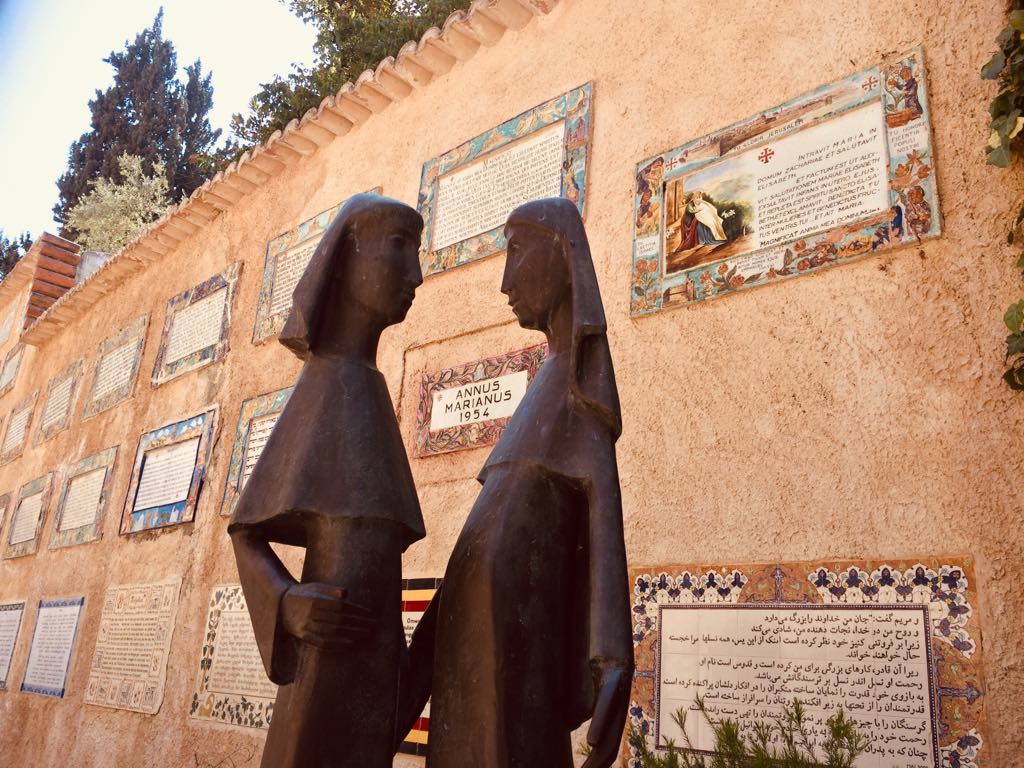
Photo by author, bronze statues of Mary and Elizabeth at the patio of the Church of Visitation, May 2017.

That is the meaning and significance of the Visitation: inasmuch as Christ comes to us individually, He behooves us to share Him also with others to form a community. 

Mary visited Elizabeth not merely to help her out in her pregnancy nor to confirm what Gabriel had told her but simply because she was so convinced of God’s love that she wanted to share it with her cousin. 

Mary visited Elizabeth because she felt touched by God in the Annunciation and wanted so much her cousin to be touched also by the Lord!  And indeed when Luke wrote that “When Elizabeth heard Mary’s greeting, the infant leaped in her womb, and Elizabeth, filled with the Holy Spirit, cried out in a loud voice and said, ‘Most blessed are you among women, and blessed is the fruit of your womb'” (Lk.1:41-42).

Faith in Christ leads to love that moves us to bond with one another to form Christ’s body, a community of believers, a community of beloved, a community of lovers. 

After receiving Jesus, like Mary, we have to move to the Visitation and share Him with others.  To be able to do this, we must first be convinced that God loves us so much like what the Prophet Zephaniah said in the first reading and what Elizabeth told Mary in the Visitation, “Blessed are you who believed that what was spoken to you by the Lord would be fulfilled” (Lk.1:45).

There’s a saying, “If you have love in your heart, you have been blessed by God; if you have been loved, you have been touched by God.”

Let God touch somebody today with your visitation… believe and feel the love of Jesus! Amen.
Advent a time machine?

The Lord Is My Chef Daily Recipe for the Soul by Fr. Nicanor F. Lalog II
Simbang Gabi-3 Homily, 18 December 2024
Jeremiah 23:5-8 <*[[[[>< + ><]]]]*> Matthew 1:18-25
Photo from panmacmillan.com

For those looking for a great gift this Christmas, whether for others or for yourself, I strongly recommend a copy of Before the Coffee Gets Cold. If you can afford, get its four other sequels too!

Written by the Japanese Toshikazu Kawaguchi, Before the Coffee Gets Cold and its sequels is a collection of stories about “time travel” set in a Tokyo cafe with a funny name that is actually the title of 1921 Italian opera song, Funiculi Funicula that means “A Merry Life”. It is very appealing because we all have dreamt or wished of travelling in time with its crucial question – who is that one person you would like to meet in the past or future?

There are many rules to follow for anyone wishing to travel time in the Tokyo cafe like you can only time travel with someone who had been there; you sit only at one particular table inside the small cafe; you may go back to the past or even go to the future but you cannot change them as it would adversely affect the present; and most of all, you have to drink the coffee before it gets cold to return to the present.

The novel is aptly titled Before the Coffee Gets Cold because anyone wishing to travel time, whether in the past or future, one has to drink and swallow all bitterness (coffee) we have in life in order to find fulfillment in the present and future.

Is it not funny that in life and in fantasy like time travel, we are governed by rules as well as commandments? Many times most of us disregard them while some almost worshipped them like the Jews of biblical times, except Joseph.

From vaticannews.va.

After establishing the fact that Jesus Christ is from the lineage of the two greatest personages of the Old Testament, Abraham and David, Matthew logically placed next to his genealogy the circumstances surrounding the birth of the Lord by solemnly declaring, “This is how the birth of Jesus Christ came about (Mt.1:18).” 

Notice how Matthew not only stressed Joseph as “the husband of Mary.  Of her was born Jesus who is called the Christ (Mt.1:16)” to indicate his royal blood from the lineage of King David but as a true blooded Jew for he was “a righteous man (Mt.1:19).”

In the Bible, a “righteous man” or a “just man” is a “holy man” called a zaddik in Hebrew, one who lives his life according to the sacred Scriptures as word of God, delighting in His laws and commandments, and entrusting everything to the Divine will. 

Joseph was exactly that kind of Jewish “zaddik” who lived in constant dialogue with God in His words, concretely living it out minus the legalisms of Pharisees and scribes.  For Joseph, the Torah was a “good news” meant to make life better not bitter that it was not difficult for him to choose to leave Mary silently so as to spare her of all the shame and trouble in bearing a child not his if he went by their laws. Eventually after the angel had appeared to him in a dream to explain the virginal conception by Mary, “When Joseph awoke, he did as the angel of the Lord had commanded him and took his wife into his home (Mt.1:24).”

Matthew is teaching us that to be holy like Joseph, we have to make that important decision of bridging our faith with our life, of being obedient to God. Obedience literally in Latin means “to listen intently”; in being open to God’s words and will, Joseph listened intently that he was able to obey and follow God. It required a lot of listening and humility on Joseph’s part to set aside his plans and let God’s will prevail. That early, Joseph realized that for him to accept God in Jesus, he had to take Mary as his wife. And here lies Joseph’s greatness: in taking Mary as his wife as told by the angel, Jesus Christ was born and we have Christmas to celebrate!

Photo by author, March 2024.

As a true blooded Jewish man, Joseph knew all the rules and commandments and lived by them but never in absolute terms especially when they superseded persons. Later, Jesus would insist to His detractors that “the sabbath was created for man not man for sabbath.” Joseph as a righteous man did exactly that when he took Mary as wife and became the Lord’s “foster father” on earth.  There was a clear application in life whatever was in the heart and mind of Joseph as he walked his talk (or silence). 

Joseph’s holiness in the real sense is best expressed in his ability to sleep soundly in the midst of great crises as he completely trusted God. There were four instances that the angel appeared to Joseph in a dream with important messages from God: first was here in the annunciation of Christ’s birth; then, when he was told to flee to Egypt with Mary and Baby Jesus to escape Herod’s wrath; third, when he was told to return to Israel after Herod’s death, and fourth when he was told to raise Jesus in Mary’s town of Nazareth in fulfillment of the prophecy “he shall be called a Nazorean.”

Joseph was always asleep because he completely trusted God whenever he made decisions in life.  He never dilly-dallied with important decisions unlike us who could not firm up our decisions that is why we are restless, could not sleep at all. In the first reading we heard the prophecy of the coming of Christ who shall be called “the Lord our justice (Jer.22:6)” because like Joseph, Jesus would entrust Himself completely to God’s will when He died on the Cross for us. 

Photo by author, December 2023.

Sleeping and dying are similar in the closing of our eyes when we entrust ourselves to God completely without knowing what shall happen next if we would still wake up or, in the case of death, rise again. 

When we sleep, we travel through time in our dreams, in our hopes and aspirations in the future, and in the pains of the past. We submit them all to God as we sleep hoping for His surprises upon waking up. Christmas happens and Jesus comes to us when like Joseph we abandon everything to God and go to sleep to be ready and prepared for new, unexpected, and even incredible things the following morning. So, face your problems and issues squarely before going to bed, pray and then decide like Joseph and be surprised by the Lord, whether in your dream or upon waking up.

One of the stories in Before the Coffee Gets Cold is about an accomplished Japanese career woman; she asked to travel to her past when her younger boyfriend dated her in the cafe before leaving for the US. The woman was so sad as she felt discarded by her boyfriend in favor of a career in the the States. When she finally travelled in time, she kept her mouth shut unlike in their last meeting; lo, and behold, it was only then she “heard” her boyfriend asking her to wait for him after three years. She never listened to her boyfriend during their last meeting, oblivious to his request that she wait for him after three years when he comes back to get married with her! Everything changed when she returned to the present: without changing the past, she could still change the future in her favor as she happily awaited her boyfriend’s return.

When we are open to God in Jesus, we can also “travel time” in Him for He is eternal, to listen intently to Him as we revisit our past with all its mistakes and sins or peek into the future with all of its fears and uncertainties or simply remain in the present moment with all the problems and trials we grapple. That’s when we admit and swallow the bitterness we have and surprisingly find Jesus Christ in our present, past and future always loving us, calling us, speaking to us. Do we listen to Him and to those around us or, are we so bound by rules and our own prejudices? Amen. Have a blessed day!

Photo by author, Fatima Avenue, Valenzuela City, December 2023.

Are we all lost stars trying to light up the dark?

The Lord Is My Chef Daily Recipe for the Soul by Fr. Nicanor F. Lalog II
Simbang Gabi-2 Homily, Tuesday, 17 December 2024
Genesis 49:2, 8-10 <*[[[[>< + ><]]]]'> Matthew 1:1-17
Photo by Atty. Polaris Grace R. Beron atop Mt. Sinai in Egypt, May 2019.

Some of you must have noticed – even sang – the title of our second Simbang Gabi homily is from the lyrics of the song Lost Stars of the 2013 movie “Begin Again” starring Keira Knightley, Mark Ruffalo, Adam Levine and James Corden.

Every time the Advent season would come since the pandemic in 2020, Lost Stars would always come to my mind as it has some semblance with Isaiah’s prophecy about the coming of the Messiah when peace would finally be achieved with predators and preys living in harmony. It is a passage so lovely that it is used twice or thrice during Advent until Christmas.

Then the wolf shall be a guest of the lamb, and leopard shall lie down with the kid; the calf and the young lion shall browse together, with a little child to guide them. The cow and the bear shall b e neighbors, together their young shall rest; the lion shall eat hay like ox. The baby shall play by the cobra’s den, and the child lay his hand on the adder’s lair (Isaiah 11:6-8).

See now its semblance with Lost Stars and if you know the song, sing it:

And God
Tell us the reason youth is wasted on the young
It's hunting season and this lamb is on the run
We're searching for meaning
But are we all lost stars
Trying to light up the dark?

Who are we?
Just a speck of dust within the galaxy
Woe is me

If we're not careful turns into reality
Don't you dare let our best memories bring you sorrow
Yesterday I saw a lion kiss a deer
Turn the page, maybe we'll find a brand new ending
Where we're dancing in our tears

Begin Again and Lost Stars are unlikely movie and song for Christmas but you will be surprised that they are indeed so perfectly apt for this season which is about love and loss, friendships and ties, hopes and dreams of a better future.

Christmas is actually a story about mankind “beginning again” in Jesus, of us like the prodigal son who was a “lost star” but found again by Christ. These realities we find in both our readings today from Genesis and from Matthew’s account of the genealogy of Jesus.

The world had always been at a loss since the fall of Adam and Eve. Mankind was in darkness that is why God sent His Son Jesus so that we can “begin again” no longer as “lost stars trying to light up the dark” but this time sharing Christ who is the true light of the world as we have reflected yesterday.

Like in that movie Begin Again, the coming of Jesus did not simply happen. There were a lot of twists and turns in the lives of the different characters in the story who were totally unaware and uncertain of what would happen next but, as every good love story would end, and they lived happily ever after.

Photo by author, BED Chapel, Our Lady of Fatima University, Valenzuela City, 2022.

The same is true with the coming of Jesus and with us today: how amazing and interesting that our Savior came from a lineage of family just like ours – imperfect even crazy and weird people. But, the good news is, eventually at the coming of Jesus, everything was neatly tied up by God in His grace we tremendously enjoy now.

Both the first reading and the gospel traced to us the roots of Jesus to the very beginning of Israel and Judaism, from Abraham, Isaac, Jacob and his sons led by Judah from whom came their greatest King, David, an ancestor of the Christ.

Of Jacob’s twelve sons, we wonder why Judah was the one blessed when it was Joseph who saved them all from famine and gave them a new start in Egypt. In fact, Judah would have a son with his daughter-in-law Tamar who disguised herself a prostitute to lure him into sex so she can have a son after her husband, Jacob’s son died and left her childless. Their children were Perez and Zerah (Mt. 1:3).

Photo by author, San Fernando, Pampanga December 2022.

Meanwhile, if Tamar pretended to be a prostitute, the second woman in the Lord’s genealogy was actually a prostitute named Rahab who was the mamasan of the brothel in Jericho where the spies sent by Joshua hid before attacking the ancient city. Rahab welcomed the Israelite spies led by Salmon after securing a pledge from them to save her family after their attack. Jericho fell and so were Salmon and Rahab. They named their son Boaz who later married a pagan woman named Ruth that was a big no-no among jews at that time. They had a son named Obed who became the father of Jesse, the father of King David.

Known as the greatest king of Israel from whose lineage the Savior would come, David was not totally a good king. He sinned big time against God not once: first, he not only took the wife of his army officer but even had him killed in a scheme after Bathsheba got pregnant with Solomon. One of his sons in his previous wife overthrew him but was later beheaded by his loyalist soldiers that caused David deep sorrow to compose Psalm 51.

Photo by author, Fatima Avenue, Valenzuela City, December 2023.

Behind all those names in the Lord’s genealogy by Matthew are great materials for modern-day telenovela with its unique plots with exciting twists and turns.

However, we hear it proclaimed today as we shift our focus into the second aspect of Advent of preparing for the first coming of Christ more than 2000 years ago to remind us that Jesus did not just appear as an isolated human being. He came from God, no doubt about it, but, He is also intimately and crucially linked with the history of His own people. And because of that, so are we.

All four evangelists have as their primary objective in writing their gospel accounts the provence, or origin of Jesus Christ, the Promised One of God. That had to be clear before everything else because they have to established clearly the identity of Jesus Christ.

Matthew opened his gospel account with the genealogy of Jesus to remind us too today of our origin in faith in Christ who gives us a new beginning in God. May this second day of our Simbang Gabi be our new beginning, no longer a lost star but a true star in the eyes of God meant to light the dark in Christ. Amen.

Photo by author, Sacred Heart Novitiate, Novaliches, QC, 20 March 2024.

*You might be interested to listen to “Lost Stars”…better, watch “Begin Again” to warm your heart this Christmas.

From YouTube.com

“Come”

The Lord Is My Chef Daily Recipe for the Soul by Fr. Nicanor F. Lalog II
Monday in the First Week of Advent, 02 December 2024
Isaiah 2:1-5 <*((((>< + ><))))*> Matthew 8:5-11
Photo by author, Cathedral of the Immaculate Conception in Malolos City, Advent 2019.
Thank you, O God our Father,
for sending us your Son Jesus Christ
who had come,
who shall come again,
and continues to come daily to us;
how lovely is this season of Advent
characterized by "coming":
the coming of the Son
so that we can come to the Father!

How powerful
and evocative is that word
"come" resounding in this
season of Advent,
so representative of Advent:
make this Season of Advent
truly a blessed one for us to
come one by one to You, God
our Father in Christ Jesus
who still comes to us.

Even the most famous hymn
of Advent and Christmas
uses this verb "come",
calling us to gather around You,
dear Jesus, to listen more
intently to you in order to meet You
like the shepherds who first came
upon learning about the birth of Christ
so magnificently proclaimed by the
age old sacred piece,
"O Come, all ye
faithful..."

many peoples shall come and say, “Come, let us climb the Lord’s mountain, to the house of the God of Jacob. That he may instruct us in his ways, and we may walk in his paths” (Isaiah 2:3)

Jesus said to him, “I will come and cure him.” The centurion said in reply, “Lord, I am not worthy to have you enter under my roof… For I too am a man subject to authority, with soldiers subject to me. And I say to one, ‘Go,’ and he goes; and to another, ‘Come here,’ and he comes…” (Matthew 8:7-8, 9)

Lord Jesus,
You have come,
You shall come again,
and You still come to us
each day while we refuse
to come to You;
let us come to You, Jesus,
by thinking more of others
than of myself;
let us come to You, Jesus,
in our poverty than come to You
in all our wealth and knowledge;
let us come to You,
Jesus, trusting You more,
believing your every wordl
for surely like before,
You shall come.
Amen. 

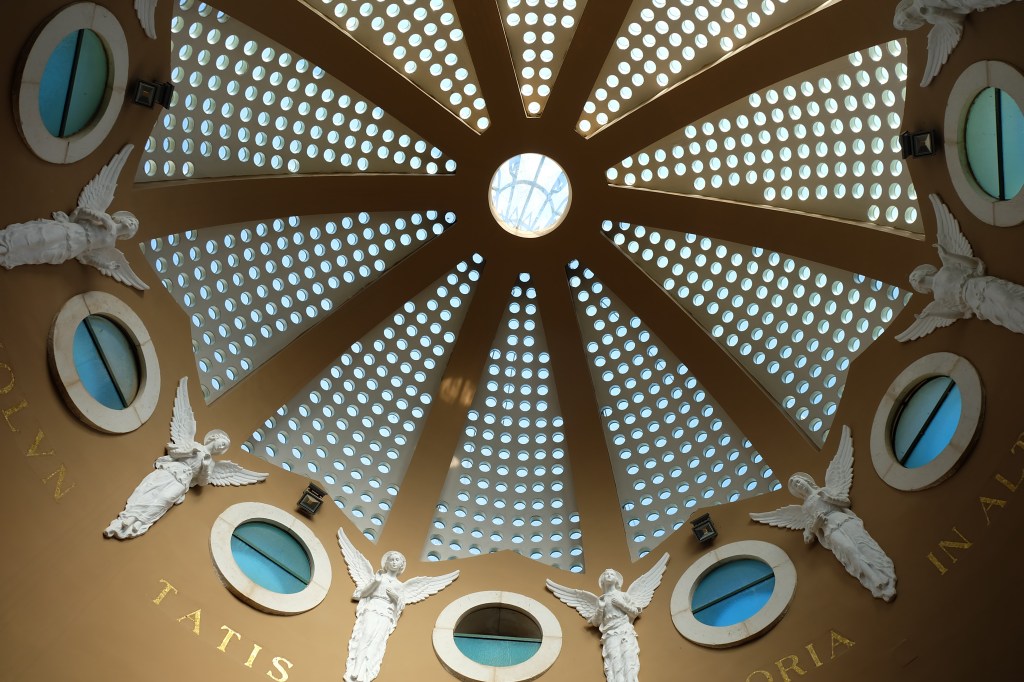
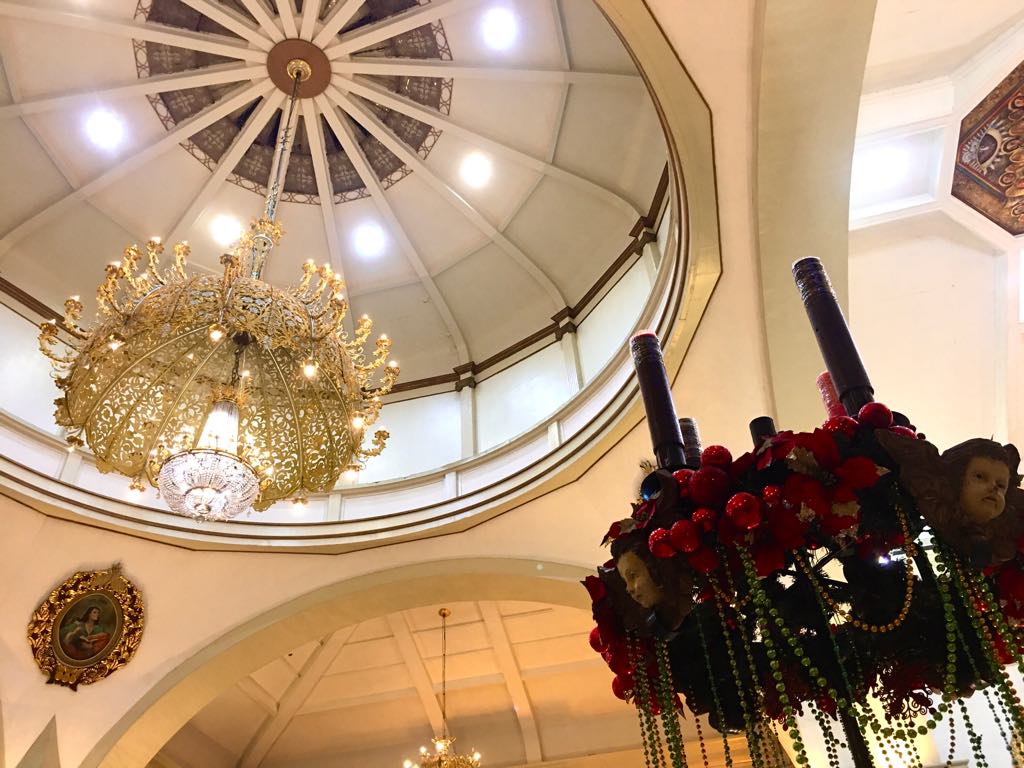
Dome of the chapel at the Shepherd’s Field near Bethlehem; photo by author, Easter 2019.

Advent: Reawakening our hopes amid a defiant history

The Lord Is My Chef Sunday Recipe for the Soul by Fr. Nicanor F. Lalog II
First Sunday of Advent, Cycle C, 01 December 2024
Jeremiah 33:14-16 ><}}}}*> 1 Thessalonians 3:12-4:2 ><}}}}*> Luke 21:25-28, 34-36
Photo by author, Advent 2018.

Blessed happy New Year, everyone! We officially start the new year in the Church on this first Sunday of Advent; that is why the Mass we have every January 1 is the Solemnity of Mary, Mother of God, not New Year as many believe.

This is the reason I insist on everyone to stop greeting “Happy New Year” after December 25 because Christmas is until Epiphany Sunday. And this is the problem with us every Christmas season – we have forgotten its very essence Jesus Christ, replacing Him with all the trimmings of this consumerist and materialistic world we live in.

Photo by author, Advent 2021 at BED Chapel, Our Lady of Fatima University, Valenzuela City.

The first Sunday of Advent is our new year, our new beginning in our journey in life in God through His Son Jesus Christ who had come, would come again, and continues to come daily in our lives. Beginning today until December 16, Advent invites us to focus on Christ’s Second Coming or Parousia at the end of time which nobody knows when except the Father in heaven; from December 17 to 24 and Christmas, we look back to the stories around Christ’s First Coming more than 2000 years ago. Between these two comings of Jesus is His coming in our daily living, in the here and now which St. Bernard of Clairvaux called Christ’s “Third Coming.”

There lies the tension in those three comings of Jesus Christ that have really taken so long that we get impatient or begin to doubt God especially with how world history has unfolded until now with wars as well as natural calamities. Just recently some parts of our country were devastated by a series of powerful typhoons while some parts of the world like Spain had its share of catastrophic flooding that claimed so many lives. Making things worst is how politics has rocked our country this week, trying to undermine our democracy as well as our sense of decency as a nation that had decayed during the past administration.

Photo by author, Dau, Mabalacat, Pampanga, November 2022.

Many are feeling disgusted everywhere in the world with how history is unfolding, wondering if life is going to get any better at all. Some have imitated Pilate in the gospel last Sunday, putting God on trial again, asking Jesus what He had done for all these upheavals and problems going on in history.

Like them, we are also tempted to ask, where is Jesus Christ? Or, the all-powerful and loving God our Father?

The days are coming, says the Lord, when I will fulfill the promise I made to the house of Israel and Judah. In those days, in that time, I will raise up for David a just shoot; he shall do what is right and just in the land. In those days Judah shall be safe and Jerusalem shall dwell secure, this is what they shall call her: “The Lord our justice” (Jeremiah 33:14-16).

Photo by author, Pulong Sampalok, DRT, Bulacan, 23 November 2024.

The Prophet Jeremiah sets the tone of Advent this Sunday, reawakening our hopes in God amid history’s defiance as seen in the many cycles of sufferings and calamities that continue to shake our lives.

Yes, the “days are coming” and indeed had come when God fulfilled His promise in sending us His Son Jesus Christ who redeemed us from our sins and renewed us in Him with fulfillment in life even while here despite the many trials and tribulations we go through.

The “days are coming” as foretold by Jeremiah long ago and most true these days because the promised Messiah Jesus is now with us, acting in subtle and and complex ways beyond our imaginations, always surprising us with how things turn out than what we believe or expected.

Yes, the “days are coming” – right now – as Jeremiah meant that day after Jerusalem had fallen that amid all the chaos around us, God is among us in Jesus Christ who works among visible realities we cannot see, always coming and going among us unnoticed. That time of great salvation is already among us, being accomplished now by Jesus in silence, in secret.

Hence, the need for us to be vigilant through prayers which Luke emphasized in his gospel account.

Jesus said to his disciples: “But when these signs begin to happen, stand erect and raise your heads because your redemption is at hand. Beware that your hearts do not become drowsy from carousing and drunkenness and the anxieties of daily life, and that day catch you by surprise… Be vigilant at all times and pray that you have the strength to escape the tribulations that are imminent and to stand before the Son of Man” (Luke 21:28, 34-35, 36).

Photo by author, San Fernando, Pampanga, November 2021.

On this new liturgical year designated as “Cycle C”, all our gospel readings on Sundays will be from Luke (Cycle A has Matthew and Cycle B, Mark; John is used partly in cycle B and for great feasts).

Of the four evangelists, Luke is the one who emphasized the importance of prayer in his gospel account wherein he always portrayed Jesus in prayer; hence, not surprisingly, he tells us today that “praying at all times” is being “vigilant at all times” too.

And this we have been told ever since as prayer has always been central in all our teachings. It is in prayer when we are one with God in Jesus. It is in prayer when our senses are heightened that we become open to God’s subtle movements in us and among us.

Everything begins in prayer, both in our personal prayers and as a community like in the Sunday Mass where Christ’s presence is unveiled, where we experience Him most in us and among us and in the world that we are then filled with hope in God despite the darkness and sufferings going on.

Recently, our University joined the annual Red Wednesday celebration of the Church when we remember our Christian brothers and sisters persecuted in various forms in many parts of the world in this modern time. I was overwhelmed at the sight of the great number of our students who joined us, many standing outside our chapel.

What touched me was after the dismissal, some students remained inside the chapel lit in red with flickering candles at the altar, still praying. That for me is the sign of that “little shoot” God promised Jeremiah who would come to bring justice and peace on earth.

Photo courtesy of The Tribune, official publication of Our Lady of Fatima University.

To keep watch in prayer (which we mean as a way of life not just mere recitation of formula prayers) while remaining upright and abounding in love as St. Paul instructed us in the second reading is to be open to Jesus Christ, ready to receive Him without fear amid the tumults in the world when He comes in His final glory.

Yes, the world is still plagued with so many imperfections, even darkness and evil that may dishearten us even make us doubt God in His goodness why these bad things are happening. Advent invites us to reawaken our hope in the salvation that had come, that still comes now, and will surely come in the fullness of the Day of the Lord when Jesus comes again.

Lord Jesus Christ,
fill us with fervent hope
in You amid the many darkness
and sufferings in life;
reawaken our hope amid
our hopelessness and be surprised
with Your loving coming and presence.
Amen.
Photo courtesy of The Tribune, official publication of Our Lady of Fatima University.

An upbeat note to the end

The Lord Is My Chef Daily Recipe for the Soul by Fr. Nicanor F. Lalog II
Thursday in the Thirty-Fourth Week of Ordinary Time, Year II, 28 November 2024
Revelation 18:1-2, 21-23; 19:1-3, 9 <*((((>< + ><))))*> Luke 21:20-28
Photo by author, Pulong Sampalok, DRT, Bulacan, 22 November 2024.
God our loving Father,
have mercy on us your people
marching towards You
in Jesus Christ;
as we approach the closing
of this liturgical calendar
to usher in the Advent Season,
let us see with an upbeat mood
the upheavals going on these
days especially in our own
country.

Keep us strong, Father,
in our faith in You and
in our firm resolve to persevere
in doing what is good and just
amid all the destabilizations
and noise going on;
keep us patient with all the
evil still going on,
aware always of the sufferings
and tribulations we all must
endure as part of our witnessing
to the Cross of Jesus Christ.
Keep us upbeat in Jesus Christ
our Lord,
to always live and share in the vision
and values of His Gospel despite
the many immoralities
and profanities by some in power;
may we strive to seek and find
and follow Jesus always
because truth and justice and
goodness have the final say in everything
in this life - not lies and malice and evil.
Amid all the hardships,
may we continue to sing the
song of the Lamb here on earth
so that eventually in the end,
we too may be invited to come
to the wedding feast of the Lamb
there in heaven
like what You have shown
John in Revelation.
Amen.
Photo by author, Pulong Sampalok, DRT, Bulacan, 23 November 2024.