Life is more than #POV

The Lord Is My Chef Sunday Recipe for the Soul by Fr. Nicanor F. Lalog II
Sunday XXXII-B in Ordinary Time, 07 November 2021
1 Kings 17:10-16 ><]]]]'> Hebrews 9:24-28 ><]]]]'> Mark 12:38-44
Photo by Min An on Pexels.com

Perspectives and points of view play important roles in our lives, affecting our judgements and conduct; however, we also know by experience that perspectives and points of view are not enough, cannot be entirely reliable that lead us into stereotyping of people.

I just learned recently from the teenaged daughters of a friend that the #POV for “point of view” may be used in two ways: first, to express “this is my personal point of view” to which everyone is entitled that should not be contradicted because “it is how I see things”; the second is to present a “first person point of view”, that is, through the eyes of the one who uploads a video to show exactly how things are like the first steps of a baby.

This Sunday, Jesus is challenging our perspectives, our #POV on wealth and poverty, sharing and grandstanding, on our selves before God and other people.

Since last month we have seen how Jesus refused to get into debates with people on persistent issues humans have always been discussing like divorce (Oct.3), power and positions (Oct. 17), and the most important laws to follow (Oct. 31) because Jesus came to reveal to us the will of the Father so we may level up in our perceptions about self, others, and life itself.

Jesus was still in the temple area; he had silenced his enemies from asking him further with other questions to test him. After going on the offensive attacking the scribes’ hypocrisies, Jesus sat to observe the people dropped their donations into the temple treasury.

He sat down opposite the treasury and observed how the crowd put money into the the treasury. Many rich people put in large sums. A poor widow also came and put in two small coins worth a few cents. Calling his disciples to himself, he said to them, “Amen, I say to you, this poor widow put in more than all the other contributors to the treasury. For they have all contributed from their surplus wealth, but she, from her poverty, has contributed all she had, her whole livelihood.”

Mark 12:41-44
Photo by author, Jerusalem, 2017.

A Tale of Two Widows

Before going into that story of the widow praised by Jesus, let us consider first the story of another widow mentioned earlier in our first reading, the widow of Zarephath, a region governed by Queen Jezebel’s father. Queen Jezebel was the pagan wife of Israel’s King Ahab who had ordered troops to kill Elijah after putting to shame the priests of her pagan god “baal”.

After 40 days of hiding in the mountain fed by birds with a stream providing him fresh water, God instructed Elijah to proceed to Zarephath to meet the widow who would take care of him during the drought that would come as a punishment to Israel.

More than the miracle of living through the year of drought that hit the region at that time, it is a marvelous story of the faith of both Elijah and the pagan widow. We can understand the deep faith and total obedience of Elijah to God who had told him everything that would happen while hiding in enemy territory.

Things were greatly different with the widow of Zarephath who was first of all a pagan, in fact, a worshipper of the false god baal Elijah had openly bashed in every occasion everywhere. Her faith is so admirable that she risked her own life including her son in welcoming into her home an enemy of their king. Most of all, she put her complete faith in the words of God spoken through Elijah whom she hardly knew.

She left and did as Elijah had said. She was able to eat for a year, and he and her son as well; the jar of flour did not go empty, nor the jug of oil run dry, as the Lord had foretold through Elijah.

1 Kings 17:15-16

In a very similar manner, it was the very nature of faith of the simple and poor widow at the temple treasury that earned praises from Jesus. Keep in mind that money was meant for the upkeep of the Temple, not for the poor; therefore, the very act of donating money into the treasury was in fact an act of faith by the poor widow on God. She was convinced that her offering goes directly to God himself!

It is in this aspect that we must see the whole point of the story which is not about big money and small coins but our personal attitude and faith in giving that is ultimately linked with God. Every amount we offer to church and charities indicates the kind of relationship we have with God.

Jesus had nothing against giving “large sums” of money to the temple collection box; it was not the amount of donation he was raising issue with as he contrasted how the rich “have all contributed from their surplus wealth, but she, from her poverty, has contributed all she had, her whole livelihood.”

It is always easy to honor God – even self – with one’s huge donations while still relying on our false securities of money and wealth unlike the poor widow who offered her very self to God. In a sense, Jesus had seen in the poor widow’s offering his coming total gift of self on the Cross soon to happen at Jerusalem!

The beauty of both women, widow and poor having lived in totally different times – one in Zarephath, a pagan and another in Jerusalem, so pious and religious – is in their total entrusting of themselves to God, forgetting their very selves in the process, unmindful of the dangers and uncertainties ahead in life except that firm faith in a loving and merciful God.

From Facebook, 24 March 2020.

Our many concerns in life

I was recently interviewed for a special program that focuses on our lives as priests. At the end of the interview, I was asked by the hosts: “what legacy do I wish to leave after my term of office in my present assignment”? It was not really a difficult question at all but I was surprised because that such was the frame of mind of my interviewers. Their perspective and POV, so to speak.

After a few seconds, I politely told them that I no longer think such things as legacies to leave behind even in this life, explaining that priesthood is a journey wherein we come and leave to different assignments and tasks with just one purpose which is to make Jesus Christ known and experienced by the people we serve. After every assignment, I tell people to forget me and that is why I never come to visit my previous assignments. For me, it is only Jesus, always Jesus whom people must remember and keep. No one else, nothing else.

That I think is discipleship: a shift in our perspectives and points of view into God’s very own perspectives and POV wherein we present ourselves before God and not before humans.

Discipleship in Christ does not mean doing great things nor achieving heroic feats in life; God knows our limits, our weaknesses. We are all small and poor before him like those two widows in Zarephath and Jerusalem; but, if we can be like them completely trusting and faithful to God, giving our very selves to him, then, the little amount we offer can eventually accomplish the love and mercy God expects from us.

See the many concerns we have in life. The more we address them, the less we actually have in life like those abusive scribes Jesus mentioned: they have everything like status and fame, clothes and money but have lost God and the people while the poor may have nothing material but have everything in Jesus Christ.

That is what the author of the Letter to the Hebrews is telling us in the second reading: in the Priesthood of Christ, he had accomplished everything for us by offering himself on the Cross, forgiving us our sins to lead us to eternal life. Like Jesus, are we willing to give our very selves to him through others so we may gain him and everything?

What have you offered lately to God?

A blessed new week ahead! Amen.

Photo by Irina Anastasiu on Pexels.com

Touching Jesus among us

The Lord Is My Chef Sunday Recipe for the Soul by Fr. Nicanor F. Lalog II
Sunday XXXI-B in Ordinary Time, 31 October 2021
Deuteronomy 6:2-6 ><]]]]*> Hebrews 7:23-28 ><]]]]*> Mark12:28-34
Photo by Jenna Hamra on Pexels.com

Since the start of this pandemic last year, I have always have that strange feeling of COVID-19 chasing me like a mad dog that would not stop until I am dead. Even after I have had the jabs, practicing all health protocols and best efforts of being “positive” to be negative of the virus, that morbid feeling keeps on creeping.

It is depressing but, it is not that bad as the pandemic has slowly become a grace-filled moment for me like to many of you (I hope so) to discover anew and realize that GOD is absolutely the one thing most important in this life, that GOD is not just the first among all things in life but essentially the very reason of everything in life!

One of the scribes came to Jesus and asked him, “Which is the first of all the commandments?” Jesus replied, “The first is this: Hear, O Israel! The Lord our God is Lord alone! You shall love the Lord your God with all your heart, with all your soul, with all your mind, and with all your strength.”

Mark 12:28-30

Maturing and growing from fear to love.

From Jericho last Sunday, Jesus had finally reached Jerusalem, teaching in the temple area of the many valuable lessons on growing and maturing in our faith, in nurturing a personal relationship with God through him by moving from fear to love, from knowing to experiencing persons.

Like us in this time of the pandemic thrown into confusion, the scribe approached Jesus to be clarified with the many laws and precepts they were tasked to follow to lead a holy life and enter eternity. Like Bartimaeus last week, the scribe sincerely asked Jesus for enlightenment from the many darkness and blindness afflicting him.

And he was not disappointed when Jesus answered his question so differently by quoting verbatim from the most ancient prayer known by every devout Jew called the Shema Israel which we heard proclaimed at the first reading. By directly quoting Deuteronomy 6:4-5, Jesus showed that more than the question of being the “first commandment” in the list of things to follow that is always binding on all, loving God with one’s total person is actually the source of all other commandments – even of those not listed!

In his answer to the scribe’s question, Jesus perfectly showed what holiness is all about – an integration (wholeness) of one’s faith and prayer and life from which flows the very essential fact of our lives that there is no other God than our God who alone is the One.

And the good news is that this great and powerful God had chosen to be one with us in the most personal manner by residing in our hearts!

We have a beautiful expression in Tagalog, “nakialam ang Diyos” – God “intervened” in our very lives by sending us his own Son Jesus Christ, unmindful of our nothingness, because he chose to love us, to be with us, to redeem us. What an amazing and loving God is he indeed who is perfect and most holy seeking an intimate and personal relationship with the broken and imperfect, sinful humans through our Lord Jesus Christ who embraced everything in us except sin.

Photo by Ms. Mira Mandal Sibal.

In this scene, Jesus is inviting us to move away from our usual “impersonal” relationship with God that is based on laws to follow, resulting in fears to the punishments due when failed to obey them. It is not even a relationship to speak of but more like a deal or transaction wherein we look at him as God our Lord and Master who takes care of our needs as his subjects and servants. Very feudal, so far from God’s will.

Making matters worst is our Filipino psyche of “sapagkat ako ay tao lamang” where we capitalize on our being weak as humans, therefore lowly but not necessarily humble using it as an excuse for failing to “love” him accordingly, and thus, an expression of our pride and insubordination to God.

Like Bartimaeus before his healing, we prefer to stay at the roadside than join Jesus on the way, avoiding relationships that call for a commitment to love.

Jesus wants us to be involved with God through him personally for it is only through him and in him can we experience God’s immense love and mercy by letting go our selfish selves. And the more we let go our selves in love, experiencing pains and sufferings like Jesus, the more we mature and grow better as persons, realizing the need to nurture this wonderful relationship with God who is love, who is the very core of our being.

That is when we move closer to the kingdom of God which is the very person of Jesus Christ found in everyone!

“The second is this: You shall love your neighbor as yourself. There is no other commandment greater than these.” The scribe said to him, “Well said, teacher. You are right in saying, ‘He is One and there is no other than he.’ And ‘to love him with all your heart, with all your understanding, with all your strength, and to love your neighbor as yourself’ is worth more than all the burn offerings and sacrifices.”

Mark 12:31-33

Maturing and growing, loving personally

Jesus continued his answer to the scribe by explaining the evolution of commandments from God as its very source, telling us that as we appreciate his majesty and grandeur, we naturally and progressively flow to our discovery and loving too of the other persons around us.

Christ reminds us that whenever we find there is no other God than our God, we likewise discover that everyone is our neighbor, not just those like us in belief and color. The more God reveals himself to us in his grandeur and majesty, the more he also reveals himself to us in every person. Thus, it was in this moment in that encounter with the scribe that Jesus reintroduced his teaching on the universality of salvation, not just for Jews but for everyone!

In a similar manner when Bartimaeus was healed of his blindness last Sunday, today’s gospel is a wonderful story of enlightenment of the scribe who also regained his sight and vision in realizing that the love of God is also the love of one another! That is why he too cannot deny in himself the very truth that the highest form of worship, of “burnt offering and sacrifices” at the temple is personally loving God through everyone around us.

This is one of the important lessons this COVID-19 pandemic has taught us: it is always easy to say or even assume most of the time that we love, that we are loved, taking for granted the expression of our love and concern for others. We now feel so sorry how we have let days and weeks, months and years to have passed without seeing or calling family and friends or at least saying “hi” in whatever platform of social media until COVID-19 came.

Photo from inquirer.net.

While this pandemic has taught us the value of many ordinary things we have taken for granted like simple washing of hands and basic practices of cleanliness that matter so much to remain virus free and healthy, it has painfully taught us too the value of every person dear to us when one by one they were getting infected with COVID-19, some never recovered from the dreaded disease and now gone forever.

So many deaths have occurred in our circles of family and friends since last year in this pandemic; and, the saddest part is how swiftly they have left without any warning at all, denying us the chance of even a few seconds to see them and tell them how much we loved and cared for them.

It is always easy to know and say there is only One God, that he loves us so much, and that we also love him in turn. But, to move from fear to real loving, from formal knowledge to personal relationship, it is different. How true is that saying of us seeing the forest but missing the trees!

This Sunday, Jesus tells us to grow and mature in our relationships with him in prayer that must flow progressively and naturally to the people around us. It is only in finding this close link of loving God and loving neighbors that we get nearer to Jesus, who is the kingdom of God.

Tomorrow we celebrate All Saints Day in honor of all the departed already in heaven and on November 2, the All Souls Day for those awaiting in purgatory. Two great feasts that coincide with our Sunday gospel preparing us for the final destination, of being in the kingdom of God fully which is heaven.

While still here on earth not from the kingdom of God, Jesus is giving us the grace to experience heaven in our personal love in him to the Father through each other. Amen.

Have a blessed November!

Being present with God, in God

The Lord Is My Chef Daily Recipe for the Soul by Fr. Nicanor F. Lalog II
Tuesday, Week XXVIII, Year I in Ordinary Time, 12 October 2021
Romans 1:16-25   ><)))*> = ><)))*> = ><)))*>   Luke 11:37-41
Photo by Dr. Mai B. Dela Peña, MD, 2017, Japan.
Open our eyes 
and our hearts today
to your loving presence, 
God our loving Father!
Make us stop for a while
to feel your presence in us
and among us to experience
true wealth and real wisdom
so unlike with what the world
offers that is always misleading.
Like St. Pau, may we feel that 
deep pride in you who loves us, 
accompanying us in this life,
leading us to fulfillment and joy.

Brothers and sisters: I am not ashamed of the Gospel. It is the power of God for the salvation of everyone who believes… For what can be known about God is evident to them, because God made it evident to them.

Romans 1:16, 19
So many times,
we have chosen to follow
 the flow of this world,
"claiming to be wise" when in fact,
we have become fools in our own making;
like that Pharisee who had invited
Jesus to dine at his home,
we have become so unaware
of the presence of Christ and have 
become more amazed at finding
faults and criticisms at what is outside
of us, not realizing the need
to look more inside to cleanse our
hearts and souls where you dwell
and see you present in every moment
 especially among others we least expected.
Amen.

The way to God

The Lord Is My Chef Recipe for the Soul by Fr. Nicanor F. Lalog II
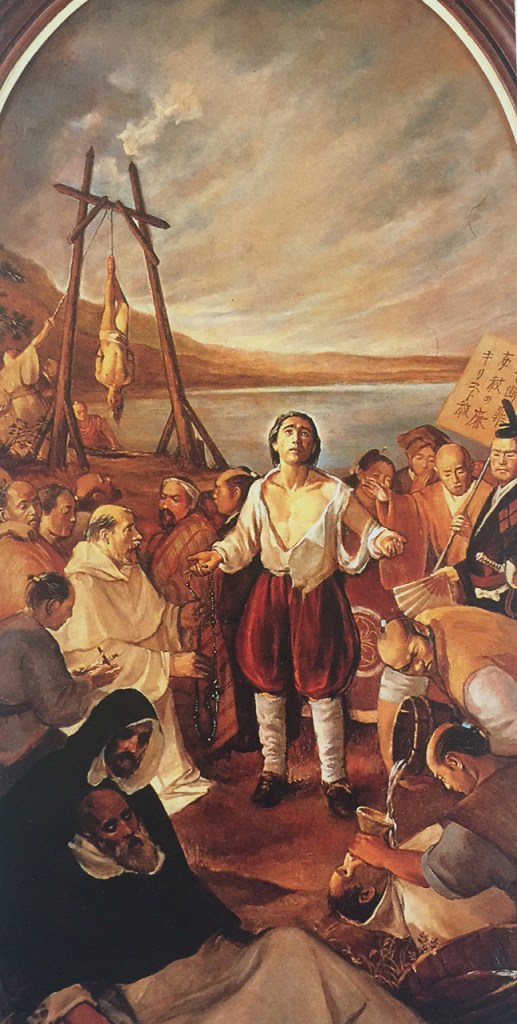
Tuesday, Feast of St. Lorenzo Ruiz and Companion Martyrs, 28 September 2021
Zechariah 8:20-23   ><)))*><*(((><  +  ><)))*><*(((><   Luke 9:51-56
Photo by author, Jerusalem, May 2019.

Thus says the Lord of hosts: There shall yet come peoples, inhabitants of many cities; and the inhabitants of one city shall approach those of another, and say, “Come! Let us go to implore the favor of the Lord;” and, “I too will go to seek the Lord.”

Zechariah 8:20-21
Thank you, dear God our
loving Father for continuing to lead us
to your holy city, your holy presence:
more than the ancient Jerusalem,
all we want is to make to your presence
that we beg you to continue to guide
us in this journey.
We know it is dangerous,
filled with many obstacles and
difficulties like peoples and
situations that try to let us lose
focus on you our destination.

When the days for Jesus being taken up were fulfilled, he resolutely determined to journey to Jerusalem.

Luke 9:51
Through your Son Jesus Christ
give us the courage and strength
to be "resolutely determined
to journey to Jerusalem" by defusing
hostilities among peoples, showing them
the path of peace that calls for witnessing
to your love and care for everyone.
May we never lose sight of the reality
that the path to you, God our Father
is Jesus Christ himself who said
 "I am the way and the truth and the life";
bless us in imitating St. Lorenzo Ruiz
and his companion martyrs in Japan
who followed Jesus to his martyrdom
on the cross, shedding their blood
to witness to your truth and glory.

In this modern age when such
cruelties are a thing of the past,
the challenge remains the same
for us to lead people to you, O God;
how sad that many people today
are "leaving" your city, 
never coming back
because they could no longer see you
in us, in our lives and examples;
open our minds and hearts
that like St. Lorenzo, may we
examine ourselves closely to see
what changes we need to live out
Christ's gospel so that even if we are
given with a thousand lives
we would still offer it all
to you.  Amen.
Photo from thecatholictalks.com, 2019.

Two hands and a heart in-between

The Lord Is My Chef Sunday Recipe for the Soul by Fr. Nicanor F. Lalog II
Sunday XXII-B in Ordinary Time, 29 August 2021
Deuteronomy 4:1-2, 6-8 >+< James 1:17-18, 21-22, 27 >+< Mark 7:1-8, 14-15, 21-23
Photo by the author, the Holy Land, 2017.

After an interruption of five weeks, we go back to Mark’s Gospel this Sunday that shall guide us until the end of our liturgical calendar with the Solemnity of Christ the King in November. See the beauty of the Sacred Scriptures that those five weeks from John chapter six did not break the flow of narration that is so seamless!

Returning to Mark’s account today after the feeding of five thousand and the bread of life discourse at Capernaum from John, Jesus crossed the lake and proceeded with the Twelve to Gennesaret where he preached and healed until some of his enemies arrived and found an issue to raise against him.

When the Pharisees with some scribes who had come from Jerusalem gathered around Jesus, they observed that some of his disciples ate their meals with unclean, that is, unwashed hands. For the Pharisees and, in fact, all Jews, do not eat without carefully washing their hands, keeping the tradition of the elders. So the Pharisees and scribes questioned him, “Why do your disciples not follow the tradition of the elders but instead eat a meal with unclean hands?” He responded, “Well did Isaiah prophesy about you hypocrites… You disregard God’s commandment but cling to human tradition.”

Mark 7:1-3, 5-8

The Israelites have taken pride in their laws given by Moses from God at Mt. Sinai. Simply referred to as the Law or Torah, it had united them as God’s “chosen people”, making it the very center of their lives that they enlarged its meaning and scope that soon consisted of more than 600 other precepts and practices to observe and keep.

Obeying the laws and traditions became their standard for holiness so that instead of becoming a means to bring them closer to God and others, these became an end in itself that they have forgotten God and others in the process.

Photo by author, Sacred Heart Spirituality Center, Novaliches, QC, 2016.

Into our hearts and the heart of Jesus

Once again, our gospel is so timely and relevant to our situation right now we are in the midst of a pandemic when we are told to always wash our hands. And if Jesus were with us in person today, he would surely speak the same things about the hypocrisy we have in our washing of hands!

First of all, let us clarify that Jesus is not against the washing of hands before eating nor of any of their other traditions and laws; what he criticized was the greater importance given by his enemies with the outward signs of their laws and traditions, forgetting its inner dynamics and meaning. Thus, he never failed to clarify with the people that he had “not come to abolish the Law or the Prophets but to fulfill them” (Mt.5:17).

Here we find the same problem with the people at Capernaum and in our own time when people fail and refuse to look beyond material things to find the meaning of what is going on around us, of what we believe in and what we practice.

Then and now – right in the midst of this pandemic – Jesus is inviting us to deeper perspectives about our concepts and ways of doing and seeing things, of what is clean and not clean, of what is tradition and modern, of what is good and evil.

Jesus wants us to constantly examine our lives for our need of conversion of our hearts to him. He is inviting us to probe our hearts and see who or what dwells inside us because from the heart, everything flows outside not only to our mouth (cf. Lk.6:45, “out of the abundance of the heart the mouth speaks”) but also to our hands.

That is why I love that imagery of the heart between two arms and hands: the heart at the center of our being and consciousness that whatever comes out of the heart naturally flows to our arms and hands, even to our entire body. If there is something wrong in the heart, so with the messages it sends out.

Photo by Designecologist on Pexels.com

He summoned the crowd again and said to them, “Hear me, all of you, and understand. Nothing that enters one from outside can defile that person; but the things that come out from within are what defile.” “From within people, from their hearts, come evil thoughts, unchastity, theft, murder, adultery, greed, malice, deceit, licentiousness, envy, blasphemy, arrogance, folly. All these evils from within and they defile.”

Mark 7:14-15, 21-23

Here we find the essential question we must ask ourselves always: Do I find Jesus Christ in my heart as the sole basis and foundation of what I believe which I also say and do?

If we cannot find Jesus at the center of the things we do and believe, most likely we do not find others in the picture too! In that case, most likely, it is all about me, mine, my, and I! Like the Pharisees and scribes of his time, washing of hands and other traditions were more of a show than something more essential which is to serve God through one another.


Jesus is now leading us to a sincere examination of our hearts, 
of our interior and spiritual motivations, 
of why we are doing the things we are doing, 
of what we really believe in; 
because, too often, many of the things we do and believe 
are not really rooted in our hearts nor with God.  
There are so many times in our lives 
that we simply do things out of habit 
and conventions without really understanding why.  

Jesus is now leading us to a sincere examination of our hearts, of our interior and spiritual motivations, of why we are doing the things we are doing, of what we really believe in; because, too often, many of the things we do and believe are not really rooted in our hearts nor with God. There are so many times in our lives that we simply do things out of habit and conventions without really understanding why.

Simon Sinek said it so well in his bestselling book “Start with Why” – people buy products, patronize services, or are moved when they see the why you do things; they are willing to pay more not because of fad or prestige but more of the conviction in a belief espoused by a brand or company or by an individual.

Photo by Ezra Acayan/Getty Images in Paranaque City, 09 February 2020.

Washing of hands and eating, our hidden hypocrisies

One of the most frequently asked question by people to me as a priest these days is why despite all our prayers, God has seemed become deaf to our pleas for him to end this pandemic? The answer is simple: unless we see and accept the spiritual realities of this COVID-19 pandemic, it would linger with us longer than projected, even not be solved at all as it gets worst with new variants that have thrown back even some of the most vaccinated nations lately.

We can have all the soaps and alcohol to wash our hands during this pandemic but COVID-19 will persist for as long as we have no regard for the dignity of every person. See all the abuses and corruption going on that is more sickening than the virus itself!

That washing of hands is an imagery full of meanings we have lost since the time of Jesus. Inwardly, the washing of hands means washing of one’s heart, of cleansing ourselves of our sins and self-centeredness and other impurities.

So many times we have become like Pontius Pilate who washed his hands to free himself from any guilt in sentencing Christ to death without realizing the more he had implicated himself to the injustice by refusing to make a stand for what is true and just. Like us today, we keep on washing our hands in the hope that our conscience would be at peace or be not bothered with our indifference for what is true and good.

Photo by Mr. Red Santiago of his son, 2019.

Washing of hands has always been closely related with eating which is an act of “appropriating something we cannot fully have” like when Adam and Eve ate the forbidden fruit. They took something they cannot wholly take or “swallow” that is why all they could do was just take a “bite” that opened their eyes to something they could not fully realize and appreciate. There are so many realities in this life we just cannot fully grasp right away, requiring us to have more faith, more patience in trusting God and those above us.

But, like Adam and Eve, we keep on taking a bite, of eating whatever our limited minds and reason find as “good” to have. And we wash our hands in clear hypocrisies like the Pharisees and scribes in worship and prayer when we lead double lives, when we laugh and cheer at all kinds of lies and filth, when we silently approve attacks against human life like tokhang and abortion.

Every day we wash our hands and keep them clean to avoid contaminating our food and body in hypocrisy as we agree and support in the name of “modernism” these trends of same sex relationships, promiscuity, and divorce. Or of graft and corruption we have resigned to accept as a fact of daily life.

To wash our hands is to wash our hearts clean of all kinds of evil, of mediocrity and indifference, of taking a stand to “pass over” from sin into grace by witnessing God’s goodness in our lives as Moses reminded Israel in the first reading.

The hands and the heart always go together as expressed in the Jewish thought of “mercy of the heart” and “mercy of the hand” when God’s mercy is more than a feeling but an act of righteousness, of justice and love.

Let us heed the reminder of the Apostle in the second reading to be truly clean in our hands and in our hearts: “Be doers of the word and not hearers only, deluding yourselves. Religion that is pure and undefiled before God and the Father is this: to care for orphans and widows in their affliction and to keep oneself unstained by the world” (James 1:22, 27).

Stay safe everyone. Have a blessed week ahead! Amen.

“Lord, to whom shall we go?” : Faith in Jesus in time of pandemic

The Lord Is My Chef Sunday Recipe for the Soul by Fr. Nicanor F. Lalog II
Sunday XXI-B in Ordinary Time, 22 August 2021
Joshua 24:1-2, 15-17, 18 ><}}}'> Ephesians 5:21-32 ><}}}'> John 6:60-69
Inquirer’s Friday front page tells us in essence the message of this Sunday’s Gospel – “Lord, to whom shall we go?” in this time of crisis. Photo from inquirer.net.

We conclude our series on the Lord’s discourse on bread of life with the same question he had posed to his disciples more than 2000 years ago at Capernaum, repeatedly asking us the same question daily, especially on Sundays: “Do you also want to leave?” (Jn. 6:67).

This is the first time in John’s gospel that the people have rejected Jesus Christ whom they have always admired and followed to listen to his teachings and most of all, to be healed of their sickness. When they were fed to their satisfaction at the wilderness, they wanted to take Jesus and make him their king but he evaded them, going to Capernaum where he was found the following day. All this time, religious leaders were the only ones against Jesus, challenging his authority especially when he cleansed the temple and healed on a sabbath day.

But today, in a sudden twist, people rejected and abandoned Jesus because they could not accept him as the Bread of Life who came down from heaven who would give his flesh as food and blood as drink for eternal life. Worse, this was led by those supposed to be close to him, his disciples.

Often used as a generic term for a follower or a believer, the word “disciple” is from the Greek word discipulos that literally means “one who comes after or follows the master” (also the root of discipline). In the gospels, disciples were the common followers of Jesus, distinct from the apostles often referred to as “the Twelve”. From another Greek word apostolein meaning “one who is sent forth ahead of a master”, an apostle is one who is close to Jesus, who personally knows him and have also seen him. That is why Paul insisted his being an apostle too.

This distinction between a disciple and an apostle is found in all four gospel accounts. It is important to know this especially in our gospel today which is the first time John had introduced to us the presence of disciples among the crowd with Jesus at Capernaum. They have all been silently listening to his discourse until Jesus said, “Whoever eats my flesh and drink my blood has eternal life, and I will raise him on the last day. For my flesh is true food, and my blood is true drink. Whoever eats my flesh and drinks my blood remains in me and I in him” (Jn.6:54-56).

It was from here where our gospel this Sunday picks up the story:

Many of Jesus’ disciples who were listening said, “This saying is hard; who can accept it?” Since Jesus knew that his disciples were murmuring about this, he said to them, “Does this shock you? What if you were to see the Son of Man ascending to where he was before? As a result of this, many of his disciples returned to their former way of life and no longer accompanied him. Jesus then said to the Twelve, “Do you also want to leave?”

John 6:60-62, 66-67
Photo by Fr. Howard John Tarrayo, National Shrine of Our Lady of Fatima on the eve of the ECQ, 05 August 2021.

Aversion vs. Conversion

Here we find a painful truth we all experience when following Jesus as our Lord and Master. Sometimes it can happen that those closest to us are the ones who cannot accept and understand us like those disciples of Jesus who have left home and family to listen to his teachings after witnessing many of his healings. Then all of a sudden, they abandoned him because he had said it is his flesh he shall give as food to eat and his blood as drink for eternal life.

They were thinking in the literal sense, more preoccupied with what they knew, with what they have in their minds, without any room for Jesus nor for others. They would rather stick with what they have heard and learned from the Old Testament, of Moses and the manna from heaven.


Refusing Jesus is always a refusal 
to grow and mature not only in faith 
but most of all in life and in our relationships. 
 It is pride and self-centeredness, 
a form of self worship and idolatry 
when one believes more to one's self
 than with God through others.

Refusing Jesus is always a refusal to grow and mature not only in faith but most of all in life and in our relationships. It is pride and self-centeredness, a form of self worship and idolatry when one believes more to one’s self than with God through others.

Jesus came to deepen our faith by experiencing himself, inviting us all to be converted back to God. But instead of conversion or turning back to God in the light of Jesus, we choose aversion, that is, turning away from God, returning to blindness and darkness like those disciples: As a result of this, many of his disciples returned to their former way of life and no longer accompanied him” (Jn.6:66).

They cannot accept and take Jesus personally and wholly as his very words implied the Eucharist where we receive Jesus, Body and Blood under “the perceptible signs of bread and wine” as explained by Vatican II’s Sacrosantum Concilium #7.

Every Sunday when we gather as the Body of Christ in the celebration of the Holy Eucharist prefigured in the time of Moses in the wilderness until their entry into the Promised Land under Joshua’s leadership, we likewise reaffirm and renew our commitment to love and “serve the Lord, for he alone is our God” (Jos. 24:18).

Photo by Ms. Ria De Vera, March 2020.

Yes, “this saying and teaching of the Lord is hard to accept” (Jn. 6:60) especially in this time of the pandemic when many among us have lost family and friends including sources of income and savings while things are expected to worsen before getting any better at all.

Then there is also the familiarity with the Holy Mass breeding contempt among us these days when all we have are virtual Masses.

It is very sad that many of us these days have “returned to our former way of life and no longer accompanied Jesus” like those disciples at Capernaum; there are some who have stopped believing in Jesus due to the many pains and sufferings of this prolonged pandemic!

We are in a time of severe crisis not only in faith but also in every aspect of life due to the worsening COVID-19 pandemic. As we moved Saturday to lower level of quarantine controls, new records were set in new infections and deaths while ICU’s and hospitals are almost if not at full capacity already.

Lest we forget, there is the severe stress on our medical frontliners and their families too, with some literally passing out of exhaustion.

Some major decisions really have to be made not only by leaders but by everyone. That is the literal meaning of the word “crisis” which is from the Greek krisis that means time for decision-making to prevent (more) disasters from happening.

Disasters are due to poor or wrongful decisions.

One of that is removing God from every equation in life, including in our political and social life, giving rise to a culture of impunity where corruption has become a way of life.

Despite our being a Christian nation, we have chosen to remain in our morally bankrupt style of politics based on popularity, compadrazgo system, and vote selling. No wonder that even while we are in a pandemic with thousands getting sick or dying and millions are suffering, public officials continue to plunder our nation’s coffers blatantly while candidates shamelessly campaign early with their giant tarpaulins and television ads to ensure they all remain in power.

To whom shall we go? With the corrupt officials and trapos who do not care at all for us?

The good news today is that even if we have abandoned Jesus many times in our lives and in our nation’s history, he remains with us, still asking us like the Twelve, “Do you also want to leave?” (Jn.6:67).

Let us tell Jesus like Peter, “Master, to whom shall we go? You have the words of eternal life. We have come to believe and are convinced that you are the Holy One of God” (Jn.6:68-69)?

Remaining in Jesus like Peter

Last Friday, the Inquirer eloquently showed on its front page the sad plight of our nation with a banner story on corruption at the DOH following the recent reports by Commission on Audit as well the arrogant display of powers-that-be in Cebu.

Then, a breath of fresh hopes with this photo by Grig C. Montegrande on how the QC General Hospital had converted its chapel into a COVID-19 ward to accommodate the growing number of patients. The photo summarizes our Sunday readings, that we are in a critical moment not only in our history but also in our lives, calling us to conversion or turning to God instead of aversion which is turning away from God.

From inquirer.net.

Remember the “I AM” declaration by Jesus first used in this bread of life discourse two weeks ago when he said “I am the bread that came down from heaven” (Jn.6:41)?

That must have lingered in Peter. His faith did not deepen right away but it had surely grown and matured while listening to Christ’s discourse on the bread of life which became clearer to him after Easter.

Let us try “to feel at home” in Peter’s company during this pandemic to be led to a similar faith insight and commitment in Jesus no matter how difficult it may be.

Faith is like love: we believe and love not because we are sure of ourselves but because we are sure of the one we believe and love. That is why we commit our lives to our beloved. It is not primarily because of us at the center but of the other. Like Jesus. Or a loved one.

This is Paul’s reminder to us in the second reading of having Jesus as the basis of our relationships: Brothers and sisters: Be subordinate to one another out of reverence for Christ (Eph. 5:21).

It is not a call to dominance over one another but mutual-subordination in Christ by imitating his self-sacrificing love for everyone in the giving of his total self, Body and Blood. This we can do these days by observing health protocols like social distancing, wearing masks, and washing hands frequently. Best is to stay home as much as possible by giving ourselves more to our family and loved ones. Amen.

Have a safe and blessed week, everyone!

Mary, mirror of God’s greatness

The Lord Is My Chef Sunday Recipe for the Soul by Fr. Nicanor F. Lalog II
Solemnity of the Assumption of the Blessed Virgin Mary, 15 August 2021
Revelation 11:19-12:1-6,10 ><}}}*> 1 Corinthians 15:20-27 ><}}}*> Luke 1:39-56
Photo by author, December 2020.

We take a break this Sunday from our readings in the bread of life discourse in John’s gospel to celebrate on this date the Solemnity of the Assumption of the Blessed Virgin Mary following Pope Pius XII’s dogma in 1950 that at the close of her earthly life, Mary was taken up body and soul into the glory of heaven.

Without telling the manner or the circumstances of time and place of the Assumption, its dogma forms part of the deposit of our faith received from the Apostles as attested by its long line of traditions since the Pentecost. It is so important that its celebration supersedes the liturgy of any Sunday because it invites us all to see in Mary raised to heaven the image of the Church and of all the faithful on our way to eternal glory with God.

It is a very timely celebration while we are in the midst of another lockdown due to a surge in COVID-19 cases, giving us hope and inspiration to persevere in all these difficulties and trials to become better disciples of Jesus like his beloved Mother.

Photo by author at the Assumption Sabbath, Baguio City, 2019.

Mary, a type of the Church

Our first reading today presents us with two images of a woman that seem to contradict each other with scenes that anti-climactic, flowing in the reverse mode. It could have been better as in most cases that the first scene depicting the woman in all glory should have been last instead of the woman in childbirth pains and dangers that comes in second. Is it not the sorrowful always comes first leading to glory?

A great sign appeared in the sky, a woman clothed with the sun, with the moon under her feet, and on her head a crown of twelve stars. She was with child and wailed aloud in pain as she labored to give birth. Then another sign appeared in the sky; it was a huge red dragon, with seven heads and ten horns, and on its heads were seven diadems.

Revelation 12:1-3

It is easy to see the Blessed Virgin Mary in that woman depicted in John’s vision especially if we continue reading on to find the title and authority attributed to her child as our Savior Jesus Christ. But modern biblical studies go deeper than that simplistic view: the scenes speak more of the birth of Christ among us his disciples. It is “painful” because it takes place amid many evil and sins like persecutions and temptations symbolized by the red dragon; but, amid all these, Jesus remains among us, leading us, protecting us, and blessing us. Hence, the woman in this passage becomes a symbol of the Church in the glory of God following Christ’s Resurrection while at the same time in the midst of many earthly battles.

Of course, no other woman can best fit that image than Mary who gave birth to Jesus, who has always been in the most intimate relationship with her son as disciple among all humankind. And because of her role in relationship to her Son, to us his disciples also his Body as community, Mary is the image or type of the Church still giving painful birth to believers like in this time of the pandemic while we are already assured of glory in heaven as children of God. Vatican II perfectly expressed it in declaring:

“By reason of the gift and role of divine maternity, by which she is united with her Son, the Redeemer, and with His singular graces and functions, the Blessed Virgin is also intimately united with the Church. As St. Ambrose taught, the Mother of God is a type of the Church in the order of faith, charity and perfect union with Christ.”

Lumen Gentium #63

With that, Mary has also become the mirror of God’s greatness in all time, the very reason we venerate her as first among the saints and angels because it is also the same call of holiness to us all as children of the Father and disciples of Christ. It is in this framework that we celebrate her Assumption, especially when we profess every Sunday: “I believe in the Holy Spirit, the holy Catholic Church, the communion of saints, the forgiveness of sins, the resurrection of body and life everlasting. Amen.”

Photo by author, Nazareth, 2019.

Greatness of God, lowliness of Mary

As we have mentioned at the start, the dogma of the Assumption of Mary does not go into details how it took place. What matters most is the fact of the Assumption of Mary, body and soul. Like with her Immaculate Conception, there are no direct nor explicit biblical references to her Assumption; however, from the collective meditations and contemplations in the Church, we find vast and rich sources in reflecting the beauty and wonder of the Blessed Mother’s unique place in our salvation history.

For the Mass of the day of the Solemnity, we contemplate on Mary’s canticle called Magnificat which she sang after being praised by her cousin Elizabeth during the Visitation.

And Mary said:
"My soul proclaims 
the greatness of the Lord;
my spirit rejoices in God my savior.
For he has looked upon his lowly servant.
From this day all generation will call me
blessed:  the Almighty has done 
great things for me, and holy is his Name."
(Luke 1:46-49)

It was the first proclamation of the gospel of salvation in Jesus Christ whom Mary first received and shared first with her cousin Elizabeth in a town in Judah. See how in the Visitation Elizabeth praised and admired Mary, becoming the first to call her “blessed among women” because “she believed the word spoken to her by the Lord would be fulfilled” (Lk.1:45). Instead of giving back her praise and admiration to Elizabeth who was pregnant with John the Baptist at that time despite her old age and being barren, Mary sang praises to God like the other great women in the Old Testament after experiencing God’s extraordinary acts in their personal lives and in Israel’s history.

Though we may never have the same personal experiences of the Blessed Virgin Mary, as members of the Church she represents, we can always look through her Magnificat the extent we have also become the mirror of the greatness of God especially at this time when everybody seems to doubt his loving presence in this time of the pandemic.


 It is the reason why we also sing the Magnificat 
during our evening prayers in the Church because 
before we can ever praise God for his kindness and majesty, 
we must first allow him to work in us by being lowly before him like Mary.

See how the Magnificat sings of the depths of Mary’s soul and her faith, of her perfect obedience to the word of God and the mission entrusted to her. Very clear in its lyrical expression, the focus and center is God, not Mary. It is the reason why we also sing the Magnificat during our evening prayers in the Church because before we can ever praise God for his kindness and majesty, we must first allow him to work in us by being lowly before him like Mary.

Have we truly been God’s lowly servant like Mary, allowing God to work his great wonders through us?

Three things I wish to share with you on Mary’s lowliness that enabled God to work his wonders through her:

First is her openness to the word of God like in the Annunciation of the birth of Jesus. Mary had a prayer life, a discipline of making time with God, setting her self aside for the Lord. Prayer is always the start of every relationship with God. That is when we truly become humble to lose control of ourselves, to forget our selves and let God in the Holy Spirit dwell into us. Even in the darkest moments of our lives, there will always be that glimmer of hope because the Holy Spirit enlightens us in our paths.

Second is Mary’s saying “YES” to God. She does not merely listen to God; she says “be it done unto me according to your word.” From the very start, Mary never doubted God in his wisdom and plans that she always said yes. One most beautiful expression by the evangelists of Mary saying yes to God is whenever Mary would “treasure in her heart” words of Jesus and of others.

But Mary’s greatest yes happened at the Cross, in her sharing in the Paschal Mystery of her Son Jesus Christ, being the only other disciple who remained with the Lord until his death. No wonder, it was to her based on tradition that the Risen Lord first appeared on Easter.

Third is Mary’s fidelity to God, her yes was not just a one-shot deal but an everyday yes to Jesus even after he had ascended into heaven. The Acts of the Apostles tells us explicitly how Mary was among the disciples present inside the upper room at Jerusalem when the Holy Spirit came on the day of Pentecost. Throughout the ages in her numerous apparitions, Mary said yes to God delivering Jesus Christ’s call for us to penance and conversion, to prayers and the Holy Eucharist especially at Fatima in Portugal.

“The Assumption of the Virgin” by Italian Renaissance painter Titian completed in 1518 for the main altar of Frari church in Venice. Photo from wikidata.org.

Mary went through many hardships and difficulties in her life and in the history of Israel, coming from an obscure town that was a butt of jokes of their time like when Nathanael asked Philip who claimed to have found Jesus Christ, “Can there any good thing come out of Nazareth? (Jn.1:45)”.

In this time of the pandemic, the vision of John in the first reading becomes more real when people refuse to recognize the spiritual dimension of COVID-19, of the need to be converted and to again nurture that relationship with God following decades of affluence and materialism. Like Mary, let us be humble to accept we are not the masters of this world nor of our own life but God almighty.

We are called to persevere with Mary, to be strong in our faith and charity that God will never forsake us so we can be present among the poor and marginalized including those spirits weakened by the prolonged quarantines.

With Mary, let us believe the words of St. Paul how all will come to life again – body and soul like Mary – in the final end of time that begins right now, right here in the midst of all these trials and sufferings. Amen.

Have a blessed week ahead!

Celebrating life in God

The Lord Is My Chef Breakfast Recipe for the Soul by Fr. Nicanor F. Lalog II
Friday, Week XVII, Year I in Ordinary Time, 30 July 2021
Leviticus 23:1, 4-11, 15-16, 27, 34-37   ><]]]]*>   Matthew 13:54-58
Photo by author, 2020.
Today we move onto the third book
of your Pentateuche, God our Father,
the Book of Leviticus which tackles the 
various celebrations you have stipulated
the children of Israel to celebrate until
they have entered your Promised Land.
It is good to know the major celebrations
you have set before them while still wandering 
at the desert have become the roots 
of our many liturgical celebrations that
have found fulfillment in your Son Jesus Christ
who is the basis of every sacrament and feast.
Unfortunately, dear Father,
like the children of Israel,
even us until now have forgotten
your saving presence in our midst
when we were wandering in the desert
of darkness and trials, sufferings and sins.
These, therefore, are the festivals
of the Lord on which you shall proclaim
a sacred assembly, and offer as an oblation
to the Lord burnt offerings and cereal offerings,
sacrifices and libations,
as prescribed for each day.
(Leviticus 23:37)
Forgive us, merciful God,
when we forget in our worship
and celebrations that its center
is you alone, not us nor the festivities
nor the rituals prescribed; 
let us remember your continuing presence 
among us marred by our many sins 
when we break away from you; hence, 
the need for oblations and offerings
for us to be reconciled in you again.
Jesus came to his native place
and taught the people in their synagogue.
They were astonished and said,
"Where did this man get such
wisdom and mighty deeds?"
And they took offense at him.
And he did not work
many mighty deeds there
because of their lack of faith.
(Matthew 13:54, 57, 58)
Let us be open to you, loving Father
through your Son Jesus Christ 
who had come to reconcile us to you
by leading our celebrations
so we can have a perfect offering for you
in the Holy Sacrifice of the Mass; 
Do not let us imitate his folks at Nazareth
who refused to accept him that he was 
not able to make any miracle
for their lack of faith in him.  Amen.

Praying to be true in prayers

The Lord Is My Chef Breakfast Recipe for the Soul by Fr. Nicanor F. Lalog II
Monday, Week XI in Ordinary Time, Year I, 14 June 2021
2 Corinthians 6:1-10   ><)))*>  +  <*(((><   Matthew 5:38-42
Photo by author, May 2016.

Thank you very much, O God, for the daily gift of prayers, of being able to pray to you which is a pure grace from you. On our own we cannot pray because we do not have the courage and wisdom to speak to you, to listen to you. Most of all, we are afraid to enter into union with you especially with the example set to us by Jesus Christ your Son.

Give us the grace to be slowly true in our prayers, Lord, like letting go of revenge and vengeance.

Jesus said to his disciples:
"You have heard that it was said,
An eye for an eye and tooth for a tooth.
But I say to you, offer no resistance to one who is evil.  
When someone strikes you on your right cheek,
turn the other one to him as well."
(Matthew 5:38-39)

What is most difficult in praying is imitating you, sweet Jesus, in devoting our lives to you and your gospel by forgetting ourselves, carrying our crosses and following you closely.

So many times, we receive the grace of God in vain, wasting these gifts because we are so afraid of giving ourselves totally to others like you Lord Jesus on the cross.

Teach us how to be a sign of contradiction, a paradox in ourselves like St. Paul who truly imitated you by first of all trying to reconcile with the Corinthians who have turned against him when he failed to keep his promise of visiting them. Like you Lord Jesus, St. Paul bore all the personal attacks against him by the Corinthians, choosing to be conciliatory and gentle in his attitude in addressing them.

We are treated as deceivers and yet are truthful;
as unrecognized and yet acknowledged;
so dying and behold we live;
as chastised and yet not put to death;
so sorrowful yet always rejoicing;
as poor yet enriching many; 
as having nothing and yet possessing all things.
(2 Corinthians 6:8-10)

In the midst of pain and suffering, rejection and persecution, St. Paul found joy and peace in you, dear Jesus. He was so convinced of your love and presence even in the midst of his darkest moments in life. So unlike us who easily give up your cross, Lord, when we are criticized because the sad truth is we always seek recognition and praise for our works in you.

Help us to be like St. Paul in his unshakeable faith in you, so true in his prayers of becoming like you, a sign of contradiction to the world, a person of Christ-like paradoxes. Amen.

Photo by author, May 2016.

The silent works of God

The Lord Is My Chef Sunday Recipe for the Soul by Fr. Nicanor F. Lalog II
Eleventh Sunday in Ordinary Time, Cycle B, 13 June 2021
Ezequiel 17:22-24 ><}}}'> 2 Corinthians 5:6-10 ><}}}'> Mark 4:26-34
SAN FRANCISCO, CALIFORNIA – JUNE 03: Yuka Saso of the Philippines hits an approach shot on the 17th hole fairway during the first round of the 76th U.S. Women’s Open Championship at The Olympic Club on June 03, 2021 in San Francisco, California. Sean M. Haffey/Getty Images/AFP (Photo by Sean M. Haffey / GETTY IMAGES NORTH AMERICA / Getty Images via AFP)
AMERICA’S GOT TALENT — Episode 1602 — Pictured: Nightbirde — (Photo by: Trae Patton/NBC)

Two great women made me cry this week: our very own Yuka Saso who made history as the country’s first major golf tournament winner after she bagged with much finesse and style the 2021 Women’s Open title in San Francisco, California.

And second was Nightbirde, a cancer patient who mesmerized us a few nights ago with her talent – and joyful disposition as a cancer patient competing at “America’s Got Talent”.

What I like with both women is their authenticity – Yuka with her grit at a very young age pursuing her dream, Nightbirde with her radiance appreciating life despite the threats of cancer.

But most of all, both admitted how God has always been behind them, silently working in their lives, fulfilling their dreams!

It is so touching to hear stories of accomplished people like Yuka and Nightbirde who are very talented, so driven yet humbly recognizing God as the very reason for who they are and where they are now.

God at the center stage of life

Yuka and Nightbirde are two modern parables who show us how true are the teachings of Jesus this Sunday as we finally dive into the Ordinary Time with St. Mark as our guide.

After celebrating two major feasts of the Lord these past two consecutive Sundays, we find the mystery of Jesus slowly unfolding among the people who have started following him after hearing him speak and heal many of the sick.

At the same time, St. Mark is slowly introducing us at this part of his gospel the start of the “trial” of Jesus by his enemies who have began to look at him with suspicion and jealousy, accusing him of blasphemy and contempt for the Law.

Caught at the middle of the controversy are the crowds and his disciples – including us today – who have silently followed Jesus. In these coming Sundays, we shall see and hear more stories of the teachings and workings of Jesus, challenging us to take sides, to make a stand like Yuka and Nightbirde that “it is the Lord!” (Jn.21:7) who is at the center stage of our lives, silently working for our own good.

Jesus said to the crowds: “This is how it is with the kingdom of God; it is as if a man were to scatter seed on the land and would sleep and rise night and day and through it all the seed would sprout and grow, he knows not how. Of its own accord the land yields fruit, first the blade, then the ear, then the full in the ear. And when the grain is ripe, he wields the sickle at once, for the harvest has come.”

Mark 4:26-29
“The Sower” by Van Gogh from Wikipedia commons.org.

God is never absent nor distant from us in life.  
He is always at the center stage of our lives 
especially when we are going through tests, 
just like during an exam in the classroom!

In the two parables that he tells us today, Jesus describes the little beginnings of the kingdom of God like the seed. And in the littleness of this seed is found also the silence of God in transforming us in the same manner seeds grow into plants and crops that bear fruit.

Let us focus on the first parable that is so close to the hearts of the plantitos and plantitas among us. See Jesus vividly telling us how in life God takes all the initiatives, all the “doing” in silence. God is never absent nor distant from us in life. He is always at the center stage of our lives especially when we are going through tests, just like during an exam in the classroom.

Remember how during exams when our classroom is most silent, everybody scratching his/her head, wracking our brains while hurdling the exams while our teachers quietly watch us? They do not give us the answers for the exam for it is part of our learning process but it is during that time when they work hardest, watching over us.

The same with God when we go through tests in life. He is always present and even closest with us as exemplified with Christ’s self-offering on the Cross. That is the meaning of the Solemnity of the Sacred Heart we celebrated Friday.

Of course, like that sower or farmer, we still have to do our very best, we have to work hard in cultivating the soil, watering the crops but aside from that, there is nothing else we can do but to patiently wait in silence, trusting in the good quality of seeds we have sown. We do not know how the seed we scattered would sprout and grow but deep inside us, we believe, we know of its good quality that soon enough, it would be harvest time when the grain is ripe.

We may not say it but unconsciously deep in our hearts we know, something good is going to happen for God does everything good. All the more because the seed he had sown in us is his Son, Jesus Christ, the Word who became flesh. How could things not turn out good if we have the bestest seed of all, Jesus Christ?!

We just have to believe and be convinced of his love for us.

Photo by author, Pulilan, Bulacan, 2020.

Hope. And be surprised!

Brothers and sisters: We are always courageous, although we know that while we are at home in the body we are away from the Lord, for we walk by faith, not by sight.

2 Corinthians 5:6

What a beautiful a reminder from the great Apostle, St. Paul who wrote this letter under severe personal tests and trials from the Corinthians who have resorted to some nasty talks against him instigated in part by some missionaries who sowed confusions about the gospel of Christ.

This is the most personal of all the letters by St. Paul as he bared his very soul after being hurt by the Corinthians who could only see the surface and external things of himself without knowing his great sufferings for them.

That is what we must all try as disciples of the Lord: like St. Paul, we have to believe first in Jesus in order to see him and his glory. We walk by faith, not by sight wherein we live in vibrant hope in God that while everything seems to be too dark and difficult to understand, he is doing something within us that would transform us into better persons after these trials.

Photo by Mr. Jim Marpa, 2018.

Like the power inside the seed being harnessed through time – nobody knows except God almighty what is happening inside. It just happens that one day, we are so amazed at how big and tall a tree has become considering it started from the minute piece of seed like what the Lord had promised Ezekiel in the first reading.

Thus says the Lord God: I, too, will take from the crest of the cedar, from its topmost branches tear off a tender shoot, and plant it on high and lofty mountain… And all the trees of the field shall know that I, the Lord, bring low the high tree, lift high the lowly tree, wither up the green tree, and make the withered tree bloom. As I, the Lord, have spoken, so will I do.

Ezekiel 17:22, 24

We are journeying in faith without seeing especially in this time of the pandemic. Our time is that of patience and courage. Most of all, of hope.

Pope Emeritus Benedict XVI said in Spe Salvi #27, “In this sense it is true that anyone who does not know God, even though he may entertain all kinds of hopes, is ultimately without hope, without the great hope that sustains the whole of life (cf. Eph 2:12). Man’s great, true hope which holds firm in spite of all disappointments can only be God—God who has loved us and who continues to love us “to the end,” until all “is accomplished” (cf. Jn 13:1 and 19:30).”

Sometimes, even if we try our very best, things do not turn out as we expected, exactly like what most farmers experience after sowing their seeds. When crops fail, they scatter seeds again the following season because they believe in being surprised by God, not by sheer luck.

They choose to believe, to have faith in God who is our present and our future in Jesus Christ who lives in us, whether in good times or in bad.

Going back to Nightbirde, recall how she entered the stage so cool and relaxed, smiling as she answered questions when she confidently declared being a cancer patient. When asked why all the smiles and joy radiating in her, she simply said, “You can’t wait until life isn’t hard anymore before you decide to be happy.”

Whoa!

And when she sang until Simon hit the golden buzzer… for a brief moment, I felt God passing by or even stopping by my computer screen, saying hello to me, reminding me about my many complaints in life until I saw Nightbirde. Indeed, the French poet Charles Péguy was right: hope is God’s favorite virtue because it always surprises him.

Like what Nightbirde and Yuka did to us last week.

Let God surprise you this week by doing what you like best. Do not worry. God will do the rest.

A blessed Sunday to everyone! Amen.