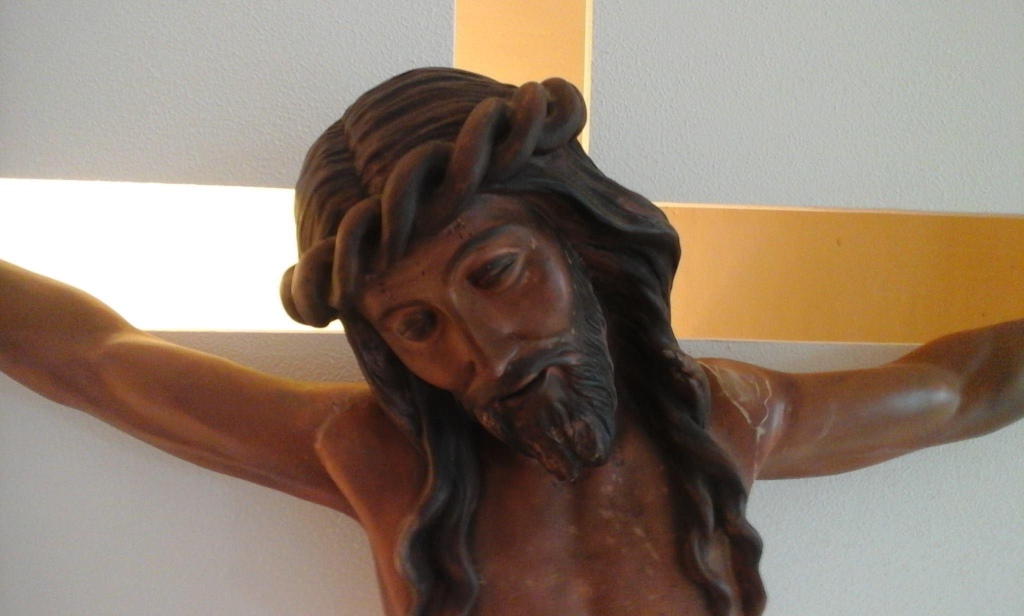
Seeing Jesus is seeing the Cross

The Lord Is My Chef Daily Recipe for the Soul by Fr. Nicanor F. Lalog II
Thursday in the Twenty-fifth Week of Ordinary Time, Year II, 26 September 2024
Ecclesiastes 1:2-11 <*((((>< + ><))))*> Luke 9:7-9
Photo by Pixabay on Pexels.com

Vanity of vanities, says Qoheleth, vanity of vanities! All things are vanity! What has been, that will be; what has been done, that will be done. Nothing is new under the sun (Ecclesiastes 1:2, 9).

How lovely are your words today,
God our Father:
"All things are vanity",
a mist,
a dew,
or breath
that vanish quickly,
no permanence,
and no real value at all
but because of You,
everything got meaning,
got value
especially in the coming
of Jesus Christ your Son,
our Lord and Savior.
You are no longer far from us,
dear God;
in Jesus Christ,
You have been among us,
most of all within us;
yet, many of us
could not find you
nor experience you.
Like Herod the tetrarch,
so many of us have heard
a lot about you, O God,
in Jesus Christ
but are still perplexed,
refusing to believe,
refusing to recognize,
refusing to accept
especially His Cross.
Bless us, dear Jesus,
especially those who keep
on trying to see you
but could not find you
because to see you
O Lord is to forget
one's self,
take up one's cross,
and follow You.
Amen.

Openly speaking to Jesus

The Lord Is My Chef Sunday Recipe for the Soul by Fr. Nicanor F. Lalog II
Sunday in the Twenty-fifth Week of Ordinary Time, Cycle B, 22 September 2024
Wisdom 2:12, 17-20 ><}}}}*> James 3:16-4:3 ><}}}}*> Mark 9:30-37
Photo by author in Caesarea Philippi, Israel, May 2017.

Time flies so fast these days and so does our gospel reading with Mark telling us in quick succession Jesus journeying south towards Jerusalem, passing through Galilee then making a stopover in a house in Capernaum.

Jesus is now intensifying His teachings to the Twelve – and us too today. For the second time since Sunday after being identified as the Christ, Jesus “spoke openly” of His coming Passion, Death, and Resurrection to His Apostles; but, unlike last Sunday, the Twelve remained silent and instead debated on who among them is the greatest as they grappled on the meaning of their Master’s coming Pasch.

Jesus was teaching his disciples and telling them, “The Son of Man is to be handed over to men and they will kill him, and three days after his death the Son will rise.” But they did not understand the saying, and they were afraid to question him. They came to Capernaum and, once inside the house, he began to ask them, “What were you arguing about on the way?” But they remained silent. They had been discussing among themselves on the way who was the greatest (Mark 9:31-34).

Photo by Ms. Marissa La Torre Flores in Switzerland, August 2024.

Did you notice that beautiful interplay again in the scene with the preceding Sunday?

Last Sunday, Jesus spoke openly of His coming Passion, Death, and Resurrection where Peter reacted by taking Him aside to protest. Jesus rebuked Peter, telling him how he thought in man’s ways than God’s ways.

Today, Jesus spoke openly anew of His coming Pasch but this time, the Twelve fell silent because according to Mark, “they did not understand the saying, and they were afraid to question him.”

Are we not like the Twelve so often with Jesus? We follow Him, we believe Him, we listen to Him but never understand His words and worst, so afraid to question Him?

What do we not understand in His words? Or, is it more of still refusing to accept the reality of His Passion, Death, and Resurrection like Peter last week?

We are afraid to ask Jesus the meaning of His words, of His plans for us not because they have hidden meanings but usually due to our own hidden agendas.

Photo by Mr. Jay Javier, 07 September 2024.

We find it hard to trust Jesus enough unlike the upright in the first reading especially in this age of social media and instant fame and popularity when numbers of “likes” and votes prevail over what is true, good, and beautiful. Real talents, innate goodness and whatever natural are disregarded. That is why I have never watched nor believed in any beauty or singing contest these days because winners are decided not really on their talents or beauty and intelligence but more on the votes they get from viewers and people. Life has become more of a popularity contest often seen in terms of money. Pera pera lang?

This propensity of equating number of votes and likes with what is true and good and beautiful reeks with a lot of those stinky attitudes of the wicked in the first reading. The author of the Book of Wisdom perfectly expressed the inner thoughts and dynamics of the wicked who are intolerant of contradiction in whatever form, most especially unbearable to them is the living reproach and challenge of the life of just persons in their midst. This was fulfilled in Christ Jesus, the Just One of God the wicked men have crucified.

The wicked say: Let us beset the just one, because he is obnoxious to us; he sets himself against our doings, reproaches us for transgressions of the law and charges us with violations of our training… Let us condemn him to a shameful death; for according to his own words, God will take care of him” (Wisdom 2:12, 20).

Photo by Mr. Jim Marpa, 2018.

Jesus Christ’s teaching of the Cross is the perfect spirit of being a child that runs contradictory to the ways of the world. To be like a child these days as Jesus showed the Twelve is to invite sarcasm and ridicule, unacceptable to those who live in the dictates of the world of power and force, wealth and fame that certainly lead to more divisions and destruction.

Jesus invites us this Sunday to “speak openly” to Him like a child filled with trust and enthusiasm to know and learn more about life and its meanings like our doubts and fears, incomprehension and uncertainties.

See how children’s face light up when grown-ups recognize their inquiries even without any explanations at all. The same is most true with Jesus in whom anything that is dull and drab shines brightly when seen in His light.

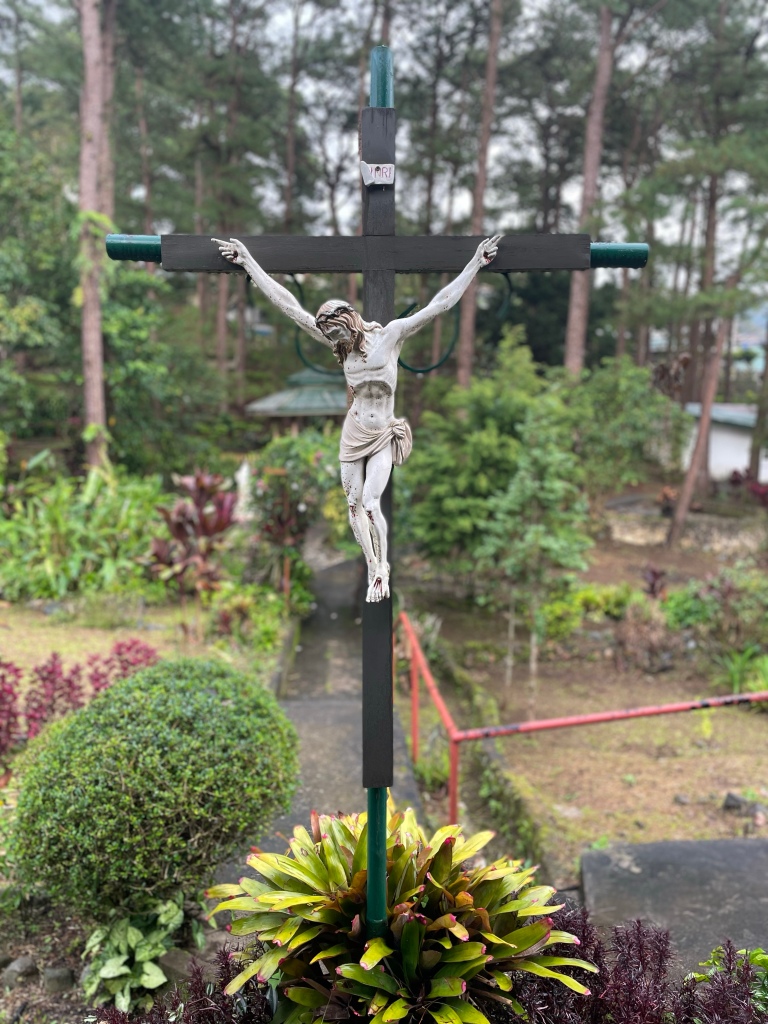
Photo by author, St. Scholastica Retreat Center, Baguio City,

We cannot escape the scandal of the Cross. To dwell on Easter Sunday without the Good Friday only makes our life journey difficult and tiring without any direction, a waste of time and energy circling around the ways of the world that has always been proven wrong.

The essence of Christ’s Passion, Death, and Resurrection is found in being a child in the same manner Jesus remained the Son of God there on the Cross. He has always been clear with this; though He knew His fate, Jesus was totally free in choosing to suffer and die on the Cross because He fully entrusted Himself to the Father as He prayed before dying on the Cross, “Father, into your hands I commend my spirit” (Lk.23:46).

That beautiful imagery of a child Jesus placed in their midst as He put His arms around him encapsulated perfectly His own Passion and Death:

Then he sat down, called the Twelve, and said to them, “If anyone wishes to be first, he shall be the last of all and the servant of all.” Taking a child he placed it in their midst, and putting his arms around it he said to them, “Whoever receives one child such as this in my name, receives me; and whoever receives me, receives not me but the One who sent me” (Mark 9:35-37).

Photo by Mr. Red Santiago of his son Clyde, January 2020.

Every Sunday, Jesus gathers us in the Eucharist, just like the house in Capernaum where He spoke privately to the Twelve to explain the Cross and being like a child.

Let us not be afraid to speak these openly to Jesus because in our shame or fears of questioning Him, the more we live in rivalries among each other, the more we covet and envy, the more peace becomes elusive because as St. James rightly said, “You do not possess because you do not ask. You ask but not receive, because you ask wrongly, to spend it on your passions” (James 4:2c-3).

Let us gather around Jesus every Sunday, speak openly to Him especially after receiving Him Body and Blood in Holy Communion to cast unto Him all our worries and doubts in life. Let us take time to listen to Him and be imbued with His teachings. Amen. Have a blessed week ahead, everyone.

Jesus openly speaking

The Lord Is My Chef Sunday Recipe for the Soul by Fr. Nicanor F. Lalog II
Twenty-fourth Sunday in Ordinary Time, Cycle B, 15 September 2024
Isaiah 50:5-9 <*{{{{>< James 2:14-18 ><}}}}*> Mark 8:27-35
Photo by Digital Buggu on Pexels.com

There is something very striking with the similarities and differences in our gospel last Sunday and today that greatly reveal to us the person of Jesus Christ whom we all imitate and follow as His disciples.

In Decapolis last Sunday, Jesus separated a deaf man – “took him off by himself away from the crowd” – to heal him by putting his fingers into the man’s ears, then spitted and touched his tongue as he groaned “Ephphatha” – be opened – and the man was healed as “he spoke plainly”.

Further up north of Decapolis which is the chief pagan city of Caesarea Philippi, the Apostle Peter took Jesus away from the crowd after the Lord spoke openly of His coming Passion, Death, and Resurrection.

But unlike the deaf mute healed when separated from the rest, Jesus rebuked Peter as He returned to the crowd as He continued to speak openly of His coming Passion, Death, and Resurrection.

He began to teach them that the Son of Man must suffer greatly and be rejected by the elders, the chief priests, and the scribes, and be killed, and rise after three days. He spoke this openly. Then Peter took him aside and began to rebuke him. At this he turned around and, looking at his disciples, rebuked Peter and said, “Get behind me, Satan. You are thinking not as God does, but as human beings do” (Mark 8:31-33).

Photo by author at Petra in Jordan, May 2019.

I love the contrast of these two events Mark tells us so succinctly without missing details that speak so well of God’s ways and man’s ways, of what is to think and act like Jesus and how the devil tricks us into its devious and insidious ploys.

See also how last Sunday the healed deaf-mute “spoke plainly” in Christ while today we are invited by Mark to “openly speak” like Jesus of life’s sufferings and death.

When God separates us from the rest of the people and our usual routines like what happened at Decapolis last Sunday, it is because He wants us to experience Him more closely, for us to be healed, and for us to touch base with Him anew who is the very root of our being. Like that nameless deaf man, we need to separate once in a while from the world for us to be healed of our many deafness so that we may listen more intently to God’s voice and words right in our hearts, in the scriptures, and in the cries of the poor and suffering among us.

Actually, Jesus was continuing in Caesarea Philippi His method last Sunday of “separating” when He first asked the Twelve “Who do people say that I am?” that prompted them to tell Him the many misconceptions about His identity. In a similar way with the deaf at Decapolis, Jesus took off the Twelve in Caesarea Philippi when He asked them the more specific question “But who do you say that I am?” and Peter rightly answered Him, “You are the Christ.”

Matthew has a similar story probably with some additions from other sources that we find Jesus praising Peter for his answer, entrusting to him the church, and promising him with the key to heaven. The rebuke of Peter would happen later in their journey.

Mark had none of that considering his gospel was Matthew’s basis. We find in Mark’s brief account of Peter’s confession at Caesarea Philippi Perhaps how often just as when we feel so close with God like Peter, it is the same moment when the devil comes to trick us to break away from God and follow our own ways, not His.

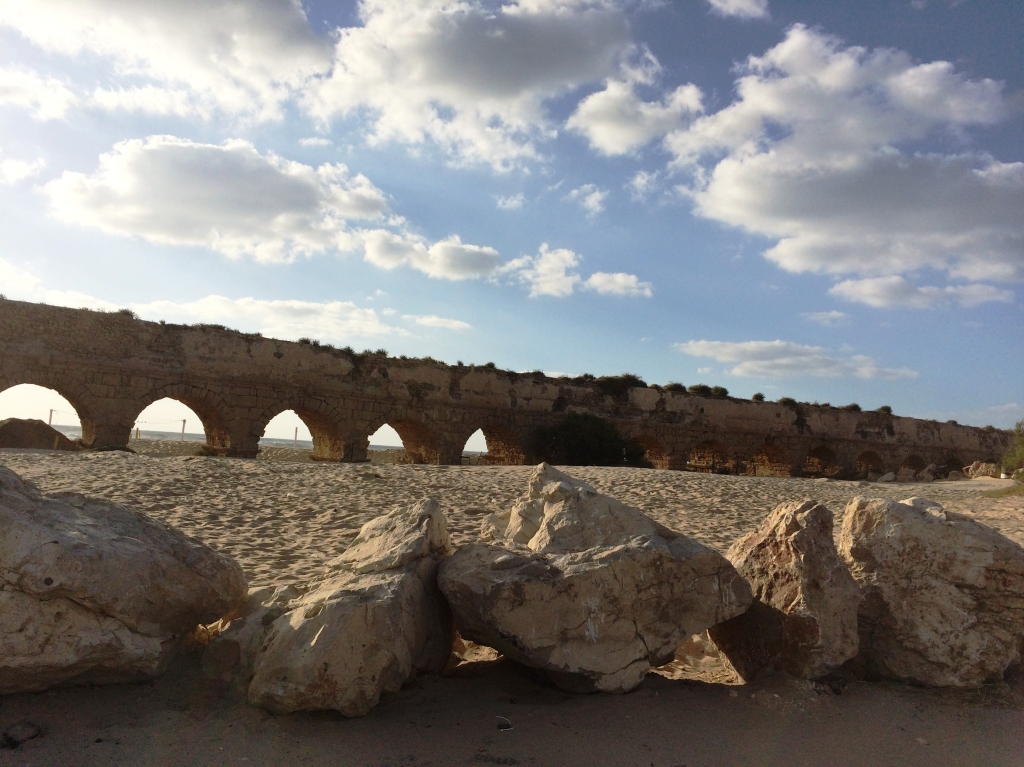
Photo by author near ancient city of Caesarea Philippi, May 2017.

The event at Caesarea Philippi gives us clearest sign to identify Jesus as the Christ, that is when Jesus speaks openly of His coming Passion, Death, and Resurrection.

He began to teach them that the Son of Man must suffer greatly and be rejected by the elders, the chief priests, and the scribes, and be killed, and rise after three days. He spoke this openly (Mark 8:31-32).

Jesus never hides us from the realities of life as He speaks “openly” of His Pasch. From Caesarea Philippi, Jesus and the Twelve would head back south towards Jerusalem making a stop over on Mount Tabor for the Transfiguration where Christ’s glory was revealed to Peter, James and John.

It was during His Transfiguration that that Father and the Son made clear that Christ’s glory cannot be separated from the Cross. It was after Caesarea Philippi when Jesus announced thrice to the Twelve His coming Passion, Death, and Resurrection.

Notice too that qualifier “must” – that He “must suffer greatly”.

Just one word but so powerful, showing us the consistency of Jesus in speaking about His Pasch, the Cross, and later its relationship with discipleship, of the need for us to forget ourselves, take up our cross and follow Him.

Our motorized procession of the Blessed Sacrament in our previous Parish at the start of the COVID-19 lockdown in March 2020. Photo by Ms. Anne Ramos.

It saddens me when some priests and people in the Church shy away from talking openly about life’s many sufferings. We recognize their good intentions of not forgetting the beautiful and brighter side of being a Christian but to look at the Cross negatively and all its other implications is totally unChristian.

We cannot disregard the pains and darkness that come in being a disciple of Jesus; the Cross is the life of a disciple because it is the center of Christ’s person and teachings as expressed in yesterday’s Feast of the Exaltation of the Cross. All these “health and wealth” style of many preachers even in the Church are red flags of the devil’s ploy, of Peter separating Jesus from the Cross.

We act like Peter rebuking Jesus in Caesarea Philippi whenever we try to soften or hide, even cover the corruption and abuses going on in the society and families, the Church and our communities. That is clearly thinking in man’s ways not in God’s ways.

We cannot arrive at the truth and beauty of life disregarding the falsehoods and negativities around us. That was the problem with the people in mistaking Jesus as one of the prophets who were seen more as miracle workers who instantly healed them of their sickness.

Photo by author in my previous parish, 2017.

And here lies the danger too to us that we will never be able to have a good answer to Christ’s question “But who do you say I am?” if we avoid the many passion and death of this life in Jesus.

To openly speak like Jesus and embrace the sufferings and death we must endure is our first expression of faith with works we heard in the second reading from James.

To openly speak like Jesus and embrace the sufferings and death we must endure is the fulfillment of the first reading’s Song of the Suffering Servant who is Jesus Himself.

When we openly speak and embrace life’s daily sufferings and deaths like Jesus is to trust completely in God like Him. Let us speak openly of the Cross, of love and mercy, of God like Jesus Christ! Let us pray:

Lord Jesus Christ,
let me continue to follow
you closely by separating
from the rest often
to hear you more,
to love you more,
to trust you more;
let me know you more clearly
so that I may love you more dearly
and follow you more closely
speaking plainly,
speaking openly
without sugarcoating your call,
your Cross.
Amen.

The uniqueness of the Cross

The Lord Is My Chef Daily Recipe for the Soul by Fr. Nicanor F. Lalog II
Saturday, Feast of the Exaltation of the Cross, 14 September 2024
Numbers 21:4-9 ><}}}}*> Philippians 2:6-11 ><}}}}*> John 3:13-17
Photo by author in my previous parish, 2017.

Today we celebrate a most unique Feast, the Exaltation of the Cross.

It is so unique because first of all, the cross is perhaps the most unique thing on earth made up of two pieces of wood that are so ordinary yet so deeply extraordinary in meaning, a sign of God’s immense love for us humans through Jesus Christ’s Passion and Death.

From being the sign of the most inhuman punishment in history, the Cross is now the very sign of how God “so loved the world that he gave his only Son, so that he who believes in him might not perish but might have eternal life” (Jn.3:16). It encapsulates the whole mystery of Jesus Christ, of how this all-powerful God beyond the ordinary became weak like us in everything except sin so that we too may be like Him, divine and more than ordinary. In His suffering and death on the Cross, Jesus made the lowly wood so ordinary to be so exalted to become His sign of love and mercy, power and majesty.

Photo by author, Jerusalem, May 2017.

Hence, in the Cross is the power of God’s love to transform us to better persons.

In the Cross is God’s power to lead us closer to Him with its vertical beam and to others with its horizontal beam.

In the Cross is the power of good if we choose to embrace it with Christ Jesus as our Lord and Master.

The Cross is most unique of all signs in the world because underneath its ordinariness, that is where we see God’s glory and majesty. It was underneath the Cross of darkness and gloom on Good Friday that humanity began to see light and hope in life’s many absurdities. Most of all, it was underneath that Cross of suffering and death of Jesus Christ that we feel and experience the assurance of the Resurrection.

How?

Through our own pains and sufferings that are most uniquely ours too!

With their patience worn out by the journey, the people complained against God and Moses, “Why have you brought us up from Egypt to die in this desert, where there is no food or water? We are disgusted with this wretched food!” In punishment the Lord sent among the people saraph serpents, which bit the people so that many of them died (Numbers 21:4-6).

Photo by author, Dominican Hills, Baguio City, January 2018.

You must have heard that old story of a man who came to Jesus to return the cross given for him to carry; he asked Jesus to have it replaced with a lighter one. Jesus then led the man to a huge room with all kinds of crosses for him to choose which he prefers as the best one for him so that he would stop complaining.

After closely examining the specs of so many crosses, the man finally decided to pick one he deemed as perfect for him after considering its weight and other dimensions, only to find out from Jesus Himself that it was the same cross he had actually returned for exchange!

Many times in life we are like those people in the first reading, never ending in their complaints to God, even challenging Him, accusing Him of forsaking us, of being unfair when life becomes difficult and unbearable. There are times we feel being on the distaff side of life always like a flat tire, never on top. We cry foul to God especially with all our hurts and pains inflicted by others, asking Him where was He when most needed?

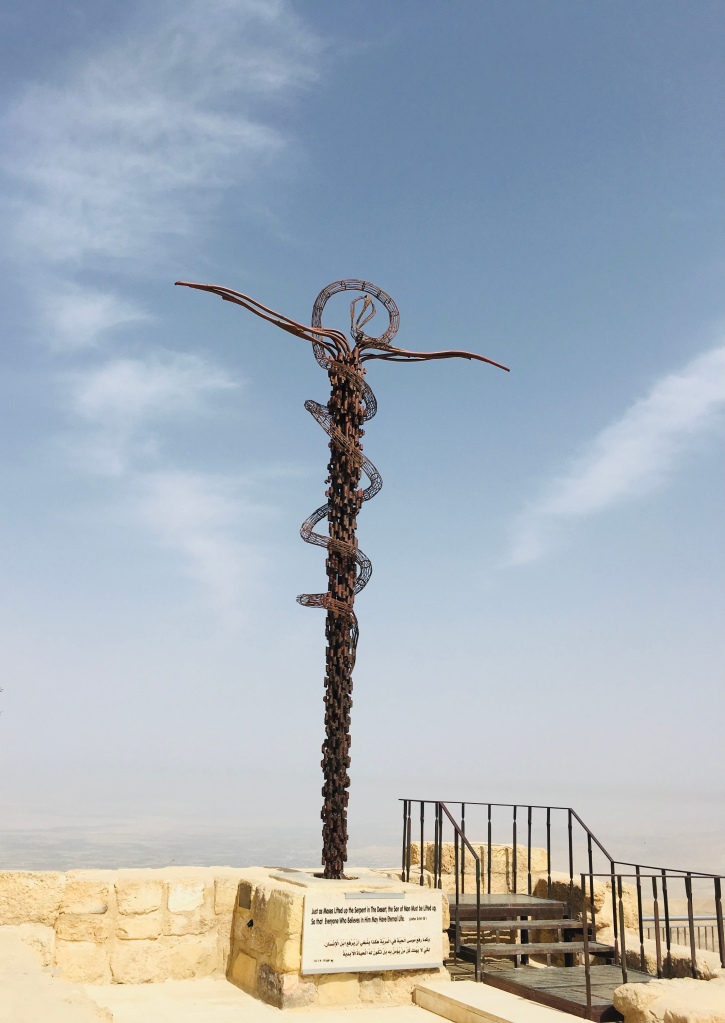
Photo by author in Jordan near the Israeli border where Moses put up the bronze serpent as instructed by God to heal those bitten by the snakes after they have complained of their conditions in the wilderness, May 2019.

While it is true life is indeed difficult, the cross reminds us of the fact that the pains and hurts we have are uniquely ours too, something we have to accept and most of all, own.

There are pains that are so deep and won’t go away that have in fact affected us dismally in our lives already. Instead of self-blaming and self-pity, we just have to ask for God’s grace to accept and own them like Jesus Christ. We just have to “bring it home” – that imagery of the Cross planted on the Calvary – into our very selves, in our being as something so true and real. And uniquely ours.

Stop thinking of others’ pains and hurts. We are not all the same. If ever we have similar experiences, the hues and shades even gravity and circumstances are not same because each pain and hurt, like the cross, is uniquely ours. Like every person, every cross is unique because it is also a gift, a mystery, and life. We have to “befriend” our pains and hurts, our own cross instead of resist it. It is in “befriending” our pains and hurts, our cross in life that we grow and mature, becoming more free to love and to be joyful because that is when the cross triumphs over its disgrace and shame in us and with others. That is when our pains and hurts, when our crosses begin to reveal to us the many beautiful truths of Easter awaiting us.

The Cross of Christ triumphed because Jesus carried it wholeheartedly, allowing those two pieces of wood to reveal not only to Him who knew everything beforehand its meaning but most of all to everyone of us the deeper truths the Cross signifies as St. Paul eloquently expressed in our second reading.

The Cross of Christ atop the church of our Lady of Lourdes in France. Photo by my former student Philip Santiago during his pilgrimage, September 2018.

One thing I realized after my mother died in May is the fact that while there are so many pains and sufferings in this world, my own pain and suffering in losing her are most difficult to bear; hence, something I must carry because it is uniquely mine.

But, one thing so unique I noticed is that the more I see my cross following my mother’s death, the more I saw also the cross of others. The Cross of Jesus triumphed truly in me when I embraced and owned my cross, when I befriended my pains and hurts that eventually led me to recognize and see, to feel more and experience too the crosses of others.

When we become conscious of each one’s unique cross, slowly we are able to reveal to them the meaning of their personal crosses too because we become more sympathetic, more open, more silent to listen more, love more, care more and be more present with those in their own unique cross. No wonder, I find conversing more engaging with others who also grieve because we can see each other’s unique crosses!

Jesus calls us to imitate Him that by embracing and owning our cross, we too may lead others to finding the meaning of their own cross and thus experience Easter soon. Let us pray:

Give us the grace, O God, 
to always embrace the Cross
like your Son Jesus Christ
where we can all be empty
of ourselves to be filled
with your Holy Spirit
to make your love visible in us. 
Amen.

Praying & Dying with Jesus

The Lord Is My Chef Good Friday Recipe, 29 March 2024
Isaiah 52:13-53:12 > + < Hebrews 4:14-16;5:7-9 > + < John 18:1-19:42
Photo by author, Chapel of the Holy Family, Sacred Heart Novitiate, Novaliches, June 2016.

The evangelists tell us that Jesus died on the Cross on a Friday at about 3PM. And they tell us too that our Lord died praying, exactly what most of the Seven Last Words expressed. 

But from the gospel we have heard this afternoon written by the beloved disciple, we discover something very beautiful about the death of Jesus, that He was very calm and peaceful in His prayer unto death.

After this, aware that everything was now finished, in order that the Scripture might be fulfilled, Jesus said, “I thirst.”  There was a vessel filled with common wine.  So they put a sponge soaked in wine on a sprig of hyssop and put it up to his mouth.  When Jesus had taken the wine, he said, “It is finished.”  And bowing his head, he handed over the spirit.

John 19:28-30
Photo by author, Chapel of the Holy Family, Sacred Heart Novitiate, Novaliches, June 2016.

When we are deep in suffering, in severe pain like Jesus on the cross, what do we usually pray?  Most often, we pray that the terrible ordeal we are going through would finally end, would be finished. 

And sometimes, due to desperation, we even pray for death, of how we wish God would finally end our life to be free from all the problems we are going to. 

One of the things I keep telling to sick people I visit came from Meryl Streep who acted as mother of Winona Ryder in the 1990’s movie “House of Spirits” when she said, “Do not pray for death because death surely comes.”  Sometimes in our desperation, we feel death is the solution to our problems and sufferings.  But when Jesus died on the Cross, He made death an offering, a gift of self in love. 

Photo by author, Chapel of the Holy Family, Sacred Heart Novitiate, Novaliches, June 2016.

In the original Greek text, the word used to express Jesus Christ’s final prayer “It is finished” is tetelestai from the root word telos meaning the final end and direction.  It is not just an ending but a direction too. 

From the very start, Jesus was clear with His mission and how it would be accomplished.  He has always been sure of Himself, of who He is.  Notice how the beloved disciple repeated many times in his account of the Last Supper how Jesus was “fully aware” of everything that was going to happen to Him that He was actually in control and never left to the whims and powers of His enemies when He went through His Passion and Death. 

Last night we heard how Jesus knew everything was coming to end that He washed the feet of His disciples after their supper. Most of all, Jesus was so composed and serene that He even gave bread to His betrayer Judas Iscariot during their meal.  In fact in the washing of the feet of His disciples to His agony in the garden, Jesus calmly and courageously faced death that in the end, on the Cross, He had the upper hand that He was able to pray “It is finished” because He was never made under the power of death completely as He would rise again on Easter. 

In praying “It is finished,” Jesus consecrated not only Himself but also all humanity to the Father so that we are able to bear and face death squarely like Him. Very notable in this part is how we find only in the fourth gospel how Jesus died by “handing over his spirit to the Father.”

Remember the verb to hand over is the literal meaning of the Greek word used paradidomi or betrayal. But here at the death of Jesus, handing over has no negative connotation but purely positive; Jesus never betrayed or handed anyone over to sufferings. He bore all sufferings and handed these over to the Father. That is true passion in the active sense when we let things happen not because we are helpless and resigned to the situation but we passively take everything in the positive sense because we have that firm faith and deep conviction that being silent, being patient, being persevering will eventually bear fruit for us like the death of Jesus that led to Easter.

Suffering and death thus are not resignation nor mere surrender but submission to the higher power of God to convert darkness into light, sadness into joy, and death into life. There on the Cross Jesus showed that true power is in weakness.

Photo by author, Chapel of the Holy Family, Sacred Heart Novitiate, Novaliches, June 2016.

After the consecration of the bread and wine into Christ’s Body and Blood in the Mass, we proclaim “Christ has died; Christ is risen; Christ will come again.”  We call it as “the mystery of our faith” because when we say “Christ has died,” we admit that truly, the Son of God went through all kinds of sufferings in life we all go through like betrayal, rejection, loneliness, sickness, hunger, thirst, and yes, even death.  And His sufferings continue as we suffer more in this world marred by evil and sins, making us cry, asking when would these end and be finished. 

There lies the mystery of our faith on the Cross that led to Easter: when we look at Jesus Christ on His Cross, we see our own pains and agony as God’s pains and agony too.  Jesus joined us in our anguish and death so that we could experience all the more His immense love for us.  Without Jesus and His Cross, we would never be able to bear or even face the many deaths we go through daily.  May we recognize God’s immense love for us again this afternoon when we venerate the Cross and see it as the merging point of human and Divine suffering.  Keep praying with Jesus who has the final say with death in Easter. Amen.

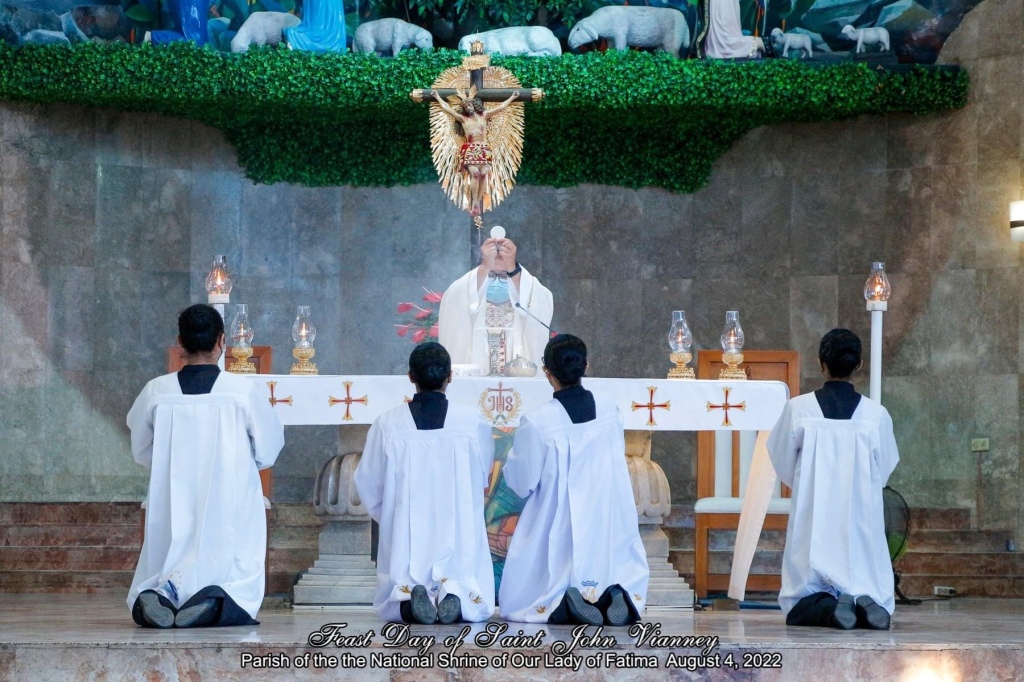
Photo by Ka Ruben, National Shrine of Our Lady of Fatima, Valezuela City, August 2022.

Pag-ibig at kaganapan ng buhay

Lawiswis ng Salita ni P. Nicanor F. Lalog II, Ika-26 ng Marso 2024
Ika-anim na Huling Wika ni Jesus
Larawan kuha ni G. Chester Ocampo, kapilya ng Immaculate Conception Seminary, Guiguinto, Bulacan, 30 November 2015.

May isang mangkok doon na puno ng maasim na alak. Itinubog nila rito ang isang espongha, ikinabit sa sanga ng isopo at idiniit sa Kanyang bibig. Nang masipsip ni Jesus ang alak ay Kanyang sinabi, “NAGANAP NA!” Iniyukayok Niya ang Kanyang ulo at nalagot ang Kanyang hininga.

Juan 19:29-30

Kung minsan ako ay nalulungkot tuwing Huwebes Santo kapag natutuon ang pansin ng mga tao sa rito ng paghuhugas ng pari sa mga paa ng ilang mananampalataya. Tunay na kakaibang eksena at karanasan iyon sa mga tao ngunit ang totoo, hindi naman talagang bahagi ng Misa ng Huwebes Santo ang naturang paghuhugas ng mga paa na puwede namang hindi ganapin.

Ang tunay na lundo ng Banal na Misa ng Huwebes Santo ay naroon sa bahagi ng Ebanghelyong nagsasaad ng diwa ng paghuhugas ni Jesus sa mga paa ng kanyang mga alagad:

Bisperas na ng Paskuwa. Alam ni Jesus na dumating na ang panahon ng kanyang paglisan sa sanlibutang ito upang bumalik sa Ama. Mahal niya ang kanyang mga tagasunod na nasa sanlibutan, at ngayo’y ipakikita niya kung hanggang saan ang kanyang pag-ibig sa kanila.

Juan 13:1

Hanggang saan nga ba ang pag-ibig sa atin ni Jesus?

Hanggang sa wakas. O, end sa Inggles. Ngunit kapag sinabi nating hanggang sa wakas, parang mayroong hangganan ang pag-ibig natin kaya ang pahayag na ginamit sa pagkakasalin ay “ipakikita niya kung hanggang saan ang kanyang pag-ibig sa kanila.”

Mas mainam ang pagkakasalin sa Inggles ng huling pangungusap na nagsabing “He loved his own in the world and he loved them to the end.” Mula sa salitang Griyego na telos ang katagang wakas o end sa Inggles. Nguni’t salungat sa madalas nating isipin ang “wakas” bilang hangganan dahil ang telos ay nagpapahiwatig ng direksiyon at hahantungan na kaganapan o perfection. Hindi lang pagtigil at paghinto ang wakas o end.

Kaya naman nang sabihin ni Jesus doon sa Krus na “naganap na”, ang pakahulugan Niya ay ang kaganapan ng Kanyang misyon na mahalin tayong lahat hanggang sa wakas na siyang tinutukoy ng pahayag sa simula ng kanilang Paskuwa, “at ngayo’y ipakikita niya kung hanggang saan ang kanyang pag-ibig sa kanila” sa paghuhugas ng kanilang mga paa na ang kaganapan ay sa Kanyang kamatayan sa Krus kinabukasan ng araw ng Biyernes.

Ipinamalas sa atin ni Jesus ng buong-buo at ganap sa Kanyang pagkamatay sa Krus ang pag-ibig ng Ama para sa atin batay sa Kanyang sinabi kay Nicodemus, “Gayon na lamang ang pag-ibig ng Diyos sa sanlibutan, kaya ibinigay niya ang kanyang bugtong na Anak” (Jn.3;16).

Kung tutuusin ay hindi naman kailangang mamatay si Jesus sa Krus upang tayo ay maligtas ngunit pinili pa rin Niya ito bilang tanda ng Kanyang pagmamahal sa ating lahat. Kaya naman dito rin nating makikita ang magandang kahulugan ng pagmamahal na hindi lamang basta pagtupad sa mga kautusan o pagiging mabuti sa kapwa. Sa kabuuan nito, ang pagmamahal ay pagiging-ganap ng ating buhay. Love is the perfection of life, ayon kay Thomas Merton, isang mongheng Amerikano noong araw.

Kapag tayo ay nagmamahal, tayo ay nagiging ganap tulad ng Diyos! Kaya, basta magmahal lang ng magmahal hanggang masaktan dahil hindi iyan mauubos tulad ng Diyos.

Mga minamahal, yamang gayon kadakila ang pag-ibig ng Diyos sa atin, dapat din tayong mag-ibigan. Walang taong nakakita sa Diyos kailanman, ngunit kung tayo’y nag-iibigan, nasa atin siya at nagiging ganap sa atin ang kanyang pag-ibig.

1 Juan 4:11-12

Mula sa unang sulat ding iyan ni San Juan, ating matutunghayan ang pahayag niya na ang Diyos ay pag-ibig na ayon sa dating Santo papa Benedicto XVI sa kanyang unang encyclical na Deus Caritas est, ito ang pinaka-malalim na pahayag tungkol sa Diyos na hindi matatagpuan sa ibang relihiyon maliban lamang sa Kristiyanidad.

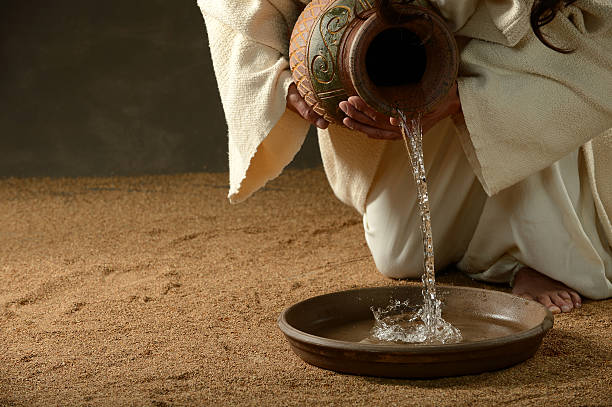
Photo by Paco Montoya on Pexels.com

Mga ginigiliw ko, Diyos lang ang makapagmamahal sa atin ng ganap. Tanging si Jesus lang ang makapagmamahal sa atin ng ganap na Kanyang pinatunayan doon sa Krus.

Palagi kong sinasabi, “human love is always imperfect” kaya hayaan nating punan ni Jesus, gawin Niyang ganap at buo ang ating pagmamahal na palaging kapos at kulang. Maari itong mangyari kapag tayo nagsimulang magparaya at magpatawad, magbigay ng walang hinihintay na kapalit, manahimik kesa kumibo at humaba pa usapan. Tanggapin natin at angkinin mga sakit at sugat natamo natin sa imperfect love ng pamilya at kaibigan o sino pa man.

Tularan natin si Jesus na nagpakasakit at naghandog ng buhay sa Krus dahil sa pag-ibig.

Manalangin tayo para sa mga minamahal natin at sa nagmamahal sa atin sa kabila ng ating mga imperfection:

Panginoong Jesu-Kristo,
sana makapagmahal din ako
tulad Mo hanggang kamatayan;
sana masabi ko rin sa wakas tulad Mo
"naganap na";
patawarin po Ninyo ako
sa maraming pagkakataon
na hindi pa rin tapos
at patuloy pa rin sa pagnanana
ng mga sugat kong natamo
sa imperfect na pagmamahal ng kapwa
kaya hindi ako maka-move on
dahil nilalamon akong buhay ng mga sugat
at alaalang ito kaya hindi ako lumago
at maging ganap sa Iyo.
O Kristo Jesus,
patawarin po Ninyo ako
at turuang magpatawad
dahil sa pagpapatawad
kami tunay na nagmamahal
ng ganap tulad Mo.
Amen.

Pinawi ni Jesus ating uhaw sa Krus

Lawiswis ng Salita ni P. Nicanor F. Lalog II, 25 Marso 2024
Ikalimang Huling Wika ni Jesus
Larawan kuha ni Dean Mon Macatangga ng Our Lady of Fatima University, Valenzuela, 2023.

Pagkatapos nito, alam ni Jesus na naganap na ang lahat ng bagay; at bilang katuparan ng Kasulatan ay sinabi niya, “NAUUHAW AKO!” May isang mangkok doon na puno ng maasim na alak. Itinubog nila rito ang isang espongha, ikinabit sa sanga ng isopo at idiniit sa kanyang bibig.

Juan 19:28-29

Ito ang ikalawang pagkakataon na si Jesus ay nauhaw na bukod tanging makikita lamang natin sa ikaapat na ebanghelyo. Unang nauhaw si Jesus nang Siya ay makiinom sa babaeng Samaritana sa balon ni Jacob sa bayan ng Sychar sa Samaria (Jn.4:7). Sa tagpong iyon naganap ang napaka-gandang usapan sa pagitan ng nauuhaw nating Panginoon at ng babaeng Samaritana nauuhaw sa Diyos, sa pag-ibig at habag.

Mahirap ang mauhaw. Hindi tulad ng gutom na maaring idaan sa tulog. Tiyan lang ang kumakalam kapag tayo ay gutom ngunit kapag tayo nauhaw, dama ng buong katawan ang panghihina. Ramdam na ramdam at nanunuot sa laman at buto ating pagkauhaw. Kaya naman, malalim ang kahulugan ng pagiging uhaw na maaring hindi lamang sa tubig kungdi sa iba pang mahahalagang bagay kailangan ng ating kalooban.

Pagmasdan at damang-dama pagkatao tulad natin ni Jesus nang sabihin Niyang “Ako’y nauuhaw” higit pa sa tubig kungdi ang Kanyang pagkauhaw sa ating pagmamahal at pansin.

Alalahaning sa Ebanghelyo ayon kay San Juan, ang tubig ang isa sa mga pangunahing tanda ni Jesus bilang Kristo. Doon sa kasalan sa Cana nang gawin alak ni Jesus ang mga sinalok na tubig sa banga una Siyang nakilala bilang Kristo. Pagkatapos nito ang sumunod na eksena ang pagbisita sa gabi ng Pariseong si Nicodemo kay Jesus na noon unang binanggit ang tungkol sa pagbinyag o pagsilang muli sa tubig at espiritu (Jn.3:5). Sumunod na eksena doon ang paghingi ni Jesus ng tubig sa babaeng Samaritan kung saan Siya ay nagpakilala bilang “buhay na tubig” (Jn.4:10).

Sa pagsasabi ni Jesus doon sa Krus na Siya ay nauuhaw, Kanyang ipinahahayag di lamang ang pagkauhaw sa tubig kungdi higit pa! Kay laking kahangalan nang bigyan Siya ng ordinaryong alak ng isang sundalong Romano upang mainom. At madalas ay ganoon din tayo kay Jesus na nangakong “ang uminom ng tubig na ibibigay ko ay hindi na muling mauuhaw. Ito ay magiging isang bukal sa loob niya, babalong, at magbibigay sa kanya ng buhay na walang hanggan” (Jn.4:14).

Maliwanag higit pa sa tubig kungdi pag-ibig at malasakit ang kinauuhaw ni Jesus doon sa Krus. Noon at hanggang ngayon.

Si Jesus ang nauuhaw na misis at ina sa pagmamahal at kalinga ng kanyang taksil na kabiyak at mga lapastangang anak na walang iniisip kungdi kanilang mga sarili.

Si Jesus ang nauuhaw na mister at ama na OFW nasa ibang bahagi ng mundo na walang inaasam-asam kungdi ang mga simpleng tawag at texts ng pamilya na papawi ng kanyang pagod at lungkot.

Si Jesus ang nauuhaw na lolo at lola na pakiramdam ay nag-iisa at nawawala dahil sa Alzheimer’s o sa stroke na walang pumpansin sa loob mismo ng kanilang tahanan.

Si Jesus ang nauuhaw na kabataan naghahanap ng panahon at malasakit ng magulang at mga kapatid upang magkaroon ng direksiyon ang buhay, higit pa sa mga binibigay sa kanilang mga gadgets, damit at mga salapi.

Si Jesus ang nauuhaw na maaring katabi mo ngayon naghahanap ng papansin sa kanya, na ngingiti sa kanya at magpaparamdam na siya ay welcomed at, masarap mabuhay!

Huwag nating tularan ang mga sundalong Romano o ang babaeng Samaritana na naghagilap ng mineral water para kay Jesus na naroroon sa bawat taong nakakasalamuha natin.

Ang pinakamainam at masarap na tubig nating maiaalok sa sino mang nauuhaw ay nanggagaling sa kaibuturan ng ating puso at kaluluwa kung saan nanahan si Jesus sa atin na puno ng habag at pag-ibig. Mauhaw tayo kay Jesus dahil tanging Siya lamang makapapawi at makatitighaw sa ating pagka-uhaw.

Manaling tayo.

Minamahal kong Panginoong Jesus,
patawarin po Ninyo ako
kapag pinapawi ko aking pagka-uhaw
sa kung ano-anong alok ng mundo
na kadalasan lalo lamang ako
nauuhaw,
tuyot,
at hungkag;
punuin mo ako ng IYONG SARILI
upang higit KITA na maibahagi
sa kapwa ko nauuhaw
dahil IKAW lamang
ang makakapawi
sa aming pagkauhaw
sa kahulugan
at kaganapan
ng buhay.
Amen.

Hindi ka nag-iisa

Lawiswis ng Salita ni P. Nicanor F. Lalog II, 24 Marso 2024
Ikaapat na Huling Wika ni Jesus
Larawan kuha ng may-akda, Kapilya ni San Francisco Javier, Sacred Heart Novitiate, Novaliches, 20 Marso 2024.

Mula sa tanghaling tapat hanggang ikatlo ng hapon ay nagdilim sa buong lupain. Nang mag-iikatlo ng hapon, sumigaw si Jesus, “ELOI, ELOI, LEMA SABACHTANI?” ibig sabihi’y “DIYOS KO, DIYOS KO, BAKIT MO AKO PINABAYAAN?”

Mateo 27:45-46

Sa tagpong ito ating mababanaagan kadakilaan ng pagmamahal sa ating lahat ng Diyos, Siya na ganap, walang kapintasan at kakulangan (perefect) ay piniling maging katulad nating hindi ganap (imperfect) bilang tao sa lahat ng bagay maliban sa kasalanan kay Kristo Jesus.

Pinili at mas inibig ng Diyos kay Kristo na maging tao upang maranasan hirap at sakit natin maging ang kamatayan, lalo’t higit ang magdusa at mamatay na nag-iisa at iniwanan ng lahat doon sa Krus.

Ano mang paghihirap at pagdurusa ay nagiging napakabigat kapag ika’y nag-iisa, na walang kasama ni karamay. Ito pinakamasaklap sa panahon natin ngayon maging sa ating bansa na dati rati’y walang mga bahay ampunan para sa matatanda ngunit nagyon ay naglipana na dahil sa maraming matatanda ang iniiwan, tinatalikuran di lamang ng mga kamag-anakan kungdi pati ng lipunan. Ito ang dahilan kung bakit si Santa Mother Teresa ay bumuo noon ng samahan na mag-aalaga sa mga tinaguriang “poorest of the poor” sa India nang makita niya maraming may-sakit sa Calcutta namamatay nang mag-isa. Hindi lamang ito totoo sa mga mahihirap na lugar kungdi maging sa mga mauunlad na lupain ay maraming matatanda ngayon ang namamatay na lamang ng mag-isa sa buhay.

Larawan kuha ng may-akda, Baguio City, 2023.

Iyan man ay pinagdaanan ni Jesus lalo na noong ipinako siya sa krus na halos iwanan siya ng lahat. Sa labingdalawang alagad niya, naghudas ang isa habang ang pinuno naman nila ay ikinaila siya ng tatlong ulit kaya’t nagtago noon kasama ang iba pang mga alagad. Tanging si Juan na minamahal na alagad ang nanatili sa paanan ng krus ni Jesus kasama ang kanyang Ina na si Maria at ilan pang mga kababaihan.

Nasaan ang mahigit limang libong tao na pinakain ni Jesus sa ilang? Wala din doon ni isa sa mga pinagaling niyang mga may-sakit. Nawala at naglaho ang lahat ng tao na tuwang-tuwang sumalubong kay Jesus noong Linggo ng Palaspas.

Ngunit kailan man ay hindi naramdaman ni Jesus ang pagiging mag-isa doon sa Krus. Tulad ng sino mang mabuting Judio, dinasal ni Jesus noon ang Salmo 22, ang awit ng panaghoy, ng pagpapakasakit at buong pagtitiwala sa Diyos.

Ito ang mabuting balita ng pagkamatay ni Jesus sa Krus: mula noon tayong mga tao ay hindi na mag-iisa sa mga hirap at tiisin nitong buhay maging kamatayan dahil kasama na natin ang Diyos kay Jesus.

Ito ang ating consolation o consuelo, wika nga.

Mula sa dalawang katagang Latin na con (with) at solare (alone) na ibig sabihin ay samahan ang nag-iisa, naging pinakamalapit at tunay na kaisa tayo ng Diyos sa tuwing tayo ay nasa gitna ng mga tiisin at hirap sa buhay maging kamatayan dahil sa pagdamay sa atin ni Jesus doon sa Krus upang sa gayon sa kanyang muling pagkabuhay tayo man ay kanyang makasama at makaisa.

Sapagkat siya ma’y tinukso at nagbata, kaya ngayo’y matutulungan niya ang mga tiutukso.

Hebreo 2:18

Sa tatlong taon kong pagiging chaplain sa Our Lady of Fatima University at Fatima University Medical Center, nakita ko at naranasan sa maraming pagkakataon paano mga tao – bata man o matanda, mahirap at mayaman, may sakit o karamdaman maging mga malalakas at malusog ang pangangatawan – ay nararanasan ang pangungulila at pag-iisa sa gitna ng kanilang mga paghihirap at pagdurusa sa buhay. Marami sa kanila ang mag-isang umiiyak kasi maraming ginagawa o nasa kung saan-saan kanilang mga mahal sa buhay. Maraming pagkakataon nga naitatanong ko na lang kung mayroon pa bang umuuwi ng bahay o nakatira sa kanilang tahanan? Is anybody still home?

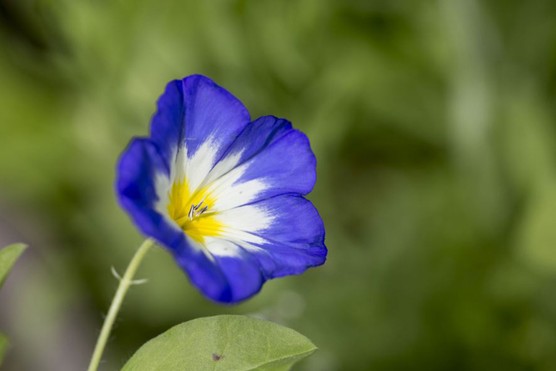
Larawan ng convolvulus tricolor mula BBC Gardeners World Magazine.

Halina at ipagdasal ang bawat isa, lalo na yaong mga nahihirapan, nagtitiis ng mag-isa sa buhay:

Diyos Amang mapagkalinga,
ibinigay mo sa amin
ang Iyong Anak na si Jesus
upang aming maranasan Iyong
pag-ibig at habag,
ang Iyong pagpapagaling at pagkandili,
ang Iyong kapanatilihan at kapayapaan
upang hindi na kami mag-isa pa sa buhay na ito;
maalala nawa naming palagi
na kung kami man ay dumaraan sa
napakatinding pagsubok sa buhay
na tila nag-iisa at walang karamay,
naroon si Jesus pinakamalapit sa amin
dahil Siya ang unang nagpakasakit
at namatay doon sa Krus
para sa amin.
Amen.

Ulirang alagad, Minamahal na alagad

Lawiswis ng Salita ni P. Nicanor F. Lalog II, Ika-22 ng Marso 2024
Ikatlong Huling Wika ni Jesus sa Krus
Larawan kuha ng may akda, 2019.

Ang ikatlong wika ni Jesus sa Krus:

Nakatayo sa tabi ng krus ni Jesus ang kanyang ina at ang kapatid na babae nitong si Maria, na asawa ni Cleopas. Naroon din si Maria Magdalena. Nang makita ni Jesus ang kanyang ina, at ang minamahal niyang alagad sa tabi nito, kanyang sinabi, “Ginang, narito ang iyong anak!” At sinabi sa alagad, “Narito ang iyong ina!” Mula noon, siya’y pinatira ng alagad na ito sa kanyang bahay.

Juan 19:25-27

Napakagandang eksena ang ating natunghayan sa ikatlong wika ni Jesus doon sa krus, sa gitna ng kanyang paghihirap at pagtitiis ilang oras bago siya mamatay. Naroon kapiling niya si Maria na kanyang Ina, ang “ulirang alagad” at si Juan, ang “minamahal na alagad.”

Kapwa tumatayo noon sa paanan ng krus ang dalawang naturang alagad para sa ating lahat ngayon: si Maria na sumasagisig sa Inang Simbahan, ang Katawan ni Kristo na ating kinabibilangan bilang kanyang mga anak, bawat isa ay minamahal na alagad ni Jesus.

Ngunit, nababatid kaya natin ang karangalang ito sa ngayon na wala nang halos nagsisimba ni nagdarasal at walang pakialam sa paghihirap ng kapwa lalo ng mga magulang?

Hindi ko po napanood (at walang balak panoorin) yaong viral na namang video diumano ng isang guro na kinunan ng kanyang mga mag-aaral habang nagbibitiw ng masasakit na salita dahil sa matinding galit. Maraming guro ang dumamay sa kanya at hiniling sa mga tao na huwag siya husgahan.

Sang ayon po ako doon. Nakakalungkot, nakakadismaya at nakakahiya maraming tao ngayon lalo mga nakababata tulad ng mga mag-aaral na wala nang kahihiyahan at pakundangan sa hirap at malasakit ng kapwa. Masyadong entitled na nga yata mga tao ngayon na tila baga umiikot at umiinog ang mundo sa kanila.

Ngayon ko lang nadama ng husto bilang chaplain ng Fatima University Medical Center ang pagkatakot at balisa, pagluha at pagtangis ng isang ina para sa kanyang iniluwal na sanggol na kailangang ipasok sa ICU dahil sa sakit at suliraning pangkalusugan. Hindi biro ang makakita ng bagong silang na sanggol na maraming nakasaksak na mga munting tubo para lang mabuhay. Pagkatapos paglaki ay lalapastanganin mga maglang at matatanda? Kung nalalaman lang sana nila pagmamal at malasakit sa kanila noong sila’y mga sanggol na may sakit!

Larawan ng “Lady of Sorrows” sa triptych ng Master of the Stauffenberg Altarpiece, Alsace c. 1455; mula sa fraangelicoinstitute.com.

Ang mga salitang binigkas ni Jesus doon sa krus para sa kanyang Inang si Maria at sa minamahal niyang alagad na si San Juan ay patuloy niyang sinasabi sa atin ngayon upang tularan ang dalawang naturang alagad niya. Araw-araw ay hinihimok tayo ni Jesus na sariwain kanyang ikatlong huling wika doon sa krus sa pagmamalasakit at pagmamahal natin sa bawat kapwa lalo na yaong mga nahihirapan at nabibigatan sa buhay.

Si Maria ang unang alagad at ulirang alagad ng Panginoong Jesus dahil siya ang unang tumanggap sa kanya at nagsabuhay ng Ebanghelyo. Si Maria ang unang nanampalataya kay Jesus kaya naganap ang una niyang himala sa kasalan sa Cana, Galilea nang mamagitan si Maria na tulungan ang mga bagong kasal na naubusan ng alak. Nanalig si Maria kay Jesus kaya inutusan niya ang mga tagapag-silbi noon na gawin ano mang sabihin ni Jesus. Higit sa lahat, si Maria ang unang nanampalataya na muling mabubuhay si Jesus kaya sa kanya rin unang nagpakita ang Panginoon noong Pasko ng Pagkabuhay.

Sa lahat ng ito, itinuturo sa atin ng Mahal na Birheng Maria ang kahalagahan ng kaisahan o union kay Jesus sa pamamagitan ng matalik na ugnayan o intimacy sa Panginoon bilang kanyang kasama o companion sa misyon. Kaya kung tutuusin, si San Juan ay katulad din ni Maria sa pagiging ulirang alagad ni Jesus kaya naman tinagurian din siyang minamahal na alagad. At iyon din tayo sa paningin ng Panginoon!

Damahin natin ang tagpo doon sa krus. Pagmasdan ang marangal pa ring itsura ng Mahal na Birheng Maria sa gitna ng matinding hapis. Nakatindig siya (nakatayo) at hindi naglulupasay o nagwawala sa lapag. Buong-buo kanyang sarili tulad ni Jesus sa kabila ng matinding hapis.

Ang “Blue Madonna” na Mater Dolorosa (1616)ni Carlo Dolci. Mula sa Wikimedia Commons.

Ito ang pinakamagandang katotohanan sa tagpong ito: mahigit pa sa mga luha at hapis sa mukha ni Maria, hindi maikakaila ang kanyang pagiging ulirang alagad ni Jesus sa kanyang taimtim na pananalangin. Pagmasdan na walang ibang ginagawa marahil doon ang Mahal na Ina maliban sa pagdarasal. Tingnan kung paanong magkaisa silang mag-ina sa hirap at dusa maging sa pag-asa at pananalangin kaya naman sila rin unang nagkita sa luwalhati ng muling pagkabuhay!

Sikapin natin ngayong panahon ng Kuwaresma at Semana Santa na muling malinang ating buhay panalangin upang katulad ng Mahal na Birheng Maria, magkaroon tayo ng kaisahan o komunyon kay Jesus na kung saan hindi lamang tayo nag-uusal ng dasal sa bibig kungdi namumuhay at nananahan kay Kristo. Tantuin nating mabuti na ang Dapat pagtayo ni Maria doon sa paanan ng krus ni Jesus ay hindi basta-basta lamang nangyari; ito ay bunga ng matalik niyang pakikipag-ugnayan at pagsunod kay Jesus na dinalisay ng buhay panalangin. Madalas tayo mga tao ngayon naisipan lang magdasal at magsimba kung mayroong problema.

Buong buhay ng Birheng Maria ay ginugol niya sa pagdarasal kaya noong bumaba ang Espiritu Santo noong Pentekostes, naroon din siyang nagdarasal kasama ng mga alagad ni Jesus. Si Maria ang pinakamagandang paalala pangalawa kay Jesus na ang pagiging alagad ay nagsisimula at nakabatay sa buhay ng panalangin, ng kaisahan sa Diyos kung kayat bawat pasya, bawat kilos natin ay bunga ng pagdarasal at kaisahan kay Kristo Jesus!

Manalangin tayo:

Panginoong Jesus,
tulungan mo kaming maging
katulad ng iyong Ina,
ang Mahal na Birheng Maria
sa pagiging iyong ulirang alagad;
O Birheng Maria,
ipanalangin mo kaming iyong mga anak
lalo na kaming mga pari na dapat
sana ay katulad ng minamahal na alagad
na nakababad, nakalublob sa
buhay panalangin;
nawa katulad mo at ni San Juan,
manindigan kami kasama ng
maraming nahaharap sa mga
pagsubok at pagdurusa;
nawa masamahan namin ang
marami pang iba nagtitiis ng mag-isa,
walang kasama.
Amen.