Christ the King, the face of suffering

Lord My Chef Sunday Recipe for the Soul, 23 November 2025
Solemnity of Christ the King, Cycle C
2 Samuel 5:1-3 ><}}}}*> Colossians 1:12-20 ><}}}}*> Luke 23:35-43

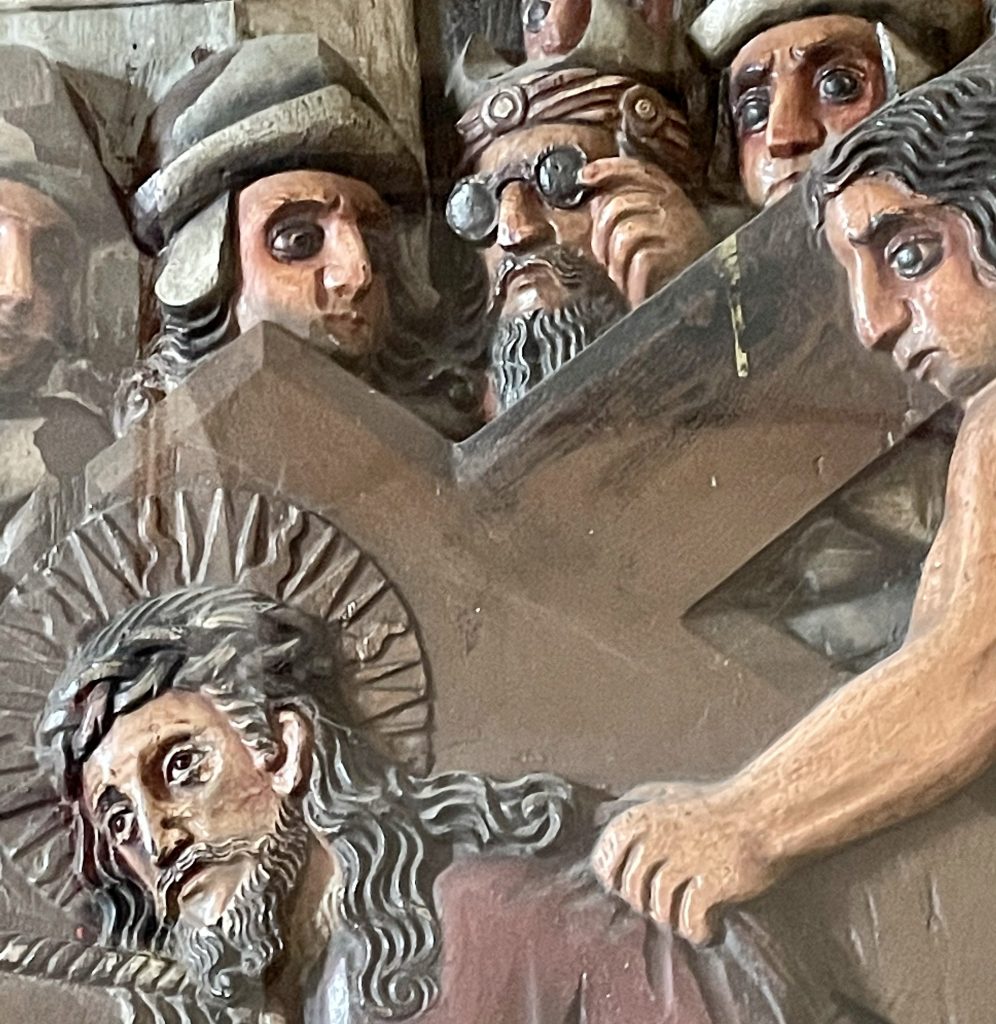
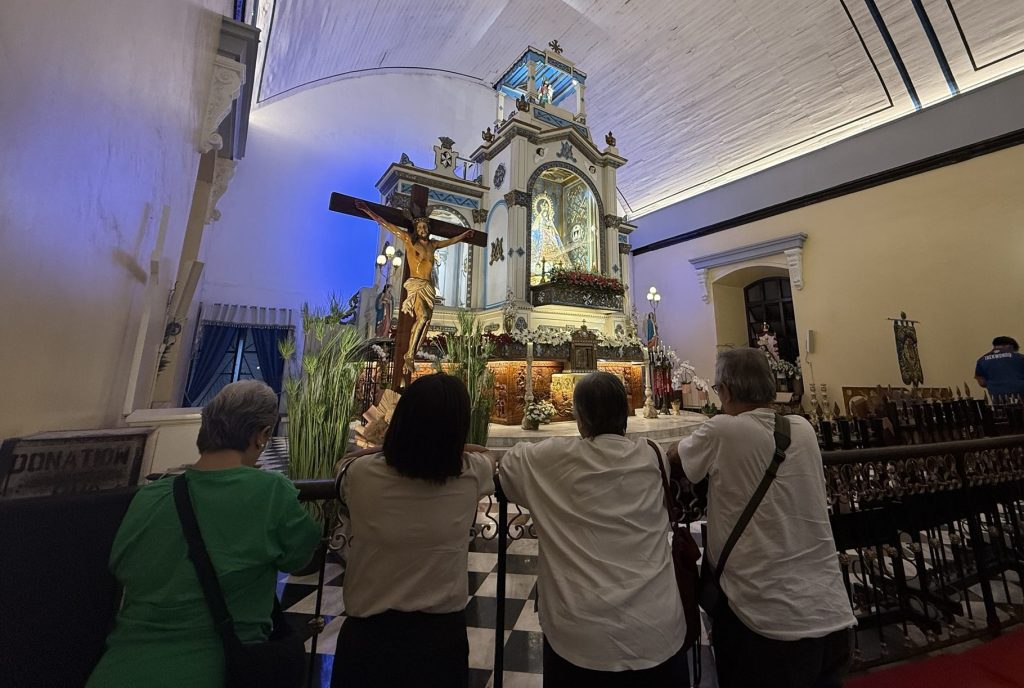
I was teasing our campus ministry head for communication last Tuesday after he had presented to me this announcement for our Christ the King celebration today. “Para namang malnourished si Jesus diyan,” I told Darwin as he scratched his head laughing during our meeting.

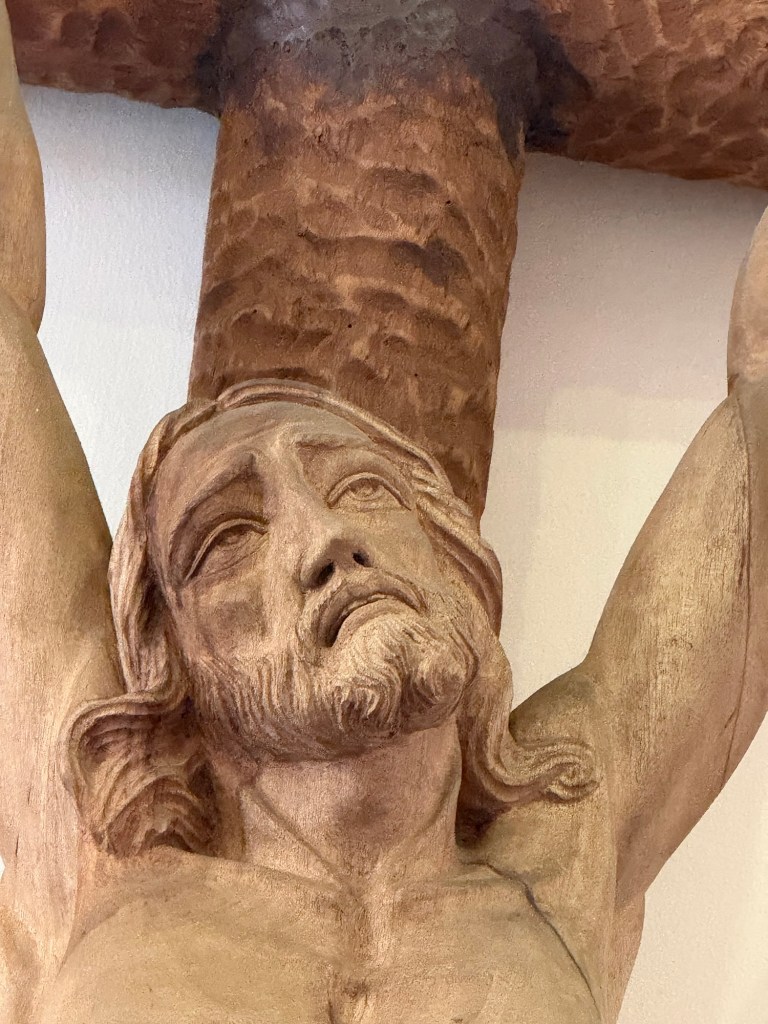
But, that evening after praying our gospel, I changed my mind the following Wednesday and told Darwin to go ahead with his original artwork because I have realized that the face of Christ the King is also the face of us suffering.

Photo by author, Holy Monday, 2025.

Are you not surprised that on this final Sunday of the liturgical year, we are not presented with an image of a victorious Jesus like that Cristo Rey found in every Catholic home but the gospel scene of Jesus suffering in excruciating pain there on the Cross on Good Friday?

Above him there was an inscription that read, “This is the King of the Jews.” Now one of the criminals hanging there reviled Jesus, saying, “Are you not the Christ? Save yourself and us.” The other, however, rebuking him, said in reply, “Have you no fear of God, for you are subject to the same condemnation? And indeed, we have been condemned justly, for the sentence we received corresponds to our crimes, but this man has done nothing criminal.” Then he said, “Jesus, remember me when you come into your kingdom.” He replied to him, “Amen, I say to you, today you will be with me in Paradise” (Luke 23:38-43).

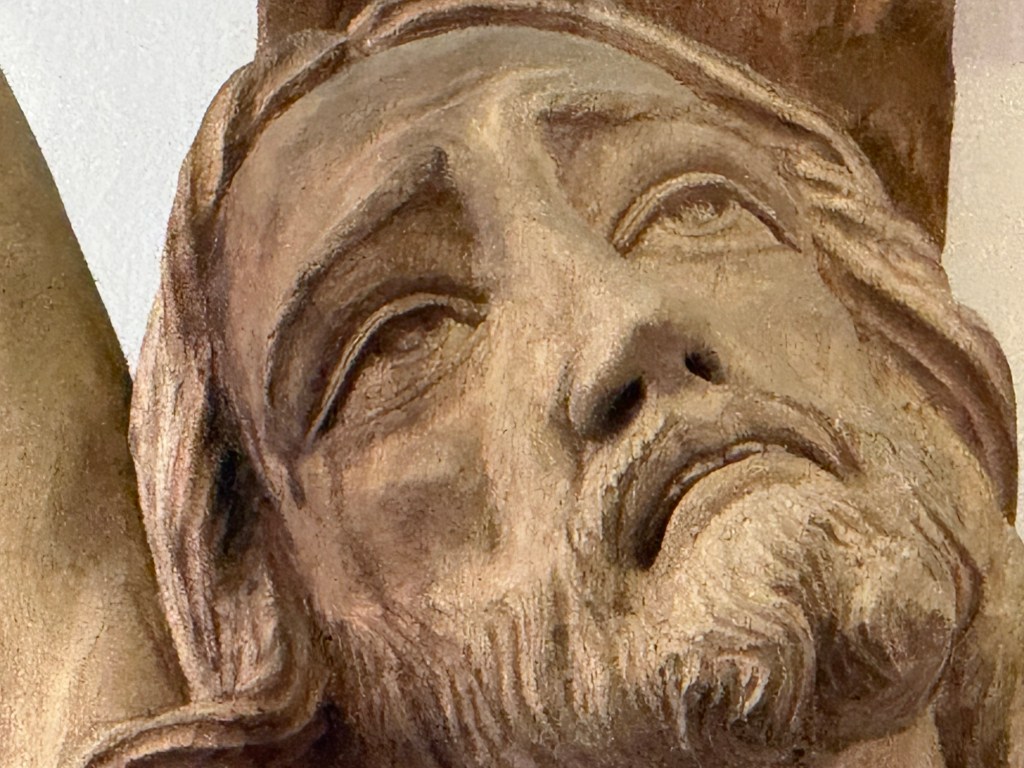
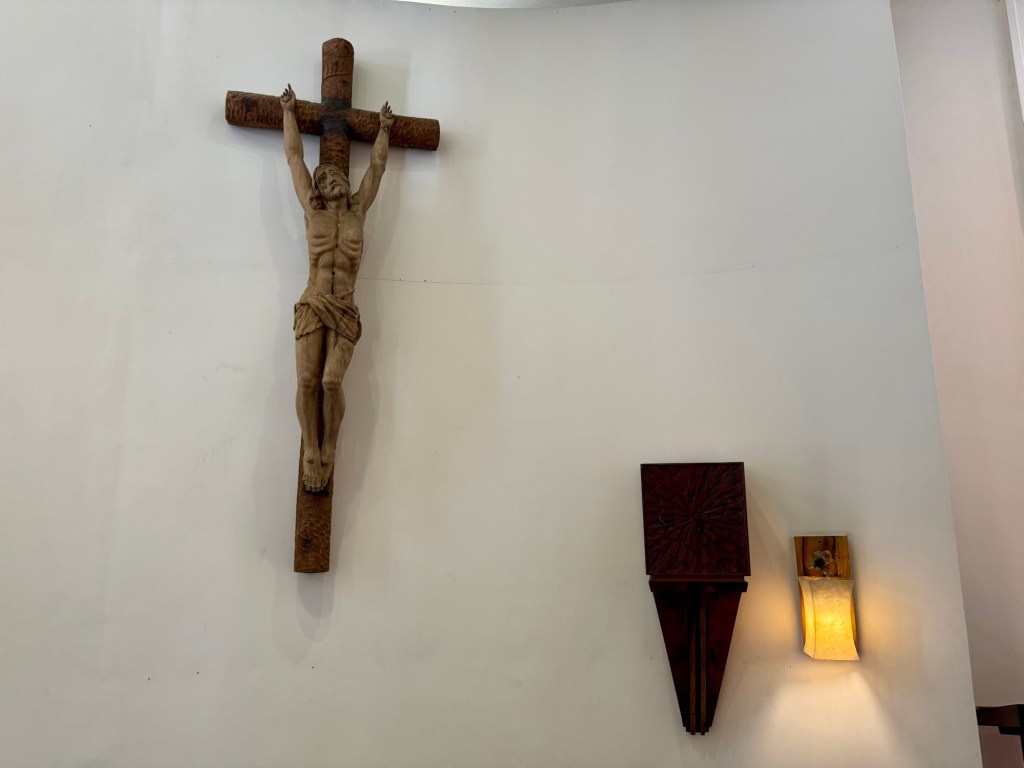
Photo by author, Chapel of St. Francis Xavier, Sacred Heart Novitiate, Quezon City, 2024.

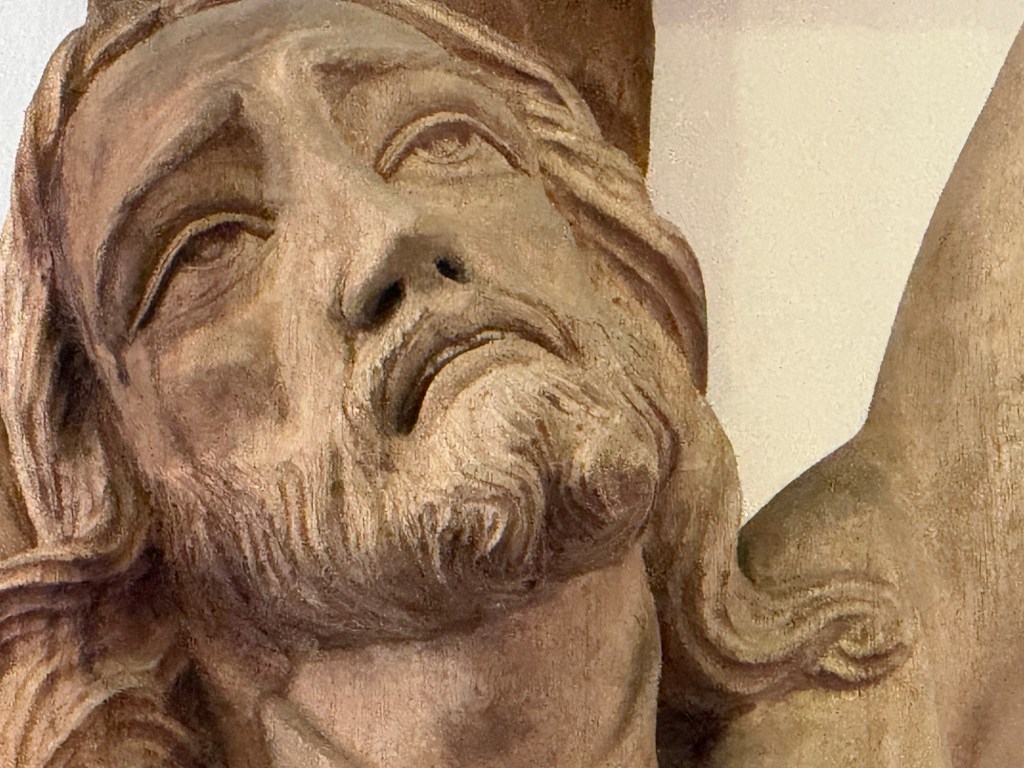
On this Solemnity of Christ the King, St. Luke invites us for the last time we hear his gospel this year to look at the face and into the eyes of Jesus crucified.

What do you see and feel in him?

Ever wondered what the rulers and soldiers saw on the face of Jesus crucified that they sneered and jeered him from below? They were so filled with pride in finally putting into shame and silence Jesus who had always spoken the truth and exposed their lies and hypocrisies.

What do we see when people are put on the spot and shamed like Jesus crucified or like the woman caught committing adultery Jesus forgave and saved from being stoned by the angry crowd? So sad that in this age of social media, public trials and condemnation have become a hobby for many without even checking the accusations are true or not.

Let us move closer to Jesus on the Cross like those two thieves hanging at each of his side: what do you see and feel about him?

Why did the other thief join those below in deriding and insulting Jesus crucified? Now one of the criminals hanging there reviled Jesus, saying, “Are you not the Christ? Save yourself and us” (Lk.23:39).

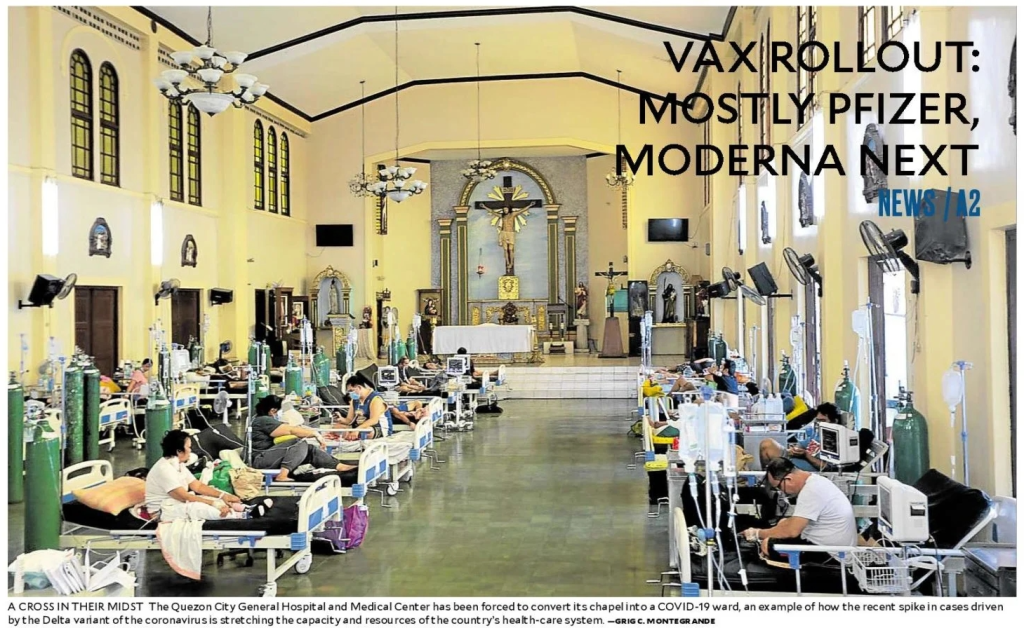
Have you ever found yourself in the ER or waiting for your turn at the doctor’s clinic with other patients also in pain and suffering? How do you see the other patients and sick people like you? Is there in your mind any tinge of suspicion why or how they got sick? The best and the worst in us come out in such times when we are so down beside another suffering brother or sister.

Or, do we choose the path of humility and sincerity of Dimas, the good thief? What did he see in Jesus there on the Cross? The other, however, rebuking him, said in reply, “Have you no fear of God, for you are subject to the same condemnation? And indeed, we have been condemned justly, for the sentence we received corresponds to our crimes, but this man has done nothing criminal” (Lk.23:40-41).

Most likely, Dimas must have heard a lot about the teachings and healings by Jesus but he felt something so unique and liberating, so personal during those dark moments of excruciating pains when he finally recognized Christ his Savior, the only true King that is why he asked to be remembered in his kingdom!

Finally, somebody greater than him there beside him, saying nothing to judge nor condemn him nor irritate him like his fellow criminal at the other side. In recognizing Jesus, Dimas also found himself as truly human, weak and finite who can only be whole and complete – saved and redeemed – in Christ who chose to be there on the Cross with him exactly as St. Paul had written in our second reading.

He is before all thing, and in him all things hold together. He is the beginning, the firstborn from the dead, that in all things he himself might be preeminent. For in him all the fullness was pleased to dwell, and through him reconcile all things for him, making peace by the blood of his cross through him, whether those on earth or those in heaven (Colossians 1:17, 18-20).

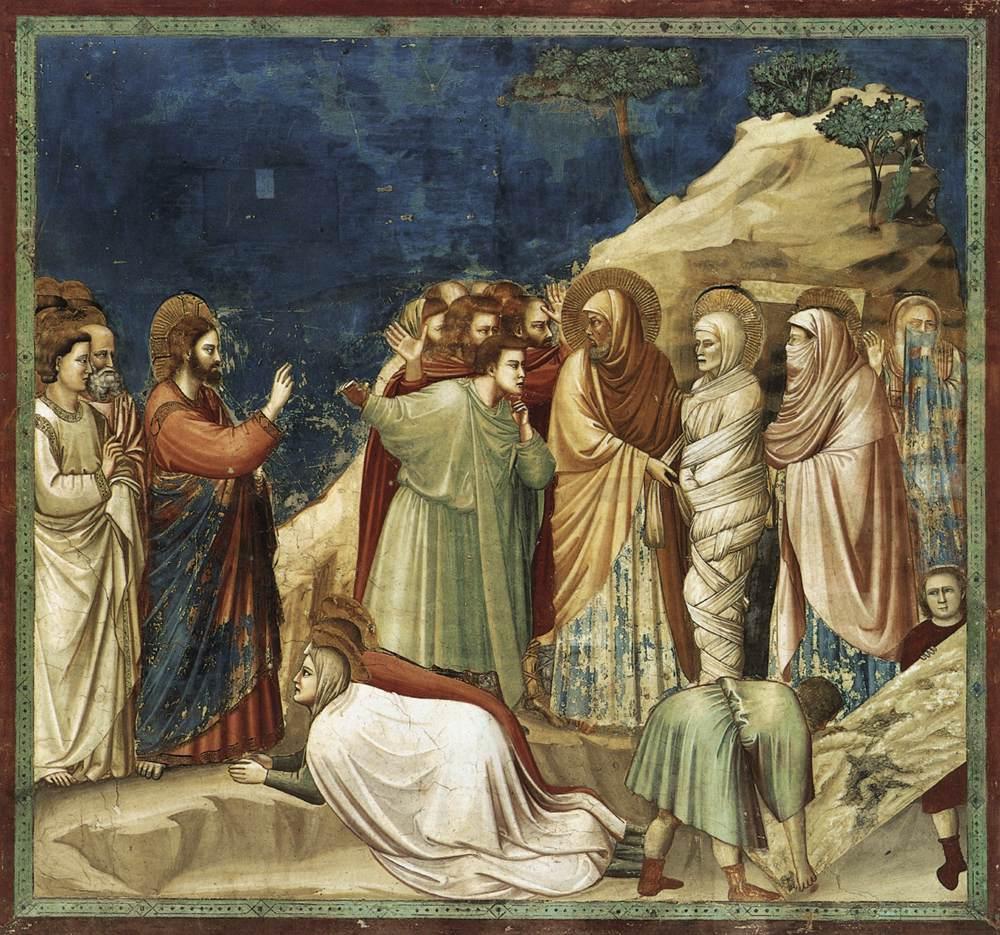
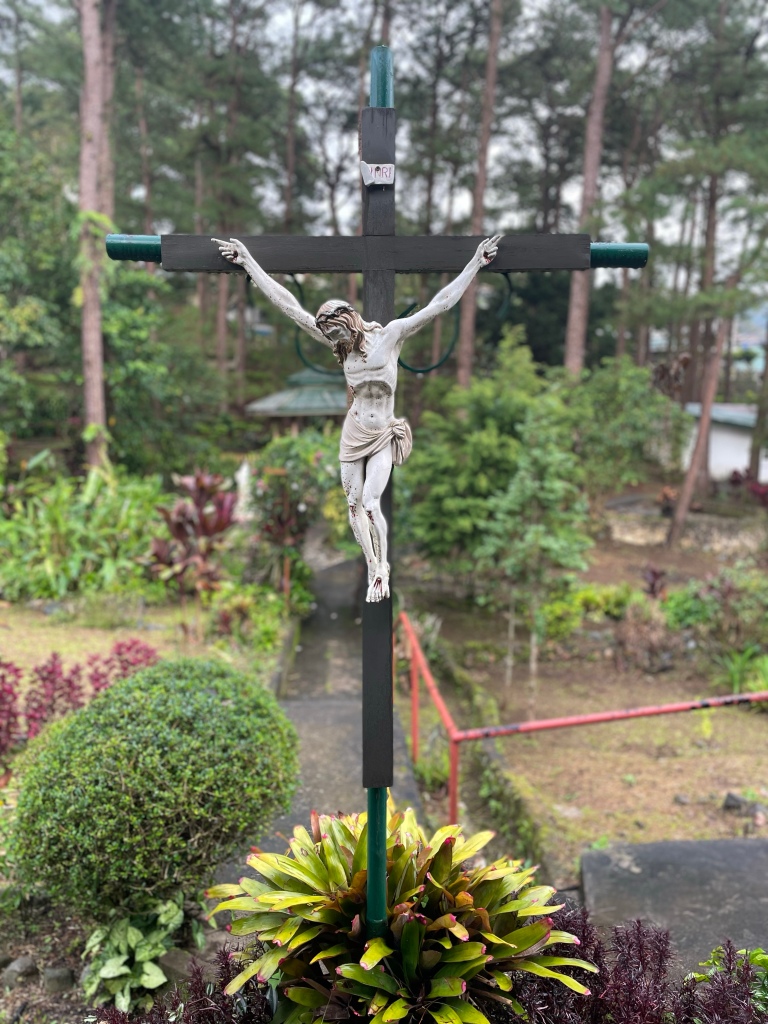
Photo by author, St. Scholastica Spirituality Center, Baguio City, August 2023.

Here we find the beauty of the Cross, of how God so perfect without any need to suffer and experience pain yet chose to go through it to express his solidarity and love for us humans.

It is on the cross when we are most able to identify and be one in Jesus Christ. That is why it is also on the Cross that we enter heaven with Jesus amid suffering and death. Jesus said today you shall be with me in Paradise – not later when we die or after three days at Easter. How lovely that Jesus never promised heaven when he was strong and freely moving around but when he was there on the cross, nailed and dying.

Jesus Christ is the King of the Universe not because of his powers and might but primarily of his being one of us in sufferings and death. It was the very feeling the tribes of Israel were telling David when they came to him in Hebron to reaffirm their allegiance to him as their king, “Here we are, your bone and your flesh” (2 Sm. 5:1).

The people we admire most are not always the best nor most powerful nor talented because often we envy them. On the other hand, we are more drawn with those down and burdened because we see in them our own brokenness, too, that it is part of life and of being human. That is why we easily empathize with those grieving or sad than with those happy or rejoicing.

Our humanity reaches its highest point and beauty when broken and weak as we realize our mortality and similarity with others in suffering needing for a Savior. We are most inhuman whenever we enjoy inflicting or causing pains on others or when rejoicing in their agonies. To proclaim Christ is the King of the Universe is to always see him in our sufferings and among those suffering too like us. Amen. A blessed week ahead of you!

Uniqueness of the Cross

Lord My Chef Sunday Recipe for the Soul, 14 September 2025
Feast of the Exaltation of the Cross
Numbers 21:4-9 ><}}}}*> Philippians 2:6-11 ><}}}}*> John 3:13-17
*This is an updated version of our reflection last year; pray for our Marriage Encounter this weekend.
Via Crucis at Fatima University Medical Center, Valenzuela City, 2025.

This Sunday we have a unique celebration, the Feast of the Exaltation of the Cross that falls on the 14th day of September. It is so important that even if it falls on a Sunday, the more it must be celebrated as it is most central in the teachings of Jesus Christ.

It is so unique because despite its being made up of two ordinary pieces of wood, the Cross is most unique with its deeply extraordinary in meaning as sign of God’s immense love for us humans through Jesus Christ’s Passion and Death.

From being the sign of the most inhuman punishment in history, the Cross is now the very sign of how God “so loved the world that he gave his only Son, so that he who believes in him might not perish but might have eternal life” (Jn.3:16). It encapsulates the whole mystery of Jesus Christ, of how this all-powerful God beyond the ordinary became weak like us in everything except sin so that we too may be like Him, divine and more than ordinary. In His suffering and death on the Cross, Jesus made the lowly wood so ordinary to be so exalted to become His sign of love and mercy, power and majesty.

Photo by author, Jerusalem, May 2017.

Hence, in the Cross is the power of God’s love to transform us to better persons.

In the Cross is God’s power to lead us closer to Him with its vertical beam and to others with its horizontal beam.

In the Cross is the power of good if we choose to embrace it with Christ Jesus as our Lord and Master.

The Cross is most unique of all signs in the world because underneath its ordinariness, that is where we see God’s glory and majesty. It was underneath the Cross of darkness and gloom on Good Friday that humanity began to see light and hope in life’s many absurdities. Most of all, it was underneath that Cross of suffering and death of Jesus Christ that we feel and experience the assurance of the Resurrection.

How?

Through our own pains and sufferings that are most uniquely ours too!

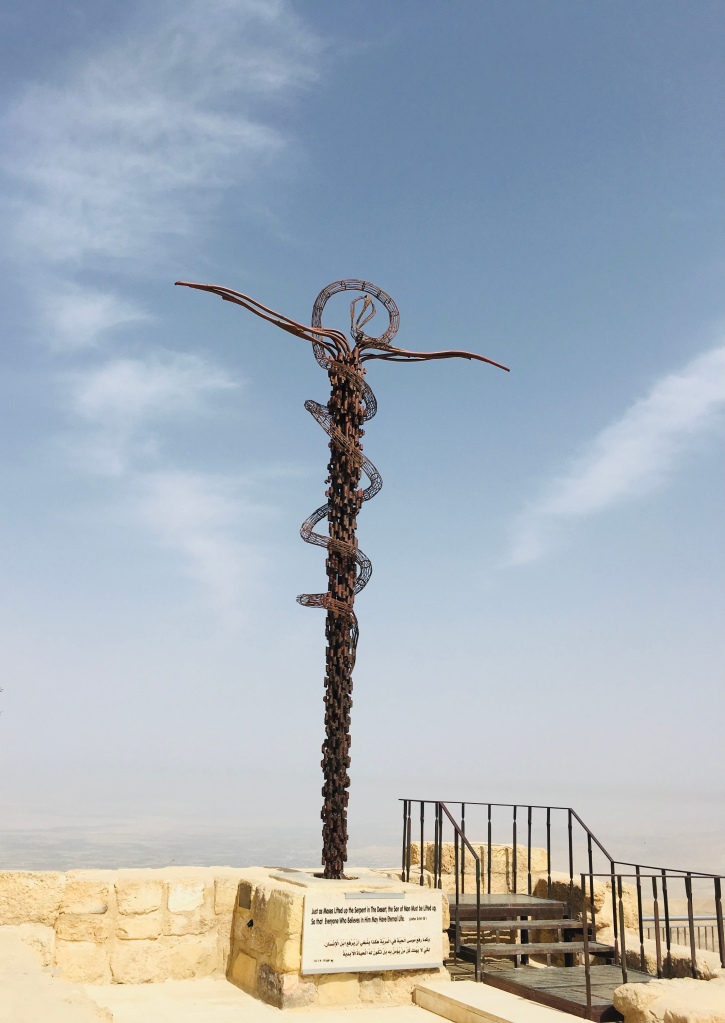
With their patience worn out by the journey, the people complained against God and Moses, “Why have you brought us up from Egypt to die in this desert, where there is no food or water? We are disgusted with this wretched food!” In punishment the Lord sent among the people saraph serpents, which bit the people so that many of them died (Numbers 21:4-6).

Photo by author, Dominican Hills, Baguio City, January 2018.

You must have heard that old story of a man who came to Jesus to return the cross given for him to carry; he asked Jesus to have it replaced with a lighter one. Jesus then led the man to a huge room with all kinds of crosses for him to choose which he prefers as the best one for him so that he would stop complaining.

After closely examining the specs of so many crosses, the man finally decided to pick one he deemed as perfect for him after considering its weight and other dimensions, only to find out from Jesus Himself that it was the same cross he had actually returned for exchange!

Many times in life we are like those people in the first reading, never ending in their complaints to God, even challenging Him, accusing Him of forsaking us, of being unfair when life becomes difficult and unbearable. There are times we feel being on the distaff side of life always like a flat tire, never on top. We cry foul to God especially with all our hurts and pains inflicted by others, asking Him where was He when most needed?

Photo by author in Jordan near the Israeli border where Moses put up the bronze serpent as instructed by God to heal those bitten by the snakes after they have complained of their conditions in the wilderness, May 2019.

While it is true life is indeed difficult, the cross reminds us of the fact that the pains and hurts we have are uniquely ours too, something we have to accept and most of all, own.

There are pains that are so deep and won’t go away that have in fact affected us dismally in our lives already. Instead of self-blaming and self-pity, we just have to ask for God’s grace to accept and own them like Jesus Christ. We just have to “bring it home” – that imagery of the Cross planted on the Calvary – into our very selves, in our being as something so true and real. And uniquely ours.

Stop thinking of others’ pains and hurts. We are not all the same. If ever we have similar experiences, the hues and shades even gravity and circumstances are not same because each pain and hurt, like the cross, is uniquely ours. Like every person, every cross is unique because it is also a gift, a mystery, and life. We have to “befriend” our pains and hurts, our own cross instead of resist it. It is in “befriending” our pains and hurts, our cross in life that we grow and mature, becoming more free to love and to be joyful because that is when the cross triumphs over its disgrace and shame in us and with others. That is when our pains and hurts, when our crosses begin to reveal to us the many beautiful truths of Easter awaiting us.

The Cross of Christ triumphed because Jesus carried it wholeheartedly, allowing those two pieces of wood to reveal not only to Him who knew everything beforehand its meaning but most of all to everyone of us the deeper truths the Cross signifies as St. Paul eloquently expressed in our second reading.

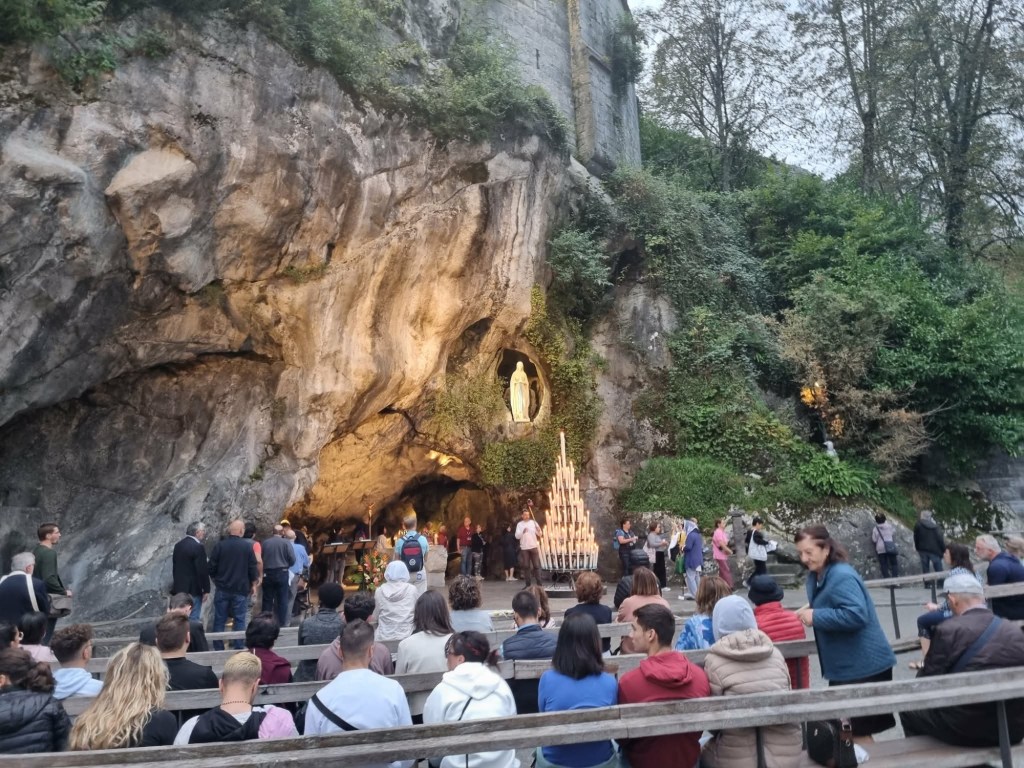
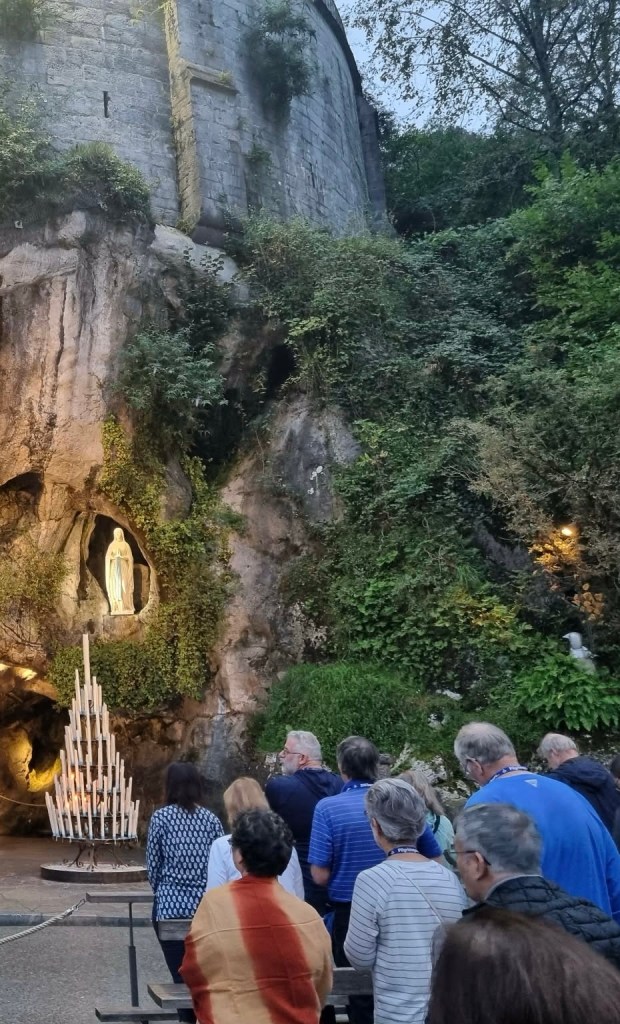
The Cross of Christ atop the church of our Lady of Lourdes in France. Photo by my former student Ar. Philip Santiago during his pilgrimage, September 2018.

One thing I realized after my mother died May last year is the fact that while there are so many pains and sufferings in this world, my own pain and suffering in losing her are most difficult to bear; hence, something I must carry because it is uniquely mine.

But, one thing so unique I noticed is that the more I see my cross following my mother’s death, the more I saw also the cross of others. The Cross of Jesus triumphed truly in me when I embraced and owned my cross, when I befriended my pains and hurts that eventually led me to recognize and see, to feel more and experience too the crosses of others.

When we become conscious of each one’s unique cross, slowly we are able to reveal to them the meaning of their personal crosses too because we become more sympathetic, more open, more silent to listen more, love more, care more and be more present with those in their own unique cross. No wonder, I find conversing more engaging with others who also grieve because we can see each other’s unique crosses!

Jesus calls us to imitate Him that by embracing and owning our cross, we too may lead others to finding the meaning of their own cross and thus experience Easter soon. Let us pray:

Give us the grace,
dear God
to always embrace the Cross
like your Son Jesus Christ
where we can all be empty
of ourselves to be filled
with your Holy Spirit
and make your love
visible in us.
Amen.
A blessed week to everyone!

Fr. Nicanor F. Lalog II
Our Lady of Fatima University
Valenzuela City
(lordmychef@gmail.com)

Life, death, and resurrection.

Lord My Chef Daily Recipe for the Soul, 01 September 2025
Monday, Twenty-Second Week in Ordinary Time, Year I
1 Thessalonians 4:13-18 <*((((>< + ><))))*> Luke 4:16-30
Photo by author, Betania Tagaytay City, August 2018.
Hello, September!
Praise and glory to you,
God our loving Father
for this new month:
30 days of life filled with surprises,
30 days to rejoice in you,
30 days to be better,
30 days to be one in you
in Christ your Son our Lord;
help us Jesus to imitate
St. Paul in helping Christians
how your death and resurrection
shape our identity and future.

Then we who are alive, who are left, will be caught up together with them in the clouds to meet the Lord in the air. Thus we shall always be with the Lord. Therefore, console one another with these words (1 Thessalonians 4:17-18).

"we shall always be
with the Lord."
Help me, Jesus
to imitate Paul
in encouraging
one another that
"we shall always be with you, Lord"
especially when material
things and worldly concerns shape
my thoughts about the future;
lately, I have been so concerned
with the moral degradation
that has worsened in the country
that lately have been shaping my
thoughts about the future too;
Lord Jesus,
help me,
forgive me
when things of the world
shape my thoughts of the future
even my identity as your disciple
that in the process
I fail to recognize your coming
your presence in me and
among us like your folks
in Nazareth;
let me feel anew
your Spirit in me,
Jesus,
to let that same Spirit
animate me like Paul
so I could bring
"glad tidings to the poor,
proclaim liberty to captives,
recovery of sight to the blind,
to let the oppressed go free,
and to proclaim a year
acceptable to the Lord"
(Luke 4:18-19).
Let me share 
in your paschal mystery,
Jesus,
to never lose sight of
your Cross
to find your Resurrection
nearby,
not the ways of the world
that many times
worsen our people's plight.
Amen.
Photo by Pete Johnson on Pexels.com

Becoming like a lamp shining in the dark, the path of Transfiguration

Lord My Chef Daily Recipe for the Soul, 06 August 2025
Wednesday, Feast of Transfiguration of the Lord, Cycle C
Daniel 7:9-10, 13-14 ><)))*> 2Peter 1:16-19 ><)))*> Luke 9:28-36
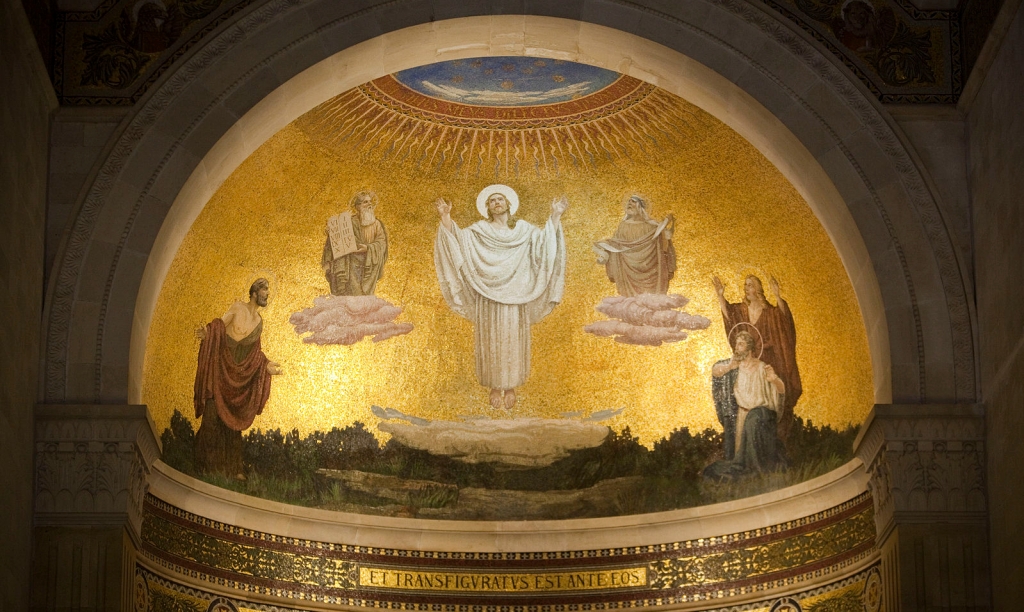
Apse of the Transfiguration Church at the Holy Land from wikimedia.org.

Jesus took Peter, John, and James and went up the mountain to pray. While he was praying his face changed in appearance and his clothing became dazzling white. And behold, two men were conversing with him, Moses and Elijah, who appeared in glory and spoke of his exodus that he was going to accomplish in Jerusalem (Luke 9:28-31).

Lord Jesus,
I feel afraid in this scene;
how difficult it must have
been to the three Apostles
privileged to join you up on
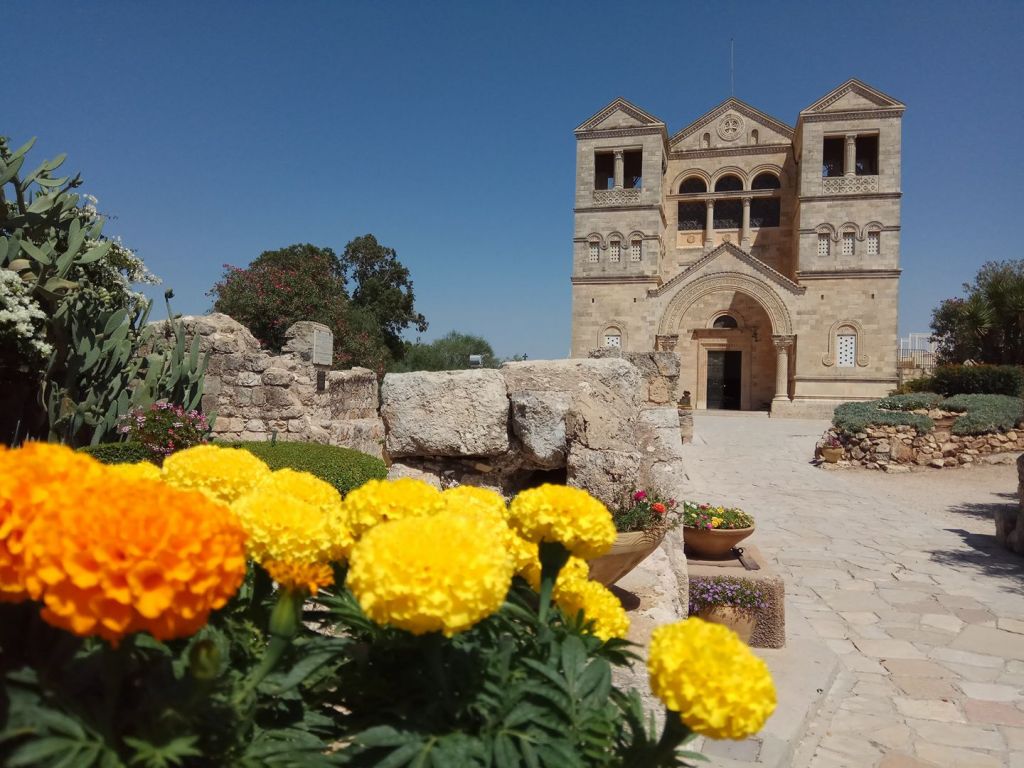
Mount Tabor at your Transfiguration
for it was not all glory -
I could imagine the fear
and sadness hearing
Moses and Elijah speaking
about your coming
"exodus",
your Passion,
Death, and Resurrection.
Why do you have to go through
those sufferings and death?
Why do you have to leave
and depart from us?

Like Peter,
I would have said the
same to you, "Master,
it is good that we are here;
let us make three tents,
one for you,
one for Moses,
and one for Elijah"
so that we could just stay
and remain up there in glory.
You know it so well,
Jesus how when we are
so wrapped in joy and glory
and mystery,
we hardly understand
a thing except the experience
of being overwhelmed,
of finding you,
of seeing you,
and being with you;
lead us down the mountain
into life's daily realities
where we you want us to
bring that light to many others
going through darkness in life.

We ourselves heard this voice come from heaven while we were with him on the holy mountain. Moreover, we possess the prophetic message that is altogether reliable. You will do well to be attentive to it, as to a lamp shining in a dark place, until day dawns and the morning star rises in your hearts (2 Peter 1:18-19).

Spring blooming of poppies in Galilee near the Nazareth, against the background biblical Mount Tabor, Israel; photo from iStockphoto.com.
Enlighten our minds
and our hearts,
Jesus, like Peter
to realize the deeper truths
of your transfiguration
and of our own transfiguration
that begin always in a prayer life,
an intimate relationship with you
that gets clearer
when we are in darkness,
when with you at the Cross;
let us take seriously
every Mount Tabor experience
proclaiming it as
"altogether reliable"
like Peter because
we experienced you,
we heard you
and was with you;
guide and strengthen us,
Jesus
when we are in darkness
for that is when you transfigure us
into yourself,
when you speak to us of our
own "departure";
most of all,
keep us "attentive" to you
in those dark moments
to be like a
"lamp shining in a dark place"
(2 Peter 1:19).
Amen.

Fr. Nicanor F. Lalog II
Our Lady of Fatima University
Valenzuela City
(lordmychef@gmail.com)
Church of the Transfiguration, Mount Tabor, Holy Land; from custodia.org.

Jesus wants YOU.

Lord My Chef Sunday Recipe for the Soul, 03 August 2025
Eighteenth Sunday in Ordinary Time, Cycle C
Ecclesiastes 1:2; 2:21-23 ><}}}*> Colossians 3:1-5, 9-11 ><}}}*> Luke 12:13-21
Photo by author, Sacred Heart Novitiate, Novaliches, QC, March 2024.

Our gospel this Sunday is very interesting as it is similar with what we have heard last July 20, the sixteenth Sunday when Jesus visited the home of Martha who asked him, “Lord, do you not care that my sister has left me by myself to do the serving? Tell her to help me” (Lk.10:40).

Compare that with our gospel today:

Someone in the crowd said to Jesus, “Teacher, tell my brother to share the inheritance with me.” He replied to him, “Friend, who appointed me as your judge and arbitrator?” Then he said to the crowd, “Take care to guard against all greed, for though one may be rich, one’s life does not consist of possessions” (Luke 12:13-15).

Photo by author, PDDM Chapel, Araneta Ave., QC, August 2024.

“Tell my sister…tell my brother.”

How funny we waste energy complaining to Jesus about others when he is not interested at all because he is actually most interested with us! In Martha’s home and in this scene, the Lord shows us that he came here for each of us personally, as if telling us to stop all those pointing to others because each one of us will definitely be dealt with individually, personally by him in the end. But, are we ready like that rich man in the parable?

That is why Luke tells us this amusing anecdote in the journey of Jesus to Jerusalem to remind us anew that in the spirit of Christ’s teaching last week on prayer, he is most concerned with our relationship with God our Father – not with our petty quarrels on money and inheritance or politics. We have to stop that “holier-than-thou” attitude, of being sanctimonious pointing at others without looking deep into ourselves, “Why do you notice the splinter in your brother’s eye, but do not perceive the wooden beam in your own eye?” (Mt.7:1,3).

This Sunday, we hear one of Jesus Christ’s many warnings against relying on wealth, possession and even status for our well-being and security. He invites us to look deep into ourselves than look at others.

Photo by author, Sacred Heart Novitiate, Novaliches, QC, March 2024.

“Take care to guard against all greed, for though one may be rich, one’s life does not consist of possessions.”

A very tough warning from Jesus that sends chills down our spine. It is always easier to point at others than look into ourselves in responding to him, on what is to be “rich in the sight of God” we are all struggling with, though, admittedly many of us truly aspire to be.

There are so many anxieties and other feelings within each of us that push us against the words of Jesus not only here. And Jesus knows very well how we turn to many things other than God for our security and well-being like the rich man in the parable he told the crowd.

We call that “security blanket” which we use to cover ourselves that often temporarily relieves us of our fears and anxieties but ultimately gives us away in the end like that rich man in the parable. He thought he would be safe and secured by building a bigger barn for his “bountiful harvest” that year that would sustain all his needs. But, that night he was taken by the Lord and died, leaving everything behind him.

We can easily identify with that rich man in the parable who portrays what each of us harbors in the depth of our hearts of never having enough. Palaging kulang, palaging bitin at kapos ano man mayroon tayo. We are always afraid that what we have may not be enough that we want to increase, to have more of whatever we think gives us security and well-being in the face of life’s many exigencies and unpredictability.

But, when is enough really enough? In this age of affluence, we have totally forgotten about the value of contentment, of relying more to God than to ourselves. It is not really a question of what we have but of our attitude in what we have, no matter how much or how less that may be.

Of course, we need to be prudent and wise in responsibly planning for our future but Jesus tells us in this parable that what really matters in life is our relationship with God expressed in the Our Father last week. What we need to store in our “barn” is not material things but more of spiritual values like love, kindness, compassion, fidelity, mercy and compassion.

Photo by Pixabay on Pexels.com

Jesus is inviting us today to examine and clean out of our “barn” to make room for God who alone matters in the end. Let God be the only possession we have who possesses us in the end – not our cellphones and gadgets nor our popularity nor negatives feelings like bitterness we have kept so long in our hearts.

Qoheleth in the first reading is neither promoting cynicism nor any negative thoughts about life but simply warned us of the great “sorrow and grief” of too much focus on things of the world that vanish like vapor. The reason we work so hard, fulfilling many tasks and obligations is not merely to earn a living and have nice homes, wonderful vacations here and abroad, education of children and better retirement; we work because we want to have fullness of life. That is why I prefer the Pilipino word for “work” – hanap buhay that literally means “to search life” because we work to find the meaning of life. But, what happens if we become enslaved by our jobs and professions while our possessions eventually possess us that in the process, we lost our very selves and those dearest to us in our relationships?

Photo by Pixabay on Pexels.com

Fullness of life can only be found in God through Jesus who gave us himself totally on the Cross we receive every Mass in the Eucharist. That is why beginning this Sunday and in the next three weeks, we find Luke presenting to us various teachings of Jesus on the way to Jerusalem with a stress on the need to always consider the End, that is, God himself who alone gives us fullness of life. St. Paul speaks of this in the second reading that amid our many concerns in life, let us be focused into things of heaven that are eternal, not of earth that are passing.

Last Friday I read a beautiful story of a man taking care of his critically sick mother that he fell asleep by her side. When he woke up, she was gone forever. He checked their CCTV and saw how in her final moments, the mother saw her son not properly covered that she used all her remaining strength to pull the blanket over him. Then she closed her eyes and died peacefully. It was her final act of love: she tucked her son in bed the day he was born, she tucked him the day she died.

We reflected last Sunday that prayer changes us not the situations. This Sunday, let us pray to Jesus to help us clean and clear our “barn” of worldly things to make more room for God in ourselves to become better persons. And – beginning today – for us to stop pointing at others, asking Jesus to check on them; instead. let us focus on our personal transformation into Christ as better disciples and witnesses. Amen. Have a blessed week ahead! Fr. Nicanor F. Lalog II, Our Lady of Fatima University, Valenzuela City (lordmychef@gmail.com).

Photo by Mr. Sean Pleta in Australia,

Easter in Death

Quiet Storm by Fr. Nicanor F. Lalog II, 22 April 2025

Easter is God surprising us with every death of a loved one as a testament of the Resurrection of his Son and our Lord Jesus Christ. What a big surprise this afternoon right after Easter, we all heard the news of the death of the Holy Father, Pope Francis.

Of course, there was the sadness and surprise of the news but deep within us as the news sank deeper is the joy of his being with God in eternity.

The first Pope from South America, Cardinal Jorge Mario Bergoglio of Buenos Aires, Argentina broke many traditions in the papacy first when he picked a name never been used by his predecessors, choosing instead a non-priest saint known for simplicity and humility, St. Francis of Assisi.

When he was presented to the city and the world (Urbi et Orbi) as the new Pontiff, instead of blessing those present at St. Peter’s Square, Pope Francis announced first his request for prayers from the people before blessing them eventually as every new Pope would do.

Yesterday at his Easter Message to the people, Pope Francis spoke about death and eternal life, of how “the Risen Christ fills us with the certainty that we too are called to share in the life that knows no end, when the clash of arms and the rumble of death will be heard no more.” In life, Pope Francis faced head on the many problems of secularism and materialism in the world, becoming the voice of the poor and the marginalized with mercy of God as one of his major themes in his papacy.

During the COVID pandemic of 2020.

Personally, his most defining moment as a Pope happened during his special Message at the height of the pandemic in 2020 when despite his age and frailty, he walked through the empty St. Peter Square with courage and determination, faith and hope to lead us in prayers and love in crossing the turbulent sea of life amid the storm of COVID virus.

In life, Pope Francis proved to us like his two predecessor St. John Paul II and Benedict XVI the truth and reality of God amid a world that has continued to refuse his very existence and relevance.

In dying, Pope Francis showed us too like his two predecessors that death is in fact a blessing because it is a sharing in the Resurrection of Jesus Christ especially when you die in Easter.

St. John Paul II died on April 02, 2005 in the Easter Octave, the eve of Divine Mercy Sunday while Pope Benedict XVI died on the eve of the new year in December 31, 2022 during the octave of Christmas.

Octave refers to the eight day celebration of the major Solemnities of Easter and Christmas to remind us of its depth and meaning that cannot be grasp in just one day of the actual feast. Moreover, the eighth day or octave is actually signifies eternity: from Sunday to Saturday of every week we have seven days; octave as the eighth day is heaven.

How lovely that on Easter Sunday at the balcony of the Vatican, Pope Francis gave his blessings to the urbi et orbi anew to be his final one – consciously or unconsciously as he stepped onto the threshold of eternal life. It was his final homily too that was most eloquent, blessing us all in the “Name of the Father and of the Son and of the Holy Spirit.”

Thank you for blessing us, Pope Francis – Lolo Kiko – in life and in death. Amen.

*See also our homily last Easter Sunday that dwelled on death as a blessing, a proof of Christ’s Easter, https://lordmychef.com/2025/04/20/easter-is-god-surprising-us/.

“Pick Up the Pieces” by Average White Band (1974)

Lord My Chef Sunday Music by Fr. Nicanor F. Lalog II, 20 April 2025
Photo by author, Atok, Benguet 27 December 2024.

Blessed happy Easter everyone!

We have long been planning to have this instrumental piece in our featured music every Sunday but it was only now we have realized this is most perfect during Easter when Jesus Christ in his Resurrection is telling us to “pick up the pieces” of life amid its many darkness and emptiness.

That is the grace and surprise of Easter: in Christ’s dying and rising to life, death has become a blessing to us all as we have come to share in his glorious resurrection too.

Despite that feeling of emptiness within and in our homes, of the irrevocable reality they are gone forever never to join us in our meals and bonding like Christmas, of never hearing their voices again nor be able to hug and embrace them can be shattering, the angel’s reminder to Mary Magdalene and companion women at the empty tomb echoes in our hearts too: “Why do you seek the living one among the dead? He is not here, but he has been raised. Remember what he said to you while he was still in Galilee, that the Son of Man must be handed over to sinners and be crucified, and rise on the third day.” And they remembered his words (Luke 24:5-8). https://lordmychef.com/2025/04/20/easter-is-god-surprising-us/

Released in 1974 in the UK by a group of Scotsmen musicians who called themselves as Average White Band or AWB, “Pick Up the Pieces” did not perform well in the charts until it was released later in October that same year in the US where it stayed on the top singles in February 1975. According to the late Molly Duncan who was the band’s saxophonist, he had disagreed in releasing the song that had no lyrics only other than the shout “pick up the pieces.”

Moreover, the title spoke so well of their situation at that time when they were hardly noticed in the music scene, not making any money at all until it was released in the US where radio stations took notice of its funky beat’s good vibes. The single eventually became AWB’s turning point that is why the more we find it so appropriately Easter in nature.

We have been aware of the music itself in the 1970’s but it was only in 2010 when we found out its artists –AWB – after Daryl Hall guested AWB bassist-guitarist and co-founder Alan Gorrie in his internet show Live From Daryl’s House. It was a superb performance as usual by Daryl Hall and his musicians but of course, we always prefer the original. Here is AWB with their classic “Pick Up the Pieces” which we believe Jesus would also approve as part of his Easter soundtrack. Amen.

From YouTube.com.

Easter is God surprising us

Lord My Chef Sunday Recipe for the Soul by Fr. Nicanor F. Lalog II
Easter Sunday of the Lord's Resurrection, 20 April 2025

A blessed happy Easter to everyone! The joy of Easter is God surprising us of Christ’s Resurrection as our resurrection too even in the midst of emptiness and darkness of this life here on earth.

Surprisingly, it is only now that it occurred to me after 27 years as priest how our Holy Week readings began and ended with the women disciples of Jesus honoring his death. Actually, the readings of Holy Week and Easter do not change except for the three cycles of Easter Vigil and the two Masses of Easter.

On Holy Monday we heard the gospel about Mary of Bethany recognizing the coming sacrifice of Jesus by pouring “a liter of costly perfumed oil made from genuine aromatic nard” on the feet of the Lord and then dried them with her hair that “the house was filled with the fragrance of the oil” (Jn. 12:3). Last night and this morning we heard from Luke and John how Mary of Magdala with other women went to the tomb “early in the morning, while it was still dark” to anoint Christ’s body with oil but found him nowhere!
Here is our God of surprises at work; but, unlike those funny and annoying surprises from the pranks we see on TikTok and social media, God’s surprises are real, so true, and so touching because they are life-changing which began in that Easter morning!

During my recent annual retreat, my spiritual director asked me to pray and write the blessings I have received in the past twelve months. After five days of praying, I listed only six but they were mostly ordinary things I have taken for granted in life except the fourth one – my mother’s death last May 7.

I was surprised when that came to my prayers because it was painful and difficult time for me. So many things have changed in my life since mommy left us and there lies the paradox and mystery of life and death. It was in her dying when I felt anew so close to God.

First, God surprised me with the tremendous outpouring of love and support from so many people during her wake. Second, despite the grief and depression that followed a few months later, I still felt so blessed and closest to God with the unique intensity of the relationships we keep and instilled by our mom which we have taken for granted all these years. And third, I have experienced and realized how death is profoundly good in so many ways because it was after mommy’s death when I found the answers to my many questions about life. With her death, the more I appreciated the grace of my father’s sudden death 25 years ago right on her birthday.

That is the grace and surprise of Easter: in Christ’s dying and rising to life, death has become a blessing to us all as we have come to share in his glorious resurrection too.

Despite that feeling of emptiness within and in our homes, of the irrevocable reality they are gone forever never to join us in our meals and bonding like Christmas, of never hearing their voices again nor be able to hug and embrace them can be shattering, the angel’s reminder to Mary Magdalene and companion women at the empty tomb echoes in our hearts too: “Why do you seek the living one among the dead? He is not here, but he has been raised. Remember what he said to you while he was still in Galilee, that the Son of Man must be handed over to sinners and be crucified, and rise on the third day.” And they remembered his words (Luke 24:5-8).

Photo by author, Mirador Jesuit Retreat House, Baguio City, 2017.

Every deceased loved one is a testament of Easter, of Christ’s resurrection because they all assure us they are alive and living, never to die again like Jesus. That feeling of somehow seeing them again is a tension borne out of the reality of Easter as supranatural and non-logical. Hence, the call for us like Mary Magdalene to always remember!

Remember!

Not only the painful Good Friday but most of all the words of Christ, the experiences with Christ, the love and hope of Christ there in our hearts. Every time we remember the words and memories of our deceased loved ones, they too point us to the realities of Christ’s resurrection. Jesus and our loved ones will always be one of us, among us.

The word remembering literally means to make a person and an event a “member” of the present moment again, that is, “RE” + “MEMBER”.

That is the greatest surprise of Easter – in the Resurrection of Jesus, there has now come a bond among us all, both living and deceased that cannot be broken, that continues today and hereafter.

That is what Peter was telling his fellow Jews on Pentecost Sunday, asking everyone to remember the words and life of Jesus Christ for that is where we find the surprising moments of life we never realized because we took them for granted.

That is why Paul tells us in the second reading to “seek what is above” – the spiritual things and not the material things because that is where we truly belong. That is where we experience again in the most unique and surprising way the presence of Jesus and of our deceased loved ones.

Great surprises happen on the unseen realms of realities giving meaning to what we see and perceive and feel. In that moment we are surprised that we are suddenly enlightened of why deaths and loss happen because there is something better, more real about to unfold. That moment is a hairline between the temporal and eternal when we get a rare glimpse and taste of the Lord risen, of heaven itself.

Photo by author, Mary of the Poor, Sacred Heart Novitiate, Novaliches, QC, 17 March 2025.

When my mother died last May, I must confess how I had to swallow many of the homilies I have shared in the past because they are so far from the realities of losing a loved one. That is when we realize too the great surprising truth of how death makes us more whole than before. We feel transformed when what we know and what we feel become one and integrated. It is like the feeling of “a basta!” in Tagalog.

Our task and mission is to be like Mary Magdalene, to proclaim the Lord is risen, to awaken everyone of the many surprising moments of God with us in Jesus which we have taken for granted.

Not every death is the same but all deaths are one in Jesus Christ – a grace, a blessing, a reminder of Easter, of our own resurrection. Now, right here.

With mommy’s death last year, now I have realized too why Jesus appeared first to women on Easter and that is because they, especially mothers have the most intimate link with us here on earth. The umblical cord is never cut off because mothers are the first to believe in their children, the first to believe in God that is why they are our first catechists too. Women and mothers especially are the most intimate persons that they have visions that go beyond sights, enabling them to be surprised most often. Has God ever surprised you in unexpected ways like Easter? Or death and loss? Amen.

From Facebook, 04 April 2021: “There is an urgency to announce the Joy, the joy of the Risen Lord.”

Ang Pasyon sa buhay-pananampalataya nating mga Pilipino

Lawiswis ng Salita ni P. Nicanor F. Lalog II, Ika-15 ng Abril 2025
Larawan kuha ng may-akda, taunang Pabasa ng Lunes Santo sa Parokya ng Pambansang Dambana ng Fatima, Valenzuela City, 14 Abril 2025.

Para sa mga tulad ko na promdi – laking probinsiya – ang mga Mahal na Araw ay pinababanal ng magdamagan at maghapong Pabasa ng Pasyon ng ating Panginoong Jesu-Kristo.

Sa katunayan, isa ito sa mga eksenang aking kinagisnan mula pagkabata kaya taun-taon, ako man ay bumabasa ng Pasyon lalo na noong buhay pa aking ina at kami man ay nagpapabasa sa aming bahay sa Bocaue, Bulacan. Tuwing ganitong panahon, hinahanap ng aking katawan ang pagbasa ng Pasyon kaya noong isang taon, dumayo ako sa dati kong parokya.

Larawan kuha ng may-akda, taunang Pabasa ng Lunes Santo sa Parokya ng Pambansang Dambana ng Fatima, Valenzuela City, 14 Abril 2025.

Anong laki at bagong kaalaman ang aking nabatid noon!

Ito palang mga salita ng ating unang Santo na si San Lorenzo Ruiz ay kanyang kinuha sa Pasyon!

Batay sa ating kaalaman, sinabi ni San Lorenzo noon sa harapan ng kanyang mga taga-usig sa Japan na “isang libong buhay man ang ibigay sa kanya, isang libong ulit niyang iaalay ang mga ito sa ating Panginoong Jesu-Kristo.”

Nguni’t, pagmasdan ninyo itong aking nabatid sa Pasyon:

Larawan kuha ng may-akda, Biyernes Santo, 2024.

Batay sa tradisyon, si Longinus na tinuturing dito sa Pasyon na Longino ang sundalong Romano na umulos ng sibat sa tagiliran ni Jesus habang nakabayubay doon sa krus; mula sa sugat na iyon dumaloy ang dugo at tubig sa Kanyang tagiliran na siyang bukal ng habag at awa ng Diyos sa sangkatauhan (fount of Divine Mercy).

Para sa akin, isang magandang katotohanan ang sinasaad ng bahaging ito ng Pasyon: maaring bukod sa bibliya at katesismo, bumabasa rin ng Pasyon noon at marahil katulad ng ilan hanggang ngayon, kabisado ito ni San Lorenzo Ruiz kayat nausal niya mga pananalitang iyon.

Dito rin nating makikita na sa kabila ng maraming kamalian at mga samo’t saring bagay na kailangang isaayos sa Pasyon, malaki rin ang papel nito sa paghubog sa ating pananampalatayang Kristiyano.

Larawan kuha ng may-akda, taunang Pabasa ng Lunes Santo sa Parokya ng Pambansang Dambana ng Fatima, Valenzuela City, 14 Abril 2025.

Maituturing ang Pasyon ay isa sa mga una at malalaking hakbang ng inculturation ng Kristiyanidad sa kalinangang Pilipino.

Nagsimula ang Pasyon sa tradisyon ng mga katekista na sinusugo ng mga pari noon sa malalayong lugar upang samahan sa pananalangin ang mga naghihingalo. Bahagi rin ito ng tinaguriang “pa-Jesus”, mga paulit-ulit na panalangin tulad ng litanya habang ipinagdarasal ang naghihingalo. Kaya ang tagpo ay mula sa pagpapakasakit at kamatayan o Pasyon ng Panginoon ang ginagamit. Humaba ito ng isang aklat dahil naman sa kadalasan inaabot ng magdamag o maghapon ang paghihingalo bago tuluyang malagot ang hininga.

Mahalagang alisin sa isipan ng karamihan na hindi talambuhay ni Jesus ang Pasyon. Hindi rin ito lahat mula sa mga tagpo sa Bibliya habang ang ilang mga kuwento ay halaw sa tradisyon. Una itong tinipon at pinagsama-sama bilang aklat ni G. Gaspar Aquino de Belen, isang makata na tagasalin buhat sa Rosario, Batangas noong 1703 na inaprubahan ng mga kinauukulan sa Simbahan nang sumunod na taon.

Larawan kuha ng may-akda, taunang Pabasa ng Lunes Santo sa Parokya ng Pambansang Dambana ng Fatima, Valenzuela City, 14 Abril 2025.

Hindi maikakaila na maraming Pilipino noon namulat sa Krstiyanidad dahil na rin sa Pasyon dahil na magiliw na pamamaraan nito ng paglalahad ng mga aral at kuwento ng pakanta. Kaya naman nang malaunan sa paglaganap nito, isinaayos na rin ito batay sa kautusan ng mga obispo at pari habang mayroong ilang sipi na mismong gawa ng pari.

Sa sawimpalad, hindi naisaayos maraming kamalian nitong Pasyon. Kinausap ko aking kaibigan at kaklase na bumabasa rin ng Pasyon, si P. Ed Rodriguez at narito dalawang halimbawa aniya na dapat ayusin sa Pasyon:

At sa Henesis na libro,
Nalalaman ay ganito:
Nang lalangin itong mundo
Nitong Diyos na totoo,
Kaarawan ng Domingo.

Paliwanag: ang sinasabi lamang po sa Henesis ay “dumating ang kinagabihan at sumunod ang umaga, ang unang araw”. Wala pa pong pangalan ang mga araw ng sanlinggo noong isulat ang Henesis.

Gayon din naman, maraming kamalian ang sinasaad sa Pasyon ukol sa Mahal na Birheng Maria na malayo sa katotohanan katulad nito ayon kay Fr. Ed:

Sa maganap ang totoo
At araw ay mahusto
ng ipanganak na ito,
Agad dinala sa templo
Si Mariang masaklolo.

Hindi naman po inaalay sa templo ang anak na babae ng mga Hudyo; ang panganay na lalaki lamang ang inihahandog sa templo katulad ni Jesus na ating ipinagdiriwang sa Candelaria o Pebrero dos.

Larawan kuha ng may-akda, taunang Pabasa ng Lunes Santo sa Parokya ng Pambansang Dambana ng Fatima, Valenzuela City, 14 Abril 2025; imahen ng Dolorosa, ang nahahapis na Birheng Maria.

Marami pang ibang dapat itama at isaayos sa Pasyon upang higit natin itong mapangalagaan at mapanatili sapagkat isa itong buhay na patunay ng ating maganda at Kristiyanong kalinangan.

Nakatutuwa na maraming parokya ang nagpapabasa na sa ngayon upang maituro at maipagpatuloy ito ng mga bagong henerasyon. Tama ang maraming diyosesis na mayroong mga alituntuning itinakda sa pagbasa o pag-awit ng Pasyon: hangga’t maari ay huwag itong gawing biro na kung saan inilalapat ang mga makabagong tono ng tugtugin lalo na yaong mabibilis at mahaharot. Dapat palaging isaalang-alang ang kasagraduhan nitong Pasyon na tumutukoy sa pagpapakasakit at pagkamatay ni Jesus.

Gayun din naman, nagtuturo ang Pasyon ng kaisahan ng pamilya at pamayanan kaya dapat ito ipagpatuloy at palaganapin. Maraming pamilya noon maging hanggang ngayon ang nagkakaisa na basahin ng buong mag-anak ang Pasyon bilang tradisyon at panata nila.

Sakali mang mayroong pampublikong pabasa, maaring paghatian ng mga pamilya ang gastos sa pagkain kaya sa maraming bayan at barrio, hinahati ang aklat ng Pasyon sa dalawang pamilya para hindi mabigat ang pagpapakain sa mga tao.

Larawan kuha ng may-akda, taunang Pabasa ng Lunes Santo sa Parokya ng Pambansang Dambana ng Fatima, Valenzuela City, 14 Abril 2025.

Gayon din naman, ang pagkain o handa sa pabasa ay tinatawag na caridad o charity – bukod sa pagpapakain sa mga bumabasa, naghahanda ang nagpapabasa upang pakainin din yaong mga maliliit nating kapatid na dukha at kapus-palad. Nakakalungkot lamang na mayroong mga tao ang inaabuso ang caridad sa pabasa na nilulusob ng mga tinaguriang “PG”.

Hindi pa kay gandang halimbawa ito ng pagbubuklod ng mga pamilya at angkan?

Higit sa lahat, nabubuklod ang pamayanan ng pabasa ng Pasyon dahil mayroong schedule ang mga pabasa. Hindi basta-basta maaring magpabasa sa isang nayon dahil sa bawat araw, isa lang ang pabasa na maaring ganapin para isa lamang ang pupuntahan. Kaya nga noong araw sa mga nayon kay gandang balikan itong kaisahang ito ng mga kababayan natin tuwing panahon ng mga Mahal na Araw.

Bukod tangi ang pamamaraan ng pabasa ng Pasyon dahil ito ay makata o patula na inaawit, nakakaaliw lalo na kung nakasaliw sa musika.

Larawan kuha ng may-akda, taunang Pabasa ng Lunes Santo sa Parokya ng Pambansang Dambana ng Fatima, Valenzuela City, 14 Abril 2025; imahen ng Ecce Homo, si Jesus nang iharap ni Pilato sa mga tao matapos ipahagupit.

Isang kakaibang paraan ng pagtuturo o pedagogy na magaan at madaling matutunan at higit sa lahat, kaagad nadarama.

Kung baga, mayroong kurot sa puso at kalooban kaya nanunuot ang mga turo at aral. Isipin na lamang natin paanong nakatulong itong Pasyon maging sa ating unang Santo na si San Lorenzo Ruiz na sa kanyang kamatayan ang mga namutawi sa kanyang mga labi ay buhat sa Pasyon.

Sa inyong pag-uwi sa inyong mga lalawigan ngayong Mahal na Araw, sikaping bumasa ng Pasyo upang maranasan ang lalim ng ating pananampalataya at kagandahan ng ating kalinangan.

Narito dalawang video ng aming pabasa kahapon, Lunes Santo dito sa Parokya ng Pambansang Dambana ng Fatima sa lungsod ng Valenzuela. Buhat sa bayan ng Malabon ang aming nakuhang musiko sa tumugtog mula ika-pito ng gabi hanggang ika-sampu ng gabi.

Lent is the Cross of Christ

40 Shades of Lent by Fr. Nicanor F. Lalog II
Thursday after Ash Wednesday, 06 March 2025
Deuteronomy 30:15-20 + Luke 9:22-25
Why always the Cross,
Lord Jesus Christ?
Many times
I grapple not only
with myself but especially
with others at how to explain,
what to tell them
the need for your Cross
when all in our lives
has always been the cross.
Even the simple act of choosing,
of deciding
is a cross.

And yet,
we still foolishly
choose
death in the process
by avoiding your Cross,
Lord.

Moses said to the people: “Today I have set before you life and prosperity, death and doom” (Deuteronomy 30:15).

In this Season of Lent,
let me appreciate anew
the beauty and majesty,
nobility and divinity
of your Cross,
Jesus;
always looming in our lives
is your Cross
because that is where
you are always found,
that is where you stay
most of the time
to heal us,
to forgive us,
to save us.
There is always
the Cross in our lives
because it is the direction
to life,
to fulfillment,
to fruitfulness
in you, Jesus
who was the first
to suffer and die
on the Cross
for us
so we can have life.
Let us carry our Cross
to make that crossing
into life in you.
Amen.
Photo by Jens Johnsson on Pexels.com