“Every Little Thing She Does Is Magic” by the Police, 1981

The Lord Is My Chef Sunday Music, 19 November 2023
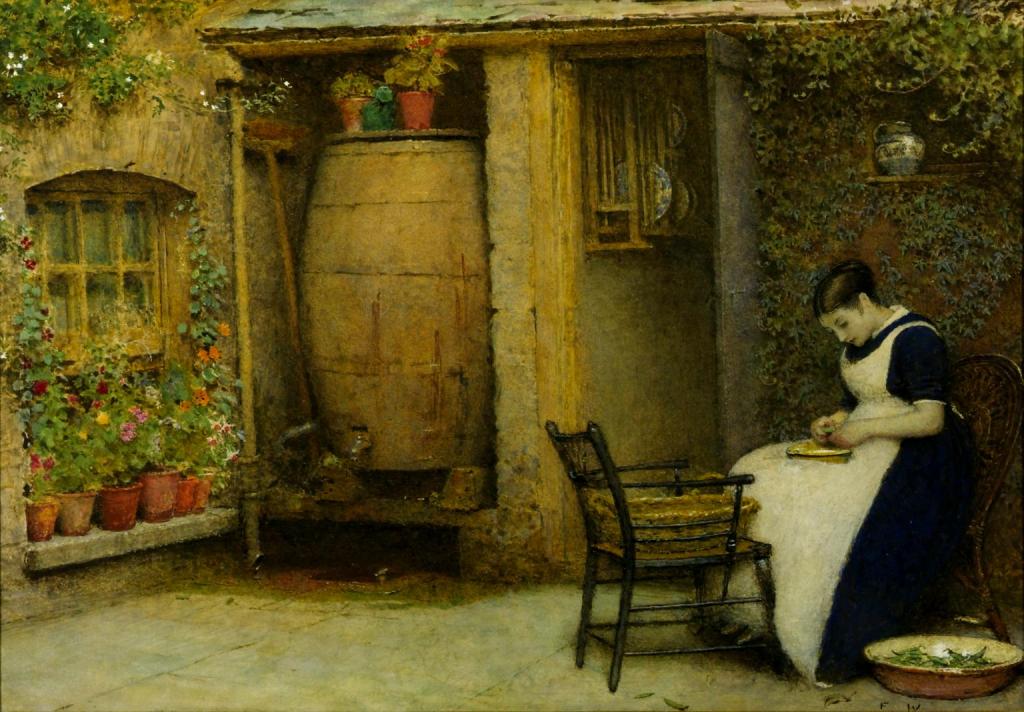
The Housewife 1871 Frederick Walker 1840-1875 Bequeathed by R.H. Prance 1920 http://www.tate.org.uk/art/work/N0352.

Hi everyone! So glad to be back this Sunday for our music related with our Mass celebration. We hope you have gone to your local church or wherever for the Sunday Mass where the first reading was taken from the Book of Proverbs that spoke of a “worthy wife”, a perfect wife.

When one finds a worthy wife, her value is far beyond pearls. Her husband, untrusting his heart to her, has an unfailing prize. She brings him good, and not evil, all the days of her life. She obtains wool and flax and works with loving hands. She puts her hands to the distaff, and her fingers ply the spindle. She reaches out her hands to the poor, and extends her arms to the needy.

Proverbs 31:10-13, 19-20

You must be wondering if there is a perfect wife – or a perfect husband – who really exist.

Of course, none. Nobody is perfect. You have to understand human words are so limited to express God’s thoughts and words. What the author of Proverbs mean today is an “ideal wife” – someone who keeps all the little things at home we (especially men and children) often take for granted that are actually the most important things that keep our homes nice and clean, cozy and orderly (https://lordmychef.com/2023/11/18/little-things-are-the-big-things/).

The reading from the Book of Proverbs this Sunday invites us to imitate the attitudes of the “worthy wife” like her diligence and fidelity to her tasks at home in actively waiting for the Second Coming of Christ at the end of the world. It supports the teaching of Jesus in today’s parable of the talents that God is not asking us great things in life but simply to be faithful to the tasks and responsibilities he entrusted to us. Exactly like the perfect wife who got everything covered not only at home but even outside! When we die, the only thing Jesus will ask us is how we have cared for those persons and things he entrusted us in this life – not what we have done nor achieved nor amassed like wealth.

And that is why as I prayed while preparing this Sunday’s homily, I kept hearing at the back of my head Sting and the Police singing their 1981 hit Every Little Thing She Does Is Magic.

Though I’ve tried before to tell her
Of the feelings I have for her in my heart
Every time that I come near her
I just lose my nerve as I’ve done from the start
Every little thing she does is magic
Everything she do just turns me on
Even though my life before was tragic
Now I know my love for her goes on
Do I have to tell the story
Of a thousand rainy days since we first met?
It’s a big enough umbrella
But it’s always me that ends up getting wet
Every little thing she does is magic
Everything she do just turns me on
Even though my life before was tragic
Now I know my love for her goes on

Written by Sting, the song is about a man who could not express his love for a woman he finds so beautiful and amazing. The song is actually about unrequited love and she never became his wife!

I resolved to call her up
A thousand times a day
And ask her if she’ll marry me
Some old-fashioned way
But my silent fears have gripped me
Long before I reach the phone
Long before my tongue has tripped me
Must I always be alone

And so you ask how do I find this song related with that reading from the Book of Proverbs about a perfect wife? We find that in the repetitive chorus line “Every little thing she does is magic” as well as in the superb instrumentation, especially its opening tune. This piece of music in itself is magic.

Let’s face it, man… women are so good in this life that without them, our world would stop, including the Church. For me, that “battle of sexes” had long been won by women because they are better than us in many accounts. That is why God gave them to us as our part-ners in life. Women, especially mothers and wives, have that attention to details we could not see (ask any husband how his wife could still see even even nothing can be seen?). Most of all, they have that flair and elan so built in within them that everything they do is magic – effortless, easy, so natural and personal.

Jesus is not asking us to do something so great or monumental in life. He simply wants us to be faithful and consistent with our calling as his disciples, as Christians who lovingly serve God through one another. Something that women, especially wives and mothers, could teach us a lot with in this life. Here’s the Police to all the great women out there with their loving and faithful men.

From Youtube.com.

Mater Dolorosa & Alanis Morisette

Quiet Storm by Fr. Nicanor F. Lalog II, 15 September 2023
“Mater Dolorosa” also known as “Blue Madonna” (1616) by Carlo Dolci. Photo from Wikimedia Commons.

I started praying about this blog last month after the Feast of the Nativity of the Blessed Virgin Mary. It just occurred to me on that day to greet some of my “girlfriends” – yes, God has blessed me with so many of them who are mostly women and ladies who have taught me and shared with me so many lessons and thoughts about life only women can see.

One of them is my former colleague at GMA-7 News, Kelly, widowed for six years since the passing of her husband Larry whom I have visited and anointed many times during his long battle with cancer. When I asked her how she has been doing since our last meeting before the pandemic, she was her usual self – candid yet a bit sardonic in her reply, “I’m good. I have health issues but I’m handling them, living a simple but contented life… alam mo naman ako, I’m so Alannis Morissette.”

I thought she was again speaking “gay” as in chorva when she described herself as Alannis Morisette. And before I could ask her the meaning of “Alanis Morissette”, she turned out to be speaking English – referring to the singer Alanis Morissette as she sent me lyrics of her 1995 song Hand in My Pocket. Immediately I checked it on Youtube and found it perfect too for today’s celebration of the Memorial of Our Lady of Sorrows or Mater Dolorosa as it speaks of every woman’s sacrifice and sufferings in this world that is sadly still dominated by male chauvinists.

Mary as Our Lady of Sorrows reminds us of every woman’s fidelity to God through her husband and children, family and loved ones as well as vocation. Her remaining at the foot of the Cross was her lowest and painful point in life to be with her crucified Son, Jesus Christ. She was so absorbed with his pain and sufferings that at Easter, she was in turn absorbed by the glory of our Risen Lord which culminated at her Assumption into heaven.

How was Mary able to keep her composure? Oneness in Christ her Son from whom all good things come even in the most trying times. When I look at her face as portrayed in the arts, it is not pity that I feel but her dignity, nobility and simplicity. Notice her praying hands, totally surrendering herself to God which began at the Annunciation when she told the angel, “Behold, I am the handmaid of the Lord. May it be done to me according to your word” (Lk.1:38). There at the foot of the Cross of Jesus, her hands remained in praying position, entrusting everything to God, filled with faith, hope and love.

Alanis Morissette express almost the same faith, hope and love in the modern sense today with her 1995 Hand in My Pocket. A Canadian-American, Morissette grew up in a devout Roman Catholic family. Although she is now a practicing Buddhist, Morissette claimed repeatedly in some interviews that she owes her singing career to her Catholic faith. Her personal life is marked with so many pains and sufferings too, going through depressions and eating disorders as well as having been raped while 15 years old. It was from these experiences that she got all her inspirations in her many songs that strike chords in the hearts of many modern people, not just women, who strive to find meaning by hoping to brighter tomorrows amid the many hardships modern life has brought us.

I’m broke, but I’m happy
I’m poor, but I’m kind
I’m short, but I’m healthy, yeah
I’m high, but I’m grounded
I’m sane, but I’m overwhelmed
I’m lost, but I’m hopeful, baby
And what it all comes down to
Is that everything’s gonna be fine, fine, fine
‘Cause I’ve got one hand in my pocket
And the other one is giving a high five

We just have to remember our own mothers to realize and appreciate how our Lady of Sorrows and Alanis Morissette were able to bear all of life’s sufferings. It is in their hands. The praying hands. The hand in the pocket holding on to the present realities and the other hand up in the air hoping everything will be fine.

How ironic – pun intended as it is the title too of my favorite Morissette song – that despite all the great love women have offered and given us through our own mothers and sisters, aunts and grandmothers, teachers and nurses, not to forget the multitude of women who make our economy grow by laboring here and abroad plus the nuns who pray and run so many orphanages, women are still neglected and forgotten, even unloved, maltreated, and abused. Sadly, their fellow women are the ones who inflict those pains in this cruel and ungrateful world.

Starting today, be kind to women, especially those closest to you, those who have remained loving and kind despite your excesses and other idiosyncrasies.

Here is Ms. Alanis Morissette. Her music video is very interesting too, showing the many contrasts every disciple of Christ like Mary our Lady of Sorrows goes through in this life. Set in black and white, it evokes rawness yet at the same time brings out that eternal spring of hope within each one of us. Have a blessed rest day ahead!

From YouTube.com.

“Habang Buhay” by Zack Tabudlo (2021)

The Lord Is My Chef Sunday Music by Fr. Nicanor F. Lalog II, 30 July 2023
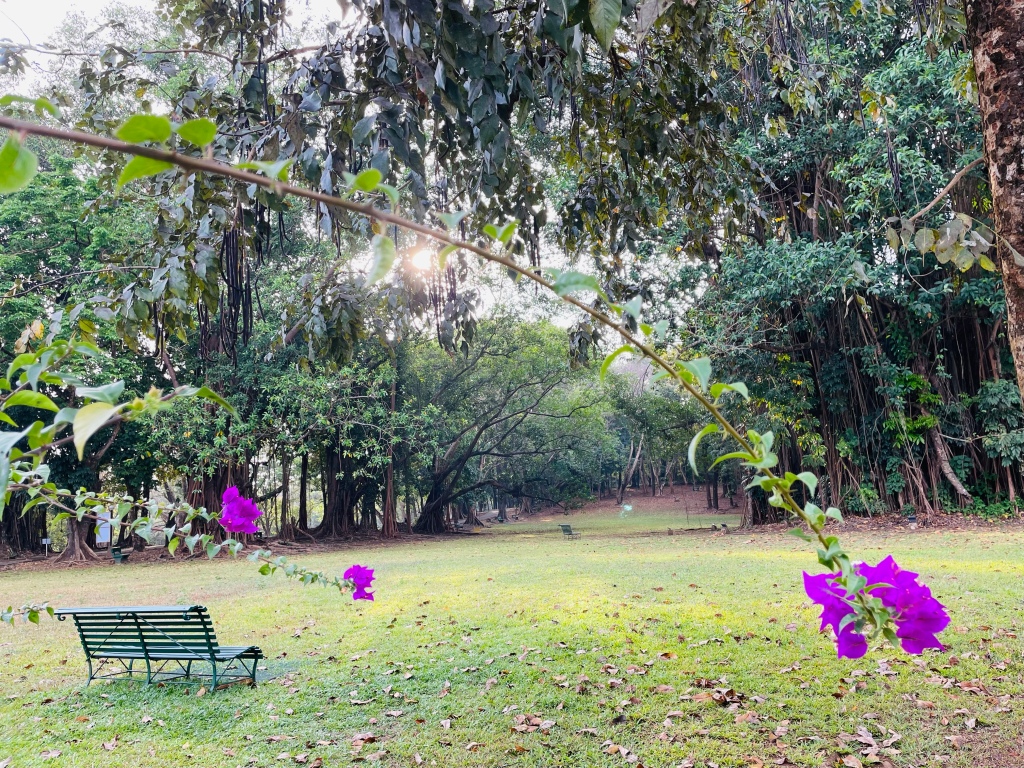
Photo by author in San Juan, La Union, 26 July 2023.

Finally we’re back! Sorry for being silent with our Sunday music blog relating secular songs with the Gospel of Jesus Christ.

For our return engagement since our last blog in June 11, 2023 with Stephen Bishop’s Parked Cars (https://lordmychef.com/2023/06/11/parked-cars-by-stephen-bishop/), we feature this Sunday one of our favorite local talents, Mr. Zack Tabudlo with his 2021 hit Habang Buhay from his album called Episode.

We can’t recall where and when we first heard this swinging OPM love song that sounds like from our era of VST & Co. Fact is, Tabudlo has other previous hits before Habang Buhay which struck us with two important things we find so close to our Sunday gospel.

First is its melodic upbeat tune teeming with profundity despite its being so light and refreshing to listening (and dancing). Though we find traces of influence from the late 1970 to1980’s disco era in Tabudlo’s music, Habang Buhay is so sincere with its Gen Z identity that is authentically so Pinoy especially with its shouts of Halika nga that is twice repeated.

Aking sinta, ano ba'ng mayro'n sa iyo?
'Pag nakikita ka na, bumabagal ang mundo

'Pag ngumingiti ka, para bang may iba
'Pag tumitingin sa 'kin, mapupungay mong mga mata
Wala akong takas sa nakakalunod mong ganda, ha
Halika nga (ha, ha, ha)

That shout of Halika nga is so typically Pinoy, so warm and genteel like Jesus Christ calling us to be open to his parables, to find God hidden in the most simplest things of ordinary life. Halika nga evokes those tender, loving calls of our Lola during summer vacation calling us to change clothes soaked in dirt and perspiration with a glass of Julep or Sunny Orange juice during those endless afternoons of fun and games.

Halika nga sometimes is an expression of playfulness masking as deeply serious. It is something we rarely hear these days because nobody seems to offer us with comfort and company, with love and concern anymore.

In Habang Buhay, Tabudlo is overjoyed, playfully or teasingly calling his beloved halika nga for them to bask and savor this wonderful love they have found. If we could just hear Jesus calling us too, telling us halika nga to stay with him to discover God as the only worthwhile love and treasure we could ever have in this life.

And where do we find that kind of love? In Christ’s dying for us on the Cross which Tabuldo had thought of as the true expression of his love that is faithful until the end.

Andito 'ko hanggang sa 'ting pagtanda
Mamahalin kita basta't 'pag nahulog
Nakahawak ako, 'wag ka lang bibitaw
Habang-buhay na ako'y iyo

Wala nang ibang nakagawa sa 'kin nang ganito
Kundi ikaw, nag-iisang diyosa ng buhay ko

'Wag ka nang matakot, 'wag kang mangamba
Andito ako 'pag ika'y mag-isa
Wala akong takas sa nakakalunod mong ganda, ha
Halika nga (ha, ha, ha)

This is the second thing that struck us in Habang Buhay, an amazing song that speaks of love that is pure and true, and most of all, willing to suffer and sacrifice. Like in the gospel today of the parables of the treasure buried in the field that prompted the farmer to sell all his possessions to acquire that property and of the fine pearl found by a merchant who also sold everything he had just to have it. The same is true with love, and with God: what are we willing to let go to have the love of our life?

It’s a rarity in this fast-paced world to hear from young people speaking about love in its deeper sense like the giving of self for a beloved, giving us deep sighs of relief that we’re leaving this world in good hands. Habang Buhay assures us not only of a love that is forever but invites us too to trust the next generation by witnessing to them Christ’s love found on the Cross. Amen.

From YouTube.com

“Parked Cars” by Stephen Bishop

The Lord Is My Chef Sunday Music, 11 June 2023
Photo by STANLEY NGUMA on Pexels.com

It has been raining for three days and had been listening too to my Stephen Bishop playlist while driving, playing over and over his 1976 hit Save It For A Rainy Day until I got fed up tonight on my way home from my last Mass.

As I let my playlist on, this tune came and reminded me of my homily this Sunday for the Solemnity of the Body and Blood of Jesus Christ:

Every time she looks my way
Heaven gets a little closer
And every time I feel that way
I want to be with her
Love is surely like a rose
Till you find a thorn to hurt you
The one thing she'll always know
My love is true

If you are above 50 years old and almost 60 like me, that’s from Stephen Bishop’s 1989 album Bowling in Paris called Parked Cars. It just hit me as so perfect for our Sunday Music blog today because the Solemnity of the Body and Blood of Christ is about his real presence among us. It is a continuation of our celebration last Sunday of the Solemnity of the Holy Trinity which is about relationships, of our one God in himself a perfect community of three Persons bound in love. This relationship is most real when expressed in giving of self, exactly what Jesus did when he came here for us to save us by offering his total self on the Cross which we make present in every celebration of the Eucharist.

It is a mystery of highest order that is most truest when we imitate Jesus in giving our very selves in loving service to others. Every time we touch those who are sick and afflicted, the lost and weary, those hurting inside, those broken, that is when become like Jesus in giving our very selves to others. Why we are able to love beyond measure like in taking care of our sick parents or family members in itself is a mystery with all the pains and difficulties that come.

And why do we continue giving our selves? Because we love.

Despite the many other meanings Parked Cars may convey as the last two stanzas show, the song reminds us so well of the meaning of Body and Blood of Jesus – that authentic living is being present to another, of giving one’s self in love.

Parked cars
Sittin' in the back seat
Somewhere down on Main St.
Talkin' to the moon
Parked cars
Holding her so close
Wondering if she knows...

That every time she looks my way
Every time she smiles my heart breaks
And all I really want to say
Is that my love is true

Yes all I really want to say is that
My love is true...

Here is Stephen Bishop with Parked Cars as well as our Sunday homily, https://lordmychef.com/2023/06/10/the-gift-of-self/. Have a blessed week ahead.

From YouTube.com.

“Never, Never Love” by Simply Red (1996)

The Lord Is My Chef Sunday Music by Fr. Nicanor F. Lalog II, 21 May 2023
Photo by author, Sacred Heart Novitiate, Novaliches, Quezon City, 20 March 2023.

It’s the Lord’s Ascension this Sunday with our readings showing us again that inevitable reality in every love experience, that of leaving, of departures. Last Sunday we reflected that leaving is the most painful hurt in every experience of love.

This Sunday we are reminded that despite that pain, leaving can be the source of joy when every departure is because of love, and for the sake of love because there is the relationship that persists (https://lordmychef.com/2023/05/20/the-joy-of-leaving/).

And that is why we have chosen Simply Red’s 1996 hit single Never, Never Love from their album Life. Written by frontman Mick Hucknall, Never, Never Love is a modern soulful ballad of a love lost. We describe it as modern ballad because of Hucknall’s so refreshing approach by giving it with touches of jazz and electronic pop with smooth dashes of disco making it so cool and danceable especially the intro’s breezy lalalala. Notice also the thought-provoking query “what are we gonna do with it” that can be piercing at times.

So now we've got our independence, uh, uh, uh, uh
What are we gonna do with it
Learning to play different games
Already using different names
'Cause now our love bears no resemblance, uh, uh, uh, uh
To what we had before

The song, especially the video, for many would surely not instantly remind us of Jesus and his gospel or much less his Ascension but Never, Never Love teaches us a lot about the joy of leaving and separation. We really can’t say that any love is lost at all in a relationship. Remember the saying “It is better to have loved and lost than never to have loved at all”? In this Simply Red song, we find the separation giving rise to a different kind of relationship and most of all to a more meaningful life and existence for the man.

Never never love, can never be enough
Never be enough, just ain't good enough (oh, oh) yeah
Never never love, can never be enough now
Never be enough, oh no

So now we've got our independence, uh, uh, uh, uh
What are we gonna do with it
Building the houses, claiming back the land
Burning the bridges, cleaning up your hands
'Cause now our love bears no resemblance, uh, uh, uh, uh
To what we had before

Now our love has something for the future
Now our love will grow the seeds to sow this real revolution
This good revolution baby
Where you're not below me anymore, oh, oh

There are many interpretations to what Hucknall meant in saying “building the houses, claiming back the land” and the following lines due to his political affiliations when he was younger but that last stanza sounds like the gospel, “Now our love has something for the future… will grow the seed to sow this real revolution… where you’re not below me anymore.”

Here we find a higher level of relationships borne out of their separation that has become more promising than before. Many times we are afraid of separations, of leaving whether temporary or permanent like death because of not knowing what would happen next. The disciples of Jesus felt the same way at Christ’s Ascension when they worshipped him and doubted themselves if they could keep up to the Lord’s commission. It is here in this aspect that we find Never, Never Love is related with the gospel and our feast of the Ascension: we grow and mature in life even after separations when we continue, when we boldly step forward to forge on in life, still believing, still hoping, and most of all, still loving!

Enjoy one of Simply Red’s early hits, Never, Never Love and try reflecting on your own relationships, of how you could level up to higher or deeper love for each other.

We have no intentions of infringing into the copyrights of this music and its uploader except to share the song’s beauty and listening pleasure.

Everytime You Go Away (1980) by Hall & Oates

The Lord Is My Chef Sunday Music by Fr. Nicanor F. Lalog II, 15 May 2023
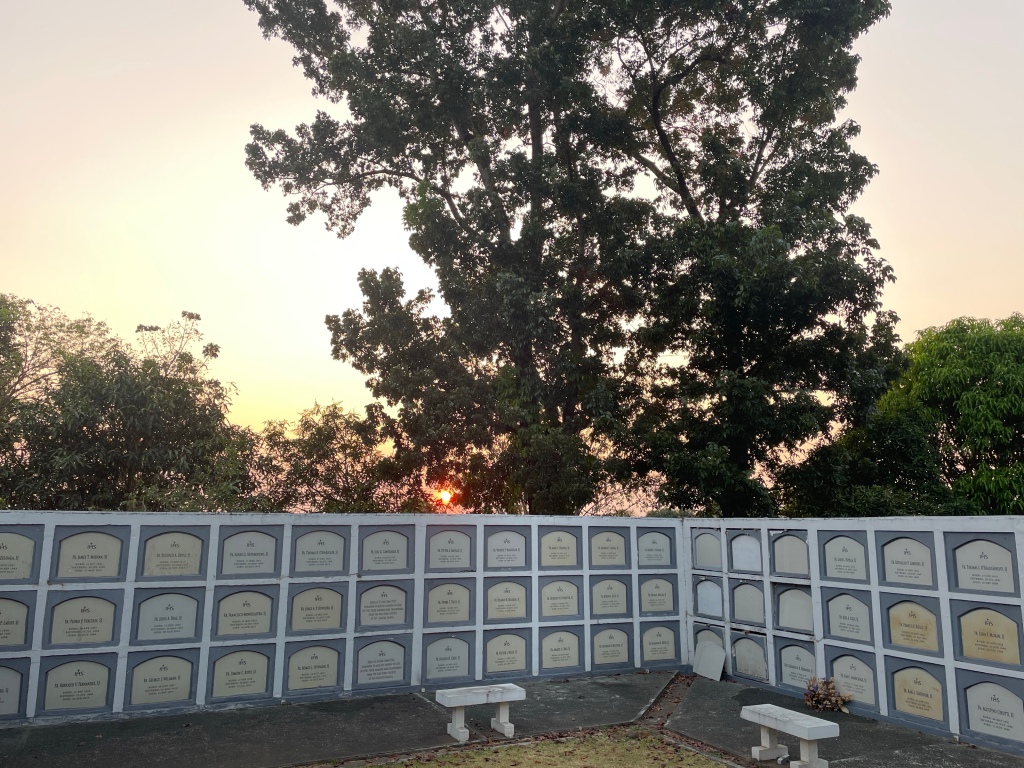
Photo by author, Jesuit Cemetery at the Sacred Heart Novitiate, Novaliches, Quezon City, 21 March 2023.

Hello dear friends! After almost a year of absence, we are back with our featured music we find related with our Sunday Mass gospel yesterday when Jesus told his disciples to keep his commandment of love as he prepared them for his approaching Passion, Death, and Resurrection leading to his Ascension.

In our homily, we have reflected that loving entails suffering.

And the most painful suffering in loving is when our beloved leaves us, whether temporarily or permanently like in death (https://lordmychef.com/2023/05/14/loving-living-leaving/) or infidelity of a partner in any relationship.

The song “Everytime You Go Away” captures that pain of leaving, of being left behind by a beloved because every leaving tears him apart as she takes a piece of him.

And everytime you go away
You take a piece of me with you
And everytime you go away
You take a piece of me with you, you

Sharing with you that part of our homily yeterday:

“Leaving is the most painful part of loving because every time a beloved leaves us, he/she takes a part of us, leaving us hollowed for the rest of our lives. The pain remains, leaving a hole in us. We merely transcend and move on but that hole remains. This is where loving and living become most challenging, most beautiful as they lead us to more amazing revelations as Christ had promised: “And whoever loves me will be loved by my Father, and I will love him and reveal myself to him” (Jn.14:21).

When we continue to love and live despite our loved ones leaving us, we soon realize that life is actually more of a series of coming than of leaving. When children leave home to go to college, they come to new sage in their lives; when they get married and leave home, they come to form their own family too! When a beloved leaves us in death, he/she comes to eternal life.

Meanwhile, we who are left behind live on, loving amid the pains of a beloved’s leaving, risking and hoping in love. That is when new things open up for us as we slowly discover many other things that do not necessarily replace the one we love and left us but actually make them more present in their absence. That is because we sooner or later find out that we have become like the ones we love who have left us! We are slowly transformed by their physical absence because their leaving had pushed us to love more that in the process, we have become like them. Is it not that is the reason of love, that we become like the one we love, be it God or another person?”

Everytime You Go Away was composed by Daryl Hall in 1980 that was included in their studio album Voices with John Oates. It was covered by Paul Young in 1985 and became an instant hit worldwide.

We prefer the Hall & Oates original not only because we are a big fan of the dynamic duo ever since the 80’s but we find Paul Young’s version so pop and light, even cheesy. Daryl Hall’s version is still the best, so heart-felt rendition as you could feel his soul in his impressive vocals that are so powerful yet, so lovingly muy simpatico! Here is a man truly in love despite the pains and hurts by his girlfriend’s leaving and infidelity. Worth mentioning too are the great instrumentations so characteristic of every Hall & Oates music that are mostly considered now as classics.

Hear now and listen to Hall & Oates’ Everytime You Go Away… fall in love again despite the loss.

We have no intentions of infringing into the copyrights of this music and its uploader except to share its beauty and listening pleasure.

Jopay

Lawiswis ng Salita ni P. Nicanor F. Lalog II, Ika-29 ng Disyembre 2022
*Isang tula bunsod ng nakatutuwa na awitin ng Mayonnaise.
Sino ka nga ba, Jopay?
Ako ay nakikisabay,
nakikibagay sa sayaw at ingay
pero pramis,
ang sarap sumakay 
sa awit sa iyo ay alay!
Jopay, 
gusto ko rin umuwi sa bahay
simpleng buhay 
hawak lang pamaypay
sabay kaway kaway
maski kaaway!
Kung sino ka man, Jopay,
totoo sabi nila sa iyo:
minsan masarap umalis
sa tunay na mundo,
walang gulo -
pero wala ding tao!
Kaya kung ako sa iyo,
Jopay, kakanta na lang ako
sabay sayaw:
spaghetti pababa
spaghetti pataas
ganyan ang buhay, Jopay,
isang magandang sayaw
lalo na kung iyong kasabay
mahal sa buhay 
mga kaibigan
hindi ka iiwan
maski kelan.
Mayroon tayong
isang kasabay
 sa sayaw ng buhay, Jopay:
tunay ka kaibigan
huwag lang siya ang mawawala
tiyak ika'y matutuwa
sa hapis at lungkot
hirap at dusa
hindi mo alintana
mga ito'y nalampasan mo na
siya palagi mong kasama
hanggang sa bahay ng Ama!
Pasensiya ka na, Jopay
ako ma'y walang kasama
at kausap dito sa bahay
sa mundong magulo;
naisip ko lang tumula para sa iyo
at sa mga kagaya mo
palaging masaya sa paningin
pero maraming kinikimkim
saloobin at pasanin
kaya isang taus-pusong panalangin
aking alay sa inyo,
para lumigaya kayo!

*We have no intentions of infringing into the copyrights of this music and its uploader except to share its beauty and listening pleasure.

From YouTube.com

Roadtrip, vroom, vroom with Jesus & Zacchaeus, to the Moon!

The Lord Is My Chef Sunday Recipe by Fr. Nicanor F. Lalog II
Thirty-First Sunday in Ordinary Time, Cycle C, 30 October 2022
Wisdom 11:22-12:2 ><000'> 2 Thessalonians 1:11-2:2 ><000'> Luke 19:1-10

You must have heard so many times that rap music called Moon used as background music in almost every video posted on social media. The lyrics and its beat are simply amusing, easy to follow so fitted on everything including this Sunday’s gospel!

Sa'n ka punta?  To the moon
Road trip, vroom, vroom
Skrr, skrr, zoom, zoom
So fake, no room, mga mata namumula
Asan ang trees, nadala mo ba?
Bawal ang tus at peke sa byahe
Kung isa ka d'yan, ika'y bumaba...

Written and performed by a certain Nik Makino, Moon speaks of a young man’s ambition of getting rich through rap music; he is also aware of the fact that his dream is so “high like the sky” with everyone’s eyes prying on him as he strives so hard in working while still young.

I gotta mission, pumunta sa top
Buhay mahirap, gawing masarap
Gawa ng milyon, gamit ang rap 
Iwanan kasama na puro panggap
'Di mo 'ko magets, pangarap ay highs
Singtaas ng jets, tingala sa sky...

I have been asking some young people about the rap and mostly are stunned why I listen and so interested with it especially when I rap it too, saying how they find it so baduy (crass), meaningless or “walang kuwenta” with some calling it as ugly or “pangit”.

And that is how I realized this rap music Moon is so related with this Sunday’s gospel about Zacchaeus the tax collector who climbed a tree to see Jesus while passing by the city of Jericho.

At that time, Jesus came to Jericho and intended to pass through the town. Now a man there named Zacchaeus, who was a chief tax collector and also a wealthy man, was seeking to see who Jesus was; but he could not see him because of the crowd, for he was short in stature. So he ran ahead and climbed a sycamore tree in order to see Jesus, who was about to pass that way. When he reached the place, Jesus looked up and said to him, “Zacchaeus, come down quickly, for today I must stay at your house.” And he came down quickly and received him with joy.

Luke 19:1-6

Again, only Luke has this story about Zacchaeus met by Jesus in Jericho, his final stop before entering the city of Jerusalem for his Passion, Death, and Resurrection.

Keep in mind that Luke’s narration of the Lord’s journey to Jerusalem is more of an inner journey into ourselves than found in maps. What happened in Jericho shows the importance of the events that would take place at Jerusalem when Jesus offered himself for our salvation and how we can participate in his pasch through the example of Zacchaeus who reformed his life.

Unlike the parable last Sunday, here we have a real tax collector named Zacchaeus described by Luke as a “wealthy man”. Notice how Luke described Zacchaeus was “short in stature” which is not only literal but most of all figurative in meaning. Like the publican in last week’s parable by Jesus, tax collectors were despised by Jews at that time who were seen along the ranks of prostitutes as the worst of all sinners because they were not only thieves but also traitors who collaborated with their Roman colonizers.

Calling Zacchaeus as “short in stature” was really something else, that he was nothing at all. That is why he had to exert so much to see Jesus by climbing a sycamore tree. And there lies the beauty of the story, of how God had come in Jesus to meet us and save us.

When they all saw this, they began to grumble, saying, “He has gone to stay at the house of a sinner.” But Zacchaeus stood there and said to the Lord, “Behold, half of my possessions, I shall give to the poor, and if I have extorted anything from anyone I shall repay it four times over.” And Jesus said to him, “Today salvation has come to this house because this man too is a descendant of Abraham. For the Son of Man has come to seek and to save what was lost.”

Luke 19:7-10

This is the most startling move by Jesus in this event at Jericho that is repeated in many instances in Luke’s gospel account to show God’s loving mercy to all sinners who humbly make the efforts to come to him, to see him, and experience his healing and forgiveness.

Luke had repeatedly shown us this unexpected and even shocking gesture of Jesus to everyone – then and now – at how he would favor sinners and bad people like that sinful woman who poured oil on his feet while dining at the home of a Pharisee (Lk. 7:36-50) and Dimas, the “good thief” on the cross to whom he promised paradise (Lk.23:39-43).

Jesus always comes to meet us but are we willing to meet him too like Zacchaeus? How far are we willing to truly embrace and welcome Jesus by letting go of ourselves, of our sins and other possessions?

If we could just have that sense of sinfulness again, we would realize that in this world, we are all small in stature before God. All these titles and wealth that seem to give prestige to us are all temporary and nothing. What God looks in us is our admission of our being small in stature before him, of being powerless like the persistent widow the other Sunday and the publican last week begging his mercy for we are all sinful.

Imagine that beautiful image of Jesus passing through Jericho, coming to our daily lives, making a stop over right in our hearts to stay and dwell. Most of all, see at how Jesus looks up to find us!

I love that gesture of Jesus looking up to us so much. Normally, we are the ones who look up to God up in the sky, heavenwards when asking for his mercy and favors. But there are many times that it is Jesus our Lord and God who looks up to us mere mortals who are so small in stature before him! What happened at Jericho under that sycamore tree was a prefiguration of what would take place at the Last Supper when Jesus washed the disciples’ feet, of how he bowed down before them and looked up while wiping their feet dry. So wonderful! And that happens every day when we go back to him, when we do everything to get out of our way just to go to Mass, most especially to Confessions.

In the first reading, we are reminded how we are nothing before God but he chose to preserve us, to save us because he loves us so much:

“Before the Lord the whole universe is as a grain from a balance, or a drop of morning dew come down upon the earth. But you have mercy on all, because you can do all things; and you overlook the sins of men that they may repent. But you spare all things, because they are yours, O Lord and lover of souls.

Wisdom 11:22-23, 25

There is no doubt about the love of God for us, of his mercy and forgiveness expressed to us in his Son Jesus Christ who comes to us everyday in various events in our lives, in the people we meet and most especially in our individual and communal prayers like the Mass and Sacraments.

Jesus is always passing by and would surely come again as St. Paul assured us in the second reading.

The grace of this final Sunday of October as we go to the last stretch of the Church calendar this coming November is that God gives us freely the grace daily to make the efforts in meeting his Son Jesus. Every day.

Our desire to rise above our present state and status is an expression of that grace within us to become better although many times due to other factors, we misconstrue this in aspiring for material things like wealth and money as the rap Moon tells us. But on a deeper reflection as we continue in our journey in this life, we realize sooner or later that more than the things we can physically have, there are always more precious than these.

Like going to the moon, of being high up there in the sky, being one with God, enjoying his peace and salvation.

Like Zacchaeus and, Nik Makino, let us continue our roadtrip to the Moon in Jesus Christ by being true to ourselves – vroom, vroom, skrr, skrr, zoom, zoom – that we are beloved sinners and children of God.

Tara bumyahe pa-ulap
Sakto 'yung auto ko full tank
Pero kahit maubusan, paangat tayo tutulak
Bawal na muna ang pabigat
Lalo sa byahe na palipad
Kailangan kong makatiyak
Bago magka-edad, 'di na 'ko taghirap
Alam kong marami ang nakamasid
Dama ko marami ang naka-abang
Kung ano 'yung mga kaya kong gawin
Malamang ay 'di nila nagagawa
Kaya siguro lagi nakatingin
Kasi 'yon na lamang magagawa
Inaabangan ako na mawala
Kaso lang ang malala nadapa kakatingala.

Stay safe everyone and dry during these storms. Have a blessed week! Amen.

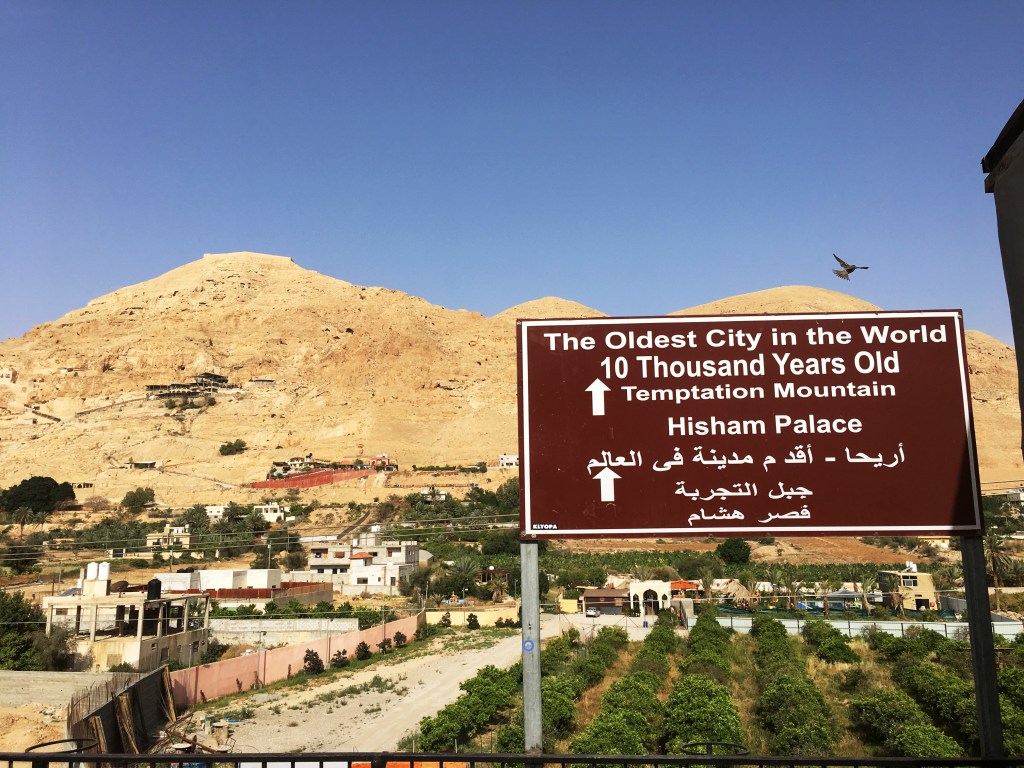
*Photo credits: Moon over the city by Mr. Raffy Tima of GMA-7 News (2022); second and third by the author at Jericho, Israel (2019); fourth and fifth also by author in Tanay and Pililla in Rizal (2021).