Lawiswis ng Salita ni P. Nicanor F. Lalog II, Ika-20 ng Nobyembre 2020
“Ecce Homo” ni Murillo, mula sa wikipediacommons.com.
"Utos ng hari
hindi mababali!"
Iyan ang kasabihang
ating kinalakhan
tumutukoy sa kapangyarihan
ng sino mang naghahari
o naghahari-harian
sa lansangan o tahanan
tanggapan at paaralan
maging sa simbahan
kung saan ang pari ---
O kay laking sawi!---
para ding hari...
Bawat utos,
ano man magustuhan
hindi maaring ipagpaliban,
ipagpipilitan upang makamtan;
parurusahan sino man
lumiban sa utos
na batas ang katumbas!
Nguni't
ito nga ba ang tamang gawi
ng sino mang hari
na ituring kanyang pag-aari
parang mga aliping nagapi
kanyang nasasakupan
at pinaghaharian?
Masdan
 mga salitang binitiwan
ng Hari ng mga hari
at ating Dakilang Pari:
"Ito ang dahilan
kung bakit ako ipinanganak
at naparito sa sanlibutan:
upang magsalita
ng katotohanan"
na "ang Diyos ay pag-ibig"
naparito "upang maglingkod
hindi upang paglingkuran".
Iyan sana ating tandaan
katangian
ni Kristo Hesus
Hari ng sanlibutan
SINUSUNOD
hindi NASUSUNOD,
 sinusundan, tinutularan
sa kanyang kabutihan.
Kaya kung si Hesus
nga ang ating Hari
Siya ang ating tularan
sa pagmamahal at kabutihan
huwag sirain yaring kaisahan sa sangkatauhan
dahil ano man gawin o ipagkait sa maliliit
siyang Kanyang pagsusulit sa pagbabalik!
The Lord Is My Chef Breakfast Recipe for the Soul by Fr. Nicanor F. Lalog II
Thursday, Week XXXIII, Year II in Ordinary Time, 19 November 2020
Revelation 5:1-10     >><)))*> + <*(((><<  ||  >><)))*> + <*(((><<     Luke 19:41-44
“Mater Dolorosa” also known as “Blue Madonna” (1616) by Carlo Dolci. Photo from Wikimedia Commons.
Thank you, dear Jesus, in joining me in my tears, in my crying. I have been crying a lot lately for so many reasons. And what a wonderful feeling to cry because so often, it has become my prayers too, even my food for the soul.
In the first reading, St. John “shed many tears because no one was found worthy to open the scroll or to examine it” (Revelation 5:4); while in the gospel, you wept over Jerusalem as you drew near the city for refusing to recognize and accept you as the Messiah (Luke19:41).
In both instances, tears express the deep love within us for one another, an outpouring of love that have become like beads of prayers.
Photo by author, Dominus Flevit (The Lord Wept) Church where Jesus wept over Jerusalem, 2017. Roof is shaped like tears.
Thank you dear Jesus for enabling me to cry like you for it means that my heart is still beating, my heart is aching because it is loving.
Tears do come from ducts near the eyes but they come from the soul longing for you, Lord, forming in the heart, secreted from those many scars left open whenever we give away a part of ourselves to somebody else out of love.
Tears are always a grace from you as they cleanse us inside, clearing our eyes of the many blurs so we may see your face among the persons next to us.
Bless us as we cry, O Lord, that our tears may eventually pave the way for smiles and joys some other day when like your prayer for Jerusalem, we may recognize your visitation in the many trials and tests we endure for our loved ones. Amen.
The Lord Is My Chef Breakfast Recipe for the Soul by Fr. Nicanor F. Lalog II
Wednesday, Dedication of the Basilicas of Sts. Peter and Paul, 18 November 2020
Acts of the Apostles 28:11-16, 30-31     >><)))*>  +  <*(((><<     Matthew 14:22-33
Photo from wp-media.patheos.com
Today, O Lord, we celebrate anew the Dedication of your two other Major Basilicas in Rome, St. Peter’s and St. Paul’s. Last week, we celebrated the dedication of the Cathedral of Rome, the St. John Lateran and in August, the St. Mary Major.
All these major basilicas remind us of the spiritual nature of the Church signified by these beautiful buildings of stones as community of believers following you, dear Jesus.
Since the beginning, we have always been sailing in rough, stormy seas as you have seen your apostles that night in their boat “being tossed about by the waves, for the wind was against it” (Mt. 14:24).
As I prayed today on that scene with the recent fierce winds of typhoon Ulysses still so vivid to me, I felt like Peter – so fearful with winds like in the gospel today when you bid him come to you by walking on water too. “But when he saw how strong the wind was he became frightened” and began to sink in water, crying out to you, “Lord, save me!”(Mt. 14:30).
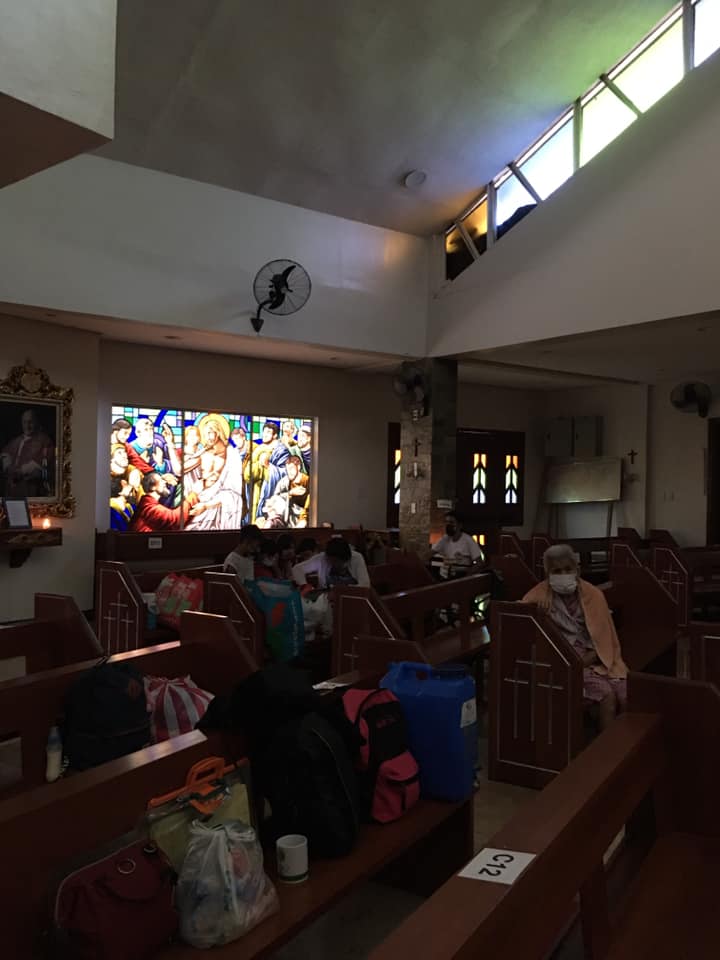
When the strong winds and heavy rains by typhoonUlysses ravaged our region last week, it was also nighttime, so dark, so cold, and we felt so fearful like Peter. Some people took shelter in our church and hopefully have given them some sense of security in you, Lord.
As I reflected on the many things that have frightened me from the winds, I have realized some beautiful things too about you that reassure me of your perfect love that casts out all fears.
Photo by author, Sea of Galilee, May 2019.
Two things I have found so fearful with the winds, Lord.
First was the howling sound of the winds.
It was scary especially when you are very silent, Lord, because I felt so alone.
No wonder the Apostles thought you were a ghost when they saw you walking on water!
Inside and outside the Church today are so many voices like harsh winds that add to our many confusions that isolate us from you and from one another, making us so afraid that sometimes lead us to doubt your presence and love.
Please give us the courage to grow deeper in your silence, befriending it more when you are most silent so we may heighten our sensitivity of your presence and overcome our fears.
Second thing so frightening with the winds, O Lord, is its relentless force that refuses to stop that it seems to pummel everything on its path.
Sometimes in life, forces around us can be felt so strongly that frighten us but without really hitting us at all!
Yes, it is so scary but unfounded! Sometimes, it is more in our minds than in the winds actually because we are afraid of being bruised and hurt, of being knocked down especially when we do not know where the blows are coming from.
Remind us, Lord, how often our fears are imaginary.
Teach us not to resist the strong winds, to be calm, to hold on, and if ever we are swept away, to await you for you are definitely coming even if you have to walk on water to save us! Amen.
The Lord Is My Chef Sunday Music by Fr. Nick F. Lalog II, 15 November 2020
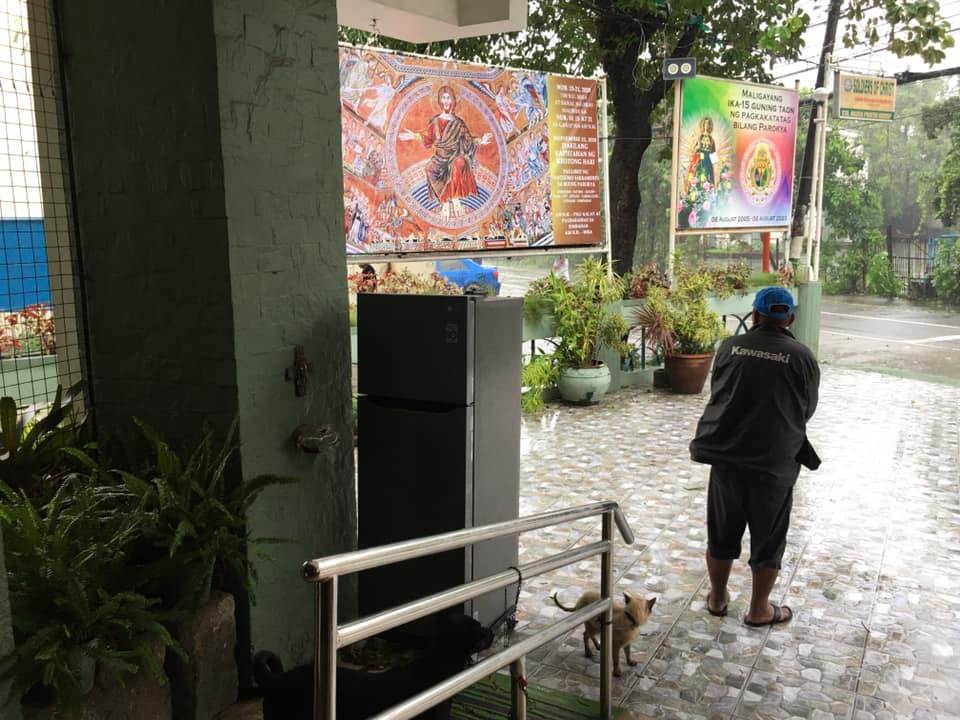
Photo by author, after the floods, typhoon Ulysses, 12 November 2020.
We try to be subdued and sober this Sunday in thanksgiving to the gift of life as we remember and pray too for our brethren in Cagayan and Isabela suffering from the worst floods in decades after typhoon Ulysses pummeled our region this week with heavy winds and rains.
Here is Mexican Pepe Marquez and his band for his cover of William DeVaughn’s 1972 soul song “Be Thankful for What You Got” that was released two years later in 1974, selling almost two million copies as it reached #1 on the US R&B chart and #4 on the Billboard Hot 100 chart that year.
There are other versions of this cool, cool music notably by Curtis Mayfield who had actually influenced DeVaughn in this song; thanks to Manny Pagsuyuin who shared me this music recently that I now prefer than the other covers for its superb percussions and instrumentations plus Marquez’s trademark videos of classic cars.
The song is so simple with gospel-like lyrics that remarkably hit home specially in a time of calamity like this when we have to be sensitive with others’ sufferings.
Most of all, despite its oft-repeated line “Diamond in the back, sunroof top, diggin’ the scene, with a gangsta lean”, the music is so clean and crisp with its second part reminding us that of all that we have, the most precious are our loved ones.
Part of the Lord’s message today in being vigilant for his return is for us to be thankful for everything we have because he gives us according to our abilities. It is not how much or how little we have in life but how we make use of it that matters.
How sad we only realize this after a calamity or a crisis in life.
Let’s make it a habit to be thankful daily for our gifts, use them wisely in serving others as we thank and praise God for his goodness. A blessed Sunday, everyone. Amen.
Directed by: Pepe Marquez & Carlos Guillen with Gabriella Guillen for LA CIMA MUSIC along with Cj Infinito & Carlos Alvarez Aragon for CJ Infinito Productions. #lacimamusic Featuring: Jeff Lewis on Trumpet – Dora Sanchez on Vocals & Lorenzo Martinez on Percussion. Album available on, Spotify, cdbaby, Amazon Music and all digital download sites. https://www.facebook.com/pepe.marquez.33
The Lord Is My Chef Breakfast Recipe for the Soul by Fr. Nicanor F. Lalog II
Friday, Week XXXII, Year II in Ordinary Time, 13 November 2020
2 John 4-9     >><)))*> |\  >><)))*>  ||  >><)))*>     Luke 17:26-37
Photo by author, ICMAS Theologate Chapel, 05 October 2020.
My prayer to you today, O God our loving Father, is simple: thank you very much for the gift of a new day, thank you very much for the warm sunshine amid overcast skies, thank you very much most of all for the gift of life.
Once again you have made us experience your saving hand and protection the other night from the terrifying winds and rains of typhoon Ulysses; then yesterday, everybody was surprised at how fast the waters have risen following widespread floods.
So many of us are asking – not complaining – why all these things happening this year 2020?
Open our hearts, open our eyes and ears to listen and heed your voice amid these calamities happening among us.
Make us more sensitive to the needs and cries of others by living in love and charity, of witnessing the gospel of Jesus Christ your Son instead of entertaining so many “progressive” ideas and thoughts that lead nowhere.
Let us live in love, Lord.
For this is love, that we walk according to his commandments… Many deceivers have gone out into the world, those who do not acknowledge Jesus Christ as coming in the flesh… Look to yourselves that you do not lose what we worked for but may receive a full recompense. Anyone who is so “progressive” as not to remain in the teaching of the Christ does not have God; whoever remains in the teaching has the Father and the Son.
1 John 6,7, 8-9
May these calamities open ourselves to the reality and mystery of Christ’s coming again, of how we must strive to live in love, to see every body not just as a body like vultures but as somebody needing love and attention. Amen.
The Lord Is My Chef Breakfast Recipe for the Soul by Fr. Nicanor F. Lalog II
Monday, Feast of Dedication of the Lateran Basilica, 09 November 2020
Ezekiel 47:1-2, 8-9, 12  >><)))*>  1 Corinthians 3:9-11, 16-17  >><)))*>  John 2:13-22
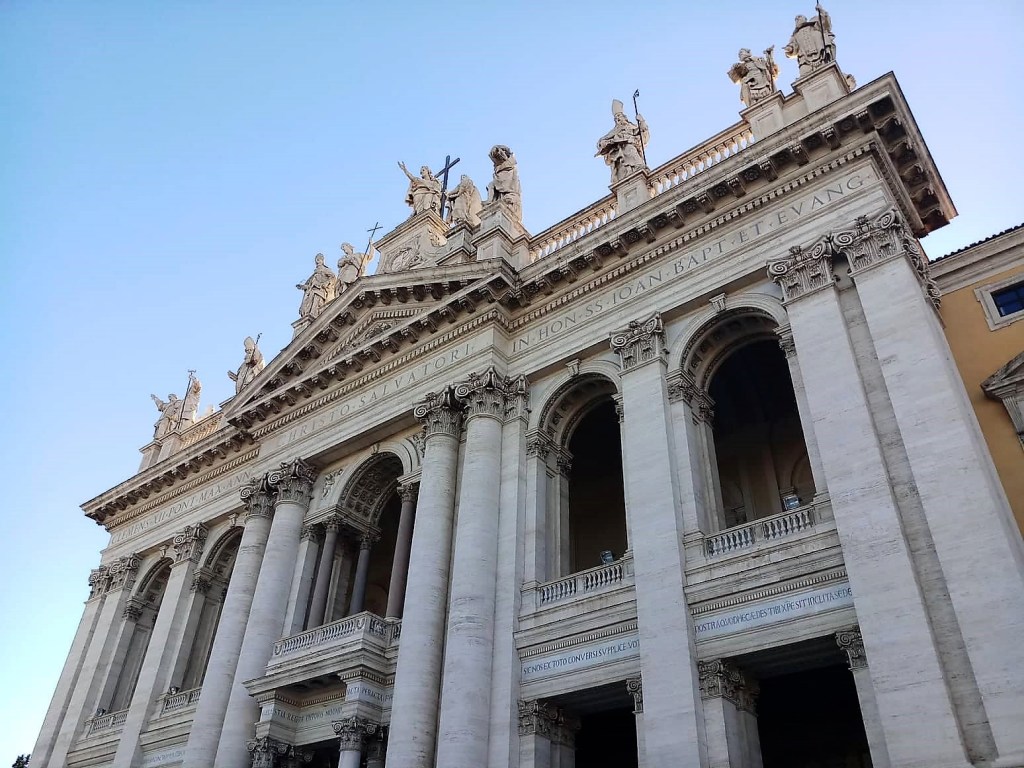
Photo by Arch. Philip Santiago, 2018.
Glory and praise to you O God our Father who had sent us your Son Jesus Christ to establish his Body among us, both as the Church made up of his people and made of stones. As we celebrate the Feast of the Dedication the Cathedral of Rome, the Basilica of St. John Lateran, we pray also for Pope Francis, all bishops and priests, and all the faithful who make us the Body of Christ.
May our temple of stones be a symbol of the living Church, the Christian community, your Building among us as St. Paul reminds us today.
Let life flow like waters from the vision of Ezekiel in the first reading from our Church and give life to its members especially the sick and the poor, the marginalized and the forgotten.
Dearest Jesus, help us draw inspiration from the beauty and harmony of your beautiful churches despite our many flaws and sins to form a unity in you in the Holy Eucharist we celebrate day in, day out in our sacred buildings to proclaim your glory and majesty.
At the same time, as we strive to follow your will in building a spiritual temple of people who worship in truth and in spirit, may this feast remind us also to take special care in keeping your house in order where we meet you in our liturgy. Guide us with the Holy Spirit to make every sacred building a living temple of your love, a church of the poor. Amen.
Lawiswis ng Salita ni P. Nicanor F. Lalog II, Ika-03 ng Nobyembre 2020
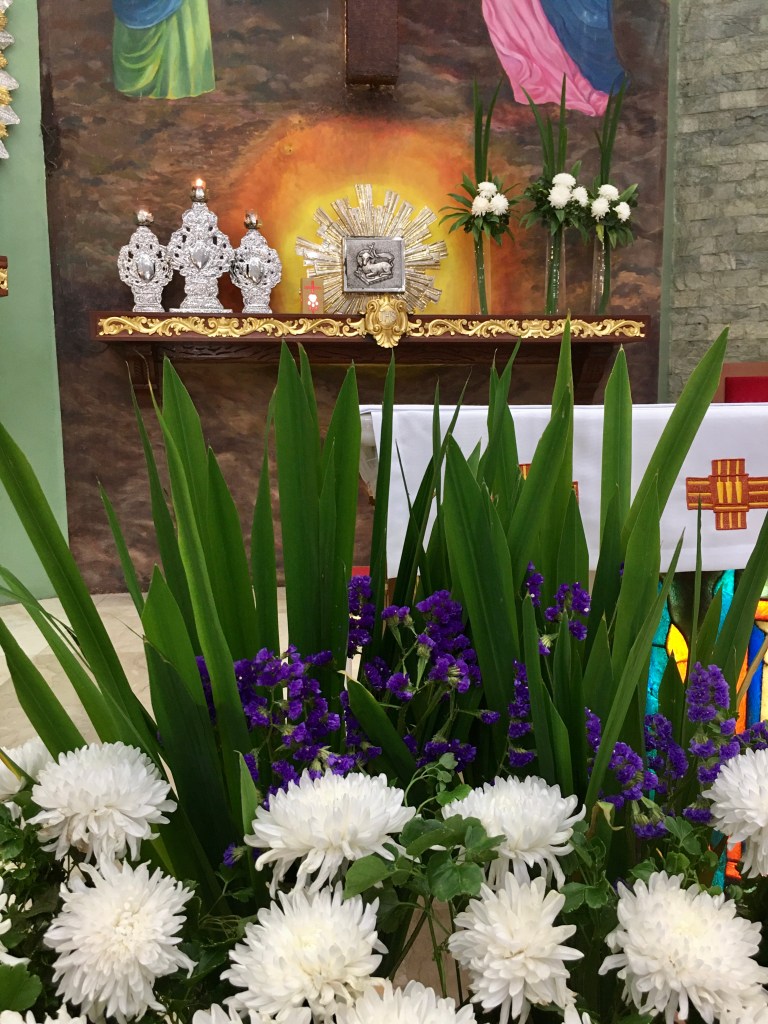
Larawan kuha ng may-akda, gayak ng aming parokya, Nob. 1-2, 2020.
Madalas aking ipinapalagay
bilang bahagi ng buhay
itong pagmamahal
ako nama'y nakagaganap,
nakatutugon sa hamon.
Nguni't ano nga ba talaga
ang magmahal at kailan ako
tunay na nagmamahal?
Napakadali na maging mabuti
sa iba, magtimpi ng sarili,
magparaya at magpalampas;
mahabag at maawa na kusang
tutulo ang luha,
umakay at sumabay sa mahihina,
magmalasakit maski sa walang sakit.
Kailan nga ba
ako tunay na nagmamahal,
tanong ko sa sarili noon pa man;
maski mga kaibigan
mga pinapayuhan
sa simbahan
o saan pa man
iyan ang palaging katanungan
na ano mang kasagutan
ay siyang buod at kabuuang
kahulugan ng pagmamahal
di lamang ng mga magkasintahan
o magsing-ibig
kungdi ng sino mang nilalang
ng Diyos na pag-ibig.
Noon ay
palagi kong sinasabi
mula sa limitado kong karanasan
na aking inihahabi,
pinagtatagpi-tagpi
sa mga napag-aralan
at napagnilayan
na tunay ka lamang nagmamahal
kapag ika'y nasasaktan
dahil kung wala ka nang nararamdaman
mas malamang
pusong bato
ang nariyan sa iyong dibdib,
di lamang manhid
kungdi patay at malamig.
Hindi natapos
aking pag-aasam
malaman at maranasan
kung kailan nga ako
tunay nagmamahal;
maraming karanasan
aking pang dinaraanan
dahan-dahan, unti-unti
naliliwanagan na
tunay akong nagmamahal
di lamang kapag ako'y nasasaktan
kungdi dama ko man
aking kawalan
sa kakayahang ibsan maliban samahan
kapatid kong nahihirapan.
Tunay akong nagmamahal
kung aking pipiliing mahalin
ang iba kesa akin;
 hindi na daraing
kungdi sasarilinin
at aangkinin pati tiisin
mga iyak at hinaing
ng ginigiliw
 at kung maari ay pasanin
kanilang mga dalahin.
Sa kahuli-hulihan
batayan pa rin ng pagmamahal
ang masaktan --- kung hanggang saan,
hanggang kailan doon malalaman
yaring lalim at kadalisayan.
Larawan kuha ng mga may-akda, gayak ng altar ng parokya, Nob.1-2, 2020.
The Lord Is My Chef Breakfast Recipe for the Soul by Fr. Nicanor F. Lalog II
Friday, Week XXX, Year II in Ordinary Time, 30 October 2020
Philippians 1:1-11          >><)))*>  ||+||  <*(((><<     Luke 14:1-6
What a beautiful last Friday of October 2020 today, God our loving Father! After so many struggles in life this week, you send us our favorite people and friends, favorite memories, favorite sights and smells, and every other favorites that delight and console us, comfort and assure us.
You never allow bad things to continue hitting us! Just as we are about to give up, there you are always coming to us in so many ways like with St. Paul who have received some gifts from the Philippians — his most beloved and favorite community as he wrote them while in prison awaiting trial and sure death in Rome.
It happens so often with us too, Lord, and I am convinced you surely have a hand in them because as St. Paul wrote the Philippians:
I am confident of this, that the one who began a good work in you will continue to complete it until the day of Christ Jesus.
Philippians 1:6
We are not complaining for our many struggles in life; at least we are still alive because the moment we no longer struggle, then we must be with you in heaven!
I love the way how St. Paul told us that you, O Lord, perfects -that is, completes – every work we have done, always with us in whatever struggle we have, starting right at the moment we were born literally struggling for life.
Please bless our work and our efforts, our struggles that sometimes we feel going nowhere, feeling all is wasted.
Like that man healed on a sabbath at a home of a leading Pharisee, may we come to meet you always in faith as you have to be with us body and blood and spirit in Jesus Christ to bless and perfect our efforts and works, even sickness and sufferings.
May we pray to grow in love like St. Paul:
And this is my prayer: that your love may increase ever more and more in knowledge and every kind of perception, to discern what is of value, so that you may be pure and blameless for the day of Christ, filled with the fruit of righteousness that comes through Jesus Christ for the glory and praise of God.
Lawiswis ng Salita ni P. Nicanor F. Lalog II, Ika-29 ng Oktubre 2020
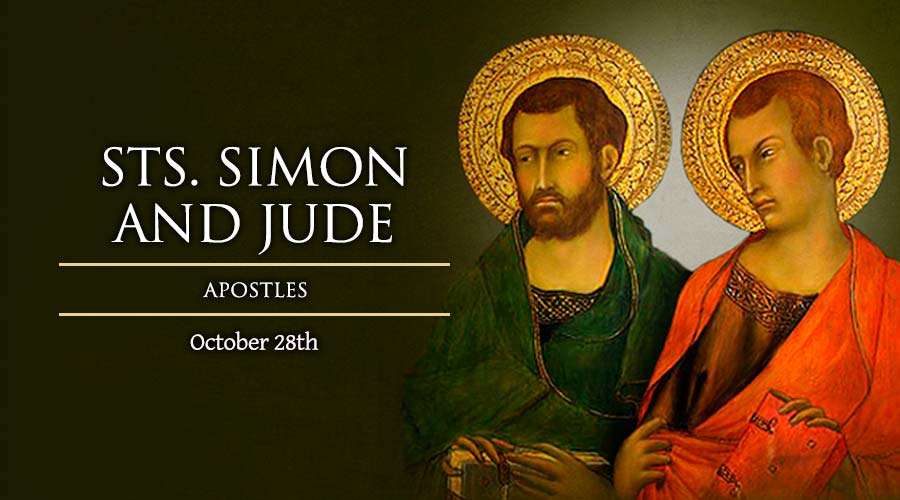
Larawan mula sa catholicnewsagency.com.
Sa pagdiriwang ng kapistahan
ni San Judas Tadeo kahapon
may isang magandang tagpo
na kay inam nating balikan
upang pagnilayan
kanyang tanong kay Jesus
noong Huling Hapunan:
"Panginoon,
bakit po sa amin lamang kayo
magpapakilala nang lubusan
at hindi sa sanlibutan?" (Jn.14:22)
Mahiwaga at matalinhaga
ang tugon ng Panginoon:
"Ang umiibig sa akin ay tutupad
ng aking salita;
iibigin siya ng aking Ama,
at kami'y sasakanya at
mananahan sa kanya." (Jn.14:23)
Bakit nga ba hindi na lamang
magpakita si Jesus sa lahat upang
mawala na pagaaalinlangan,
at iba pang mga katanungan?
Maski naman magpakita si Jesus
marahil wala pa ring maniniwala
hangga't hindi natin siya nakikilala
sa mukha ng bawat kapwa:
hindi bagay o gamit si Jesus
na basta-basta lamang nakikita
ng ating mga mata ---
Siya ay Persona:
makikilala lamang
ng isang pusong bukas
handang tumanggap
at tularan Kanyang pagmamahal
upang Kanyang panahanan
tungo sa personal na ugnayan.
Hanggang ngayon ito pa rin
ang ating tanong sa ating panahon
at bakit nga kaya nagkagayon?
Tuwing magkokomunyon
"Amen" ang ating tinutugon
bago tanggapin
Katawan ng Panginoon
na marahil atin ngang nakikita
nguni't hindi nakikilala
dahil puso ay ipininid
naging manhid
sa daing ng bawat kapatid?
Ang Diyos ay pag-ibig
na siyang Kanyang larawan
at wangis sa atin Kanyang ipinaris;
kung pag-ibig ay ating inalis,
ang lahat sa atin ay malilihis
makita man natin si Jesus di natin Siya makikilala!
Larawan ay kuha ni Lucas Jackson ng Reuters ginamit sa The Economist, 2019.
The Lord Is My Chef Breakfast Recipe for the Soul by Fr. Nicanor F. Lalog II
Monday, Week XXX, Year II in Ordinary Time, 26 October 2020
Ephesians 4:32-5:8     >><)))*> ||  >><)))*>  ||  >><)))*>     Luke 13:10-17
Easter Vigil in the midst of COVID-19, 2020.
How beautiful are your words for us, loving Father, on this last Monday of October 2020!
Despite the rains caused by a typhoon, our first reading from St. Paul’s Letter to the Ephesians is so heartwarming in reminding us of our new humanity in Jesus Christ your Son, encouraging us to live moral lives by “living in love” (Eph.5:2) as “children of light” (Eph.5:8).
Living in love is living as children of light by first being imitators of you, O God, which is to be holy as you are holy. Remove from our minds that holiness is being sinless; teach us to realize that being holy, being “whole” and perfect is a process of being filled with you, dear God.
Teach us to be open to let you fill us, God, full of life and zest, raring to explore and move forward despite the many pains and setbacks we have had.
Cleanse us of immorality and impurity in our minds and hearts and lips.
Keep us grateful to your many blessings we have received specially those we never asked from you yet you have generously given us.
Most of all, make us truthful and sincere in our love for you through our neighbors; take off our masks of hypocrisy like the leader of the synagogue where Jesus healed on a sabbath a woman crippled by a spirit for 18 years (Lk.13:14).
To live in love as your children of light Lord is also to free others from the many burdens burdens in life they carry so they may start living in you through Jesus Christ. Amen.