Being small, and blessed

The Lord Is My Chef Breakfast Recipe for the Soul by Fr. Nicanor F. Lalog II
Wednesday, Feast of the Birth of the Blessed Virgin Mary, 08 September 2021
Micah 5:1-4     ><]]]]*> + ><]]]]*> + ><]]]]*>     Matthew 1:18-23
“The Birth of the Blessed Virgin Mary”, a 1305 painting by Renaissance artist Giotto in the Scrovegni Chapel in Padua, Italy. The two babies are Mary: below is Mary upon birth wrapped in swaddling cloth and washed by attendants and then above being handed to St. Anne her mother. Photo from en.wikipedia.org.

We rarely celebrate birthdays in our liturgy, except for the birth of our Lord Jesus Christ on December 25 and of his precursor John the Baptist on June 24. Feasts of the saints are often based on the date of their death or when their remains were transferred for proper burial.

Today is different: it is the birth of the Mother of God, the Blessed Virgin Mary. And so we celebrate!

Nine months after her Immaculate Conception celebrated as a Solemnity on December 8, we now have the Feast of her Nativity which is lower in status or ranking of celebrations. Nonetheless, aside from Jesus and John the Baptist, her birth is still celebrated as it is the completion of her Immaculate Conception by St. Anne.

But in this time of the pandemic when everyone’s birthday celebration is kept at the simplest level unless you are a police general or a corrupt government official or a callous lawmaker, it is good to reflect anew on the significance of a birthday. Thanks a lot to Facebook in making every birthday so special, alerting everyone of someone’s birth every day.

Photo by author, December 2018.

"Every birthday is a small Christmas 
because with the birth of every person 
comes Jesus Christ."

In his 1995 Encyclical Evangelium Vitae (The Gospel of Life), the great St. John Paul II beautifully expressed that “Every birthday is a small Christmas because with the birth of every person comes Jesus Christ.”

What makes that so true with every birthday beginning with the Blessed Virgin Mary is God’s great mystery of becoming small, of being a little one. In the birth of his Son Jesus Christ, God revealed to us that true greatness is in becoming small, in being silent. Even insignificant.

This we find right in the place of birth of the Christ prophesied in the Old Testament.

“You, Bethlehem-Ephrathah too small to be among the clans of Judah, from you shall come forth for me one who is to be ruler in Israel; whose origin is from of old, from ancient times.”

Micah 5:1

And if we go further, we find this true greatness of God in being small found also in the Mother of Jesus, the Blessed Virgin Mary who came from the obscure town of Nazareth, the only place in the New Testament never mentioned in the Old Testament. Recall how the Apostle Bartholomew (Nathanael) belittled the Lord’s hometown after being told by Philip that they have found the Messiah from Nazareth, saying, “Can anything good come from Nazareth?” (Jn.1:46).

Nazareth was totally unknown.

And so was Mary!

That is why it is so disappointing and sad when many Catholics unfortunately led by some priests have the misimpression of portraying Mary as a “beauty queen” with flawless skin and Western features when she is clearly Middle Eastern woman. Worst of all is the pomp and pageantries we have in the recent fads of processions and coronations.

Photo by author, La Niña Maria at the National Shrine of Our Lady of Fatima, Valenzuela City, 07 September 2021.

How sad we have missed how the Blessed Virgin Mary as the model disciple of Jesus was the first to embody his teaching of being small like little children with her simplicity and humility so very well expressed in her 20th century apparitions in Fatima, Portugal and Banneux, Belgium.

Thanks in part to the COVID-19 pandemic that has given us so much time and opportunities to “reboot” or “reset” our priorities in every aspect of our lives, including in our religious devotions and faith itself.

With a total stop to those Marian “extravaganzas” that have been going out of control in recent years, the pandemic is now teaching us in this Feast of the Nativity of Mary of the need for us to rediscover the values of being small and simple, silent and hidden.

Enough with our imeldific celebrations even in our religious gatherings that have sometimes become egregious display of wealth and power.

Being simple and small like Mary, both as a child and as an adult, enable us to see again the value of life and of every person.


The more simple and true 
we are like Mary and Joseph, 
the more Jesus is seen 
and experienced in us!  

Aside from the lack of any account on the birth of Mary, we heard proclaimed today the birth of Jesus to teach us that truth expressed by St. John Paul II that in every person comes Jesus Christ. The more simple and true we are like Mary and Joseph, the more Jesus is seen and experienced in us!

That is why when we greet somebody a “happy birthday”, what we really mean telling him/her is “I love you, I thank you for making me who I am today.” Through one’s simplicity and littleness in Christ, we are transformed into better persons because we are able to have glimpse of God’s love and kindness.

Photo by author, December 2020.

The true joy of celebrating a birthday is not found in the externalities of gifts and parties and guests with all the fun that come along. In this time of the pandemic as we learn to celebrate simpler birthdays, we are reminded of life’s beginning and direction that is eternal life.

And how do we get there? Through death or dying – the one reality in life Jesus has taught us in his Cross which we have avoided that has suddenly become so common these days of the pandemic.

Like in the birth of Jesus Christ, we are reminded by every birthday that life is precious because it is so fragile – any infant and every person can be easily hurt and harmed, be sick and eventually die.

Like Mary and Joseph, the little Child born in Bethlehem asks us, even begs us to take care of him found in everyone among us. Let us be more loving and kind, understanding and caring, even merciful and forgiving with one another not only in this time of the pandemic.

Such is the wisdom of God in making life small and fragile so that we may care and value it because there lies also its greatness. The best birthday greeting we can express to the Blessed Mother Mary today is to start being small and simple like her to share Jesus with everyone. Amen.

Seeing Christ in what is traditional and what is new

The Lord Is My Chef Breakfast Recipe for the Soul by Fr. Nicanor F. Lalog II
Friday, Memorial of St. Gregory the Great, Pope and Doctor of the Church, 
03 September 2021
Colossians 1:15-20   ><)))'> ><]]]]*> ><)))'>   Luke 5:33-39
Photo by Dr. Mai B. Dela Peña, MD in Barcelona, Spain, 2018.

The scribes and the Pharisees said to Jesus, “The disciples of John the Baptist fast so often and offer prayers, and the disciples of the Pharisees do the same; but yours eat and drink.”

Luke 5:33
Oh yes, God our Father!
So many times we are like
the scribes and the Pharisees
asking Jesus not to seek the truth
but to confirm what we believe 
as true and proper, trying to find
justifications for what we are
doing which we hardly understand
the deeper meaning.
Like the gospel last Sunday,
we cannot distinguish what is
traditional and what is new,
what is clean and unclean,
and most of all, what is good
and what is evil because 
we are more focused with our
selves than with you and Jesus.

And he also told them a parable. Likewise, no one pours new wine into old wineskins. Otherwise, the new wine will burst the skins, and it will be spilled, and the skins will be ruined. Rather, new wine must be poured into fresh wineskins. And no one who has been drinking old wine desires new, for he says, “The old is good.””

Luke 5:36, 37-39
Like St. Gregory the Great,
refresh us in your Son Jesus Christ,
dear Father.  
Make us "new wineskins"
to be poured with Jesus, the "new wine";
indeed, old wine always tastes good
but we have to become new wineskins too
to be able to adjust to the new wine
to bring out its goodness and zest.

For in him all the fullness was pleased to dwell, and through him to reconcile all things for him, making peace by the Blood of his cross through him, whether those on earth or those in heaven.

Colossians 1:19-20
Let us always seek first Jesus Christ,
loving Father in looking at things
in life and especially in the Church;
like St. Gregory the Great who
accomplished so much not only
in the Church but also in civil society
despite his short stint as Pope for
only 13 years, help us to center our
lives in Christ Jesus because
"he is the image of the invisible God,
the first born of all creation"
(Colossians 1:15).
Amen.

Fulfillment in Christ

The Lord Is My Chef Breakfast Recipe for the Soul by Fr. Nicanor F. Lalog II
Thursday, Week XXII, Year I in Ordinary Time, 02 September 2021
Colossians 1:9-14   ><}}}*> ><}}}*> ><}}}*>   Luke 5:1-11
Photo by author of the statues of Simon Peter kneeling before Jesus after the miraculous catch of fish at the lake, 2017.
As the pandemic rages with its
more devastating surge affecting
whole families, we pray dear Father
not only for healing of those afflicted
with COVID-19 but also for the opening
of our minds and hearts to find the
deeper realities of life instead of still
being preoccupied with mundane and 
selfish desires we have taken as our
false securities.  Let us remove all these
blindness in us to see and embrace 
the truth of your Son Jesus Christ, the 
only one who can lead us out of this
darkness that is also of our own making.
Let the prayer of St. Paul for the Colossians
be our prayer today, Father:  "that we may walk
in a manner worthy of the Lord so as to be fully
pleasing in every good work, bearing fruit
and growing in the knowledge of God" so that
"we may be fit to share in the inheritance 
of the holy ones in light" (Colossians 1:10,12).
Dear Father, help us realize the need for us
to seek fulfillment only you in Christ Jesus
"in whom we have redemption, the forgiveness
of sins" (Colossians 1:14).
Open our eyes to see the deeper story behind 
the news happening around us today:  
of what sense is our pursuit for fame,
wealth and power when we can easily die with
COVID-19 or when our country is overrun 
by rebels like Afghanistan?
Fulfillment in life can only be found 
in Jesus Christ your Son who had come 
to enable us "catch abundant fish" when
all our toils and efforts yielded nothing;
teach us to trust in you more, to dare 
cast the net into the deep and most of all,
to leave our "boat" of comfort and ease
to walk with Jesus, following him as
"fishers of men" sharing his loving service
and presence, mercy and kindness with everyone.
Amen. 

The Holy month of August

Quiet Storm by Fr. Nicanor F. Lalog II, 30 August 2021
Photo by Fr. John Howard Tarrayo, National Shrine and Parish of Fatima, Valenzuela City, 06 August 2021.

Like the months of November and January, August now suffers the same fate of being more known with pagan rituals and beliefs despite its rich liturgical celebrations and feasts we celebrate – ironically – as the only Christian nation in this part of the world.

Spurred mainly by the social media, more and more Filipinos now believe that August is a “ghost month” with almost everybody even not a Chinoy are posting those “Do’s” and “Don’ts” on Facebook to cast away or avoid the evil spell by ghosts that August is supposed to bring.

What a sad reality in our Catholic Christian country.

Forty or 30 years ago, all we have was “pangangaluluwa” when some people would sing in front of our homes for some donations like in caroling during Christmas season. With the advent of social media and our penchant for anything American, we now have every November those grossly erroneous and pagan Halloween practices of costume party and “trick or treat”. Not far from that is our January tradition borrowed also from pagans of literally welcoming every New Year with a lot of “bang”, wasting precious money that also cost some lives and injuries to so many due to fireworks and firecrackers.

Here we find the kind of religiosity that binds most of us, more on rites and rituals but lacking in roots and spirituality, centered on ourselves to be assured of every kind of blessings, forgetting all about the very object of faith who is God expressed in our concern for one another.


August is not a ghost month nor any other month of the year.  
Like the days of the week, every month is a blessed one.  
No day nor date nor time is malas because 
when God became human like us in the coming of Jesus Christ, 
life has become holy, filled with God, 
debunking those ancient beliefs of the Divine being seen in various cosmic forces.

August is not a ghost month nor any other month of the year. Like the days of the week, every month is a blessed one. No day nor date nor time is malas because when God became human like us in the coming of Jesus Christ, life has become holy, filled with God, debunking those ancient beliefs of the Divine being seen in various cosmic forces.

In this regard a text by Saint Gregory Nazianzen is enlightening. He says that at the very moment when the Magi, guided by the star, adored Christ the new king, astrology came to an end, because the stars were now moving in the orbit determined by Christ[2]. This scene, in fact, overturns the world-view of that time, which in a different way has become fashionable once again today. It is not the elemental spirits of the universe, the laws of matter, which ultimately govern the world and mankind, but a personal God governs the stars, that is, the universe; it is not the laws of matter and of evolution that have the final say, but reason, will, love—a Person. And if we know this Person and he knows us, then truly the inexorable power of material elements no longer has the last word; we are not slaves of the universe and of its laws, we are free. In ancient times, honest enquiring minds were aware of this. Heaven is not empty. Life is not a simple product of laws and the randomness of matter, but within everything and at the same time above everything, there is a personal will, there is a Spirit who in Jesus has revealed himself as Love[3].

#5 of Spe Salvi (Saved in Hope) by Pope Emeritus Benedict XVI, 30 November 2007
From catholicapostolatecenter.org.

Consider the name of this month August which was borrowed from the Roman Caesar Augustus that signifies reverence or to hold someone in high regard. As an adjective, august means “respected and impressive” like when we say “in this august hall of men and women of science”.

Most of all, consider the great feasts that fall on this month of August: the Transfiguration of the Lord Jesus Christ on August 6 and the Assumption of the Blessed Virgin Mary into Heaven on August 15. Both feasts remind us of the promise of glory in heaven as we strive and persevere to lead holy lives in this world filled with pain and sufferings.

(See our blogs on these feasts, https://lordmychef.com/2021/08/06/transfiguration-in-time-of-corona/ and https://lordmychef.com/2021/08/14/mary-mirror-of-gods-greatness/.)

There are also so many saints we celebrate on this month of August like our patron saint as priests, St. John Vianney (August 4); St. Dominic who died 800 years ago on August 8 after serving not only the Church but also the whole world in general when he founded the Order of Preachers (O.P.) also known as the “Dominicans”; St. Clare of Assisi (August 11), a contemporary and friend of St. Francis; St. Bernard of Clairvaux (August 20) who wrote so many beautiful homilies, hymns and prayers like the Memorare; St. Rose of Lima (August 23) who was the first saint from the New World; and of course not to forget the greatest mother and son tandem next maybe to Mary and Jesus, St. Monica (August 27) and St. Augustine (August 28).

August is also the month of two great followers of Jesus, St. Bartholomew the Apostle (August 24) and two former Pharisees who buried our Lord, St. Joseph of Arimathea and St. Nicodemus (August 31). Likewise, it is on August 29 when we celebrate the martyrdom of the Lord’s precursor, St. John the Baptist who was beheaded during the birthday party of Herod who was so afraid to take back his oath to give whatever Salome would ask him after delighting his guests with a dance number.

There are two special saints we celebrate this holy month that according to St. John Paul II are both saints of our modern time, St. Teresa Benedicta of the Cross (August 09) and St. Maximilian Kolbe (August 14). Both saints were martyred in the gas chambers of Auschwitz during the Holocaust.

St. Teresa Benedicta is the same German philosopher Edith Stein, a former Jew who had become an atheist in her younger years in the university but upon further studies and prayer, converted into Catholicism, becoming a Carmelite nun where she adopted her new name. She wrote in one of her writings that “Those who seek truth seek God, whether they realize it or not“.

Though she had become Catholic, she did not abandon her Judaic roots, even writing the Pope at that time to ask him to speak strongly against the Nazi Germans’ extermination of Jews. Her death on August 9, 1942 at Auschwitz with her younger sister who had become a Catholic too was a fitting testimony to her faith, honoring her Jewish roots by dying among them as a martyr of Christ and one who had “learned to live in God’s hands” according to Sr. Josephine Koeppel, OCD, a translator of much of her works.

Dying ahead of her in Auschwitz on August 14, 1941 was St. Maximilian Kolbe, a Franciscan priest who was arrested for his writings against the evil Nazis. It was actually his second time to be arrested.

When a prisoner had escaped from the camp, authorities rounded up ten men to die in exchange of the lone escapee. Fr. Kolbe volunteered to take the place of a married man with children. They were all tortured and starved in order to die slowly in pain. A devotee of the Blessed Virgin Mary, St. Maximilian was injected with carbolic acid on the eve of the Assumption after guards found him along with three other prisoners still alive, without any signs of fear like screaming but silently praying.

Photo of Auschwitz from Google.

We no longer have gas chambers but atrocities against human life continue in our time, hiding in the pretext of science and laws. Until now, men and women, young and old alike including those not yet born in their mother’s womb are hunted and killed to correct what many perceived as excesses and wrongs in the society. Just like what Hitler and his men have thought of the Jews at that time.

The Nazi officers and soldiers of Auschwitz remind us the true “ghosts” or evil spirits of our time sowing hatred and deaths are people who may be well-dressed, even educated in the best schools, and come from devout or “normal” families. They sow evil every day without choosing any particular month, blindly following orders without much thinking and reflections or introspection.

By the lives of the many great saints of August, or of any other month for that matter, we are reminded especially in this time of the pandemic that holiness is not being sinless but simply being filled with God, allowing that holiness to spill over and flow onto others with our lives of authenticity to the truth of God among us in Christ expressed in charity and mercy, kindness and justice, humility and openness with one another.

It is very sad and depressing to watch in the news and social media feeds how some among us continue to display their lack of any concern at all with the suffering people with their lavish lifestyles and display of expensive clothes and food. And worst of all are those men and women, in power or hungry for power, in their excessive display of brute force against the weak and the poor.

Let us make every month holy and blessed with our good deeds to make everyone aware of Christ’s presence among us.

Photo from inquirer.net.

Aral ng lumot sa panahon ng pandemya

Lawiswis ng Salita ni P. Nicanor F. Lalog II, Ika-25 ng Agosto 2021
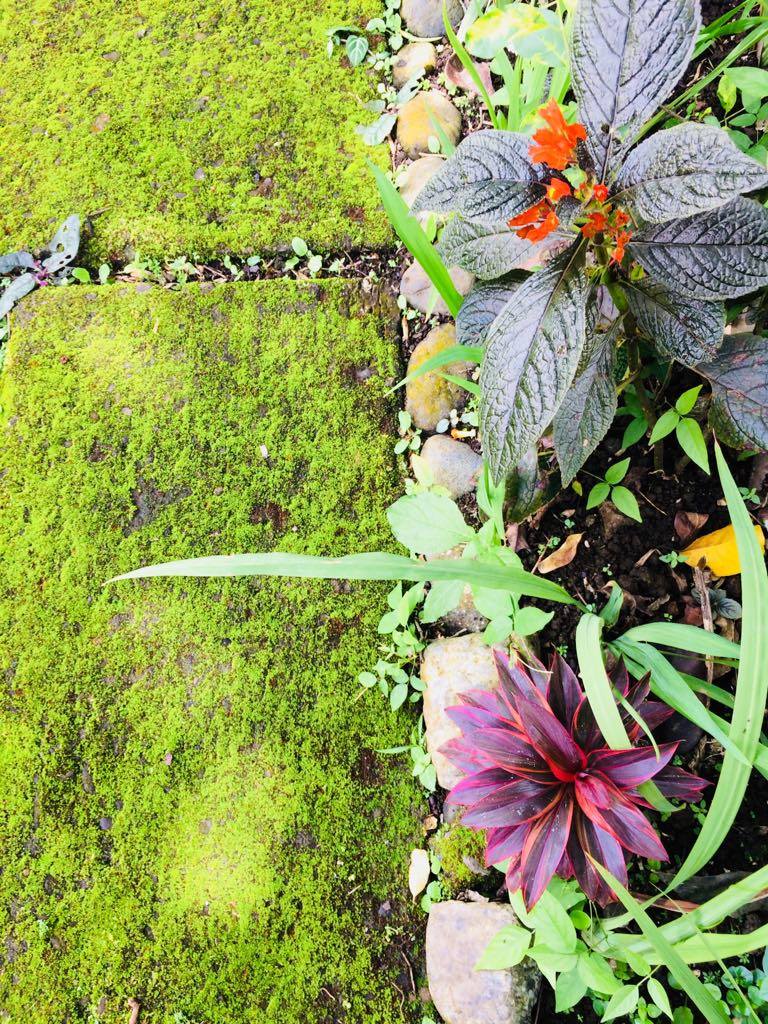
Larawan kuha ng may-akda sa Tam-Awan, Baguio City, 2018.
Minsan isang umagang kay panglaw
sikat at busilak ng araw aking tinatanaw
ako ay gininaw sa malagim na katotohanan
hindi pa rin papanaw 
at patuloy pang hahataw 
pananalasa nitong pandemya;
Kahit mayroon nang bakuna
dumarami pa rin mga nahahawa
isang paalala maaring lumala pa
bago humupa at tuluyang mawala na.
Noon din ay aking namataan 
mga tumutubong halaman 
sa kapaligiran tila nagsasabi
huwag susuko
magpatuloy sa paglago
ano man ang panahon
tagtuyot o pag-ulan
manatiling luntian
maski mga dahon lamang
saka na mga bulaklak at bunga.
Larawan kuha ng may-akda, Malagos Gardens, Davao City, Agosto 2017.
Pinakamahalaga
manatiling buhay at umunlad
sa gitna ng karahasan
aral ng mga halaman
sa ati'y kay lalim at
napakayaman sa
kahulugan na maari nating
tularan at gamiting aral
na gagabay sa ating buhay
ngayong panahon ng pandemya.
Sa lahat ng halaman
na lubos kong kinagigiliwan
bukod sa hindi ko kailangang
mga ito ay alagaan 
ay ang mga lumot
sa sumusulpot 
maski sa mga sulok-sulok 
na kahit malimot
tutubo at lalago, kakapal
parang alpombra sa mga paa!
Hindi gaanong naabot
ng liwanag itong lumot
ngunit kay lamig sa paningin
kay gandang tanawin
kung ating susuriin
nagsasabi sa atin
ng himig ng lilim at dilim
tinig na mahalumigmig;
hindi man masikatan ng araw
mayroon din busilak sa kadiliman!
Paalala sa atin ng mga lumot
ngayon ang panahon ay masalimuot
katotohanan at kagandahan
nitong ating buhay
bumubukal saan man malagay;
Maykapal sa ati'y hindi humihiwalay
pahalagahan at pangalagaan
lahat ng ating taglay
dahil walang kapantay ating buhay, 
mas makulay sa ano mang halaman
lalo't higit sa lumot
huwag sanang iyan ay malimot.
Larawan kuha ng may-akda, Agosto 2019.

My screen this quarantine

Quiet Storm by Fr. Nicanor F. Lalog II, 17 August 2021
Image from Pinterest.

We are almost done with the first week of our third lockdown with nine more days before it is either extended or modified depending on what jumbled letter combinations come out from the magic roulette in the Palace. Either way, hail to all couch potatoes for longer weeks in front of that magic screen!

Thanks for the gift of Netflix in keeping our sanity in this pandemic. And more thanks again Netflix in streaming more television shows lately especially coming from the Philippines.

Forget My Amanda that should have been called My Cars or My Abs or My Hair

One series you should not miss before the end of this Enhanced Community Quarantine (ECQ) is Bagman starring Arjo Atayde.

First released in 2019 as an original series in iWantTFC, Bagman is so unique as a Filipino series because of its fast-paced tempo of less than 30 minutes per episode without the usual Pinoy director’s penchance for intense close up shots on faces of the characters with nothing expected to happen at all.

Everything in the production is superb, especially cinematography and musical scoring as well location sets that are characteristically the hallmarks of every ABS-CBN film undertaking. In fact, Bagman is one perfect reason that ABS-CBN should get back its franchise to operate for helping elevate television and film in the country.

Unlike other socio-political movies where we already know how low and evil is politics in the country, Bagman challenges us for a more personal response in ending this vicious circle of corruption and decadence in our culture and life as a nation.

Kudos to its creators Philip Kind, Lino Cayetano and Shugo Praico who directed the two-season series we hope would still have a final sequel. Their great attention to details with subliminal meanings on the roles and manners of different characters make the viewers “experience” – not just watch – the series done in first-person storytelling with narrations by Atayde himself as a former barber becoming a bagman of the governor. Each episode opens with a disclaimer that it is a work of fiction based on realities we have heard and read.

At its best, Bagman can be described as “totoong-totoo” – very true with its great storyline with characters played out so well by every actor like a thespian, beginning with Atayde and his co-stars that included the resurrected former sex-goddess Ms. Rosanna Roces and former Bagets Ms. Yayo Aguida.

From Twitter.

Personally striking for me as a former smoker and police reporter is Atayde puffing his cigarettes clipped between his middle and ring finger.

So classic, tsong!

They must really have a superb study for Atayde and even everyone, like Mr. Joel Saracho who played a supporting role in a few episodes as a former cobbler turned “assistant” of the evil congressman played by Romnick Sarmenta. A writer himself and a veteran to many great productions on stage and the movies, Saracho brought his usual finesse in the few scenes he was included with great impact.

Bagman teems with many scenes focused on marginalized people forced to make that desperate “kapit sa patalim” due to poverty and exploitation by crooks who come from both the rich and poor alike. Here lies the beauty of the series in teaching everyone without pontificating the need to always choose the right path in life, to be careful of getting stuck into a situation one can no longer get out and cost one’s life or loved ones, or both.

One unforgettable scene for me is that episode focused on Atayde’s father-in-law played by Rolando Inocencio as a Political Science professor telling his class the story how three congressmen died and were held at the gates of heaven by St. Peter for interview. The first two were sent to hell for their sins but the third lawmaker made into heaven after “bribing” St. Peter!

The whole class burst into laughter while Inocencio lamented in a very fatherly manner how deeply ingrained is corruption among us Filipinos until the bell rang and his class dismissed. In a later episode, Inocencio would ask their hostage-taker (Karl Medina) claiming to be his former student how did the third congressman get into heaven to check if he was indeed in his class at the university.

Medina would not give any reply at all to Inocencio who would again lament how every student of his would surely know the answer because he tells the same story in every class he handled. For me as a priest, the scenes that followed reverberated with voices, asking us teachers and educators what have we really done in forming the minds of the young in our schools and parishes when corruption is even getting worst?

Bagman is a timely reminder for us in this time of pandemic of rectifying the excesses of our “old normal way of life” that is so unfair and unjust that many clamor to bring back in the face of the “new normal” that is still far from what is just and true.

One downside for me with Bagman is the excessive use of foul language, one of the worst “new normal” introduced to our society four years before COVID-19 came. The series could have been more effective and compelling minus those p*@#&^_!

See it for yourself. Enjoy and reflect the series.

More power to the people behind Bagman!

From Esquire Philippines.

The blaming game

The Lord Is My Chef Breakfast Recipe for Soul by Fr. Nicanor F. Lalog II
Monday, Week XVIII, Year I in Ordinary Time, 02 August 2021
Numbers 11:4-15  <*(((>< + ><)))*>   Matthew 14:13-21
Photo by author, sunrise at Camp John Hay, Baguio City, 2018.
On this first working day
of August 2021, I pray to
you our loving Father
to watch over the many 
others today who feel
the same way as Moses
in the wilderness
being blamed by family
members and relatives,
by friends and others
for all their troubles
and mess in life.
When Moses heard the people,
family after family, crying at the
entrance of their tents, he was grieved.
"Why do you treat your servant
so badly?"  Moses asked the Lord.
"Why are you so displeased with me
that you burden me with all this people?
Was it I who conceived all this people?
Or was it I who gave them birth,
that you tell me to carry them 
at my bosom, like a foster father
carrying an infant, to the land you have 
promised under oath to their fathers?
I cannot carry all this people by myself, 
for they are too heavy for me."
(Number 11:10, 11-12, 14) 
It is so frustrating, Lord
every time there is a hardship or 
difficulty being encountered along the way
to every goal and aspiration, we have to resort
to the blaming game with the accusing finger 
pointing on somebody else except one's self
for all the woes and miseries, 
the chorus lines of wishful thinkings
and litanies of things missed most
that suddenly the higher ideals are
all forgotten for the sake of little comforts
regardless of dignity and freedom recovered.
Teach us, dear Father
to be persevering like your Son:
When Jesus heard of the death
of John the Baptist, withdrew in a boat
to a deserted place by himself.
The crowds heard of this and followed him
on foot from their towns.
When he disembarked and saw
the vast crowd, his heart was moved with
pity for them, and he cured their sick.
He said to his disciples,
"There is no need for them to go away;
give them the food yourselves."
They all ate and were satisfied,
and they picked up the fragments
left over - twelve wicker baskets full.
Those who ate were about five thousand men,
not counting women and children.
(Matthew 14:13-14, 16, 20-21)
Like Jesus our Lord,
open our eyes to see more, not less
of what we have despite the many
burdens we also carry.
Open our hearts to have more room
for those with more difficulties
and hardships going through in life.
Stretch our hands wider to embrace
those burdened and about to give up
on their dreams and aspirations in life.
When we feel so weighed down by
all the blame of everybody else,
may we see more the light of life in Christ
than the darkness of death and surrender
like Moses at the wilderness.

Beyond “when” and “what”

The Lord Is My Chef Sunday Recipe for the Soul by Fr. Nicanor F. Lalog II
Sunday XVIII-B in Ordinary Time, 01 August 2021
Exodus 16:2-4, 12-15 ><}}}}'> Ephesians 4:17, 20-24 ><}}}}'> John 6:24-35
Photo by author, Church of Dominus Flevit overlooking Jerusalem, 2017.

Last Sunday we reflected the “where” of Jesus in asking Philip, “Where can we buy enough food” for the crowd who have followed them to a deserted place. We said that “where” of Jesus referred not to any place or location but to himself as the only one who can give “enough food” for everyone.

Today I invite you, my dear readers to join me reflecting on the “when” and “what” of the people who have followed Jesus to the other side of the lake, looking for him to have more food after that miraculous feeding last week. This time, the people are the ones asking Jesus with when and what that reveal their pride before God.

When the crowd saw that neither Jesus nor his disciples were there, they themselves got into boats and came to Capernaum looking for Jesus. And when they found him across the sea they said to him, “Rabbi, when did you get here?” Jesus answered them and said, “Amen, amen, I say to you, you are looking for me not because you saw signs but because you ate the loaves and were filled. Do not work for food that perishes but for the food that endures for eternal life, which the Son of Man will give you. For on him the Father, God, has set his seal.”

John 6:24-35
Photo by author, Capernaum’s shore at Lake Tiberias, 2017.

From a deserted place to Capernaum

To fully appreciate today’s gospel account by John, let us get its whole picture with a little help from Mark who started the story of Jesus and the Twelve crossing the lake to a deserted place to rest the other week. With his usual dash of humor, Mark told us how the people arrived to the place ahead of Jesus who was moved with pity at seeing the crowd “for they were like sheep without a shepherd that he taught them with many things.”

John continued the story last Sunday telling us how Jesus fed the people to their satisfaction with so many leftovers out of just five loaves of bread and two fish. The people were astonished that they tried to get Jesus to make him a king but he “withdrew again to the mountain alone.”

This Sunday, John continued his story telling us how the crowd finally found Jesus at Capernaum with his disciples.

How did he get there?

Photo by author, Lake of Tiberias (aka, Galilee), 2020.

According to Mark 6:45ff., after feeding the people, Jesus told the Twelve to proceed ahead of him to the other side of the lake that evening while he dismissed the crowd. Later that evening while Jesus was praying on the mountain, he saw his disciples’ boat being tossed by big waves due to strong winds. He followed them at the “fourth watch of the night” (about 3AM) by walking on water that terrified the Twelve who thought they have seen a ghost.

Upon identifying himself as the Lord, Peter asked to let him come to him by walking on water too; Peter sank when he doubted due to the strong winds until Jesus saved him and joined them on the boat going to Capernaum.

Mark’s story of Jesus walking on water after the miraculous feeding provides us the context for the people’s question to him today in John’s continuation of the story last week, “Rabbi, when did you get here?” (Jn.6:25): it was very difficult, almost impossible for anyone to have crossed the lake at night due to giant waves caused by strong winds. (Any pilgrim to the Holy Land can attest to this fact even today.)

And that was the main issue here: the people refused to see the deeper meanings behind the two events when Jesus fed them and the almost impossible crossing of the lake that night.

That is why Jesus did not answer their question by bluntly addressing their suspicious motive, “Amen, amen, I say to you, you are looking for me not because you saw signs but because you ate the loaves and were filled. Do not work for food that perishes but for the food that endures for eternal life, which the Son of Man will give you. For on him the Father, God, has set his seal.”

Ironically, while their asking of “when did you get here” implicitly acknowledged the Lord’s miraculous crossing of the lake, they still refused to accept it by downplaying everything like addressing Jesus as “Rabbi” when in fact, they were not interested with him but merely with the food he had given them!


Their question of "when" 
was not really about his time of arrival there 
but more of an inquiry on the person of Jesus....

Their question of when was not really about his time of arrival there but more of an inquiry on the person of Jesus as they wondered how could he made it across the lake that night. They have failed to recognize the deeper meaning of the sign Jesus did in feeding them with enough food which Jesus explained anew.

And the stage is now set for Jesus to reveal himself, of who he really is which his disciples were also asking and contending among themselves all these weeks and months of being with the Lord.

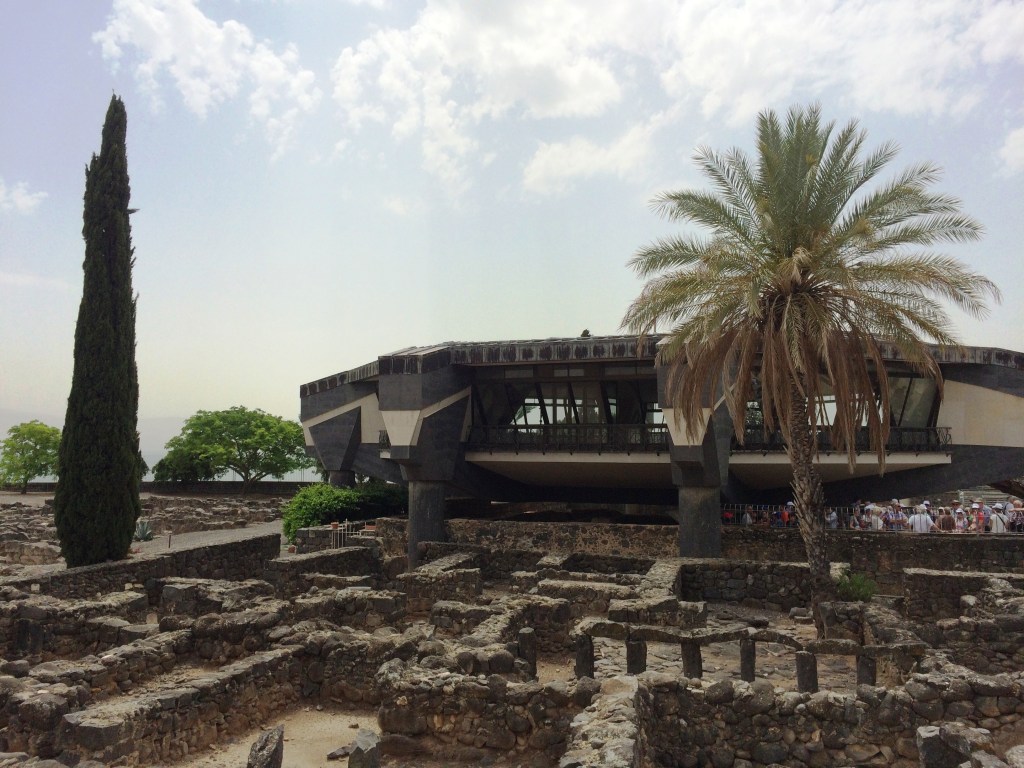
Photo by author(2017), ruins at Capernaum with a church built over the house where Jesus was believed to have stayed.

The need for us to be open to Jesus, our bread of life

Many times in life, our words and attitudes betray us of our inner motives, of our selfish interests to get near some people, to meet and know them not for who they are but for what we can have from them – even with God!

Remember Andrew last Sunday who did not bother to ask the boy’s name who gave the five loaves of bread and two fish from which Jesus performed his miracle? “There is a boy here with five barley loaves and two fish” – no name, just a “there” because the did not matter at all to Andrew except his food.

But there is something deeper being revealed in this attitude of forgetting the other person and being focused on material things: that is our pride, of believing only in ourselves, of playing God!

So they said to him, “What can we do to accomplish the works of God?” Jesus answered and said to them, “This is the work of God, that you believe in the one he sent.” So they said to him, “What sign can you do, that we may see and believe in you? What can you do? Our ancestors ate manna in the desert, as it is written: He gave them bread from heaven to eat.”

John 6:28-31

See how the crowd ignored Christ’s promise of giving food that endures for eternal life by following up their question with What can we do to accomplish the works of God?” – another veiled question like their when, insisting on their own achievements and abilities, on what they can.

Worst is how in a twist highlighting pride in themselves as they dared to question Jesus again with What sign can you do, that we may see and believe in you?“!!! Helloooooo….!

Photo by author at the ruins of the synagogue of Capernaum where Jesus preached his bread of life discourse, 2017.

They have gone so blinded with their pride that suddenly the miraculous feeding they have personally witnessed plus the unimaginable crossing of the lake at night remained lacking, not enough for them to believe in the powers of Jesus that they still asked for another sign.

Their “what” had become a demand from them, an insistence on Jesus the Son of God to give them signs from heaven even if they ironically preferred without them knowing how they were stuck at the lowest level of looking at things.

They have closed their eyes to seeing beyond the ordinary things happening to them since Jesus came teaching and healing. And now after feeding them, they demanded Jesus to follow them instead of them following the Lord.

Is it not the same thing happens with us when we keep on demanding God for proofs of his love and mercy, demanding so many other things from him above while we refuse to rise above ourselves, to “level up” in our lives?

This is the call by St. Paul in the second reading, that we must “be renewed in the spirit of your minds, and put on the new self, created in God’s way in righteousness and holiness of truth” (Eph. 4:23-24).


Once again, we are placed on highest level of quarantine due to a surge in COVID-19 cases with threats from the new Delta variant. Unless we learn to see this pandemic on a higher plane or level that calls for spiritual renewal among us, it will persist to disrupt and destroy lives among us.

It is more than a virus infecting us but an attitude deep within us when we have lost respect for one another and with nature. Pope Francis had long ago sounded this alarm in 2015 with his encyclical Laudato Si calling for each of us to change our lifestyle, each of us contributing for the betterment of the world because it is easiest to join advocacies but difficult to change our ways of life by having less.

With all these pandemic and climate changes going on around us, the signs are getting clearer for us to shift our perspectives, to see things on a higher plane like what Jesus had began at Capernaum declaring himself, “I am the bread of life; whoever comes to me will never hunger; and whoever believes in me will never thirst” (Jn.6:35).

Our misunderstandings with others and in life will persist unless we remove the veils and masks that cover so many insincerities of our questions in search of the many answers to the problems we face.

Like the people who have followed Jesus to Capernaum that day who were stuck in the desert experiences of Moses (first reading) that they could not see Jesus himself as the new bread from heaven; in fact, Jesus had to correct them that it was not Moses who gave the manna but God the Father in heaven who now gives Jesus to nourish us in our journey to eternal life.

Let us empty our selves of our pride to let Jesus fill us today with his words and his Body and Blood so we may realize next week the meaning and sweetness of himself as the Bread of life. A blessed week to you. Stay safe and keep praying. Amen.

Photo by author, April 2020.

On living and courage

Quiet Storm by Fr. Nicanor F. Lalog II, 21 July 2021
Photo by Pixabay on Pexels.com

A former classmate and friend from elementary school suddenly died of a heart attack last week. At his wake, everybody was saying of how they wish to die ahead of everybody just like Larry. “Mas gusto ko ako yung mauna” was the trending line of everyone’s conversation that there seemed a surge in courage with everyone bravely claiming readiness to die.

For me, it was like a déjà vu when suddenly it flashed to my mind our school discussions how we would prefer to die first than our parents. As kids, we were so afraid of living without parents that we deemed it better to be the first ones to die.

But, it did not mean we were not afraid of death nor of dying nor of living, too. We were just kids then.

Now that we have passed the half century mark of living, fast approaching the senior age, I think we know better the realities of life.

And of death.

On the surface, it seems that facing death and dying require super graces especially courage as we go into the threshold of the great unknown. But on deeper reflections, we realize that in dying, it could be really true that we have nothing to fear but fear itself because when we die, we don’t feel it anymore and would not even know it at all!

Death and dying can easily come to our minds when we are so hard pressed in life, when sufferings and pains are so unbearable that death wrongly becomes an escape, a cowardice than a courage no matter how hard others would romanticize it.


Yes, it takes a lot of courage to accept and face death 
but much more courage is needed to live than to die.

Yes, it takes a lot of courage to accept and face death but much more courage is needed to live than to die.

Living is different because it is filled with paradoxes unlike death that is clearly “the end” and the start of the great unknown, with or without God.

But for us believers, for those with faith in God, living in itself is already a tremendous grace to overcome all fears and difficulties of being alive than being dead.

More than ten years ago, I lost my best friend from high school to cancer. When he was first diagnosed, he cried a lot whenever we would visit him, clearly indicating his fears of dying. Six months after receiving intensive treatment from one of the best hospitals in the country, Gil finally accepted the inevitable after his doctors said his cancer cells were “so aggressive”.

On that final week of his life, I visited him thrice when I noticed a marked change in Gil as he would no longer cry, looking so calm and serene, so composed even in his manner of speaking. This time, I was the one who cried a lot whenever he spoke to me of his “habilin” or reminders upon his death. That is when I realized how God gives the courage needed to face death once the dying accepts it and surrenders one’s self to Him our Maker. That is when death becomes peaceful and a blessing too when the dying is able to make peace with everybody and with God almighty.

Photo by Ms. Ria De Vera, June 2021.

When somebody dies, we cry not only because of the pain of separation. Deep inside us is the fear of living alone without them. That is why we need more courage to live than to die because when you die, you do not feel anymore.

The pain of death is more felt by those living than by those dying, especially those blessed to have prepared for it like my friend Gil as they already knew where they were going while those left behind are still at a loss for directions in life.

Living, facing life’s challenges requires tough courage. Real courage.

Our drive or will to live and survive shows the great amount of courage and strength we muster from deep within we never knew we even have at all! That is why after hurdling every challenge we faced in life, we wonder how we did it, how we made it.

From Facebook, May 2020.

That’s because of courage.

Congratulate yourself! You are good. You are doing well.

Those bruises and scars are badges of courage, medals of valor in fighting, in living this life that prepares us to fullness in heaven with God.

For as long as you feel pains and sufferings, hardships and difficulties… you are alive! Rejoice and celebrate life! Make the most of it. You can surely make it because you are alive.

And there lies the beauty and greatness of life – we are enormously blessed to be alive, blessed with courage to go on living because we are meant for something. We have a mission. Do not lose sight of that immense blessing.

When Jesus faced his death, it was not cowardice but courage because his dying was meant to lead us all to living fully in him. Jesus is life himself when he said “I am the resurrection and life” (John 11:25).

On the Cross, Jesus showed us the realities of life- of joys and pains, of sickness and health, of poverty and wealth, of light and darkness, most of all, of life and death in our daily dying to old self and rising to new life.

On the Cross, Jesus showed us that life is living in courage that comes from him to be like him: standing for what is true and good, for what is just and fair, and most of all, for loving another more than one’s self!


"The real test of courage is in living, not in dying", 
according to the the Italian playwright 
and poet Vittorio Alfieri (1749-1803).  

“The real test of courage is in living, not in dying”, according to the the Italian playwright and poet Vittorio Alfieri (1749-1803).

Stop wishing and praying for death for it will surely come.

At the moment, activate that courage in you and start living life to the fullest.

Coming to terms with death is coming to terms with life and vice-versa. For us to have the courage to face death when that time comes means to have the courage first of all in living. It is a grace always in our heart which is in Latin called “cor”, the root of the word courage itself, meaning “coming from the heart”.

Have the heart – and courage to see and experience the many joys and beauty of life waiting for you! Don’t miss them.

Photo from intentionalinspirations.com

Listening attentively, selectively

The Lord Is My Chef Breakfast Recipe for the Soul by Fr. Nicanor F. Lalog II
Wednesday, Week XVI, Year I in Ordinary Time, 21 July 2021
Exodus 16:1-5, 9-15   ><]]]]'>  +  <'[[[[><   Matthew 13:1-9
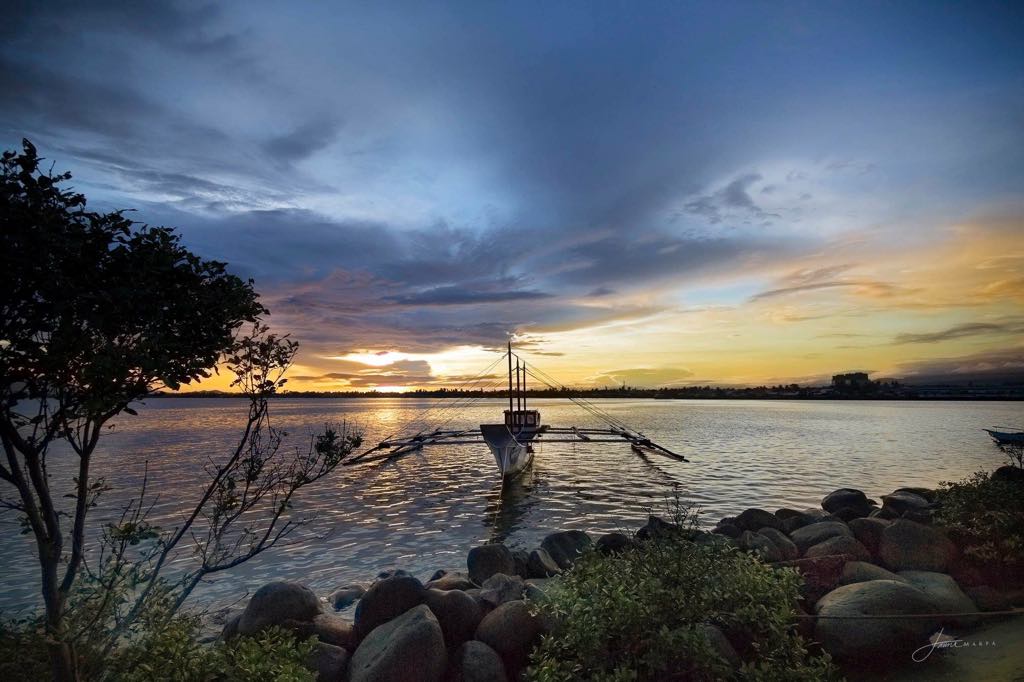
Photo by Mr. Jim Marpa, 2018.
Every day God, 
we pray to you
"Our Father in heaven
hallowed be thy name...
Give us each day
our daily bread"
without realizing the daily bread 
you give us that truly nourishes us:
your words of truth and of life
that became flesh in Jesus Christ.
On that day, Jesus went out of the house
and sat down by the sea.
Such large crowds gathered around him
that he got into a boat and sat down,
and the whole crowd stood along the shore.
And he spoke to them at length in parables.
(Matthew 13:1-3)
Thank you very much, dear God
for listening to our prayers,
in giving us the food we need
to nourish our bodies
and your words that sustain us
especially in these trying times.
May we hunger more
for this daily bread from heaven,
listening attentively,
fulfilling your words as you willed them so.
Then the Lord said to Moses,
"I will now rain down bread 
from heaven for you.
Each day the people are to go out
and gather their daily portion;
thus will I test them,
to see whether they follow
my instructions or not."
(Exodus 16:4)
But most of all, O God
teach us to be like you: to be more
selective in our listening,
to be more circumspect with what
to hear and process wherein 
we listen more on essential things 
that matter most than on trivial
and mundane words that are
divisive, preventing our growth
and maturity in our relationships.
If you would listen and act
on everything we say, especially 
our grumblings and complaints, 
no one among us would still be alive;
but you are kind and understanding,
unlike us who listen more on petty
than essential things said by others.
May we be like the good soil
that is open to listen and nurture
words that build and give life.  Amen.