Surprising Jesus

The Lord Is My Chef Sunday Recipe for the Soul by Fr. Nicanor F. Lalog II
Fourteenth Sunday in Ordinary time, Cycle B, 04 July 2021
Ezekiel 2:2-5 ><}}}'> 2Corinthians 12:7-10 ><}}}'> Mark6:1-6
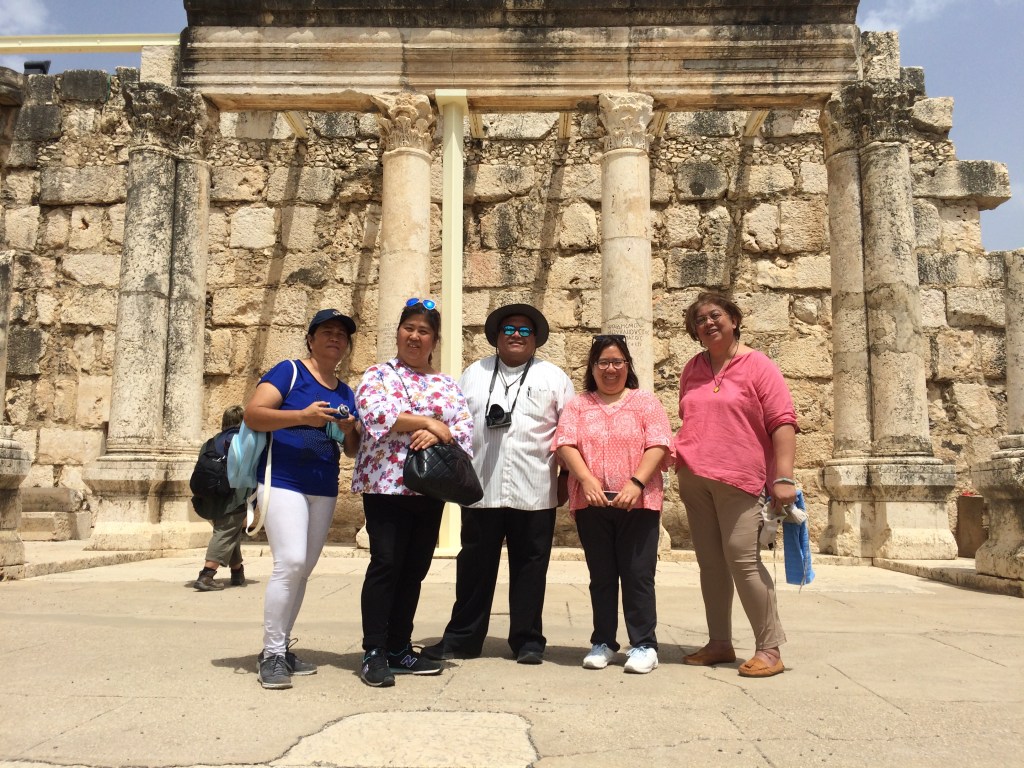
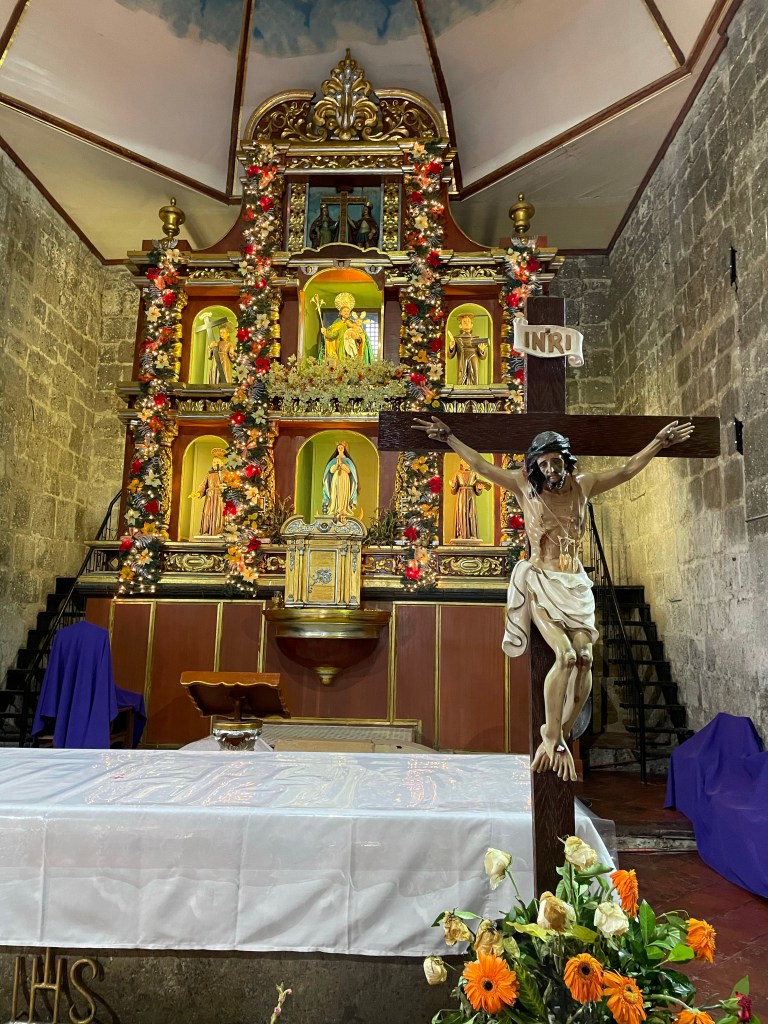
Photo by author, Sacred Heart Center for Spirituality, Novaliches, 2015.

There are only two instances in the gospels that say Jesus was surprised or amazed: first is in his hometown of Nazareth as we have heard today when “He was amazed at their lack of faith” (Mk.6:6) and the second is in Capernaum when a Roman centurion asked him to heal his sick servant. When Jesus obliged to come with him to heal the servant, the Roman officer declared, “Lord, I am not worthy to have you enter under my roof; only say the word and my servant shall be healed. When Jesus heard this, he was amazed and said to those following him, “Amen, I say to you, in no one in Israel have I found such faith” (Mt.8:8, 10).

What surprises Jesus most is our faith in him. Or, its lack like the people of Nazareth.

Last Sunday, he dared us to examine our faith in him when he brought back to life the dead daughter of Jairus. On their way, Jairus was told his daughter had died, that there was no need to bother Jesus anymore; that’s when Jesus said, “Do not be afraid; just have faith” (Mk.5:36). Reaching his home, there was commotion on the dead child but later, everybody was “utterly astounded”(Mk.5:42) after Jesus brought her back to life.

Today, St. Mark deepens our reflection on the need to have faith in Jesus by telling us a surprisingly sad episode in the Lord’s life and ministry of being rejected right in his native Nazareth:

When the sabbath came he began to teach in the synagogue, and many who heard him were astonished. They said, “Where did this man get all this? What kind of wisdom has been given him? What mighty deeds are wrought by his hands! Is he not the carpenter, the son of Mary, and the brother of James and Joses and Judas and Simon? And are not his sisters here with us?” And they took offense at him. so he was not able to perform any mighty deed there, apart from curing a few sick people by laying his hands on them. He was amazed at their lack of faith.

Mark 6:2-3, 5-6
Photo by author, Nazareth, Israel, 2019.

The need for faith

For the past three weeks, St. Mark has slowly introduced to us that Jesus is the Christ, the awaited Messiah or Savior through his teachings and miracles like healing the sick, pacifying a violent storm at sea in the darkness of the night, and bringing back to life the dead child of Jairus.

However, it is not enough to “know” who Jesus is.

Knowing Jesus – or anyone – will not matter at all unless we believe in him and enter into a relationship with him lest we end up like his folks who “knew” him as the carpenter and son of Mary, wondering where he got all his wisdom and power.

And worst, “they took offense at him”. As we would say in Filipino, “pinersonal nila si Jesus.”

But, that is what faith is – something very personal because it is a relationship. No relationship can mature and grow unless there is faith. The deeper and stronger the faith, the most wonderful is the relationship because despite all the troubles and sufferings that may come, the ties remain because of faith.

That is why it St. Mark is telling us today the rejection of Jesus at Nazareth, of how even the Son of God experienced failures and rejections, calling us for a deeper and firmer faith in him who alone is our Lord and Savior. Aside from sickness and deaths in our lives, there are many other pains and heartaches, disappointments and failures and losses in our lives that if we do not have faith, we can never make it through with Jesus.

Yes, Jesus is with us in this journey of life in the many seas to cross while in darkness amid violent storms; but, we have to believe in him first before he can make his moves in our favor like in Nazareth where he “was not able to perform any mighty deed there, apart from curing a few sick people by laying his hands on them” due to their lack of faith in him.

Photo by author, altar in my room at the Fatima National Shrine, Valenzuela City, February 2021.

Surprising Jesus with our faith

Too often in our lives, we have boxed God as being stiff and stern, a disciplinarian watching us for our sins and mistakes. Wrong! God sent us his Son Jesus Christ so we may experience his tender mercy and love, his personal relationship with each of us.

Unlike most of us, Jesus is a touch person, so sensitively human, not numb, always feeling us in our gestures and looks and words like that Roman centurion at Capernaum, that sick woman in the crowd last Sunday, the widow of Nain and the sisters Mary and Martha. They all moved and touched Jesus with their grief and sufferings, and most especially with their faith and joy and confidence in him.

Most beautiful in these stories of Jesus being surprised and moved by humans are the more surprising kindness and blessings he bestowed on them – like in our own experiences! Notice that when we were so surprised by God with his blessings, that is when we have also surprised him with our faith.


Jesus is surprised with our faith when we continue to listen and speak his words of justice and truth. In this age of faith in a mass mediated-culture, we find the voice of God drowned in the cacophony of many sounds competing for everyone’s attention where the ones that prevail are those appealing to the senses that are both easy and pleasurable. Through media manipulations, what was unacceptable was first made to be tolerable until it has become acceptable like promiscuity and “safe-sex”, divorce and same sex marriage, birth controls and abortions. Any discussion of God and religion, ethics and morality and values are dismissed as limiting and narrow-mindedness or worst, as being old-fashioned and conservative. In modern man’s effort to be “fair” and “all-encompassing”, the human person has been reduced to technicalities and legalese, replacing life with lifestyles.

Hard of face and obstinate of heart are they to whom I am sending you. But you shall say to them: Thus says the Lord God! And whether they heed or resist – for they are a rebellious house – shall know that a prophet has been among them.

Ezekiel 2:4-5

Jesus shows us today in his unhappy homecoming to Nazareth that even if people refuse to listen, we continue with our prophetic role of proclaiming his good news of salvation “in season, out of season”.

Even if nobody listens, even if we do not win converts or followers, we are prophets of God like Ezekiel, the voice of God, of his justice and truth amid a rebellious and wayward generation. Like John the Baptist, we are the voice in the wilderness preparing the coming of the Lord by speaking the truth, calling people to repentance and conversion.

Though God speaks in silence, our being silent in the midst of evil worsens the sinful situation as we shut doors among humanity leaving no room at all for Jesus to come and work his wonders among us. Be the voice of Jesus, be his opening, and be ready for great surprises happening soon!


Jesus is surprised with our faith when we remain standing with him at his Cross, bearing all pains and wounds with him. In this age of affluence and convenience characterized with everything instant in a click of a button, modern life has become sedentary to our own detriment. As we prefer to be seated more than standing, we have become so passive, avoiding every form of pain and suffering that make pain relievers as the most prescribed and widely used medication these days.

See how we quarrel over our places of “seat” everywhere – at home and school, office and community and parish, public and private transport – as they connote powers without realizing that what matters most in life is where we stand because that is when we are defined as a person for our faith and values in life, when we most surprise Jesus as he surprises us most with his strength like what St. Paul had realized:

Therefore, I am content with weaknesses, insults, hardships, persecutions, and constraints, for the sake of Christ; for when I am weak, then I am strong.

2 Corinthians 12:10

Great things begin to happen in us, in our lives when we are out standing for Jesus, with Jesus because that is when we are truly one in him as he passed over our miseries and sins to rise again with him and in him in his Resurrection.


Jesus is surprised with our faith when we are filled with joy and love in him despite everything. To love and be joyful like Jesus calls for a deep faith in him, to be kind and merciful even when others are rude and unforgiving. Notice how these days it takes a lot of guts to be good. And we are so amazed with them!

On the other hand, notice when we hear news of a band of people who are inconsiderate, corrupt, unkind, selfish, and proud: are you not surprised they are filled with anger and hate and negativities?

During the persecution of the early Church, Christians were easily spotted and rounded because they were amazingly loving and caring with the marginalized like the poor, the sick, the widows, the old, and the orphans. Pagans were most surprised that the more they persecuted the Christians, the more they grew in number! It is one of history’s most surprising facts but, that is how God moves, so unusual in the most surprising ways.


Have you been surprised by Jesus lately?

Try surprising him with your great faith in him and you will be surprised greatly by him!

Have a blessed Sunday! Amen.

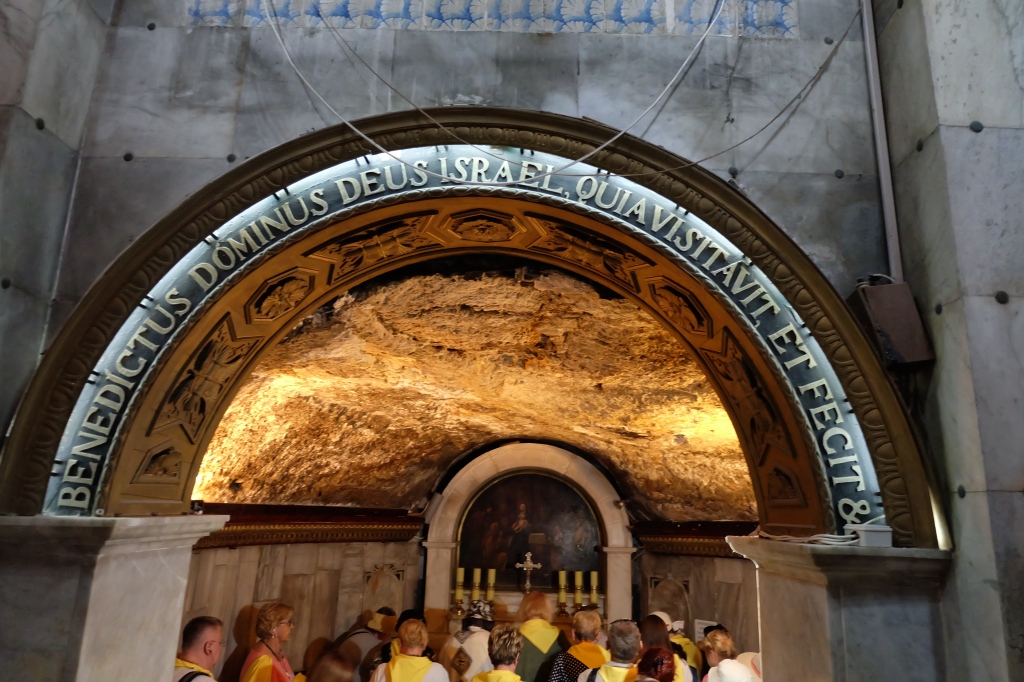
Photo by author, flowers at the Pater Noster Church outside Jerusalem in Israel, 2019.

Graduating in time of COVID-19: Being the right person in the right place at the right time

Quiet Storm by Fr. Nicanor F. Lalog II, 02 July 2021
Genesis 23:1-4, 19-24:1-8, 62-67   ><}}}'> + <'{{{>< Matthew 9:9-13

Congratulations, my dear Senior High School graduates of Our Lady of Fatima University Batch 2021. Yes, you hold the distinction of belonging to the first graduates of the pandemic who persevered, who were not daunted by COVID-19 that continues to plague us after more than a year of altering our lives.

Take pride in belonging to this batch because you have just proven you are the right people in the right time at the right place called by God to witness his truth and mercy, our university motto, “Veritas et Misericordia”.

Too often we pray God would send us the right person to become our friends and colleagues at work or project, or simply our co-journeyer in this life – perhaps lovers – without realizing we are in fact the right person being called and sent first by God in the right place, at the right time.

This was the experience of Matthew in our gospel today:

As Jesus passed by, he saw a man named Matthew sitting at the customs post. He said to him, “Follow me.” And he got up and followed him.

Matthew 9:9
“Calling of St. Matthew” painting by Caravaggio from en.wikipedia.org.

Let me tell you a beautiful story about the call of St. Matthew as depicted in a painting by the renowned artist named Caravaggio during the 1600’s in a chapel in Rome. It is one of the favorite paintings of Pope Francis who claims he used to see it while a student in Rome and later as the Cardinal of Buenos Aires whenever he would go to the Vatican.

Caravaggio’s painting is very unique and amusing especially in the way he would play with lights and darkness like in that other famous painting of the meeting of the Risen Lord and doubting Thomas eight days after Easter. This contrast of light and darkness is very evident in painting the call of Matthew by Jesus.

Very interesting is the kind of clothes the characters wear in this painting: notice how Caravaggio portrayed Matthew, the bearded man with a beret and his companions at the table wearing the expensive clothes of the Middle Ages while Jesus and Simon Peter are in their traditional garments and – barefooted! The room looks like a tavern of Caravaggio’s time than a customs house as narrated by Matthew during the time of the Lord in Galilee.

All of this because Caravaggio was fond of incorporating biblical scenes into his milieu to show the relevance of Christ in their time.

And that is also the reason why I share this painting with you: aside from being the gospel on this first Friday of the month, I find its story so relevant with you Senior High School students and graduates.

When you look at the painting, it is like a video happening in split seconds, very much like that photo taken in the live mode of an iPhone with the picture moving a little, wondering if Matthew would stand and leave to follow Jesus.


When you look at the painting, it is like a video happening in split seconds, 
very much like that photo taken in the live mode of an iPhone 
with the picture moving a little, 
wondering if Matthew would stand and leave to follow Jesus.

From en.wikipedia.org.

See Matthew and company seated at the dark side of the room with Jesus standing near the window partially washed by lights specifically his face and hand with finger pointed towards Matthew whose face is clearly lighted, evidently hesitant, asking Jesus if he were referring to him or to the one slumped on the table. Notice the bright face of Matthew and his index finger pointing to the man beside him, his thumb to himself as if asking “is it I, Lord?” or “who, me?” while his other hand is holding a coin on the table.

So beautiful as it evokes the hesitancy of Matthew and certainty of Jesus!

That is how we have felt this first year of COVID-19, the Academic Year 2020-2021, your batch: there is our hesitancy and uncertainty, fears and anxieties in life, of going back to school or not, of where to get money or laptop or reliable internet service while deep inside us, we felt the Lord so certain in his plans for us, in his love and mercy, that we can “rise to the top” here at Fatima University!

We are the ones always doubting, asking Jesus if he were talking or calling us because we cannot let go of that “coin” Matthew is holding on in the painting symbolizing the materials things and persons on whom we put our trust instead of having faith in God alone.

Doubt no more, my dear graduates of the COVID-19 batch of 2020-2021! You are the right person in the right place – Our Lady of Fatima University – at the right time, Academic Year 2020-2021 on the first year of COVID-19 pandemic.


Jesus is telling you today as he fills you with his light 
of truth and mercy in finishing Senior High School in our beloved University 
that you are indeed the right people called in the right place at the right time.  
Will you "rise to the top" to pursue further studies 
to achieve your dreams in this time of the pandemic?  

Jesus is telling you today as he fills you with his light of truth and mercy in finishing Senior High School in our beloved University that you are indeed the right people called in the right place at the right time. Will you rise to the top, pursue further studies to achieve your dreams in this time of the pandemic?

Come and follow Jesus, make your dreams come true here with us in Our Lady of Fatima University for we do not stop seeking ways in dealing with the pandemic with our innovative classes and curriculum. We are the first university approved by the government to conduct limited face-to-face classes in our medical courses.

Like Abraham in the first reading from Genesis, trust God that he will send you his messenger, that he will send you people who will be teaching and preparing you for the post-pandemic period while journeying with you, learning with you in this time of the COVID-19.

Amid the darkness of our time like Caravaggio’s painting, do not fail to see the light brightening the scene, getting intense on the face of Matthew and people around him with Jesus looking intently on you, making sure you do not get sick, that you rise and follow him in pursuing your dream.

Don’t worry, my dear graduates, your Rebekah or your Isaac will surely come along the way but at the moment, Jesus wants you to finish your studies first.

Study hard, work harder, and pray hardest! See you in August!

Have blessed break!

“Through the Fire” by Chaka Khan (1984)

The Lord Is My Chef Sunday Music by Fr. Nick F. Lalog II, 27 June 2021
Photo by Dr. Mai B. Dela Peña, M.D. at Athens, Greece 2016.

Chaka Khan’s Through the Fire is one of the songs that have intrigued me for some time not because I love it. In fact, it is one of my least liked song of all time. I have never liked it – until now – though I have always admired Ms. Khan as a musician, especially as a percussionist (I Feel for You is my favorite).

My interest for this song began about 12 years ago when I asked help from a millennial to make me a playlist in my new laptop wherein she included more than one – maybe three copies of Through the Fire.

I felt the young lady was making fun of me but I never had the chance to ask her why she was so fond of the song.

Years later as I interacted with young people in schools and parishes, I found that so many of them who belonged to a different generation in fact love this song very much! It was only this week when I finally found the answer: it is a most unique romantic song about a true love being found by a woman who was so willing to put it to test, hence, through the fire.

Love is like faith that has to be tested, that must be passed “through the fire” to make it more firm and deeply rooted in Christ. And like love, faith dares us to let go of everything for it to truly grow and mature.

Through the fire
To the limit, to the wall
For a chance to be with you
I'd gladly risk it all
Through the fire
Through whatever, come what may
For a chance at loving you
I'd take it all the way
Right down to the wire
Even through the fire

Composed by David Foster in 1984, he claimed in an interview that Through the Fire is the only song he had written with just one particular singer in his mind, Ms. Chaka Khan. And it proved to be so good as it earned numerous awards aside from staying on top of the charts for several weeks.

The melody is very comely, so perfect with Ms. Khan’s sweet voice that is unusually formal and laid-back in this particular piece.

In our gospel today where Jesus brought back to life the dead daughter of the synagogue official name Jairus, we are challenged to examine our faith in God especially in these trying times of sickness and death due to the pandemic (https://lordmychef.com/2021/06/26/arise-be-whole-again-in-christ/).

How far are we willing to go, to risk all through the fire in following Jesus in the midst of the many trials and sufferings COVID-19 had brought to us not only with our health and well-being but also with our means of livelihood.

May we keep and deepen our faith in Christ as we go through the fire for it is only in him can we arise and be whole again in the face of many sickness and deaths of this time.

Have a blessed week ahead!

*We have no intentions of infringing the copyrights of this beautiful music except to share its pure joy and listening pleasures.

From YouTube.

Arise, be whole again in Christ!

The Lord Is My Chef Sunday Recipe for the Soul by Fr. Nicanor F. Lalog II
Thirteenth Sunday in Ordinary Time, Cycle B, 27 June 2021
Wisdom 1:13-15; 2:23-24 <+> 2 Corinthians 8:7, 9, 13-15 <+> Mark 5:21-24, 35-43
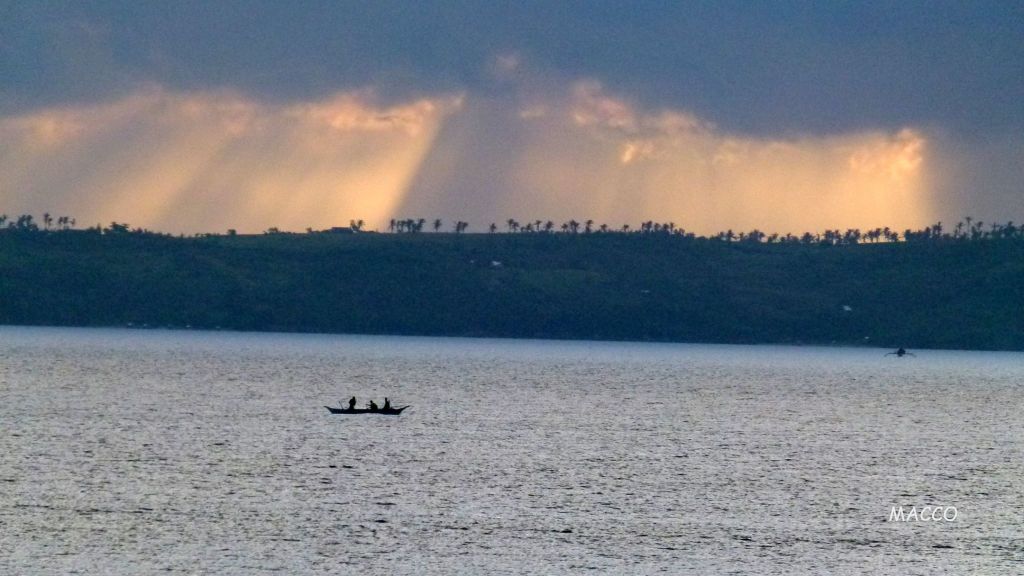
Photo by author, sunrise at the Lake of Galilee, the Holy Land, 2017.

Once again, we find Jesus crossing the Lake of Galilee this week with a crowd following him to listen to his teachings and experience his healing. What a beautiful image of life in Jesus, of constantly crossing the sea, sometimes in the darkness of the night amid storms.

It was something like what we had gone through last Thursday on the Solemnity of the Nativity of John the Baptist when as a nation we crossed history with the inauguration of the new Archbishop of Manila marked with the passing of former President Noynoy Aquino.

We hope and pray that like our gospel this Sunday, our recent crossing will lead us to new awakenings and realizations leading to national healing and yes, a resurrection, a rising from the dead like that young daughter of Jairus brought back to life by Jesus.

When they arrived at the house of the synagogue official, he caught sight of a commotion, people weeping and wailing loudly. So he went in and said to them, “Why this commotion and weeping? The child is not dead but asleep.” And they ridiculed him. Then he put them all out. He took along the child’s father and mother and those who were with him and entered the room where the child was. He took the child by the hand and said to her, Talitha koum, which means, “Little girl, I say to you, arise!” The girl, a child of twelve, arose immediately and walked around. At that they were utterly astounded.

Mark 5:38-42
Photo by author with friends at ruins of the synagogue at Capernaum, 2017.

Examining our faith in Jesus

Notice, my dear reader, how similar is our story of Jesus raising to life the dead daughter of Jairus with that of the calming of the storm while crossing the lake last Sunday. In both instances, we find Mark “exaggerating” some details as if Jesus were somewhat oblivious to what was going on around him.

But again, Mark is not entertaining us with his stories narrating the powers and miracles by Jesus for he is telling us something deeper and very important with those surprising details of his stories. Primary of which is the supremacy of Jesus as the Son of God over nature like the sea and death both symbolizing evil and sin.

Mark affirms this truth today in telling us how Jesus brought back to life the dead daughter of Jairus, that Jesus is the Christ who had come launching a new world order where death and sin are overcome in him through his pasch.

Recall last Sunday how Mark ended his story with the disciples asking, “Who then is this whom even wind and sea obey?” (Mk.4:41).

That question is finally answered by our story today that clearly shows Jesus is the Christ, the Son of God who is life himself when he brought back to life the dead little girl.

Unfortunately, like during the time of Mark until now, many still doubt the powers of Jesus. Then and now, there is still that crisis of faith among us expressed by people from the synagogue official’s house who arrived and said, “Your daughter has died; why trouble the teacher any longer?”(Mk.5:35).

If you were in that crowd following Jesus, would you still go with him to enter the house? Would you heed his words like Jairus, “Do not be afraid; just have faith” (Mk.5:36)?

And while inside the house, knowing the little girl was already dead, would you join the rest in ridiculing Jesus who said, “The child is not dead but asleep” (Mk.5:39)?

These are the questions Mark is asking us today like the Christians of his time going through persecution and crisis in the early Church.

It is easy to “believe”, proclaiming with arms raised that Jesus is Lord, that Jesus is the Son of God but it is another thing to be truly convinced, to have faith in him when faced with the stark realities of life persistently attacked by sickness and death, of pains and sufferings that make us wonder why God could allow these to happen!

We have all felt our faith shaken when this pandemic struck us last year that took away those dearest to us so sudden, often without seeing them at all before they were cremated.

Like his story last Sunday, Mark’s narration of the raising to life of the daughter of Jairus is filled with many surprising details we find it so true with our own experiences of struggling to avoid or survive COVID-19, of having a sick child or spouse, of trying to make it to another day, of keeping our jobs to pay for food and rent and other needs of our family.

Do we really have that faith in Jesus, convinced that everything will be “okay” like Nightbirde who can brim with all smiles even if saddled with three kinds of cancer with a 2% chance of survival, claiming it is better than zero?

Today’s gospel is more than the revelation of who Jesus Christ is: the raising to life of the daughter of Jairus dares to invite us in examining our faith in God in the face of unrelenting attacks on life by sickness and death especially in this time of the pandemic.

Death and sickness are realities we face daily, that make us doubt God’s love and concern for us which the first reading clarifies with its declaration that

God did not make death, nor does he rejoice in the destruction of the living. For God formed man to be imperishable; the image of his own nature he made him. But by the envy of the devil, death entered the world, and they who belong to his company experience it.

Wisdom 1:13, 2:23-24
Photo by author, Lake of Galilee, 2019.

Arising and being whole in Jesus

Jesus came not to remove sickness and death, pains and sufferings which did not come from God for God is love. He came to be one with us in sickness and death, in our pains and sufferings so that we may rise with him too in his resurrection and be whole again in him.

Notice the words Jesus used in every healing, “your faith has saved you” to show that healing is not just a cure of the disease but making the person whole again. The words health, healing, wholeness, and holiness are all interrelated if we examine their origins and implications. Hence, we see that whenever Jesus would heal, it is not only an eradication of an illness but restoring harmony and balance in the person – physical, spiritual, mental, and emotional aspects.

It is the same in raising the dead young man in Nain and his friend Lazarus: Jesus or the evangelists used the word “arise” as a foreshadowing of Easter when Jesus himself rose from the dead, an indication of his power over death.

All these people in the gospels Jesus had healed and brought back to life eventually died but the good news is that death and sickness are no longer dark and an ending in itself.

Jesus came to bring salvation to the world, a wholeness in life which disease and physical death can no longer control and hold. That is why we need a firm faith to believe in him in spite of the many sickness and deaths now around us. It is faith that will enable us to grasp the full meaning of this pandemic and other sufferings we are going through in life. It is our deep faith in God that will also enable us to explain and show to others especially our loved ones the true meaning of healings and resurrections performed by Jesus who gives us a share in his victory over sickness and death.

May we dwell on the beautiful exposition of St. Paul today about being poor like Christ “that though he was rich, for your sake he became poor, so that by his poverty you might become rich” (2Cor. 8:9).

We can only be whole when we share whatever we have because that is when we allow Jesus to work in us, to be in us, to complete us. This happens when we wholeheartedly celebrate the Holy Eucharist where we become poor like Jesus, emptying ourselves of our sins, sharing with others our wealth through our contributions not only to the church collections but also to other charities where some of us share also time and talent aside from treasures.

The experience of the community pantry recently had taught us the value of St. Paul’s call for us to share and be poor like Christ when we were encouraged to take only what one needs and to give according to one’s ability – “kumuha ayon sa pangangailangan, magbigay ayon sa kakayahan”.

Yes, the realities of poverty and hunger remain with us but people are fed, sufferings are alleviated and most of all, the whole nation is united in believing again there is hope amidst the pandemic worsened by the systematic evil that has plagued us for so long.

Faith in God is deepened and strengthened when we become poor and weak like Jairus because that is only when we can arise and be whole again in Jesus Christ who is himself our Resurrection and Life. Amen.

A blessed new week to you and everyone!

Photo by author, Lake of Galilee, 2017.

Voice of God, Power of God

The Lord Is My Chef Breakfast Recipe for the Soul by Fr. Nicanor F. Lalog II
Thursday, Solemnity of the Birth of John the Baptist, 24 June 2021
Isaiah 49:1-6 ><}}}'> Acts 13:22-26 ><}}}'> Luke 1:57-66, 80
Photo by author, site where St. John the Baptist was born beside the Church in his honor in Judea, 2019.

Today’s celebration of the Solemnity of the Birth of St. John the Baptist reminds us of the very important grace and gift from God we take for granted and always abuse – our voice.

Also known as the “voice in the wilderness” who prepared the coming of Jesus Christ, St. John shows us even before his birth through his father Zechariah the proper use of this gift of voice from God.

Voice is power.

In the Book of Genesis, God created everything by simply saying “let there be…” and it comes into being. When Jesus came as the “the Word who became flesh”, he witnessed to us this immense power of the voice of God when he would simply speak to heal people, cast away evil spirits, and still the seas and quiet the storms.

Only us humans were gifted with this unique power of God to speak using the voice.

How sad that we have forgotten or have been totally unaware of the fact that we merely share in the power of God in speaking, in voicing out what is in our minds and in our hearts. Like freedom or the power to choose what is good, we have abused this power of the voice so evident in this digital age as we drown in a cacophony of voices from everybody wanting to be heard, wanting to rule.


And the tragedy is that 
those with the loudest voice and 
easy access to all kinds of media platforms 
are also the ones in power who only voice 
out their selfish interests like our politicians. 

Photo by Ms. Ria De Vera, Bgy. Lalakhan, Santa Maria, Bulacan, June 2021.

And the tragedy is that those with the loudest voice and easy access to all kinds of media platforms are also the ones in power who only voice out their selfish interests like our politicians.

Have you noticed how most of the loud voices we hear these days come from those not involved at all in any kind of suffering? They are not only loud but also so quick to voice their views empty of any concern at all. Worst, many of these loud voices we hear come from people who have little or no concern at all for those truly in pain like the poor and marginalized who have remained voiceless in our society.

When they came on the eighth day to circumcise the child, they were going to call him Zechariah after his father; but his mother said in reply, “No. He will be called John.” So they made signs, asking his father what he wished him to be called. He asked for a tablet and wrote, “John is his name,” and all were amazed. Immediately his mouth was opened, his tongue freed, and he spoke blessing God.

Luke 1:59-60, 62-64

Silence is the voice of God.

At the eve of our celebration today, we have heard how the angel had made Zechariah deaf and mute after he doubted the good news announced to him of the coming birth of their son to be named as John.

Now after nine months of being silent, Zechariah recovered his voice and speech that he spoke blessing God.

Imagine the power and stature Zechariah must have commanded at that time: both he and his wife Elizabeth were from the priestly clans. They were like the royalty at that time, living in an affluent section of the country. Both were born into wealth and fame. And power.

Zechariah’s voice must be one of the most sought after in Judea with his wisdom and influence.

Suddenly gone when his very voice questioned the source of its power, God represented by Archangel Gabriel.

Photo by author, Church of St. John the Baptist, the Holy Land, 2019.

The experience of Zechariah teaches us of the value of silence that has become a very rare commodity these days.

Many of our misunderstandings are due to our lack of silence, of listening to what others are saying or telling us.


Contrary to what 
we also believe,
 silence is not emptiness 
but fullness:


Contrary to what we also believe, silence is not emptiness but fullness: it is different from being quiet when we do not simply speak but allow our minds to work on what we believe in or hold on to. Silence is trying to listen to every voice, especially the faintest ones that usually speak the truth. In the Bible, we find a common pattern in both the Old and New Testaments how God’s communication is preceded always with silence.

Zechariah was forced into silence to experience again its fullness, of being connected anew with God as it gave him opportunities to truly listen intently to God in prayers. That is why everyone was surprised not only when Zechariah confirmed the name of his son would be “John” but most of all when he spoke and his voice heard again by the people. According to Luke, Zechariah sang a blessing to God called the Benedictus.

Then fear came upon all their neighbors, and all these matters were discussed throughout the hill country of Judea. All who heard these things took them to heart, saying, “What, then, will this child be?” For surely the hand of the Lord was with him.

Luke 1:65-66

Becoming the voice of God like John the Baptist

See how Luke presented the scene in pure simplicity as if we were also there, everybody asking “what will this child be?” for surely the hand of the Lord was with him. The scene is packed with the power of God. No voices were heard except the few “pakialamera” or “mahadera” neighbors who wanted the child named Zechariah like his father.

Elizabeth was so cool but emphatic by declaring her son shall be named John. No debates nor arguments among the women who approached Zechariah – surely, not to ask him to voice his decision as he was deaf and mute at that time. Everybody was amazed when he asked for a tablet and wrote “John is his name”.

There was the deafening silence of God’s voice heard loud and clear, perhaps even for several days after the circumcision and naming of John.

“St. John Preaching In the Wilderness” by Anton Raphael Mengs (1728-1779), photo from commons.wikimedia.org

Such is the power of God, of his voice.

Always preceded by silence.

Never harsh nor imposing.

Soft but always felt, always consistent, very clear and simple.

Most of all, refreshing and blissful.

It is a voice kept in one’s heart, nurtured through time in prayer and simplicity of life until the listener becomes the speaker and carrier of the voice of God.

In our digital age where humans and machines speak with voices competing for our attention, we are reminded that the true power of the voice is not in its volume but in God himself who is also the message.

Like images, voices can also be enhanced with the help of modern technology and human ingenuity, especially by image makers and propagandists who are paid to advance one’s power and influence.

Let us be more discerning in listening to the many voices competing for our attention.

Let us begin first in that soft and feeble voice inside our hearts we disregard but consistently speaks to us daily. That voice could be God speaking to us.

Let us rediscover silence and the true power and beauty of the voice of God.

Recall how often in our lives and in human history, the most important voices ever heard, ever written come after long moments of silence, of reflections and listening to God and with others.

The child grew and became strong in spirit, and he was in the desert until the day of his manifestation to Israel.

Luke 1:80
Photo by Fr. Pop Dela Cruz, Binuangan Is., Obando, Bulacan, May 2021.

Jesus amid our storms in life

The Lord Is My Chef Sunday Recipe for the Soul by Fr. Nicanor F. Lalog II
Twelfth Sunday in Ordinary Time, Cycle B, 20 June 2021
Job 38:1, 8-11 ><}}}'> 2 Corinthians 5:14-17 ><}}}'> Mark 4:35-41
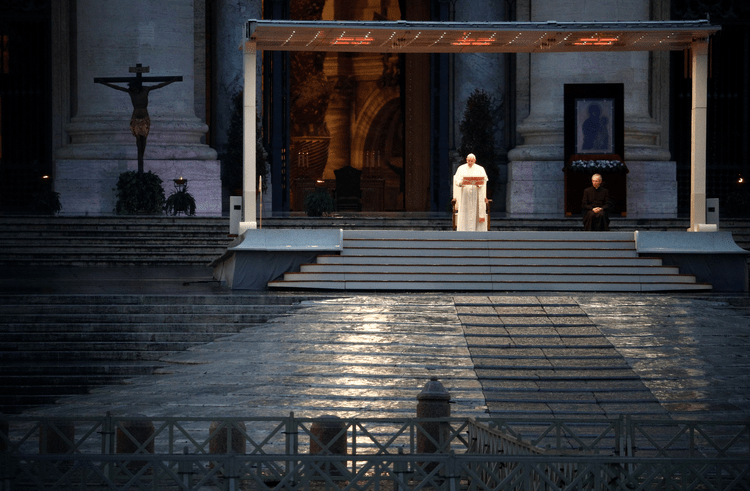
Photo from vaticannews.va.

More than a year ago in March, Pope Francis delivered an extraordinary Urbi et Orbi Message before an empty St. Peter’s Square reflecting on the gospel we heard today when COVID-19 began to wreck havoc upon us, claiming about 3.85 million deaths worldwide as per latest data show.

We are still in the same darkness, in the same storm but much have already changed since the pandemic first struck us last year. Jesus had calmed the seas and the storms with some relief offered by vaccines. Our journey continues as we cross this sea of the pandemic to safer shores.

Like the Pope’s Message last year, we must continue to call and trust in the Lord but at the same time, realize the deeper spiritual meaning of this pandemic, of the need to have a more intimate relationship with God through Jesus.

On that day, as evening drew on, Jesus said to his disciples: “Let us cross to the other side.” Leaving the crowd, they took Jesus with them in the boat just as he was. And other boats were with him. A violent squall came up and waves were breaking over the boat, so that it was already filling up.

Mark 4:35-37

Life is a constant crossing of the sea in darkness with Jesus.


See that in our journey in life, 
it is when evening comes, 
when there is darkness 
that Jesus invites us to come with him to cross the sea.
When there are problems and crisis in life, 
that is when Jesus calls us 
to get to the other side of life's situation.
On his side.  

I love that imagery painted to us by St. Mark in our gospel today, from a casual preaching last week out in the open field with the warm sun shining, Jesus invited his disciples when it was getting dark to cross to the other side of the Lake of Galilee.

Life is a journey that when evening approaches, our instinct is to find a safe place to spend the night. But, today St. Mark shows us a more appropriate imagery of life as a journey which is like crossing the sea.

See that in our journey in life, it is when evening comes, when there is darkness that Jesus invites us to come with him to cross the sea. When there are problems and crisis in life, that is when Jesus calls us to get to the other side of life’s situation. On his side.

And what a beautiful expression we have in “to cross to the other side”! There is always the cross to carry in this life that is like the sea, the uncertainty from our usual sureties like family and friends, jobs, and the status quo because Jesus wants us to have him alone as our surety in life.

A few years ago a Malaysian Air plane perished at sea; despite all the modern technologies, it has not been found yet. It is a reminder to us all of how vast is our world with so much mysteries impossible for humans to master or even fully understand.

Yet, our gospel and first reading assure us that though the world is awesome with great wonders and occurrences, its Creator – GOD – is more awesome for he alone has complete control over nature, especially the sea which is the most difficult of all!

The Lord addressed Job out of the storm and said: Who shut within the doors the sea, when it burst forth from the womb? When I set limits for it and fastened the bar of its door, and said: Thus far shall you come but no farther; and here shall your proud waves be stilled!

Job 38:1, 8, 10-11
Photo by Mr. Chester Ocampo, off the coast of Catanduanes, 2017.

Our awesome world, more awesome God.

St. Mark’s description of the situation inside the boat with Jesus asleep in the middle of a violent storm at sea is very surprising that seems to be exaggerated like in the movies for dramatic effects not to entertain us but to remind us of that basic reality found in his entire gospel account that Christ came to usher in a new world where never again shall sin and death prevail over us.

Recall the other scenes he would later show Jesus exercising total control over the sea like when he walked on water amid a storm (Mk.6:45ff) and ordered a legion of demons to enter a herd of swine that drowned into the sea (Mk.5:13).

As the Son of God, Jesus has total sovereignty over the sea that symbolized the realm of evil, exorcising it to free us from its clutches when he finally died on the cross.

In the first reading, we heard the fictional story of Job being assured by God who got everything under control, even the mighty sea, putting a limit by stilling its proud waves.

In our gospel, we see the reality of God in Jesus Christ calming the storm at sea.

Jesus was in the stern, asleep on a cushion. They woke him and said to him, “Teacher, do you not care that we are perishing?” He woke up, rebuked the wind, and said to the sea, “Quiet! Be still!” The wind ceased and there was great calm. Then he asked them, “Why are you terrified? Do you not yet have faith?”

Mark 4:38-40
Photo by author, crossing the Sea (Lake) of Galilee, May 2019.

Notice Jesus was sleeping soundly, not disturbed at all neither by the storm with its giant waves that tossed their boat nor the commotion and yelling of his disciples. He was so composed and serene.

The same scene we shall see again when St. Mark tells us how on the night of Holy Thursday when Jesus was betrayed and arrested to be tried by members of the Sanhedrin. It was all dark with Christ so composed and relaxed answering the questions of his enemies while outside was Peter so afraid, denying the Lord thrice while the rest of the apostles went hiding out of fear for their lives.

What a beautiful imagery of our Lord and of us!

Here is Jesus so composed and serene as always while us on panic mode, so terrified, even reproaching God – “do you not care that we are perishing?” – when our lives are threatened as if God does not care at all.

When we look back to last year, it was very frightening like that situation the disciples were into: nobody knew exactly the nature of COVID-19, without any known cure and method of treatment, people were dying daily, and life was at a standstill due to the lockdown.

But, with faith in God, we have moved on. Some weddings finally pushed through, students went back to school while others dared to venture into new businesses and other endeavors, crossing the sea so to speak amid the darkness. Those who got married last year now have their first born while students who enrolled last year have graduated and we who risked to move on are now better off than before.

Had we waited for the pandemic to end before deciding to enroll back in school or find a job or get married, we would surely be into great losses for there is still the pandemic that will most likely remain until 2022 or beyond.

As we have reflected last week, Jesus continues to work in silence in us, with us and for us, making us grow like the tiny seed. He never abandons us especially in times of great trials. This we have proven when we dared to venture in life during this pandemic.

Let us entrust to him our very lives for he alone has total sovereignty in this world and in this life for he himself is life – more powerful than any storm who has the whole world, especially the seas, in his hand.

A life centered in Jesus


We cannot wait for things to get better, 
for the pandemic to end, 
for us to be well physically, emotionally and financially.  
It is right in the middle of a storm 
when we are expected to make a stand for Christ, 
to rely on him who is most often silently journeying with us.

After Jesus had pacified the storm and the sea, St. Mark briefly ended our gospel story by telling us how the disciples “were filled with great awe and said to one another, ‘Who then is this whom even wind and sea obey?'”(Mk.4:41).

More than the stories of the Lord’s teachings and miracles, St. Mark wants us to make a stand for Jesus, to center our lives in him as we journey in this life, whether in the ordinariness of parables, the safety of the open field and high mountains, or the dangers and perils of the sea at night, with or without storms.

Remember Nightbirde last week who said, “You can’t wait until life isn’t hard anymore before you decide to be happy.” We cannot wait for things to get better, for the pandemic to end, for us to be well physically, emotionally and financially. It is right in the middle of a storm when we are expected to make a stand for Christ, to rely on him who is most often silently journeying with us as St. Paul tells us in the second reading.

Brothers and sisters: The love of Christ impels us… So whoever is in Christ is a new creation: the old things have passed away; behold, new things have come.

2 Corinthians 5:14, 17

Now more than ever in our modern history that the whole world needs a lot of healing and reconciliation. But unlike the proposals of experts, it is not merely a reconciliation of peoples with one another. We do not need a “new normal” which is a misnomer because a norm does not change. What is true and good and fair would always be true and good and fair at all times.

That is what we need, to bring back the true normal in life which is a reconciliation of every person with God so that we may see our world in a more wholistic sense that we become more just and humane.

There can be no true reconciliation among peoples unless there is first of all our reconciliation with God in Jesus Christ so that we become in him a new creation, new persons filled with his love and mercy, justice and kindness. Of course, there will still be many storms as we cross the many seas of our lives but they will be less frightening if we have Christ on board, even if he is soundly asleep. Amen.

Have a bright and sunny week ahead!

Photo by Fr. Pop Dela Cruz, Binuangan Is., Obando, Bulacan, May 2021.

Learning in time of COVID-19

Homily by Fr. Nicanor F. Lalog II
Baccalaureate Mass, Basic Education Department
Our Lady of Fatima University, 16 June 2021
From IgnitedToInspire.com

Congratulations! Today, everyone deserves a warm round of applause, a pat on the shoulder and perhaps, a little treat after our Mass for making it through the Academic Year of the pandemic, 2020-2021.

Most likely while you were chilln’ after your final exams last Wednesday evening, you have seen and heard this great woman of America’s Got Talent, Nightbirde who mesmerized us not only with her voice but most of all with her infectious joy and presence on the stage.

Her words last week are the most quoted in social media even in our Masses last Sunday: “You can’t wait until life isn’t hard anymore before you decide to be happy.”

She connected so well with us because there is a little Nightbirde in each one of us when we look back to this past academic year when the pandemic happened before we ended classes last year and did not have any Baccalaureate Mass in our University.

Despite the uncertainties and fears and apprehensions due to COVID-19 , we decided to be happy.

We did not wait “until life isn’t hard anymore” to go back to school despite the enormous challenges and adjustments we all have to go through: parents, teachers and faculty, University admin, and most especially you, our dear students.

And if there is one most important lesson we have learned in this past academic year of the pandemic, it is GOD.

Yes!

Like Nightbirde, we have realized how God never abandoned us, always with us, loving us, silently working for us even with just 2% chance of surviving cancer or COVID or passing an exam.

St. Paul said it so well in our first reading:

Moreover, God is able to make every grace abundant for you, so that in all things, always having all you need, you may have an abundance for every good work. You are being enriched in every way for all generosity, which through us produces thanksgiving to God.

2 Corinthians 9:8, 11

The Lord never failed in providing us with all that we need, even during this pandemic.

Let us be open to more of his grace by trusting him more, and sharing his blessings with others.

Dare to “rise to the top” amid the pandemic and other challenges in life!


We did not wait 
"until life isn't hard anymore" 
to go back to school 
despite the enormous challenges 
and adjustments we all have to go through:  
parents, teachers and faculty, 
University admin, and most especially you, 
our dear students.  

From Our Lady of Fatima University/FB.

God never abandoned us this year. We are still alive and we are now moving up, advancing in our pursuit for education. Some of us may have lost a loved one, others were left behind due to many reasons but we celebrate today our achievements made possible by God.

He is the most important lesson we have learned this year of COVID-19: only God suffices. Without God, we are nothing.

What would our lives be today if we all waited last year for the pandemic to be over to resume classes?

And the good news is, God is assuring us today in this Baccalaureate Mass that he shall be blessing you more this coming academic year 2021-2022.

There will surely be a lot of challenges awaiting us, even more difficult but rest assured that if you were able to complete your Prep or Kindergarten, Elementary or Junior High and Senior High stage, there is nothing you cannot do now!

Lahat kakayanin ninyo huwag lang kayong bibitiw sa Diyos!

God has beautiful plans for you despite this pandemic. Persevere and remain in him.

Study hard, work harder, pray hardest!

I have one assignment to give you my dear students as you go on your academic break this June: continue studying, continue praying.

Try to get a copy of a book called “Imitatio Christi” or the Imitation of Christ written around the years 1418-1427 by the German-Dutch monk named Thomas á Kempis.

Don’t worry… it is available in the internet and it is an excellent devotional book. You won’t regret reading it. In fact, next to the Bible, the Imitatio Christi is the other leading devotional book in Christianity.

His reflections are very timely and relevant especially in this time of COVID when he said that what matters most is that we love the Giver – God – and not the gift because God is the source of all good things in life.

A wise lover values not so much the gift of the lover, as the love of the giver. He esteems the affection above the gift, and values every gift far below the Beloved. A noble lover is not content with a gift, but desires Myself above all gifts. 

Imitation of Christ, Book III, Part VI, “Of the proving of the true lover” by Thomas á Kempis (d. 1471)

Study hard, 
work harder, 
pray hardest!

From Pinterest.com

Do not forget amid the many gifts we have received this year of pandemic is the giver of these gifts, God.

When you have God, you have everything. And you can do everything.

Fall in love with God.

So many times in our lives especially when we are still young and strong, we forget God, wasting our lives and precious time with less important things.

We do not realize that God alone is the one whom we must always seek and have in life because he alone loves us truly to whom alone we must always turn to.

To fall in love with God is to cultivate a prayer life, to be a man or woman of prayer.

When you love somebody, you always talk to that person.

If you love God, then you will always pray.

God loves you very much. He believes in you. He knows what you need even before you ask him.

What we do not know is what God wants from us. That is why we have to pray in order to learn what are the plans of God for us this coming academic year 2021-2022.

“When you pray, do not be like the hypocrites, who love to stand and pray in the synagogues and on street corners so that others may see them. Amen, I say to you, they have received their reward. When you pray, go to your inner room, close the door, and pray to your Father in secret. Your Father who sees in secret will repay you.”

Matthew 6:5-6

God is the best and most loving teacher of all. His lessons are always practical and personal. That is the meaning of “entering your inner room” – go into your heart and there you shall meet God, always waiting for you, eager to listen to you and speak to you about his love and plans for you.

He only has one lesson plan: love, love, love.

See how during the pandemic even the most powerful nations were crippled by COVID-19. Even until now these vaccines we have are not an assurance of being safe from the virus. We do not even know its other side effects.

We still have to hurdle so many problems this year.

Problem is we refuse to see that this pandemic is also spiritual in nature, not just medical and social.

Let us learn our lesson very well – God.

And so, I ask you again, my dear students to work hard, study harder and pray hardest this coming Academic Year 2021-2022 to achieve your dreams and realize God’s great plans for you in the future, now. Amen.

God bless you all!

Photo by Mr. Red Santiago of his son praying in our former parish at Bagbaguin, Sta. Maria, Bulacan, 2019.

“Don’t You Worry ’bout a Thing” by Stevie Wonder (1973)

The Lord Is My Chef Sunday Music by Fr. Nick F. Lalog II, 13 June 2021
Photo by Roberto Nickson on Pexels.com

St. Paul reminds us on this lovely Sunday that we walk in faith, not by sight while Jesus tells us in his parables that God is always present with us, silently working in us, with us and for us in the same manner he makes a seed grow into a huge tree or a crop with abundant harvests without us knowing how it all happened (https://lordmychef.com/2021/06/12/the-silent-works-of-god/).

This Sunday’s readings perfectly match Stevie Wonder’s 1973 hit Don’t You Worry ’bout a Thing that is bursting in happiness with its lyrics telling us to focus on positive things, taking things in stride, not to worry too much and just chill.

Everybody's got a thing
But some don't know how to handle it
Always reachin' out in vain
Accepting the things not worth having but

Don't you worry 'bout a thing
Don't you worry 'bout a thing, mama
Cause I'll be standing on the side
When you check it out

They say your style of life's a drag
And that you must go other places
But just don't you feel too bad
When you get fooled by smiling faces but

It is exactly what Jesus is telling us today in his parables: the kingdom of God begins with little things like the seeds that grow without us doing much because it is God who takes care of everything and so….

Don't you worry 'bout a thing
Don't you worry 'bout a thing, mama
Cause I'll be standing on the side
When you check it out...Yeah
When you get it off...your trip
Don't you worry 'bout a thing...Yeah

Making this music so perfect after you have come from the Church’s Sunday celebrations is its joyful music so infectious in Latin beat with a lot of piano and percussions waxed perfectly by Stevie’s superb voice and usual warmth felt even if you do not see him.

The song reminds us too of AGT’s recent golden buzzer winner Nighbirde, a cancer patient said on that episode that “You can’t wait until life isn’t hard anymore before you decide to be happy.”

So true! Celebrate life in Jesus always and don’t you worry ’bout a thing as he takes care of everything!

*We have no intentions of infringing into this material’s copyrights; we wholly recognize its rightful owners. We just want to spread joy and fun…. thank you!

The silent works of God

The Lord Is My Chef Sunday Recipe for the Soul by Fr. Nicanor F. Lalog II
Eleventh Sunday in Ordinary Time, Cycle B, 13 June 2021
Ezequiel 17:22-24 ><}}}'> 2 Corinthians 5:6-10 ><}}}'> Mark 4:26-34
SAN FRANCISCO, CALIFORNIA – JUNE 03: Yuka Saso of the Philippines hits an approach shot on the 17th hole fairway during the first round of the 76th U.S. Women’s Open Championship at The Olympic Club on June 03, 2021 in San Francisco, California. Sean M. Haffey/Getty Images/AFP (Photo by Sean M. Haffey / GETTY IMAGES NORTH AMERICA / Getty Images via AFP)
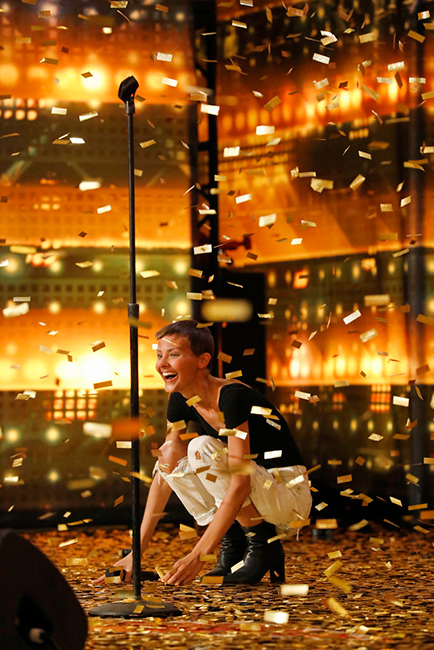
AMERICA’S GOT TALENT — Episode 1602 — Pictured: Nightbirde — (Photo by: Trae Patton/NBC)

Two great women made me cry this week: our very own Yuka Saso who made history as the country’s first major golf tournament winner after she bagged with much finesse and style the 2021 Women’s Open title in San Francisco, California.

And second was Nightbirde, a cancer patient who mesmerized us a few nights ago with her talent – and joyful disposition as a cancer patient competing at “America’s Got Talent”.

What I like with both women is their authenticity – Yuka with her grit at a very young age pursuing her dream, Nightbirde with her radiance appreciating life despite the threats of cancer.

But most of all, both admitted how God has always been behind them, silently working in their lives, fulfilling their dreams!

It is so touching to hear stories of accomplished people like Yuka and Nightbirde who are very talented, so driven yet humbly recognizing God as the very reason for who they are and where they are now.

God at the center stage of life

Yuka and Nightbirde are two modern parables who show us how true are the teachings of Jesus this Sunday as we finally dive into the Ordinary Time with St. Mark as our guide.

After celebrating two major feasts of the Lord these past two consecutive Sundays, we find the mystery of Jesus slowly unfolding among the people who have started following him after hearing him speak and heal many of the sick.

At the same time, St. Mark is slowly introducing us at this part of his gospel the start of the “trial” of Jesus by his enemies who have began to look at him with suspicion and jealousy, accusing him of blasphemy and contempt for the Law.

Caught at the middle of the controversy are the crowds and his disciples – including us today – who have silently followed Jesus. In these coming Sundays, we shall see and hear more stories of the teachings and workings of Jesus, challenging us to take sides, to make a stand like Yuka and Nightbirde that “it is the Lord!” (Jn.21:7) who is at the center stage of our lives, silently working for our own good.

Jesus said to the crowds: “This is how it is with the kingdom of God; it is as if a man were to scatter seed on the land and would sleep and rise night and day and through it all the seed would sprout and grow, he knows not how. Of its own accord the land yields fruit, first the blade, then the ear, then the full in the ear. And when the grain is ripe, he wields the sickle at once, for the harvest has come.”

Mark 4:26-29
“The Sower” by Van Gogh from Wikipedia commons.org.

God is never absent nor distant from us in life.  
He is always at the center stage of our lives 
especially when we are going through tests, 
just like during an exam in the classroom!

In the two parables that he tells us today, Jesus describes the little beginnings of the kingdom of God like the seed. And in the littleness of this seed is found also the silence of God in transforming us in the same manner seeds grow into plants and crops that bear fruit.

Let us focus on the first parable that is so close to the hearts of the plantitos and plantitas among us. See Jesus vividly telling us how in life God takes all the initiatives, all the “doing” in silence. God is never absent nor distant from us in life. He is always at the center stage of our lives especially when we are going through tests, just like during an exam in the classroom.

Remember how during exams when our classroom is most silent, everybody scratching his/her head, wracking our brains while hurdling the exams while our teachers quietly watch us? They do not give us the answers for the exam for it is part of our learning process but it is during that time when they work hardest, watching over us.

The same with God when we go through tests in life. He is always present and even closest with us as exemplified with Christ’s self-offering on the Cross. That is the meaning of the Solemnity of the Sacred Heart we celebrated Friday.

Of course, like that sower or farmer, we still have to do our very best, we have to work hard in cultivating the soil, watering the crops but aside from that, there is nothing else we can do but to patiently wait in silence, trusting in the good quality of seeds we have sown. We do not know how the seed we scattered would sprout and grow but deep inside us, we believe, we know of its good quality that soon enough, it would be harvest time when the grain is ripe.

We may not say it but unconsciously deep in our hearts we know, something good is going to happen for God does everything good. All the more because the seed he had sown in us is his Son, Jesus Christ, the Word who became flesh. How could things not turn out good if we have the bestest seed of all, Jesus Christ?!

We just have to believe and be convinced of his love for us.

Photo by author, Pulilan, Bulacan, 2020.

Hope. And be surprised!

Brothers and sisters: We are always courageous, although we know that while we are at home in the body we are away from the Lord, for we walk by faith, not by sight.

2 Corinthians 5:6

What a beautiful a reminder from the great Apostle, St. Paul who wrote this letter under severe personal tests and trials from the Corinthians who have resorted to some nasty talks against him instigated in part by some missionaries who sowed confusions about the gospel of Christ.

This is the most personal of all the letters by St. Paul as he bared his very soul after being hurt by the Corinthians who could only see the surface and external things of himself without knowing his great sufferings for them.

That is what we must all try as disciples of the Lord: like St. Paul, we have to believe first in Jesus in order to see him and his glory. We walk by faith, not by sight wherein we live in vibrant hope in God that while everything seems to be too dark and difficult to understand, he is doing something within us that would transform us into better persons after these trials.

Photo by Mr. Jim Marpa, 2018.

Like the power inside the seed being harnessed through time – nobody knows except God almighty what is happening inside. It just happens that one day, we are so amazed at how big and tall a tree has become considering it started from the minute piece of seed like what the Lord had promised Ezekiel in the first reading.

Thus says the Lord God: I, too, will take from the crest of the cedar, from its topmost branches tear off a tender shoot, and plant it on high and lofty mountain… And all the trees of the field shall know that I, the Lord, bring low the high tree, lift high the lowly tree, wither up the green tree, and make the withered tree bloom. As I, the Lord, have spoken, so will I do.

Ezekiel 17:22, 24

We are journeying in faith without seeing especially in this time of the pandemic. Our time is that of patience and courage. Most of all, of hope.

Pope Emeritus Benedict XVI said in Spe Salvi #27, “In this sense it is true that anyone who does not know God, even though he may entertain all kinds of hopes, is ultimately without hope, without the great hope that sustains the whole of life (cf. Eph 2:12). Man’s great, true hope which holds firm in spite of all disappointments can only be God—God who has loved us and who continues to love us “to the end,” until all “is accomplished” (cf. Jn 13:1 and 19:30).”

Sometimes, even if we try our very best, things do not turn out as we expected, exactly like what most farmers experience after sowing their seeds. When crops fail, they scatter seeds again the following season because they believe in being surprised by God, not by sheer luck.

They choose to believe, to have faith in God who is our present and our future in Jesus Christ who lives in us, whether in good times or in bad.

Going back to Nightbirde, recall how she entered the stage so cool and relaxed, smiling as she answered questions when she confidently declared being a cancer patient. When asked why all the smiles and joy radiating in her, she simply said, “You can’t wait until life isn’t hard anymore before you decide to be happy.”

Whoa!

And when she sang until Simon hit the golden buzzer… for a brief moment, I felt God passing by or even stopping by my computer screen, saying hello to me, reminding me about my many complaints in life until I saw Nightbirde. Indeed, the French poet Charles Péguy was right: hope is God’s favorite virtue because it always surprises him.

Like what Nightbirde and Yuka did to us last week.

Let God surprise you this week by doing what you like best. Do not worry. God will do the rest.

A blessed Sunday to everyone! Amen.

God our tender, loving Dad

The Lord Is My Chef Breakfast Recipe for the Soul by Fr. Nicanor F. Lalog II
Friday, Solemnity of the Most Sacred Heart of Jesus, 11 June 2021
Hosea 11:1, 3-4, 8c-9  ><)))'>  Ephesians 3:8-12, 14-19  ><)))'>  John 19:31-37
Photo by author, Sacred Heart Spirituality Center, Novaliches, QC, 2018.

So many times in life, we think we have loved so much, that we are a good and loving person when it is all an illusion because in reality, we have actually failed in truly loving the people and institutions we profess to love so much.

It is always easy to say in so many words, even to brag to our very selves and others of how much we love our family and friends, our country, our Church, and our company. But, when a little discomfort happens that result from misunderstanding or miscommunications, or a few mistakes and shortcomings, we flare up in anger expressing it in harsh words and deeds, hurting the people we supposedly love.

Not only that. Long after an unloving incident, we later hold grudges that we cannot forgive and forget, hurting us most in the process when sanity returns and see how we have broken a beautiful relationship.

But, it is not all that bad.

We all have our low moments in not showing how much we truly love like Simon Peter denied knowing the Lord three times on Holy Thursday evening while being tried by members of the Sanhedrin after their last supper. And very much like him too at the shore of Lake Tiberias eight days after Easter, we profess to Jesus and our loved ones that “you know everything; you know I love you” (Jn.21:17).

Our imperfect human love in God’s perfect love

We celebrate today the Solemnity of the Sacred Heart to be reminded of God’s immense love for us despite our failures and fears in expressing that love he continues to pour upon us through his Son Jesus Christ our Lord.

It is the third major feast of the Lord since we have resumed the Ordinary Time after Pentecost to instill in us God’s deep, personal love for us through Jesus Christ with whom we have become brothers and sisters, beloved children of the Father in heaven.

Thus says the Lord: When Israel was a child I loved him, out of Egypt I called my son. Yet it was I who taught Ephraim to walk, who took them in my arms; I drew them with human cords, with bands of love; I fostered them like one who raises an infant to his cheeks; yet, though I stooped to feed my child, they did not know that I was their healer.

Hosea 11:1, 3-4

See how God had always loved us like a loving father to his son or daughter.

Try to feel God speaking through Hosea in the first reading reminding us of his great love for us, doing everything to free us from the bondage and slavery of every form of evil.

But, like our own experiences with our parents as we grow older, the more we distance ourselves away from them and from God who always come to get nearer and intimate with us: “A child I loved you, I called you my son; and the more I called you, the farther you went away from me” (cf. Hos.11:1-2).

What have happened to us as we matured?

We have become so cerebral, thinking more, and feeling less, always trying to assert our independence, our strength, and self-reliance when the sad truth is we are all weak inside who cannot accept and believe the fact that we are truly loved by God and by others!

Imagine this lovely scene of God reminding us of his great love for us just like our Dad: “I took you in my arms with hands of love; I fostered you like one who raises an infant to his cheeks yet though I stooped to feed my child, you did not know I was your healer” (cf. Hos.11:4).

Here lies the problem with all our praying and loving that are detached from God, something like an echo of the elder brother in the parable of the prodigal son!

When our love for God is superficial, our love to our family and friends, to our institutions and other relationships become skin deep too. Our many love experiences are forgotten as we give more emphasis on others’ shortcomings and to our expectations from them.


We find it so hard and difficult 
to truly love God and those dearest to us 
not because we are bad and evil 
but primarily we ourselves are not convinced we are loved.  
Today's readings remind us 
that human love is imperfect, 
only God can love us perfectly. 

We find it difficult to truly love unconditionally because deep inside us is a festering anger or hatred for our parents or siblings or friends who have hurt us a long time ago but we are so afraid to bring out in the open or just simply cast away or transcend so we can move forward to deeper and matured love in Christ.

Of course, there is that love remaining in our hearts but inert because we cannot accept nor be convinced that we are truly loved by God and by others.

We find it so hard and difficult to truly love God and those dearest to us not because we are bad and evil but primarily we ourselves are not convinced we are loved. Today’s readings remind us that human love is imperfect, only God can love us perfectly.

Thus says the Lord: My heart is overwhelmed, my pity is stirred. I will not give vent to my blazing anger, I will not destroy Ephraim again. For I am God and not man, the Holy One present among you. I will not let the flames consume you.

Hosea 11:8-9

Just keep on loving no matter how imperfect we may be for God perfectly knows us so well as humans with so many weaknesses and limitations.

God’s universal and personal love for us in Christ


We can never truly experience 
God's personal love for us in Jesus Christ 
unless we are first convinced of his great love for us 
despite our sinfulness and weaknesses.  
The more we doubt the love of Jesus, 
the more we hurt him, 
the more we hurt others, 
and the more we hurt our selves.

Photo by author, St. Joseph Parish, Baras, Rizal, January 2021.

This personal and fatherly love of God is what St. Paul had always shared and elaborated in his many writings and teachings. See how he humbly introduced himself in our second reading as “the very least of all the holy ones, this grace was given, to preach to the Gentiles the inscrutable riches of Christ” (Eph.3:8).

More sinful compared to Simon Peter, Saul as he was called before his conversion persecuted the first Christians, having a direct hand in the stoning to death of our first martyr St. Stephen (Acts 8:1). Yet, in God’s fatherly love and mercy, Jesus appeared to him on the road to Damascus that led to his conversion. He would later insist in his letters how he had experienced both the universal and personal love of God through Jesus Christ.

St. Paul was so good and effective as an apostle because he was so convinced that while Jesus had died and rose for all, he also died personally for him (St. Paul) as an individual! He was the first to elaborate the universality of God’s love through Jesus Christ’s dying on the Cross and the subjectivity of his death and love for each one of us.

From being a sinner to becoming a believer, from a persecutor to an apostle, St. Paul tells us in the second reading today how he had experienced this love of Christ in himself which we can all personally experience too, praying that we may “be strengthened with the Holy Spirit to comprehend the breadth and length and height and depth, and to know the love of Christ that surpasses knowledge, so that we may be filled all the fullness of God” (Eph.3:16, 18-19).

We can never truly experience God’s personal love for us in Jesus Christ unless we are first convinced of his great love for us despite our sinfulness and weaknesses. The more we doubt the love of Jesus, the more we hurt him, the more we hurt others, and the more we hurt our selves.

Thank goodness God knows us so well that despite our doubts in him, his mercy is always stirred, not allowing his anger to consume or destroy us. On the contrary, the more we hurt God, the more he loves us until we are convinced that we are truly loved by him!

So the soldiers came and broke the legs of the first and then of the other one who was crucified with Jesus. But when they came to Jesus and saw he was already dead, they did not break his legs, but one soldier thrust his lance into his side, and immediately blood and water flowed out.

John 19:32-34

It was from this scene that we find the meaning of the Sacred Heart of Jesus that was pierced after offering himself on the Cross as the sign and symbol of God’s unique love for us all. For the evangelist, that flowing of blood and water from the pierced side of Jesus was a special “sign” pointing to the work and mission of Christ which is our own salvation.

But aside from linking the blood and water that flowed out from the Lord’s pierced side with the two prominent sacraments known by then early Christians, namely, Baptism and Eucharist, St. John as a witness to the event showed us how two natural elements that are so personal to everyone as signs of God’s intimacy with us.

On this Solemnity of the Sacred Heart, God is reminding us of his immense love for us expressed most personally in the self-sacrifice of his Son our Lord Jesus Christ in whom we have all become the Father’s beloved children.

Despite our ingratitude to his Fatherly love for us, God cannot let himself be angry to chastise us as we deserve. Instead, he kept on forgiving us for our sins, sending us his Son Jesus Christ to redeem us.

Today Jesus is inviting us to go back to our Father – our Dad who watched and guided us through life without our knowing – to be convinced of his personal love for each of us. Outside of him, we can never find peace nor joy nor fulfillment. That is why the human heart of Jesus is always here with us as the revelation of the Father’s boundless love for us.

Let us experience anew his tenderness and forgiveness so that we may grow too in our love for God through one another despite our many sins and weaknesses.

Jesus, meek and humble of heart, make our hearts like yours! Amen.