The Lord Is My Chef Sunday Music by Fr. Nick F. Lalog II, 10 October 2021
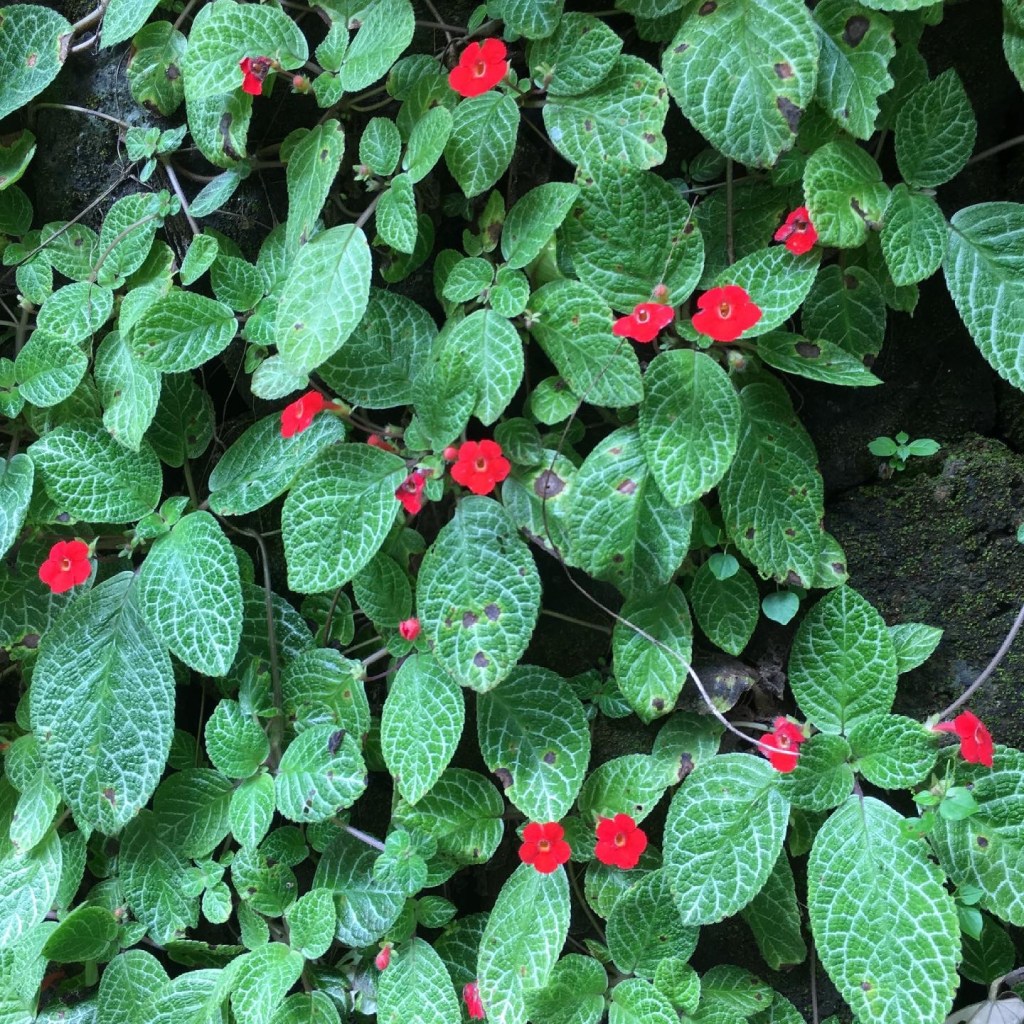
Photo by Dr. Mylene A. Santos, MD, 2020.
I used to tell my students before that a person is known more with the questions he/she asks than with the answers he/she gives. Too often, our answers are wrong or not certain but if we ask the right questions, even if we do not have the answers immediately, we shall get the right answer at the right time as we mature in life.
What matters most is we ask the right question always.
And that is why we have chosen “Question Me An Answer” from the 1973 movie of the 1933 novel The Lost Lost Horizon for our Sunday music this week. Written by Burt Bacharach and sang by the late Bobby Van in the movie, Question Me An Answer may sound very American and colonial but still, the message is never lost, especially if you listen well to Van’s introduction to his students at Shangri-La.
In this Sunday’s gospel, we find Jesus being asked by a man and then by Peter with questions we ourselves also ask sometimes because deep inside us, we are worried that no one can seem to provide us with the right answer.
As Jesus was setting out on a journey, a man ran up, knelt down before him, and asked him, “Good teacher, what must I do to inherit eternal life?”
Mark 10:17
According to Mark, the man’s “face fell and went away for he had many possessions” after Jesus had answered fully his question which in turn bothered Peter who began to express to Jesus his worry over his answer to the man who had left.
Peter began to say to him, “We have given up everything and followed you.”
Mark 10:28
One of the beauties of seeking and following Jesus are the endless questions that come along our journey with him. That is why we need to pray always and ask for the gift of wisdom so we may be guided in this life that becomes more wonderful with the questions we ask, not with the answers we give, or even get (https://lordmychef.com/2021/10/09/our-secret-worries-in-life/).
And the good news is, next to Jesus to accompany us in this journey in life is we also have great music keeping us company.
*We have no intentions of infringing into the copyrights of this music and its uploader except to share its beauty and listening pleasure.
The Lord Is My Chef Sunday Recipe for the Soul by Fr. Nicanor F. Lalog II
Sunday XXVIII-B in Ordinary Time, 10 October 2021
Wisdom 7:7-11 ><]]]]*> Hebrews 4:12-13 ><]]]]*> Mark 10:17-30
Photo by Dr. Mylene A. Santos, MD, 2020.
Recently we have seen Jesus answered very well the questions thrown to him by his enemies with evil intentions of entrapping him. But, in his answers we find Jesus so focused to his mission of revealing the will of God our Father which sin had destroyed.
Last Sunday Jesus showed us that more than the unity of husband and wife, God had always willed our entering into communion in our human relationships after a Pharisee asked him about the issue of divorce. Today, two men with good intentions and disposition came forward to ask Jesus important questions we also ask, something we may consider as “secret worries” that disturb us while following him.
As Jesus was setting out on a journey, a man ran up, knelt down before him, and asked him, “Good teacher, what must I do to inherit eternal life?” Jesus answered him, “Why do you call me good? No one is good but God alone. You know the commandments…” He replied and said to him, “Teacher, all of these I have observed from my youth.” Jesus, looking at him, loved him and said to him, “You are lacking in one thing. Go, sell what you have, and give to the poor and you will have treasure in heaven; then come, follow me.”
Mark 10:17-19, 20-21
Our first secret worry: entering heaven.
How many times have we asked the same question, “what must I do to inherit eternal life”? It is in fact one of the most FAQ’s to us priests, always begging for so many clarifications from every inquirer because it is indeed so important especially during this time of the pandemic.
Photo by author, 2020.
To inquire about eternal life means we are not that far from heaven because to think about it reveals our inner desires to be one with God our Father who is both our origin and destination.
The question in itself is a sign of grace, something we must always ask with the proper disposition coming from deep inside us who know very well that it is not enough to merely follow the commandments, to do what we were taught by our parents and teachers, catechists and religious instructors, and priests.
As we mature in faith or simply go on with life, we realize something is still lacking in all these religious practices we have like prayers and being good with others. There seems to be a “Someone” pulling us closer to do more to gain eternal life.
To be at this stage like that man in the gospel means we are a fertile soil where the word of God has taken root and starting to grow, but surrounded by brambles and other shrubs that need to be cleared with some weeds too that must be removed.
And there lies the painful truth: we have to let go of things like possessions and inclinations that give us false securities and thus prevent us from growing deeper in faith, in being more faithful to God and being more like Jesus Christ in forgetting one’s self.
See how Mark described Jesus looking with love on the man in elaborating the path to heaven, contrasting it with how “his face fell” upon hearing the Lord’s statement.
Today, Jesus reminds us that eternal life is a gift from God, freely given to everyone but we have to make a clear stand and decision to have it. We have to do something and cannot be like Juan Tamad by simply waiting for the fruit to fall from the tree.
While it is very clear in the Lord’s explanation that on our own we cannot do anything about it because “For human beings it is impossible, but not for God. All things are possible for God” (Mk.10:27); however, after Jesus had accomplished our salvation by dying on the cross when he declared “It is finished” (Jn.19:30), he also signaled the start of doing our part in his saving mission.
How?
By going back to his central teaching he had reiterated twice these two Sundays – be like a child to welcome God’s gift and grace of entering into the kingdom of heaven!
We cannot let go of our possessions to join Jesus on his way of the cross to enter heaven unless we become like children welcoming and trusting God. But, this is something we cannot do on our own; we need the grace of wisdom which we have heard at the first reading.
As the author of the Book of Wisdom tells us, nothing is comparable to wisdom which we must all prefer above all in this world, enabling us to discern and judge things wisely. In his reflection, wisdom is beyond human grasp, a grace from God we must pray for like King Solomon who asked a heart that can distinguish what is good and what is bad.
When we have wisdom, that is when we are able to “sell everything” and empty ourselves of our pride and other impurities to welcome the Holy Spirit to guide and enlighten us in our lives. That is when we begin to allow God to work in us to gain our salvation, our eternal life.
Hence, the need for us to pray daily for wisdom, most especially when Jesus tells us of the many persecutions that come in following him!
Photo by author, 2019.
Our second secret worry: what about us following Jesus?
Let’s admit it: of the Twelve Apostles, we can easily identify with Peter the most often because of his big mouth, of his “damned honesty” in blurting out what is inside us especially when these pertain to things about our faith and relationship with Jesus.
Like Peter, there is always that “secret worry” if what we have done is good enough to be rewarded by God like entry into heaven. We do it so often in prayers and in those unguarded moments when we complain to Jesus about difficulties and trials we encounter that we worry about all our efforts going nowhere.
There is that “secret worry” within some of us who strive to become good persons, feeling “entitled” to something better considering we are less sinful and evil than others.
Peter began to say to him, “We have given up everything and followed you.” Jesus said, “Amen, I say to you, there is no one who has given up house or brothers or sisters or mother or father or children or lands for my sake and for the sake of the gospel who will not receive a hundred times more now in the present age; houses and brothers and sisters and mothers and children and lands, with persecutions, and eternal life in the age to come.”
Mark 10:28-30
Here we find the goodness of Jesus who looked with love on the disciples and people without putting Peter to shame with his daring question.
What I like most here is the sense of humor of Jesus after he had assured Peter with all the rewards including eternal life for those who have left everything behind to follow him by adding “persecutions” as perks!
So funny but true! Like with the Pharisee last Sunday, Jesus must have read the mind of Peter in asking that question, assuring him it will not be as easy as a walk in the park to heaven.
There will always be persecutions. There will be a lot of difficulties and trials, pains and sufferings. And it begins when we truly give up our possessions, our false securities in life, our very selves.
When we reflect deeply into our lives and examine everything we have done and given for God, we realize that we have not really given up that much or anything at all. Whatever we give up and share with others, both material and spiritual, are all from God. We do not really give up anything at all because there is nothing here in this life that is purely ours! If we give love and mercy, if we share knowledge and wisdom, time or treasure or talent – they are all from God given to us meant to be shared with others!
Photo by author, 2019.
It is difficult to follow Jesus. The only thing very clear and definitive with us at the moment is the word of God that the Letter to the Hebrews described as “living and effective, sharper than any double-edged sword, penetrating even between soul and spirit, joints and marrow, and able to discern reflections and thoughts of the heart” (Heb.4:12).
The more we immerse ourselves in the word of God, the more we gain wisdom and learn to discern his Divine Will so that in turn we are able to follow Jesus on the Cross that leads to eternal life.
In these two Sundays while Jesus journeyed with his disciples towards Jerusalem for his pasch, Jesus had tried to reorient ourselves into the true demands of following him that is so radical in bringing us back to God himself.
Yes, it is not easy but we are in good company with Jesus our Brother, our Lord and Savior.
The Lord Is My Chef Daily Recipe for the Soul by Fr. Nicanor F. Lalog II
Thursday, Memorial of Our Lady of the Rosary, 07 October 2021
Acts 1:12-14   ><}}}*> + ><}}}*> + ><}}}*>   Luke 1:26-28
Photo from canningliturgicalarts.com.
This feast of the Holy Rosary has its origin in the victory of Christian forces against the Ottoman Turks in the Battle of Lepanto Bay in 1571 that decisively stopped the Moslems from occupying Europe. The first Dominican Pope, St. Pius V attributed that victory to the recitation of the Holy Rosary. Popularity and devotion to the Rosary eventually grew and spread when subsequent other victories in various parts of the world, including the Philippines’ La Naval were attributed to our Lady of the Most Holy Rosary.
In our gospel today, we find the key behind every victory attributed to the praying of the Holy Rosary: it is when we “lose” that we actually “win”! After explaining to her the plan of God, Mary said, “Behold, I am the handmaid of the Lord. May it be done to me according to your word.” Then the angel departed her (Lk.1:38). In a sense, Mary was a loser— she “lost” herself to God and eventually became an instrument for our victory in the salvation through her Son Jesus Christ. The Lord Himself was crucified, another “loser” in a sense but truly a victor because in dying on the cross, Jesus Christ resurrected on the third day and won over death and sin.
Sometimes it can happen we feel at a loss, when we have lost in some battles in life when later on, we find out we have actually won.
Some may have been bullied while in school. Or, sometimes we fail an exam or flunk a semester but eventually we graduated, now have a career, a wonderful family.
In business, sometimes investors and entrepreneurs may go bankrupt before hitting gold.
That’s how it is with life. Win or lose, in the end, it is always a win. Especially when we in God.
When we choose to be like Mary, to submit ourselves to the will and plans of God, we must be ready to endure so many sufferings and hardships in life that sometimes we feel like we are at the losing end. When we try to be patient, when we try to understand, when we forgive, when we bear all the pains because we love, that is when we win as we lose ourselves and begins to be filled with Christ Jesus like Mary in the gospel.
True, a lot often we lose so many battles when we try to stand for what is true and good but in the end, we actually win the war against evil. That is the greatest victory Christ had gifted us, first His Mother Mary: salvation. Hence, we find in Marian prayers and hymns the requests for the Blessed Mother’s prayer for us sinners to be saved from hell and be brought to her Son Jesus Christ in eternity. That’s the final victory we all hope for in praying and living out the Holy Rosary with Mary.
The Lord Is My Chef Sunday Recipe for the Soul by Fr. Nicanor F. Lalog II
Sunday Week XXVII-B in Ordinary Time, 03 October 2021
Genesis 2:18-24 ><]]]]'> Hebrews 2:9-11 ><]]]]'> Mark 10:2-16
Photo by Ms. Isa Avendaño-Umali at UP-Diliman via reddit.com.
Part of my fond memory of traveling to old Baguio will always be that long stretch of road in Tarlac with the colorful caballeros or “fire trees” abloom every summer, their vibrant shades of hot orange and tangerine serving like a canopy to a magical tunnel.
Making the scene lovelier were the branches and treetops arching over the road as if trying to “connect” with the other trees at the opposite side to remind us of nature’s design that we are all created one.
This is the gist of this Sunday’s readings from Genesis as cited by Jesus in the gospel.
The Lord God said: “It is not good for the man to be alone. I will make a suitable partner for him.” So the Lord God cast a deep sleep on the man, and while he was asleep, he took out one of his ribs and closed up its place with a flesh. The Lord God built up into a woman the rib that he had taken from the man.
Genesis 1:25
Sometimes the Bible presents to us God acting so naive as if not knowing something at all like in this creation story when he said “it is not good for man to be alone”. Did he not know in his infinite knowledge and wisdom that man will only be happy with another human being like him “who is flesh of my flesh and bones of my bones”?
Of course, God knows everything but he wants us to realize ourselves – firsthand, that we can never be complete without another person, a fellow human being. There are times we learn our lessons best through our own experiences, the more painful and difficult, the better! Like this pandemic that has made us realize the value of persons, of family and friends over things like money and gadgets or any material possession.
Note that the creation account could have ended very well in man’s “discovery” of the woman but the author continued on with an explanation “That is why a man leaves his father and mother and clings to his wife, and the two of them become one flesh” (Gen. 2:24) to show not only the reality of marriage as a creation by God but also to remind us it is a part of our nature to reach out to the other person to enter into a communion. The “I-Thou” relationship put forth by philosopher Martin Buber has always been part of human nature until sin came and hardened the human heart, misleading us often by impulses of carnal and selfish instincts towards others.
The Pharisees approached Jesus and asked, “Is it lawful for a husband to divorce his wife?” They were testing him. He said to them in reply, “What did Moses command you?” They replied, “Moses permitted him to write a bill of divorce and dismiss her.” But Jesus told them, “Because of the hardness of your hearts he wrote you this commandment. But from the beginning of creation… Therefore what God has joined together, no human being must separate.”
Mark 10:2-6, 9
Wedding of my former student Lery with Micah in January 2020, Malolos City.
God made all things good and beautiful
Jesus and his disciples were still in Capernaum when some Pharisees approached him to test him about their legal debates on the issue of divorce. And though he was fully aware of their evil plans against him, Jesus answered their question so well without going down to their level of discussions based on petty quarrels and differences with each other.
See how Jesus was clearly focused to his mission by asserting to everyone that he had come to reveal the will of the Father, that God created everything good and beautiful with man and woman as the crowning glory of his creation that he had to cite to them the Book of Genesis. There was no need for him to involve into the legal debates of his time about divorce that unfortunately continues to this day.
For Jesus, divorce is clearly a result of man’s sins, of human weakness due to the “hardness of your hearts” which Moses tried to remedy.
And now that he has come as our Christ and Savior, Jesus assures everyone of his grace and help in overcoming our weaknesses and sins especially in upholding the purity of marriage and the Creator’s intention when he declared, “Therefore what God has joined together, no human being must separate” (Mk.10:9).
In bringing back to God as the starting point of the man and woman relationship, Jesus elevated marriage to a higher status than ever, making it a “sacrament” or a sign of his saving presence among us.
In the process, Jesus reminded his disciples and us today
 of the nature of human relationships as reflection of God's beauty and holiness.
Every human relationship is always a gift from God, a grace and a blessing
that must be nurtured with love and care.
More than the unity of husband and wife,
Jesus reminds us in today's gospel of our unity as humanity,
as children of the Father who loves us so much.
Photo by Mr. Jim Marpa, 2019.
But the beauty of Jesus Christ’s lesson on marriage continued as they went “in the house” in Capernaum, when his disciples asked him to explain to them what he had told the Pharisees.
In the process, Jesus reminded his disciples and us of the nature of human relationships as reflection of God’s beauty and holiness. Every human relationship is always a gift from God, a grace and a blessing that must be nurtured with love and care. More than the unity of husband and wife, Jesus reminds us in today’s gospel of our unity as humanity, as children of the Father who loves us so much.
How sad when we destroy, disfigure or alter this image of God in us and in our relationships that harm human life and nature that have led to endless cycles of disorder and imbalance like wars and conflicts in various forms as nations and peoples compete for supremacy.
This is the reason why Jesus reiterates today his central message of becoming like children to enter into the kingdom of God.
And people were bringing children to him that he might touch them, but the disciples rebuked them. When Jesus saw this he became indignant and said to them, “Let the children come to me; do not prevent them, for the kingdom of God belongs to such as these. Amen, I say to you, whoever does not accept the kingdom of God like a child will not enter it.” Then he embraced them and blessed them, placing his hands on them.
Mark 10:13-16
It was a fitting way to cap his lessons that day about marriage and unity of men and women with creation. Becoming “indignant” with the disciples who have “rebuked” their parents in bringing them to Jesus, he stressed anew the nature of the kingdom of God being open to those who are small and weak, those with the attitude like that of children who trust, depend and rely on the powers of those above them most especially God.
Photo by Mr. Red Santiago of his son, 2019.
It is deeply sad when couples separate or divorce, hurting the children most in the process. And indeed, it is the most tragic of all when priests and bishops abuse children when they are tasked by Jesus himself to care for the children as we have heard on many occasions in the gospel.
But, God has never stopped calling men and women to the sacred vocations of married life and priesthood even if he perfectly knows our weaknesses, including hardness of our hearts sometimes, or most of the time.
As the author of the Letter to the Hebrews had reflected, the more we must strive to be one in Jesus Christ who calls us all “brothers” and “sisters” having been consecrated to God as our origin and final end.
Last Sunday, Jesus told us “sky’s the limit in doing good” regardless of our religious affiliations “For whoever is not against us is for us” (Mk.9:40); sin is the only obstacle we must avoid, striving hard to stop its occasions when he metaphorically said it is better to enter heaven with just one hand or foot or eye than lose the body to the fires of hell.
This Sunday, Jesus is inviting us back to the very root of our relationships – God, the Supreme Good of all. Let us pray for the softening of our hearts to be more loving and forgiving, kind and understanding. Like at the beginning when he created everything, God trusts us and believes in us for we are all good like him, that his grand design of communion is very possible in Christ Jesus. Amen. Have a blessed week!
The Lord Is My Chef Sunday Recipe by Fr. Nicanor F. Lalog II
Sunday XXVI-B in Ordinary Time, 26 September 2021
Numbers 11:25-29 ><]]]*> James 5:1-6 ><]]]*> Mark 9:38-43, 45, 47-48
Photo by author, 2019.
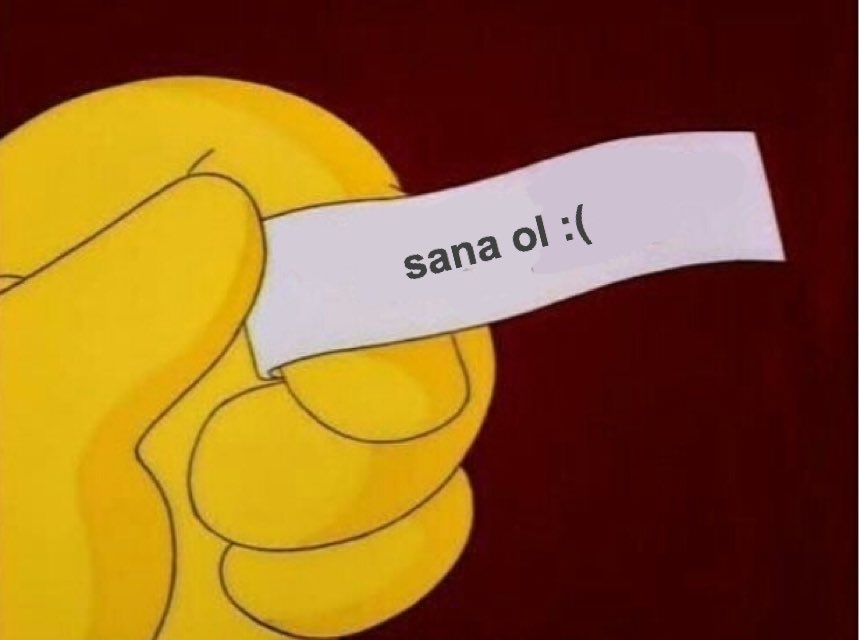
One word I recently learned during my two week quarantine due to colds is the expression “sanaol” – short for “sana all” which is from “sana lahat”. Formed by combining the Filipino expression in making wishes “sana” and the English “all” for everyone, sanaol is said when you hear the blessings received by another person, wishing everyone is also blessed with same good things that range from ordinary things like food and money to girlfriend or boyfriend!
As I prayed over our readings this Sunday, I realized it must have been God who originally expressed “sanaol” on two occasions, first through Moses while in the desert and secondly through Jesus while with the Twelve at Capernaum.
From Twitter.com, 2019.
With God, sky’s the limit in doing good…
It is so amazing this Sunday in our two readings how God sees us all as his children, his chosen people so blessed abundantly yet against this background is the human response of exclusivity and entitlement. Of pride and selfishness.
Consider how in the first reading when Joshua asked Moses to stop two men, named Eldad and Medad, from prophesying simply because they were not with him in the tent in meeting God while at the desert.
But Moses answered him, “Are you jealous for my sake? Would that all the people of the Lord were prophets! Would that the Lord might bestow his spirit on them all!”
Number 11:29
“Sanaol prophets!” could have been the resounding reply by Moses to Joshua who misunderstood God’s freedom in bestowing his blessings to everyone. So many times not only with God but even with our own family, relatives or friends who have been generous with others that we stop and prevent them from sharing their goods, thinking we are doing a great service in jealously guarding their prerogatives.
Again, here we find like last Sunday our failure to find God in our way and journey in life that even his gifts we try to limit to ourselves.
At the least, it is a simplistic and myopic view on God’s and other’s generosities while at its worst, a selfish attitude within us to constrict God and others in giving away whatever good things they have.
Let us not forget the basic truth on the nature of God’s gifts and grace as ways and means for being of service and for the good of the community. Why limit those blessed to share gifts and blessings? Besides, God or whomever is totally free to give away whatever they have without denying or impoverishing anyone by giving away goods to others.
Photo from inquirer.net, May 2021.
This is the teaching of Jesus to the Twelve who reported to him how they have tried to stop someone from exorcising in his name because he did not belong to their group.
Jesus replied, “Do not prevent him. There is no one who performs a mighty deed in my name who can at the same time speak ill of me. For whoever is not against us is for us.”
Mark 9:39-40
“Sanaol good and helpful!” could have been the Lord’s reply to his disciples, reminding them the most obvious truth that with God and everything that is good, there can be no labels and divisions or groupings. We are all one in God our Father who is the source of all good; hence, we must neither monopolize the right to do good nor belittle the good others do even if they are not one of us or do not belong to our fold.
The Lord knows very well his own, we need not worry about such petty things on who’s who or to whom belongs whatever. God knows everything. What matters most is we keep on doing what is truly good so that despite the limitations we have in this life, we continue to strive to create a just and humane society here on earth as envisioned by Vatican II in Lumen Gentium.
Sin: the only limitation
If sky is the limit in doing good with God, Jesus reminds us today that the only limitation and obstacle in our lives is sin. The Lord is very clear with this truth that he had to explain things in details to the the Twelve lest they fall into this big trap.
“Whoever causes one of these little ones who believe in me to sin, it would be better for him if a great millstone were put around his neck and he were thrown into the sea. If your hand causes you to sin, cut it off. It is better for you to enter into life maimed than with two hands to into Gehenna, into the unquenchable fire. And if your foot causes you to sin, cut it off. It is better for you to enter into life crippled than with two feet to be thrown into Gehenna. And if your eye causes you to sin, pluck it out. Better for you to enter into the kingdom of God with one eye that with two eyes to be thrown into Gehenna.”
Mark 9:42-43, 45, 47
“Sanaol understand” that all good gifts can come only from God, that is why we have to respect the freedom and conscience of everyone in the good deeds they do. Whoever keeps the laws of God faithfully are always blessed abundantly. No religious barrier nor label can hold that in check.
When pride and selfishness move into one’s heart, then everything is destroyed and made dirty. Recall how Jesus declared last month that “Nothing that enters one from outside can defile that person; but the things that come out from within are what defile” (Mk.7:15). We have to examine our selves closely so as not to destroy the beauty of goodness and ability to do what is good planted in each of us by God.
Photo by author, 22 September 2021.
Here we are challenged by Jesus to closely examine our being his disciples, of how close have we been in knowing him as our Lord and Master.
Is it Jesus whom we are following or our very selves, our own thoughts and ideas of who is Jesus Christ not as he is?
Notice how in our gospel this Sunday we are presented with contrasts, first, of doing good that is without limits and committing sins that delimit us doing what is good, not affiliations and labels.
But the most wonderful contrasts we can find that gives us a clearer picture of life are found in Jesus: his meekness especially the sinful contrite of their sins and his sternness with the self-righteous who highly regarded themselves like the Pharisees and scribes, assuring they would never enter the kingdom of heaven because of such attitude; his open-mind with those doing good outside his circle of disciples and his strict demands of being good that whatsoever you do to the least you have also done to him.
Here we discover there are no compromises with Jesus, no gray areas that he demands everyone to “say yes if you mean yes and no if you mean no” (Mt.5:37) because the more we get closer to him, the more we realize the coherence of his teachings and of his person as the Christ of God.
It is always the same Lord who speaks, who is truth and life himself. Unlike us humans who suddenly change our stand and views on everything when tempted with money and riches. This is the reason why we have this portion of the letter by St. James: we are dared to examine our attitude with regard to riches and material wealth because it clearly reveals our world view in life. A lot often, attachment to earthly goods show our lack of belief in eternal life toward which this temporal life is directed. Jesus himself we cannot follow him if we are slaves to money and riches for you cannot serve both God and mammon.
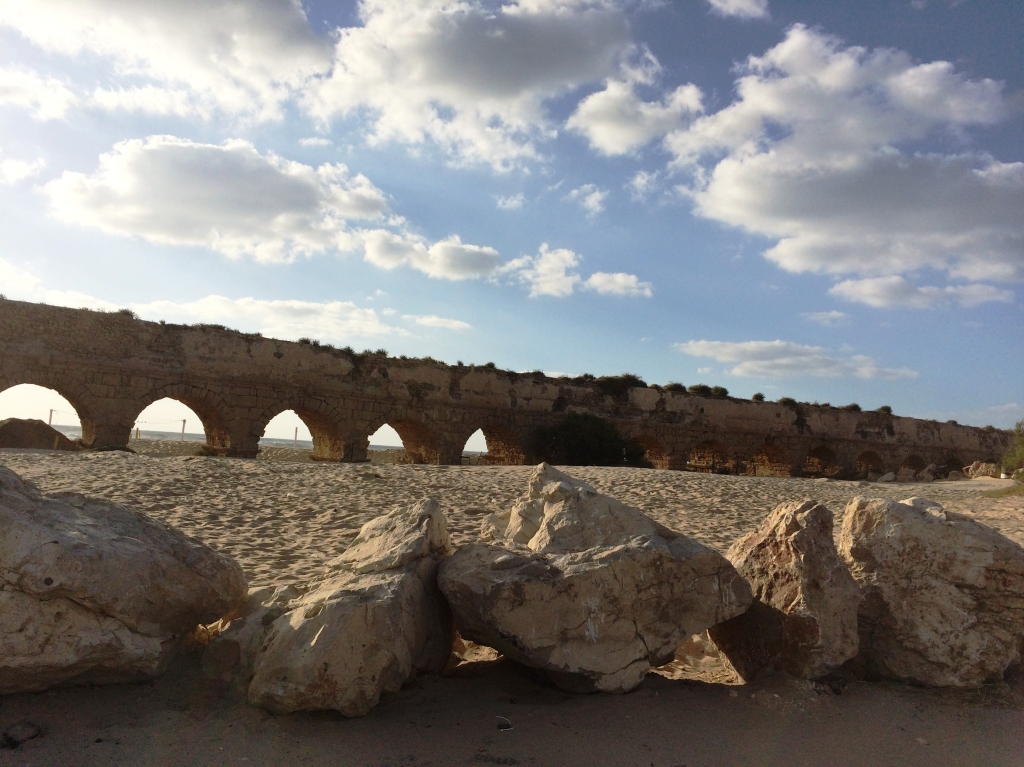
Photo by author, Caesarea in Israel, 2017.
Three Sundays ago at Caesarea Philippi, Jesus asked us like the Twelve, “who do you say that I am? (Mk.8:29)”. It is a very crucial question demanding from us a personal answer so we can truly enter into a deeper relationship with him and be able to forget ourselves, carry our cross and follow him.
The more we get to know Jesus, the more we can see him clearly, the more we will love him dearly, and the more we become like him eventually, willing to leave everything including wealth and riches of the world for the love of God through others. Amen.
The Lord Is My Chef Sunday Recipe for the Soul by Fr. Nicanor F. Lalog II
Sunday XXV-B in Ordinary Time, 19 September 2021
Wisdom 2:12, 17-20 ><]]]]'>James 3:16-4:3 ><]]]]'> Mark 9:30-37
Photo by author, Church of Dominus Flevit overlooking Jerusalem, 2017.
From the pagan capital of Caesarea Philippi where he revealed himself as the Christ or Messiah, Jesus turned back to travel south towards Jerusalem to fulfill his mission. He did not want people to know about his journey as he was intensively teaching the Twelve with important lessons before his approaching pasch.
For the second time, he mentioned to the Twelve of his coming Passion, Death and Resurrection but they did not understand it again; but, instead of asking Jesus for explanations, they argued among themselves who was the greatest, presumably thinking who would get the best post once Jesus becomes “king”.
Jesus and his disciples left from there and began a journey through Galilee, but he did not wish anyone to know about it. He was teaching his disciples and telling them, “The Son of Man is to be handed over to men and they will kill him, and three days after his death he will rise.” But they did not understand the saying, and they were afraid to question him. They came to Capernaum and, once inside the house, he began to ask them, “What were you arguing about on the way?” But they remained silent. They had been discussing among themselves on the way who was the greatest.
Mark 9:30-34
The pandemic as a prolonged sabbath
This whole pandemic period may be considered a prolonged sabbath for everyone when we, along with nature in some instances are asked to take a rest, be silent and still. And return to God. That is the beautiful imagery of Mark telling us last week how from Caesarea Philippi in the north Jesus and the Twelve took a U-turn to go back south towards Jerusalem, hidden and silent.
It is along this way that Jesus is inviting us also to spend these quarantine periods to rediscover him and his teachings. Primary of these lessons from him is the paradox of the Cross, of Christ’s glory in his crucifixion and death that has always been a great stumbling block for many of us throughout the ages.
Photo by Ezra Acayan/Getty Images, Baclaran Church, February 2020.
Any disciple of Jesus can easily identify with the Twelve, of not understanding why Jesus had to suffer and die first in order to rise again on the third day. And like the Twelve, we have learned our lessons so well at Caesarea Philippi not to question it or be clarified lest we too are rebuked by the Lord like Peter!
There are times we cry out or complain to God when we are going through sufferings and trials why we have to get sick, why we have to lose a loved one, why we have to fail, why we have to suffer so much when we have tried our very best to be good and honest, sharing our time, talent, treasures and very selves in loving service to others?
But, let’s accept that it is often a sense of entitlement on our part, of trying to manipulate God when we surreptitiously tell him as if he does not know what we are really thinking and feeling that we are following Jesus to avoid pains and sufferings, or at least to have lighter cross because we believe we are good and better than others, therefore, we deserve better treatment.
And this is also the reason why like the Twelve “along the way”, we argue a lot on who is the greatest because it is better to think of the coming glory than contemplate every Good Friday we go through as Christ’s disciples. Sad to say, there are times we “compete” with one another for having the most pain gone through.
It can happen that whenever we are passing through some difficulties in life that we really do not see Christ at all but our selves alone because we are more focused on the rewards and gains we may have for the efforts, not really sacrifices.
See how Jesus asked them, “What were you arguing about on the way?”; recall how he declared during the Last Supper in John’s gospel, “I am the way and the truth and the life” (Jn.4:16). How come we do not see him along the way?
How could we have missed that while we are on the way (of the cross), our thoughts are focused on the coming glory than on Jesus himself in every undertaking? This is the problem with “health and wealth” kind of preaching and ministry when Jesus is more seen as giver and dispenser of material blessings than Lord and Savior. It is a clear case of what Jesus told Peter last week, “you are thinking not as God does, but as human beings do” (Mk.8:33).
"...in this paradox of the cross lies another paradox,
that of human living wherein the more we try to live uprightly,
striving to be good and loving,
the more we are attacked and confused by the devil...
Holiness always engenders hatred
 among men and women filled with evil
as we have been witnessing in the news lately."
Photo by author, Dominican Hills, Baguio City, January 2019.
And no wonder, in this paradox of the cross lies another paradox, that of human living wherein the more we try to live uprightly, striving to be good and loving, the more we are attacked and confused by the devil through others as we have observed last week.
Holiness always engenders hatred among men and women filled with evil as we have been witnessing lately in the news. This had been foretold long ago by the author of the Book of Wisdom we have heard in the first reading:
The wicked say: Let us beset the just one, because he is obnoxious to us; he sets himself against our doings, reproaches us for transgressions of the law and charges us with violations of our training. Let us condemn him to a shameful death; for according to his own words, God will take care of him.
Wisdom 2:12, 20
Since the fall of Adam and Eve, see how man had always put God on trial like a criminal, being accused with all the miseries and sufferings on earth that reached its lowest point when Jesus was hanging on the cross with his enemies mockingly telling him, “If you are really the Son of God, come down and we will believe… He had saved others, now let him save himself!”.
The core of the paradox of the Cross
At the core of this paradox of the Cross is Jesus Christ’s central teaching of being like a child which he had first expressed clearly in his Incarnation and Birth by the Blessed Virgin Mary – the almighty God being born an infant, so small and so weak just like everyone of us! In coming to us a child and later dying on the cross, Jesus showed us that true greatness is in becoming small to become a part of the larger whole.
Then he sat down, called the Twelve, and said to them, “If anyone wishes to be first, he shall be the last of all and the servant of all.” Taking a child he placed it in their midst, and putting his arms around it, he said to them, “Whoever receives one child such as this in my name, receives me; and whoever receives me, receives not me but the One who sent me.”
Mark 9:35-37
To be a child means to owe one’s existence to another which we never outgrow even in our adult life. It is an attitude of being open to every possibility in life, an attitude of trusting others, of having clean mind and clean heart.
The world of men, of macho men we love to relish with delight in the secular and even religious world in all of its trappings of fads and fashion and “hard talks”, of external showmanships that we try so hard to project cannot hide the hypocrisies within, of keeping grips and control on everyone and everything like the disciples of Jesus.
The tragedy of that scene of the Twelve arguing who among them is the greatest to get the best position when Jesus comes to power continues to happen in our time with some people actually living in darkness are the ones who pretend to be seeing the light that in the process are misleading people towards darkness and destruction! Even in the church when we keep on referring to ourselves as “servants” of the poor when our lifestyles as priests and bishops, nuns and religious are that of the rich and famous!
The key to greatness is to be like a child – be simple, be trusting because children lack jealousy and selfish ambitions which according to James in the second reading are signs of the presence of “disorder and every foul practice” (Jas.3:16).
Photo by Mr. Jim Marpa, 2018.
This Sunday, Jesus is inviting us to examine ourselves truly why are we following him?
What have become of us in serving him – argumentative and divisive or welcoming of others especially the weak and marginalized?
Does my way of life speak of who I am as a disciple of Jesus, like a child, open to God and to others?
The Lord Is My Chef Sunday Music by Fr. Nick F. Lalog II, 12 September 2021
Photo by author, 2019.
It is very “bed weather” this Sunday in Metro Manila with the rains hopefully putting a stop to us all from going out unnecessarily to help lower the cases of COVID-19 that have set a new record in the country yesterday with over 26,000 infections.
Reflecting on the gospel this Sunday, right away we have thought of going instrumental with David Benoit’s 1982 title track for his album with the same title Stages from which came too his more popular songs Take A Look Inside My Heart and Promise Me A Carousel.
Benoit is an American jazz pianist, composer, and producer who has charted over 25 albums since 1980 and nominated for three Grammy Awards. A frequent visitor to Manila for concerts since the 1980’s, Benoit is best remembered as performer and music director of later adaptations of the Peanuts comic strip like The Peanuts Movie (2015).
Born in 1953, Benoit studied piano at age 13 and had himself immersed with great musicians and artists of his home state of California, particularly at Los Angeles where he is now based.
His music sounds sophisticated, very appealing as it incorporates classical beat into modern tunes that soothe the soul, giving you the right chill to meditate and free your mind and soul of negativities and many other things needed to be discarded so that you may be empty and be ready to be filled with fresher and better thoughts and ideas.
This we find perfect for us to answer Jesus Christ’s question to his disciples at Caesarea Philippi, “But who do you say that I am?” (Mk.8:29).
We can never grow deep in our knowledge of Jesus and faith in him unless we are able to say with personal conviction and commitment who he is. It is a lifelong process we go through “stages” (hence, Benoit’s music) that Jesus himself assured would be difficult and painful but fulfilling (https://lordmychef.com/2021/09/11/knowing-jesus-with-conviction/).
Stay home, stay safe, and let David Benoit’s music help you in your reflections.
Have a blessed week ahead!
*We have no intentions of infringing into the copyrights of this music and its uploader except to share its beauty and listening pleasure.
The Lord Is My Chef Sunday Recipe for the Soul by Fr. Nicanor F. Lalog II
Sunday XXIV-B in Ordinary Time, 12 September 2021
Isaiah 50:5-9 ><]]]]'> James 2:14-18 ><]]]]'> Mark 8:27-35
Photo by author, Parish of St. Joseph, Baras, Rizal (January 2021).
Last Wednesday as we celebrated the Birth of the Blessed Virgin Mary, a friend told me how on the eve of that feast her eldest son Andrei expressed to her his wish to gift Mama Mary with a cake but did not know how to get to heaven. “Bibili ko sana siya ng cake, mommy, pero paano ako mapupunta sa langit?”
My friend simply told her son how difficult it is to get into heaven because he has to get so many ladders to get there and see Mama Mary and Jesus.
What a beautiful question from a child filled with innocence, “how do we get into heaven?”
Ironically, it is a question we all know the answer but do not care nor take seriously for many reasons, primarily because of fear until this pandemic hit us, forcing us into facing again this reality of death – of going into heaven.
In today’s gospel, Jesus teaches us how we can get into heaven by knowing him truly with conviction, not just according to our own or somebody else’s thinking and ideas of him as the Christ.
Jesus and his disciples set out for the villages of Caesarea Philippi. Along the way he asked his disciples, “Who do people say that I am?” They said in reply, “John the Baptist, others Elijah, still others one of the prophets.” And he asked them, “But who do you say that I am?” Peter said to him in reply, “You are the Christ.” Then he warned them not to tell anyone about him. He began to teach them that the Son of Man must suffer greatly and be rejected by the elders, the chief priests, and the scribes, and be killed, and rise after three days.
Mark 8:27-31
Other’s opinion vs. my conviction
When we look at the gospel of Mark as a whole, we find it is a step-by-step revelation of who is Jesus Christ, following certain stages in his stories. Notice since the beginning Mark has been telling us how the people including the Twelve were asking among themselves who was Jesus for he spoke with authority that even the sea and the wind obeyed him while demons cried when exorcised by him. People were so amazed at his great powers, both in words and in deeds that everybody was getting near him to know him.
Photo by author, St. Catherine Monastery at Sinai, Egypt (May 2019)
It is at Caesarea Philippi where Mark’s gospel reaches the middle section, a turning point when Jesus reveals himself in stages.
From here on, Mark will take a faster pace in his narration and revelation of who is Jesus now making a U-turn from Caesarea Philippi to head towards Jerusalem to face his death. We too are expected to make a U-turn in our knowledge of Jesus, from mere opinions of others to a personal conviction of who Jesus is.
Observe the step-by-step manner by Jesus in revealing himself to his disciples at Caesarea Philippi.
First, Jesus surveyed the Twelve, asking them “Who do people say that I am?”.
Feel the uncertainty among them while telling Jesus what they have heard the people saying: John the Baptist? Elijah? One of the prophets?
We find a tinge of being unsure even in themselves in what to tell the Lord because they have also heard the questions and accusations by the scribes and Pharisees against their young teacher. “Kabado sila” as we say in Filipino.
But to their surprise, Jesus came up with a second question directly to each one of them at point blank, requiring a deep, personal conviction and commitment: “But who do you say that I am?”.
Like at Capernaum after the bread of life discourse when everybody left Jesus led by his disciples, here he is asking the Twelve -including us – again for a faith decision, to say what we really feel and think about him, without repeating what we have heard from others or read from any book.
Peter said to him in reply, “You are the Christ.” See in this statement by Peter the clear difference from the people’s opinions of Jesus. Feel the conviction of Peter in declaring “you are the Christ.” There must have been something he had experienced deep within that he felt Jesus so real, so new, so alive – not just any prophet from old who had come back but in fact the very one referred to by the prophets before!
Jesus is clearly distinct and different from what we have heard and read, so personal and so true. As we would usually tell others of how convinced we are of someone or something, “ah, basta!” which is akin to Archimedes’ “eureka” experience.
Like at Caesarea Philippi, our lives get on a turning point significantly once we have had that kind of experience of who Jesus Christ is. We can never grow deep in our faith in him and experience him personally without that Caesarea Philippi experience.
However, it is not everything. Even Peter would falter immediately after this turning point.
He spoke this openly. Then Peter took him aside and began to rebuke him. At this he turned around and, looking at his disciples, rebuked Peter and said, “Get behind me, Satan. You are thinking not as God does, but as human beings do.”
Mark 8:32-33
Photo by Mr. Jay Javier, Quiapo, January 2020.
Christ’s pedagogy of the Cross
It is not enough that we set aside sometimes what others say or write about Jesus; we also have to discard and forget whatever we have entertained in our minds and hearts on who Jesus could be. In telling Peter to “Get behind me, Satan. You are thinking not as God does, but as human beings do”, Jesus is telling us too that it is still a long way to go for us to truly know him.
Remember that in Jewish thought, to know someone is to have a relationship, an intimacy with the other person. Although the disciples have already taken a great step in knowing Jesus as the Christ following Peter’s confession that is so distinct from what others say, such knowledge leads us to the hardest and most difficult stage of knowing Jesus through his Cross.
It is can also be the most painful stage in truly knowing Jesus that is why he warned them not to tell anyone about him like what Peter realized that he reacted that way. Of course, we also know how Peter got to know Jesus more in the most painful way when he denied knowing the Lord thrice on the night he was arrested leading to Good Friday.
Remember, the more we get to know Jesus, the more we experience him so real in our lives, the more we follow him, the more the devil confuses us, the more the devil feeds us with so many thoughts or sends us with people like those in this Administration and politicians now campaigning with grand designs, with great intentions for Jesus and for the poor when in fact detract us from the path of the Cross.
Notice how Jesus insisted in his first prediction of his Passion, Death and Resurrection at Caesarea Philippi that “the Son of Man must suffer greatly and be rejected by the elders, the chief priests, and the scribes, and be killed, and rise after three days.” There is always that qualifier “must”in suffering and pain with Jesus for there is no shortcut nor easy way to get to heaven, to be holy, to be fulfilled in this life which is so unlike the promises of the devil acting in our selfish thoughts or among our politicians and government officials.
Jesus himself had shown us in his Passion, Death, and Resurrection the key to truly knowing him is to have a complete trust in the Father like him as the Servant referred to in the first reading from Isaiah who bore all insults and beatings but never felt disgraced because “the Lord God is my help.”
For so long in our country, many have been duped by politicians who have promised the people of a wonderful life minus sufferings by just electing them into office. All these miseries and misfortunes we are into show us clearly that hardly do we really know who is Jesus Christ as we keep on putting into office people we hardly know as demons in many disguises.
During this pandemic when we have so much time to reflect and pray, let us empty our hearts and minds, exorcise them of many evil thoughts to be penetrated by the divine thoughts found in the scriptures so we may know Jesus clearly, love him dearly, and follow him closely with our lives of faith expressed in works of charity as James exhorts us in the second reading.
It is the clearest sign that we truly know Jesus when our faith in him bears much fruits in works of charity and mercy. Amen.
Have a blessed week ahead!
Photo by author, close-up shot of the Seventh Station of the Cross at St. Ildephonsus Parish, Tanay, Rizal (January 2021). Notice one of the men wearing shades believed to be Caiaphas, the chief priest during the time of Jesus; we have to remove our shades to truly know Jesus especially when there are trials and sufferings in life. See our article, https://lordmychef.com/2021/02/04/road-trip-in-time-of-covid-19-the-company-we-keep-in-lifes-journey/
The Lord Is My Chef Breakfast Recipe for the Soul by Fr. Nicanor F. Lalog II
Wednesday, Feast of the Birth of the Blessed Virgin Mary, 08 September 2021
Micah 5:1-4     ><]]]]*> + ><]]]]*> + ><]]]]*>     Matthew 1:18-23
“The Birth of the Blessed Virgin Mary”, a 1305 painting by Renaissance artist Giotto in the Scrovegni Chapel in Padua, Italy. The two babies are Mary: below is Mary upon birth wrapped in swaddling cloth and washed by attendants and then above being handed to St. Anne her mother. Photo from en.wikipedia.org.
We rarely celebrate birthdays in our liturgy, except for the birth of our Lord Jesus Christ on December 25 and of his precursor John the Baptist on June 24. Feasts of the saints are often based on the date of their death or when their remains were transferred for proper burial.
Today is different: it is the birth of the Mother of God, the Blessed Virgin Mary. And so we celebrate!
Nine months after her Immaculate Conception celebrated as a Solemnity on December 8, we now have the Feast of her Nativity which is lower in status or ranking of celebrations. Nonetheless, aside from Jesus and John the Baptist, her birth is still celebrated as it is the completion of her Immaculate Conception by St. Anne.
But in this time of the pandemic when everyone’s birthday celebration is kept at the simplest level unless you are a police general or a corrupt government official or a callous lawmaker, it is good to reflect anew on the significance of a birthday. Thanks a lot to Facebook in making every birthday so special, alerting everyone of someone’s birth every day.
Photo by author, December 2018.
"Every birthday is a small Christmas
because with the birth of every person
comes Jesus Christ."
In his 1995 Encyclical Evangelium Vitae (The Gospel of Life), the great St. John Paul II beautifully expressed that “Every birthday is a small Christmas because with the birth of every person comes Jesus Christ.”
What makes that so true with every birthday beginning with the Blessed Virgin Mary is God’s great mystery of becoming small, of being a little one. In the birth of his Son Jesus Christ, God revealed to us that true greatness is in becoming small, in being silent. Even insignificant.
This we find right in the place of birth of the Christ prophesied in the Old Testament.
“You, Bethlehem-Ephrathah too small to be among the clans of Judah, from you shall come forth for me one who is to be ruler in Israel; whose origin is from of old, from ancient times.”
Micah 5:1
And if we go further, we find this true greatness of God in being small found also in the Mother of Jesus, the Blessed Virgin Mary who came from the obscure town of Nazareth, the only place in the New Testament never mentioned in the Old Testament. Recall how the Apostle Bartholomew (Nathanael) belittled the Lord’s hometown after being told by Philip that they have found the Messiah from Nazareth, saying, “Can anything good come from Nazareth?” (Jn.1:46).
Nazareth was totally unknown.
And so was Mary!
That is why it is so disappointing and sad when many Catholics unfortunately led by some priests have the misimpression of portraying Mary as a “beauty queen” with flawless skin and Western features when she is clearly Middle Eastern woman. Worst of all is the pomp and pageantries we have in the recent fads of processions and coronations.
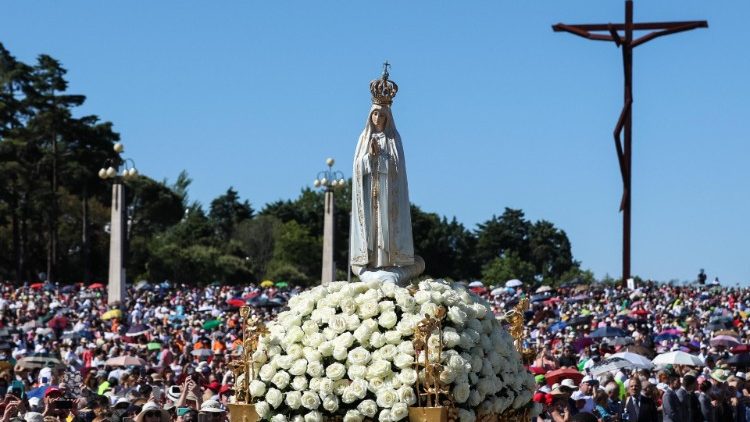
Photo by author, La Niña Maria at the National Shrine of Our Lady of Fatima, Valenzuela City, 07 September 2021.
How sad we have missed how the Blessed Virgin Mary as the model disciple of Jesus was the first to embody his teaching of being small like little children with her simplicity and humility so very well expressed in her 20th century apparitions in Fatima, Portugal and Banneux, Belgium.
Thanks in part to the COVID-19 pandemic that has given us so much time and opportunities to “reboot” or “reset” our priorities in every aspect of our lives, including in our religious devotions and faith itself.
With a total stop to those Marian “extravaganzas” that have been going out of control in recent years, the pandemic is now teaching us in this Feast of the Nativity of Mary of the need for us to rediscover the values of being small and simple, silent and hidden.
Enough with our imeldific celebrations even in our religious gatherings that have sometimes become egregious display of wealth and power.
Being simple and small like Mary, both as a child and as an adult, enable us to see again the value of life and of every person.
The more simple and true
we are like Mary and Joseph,
the more Jesus is seen
and experienced in us!
Aside from the lack of any account on the birth of Mary, we heard proclaimed today the birth of Jesus to teach us that truth expressed by St. John Paul II that in every person comes Jesus Christ. The more simple and true we are like Mary and Joseph, the more Jesus is seen and experienced in us!
That is why when we greet somebody a “happy birthday”, what we really mean telling him/her is “I love you, I thank you for making me who I am today.” Through one’s simplicity and littleness in Christ, we are transformed into better persons because we are able to have glimpse of God’s love and kindness.
Photo by author, December 2020.
The true joy of celebrating a birthday is not found in the externalities of gifts and parties and guests with all the fun that come along. In this time of the pandemic as we learn to celebrate simpler birthdays, we are reminded of life’s beginning and direction that is eternal life.
And how do we get there? Through death or dying – the one reality in life Jesus has taught us in his Cross which we have avoided that has suddenly become so common these days of the pandemic.
Like in the birth of Jesus Christ, we are reminded by every birthday that life is precious because it is so fragile – any infant and every person can be easily hurt and harmed, be sick and eventually die.
Like Mary and Joseph, the little Child born in Bethlehem asks us, even begs us to take care of him found in everyone among us. Let us be more loving and kind, understanding and caring, even merciful and forgiving with one another not only in this time of the pandemic.
Such is the wisdom of God in making life small and fragile so that we may care and value it because there lies also its greatness. The best birthday greeting we can express to the Blessed Mother Mary today is to start being small and simple like her to share Jesus with everyone. Amen.
Homily by Fr. Nicanor F. Lalog II
Mass of the Holy Spirit for the College Department
Our Lady of Fatima University, Valenzuela City
06 September 2021
Photo by Dr. Mylene A. Santos, MD, April 2021.
"Those who seek truth seek God,
whether they realize it or not."
- St. Teresa Benedicta of the Cross
Last August 9 we celebrated the memorial of a modern saint who died at the gas chambers of Auschwitz during the Second World War. She was a German Jew named Edith Stein who became an atheist but later regained her faith as she pursued higher learning in the field of philosophy that was so rare for women at that time.
As she progressed into her philosophical studies working as an assistant to Prof. Edmund Husserl known as the “father of phenomenology”, she converted into Catholicism, eventually leaving her teaching post at a university to become a Carmelite contemplative nun, adopting the name Teresa Benedicta dela Cruz.
Congratulations, our dear students in college who dare to learn and seek the truth by enrolling in this Academic Year 2021-2022.
Students and teachers are both seekers of truth. As St. Teresa Benedicta had experienced, every search for truth leads us to God, the ultimate Truth.
This is a very difficult and trying year for us all but like St. Teresa Benedicta and all the other saints as well as great men and women of history, they all sought for the truth in the most troubled time in history. Trials and hardships in life make learning more “fun” – and an imperative at the same time. In fact, the more we must study and search the truth during critical moments in history and in our lives in order to learn more lessons that are valuable not only to us in dealing with our problems but also with the succeeding generations.
Two important virtues we need to cultivate in seeking the truth, in learning our lessons in this time of the pandemic that I hope you, teachers and students will rediscover this Academic Year: patience and humility.
This pandemic may be considered as another Pentecost,
teaching us the value of patience,
of patient waiting for everything,
reminding us that the beauty of life is best experienced
by allowing nature to take its course,
without shortcuts nor rush, to enjoy its beauty as it unfolds before us.
Photo by author, 2019.
Patience is from the Latin “patior” that means “to suffer, to bear with.”
Learning is a process. We cannot know everything right away. It requires a lot of patience on every student and teacher.
This is the reason why Jesus assured his disciples at the Last Supper that he would send them the Holy Spirit he referred to as the Advocate.
“When the Advocate comes whom I will send you from the Father, the Spirit of truth that proceeds from the Father, he will testify to me. And you also testify, because you have been with me from the beginning… I have much more to tell you, but you cannot bear it now. But when he comes, the Spirit of truth, he will guide you to all truth.
John 15:26-27, 16:12
In the last 20 years, so much have changed in our lives brought about by modern means of communication.
Great volumes of information have become so readily accessible at great speed, that many in the younger generation have seemed to have lost the virtue of patience. At the snap of your fingers, you can easily have almost everything you need aside from information and music – including food and groceries, clothes and appliances, plants and pets, even medicines and dates!
But life, most especially learning, takes time, requiring a lot of patience in waiting and searching.
Like the Apostles of Jesus who had to wait for the descent of the Holy Spirit at the Upper Room in Jerusalem.
This pandemic may be considered as another Pentecost, teaching us the value of patience, of patient waiting for everything, reminding us that the beauty of life is best experienced by allowing nature to take its course, without shortcuts, to enjoy its beauty as it unfolds before us.
Let our Lord Jesus Christ be our example in following in the path of patience, of suffering; every trial becomes a blessing, a moment of transformation when seen in the light of Jesus Christ who suffered and died for us on the Cross. His very life tells us that there can be no Easter Sunday without a Good Friday.
This pandemic period is an extended Good Friday but in between those moments of sufferings, we experience little Easter if we try to be patient like what some of you have experienced when you graduated in this time of the pandemic.
Photo by author, January 2020.
The second virtue I wish to invite you to rediscover, teachers and students alike, is humility which is again from the Latin word humus that literally means “soil”.
From humus came the words human and humor.
Man was created from clay, a kind of soil. A person with a sense of humor is one who can laugh at things because he or she is rooted on the ground. We call a person with sense of humor in Filipino as “mababaw” or shallow – not empty but close to the ground or deeply rooted.
It is very difficult to learn anything nor discover the truth unless we first become humble. Pride and ego are the greatest stumbling blocks to any kind of learning. You will find in history, even in our personal lives how many opportunities in the past were lost simply because of our pride or “ego trip”.
Pride was the very sin of Adam and Eve that led to their fall. That is why when Jesus came to save us from effects of that Fall, humility became his central teaching when he demanded us to forget ourselves and, most of all, to become like that of a child so we shall enter the kingdom of heaven.
This humility Jesus himself showed us the path by being born like us – small and helpless.
And that has always been the way of God ever since: the small and little ones, those taken for granted, the unknown and rejected are always the ones used as God’s instruments, the ones always effecting the most far-reaching changes in history and our personal lives.
Even in the story of the Pentecost, the coming of the Holy Spirit, we find the centrality of becoming small to become a part of the whole.
It is the exact opposite of the story at Babel when people in the Old Testament dared to build a tower reaching to the skies; because of their pride, God confused them by making them speak different languages that led to the collapse of their tower and ambitions. During the Pentecost, the people were all united as one despite the different languages they speak because everybody was willing to listen, to become small in themselves to give way to others.
Like during the Pentecost, let us allow the “tongues of fire” and the “strong, driving wind” of the Holy Spirit part us of our fears and indifference, pride and ego during this Academic year 2021-2022 to fully realize and learn the important lessons and truth this pandemic is teaching us.
Photo from vaticannews,va, 13 May 2017.
Whenever, and wherever there is a search for truth that leads to the discovery of God through our patience and humility, there springs simultaneously the growth of a community. It is no wonder that wherever there is prayer and worship, there is always learning leading to bonding, or communing.
The first universities – from the Latin term universitas or “community of teachers and scholars” – where all offshoots of the efforts of the monks in their monastery as they evangelized peoples, teaching them not only prayers but also the basics of learning like reading and writing. Eventually monasteries had annex buildings as schools and universities that led to the establishment of towns and cities in Europe that spawned the growth of commerce and trade following the great many interactions among peoples.
Here we find the beautiful interplay of the search for truth that leads to discovery of God that bears fruit into mercy and love among people.
Another learned Saint who sought the Truth, Thomas Aquinas said that the more we learn the truth, the more we become intelligent, the more we must become holy.
How lovely it is, my dear students and teachers of Our Lady of Fatima University that wherever there is Truth which is Veritas, there is also Misericordia, the two mottos of our beloved University.
Amid the threats of COVID-19, amid the difficulties of online learning, let us continue to seek the truth, be patient and humble with one another as we try to build a community of “achievers” by “improving man as man”, “rising to the top” not to be conceited and proud but to be able to offer ourselves in the service of the country and of the world, for the praise and glory of God.
May our Patroness, the Our Lady of Fatima, lead us closer to Jesus Christ who is “the Way, the Truth and the Life.” Amen.