Lawiswis ng Salita ni P. Nicanor F. Lalog II, Ika-20 ng Agosto 2020
Larawan kuha ng may-akda, Sacred Heart Novitiate, Novaliches, 2018.
Minsa'y lumapit kay Hesus
kabataan na ibig malaman
tunay na kabutihan
upang maranasan
kaganapang inaasam;
kulang aniya sa kanya
pagtalima sa mga utos
at tuntunin ng Diyos
kaya sinundan niya
ng isa pang tanong ang Panginoon:
"Ano pa po ang kulang
upang aking makamtan
buhay na walang hanggan?"
ngunit nang mapakinggan
anyayang talikuran mga ari-arian,
dagli siyang lumisan na luhaan
si Hesus ay iniwanan,
kayamanan hindi niya kayang talikuran..
Marahil iyo ring naranasan
maging katulad niyong kabataan
na maguluhan at mag-asam
sa kabila ng marami nang nakamtam
bakit parang kulang pa rin
itong buhay natin
walang kahulugan at kaganapan
hindi na tayo masiyahan
sa dating kinagawian;
anong laking kabalintunaan
sa tuwing nagtatanong
sa gitna ng katahimikan
itong ating kalooban
"Ano pa nga ba ang sa akin ay kulang?"
samantalang ating katayuan
 sapat lamang sa pangangailangan
hindi nagkukulang maging sa
mga kaibigan at gawang kabutihan.
Pagmasdan bugtong at palaisipan
nitong ating buhay at kapalaran
kailanman hindi kayang tapatan
ng ano mang kayamanan o katanyagan
maging ng sino pa mang nilalang
sapagkat itong ating kalooban
sadyang nilikha upang panahanan
ng Panginoong Diyos na ating pinagmulan
at siyang ring hahantungan;
 tuwing sumasagi itong katanungan
"Ano pa nga ba ang sa akin ay kulang?"
iyan ay tiyak na palatandaan
na tayo ay nasosobrahan
kailangan nang mabawasan
at mawalan
upang mapunan
tangi ng Diyos lamang
na Siya nating kapanatagan at kapayapaan.
Larawan kuha ng may-akda, Lawa ng Galilea (Tiberias) sa Israel, Mayo 2017.
The Lord Is My Chef Breakfast Recipe for the Soul by Fr. Nicanor F. Lalog II
Friday, Week XVI, Year II in Ordinary Time, 24 July 2020
Jeremiah 3:14-17 <*(((><< ) + ( >><)))*> Matthew 13:18-23
Photo by author, Sonnen Berg Mountain View, Davao City, August 2018.
It is a Friday and we thank you, O God our loving Father, for your boundless grace and mercy of another week to close and a new one to start. Amid the many struggles we have to go through this week with the staggering number of people infected with COVID-19, you continue to bless us.
Help us return to you, your “rebellious children” (Jer.3:14), so we may be renewed in you and with you.
Keep our sights looking forward to our future with your promises of growth and fulfillment.
Let us forget and learn our lessons from our past mistakes and sins so we may walk uprightly, guided by “shepherds you have appointed after your own heart who will shepherd us wisely and prudently” (Jer.3:15), never again to grow “hardhearted in wickedness” against you and others.
Thank you for sending us your Son Jesus Christ, the Sower who never gets tired sowing seeds into our hearts of all your grace necessary for us to be fruitful in life. May we become good soil who will accept and take care of your seeds. Amen.
Photo by author, ricefields in Pulilan, Bulacan, January 2020.
The Lord Is My Chef Sunday Recipe for the Soul by Fr. Nicanor F. Lalog II
Week XVI, Cycle A in Ordinary Time, 19 July 2020
Wisdom 12:13, 16-19 >><}}}*> Romans 8:26-27 >><}}}*> Matthew 13:24-43
Our Lord Jesus Christ invites us today to join him into a different kind of journey that would take us deep into God’s mystery in our very selves through the parables he has started to tell us last Sunday.
Recall, dear readers, that parables constitute the heart of the Lord’s preaching.
We have defined these as simple stories with deep realities that must be cracked open through prayers and reflections to get its meaning. From the French para bolein that literally means “along the path”, a parable is likewise a bridge that leads us into something unknown to us before.
In itself, a parable is a journey calling us to walk through it into our inner selves to discover the many inner beauties that lie within us but we take for granted. Ultimately, as we discover these giftedness within us, we then uncover God dwelling within us.
This is the reason why Jesus would always tell his audience after narrating his parables that “Whoever has ears ought to hear” (Mt.13:43) to insist on them to go deeper inside themselves for their meaning.
And that is when we are transformed, when our lives are changed into true disciples of Jesus Christ.
Greatness in littleness
First thing we notice in the three parables of Jesus today is his insistence on the coming of the kingdom of heaven or kingdom of God through him as the mysterious seed.
This kingdom of heaven is used interchangeably with “kingdom of God” that Jesus would always speak of in his entire ministry until his crucifixion is not according to our understanding of a kingdom: it is not about a territorial domain or the exercise of power over subjects using force.
St. John Paul the Second expressed it beautifully by declaring the person of Jesus Christ himself is the kingdom of God. No wonder, Christ would always liken himself and the kingdom of God with the seed being sown.
It is always good. It is for everyone as the sower scatters the seeds everywhere. And it is always small like Jesus who was born like any infant so fragile and even poor like most of us. He is like the seed we take for granted from which comes forth all kinds of plants like trees, big and small.
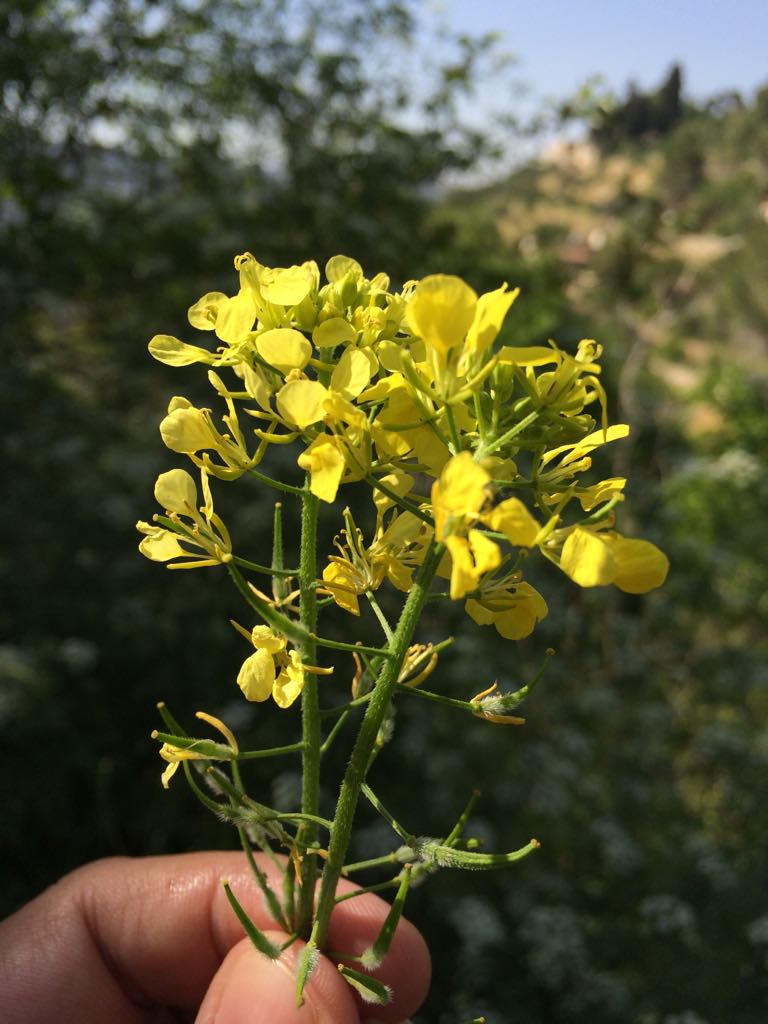
Flowers of a mustard plant from which seeds are taken. Photo by author, Israel, 2017.
Or most specially, like those seeds that turn into crops of wheat and shrubs like the mustard with leaves and branches where birds may dwell that describe the first two parables today.
Jesus then added a third parable of the yeast mixed into flour that leavened the dough into a bread.
Like him our Lord, we his disciples are also like the small seeds packed with great possibilities in God.
In all these three parables today, there is that element of smallness, of littleness that remind us how everything that is great always starts small.
When we come to think of this, we realize how we embarked on this great mission of making Jesus Christ known: it started like a small spark within us, perhaps from a single word we have heard or read, a simple inspiration by God through the most ordinary persons and situation.
Not only in things regarding our spiritual lives but even our personal lives when we recall those humble beginnings of our family and of our business.
Like a little seed or yeast, they just grew!
Now we are surprised, even amazed, how we have changed, how we have grown. Of how we are now reaping the fruits of our labors and sacrifices.
Most of all, how we have known and experienced Jesus Christ who fulfills our lives.
Weeds among the wheat
But not all days are bright and sunny. There are dark clouds that hover above us bringing storms and heavy rains that lead into floodings. A lot often in life, the darkest nights turn out to be the longest nights too.
And this is the meaning of Christ’s main parable for today.
Jesus proposed another parable to the crowds, saying: “The kingdom of heaven may be likened to a man who sowed good seeds in his field. While everyone was asleep his enemy came and sowed weeds all through the wheat, and then went off. When the crop grew and bore fruit, the weeds appeared as well. The slave of the householder came to him and said, ‘Master, did you not sow good seed in your field? Where have the weeds come from?’ He answered, ‘An enemy has done this.’ His slaves said to him, ‘Do you want us to go and pull them up?’ He replied, ‘No, if you pull up the weeds you might uproot the wheat along with them. Let them grow together until harvest; then at harvest time I will say to the harvesters, ‘First collect the weeds and tie them in bundles for burning; but gather the wheat into my barn.'”
During my prayer periods this past week, I have been filled with anger and disappointments at how things are going on in our country and even in my personal life. It pains me so much why at this time of the pandemic when we have to go through all these bad things.
Last Friday morning before our daily Mass, we discovered the glasses shattered in our windows near the office door and at the side door of the church. There were scratches outside indicating attempts to unlock the doors inside and steal from the church.
After the Mass, I grew more angry as we inspected the damages, thinking so negatively harsh against whoever tried to burglarize us.
By night time during prayers, I remembered Victor Hugo’s Les Miserables where Valjean was caught by the police stealing silver from the good bishop who had welcomed him into his rectory with food and accommodations. Instead of pinning him down for his crime, the bishop told the police he had given Valjean the silver found in his bag, even chastising him he had left behind the other silver candlesticks he had asked to take!
The wheatfield owner in our parable and the good bishop of Les Miserables are both the merciful God mentioned by the author of the Book of Wisdom in our first reading today:
But though you are master of might, you judge with clemency, and with much lenience you govern us; for power, whenever you will, attends you. And you taught your people, by these deeds, that those who are just must be kind; and you gave your children good ground for hope that you would permit repentance for their sins.
Wisdom 12:18-19
Think of our parents and elders, our mentors or those we look up to for their wisdom gifted with wonderful insights in life called perspicacity which means “a penetrating discernment… a clarity of vision or intellect which provides a deep understanding and insight.”
Being perspicacious or having perspicacity like the wheatfield owner or the good bishop of Les Miserable means having a deeper wisdom that one can keenly see and understand things beyond ordinary perception following a long process of silent reflections in life.
Many times, our sights can be limited that we do not see the other repercussions and even ramifications of our decisions on certain situations. There are times we think only of finding solutions, of winning the battle but not the war.
It is also along this line that Jesus added the third parable: the yeast is mixed with the flour to leaven the dough.
We are like the yeast who have to mix with others, including the evil ones to become bread that will feed the world.
We are the wheat, the mustard seed, the yeast thrown into the world to make a difference in Christ! We are not the ones who will change the world but Jesus Christ, the mysterious seed, the yeast in the dough who grows and effects the changes in us and among us.
Parables as inner journey in Christ Jesus
With Jesus living and nurturing within us, that is when we become fruitful like the wheat and mustard plant or leavened bread that we are able to feed more people who would eventually become bearers his in the future. That is how the kingdom of heaven comes into this world, when God is seen and felt by everyone through us
This we achieve in prayers as St. Paul reminds us in the second reading. It is not just reciting our basic prayers as Christians including the novenas we love to collect and follow through. The kind of prayer that St. Paul speaks here is a prayer guided by God’s Holy Spirit who perfectly knows God’s will.
Photo by Dr. Mylene A. Santos of kids she’s teaching on the values of health, education and nature at Katmon Harbor Nature Sanctuary, Infanta, Quezon.
Brothers and sisters: The Spirit comes to the aid of our weakness for we do not know how to pray as we ought, but the Spirit himself intercedes with inexpressible groanings.
Romans 8:26
In this time of too much weeds among the wheat, of so many evil and sins prevailing over us, we can feel frustrated at times that make it so difficult for us to pray.
Sometimes, the evil and sins, or the plain sufferings we go through in our own family, in our community or at work and in school can be so overwhelming that we feel our prayers are useless, that God is not listening at all to us.
Then we stop praying, we stop journeying within even with weeds among the wheat. How can the flour be leavened if the yeast is not mixed with the dough to become bread or cake.
Remain in the Lord!
Pulling out the weeds will not solve the problem; worst, it may endanger us all too in the process that we become like our enemies in the end. Never lose hope in God who knows very well of the presence and source of weeds. Sometimes, these pains and sufferings from evils we go through from others may actually lead us to our being fruitful!
Evil and sins are a parable in themselves that can teach us so well in life if we handle them with prayers.
Photo by Dr. Mylene A. Santos, Infanta, Quezon, May 2020.
Praying in the Holy Spirit is when we spend time with Jesus to reflect and crack open his words that come to us in the Sacred Scriptures and ordinary events in daily life through long hours of silent meditation and contemplation.
The more we dive into God’s mysteries in the parables he sends us in daily living, the more we see the beauty and wonder of life because our horizons are widened and get clearer.
Praying into our parables in life is like looking into a telescope or binoculars that enable us to see something distant within reach.
The Lord Is My Chef Sunday Music by Fr. Nick F. Lalog II, 12 July 2020
Van Gogh’s “The Sower” from Wikimedia Commons.
It is a very lovely Sunday with Jesus Christ continuing to shower us with his good seeds to make us fruitful despite the many setbacks we may have had lately due to the COVID-19 pandemic and sad turn of events.
His parable of the sower proclaimed today in all churches throughout the world reminds us that inasmuch as we have to be a good kind of soil, we need to examine the kind of seeds we have become.
Seeds are so small that we often take for granted, like our very lives and most especially God.
In a sense, Jesus is telling us today what Des’ree sang in 1994, “You Gotta Be”…..
Listen as your day unfolds Challenge what the future holds Try and keep your head up to the sky Lovers, they may cause you tears Go ahead release your fears
Stand up and be counted Don’t be ashamed to cry
You gotta be You gotta be bad, you gotta be bold You gotta be wiser, you gotta be hard You gotta be tough, you gotta be stronger
You gotta be cool, you gotta be calm You gotta stay together All I know, all I know, love will save the day
You Gotta Be was first released as a single in 1994 and instantly became a hit worldwide staying on top of almost every chart in the US, Europe and Australia. Music is warmly smooth, at the same time infectious with a sort of hypnotic effect from its sophisticated upbeat set in the cool and soothing voice of Des’ree who also wrote its lyrics.
I have used the song in my classes in our school for girls a decade ago and in many recollections and retreats to young people as it presents to us this great mystery of life packed in a seed that must fall and die to give way to new life and eventually bear fruit.
You gotta hear and feel it to appreciate this wonderful music that sounds like Jesus Christ’s parable of the sower.
I have uploaded the video with lyrics so you can follow and sing. And dance if you wish. Have a blessed day!
The Lord Is My Chef Sunday Recipe for the Soul by Fr. Nicanor F. Lalog II
Week XV, Cycle A in Ordinary Time, 12 July 2020
Isaiah 55:10-11 >><}}}*> Romans 8:18-23 >><}}}*> Matthew 13:1-23
“The Sower” painting by Van Gogh, photo from Wikimedia Commons.
Parables constitute the heart of Jesus Christ’s preaching. From the French para bolein which means “along the path”, parables are simple stories with deep realities that must be cracked open through prayers and reflections to uncover its meaning.
In fact, every parable by Jesus is a word of God that is like a seed that must be received, planted, and nurtured so we may eventually see and experience what is within it who is God himself!
On that day, Jesus went out of the house and sat down by the sea. Such large crowds gathered around him that he got into a boat and sat down, and the whole crowd stood along the shore. And he spoke to them at length in parables, saying: “A sower went out to sow. As he sowed, some seed fell on the path, and birds came and ate it up. Some fell on rocky ground, where it had little soil. It sprang up at once because the soil was not deep, and when the sun rose it was scorched, and it withered for lack of roots. Some seed fell among thorns, and the thorns grew up and choked it. But some seed fell on rich soil, and produced fruit, a hundred or sixty or thirtyfold. Whoever has ears ought to hear.”
Beginning today until the last Sunday of this month of July we shall hear different parables by Jesus taken from this 13th chapter of the gospel according to St. Matthew.
It is very interesting that as Jesus now begins to preach in parables, we also notice his usual usage of this image of the seed, especially of the mustard seed to stress to us what we have mentioned earlier about the significance of parables as simple things with deeper realities. Every seed is so small, easy to overlook and taken for granted. Yet, we all know how every seed is also the presence of what is to come in the future, of something so big and huge that we can never imagine.
That is how Jesus would always portray the Kingdom of God, which is himself, his very person who is always taken for granted but full of mysteries that later in the fourth gospel he would reveal a deeper reality of this seed akin his Cross:
“Truly, truly, I say to you, unless a grain of wheat falls into the earth and dies, it remains alone; but if it dies, it bears much fruit.”
John 12:24
That is the mystery of the seed, the mystery of Christ: something so ordinary we take for granted with immense possibilities when given up, when it dies. In this parable of the sower, Jesus shows us a hint of this profound truth about himself as a mysterious seed, someone who must be broken to die in order to grow and bear fruit.
If we read the full text of today’s gospel, we find Jesus explaining the meaning of this parable and we discover that he himself is both the sower and the seed: he goes out everyday to bring us the good news of salvation, providing us with seeds we must plant so we can have food in the future.
Every seed Jesus sows in us is always good as the first reading assures us.
Thus says the Lord: Just as from the heavens the rain and snow come down and do not return there till they have watered the earth, making it fertile and fruitful… so shall my word; my word shall not return to me void.”
Isaiah 55:10-11
Most of the time, we reflect on this parable on the importance of the soil on which the seed is sown.
This Sunday, let us reflect on what kind of a seed are we, of how we waste or put into good the enormous potentials packed in each of us by God.
“A sower went out to sow. As he sowed, some seed fell on the path, and birds came and ate it up.“
Jesus the sower does not make distinctions on different kinds of soil; he just scatters the seeds freely. His words concern everyone.
Unfortunately, there are some of us who do not care at all, as hardened as the path or pavement.
These are the people who has no plans in life, no directions, spending their lives watching days pass without knowing that they are really the ones passing by.
Sometimes, they just go wherever the winds would lead them while once in a while, they step out of themselves a little to join friends or peers wherever they may be going. Eventually they leave when the journey gets farther.
They are literally wasting their lives.
“Some fell on rocky ground, where it had little soil. It sprang up at once because the soil was not deep, and when the sun rose it was scorched, and it withered for lack of roots.“
They are the “spur of the moment” type who eventually end up as what we call ningas-cogon (a kind of local grass when dried is highly combustible; quick to start fire but quick to extinguish too).
Beware of them who are at the beginning very enthusiastic in every project and endeavor but when the goings get tough and difficult, they are the first to leave.
No roots, no foundations in life. Easy to give up. Just as hard as those seeds on the pavement.
Photo by author at Petra, Jordan, May 2019.
“Some seed fell among thorns, and the thorns grew up and choked it.”
These are the people who thrived a little but eventually the “thorns of the world” choked them that they eventually dried and died.
They are the kind of people we lament and sometimes grieve, wondering what have happened within them that their hearts have suddenly turned away from God and others with their noble causes we used to share with them at the beginning.
Oh, they are well represented in Congress, especially the party-list representatives of various advocacies for the marginalized and less privileged who eventually come out with their true colors and ugly features. Some of them simply stopped thinking and feeling the other persons, blinded with power and wealth selling off their souls completely to any golden calf willing to pay them.
The modern Judas Iscariots.
“But some seed fell on rich soil, and produced fruit, a hundred or sixty or thirtyfold.“
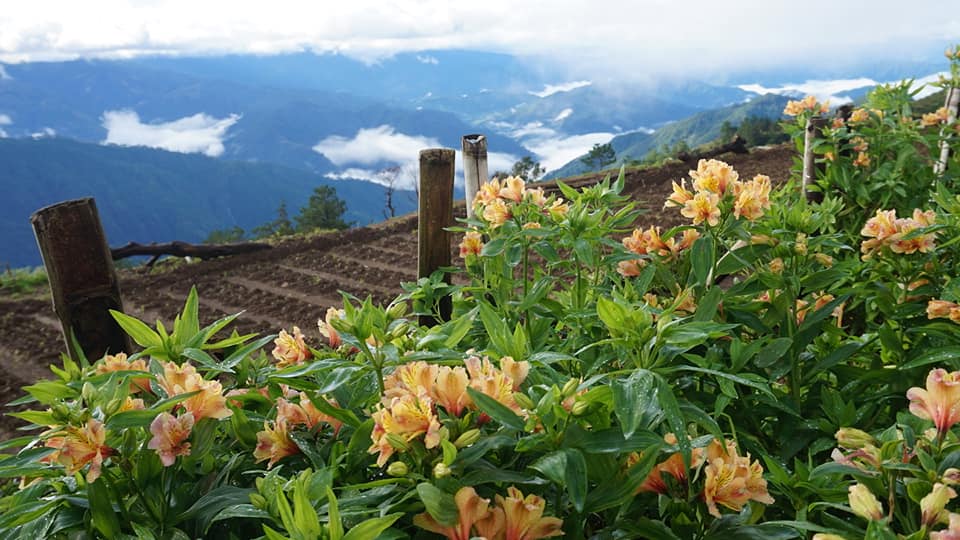
Photo by Ms. Jo Villafuerte, flower farm at Atok, Benguet, 2019.
We now come to the better seeds (because all are good seeds, remember?).
They are the ones who fell on rich soil and produced fruit because they were the ones who willingly gave themselves up to the Sower. They are the ones who let go and let God, those who let themselves “die” and fell on the ground to give way to new life.
They are fruitful, not successful; the former relied on the powers of God, patiently bearing all pains and sufferings while the latter relied on their own powers, own intelligence and even connections that on the surface may seem to have the upper hand but totally empty inside.
The fruitful seeds are those willing to fall and be broken by God according to his divine plan. Many times, what is fruitful to God may be failures to us humans. Being fruitful is not about results and accumulations we have made but what have we become.
Fruitful people are focused on with the future glory to revealed by God through our pains and sufferings as St. Paul reminds us in the second reading today.
Let us not put into waste this good seed sown in us by Jesus Christ, allow it to be cracked open and broken to let the new life within us spring forth and lead us to becoming fruitful. Amen.
The Lord Is My Chef Breakfast Recipe for the Soul, Feast of San Isidro Labrador, 15 May 2020
Acts of the Apostles 15:22-31 ><)))*> ><)))*> ><)))*> John 15:18-21
Photo from catholicrurallife.com
You are indeed so wondrous, O Lord Jesus Christ in being so timely with us, always present among us with your saints like San Isidro Labrador, the patron of farmers and most of all, a saint for every man and woman especially at this time of the corona virus pandemic.
How great are the stories of his deep devotion to the Holy Eucharist that as a farm worker, he was more faithful to the Mass and prayers above all than to his work but, without being remiss with his responsibilities to his landlord — with a lot help from your angels!
Most of all, his spirit of charities was so renowned among people of his time that according to tradition, his wife, another saint named Sta. Maria Torribia always kept a pot of stew or whatever soup they may have for the beggars San Isidro would feed daily at their home after working in the field. The pot never ran dry despite their poverty!
Here we find that to be fruitful in life, we have first to be faithful to God.
San Isidro Labrador, pray for us, teach us to be faithful so we may be fruitful in this time of COVID-19 like you who found Christ in everyone and in one’s work.
May we live out his commandment to love like you who remained humble and faithful to Jesus that you were blessed with fruitfulness in life.
Jesus said to his disciples: “This is my commandment: love one another as I love you. It was not you who chose me, but I who chose you and appointed you to go and bear fruit that will remain, so that whatever you ask the Father in my name he may give you. This I command you: love one another.”
John15:12, 16-17
On this feast of San Isidro Labrador, teach us, O Lord Jesus, to be like the first Christians who resolved disagreements in prayers, seeking always your holy will in the spirit of love and charity.
May all of our labors and undertakings bear fruits of love and charity not only at this time but remain like those of the saints. Amen.
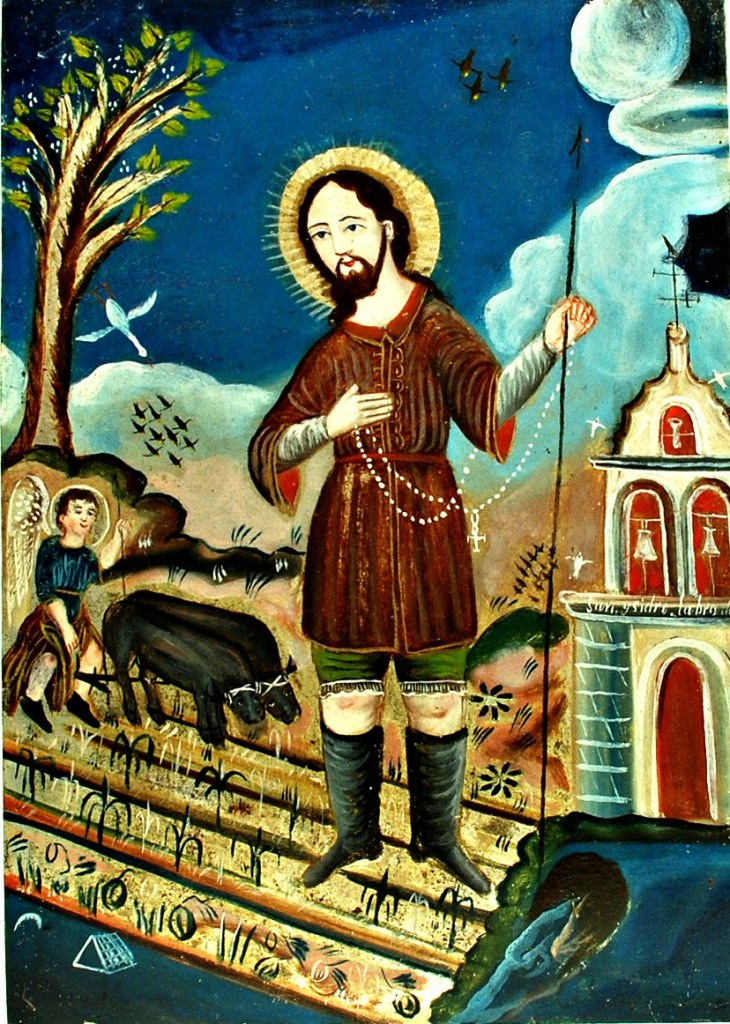
Photo of painting of St. Isidore with wife St. Mary Torribia with angels helping them in their farming. From MyCatholicLife.com.
Lawiswis ng Salita, Martes, Kuwaresma-IV, 24 Marso 2020
Ezekiel 47:1-9, 12 ><)))*> + <*(((>< Juan 5:1-16
Natuwa ako sa nakita kong post na ito ng isang kaibigang reporter. Na-interview pala ang lalakeng ito ng isa pang reporter na bumili ng tinda niyang saging; nagtaka yung bumibili na reporter bakit ang mura ng tinda niyang saging at iyan ang kanyang sagot.
Kay buti ng kanyang paliwanag, akmang-akma sa nakita ni Propeta Ezekiel sa kanyang pangitain nang ilibot siya ng anghel ng Panginoon sa kanyang templo na napapaligiran ng ilog kung saan lahat ng halaman at punong kahoy malapit sa pampang ay sagana ang mga bunga at luntian mga dahon.
Hindi malalanta ang mga dahon nito ni mawawalan ng bunga pagkat ang didilig dito ay ang tubig na umaagos sa buong taon. Ang bunga nito ay pagkain, at gamot naman ang mga dahon.
Ezekiel 47:12
Tubig, tanda ng buhay at ng Diyos
Tanda ng buhay ang tubig. Kaya naman maraming pagkakataon sa bibliya ito rin ang kumakatawan sa Diyos, lalo na sa ebanghelyo ayon kay San Juan sa Bagong Tipan.
Altar ng Parokya ni San Juan Apostol at Ebanghelista, Bagbaguin, Santa Maria, Kuwaresma 2020.
Pagmasdan mula pa noong kamakalawang Linggo, palaging mayroong tubig sa kuwento sa atin ni San Juan: ang babaeng Samaritana na kinausap ni Hesus sa may balon ni Jacob at noong Linggo, ang pagpapagaling niya sa lalaking ipinanganak na bulag na kanyang pinaghilamos sa deposito ng tubig sa Siloe.
Ngayon naman ay sa malaking deposito ng tubig sa Betesda (ibig sabihin sa Hudyo ay “habag ng Diyos”) ang tagpo ng pagpapagaling ng Panginoon.
Para kay San Juan, si Hesus na ang tubig na titighaw sa ating pagkauhaw, lilinis sa ating mga kasalanan, magpapagaling sa ating mga sakit at kapansanan dahil siya mismo ang buhay!
Sinasabi na upang makaiwas sa COVID-19, makabubuti ang pag-inom palagi ng tubig o kaya ang pagmumumog ng maligamgam na tubig na may asin.
Gayon kabisa at kahalaga ang tubig na kapag nawala, tayo’y manghihina, magkakasakit, durumi, at higit sa lahat, mamamatay. Alalaong baga sa ating mga pagbasa ngayong Martes, ang manatili sa Diyos na kinakatawan ng tubig ang ating siguradong kaligtasan.
At iyon naman ang katotohanan: tanging ang Diyos lamang ang makapagliligtas sa atin mula sa epidemiyang ito. Subalit hindi sapat ang basta manalangin lamang o magpost sa Facebook ng mga sari-saring sitas at panawagang magdasal.
Hamon ng ebanghelyo: maging pagkain at gamot sa kapwa
Sino man sa atin ang tunay na nabubuhay sa Diyos na siyang tubig na lumilinis at nagpapagaling sa atin ang dapat rin namang maging bunga na bumubusog at dahon na nagpapagaling sa kapwa!
Sa gitna ng ating krisis ngayon, ng umiiral na lockdown sanhi ng banta ng COVID-19, makabubuti na suriing muli ang ating pananampalataya: kung totoo nga na tanging sa Diyos lamang tayo nananalig bilang ating buhay at tubig, tayo ba ay nakakapamunga ng mabubuting gawa di lamang salita para sa iba?
Naalala ba natin yung kapwa nating nagugutom?
Nakapagbibigay lunas ba tayo sa agam-agam at takot ng marami sa COVID-19 at lockdown?
Baka naman tayo ay wala nang pakialam sa iba o kaya tayo pa ang problema ng marami sa ating pagwawalang-bahala gaya ng pagtambay sa lansangan o pag-iinuman at iba pang mga gawa na bumabale-wala sa “social distancing” na pangunahing sanhi ng paglaganap ng COVID-19?
Pagnilayan natin iyong tindero ng saging na hindi nagtaas ng presyo ng kanyang tinda para huwag magutom ang kapwa: marahil mas mainam ang katayuan mo sa buhay dahil nababasa mo ito sa Facebook kesa kanya…
Manalangin tayo:
Larawan kuha ng may-akda, Baliwag, 25 Pebrero 2020.
O Diyos Ama naming mapagmahal, salamat po sa buhay na inyong kaloob sa amin lalo na po sa araw na ito. Ipinapanalangin po namin ang mga may sakit at nag-aalaga sa kanila ngayon, pati na mga duktor at nars na aming frontliner sa COVID-19.
Dugtungan pa po ninyo ang buhay ng mga may-sakit at pangalagaan ang kalusugan ng mga nag-aalaga sa kanila lalo na rin ang aming mga health frontliners.
Bigyan po ninyo kami ng biyaya na maging mabunga itong aming buhay sa pagbabahagi ng aming kayamanan tulad ng pagkain at tulong pinansiyal sa mga nangangailangan katulad ng mga aba, mga nag-iisa sa buhay, mga matatanda.
Makapagdulot nawa kami ng kagaanan sa kalooban, kagalingan sa isipan ng mga naguguluhan, nalilito, at natatakot sa pandemiyang ito na COVID-19.
Higit sa lahat, huwag nawa kaming maging pabigat pa sa marami nang pagdurusa ng aming kapwa ngayong panahon ng krisis bagkus sa amin ay madama ang pagdaloy ng iyong buhay na ganap at kasiya-siya sa pamamagitan ni Hesu-Kristong Panginoon namin, sa kapangyarian ng Espiritu Santo, magpasawalang-hanggan. Amen.














 lordmychef.com