The Lord Is My Chef Breakfast Recipe for the Soul by Fr. Nicanor F. Lalog II
Monday, Memorial of St. Maria Goretti, Virgin and Martyr, 06 July 2020
Hosea 2:16, 17-18, 21-22 >><)))*> >><)))*> >><)))*> Matthew 9:18-26
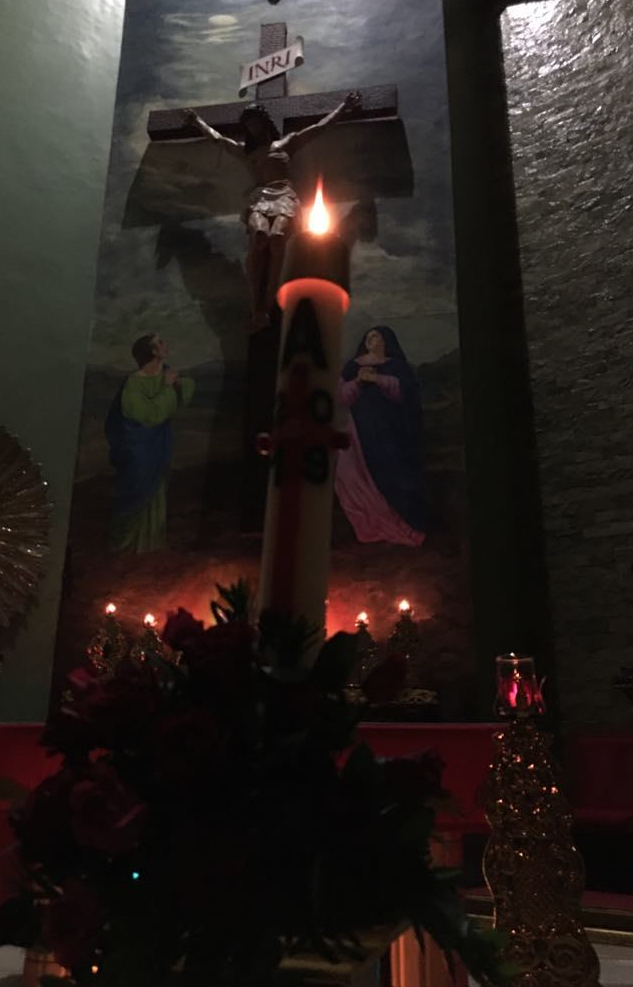
Photo by author, procession cross, 2019.
Today, O God our loving Father, your words have invited me to reflect about “separations” — something we are always afraid of, sometimes beyond our control, but one thing for sure, many times needed in life.
Usually, we dread separations because it means being detached, being away from people we love or, situations we are familiar with.
Like with death, the ultimate separation in this life.
While Jesus was speaking, an official came forward, knelt down before him, and said, “My daughter has just died. But come, lay your hand on her, and she will live.” Jesus rose and followed him, and so did his disciples.
Matthew 9:18-19
Death as a separation is most painful when committed in cold blood, like the martyrdom of the young St. Maria Goretti who was only 12 years old when an older neighbor stabbed her to death in their home near Ancona, Italy after she had refused to give in to his sexual advances in 1902.
Death as a separation is painful and sad because it is “the end” in our running story, when we lose somebody so special, so close to us with whom we have special plans and dreams to be together but suddenly gone.
Sickness and diseases also separate us from others.
Often, people regard sickness as a kind of slow death. And here lies its agonizing pain when due to some medical conditions we are separated from others, unable to fully interact and relate with them even if they are near us. Its worst part is how we can only look from afar at the activities and things going on among our brothers and sisters because we are bedridden, stuck on a wheelchair, disabled, or sometimes deep inside us cannot fully integrate because of the sickness within like bleeding or some form of cancer or deafness.
A woman suffering hemorrhages for twelve years came up behind him and touched the tassel on his cloak. She said to herself, “If only I can touch his cloak, I shall be cured.”
Matthew 9:20-21
Thank you for sending us your Son Jesus Christ who have not only come to lead us to life eternal but also to heal our sickness and mediate in bridging the gaps among us and within us.
By giving himself on the Cross, Jesus has made us whole again, brought us together in unity both in time and eternity for nothing can now separate us from you and from others through his immense love poured upon his death.
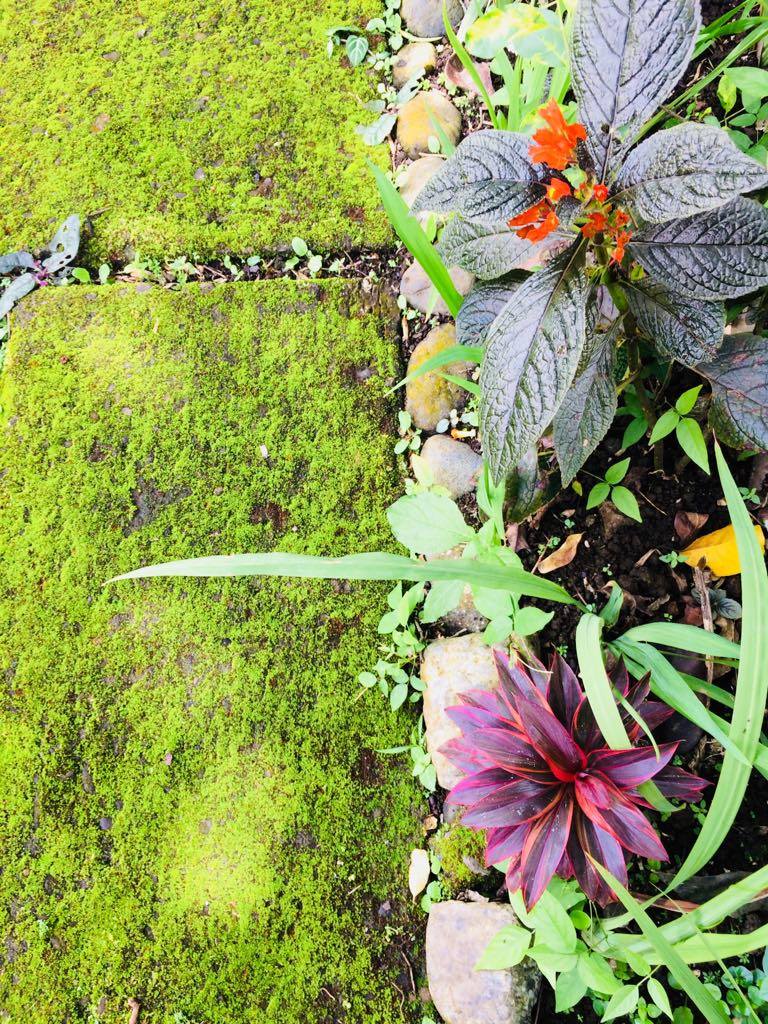
Photo by author, Petra in Jordan, 2019.
Give us the grace, O Lord of heaven and earth, to seek and follow your voice always, that sometimes, we on our own separate from our daily routines, from others to be one with you in the desert so we may know you more, love you more and follow you more.
Thus says the Lord: I will allure her; I will lead her into the desert and speak to her heart. She shall respond there as in the days of her youth, when she came up from the land of Egypt. I will espouse you in fidelity, and you shall know the Lord.
Hosea 2:16, 17, 22
There are still other forms of separations we experience in life, both good and bad.
Grant us the grace of courage, dear God our Father, to face every separation in life we experience, whether good or bad, permanent or temporary, our choice or imposed upon us — always trusting in the uniting power of your Son Jesus Christ in the Holy Spirit. Amen.
The Lord Is My Chef Breakfast Recipe for the Soul by Fr. Nicanor F. Lalog II
Tuesday, Memorial of the First Martyrs of the Holy Roman Church, 30 June 2020
Amos 3:1-8, 4:11-12 >><)))*> <*(((><< >><)))*> <*(((><< Matthew 8:23-27
First Martyrs of the Holy Roman Church photo from ucatholic.com.
As we remember today, O Lord our God, the courage and fidelity of the first martyrs of Rome, we also pray for more martyrs and prophets who may inspire us to be your witnesses in this troubled time.
Or better still, make us one!
How sad that until now, we live in a time so similar with ancient Israel and ancient Rome where many of us turn away from you to worship money and other false gods, blinded by the material wealth and prosperity around us.
Many of us have become greedy and unjust in our ways to others especially the poor and marginalized.
Send us a prophet, Lord, like Amos who would dare to speak your words of truth, warning people who have gone astray.
The lion roars — who will not be afraid! The Lord God speaks — who will not prophesy! I brought upon you such upheaval as when God overthrew Sodom and Gomorrah: you were like a brand plucked from the fire; yet you returned not to me, says the Lord. So now I will deal with you in my own way, O Israel! And since I will deal thus with you, prepare to meet your God, O Israel.
Amos 3:8, 4:11-12
Increase our faith in you, O God, while at the middle of this great storm of COVID-19 pandemic worsened by many social upheavals happening around the world and right in our country.
Sometimes, we feel like the disciples of your Son Jesus, so terrified with the violent storm going on with waves almost swamping us.
Forgive us, Lord, when we panic because we sometimes feel that you do not care at all that we are perishing in the storm while you are “sound asleep”.
Fill us with your courage, sweet Jesus, to give witness to you like the martyrs of Rome who chose death than be one with the modern Neros of our time who lie and mislead many others into evils and sin. Amen.
The Lord Is My Chef Sunday Recipe for the Soul by Fr. Nicanor F. Lalog II
XIIIth Sunday in Ordinary Time, Year A, 28 June 2020
2 Kings 4:8-11, 14-16 >><)))*>Romans 6:3-4, 8-11 >><)))*> Matthew 10:37-42
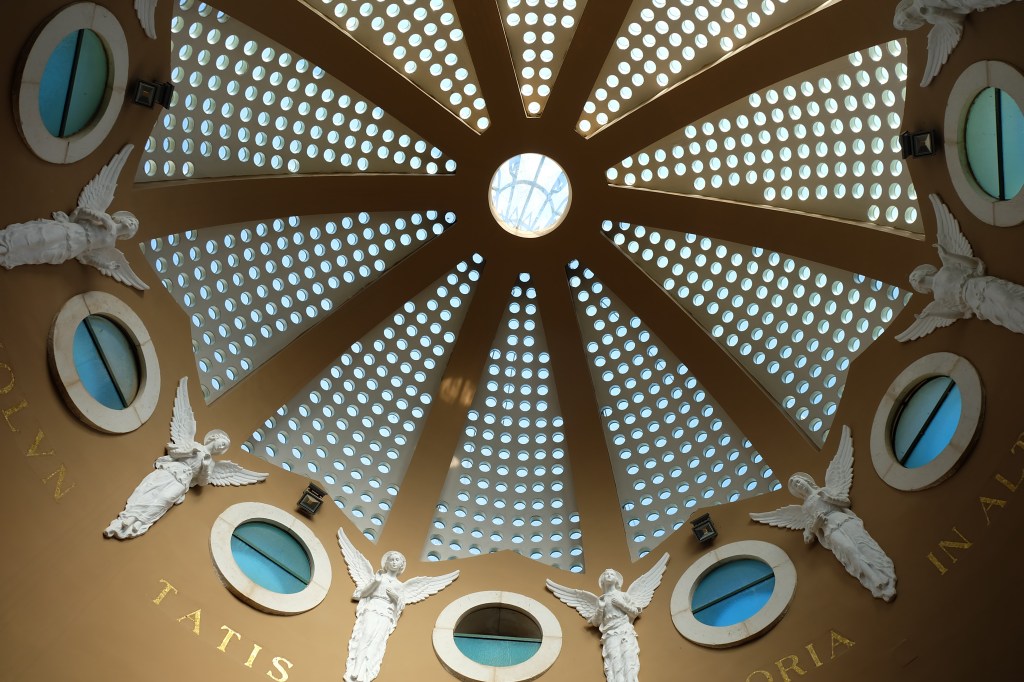
Photo by author, Dome of the Chapel of Nativity at Shepherd’s Field, Bethlehem, the Holy Land, May 2019.
Jesus continues his lessons to us his disciples being sent to look for the “lost sheep of Israel”, to be not afraid for he is with us in this journey and mission. But, it is not enough that we have Jesus on our side and be present among us: we have to allow Jesus to take possession of us completely!
From having no fear because Jesus is here, Christ now deepens his presence by inviting us to be possessed by him, to be in communion with him.
Jesus said to his disciples: “Whoever loves father and mother more than me is not worthy of me, and whoever loves son or daughter more than me is not worthy of me; and whoever does not take up his cross and follow after me is not worthy of me. Whoever finds his life will lose it, and whoever loses his life for my sake will find it.”
Matthew 10:37-39
Photo by author, processional Cross at the altar, 2019.
The Mystery of the Cross
Discipleship in Jesus Christ is more than a total allegiance to him who is neither a demanding nor exacting Lord and Master for he does not arbitrarily impose himself upon us.
Nothing like that of subservience but something more lofty because it is wrapped in a mystery — a mystery of love freely given and shared to us by God even if we do not deserve it all. Remember the mystery of the Blessed Trinity four Sundays ago (June 07)?
Ever since, God has never imposed himself upon us, that we should love him back in return for he does not really need our love. He gave us the gift of freedom so that we may love him freely for he never imposes on us.
And here lies the beauty of discipleship, of this relationship we have with God that is based solely on love expressed to us in the most personal manner by giving us his Son Jesus Christ who suffered and died on the Cross but rose again on Easter. This we were reminded by the Solemnities of the Body and Blood of Jesus and of his Sacred Heart last June 14 and 19 respectively.
Now you see my dear readers the clearer picture of our liturgical celebrations expressing our concrete experiences of being loved by God in Jesus Christ most especially during times of trials and sufferings like in this COVID-19 pandemic.
It is Christ who made the initiative to be one with us in our pains and sufferings; God did not remove our crosses in life but made them holy in his Son Jesus Christ so that every time we go through life’s many difficulties, we share in the Lord’s Passion, Death, and Resurrection.
That is why, we are invited to take and carry our cross every day for it is through the Cross we are saved. It is not enough to simply believe in the person of Jesus but we need to accept and embrace his Cross because it is through which he had won our salvation by dying on it and rising again.
This is easier said than done. It is so difficult to love Jesus more than our loved ones like family and friends. And it is most difficult to love the Lord more than our selves, when we have to let go of our plans and agenda.
Letting go and letting God in itself is already crucifying — but that is when this mystery of Christ’s love and of his Cross deepens further when we lose ourselves in him!
Celebrating Mass without te congregation during the ECQ, March-April 2020.
Possessed by Christ
To be possessed by Jesus is to receive God and his gift of salvation through the mystery of Christ and his Cross. Like our Christian life, proclaiming the gospel carries with it the sign of the Cross of Christ.
We are not asked to reenact or reproduce his Crucifixion nor is Jesus asking us to be suicidal or go against our natural aspirations and dreams.
To be possessed by Jesus means we continue to take care of ourselves without neglecting the needs of others.
To be possessed by Jesus means being generous to others in the same manner Jesus has always been generous to us.
To be possessed by Jesus means to realize that every act of self-giving is really an act of receiving!
Photo by author, Malagos Park, Davao City, 2018.
That is the paradox of the Cross, of discipleship in Christ: “Whoever finds his life will lose it, and whoever loses his life for my sake will find it” (Mt.10:40).
And that is also where the mystery of Christ’s love deepens because whatever we give is not really ours but Christ’s.
Every time we give love, it is the love of Jesus.
When we are kind and generous with others, it is the kindness and generosity of Jesus we give and share.
When we are patient and understanding to others, it is still the patience and understanding of Jesus in us.
Even if we give and share material things like money, food, clothing… whatever good we share and give are all from Jesus not from us.
And the more we give, the more we receive!
Have you noticed especially during this pandemic how the generous among us are now more blessed?
Wonder no more because you have allowed yourself to be possessed by Jesus Christ!
This is what the woman at Shumen had realized after welcoming the Prophet Elisha into her home in our first reading. She even gave him a room to stay every time he comes for his mission while the Lord provided all her needs, even rewarded her with a son as promised by Elisha.
When we allow Jesus to take over us, when we enter into communion in him and with him in his very life, we become more free to love, we strengthen our relationships with others, we wander less and worry less in life; most of all, we feel lightened in our burdens with the presence of Jesus giving us fullness of life in him.
This is the grace I hope we have seen from this quarantine period, especially those two months of lockdown when were freed from our usual grind and busyness with more time to be silent and still, to pray and reflect on our relationships with God and with others. It was a difficult and very trying period that had given in return a lot of opportunities to others.
Photo by author, Marcos Highway, 2019.
Dead to sin, alive to God
Brothers and sisters: We know that Christ, raised from the dead, dies no more; death no longer has power over him. As to his death, he died to sin once and for all; as to his life, he lives for God. Consequently, you too must think of yourselves as dead to sin and living for God in Christ Jesus.
Romans 6:9-11
It has been four months since houses of worship were ordered closed to help stop the spread of the corona virus. Somehow, the lockdown had made us realize the importance of receiving the Sacraments especially the Holy Eucharist.
But, sacraments are not everything for we have the bigger roles of putting into practice its reality of being the saving presence of Jesus Christ.
Now that lowly life is beginning to go back to its usual grind especially the traffic, soon we might forget again the more important things in life like God and our relationships in our family and friends that it is hoped we have rediscovered during the quarantine period.
That is why I strongly feel the government must now allow Churches to open so the people may experience again God in the sacraments and in our rites and rituals lest they get busy again with so many things only to miss finding anew the meaning of our lives found in silence and stillness before the Cross of Christ.
It is my hope that in this quarantine period, may we find through the Cross of Jesus that when we learn to submit and surrender to him, that is when we truly become free; and, when we lose and give away our lives to him, that is when we gain fullness of life in him. Amen.
A blessed week and a more abundant July to everyone!
Quiet Storm by Fr. Nicanor F. Lalog II, 17 June 2020
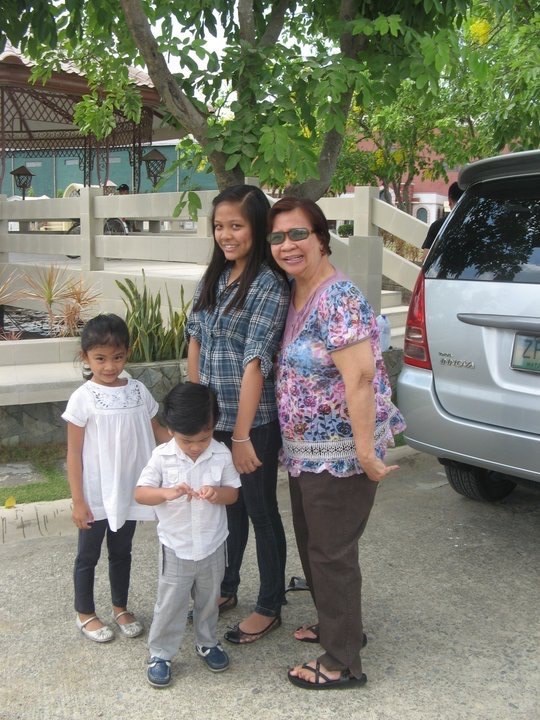
Today is my mother’s 81st birthday and my father’s 20th year of death.
Since June 17, 2000, we have “stopped” celebrating my mother’s birthday as she ordered that date to be remembered more as my father’s birth into heaven.
So many things have happened in our lives as a family, most especially with me as a man and a priest being the eldest.
Yes, I always dread this date, feeling at a loss until now at how to behave or what to say when I come home. There is always a “drama” we have to go through when we get together, with a lot of “dead air” moments during Mass and later at the dinner table.
Though somehow they have lessened in these past 20 years, the sadness is still there.
I thought time heals.
True.
But the pain remains. And the more it gets painful.
Lalong bumabaon, as we say.
With her apos when still able to move freely; Sunday after Mass was always at my father’s gravesite.
Since her 61st birthday, Mamu as she preferred to be called when the apos came, she had “stopped” living because my dad was really her life. We believe her sorrow contributed to her stroke in December 2004.
Growing up until I have become a priest, I have always seen my father preparing coffee and breakfast daily for her. She had in fact forgotten how to cook or learn new dishes because my father was a superb cook — that is why we all have gout in the family.
Most of all, as I would always tell my students before, since childhood until I have become a priest, dad never ate his meals without Mamu at his side or at least to personally tell him to eat because she had gone to a party or some prayer meeting.
Every Sunday after my Masses in a nearby town, I would visit my father’s grave and surely find fresh flowers and candles earlier placed by my mom and sister’s family.
After praying and blessing his gravesite, I would talk to him, telling him, “Dad, there are 365 days in a year. Why did you die on June 17, 2000?”
It took my father more than a year before answering my question.
Yes, he spoke to me in his usual deep, whispering voice I heard from within as I looked down on his grave, “Nick, I died on your mother’s birthday so you would love her more like I have loved her.”
Tears swelled in my eyes and eventually rolled down my cheeks that I almost watered the grass on his gravesite!
It was a very tall order that until now, I really do not know if I have fulfilled.
Mothers are like God
God cannot be everywhere that is why He created mothers.
Jewish saying
Every Thursday I come home to visit Mamu on my day off, as well as during special occasions and gatherings like birthdays of my siblings and pamangkins.
Sometimes I ask myself if I have loved my mom that much as my dad had wanted me to.
This comes strongest to me when going to a sick mother in my parish to anoint with Holy Oil or when presiding at a funeral Mass of a deceased mother; I would listen intently to the “thank you speech” of a son or a daughter and marvel at how great his/her love for the deceased parent.
As a priest, I have always been with so many mothers but not so much with my own mom. But one thing I have experienced since my father died on my mother’s birthday 20 years ago is the life that continues to flow from her very self and presence which flows unto me and spills even up to my parish and community.
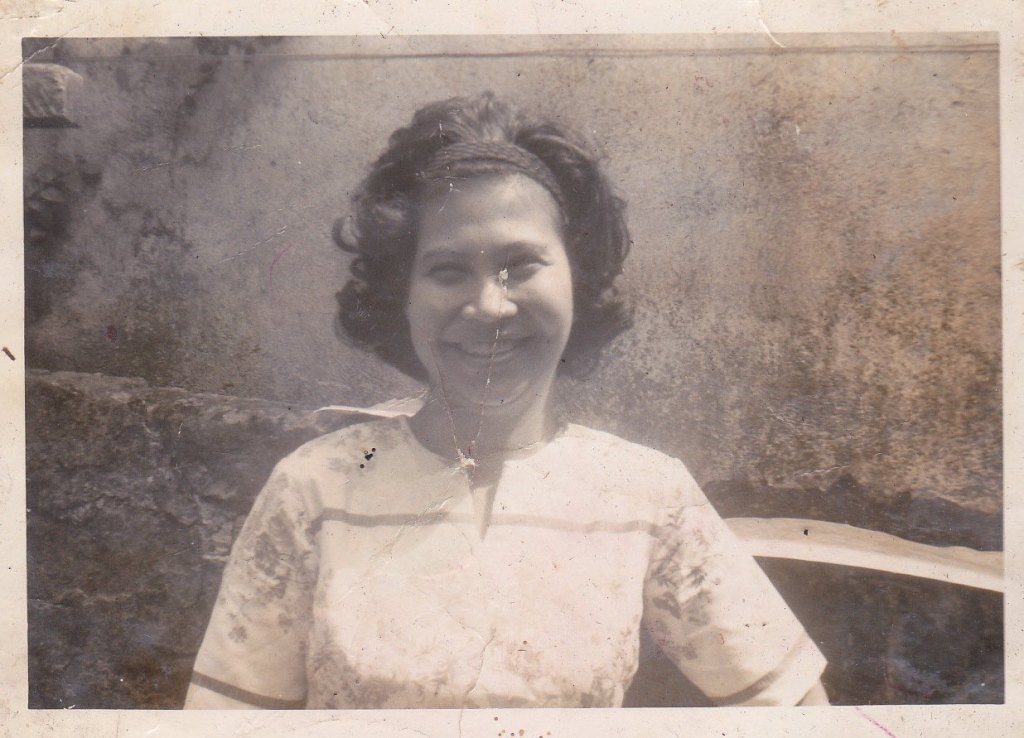
My mom as a teenager.
She’s from the “old school” who had taught me a lot about sacrifices, of keeping things in order like telling me after lunch that while resting, I should mop the floor and dust off the jalousies of our windows downstairs. Resting meant doing something worthwhile like removing cobwebs at ceilings; so, you can just imagine what is housecleaning for her!
Another thing I have learned from her is harimunan wherein you try to save little amounts of money with things you may forego like instead of taking tricycle, I walked for three kilometers or instead of buying soda, drink from the water fountain at school.
The only lesson that I have refused to learn from her which I now admit I should have taken into heart is the art of bargaining or asking “tawad” in the “palengke” (market). It is a gift from God I think reserved for mothers.
One important lesson I have learned from Mamu came via a picture I have found in a copy of a Reader’s Digest. I was five years old then while scanning the new copy of my dad’s magazine, I saw the picture of a baby crying so hard after being delivered.
I asked her why the baby was crying and her explanation had stuck into my mind since then that later as a priest I realized it so existentially true! According to her, when a baby is born crying, that means she/he is alive; if the baby does not cry, that means she/he is dead.
So simple yet so deep.
When we cry, we are alive.
And sometimes, to be alive, we have to cry. A lot.
And I believe that is why mothers continue to give life to us despite the passing away of their husband because they are the ones who cry a lot.
Mothers cry in silence, alone because they are the ones who can truly feel the flowing of life, the slipping away of life.
In a few hours I will be coming home and I could already visualize and feel my mother’s crying on her birthday.
As much as possible I hold my tears, praying that in God’s time, we would just be the ones crying so that finally, Mamu would no longer be crying.
But, that’s another thing I dread so very much…I hope not yet that soon because I really do not know how life will be for me and my siblings.
Thank God for all the Mothers who have given and nurtured our lives even in old age.
The Lord Is My Chef Breakfast Recipe for the Soul by Fr. Nicanor F. Lalog II
Monday, Week XI, Year II in Ordinary Time, 15 June 2020
1 Kings 21:1-16 ><)))*> ><)))*> <*(((>< <*(((>< Matthew 5:38-42
Photo by Mr. Raffy Tima of GMA-7 News, stranded people staying at the underpass near the NAIA after waiting for so long to catch their flights back to their provinces since March.
So many times in life, O God our Father, we hear so many stories of injustice, of how our neighbors are treated so badly that we feel so disgusted at how it could happen at all.
Like all these stories of people stranded in Metro Manila, of the lowly income earners who have to walk for hours just to get to work because there are not enough public transport system allowed to operate.
Of those made to suffer the strict quarantine rules when police officials and politicians were allowed to get off the hook or, the arrest and incarceration of a poor, elderly jeepney driver who had joined a protest rally while the former First Lady who was convicted of corruption charges two years ago was spared of any jail term because of her age.
So much inequalities happening shamelessly, with much impunity by those in power, O Lord!
Exactly like the evil Queen Jezebel who instructed her people to find two scoundrels to testify against Naboth so she could take his vineyard so desired by her husband King Ahab.
Two scoundrels came in and confronted him with the accusation, “Naboth has cursed God and king.” And they led him out of the city and stoned him to death. When Jezebel learned that Naboth had been stoned to death, she said to Ahab, “Go on, take possession of the vineyard of Naboth the Jezreelite which he refused to sell you, because Naboth is nbot alive, but dead.” On hearing that Naboth was dead, Ahab started off on his way down to the vineyard of Naboth the Jezreelite, to take possession of it.
1 Kings 21:13-16
Such stories are so revulsive, O God, not only of their nature but more because partly to be blamed is us — when we have refused to do anything good in fighting evil. Indeed, the only thing necessary for evil to triumph is for good men to do nothing.
Yes, O God, we are ashamed because we have unconsciously sided with the scoundrels when we chose to “see nothing, hear nothing, and say nothing” of their lies, their harsh words and vulgarities, and their systematic killing sprees to solve the problems of the society.
We have misread the words of your Son Jesus Christ by becoming passive in the face of evil.
Jesus said to his disciples: “You have heard that it was said, An eye for an eye and a tooth for a tooth. But I say to you, offer no resistance to one who is evil. When someone strikes on your right cheek, turn the other one to him as well. Should anyone press you into service for one mile, go with him for two miles.”
Matthew 5:38-39, 41
Give us the wisdom and courage to turn our other cheek, to go the extra mile in asserting to evil doers that we are all brothers and sisters in Christ who must treat one another with respect and equal dignity as a person created in your image and likeness, God our Father.
Inspire us, O God, especially our leaders in the Church who have gone so timid and silent except for a very few on how we can be more prophetic in this time of crisis under an unfriendly government. Amen.
40 Shades of Lent, Sunday Week-V, Year-A, 29 March 2020
Ezekiel 37:12-14 +++ Romans 8:8-11 +++ John 11:1-45
Photo by Ms. Anne Ramos last March 22, 2020 during our procession of Blessed Sacrament in the Parish when a rainbow appeared at the horizon.
Once again as we near the closing of our Lenten journey, Jesus does another “sign” or miracle — his last and grandest in anticipation of his coming Passion, Death, and Resurrection: the raising from death of his friend Lazarus.
What is so beautiful in this story is how the evangelist involves us his readers and hearers into a conversation with Jesus unlike last Sunday at the healing of a man born blind where the characters conversed only among themselves.
The raising of Lazarus to life is more engaging because it is deeply personal and intimate as it involves friends dearest to Jesus — exactly like each one of us! And that is why it is also very timely as we go through the ongoing lockdown due to COVID-19.
When Jesus heard this he said, “This illness is not to end in death, but is for the glory of God, that the Son of God may be glorified through it.”
John 11:4
My dear family and friends, Jesus assures us today of the Father’s love and healing, that he would save us from the deadly corona virus. Come and let us converse with him with the sisters of Lazarus, Martha and Mary.
After my “private Mass” (Missa sine populo) during the Solemnity of the Annunciation, 25 March 2020.
Presence of Jesus
Martha said to Jesus, “Lord, if you had been here, my brother would not have died. But even now I know that whatever you ask of God, God will give you.”
John 11:21-22
Twice do we hear this line in this very long story of the raising of Lazarus when Mary repeated it upon meeting Jesus later at the entrance of their town of Bethany.
And like Martha and Mary, we always say it to Jesus too as if he ever leaves us alone!
“Lord, if you had been here…”
Jesus is always with us.
We are the ones who always leave Jesus behind.
We always have so many other things to do, so many other people to meet that we have no time to truly pray and most of all, celebrate the Sunday Mass every week.
It is my hope that following the suspension of the “public Masses” due to lockdown, people now realize the value of the Holy Eucharist which is the “summit” of our Christian life where we are nourished by the words of God and strengthened by the Body and Blood of Christ.
Photo from Forbes.com via Facebook, 2019.
Long before we were told to observe “social distancing” in this time of pandemic, we have long been distant from one another and from God.
How ironic that these modern means of communications were invented to bring us closer but have actually brought us farther apart! Most often, we are close enough with someone miles across the seas but too distant and cold to persons physically near us, even seated beside us.
Let us spend more time with our family and most especially with God in prayer during this enhanced quarantine period to be the presence of Christ with one another. Let us remember Fr. Patrick Peyton’s expression, “The family that prays together, stays together; a world at prayer is a world at peace”.
Remember: the most wonderful and enriching relationships we can have are those rooted in Jesus Christ who is always present in us.
Jesus is perturbed and deeply troubled
While praying over this long gospel, this photo by Raffy Lerma kept on flashing in my mind, showing me how Jesus must have reacted upon seeing Mary weeping over the death of her brother Lazarus.
He became perturbed and deeply troubled, and said, “Where have you laid him?” They said to him, “Sir, come and see.” And Jesus wept.
John 11:33-35
Like our gospel today, Lerma’s photo of a mother crying over her son lost to “tokhang” at the height of this administration’s war against drug in July 2016 is very conversant, so moving like the Pieta by Michaelangelo in Rome. In fact, the government doubted the veracity of the photo, claiming through its trolls it was merely “staged” or “drawing” as we say in journalism. The photo is authentic because the event truly happened. And continued to happen before this lockdown.
What I like most with this photo is the composure of the mother. You can feel she was deeply sad and troubled, weeping without the hysterical theatrics or palahaw in Tagalog that we see in many instances like funerals.
Photo by Mr. Jay Javier, Quiapo, January 2020.
Multiply that to the highest degree and we get the image of Jesus “perturbed and deeply troubled, weeping” at the death of his friend Lazarus.
There is the gentle yet firm mastery by Jesus of the situation, of the loss and tragedy.
No hysterics nor theatrics. Pure and all-encompassing presence.
It would be the same mastery and composure Jesus would exhibit at his coming Passion and Death, reaching its highest point on Easter.
Here we find Jesus Christ truly human, truly Divine. Yes, he was perturbed and deeply troubled; he cried and wept not because of weakness but rather more of strength, of being true and determined in overcoming not only his coming Passion but most of all, our own setbacks and losses.
Have faith, my dear reader. Jesus is surely “perturbed and deeply troubled, weeping” again with us in this time of the corona pandemic. Step back and let him be himself in being one with us; then, wait and see what he is going to do next for us.
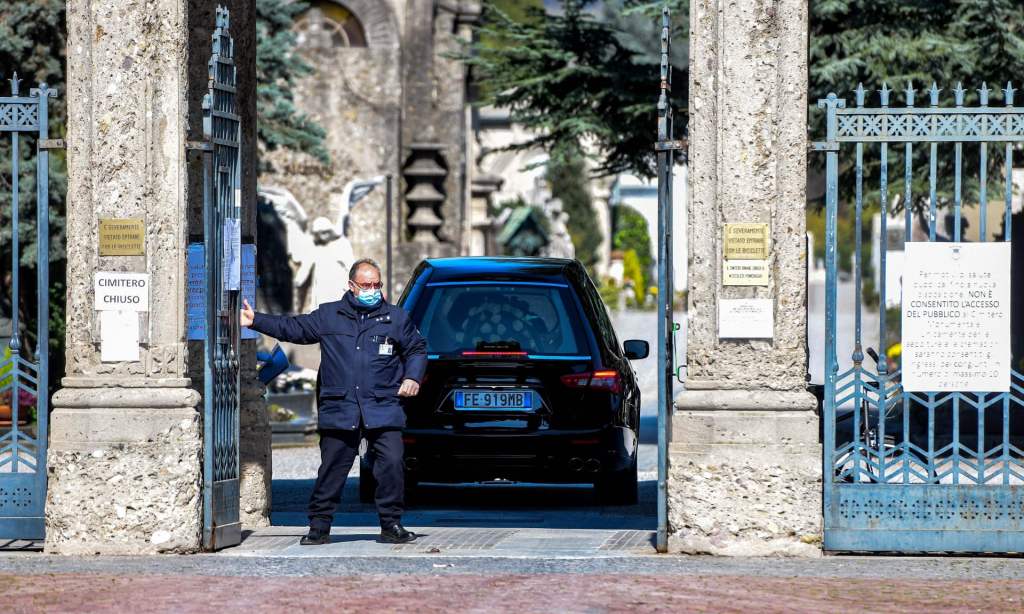
Photo from theguardian.com, 19 March 2020 reporting how a “generation has died” in Bergamo, Italy struggling with 1959 deaths from corona virus that has overwhelmed the nation’s funeral sector.
Jesus joins us in death so we can rise to life in him
Today is not a beautiful day to die, especially for victims of COVID-19. No wakes. No Masses. Just simple blessings after cremation. If ever possible.
The scenes from Italy are deeply disturbing that has become the new epicenter of corona pandemic. According to a report last Monday, the obituary page of a local newspaper had increased tenfold in a week, listing up to 150 deaths daily! More disturbing is the fact that “death and mourning happen in isolation”.
Our readings this Sunday speak a lot about death symbolized by graves.
But not on a morbid sense like a defeat or a loss; rather, as a victory, a raising to new life!
Thus says the Lord God: O my people, I will open your graves and have you rise from them, and bring you back to the land of Israel. Then you shall know that I am the Lord, when I open your graves and have you rise from them, O my people! I will put my spirit in you that you may live.
Ezekiel 37:12-14
Ezekiel proclaimed these words of the Lord to the Israelites during their Babylonian Exile when they lost everything and everyone, including God as they thought have forsaken them for their sinfulness. This prophecy is finally fulfilled in Christ’s coming and victory over death on Easter.
In calling back Lazarus to life, Jesus shows us in this scene his tremendous power over death and defeat, agony and pain, sin and evil. It is a prefiguration to a grander scale of his own Resurrection on Easter after the Good Friday.
And when he had said this, he cried out in a loud voice, “Lazarus, come out!” The dead man came out, tied hand and foot with burial bands, and his face was wrapped in cloth. So Jesus said to them, “Untie him and let him go.”
John 11:43-44
Photo by Mr. Raffy Tima of GMA-7 News. Used with permission. Seen here from atop the GMA Network Center in QC is Mt. Samat in Bataan with the Memorial Cross visible, across the Manila Bay, taken on 26 March 2020.
Do you believe this?
Jesus is calling us to have faith in him, to believe in him especially in this time of COVID-19 pandemic. And like his question to Martha which he repeated twice, the Lord is asking us the same question today:
Jesus told her, “I am the resurrection and the life; whoever believes in me, even if he dies, will live, and everyone who lives and believes in me will never die. Do you believe this?
John 11:25-26
Do you believe in him, Jesus the Christ?
Good things have also been happening lately in this two-week old lockdown.
Families are again getting together, staying together. Finally we now have more time than ever to converse once again as husband and wife, children and parents, brothers and sisters.
Some people have rediscovered God and are back to praying again, to believing again.
Even Mother Nature is said to have taken a big break during this lockdown, giving us spectacular views never seen before due to cleaner air, less pollution and congestion in the cities.
These are all conversations going on – thanks to COVID-19!
Let us join the conversations with our loved ones, with nature, with our self, and with God.
Below is one of my favorite photos this week taken by GMA-7 reporter Mr. Raffy Tima. Again, another photo conversing with us, like Jesus in the story of the raising to life of Lazarus.
See the Memorial Cross on Mt. Samat in Bataan?
The raising of Lazarus is the “sign” or miracle as the other evangelists would say, that prefigures the definitive victory of Jesus on the cross.
Like the sisters of Lazarus, believe in Jesus who is awakening us today amid the threats or crosses of corona virus to bear all these sufferings, to passover like him to the life that bodily death cannot touch “through his Spirit dwelling in us” (Rom. 8:11). Amen.
Soon afterward Jesus journeyed to a city called Nain, and his disciples and a large crowd accompanied him. As he drew near to the gate of the city, a man who had died was being carried out, the only son of his mother, and she was a widow. A large crowd from the city was with her. When the Lord saw her, he was moved with pity for her and said to her, “Do not weep.” He stepped forward and touched the coffin; at this the bearers halted, and he said, “Young man, I tell you, arise!” The dead man sat up and began to speak, and Jesus gave him to his mother. Fear seized them all, and they glorified God, exclaiming, “A great prophet has arisen in our midst,” and “God has visited his people.”
Luke 7:11-16
Today, we are like at the city of Nain. Traffic is so heavy outside as many of us – family and friends, former classmates, colleagues at work from all over and neighbors – gather to pray and pay our last respects for Archie.
Celebrating a funeral Mass for a young person is always difficult for me. Like Jesus, I feel so sad for their parents. Normally, it is the children who bury their parents. It must be so painful for parents burying a son or a daughter. That is why in our gospel, Jesus was “moved with pity” with the widow of Nain.
But today, amid the pains and sorrows with the sudden death of Archie last week at a very young age, we actually celebrate life in Jesus Christ.
Photo by author of the hills of Galilee from the Walls of Jerusalem, May 2017.
Jesus comes to visit us always
Like in that scene at Nain, we remember and celebrate the life of Archie who had come to visit us even for a short time.
I love that part of the gospel where the people at Nain exclaimed at how “God has visited his people” when Jesus raised the dead young man.
Jesus continues to visit us everyday through one another like Archie.
Despite his many sins and imperfections, Archie made us experience Jesus Christ’s love and friendship, warmth and kindness, especially to his two sons, family, and friends.
Surely, Jesus must have visited Archie, too, during those dark moments of his life.
And the good news is, Archie visited Jesus so often especially these last two years when he started to pick up the pieces of his life.
Last time I saw Archie was last November when he came to celebrate Mass in our Parish. And I have heard how he had sought spiritual guidance from Fr. Carl, driving that far to Paco every month as he renewed his relationship with Christ, trying to follow anew the Lord he had served since elementary as a sacristan and later as a seminarian in our high school seminary.
It is Jesus who first finds us always
Photo by author at Mt. St. Paul Spirituality Center, Baguio, 04 February 2020.
We all know Archie’s tocayo is one of ancient Greece’s great scientist and inventor, Archimedes.
It is said that he discovered the principle of buoyancy – the “Archimedes’ principle” – while taking a bath.
When Archimedes sat onto his bathtub, he observed that “when a body is submerged in a fluid, it experiences an apparent loss in weight that is equal to the weight of fluid displaced by the immersed body.”
Archimedes was so ecstatic with his accidental discovery that he jumped naked from his bathtub out to the streets, shouting “eureka!” or “I have found” the solution to a problem he was trying to solve at that time.
Archimedes had not only enriched the field of mathematics and sciences with his discoveries but also the English language with the word “eureka” or “eureka moment”: when somebody discovers something very significant in business and economics, the sciences especially medicine, and practically in every field and subject.
Most especially in life.
Photo by author, Mt. St. Paul Spirituality Center, Baguio, 04 February 2020.
Archie had the same eureka moment in life: he had found Jesus Christ again that he went back to Mass and Confessions.
He had found meaning in life again after losing hope and directions.
Most of all, Archie had found love again.
Like his namesake of ancient Greece, Archie is now exclaiming “eureka” ecstatically into heaven – naked – with nothing but the love and mercy of Jesus Christ who first found him and brought him back to life a few years ago.
Today as we bring the remains of Archie into his final resting place, we thank God who never stops looking for us, finding us so that we can find him again and finally rest in him.
Today it is Jesus who is most ecstatic of all because he is the first to have found Archie and that is why, he had called him back to him, never to get lost again.
But the souls of the just are in the hand of God, and no torment shall touch them. They seemed, in the view of the foolish, to be dead; and their passing away was thought an affliction and their going forth from us, utter destruction. But they are in peace. In the time of their visitation they shall shine.
Thursday, Memorial of St. Pedro Bautista and companion priest-martyrs, Week 4, Year 2, 06 February 2020
1 Kings 2:1-4, 10-12 ><)))*> 0 <*(((>< Mark 6:7-13
Our merciful God and Father, on this memorial of your great priest-missionaries and martyrs – St. Pedro Bautista, St. Paul Miki and companions who have also worked in the Philippines – we pray today in a very special way for our dearly beloved mentor and brother priest, the Rev. Fr. Danny Bermudo.
We are not complaining, Lord, but year 2020 is a very tough year for many of us, right into January that continues to this month of February with many deaths and sickness, problems and trials not only in our own circles of family and friends but also in our country and the whole world in general.
We trust in you, O God, and can clearly see now in your readings especially that essentially, in life and in death, we are commissioned only to one thing — be faithful to you and your instructions, Lord.
While nearing his death, King David perfectly said it to his son and heir to the throne, Solomon:
“I am going the way of all flesh. Take courage and be a man. Keep the mandate of the Lord, your God, following his ways and observing his statutes, commands, ordinances, and decrees as they are written in the law of Moses, that you may succeed in whatever you do, wherever you turn…”
1 Kings 2:2-3
In a similar manner, at the start of his ministry, Jesus said the same thing while sending the Twelve two by two with authority over unclean spirits: leave everything behind in life and solely be focused on you, Lord, so we may fulfill your work and mission.
Photo by author, 2019.
Thank you, O God, for the gift of Fr. Danny who taught us in his classes and most especially in his personal way of being our seminary formator to always be faithful to you and your laws; to always be good and holy like you, our Heavenly Father.
In words and in deeds, in life and in death, Fr. Danny lived out his life totally for you, Lord, dying after fulfilling his mission and ministry of celebrating the Eucharist.
Bless Fr. Danny, O Lord, and may we carry on his lessons until our death like him. Amen.
Quiet Storm by Fr. Nick F. Lalog II, 03 February 2020
Detail of the Presentation painting by Italian artist Andrea Mantegna (1431-1506) with Mary handing the Child Jesus to Simeon at the temple of Jerusalem (man at the middle Mary’s husband, Joseph).
As we come to close today’s Feast of the Presentation of the Lord, I wish to share with you a Quiet Storm brewing within me which I call “the Nunc Dimittis experience”.
Nunc dimittis is the Latin opening line of Simeon’s Canticle that says “Now you dismiss” when he was filled with joy by the Holy Spirit upon meeting our Lord and Savior on his presentation at the temple.
According to St. Luke’s account, God had promised Simeon that “he would not see death before he had seen the Christ of the Lord” (Lk. 2:26). Hence, the overflowing joy of Simeon when he finally met the Child Jesus at the temple 40 days after Christmas!
Part of St. Luke’s artistry in his Christmas story is to put songs on the lips of some of its important characters to express their profound joys in their unique experiences of the coming of Christ.
The Nunc Dimittis is the fourth canticle in the Lucan Christmas story: first is Mary’s Magnificat when she visited her cousin Elizabeth who was six months pregnant with St. John the Baptizer; second is the Benedictus by Zechariah when he regained his speech after naming his son John; and third is the Gloria sang by the angels when Christ was born in Bethlehem.
Of these four canticles recorded by St. Luke, Simeon’s Nunc Dimittis sounds the highest level of all, the fulfillment of time within each one of us when we personally recognize and meet Jesus the Christ our Savior like Simeon.
And so often, when we are overjoyed in experiencing Jesus Christ, that is also when we feel like saying “now I am ready to go, ready to die” exactly like Simeon because we have met the Lord.
That is why I call it “the Nunc Dimittis experience”: real joy can only come from that experience and intimacy with Jesus Christ, when we feel so close with him. It does not really matter whether we experience him here in this life or hereafter. What matters most is we feel so close with him, as if embracing him, here and now.
This may be a religious experience like after listening to a homily that really touched us, or after a good confession, or while attending a wonderful retreat or recollection. It may also happen when we feel so loved and accepted, when we are vindicated, or when assured of support and trust and confidence while going through difficult trials in life.
Our Nunc dimittis experience always comes at the end of each day, when we feel despite our failures and shortcomings, we are in God’s loving presence.
Simeon’s Canticle, our Night Prayer
Since the early sixth century during the time of St. Benedict, the “Nunc Dimittis” has been sung in the monks’ night prayer or “compline” from the Latin completorium or completion of the working day. Eventually, it was adopted into the Liturgy of the Hours or the prayers of the Church usually recited by priests and religious. (St. John Paul II had suggested in his encyclical Novo Millennio Innuete after the Great Jubilee of 2000 that the lay faithful also pray the Liturgy of the Hours.)
After the praying of the psalms and meditation of the Sacred Scriptures, there is a Responsory that declares, “Into your hands, Lord, I commend my spirit.” Like Jesus before he died on the Cross, we offer to God our very selves. This is takes on a beautiful dimension especially if we have done a good examination of conscience at the start of the compline, before the psalms and readings.
Then, we recite the antiphon that introduces the Nunc dimittis: “Protect us, Lord, as we stay awake; watch over us as we sleep, that awake, we may keep watch with Christ, and asleep, rest in his peace.”
The antiphon in itself is already a prayer!
It is after the antiphon that we chant or recite Simeon’s Canticle:
Lord, now you let your servant go in peace; your word has been fulfilled: my own eyes have seen the salvation which you have prepared in the sight of every people: a light to reveal you to the nations and the glory of your people Israel.
From the Compline of the Breviary
The antiphon is repeated and immediately followed by the Closing Prayer.
The cross atop our parish church at night with the moon above taken with my iPhone camera, 02 February 2020.
Capping the compline is the blessing at the end that says: “May the all-powerful Lord grant us a restful night and a peaceful death. Amen.”
Usually, a hymn to Mary is sung, then all the lights are turned off and the great silence (magnum silencium) begins until the morning prayers or lauds (Latin for praise).
See how our night prayer or the compline is oriented towards meeting God, or to put it bluntly, towards death.
Yes, it is always easy to say we are ready to die. It is a lot whole different when we are already face to face with death itself.
But, when we come to think of it, we realize that indeed, in death, “there is nothing to fear but fear itself”.
When we die, everything happens so fast. We may not even feel anything at all. And unknown to us, every night when we go to sleep, we rehearse our death, so to speak!
And what a tremendous joy to keep in mind how every night, the Lord fills us with joy and faith within us even if we often forget him. Every night when we sleep, it is automatic within us to entrust everything to God “unconsciously” without even thinking we may never wake up!
It is a “Nunc Dimittis” experience too because most of us go to bed filled with joy, full of hope the following morning would be a better day than today. And that is Jesus still coming to us at the end of the day to assure us of his love and concern, never bothering us at all of this tremendous grace gratuitously given to us.
Next time you sleep, remember how blessed you are to have come to the end of another day, blessed and loved.
Pray, and start experiencing Jesus more from the beginning to the end of each day and forevermore. Amen.
The Lord Is My Chef Sunday Recipe for the Soul, Feast of the Presentation of the Lord, 02 February 2020
Malachi 3:1-4 ><)))*> Hebrews 2:14-18 ><)))*> Luke 2:22-40
Photo by author of Baby Jesus at the Bishop’s Chapel, Malolos Cathedral, 07 January 2020.
We take a break from our Ordinary Sunday to celebrate today the Feast of the Presentation of the Lord at the temple, 40 days after Christmas. It is a prolongation of the celebration of the Lord’s Nativity with a paschal undertone recognizing Christ as Light who had come to us to lead us back to the Father through his Passion, Death, and Resurrection.
This feast used to be known in the East as the Ypapante or the Encounter of Jesus by the two elderly people at the temple, Simeon and Anna. When it reached Europe, it came to be known as the “Purification of the Blessed Virgin Mary” based on St. Luke’s description, evolving into Candlemass or Candelaria when Pope Sergius I in Rome adopted in the eighth century the French tradition of procession of lighted candles at dawn before the Mass to signify Jesus as the light of the world who had come to bring us back to the Father expressed by Simeon in his canticle.
“Now, Master, you may let your servant go in peace, according to your word, for my eyes have seen your salvation, which you prepared in sight of all the peoples, a light for revelation to the Gentiles, and glory for your people Israel.”
Luke 2:29-32
Despite its evolution through the ages with its many names and practices, the Feast of the Presentation of the Lord is a good reminder to us in recognizing, meeting, and sharing Jesus Christ to everyone as the light of the world.
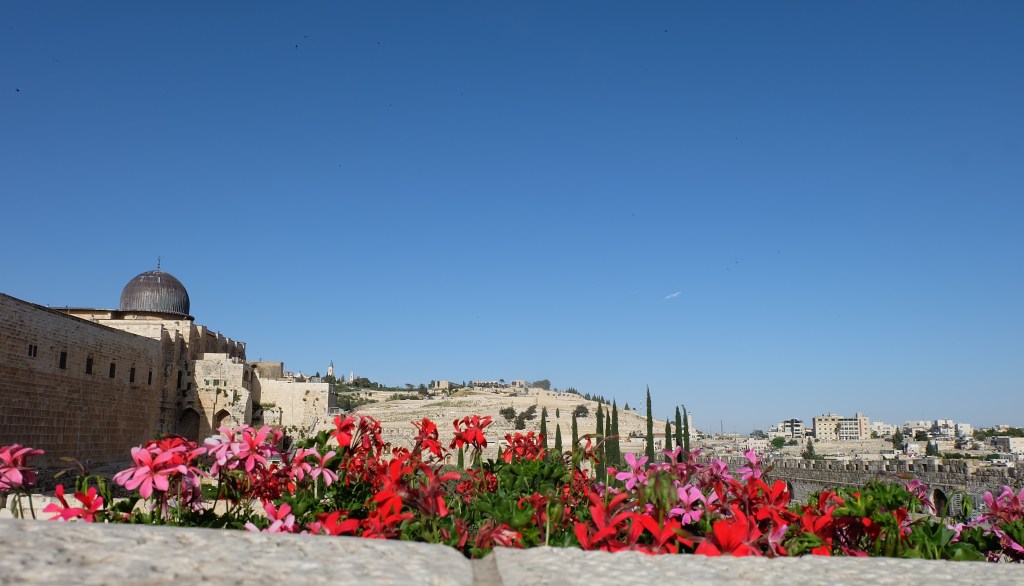
Photo by author of a view from the Temple of Jerusalem, May 2017.
Being devout leads us to recognize and meet Jesus
Only St. Luke reports the story of the Presentation of Jesus at the temple because he wanted to show his audience who were Gentiles or pagan converts that Jesus came not only for the Jews but for everyone.
This remains true to us especially in these modern times when people live in artificial lights and “Klieg lights” that put us on the centerstage only to leave us later groping in the dark, even blinded to false hopes of virtual realities.
St. Luke invites us today to emulate both Simeon and Anna in recognizing and meeting Jesus, the only Light of the world who dispels darkness within and around us.
Now there was a man in Jerusalem whose name was Simeon. This man was righteous and devout, awaiting the consolation of Israel, and the Holy Spirit was upon him. It had been revealed to him by the Holy Spirit that he should not see death before he head seen the Christ of the Lord. He came in the Spirit into the temple; and when the parents brought in the cild Jesus to perform the custom of the law in regard to him, he took him into his arms and blessed God.
Recall how during our Simbang Gabi that for the Jews, a “righteous” person is someone who is holy because he faithfully keeps the Laws of God like St. Joseph, the husband of Mary.
But more than being holy and just, St. Luke also described to us Simeon – as well as Anna implicitly – as “devout” Jews. It is a word rarely used in the Bible. In fact, St. Luke used it only four times: once here in this scene and thrice in the Acts of the Apostles.
In Acts 2:5, St. Luke called the Jews who came to Jerusalem for Pentecost as “devout” ones; then in 8:2, he said “devout men buried” the first martyr of the Church, St. Stephen; and finally in 22:12, he gave the distinction to Ananias as “a devout observer of the law” who came upon instructions from God to pray over and heal Saul who was blinded by Christ’s light on the way to Damascus.
In all four instances, St. Luke described people as “devout” including Simeon and Anna as those of “good heart, ready to believe, and then to act openly and with courage” (Timothy Clayton, Exploring Advent with Luke; page 125). Devout people or devoted persons are a notch higher than just being faithful because they do not merely wait but look forward to the fulfillment of what they believe.
Devoted people make things happen; they do not wait for things to unfold. And that is why they are always at the right place in the right time. Like Simeon and Anna, they give themselves to God wholly to stay attuned with the Holy Spirit and be ready to follow its promptings and leads.
Anna meeting Jesus from catholicfunfacts.com.
See the common trait of both Simeon and Anna as devout people — the presence of the Holy Spirit in them that amid the crowd in the temple on that day, they were able to spot the Child and Savior Jesus Christ being presented by his parents Mary and Joseph!
There was also a prophetess, Anna, the daughter of Phanuel, of the tribe of Asher. She was advanced in years, having lived seven years with her husband after her marriage, and then as a widow until she was eighty-four. She never left the temple, but worshipped night and day with fasting and prayer. And coming forward at that very time, she gave thanks to God and spoke about the child to all who were awaiting the redemption of Jerusalem.
Luke 2:36-38
Jesus comes to us everyday in various ways, in many occasions. He is always passing by, calling us. We have to be on guard in these moments so that we do not miss him. Like reporters following the news, we have to be focused or “tutok” and immersed or “babad” so that nothing or no one escapes us.
Three ways of being devout like Simeon and Anna
It is imperative that we have to be devout first with God so that we recognize and meet his Son Jesus Christ coming to us so we may eventually share him to enlighten everyone. Simeon and Anna show us three important things to keep for us to be devoted to God to encounter Jesus Christ.
First, we have to be faithful in our prayer life. There is no other way in meeting Christ except in having a life of prayer which is a discipline. It is something we do as a habit, every day, every night. Not just once a year like those going to Quiapo every January 9 or completing any novena and then the whole year does nothing.
Devotion is more than collecting images of Jesus, the Virgin Mary, and the saints, joining processions during fiesta or Holy Week, then nothing. Devotion is life, not a show.
Like Simeon and Anna, we have to grow intimately with the Lord by cultivating personal prayers and joining communal activities like the Sunday Mass so that we may know personally and vibrantly God who always leads us to various directions and mission. God is never static but dynamic, unlike us people who keep on insisting on some of our traditions and ways no longer applicable.
Notice how in the first reading the Prophet Malachi said the Lord will suddenly come in the temple, calling on people to always await him (Mal.3:1).
The Old Jerusalem from the inside of the Church of Dominus Flevit (The Lord Cried) at the Mount of Olives, Jerusalem. Photo by author, May 2017.
Second, we can only recognize, meet and share Jesus Christ as Light when we care, love, and respect others. See how Simeon spoke to Mary about his coming mission and its harsh realities. He recognized not only Jesus but also Mary and Joseph. Simeon’s speaking to Mary and Joseph means he recognized the important roles of the parents in being instrumental that he met the Lord.
Any devotion to God and his saints and the blessed Mother Mary without any concern for the people especially the poor and the needy is merely a show and a pageantry of clerical and liturgical excesses. It is triumphalism in its purest sense and hypocrisy at its worst.
We meet Jesus among other people not only within us. This is the gist of the author of the Letter to the Hebrews today when he claimed how Jesus suffered and endured sufferings and death to help those facing trials and tests in life.
Third, we can only recognize, meet, and share Jesus Christ as Light when there is joy in our hearts. And not just being joyful but overflowing with joy like Simeon and Anna that upon encountering the Child Jesus, the more they felt eager to share the good news with others. In fact, they were overjoyed that they even felt so ready to die.
Our parish church on a Sunday afternoon. Photo by Angelo Nicolas Carpio, 12 January 2020.
Fruit of devotion is finally embracing Jesus Christ
Every night before we priests and religious pray Simeon’s Canticle in our Compline (Night prayer), we recite a responsory that says, “Into your hands, Lord, I commend my spirit”. And after that, the antiphon: “Protect us, Lord, as we stay awake; watch over us as we sleep, that awake, we may keep watch with Christ, and asleep, rest in his peace.”
It is only then that we recite or chant Simeon’s Canticle or Nunc Dimittis. It is then followed by the final prayer closed with a blessing that says, “May the all-powerful Lord grant us a restful night and peaceful death. Amen.”
Without sounding morbid or anything, it is my most favorite prayer of all our prayers because it is filled with joy, filled with Jesus, filled with Light. At the end of the day, what a consolation to be filled with joy of Christ that you have had a glimpse of him that you rest in peace hoping to meet him again as well as share him with others too.
I think it is only when we are overflowing with joy that we realize its fullness is found only in Christ, whether in this life or in eternal life. Amen.