Lawiswis ng Salita ni P. Nicanor F. Lalog II, Ika-28 ng Enero, 2020
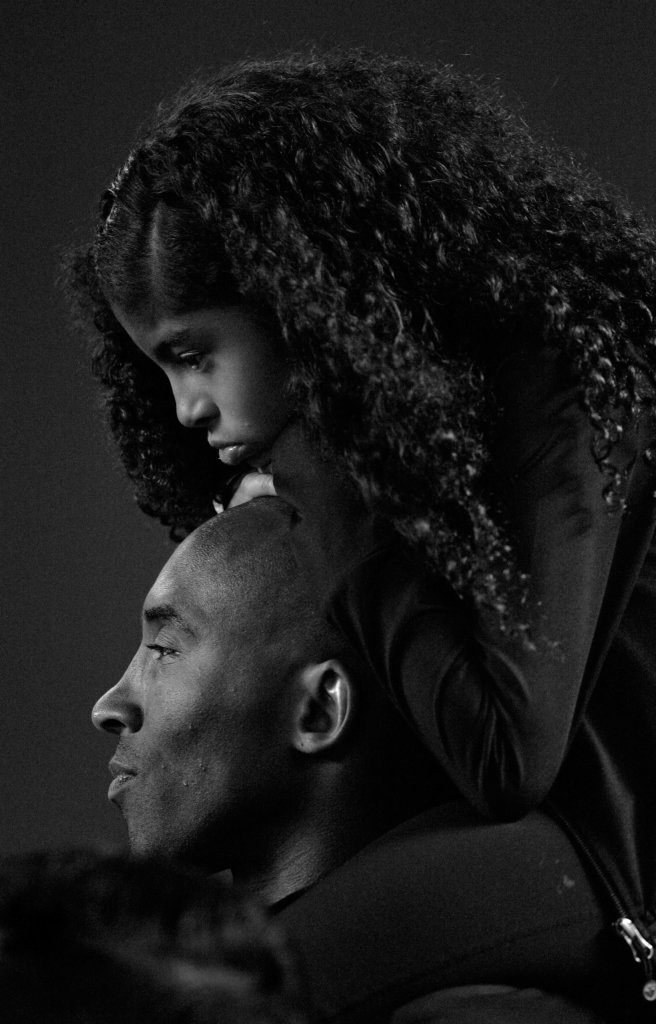
Larawan mula “nappyafro”, 27 Enero 2020
Gaya ng karamihan
ako ma'y nagulantang
nang mabalitaan
biglang pagpanaw ni Kobe Bryant.
Hindi makapaniwala
tumutulo mga luha
pilit inuunawa
malagim na balita.
Aking binalikan
kahusayan at kagalingan
nitong si Kobe Bryant
hindi lamang basketball tatak na kanyang iniwan.
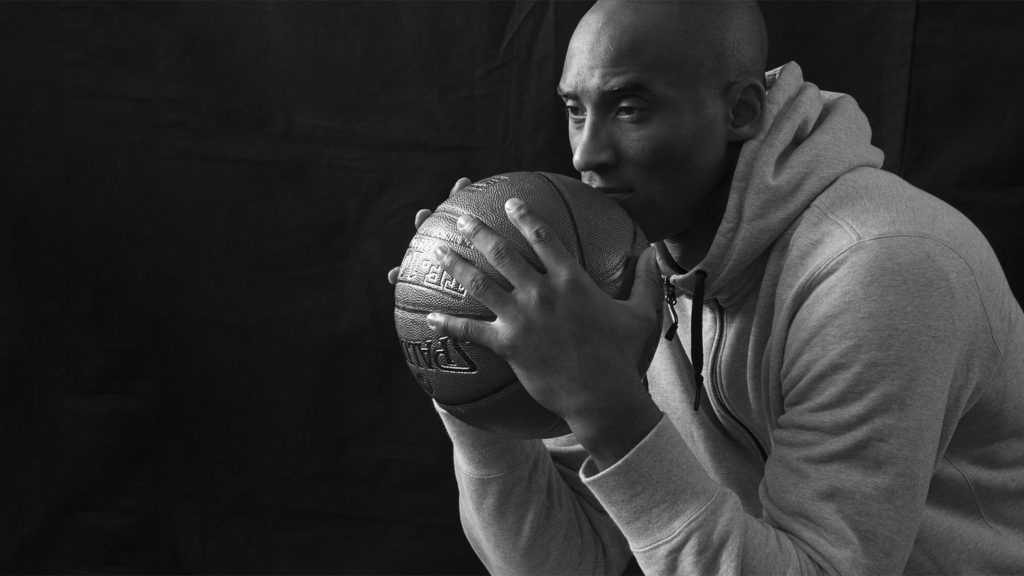
Larawan mula sa theplayerstribune.com
Hindi ko maubos maisip noon
nang siya'y paratangan
pang-aabuso ng isang babaeng
kawani ng hotel na kanyang tinuluyan.
Sadyang narumihan kanyang pangalan
kaya't sinikap niyang iyon ay lampasan
pumili ng bagong pangalan - Black Mamba -
taguri sa kanyang katauhan.
Ngunit mga kaguluhan
hindi siya nilayuan
pagkatalo ng kanyang koponan
pati kanyang kasal nalagay sa alangan.
Larawan mula sa we the pvblic.
Ngunit sadyang mahusay lumaro sa buhay itong si Kobe Bryant
kanyang mga salita pinatunayan, pinangatawanan
na ano mang negatibo, kaguluhan o kahirapan
daan at pagkakataon ng pagbangon.
Nang siya ay mamatay
makulimlim daw ang panahon
kadiliman muli siyang sinundan
upang bumangon sa piling na ng Panginoon.
Sa kanyang paglisan wala siyang sinabi ano man
at marahil kaya tayo nasaktan at luhaan
kanyang mga aral ay ginintuang katotohanan
tagos sa ating puso at kalooban.
Larawan mula sa The New Yorker
Pamilya at mga kaibigan
pahalagahan at mahalin ng lubusan
sapagkat itong buhay walang nakaaalam
kung hanggang kailan.
Gayun din naman
sa buong buhay ni Kobe Bryant
malinaw niyang sinabuhay
itong katotohanan:
Sa buhay palaging mayroong kadiliman
ngunit nasa ating mga kamay pagpapasya
kung mananatili sa kapanglawan o
tatahakin landas ng kaliwanagan!
Quiet Storm by Fr. Nick F. Lalog II, 13 January 2020
Photo by my high school seminary friend, Mr. Chester Ocampo, taken at the UST Senior High where he teaches art (2019).
Life goes on, long after the thrill of living is gone..
John Mellencamp, “Jack & Diane” (1982)
Maybe this is part of getting old, of maturing. Of learning to grapple with life’s mortal realities and still be excited with living. It is a grace that is both fulfilling but also deeply moving and often, chilling.
An uncle and a friend have commented to me in our recent chats how 2020 had come in hard and difficult with so many sickness and deaths in the family.
Some relatives have to fly to Singapore on New Year’s Day to support a cousin whose husband had an office accident that left him in comatose for five days following a brain surgery. He eventually died and had to be cremated a few days later.
December 11 I had to drive to Manila to visit and anoint the father of my best friend from high school seminary who arrived December 2 from the States, fell ill December 4, and had to spen Christmas and New year in the hospital.
Less than 24 hours after being discharged January 3, he died the following morning after talking with my friend based in Chicago, three days short before eldest daughter arrived to accompany him and wife back to New Jersey this week.
Meanwhile last January 2, I had to rush again this time to Quezon City for the wake of our high school seminary classmate Rommel who had died of multiple complications morning of December 31.
He is the third to “rest in peace” in our batch of 18 men who graduated the minor seminary in 1982. We last saw him in our reunion, September 9, 1990 (9-9-90).
Suddenly, I felt myself in some kind of a time warp when everything seemed to be not too long ago, as if we have just graduated recently, or that my dad and their dads have just passed away one after the other these past months.
Death can sometimes be magical when life is lived in love
I realized that when we have so much love for everyone like relatives and friends, including parishioners in the last eight years, time stands still after their deaths. You do not count the days and weeks and months and years you were together and when they have all gone.
They all seem to be still present because you are focused on how those departed have enriched your very life, your very person no matter how fleeting or long ago you were together.
Death can sometimes be magical, most of all grace-filled, when our lives are lived in love.
Life goes on, long after the thrill of living is gone…
John Mellencamp, “Jack & Diane” (1982)
Photo by author, our sacristy 2019.
Memories and knowledge fade, but love remains
Finally I had the chance to visit my mom – for Christmas! – evening of January 6. It was so good that just before leaving, a cousin arrived with his family to visit also my mother who is the younger sister of his mother, my Tita Celia.
It was only at that evening we have finally confirmed that Tita Celia has Alzheimer’s, the reason why her ways and attitudes have been noticeably erratic in 2019 as she was slowly losing grip of her senses.
And now, it is almost all gone according to my cousin whose sadness I strongly felt as he narrated to me the deterioration of his mother, of forgetting and losing so many things, of not recognizing familiar people like relatives and friends.
That same night, we also learned from him how our moms’ younger brother seem to be having signs of the onset of Alzheimer’s disease that are very similar with Tita Celia.
Again, I found myself in a “time warp” while they were happily conversing I was silently trying to recall the last time I have seen my mother’s siblings now afflicted with Alzheimer’s disease, wondering if they will still recognize me if I visit them later.
Moreover, I also realized how afraid I am with the prospects of getting sick in old age than of dying, sooner or later!
In fact, I was so scared that I had a nightmare that same night: in my dream I found myself lost, apparently with Alzheimer’s as I was searching for my parish rectory, looking for my bedroom, asking people about my parish staff, crying like a child.
What a relief when I woke up Tuesday morning that it was just a dream, that I was in fact in my bed, inside my room, in my parish rectory, so alive and still whole!
It seems it is easier to think and accept of one’s death than of getting sick and incapacitated later in old age. It is something we have to slowly come to terms with while still younger and stronger, and perhaps wiser.
How?
As I recalled our conversations with my cousin Louie that Monday night at home, I was amazed at his great love for his mother, Tita Celia. I remembered how he would always have pasalubong for his mother even upon coming home from school!
Maybe that is why even she had forgotten most of us her relatives, she always remembers Louie her son because he is the one who has truly loved her next to the late Tito Memo, her husband. The same is true with others taking care of their old parents afflicted with Alzheimer’s: they are recognized and remembered because they love.
Our memories and knowledge may be erased but the love we have in our hearts, the love we have experienced always remain even if everything has failed in life. That is why St. Paul declared that “love is the greatest of all gifts of God”.
Life goes on, long after the thrill of living is gone…
John Mellencamp, “Jack & Diane” (1982)
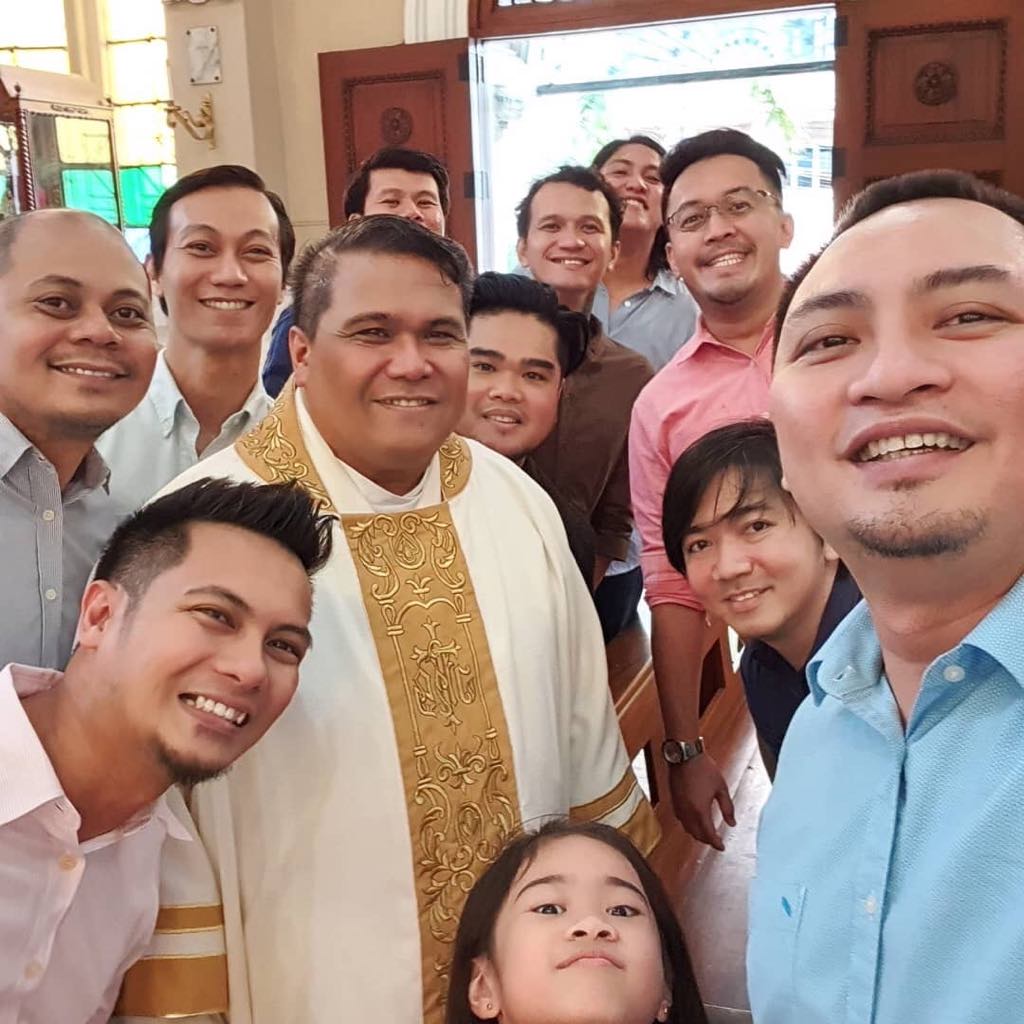
With my former students at the Cubao Cathedral after the wedding of their classmate. I felt so proud, and old, that afternoon seeing them all with their career and family, of how they have maintained their friendships all these years like brothers, of they love one another. Photo by Peter dela Cruz, one in blue.
To live is to love
December 2019 and January 2020 are perhaps my most “marrying months” in my 21 years of priesthood.
Aside from the weddings of friends and students I have officiated these past two months, three more are coming next month of February.
Again, as I saw friends and especially former students getting married, I could not believe at how fast time had passed.
Should I really be surprised when I find out my former students already in their early 30’s, some with families of their own and children whom they instruct to kiss my hand, calling me Lolo Fr. Nick?
It was a very “existential” experience that they are already old, and most of all, I am really that old after all!
Maybe that is what my married friends are telling me of the joy of fatherhood, of having your kids getting married, of having grandchildren, of the inner satisfaction that you have brought life to fruition.
That you have truly loved and now being loved.
It is perhaps the joy of getting old, of maturing, of dying or even forgetting everything when afflicted later with Alzheimer’s that you start to fade from the scene and hand over the stage to the next generation, thinking that life will still go on after us because you have loved much.
What really matters in the end is how we have lived and loved the people around us, of how we have enriched each other’s lives so that as the young ones discover life’s meaning in love, we who are older find life’s fulfillment still in the love from the relationships we keep.
Here’s a hill-billy rock music about love to drive your Monday’s blues away.
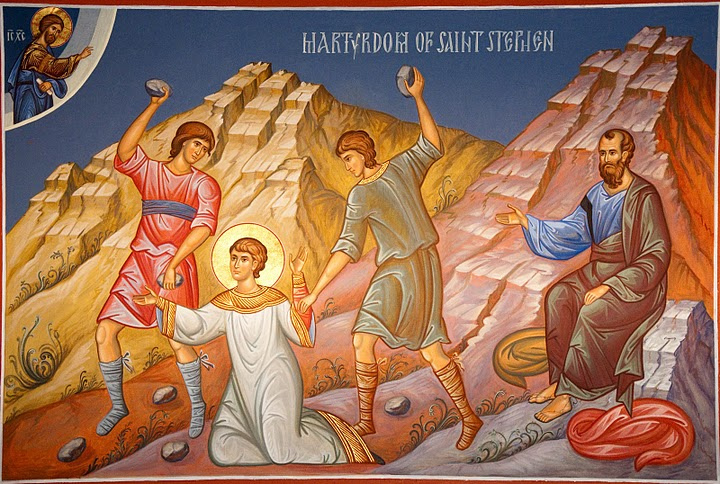
Thursday, Feast of St. Stephen, First Martyr, 26 December 2019
Acts 6:8-10, 7:54-59 ><)))*> ><)))*> ><)))*> Matthew 10:17-22
From The Holy Orders of St. Stephen. Seated in blue is Saul who would alter become known as Paul; at the upper right corner is Jesus Christ appearing to our first martyr of the Church.
How blessed indeed is your birth and coming to us, Lord Jesus Christ! You became like us human so we can become like you, divine!
And now, a day after we celebrated your birthday with joy, you have deepened this joy in us by being one in you, one with you in your humility and love to offer one’s self totally like our first martyr in the Church, St. Stephen.
As they were stoning Stephen, he called out, “Lord Jesus, receive my spirit.”
Acts 7:59
You give us the spirit of love and courage, the spirit of truth and justice, the spirit of mercy and forgiveness, the spirit of self-surrender to be one with you, sweet Jesus.
Teach us to be like St. Stephen to be able to give back to you this same spirit from you as we continue to follow you amid so many forms of persecutions. Amen.
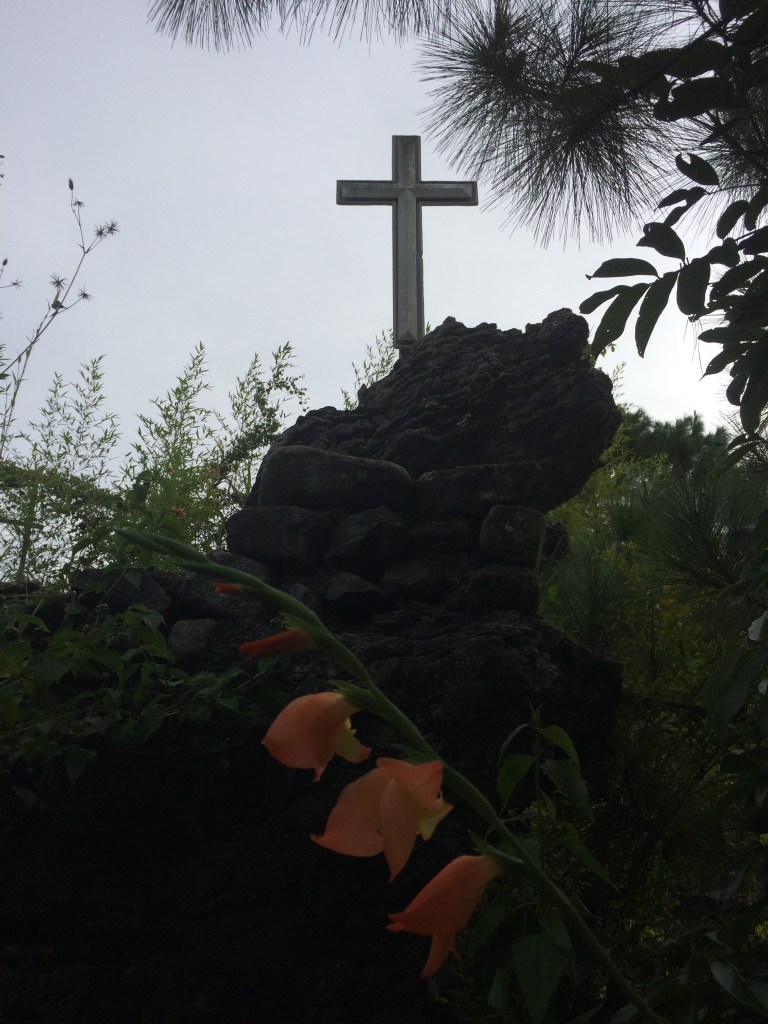
The Cross is the throne of our Lord Jesus Christ, King of the Universe. It is also a lesson in itself, the most profound Jesus has given us that continues to unfold and unravel the “depth and breath” of God’s love for each of us.
Through his Cross, Jesus did not only enter humanity but also allowed humanity to enter him by putting into his heart its very symbolism which is death we all deny and are afraid of. By dying on the Cross, Jesus turned it into a blessing to now become the symbol of life.
Let’s make an illustration.
Yes, it is Bruce Willis from a scene in one of his popular series, “Die Hard” which I continue to watch whenever possible.
What I like most with Bruce Willis in all of his movies is his being so “human” – very vulnerable physically, emotionally and even psychologically. His roles never hide his being a frail human being despite his muscular strength and tactical acumen. Bruce never hides his weaknesses that he can get shot and wounded, dumped and divorced or cheated by his wife like in “The Last Boy Scout”, making him more believable than the other action stars.
And that’s our point here: Jesus never hid his humanity from us. The all-powerful God on whose everything was created according to St. Paul in the second reading became human like us in every aspect except sin.
He is the image of the invisible God, the firstborn of all creation. For in him were created all things in heaven and on earth… He is before all things, and in him all things hold together. He is the head of the body, the church. He is the beginning, the firstborn from the dead, that in all things he himself might be preeminent. For in him all the fullness was pleased to dwell, and through him to reconcile all things for him, making peace by the blood of his cross through him, whether those on earth or those in heaven.
Colossians 1:15-19
Carmelite Monastery, Guiguinto, Bulacan, 12 November 2019.
In becoming human like us, Jesus entered our humanity. He who is the Son of God became an infant and child so weak, entrusting himself to us humans.
And when he had grown into a man, he experienced leaving home and family to fulfill his mission like almost everybody. He had friends, some eventually became faithful while another had betrayed him.
Jesus went to almost every gathering like weddings and banquets, met everybody from the “who’s who” to the nobody like sinners and marginalized. He was manly enough to relate with every kind of people, be they children or women, rich and poor alike.
He had wept at the death of a good friend and the impending destruction of his beloved city of Jerusalem, felt hunger and thirst, got angry and was surprised in some occasions.
Jesus is truly human that we can also identify with him but in his dying on the cross, we were able to enter him to become like him when on his Resurrection, he took away the curse of death and turned it into pure grace in him.
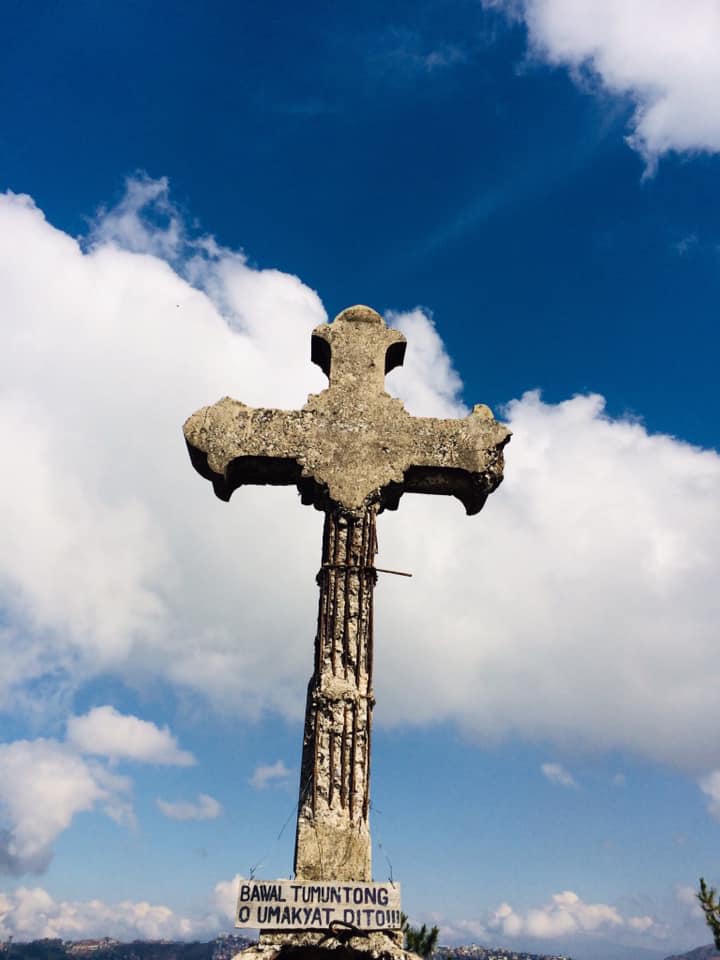
Cross at the Dominican Hill in Baguio City, January 2019.
A very unique characteristic of Jesus as a human is his being a radical in its truest essence and meaning. From the Latin word “radix” that means roots, Jesus brought us back to our very roots, to our grounding of being who is God himself.
Too often, we think of radical people as rebels and revolutionaries leading movements and many changes in the society. They are the “game changers” because they radically change things to show us the more essential.
But in reality, radicals do not change things: they restore things to its original state and being. They get into the roots or “radix” of things to bring out its true meanings by doing away with the unimportant accidentals that have taken over the realities.
That is why Jesus is a radical: by dying on the Cross, he firmly reestablished his throne as King of the Universe because that is where evil ended and death is conquered.
It is on the Cross his throne where every new life begins because it is our very rootedness and “grounding of being” as beloved children of God in him.
Most of all, it is on the Cross his throne, our root and grounding from which comes our sole focus and attention in life – God in Christ Jesus.
The rulers sneered at Jesus… even the soldiers jeered at him. Now one of the criminals hanging there reviled Jesus, saying, “Are you not the Christ? Save yourself and us.” The other, however, rebuking him, said in reply, “Have you no fear of God, for you are subject to the same condemnation? And indeed, we have been condemned justly, for the sentence we received corresponds to our crimes, but this man has done nothing criminal.” Then he said, “Jesus, remember me when you come into your kingdom.” He replied to him, “Amen, I say to you, today you will be with me in Paradise.”
Luke 23:35, 36, 39-43
We have a beautiful expression in Filipino about a person described as “malalim” or deep. A radical is the truly deep person because he is rooted and grounded in his being who is God!
Anyone who truly recognizes Jesus Christ becomes a radical person too, a person of depth because he is rooted in God like the other thief hanging on the cross with Jesus.
See how the rulers or the elite like the priests and elders of Israel who sneered at Jesus: the more they poked fun on him as “the Christ of God”, the more they indict themselves of the grave crime of putting Jesus to death. Eventually at the death of Jesus, the Temple curtain would be torn from top to bottom to signal the end of temple worship and the start of worshipping God in “truth and spirit” in Christ.
The soldiers jeered Jesus too because they “know not what they were doing” because they were all pagans. But again, upon Christ’s death, we find one soldier there at the scene declaring “truly this is the Son of God.”
In any case, some members of Israel’s rulers and Roman soldiers eventually followed Jesus after the Resurrection to show us how the Cross is indeed the throne of Christ the King: it is also a door that opens anyone to conversion, to accept his reign and kingdom!
Most of all, the “good thief”, usually referred to as Dimas, shows us how at the cross any one can become radical like the Lord. While agonizing with Jesus on the cross, Dimas must have examined his life and got into his very core, his roots and realized that basic truth inside him was right there suffering also with him — Jesus whose name means “Yahweh saves”.
What is so surprising with his request from Jesus “to remember him he gets into his kingdom” is the fact that in the Old Testament, it is God who always remembers his people, remembers his promise, remembers his covenant.
Man always forgets God and his covenant that we always turn away from him to live in sin. But at the cross, the throne of Jesus our King, he enables us to remember our roots, our being children of God, our being loved and forgiven that we finally find our way back home.
And that home is God in eternity: “Today you shall be with me in Paradise.”
Every time we are at the cross, when we are getting through so many pains and sufferings, failures and disappointments, even darkness and sin, get into your roots – Jesus Christ – and you will never get lost.
Long before we got into all these crosses in life, remember Jesus was there first for us to suffer and die on his Cross. And that is why he is our King for he rose again so we can become like him in eternity. Amen.
Malaci 3:19-20 ><}}}*> 2 Thessalonians 3:7-12 ><}}}*> Luke 21:5-19
The Wailing Wall of Jerusalem Temple, May 2019.
We are now at the penultimate Sunday of the year as Jesus continues to summarize his teachings today at the Temple area in Jerusalem about his final coming at the end of time.
While some people were speaking about how the temple was adorned with costly stones and votive offerings, Jesus said, “All that you see here — the days will come when there will not be left a stone upon another stone that will not be thrown down.” Then they asked him, “Teacher, when will this happen? And what sign will there be when all these things are about to happen?” He answered, “See that you not be deceived… “
Luke 21:5-8
On the surface, Jesus seemed like to be a “kill joy” in making those bold assertions about the coming destruction of the Temple while everybody was admiring it. But notice how the people reacted: instead of being worried, they asked when it would happen and what would be the warning signs before it takes place as if it is just an ordinary thing!
“Wala lang…” as the young would say these days. Nothing, duh…?
View of Jerusalem from the Church of Dominus Flevit where Jesus wept upon seeing the city from the Mount of Olives.
St. Luke tells us that before Jesus entered Jerusalem, “he wept over it” at the thought that it would be destroyed and that its enemies would not “leave one stone upon another” (Lk.19: 41-44).
If there is anyone deeply hurt and saddened with the Temple’s destruction, it is not other than Jesus Christ our Lord. He certainly shared the people’s admiration for the Temple which he had also claimed as “my Father’s house” (Lk.2:49) when he was accidentally left behind there by Mary and Joseph when he was 12 years old.
Imagine what Jesus must have felt when he spoke of the destruction of the Temple which is the heart of Jerusalem, the jewel of the city, and most of all, the sign of God’s presence among his chosen people!
There must be something deeper with his warning words of the Temple’s destruction that pertains not only to his people at that time but also to us today.
Wailing Wall of Jerusalem, may 2019.
For the Jews at that time, the destruction of the Temple is the end of the world, the signal of the apocalypse. More than a catastrophe involving the destruction of buildings and almost everything including life, it is judgment day that must not be taken lightly.
It is a day calling for conversion as the prophet Malachi in the first reading reminds us that every coming of God is a day of judgment and salvation.
Lo, the day is coming, blazing like an oven, when all the proud and all evildoers will be stubble, and the day that is coming will set them on fire… But for you who fear my name, there will arise the sun of justice with its healing rays.
Malachi 3:19-20
Christ had already come and will come again.
This was his promise and this is what he meant at the cleansing of the temple, “Destroy this temple and in three days I will raise it up” (Jn.2:19). At his Passion, Death, and Resurrection, Jesus Christ had replaced the old Temple worship with himself!
This is what we celebrate in every Holy Mass, God’s coming to us in Jesus Christ his Son.
Jesus comes in every here and now, and his every coming is a process of destroying our old temple of self to give rise to a new temple in Christ. Our concern need not be about a future date of his Second Coming or specific signs of its fulfillment.
Every day Jesus comes again and the challenge is for us to live authentically as Christians daily and not be bothered about the future. He warns us not to be deceived by all of these apocalyptic predictions and statements.
The key word is conversion, of living in the present. Jesus tells us so many things that can be very frightening and scary because what he wants us to do in preparation for his Second Coming is to love, love, and love.
And to love is to always suffer in Christ, with Christ.
He answered, “See that you not be deceived, for many will come in in my name… Do not follow them! When you hear of wars and insurrections, do not be terrified; for such things must happen first, but it will not immediately be the end.” Then he said to them, “Nation will rise against nation, and kingdom against kingdom. There will be powerful earthquakes, famines, and plagues from place to place; and awesome sights and mighty signs will come from the sky. Before all this happens, however, they will seize and persecute you… You will even be handed over by parents, brothers, relatives, and friends, and they will put some of you to death. You will be hated by all because of my name, but not a hair of on your head will be destroyed. By your perseverance you will secure your lives.”
Luke 21:8-19
From I.REDD.IT.
Yes, Jesus will definitely come again at the end of time. Like last Sunday, definitely, there is a resurrection of the dead and life everlasting. But both must be seen in the context of the present time, of the here and now.
When Jesus comes again to judge us at the end of time, he won’t be asking us about the things we have been so preoccupied with in this life like how much money we earn, what car do you drive, or how big is your house?
When Jesus comes again, he will be asking us questions we have always refused to answer in our daily lives like how much have you loved, how much have you sacrificed and suffered for a loved one, or how much have you shared to a stranger?
These are the questions we must be asking ourselves as we near towards the end of the year: how close have I followed Jesus Christ in his Passion and Death so I may be with him in his Resurrection?
May we imitate St. Paul in his second letter to the Thessalonians today to faithfully and calmly fulfill our daily tasks in this life, avoiding being idle for each day is the day of the Lord. Amen.
Our gospel today helps us to further reflect the meaning of last week’s All Saints’ Day and All Souls’ Day when we honored our departed loved ones with prayers, believing and hoping that some day we shall be with them in heaven at “the resurrection of body and life everlasting”.
Every Sunday this is what we profess and so today, our readings invite us to reflect anew this last but crucial article of our faith, theresurrection of body and life everlasting.
Some Sadducees, those who deny that there is a resurrection, came forward and put this question to Jesus, saying, “Teacher, Moses wrote for us, If someone’s brother dies leaving a wife but no child, his brother must take the wife and raise up descendants for his brother. Now there were seven brothers; the first married a woman but died childless. Then the second and the third married her, and likewise all the seven died childless. Finally the woman also died. Now at the resurrection whose wife will that woman be? For all seven had been married to her.”
Luke 20:27-33
The Jewish Cemetery at the Mount of Olives facing Jerusalem, May 2019.
Jesus had finally entered Jerusalem. What an extraordinary manner for him to discuss death and resurrection right in the city he knew where he would eventually die and rise again in a few days later!
And the first to confront him there were the Sadducees, Israel’s elite from whose ranks came the high priests who later conspired with Rome to put Jesus to death.
Jews at the wailing Wall, May 2017.
Very conservative and rigorous in their practice of religion, the Sadducees were basically fundamentalists who refused to accept oral traditions on equal footing with the Pentateuch. They only accepted whatever was explicitly written on the Pentateuch, discarding anything that the Torah does not mention at all like the resurrection, existence of spiritual beings like angels and immortality of the soul.
Don’t we find ourselves into the same situation too when despite our professed religiosity, we subscribe to other beliefs like reincarnation and fortune-telling because of “proofs” we find about their veracity unlike the resurrection that seems to be so difficult to think of in the first place?
We have those vestiges of fundamentalism within, always searching and asking for proofs on so many things about our religious beliefs, especially about God and Jesus Christ.
Jesus said to them, “The children of this age marry and remarry; but those who are deemed worthy to attain to the coming age and to the resurrection of the dead neither marry nor are given in marriage. They can no longer die, for they are like angels… That the dead will rise even Moses made known in the passage about the bush, when he called ‘Lord’ the God of Abraham, the God of Isaac, and the God of Jacob; and he is not God of the dead, but of the living, for to him all are alive.”
Luke 20:34-38
Photo by Mr. Raffy Tima of GMA-7 News, 2018.
Notice how Jesus right away told them analogies and comparisons are not applicable because marriage and resurrection are of two different realms. The Sadducees were thinking on ground level when resurrection is definitely of a higher plane.
Jesus finds no need to prove anything at all to them – even to us! What he is more concerned is for us to “level-up” our thoughts, to set our sights to him, the Son of the Living God.
Now in Jerusalem to fulfill his mission, Jesus in the next two weeks will summarize for us all his teachings that lead to our coming home to the Father in heaven upon our death. Like Jesus Christ who died and rose again, we shall experience the same in the end.
How? Nobody really knows but our faith teaches us that resurrection is more than being restored to life; resurrection is life perfected in Christ. Life is surely changed and that is why it is on a different and higher level of existence.
Every time we experience our little deaths on our daily cross with Christ, we also experience our little resurrection when our lives are changed for the better. Amidst our many struggles in this life, we experience God’s loving presence, his very revelation of himself that moves us to deeper faith in him for indeed, he “is not God of the dead” – nor a dead God – because “for him all is alive” .
This faith in the resurrection is faith in the living God “who has loved us and given us everlasting encouragement and good hope through his grace” (2 Thes. 2:16) in Jesus Christ.
It is a faith borne out of our encounter with him as our loving and merciful Father that we are filled with passion to do everything for him because he is so true, so real, like in the experiences of the seven Maccabean brothers who heroically accepted death than sin against God in the first reading.
In 2013, I lost my best friend from high school to cancer.
One week before he died, I visited him three more times and that was when I noticed something so different: during the early months of his sickness, he would always cry to me, expressing his fears and anger but, during that final week of his life, I was the one crying to him while he was the one who would console and explain things to me!
Later, I experienced the same thing with some friends and parishioners I have accompanied in their final journey as a priest.
I have learned that the dying stop crying, stop fearing death because they could already see their final destination. They could feel God so close already that they no longer resist dying, so certain of their own resurrection. We who are left behind cry not only in losing our loved ones but unconsciously because we are afraid, unsure of where our lives are leading to.
In one of the beautiful scenes of the Netflix series The Kominski Method, Sandy (Michael Douglas) told his friend Norman (Alan Larkin) how everyone else is also afraid because nothing is so certain in this life. But, Sandy added, we continue to live because we have others with us journeying together in this life.
Let that Other be Jesus Christ who has come to accompany us in this life and back to the Father in heaven. Amen.
Saturday, Feast of the Exaltation of the Cross, 14 September 2019
Numbers 21:4-9 ><)))*> Philippians 2:6-11 ><)))*> John 3:13-17
The Brazen Serpent Monument on Mt. Nebo inside the Franciscan Monastery in Jordan, May 2019.
“We adore you, O Christ, and we praise you. Because by your holy cross you have redeemed the world.”
As we celebrate today the Feast of the Exaltation of the Cross, we widen our gaze on your holy cross, Lord Jesus, that remains standing to remind us of your love and mercy, of your abiding presence and light amidst the many darkness enveloping us today.
When we look around us, when we read the newspapers, watch the TV and listen to the radio, we cannot help but cry, even complain deep within like the Israelites in the wilderness why all the miseries still happening around us with all the killings and injustices going on.
Sometimes, Lord, the powers of evil and sin seem to prevail over the world cast in widespread darkness with all the chaos and confusions going on.
But here lies the beauty of your Cross, Jesus Christ: it does not deny the sufferings and pains caused by our sins that led to your death that still continue to this day and cause our grave sufferings; however, despite this gravity of our sins, your Cross reminds us too of your unending love and mercy.
More powerful than evil and darkness are your love and light, O sweet Jesus made manifest on your Cross.
Grant us that gaze of faith, the look of faith needed by so many of us travelling in this wilderness to always see you Lord who was sent by the Father because he so loved the world that whoever believes in you might not perish but gain eternal life. Amen.
We were in Grade Six when the American progressive rock band Kansas released “Dust In the Wind” in 1978. Immediately upon hearing it on radio with its signature guitar plucking, everybody was talking about its spiritual meaning, especially its music that sounded so mystical.
According to its composer and band guitarist Kerry Livgren, the song was inspired by a line from the Book of Ecclesiastes which we have heard proclaimed in today’s Sunday Mass with some references also from Genesis 3:19 “…for dust thou art, and unto dust thou shall return.”
I have seen all things that are done under the sun, and behold, all is vanity and a chase after wind.
Ecclesiastes 1:14
Like the author of the Ecclesiastes who called himself Qoheleth, Dust in the Wind is no “kill joy” but a beautiful and timely reminder to us all that indeed, we are all dust in the wind, that we must seek things that truly last even after death.
And that is God alone.
What I like most in Dust in the Wind is its haunting melody that elicits a kind of fear that does not make you cower or tremble. It is a positive kind of fear that according to experts motivates man to further his knowledge and abilities. Like this fear of death that has enabled man to achieve so many breakthroughs in medicine and the sciences to cure and prevent many diseases that have greatly improved our quality of life. It was also the fear of death, of going hungry that enabled many explorers to discover many new lands and territories that now push advanced nations to explore the universe for future human colonies.
Sometimes in life, we have to be shocked and shaken because fear can be a good motivator for us to strive for the best. But more than a motivator, the fear of death can also be a path to holiness and communion in God as the Book of Ecclesiastes shows us: the more we realize our nothingness like dust in the wind, that everything is vanity, the more we also desire and hold on to God who is the only One permanent and absolutely good after death.
The French author and film director Georges Bernanos (Diary of a Country Priest) wrote in one of his novels that,
In a sense, you see, Fear is the daughter of God, redeemed on the night of Good Friday. It is not pretty to see— of course not!— sometimes mocked, sometimes cursed, renounced by everyone… And yet, do not deceive yourself: it is at the bedside of each agony, it intercedes for man.
Joy (La Joie)
May this music by Kansas remind us that only Jesus Christ can fulfill us. Not money or wealth, power or fame for “one’s life does not consist of possessions” (Lk. 12:15). May it also remind us of Christ’s parable of the rich man who died after storing treasures for himself, forgetting to be rich in what matters to God (cf. Lk.12:21).
Outside Jerusalem is the Mount of Olives Jewish Cemetery. It is one of the world’s oldest, existing for over 3000 years. It is also one of the most expensive cemetery in the world for having the choicest spot to be buried in the planet as it faces the Eastern Gate of Jerusalem where the bible tells us the Messiah would be coming through. Hence, all tombs at the Mount of Olives Cemetery point to that direction so that all those buried there would be the first to rise again to life and welcome the Messiah when he comes.
Of course, we Christians believe Jesus is the Messiah or the Christ who in fact came through that Eastern Gate on Palm Sunday when he entered Jerusalem over 2000 years ago to offer his life for our salvation on Good Friday, resurrecting on Easter Sunday!
And while the Jews await the Messiah and we Christians affirm he has come in Jesus, our Moslem brothers and sisters sealed the Eastern Gate during the Middle Ages that since then, no one could pass through it except literally face a blank wall.
I love telling this amusing story to fellow pilgrims to the Holy Land but find it today as a beautiful springboard for reflection to balance our Sunday gospel that sounds like a “shock preaching” by Jesus Christ.
Someone in the crowd said to Jesus, “Teacher, tell my brother to share the inheritance with me.” He replied to him, “Friend, who appointed me as your judge and arbitrator?” Then he said to the crowd, “Take care to guard against all greed, for though one may be rich, one’s life does not consist of possessions.” Then he told them a parable… “Thus will it be for the one who stores up treasure for themselves but are not rich in what matters to God.”
Luke 12:13-16, 21
Beginning this Sunday until the next three weeks, we’ll hear Jesus Christ “shock preaching” us the plain truth we always forget or even disregard: that we all die and what really matters most in life are the good deeds we have done. All our cherished possessions, everything we have labored so hard in this life we shall leave behind when we die because as the Lord had said, “life does not consist of possessions”.
We have known this all along but we rarely realize its full impact until we come face to face with death due to an illness, retirement, or situations when we existentially feel we are mortals after all, contrary to what we have felt and held when we were younger.
So, why wait until it is too late? Start considering now in everything of what will remain after our death.
And if you find this shocking, see also how Jesus coldly refused the man’s plea for his intervention to have his share of inheritance that is rightly his: “Friend, who appointed me as your judge and arbitrator?” What had happened to his teachings last week about prayer, of God giving what is best for us like our sinful parents?
Here we find the value of Christ’s shock preaching: his response was not only directed to the man but to us all who always pray to him, asking him for so many things when we forget the more essential, God. As we have reflected last Sunday, we pray to have God because when we have him, we have everything! Jesus is redirecting our attention and focus on things that last even after our death, on “being rich in what matters to God.”
After my father had retired, he was diagnosed with glaucoma. While driving for him on our way home from the hospital, he told me how he had realized that God is not really so concerned about our temporal affairs like wealth. He claimed that everything he had prayed for was granted by God except only that one thing of being rich.
I totally agree with my Dad and that is why I do not pray for any material thing for myself since 1995 while a seminarian until now that I am a priest for 21 years. I do pray for the material well-being of my family, relatives and friends because when they are financially stable, I know they would take care of me and of my needs just like last week when a relative gave me a brand new laptop (a Mac, in fact). I do not pray for things because I am so convinced that whatever I need, God will give me. The only thing I pray for myself is that when I die, God brings me to heaven.
When we try to pray deeper, we also realize that in whatever problem we find ourselves confronted with especially with those pertaining to material things like money, cars, house, and gadgets, Jesus always responds in the same manner he did with that man who requested him on his way to Jerusalem. That is because Jesus came not to be a judge and arbitrator of our inheritance and assets. Jesus came for the salvation of our souls, for the fulfillment of our lives that can never be achieved with money and wealth or power and fame.
Jesus came for us, for you and me. Personally. He wants us to focus more on “what matters to God” like love and mercy, kindness and generosity with others which he lavishly gives us. When we are rich with these gifts that matter to God, we also find ourselves desiring less material things, being more fair and just in our dealing with others. No stealing, no cheating, no character assassination. When we have more of spiritual goods, we have more joy within, more peace and contentment. But when we have more of material goods, we feel more uneasy and most prone to sin.
Vanity of vanities, says Qoheleth, vanity of vanities. All things are vanity! For what profit comes to a man from all the toil and anxiety of heart with which he labored under the sun? All his days sorrow and grief is his occupation; even at night his mind is not at rest. This is also vanity.
Ecclesiastes 1:2; 2:22-23
Women pose for photos near a homeless man during the New York Fashion Week , October 2012. Photo by Reuters via The Economist Magazine.
Qoheleth is no “killjoy” but merely telling us that everything on earth vanishes like thin air. Only God lasts for all eternity. And that is also the whole point of St. Paul in the second reading.
Brothers and sisters: If you were raised with Christ, seek what is above, where Christ is seated at the right hand of God. Think of what is above, not of what is on earth. For you have died, and your life is hidden with Christ in God.
Colossians 3:1-3
Sometimes in life, we need to be shocked and shaken of the simple facts we take for granted like our relationships with God and with others. Here we find that fear can sometimes be good. In fact, it was our fear of death that led mankind to many medical and scientific breakthroughs in history that have made life today better and safer, and yes, easier. It was also this fear of death that had enabled man to discover new lands to inhabit and is now pushing us to explore the universe.
But most of all, this fear of death can also be holy and blessed too because when we become conscious of our own end in life, that is when we start living authentically in the hope of eternal life in God. A blessed Sunday to you! Amen.
Lawiswis ng Salita ni P. Nicanor F. Lalog II, Ika-09 ng Hulyo 2019
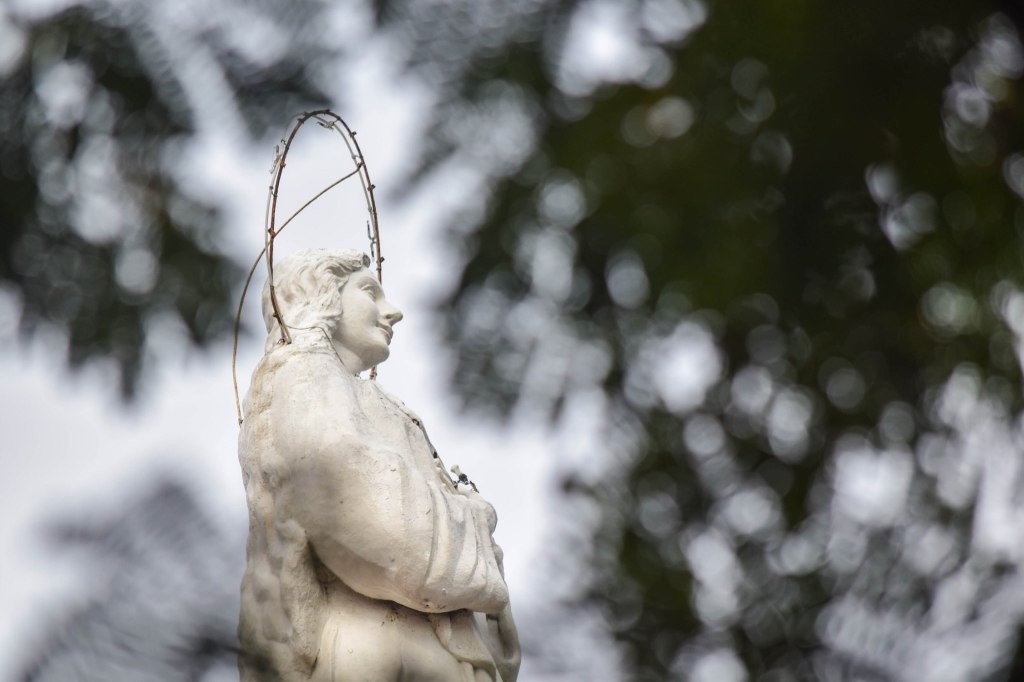
Imahen ng Inmaculada Concepcion sa tuktok ng kampanaryo ng Katedral ng Malolos. Larawan kuha ni Lorenzo Atienza, 12 Hunyo 2019.
Nakakagulat, nakakagimbal
Marami ang nagulantang
Sa balitang napakinggan
Lalawigan ng Bulakan
Number one ngayon sa patayan.
 Kadluan ng katagalugan
 Na siyang wika ng mga makata
 Dito sa Bulakan iba na yata sinasalita:
 Tokhang na mula sa Bisaya
 Nawala na ang puso sa pananalita pati sa gawa.
Nasaan mga namumuno ng pamahalaan at Simbahan
Paano nagkaganyan itong duyan ng kasaysayan
Naging bukirin ng patayan
Nang hindi namamalayan o
Dahil wala tayong pakialam?
Noon pa mang makalawang taon
Pinakamaraming natokhang noong linggo ng Bulakan
Natabunan lamang ng balitang pagpatay
Ng mga pulis sa walang kamalay-malay na kabataan
Kian kanyang pangalan doon sa Kalookan.
Pansamantalang tumigil mga patayan
Kinasuhan mga berdugo ni Kian
Ngunit kanilang hepe sa Kalookan
Binigyan ng pabuya upang pamunuan
Pulisya sa buong lalawigan ng Bulakan.
Ano na nga ba nangyari sa atin, mga kababayan?
Di lamang nanunungkulan kungdi pati mga mamamayan
Wala na ba tayong pakialam
Mga dating luntiang sakahan ay tinambakan
Upang gawing paradahan ng mga container van?
Bago pa dumating ang tokhang
Pinatay na rin mga ilog at sapa natin
Kaya maraming lupain naging dagat-dagatan na rin
Habang hinahayaan nating gahasain
Bulubundukin ng Sierra Madre upang samsamin kayamanan natin.
Nawala na yata pasintabi
Pati mga simbahan ginigiba, iniiba
Kabanalan hinalinhan ng kaartehan
Diyos hindi ni makita o maramdaman
Puro palabas, nawala na napapaloob na kahulugan.
Halina at magsuri, magmuni-muni
Ating pagbulayan kahulugan nitong buhay
Matatagpuan kung ano ating niyuyungyungan
Madalas siya rin nating pinahahalagahan
At tiyak naroon din ating kayamanan.
Mabuting Pastol, kaawaan at kalingain aming lalawigan na tila pinabayaan ng iyong mga pinagkatiwalaan! Larawan ng luklukan ng Katedral ng Malolos. Kuha ni Lorenzo Atienza, 12 Hunyo 2019.