
The Lord Is My Chef Sunday Recipe, Wk. XIII-C, 30 June 2019
1 Kings 19:16, 19-21 >< )))*> Galatians 5:1, 13-18 >< )))*> Luke 9:51-62

After all the solemnities we have celebrated since the closing of Easter Season last Pentecost Sunday, we now get into the very heart of the Ordinary Time of our liturgy with St. Luke as our guide. Feel the sobriety and hint of solemnity at the start of the second part of his gospel we have heard today which is about discipleship and facing death like Jesus.
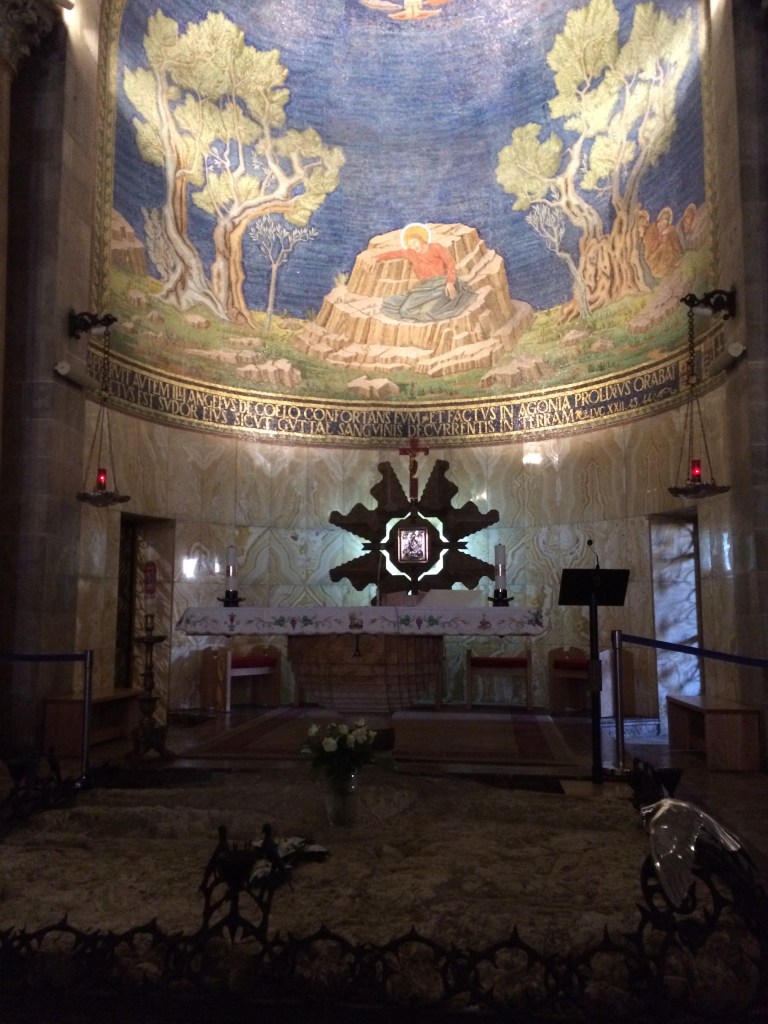
When the days for Jesus’ being taken up were fulfilled, he resolutely determined to journey to Jerusalem.
Luke 9:51
I love the way St. Luke wrote this part about Jesus “resolutely determined to journey to Jerusalem.” In some translations, they have retained its literal equivalent from the original Greek text that says “Jesus set his face to Jerusalem”. For Jesus, Jerusalem is where he fulfills his mission from the Father by dying on the Cross. So, if we are going to be more literal with this opening sentence by St. Luke, it would be “Jesus set his face to death.”

A friend who had inspired me about blogging has been writing about death lately. Last June 10, 2019 he wrote:
No one wants to write about death. Or dying.
To many, it’s not only a morbid topic. It is a taboo to talk about it.
Of course we’d rather talk about the joie de vivre in our daily chronicles. It is, after all, what sparks joy.
Death is a stranger to this world. Until it comes knocking at your door.
https://relativejoyforyou.wordpress.com/2019/06/10/dear-death/?fbclid=IwAR2ryu6Kou_CIRYqTz193ZTkpdS5bSabCX9-7NuhDSHM3jYcrhjNY8rta6o
His words are very true.
In fact, I have been very hesitant to write about death as a topic for my homily this Sunday because Sundays are supposed to be joyful! And that is perhaps our problem with death: we always see it as something dark and negative. (Is it not?)
Today Jesus is teaching us to see death in his perspective as something beautiful and even glorious. St. Luke saw it and is now leading us in this new approach to death as he tells us the story when “Jesus resolutely determined to journey to Jerusalem.”
One thing that strikes me during sick visitations in my parish and in Metro Manila is how we see death as an escape or an ending. Patients and relatives alike always tell me to pray for death to end all sufferings and pains.
When “Jesus resolutely determined to journey to Jerusalem,” he was not sick, physically and emotionally. He was very well and able. When he was hanging on the Cross, he did not wish death to end his pains. On the contrary, he actually faced death head on. And this is one of the very important lessons Jesus had taught and shown us: facing death, even embracing death. Recall how during his Last Supper on Holy Thursday Jesus was never caught surprised by death. He was in total control of everything.
This is the reason why Jesus accomplished so much in just three years of his ministry because he was very aware of his coming death. In coming to terms with death, Jesus lived fully even if he died at 33 years old. The same is very true with some of our saints who have died young and have accomplished so much because they have all lived to the fullest that death did not surprise them at all in their works and mission.

One of the new attractions at Capernaum today when you come to visit the ruins of the synagogue Jesus used to visit there during his lifetime is a park where one finds his statue sleeping on a bench at the entrance across the Franciscans’ quarters. The statue is executed artistically and realistically that passersby would drop some coins for alms in a pot near the image! The sleeping Christ on a bench depicts exactly the second part of the gospel we have heard today: there is nothing certain in this life except Jesus Christ. The sooner we come to accept and embrace this reality vis-a-vis death, the better for us.
As they were proceeding on their journey someone said to him, “I will follow you wherever you go.” Jesus answered him, “Foxes have dens and birds of the sky have nest, but the Son of Man has nowhere to rest his head.”
Luke 9:57-58
Discipleship is coming to terms with death, accepting its reality so that we stop wasting our lives with bitterness and resentments to start living joyfully and meaningfully in Christ. I have heard countless of times how most patients including relatives and friends would bargain for more time, for more life because they felt they have not lived fully. As they come face to face with death during sickness or an accident, they beg even for a little time to live fully, proving that “in the end, it is not the years in your life that count but the life in your years.”
Facing death like Jesus Christ is having God as our top priority. Unlike the second and third people Jesus had invited to follow him and asked his permission “to first bury his dead father” and “to first say goodbye to his family.” Jesus is not teaching us to turn away from our family and loved ones; he wants us to always have God and eternal life as our top priorities in life. Like Elisha in the first reading who slaughtered his oxen and cooked them using the yoke and plow as firewood to show he was foregoing everything to follow Elijah as a prophet.
Every disciple is a nomad following Christ, a pilgrim and sojourner whose true home is in heaven with the Father; hence, the importance of thinking always of things of the above, of heaven and of eternal life. St. Ignatius of Loyola calls it the “principle and foundation” in life wherein we do the things that would lead us to salvation and avoid things that would bring us to eternal damnation.
Of course, such a vision about life is not only contrary to the values of the world but even a folly. See how the world tells us to “just do it” and to “obey your thirst” so that we can have easy and comfortable lives, enjoying everything to the fullest by ensuring our security with material wealth. On the other hand, discipleship in Christ as St. Paul reminds us in the second reading is allowing the Holy Spirit to direct our lives because it is the spiritual things that truly fulfill us. What a tragedy especially among affluent nations we hear reports of increasing number of people committing suicides, feeling empty and lost despite their material wealth?!
Jesus alone is our joy and security. In him, trials and sufferings become blessings because they make us stronger and better persons. Most of all, death is neither an end nor an escape in Jesus but a passage to life in the fullest. This is not a simplification of the complex reality of death but an assurance that Jesus had conquered it and had made it into a blessing that we can now discuss and reflect about it.
I know that speaking about death is easier said than done. It may even be Quixotic. But, death is a reality of life we have to face and deal with, even befriend little by little as we age. Reflecting about death is a kind of death itself and at the same time a grace from God who enabled us to face it even in our limited abilities. Let us put our complete faith in Christ, following him resolutely to Jerusalem as his disciples so that when death finally comes to us, we find Jesus by our side. A blessed week to you! Amen.