40 Shades of Lent by Fr. Nicanor F. Lalog II
Wednesday, First Week of Lent, 09 March 2022
Jonah 3:1-10   <*{{{>< + ><}}}*>   Luke 11:29-32
Photo by author, April 2021.
God our Father,
so often we are like Jonah
 who doubt and mistrust people
of the good they could do;
like Jonah, we refuse to follow
your instructions because we see
others as good for nothing,
hopeless to change and become better.
Sadly, the very people we doubt of
their own abilities and goodness
are the ones closest to us like husband or wife,
children, brother or sister, and friends!
How sad in our modern time,
despite our many "achievements",
we continue to refuse in appreciating
our worth as your beloved children
that we also fail to value others around us,
especially those who truly care and
love us like family and friends.
Help us see, dear God,
this spirit and challenge of Lent
for us to be trusting first of ourselves,
of our worth, of our identity as your
beloved children to believe in  others too.
May the words of your Son Jesus awaken
us to how "This generation
is an evil generation; it seeks a sign,
but no sign will be given it,
except the sign of Jonah" (Luke 11:29).
Yes, Lord, we keep looking for signs
from you and others so that we could
believe in ourselves forgetting that
we are already your sign of presence
in Jesus Christ who offered us his life
on the Cross to be whole again in you.
On this season of Lent,
give us dear Jesus,
the grace to rediscover and
return to the sacrament of reconciliation
to confess our sins, experience your
forgiveness through your priests;
let us return with our whole heart
for you are gracious and merciful,
O God; take away those silent burdens of
guilt feelings that nag and disturb
our conscience which prevent us from
seeing your light in us and in others.
Amen.
Lawiswis ng Salita ni P. Nicanor F. Lalog II
Kapistahan ng Pagbabalik-loob ni San Pablo, Ika-25 ng Enero 2022
Gawa ng mga Apostol 22:3-16  ><}}}*> + <*{{{><  Marcos 16:15-18
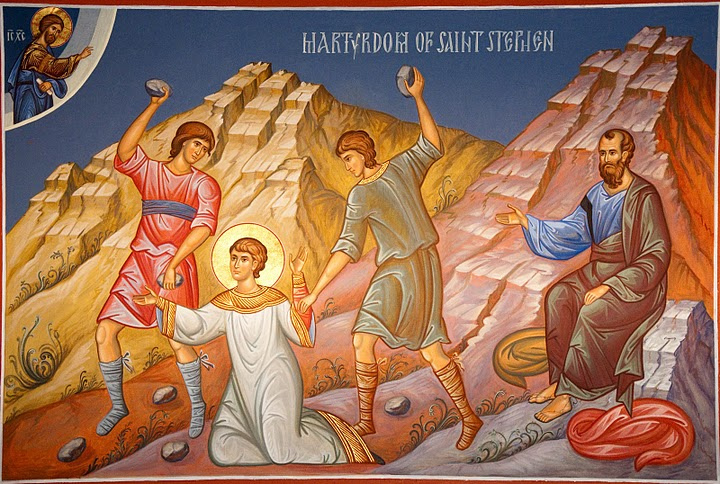
Larawan mula sa en.holyordersofststephen.org ipinapakita pagkamatay ng unang martir ng Simbahan si San Esteban habang pinapanood ni Saul na noo’y taga-usig ng mga Kristiyano habang napakita naman mula sa langit ang Panginoong Jesu-Kristo.
“Kalooban ng Diyos.” Ito ang sa tuwina palagi nating inaalam sapagkat batid nating ito ang pinakamabuti para sa atin. Subalit kadalasan tayo ay nabibigo, naguguluhan kung ano ang kalooban ng Diyos dahil madalas akala natin para itong tanong na isang pindot ay malalaman kaagad ang sagot tulad ng sa Google.
Kauna-unahang hinihingi sa atin upang mabatid ang kalooban ng Diyos ang tayo muna ay “pumaloob sa Diyos” na ibig sabihi’y dapat nasa loob tayo ng Diyos. Kung ikaw ay nasa labas ng Diyos, tiyak ikaw ay lumayo sa Kanya dahil sa kasalanan; kaya, pagbabalik-loob sa Kanya ang kinakailangan.
Ibig kong simulan dito ang pagninilay sa Kapistahan ng Pagbabagong-buhay ni San Pablo Apostol na ating ipinagdiriwang sa araw na ito. Ito ang upisyal na salin mula sa Inggles ng “Feast of the Conversion of St. Paul the Apostle” na tila may kulang.
Ganito kasi iyon: Tama rin namang sabihing “pagbabagong-buhay” dahil bawat conversion wika nga ay pagbabago tulad ng na-convert sa ibang relihiyon o sa ibang anyo o gamit. Ngunit sa bawat pagbabago, mayroong higit na malalim na nababago na hindi namang ibig sabihin ay nag-iiba o nagiging different.
Kasi iyong sinasabing conversion ni San Pablo o ng sino pa mang tao ay hindi naman pagbabago ng pagkatao kung tutuusin; sa bawat conversion ng isang makasalanan o masamang tao, hindi naman nababago yaong tao talaga kungdi kanyang puso na siyang naroon sa kanyang kalooban.
Ibig bang sabihin ang pagbabagong buhay ay yaong dating masayahin o palatawa magiging malungkutin o iyakin? Yaong dating mapusok at malakas ang loob magiging duwag? O yaong pagbigla-bigla at padaskol-daskol ay magiging makupad at mabagal sa pagdedesisyon?
Sa pagbabagong-buhay ng sino man tulad ni San Pablo, hindi nababago ang pagkatao: mapusok pa rin si San Pablo, palaban at matapang nang tawagin at sumunod kay Kristo. Hindi naman nabago kanyang karakter pero nabago kanyang puso na nahilig sa kalooban ng Diyos pagkaraan. Iyong kanyang dating kapusukan at katapangan sa pag-uusig ng mga Kristiyano ay nalihis naman sa pagpapahayag ng Mabuting Balita ni Hesus sa mga Hentil at kapwa niya Judio.
Kaya naman higit na malalim at makahulugang isalin ang conversion ng sino man sa katagang “pagbabalik-loob”. Bawat nagkakasala ay lumalayo ang loob mula sa Diyos na ibig sabihin ay “ayaw sa Diyos” gaya ng ating pakahulugan tuwing sinasabing “malayo ang loob”.
Kapag nagsisi at tumalikod sa kasalanan ang isang tao, hindi lamang siya nagbabagong-buhay o nag-iiba ng pamumuhay kungdi higit sa lahat, siya ay “nagbabalik-loob” sa Diyos. Tatlong bagay ang itinuturo sa ating ni San Pablo sa kanyang karanasan ng pagbabalik-loob sa Diyos.
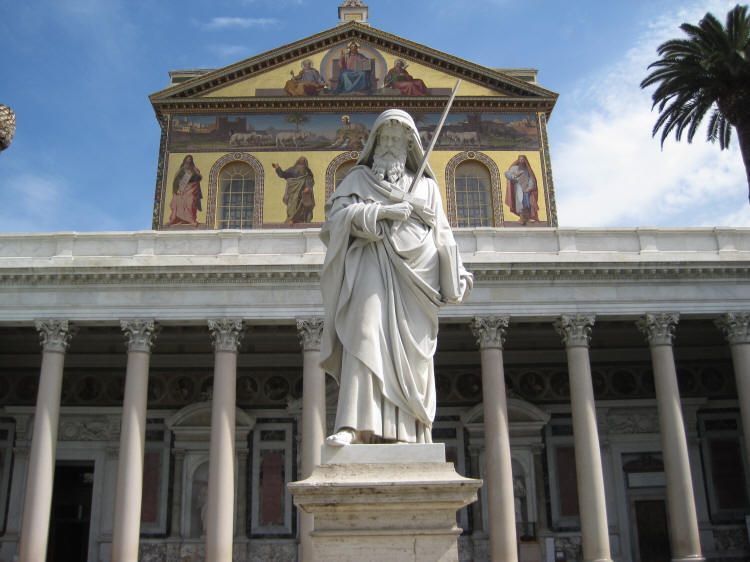
Larawan mula sa en.wikipedia.org ni San Pablo sa harapan ng Basilica ni San Pablo sa Roma, Italya.
Una, bawat pagbabalik-loob ay isang personal na pagtawag at paanyaya mula sa Panginoong Hesus. Batay sa salaysay ni San Pablo, “Nasubasob ako sa lupa, at narinig ko ang isang tinig sa akin, ‘Saulo, Saulo!’”(Gawa 22:7).
Araw-araw inaanyayahan tayo ni Hesus na magbalik-loob sa Kanya.
Iyong mabatid lamang natin sa ating kalooban na mali ang ating ginagawa o kaya tayo ay kabahan at matakot sa isang masamang gawain, iyon na ang tinig ni Hesus na tumatawag sa atin katulad kay San Pablo.
Huwag na nating hintayin pa ang isang “dramatic” o “bonggang” pagkakataon wika nga upang pakinggan ang tawag ng Panginoon katulad nang mahulog sa kanyang kabayo si San Pablo. Hindi ibig ng Diyos na sumadsad pa ang ating buhay sa kasamaan at mawala na ang lahat ng pagkakataong makabalik pa sa Kanya.
Ikalawa, madalas kapag tayo tinawag ng Diyos na magbalik-loob sa Kanya ay hindi kaagad maliwanag ang lahat sa atin kaya kailangan natin ng taga-akay: “Nabulag ako dahil sa kaningningan ng liwanag na iyon, kaya’t ako’y inakay na lamang ng mga kasama ko papasok sa Damaso” (Gawa 22:11).
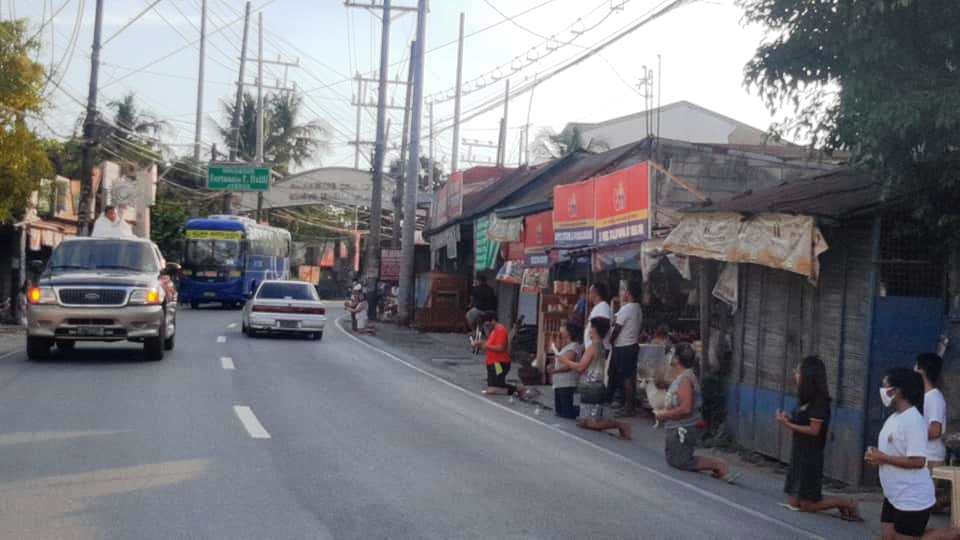
Larawan kuha ni G. Jim Marpa, 2019.
At hindi lamang basta taga-akay ang kailangan natin sa bawat pagbabalik-loob kungdi isang mahusay na gabay katulad ni Ananias na “isang taong may takot sa Diyos, tumutupad sa Kautusan, at iginagalang ng mga Judiong naninirahan sa Damasco” (Gawa 22:12).
Si Ananias ang ginamit ng Diyos upang mapagaling ang pagkabulag ni San Pablo at malahad sa kanya ang kalooban ng Diyos na mapalaganap ang Mabuting Balita.
Ang mahusay na gabay ay yaong pumapawi at nagpapagaling sa ating mga pagkabulag sa katotohanan ng Diyos sa buhay na ito. Wika mismo ni Hesus, maaring bang maging taga-akay ng mga bulag ang isa pang kapwa bulag?
Magkaroon ng isang mabuting taga-akay o spiritual director na hindi namang dapat pari o madre lamang kungdi yaong isang mabuting pastol na kalakbay at kaagapay sa ating spiritual journey.
Ikatlo, bawat tawag sa pagbabalik-loob sa Diyos ay palaging paanyayang pumasok sa isang komunyon o kaisahan kay Hesus at Kanyang pamayanan o komunidad. Ito ang magandang bahagi ng pagtawag kay San Pablo: nagpakilala si Jesus bilang kanyang inuusig na Kristiyano, “Saulo, Saulo! Bakit mo ako pinag-uusig? Ako’y si Jesus na taga-Nazaret na iyong pinag-uusig” (Gawa 22:7,8).
Ang totoong pagbabalik-loob o pagbabagong-buhay ay yaong hindi lamang makita ang sarili kungdi makita ang kanyang kaisahan kay Hesus at sa kapwa-tao. Walang kabuluhan ang ano mang pagpapakabuti ng sarili na nakahiwalay sa Diyos at sa kapwa. Hindi kabutihan kungdi kapalaluan ang walang ibang makita kungdi sarili.
Madaling sabihin ang mga bagay na ito at sadyang mahirap gawin. Subalit kung ating susuriin ang naging buhay ni San Pablo, hindi lamang minsanang pangyayari ang magbalik-loob sa Diyos.
Isang mahabang proseso ang kanyang pinagdaanan sa kanyang pagbabalik-loob o pagbabagong-buhay; katulad natin marahil siya ma’y nagkakasala minsan-minsan sa Panginoon.
Larawan kuha ng may-akda, 2019.
Ang mahalaga ay ang patuloy niyang pagninilay at pananalangin, ang pagsisikap niyang “pumaloob sa Diyos” upang mabatid at maisakatuparan ang Kanyang Banal na Kalooban na “Humayo kayo sa buong sanlibutan at ipangaral ninyo sa lahat ang Mabuting Balita” (Mc.16:15).
Kaya, huwag manghinawa sakaling mabagal ang iyong “pagbabagong-buhay”; minsa’y akala mo lamang wala namang nababago at masama ka pa rin.
Hindi totoo iyan dahil batid ni Hesus, nakikita ni Hesus ang pagsisikap natin mula sa kaloob-looban natin hindi pa man tayo pumapaloob sa Kanya.
Ang totoo kasi, palagi namang nasa loob natin si Hesus, kahit anong pilit nating lumayo sa Kanya. Amen.
Simbang Gabi Recipe for the Soul by Fr. Nicanor F. Lalog II
Thursday, Day 1, 16 December 2021
Isaiah 56:1-3, 6-8   ><]]]]*> + <*[[[[><   John 5:33-36
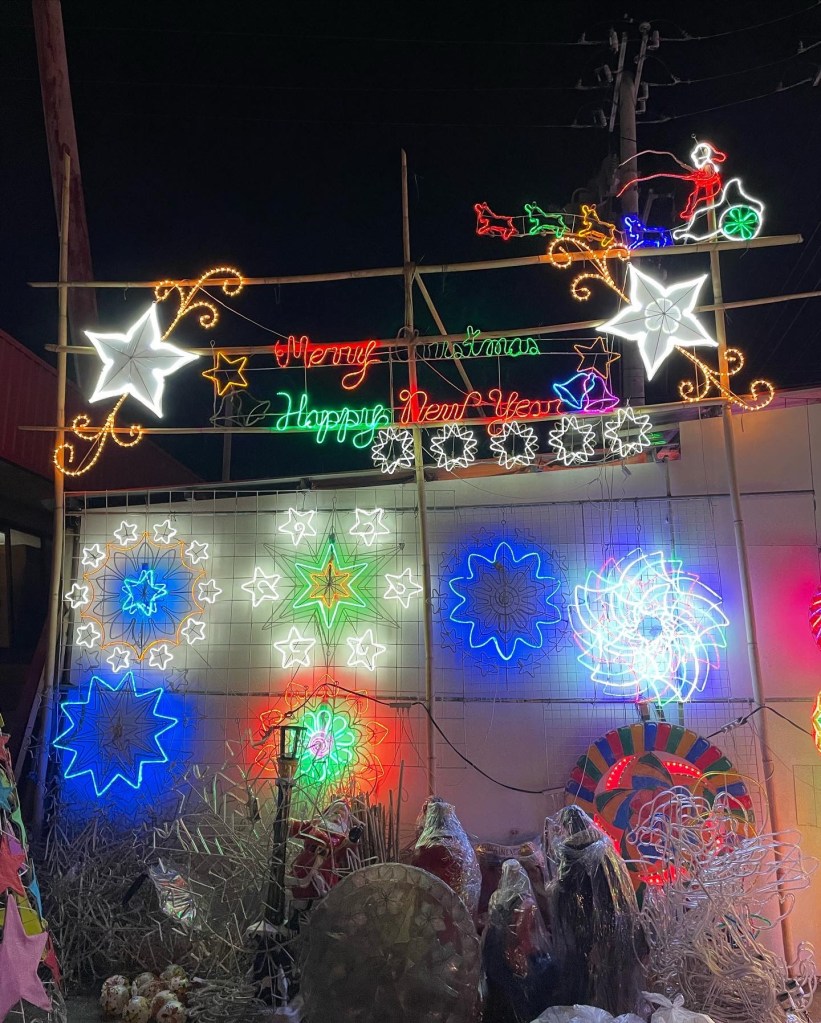
Photo by author at San Fernando, Pampanga, 18 November 2021.
The Parol or lantern is a uniquely Filipino sign and reminder of Christmas. When we were in elementary school, we used to make our own parol with colorful papel de japon as part of our subject “work education”. The most beautiful parol submitted was usually the one hanged above the Belen like that star pointing to the Child Jesus born in Bethlehem at the first Christmas.
And that is the truth about the beautiful and colorful parol – a sign leading to Jesus Christ like John the Baptist.
“He was a burning and shining lamp, and for a while you were content to rejoice in his light. But I have testimony greater than John’s. The works that the Father gave me to accomplish, these works that I perform testify on my behalf that the Father has sent me.”
John 5:35-36
Since the second and third Sundays of Advent, we have been introduced to the person and mission of John the Baptist. As we begin our nine-day novena to Christmas with our Simbang Gabi, we are reminded again of that important role we have in becoming another John who not only prepares the way of the Lord but must also be very sign of Christ’s presence.
All routes lead to churches every December 16, a beautiful sight to behold with so many devotees trying to fulfill their vows of completing the Simbang Gabi for so many reasons, from thanksgiving to favors granted and for more wishes for the coming year!
But, like other novenas, Simbang Gabi in itself will not make one a better or holier person. It takes a lot of prayer and hard work on our part to be like John the Baptist, a parol “burning and shining” pointing to Jesus who had come 2000 years ago, who comes daily in our lives, and will come again at the end of time.
In our gospel we heard Jesus praising John who did a wonderful job preparing the people for his coming because in his very life, they have found hope and inspiration to strive in what is good and just. In fact, the people felt as if John was already the Messiah they were waiting for!
It was very clear to John that he was not the Messiah, that he was merely the Precursor of the Lord, not even worthy to untie his sandals. This is what we must pray for in every Simbang Gabi, specially at this time of the pandemic: that we beam more of the light of Jesus who is like the sun while we are the moon. What we share is the Light itself – Jesus Christ – not our own light that can sometimes be misleading and not really that bright at all.
Photo by author, National Shrine of Our Lady of Fatima, Valenzuela City, 08 December 2021.
To reflect the light of Jesus Christ is to be like him, good and kind, just and merciful, exactly what we heard from the first reading which is a call to personal conversion; we cannot convert others to Jesus unless they see first we are converted in Christ.
Thus says the Lord: Observe what is right, do what is just… All who keep the sabbath free from profanation and hold on to my covenant, them I will bring to my holy mountain and make joyful in my house of prayer.
Isaiah 56:1, 6
No matter how good or “holy” as we can be, we are not the Light; our mission is to bring people closer to Jesus and be “conformed to his image” (Rom. 8:29).
How sad these days when “credit-grabbing” has become a hobby and a national past-time not only among those in power but even with everybody else specially those in social media trying to draw attention to themselves to earn precious statistics to be known as “influencers”.
This is our second Christmas in the pandemic: last year was more difficult than this year and we have so much to be thankful to God in tremendously blessing us since last year. We are still alive, many still have their jobs with steady income, others have started to pick up the pieces of their lives but moving on personally, spiritually, emotionally and even financially. Kids still go to school no matter how difficult online classes may be.
We have so many things to thank God this Christmas – first among them are the many John the Baptists who were like a “burning and shining lamp” to us, guiding us and inspiring us to move on with life amid the darkness and gloom of this pandemic
Yes, Christmas this year like last year is still difficult, so unlike the other Christmases we have experienced in the past. Perhaps the only other worst Christmas than we ever had in 2020 and 2021 were the Christmasses experienced by our parents and grandparents during the Japanese occupation at World War II. Ours pale in comparison with those wartime years.
During this Simbang Gabi, let us ask ourselves how much have we changed and matured in our experience of Christmas since the start of the pandemic last year? Do we now have Jesus in our hearts or, are we back to our old selves of having that “Christmas rush” for material things, forgetting Jesus Christ is Christmas himself?
Let the light of Christ burn and shine in you! Amen.
Photo by author at San Fernando, Pampanga, 18 November 2021.
Lawiswis ng Salita ni P. Nicanor F. Lalog II, Ika-10 ng Nobyembre 2021
Larawan mula sa Parokya ni San Martin ng Tours sa Bocaue, Bulacan.
Mula pa sa aming kabataan
palaging nilalarawan kabutihan
ng Patron naming mahal
San Martin ng Tours sa France
kung paano niyang hinati
kanyang kapa upang damitan
at huwag malamigan dukhang
matanda nakasalubong sa daan.
Kinagabihan ay kanyang napanaginipan
Panginoong Jesus sa kanyang paanan
tangan-tangan kapang ibinigay sa
matandang tinulungan, kaganapan ng
kanyang katuruan na ano mang kabutihan
ang inyong gawin sa mga maliliit at
nahihirapan ay siya rin ninyong
ginagawa sa Kristo na sa atin nakipanahan.
Nguni't hindi lamang iyon ang hiwaga
ng kapa ng ating Patrong mahal
na dating kawal, sanay sa mga digmaan:
nang siya ay mabinyagan,
hinasa niya kanyang isipan upang matutunan
mga aral ng pananampalataya na kanyang
dinalisay sa taos-pusong pananalangin
kaya't lubos siyang napaangkin sa Panginoon natin.
Upang maging mataimtim
sa kanyang pananalangin,
nagtutungo si San Martin sa kagubatan
at hinuhubad suot niyang kapa upang
isampay at ibitin upang sakali man
siya ay kailanganin,
madali siyang tuntunin
tanging kapa niya ang hahanapin.
Mula sa "kapa" ni San Martin
na noo'y kawal sa France
nanggaling salita na "kapilya"
na mula sa "chapele" ng mga Pranses
na tumutukoy sa kanyang kapa na hinuhubad
tuwing nananalangin at ngayon gamit natin
sa munting pook-dalanginan upang tulad
ni San Martin taimtim din tayong makapanalangin.
Kay sarap pagnilayan at tularan
halimbawa ni San Martin ng Tours:
hinubad kanyang "kapa" ---
kapangyarihan at katanyagan
upang maramtan ng katauhan
ni Kristo-Jesus na "hinubad kanyang
pagiging katulad ng Diyos upang mamuhay
bilang alipin tulad natin" (Fil.2:7)!
The Lord Is My Chef Sunday Recipe for the Soul by Fr. Nicanor F. Lalog II
Sunday XXI-B in Ordinary Time, 22 August 2021
Joshua 24:1-2, 15-17, 18 ><}}}'> Ephesians 5:21-32 ><}}}'> John 6:60-69
Inquirer’s Friday front page tells us in essence the message of this Sunday’s Gospel – “Lord, to whom shall we go?” in this time of crisis. Photo from inquirer.net.
We conclude our series on the Lord’s discourse on bread of life with the same question he had posed to his disciples more than 2000 years ago at Capernaum, repeatedly asking us the same question daily, especially on Sundays: “Do you also want to leave?” (Jn. 6:67).
This is the first time in John’s gospel that the people have rejected Jesus Christ whom they have always admired and followed to listen to his teachings and most of all, to be healed of their sickness. When they were fed to their satisfaction at the wilderness, they wanted to take Jesus and make him their king but he evaded them, going to Capernaum where he was found the following day. All this time, religious leaders were the only ones against Jesus, challenging his authority especially when he cleansed the temple and healed on a sabbath day.
But today, in a sudden twist, people rejected and abandoned Jesus because they could not accept him as the Bread of Life who came down from heaven who would give his flesh as food and blood as drink for eternal life. Worse, this was led by those supposed to be close to him, his disciples.
Often used as a generic term for a follower or a believer, the word “disciple” is from the Greek word discipulos that literally means “one who comes after or follows the master” (also the root of discipline). In the gospels, disciples were the common followers of Jesus, distinct from the apostles often referred to as “the Twelve”. From another Greek word apostolein meaning “one who is sent forth ahead of a master”, an apostle is one who is close to Jesus, who personally knows him and have also seen him. That is why Paul insisted his being an apostle too.
This distinction between a disciple and an apostle is found in all four gospel accounts. It is important to know this especially in our gospel today which is the first time John had introduced to us the presence of disciples among the crowd with Jesus at Capernaum. They have all been silently listening to his discourse until Jesus said, “Whoever eats my flesh and drink my blood has eternal life, and I will raise him on the last day. For my flesh is true food, and my blood is true drink. Whoever eats my flesh and drinks my blood remains in me and I in him” (Jn.6:54-56).
It was from here where our gospel this Sunday picks up the story:
Many of Jesus’ disciples who were listening said, “This saying is hard; who can accept it?” Since Jesus knew that his disciples were murmuring about this, he said to them, “Does this shock you? What if you were to see the Son of Man ascending to where he was before? As a result of this, many of his disciples returned to their former way of life and no longer accompanied him. Jesus then said to the Twelve, “Do you also want to leave?”
John 6:60-62, 66-67
Photo by Fr. Howard John Tarrayo, National Shrine of Our Lady of Fatima on the eve of the ECQ, 05 August 2021.
Aversion vs. Conversion
Here we find a painful truth we all experience when following Jesus as our Lord and Master. Sometimes it can happen that those closest to us are the ones who cannot accept and understand us like those disciples of Jesus who have left home and family to listen to his teachings after witnessing many of his healings. Then all of a sudden, they abandoned him because he had said it is his flesh he shall give as food to eat and his blood as drink for eternal life.
They were thinking in the literal sense, more preoccupied with what they knew, with what they have in their minds, without any room for Jesus nor for others. They would rather stick with what they have heard and learned from the Old Testament, of Moses and the manna from heaven.
Refusing Jesus is always a refusal
to grow and mature not only in faith
but most of all in life and in our relationships.
 It is pride and self-centeredness,
a form of self worship and idolatry
when one believes more to one's self
 than with God through others.
Refusing Jesus is always a refusal to grow and mature not only in faith but most of all in life and in our relationships. It is pride and self-centeredness, a form of self worship and idolatry when one believes more to one’s self than with God through others.
Jesus came to deepen our faith by experiencing himself, inviting us all to be converted back to God. But instead of conversion or turning back to God in the light of Jesus, we choose aversion, that is, turning away from God, returning to blindness and darkness like those disciples: “As a result of this, many of his disciples returned to their former way of life and no longer accompanied him” (Jn.6:66).
They cannot accept and take Jesus personally and wholly as his very words implied the Eucharist where we receive Jesus, Body and Blood under “the perceptible signs of bread and wine” as explained by Vatican II’s Sacrosantum Concilium #7.
Every Sunday when we gather as the Body of Christ in the celebration of the Holy Eucharist prefigured in the time of Moses in the wilderness until their entry into the Promised Land under Joshua’s leadership, we likewise reaffirm and renew our commitment to love and “serve the Lord, for he alone is our God” (Jos. 24:18).
Photo by Ms. Ria De Vera, March 2020.
Yes, “this saying and teaching of the Lord is hard to accept” (Jn. 6:60) especially in this time of the pandemic when many among us have lost family and friends including sources of income and savings while things are expected to worsen before getting any better at all.
Then there is also the familiarity with the Holy Mass breeding contempt among us these days when all we have are virtual Masses.
It is very sad that many of us these days have “returned to our former way of life and no longer accompanied Jesus” like those disciples at Capernaum; there are some who have stopped believing in Jesus due to the many pains and sufferings of this prolonged pandemic!
We are in a time of severe crisis not only in faith but also in every aspect of life due to the worsening COVID-19 pandemic. As we moved Saturday to lower level of quarantine controls, new records were set in new infections and deaths while ICU’s and hospitals are almost if not at full capacity already.
Lest we forget, there is the severe stress on our medical frontliners and their families too, with some literally passing out of exhaustion.
Some major decisions really have to be made not only by leaders but by everyone. That is the literal meaning of the word “crisis” which is from the Greek krisis that means time for decision-making to prevent (more) disasters from happening.
Disasters are due to poor or wrongful decisions.
One of that is removing God from every equation in life, including in our political and social life, giving rise to a culture of impunity where corruption has become a way of life.
Despite our being a Christian nation, we have chosen to remain in our morally bankrupt style of politics based on popularity, compadrazgo system, and vote selling. No wonder that even while we are in a pandemic with thousands getting sick or dying and millions are suffering, public officials continue to plunder our nation’s coffers blatantly while candidates shamelessly campaign early with their giant tarpaulins and television ads to ensure they all remain in power.
To whom shall we go? With the corrupt officials and trapos who do not care at all for us?
The good news today is that even if we have abandoned Jesus many times in our lives and in our nation’s history, he remains with us, still asking us like the Twelve, “Do you also want to leave?” (Jn.6:67).
Let us tell Jesus like Peter, “Master, to whom shall we go? You have the words of eternal life. We have come to believe and are convinced that you are the Holy One of God” (Jn.6:68-69)?
Remaining in Jesus like Peter
Last Friday, the Inquirer eloquently showed on its front page the sad plight of our nation with a banner story on corruption at the DOH following the recent reports by Commission on Audit as well the arrogant display of powers-that-be in Cebu.
Then, a breath of fresh hopes with this photo by Grig C. Montegrande on how the QC General Hospital had converted its chapel into a COVID-19 ward to accommodate the growing number of patients. The photo summarizes our Sunday readings, that we are in a critical moment not only in our history but also in our lives, calling us to conversion or turning to God instead of aversion which is turning away from God.
From inquirer.net.
Remember the “I AM” declaration by Jesus first used in this bread of life discourse two weeks ago when he said “I am the bread that came down from heaven” (Jn.6:41)?
That must have lingered in Peter. His faith did not deepen right away but it had surely grown and matured while listening to Christ’s discourse on the bread of life which became clearer to him after Easter.
Let us try “to feel at home” in Peter’s company during this pandemic to be led to a similar faith insight and commitment in Jesus no matter how difficult it may be.
Faith is like love: we believe and love not because we are sure of ourselves but because we are sure of the one we believe and love. That is why we commit our lives to our beloved. It is not primarily because of us at the center but of the other. Like Jesus. Or a loved one.
This is Paul’s reminder to us in the second reading of having Jesus as the basis of our relationships: Brothers and sisters: Be subordinate to one another out of reverence for Christ (Eph. 5:21).
It is not a call to dominance over one another but mutual-subordination in Christ by imitating his self-sacrificing love for everyone in the giving of his total self, Body and Blood. This we can do these days by observing health protocols like social distancing, wearing masks, and washing hands frequently. Best is to stay home as much as possible by giving ourselves more to our family and loved ones. Amen.
The Lord Is My Chef Breakfast Recipe for the Soul by Fr. Nicanor F. Lalog II
Friday, Feast of the Transfiguration of the Lord, 06 August 2021
Daniel 7:9-10, 13-14  ><}}}'>  2 Peter 1:16-19  ><}}}'>  Mark 9:2-10
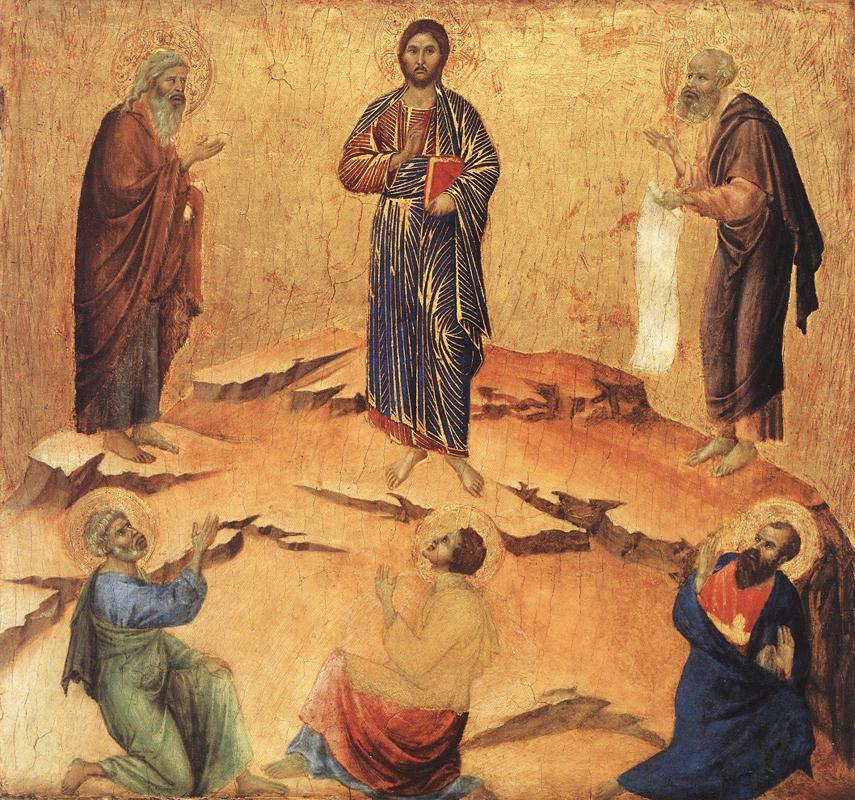
A 1311 painting of the Transfiguration by Italian artist Duccio di Buoninsegna from commons.wikimedia.org.
God our loving Father,
as we celebrate today the Feast
of your Son Jesus Christ's Transfiguration,
we come to you amid the same darkness
that enveloped them that night atop Mount Tabor
as we enter another series of lockdown
in this COVID-19 pandemic that has shaken
faith in you among many of us.
Like the apostles before his Transfiguration,
we too are wondering the meaning of Christ's
Passion and Death when he is your Son, the Messiah.
"How could he suffer and die?", they must have wondered.
In the same manner, we too wonder, could not stop
the questions coming from deep within us why are you
allowing these sufferings and trials, Lord?
Have you been angry with us, Lord, that these happen?
Jesus took Peter, James,
and John and led them up a high
mountain apart by themselves.
And he was transfigured before them,
and his clothes became dazzling white,
such as no fuller on earth could bleach
them... Then a cloud came, casting
a shadow over them; then from the
cloud came a voice, "This is my beloved
Son.  Listen to him." (Mark 9:2-3, 7)
Like Peter during the Transfiguration,
we do not know what we are saying to you, Lord;
whether we are filled with joy or burdened
with sorrow, we speak without thinking much
even if you know what is in our hearts.
Open our hearts, dear God, to always
listen to your Son by remaining with him
in his journey on the path to his Cross.
Moreover, we possess
the prophetic message that is
altogether reliable.  You will do well
to be attentive to it, as to a lamp
 shining in a dark place, until day dawns
and the morning star rises
in your hearts. (2 Peter 1:19)
Bring us back to the path of faith in you, Father;
despite our dismal progress or lack of faith this year due to
the many trials and difficulties by this pandemic,
open our hearts to let us go back to you in Jesus,
listening to him intently when all is dark and even dead
because for as long as we return to you, sin and failures
become means for us to be changed and transformed -
transfigured when we rise in Jesus Christ's Resurrection.
Amen.
The Lord Is My Chef Breakfast Recipe for the Soul by Fr. Nicanor F. Lalog II
Thursday, Feast of St. Mary Magdalene, Disciple of Jesus, 22 July 2021
Song of Songs 3:1-4   ><]]]]'> ><]]]]'> ><]]]]'>   John 20:1-2, 11-18
Painting by Giotto of the Risen Lord Jesus Christ appearing to St. Mary Magdalene from commons.wikimedia.org.
I wonder, dearest Lord Jesus,
why did you appear to Mary Magdalene
on that Easter morning
but not to Peter and John
who also rushed to the scene?
Mary stayed outside
the tomb weeping.
And as she wept,
she bent over into the tomb
and saw two angels in white
sitting there, one at the head
and one at the feet where
the Body of Jesus had been.
(John 20:11-12)
It was the second time
Mary Magdalene had come
to your tomb that early morning;
when she found it empty,
she rushed to Peter;
when they found it still empty,
John believed and left with Peter
but Mary remained and stayed,
weeping, hoping to find
your body, dearest Lord.
And the angels said to her,
"Woman, why are you weeping?"
She said to them,
"they have taken my Lord,
and I don't know whey they laid him."
When she had said this,
she turned around
and saw Jesus there,
but did not know it was Jesus.
Jesus said to her, "Woman,
why are you weeping?
Whom are you looking for?"
She thought it was the gardener
and said to him, "Sir, if you carried him
away, tell me where you laid him,
and I will take him."  Jesus said to her,
"Mary!"  She turned and said to him
in Hebrew, "Rabbouni," which means
Teacher.  (John 20:13-16)
O sweet Jesus,
forgive us
when we fail to see you,
when we miss you coming
as we never stay long
to await you in the empty tombs
of our sadness and failures,
broken dreams and
disappointments and sickness;
teach us to stay longer,
to grieve in you, pour out in you
our hurts and aches,
pains and sorrows;
like that Bride in the
Song of Songs
let us be intense in seeking you
by patiently awaiting you,
remaining in you that we may also say,
"I had hardly left them when I found him
whom my heart loves." (Song of Songs 3:4)
When love among friends
and one another is real,
surely our beloved would appear
only on a higher, different level
of recognition unlike before;
this is the lesson we can glean
from St. Mary Magdalene
when Jesus called her by name,
asking her to touch him not
because at Easter
we have been raised higher
in Christ, much beloved than before.
Let us answer your call,
dear Lord, to proclaim your gospel to all
despite the troubles we have had before.
Grant us the courage
to change our ways and follow you
like St. Mary Magdalene
who had remained pristine and clean
assuring every sinner with a saintly future.  Amen.
The Lord Is My Chef Breakfast Recipe for the Soul by Fr. Nicanor F. Lalog II
Monday, Week XV, Year I in Ordinary Time, 12 July 2021
Exodus 1:8-14,22  >>> + <<<   Mathew 10:34-11:1
Photo by author, Egypt, 2019.
Your words today, O Lord Jesus,
are so difficult to understand
even puzzling and disturbing
but that is how it is often in life:
the harder it gets,
the better we become
like the children of Israel
when persecuted in Egypt.
A new king,
who knew nothing of Joseph,
came to power in Egypt.
Accordingly, taskmasters
were set over the children of Israel
to oppress them with forced labor.
Yet the more they were oppressed,
the more they multiplied and
spread.
(Exodus 1:8,11, 12)
Sometimes, Lord,
you allow us to go through
hardships and trials in life
so we may realize
that YOU alone are the most
essential in life like when you sent
the children of Israel to Egypt
during the period of great famine.
You sent them there not only to find food
but to rediscover Joseph their brother
and ultimately find YOU, dear God,
still faithful, still loving.
Alas, as time went on with them in Egypt
like with our own experiences,
we stop entering into a relationship with you
dear God, when our needs are fulfilled,
when we have found solutions to our problems,
not realizing that more important
than temporary solutions
to our temporary problems is
the wonderful intimacy with you
here, today, through eternity
where we have God more than
any amount of peace and prosperity.
Jesus said to his Apostles:
"Do not think that I have come
to bring peace upon the earth.
I have come to bring not peace but the sword.
Whoever finds his life will lose it,
and whoever loses his life for my sake
will find it."
(Matthew 10:34, 39)
Lord Jesus Christ,
forgive us in being so focused
in solving the many problems of the world
than in finding God and his love; remind us
of our first task of casting away evil
and sins that plague us and the world
so that everything may be restored in you again.
Amen.
The Lord Is My Chef Breakfast Recipe for the Soul by Fr. Nicanor F. Lalog II
Thursday in the Sixth Week of Easter, Memorial of Our Lady of Fatima, 13 May 2021
Acts 1:12-14   ><}}}*> + ><}}}*> + ><}}}*>   Luke 1:39-47
While this Memorial of Our Lady of Fatima was approaching, I was asking myself – consciously or unconsciously – “how many more Rosaries do we have to pray before this pandemic ends”?
Like you, I have been praying the Rosary primarily for the ending of this pandemic since it started last year. And it is not far-fetched that even before the Blessed Virgin Mary first appeared 104 years ago today at Fatima in Portugal, the people were most likely asking God in countless prayers and Rosaries too, to end the First World War that had started in 1914.
See some of the similarities of our time with that time 104 years ago when Mother Mary appeared to the three children of Fatima, asking them to remind the whole world to pray and be converted in her Son Jesus Christ:
1917 was in the first two decades of the new century (20th), just like ours (21st) when COVID-19 was first detected in 2019.
In 1917, the world witnessed the fiercest and bloodiest large-scale war to ever happened in human history, World War I until it was followed shortly by World War II; at the start of the 21st century, we witnessed the a different kind of deadly war that is “faceless” and “borderless” with the 9/11 attacks as we continue to live daily under threats by another wide scale war and ongoing pocket wars in various parts of the globe.
In 1917, Communist Russia was threatening the world of “spreading its errors”; since 2010 or even earlier, the only remaining “Communist” country of China has been flexing its muscles in Asia and Africa to assert its power and dominance in the world.
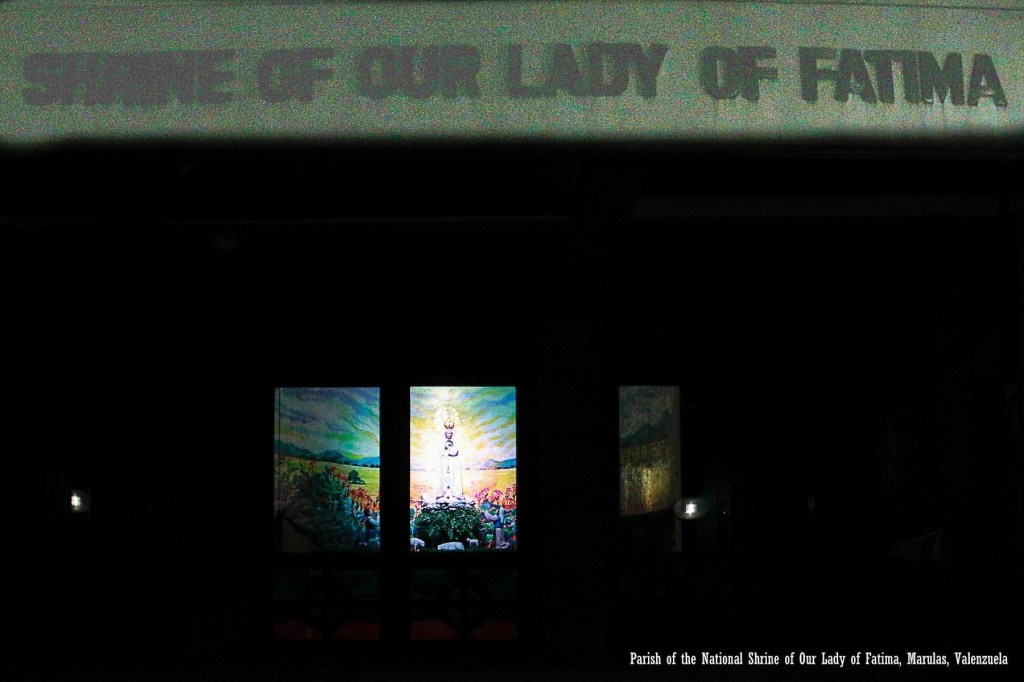
The sanctuary of the Parish of the National Shrine of Our Lady of Fatima seen through its glass door at night during the lockdown last year due to COVID-19.
The Relevance of Fatima
Both in 1917 and 2021, God’s response to our cries and pleas is still the Our Lady of Fatima because then and now, mankind had never heeded Jesus Christ’s calls to return to him and be converted: “This is the time of fulfillment. The kingdom of God is at hand. Repent, and believe in the gospel” (Mk.1:15).
It does not matter how many Rosaries we pray or how many Masses we celebrate or how often we go to the Sacrament of Reconciliation. The problem is not with God but with us who until now refuse to recognize the spiritual dimension of this pandemic.
Whatever solution we eventually find in ending COVID-19, most likely another pandemic or worldwide problem could occur if we continue to refuse in respecting life and every person as an image and likeness of God. Recall that when World War I ended in 1918 as promised by our Lady of Fatima, that same year started the Spanish flu pandemic that claimed about 50-M lives worldwide. Then in 1939, World War II started.
The Spanish flu and the World War II were not punishments from God; he does not punish because “God is love”, nothing evil and bad can come from him. Those things happened after the Fatima apparitions because of man’s refusal to heed Mary’s calls for prayers and conversion of peoples which is happening again in our own time.
Our Lady of Fatima consistently reminds us since 1917 her Son Jesus Christ’s teaching of the centrality of God in our lives through prayers and our daily conversion through humility and being like a child, trusting God completely like her.
More than a century ago, the Lord through his Mother, has been telling us the key to lasting peace in the world and in our very lives lies in our daily conversion, in our conformity to his life intimately united in the Father like the Blessed Virgin Mary.
It is a life of daily fiat – of faith in God, of letting his will be done in us! The Holy Rosary and the Sacraments are the means so we may bear fruits of love and holiness in our faith in God like Mary.
When Elizabeth heard Mary’s greeting, the infant leaped in her womb, and Elizabeth, filled with the Holy Spirit, cried out in a loud voice and said, “Most blessed are you among women, and blessed is the fruit of your womb. And how does this happen to me, that the mother of my Lord should come to me? For at the moment the sound of your greeting reached my ears, the infant in my womb leaped for joy. Blessed are you who believed that what was spoken to you by the Lord would be fulfilled.”
Luke 1:41-45
Our Lady of Fatima at the National Shrine in Valenzuela, the first locally carved image of Fatima done in circa 50’s to 60’s.
True blessedness
For better and for worst, COVID-19 had truly changed our lives, teaching us that true blessedness is not found in money and things, nor in popularity and influence or other things that have become the benchmarks of everything that is good in this life.
In less than a year when everything stood still as COVID-19 ravaged earth with so many deaths, the pandemic had shown us what our Lady of Fatima has always been telling us since 1917: go back to God our Father through our Lord Jesus Christ in the Holy Eucharist and Sacrament of Reconciliation.
Mary believed and lived her faith in God. She was the first to receive the Good News of Jesus Christ by setting aside all her plans in life, her wedding to St. Joseph, of what people would say if found pregnant before they were actually married, and many other things to consider.
She abandoned herself to God completely that immediately after Gabriel had left her, she went in haste to visit her cousin Elizabeth in the hills of Judea not to help her nor verify her being pregnant but to share with her the Good News she had received (Jesus Christ) to show that God’s plan for them are closely linked even with their sons to be born with John being the forerunner of Jesus.
Thus, Mary became the perfect image and model of discipleship in Christ that at the start of his public ministry, she was the first to believe in his saving work when she interceded at a wedding in Cana.
Mary was also the first to believe in Christ’s Resurrection that she remained standing at the foot of his Cross on Good Friday. Last but not least as we have heard in our first reading today, Mary was the first to believe in the coming of the Holy Spirit that she accompanied the Apostles praying at Jerusalem on Pentecost day.
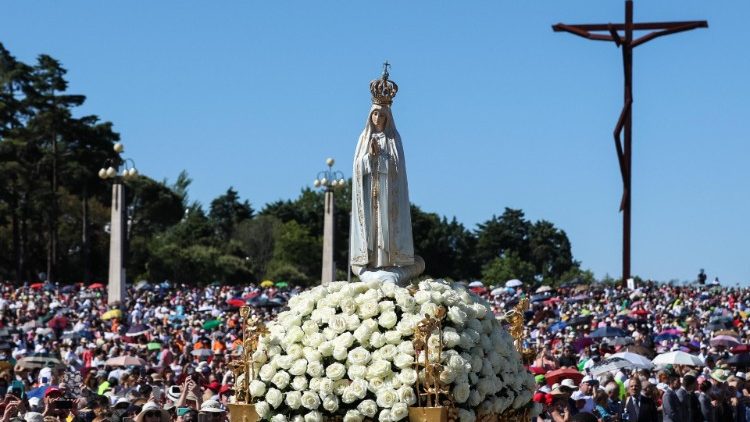
Our Lady of Fatima procession at the Fatima Shrine in Portugal, 2017. Photo from vaticannews.va.
The Challenge of Fatima in our time
Like Mary who appeared at Fatima in Portugal 104 years ago today, may we grow deeper in our faith in God by believing more in him than believing in the world or with our very selves.
In this time of COVID-19, may we bring unity to our family and community, church and nation, so that like the Blessed Mother we may help in strengthening the faith of one another, in believing in God by submitting ourselves to his holy will.
May we not waste time to avert another catastrophe – not as a punishment from God who does not punish – that when rooted can always be traced back to our selfishness and pride, lack of concern for others, and for playing gods who claim to know everything.
These were some of the reasons Mary appeared at Fatima in 1917 to bring us back to God through his Son Jesus Christ. After all the pains and losses we have gone through in this time of COVID-19, have we not still learned the need to be simple and humble?
Like Mary, let us believe more in God by being kind and charitable with one another so that sooner, we may finally end this pandemic. Amen.
The Lord Is My Chef Breakfast Recipe for the Soul by Fr. Nicanor F. Lalog II
Monday in the Fourth Week of Easter, 26 April 2021
Acts 11:1-18   ><)))'> ><)))'> ><)))'>   John 10:1-10
Parish of St. Joseph in Baras, Rizal, January 2021.
Thank you very much, dearest God our Almighty Father in answering our prayer last Friday for more conversions among us, especially those in power in the government and the military who kept on maligning the movement on community pantry. Some of them have finally accepted the beauty and the truth about community pantries.
Today we pray, O God, for the continuous conversion of those among us in the Church, especially our shepherds of soul, bishops and priests, religious and sisters, and most specially the lay people who comprise the majority of Christian faithful.
Vatican II had clearly called for “Ecclesia semper reformanda” or “The Church must be constantly renewed”, that we must read the signs of the times, and always be open to the leading and promptings of the Holy Spirit.
Your first reading today shows us this important turning point in our Church history when mission to the gentiles began with Peter sharing meals and then baptized the whole household of the Roman centurion named Cornelius. The “circumcised believers” or Jewish converts to Christianity criticized Peter for entering the homes and sharing meal with uncircumcised pagans who were later baptized to be added to the growing number of followers of Jesus Christ.
Peter began and explained it to them step by step,
saying, "As I began to speak, the Holy Spirit fell upon them
as it had upon us at the beginning...
If then God gave them the same gift he gave to us
when we came to believe in the Lord Jesus Christ,
who was I to be able to hinder God?"
When they heard this,
they stopped objecting and glorified God,
saying, "God has then granted life-giving
repentance to the Gentiles too."
(Acts 11:4, 15, 17-18)
Open our ears and our hearts, Lord, so we may hear you speaking to us.
Most of all, grant us the courage to make known to others your voice, your will even if it may be disturbing and uncomfortable to others, especially our fellow leaders and shepherds of the flock.
Forgive us, dear Jesus, when there are times when “we do not realize what you are trying to tell us” (Jn.10:6) because we are so preoccupied with our very own ideas and traditions being challenged by changing times and shifting views.
Forgive us, most of all, Lord Jesus, when we your shepherds hold on to positions and power, thinking more of prestige and wealth that we have become the biggest obstacle to new developments and growth in the Church and among Christians. Amen.















 lordmychef.com