The Lord Is My Chef Breakfast Recipe for the Soul by Fr. Nicanor F. Lalog II
Tuesday, Week X in Ordinary Time, 08 June 2021
2 Corinthians 1:18-22   ><)))'> ><)))'> ><)))'>   Matthew 5:13-16
Jesus said to his disciples:
"You are the salt of the earth.
But if salt loses its taste,
with what can it be seasoned?
It is no longer good for anything
but to be thrown out and trampled underfoot."
(Matthew 5:13)
Thank you very much for calling us “blessed”, Lord Jesus Christ; but, of what use is our being filled with the spirit of your Beatitudes if we cannot live it out, if we cannot show it and make it work in our lives? Then we are nothing but tasteless salt!
Give us, O Lord, the grace of integration, of wholeness or holiness of putting into practice the grace and virtues you have given us.
Enable us to activate your Spirit in us, not just filling us, not just a feeling of being with you but most of all, reaching out to others, touching lives, leaving your marks of loving service and mercy.
We do not have to be a stand out, we do not have to be known and even noticed by everyone.
It is enough for us to be like the salt, Lord: just a pinch or a dash enough to give taste, to blend with everyone and with everything we do, changing and transforming people and situations in your favor without being seen or known for that is true blessedness – making you known, not us.
Like St. Paul, let our “yes” to your call and mission remain firm and steadfast even if situations and circumstances would sometimes delay us in fulfilling our promise but never neglect our mission and fidelity to you.
When things do not happen according to our plans and schedules, keep us more faithful to you, dear Jesus; for although outside factors may change beyond our control, what matters most is the inside of us, within our very hearts, there you are reigning supreme, giving us security in your in fulfilling and completing your work.
We pray, dear God for our co-workers in you, our co-journeyers in this life of commitment who are feeling weak and saddened by the many criticisms from detractors when their mission is delayed or temporarily shelved for unforeseen circumstances. Do not let them lose sight of the goals and mission you have entrusted for our main challenge in life is being faithful to you than successful. Amen.
The Lord Is My Chef Breakfast Recipe for the Soul by Fr. Nicanor F. Lalog II
Monday, Week X in Ordinary Time, 07 June 2021
2 Corinthians 1:1-7   ><)))*>  +  <*(((><   Matthew 5:1-12
Photo by author, Nazareth in Israel, 2019.
Your words today, O Lord, from St. Paul’s second letter to the Corinthians are so encouraging, so comforting as they are truly meant for us, too, in this time of trials and difficulties due to the pandemic.
In greeting the Corinthians as well as other Christians in the region who were facing tremendous tests and sufferings, St. Paul prayed fervently for them by introducing the virtue of “encouragement” – mentioning it ten times that we can feel his deep concern not only for the Corinthians but with anyone in any period of time like us going through severe tests like in this time of COVID-19.
 Blessed be the God and Father of our Lord Jesus Christ,
the Father of compassion and God of all encouragement,
who encourages us in our every affliction,
so that we may be able to encourage those
 who are in any affliction with the encouragement
with which we ourselves are encouraged by God.
(2 Corinthians 1:3-4)
Encouragement or comfort is what we really need at this time, Lord Jesus, in order to strengthen us “in enduring the sufferings” (2Cor.1:6) we are going through. It can only come from you for it is a grace that enables us to live out true blessedness found in your Beatitudes we heard in the gospel today.
So many among us are getting weak not only physically but also emotionally, mentally and spiritually in this prolonged quarantine periods when our mobility is so limited.
So many among us have lost their jobs and livelihood, with still many others so limited in their earning abilities while financial obligations are piling up.
So many among us feel so uncertain about the future, finding it so hard to focus on whatever we have at the moment so we can make the most out of every opportunity that comes out from this pandemic.
Worst of all, there are some of us who are in deep emotional traumas at this time when problems arise in their marriage and family life.
O God, you know the situation we are into, even the mess some of us have got involved with due to our own sinfulness and carelessness.
Send us the Holy Spirit, the Paraclete, the Comforter and Encourager par excellence for us to be encouraged to persevere and to strive, to remain blessed so that we may encourage others too. Amen.
The Lord Is My Chef Breakfast Recipe for the Soul by Fr. Nicanor F. Lalog II
Monday, Feast of the Visitation of the Blessed Virgin Mary, 31 May 2021
Romans 12:9-16     ><}}}'> + ><}}}'> + ><}}}'>     Luke 1:39-56
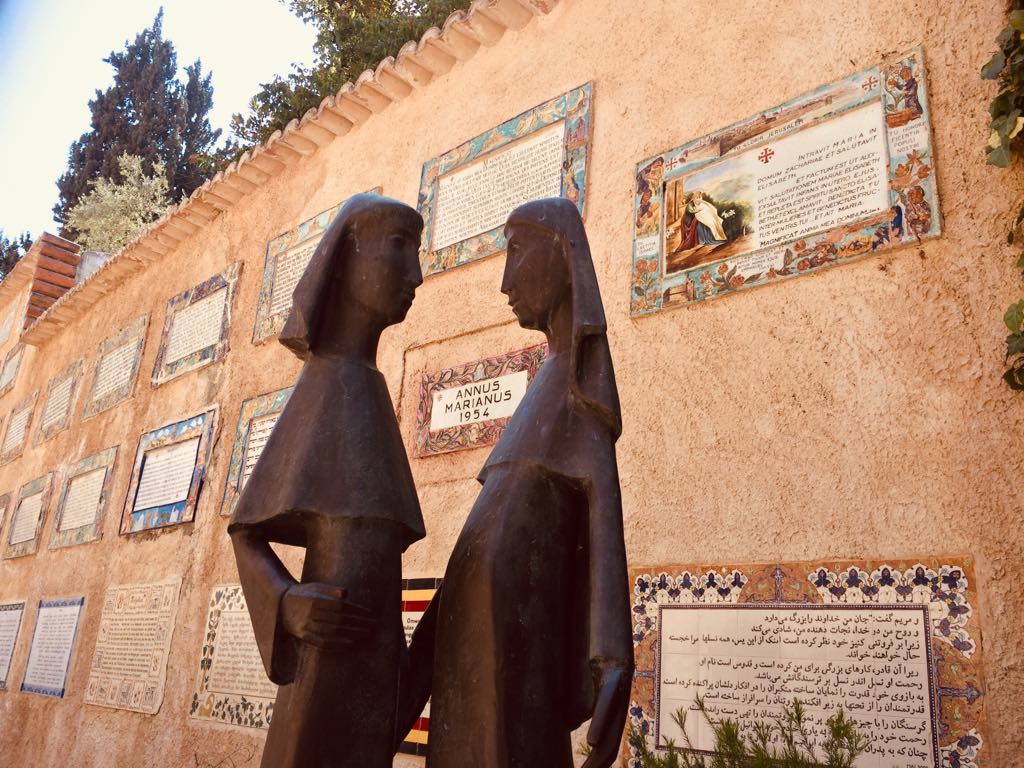
Photo by author, bronze statues of Mary and Elizabeth at the patio of the Church of the Visitation at Ein-Karem in Judah, 2017.
When Elizabeth heard Mary's greeting,
the infant leaped in her womb, and Elizabeth,
filled with the Holy Spirit, cried out in a loud voice
and said, "Most blessed are you among women,
and blessed is the fruit of your womb.
And how does this happen to me,
that the mother of my Lord should come to me?"
(Luke 1:41-43)
In this time of the pandemic with threats of COVID-19 still prevalent, we feel exactly like St. Elizabeth, O God our loving Father, asking, “how does this happen that you O Lord, should come to us?” But that is how great and tender is your mercy for us, Father!
How great indeed is your goodness and mercy for us, Father, that your ways are always so different from our own ways like with the story of the cousins Elizabeth and Mary: ideally, it should have been the elder Elizabeth who visited Mary for she was bearing your Son Jesus Christ. That early, Jesus had shown us the nature of his mission here on earth, that he had come to serve and not to be served.
You know how much we miss one another so much these days, heavenly Father. We are getting tired of being kept at home and not able to visit or even receive visitors from family and friends for fear of getting sick.
Come and send us again Jesus your Son to visit us anew like what you did when Mary visited Elizabeth.
Increase our faith, let us believe like Mary that your words would be fulfilled as you have promised.
Keep our hope aglow like Elizabeth who, despite her old age and barrenness, joyfully received the gift of motherhood to the future John the Baptist.
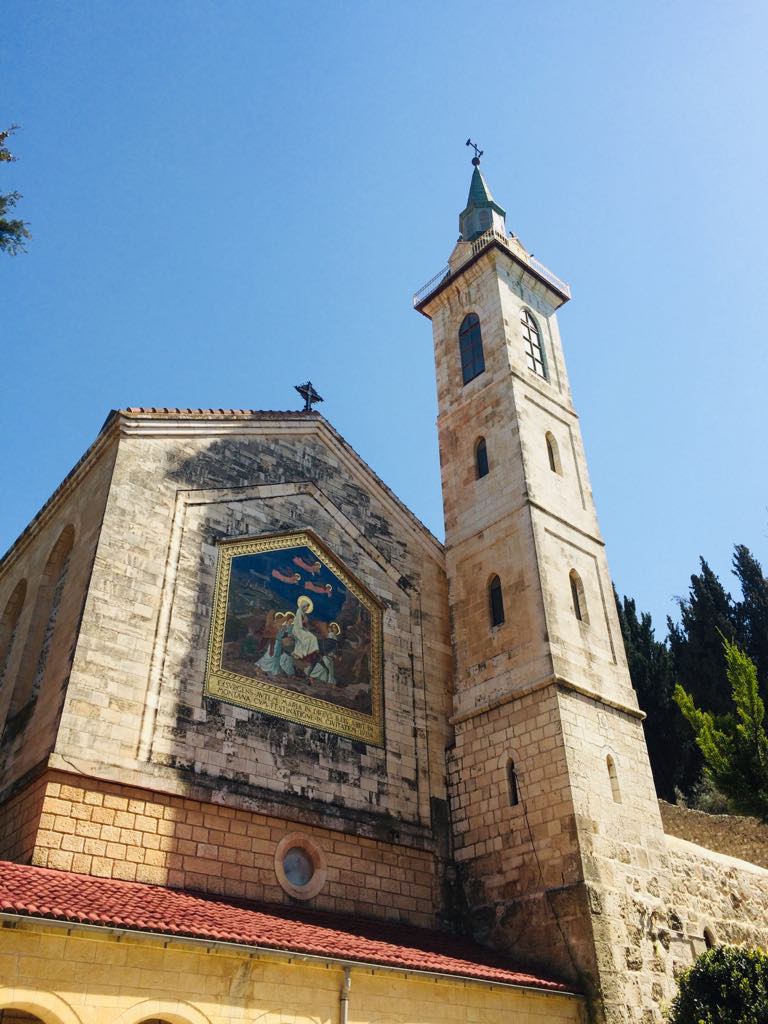
Photo by author, Church of the Visitation, Holy Land, 2017.
Most of all, keep us humble and lowly before you, dear God, like Mary, hungry and thirsty for your words so we may have a space to receive and share Jesus with others, unlike the rich and powerful so filled with their pride and ego who could not welcome Jesus Christ’s coming.
Grant us courage, Lord, so we may heed and live out the words of St. Paul today so that like Mary and Elizabeth we may live in mutual love with one another, making you present among us. How unfortunate that we cannot see your coming to us in this time of crisis because we are so filled with arrogance and pride, of our lack of love and respect for one another.
Let love be sincere; hate what is evil, hold on to what is good; love one another with mutual affection; anticipate one another in showing honor.
Romans 12:9-10
We pray for those who dwell on their evil and malicious thoughts in taking advantage of others especially the poor and powerless in this time of crisis. Please visit our political leaders, bring back their shame and sense of patriotism so they may think more of the suffering people than of their selfish motives and interests. Amen.
The Lord Is My Chef Breakfast Recipe for the Soul by Fr. Nicanor F. Lalog II
Friday within the Octave of Easter, 09 April 2021
Acts of the Apostles 4:1-12  <*(((><  +  ><)))*>  John 21:1-14
Photo by Mr. Jim Marpa, 2019.
I could easily identify with your words today, Lord Jesus, especially with the flow of the story of the healing of the crippled man through Peter and John: from the Upper Room to the Beautiful Gate to Solomon’s Portico to their being thrown to prison; from the proclamation of the Good News of salvation to the healing of the crippled man and now their persecution and harassment.
After the crippled man had been cured,
while Peter and John were still speaking to the people,
the priests, the captain of the temple guard,
and the Sadducees confronted them,
disturbed that they were teaching the people
and proclaiming in Jesus the resurrection of the dead.
They laid hands on Peter and John
and put them in custody until the next day,
since it was already evening.
(Acts 4:1-3)
So many times, Lord, we resent and avoid sufferings in life like persecution without realizing that it is through these trials that we make it to Easter like you when you passed over from your Passion and Death to Resurrection.
There are also times, Lord, when we feel so down, feeling lost and disappointed that we try going back to our old ways like Peter and his companions that Sunday morning when they decided to go fishing again after you have risen.
Like them, we feel we can be on our own that when failures come, we fail to recognize you only to realize later that without you, we can do nothing.
When it was already dawn,
Jesus was standing on the shore;
but the disciples did not realize that it was Jesus.
Jesus said to them,
"Children, have you caught anything to eat?"
They answered him, "No."
So he said to them, "Cast the net
over the right side of the boat and you will find something."
So they cast it, and were not able to pull it in
because of the number of fish.
So the disciple whom Jesus loved
said to Peter, "It is the Lord."
(John 21:4-7)
Thank very much, dear Jesus for bearing with us when we feel afraid of your mission, when we doubt if it is really you who is with us, directing us, guiding us.
Send us your Holy Spirit to enlighten our minds and our hearts to be firm in our faith in you, to trust you that when trials come our way, your abundant blessings are also there pouring into us to weather every storm in life. Amen.
Photo by Mr. Raffy Tima of GMA7 News, Batanes, 2018.
40 Shades of Lent by Fr. Nicanor F. Lalog II
Holy Monday, 29 March 2021
Isaiah 42:1-7   ><}}}*>   John 12:1-11
Photo by author, December 2020.
Here is my servant whom I uphold,
my chosen one with whom I am well pleased,
upon whom I have put my spirit;
he shall bring forth justice  to the nations,
not crying out,
not shouting,
not making his voice heard in the street.
A bruised reed he shall not break,
and a smoldering wick  he shall not quench.
(Isaiah 42:1-3)
On this Holy Monday of our holiest week, we pray to you, O God, for gentleness for us to be holy like your “Suffering Servant” according to Prophet Isaiah and fulfilled in your Son Jesus Christ our Lord.
In this world saturated in a cacophony of many voices and noises competing to be heard in the various social media platforms, teach us to be gentle, to never view ourselves better than someone else when we would rather be silent to listen more, “not crying out, not shouting, not making our voices heard in the street.”
In this world where “size always matters” while power is always expressed in force and violence, teach us to be gentle with them who are actually weak and soft inside, even broken like the reed or a smoldering wick.
Teach us holiness in gentleness through Jesus Christ who showed us the path to real power is in weakness, that instead of asserting superiority, we would rather help others to assert their innate goodness especially when the weak come forward to express their gentleness too like Mary who poured oil and perfume on his feet.
Give us the grace to dwell today on his words, “Leave her alone. Let her keep this for the day of my burial. You always have the poor with you, but you do not always have me” (Jn.12:7-8).
O how foolish we can be, dear Father, to miss this essential truth that we can only love the poor in you and through Jesus your Son. Take away that attitude of Judas Iscariot among us of “thinking the poor” yet always feeling superior to them, even to Jesus our Lord!
Make us gentle in our thoughts and in our words, most especially in our actions so that everyone may feel your gentle mercy and compassion in Christ. Amen.
The Lord Is My Chef Breakfast Recipe for the Soul
Thursday,Week-I, Year-I in Ordinary Time, 14 January 2021
Hebrews 3:7-14   >><)))*> + >><)))*> + >><)))*>   Mark 1:40-45
Photo by Mr. Jay Javier in Cubao, QC last May 2020.
How timely and relevant are your words today, Lord Jesus Christ, especially when this the second time in less than a week we have heard your story of the healing of a leper who came to you, asking that if you will it, he could be cured of his disease (Mk.1:40-45).
Last week we heard St. Luke’s version of the same event St. Mark is almost exactly telling us today. Are you trying to tell us something very significant about this beautiful healing that assures us of your will and desire to heal us, to grant us what is best for us?
Definitely, you have a lot of things to tell us, to remind us in this part of our history as a nation and as a church when we live like being afflicted with a contagious disease we have to isolate ourselves from one another.
Aren’t we all like lepers today, with all the masks we wear and most especially the social distancing we have to keep from one another due to the COVID-19 pandemic?
And that is why, dear Jesus, we pray for one another especially those ostracized due to the stigma of contagious diseases like COVID-19 and AIDS as well as situations like homosexuality and substance abuse.
Help us realize, dear Jesus, how this corona virus pandemic is a symptom of a deeper malady afflicting us today, including us priests your servants tasked in taking care of the sick. Even before the pandemic began, we have been separated from one another and from you due to the “evil and unfaithful heart we have, forsaking the living God” (Heb.3:12).
May we experience your presence among us in every “today” so that we may all heed the call of the psalmist: “If today you hear his voice, harden not your hearts.”
Help us remain in you in faith, trusting you more while the corona virus continues to wreak havoc to our economy, to our well-being as persons.
Send us Your Holy Spirit to enlighten our minds and our hearts to examine and change our attitudes towards “modern lepers” among us while at the same time, may we spend more time “communing” with You in prayer as a way of life, filled with enthusiasm like the leper You have healed who could not stop himself proclaiming Your powers and Your mercy and love to him. Amen.
Photo by author at Silang, Cavite last September 2020.
The Lord Is My Chef Simbang Gabi Recipe-6 for the Soul
by Fr. Nicanor F. Lalog II
Monday, Advent Week IV, 21 December 2020
Zephaniah 3:14-18     >><)))*>   +   <*(((><<     Luke 1:39-45
Photo by author, Church of the Visitation, the Holy Land, May 2017.
The Bible rarely tells us conversations between women, except for the Book of Ruth which records to us the story of two women, Naomi and her daughter-in-law Ruth who became the grandmother of King David, and therefore, a kin of our Lord Jesus Christ.
But more rare in the Bible are conversations between two pregnant women, mostly conversations even fights among pregnant mothers and their midwives or rival wives found in the Old Testament. It is therefore so unique is Luke’s account of the Visitation when Mary meets Elizabeth. There must be something so significant for Luke – and for us most especially – in this encounter and exchange.
Mary set out in those days and traveled to the hill country in haste to a town of Judah, where she entered the house of Zechariah and greeted Elizabeth. When Elizabeth heard Mary’s greeting, the infant leaped in her womb, and Elizabeth, filled with the Holy Spirit, cried out in a loud voice and said, “Most blessed are you among women, blessed is the fruit of your womb. And how does this happen to me, that the mother of my Lord should come to me? For at the moment the sound of your greeting reached my ears, the infant in my womb leaped for joy. Blessed are you who believed that what was spoken to you by the Lord would be fulfilled.”
Luke 1:39-45
Women as vessels of God’s blessings
Recall Matthew’s genealogy dominated by the male figures as it was the prevailing culture at that time when women were not really given much attention. But to show the immense power and freedom of God, Matthew mentioned five women who made the coming of Jesus Christ possible.
Most of the women were not really that good whom we would rather describe as a problematique: Tamar pretended to be a prostitute to entice her father-in-law Judah to get her pregnant while Rahab was a real prostitute (a mamasan in fact) at Jericho who helped the spies sent by Joshua before attacking that ancient city; Ruth was a foreigner, not purely Jewish while Bathsheba was the wife of Uriah whom David had killed after she got pregnant with Solomon. And Mary, the wife of Joseph, was found pregnant while still a virgin! (That is what I like most with God – he has a great sense of humor all the time!)
Very interesting with the gospel by Luke is that he got a lot of stories not found in the three other gospels but we find him unique in having a special place for women. He was one of the earliest champions of women in the Church by mentioning many females in his stories to show their important roles in God’s plan for mankind.
Photo by author, frescoes at the Church of the Visitation depicting the Visitation and then the infamous Holy Innocents Day of how an angel helped save the child John the Baptist from Herod’s executioners (2019).
In this story of the Visitation, we find a totally different presentation of women even in today’s world. What do I mean? Recall how during the lockdown the memes of pictures of women meeting with a caption “mga nagbabagang balita” (today’s news headlines) portraying women as rumor mongers or chismosas. Later when classes resumed, another meme circulated of women gathered together exchanging class modules of their children as if to show they are stage mothers.
Luke always presented women so dignified in stature like in the Visitation, so blessed by God.
First thing we notice in the story is how Luke never mentioned Mary and Elizabeth were pregnant. He merely indicated their situation by saying “When Elizabeth heard Mary’s greeting, the infant leaped in her womb” at 1:41 while at the following verse 1:42, Elizabeth proclaims to Mary, “Most blessed are you among women, blessed is the fruit of your womb”. Biblical scholars say that perhaps, Luke wanted to assure his readers that God’s powerful blessings marked both women, over each of whom the Holy Spirit overshadowed them with a child: Elizabeth in her barrenness and old age, Mary in her being a virgin before living with her husband Joseph.
What a display of the power of God so simple, so unassuming!
But the most beautiful part in this conversations by these two great women is the meaning of being blessed. So often when we think of being blessed, especially us Filipinos, it is something more of being “lucky” or “swerte” that means having money to spend and buy things. Sometimes being blessed for us is having achieved something that makes us and our loved ones famous.
The Visitation story tells us something entirely different: to be blessed means to believe in God, that His words would be fulfilled in us like with Mary, “Blessed are you who believed that what was spoken to you by the Lord would be fulfilled” (Lk.1:45).
True blessings
Luke’s Gospel teems with so many occasions of blessings beginning in the infancy narratives up to the Presentation to the temple and then of Jesus pronouncing His blessings especially to those who listen and act on God’s words or those who accept Him as the Christ.
It is at the Visitation where Luke shows us the true meaning of blessedness through Mary because of her faith and trust in God’s word spoken to her by the angel at the annunciation of the birth of Jesus Christ. Her faith makes her a model disciple to be imitated by all followers and believers of her Son Jesus Christ.
And here we find again the artistry of Luke because it is not only Mary who is blessed in the Visitation, but also Elizabeth as another model disciple like the Blessed Mother. Elizabeth was the first to call and recognize Jesus Christ as Lord, “And how does this happen to me, that the mother of my Lord should come to me?” (Lk.1:43).
Photo by author, Advent Week IV, 2020.
See that when Elizabeth heard the greeting by Mary, like when Mary heard the greeting by the angel at the annunciation, it signaled the coming of the messianic age. Pope emeritus Benedict XVI even claims the annunciation is the beginning of the New Testament.
Elizabeth is the first person as far as Luke is concerned to call Jesus “Lord” and the first to call Mary “blessed” whom she will confirm later in her Magnificat, “all generations will call me blessed” (Lk.1:48).
Two women so blessed by God because they both believed in His words, both believed in the Christ still in the womb. Mary and Elizabeth are in fact the first two Christian disciples who showed us the essential task of every disciple: after hearing the word of God and accepting it, we must share it with others not only by repeating it but interpreting it in our very lives that everyone would see it as the good news.
With barely a week left on this final week of Advent, let us ask ourselves how are we going to show to others what we believe happens in Christmas in this time of the pandemic, that true blessedness is not being rich with material wealth but being enriched by a deep and animated faith in Jesus Christ who is Christmas Himself.
The Lord Is My Chef Simbang Gabi Recipe-2 for the Soul
by Fr. Nicanor F. Lalog II
Thursday, Advent Week III, 17 December 2020
Genesis 49:2, 8-10     >><)))*> + >><)))*> + >><)))*>     Matthew 1:1-17
Photo by author of sun beginning to shine over the mountain ranges Sinai Desert in Egypt, May 2019.
Yesterday we started our reflection with an old Christmas song, Do You Hear What I Hear? by Bing Crosby; today, it is Andy Williams turn to serenade us with the opening lines to the theme of the 1970 film Love Story:
Where do I begin
To tell the story of how great a love can be
The sweet love story that is older than the sea
The simple truth about the love she brings to me
Where do I start
No. I did not see that movie now a classic but I was old enough to remember its theme that became popular even for some more years during the 70’s that made Andy Williams so well-known when we were in elementary school. His song came to my mind as I grappled – which usually happened – on how to begin this reflection.
Where do I begin or how shall I begin? is one of our most common question in almost anything we start doing or telling because beginning any undertaking is always difficult. Experts have tackled it like Stephen Covey telling us to “begin with the end in sight” while Simon Sinek insists we always “start with why”.
Every beginning – like a homily or a speech, a business venture, or even an exercise program – means so much as it gives us a gist of where it is leading to, of what is going to happen.
The evangelists also wrestled with the same issue and they all have their own style in starting their gospel account but nothing beats Matthew in his most unique manner by beginning with a series of names in the genealogy of Jesus Christ. According to the late American biblical scholar Fr. Raymond Brown, he was willing to bet that if anyone is asked to tell the story of Jesus to a non-believer, no one will ever imitate Matthew by starting with Abraham begetting Isaac, Isaac is the father of…
The book of the genealogy of Jesus Christ, the son of David, the son of Abraham. Abraham became the father of Isaac, Isaac the father of Jacob, Jacob the father of Judah and his brothers. Judah became the father of Perez and Zerah, whose mother was Tamar…
Matthew 1:1-3
Photo by author of an oasis in the Dead Sea region of Israel, May 2017.
God the Prime Mover, the Beginning of everything
Today we shift our focus in our Advent preparations to the first coming of Jesus Christ when he was born in Bethlehem more than 2000 years ago. Strictly speaking, the Church’s official countdown to Christmas begins only today when all our weekday readings from December 17-24 are focused on how the birth of Jesus happened.
And what a way to start this series with the gospel by Matthew that begins with “The book of the genealogy of Jesus Christ, the son of David, the son of Abraham”! The Greek is more literal in stating it as “The book of the genesis of Jesus Christ, the son of David, the son of Abraham.”
That makes Matthew’s gospel so unique by starting it with names that all sound so weird to us today. So, what’s with the names? Of course, a name is everything!
Companies and organizations pay huge amounts of money for their trademarks and logos like Coca-Cola, IBM, and Apple. Some corporate or product names have in fact entered our vocabulary like Xerox for copiers, Colgate for toothpaste and Frigidaire for refrigerators.
Every name carries a story, a meaning, a mission, even a destiny. How sad that we Filipinos rarely take this seriously especially in giving names to children that often becomes a joke or a disaster, or both. But to foreigners especially the Jewish people, a name is more than an identification but also one’s mission.
When we examine each name in Matthew’s genealogy of Jesus, we discover it is just like our own family trees with some men and women not really that exceptional, even a shame and an embarrassment to the family. Behind each name we have heard is an imperfect person -except for Joseph and Mary – with so many sins and mistakes.
And that is the good news of today: God does not call the qualified but qualifies His call.
Everything begins with God – our lives and coming into being. In all eternity, God perfectly knows everything that will happen to us and yet He chose to believe in us, despite our imperfections and being prone to sin that He sent us to this world with a mission to make His Son our Lord Jesus come into the world through us, just like his ancestors.
Photo by author, Mt. St. Paul Spirituality Center, La Trinidad, Benguet, January 2020.
From the imperfect “house of King David” to Jesus Christ’s eternal kingdom
Let us take the first name mentioned by Matthew in starting his gospel, David who makes this genealogy so interesting. In fact, it was on him the whole genealogy is structured by Matthew. And we all know how imperfect was David, of how he had sinned when he took Bathsheba the wife of army officer Uriah whom he ordered placed in a position that got him killed in a battle.
But that is how God works – so unlike us! God is a God of surprises who works so unpredictably unlike us humans. Imagine after all the sex scandals with Bathsheba, God still promised an eternal kingdom coming from the house of David, that of Jesus Christ: “Your house and your kingdom shall endure forever before me; your throne shall stand firm forever” (2 Sam.7:16, first reading on Sunday and morning of Thursday).
At the end of his genealogy of Jesus, Matthew added this interesting note:
Thus the total number of of generations from Abraham to David is fourteen generations; from David to the Babylonian exile, fourteen generations; from the Babylonian exile to the Christ, fourteen generations.
Matthew 1:17
Matthew is up to something here! Why build around the history of Israel and genealogy of Jesus Christ around a person who had gravely sinned against God and others?
Most likely. Remember how Matthew experienced God’s mercy and forgiveness when Jesus came to call him while at his tax collection booth and he immediately stood and left everything behind to follow the Lord. Matthew knew well that God is not like humans who box people and label them like things.
Caravaggio’s famous painting of the call of Matthew by Jesus from wikicommons.org.
In assembling to us three sets of fourteen generations that traced the coming of Jesus Christ from Abraham structured around David, Matthew shows us how God worked through this sinful man a series of new “beginnings” in life, both in grace and in sin. See the genealogy rising from Abraham to David, then its decline and descent from Solomon to the Babylonian Exile, and then rising again to the advent of Jesus.
Now try to imagine how great and loving is our God and Father who chose to believe in David, a person just like us with many imperfections and prone to sins! See His power and holiness in setting any sinful situation for new beginnings of grace and blessings.
Sometimes,
God uses our occasions of sins
as new beginnings
of His grace and blessings.
One thing I have realized in life is that our most unforgettable moments happen either when we are nearest, or farthest away from God.
This is very amazing. Consider when are we closest to God? Most often that is when we were high and good, feeling blessed and loved, when healthy and successful that were ironically the times we rarely thought of God. We only remember those moments as our closest with God after being away in fact from Him!
And when are we farthest from God? Quickly we say when we were deep in sin, when lost, or when unloved and misunderstood.
Between these two moments, it is most often when we are farthest from God that is always most unforgettable, the ones we remember always, the ones that have left the deepest cut in us because those times in turn have become occasions for us to begin anew in God!
Like David. Or Matthew known before as Levi the tax collector.
Photo by author of the Lake of Galilee shortly after sunrise, May 2019.
That is how God sometimes would make it for us to begin anew in Him! See how at the first set of fourteen generations from Abraham to David, we find the whole history of Israel so close with God punctuated by Egypt and Exodus when their sins “turned” into their favor. In the second set of fourteen generations from Solomon to the Babylonian exile, the Israelites sank into their lowest point in history when led by their kings they turned away from God, worshipping idols. But, God did not abandon them as we see in the third set of fourteen generations when things got better as the Israelites returned to God and to their Promised Land reaching its high point in Jesus Christ’s birth.
God is the beginning of everything and even if we try to “end” with our many sins what He had began, He always finds ways to begin anew even when we are so far away from Him.
This is also the meaning of the Jacob’s choice for Judah over his other sons in being the tribe to continue his family line leading to the fulfillment of the Davidic lineage in Jesus Christ. It was from Judah came the name of their religion “Judaism” even if Judah was not the best and holiest of Jacob’s sons. Joseph the Dreamer must have been the wisest choice as more suitable to have been blessed by their father or by God himself but, that is not the way of God.
By starting his gospel with the line “The book of the genealogy of Jesus Christ, the son of David, the son of Abraham”, Matthew shows us God’s total power and goodness as source and beginning of all good things who also has the last and final say in everything.
In the genealogy of Jesus, we are reminded that every day is a new beginning in God, right in our darkness and sin, in our sickness and pandemic. David like Judah may have sinned so great before God but His mercy and love proved greater than their sins that they were able to rise again to become better and holier in His grace.
That’s one great beginning we can start right here, right now in our Simbang Gabi! A blessed Thursday to you! Amen.
Photo by Marc Angelo Nicolas Carpio, our Parish at night, 29 November 2020.
The Lord Is My Chef Breakfast Recipe for the Soul by Fr. Nicanor F. Lalog II
Monday, Memorial of St. John of the Cross, Doctor of the Church, 14 December 2020
Numbers 24:2-7, 15-17     >><)))*>   +++   <*(((><<     Matthew 21:23-27
Photo by author, Gaudete Sunday. 13 December 2020.
Time flies so fast, O God our Father. We are now at the penultimate week before Your Son’s birth and sadly, we seem to have been catapulted here without us realizing even earlier because we have been insensitive to your presence.
We have been impatient in awaiting Your daily revelations in little things and not so good experiences happening to us.
How sad that we your people have kept our eyes closed from seeing you coming, doing wondrous things for us like what the pagan diviner Balaam had seen for Israel. He was supposed to curse them but was compelled to bless them upon seeing You and Your great plans for them in the future that included the coming of the Christ.
I see him, though not now; I behold him, though not near: A star shall advance from Jacob, and a staff shall rise from Israel.
Numbers 24:17
In the gospel, the learned people of your time also refused to see and accept Jesus Christ’s coming, preoccupied with what they knew and only wanted to see just like us today.
Bless us, O Lord, to imitate St. John of the Cross in finding you and your bright future in the midst of the Cross. May these last two weeks of Advent be moments of reflections and prayers for us to find You, to experience You, and see Your bright future in store for us as we follow you to the Cross.
The soul that longs for divine wisdom chooses first, and in truth, to enter the thicket of the cross.
St. John of the Cross, Office of Readings, 14 December 2020
The Lord Is My Chef Sunday Recipe for the Soul by Fr. Nicanor F. Lalog II
Solemnity of All Saints, 01 November 2020
Revelation 7:2-4, 9-14   |+|   1 John 3:1-3   |+|   Matthew 5:1-12
“Mary and the Saints” painting by Duccio di Buonoinsegna (1308-1311) from en.wikipedia.org.
Let me begin our reflection on this All Saints’ Day with a joke from the “Language Nerds” on how the past, the present and the future came and appeared in a bar. Everybody was tense.
Our celebrations today and tomorrow deal with “verb tenses” – the past, the present, and the future that somehow converge in the here and now of Jesus Christ our Lord. We call it the tension of the already here but not yet, like God and heaven – both already here but not yet.
All Saints’ Day and All Souls’ Day are two Catholic celebrations so unique and distinctive of our faith that bring to the fore the beautiful tensions of the “here and not yet”, of that convergence of the temporal and eternal in our present lives.
It is something like our Filipino delicacies of tuyo (dried fish) and balut (fermented duck egg): when you smell the aroma of the frying tuyo by your neighbor, you could taste it but if you want to really experience its delight, you have to go to your neighbor and join their meal. Or the balut: is it an egg or a duckling?
In a similar manner, we find in our Gospel today that proverbial question of which came first, the egg or the chicken? Are we blessed because we followed the Beatitudes first or, are we blessed first that we can practice the Beatitudes of Christ?
When Jesus saw the crowds, he went up the mountain, and after he had sat down, his disciples came to him. He began to teach them, saying: “Blessed are the poor in spirit, for theirs is the kingdom of heaven. Blessed are they who mourn, for they will be comforted. Blessed are the meek, for they will inherit the land. Blessed are they who hunger and thirst for righteousness, for they will be satisfied. Blessed are the merciful, for they will be sown mercy. Blessed are the clean of heart, for they will see God. Blessed are….
When Jesus preached his sermon on the mount to launch his ministry, he first presented himself — that he is the Christ, the Anointed or Blessed One because he is in fact the Beatitudes: he is the poor in spirit, the merciful and meek, the one with a clean heart.
Inasmuch as the Beatitudes tell us who is Jesus Christ, the Beatitudes also challenge us followers of Jesus to imitate and follow him in being poor in spirit, merciful, and clean of heart.
At first glance, we notice that blessedness seems like a reward given by Jesus after we have imitated him like being blessed after being insulted and persecuted in his name, working for peace and hungering and thirsting for righteousness.
However, the very fact we are able to bear all these sufferings to live the Beatitudes means that we are already blessed.
And that is the truth: in Christ’s Passion, Death, and Resurrection, we have all been blessed by God that we are able to live as his beloved children, now living in his “kingdom of heaven” right here on earth.
Beloved: See what love the Father has bestowed on us that we may be called the children of God. Yet so we are… we are God’s children now; what we shall be has not yet been revealed. We do know that when it is revealed we shall be like him, for we shall see him as he is. Everyone who has this hope based on him makes himself pure, as he is pure.
1 John 3:1, 2-3
Blessedness is who we are as children of God unless we choose to live otherwise.
Blessedness is God’s gift to us that enables us to live according to his will and plans, projecting us further into the future to finally be with him in all eternity in heaven. When we try to live the Beatitudes of Jesus, of going against the tide and flow of the world where power and wealth, popularity and fame are the means life is measured, then that becomes our gift to God.
And that is when we enter into heaven and become saints like what we celebrate today.
According to St. John Paul II, the good news of life is that we all share in the life of God — and that is why we are all blessed.
Our sharing in the life of God makes us blessed.
The difference that we have with the saints is just the tenses: they are now celebrating at present the fullness of their blessedness, of being present before God in all eternity in heaven because they have so well accomplished while living here on earth the works of the Beatitudes of Christ in the past. They have overcome all tests and trials in the past and now having the rewards of full blessedness.
We, on the other hand, though already sharing in the blessed life of God here on earth in the present, still have to face and endure many other trials in the future to perfect ourselves in Christ until we get a final glimpse of him in the afterlife.
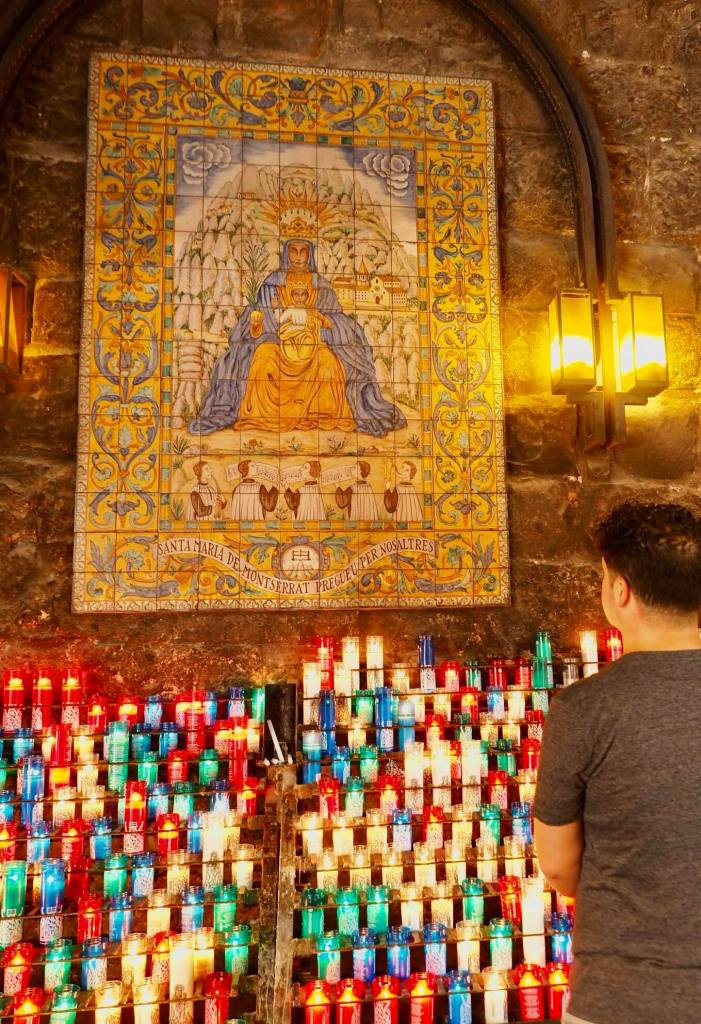
Photo by Dr. Mai B. Dela Peña, MD, at Spain, 2018.
Blessedness is a relationship with God.
It is now clear with us that saints are like us who are blessed because we share in the life of God. However, saints enjoy the fullness of this blessedness of being in the very presence of God as a “reward” or a result of their striving with God’s grace to live out the Beatitudes.
Saints now enjoy the eternal presence of God, the fullness of blessedness and fullness of their relationship in God and with God, from earth into heaven.
This is the reason we have a feast for all the saints or those who have gone ahead of us and tried to lead holy lives, living out their blessedness that they now enjoy the eternal presence of God in heaven. They need not be declared by the Church as saints whoever gets into heaven in the presence of God is a saint.
We who are still living here on earth, though blessed as we share in the life of God, cannot be considered as saints yet because we still have to go through a lot of purifications, of tasks in loving.
Again, we see that tension of the here and not yet in this aspect of being saints, of blessedness: heaven is eternal union with God (hell is eternal separation from God); blessedness and heaven are both our relationships with God.
Therefore, the challenge of our blessedness here on earth as seen in the Beatitudes of Jesus is how we maintain and keep that intimate relationship with God that every choice we make is always a choice for life, of choosing to love than hate, to forgive than revenge, to understand and let go.
In the first reading, John tells us of his vision of heaven with great multitude of “saints” or holy men and women “wearing white robes holding palm branches in their hands”. The Lord told him,
“These are the ones who have survived the time of great distress; they have washed their robes and made them white in the blood of the Lamb.”
Revelation 7:14
Although we are extolling in this solemnity all the unnamed saints now in heaven, this is still a feast celebrating the goodness of God, of his immense love for us in blessing us in Jesus Christ who enables us to do good in the power of the Holy Spirit.
As we remember all the Saints, we celebrate also this sharing of God’s life in us for us to be blessed, assuring us of being saints someday!
We are challenged today to live out this blessedness freely given to us by God by being more loving with others specially in this time of COVID-19 as well as when two super typhoons are threatening to slam into some parts of our country this week.
A short note about cemeteries
Sometimes, non-Catholics laugh at us every November first when we troop to the cemeteries to be with our departed loved ones instead of November 2. Despite the closure of cemeteries this week due to COVID-19, many have earlier visited their loved ones in cemeteries while the rest among us would surely do the same once the ban is lifted.
Is there something wrong? NONE. Except for those who just go to cemeteries to drink and have fun without praying and celebrating Mass in their parishes. But there is nothing wrong with our tradition of visiting cemeteries on November first.
In fact, it is a vibrant display of our faith in God because every time we visit the dead on All Saints’ Day, we also presume they are already saints, already in heaven.
Most of all, our coming to the cemeteries on All Saints’ Day is an expression of our hope in heaven while still here on earth.
The cemetery reminds us of hope in the future. In the past when we buried our dead, the cemetery has become the place of our mourning; but, every November first, the cemetery reminds us it is the place of hope where sadness is not really removed but where we find strength and faith that like our departed loved ones, we shall overcome all trials and sufferings here on earth to be one with them in the presence of God in heaven.
That is the good news of All Saints’ Day and All Souls’ Day: we are so blessed by God in Jesus Christ who had opened our access into heaven not only in the future when we die but even now as we mourn – and celebrate the memory of our dead, we already have a taste of eternal life.
May we live out this blessedness God has given us. Amen.

















 lordmychef.com