The Lord Is My Chef Breakfast Recipe for the Soul by Fr. Nicanor F. Lalog II
Friday, Week XI, Year I in Ordinary Time, 18 June 2021
2 Corinthians 11:18, 21-30   ><)))'> + <'(((><   Matthew 6:19-23
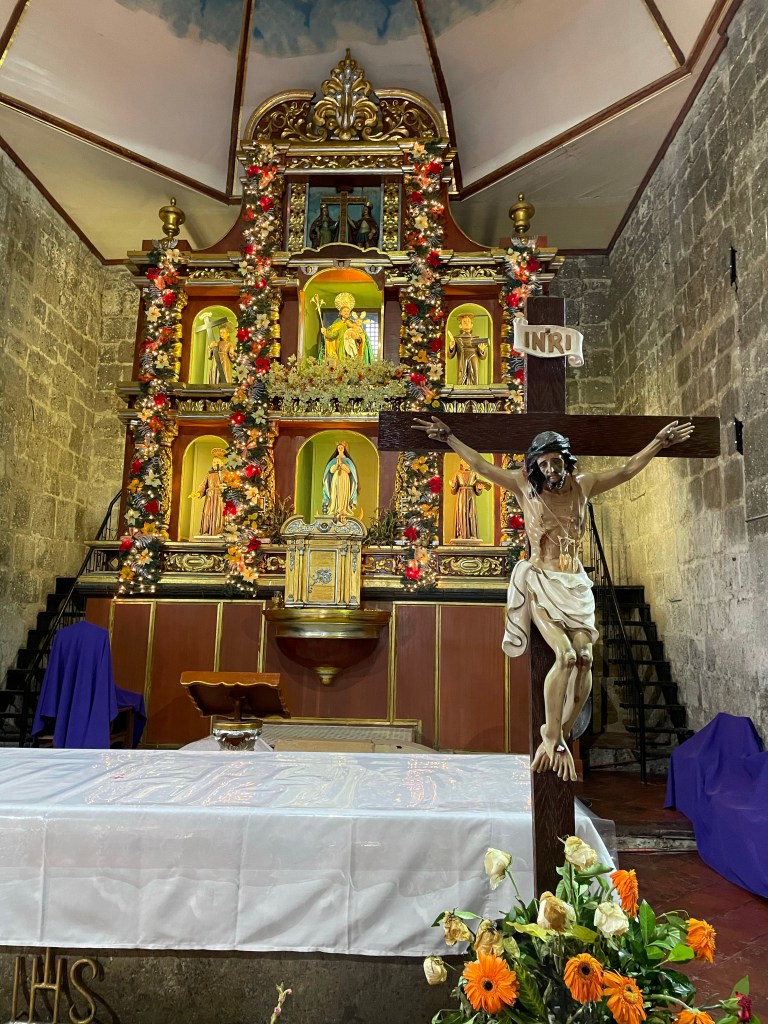
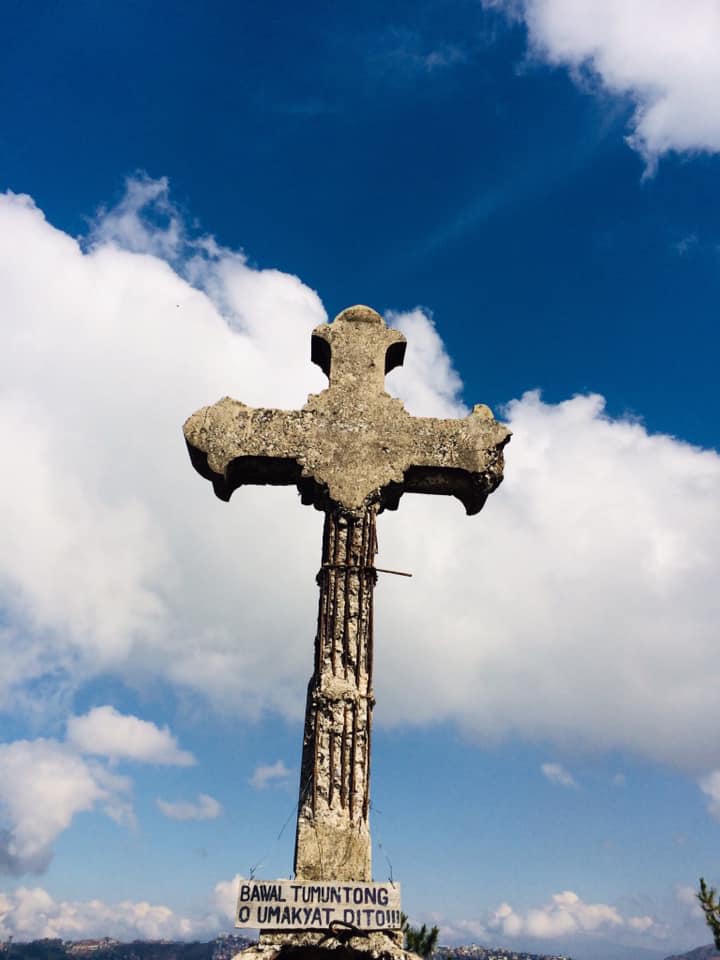
Photo by author, December 2020.
Forgive us, O Lord, in making ministry a gimmickry, when we forget all about you and your sacrifice on the Cross; when all we see is technology and novelty, pretending to make you a reality amid the changing world when in fact it is us and not you whom we advertise and make known to everyone.
Forgive us, dear Jesus, when so many times we brag in shrouded manners our exploits and achievements, sacrifices and sufferings to proclaim your name without your Cross not realizing that any cross detached from you is all folly and plain publicity.
Teach us to be like St. Paul to boast more of our weaknesses than of our strength for it is only when we are weak that we are truly one with the rest of humanity – weak and sinful, struggling and striving, always at your mercy and forgiveness.
Who is weak, and I am not weak?
Who is led to sin, and I am not indignant?
If I must boast , I will boast of the things
that show my weakness.
(2 Corinthians 11:29-30)
Remind us always, Lord, before we could ever speak of what we have done and achieved, of what we are doing for you and your people, that we first examine what we treasure most in our hearts for it will always be what others experience and see in us.
No matter how lofty are our words nor our visions of you and of your Church, what we treasure most in our hearts always radiate in our lives, in our actions, in our very selves.
If we have not really done that much for you and for others, if we have not truly embraced you on the Cross with all the blood and pains as seen in our lives and relationships, then, nothing will suffice despite our many claims and monuments to our ministry because it is all gimmickry.
Jesus said to his disciples:
"but if your eye is bad,
your whole body will be in darkness.
And if the light in you is darkness,
how great will the darkness be."
(Matthew 6:23)
Lord Jesus Christ, you are our light. Please enlighten us today, restore our sight and vision to find and follow the real treasures and most precious things we all must have in this life — YOU. Amen.
Image from Pinterest, quotation by Josh at his blog “Project: Faith Journey” at wordpress.com, 15 October 2015.
The Lord Is My Chef Breakfast Recipe for the Soul by Fr. Nicanor F. Lalog II
Tuesday, Week XI in Ordinary Time, Year I, 15 June 2021
2 Corinthians 8:1-9   ><)))'>  +  <'(((><   Matthew 5:43-48
Photo by Ms. Ria De Vera, 01 June 2021 at Bgy. Lalakhan, Sta. Maria, Bulacan.
Thank you very much again, O God our loving Father for the grace of prayer, most especially in the grace of desiring you which is what prayer is all about. Keep us steady in our desire for you, to be with you, to be like you – holy and loving.
Enrich us today with your holiness and love by being poor of our selves like Jesus Christ your Son as experienced by St. Paul.
For you know the gracious act
of our Lord Jesus Christ,
that for our sake he became poor
although he was rich,
so that by his poverty you might become rich.
(2 Corinthians 8:9)
Being poor like Jesus and St. Paul is thinking less of myself, more of others. How ironic that in our world of today where there is a surplus of everything, the more we have become worried of having less because we remain unconvinced of your love and blessings as we live detached from you. Hence, our constant feeling of being impoverished, needing to be filled and satisfied.
Teach us to be poor by being intimate with you, O God our Father so that we worry less of ourselves because we already have you, disposed to being like you, able to love freely.
"So be perfect,
just as your heavenly Father
is perfect."
(Matthew 5:48)
Make us realize that in this life, it is only you whom we must desire first of all in order to be sufficient and enriched that we are able to love everyone, even our enemies because we are confident in ourselves of your love and intimacy. Amen.
The Lord Is My Chef Breakfast Recipe for the Soul by Fr. Nicanor F. Lalog II
Monday, Week XI in Ordinary Time, Year I, 14 June 2021
2 Corinthians 6:1-10   ><)))*>  +  <*(((><   Matthew 5:38-42
Photo by author, May 2016.
Thank you very much, O God, for the daily gift of prayers, of being able to pray to you which is a pure grace from you. On our own we cannot pray because we do not have the courage and wisdom to speak to you, to listen to you. Most of all, we are afraid to enter into union with you especially with the example set to us by Jesus Christ your Son.
Give us the grace to be slowly true in our prayers, Lord, like letting go of revenge and vengeance.
Jesus said to his disciples:
"You have heard that it was said,
An eye for an eye and tooth for a tooth.
But I say to you, offer no resistance to one who is evil.
When someone strikes you on your right cheek,
turn the other one to him as well."
(Matthew 5:38-39)
What is most difficult in praying is imitating you, sweet Jesus, in devoting our lives to you and your gospel by forgetting ourselves, carrying our crosses and following you closely.
So many times, we receive the grace of God in vain, wasting these gifts because we are so afraid of giving ourselves totally to others like you Lord Jesus on the cross.
Teach us how to be a sign of contradiction, a paradox in ourselves like St. Paul who truly imitated you by first of all trying to reconcile with the Corinthians who have turned against him when he failed to keep his promise of visiting them. Like you Lord Jesus, St. Paul bore all the personal attacks against him by the Corinthians, choosing to be conciliatory and gentle in his attitude in addressing them.
We are treated as deceivers and yet are truthful;
as unrecognized and yet acknowledged;
so dying and behold we live;
as chastised and yet not put to death;
so sorrowful yet always rejoicing;
as poor yet enriching many;
as having nothing and yet possessing all things.
(2 Corinthians 6:8-10)
In the midst of pain and suffering, rejection and persecution, St. Paul found joy and peace in you, dear Jesus. He was so convinced of your love and presence even in the midst of his darkest moments in life. So unlike us who easily give up your cross, Lord, when we are criticized because the sad truth is we always seek recognition and praise for our works in you.
Help us to be like St. Paul in his unshakeable faith in you, so true in his prayers of becoming like you, a sign of contradiction to the world, a person of Christ-like paradoxes. Amen.
The Lord Is My Chef Breakfast Recipe for the Soul by Fr. Nicanor F. Lalog II
Saturday, Solemnity of the Immaculate Heart of Mary, 12 June 2021
2 Corithians 5:14-21   ><)))'>  +  <'(((><   Luke 2:41-51
Praise and glory to you, O God our loving Father for your immense love for us. Yesterday we celebrated the Solemnity of the Most Sacred Heart of Jesus your Son who revealed to us the boundless love you have for us all as your beloved children.
But, such great is your love for us, God our Father, that today, we celebrate the Solemnity of the Immaculate Heart of the Blessed Virgin Mary, Mother of your Son Jesus Christ who gave her to us to be our Mother too!
All for your love for us!
What a wonderful twin celebrations of your love for us which must also be the main reason, the very essence of everything in our existence. St. Paul expressed it so well in today’s first reading, “The love of Christ urges us” (Caritas Christi urget nos, 2Cor.5:14).
Love is the very reason, the only reason why you have created us, why you have saved us, why you have given us your Son, why he had given himself for us.
Forgive us when we refuse to accept and recognize, and most of all, when we refuse to share your great love for us with others.
Teach us to be like the Blessed Virgin Mary whose heart is so inflamed with great love to you and her Son Jesus Christ.
Open our hearts to welcome you always, Lord.
Dwell in our hearts, reign in our hearts, dear Jesus, so that we may work for peace, for reconciliation in ourselves with the Father, with our family and friends, and with our countrymen. Help us to heed these beautiful words of St. Paul today:
So we are ambassadors for Christ,
as if God were appealing through us.
We implore you on behalf of Christ,
be reconciled to God.
For our sake
 he made him to be sin who did not know sin,
so that we might become the righteousness of God in him.
(2 Corinthians 5:20-21)
Like Mary, along with Joseph, may we always find our way back to God our Father when they decided to go back to Jerusalem to look for the missing child Jesus. And once found, may we imitate Mary who “kept all these things in her heart” (Lk.2:51). Surely, you must have told her many other things, Lord, but most of all, it was YOU whom she must have kept and treasured in her heart!
And that is why on this most crucial part of our history as the only Christian nation for 500 years in this part of the world deeply caught in all kinds of crises especially moral decadence in governance despite our celebration of 123 years of Independence from foreign rule, help us to consecrate our nation to the Immaculate Heart of Mary of the Blessed Virgin Mary so that your love Jesus Christ may impel us to never waver in our efforts for true reconciliation, for real transformation to be truly a people dedicated to God our Father. Amen.
The Lord Is My Chef Breakfast Recipe for the Soul by Fr. Nicanor F. Lalog II
Friday, Solemnity of the Most Sacred Heart of Jesus, 11 June 2021
Hosea 11:1, 3-4, 8c-9  ><)))'>  Ephesians 3:8-12, 14-19  ><)))'>  John 19:31-37
Photo by author, Sacred Heart Spirituality Center, Novaliches, QC, 2018.
So many times in life, we think we have loved so much, that we are a good and loving person when it is all an illusion because in reality, we have actually failed in truly loving the people and institutions we profess to love so much.
It is always easy to say in so many words, even to brag to our very selves and others of how much we love our family and friends, our country, our Church, and our company. But, when a little discomfort happens that result from misunderstanding or miscommunications, or a few mistakes and shortcomings, we flare up in anger expressing it in harsh words and deeds, hurting the people we supposedly love.
Not only that. Long after an unloving incident, we later hold grudges that we cannot forgive and forget, hurting us most in the process when sanity returns and see how we have broken a beautiful relationship.
But, it is not all that bad.
We all have our low moments in not showing how much we truly love like Simon Peter denied knowing the Lord three times on Holy Thursday evening while being tried by members of the Sanhedrin after their last supper. And very much like him too at the shore of Lake Tiberias eight days after Easter, we profess to Jesus and our loved ones that “you know everything; you know I love you” (Jn.21:17).
Our imperfect human love in God’s perfect love
We celebrate today the Solemnity of the Sacred Heart to be reminded of God’s immense love for us despite our failures and fears in expressing that love he continues to pour upon us through his Son Jesus Christ our Lord.
It is the third major feast of the Lord since we have resumed the Ordinary Time after Pentecost to instill in us God’s deep, personal love for us through Jesus Christ with whom we have become brothers and sisters, beloved children of the Father in heaven.
Thus says the Lord: When Israel was a child I loved him, out of Egypt I called my son. Yet it was I who taught Ephraim to walk, who took them in my arms; I drew them with human cords, with bands of love; I fostered them like one who raises an infant to his cheeks; yet, though I stooped to feed my child, they did not know that I was their healer.
Hosea 11:1, 3-4
See how God had always loved us like a loving father to his son or daughter.
Try to feel God speaking through Hosea in the first reading reminding us of his great love for us, doing everything to free us from the bondage and slavery of every form of evil.
But, like our own experiences with our parents as we grow older, the more we distance ourselves away from them and from God who always come to get nearer and intimate with us: “A child I loved you, I called you my son; and the more I called you, the farther you went away from me” (cf. Hos.11:1-2).
What have happened to us as we matured?
We have become so cerebral, thinking more, and feeling less, always trying to assert our independence, our strength, and self-reliance when the sad truth is we are all weak inside who cannot accept and believe the fact that we are truly loved by God and by others!
Imagine this lovely scene of God reminding us of his great love for us just like our Dad: “I took you in my arms with hands of love; I fostered you like one who raises an infant to his cheeks yet though I stooped to feed my child, you did not know I was your healer” (cf. Hos.11:4).
Here lies the problem with all our praying and loving that are detached from God, something like an echo of the elder brother in the parable of the prodigal son!
When our love for God is superficial, our love to our family and friends, to our institutions and other relationships become skin deep too. Our many love experiences are forgotten as we give more emphasis on others’ shortcomings and to our expectations from them.
We find it so hard and difficult
to truly love God and those dearest to us
not because we are bad and evil
but primarily we ourselves are not convinced we are loved.
Today's readings remind us
that human love is imperfect,
only God can love us perfectly.
We find it difficult to truly love unconditionally because deep inside us is a festering anger or hatred for our parents or siblings or friends who have hurt us a long time ago but we are so afraid to bring out in the open or just simply cast away or transcend so we can move forward to deeper and matured love in Christ.
Of course, there is that love remaining in our hearts but inert because we cannot accept nor be convinced that we are truly loved by God and by others.
We find it so hard and difficult to truly love God and those dearest to us not because we are bad and evil but primarily we ourselves are not convinced we are loved. Today’s readings remind us that human love is imperfect, only God can love us perfectly.
Thus says the Lord: My heart is overwhelmed, my pity is stirred. I will not give vent to my blazing anger, I will not destroy Ephraim again. For I am God and not man, the Holy One present among you. I will not let the flames consume you.
Hosea 11:8-9
Just keep on loving no matter how imperfect we may be for God perfectly knows us so well as humans with so many weaknesses and limitations.
God’s universal and personal love for us in Christ
We can never truly experience
God's personal love for us in Jesus Christ
unless we are first convinced of his great love for us
despite our sinfulness and weaknesses.
The more we doubt the love of Jesus,
the more we hurt him,
the more we hurt others,
and the more we hurt our selves.
Photo by author, St. Joseph Parish, Baras, Rizal, January 2021.
This personal and fatherly love of God is what St. Paul had always shared and elaborated in his many writings and teachings. See how he humbly introduced himself in our second reading as “the very least of all the holy ones, this grace was given, to preach to the Gentiles the inscrutable riches of Christ” (Eph.3:8).
More sinful compared to Simon Peter, Saul as he was called before his conversion persecuted the first Christians, having a direct hand in the stoning to death of our first martyr St. Stephen (Acts 8:1). Yet, in God’s fatherly love and mercy, Jesus appeared to him on the road to Damascus that led to his conversion. He would later insist in his letters how he had experienced both the universal and personal love of God through Jesus Christ.
St. Paul was so good and effective as an apostle because he was so convinced that while Jesus had died and rose for all, he also died personally for him (St. Paul) as an individual! He was the first to elaborate the universality of God’s love through Jesus Christ’s dying on the Cross and the subjectivity of his death and love for each one of us.
From being a sinner to becoming a believer, from a persecutor to an apostle, St. Paul tells us in the second reading today how he had experienced this love of Christ in himself which we can all personally experience too, praying that we may “be strengthened with the Holy Spirit to comprehend the breadth and length and height and depth, and to know the love of Christ that surpasses knowledge, so that we may be filled all the fullness of God” (Eph.3:16, 18-19).
We can never truly experience God’s personal love for us in Jesus Christ unless we are first convinced of his great love for us despite our sinfulness and weaknesses. The more we doubt the love of Jesus, the more we hurt him, the more we hurt others, and the more we hurt our selves.
Thank goodness God knows us so well that despite our doubts in him, his mercy is always stirred, not allowing his anger to consume or destroy us. On the contrary, the more we hurt God, the more he loves us until we are convinced that we are truly loved by him!
So the soldiers came and broke the legs of the first and then of the other one who was crucified with Jesus. But when they came to Jesus and saw he was already dead, they did not break his legs, but one soldier thrust his lance into his side, and immediately blood and water flowed out.
John 19:32-34
It was from this scene that we find the meaning of the Sacred Heart of Jesus that was pierced after offering himself on the Cross as the sign and symbol of God’s unique love for us all. For the evangelist, that flowing of blood and water from the pierced side of Jesus was a special “sign” pointing to the work and mission of Christ which is our own salvation.
But aside from linking the blood and water that flowed out from the Lord’s pierced side with the two prominent sacraments known by then early Christians, namely, Baptism and Eucharist, St. John as a witness to the event showed us how two natural elements that are so personal to everyone as signs of God’s intimacy with us.
On this Solemnity of the Sacred Heart, God is reminding us of his immense love for us expressed most personally in the self-sacrifice of his Son our Lord Jesus Christ in whom we have all become the Father’s beloved children.
Despite our ingratitude to his Fatherly love for us, God cannot let himself be angry to chastise us as we deserve. Instead, he kept on forgiving us for our sins, sending us his Son Jesus Christ to redeem us.
Today Jesus is inviting us to go back to our Father – our Dad who watched and guided us through life without our knowing – to be convinced of his personal love for each of us. Outside of him, we can never find peace nor joy nor fulfillment. That is why the human heart of Jesus is always here with us as the revelation of the Father’s boundless love for us.
Let us experience anew his tenderness and forgiveness so that we may grow too in our love for God through one another despite our many sins and weaknesses.
Jesus, meek and humble of heart, make our hearts like yours! Amen.
The Lord Is My Chef Breakfast Recipe for the Soul by Fr. Nicanor F. Lalog II
Thursday, Week X in Ordinary Time,  10 June 2021
2 Corinthians 3:15-4:1, 3-6   ><)))*>  +  <*(((><   Matthew 5:20-26
Photo by Dr. Mai B. Dela Peña, Santorini, Greece 2016.
Lord Jesus Christ, please remove the veils that cover our minds that prevent us from truly seeing and meeting you. Let us remove the many veils we have unconsciously put on ourselves like our stubbornness and conservatism, legalism and formalism that have made our prayers and worship empty of you.
Brothers and sisters:
To this day, whenever Moses is read,
a veil lies over their hearts of the children of Israel,
but whenever a person turns to the Lord
the veil is removed.
(2Corinthians 3:15-16)
Teach us to submit ourselves more to the promptings and light of the Holy Spirit so that we may reflect you more, dear Jesus, than ourselves.
So many times we have forgotten that we are just bearers of your light, “slaves for your sake” (2Cor.4:5), dear Jesus task to bring people closer to the glory and brightness of God.
Do not let us fall into the same mistakes of the people of your time when praise and worship of God was focused more on the externals than what is inside our hearts expressed in our genuine concern for one another like people we may have hurt or neglected.
Jesus said to his disciples:
"I tell you, unless your righteousness
surpasses that of the scribes and Pharisees,
you will not enter into the Kingdom of heaven."
(Matthew 5:20)
Teach us to go beyond the letters of the Laws.
Enable us to see the deeper and wider meaning of the commandment not to kill by respecting in words and deeds the value of every person, of not maligning any one with nasty talks and through the social media.
Enable us to see the direct link of our celebration of the Eucharist with our behavior and dealing with one another, seeking peace and reconciliation to be truly one in you and with the Father in heaven.
O sweet Jesus, we pray most dearly for those people who have boxed us and refused to give us the chance to show our goodness and goodwill; for those whose frame of mind is so fixed that they would not make the necessary adjustments in this time of crisis to accommodate so many people in great sufferings and trials in their lives.
Let your brightness shine on us, Lord Jesus, in these times of darkness and storms. Amen.
Photo by Ms. Ria De Vera at Bgy. Lalakhan, Sta. Maria, Bulacan, 01 June 2021.
The Lord Is My Chef Breakfast Recipe for the Soul by Fr. Nicanor F. Lalog II
First Friday of the Month in the XIXth Week in Ordinary Time, 04 June 2021
Tobit 11:5-17     ><)))'> + ><)))'> + ><)))'>     Mark 12:35-37
Photo by Mr. Jim Marpa, 2018.
What a delightful first Friday today, O God our loving Father as we continue with our novena to the Most Sacred Heart of Jesus your Son. St. Mark noticed something so special in the gospel today that made me focus my prayer on his little note.
The great crowd heard this with delight.
(Mark 12:37)
To be delighted is to be pleased, to be filled with joy.
Nothing else in this world can ever please us, give us pleasure and joy except you, O God through your Son our Lord Jesus Christ.
Too bad the scribes and your other enemies at the temple area at that time were not delighted but even irritated with your teachings and claims because they refused to accept you, not knowing you are the Lord of all they are challenging.
The great crowd were filled with joy with your words, Lord Jesus when you quoted the Book of Psalms to remind the scribes including us today who refuse to recognize you as the Christ that you are not just the descendant of the great King David but also his “lord”.
What a delight indeed to hear you speak among us and with us, O dear Jesus. Nothing else can satisfy us – nothing suffices – except you, sweet Jesus.
And so, we pray for the grace for us to imitate that great crowd with you who were delighted with your teachings: like them, may we not look far beyond and find you in our selves and among those closest to us like family and friends.
I could just imagine the great delights of Anna and Tobit when their son Tobiah returned home. More than anything else, it was having their son back again that truly mattered to them. Fulfilling his mission of finding a wife and a cure to Tobit’s blindness were just added features. Help us to value our family like Tobit and Anna.
Then Anna ran up to her son, threw her arms around him, and said to him, “Now that I have seen you again, son, I am ready to die!” And she sobbed aloud.
When Tobit saw his son, he threw his arms around him and wept. He exclaimed, “I can see you, son, the light of my eyes!”
Tobit 11:9, 13-14
How delightful are the scenes of Tobiah reunited with his parents, all so delighted being together again.
And so, we pray, dear God our Father through Jesus Christ your Son to open our eyes, cleanse our hearts, clear our minds that you first come to us through our family – through every husband and wife, every father and mother, and most especially, children.
We pray for couples and families separated by circumstances and by choice to find time to be reunited even for a while to experience you again. We pray for those living alone to be delighted even with a simple call or text of a loved one.
Delight comes only from you, Lord, who comes day in and day out in us and through us.
Please, delight the heart of the one reading this, remove the darkness and sadness looming above him/her. Amen.
The Lord Is My Chef Sunday Recipe for the Soul by Fr. Nicanor F. Lalog II
Solemnity of the Ascension of the Lord, Cycle B, 16 May 2021
Acts 1:1-11  ><}}}'>  Ephesians 4:1-13  ><}}}'>  Mark 16:15-20
Photo by author, Egypt 2019.
So then the Lord Jesus,
after he spoke to them,
was taken up into heaven and
took his seat at the right hand of God.
But they went forth
and preached everywhere,
while the Lord worked with them
and confirmed the word through
accompanying signs.
(Mark 16:19-20)
Thus we heard the closing of St. Mark’s gospel of Jesus Christ. We deliberately chose the word “closing” than “ending” because the Lord’s Ascension is more than an episode in his life but speaks to us of his mystery as the Christ continuing in our time.
The Lord’s Ascension is neither a location indicating heaven somewhere in outer space where Jesus “took his seat at the right hand of God” that we profess every Sunday in the Apostles’ Creed nor a direction of going up, leaving us all behind below here on earth.
If the Ascension were a location or a direction or both, it would mean separation. Then, how could St. Mark claim in his gospel account “the Lord worked with them” if Jesus had really gone to somewhere else?
There is something deeper with the Lord’s Ascension being a part of the mystery of Jesus as the Christ. It is our relationship with God expressed in our relationships with one another in Jesus, through Jesus, and with Jesus who is the head of the Church with us as his body.
In celebrating the Lord’s Ascension, Jesus is inviting us to “level up” our relationships with God and one another in him, with him, and through him while it continues to happen daily among us characterized by our loving service and kindness to everyone which St. Paul reminds us in the second reading.
Brothers and sisters, I, a prisoner for the Lord, urge you to live in manner worthy of the call you have received, with all humility and gentleness, with patience, bearing with one another through love, striving to preserve the unity of the spirit through the bond of peace; one body and one Spirit, as you were also called to the one hope of your call; one Lord, one faith, one baptism; one God and one Father of all, who is over all and through all and in all. But grace was given to each of us according to the measure of Christ’s gift.
Ephesians 4:1-7
Photo from Dr. Yanga’s Colleges, Inc. community pantry in Bocaue, Bulacan called “Paraya”, April 2021.
Christ’s mystery in Ascension revealed among us
See the eloquence and mastery of words by St. Paul in writing his Letter to the Ephesians while imprisoned in Rome with a lot of time to pray and contemplate the mystery of Christ and his gift of salvation to us.
Here we find St. Paul so fatherly in reminding us all of the wealth and richness of our Christian vocation as the Lord’s disciples by living in “humility and gentleness, with patience through love” to preserve our “unity of the spirit through the bond of peace”. This is the application (praxis) of the Lord’s teachings at his last supper we have heard in the last two weeks of his being the true vine and we his branches who must remain in him in love.
As Jesus “entered” into a new level of intimacy in the Father in his Ascension, he invites us to “level up” and deepen our relationships with God through one another to become his presence in the world as a community or a church: “one body and one Spirit, as you were also called to the one hope of your call; one Lord, one faith, one baptism“.
The mystery of the Ascension, of Jesus joining the Father to seat at his right, is expressed and revealed in our community living as his disciples united in his very virtues mentioned by St. Paul. This was made possible by Christ’s Passion, Death, and Resurrection as St. Paul spoke about ascension so different from our typical concepts of location and direction but more of the mystery of Jesus Christ as “The one who descended is also the one who ascended far above all the heavens, that he might fill all things” (Eph.4:10).
The Ascension presents us
a clear image of unity in Christ
that after seven weeks of celebrating Easter,
we  are confronted today with the question:
"Is Jesus working with us or,
are we the only ones working without him at all?"
The very person of Jesus Christ is the measure, the standard we follow, not just norms and code of conducts because he is the only one highly exalted (Phil.2:9-11) for having gone through his Passion, Death, and Resurrection expressed as his one whole mystery in the Ascension until his sending of the Holy Spirit at Pentecost we celebrate next week.
The Ascension presents us a clear image of unity in Christ that after seven weeks of celebrating Easter, we are confronted today with the question: “Is Jesus working with us or, are we the only ones working without him at all?”
To work with Jesus is to work with others, to work as one community. When there is a community, there is always a mission and vice-versa. This is the meaning of the words spoken by the angels to the disciples after the Lord’s ascension.
“Men of Galilee, why are you standing there looking at the sky? This Jesus who has been taken up from you into heaven will return in the same way as you have seen him going into heaven.”
Acts 1:11
We cannot remain idle while waiting for the return of Jesus.
As a community of believers and followers of Christ, we actively await his “Second Coming” by striving to live in holiness so that we may eventually make this world a little better and more humane like what happened with the recent “community pantry movement” started by Ms. Ana Patricia Non in Maginhawa Street, Quezon City now all over the country helping the poor and hungry.
It is a direct response to Vatican II’s universal call to holiness: “all Christians in any state or walk of life are called to the fullness of Christian life and to the perfection of love, and by this holiness a more human manner of life is fostered also in earthly society” (Lumen Gentium, #40).
Posted by Jean Palma on Facebook, 18 April 2021 with the caption: “All these community pantries in four days, and counting. What a powerful movement.” #CommunityPantry
55th World Communications Sunday
And speaking of Vatican II, today we are also celebrating the 55th World Communications Sunday with the theme, “Come and see (Jn.1:46). Communicating by Encountering People Where and as They Are.”
The World Communications Sunday is the only feast instituted by Vatican II through the Decree on the Means of Social Communication (Inter Mirifica) issued in December 4, 1963 to remind the faithful of our responsibility to contribute in the social communication ministry of the Church.
In this year’s message, Pope Francis tells us that the Lord’s invitation to his disciples to “come and see” is also the method for all authentic human communication where we personally experience every person to know his true situation in life.
It is in our personal encounter with others that we are able to share with them the redeeming presence and truth of Jesus Christ through our witnessing in faith, hope and love. True communication is the giving of one’s self in love for others, when we try to be humble and gentle and patient as St. Paul reminds us today.
Communicating Jesus Christ cannot happen entirely in mediated forms and methods, through gadgets nor techniques but only through persons through whom Jesus works and confirms his words through accompanying signs of love and mercy, kindness and understanding.
However, as communicators of the Lord, we have to keep in mind that Jesus is the focus, not us. It is the work of the Lord, not ours.
May the Ascension remind us anew to simply do the work of Jesus by focusing on him and his words, not on ourselves. May we priests and other church communicators forget all those aspirations to “trend” or be “viral” with most “likes” and “followers” to become “influencers” or at least popular to whatever degree to be adored and idolized by fans (and paid by sponsors).
It is Jesus Christ who must rise, not us. So, let us be rooted in the Lord as we keep reaching for the stars while keeping our feet on the ground in our community. Amen. A blessed week ahead with everyone!
The Lord Is My Chef Breakfast Recipe for the Soul by Fr. Nicanor F. Lalog II
Wednesday in the Sixth Week of Easter, Sts. Nereus and Achilleus, Martyrs, 12 May 2021
Acts 17:15, 22-18:1   ><)))'> + ><)))*> + ><)))'>   John 16:12-15
Photo by author, Dominican Hills, Baguio City, 2019.
After Paul's escorts had taken him to Athens,
they came away with instructions for Silas and Timothy
to join him as soon as possible.  Then Paul stood up at the
Areopagus..... When they heard about resurrection of
the dead, some began to scoff, but others said,
"We should like to hear you on this some other time."
And so Paul left them.
But some did join him,
and became believers.
(Acts 17:15, 22, 32-34)
How amazing and different indeed are your ways, O Lord Jesus Christ! You have brought Paul to Athens that was the cultural capital of the world at that time and center of learning but, alas, it never became a hub for the proclamation of your Gospel.
Cities of lesser importance like the decadent Corinth would in fact be better off than Athens for Paul’s missionary endeavors that this is the only time he had gone to this famous city. Despite his best efforts at preaching, the people of Athens who were considered “bright and learned” did not accept your Gospel.
They could not accept your dying on the Cross and your Resurrection because for them God is never defeated, God is never put down, God is never humiliated.
They have great ideas of what is a God that speak so well of who they are – forgetting that in this this life, the most important is to know who you are, O Lord, so we may know what are we here in this life.
In this world described as highly competitive and so modern, we are easily lured into the glow of greatness and sophistications, of human intelligence and mastery of technology but so empty of our souls, of the inside not knowing you our Lord and God.
As you have promised during your last supper in our gospel today, send us the Holy Spirit to open our eyes and our hearts to believe in you, to believe in the folly of your Cross, to believe and accept your very person so we may enter into a relationship with you that is personal and intimate like Saints Nereus and Achilleus who were both Roman soldiers but after experiencing your love and mercy, they turned away from Rome and chose to fight for you in their lives of witnessing.
We pray today for those having a hard time believing in your loving presence, Lord Jesus Christ because of this pandemic. Those who have lost their jobs, those who could not make ends meet due to their very limited income, those who have take care of their sick family members.
Too often, O Lord, it is when your Cross is so heavy that many of us begin to doubt you, not realizing that it is on the Cross precisely where we meet and experience you truly, changing our person, changing our views as you make us realize the path to Easter is through the Cross. Amen.
Quiet Storm by Fr. Nicanor F. Lalog II, 11 May 2021
Photo by Dr. Mylene A. Santos, MD, April 2021 at Rhode Island.
I have always been wondering
how would it be when suddenly one morning
we realize COVID-19 is gone
what song shall we sing
as we dance, celebrating its leaving
and our coming out again?
Whom shall I first see
to visit, hug and kiss
telling them how I terribly missed them
in all those months of quarantine
how my heart deep within was longing
to hear them speaking and laughing, and crying.
It would be so joyous but also
sorrowful and painful as we proceed next
to our loved one's final resting place
to offer flowers and tribute
telling them again
how we love and sorely miss them.
While waiting for that new dawning
amid this prolonged quarantine
let's keep living one moment at a time
loving and caring, smiling and forgiving
everyone is awaiting something good
may still happen amid this COVID-19.