The Lord Is My Chef Breakfast Recipe for the Soul by Fr. Nicanor F. Lalog II
Tuesday in the XIVth Week, Year I in Ordinary Time, 06 July 2021
Genesis 32:23-33   > + <   Matthew 9:32-38
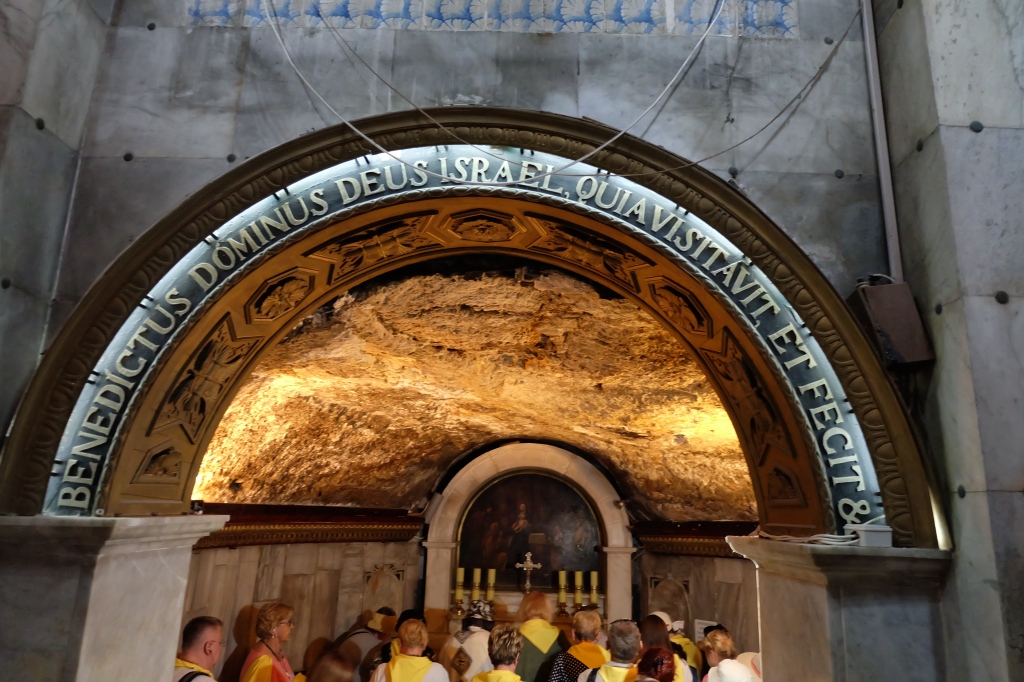
Photo by author, Agony at the Garden of Gethsemane, the Holy Land, 2019.
Your words, O Lord
of Jacob wrestling with you
or, your angel (?)
reminds me of Jesus Christ's
own agony in the garden.
And for me, it is one of sweetest
scenes in the whole bible,
the finest example of an animated
and engaging relationship
with you, dear God our Father.
Jacob was left there alone.
Then some man wrestled
with him until the break of dawn.
When the man saw that
he could not prevail over him,
he struck Jacob's hip at its socket,
so that the hip socket was wrenched
as they wrestled.  Then the man said,
"You shall no longer be spoken of as Jacob,
but as Israel, because you have contended
with divine and human beings
and have prevailed."
(Genesis 32:25-26, 29)
Loving Father,
forgive us when we "box" you
as being stern and stiff like the police
waiting for our slightest mistakes
and violations; surprise us, dear God
with your intimacy, closely engaging
wrestling and contending with you
to bring out the best in us
 and still see your very best plans
that cleanse and purify us of our intentions.
Grant us the grace of intimacy
that is most surprising
when we have to wrestle
with you like Jacob and be "Israel"
so that your might and your truth
will always prevail
unlike the Pharisees who were afraid
to get closer to Christ and be purified
that they vilified and later crucified
to hide in their weaknesses and sins.
Grant us courage and strength
dear God in engaging with you
realizing our limits
humbly surrendering to your will
like Jacob at Peniel;
let us be not like those Pharisees
who refused to contend
by insisting their contempt for Jesus
thinking they can prevail on him
only to reveal their evil within.
Amen.
The Lord Is My Chef Sunday Music by Fr. Nick F. Lalog II, 04 July 2021
Photo by author, Pater Noster Church, Jerusalem, Israel, 2019.
Love presupposes faith. It is not enough to know the person in order to love him/her; you have to believe the person too. To love and to believe both call us to be one with the other, to become the part of the other person, of the beloved.
This is most especially true with Jesus who was amazed at the lack of faith in him of his folks at Nazareth though they knew him as the “carpenter son of Mary” (https://lordmychef.com/2021/07/03/surprising-jesus/).
That is why we have chosen for this lazy Sunday the 1980 hit by Ambrosia composed by their lead singer David Pack, Biggest Part of Me. It is a love song sometimes sung in weddings because of its expression of love and faith with the beloved, of what is essentially the life of married couples of being a part of each other.
Faith is essential in any relationship most especially when failures and rejections happen, when things we hope for do not push through like when Jesus was rejected in Nazareth.
In the seventh stanza of Biggest Part of Me we find the importance of faith, of believing essential in love and any relationship.
More than an easy feelin'
She brings joy to me
How can I tell you what it means to me
Flow like a lazy river
For an eternity
I finally found someone who believes in me
And I'll never leave
(Now I've found all I need)

Need your lovin' here beside me
(To guide me) Keep it close enough to guide me
(Inside of me) From the fears that are inside of me
You're the biggest part of me

Got a feelin' that forever
(Together) We are gonna stay together
(Forever) From now until forever
You're the biggest part or me
You're the life that breathes in me
You're the biggest part of me

You changed my life
You made it bright
And I'll be a savior to you
For the rest of my life
Oh, oh the biggest part of me
There are only two instances in the bible that Jesus was amazed: first in Nazareth which is the gospel we heard today when he was amazed for their lack of faith in him. The second was in Capernaum when he was amazed with the faith of a Roman centurion who asked him to heal his servant remotely, saying, “Lord, I am not worthy to have you enter under my roof; but only say the word and my servant shall be healed” (Mt. 8:8). Jesus praised the pagan officer for his great faith.
It is when we believe, when we have faith in Jesus and with our beloved that great things begin to happen in our lives because that is when we make them the “biggest part” of our selves.
Have a blessed Sunday!
*We have no intentions of infringing into the copy rights of this song and video except to share its beauty and joy with others.
The Lord Is My Chef Sunday Recipe for the Soul by Fr. Nicanor F. Lalog II
Fourteenth Sunday in Ordinary time, Cycle B, 04 July 2021
Ezekiel 2:2-5 ><}}}'> 2Corinthians 12:7-10 ><}}}'> Mark6:1-6
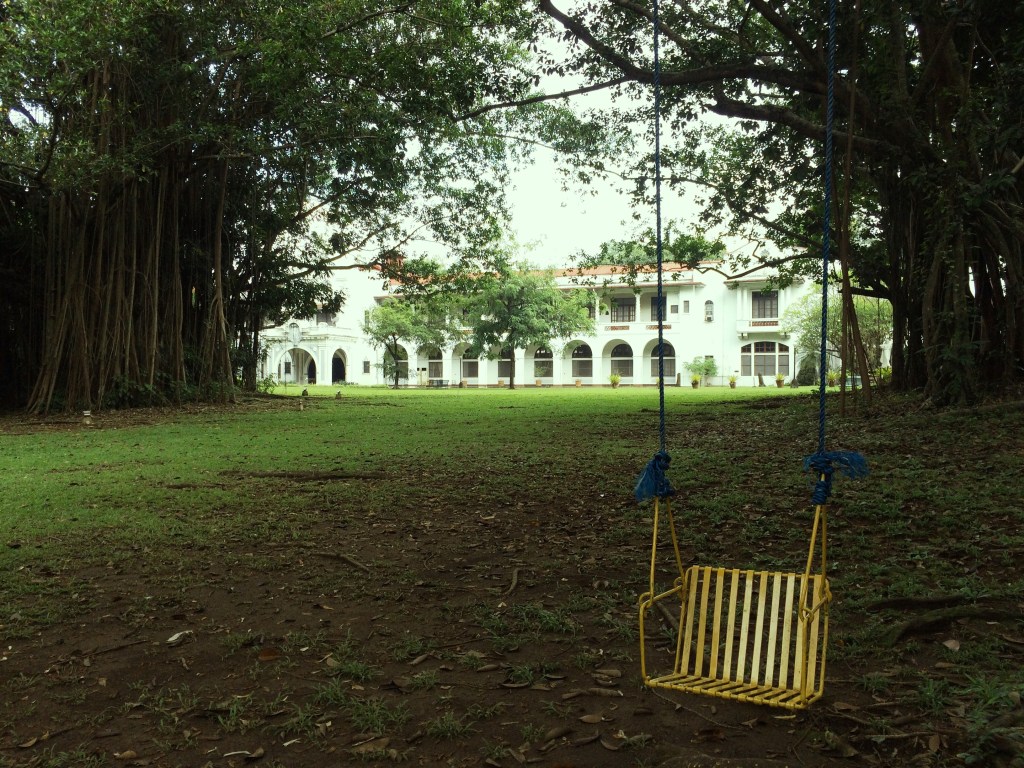
Photo by author, Sacred Heart Center for Spirituality, Novaliches, 2015.
There are only two instances in the gospels that say Jesus was surprised or amazed: first is in his hometown of Nazareth as we have heard today when “He was amazed at their lack of faith” (Mk.6:6) and the second is in Capernaum when a Roman centurion asked him to heal his sick servant. When Jesus obliged to come with him to heal the servant, the Roman officer declared, “Lord, I am not worthy to have you enter under my roof; only say the word and my servant shall be healed. When Jesus heard this, he was amazed and said to those following him, “Amen, I say to you, in no one in Israel have I found such faith” (Mt.8:8, 10).
What surprises Jesus most is our faith in him. Or, its lack like the people of Nazareth.
Last Sunday, he dared us to examine our faith in him when he brought back to life the dead daughter of Jairus. On their way, Jairus was told his daughter had died, that there was no need to bother Jesus anymore; that’s when Jesus said, “Do not be afraid; just have faith” (Mk.5:36). Reaching his home, there was commotion on the dead child but later, everybody was “utterly astounded”(Mk.5:42) after Jesus brought her back to life.
Today, St. Mark deepens our reflection on the need to have faith in Jesus by telling us a surprisingly sad episode in the Lord’s life and ministry of being rejected right in his native Nazareth:
When the sabbath came he began to teach in the synagogue, and many who heard him were astonished. They said, “Where did this man get all this? What kind of wisdom has been given him? What mighty deeds are wrought by his hands! Is he not the carpenter, the son of Mary, and the brother of James and Joses and Judas and Simon? And are not his sisters here with us?” And they took offense at him. so he was not able to perform any mighty deed there, apart from curing a few sick people by laying his hands on them. He was amazed at their lack of faith.
Mark 6:2-3, 5-6
Photo by author, Nazareth, Israel, 2019.
The need for faith
For the past three weeks, St. Mark has slowly introduced to us that Jesus is the Christ, the awaited Messiah or Savior through his teachings and miracles like healing the sick, pacifying a violent storm at sea in the darkness of the night, and bringing back to life the dead child of Jairus.
However, it is not enough to “know” who Jesus is.
Knowing Jesus – or anyone – will not matter at all unless we believe in him and enter into a relationship with him lest we end up like his folks who “knew” him as the carpenter and son of Mary, wondering where he got all his wisdom and power.
And worst, “they took offense at him”. As we would say in Filipino, “pinersonal nila si Jesus.”
But, that is what faith is – something very personal because it is a relationship. No relationship can mature and grow unless there is faith. The deeper and stronger the faith, the most wonderful is the relationship because despite all the troubles and sufferings that may come, the ties remain because of faith.
That is why it St. Mark is telling us today the rejection of Jesus at Nazareth, of how even the Son of God experienced failures and rejections, calling us for a deeper and firmer faith in him who alone is our Lord and Savior. Aside from sickness and deaths in our lives, there are many other pains and heartaches, disappointments and failures and losses in our lives that if we do not have faith, we can never make it through with Jesus.
Yes, Jesus is with us in this journey of life in the many seas to cross while in darkness amid violent storms; but, we have to believe in him first before he can make his moves in our favor like in Nazareth where he “was not able to perform any mighty deed there, apart from curing a few sick people by laying his hands on them” due to their lack of faith in him.
Photo by author, altar in my room at the Fatima National Shrine, Valenzuela City, February 2021.
Surprising Jesus with our faith
Too often in our lives, we have boxed God as being stiff and stern, a disciplinarian watching us for our sins and mistakes. Wrong! God sent us his Son Jesus Christ so we may experience his tender mercy and love, his personal relationship with each of us.
Unlike most of us, Jesus is a touch person, so sensitively human, not numb, always feeling us in our gestures and looks and words like that Roman centurion at Capernaum, that sick woman in the crowd last Sunday, the widow of Nain and the sisters Mary and Martha. They all moved and touched Jesus with their grief and sufferings, and most especially with their faith and joy and confidence in him.
Most beautiful in these stories of Jesus being surprised and moved by humans are the more surprising kindness and blessings he bestowed on them – like in our own experiences! Notice that when we were so surprised by God with his blessings, that is when we have also surprised him with our faith.
Jesus is surprised with our faith when we continue to listen and speak his words of justice and truth. In this age of faith in a mass mediated-culture, we find the voice of God drowned in the cacophony of many sounds competing for everyone’s attention where the ones that prevail are those appealing to the senses that are both easy and pleasurable. Through media manipulations, what was unacceptable was first made to be tolerable until it has become acceptable like promiscuity and “safe-sex”, divorce and same sex marriage, birth controls and abortions. Any discussion of God and religion, ethics and morality and values are dismissed as limiting and narrow-mindedness or worst, as being old-fashioned and conservative. In modern man’s effort to be “fair” and “all-encompassing”, the human person has been reduced to technicalities and legalese, replacing life with lifestyles.
Hard of face and obstinate of heart are they to whom I am sending you. But you shall say to them: Thus says the Lord God! And whether they heed or resist – for they are a rebellious house – shall know that a prophet has been among them.
Ezekiel 2:4-5
Jesus shows us today in his unhappy homecoming to Nazareth that even if people refuse to listen, we continue with our prophetic role of proclaiming his good news of salvation “in season, out of season”.
Even if nobody listens, even if we do not win converts or followers, we are prophets of God like Ezekiel, the voice of God, of his justice and truth amid a rebellious and wayward generation. Like John the Baptist, we are the voice in the wilderness preparing the coming of the Lord by speaking the truth, calling people to repentance and conversion.
Though God speaks in silence, our being silent in the midst of evil worsens the sinful situation as we shut doors among humanity leaving no room at all for Jesus to come and work his wonders among us. Be the voice of Jesus, be his opening, and be ready for great surprises happening soon!
Jesus is surprised with our faith when we remain standing with him at his Cross, bearing all pains and wounds with him. In this age of affluence and convenience characterized with everything instant in a click of a button, modern life has become sedentary to our own detriment. As we prefer to be seated more than standing, we have become so passive, avoiding every form of pain and suffering that make pain relievers as the most prescribed and widely used medication these days.
See how we quarrel over our places of “seat” everywhere – at home and school, office and community and parish, public and private transport – as they connote powers without realizing that what matters most in life is where we stand because that is when we are defined as a person for our faith and values in life, when we most surprise Jesus as he surprises us most with his strength like what St. Paul had realized:
Therefore, I am content with weaknesses, insults, hardships, persecutions, and constraints, for the sake of Christ; for when I am weak, then I am strong.
2 Corinthians 12:10
Great things begin to happen in us, in our lives when we are out standing for Jesus, with Jesus because that is when we are truly one in him as he passed over our miseries and sins to rise again with him and in him in his Resurrection.
Jesus is surprised with our faith when we are filled with joy and love in him despite everything. To love and be joyful like Jesus calls for a deep faith in him, to be kind and merciful even when others are rude and unforgiving. Notice how these days it takes a lot of guts to be good. And we are so amazed with them!
On the other hand, notice when we hear news of a band of people who are inconsiderate, corrupt, unkind, selfish, and proud: are you not surprised they are filled with anger and hate and negativities?
During the persecution of the early Church, Christians were easily spotted and rounded because they were amazingly loving and caring with the marginalized like the poor, the sick, the widows, the old, and the orphans. Pagans were most surprised that the more they persecuted the Christians, the more they grew in number! It is one of history’s most surprising facts but, that is how God moves, so unusual in the most surprising ways.
Have you been surprised by Jesus lately?
Try surprising him with your great faith in him and you will be surprised greatly by him!
Have a blessed Sunday!Amen.
Photo by author, flowers at the Pater Noster Church outside Jerusalem in Israel, 2019.
The Lord Is My Chef Breakfast Recipe for the Soul by Fr. Nicanor F. Lalog II
Thursday, Week XIII, Year I in Ordinary Time, 01 July 2021
Genesis 22:1-19   <*(((><  +  ><)))*>   Matthew 9:1-8
Photo by Dr. Mylene A. Santos, M.D., March 2021.
When I look at your beautiful creation
O God our loving Father
I cannot but stop and wonder
be at awe with all the beauty
and mystery so extraordinary
yet ordinary in your majesty.
Today we have two stories
so extraordinary but with you
simply ordinary:  when you asked
Abraham to offer to you Isaac,
off he went faithfully
even blindly:

As the two walked on together,
Isaac spoke to his father Abraham,
"Father!" he said.
"Yes, son," he replied.
Isaac continued, "Here are the fire
and the wood, but where is the sheep
for the burnt offering?"
"Son," Abraham answered,
"God himself will provide the sheep
for the burnt offering?"
Then the two continued going forward.
(Genesis 22:7-8)
The faith of Abraham in you, O God,
is so great, so extraordinary;
and so was the faith of Isaac
to his father that it never occurred
to him he would be the one to be
sacrificed either.
Both Abraham and Isaac showed
extraordinary faith you ordinarily ask from us.
Give us the grace, O God,
to imbibe this ordinariness
of having extraordinary faith in you,
like the harmony and beauty
found ordinarily in nature;
may we realize that any sickness
is a "dis-ease", our lack of harmony
with you and with others due to sin.
Let us not "harbor evil thoughts"
like those scribes present at
Christ's healing of a paralytic
to whom he declared
"your sins are forgiven" (Mt.9:2)
to show that wherever there is
dis-ease, there is a lack of harmony
wanting your mercy and unity.
Amen.
The Lord Is My Chef Breakfast Recipe for the Soul by Fr. Nicanor F. Lalog II
Thursday, Solemnity of the Birth of John the Baptist, 24 June 2021
Isaiah 49:1-6 ><}}}'> Acts 13:22-26 ><}}}'> Luke 1:57-66, 80
Photo by author, site where St. John the Baptist was born beside the Church in his honor in Judea, 2019.
Today’s celebration of the Solemnity of the Birth of St. John the Baptist reminds us of the very important grace and gift from God we take for granted and always abuse – our voice.
Also known as the “voice in the wilderness” who prepared the coming of Jesus Christ, St. John shows us even before his birth through his father Zechariah the proper use of this gift of voice from God.
Voice is power.
In the Book of Genesis, God created everything by simply saying “let there be…” and it comes into being. When Jesus came as the “the Word who became flesh”, he witnessed to us this immense power of the voice of God when he would simply speak to heal people, cast away evil spirits, and still the seas and quiet the storms.
Only us humans were gifted with this unique power of God to speak using the voice.
How sad that we have forgotten or have been totally unaware of the fact that we merely share in the power of God in speaking, in voicing out what is in our minds and in our hearts. Like freedom or the power to choose what is good, we have abused this power of the voice so evident in this digital age as we drown in a cacophony of voices from everybody wanting to be heard, wanting to rule.
And the tragedy is that
those with the loudest voice and
easy access to all kinds of media platforms
are also the ones in power who only voice
out their selfish interests like our politicians.
Photo by Ms. Ria De Vera, Bgy. Lalakhan, Santa Maria, Bulacan, June 2021.
And the tragedy is that those with the loudest voice and easy access to all kinds of media platforms are also the ones in power who only voice out their selfish interests like our politicians.
Have you noticed how most of the loud voices we hear these days come from those not involved at all in any kind of suffering? They are not only loud but also so quick to voice their views empty of any concern at all. Worst, many of these loud voices we hear come from people who have little or no concern at all for those truly in pain like the poor and marginalized who have remained voiceless in our society.
When they came on the eighth day to circumcise the child, they were going to call him Zechariah after his father; but his mother said in reply, “No. He will be called John.” So they made signs, asking his father what he wished him to be called. He asked for a tablet and wrote, “John is his name,” and all were amazed. Immediately his mouth was opened, his tongue freed, and he spoke blessing God.
Luke 1:59-60, 62-64
Silence is the voice of God.
At the eve of our celebration today, we have heard how the angel had made Zechariah deaf and mute after he doubted the good news announced to him of the coming birth of their son to be named as John.
Now after nine months of being silent, Zechariah recovered his voice and speech that he spoke blessing God.
Imagine the power and stature Zechariah must have commanded at that time: both he and his wife Elizabeth were from the priestly clans. They were like the royalty at that time, living in an affluent section of the country. Both were born into wealth and fame. And power.
Zechariah’s voice must be one of the most sought after in Judea with his wisdom and influence.
Suddenly gone when his very voice questioned the source of its power, God represented by Archangel Gabriel.
Photo by author, Church of St. John the Baptist, the Holy Land, 2019.
The experience of Zechariah teaches us of the value of silence that has become a very rare commodity these days.
Many of our misunderstandings are due to our lack of silence, of listening to what others are saying or telling us.
Contrary to what
we also believe,
 silence is not emptiness
but fullness:
Contrary to what we also believe, silence is not emptiness but fullness: it is different from being quiet when we do not simply speak but allow our minds to work on what we believe in or hold on to. Silence is trying to listen to every voice, especially the faintest ones that usually speak the truth. In the Bible, we find a common pattern in both the Old and New Testaments how God’s communication is preceded always with silence.
Zechariah was forced into silence to experience again its fullness, of being connected anew with God as it gave him opportunities to truly listen intently to God in prayers. That is why everyone was surprised not only when Zechariah confirmed the name of his son would be “John” but most of all when he spoke and his voice heard again by the people. According to Luke, Zechariah sang a blessing to God called the Benedictus.
Then fear came upon all their neighbors, and all these matters were discussed throughout the hill country of Judea. All who heard these things took them to heart, saying, “What, then, will this child be?” For surely the hand of the Lord was with him.
Luke 1:65-66
Becoming the voice of God like John the Baptist
See how Luke presented the scene in pure simplicity as if we were also there, everybody asking “what will this child be?” for surely the hand of the Lord was with him. The scene is packed with the power of God. No voices were heard except the few “pakialamera” or “mahadera” neighbors who wanted the child named Zechariah like his father.
Elizabeth was so cool but emphatic by declaring her son shall be named John. No debates nor arguments among the women who approached Zechariah – surely, not to ask him to voice his decision as he was deaf and mute at that time. Everybody was amazed when he asked for a tablet and wrote “John is his name”.
There was the deafening silence of God’s voice heard loud and clear, perhaps even for several days after the circumcision and naming of John.
“St. John Preaching In the Wilderness” by Anton Raphael Mengs (1728-1779), photo from commons.wikimedia.org
Such is the power of God, of his voice.
Always preceded by silence.
Never harsh nor imposing.
Soft but always felt, always consistent, very clear and simple.
Most of all, refreshing and blissful.
It is a voice kept in one’s heart, nurtured through time in prayer and simplicity of life until the listener becomes the speaker and carrier of the voice of God.
In our digital age where humans and machines speak with voices competing for our attention, we are reminded that the true power of the voice is not in its volume but in God himself who is also the message.
Like images, voices can also be enhanced with the help of modern technology and human ingenuity, especially by image makers and propagandists who are paid to advance one’s power and influence.
Let us be more discerning in listening to the many voices competing for our attention.
Let us begin first in that soft and feeble voice inside our hearts we disregard but consistently speaks to us daily. That voice could be God speaking to us.
Let us rediscover silence and the true power and beauty of the voice of God.
Recall how often in our lives and in human history, the most important voices ever heard, ever written come after long moments of silence, of reflections and listening to God and with others.
The child grew and became strong in spirit, and he was in the desert until the day of his manifestation to Israel.
Luke 1:80
Photo by Fr. Pop Dela Cruz, Binuangan Is., Obando, Bulacan, May 2021.
The Lord Is My Chef Breakfast Recipe for the Soul by Fr. Nicanor F. Lalog II
Wednesday, Week XII, Year I in Ordinary Time, 23 June 2021
Genesis 15:1-12, 17-18   <*(((>< + ><)))*>   Matthew 7:15-20
From Barb Schmidt, Facebook, 02 June 2021.
Your words today, O God, direct us to look more intently into our inside, to see and face our true selves, to be sincere and not to fall prey to so many fakes that abound specially in this digital age when everything can be manipulated to dupe others.
Jesus said to his disciples:
"Beware of false prophets,
who come to you in sheep's clothing,
but underneath are ravenous wolves.
By their fruits you will know them."
(Matthew 7:15-16)
Help us, dear God, through the Holy Spirit to have the courage to face our true selves, to see what’s truly inside and start fixing them instead of putting on masks, on misleading others on who we really are and most of all, to stop fooling our very selves.
In this age when everything can be faked and fixed to look so good outside, to be so clean and amazing, even spectacular, remind us not to forget that what is outside follows naturally what flows from the inside, from what is deep in our hearts, from how clear and clean is our soul.
Teach us to be like Abram to have the courage to speak to you sincerely, to pour out our hearts to you and let you know our fears and apprehensions.
And once assured of your love and presence, keep us firm in our faith like Abram.
Abram put his faith in the Lord,
who credited it to him as an act of righteousness.
(Genesis 15:6)
So many times in the New Testament, St. Paul and the author of the Letter to the Hebrews would retell over and over again this episode of Abram’s deep faith in you, O God as the finest example of trusting in your promise.
Make us realize that at all times, integrity and transparency will always remain the most important premiums we can have in life. Make us learn to be genuine for it is only then that we truly bring out your image and likeness imprinted within us. Amen.
The Lord Is My Chef Breakfast Recipe for the Soul by Fr. Nicanor F. Lalog II
Tuesday, Memorial of Sts. John Fisher and Thomas More, Martyrs, 22 June 2021
Genesis 13:2, 5-18   <*(((>< + ><)))*>   Matthew 7:6,12-14
Photo by author, the narrow door to the Church of the Nativity in Bethlehem, 2019.
It is now getting clearer, God our loving Father, why we have to see ourselves in the way you see us as beloved and blessed: our strong selfish inclinations make us think more of ourselves, of what would give us most benefits with the least efforts as much as possible that make us forget others.
Like Abram’s nephew Lot who “chose for himself the whole Jordan Plain” settling near the city of Sodom because the whole region was well watered and prosperous, not knowing its inhabitants were very wicked in their sins whom God would punish later (Gen.13:10-11).
Teach us to be like Abram who thought more of others than himself: So Abram said to Lot, “Let there be no strife between you and me, or between your herdsmen and mine for we are kinsmen. Is not the whole land at your disposal? Please separate from me. If you prefer the left, I will go the right; if you prefer the right, I will go to the left” (Gen.13:8-9).
Help us to follow your Son Jesus Christ’s teaching that we “Enter through the narrow gate; for the gate is wide and the road broad that leads to destruction, and those who enter through it are many. How narrow the gate and constricted the road that leads to life. And those who find it are few” (Mt.7:13-14).
May we learn from the lessons of history how powerful men like King Henry VIII of England ended miserable in life when he chose the path of the wider gate that led to his destruction when he ordered in 1535 the beheading of Cardinal John Fisher and Chancellor Thomas More for their refusal to sign his Act of Succession paving the way for his divorce from Catherine of Aragon to marry Anne Boleyn. Five more divorces later, Henry VIII never had a male successor except Edward VI who ruled England very briefly.
Grant us the courage and wisdom of St. John Fisher and St. Thomas More who chose the more difficult and painful “narrow gate” of martyrdom to serve you, God, first and above all.
Choosing the narrow gate is always the best because it is choosing Jesus Christ your Son who chose the way of the Cross for our salvation and eternal life.
We pray for those trying to make shortcuts in everything in life, avoiding the way of the Cross to gain more wealth and fame without any regard for the value of other persons. We pray for those who have been blinded by power and money who could no longer see one another as a brother and sister, failing to be just and fair in their relationships and dealings. Amen.
The Lord Is My Chef Breakfast Recipe for the Soul by Fr. Nicanor F. Lalog II
Monday, Memorial of St. Aloysius Gonzaga, SJ, 21 June 2021
Genesis 12:1-9   ><)))*> + <*(((><   Matthew 7:1-5
Photo by author, Pulilan, Bulacan 25 February 2020.
Sometimes I imagine dear God if ever the world would ever stop for a while, when everything and everyone freezes from whatever we are doing so that we can take a break from all that is going on in our lives, both good and bad.
I remember this silly thought as I prayed on your words today as we celebrate the Memorial of the Jesuit St. Aloysius Gonzaga, a very young and wealthy scion during the middle ages. In the first reading, you have called Abram, a very old man at 75 years of age and also very wealthy and prosperous.
I guess we will never stop, O God, because you keep on calling us to you, whether young or old.
And always wealthy.
More than the material wealth and possessions of Abram and St. Aloysius, you call each one of us to serve you because everyone is so blessed with something always to offer and give. Even give up and surrender to you.
You always see each one of us with so much love and trust, of being gifted with so much to offer and give.
Problem is we cannot see ourselves the way you see us.
Too often, we waste our energies and time stopping to look at others, to criticize others and find faults at everyone except us.
How ironic that you see only the good things in us whether young or old while we are busy finding faults and unpleasant things with others!
Help us through Jesus Christ your Son to “Stop judging, that we may not be judged. For as we judge, so shall we be judged, and measures with which we measure will be measured out to us” (cf. Mt.7:1-2).
Please, open our eyes dear God see ourselves the way you see us with love and appreciation for our many gifts and talents that are wasted as we find faults with others. Amen.
The Lord Is My Chef Sunday Music by Fr. Nick F. Lalog II, 20 June 2021
Photo by Ms. Anne Ramos, a rainbow appeared during our Blessed Sacrament procession at the start of the lockdown, 22 March 2020, in our former parish at Bagbabuin, Sta. Maria, Bulacan.
Movies are great sources of good music. We cite two movies today for our featured Sunday music in relation with our Gospel when Jesus pacified a violent storm while they were crossing the Lake of Galilee in the middle of the night (https://lordmychef.com/2021/06/19/jesus-amid-our-storms-in-life/).
From the 1939 classic film The Wizard of Oz sang by Ms. Judy Garland which also became her signature song, Over the Rainbow that was also featured by Hong Kong film director John Woo in the 1997 action movie Face/Off starring John Travolta and Nicolas Cage.
While praying over the gospel this past week, I remembered Woo explaining why he inserted the music Over the Rainbow in the violent gunfight scene of Face/Off between Travolta and Cage where Nicolas placed a headset on “his” son as they shoot out with the FBI:
“When I was young my life was very difficult — almost like a living hell. But when I heard Judy Garland sing this in The Wizard Of Oz, I suddenly felt as if I was on the other side of the rainbow, in heaven, in a place full of hope. When I used it in Face/Off, it was to say thanks for showing me that the world is still full of beauty.”
Woo is such a great director that aside from his beautiful choices of music for his movies, he always used symbolisms like white doves in trying to show the good side of life no matter how violent and bad is the scene or story.
And that is the meaning of our gospel this Sunday: there will always be a lot of darkness and storms in our lives that sometimes we feel and think God does not seem to care like when Jesus was sleeping soundly at the stern of their boat during a squall in the middle of the night as they cross the lake. His silence does not mean he does not care; moreover, he is silent because he had won over a long time ago at his Cross every evil and suffering in this life!
He was the first one to pass “over the rainbow” who now assures us of reaching the shores of safety and peace, joy and fulfillment with him and in him. Hence, this Sunday let us cultivate an intimacy in Christ to be reconciled with God our Father who alone is our surety in this life who had promised Noah with a sign of the rainbow as an assurance he shall never destroy earth.
In the movie Face/Off, Woo masterfully sequenced the song playing at the high point of the gunfight when Nicolas Cage’s “son” was caught in the cross fires:
 Somewhere over the rainbow way up high
There's a land that I heard of once in a lullaby
Somewhere over the rainbow skies are blue
And the dreams that you dare to dream really do come true

Someday I'll wish upon a star
And wake up where the clouds are far
Behind me
Where troubles melt like lemon drops
Away above the chimney tops
That's where you'll find me
Try watching Face/Off this Father’s Day and reflect on Judy’s music to find faith in God anew that after all these storms in life during the pandemic, there is a beautiful rainbow to delight us.
*We have no intentions of infringing the copyrights of the music except to share its beautiful message. Thank you.
The Lord Is My Chef Sunday Recipe for the Soul by Fr. Nicanor F. Lalog II
Twelfth Sunday in Ordinary Time, Cycle B, 20 June 2021
Job 38:1, 8-11 ><}}}'> 2 Corinthians 5:14-17 ><}}}'> Mark 4:35-41
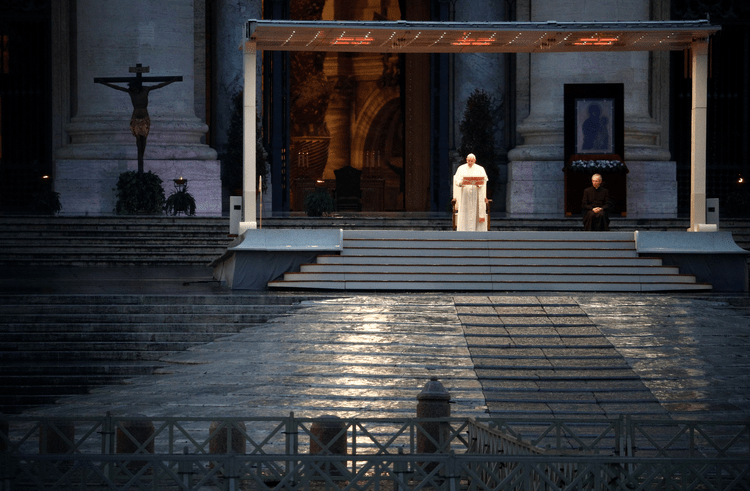
Photo from vaticannews.va.
More than a year ago in March, Pope Francis delivered an extraordinary Urbi et Orbi Message before an empty St. Peter’s Square reflecting on the gospel we heard today when COVID-19 began to wreck havoc upon us, claiming about 3.85 million deaths worldwide as per latest data show.
We are still in the same darkness, in the same storm but much have already changed since the pandemic first struck us last year. Jesus had calmed the seas and the storms with some relief offered by vaccines. Our journey continues as we cross this sea of the pandemic to safer shores.
Like the Pope’s Message last year, we must continue to call and trust in the Lord but at the same time, realize the deeper spiritual meaning of this pandemic, of the need to have a more intimate relationship with God through Jesus.
On that day, as evening drew on, Jesus said to his disciples: “Let us cross to the other side.” Leaving the crowd, they took Jesus with them in the boat just as he was. And other boats were with him. A violent squall came up and waves were breaking over the boat, so that it was already filling up.
Mark 4:35-37
Life is a constant crossing of the sea in darkness with Jesus.
See that in our journey in life,
it is when evening comes,
when there is darkness
that Jesus invites us to come with him to cross the sea.
When there are problems and crisis in life,
that is when Jesus calls us
to get to the other side of life's situation.
On his side.
I love that imagery painted to us by St. Mark in our gospel today, from a casual preaching last week out in the open field with the warm sun shining, Jesus invited his disciples when it was getting dark to cross to the other side of the Lake of Galilee.
Life is a journey that when evening approaches, our instinct is to find a safe place to spend the night. But, today St. Mark shows us a more appropriate imagery of life as a journey which is like crossing the sea.
See that in our journey in life, it is when evening comes, when there is darkness that Jesus invites us to come with him to cross the sea. When there are problems and crisis in life, that is when Jesus calls us to get to the other side of life’s situation. On his side.
And what a beautiful expression we have in “to cross to the other side”! There is always the cross to carry in this life that is like the sea, the uncertainty from our usual sureties like family and friends, jobs, and the status quo because Jesus wants us to have him alone as our surety in life.
A few years ago a Malaysian Air plane perished at sea; despite all the modern technologies, it has not been found yet. It is a reminder to us all of how vast is our world with so much mysteries impossible for humans to master or even fully understand.
Yet, our gospel and first reading assure us that though the world is awesome with great wonders and occurrences, its Creator – GOD – is more awesome for he alone has complete control over nature, especially the sea which is the most difficult of all!
The Lord addressed Job out of the storm and said: Who shut within the doors the sea, when it burst forth from the womb? When I set limits for it and fastened the bar of its door, and said: Thus far shall you come but no farther; and here shall your proud waves be stilled!
Job 38:1, 8, 10-11
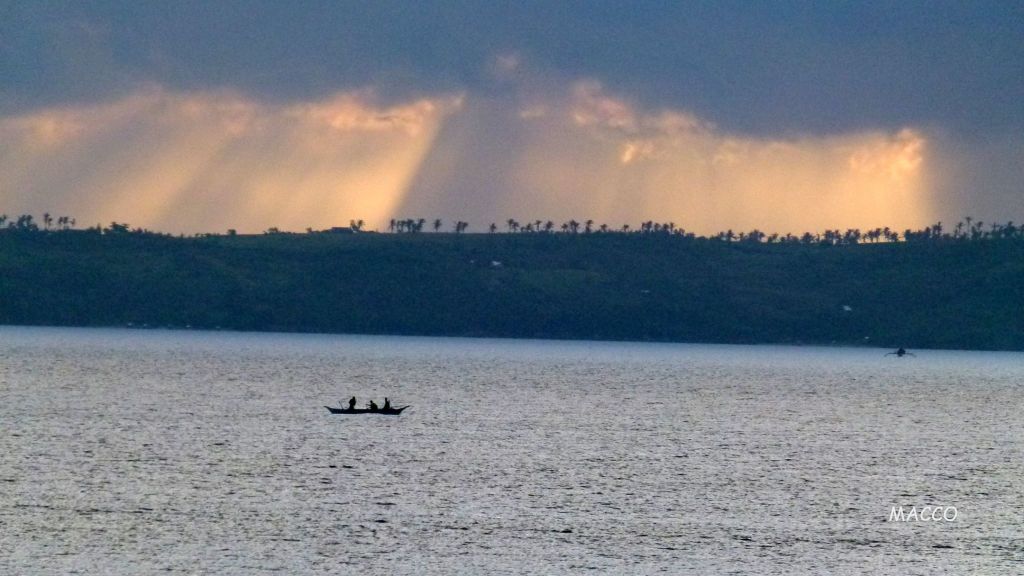
Photo by Mr. Chester Ocampo, off the coast of Catanduanes, 2017.
Our awesome world, more awesome God.
St. Mark’s description of the situation inside the boat with Jesus asleep in the middle of a violent storm at sea is very surprising that seems to be exaggerated like in the movies for dramatic effects not to entertain us but to remind us of that basic reality found in his entire gospel account that Christ came to usher in a new world where never again shall sin and death prevail over us.
Recall the other scenes he would later show Jesus exercising total control over the sea like when he walked on water amid a storm (Mk.6:45ff) and ordered a legion of demons to enter a herd of swine that drowned into the sea (Mk.5:13).
As the Son of God, Jesus has total sovereignty over the sea that symbolized the realm of evil, exorcising it to free us from its clutches when he finally died on the cross.
In the first reading, we heard the fictional story of Job being assured by God who got everything under control, even the mighty sea, putting a limit by stilling its proud waves.
In our gospel, we see the reality of God in Jesus Christ calming the storm at sea.
Jesus was in the stern, asleep on a cushion. They woke him and said to him, “Teacher, do you not care that we are perishing?” He woke up, rebuked the wind, and said to the sea, “Quiet! Be still!” The wind ceased and there was great calm. Then he asked them, “Why are you terrified? Do you not yet have faith?”
Mark 4:38-40
Photo by author, crossing the Sea (Lake) of Galilee, May 2019.
Notice Jesus was sleeping soundly, not disturbed at all neither by the storm with its giant waves that tossed their boat nor the commotion and yelling of his disciples. He was so composed and serene.
The same scene we shall see again when St. Mark tells us how on the night of Holy Thursday when Jesus was betrayed and arrested to be tried by members of the Sanhedrin. It was all dark with Christ so composed and relaxed answering the questions of his enemies while outside was Peter so afraid, denying the Lord thrice while the rest of the apostles went hiding out of fear for their lives.
What a beautiful imagery of our Lord and of us!
Here is Jesus so composed and serene as always while us on panic mode, so terrified, even reproaching God – “do you not care that we are perishing?” – when our lives are threatened as if God does not care at all.
When we look back to last year, it was very frightening like that situation the disciples were into: nobody knew exactly the nature of COVID-19, without any known cure and method of treatment, people were dying daily, and life was at a standstill due to the lockdown.
But, with faith in God, we have moved on. Some weddings finally pushed through, students went back to school while others dared to venture into new businesses and other endeavors, crossing the sea so to speak amid the darkness. Those who got married last year now have their first born while students who enrolled last year have graduated and we who risked to move on are now better off than before.
Had we waited for the pandemic to end before deciding to enroll back in school or find a job or get married, we would surely be into great losses for there is still the pandemic that will most likely remain until 2022 or beyond.
As we have reflected last week, Jesus continues to work in silence in us, with us and for us, making us grow like the tiny seed. He never abandons us especially in times of great trials. This we have proven when we dared to venture in life during this pandemic.
Let us entrust to him our very lives for he alone has total sovereignty in this world and in this life for he himself is life – more powerful than any storm who has the whole world, especially the seas, in his hand.
A life centered in Jesus
We cannot wait for things to get better,
for the pandemic to end,
for us to be well physically, emotionally and financially.
It is right in the middle of a storm
when we are expected to make a stand for Christ,
to rely on him who is most often silently journeying with us.
After Jesus had pacified the storm and the sea, St. Mark briefly ended our gospel story by telling us how the disciples “were filled with great awe and said to one another, ‘Who then is this whom even wind and sea obey?'”(Mk.4:41).
More than the stories of the Lord’s teachings and miracles, St. Mark wants us to make a stand for Jesus, to center our lives in him as we journey in this life, whether in the ordinariness of parables, the safety of the open field and high mountains, or the dangers and perils of the sea at night, with or without storms.
Remember Nightbirde last week who said, “You can’t wait until life isn’t hard anymore before you decide to be happy.” We cannot wait for things to get better, for the pandemic to end, for us to be well physically, emotionally and financially. It is right in the middle of a storm when we are expected to make a stand for Christ, to rely on him who is most often silently journeying with us as St. Paul tells us in the second reading.
Brothers and sisters: The love of Christ impels us… So whoever is in Christ is a new creation: the old things have passed away; behold, new things have come.
2 Corinthians 5:14, 17
Now more than ever in our modern history that the whole world needs a lot of healing and reconciliation. But unlike the proposals of experts, it is not merely a reconciliation of peoples with one another. We do not need a “new normal” which is a misnomer because a norm does not change. What is true and good and fair would always be true and good and fair at all times.
That is what we need, to bring back the true normal in life which is a reconciliation of every person with God so that we may see our world in a more wholistic sense that we become more just and humane.
There can be no true reconciliation among peoples unless there is first of all our reconciliation with God in Jesus Christ so that we become in him a new creation, new persons filled with his love and mercy, justice and kindness. Of course, there will still be many storms as we cross the many seas of our lives but they will be less frightening if we have Christ on board, even if he is soundly asleep. Amen.
Have a bright and sunny week ahead!
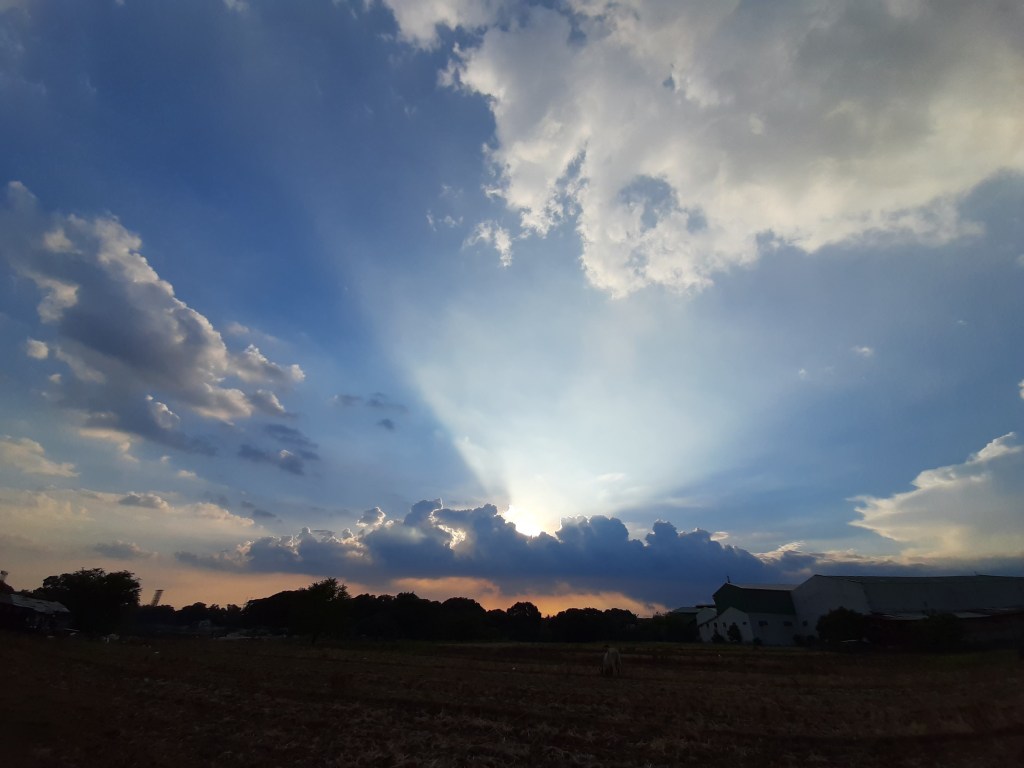
Photo by Fr. Pop Dela Cruz, Binuangan Is., Obando, Bulacan, May 2021.