The Lord Is My Chef Daily Recipe for the Soul by Fr. Nicanor F. Lalog II
Friday, Feast of St. John Marie Vianney, Patron of Priests, 04 August 2023
Leviticus 23:1, 4-11, 15-16, 27, 34-37   ><}}}*> + <*{{{><   Matthew 13:54-58
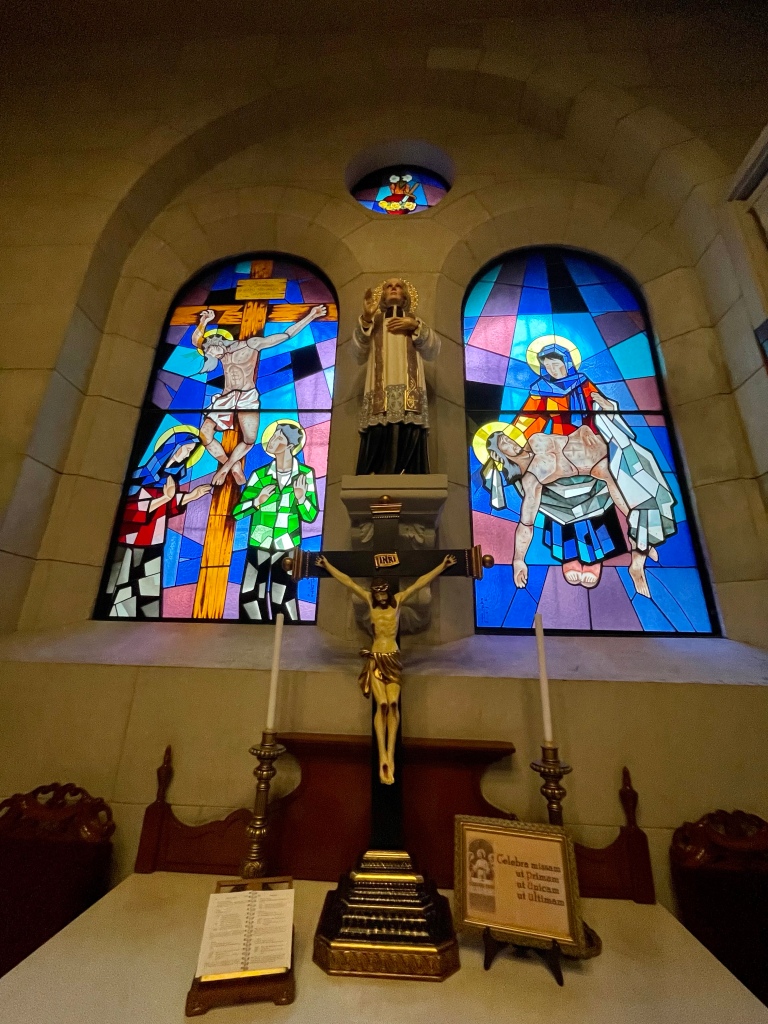
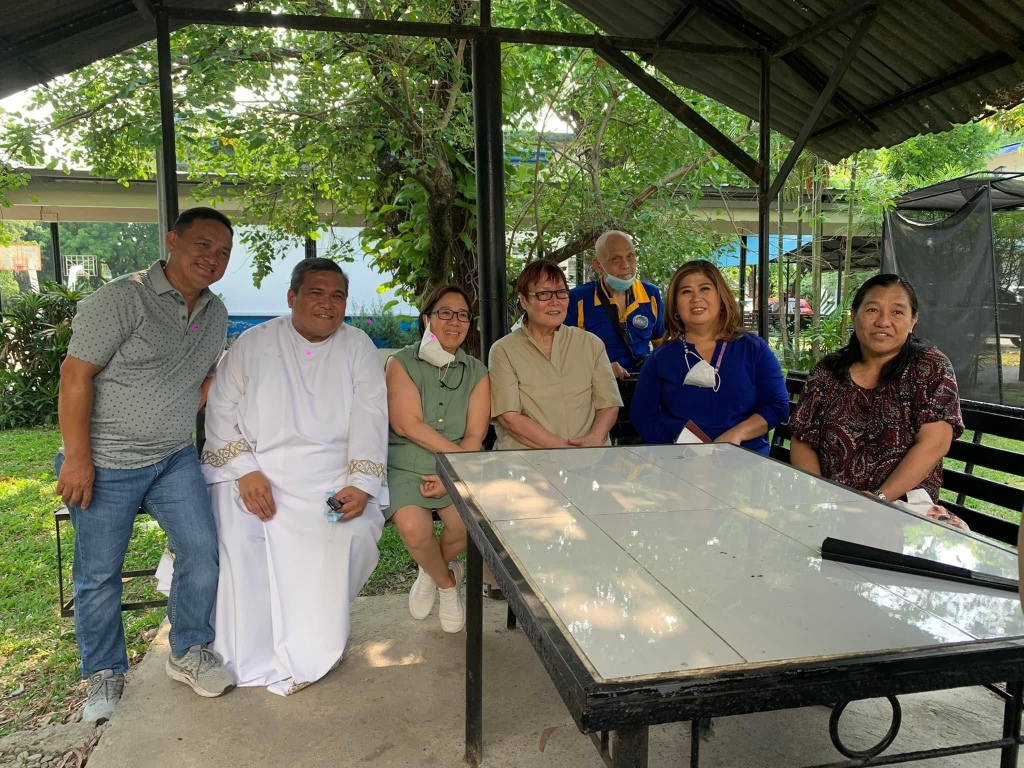
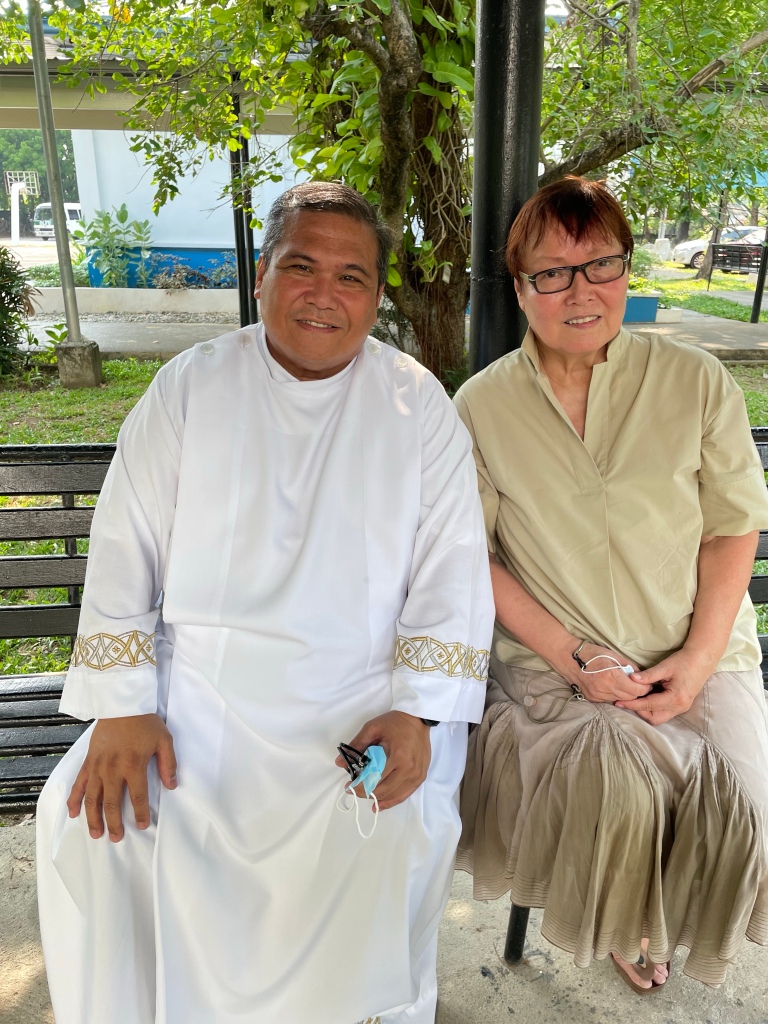
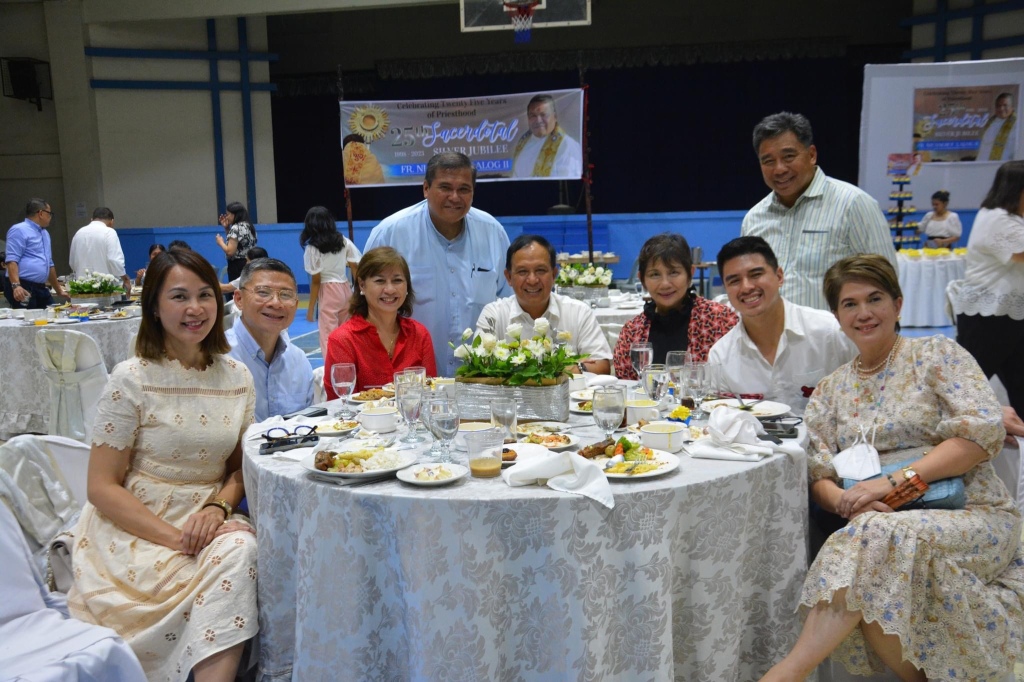
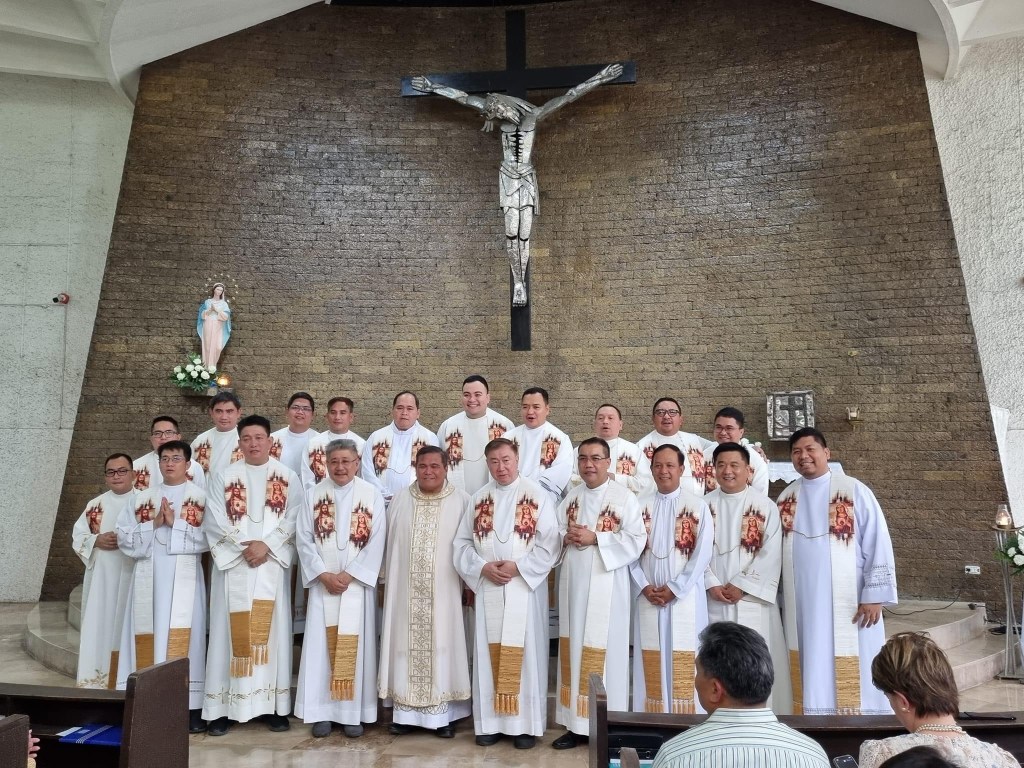
Photo by author, Manila Cathedral Sacristy, 07 July 2023.
Praise and glory to you,
God our Father for the gift of
St. John Marie Vianney,
our Patron Saint,
your priests!
Oh what a glorious day
is this day falling on a
First Friday,
a day special to the
Most Sacred Heart of Jesus,
our Eternal Priest.

Thank you,
thank you,
thank you, Lord.
From the very start
as we have heard from
the Book of Leviticus
in the first reading,
you have set special
days of celebrations
to remember you and
your saving works;
at its service are
your priests.
Always.

But, no...
We are not the center
of your festivals, Lord,
but your mere servants;
how sad that since then
in the wilderness
down to your Temple
up to our own time
in these beautiful churches
we celebrate the Holy Mass,
we your priests have
consciously or unconsciously
turned attention and focus
onto ourselves.

Mea culpa, mea culpa,
mea maxima culpa!
Forgive us your priests
for playing God,
O merciful Father.
Help us to keep coming back
to Nazareth like your Son Jesus;
let us get lost in the hiddenness
and silence of Nazareth;
let us be at home with you
in the obscurity and nothingness
of Nazareth;
let us welcome too the
rejections of Nazareth
like Jesus our Eternal Priest.
In all these 25 years as a priest,
my prayer to you dear God
remains the same:
Lord, you have given me
with so much
and I have given you so little;
teach me to give more
of myself,
more of YOU.
In Jesus' name.
Amen.
The Lord Is My Chef Sunday Recipe for the Soul by Fr. Nicanor F. Lalog II
Eleventh Sunday in Ordinary Time, Cycle A, 18 June 2023
Exodus 19:2-6 ><}}}}*> Romans 5:6-11 ><}}}}*> Matthew 9:36-10:8
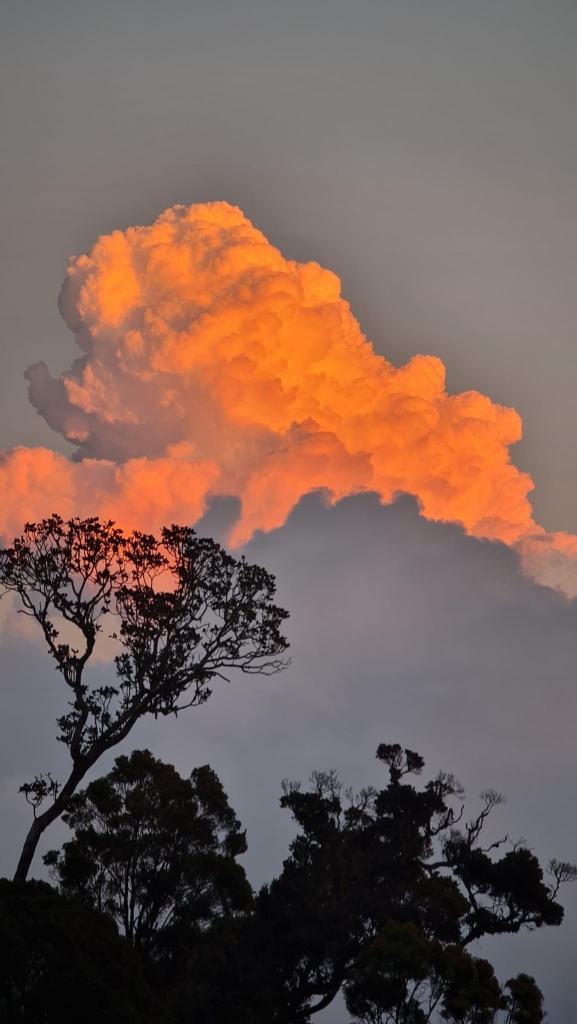
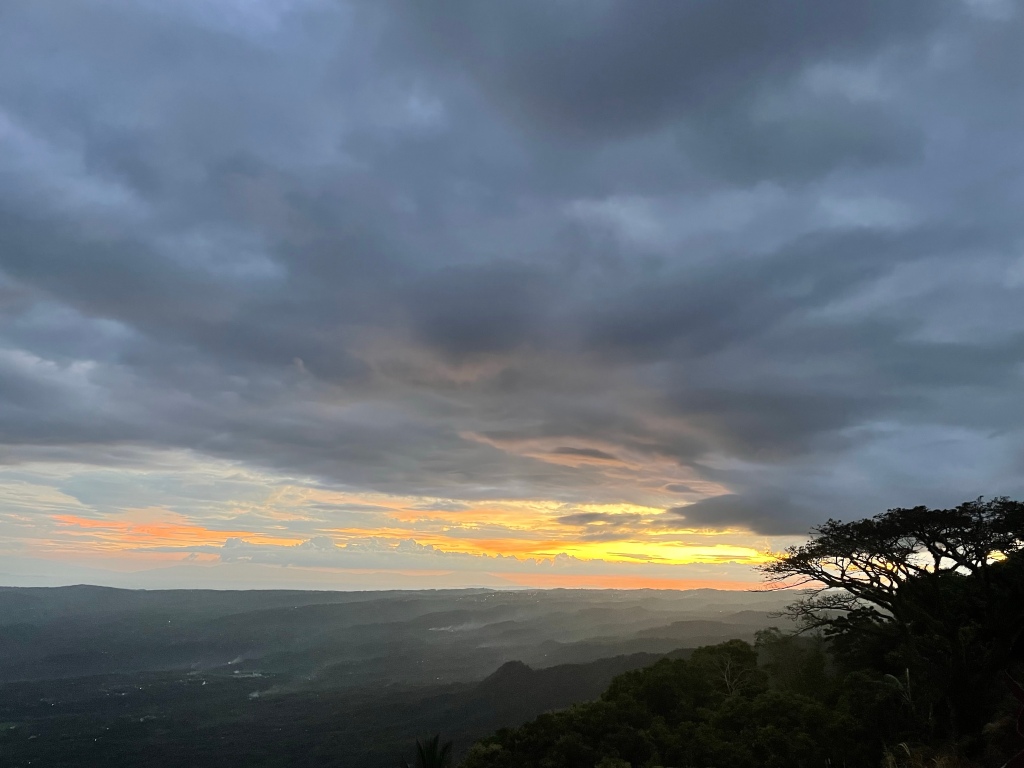
Photo by Ms. April Oliveros at Mt. Pulag, March 2023.
I recently had a long lunch that extended to a longer dinner recently with a good friend who was widowed last January. It was the first time we met again after the funeral of her husband who died three weeks after I had anointed him last Christmas Day.
She was still grieving and yes, angry with God why her husband had to go at an early age. She told me how during her daily prayers she would complain to God, and how she wanted her husband to be still alive, not minding at all of nursing him again.
Likewise, she was worried God might be fed up with her, even mad and angry with her negative feelings and attitudes even though she prays and celebrates Mass more often these days since her husband’s demise.
Photo by Ms. April Oliveros at Mt. Pulag, March 2023.
Does God get angry with us?
The psalmist says, “But you, Lord, are a merciful and gracious God, slow to anger, most loving and true” (Ps. 86:15). If God is slow to anger, does it mean he gets angry, even sometimes?
No. Never.
God does not get angry at all because God is love. God is perfect unlike us who easily get angry and could remain angry over a long period of time because we are imperfect. But God, who is also spirit, does not have emotions, neither gets angry nor irritated with us and yet, always one with us in our feelings especially when we are down in pain and sufferings.
In Christ Jesus who became human like us in everything except sin, God became more one with us to prove his love and oneness for us.
At the sight of the crowds, Jesus’ heart was moved with pity for them because they were troubled and abandoned, like sheep without a shepherd. Then he said to his disciples, “The harvest is abundant but the laborers are few; so ask the master of the harvest to send our laborers for his harvest.”
Matthew 9:36-38
Photo by Mr. Raffy Tima, GMA-7 News, June 2020.
See how Matthew noted that “At the sight of the crowds, Jesus’ heart was moved with pity for them because they were troubled and abandoned, like sheep without a shepherd.” So beautiful. So powerful.
That expression his “heart was moved with pity” is the literal meaning of the Latin word misericordia – mercy in English – that means “a heart moved strongly” like disturbed or thrown off perhaps. More than just a feeling, that virtue of mercy is expressed into compassion which is another Latin word that means “to suffer with” or cum patior. Matthew here is telling us it was more than a feeling for Jesus to have his heart moved with pity but a firm resolve to uplift the crowds because in the first place he has that oneness with them.
Until now in our own time, that heart of Jesus is moved with pity for us whenever he sees us troubled and abandoned, like sheep without a shepherd. Just like my friend grieving the loss of her husband. Or anyone who had lost a beloved, a leg or a part of the body, maybe a job or a career, a dream or a future.
For Jesus, it is always the person who matters that is why his proposal has always been to send us another person, another companion, a fellow to accompany us in our brokenness and darkness. There is his move of gathering us, calling us, and sending us forth to a mission.
Jesus never taught us to ask for more money nor food nor gadgets to solve the problems of the world. Recall his temptation in the desert when he rejected the devil’s challenge to change stones into bread because man does not live by bread alone but with every word from God.
For the world, everything is a problem to be solved, including mysteries of God and of the human person. As we have reflected the past two Sundays, mysteries are not problems and therefore not solvable at all. Mysteries are non-logical realities we must embrace or even allow ourselves to be wrapped with to discover the richness and meaning of this life like God and persons.
When people are down and lost in this life, feeling troubled and abandoned, where do we focus more, to their woes and problems or their very persons? Try thinking of the people you consider as “heaven sent” and helped you in your darkest moments. Are they not the ones who brought out our giftedness as a person, as a beloved child of God with Christ’s gospel?
Photo by author, December 2022 at the National Shrine of Our Lady of Fatima, Valenzuela City.
Problem these days, many people no longer believe in God totally, not giving a care at all with the value and meaning of justification and salvation, of reconciliation and communion in Christ through one another that St. Paul explained in the second reading.
Modern man has become so complacent that he would be saved by a loving and merciful God. It is a wrong kind of confidence because it is a confidence in one’s own powers than in God’s saving act through Jesus Christ as St. Paul preached.
Sad to say, such kind of confidence afflicts mostly the so-called religious and pious ones in the Church, especially us priests and bishops who lose sight of the flock and of Christ in the process. No synod nor meetings and documents would make the local even Philippine Church attuned with the present time unless we the clergy and other disciples must first have our confidence in God, not in ourselves.
How tragic that we are still a Church so steeped in being a hierarchy, lightyears away from being any of the other models of the Church proposed by the late Jesuit Cardinal Avery Dulles: sacrament, herald, communion, and servant. Despite our many denials, priesthood is power and prestige where ministry is more of an office and a privilege. We are more concerned with the call, the vocation of priesthood totally ignoring the Caller, Jesus Christ. Visit any parish and chances are, you find the priest throwing his weight around – literally and figuratively speaking so that the sheep remain without a shepherd.
In the Old Testament, the image of Israel as a lost sheep was the result of failures and even of sins of infidelity of their religious and political leaders. History has proven not only in Israel but everywhere especially the Philippines that when there are failures in leadership in both the political and religious spheres, it is always the common people who suffer most.
Photo by Mr. Mon Macatangga, 12 May 2023.
If we think about it, Jesus could have reacted negatively at the sight of the crowds and even with us today. He could have felt angry and irritated, even annoyed, frustrated and disappointed with how we are wasting all his gifts and grace, his call and his mission. But Jesus chose empathy and sympathy because he always looks into our hearts, into our total person than to our sins and failures, mistakes and errors.
Let us return to our “desert of Sinai” spoken of in the first reading, a reminder of our turning point in life and history when God called and sent us to be a “kingdom of priests, a holy nation” whose confidence is in him alone, not in our very selves nor our programs and structures to find again the many lost sheep of our flock. It is never too late to make a U-turn for God is full of mercy and compassion, slow to anger, loving and true. Amen.Have a blessed week ahead!
The Lord Is My Chef Daily Recipe for the Soul by Fr. Nicanor F. Lalog II
Wednesday in the Tenth Week of Ordinary Time, Year I, 14 June 2023
2 Corinthians 3:4-11   ><}}}}*> + ><}}}}*> + ><}}}}*>   Matthew 5:17-19
Photo by Dra. Mylene A. Santos, MD, 2020.
Lord Jesus Christ,
as we approach the Solemnity
of your Most Sacred Heart,
we pray today for your flock
and their shepherds,
we your priests.

How lovely if we
your priests could only
speak boldly like St. Paul about
our ministry, our priesthood
in you made manifest in our
own sufferings and sacrifices,
in our efforts to reach out to everyone,
especially the weak and the sick,
the marginalized and forgotten,
in our being one with you in your
Cross, Lord Jesus.
Brothers and sisters: Such confidence we have through Christ toward God. Not that of ourselves are qualified to take credit for anything as coming from us; rather, our qualification comes from God, who has indeed qualified us as ministers of a new covenant, not of letter but of spirit; for the letter brings death, but the Spirit gives life.
2 Corinthians 3:4-6
Keep us, your priests,
faithful to your new covenant,
Jesus; let us bring fulfillment
to the many laws we have
by being a leaven for your people
to grow in faith, hope, and love;
set us free from the chains
of legalisms and rubrics
that forget you in every person.

Most of all, let us not forget
to lovingly serve your flock,
your people, O Lord;
may we always be present with
them especially in moments of
their trials and weaknesses,
when they are seeking directions,
when they are lost and could not
find you.

May they be transformed into your
image, Lord Jesus Christ,
so that like St. Paul we may also
tell our parishioners,
"You are our letter,
written on our hearts,
known and read by all" (2 Cor. 3:2)
when the works we have done as
your minister, Lord,
speak for itself.
Amen.
Quiet Storm by Fr. Nicanor F. Lalog II, 05 May 2023
Homily on the occasion of the 25th anniversary of my friend and classmate,
Fr. Ed Rodriguez last 18 April 2023
Tatlong ulit tinanong ni Jesus si Pedro sa ating ebanghelyong napakinggan natin, “Simon, anak ni Juan, iniibig mo ba ako?” (Jn. 21:15-17). Hindi ko na po hihimayin ang kahulugan ng mga iyon bagkus ay hayaan ninyong ibahagi ko sa inyo tatlong pagkakataon ng pag-ibig na aking naranasan.
Una, katulad ninyo, ako man po ay nagmahal at nabigo.
That is one story of love that has the most impact on us. In fact, most love songs have this as theme like unrequited love, unfaithful love, of being unloved despite your love. And they are the most loved and popular love songs because we have experienced that when we truly love, there is always pain and hurting like rejection.
Pangalawa ay iyong iniibig ka rin ng iniibig mo. Yung mahal mo, mahal ka rin. Yun ang matamis! This is the love that has made the world go round and brought us into this world. This is the love why men and women get married because you are loved by the one you love. A very lovely kind of love that tells us may forever.
But there is a third occasion of love I just realized lately, shortly before we celebrated our 25th anniversary of ordination to the priesthood. It is the kind of love we all experience but many times we are not aware of. Worst, it is the love we always reject.
Ito yung minamahal ka na nga, ayaw mo pa!
I found this while counseling adoptive parents who complain of how their adopted children go wayward in life, wasting their lives and their wealth because what prevails over them is the rejection they have experienced from their biological mother who gave them away for adoption. They could not get over that fact and in the process, fail to appreciate the love lavished upon them by their adoptive parents. It does happen too to many kids these days who reject the love their parents shower them, complaining a lot without realizing how they are so loved. Many times, we are not aware of the many blessings we have in life, of being so loved by God and others without us even knowing it.
This love is most especially true to us priests too. As we neared this date, I have realized in my prayers how much God loves me with the many graces he has been giving me which I am not even aware of! And yes, there were times I have rejected his immense love in my many moments of sin.
This love of God is what we always reject, the love we could not accept because what we see more are our weaknesses and shortcomings, failing to see and realize God’s immense love that covers a multitude of our sins and defects.
This love is the most powerful and most mysterious of all when affirmed especially by us priests, enabling us to do so many things in the name of God like building communities and building up lives, not just building structures and edifices.
This love of God is the reason we are rejoicing today, celebrating 25 years in the priesthood of my classmate and friend Fr. Ed who has embraced and affirmed this love God poured upon us on April 28, 1998 at the Malolos Cathedral.
We can only truly celebrate anniversaries, whether priesthood or wedding, if we continuously affirm the love bestowed upon us by God, shared and nurtured by you our parishioners as well as by your spouse. That is why Jesus had to ask Peter thrice the question “do you love me?” because before we can ever follow Jesus, we must first of all love him. To love Jesus is to first affirm and embrace that love he has for us no matter how imperfect we may be.
Notice that a person who loves is always looking good, always radiant with love. This we see also in priests who are filled with joy in the ministry as seen first in their cleanliness and orderliness. Malinis si Father di lamang sa sarili kungdi pati sa mga damit, gamit at parokya. May amirol ultimo mga purificator, corporal at finger towel. Palaging naka-sapatos sa Misa. Maayos ang buhok. At hindi humaharap kanino man ng marumi o di nakabihis ng maayos. In him we find exemplified that elementary school lesson that “cleanliness is next to godliness”. And it is not just being clean outside but also inside.
When we love, we always go near the one we love. That is the first sign of love, a desire to get closer with the one we love. That is why if we really love God in the same manner we love others, we make every move to get close to him in prayer primarily. A priest who loves God, who loves his flock, who loves his vocation is first of all a man of prayer. Everything in the ministry and person of a priest flows from his prayer life. And you know very well when a priest does not pray.
The more a priest prays and gets nearer to Jesus, the more he is united in Christ’s sufferings. No wonder that when Jesus suffered and died on the Cross, there stood by his side were his Mother, the Blessed Virgin Mary and the “beloved disciple” because they were the ones who truly loved him.
When there is love, there is nearness. That is when sharing and oneness happen. When we love, we share in everything, especially our beloved’s pains and hurts. Before we can share in anyone’s joy and glory, we must first of all share in their pains and sorrow. That is the love of a priest. Being one with Christ, one in Christ at the Cross. That is why a priest is a friend to everyone, the rich and poor alike, the young and old alike, the sick and healthy, yung maganda at pangit, mabango at mabaho. People who love always share, are always one with others in their love and pains, victory and failures, weakness and strength.
All the more with us priests who share our lives with you as you too share your lives with us. Together we grow nearer to Christ on the Cross leading to Easter. However, it is not enough in love that we get near or close to our beloved like Jesus.
If we truly love, we must be obedient to show how far, how deep can we go with our beloved especially in their sufferings. St. Paul described this obedience of Jesus Christ to the Father even to death in a beautiful hymn in his letter to the Philippians as a process of kenosis, of self-emptying. This the Lord showed after their last supper when he washed the apostles’ feet. St. John beautifully introduced the scene by telling us, “”He (Jesus) loved his own in the world and he loved them to the end” (Jn.13:1).
Love cannot be defined. It has no boundaries. Most of all, love is always a packaged deal, all inclusive! Like any man and woman getting married who vowed to love each other “in sickness and in health, for richer, for poorer until death do us part”, we your priests also vowed before the Bishop to love Jesus without measure by being celibate, poor, and obedient. Very understandable that priests have to be celibate and poor like Jesus; but, most of all like the Lord, priests take the vow of obedience too to prove the “breadth, length, depth, and height” (Eph. 3:18-19) of our love for Christ, his Church, and to everyone even enemies because it is very difficult to obey even to those we love after all.
How lovely that in Filipino, the word for obedience is pagsunod; an obedient person is masunurin, sumusunod.
It is also the word for following, pagsunod. An obedient person is one who follows because he loves, no matter how difficult it may be.
Now we can see the whole picture of that beautiful conversation of the Lord and Peter at the shore of Lake Tiberias: Jesus asked him thrice, “do you love me?” and after getting Peter’s “yes, I love you Lord”, Jesus described the apostle’s coming suffering and death before telling him, “Follow me” (Jn. 21:18-19).
From loving to suffering and finally, following. Everything begins in love, is sustained by love when there is suffering and following. Sometimes I ask couples if they say “I love you” to each other daily. Most of them would answer me with a question, “kailangan pa po ba yun, Father? Understood na po iyon.” Really?
Many times, we feel afraid, scared to say “I love you” because we know we do not love that much. And most terrified when confronted with the question “do you love me?” because deep inside, we know we have not truly loved. Do not worry. Do not be afraid. Just keep on loving no matter how imperfect you may be because love removes fear.
Most of all, Jesus knows that very well as Peter had said, “you know everything, you know I love you”. Human love is always imperfect. Only God can love us perfectly. But like Peter, in our unworthiness and defects, let us still say in words and in deeds, “you know everything Lord, you know that I LOVE YOU.”
My dear friends, Jesus is asking us every day the same questions he asked Simon Peter. To love Jesus is to love his Church, including his representative, his priest. Love Fr. Ed in Christ with your prayers and support. Give him the time and space to get nearer to Jesus in prayer and loving service to you. Keep Fr. Ed closest to Jesus. Not to you.
Quiet Storm by Fr. Nicanor F. Lalog II, 02 May 2023
Reflections on the occasion of my 25th year in the Priesthood
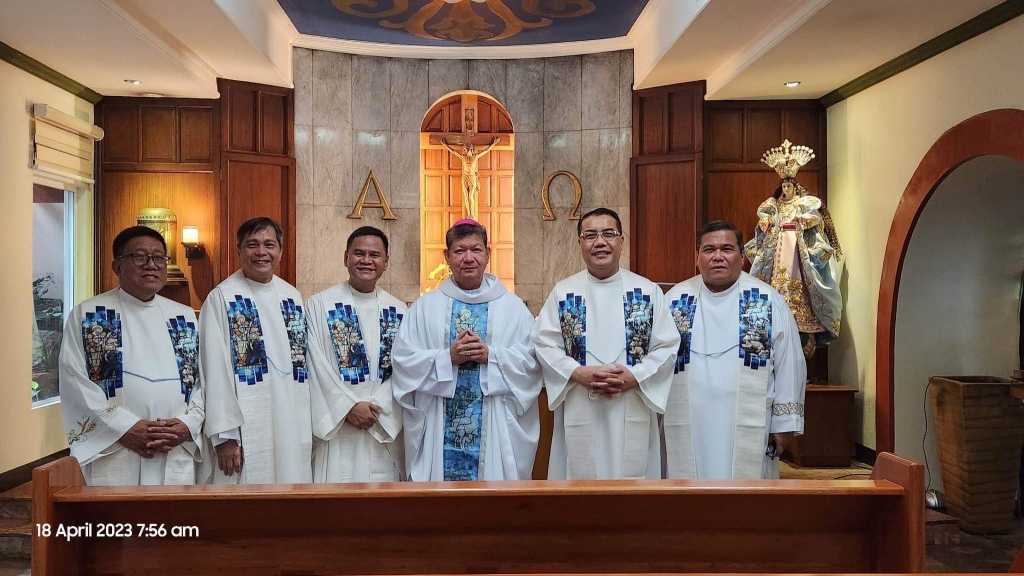
With our Bishop, Most Rev. Dennis C. Villarojo, DD after our anniversary and his birthday Mass in his private chapel; from left Fr. Romy Sasi, Fr. Arnel Camacho, Fr. Leonard Hernandez, the Bishop, Fr. Ed Rodriguez, and me. Not in photo was Fr. Joshua Panganiban who was sick and another classmate who had left the ministry more than five years ago. Photo by Fr. Leonard.
I first entered the seminary as a second year high school in 1979. When we were about to graduate in 1982, I was told to leave the seminary after failing admission to San Carlos Seminary due to the unfavorable results of my psychological exam. It was a very painful experience for me. It is only now on my 25th year of priesthood that I am coming to terms with that dark episode in my life. In fact, it is only now that I can admit it unashamed.
Making it doubly hard for me was when San Carlos Seminary Prefect of Discipline Msgr. Sunga refused to tell me the findings in my psychological exam except I would find it out as I moved on in life. And I think, I have found the reason. “It is the Lord!”
My classmates from UST AB Journalism class of 1986, from left, Lito Zulueta, Dante Santiago, Ellen Jurado-Cobarrubias, front Marie Ann, Luz Lopez Urquiola, Bel De Leon, beside me, Pia Pajarillo-Bantolo, Vilma Capellan, Rose Munoz-Landicho and Ross.
From that experience, I have realized that Christ comes to us even in the darkest moments of our lives. It is often when we have nothing, when we are empty that we are abundant in Christ. It is a mystery that continues to unfold until now! Difficult to explain fully. What was a setback and a dark spot for me before, that failure in my psychological exam has become more of a blessing later to me.
From the seminary, I went to the University of Sto. Tomas to pursue my first love, journalism. Everything happened so fast from UST where I had the chance to join the staff of the Varsitarian, covering the sports beat.
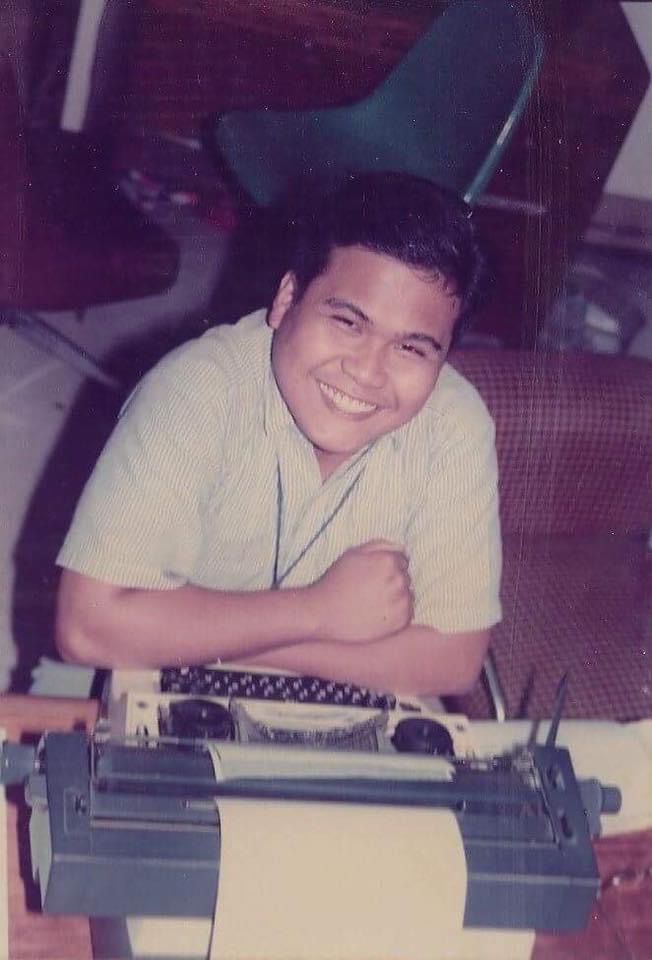
For my internship program, I trained at GMA-7 News to explore broadcast news. Immediately, I was amazed with the speed and timeliness of broadcast news with the constant clacking and ringing or sometimes whining of the UPI and PNA telex machines either from breaking news or when they ran out of newsprint reels. Luckily after graduation in 1986, I was hired by Ms. Tina Monzon-Palma as radio news writer for DZBB-AM and DWLS-FM.
With my co-staffers at the Varsitarian of UST, from left, Alane Ty, Jenny Bartolome, Sr. Gina Kuizon, Mother superior of RGS who was the assistant of Ms. Jesselyn G. Dela Cruz our Asst. Publications Director, Lito Zulueta of Inquirer, at the back are Romy the husband of Mam Jess and Jun Carnecer.
From a news writer in 1986, I became a reporter in 1988 covering the police beat on the night shift until 1990 when Ms. Jessica Soho recommended me to replace her in the the military/defense she used to cover after she was promoted to having a regular morning show, “Kape at Balita”.
I refused the position because I was so afraid of failing to measure up to Jessica’s stature but most of all, I felt not qualified of not having the voice for broadcast news. Yes, I have never wanted to be an “on-cam” reporter because I do not have the broadcast voice. Got no problem with that. That is why my application at GMA-7 was for a news writer. Again, it was the Lord I moved to become a police reporter at that time.
It is funny how I have always refused tasks that put me at the forefront since my GMA-7 days as a result of that “psych exam” in high school. Since college, I have found myself working best behind the scenes and behind the camera, working in hiddenness.
And yes, most of all, for lack of self-confidence. That is why I could not also believe when I felt God calling me to the priesthood again! And when I have become a priest, I have always wanted to be sent into the far-flung areas unnoticed but God would always bring me to major assignments like first, our diocesan school beside the Malolos Cathedral and now as chaplain of Our Lady of Fatima University with six campuses and two Medical Centers!
Me in our old newsroom filing my report after the graveyard shift 1989; photo by Mr. Jack Taylaran.
Going back to my vocation story… Every time I moved up in GMA-7 News, I would feel a reawakening or a resurging of my vocation. In the midst of the perks of the job plus the “celebrity” status, that was when I felt empty and unfulfilled! Something was missing in my life at the beginning I could not figure out. Tried to find fulfillment in everything including relationships but, I still felt empty. In fact, my vocation to the priesthood “pestered” me most when I was into relationships, feeling so praning with a voice within asking me “paano pagpapari mo?” As a result, I tried going back to prayers, then to Sunday Masses that slowly gave me some sense of fulfillment and peace within.
But after covering the December coup attempt of 1989 I felt something so strange deep within me: the more I felt empty within. Despite the adrenalin rush of covering the bloodiest coup attempt in our history, the thoughts of the priesthood would always cross my mind even without my thinking. It happened again the following year during coverage of the July 1990 earthquake. I was not feeling contented with my life. All I felt was a deeper longing for God and spiritual things like serving the people not just as a reporter. I felt God calling me to something more than covering the news but proclaiming the good news of Christ.
On my first day off after the July 1990 earthquake, I went to see my former minor seminary rector, Fr. Memeng Salonga for spiritual direction. He told me what I was feeling could be a vocation to the priesthood. My plan at that time was to wait for about five years before deciding for the priesthood. What if I were wrong again like what happened when I applied to San Carlos Seminary? Most of all, I had no more plans of becoming a priest. And I thought of running away from God like the Prophet Jonah, without realizing I ended up exactly like him!
It happened in January 1991 when it was my turn to join then Armed Forces chief Gen. Lisandro Abadia in his inspection of troops in northern Luzon. On our last stop at Laoag airport, one of the tires of our plane exploded upon landing!
It happened at the right side of the plane where I was seated near the window. Instinctively on seeing and hearing the explosion, I ducked my head down and braced myself for impact while deep inside me, I was frantically praying in silence to God, telling him, “magpapari na po ako, magpapari na po ako!”
That is why Jonah is my favorite character in the Old Testament as I felt like him inside the belly of PAF’s Fokker plane in 1991 trying to escape God’s call to the priesthood.
My GMA-7 colleagues, from left, JJ Jimeno, Jimmy Gil, Boy Sonza, Jun Fronda, Atty. Dan de Padua, Kelly B. Vergel de Dios, Marissa Flores, Jessica Soho, and Ben Cab of PNA.
When we got back to Manila late that afternoon, everybody was congratulating me, saying I could be the next Jessica Soho as I figured out in a near-fatal accident with the Chief-of-Staff. Behind my smiles was a firm resolve inside to finally follow Jesus. Weeks after Mt. Pinatubo spewed smokes in March, I gave my letter of resignation to Ms. Palma and simply told her, I was going back to the seminary to give my vocation a second chance. Mt. Pinatubo would finally erupt on June 12, 1991 when I was already inside the seminary.
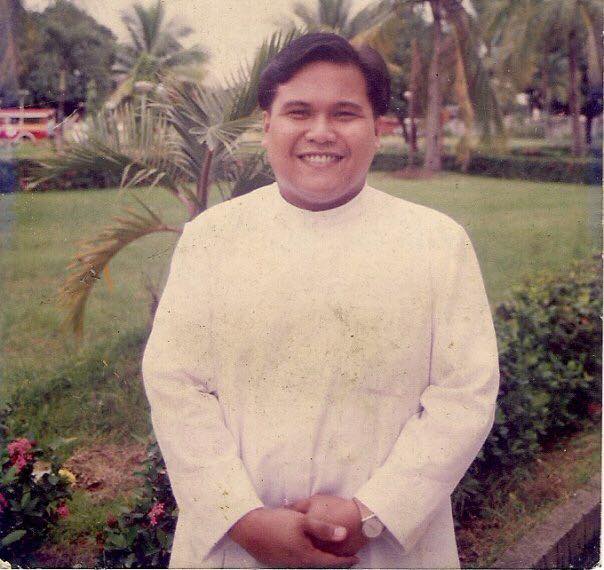
My first year in the seminary, 1991, after resigning from GMA-7 News.
Life was not easy in the seminary. Temptations to leave the seminary and go back to work were most tempting during my first three years as I knew already where to go, what to do in life. Maybe about three times I have tried leaving the seminary while I was constantly warned of being sent out too!
The Portuguese have a saying that “God writes straight crooked lines.” True. Nine years after leaving the seminary in high school, I went back to the seminary in 1991 eventually being ordained in 1998. Now 25 years as a priest, I thank God for this most precious gift of priesthood. It is very difficult but most fulfilling.
As a priest and an individual, I have realized that if there are 8-billion people in the world, there are also 8-billion kinds of love God has specifically for each one of us. God loves us in the most personal manner. It is the greatest mystery in life we would never be able to solve because it is insolvable. We just have to live on it, be wrapped in his mystery that once in a while, like the beloved disciple amid the darkness of dawn, we would have glimpses of him, making us shout “It is the Lord!” Thank my dear friends for showing me always the Lord. Hope and pray you too have seen the Lord in me! God bless!
Quiet Storm by Fr. Nicanor F. Lalog II, 21 April 2023
Reflections on the occasion of my 25th year in the Priesthood
Photo by Mr. Jong Arcano before the Mass with Ms. Marissa Flores (former SVP-GMA7 News), the Ms. Tina Monzon-Palma, of course, Ms. Jessica Soho, Ms. Jaileen Jimeno of GMA News with Mr. Ben Cal of Phil. News Agency at the back.
As I have promised you yesterday, today we reflect about the women the Lord had sent me to meet him, to follow him.
My first assignment from 1998 to 2010 after ordination was teacher-administrator of the Immaculate Conception School for Boys (ICSB) and Immaculate Conception School of Malolos (ICSM). My students would always ask me why I left the news to become a priest. My usual answer given in a jest, especially to the boys, was that I wanted to “love” more women than just one. It was a “birong totoo” because that was how I felt when I began examining my life and heard anew my vocation following that conversation with Atty. Dan.
During my retreat last March while praying over the many graces and blessings I have not been aware of, I realized how God prepared me for the priesthood and its call of celibacy. As I looked back in my life, he has blessed me with great women, so beautiful inside and outside. They were gifts that even if I did not get married because I chose priesthood and celibacy, I feel so blessed with that unique relationships with these wonderful women who continue to enrich my life as a person, as a priest.
First, my Bosses in work have all been women.
Photo by Ms. Karen Galarpe as shared during our 2017 Homecoming at the Varsitarian; Ms. Gina has long been away and I could not find our old photos. Nonetheless, in this photo are Sr. Gina who proclaimed the first reading at my anniversary who was then assistant of our Asst. Publications Director Ms. Jesselyn dela Cruz to her right.
My first boss was Ms. Gina Bautista-Navarette. She was the editor-in-chief of the UST’s Varsitarian when I applied as a news reporter in 1984. Even at that time, she has always been the epitome of “beauty and brains” – so lovely and so kind, but really tough inside, especially with her knowledge and beliefs. She finished Industrial Engineering and went to work first at PRC as one of its young executives, then to Johnson & Johnson and then to Jollibee as VP for Marketing. When Jollibee bought Greenwich Pizza, she became its GM and a few years later, became the President of Red Ribbon when Jollibee acquired the famous cake company. While still the VP for Marketing at Jollibee, I invited her to our school for a career talk to our students. She in turn would call me sometimes for comments for their products which I enjoyed because I had valid reasons to eat burgers and palabok!
Later on, Gina emailed me of their moving to Canada for a “lifestyle shift” but even then, she had never forgotten to greet me during my ordination anniversaries as deacon and priest! That is why, whenever I remember and pray for Gina, “it is the Lord” whom I see.
She came about two hours early last Tuesday because she said, “gusto ko lang makausap ka muna Father ng konti.”
My second boss was Ms. Tina Monzon-Palma. Yes. The Ms. Tina Monzon-Palma of television news. Late have I realized the super blessing given to me by God to have worked under Ms. TMP as we called her.
So tall and lovely, surely better than that girl from Ipanema! But, in her I found really a WOMAN in the truest sense. Astig. But with a lot of sense of humor. So kalog. And yes, so kind and thoughtful. What I could not forget is her sense of humility. Imagine, the goddess of TV News for so long that you would surely believe if she tells you World War III has begun, is in fact a humble person because she says sorry. I have personally experienced her saying sorry once or twice but on other occasions, she has that tender way of letting you know she is sorry like saying “kumusta na kid?” or just being extra nice on certain days. Whenever I feel in a dilemma of saying sorry or not, when I feel so proud, I remember Ms. Tina who despite her stature and every right and privilege would always be that humble to say sorry.
Another thing I learned from Ms. TMP was when she told me why she would always reprimand me with my scripts and reports: she insisted She would insisted excellence in our work. Later in the seminary and as a priest, I would speak of excellence as holiness, of giving your best always. It is the very heart of St. Therese’s “little way”, of doing small things excellently.
I will always be proud of Ms. Tina. Monzon-Palma. Even she had moved to other networks, she remained our kapuso, seeing us, conversing with us her former colleagues at GMA-7. She came to my 50th birthday and again in my anniversary. In fact, she came so early because she told me, she just wanted to talk to me. Truly, I could say that afternoon, “It is the Lord” when I was with her.
Our President, Dra. Caroline Enriquez in red, to her right is Mr. Rico Santos, VP for Finance of FUMC and wife Dra. Carol; at the middle is my predecessor Fr. Lito Caliwag, Dra. Mylene A. Santos, MD our VP for Student Affairs, standing next to her is Dr. Vic Santos, President of FUMC with his son Angelo and wife, Dra. Mary Anne.
My third and current Boss is again a woman, also beauty and brains, but most holy and truly a Wonder Woman. The President of the Our Lady of Fatima University (OLFU) and Board Member of Fatima University Medical Center (FUMC) of which I am both the chaplain: Dr. Caroline Santos-Enriquez, MD.
I first met Dra. Caroline in 2010-2011 when I was first assigned as attached priest here at the National Shrine of Our Lady of Fatima in Valenzuela. Twice the chaplain was indisposed and I had to celebrate Masses for him. After I was given a parish of my own to shepherd, Doctora would always invite me for talks in OLFU and twice to address their graduates at the PICC.
During my retreat last month, she came to my prayers. Yes, “It is the Lord” experience again and I felt so ashamed before God not realizing this immense grace and blessing of how a great woman of faith who has hurdled so many trials in life, a very wise manager and steward who has steered OLFU to what it is today with six campuses would believe in me? Our Bishop told me during our clergy reshuffle in December 2020 that he had asked Dra. Enriquez to recommend to him three names he would assign as chaplain. I was her first choice, and again, “It is the Lord!”
Of the other women and friends God gave me to lead me back to his Son Jesus, will share them Monday in our next blog. For now, I too believe that nothing happens by accident. God knew everything beforehand that I would be sent out of the seminary in 1982 only to go back after nine years and become a priest 25 years ago. In all those years, he blessed me with so many friends, especially friends who are girls, some are ladies, and many are women like my three Bosses in the professional life. They are among the best of his blessings I was not aware until I went back to those 25 years of my priesthood. It is the Lord I have seen in them. And like James Taylor in his 1971 song Places in My Past, I could sing…
There are ladies in my life
Lovely ladies in these lazy days
And though I never took a wife
May I say that I have loved me one or two
Quiet Storm by Fr. Nicanor F. Lalog II, 20 April 2023
Reflections on the occasion of my 25th year ordination to the Priesthood
Photo by Arch. Philip Santiago; to my left is our former Rector in Minor Seminary, Fr. Domingo Salonga and our Prefect of Discipline, Msgr. Albert Suatengco.
It is the Lord! And it has always been him. Will always be him. Thank you very much my dearest family and friends including you my readers of this blog for showing me the Lord, for leading me to the Lord all these years especially on the occasion of my 25th anniversary in the priesthood.
Been praying for this occasion since March when I went on a personal retreat when I turned 58 years old. One of the reflections assigned to me by my Spiritual Director, Jesuit Fr. Danny Gozar was to pray for all the grace and blessings God has given me that I am not aware of. One of the many blessings I “rediscovered” God has blessed me all these years were the people he had gifted me, from my family and relatives, classmates from elementary to college and the seminary, colleagues in work as well as students, and lately, some parishioners who have all become my friends.
It is the Lord whom I have seen in them. And I became a priest because of them. Maybe if I did not meet them, my life would have been different.
Jesus revealed himself again to his disciples at the Sea of Tiberias. He revealed himself in this way. Together were Simon Peter, Thomas called Didymus, Nathanael from Cana in Galilee, Zebedee’s sons, and two others of his disciples.
John 21:1-2
Photo by Ms. Tita Valderama, my friends from GMA News, from left: JJ Jimeno, Jimmy Gil, Boy Sonza, Jun Fronda, Marissa Flores (former SVP of GMA News), Jessica Soho and Ben Cal of PNA; beside me is Atty. Dan de Padua, and Kelly B. Vergel de Dios.
Some of them are very prominent, from the who’s who of the country like those persons named in the gospel, Simon Peter, Thomas called Didymus, Nathanael from Cana in Galilee. It is a tremendous blessing from God I have come to know so many prominent people, big shots indeed in Philippine media and society who taught me so much about journalism and most especially about life. In them I experienced there are so many goodness in every person, even those we look up to. They are so human with the same joys and pains, dreams and aspirations like us ordinary people. They get tired and get sick, they love to eat and drink, watch movies and enjoy music. Most of all, they have high moral sense and deep faith in God.
One of them I have to mention is the one who really paved the way for me to reconsider my vocation, Atty. Dan de Padua who was then assigned to GMA-7 News Department when I was already a police reporter covering the night shift. He would join us in our coverage and sometimes, before our shift, we would have some drinks at Jazz Rhythms along Timog Avenue. We got to know his background and former work with a multinational corporation with mega buck deals. I asked him why did he leave that better paying job? His answer struck me. Like the beloved disciple in the gospel, all I could say was “It is the Lord”.
According to Sir Dan, “nahiya naman ako sa sarili ko na matapos mag-aral sa UP, nagtatrabaho ako para sa mga foreigners… umalis ako sa kanila para ibalik sa bayan binigay sa akin.” Wow! Yes, there are good and holy lawyers, especially from UP! And my former boss is one of them! His words never left me, giving me many occasions of introspection when alone, as a graduate of Catholic schools from elementary to college, do I have the same love for the Church, for God?
Napahiya ako sa sarili ko. Here is a man, a big shot lawyer, thinking about our country we love to make fun of even curse and there I was, thinking only of myself? Of course, there were still other realizations I had but that really started my journey back to Jesus and to the seminary until my ordination on April 18, 1998.
There were so many other people I met when I was still outside the seminary who have enriched me as a person with their friendships and professionalism.
Photo by Mr. Jong Arcano with his wife.
I am forever grateful to my former editor at UST’s The Varsitarian, Mr. Jong Arcano who trained me so well in writing, especially looking into the human aspects of the persons being covered. Along with Mr. Jimmy Gil of GMA News, they taught me the importance of looking into the “human-ness” of the people in the news. Mr. Gil also told me while discussing the dangers of coverages that the most important story in the world is “your life that is why as a journalist, think also of your safety because if you die, who would tell the story you have covered?” Later on as a priest, I realized it so true! As a priest, there is that certain distance we must keep with the people but always that closeness to get their story. Fr. Henri Nouwen wrote in one of his books, “what is most personal is most universal.”
Worth mentioning also is our former SVP for Operations in GMA but a newsman through and through, Mr. Tony Seva. He summoned me to his office one afternoon to bring clippings of the write ups of an actress of our soap drama who had died. At his office, he asked me to take down some notes but somebody had earlier borrowed my pen in the newsroom! He told me I could leave my dick at home but never walk without a pen! That is why I always have pen in my pocket long after I have left the news! Like our Latin teacher in the seminary, Mr. Seva taught me to never open my mouth unless I am sure of what I am saying. That’s precision.
There are so many other men and women with names and without names who have taught me so well and most of all, I am sure without them knowing, have led me to see Jesus to become a priest. I used to tell my students that friends are gifts from God; therefore, true friends lead us back to God too!
Did I say women? Of course! I must confess, it took me so long to decide to leave the news and enter the seminary to become a priest because of women. I was so afraid, until now, I might not be faithful to Jesus because, yun nga! Madali ako ma-attract at ma-in-love!
Will tell you my “love story” in my next blog, of how women have led me to Jesus. Maybe, I should write a song similar to Yvonne Elliman’s song in Jesus Christ Superstar to be called “I Don’t Know How to Love Her”.
Thank you for your prayers on my 25th year in the priesthood. God bless you all!
Photo by Mr. Jong Arcano with Ms. Tina Monzon-Palma before the Mass.
Quiet Storm by Fr. Nicanor F. Lalog II, 06 March 2023
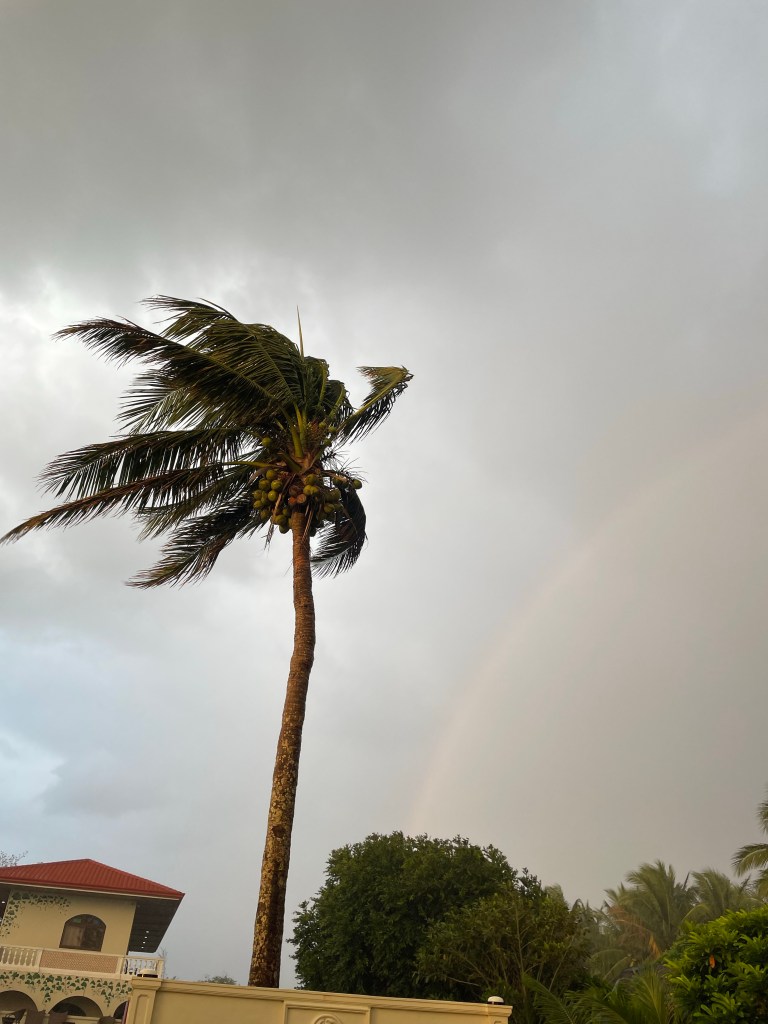
Photo by author, 03 March 2023, Teresa, Rizal.
Why are there so many songs about rainbows
And what's on the other side?
Rainbows are visions
But only illusions
And rainbows have nothing to hide
As a child, I have always heard many stories about rainbows from grownups telling me about the “pot of gold” at its end. I have never believed their stories because even at that young age, I have found them as total lies for if it were true, there would be no more poor people on earth as rainbows appeared daily or weekly.
Besides, I doubted stories about rainbows because no matter how hard I looked at them, I could not find the primary colors of red, orange, yellow, green, blue, indigo, and violet in them as taught by my teachers. All I could identify until now are the colors red and blue with the third hue of pink which is not even part of the primary colors! The only truth about rainbows I have always accepted since elementary is the fact that it is caused by sunlight hitting the rains that cast such colorful display in the skies. Most often, I just thought binobola lang kami ng teacher namin para pagbigyan kung sino man itong si Roy G. Biv na may-ari ng mga rainbow!
Later, our elementary school principal Sr. Domitilla of St. Paul College Bocaue would tell us over and over again the story of Noah and the great flood, of how God promised him never to destroy earth again with floods by giving him the sign of the rainbow.
You bet! I did not believe her totally because growing up in Bocaue, I have experienced so many floods annually that destroyed many of our belongings like photos and vinyl records not to mention the hardships – pahirap in the real sense of cleaning after each flooding.
But all these changed only for me during the COVID-19 pandemic.
Photo by Ms. Anne Ramos, 22 March 2020, Bgy. Bagbaguin, Sta. Maria, Bulacan.
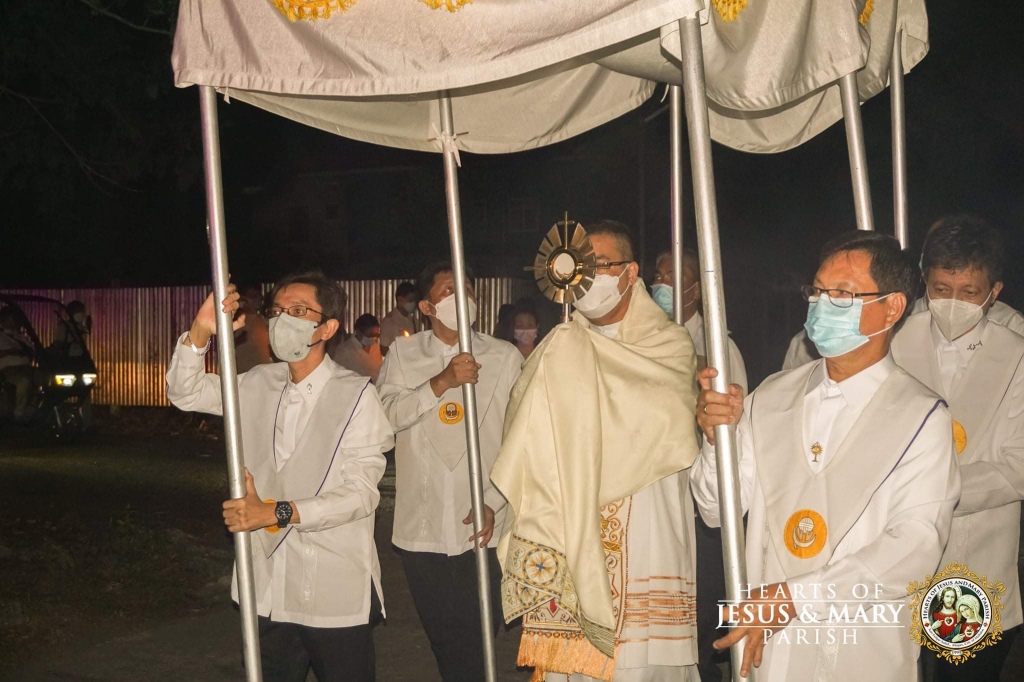
It was the first Sunday of the lockdown, my 55th birthday, March 22, 2020. There were no public Masses. So I decided to start on that Sunday the weekly libot or motorized procession of the Blessed Sacrament around our parish in Bagbaguin, Sta. Maria, Bulacan. Seeing the people kneeling on the streets was so moving but what really brought me tears was the sight of a rainbow that afternoon.
We were on our way to the last sitio of our parish when it started to rain lightly. Our volunteers asked if we should go back to the parish as the clouds indicated heavy rains were coming our way. But as I held the monstrance, I told my companions to proceed because the people were waiting for Jesus.
Lo and behold! as we turned to our last sitio, a rainbow appeared and I remembered the story of Noah and the rainbow.
That’s when I cried and started believing in rainbows as I felt that very moment God assuring me of his protection from COVID-19. True enough, until I left in February 2021 my former parish of Parokya ni San Juan Apostol at Ebanghelista had the lowest rate of COVID infections in our town. Most of all, me and our volunteers never had COVID except for one as we continued with our libot of the Blessed Sacrament that soon evolved into “drive-thru” and “door-to-door” communion after our online Mass on Sundays!
So we've been told and some choose to believe it
I know they're wrong, wait and see
Someday we'll find it
The rainbow connection
The lovers, the dreamers, and me
Photo by author, August 2022, Parish of Holy Cross, Paco, Obando, Bulacan.
One of the best stories I have read about rainbows is from my favorite Pope, Benedict XVI. In one of his books in the series Jesus of Nazareth, Pope Benedict explained how the rainbow of Noah’s time had become the arms of Jesus Christ outstretched on the Cross, the fullness of God’s promise to never destroy earth, of his immense love to save us through his Son. Furthermore, he explained how the rainbow as the outstretched arms of Jesus is also the same bow of arrow referred to in the Book of Psalms signifying God’s salvation.
It is so funny that after passing the age 50 that I started believing in rainbows! And what a sight indeed for me of the rainbow like a bow of an arrow shooting in the sky assuring us of God’s love and protection, of the arms of Jesus embracing us all in his love and mercy, kindness and forgiveness.
Photo by author, Teresa, Rizal, 03 March 2023.
Last Wednesday we celebrated Mass for the opening of our annual strategic planning in Our Lady of Fatima University (composed of six campuses) and Fatima University Medical Center (with two hospitals). In my homily, I shared that “lent is the time for us to start believing again” like Jonah in the first reading (Jon.3:1-10), of believing again in God, in others and in ourselves.
How I wished I have added that this is also the time to start believing again in rainbows because on our way to Katmon Nature Sanctuary and Beach Resort in Infanta, Quezon for the final day of our strategic planning, I saw again another rainbow during a stopover in a gas station in Teresa, Rizal. It was so beautiful with the arc, the bow, the arms of Jesus embracing us all symbolized by our coaster.
But the rainbows – or God – did not stop appearing there for us.
The following Saturday before we went home, I woke early to catch the sunrise at the beach that faces the Pacific Ocean. The sun was already up and I felt satisfied with all my photos and videos when it started to rain. As I ran back to our resort, another rainbow appeared, greeting me again that early morning.
Photo by author, 04 March 2023, Katmon Nature Sanctuary & Beach Resort, Infanta, Quezon,
I've heard it too many times to ignore it
It's something that I'm supposed to be
Someday we'll find it
The rainbow connection
The lovers, the dreamers, and me
Oh God! Praise and glory to you! I did not mind stopping in the morning rain that Saturday. It was the best morning prayer I ever had in years. Something very silent. So natural. So picturesque of God’s love, of his promise to bless us all in my new home, my new family, my new ministry – Our Lady of Fatima University (OLFU) and Fatima University Medical Center (FUMC).
It is here in OLFU and FUMC that God has started to unravel his other beautiful plans for me that at first I could not understand and even resisted at times. It is here I have come to embrace him more. And more tightly in ministering to students and faculty members alike, to doctors and nurses, patients and everyone especially our kind administrators.
Thank you for all your warm welcome, love and acceptance, OLFU and FUMC. And for your care beyond compare.
Glad to be with you in this very promising year assured by the rainbows. Let’s keep connected as we rise to the top!
Someday we'll find it
The rainbow connection
The lovers, the dreamers, and me
Photo by author, 04 March 2023, Katmon Nature Sanctuary & Beach Resort, Infanta, Quezon.
Quiet Storm by Fr. Nicanor F. Lalog II, 27 February 2023
Lent is my favorite season in our Church calendar: partly because of my melancholic tendencies and mostly, its closeness with the realities of life, of its daily “passovers” and exodus that eventually lead to Easter. That is why for me, life is a daily lent.
This became truest to me yesterday afternoon, the First Sunday of Lent when one of our elderly priests, Msgr. Vicente “Teng” Manlapig died past 3:00 PM at the Fatima University Medical Center in Valenzuela City where I serve as chaplain.
I am still in the process of gathering the many insights and realizations I have had these past three weeks when Mons. Teng was confined with the final five days in the ICU. What is so remarkable for me which dawned upon me yesterday is the fact that Mons. Teng is the second priest I had taken cared and died in the season of Lent. The first was the late Msgr. Macario Manahan in March 16, 2014, the Second Sunday of Lent at that time.
Yes, another monsignor I took care and died in the season of Lent. I was then assigned in San Juan Apostol at Ebanghelista Parish in Bagbaguin, Sta. Maria, Bulacan when Mons Macario retired in an apartment with his adopted family in the next barrio to my parish. Like Mons. Teng, I gave him daily communion and anointing of the sick during his final stretch of about two or three weeks before death. The only difference is that Mons. Macario passed away in my presence that Sunday afternoon; I visited Mons. Teng Sunday morning before he expired in the afternoon.
I have been wondering what must be God’s message for me in making me directly involved with two elderly priests dying in the season of Lent.
It seems to me for now that Lent is the best time for us priests to die because it leads to Easter. It would be a great extra bonus perhaps for us priests to die on Easter Sunday like the Jesuit Father Teilhard de Chardin or on Divine Mercy Sunday of the Easter Octave like the great St. John Paul II or at New Year’s eve like Pope Benedict XVI recently.
In my 24 years in priesthood, I have found our life, and death, follow a certain pattern. That is another topic I intend to develop further but for the moment, here is God showing me a pattern in priestly deaths in Lent which is the season characterized by prayer, fasting, alms-giving and penance.
Thursday night, Mons. Teng he asked to me listen to his “story” which turned out to be a confession, his final one. And what a tremendous grace from God for it was a triumph against his final temptations by the devil. How wonderful that he died yesterday, the First Sunday of Lent when the gospel from Matthew was the temptations of Jesus in the wilderness. The hospital ICU is the modern wilderness of temptations where there is the macabre atmosphere of gloom and dead-seriousness, cold and lifeless with just the eerie beeps and whirring or humming of various machines accompanying patients in separate cubicles along with doctors and nurses garbed in overalls and masks like in those movie scenes of invasion by aliens or zombies.
I must confess that after witnessing another death of a senior priest this season of Lent with my ministry this past year being in the hospital, I actually feel more afraid than ever of getting old, of getting sick.
It seems to me for now
that Lent is the best time for us priests
to die because it leads to Easter.
I cannot say I am ready. No. The more I see myself afraid and so unprepared. It would be a big lie no fool would ever believe to claim I am ready to get sick and die. And even if I felt so tired and sleepy watching over Mons. Teng these past weeks, I could not pray in silence to God and ask him that he spare me those sufferings. Yes, the sense of entitlement crossed my mind many times like the thought “siguro naman, pwede na ako ma exempt, Lord” but no! I could not ask God. I feel so ashamed. It felt so bad on the taste-buds. Whenever such thoughts crossed my mind, there was always something or someone inside me preventing me from asking God for that privilege. Or grace? Because our suffering in sickness is precisely the very gift and grace of being one with Jesus Christ in the wilderness, fighting the devil’s temptations.
The gospel said it so well yesterday that after Jesus triumphed over his temptations, “the devil left him and, behold, angels came and ministered to him” (Mt.4:11). See that it was Thursday when I heard Mons. Teng’s final confession, Friday night was the last time he received the viaticum because Saturday morning he could no longer speak, could not eat that I had to consent into the insertion of an NGT for his feeding Saturday night until he slowly deteriorated Sunday morning after I had anointed him again with oil and died around the hour of the great Mercy of God at 3PM.
Photo from Mr. Nicknoc Malaluan.
The same thing is true with Mons. Macario. For about two weeks, I would rush to his apartment mostly at night and midnight to anoint him, pray for him, and give him the viaticum. Once I even celebrated Mass for a peaceful death around midnight when we thought he was about to expire which eventually came a few days after he had met and presumably reconciled with a family member. It was the Second Sunday of Lent, March 16, 2014 when he died. The gospel was the Transfiguration of Jesus. If there is anyone who would truly experience the Cross of Christ on the way to transfiguration, it is surely us, his priests.
A few years ago a friend commented to me that he thought priests were exempted from sickness and other sufferings. He could not believe that we priests get cancer, suffer stroke and other debilitating sickness. In fact, I told him that suffering is our life. One of the priests with tremendous impact on me was our formator in high school seminary, Rev. Fr. Leopoldo Nazareno we called “Fr. Naz” who spent maybe 40 years of his life with Parkinson’s disease that was so rare at that time in the 80’s.
Am I afraid of getting sick, of dying? Yes. Very much! But, what can I do? Like Jesus in the the garden of Gethsemane, even if I pray that God would take away this cup, it is still his will not mine.
Maybe for a good reason, to suffer unto death is the ultimate gift of priesthood. Even in old age for us priests, there is still the essence of victimhood, of offering. It is when out deathbed becomes our eucharistic table and altar where we finally offer ourselves to God in union with Jesus our Eternal High Priest, no longer the bread and wine because we could not celebrate the Mass nor even receive Holy Communion. It would be very sad for a priest to die not a martyr, a witness of Christ on the Cross, loved and forgiven like the “good thief”.
That is what I have seen in these two deaths of priests in the season of Lent: the immense and immeasurable mercy and love of God for us all, especially us priests. Yes, we are sinners, even more miserable than others. But, still loved and forgiven by God. May we strive more to be holy priests, thinking more of the people than ourselves. Pray for us your priests, and help us fix our eyes unto God more clearly through you, the people, the sheep of his flock. May we your priests find that life is a daily Lent, a daily passover, a daily carrying of the Cross and Crucifixion in Christ that leads to Easter. Amen.
Quiet Storm by Fr. Nicanor F. Lalog II, 01 September 2022
Photo by author, Dominus Flevit Church overlooking Old Jerusalem, 2017.
Along with the vow of celibacy, the vow of poverty has become very contentious even among us priests these days which is very sad that one wonders why they got ordained in the first place if they were not totally sold out to being celibate and poor.
For most people especially Filipinos, how their priests practice poverty weighs more than their fidelity to celibacy, claiming they could understand and forgive priests getting into relationships with women than priests becoming “mukhang pera” (money-faced). For them, a priest falling in love with a woman is natural and therefore, understandable and “forgiveable”; but, a priest who worships money to the point of making his ministry a business endeavor even stealing from the church funds and donation boxes is what people detest most. In some parts of Bulacan and Cavite, they have a saying which is so vulgar to stress this point, “hindi bale madapa and pari sa puki kesa sa piso” (better for a priest to fall on a vagina than peso).
Photo by Ka Ruben, 24 June 2022.
Of course, it is always wrong to break any of these two important vows priests have made along with the third one which is obedience to his bishop because celibacy and poverty are closely related with each other for they both lead us priests to intimacy with God, our Caller. That is why, most often, when a priest has become “mukhang pera”, falling into the trap of money and luxuries, most likely he also has problems with celibacy. Even St. Ignatius had warned in his Spiritual Exercises that money is the first temptation the devil uses against every priest.
Like celibacy, poverty is a spiritual reality that is lived and felt by everyone in the material sense. More than being poor or having less in life, poverty is a choice we make for it to be real. It is our attitude with material things in life: there are priests with so much and yet still feel poor like in advanced countries where cars and appliances are very common and ordinary while there are those with almost nothing and yet so attached with the little they have or wish to have and possess! One priest may have a brand-new car extensively using it to reach and serve his parishioners while another may have a second-hand car or owner-type jeep he tinkers daily, possessing him in the process.
Poverty is not a question of how much do we have but more of the question of how much do we share. See that very often, we are preoccupied thinking what we already and must still have without ever thinking how much do we share.
It is in sharing when we truly experience poverty; a priest who hoards everything – even people like benefactors and friends – is a priest in trouble. Here we find the direct relationship of poverty and celibacy: we renounce marriage which is a wonderful kind of wealth in the spiritual sense for something higher and better which is to be solely for Jesus Christ. That is the essence of our poverty, our being poor and empty so that we are wholly for Christ alone and his Church. It is being poor, materially and spiritually do we find our true wealth as priests, Jesus Christ and his Church or “people of God” as Vatican II rightly called.
Like everyone else, no priest can have everything in life; nobody is perfect but it is always the truth that we evade, priests and lay alike. Many people including priests often convince themselves of being self-sufficient, that we are the greatest, the most powerful so that we never ran out of construction projects in the church. This is the mentality of the “dream-teams” or the “powerhouses” who claim to have everything and yet in reality, they rarely last long nor achieve much. When everybody feels like a “heavyweight” – literally and figuratively speaking, always throwing their weight around, soon enough, he/she would surely sink. The Greeks call it hubris, another common ailment among us priests.
Photo by author, Capernaum, Israel, May 2017.
In my 24 years in the ministry, I have found and experienced that the key in any community and organization including family, profession and vocation like the priesthood is not in having everything, materially and non-materially speaking like talents and abilities that always end up into a mere show, a “palabas” even if it may be spectacular. Life is not about dazzling others with our gifts and abilities but finding our limits and poverty. When we focus on what we do not have like our weaknesses and other limitations, our poverty becomes a wealth because that is when we are most creative and productive, achieving more in life. Why is it when we do not have much on the table that there is always a leftover with everyone feeling satisfied? But when there is a plethora of food, we just feel satiated, filled up but not satisfied?
Look at how many of our churches have become like birthday cakes that are so kitschy or baduy, tastelessly overdecorated looking like dirty old men (DOMs) and their counterparts, the matronix afflicted with hepatitis with all their gold trimmings. Many parishes are afflicted with a different virus more contagious than COVID without a vaccine where priests go “imeldific” in church decorations and renovations including liturgies that even the Blessed Virgin Mary is turned into a Miss Universe being “crowned” amid all pomp and pageantry. It is the virus of triumphalism with its ugly face of priests have too much of everything except God. The best priest, the holiest priest is often the poorest one, the one with less because that is when we have more of God. It is in poverty – and celibacy – we priests witness Christ’s lesson that “whoever saves his life loses it and whoever loses his life gains it” (Mk. 8:37-38).
The problem of the priesthood for me is among other things a problem of poverty. I know that not all priests are necessarily committed, by their priesthood, to absolute poverty. But for my own part it seems to me that the two are connected.
To be a priest means, at least in my particular case, to have nothing, desire nothing, and be nothing but to belong to Christ. Mihi vivere Christus est et mori lucrum. In order to have everything, desire to have nothing.
Thomas Merton, The Sign of Jonas, page 191.
Photo by Fr. Howard Tarrayo, August 2021.
Poverty is blessedness because in our weak and fragile humanity, God chose to be one with us so that we can share in his divinity and thereby share in his life. When we see each other’s wealth, the more we feel so poor and helpless; but when we see each other’s poverty, the more we see each one’s value. And we start enriching each one’s life. This is the beauty of our poverty as priests when being poor is not to be destitute but be available to God and everyone. No wonder, poverty is the first of all beatitudes taught by Christ, “Blessed are the poor in spirit for theirs is the kingdom of God” (Mt. 5:3).
When we try to have less and become poor, that is when we discover the value of life, of every person created in the image and likeness of God. Then, we begin to share and give, to sacrifice and let go, truly loving one another by being forgiving and merciful and kind like Jesus Christ, “who, though he is God, he did not deem equality with God something to be grasped at but rather emptied himself by being born in the likeness of men” (Phil.2:6-7).
Again, help us your priests live simple lives, to be poor so it would not be difficult for you to support us too. Thank you and God bless!