Anamnesis

Quiet Storm by Fr. Nicanor F. Lalog II, 21 August 2025
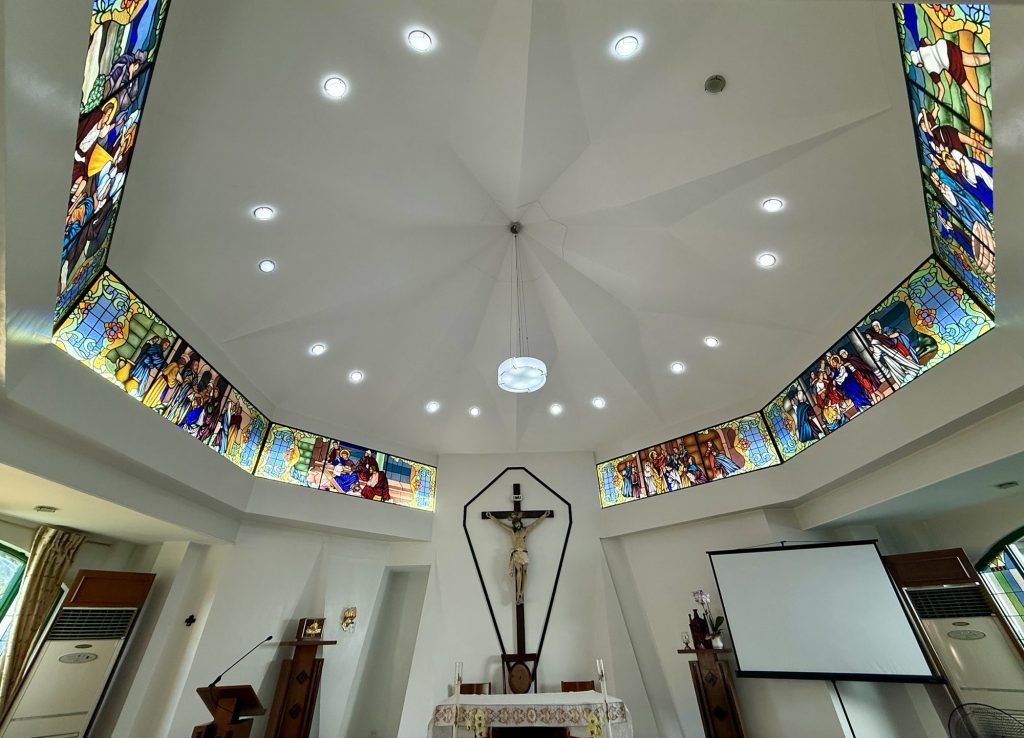
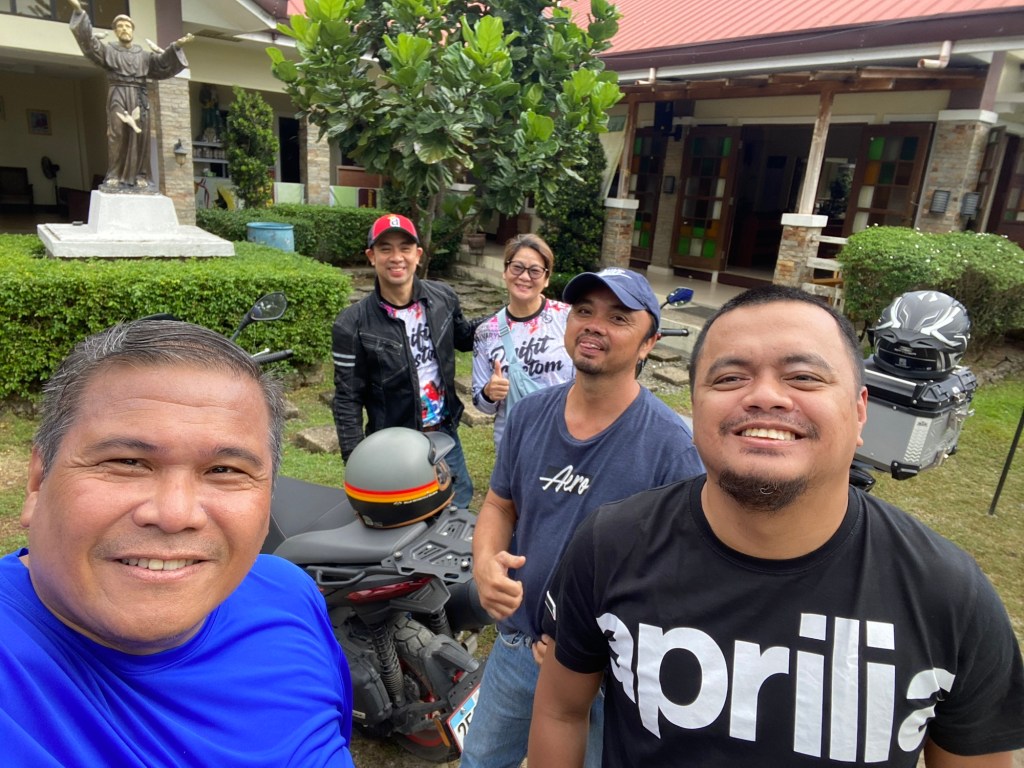
Photo by author, St. Joseph Chapel, St. Paul Center for Renewal, Alfonso, Cavite, 20 August 2025.

As we ended our annual clergy retreat today when we remembered in the Mass a saint, Pope Pius X and a hero, Benigno “Ninoy” S. Aquino Jr. , I wish to reflect on the word “remember”, a very lovely word worth remembering always.

From the prefix “RE” that connotes repetition as in again and the root “MEMBER” that means a part, to remember literally is to make someone or something a part again. What and who we remember are those gone and away from us, a history in the past. More than mere recalling of a person, event or thing, remembering is making those absent present.

Though the philosopher Martin Heidegger rightly claimed that we humans are “beings of forgetfulness,” God actually programmed us for remembering: from infancy to childhood, our parents drilled into us to remember our name and address, the names of people around us, of things, and everything as we grew. That is why the expression “kalimutan mo na yun” is the most useless piece of advice anyone can give. It is impossible to forget, whether it is so good or so bad. What we need is to harness the power of remembering, to continue learning from the past whether good or bad because whatever is remembered for all its worth is always the best teacher anyone can have.

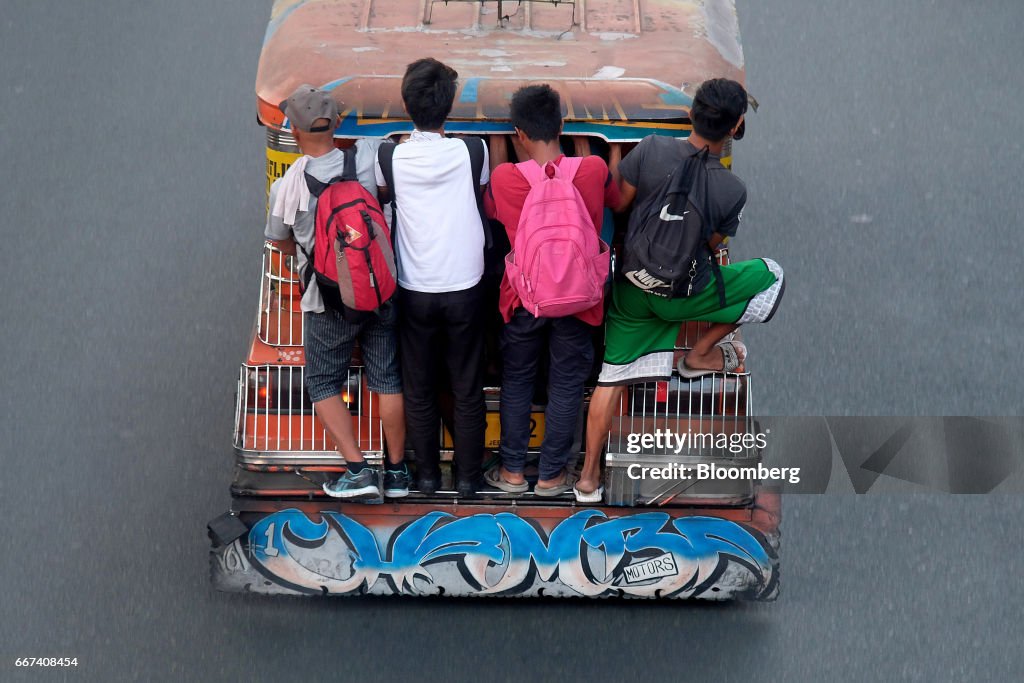
Photo by Taryn Elliott on Pexels.com

Remembering is a power because it is a grace, a gift from God himself. When we remember, we not only time travel to the past but make it present in order to perfect us. The past cannot be changed anymore as insisted by Japanese writer Toshikazu Kawaguchi in his series of novels Before the Coffee Gets Cold.

Remembering changes the person, not the past. It is in remembering the bitter lessons of the past we learn most in life because that is when we experience healing and fulfillment. Hence, remembering is at the very core of George Santayana’s warning that whoever does not learn from history is condemned to repeat it. Remembering enables us to move on in life by finding our ways and ultimately our very selves anew especially when lost and confused.

Of God’s many gifts to us, remembering is the most unique because it is never lost at all. People who refuse to remember are the most difficult to deal with like politicians, crooks and low-lifers. And the more corrupt and evil people are, the more they are forgetful, remembering or knowing nothing at all!

God meant us to keep this gift of remembering to be always reasonable and just, or simply good and sane because it keeps us in touch with reality, making us grow and mature in his love. Actually, it is remembering that continues to operate among us despite our faltering memory or even with those afflicted with Alzheimer’s and dementia because remembering is more than keeping information and details like names of people but most of all of God’s interventions through persons and events in our lives individually and collectively that significantly made us experience joy and gladness so crucial for our growth and maturity, eventually in the achievement of our goals.

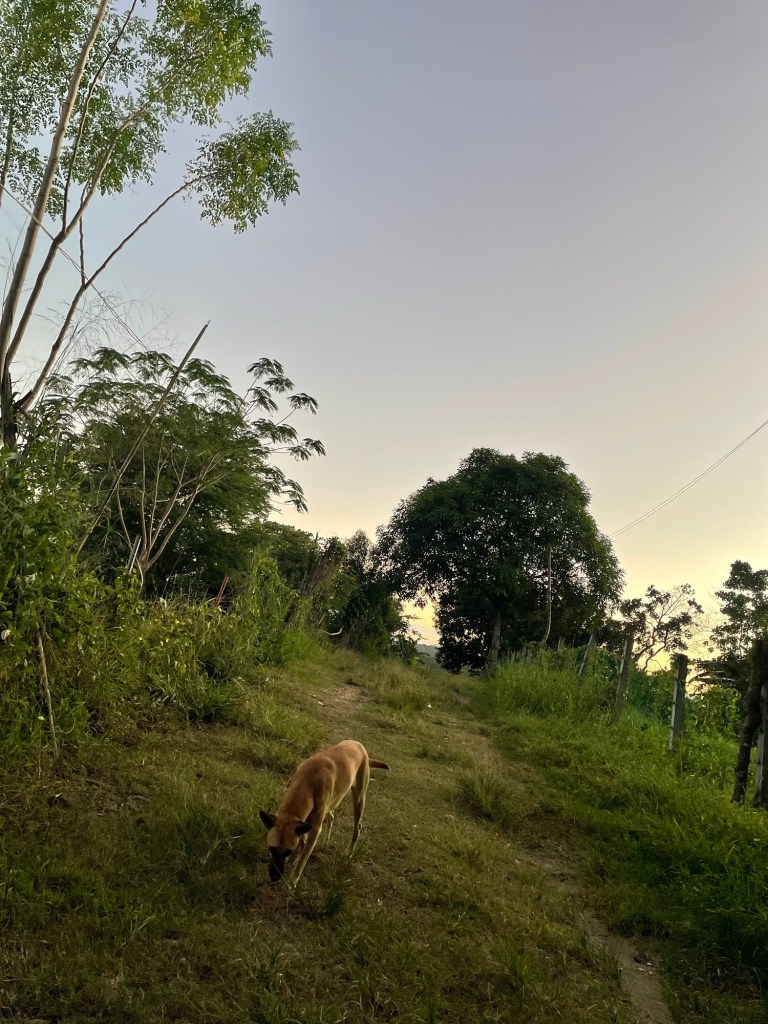
Photo by author.

On the bulletin board of our sacristy at the National Shrine of Our Lady of Fatima in Valenzuela City is a laminated piece of bond paper with the Greek word “anamnesis” written in Greek.

It was personally printed and posted on Holy Thursday 2010 by the former rector and parish priest of the Fatima Shrine Msgr. Bart Santos now the Bishop of Iba, Zambales. I remember that so well because that was the first time I was assigned as an attached priest at the Fatima Shrine in June 2010 to June 2011 under Bishop Bart.

According to Bishop Bart who used to teach Sacred Scriptures in the seminary, he wanted to instill in all their servers of the Mass the value and meaning of the Eucharist as an anamnesis or remembering. I was so glad upon my return in February 2021 at the Fatima Shrine again as an attached priest while working full-time as chaplain at the Our Lady of Fatima University and the Fatima University Medical Center that the sign of Bishop Bart was still there – until now! I just hope the people here realize and still remember that word anamnesis as Bishop Bart had explained to them during the Holy Thursday Mass ten years ago.
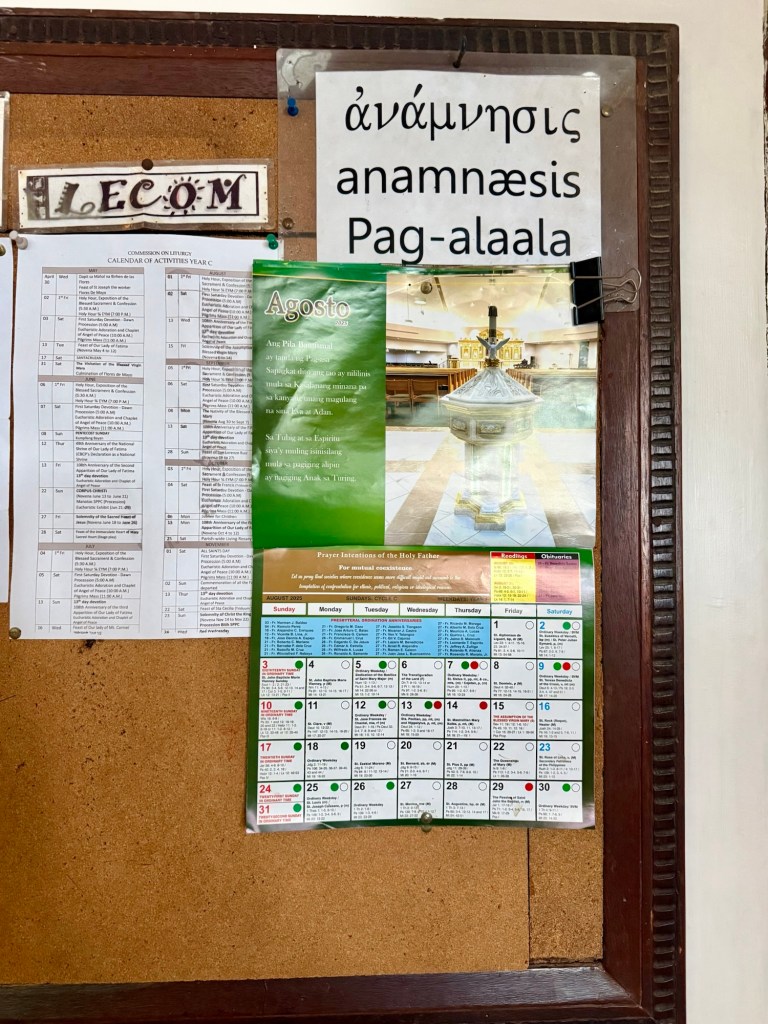
Photo by author.

When everything seems dark in life with family and friends betraying us, when people we have helped turn against us, denying having known us, try remembering Jesus went through all these first at his Last Supper.

When you feel lost for directions in life, when you are into a burnout, when nothing seems to be working in your favor that you can’t find sparks of inspiration and zeal anymore, remember that first day when you embarked on this journey in life. Remember the people, the places and the things that bring you gladness and joy in pursuing your passion or fulfilling your mission. Most of all, remember when God called you to whatever mission he sent you.

Remembering is a form of stepping back to stop, to create a space and let God work in us as we have reflected last Monday (https://lordmychef.com/2025/08/18/steps-to-god/). This is what we need most in our selves and in our country as a people: the virtue of remembering, of making present the movements of God in our history. Ninoy Aquino did the supreme sacrifice of coming home in August 21, 1983 because he remembered the country he most loved; he remembered his call and mission to serve; he remembered the ideals and mission fought for by our heroes like Jose Rizal and Andres Bonifacio.

It is in remembering we remain anchored to our call and mission in life, both individually and communally. Without remembering, we cannot progress because we lack reference points of what we have covered, of where we are. That is why even the angels at Easter had to remind Mary Magdalene and companions, “He is not here; he has risen! Remember how he told you while he was still with you in Galilee…” (Lk.24:6). Most of all, let us remember always the words of Jesus at his Ascension so we may keep on pursuing our mission in him, “And remember that I am with you always until the end of time” (Matt. 28:20). May God bless you always!

From Pinterest.

Salamuch

A personal note to you, my dear followers, fellow bloggers and everyone at WordPress on the occasion my seventh year of blogging, 06 June 2025

After a funeral Mass in the province yesterday, this greeted me in my notifications yesterday afternoon. Immediately, it brought a smile in me, a sense of inner joy and fullness.

Salamuch is the only word I have for you all.

From the Filipino word “salamat” for thank you and “much” from thank you very much, salamuch is literally “maraming salamat”. Double that to “maraming, maraming salamat” it becomes salamax but I rarely use the term because they remind me of Betamax and its sexual connotations…

I have been reading some blogs by friends via Facebook long before I joined WordPress.

It was purely accidental, like Facebook too. A friend created an account for me here at WordPress seven years ago while we were having a meeting about communications. At first I protested because of my toxic schedules in the parish on top of my teaching load in the seminary and a radio program in our Catholic station. Then I realized this is exactly what I have been teaching to future priests – the need to write and communicate the Gospel in the internet. Since I have been writing my Sunday homilies way back 2003 sending them to some relatives and friends, I started posting them here at WordPress.

I was totally ignorant of everything about blogs… but WordPress is so kind with dinosaurs like me. Most of all, there were so many other bloggers so generous and helpful in sharing me their knowledge about blogging.

That is one great thing about WordPress that I like: it is a community, a family.

I found new friends who helped me grow spiritually. Their diverse views on everything even so different from my own have so enriched me that indeed, reading and writing can take you anywhere around the world, even into the other worlds!

This may sound unusual but, I love WordPress so much because this is where I meet God every day. Not only among the writings by its bloggers but primarily with what WordPress does to me every day: you remind me of the need for me to always pray and whatever I have felt and realized, those are what I wrote and share.

It is funny that as I pounced the keys of my laptop daily and nightly for my posts, it has actually become more of an inner journey than an outer one. Every piece I write is always a journey inside my heart and soul. The same thing happens whenever I read prayers and poems, essays and expositions as well as look at the stunning photos… these have all invited me to look inside me and think what I can share in return.

I have grown because WordPress brought out the gifts I never thought I have.

Salamuch, WordPress in bringing out the good and the best in me always. Indeed, among you I have felt so true Vatican II’s declaration that “Communication is more than the expression of one’s thoughts and feelings. At its most profound level, it is the giving of self in love…” (Communio et Progressio #11). We all read and write here at WordPress simply because we love which is communication in itself. No love, no communication.

Salamuch WordPress for the seven years of love and here’s to more years with you all! God bless!

Knowledge inflates, love builds

The Lord Is My Chef Daily Recipe for the Soul by Fr. Nicanor F. Lalog II
Thursday, Twenty-third Week in Ordinary Time, Year II, 12 September 2024
1 Corinthians 8:1-7, 11-13 <'[[[[>< + ><]]]]'> Luke 6:27-38
Photo by author, 2018.

Brothers and sisters: Knowledge inflates with pride, love builds up. If anyone supposes he knows something, he does not yet know as he ought to know. But if one loves God, one is known by him (1 Corinthians 8:1-2).

O dear Jesus,
how lovely are your words
today through St. Paul;
so timely like during his time
when so many of us today
have become so proud and
arrogant in knowing so much
that have bloated their egos,
seeing only themselves
unmindful of others around them,
losing their personal touch,
forgetting their humanity,
miserably failing to love
at all.
Dear Jesus,
remind us anew of that
basic truth that true knowledge
is when we realize we know
so little,
that we must learn more
not only from books
but most of all from persons;
let us be more loving
so that we can build more
lasting and fulfilling relationships;
let us be more loving
so we can build more trust
and understanding when we
learn to love our enemies;
let us be more loving
so we can build more goodwill
and fellowship by being more
merciful like the Father in heaven;
let us be more loving
so we can build persons
than destroy them by being
non-judgmental of one another;
let us be more loving, Jesus,
so we can build and overflow
with more grace and gifts
as we give more of Jesus Christ.
Amen.

Real power empowers

The Lord Is My Chef Sunday Recipe for the Soul by Fr. Nicanor F. Lalog II
Fifth Sunday in Ordinary Time, Cycle B, 04 February 2024
Job 7:1-4, 6-7 ><}}}}*> 1 Corinthians 9:16-19, 22-23 ><}}}}*> Mark 1:29-39
Photo by The Good Brigade/Digital Vision/Getty Images via cnn.com.

There’s another “war” happening that had actually started a long time ago but only now recognized by the powerful US Senate in Washington DC when they summoned last week the owners of big tech companies to a hearing on the harmful effects of social media.

It is a war that at first seemed to have been neglected or even unrecognized when parents and experts have long been complaining about the ill effects of social media. Finally, authorities are doing something about it. 

“Great power comes with great responsibilities.”- Spiderman. Photo from peakpx.com.

Though the issues at hand are very contentious because of the many benefits too of social media, the US Senate hearings are a big step in demanding more social responsibilities from tech owners who have become so powerful with their products’ wide reach and influence.

Of course, much responsibilities are also in the hands of parents and users of social media but one thing has always been clear these past 20 years when experts and ordinary folks have been raising the red flag on social media being so impersonal in nature where persons are often considered as objects than subjects to be loved and respected.

Our ability to communicate is a sharing in the power of God, a sharing in his authority meant to foster union among peoples as persons. Despite the efficiency of social media, it cannot and must not replace the human person in every communication. This we have seen last Sunday when people were “astonished” and “amazed” one sabbath as Jesus spoke with authority in their synagogue in Capernaum. From there, Jesus moved into the home of Simon Peter, staying for a while in Capernaum before moving on to other locations to continue his ministry of teaching and healing.

On leaving the synagogue Jesus entered the house of Simon and Andrew with James and John. Simon’s mother-in-law lay sick with a fever. They immediately told him about her. He approached, grasped her hand, and helped her up. Then the fever left her and she waited on them.

Mark 1:29-31
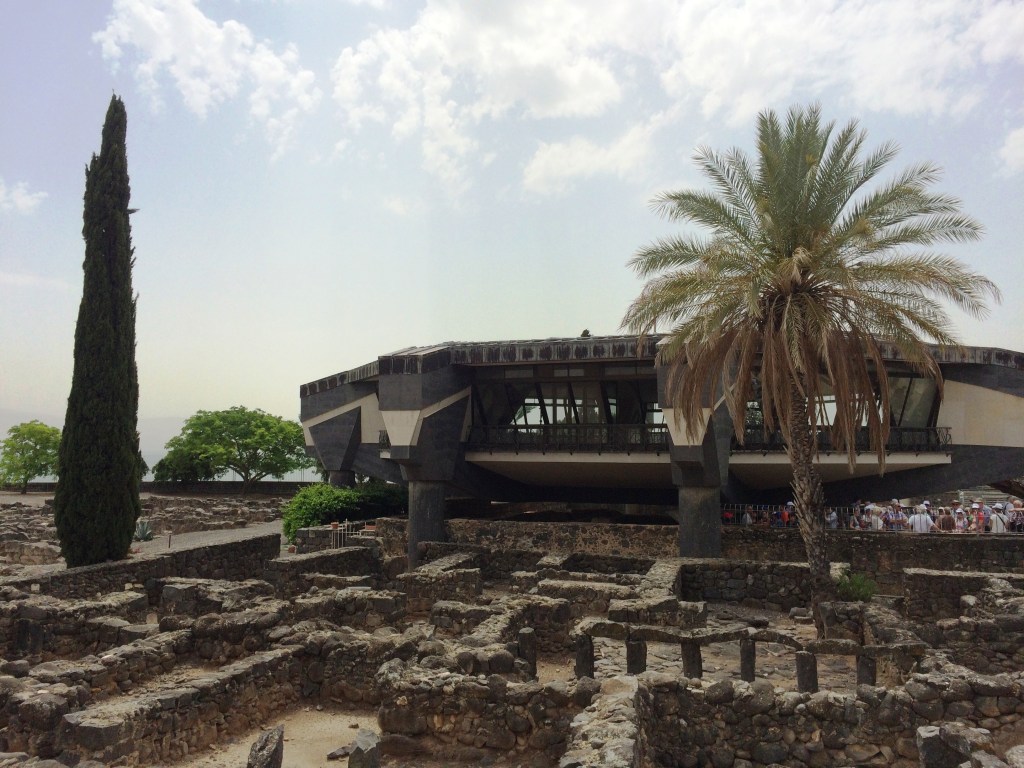
Photo by author, ruins of the neighborhood around the synagogue of Capernaum where Jesus used to preach; underneath the Church are believed to be the ruins of the home of Simon Peter where Jesus healed his mother-in-law.

It was still the day of sabbath and we could feel the great joy and pride of the four disciples with Jesus that they “immediately told him” about Simon’s mother-in-law who “lay sick with a fever.”

Notice Mark’s detailed report on the healing of Simon’s mother-in-law by Jesus: He approached, grasped her hand, and helped her up. Then the fever left her and she waited on them. In this continuation of a slice in the life of Jesus last Sunday, Mark is presenting us again another important aspect of Christ’s authority and power that is personal which empowers others. 

To empower means to raise up a person from one’s lowliness in order to restore his/her well-being. To empower means to make a person whole again as he/she discovers and experiences anew his/her giftedness in God and as a person. 

Photo from kimaldrich.com

Now, imagine this in the light of the powers of social media made possible by the internet through various devices: Jesus could have healed anybody who was sick within a 100 or 200 meter radius from the synagogue of Capernaum with his great powers being the Son of God. He could have just sent off signals like a router to heal more sick people instead of making them flock to the home of Simon Peter. Even today, perhaps, we could just come to the church, stay in a specific spot like the confessional to get connected to Jesus and voila – get healed!

But, Jesus never did that kind of healing and would never do it. Recall how Jesus would always approach and touch, speak and meet the sick before healing them. When a woman was healed of her hemorrhages after touching his clothes while they were in a crowd, Jesus stopped and searched for her to have a personal relationship. Unlike the internet, Jesus came in order to personally connect with us and connect us with the Father in the most personal manner.

In every healing by Jesus, there is always something deeper than restoration of one’s health which is salvation, a personal encounter with the Christ who leads us to fulfillment as persons. In every healing of body, there is the forgiveness of sins in one’s soul and being. Healing is more wholistic in nature than being being relieved of headache or any discomfort. Many times, our sickness can leave us deformed, disabled and even invalid without any cure at all yet deep inside us we still experience freedom and joy. That is healing because we are assured of being loved and cared for by another person and most of all by Jesus, personally.

So unlike the powers of any human or professional nor even by the social media so much around us that may be indeed so strong and efficient with its great speed but could never uplift us or restore our well-being. For sometime, they can offer us with relief but the deep longings and emptiness within us lingers on. Why? St. Augustine expressed it perfectly when he wrote in his Confessions, “You have made us for yourself, O Lord, and our hearts are restless until they rest in you.”

From Pinterest.com

This Sunday, Mark is telling us that Jesus comes to us daily right in our hearts where our home is, always “approaching us, grasping our hands, helping us up” from all our burdens and pains, sufferings and miseries. Are we present to meet Jesus? Do we “immediately” tell him our problems like Simon Peter when his mother-in-law had fever?

The only essential and vital connection we must keep and maintain in this life is our personal connection with God in Jesus Christ who exemplified this well at the end of this Sunday’s gospel when “Rising very early before dawn, he left and went off to a deserted place, where he prayed” (Mk. 1:35).

Last Friday we celebrated the Feast of the Presentation where Simeon and Anna showed us too how they remained personally connected with God in their daily prayers and fasting at the temple so that when Joseph and Mary came with the Child Jesus, both were led by the Holy Spirit to meet them. Imagine the crowd at the temple at that time plus Simeon and Anna being both old with the usual woes but were both never distracted in their focus on God and his promise of salvation in Christ before dying.

Photo by Vigie Ongleo in Virginia, USA, 02 February 2024.

There will always be suffering in life as the first reading reminds us. Like Job, we go through many setbacks in life, making us wonder all the more at the mystery – and scandal – of human sufferings, of how it could befall us if we have a powerful and loving God. St. Paul meanwhile tells us in the second reading how imperfect our world is when we sometimes have to make sacrifices to keep the unity of our family and community.

Both Job and St. Paul in their sufferings and sacrifices remained connected with God, bore everything in silence to become “all things to all men” (omnia omnibus) by sharing God’s power and authority in their weaknesses even in death that have empowered countless men and women through the ages including us in our own time.

Let us pray:

Lord Jesus Christ,
our true healer of all sickness
in body, heart, mind and soul:
keep us connected in you
especially in moments of trials
and difficulties so that we may
be filled with your personal powers
as we too empower others
when they are weakest.
Amen.

A blessed weekend to everyone!

Choose love. Always.

The Lord Is My Chef Sunday Recipe for the Soul by Fr. Nicanor F. Lalog II
Sunday in the Thirtieth Week of Ordinary Time, Cycle A, 29 October 2023
Exodus 22:20-26 ><}}}}*> 1 Thessalonians 1:5-10 ><}}}}*> Matthew 22:34-40
Photo by Dra. Mai Dela Peña, Mt. Carmel, Israel, 2017.

The enemies of Jesus continued with their barrage of questions to trick him into saying something that could lead to his arrest and execution. After failing last Sunday, the Pharisees sent today an expert – a “scholar of the law” – to test him anew with the question:

“Teacher, which commandment in the law is the greatest?” He said to him, “You shall love the Lord, your God, with all your heart, with all your soul, and with all your mind. This is the greatest and the first commandment. The second is like it: You shall love your neighbor as yourself. The whole law and the prophets depend on these two commandments.”

Matthew 22:36-40

For the second straight Sunday, Jesus not only responded to his enemies’ malicious questions with brief and brilliant answers but also taught them, including us today, with important lessons on discipleship.

Once again, Jesus is inviting us to have a wholistic view of life centered on God by healing the divisions within our hearts that are reflected in our broken relationships as individuals and family, church and community, and nation. How often do we reveal that same division in our hearts whenever we ask that same question 2000 years ago by the Pharisee, “which of the commandment in the law is the greatest”?

Photo by author, view from temple of Jerusalem, May 2017.

After receiving the Ten Commandments from God through Moses at Mount Sinai, the Jews dissected them into 613 instructions with 248 of these as positive laws every individual “should do” and the other 365 as negative laws everyone “should not do”.

Naturally, it was very difficult – if not impossible – for them to remember and observe these 613 precepts to guide them in their daily living so that their rabbis devised ways in which the Law could be prioritized with some categorized as “important” or “heavy” that should be followed more than those considered as “less important” or “lighter” in gravity. For example, laws pertaining to persons like parents are more important than those concerning animals that included about bird’s nest (Dt. 22:6-7)! Problem with this was when they circumvented the Law to give priority to lesser things that disregard the more important ones as Jesus pointed out so often to their religious leaders who have emphasized the sabbath by neglecting the human person like the sick.

Photo by author, St. Anne’s Church, Jerusalem, Israel, May 2017.

Another solution they have devised was to establish summary statements of the Law that could help put it all in perspective like “whatever is hateful to you, don’t do it to others”. Again, like in categorizing the Law, putting them into perspectives eventually led to their lost of essence because in our human experience, when many factors are weighed into our daily life, the way we see things are often narrowed and dimmed; then we begin making excuses and alibis to be exempted from our religious instructions. That is why Jesus “leveled up” the people’s perspectives in their views of the Law by telling them to shift their sights to higher level not just its letters but its spirit and source – God himself like the love enemies and the beatitudes.

Here we find the beauty and nobility of Jesus Christ’s answer to the scholar’s question by leading us all into the very essence of the Law which is love who is God too! Eventually on the Cross on Good Friday just like during the sermon on the mount, Jesus would show to everyone he was not only the fulfillment of the Law but the Law himself when he gave himself in love – to God our Father and to us his brothers and sisters. Today he deepens his teaching last Sunday that inasmuch as we have to give to Caesar what is Caesar’s like paying of taxes, then, we have to give our total self, our whole heart to God because that is what is due to God, our Maker and Master. To give our hearts to God is to always choosing to love God and love others as one loves one’s self.

Photo by author, garden beside St. Anne’s Church in Jerusalem, Israel, May 2017.

The moment we start categorizing or putting God’s laws into perspectives, into our own points of view, then we deviate from God himself and his plans. When we divide, separate and split the laws of God to find which could best suit us, then it becomes a DIY (do-it-yourself) Christianity where we choose laws applicable to us and disregard the rest we find difficult, calling them as outdated and conservative like divorce, contraceptives, and abortion.

In summarizing the commandments into the law of love, Jesus is inviting us today to welcome him into our hearts to let him alone dwell and reign over us so that when we are confronted with any issue and dilemma or confusion in life, we resolve them in the light of Christ which is always love. Letting Jesus reign in our hearts is choosing to find him in the other person we must respect and love and care.

Photo by author at Via Dolorosa in Jerusalem, May 2017.

To choose Jesus and his love is to always choose the human person above material things and even with one’s self. And to choose Jesus and his love is choosing his Cross too because he said there is no greater love than to offer one’s self for another. The true sign that we have really loved is when we love somebody more than ourselves like Jesus!

It is difficult and even insane as St. Paul declared “we are fools for Christ” (1 Cor. 4;10) because anyone who loves like Jesus who loves God with one’s total self and loves others like one’s self is crazy in the world’s point of view and standard. It has always been the way of Christianity ever since, always suspected as a threat to the ways of the world because the ways of Christ and his disciples are opposite the ways of the world as St. Paul explained to the Thessalonians “who received the word in great affliction, with joy in the Holy Spirit” (1 Thes. 1:6).

When I was still a young priest giving Marriage Encounter weekends to couples, I used to ask them this question: when husband and wife have an LQ or “lover’s quarrel”, who should make the first move to say sorry and be reconciled?

Many couples laugh, saying it should be the man first while men claim it must be ladies first. Still others reason out it should be the one who had sinned.

My answer: whoever has more love to give must be the first to make the move to reconcile because whoever has more love should love more!

The more we love, the more we are able to love because love is infinite like God. It is the only thing that will remain in the end because God is love. His laws are his expressions and manifestations of his love expressed in his compassion being a personal God relating with us through men and women around us (first reading). His laws fulfilled as love in the person of Jesus Christ light and guide our path in life often darkened by sin and imperfections. Choose love always and you shall never get lost! Amen. Have a lovely long weekend!

Photo by author, Pater Noster Church, Jerusalem, the Holy Land, May 2019.