Lord My Chef Daily Recipe for Soul by Fr. Nicanor F. Lalog II
First Friday, Thirty-first Week in Ordinary Time, Year II, 06 Novvember 2026
Philippians 3:17-14:1     ><]]]]'> + ><]]]]'> + ><]]]]'>     Luke 16:1-8
Photo by author, sunset at Subic Bay, 02 November 2026.
Praise and glory to you,
Lord Jesus Christ
in reminding me today
through St. Paul
to find directions
in my life to heaven,
our true home.
Join with others in being imitators of me, brothers and sisters, and observe those who thus conduct themselves according to the model you have in me. For many, as I have often told you and now tell you even in tears, conduct themselves as enemies of the cross of Christ. Their end is destruction. Their God is their stomach; their glory is in their “shame.” Their minds are occupied with earthly things. But our citizenship is in heaven, and from it we also await a savior; the Lord Jesus Christ (Philippians 3:17-20).
Give me,
O Jesus,
the courage
and clarity to truly
examine my life
and confront myself
with the kind of direction
I am truly taking my life
seen in what occupies
my heart and attention,
in what I really
hunger and thirst for
that bring me closer
or away from you,
Lord.
Most of all,
awaken in me,
Jesus, your light
that I may always be wise
like that steward
in thinking ahead
to do what is good,
what is right
in dealing with others
because the way we treat others
show the kind of pathway
and direction we are following -
are we alone on a highway
concerned with one's self
or with others on a two way street
of respect and justice,
kindness and care,
love and understanding?
Amen.
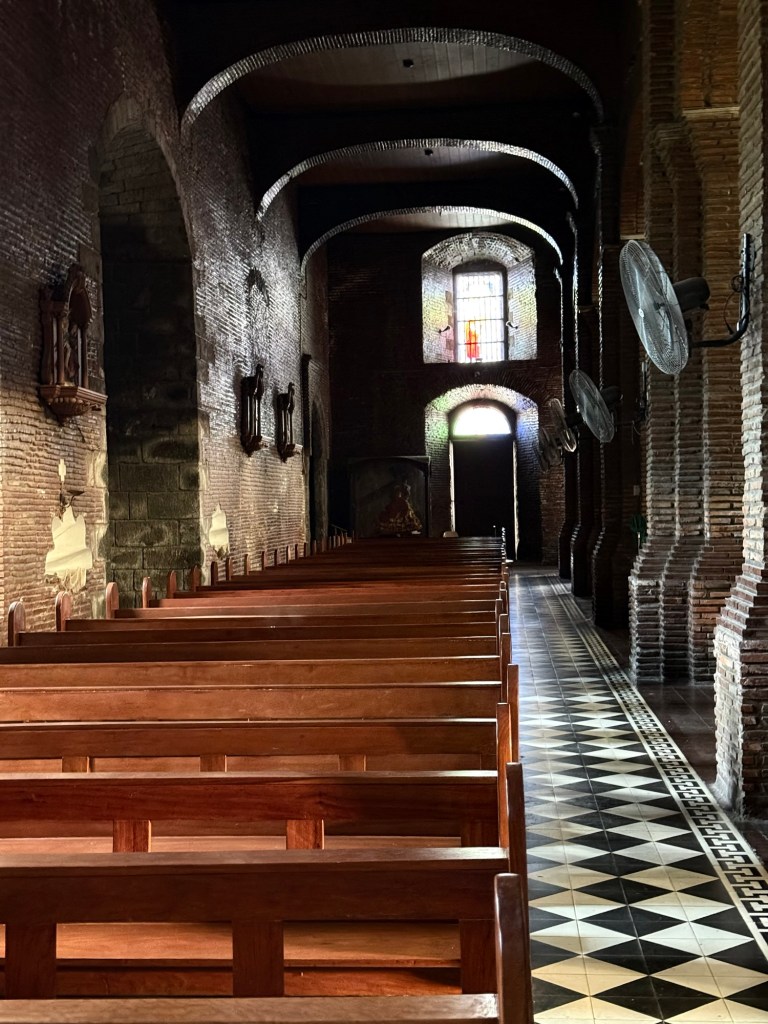
Photo by author, Cathedral Parish of Our Lady of Pillar, Imus, Cavite, 27 October 2026.
Lord My Chef Sunday Recipe for Soul by Fr. Nicanor F. Lalog II
Solemnity of All Saints, 01 November 2026
Revelation7:2-4, 9-14  ><}}}}*>  1 John 3:1-3  ><}}}}*>  Matthew 5:1-12
Thousands of people arrive to pray at the graves of their relatives at a cemetery during the annual observance of All Saint’s Day in Manila on November 1, 2019. Photo by Ted Aljibe, AFP.
The way we Filipinos say goodbyes illustrates vividly – with a dash of some humor – the theology of our celebrations of All Saints Day and All Souls Day we collectively call as Undas.
When we are in a party or any gathering, we never say we are leaving like alis na ako that sounds rude, or layas na ako that is tinged with anger while diyan na kayo could mean burning of one’s bridges, a sort of total separation.
Normally, we say goodbyes either by saying tutuloy na po ako or mauna na po ako. The po is optional but both are the most kind and accepted way of telling everuyone we are leaving. our hosts we are leaving. Tutuloy na ako literally in English is “I’m coming in”when you are actually going out to leave while mauna na po ako means I’m going first or will go ahead of everybody whereas no one is following you especially the host.
But here are the twists in these Filipino goodbyes: both indicate our being Christians, of our deeply ingrained religiosity no matter how hard some would deny. Whenever we say tutuloy na ako, mauna na ako, we unconsciously or subconsciously express our hunger and thirst for heaven, for eternal life.
To say tutuloy na ako is to express that basic truth we all die with one final destination which is heaven in eternal life.
To say mauuna na ako is an affirmation of our other famous maxim about death, una-una lang yan, that nobody knows who’s going to die among us next.
Every time we bid goodbye to anyone, we express this holy desires to be in heaven, to be with God, to be like all the Saints we celebrate on this first day of November.
When Jesus saw the crowds, he went up the mountain, and after he had sat down, his disciples came to him. He began to teach them, saying: “Blessed are those who hunger and thirst for righteousness for they will be satisfied” (Matthew 5:1-2, 6).
Photo by author, Baguio City, July 2018.
In this time of faith in a mass-mediated culture that thrives in promoting pleasures and merry-making alongside with overflowing food and drinks while more others are starving and dying in hunger and still more are without potable water to drink, we find the fourth beatitude a rarity.
Notice how bacchanalian our generation has become with all the food apps and restaurants offering a plethora of food and drinks so glorified in social media called “food porn”, a prostitution of food and drinks. How sad so many people has become so insensitive in posting all their food in social media without any deference for the poor who could barely make ends meet for a decent meal thrice daily. See how so few among us Catholics really fast or go on abstinence every Ash Wednesday and Good Friday with all of our excuses and alibis.
Photo by author, side entrance to Church of Beatitudes, the Holy Land, May 2019.
Very sad.
Hence, Jesus called “blessed” those who hunger and thirst for righteousness because it is an affirmation of our faith in him who told the devil in the wilderness that “man does not live by bread alone but by every that comes forth from the mouth of God” (Mt.2:4). To hunger and thirst for righteousness is to value more the soul than the body. It is an appetite for the sacred and for things of deeper value and importance than those that are fleeting and superficial like food and drinks and other pleasures including those that bloat our egos.
Blessed are those who hunger and thirst for righteousness because it is a desire to be holy first of all, a desire for God himself, a desire for heaven. Righteousness for the Jews is holiness which is the observance of God’s Laws and Commandments. But, problem with this frame of mind as we have seen since the other Sunday is the tendency to be legalistic, to see more the Laws than the person that ultimately, fails to see God in one another.
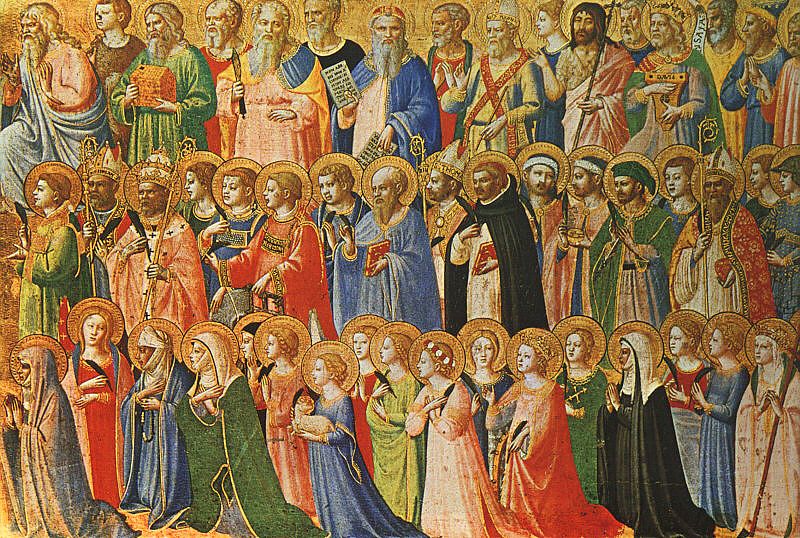
Holiness is being filled with God like the souls already in heaven called Saints. They are holy because they have been purified of their sins and therefore filled with God as John tells us in his vision of heaven of great multitudes wearing white robes washed in the Blood of the Lamb.
But for us still on earth, still battling with sin and evil, holiness is being filled with God but not sinless. And because we are filled with God, we strive always to work alongside with Christ, bearing all the pains and sufferings he bore first for us for the sake of righteousness, of justice and peace. In this world when conformity to whatever “everyone is doing” is the rule of the game like corruption, dishonesty, and infidelity, being hungry and thirsty with the poor and suffering is our strongest signs of protest and resistance against the prevailing evils of our time. Being hungry and thirsty for righteousness is also being hungry and thirsty for the Kingdom of God because that is a sharing in Christ’s Passion and Death leading to his glorious Resurrection.
Photo from bloomberg.com of a homeless man in New York City during a fashion week in summer 2019.
The most difficult daily struggle we all contend with is our hunger and thirst, our most basic instincts for the most basic needs of food and water in order to live; without food and water, we grow weak and die. However, hunger and thirst tend us to overindulge with food and drinks because these readily give us pleasures, making us forget the more essential things in life.
That is why the need for some forms of sacrifices like abstinence and fasting not only with food and drinks but anything that gives us pleasure and comfort so that we learn to desire for higher things like God, holiness and virtues.
The fourth beatitude is most timely in a world that has become so consumerist where only matter matters with everything reduced to pera pera lang with God slowly being deleted from daily life scenes. See how our world has become like showbiz with all the glitz and glamor with everything for show or palabas that despite the abundance we now enjoy not only in food and drinks but almost everything, the more we have become empty and alienated within.
Blessed are you if you hunger and thirst for righteousness because it is a grace reminding you of that fact many forget that the world and everything here passes. Being hungry and thirsty for righteousness is having God in your heart, of experiencing his love, of working to love others so that they too may experience God because they have been so hungry and thirsty for love and kindness, care and concern from others.
What do you hunger and thirst for these days?
How sad that with all these technologies we now have meant to bring us closer with one another have actually brought us apart. Worst of all, the very technologies meant to work for us now enslave us, becoming not only the gods of many but masters too. Blessed are you in your hunger and thirst for God because he alone in Christ Jesus can truly satisfy us here and hereafter. Dwell in the love of God in Jesus Christ John tells us in the second reading like the saints who have gone ahead of us, resisting all evils and temptations to sin for only the Lord satisfies us. Amen. A blessed All Saints’ Day to you!
A panel of Fra Angelico’s painting (1423-24) “The Forerunners of Christ with Saints and Martyrs” from wikipedia.
The Lord Is My Chef Daily Recipe for the Soul by Fr. Nicanor F. Lalog II
Wednesday in the Twenty-third Week in Ordinary Time, Year II, 07 September 2022
1 Corinthians 7:25-31   ><]]]]'> + ><]]]]'> + ><]]]]'>   Luke 6:20-26
Photo by author, Makati skyline from Antipolo, 12 August 2022.
Thank you,
God our loving Father,
for this brand-new day;
in a few days, the week will
be over again as we move
closer to another week,
to another month,
and on to another year!
There is no denying that the world
indeed is passing away as St. Paul
reminds us today in the first reading:
I tell you, brothers, the time is running out. From now on, let those having wives act as not having them, those weeping as not weeping, those rejoicing as not rejoicing, those buying as not owning, those using the world as not using it. For the world in its present form is passing away.
1 Corinthians 7:29-31
Like what the psalmist
says today, let me listen to you,
dear God, let me see and bend
my ear to experience and realize
that far more better than this life is
heaven awaiting us where we shall
enjoy your presence eternally!
Let us be on guard against that
great temptation that there is still time,
that we have plenty of time to spare,
not realizing that it is not really time that
passes by but us who are passing by
when we live in lavish wealth and luxury,
when we eat and drink without satiety,
when we laugh unmindful of the miseries
around us, and when we relish and enjoy
the accolades and praises of others.

Grant us the grace and courage
to choose you always in Jesus Christ
who had come to us as poor and hungry,
weeping and hated by everyone,
insulted and denounced for standing for
what is true and good.
Lord, let us see in every
beginning the end of our lives
in you. Amen.
The Lord Is My Chef Sunday Recipe for the Soul by Fr. Nicanor F. Lalog II
Week XVIII, Cycle A in Ordinary Time, 02 August 2020
Isaiah 55:1-3 >><}}}*> Romans 8:35, 37-39 >><}}}*> Matthew 14:13-21
Remember our reflection last Sunday? Of how parables teach us that “less is always more” because to have the kingdom of God – Jesus Christ himself – we have to learn to appreciate the little things in life?
Beginning this Sunday until August 16, our gospels will start telling us who is Jesus Christ by showing us his powers and abilities that are exactly opposite the way we see and understand them. This new series of stories are so relevant to us in this time of pandemic, giving us wonderful insights into God’s ways of responding to our human situations.
St. Matthew now leads us with Jesus to the wilderness after teaching us in parables to experience his power in transforming us like the five loaves and two fish to feed more than five thousand people.
Multi-layered story of the multiplication of bread
All four evangelists have recorded this story of Jesus Christ’s multiplication of the loaves of bread with their particular focus and stress, showing us that it truly happened and was a major event in the Lord’s ministry.
Very unique with St. Matthew’s version of this miracle story – which has not one but two! – is his economy of words in narrating it like a straight news as if it were a developing story or a “breaking news” unfolding before us, calling us to follow its updates and details due to its multi-layered meanings.
When Jesus heard of John the Baptist, he withdrew in a boat to a deserted place by himself. The crowds heard of this and followed him on foot from their towns. When he disembarked and saw the vast crowd, his heart was moved with pity for them, and he cured their sick. When it was evening, the disciples approached him and said, “This is a deserted place and it is already late; dismiss the crowds so they can go to the villages and buy food for themselves.” Jesus said to them, “There is no need for them to go away; give them some food yourselves.” But they said to him, “Five loaves and two fish are all we have here.” Then he said, “Bring them here to me,” and he ordered the crowds to sit down on the grass. Taking the five loaves and the two fish, and looking up to heaven, he said the blessing, broke the loaves, and gave them to the disciples, who in turn gave them to the crowds. They all ate and were satisfied, and they picked up the fragments left over — twelve wicker baskets full. Those who ate were about five thousand men, not counting women and children.
Matthew 14:13-21
Photo from iStock/Studio-Annika.
The consolation of Jesus.
Our situation in this time of the corona pandemic is so similar with that of Jesus. With the increasing number of COVID-19 cases, it has finally hit us hard, so close to home with news of those we know getting infected and worst, dying from this disease.
Like Jesus upon hearing the death of John the Baptist, we are all saddened that we wish to withdraw away from everyone.
We want to mourn but there are more people in need of our presence and help in this time of pandemic like the countless medical frontliners and health workers who must be so tired – even sick, physically and emotionally – by now with the growing number of COVID-19 patients and yet have chosen to remain in their posts.
And there are still the other casualties of this pandemic like those who have lost their jobs, those evicted from their rented apartments, those stranded and separated from their loved ones, those begging for food, and those afflicted with other sickness going through dialysis and physical therapy.
Jesus knows so well the “wilderness” we are all going through and he is right here with us, one with us in our sufferings, in our fears and anxieties, and in our exhaustion.
To be one with us is consolation, from the Latin “con” or with + “solare” or alone, to be one with somebody feeling alone.
Jesus did not remove our pains and sufferings, even our death; he joined us to be one with us in these that he can call us to “Come to me, all you who labor and are burdened, and I will give your rest. Take my yoke upon you… For my yoke is easy and my burden light” (Mt.11:28-30, 14th Sunday, 05 Jul 2020).
Compassion of Jesus.
Still with Christ’s reaction of being “moved with pity” at the sight of the crowds who have followed him to the wilderness, we find something more deeper with his being one with us, in consoling us that he had forgotten all about himself, his tired body that he went on to heal the sick among them.
To be moved with pity is more than a feeling of the senses but a response of his total person.
You respond for help, you reply to a call.
Ever wondered why we have the “responsorial psalm” after the first reading in the Mass? Because those words from the Psalms express our total assent and commitment to God, involving our total self like body, mind, heart and soul.
Photo by Dra. Mai B. Dela Peña, Carmel Monastery, Israel, 2016.
God cannot suffer because he is perfect.
That is why he became human like us in Jesus Christ to be one with our suffering and death so that we would one with him in his glorious Resurrection.
In the wilderness, Jesus stayed with the people, not allowing them to leave as suggested by the Twelve because he was moved with pity with the crowd because he wanted to suffer with them.
That is compassion, literally means to “suffer with” from cum + patior. Here in the wilderness, Jesus showed his compassion for the people which will reach its highest point in giving himself on the Cross on Good Friday.
Have we “responded” to God’s call to serve, to a call of duty, and to a plea for help from the poor? Have we truly given ourselves to somebody without ever thinking our own comfort or rewards? Or, are we running away from his Cross?
What a shame in this time of pandemic there are some among us who rejoice at the losses of others like the Twelve who wanted the crowd to be sent home because they were afraid of responsibilities, of taking care of the suffering people.
Consolation and compassion are the two most needed from each of us in this time of crisis.
Our scarcity mentality, the God of plenty.
We now come to the miracle of the feeding of five thousand. According to the late Fr. Henri Nouwen, this story is an example of our “scarcity mentality” when we think of not having enough, of finding what we have as too little, always looking for more; hence, our tendency to hoard everything.
The Twelve were thinking more of themselves, afraid they could go hungry with the five loaves of bread and two fish they have. They were so afraid of difficulties ahead of them in their situation where to find and how to feed those great number of people.
They were focused on what was lacking than on what they have, and who was with them, Jesus Christ! They were hungry for food in the stomach than for food to the soul unlike the crowds who have followed Jesus.
Worst of all, the Twelve got “mad” upon seeing the crowds who have followed them to the wilderness when in fact, it was Jesus who needed most to rest to mourn John’s death!
But through all these, Jesus patiently bore the people’s woes and the Twelve’s selfishness to teach them all in a very nice way something so essential in our response to every human suffering and extreme situation: opening and entrusting our selves totally to God.
And that was actually the greatest miracle that happened that day.
In doing it, Jesus simply asked the Twelve what they have, never asking how much they have or its condition. Just whatever they have to give everything to Jesus like those five loaves and two fish that he took, and while looking up to heaven, blessed and broke the loaves, and gave them to the Twelve to distribute to the crowd.
And everyone was satisfied with a lot of left overs too!
Matthew nor any of the other Evangelists ever explained how it happened because it does not really matter at all. What is most important is what are we willing to give up to Jesus so he can transform us into better persons.
That is what we continue to do this day in every celebration of the Holy Eucharist- whatever we have, even not the best or the worst and littlest we have, when given to Jesus becomes holy and multiplied!
The power of God is immense, without doubt. But, in this miracle of the feeding of five thousand, Jesus is showing us that his power is not meant to satisfy our material or bodily needs but our deepest desires that lead to our fulfillment in him as prophesied by Isaiah in the first reading.
Why spend your money for what is not bread; your wages for what fails to satisfy? Heed me, and you shall eat well, you shall delight in rich fare. Come to me heedfully, listen, that you may have life.
Isaiah 55:2-3
Amid the pandemic worsened by our government officials’ inanities, irresponsibilities, and sheer lack of compassion with us in this wilderness, the Lord assures us today that he is with us for “nothing can separate us from the love of Christ” (Second Reading) if we are willing to give him all that we have.
It is our spiritual transformation first that leads us to our material blessings. We can all have it if we are willing to give everything to Jesus and believe in him always. What do you have for miracles to happen?
A blessed August ahead for you!Amen.
Photo by Dra. Mai B. Dela Peña, Carmel, Israel, 2016.