The Lord Is My Chef Breakfast Recipe for the Soul by Fr. Nicanor F. Lalog II
Wednesday, Week XXIX, Year II in Ordinary Time, 21 October 2020
Ephesians 3:2-12     >><)))*>  +  >><)))*>  +  >><)))*>     Luke 12:39-48
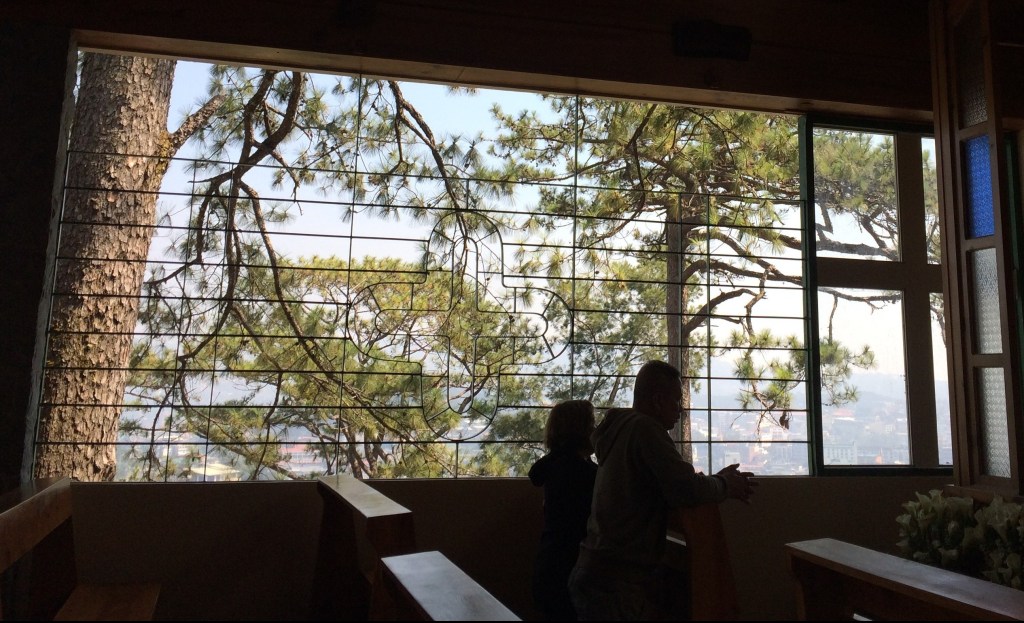
Photo by author, Baguio City, 2018.
God our loving Father in heaven, teach us to accept that you love us, that you trust us, and that you believe in us so that we can finally be grateful and humble before you.
Yes, dear God – one reason we find it so hard to be grateful and humble before you is because we have hardly accepted nor appreciated your love and trust in us. Teach us to see ourselves as you see us, like St. Paul despite our sinfulness.
To me the very least of all the holy ones, this grace was given, to preach to the Gentiles the inscrutable riches of Christ, and to bring to light for all what is the plan of the mystery hidden from ages past in God who created all things.
Ephesians 3:8-9
What a wonderful attitude by St. Paul, expressing such gratitude to you God in calling him and entrusting him the “stewardship of your grace” (Eph.3:2) for others to experience you and your love!
Remind us, dear God, that everything we have is not simply a grace and blessing from you but a sign of your trust in us – whether as a husband or wife, mother or father, brother or sister, or, whatever profession and vocation we follow – they all mean you believe us, that we are responsible enough and most of all, we can all accomplish our mission in Jesus through the Holy Spirit.
May we heed your Son’s warning in today’s parable that
“Much will be required of the person entrusted with much, and still more will be demanded of the person entrusted with more.”
Luke 12:48
And to do so, let us humbly and gratefully accept your gifts always. Amen.
Quiet Storm by Fr. Nicanor F. Lalog II, 19 October 2020
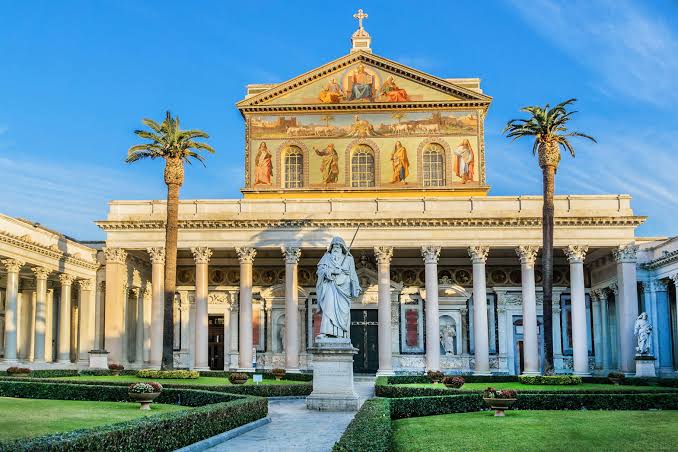
St. Paul’s Basilica in Rome from en.wikipedia.org.
It is really funny these days at how things we grew up with have changed so differently like the postscript we used with initials “P.S.” at the end of letters as an afterthought we sent relatives and friends about 40 years ago.
Today, a postscript is more of a trademark and an application in computers but for my generation, it is from the Latin “post scriptum” that means “written after”.
Consider this piece, my dear Reader, as a postscript or PS to St. Paul’s Letter to the Galatians we heard proclaimed during weekdays from October 5-14, 2020 where he explained and reflected about faith in Jesus Christ whom he loved so much.
Faith is having a relationship with God,
not to obtain things from him.
We always hear people say “have faith” in everything we pray for. Always believe that God will hear us, God will grant us what we need and ask for.
But what happens when we do not get what we are praying for like when a loved one is not healed or recovers from a sickness and eventually dies? Or, flunk an important exam or maybe fail to close a major deal in business? Does it mean we lack faith? Or, is that the main purpose of having faith in God, to obtain things and favors from him?
See how St. Paul called the Galatians “stupid” for being misled by false teachings on the gospel of Jesus Christ: some preachers had come to Galatia at that time telling them of the need to be circumcised like the Jews who converted to Christianity in order to be saved. He wrote the Galatians primarily to rectify those errors they have seemed to believed, where he introduced the doctrine of “justification (salvation) by faith in Christ”, not by rituals and other practices men do. It is not to dismiss our traditions but to stress the primary role of faith in Jesus Christ who died for our sins to save us.
O stupid Galatians! Who has bewitched you, before whose eyes Jesus Christ was publicly portrayed as crucified. I want to learn only this from you: did you receive the Spirit from works of the law, or from faith in what you heard? Are you stupid? After beginning with the Spirit, are now ending with the flesh?
Galatians 3:1-3
Sometimes like the Galatians, we end up with the flesh, believing more in things we do like rituals and other things than truly believing Jesus because we use faith to obtain things from God.
No! We believe because we relate: every relationship like marriage always presupposes faith in the other person. Even Jesus in teaching us how to pray, he taught us the “Our Father” which is an expression of a relationship.
Wedding of my former student, Micah and Lery Magsaysay, February 2020.
Being faithful means being realistic.
Jesus himself assured us that faith can move mountains and do other great things for us if we truly believe. This is perhaps the reason we always equate faith in asking for so many things from God.
Not at all. We also have to be realistic with things we ask from God. He is not a magician who has to please and entertain us with his miracles and powers. When we were in high school seminary, the late Fr. Nick Cruz, SJ gave us a recollection and told us we cannot simply ask anything from God like a rose blooming from your toothpaste to prove he calls you to the priesthood!
Being realistic in our faith by praying first of all to have Jesus, only Jesus and always Jesus!
When Jesus told us to seek and you shall find, to ask and it shall be given to you, and to know and the door shall be opened to you (Lk.11:9-10), he was not telling us to ask for money and gadgets. If we are going to be realistic in our faith, Jesus is telling us to seek God and you shall find him, to ask God and you shall have him, and most of all, God is the only door when we knock would surely open us to new beginnings.
In explaining the unique call we have received from God in Christ, St. Paul gives us the whole reality of our being Christians, of having a faith that is realistic.
For all of you who were baptized into Christ have clothed yourselves with Christ. There is neither Jew nor Greek, there is neither slave nor free person, there is not male and female; for you are all one in Christ Jesus. And if you belong to Christ, then you are Abraham’s descendant, heirs according to the promise.
Galatians 3:27-29
Photo by author, August 2020.
Faith demands conviction and consistency.
God’s gift of faith in us is not everything; we have to cultivate and deepen our faith to experience its wondrous fruits and grace. See the kind of conviction of St. Paul in proclaiming and explaining his faith in Jesus Christ.
Now I want you to know, brothers and sisters, that the Gospel preached by me is not of human origin. For I did not receive it from a human being, nor was I taught it, but it came through a revelation of Jesus Christ.
Galatians 1:11-12
Like the Galatians, many of us are easily swayed by so many other beliefs and teachings that are misleading, claiming to be a part of the faith we have received. Without firmness and conviction in our faith, some among us have gone to accommodating modern thoughts and lifestyles that run contrary to our faith in Christ like abortion, same sex marriage, and in-vitro fertilizations or test tube babies.
A believer without conviction and consistency in faith and actions is not faithful at all. What happens with our “faith is a relationship” when the chips are down, when we are confronted of either being for God or against God?
Sometimes we try “moving the lines”, convincing ourselves that we are not crossing the line of morals and morality like when we are bent on accommodating others and ourselves in some occasions to justify personal preferences.
Sad to say, it happens even among us clergymen like when we tinker with the liturgy and the sacraments in the name of modernism and of arts and worst, with some issues pertaining to acts intrinsically sinful and immoral.
Maybe if we would have the conviction and consistency of faith, we would all be like the good Samaritan in the Lord’s parable – a neighbor to everyone especially those in need, willing to cross the street to faithfully reach out to others in Jesus Christ (Lk. 10:25-37).
Try examining our faith today. Has it bloomed into a relationship we keep with God our Father in Christ Jesus through the Holy Spirit or has it remained as it is, a given, a safety net just in case we need?
Have faith, have God and we’ll journey far, together! Amen.
From americamagazine.org.
On Wednesday, we reflect on being faithful and free, and how faith works through love. Have blessed Monday and see you again!
You may also check our prayers from October 05-14, 2020 based on St. Paul’s Letter to the Galatians at the archives of http://lordmychef.com.
Quiet Storm by Fr. Nicanor F. Lalog II, 14 October 2020
Photo by author, sunrise at the Lake of Tiberias, the Holy Land, May 2019.
HOPE. A favorite word among us, used as an expression for things to get better, especially when we express our “hope” God grants what we pray for, or, in ending our letters of request with “hoping for your kind consideration”.
Even Hollywood is fond of this virtue, portraying it as a reserved power to overcome evil when Neo in the 2003 The Matrix Revolutions was summoned into action to defend their city because he was the only one with “hope”.
Or, something like a turbo charger that will boost every leap of faith when Toretto in Fast and Furious 6 handed to his rival Owen Shaw the computer chip they were tasked to retrieve in the “hope” of getting it back even if they have to chase a giant Antonov An-124 plane taking off.
Of course, Neo and Toretto succeeded in their efforts filled with hope, defeating evil.
But, that is not what hope is all about.
To hope is different from optimism, of believing things can get better;
in fact, we hope because things can get worst.
The late Fr. Henri Nouwen wrote in one of his books that to hope means having that firm conviction within that even if things get worst like death, we are certain God will never forsake us for he loves us very much.
Jesus Christ showed us this true meaning of hope when he decided to go to Jerusalem to accomplish his mission by dying on the Cross for our salvation. I love the way Luke narrated in his gospel this attitude of Jesus in showing us the path of hope amid his knowledge things would get worst than before leading to his Passion and Death (and Resurrection):
When the days for his being taken up were fulfilled, he (Jesus) resolutely determined to journey to Jerusalem…
Luke 9:51
Imagine Jesus “resolutely determined” going to Jerusalem, the very same attitude of saints witnessing the Gospel by facing martyrdom. It is also very true with us when we say our only hope is the Lord when we know of sure death while facing a serious illness.
To hope is to be “resolutely determined” like Jesus and the saints along with our loved ones to follow the arduous path of life, of putting up the good fight against sickness or injustice and evil even if they knew things will lead unto death. At first we wonder, what victory can we claim if in the end we die like the saints and martyrs?
That’s the mystery and paradox of hope: to hope is to completely trust in God that death is not the end of life or any struggle but the highest point of our transformation as we dive to life’s lowest level like defeat, loss, and death when we pray like Jesus on the Cross, “Father, into your hands I commend my spirit” (Lk.23:46).
Hope is faith severely tested, believing and abandoning everything to God, come what may.
Photo by Arch. Philip Santiago, Fatima, Portugal, 2016.
Hope is clearly not positive thinking nor optimism; hope is “faith in God” as Pope Emeritus Benedict XVI tells us in his second encyclical, Spe Salvi (2007). According to Pope Benedict, hope gives us the direction towards the future by enabling us to face the challenges of this life leading to salvation and eternal life.
In this sense it is true that anyone who does not know God, even though he may entertain all kinds of hope, is ultimately without the great hope that sustains the whole of life (Eph.2:12). Man’s great, true hope which holds firm in spite of all disappointments can only be God — God who has loved us and who continues to love us “to the end,” until all “is accomplished” (Jn.13:1 and 19:30)… If we are in a relation with him who does not die, who is Life itself and Love itself, then we are in life. Then we “live”.
Spe Salvi, #27
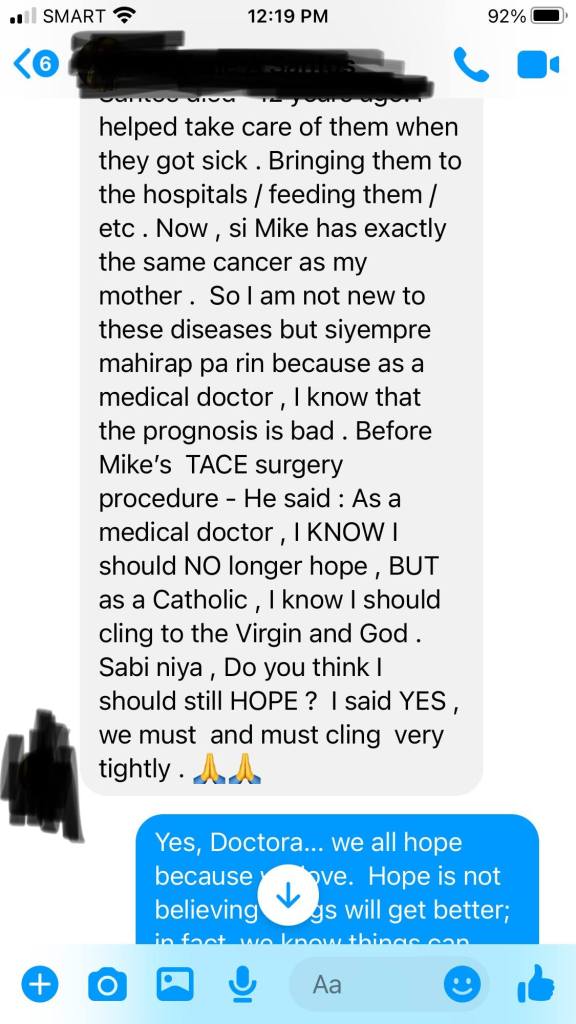
Four weeks ago, a former parishioner had asked me for prayers for her husband with liver cancer. Both are medical doctors; in fact, it was her husband who had actually diagnosed himself while going through radiological lab exam.
It was at that time they “resolutely determined” to go home and face the inevitable by praying together, hoping together in God.
Here lies the mystery and paradox of hope we were talking earlier: why and what do we really hope when we know it is going to end in death?
God. Nothing else and nobody else. God is the reason we hope and what we hope for.
It is only when we have been stripped of everything else when we truly “see” and experience God is all we have in life after all.
Then we become confident God will never abandon us until the end.
That is what my friend and her husband have realized, especially when Dr. Mike died two weeks later after going home.
When I celebrated Mass at his wake, I could not resist telling my friend how the smile of her husband is the sweetest, even most infectious one I have ever seen on the lips of a dead person in my 22 years as a priest!
Truly, the Lord loved Dr. Mike until the end that he died with a smile as the fruit of his hoping in God with his wife.
Indeed, friends have told me that God will give us the grace to face our death when that time comes; and I believe them because I have seen them transformed after accepting their terminal condition that they no longer cry of their situation getting worst while those to be left behind in turn become the ones crying knowing their beloved is passing (https://lordmychef.com/2020/09/22/the-gift-of-tears/).
Hope surprises.
Even God.
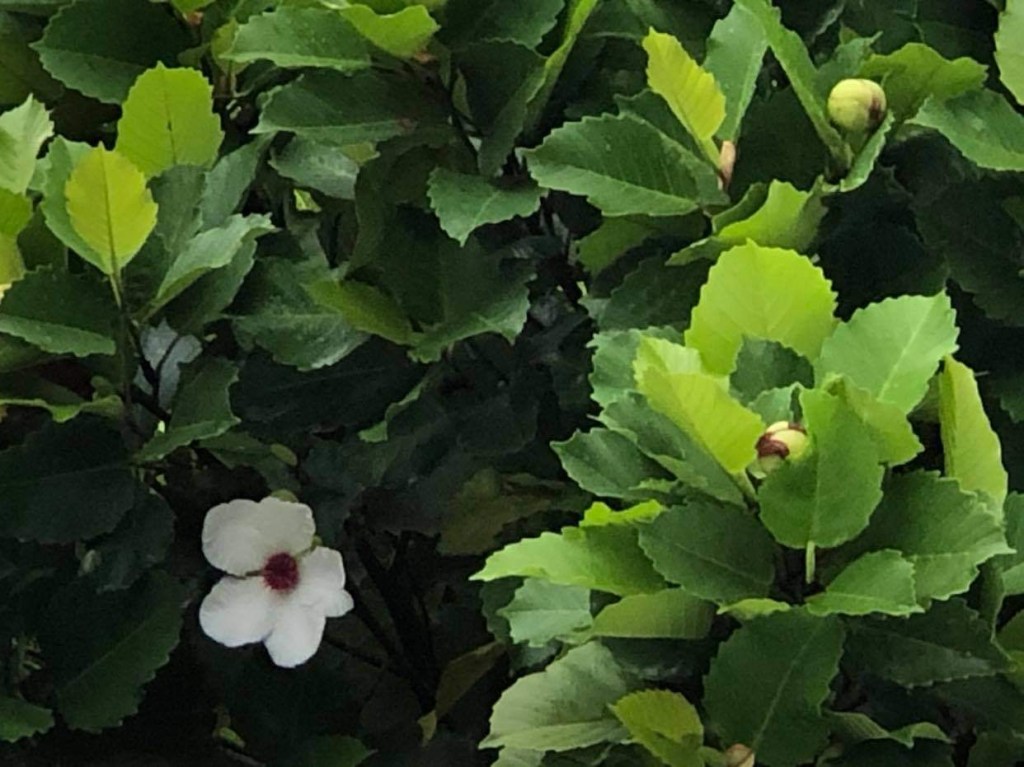
Photo by author, 2019.
When I was on my second year of seminary formation in theology, I experienced the most severe test of my vocation to the priesthood that I almost left and abandoned all plans of becoming a priest at all.
What sustained me in the seminary were prayers — and some lines from T.S. Eliot’s very long poem “Four Quartets” published in 1941:
I said to my soul, be still, and wait without hope For hope would be hope for the wrong thing; wait without love, For love would be love of the wrong thing; there is yet faith But the faith and the love and the hope are all in the waiting. Wait without thought, for you are not ready for thought: So the darkness shall be the light, and the stillness the dancing.
Too bad I have lost the index card on which I wrote this stanza which I posted on my study lamp, reading it daily even until I have become a priest.
To truly hope, one has to get totally lost and empty, stripped naked of our very selves when darkness is our only light and hopelessness is our only hope.
It is when we have totally lost everything except God when we truly hope.
And that is when all the surprises happen, not only with ourselves but with others.
Not only here but definitely even in eternity, the biggest surprise we are all hoping for.
Photo by author at Silang, Cavite, 22 September 2020.
In 1912, the French poet Charles Pierre Péguy (1873-1914) wrote a very long poem ahead of T.S. Eliot about the virtue of hope, claiming it is God’s favorite because it is full of surprises.
Péguy portrayed Hope as a “little girl” who enlivens her older sisters Faith and Love.
I do not want to dilute its magic and power so I leave it that way for you to savor its sweetness, its truth and beauty in Péguy’s poetry:
The faith that I love best, says God, is hope. Faith doesn’t surprise me. It’s not surprising. I am so resplendent in my creation…. That in order not to see me these poor people would have to be blind. Charity, says God, that doesn’t surprise me. It’s not surprising. These poor creatures are so miserable that unless they had a heart of stone, how could they not have love for each other…. But hope, says God, that is something that surprises me. Even me. That is surprising.
Charles Péguy, The Portal of the Mystery of the Second Virtue
Sometimes in life, we have to hit rock bottom in order to truly hope. Keep hoping and you will surely be surprised by God, by others, and by our very selves that we are always blessed! Amen.
The Lord Is My Chef Breakfast Recipe for the Soul by Fr. Nicanor F. Lalog II
Tuesday, Week XXVIII, Year II in Ordinary Time, 13 October 2020
Galatians 5:1-6     >><)))*>  +  >><)))*>  +  >><)))*>     Luke 11:37-41
Photo by author, Lovers’ Bridge, Tamsui in Taiwan, January 2019.
Thank you again, God our Father, for the gift of faith that enables us to do good, to do your works of charity and love. You have gifted us with freewill primarily because of faith itself when you believed in us and trusted us.
Yes, dear Father: like love, we are able to believe and trust you because you were the first to believe and trust us. Forgive us for those times we wrongly chose sin, when pride and selfishness, doubts and mistrust clouded our decision making. When despite our faith, we refused to love.
For in Christ Jesus, neither circumcision nor uncircumcision counts for anything, but only faith working through love.
Galatians 5:6
Indeed, it is because of faith that we are able to choose and do what is good. And the more faithful we become to you, O God, we become more loving like you!
Without faith, it is difficult for us to love because of the pains that come always in loving
Without faith, it is impossible to forgive and be merciful, to let go of others’ infidelity and lack of love and concern because these are virtues and values that come only from within, from a loving heart where faith dwells.
Photo by author, February 2020.
Sometimes, like the Pharisees, we become so focused with what is outside to cover what is missing inside us — faith!
And despite our confessions of our faith, we believe more on outside appearances and forget the more essential inside that is faith leading to love.
The Lord said to him, “Oh you Pharisees! Although you cleanse the outside of the cup and the dish, inside you are filled with plunder and evil. You fools! Did not the maker of the outside also make the inside? But as to what is within, give alms, and behold, everything will be clean for you.”
Luke 11:39-41
Teach us, Jesus, to trust in you, to grow in faith in you so we may be more loving like you! Amen.
The Lord Is My Chef Breakfast Recipe for the Soul by Fr. Nicanor F. Lalog II
Monday, Week XXVIII, Year II in Ordinary Time, 12 October 2020
Galatians 4:22-24, 26-27, 31-5:1     ||| +++ |||     Luke 11:29-32
Cross of Christ atop the church of our Lady of Lourdes in France. Photo by Arch. Philip Santiago, September 2018.
Today O God our Father I thank you for the gift of faith we have always taken for granted. Faith is not just for believing in you, God; faith is for believing what is true! Without faith, life would be a drab and even senseless for there is nothing we can ever hold as reliable and true.
Without faith is like living without friction with everything sliding, slipping, escaping our grasps. There is nothing we would ever believe in. Most of all, without faith we can never read and understand any kind of signs, especially your saving work in Jesus Christ.
While still more people gathered in the crowd, Jesus said to them, “This generation is an evil generation; it seeks a sign, but no sign will be given it, except the sign of Jonah. Just as Jonah became a sign to the Ninevites, so will the Son of Man be to this generation.
Luke 11:29-30
We live in a world of so many signs and symbols but it is only through your gift of faith that they all become meaningful and useful.
Teach us, Lord, to deepen our faith so we can read your signs better like St. Paul in the first reading whose deep faith in you enabled him to interpret the meaning of the signs of Abraham’s two sons, Ishmael by Hagar and Isaac by Sarah.
May we love and care more for your gift of faith to us, Lord, because it is through our faith that we know and discover, follow and hold on to your plans for us. Amen.
The Lord Is My Chef Breakfast Recipe for the Soul by Fr. Nicanor F. Lalog II
Saturday, Week XXVII, Year II in Ordinary Time, 10 October 2020
Galatians 3:22-29     ||+||   >><)))*>   ||+||     Luke 11:27-28
Photo by author, 2019.
Glory and praise, O God, our Father for another week that had passed and another new one to start! Thank you so much for everything we have received this week: the beautiful things that have blessed us wondrously and the sad things that have also blessed us with lessons in life.
Thank you for the gifts of faith and conviction, faith and being realistic, faith and consistency.
And so, I pray today for the gifts of faith and freedom for a truly faithful person is always one who is also truly free!
Brothers and sisters: Scripture confined all things under the power of sin, that through faith in Jesus Christ the promise might be given to those who believe. Before faith came, we were held in custody under law, confined for the faith that was to be revealed. Consequently, the law was our disciplinarian for Christ, that we might be justified by faith. But now that faith has come, we are no longer under a disciplinarian.
Galatians 3:22-25
You know how so many times, Lord, when we feel imprisoned and chained by our broken and toxic relationships, sickness and handicaps, painful memories, failures and other past sins.
Let us realize and be convinced that you have come to set us free from all of these, that we are now free to love, free to be ourselves, free to grow, free and faithful in you.
Show us the path how we can break the many barriers that continue to imprison us and prevent us from maturing in faith and freedom in you like gender, color, language, social status and even religion.
Help us imitate you, Jesus, who boldly claimed before everyone that true blessedness is not found in affinities or blood ties but in freely receiving and observing the word of God. Amen.
The Lord Is My Chef Breakfast Recipe for the Soul by Fr. Nicanor F. Lalog II
Friday, Week XXVII, Year II in Ordinary Time, 09 October 2020
Galatians 3:7-14     <*(((><<   +   >><)))*>     Luke 11:15-26
Photo by author, 2019.
Glory and praise to you, O God our Father through your Son Jesus Christ! Today we are celebrating the Memorial of some great men who faithfully and consistently served you and your people with their lives of witnessing to your gospel as members of the clergy: St. John Leonardi who founded in 1570’s the forerunner of Propaganda Fide now headed by Cardinal Luis Antonio Tagle; St. Denis, first bishop of Paris who suffered martyrdom with his priest and deacon in 258; St. Louis Bertrand who came to be known as the “Apostle to the Americas” during the 16th century; and beatified recently by Pope emeritus Benedict XVI, Blessed John Henry Cardinal Newman considered as one of the great Christian intellectuals of the 19th century.
They were all great men of deep faith. And most of all, consistent in heeding your call, doing your work.
And that is why, today O Lord I pray for the gift of being consistent in my faith.
A believer without consistency in his faith and actions is not faithful at all. A truly faithful servant is always consistent especially when the chips are down, we are confronted of either for you, Lord, or against you.
Sometimes we try “moving the lines”, convincing ourselves that we are not crossing the line of morals and morality like when we are bent on accommodating others and ourselves in some occasions to justify personal preferences like tinkering with the formula of the Sacraments as well as those pertaining to intrinsically sinful and immoral.
Like St. Paul in his letter to the Galatians today, clear our minds and our hearts of all kinds of inconsistencies in our faith, set us straight onto your paths, Lord and let us see your own consistency, your works in the past that are fulfilled in the present.
Unlike those people accusing you of driving evil spirits in the name of Beelzebul, may we be consistent in relying only in you and your powers despite our many setbacks and failures in life when you never failed to bless us and work things out for our own good. Amen.
The Lord Is My Chef Breakfast Recipe for the Soul by Fr. Nicanor F. Lalog II
Monday, Week XXVII, Year II in Ordinary Time, 05 October 2020
Galatians 1:6-12     >><)))*>   |+|   <*(((><<     Luke 10:25-37
From America Magazine via Google.
God our loving Father, I praise and thank you for the gift of faith in you that have greatly helped me finding fulfillment in you. As I grow and continue in this journey in faith, I have realized too that it is not enough to just believe in you but also be convinced in this faith in you.
Like during the time of St. Paul especially among the Galatians, until now many of us are easily swayed by so many other beliefs that are misleading. claiming to be a part of the faith we received from you through Jesus Christ.
Teach us to be like St. Paul in his firmness and conviction in his faith no matter what modern thoughts claim to be a part of the gospel of Jesus Christ that try to accommodate certain thoughts and lifestyles, like masquerading as being “politically correct”.
Now I want you to know, brothers and sisters, that the Gospel preached by me is not of human origin. For I did not receive it from a human being, nor was I taught it, but it came through a revelation of Jesus Christ.
Galatians 1:11-12
If we can have St. Paul’s kind of conviction in faith, maybe we can be more authentic Christians or believers of God like the good Samaritan unlike the priest and Levite who just passed by the victim to robbers on the road to Jericho.
Forgive us Lord when our faith and lives do not match because so often our faith have no roots within us, we are not personally convinced in believing and following you. Amen.
The Lord Is My Chef Breakfast Recipe for the Soul by Fr. Nicanor F. Lalog II
Tuesday, Week XX, Year II in Ordinary Time, 18 August 2020
Ezekiel 28:1-10 <*(((><< || + || >><)))*> Matthew 19:23-30
Photo by author, Petra in Jordan, May 2019.
Then Peter said to Jesus in reply, “We have given up everything and followed you. What will there be for us?” Jesus said to them, “Amen, I say to you that you who have followed me… And everyone who has given up houses or brothers or sisters or father or mother or children or lands for the sake of my name will receive a hundred times more, and will inherit eternal life.”
Matthew 19:27-28, 29
“We have given up everything and followed you, Lord. What will there be for us?”
Oh! how often we tell this to you, Lord Jesus, as if we have given so much for the sake of your kingdom.
Sometimes, it is not really a question we ask but a reminder to you of our “goodness” and “benevolence” with others, of how good we have been when in fact whatever we give and share are all from you.
Forgive us, O Lord, when most specially in the midst of pains and sufferings, we ask you “What will there be for us?” in order to remind you of our rewards, or entitlement as if you forget them or that there is such a thing at all with you.
Photo by author, 2019.
We are sorry Lord in counting the costs and most of all, in demanding so many in return.
“What will there be for us?” is often the question we ask when we doubt your generosity and fidelity to your promises to us.
Like Ezekiel in the first reading, remind us O Lord to keep in mind not to be “haughty of heart”, that “we are not god despite our many achievements brought about by our intelligence or beauty” (Ezekiel 28:1-7).
Dearest Jesus, you have given us with so much and we have given so little; teach us to give more of ourselves, more of our time, more of our treasures, and most of all, more of you to others. Amen.
The Lord Is My Chef Sunday Recipe for the Soul by Fr. Nicanor F. Lalog II
Week XX, Cycle A in Ordinary Time, 16 August 2020
Isaiah 56:1, 6-7 >><}}}*> Romans 11:13-15, 29-32 >><}}}*> Matthew 15:21-28
Twilight at our parish by Ms. Ria De Vera, 12 August 2020.
For the third Sunday in a row, Jesus reveals a very wonderful side of him who goes out of his way to meet us and comfort us in the most difficult situations and places we are into. It is something we need so much in these days of Moderate Enhanced Community Quarantine (MECQ) seen right away in the opening of today’s gospel.
At that time, Jesus withdrew to the region of Tyre and Sidon. And behold, a Canaanite woman of that district came and called out, “Have pity on me, Lord, Son of David! My daughter is tormented by a demon.” But Jesus did not say a word in answer to her.
Matthew 15:21-23
Jesus goes out of his way to meet everyone
Israel is a very small country but always leaves a big impact on everyone who goes on a pilgrimage there. There is that sense of awe in every sacred site that until now continues to “speak” and evoke among pilgrims the presence and holiness of God and his saints.
Like what we have mentioned last Sunday, the proxemics or the non verbal communication of the places Jesus have visited convey to us deeper meanings than just mere sites. And that is more true during the time of Christ like the setting of this Sunday’s gospel, the region of Tyre and Sidon.
Now part of Lebanon found south of its capital city Beirut that was devastated by powerful explosions two weeks ago, Tyre and Sidon were gentile or pagan cities during the time of Jesus with a considerable Jewish population.
His going there shows us his fidelity to his mission of “searching for the lost sheep of the house of Israel” that partly explains to us why he never bothered to give the slightest hint of recognition to the Canaanite woman who had sought his help for her daughter “tormented by a demon”.
Photo by author, the Holy Land, May 2019.
And despite the lack of any explanation again by St. Matthew on the attitude by Jesus “snubbing” the pagan woman, we can safely assume that Christ surely knew that by going to Tyre and Sidon, gentiles would seek his healing as news of his fame had spread beyond Galilee at that time.
Here we find the great love and concern of Jesus for everyone, specially the rejected and marginalized in the society.
His “withdrawing to the region of Tyre and Sidon” was in itself a revelation of his universal love, a love without borders reaching out to those lost and feeling alone in life, those rejected, those discriminated for their color and beliefs, status and gender, sickness and diseases like AIDS and lately, COVID-19!
Inclusive Jesus, exclusive human
At the beginning of chapter 11 of St. Paul’s Letter to the Romans from which our second reading is taken today, the great Apostle starts by asking “has God rejected his people?” St. Paul emphatically said “no”, explaining at length the plan of God in Jesus Christ to save all peoples not just the Jews, beautifully telling us,
For the gifts and the call of God are (permanent and) irrevocable.
Romans 11:29
St. Paul’s reflections on God being “inclusive” as against our being so “exclusive” in sending us Jesus Christ to bring us all together as one sheds us some light on that extraordinary incident in the region of Tyre and Sidon involving the Canaanite woman.
Again, I invite you my dear reader to reflect on the many layers of meaning found in this episode so special like the feeding of more than five thousand people the other Sunday and Jesus walking on water last week.
First, notice the silence of Jesus. Keep in mind when the Lord is silent, it does not mean he is out or does not care at all to our needs and pleas. When there is silence – specially a deafening one – the problem is never with God but with us people.
And, true enough! See how the disciples asked Jesus to “Send her away, for she keeps calling out after us” (Mt.15:23) — exactly the way we deal sometimes with those begging our help and attention, seeing them as a nuisance to be sent away? What a shame!
From Google.
Now, we go to the climax of this episode with the woman coming to Jesus, “paying him homage” for the healing of her daughter tormented by a demon. It was a scene similar with St. John’s wedding at Cana where the Blessed Mother also approached Jesus with a request when wine ran out during the feast.
In both episodes we find Jesus being a snub – suplado, as we say.
Most of all, in both scenes we find the remarkable faith in Jesus by his Mother at Cana believing he can do something to spare the newly wed couple of embarrassment from running out of wine while this Canaanite woman felt so sure only Jesus can cure her daughter.
See how she addressed Jesus like his disciples with not just “Lord” but also with the title “Son of David” to indicate her faith in him as the Messiah.
And it did not stop there as she engaged Jesus into a dialogue — indicating intimacy and trust, depth and communion that we refer in Filipino as “matalik na ugnayan” or “matalik na usapan”.
Sometimes in life, Jesus seems to have that longing for some “lambing” from us that he tries to be “pakipot” or hard to get in order to be intimate with us. Please take these Filipino traits positively to get what I mean from this unique scene of Jesus and the Canaanite woman in Tyre and Sidon.
Jesus said in reply, “It is not right to take the food of the children and throw it to the dogs.” She said, “Please, Lord, for even the dogs eat the scraps that fall from the table of their masters.” Then Jesus said to her in reply, “O woman, great is your faith! Let it be done for you as you wish.” And the woman’s daughter was healed from that hour.
Matthew 15:26-28
Photo by author, Church of All Nations beside the Garden of Gethsemane in the Holy Land, May 2019.
Brothers and sisters all in one God as Father
St. Matthew recorded this episode not to scandalize and shock us with those words coming from the Lord, referring to the Canaanite woman as one of the “dogs” that was the term used to designate pagans at that time.
For St. Matthew who was writing for Christians of Jewish origins, the episode was a reminder that the people of Israel were indeed the “children” of God to whom the coming Messiah and salvation – like bread or food – were first promised. St. Paul spent a great deal of explaining of this in his letter specially to the Romans .
Rigthly then, theirs was the “food” not right to be thrown to the “dogs” but, that fact does not exclude the “dogs” from partaking later from the leftover food of the children, as if telling Jesus, today we satisfy ourselves with crumbs, tomorrow we shall have bread!
The Canaanite woman clearly knew where to place herself before the Lord, proving to him her deep faith and amazing knowledge of God’s goodness and plans for everyone. For that, she was highly praised by Jesus for her faith. The only other person also praised by Jesus in having a tremendous faith in him was the centurion – another pagan – who begged the Lord for the remote healing of his servant.
Last Sunday afternoon I read the story of how a nurse was driven out of her boarding house after she tested positive for COVID-19 virus. The poor lady had nowhere to go to spend the night after being denied of any assistance by barangay officials, even by her own family in Batangas! Good enough, somebody reported her to the Philippine National Red Cross that sent an ambulance to take care of the nurse who was found crying by herself at the gutter of a street in Pasay City.
What a very sad and tragic reality happening among us these days of the pandemic.
Where is our love and concern for everyone, especially the weak and the sick, those in our own versions of Tyre and Sidon where no one would dare to go except Jesus, perhaps like the dorms and residences of our medical frontliners who are so tired and sick physically, emotionally, and spiritually during this pandemic?
In these past three weeks we have reflected how Jesus lovingly joined us, staying with us in the wilderness, in the storms of the dark sea, even at the pagan territories where nobody would ever want to go.
This Sunday, Jesus is inviting us to break all barriers and borders between us that separate us from each other. Let us animate our community with Christ’s love and mercy for us all amid our many differences so that slowly we fulfill Isaiah’s prophecy in the first reading that someday the house of the Lord shall be called “a house of prayer for all peoples” (Is.56:7). Amen.
A blessed and safe new week to you! And please do not forget to pray ten Hail Mary’s every 12-noon for national healing and end of the pandemic until September 15, 2020.












 lordmychef.com