Asking the right question

Lord My Chef Daily Recipe for Soul by Fr. Nicanor F. Lalog II
Saturday, Nineteenth Week in Ordinary Time, Year II
Solemnity of the Assumption of the Blessed Virgin Mary, 15 August 2026
Revelation 11:19; 12:1-6, 10 ><}}}*> 1 Corinthians 15:20-27 ><}}}*> Luke 1:39-56
Photo by Ann H on Pexels.com

One significant lesson I learned in journalism and in life is that we are known by the questions we ask, not by our answers that are often wrong. When we ask the right question – especially if it is not misleading to our own assumptions – the problem or issue at hand is already half solved. 

It doesn’t really matter if we don’t get answers right away; many times the answers to our questions come or “unfold” as we move on in life. Some answers come to us later in life or after the death of a loved one. Or, maybe they would be answered in the afterlife.

Just keep asking. As one newspaper says, be an inquirer.

But, why start our reflection on asking question on this Solemnity of the Assumption of the Blessed Virgin Mary?
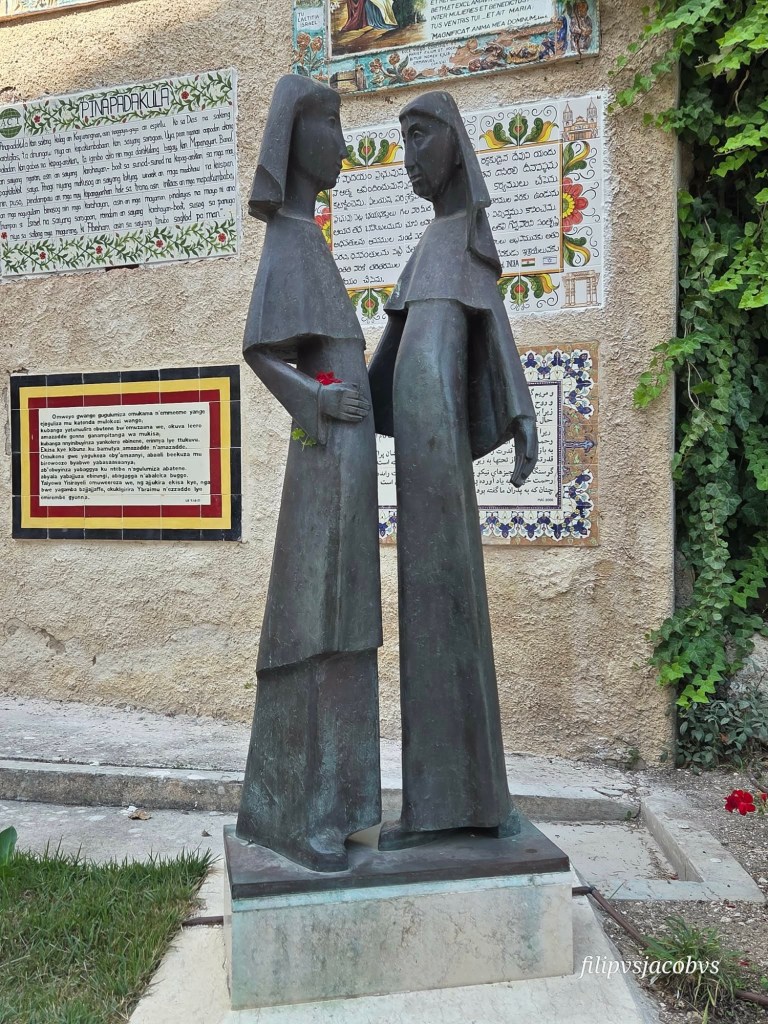
Photo by Ar. Philip Santiago, Church of the Visitation, Israel, 2024.

I was struck by how Elizabeth greeted Mary in her visitation with a question:

“And how does this happen to me that the mother of my Lord should come to me?” (Luke 1:43)

Actually, before Elizabeth asked that question at the Visitation, Mary was the first to ask the difficult question after the Annunciation to her by Archangel Gabriel, “How can this be, since I have no relations with a man?” (Lk.1:34).

In saying “yes” to God’s invitation at the Annunciation all the way to following Jesus to the Calvary and awaiting the coming of the Holy Spirit at Pentecost, Mary is the model disciple of the Lord, the “doer of the Word” in whom we see all that we can become through the power of God despite our human doubts and weaknesses. And many questions.

When Jesus was born, Mary must have so many questions but rather “kept all these things , reflecting on them in her heart” (Lk.2:19). Then when Jesus was thirteen years and got lost in Jerusalem after their pilgrimage, Mary asked anew a difficult question to him, “Son, why have you done this to us? Yur father and I have been looking for you with great anxiety” (Lk.2:48).

“The Finding of the Saviour in the Temple” painting by William Holman Hunt (1860), from en.wikipedia.org.

Mary asked the difficult questions always. And most likely, she had kept so many other questions in her heart especially when Jesus suffered, died and was buried. She was never afraid to ask questions to God because she believed, constantly seeking the truth who is her Son Jesus Christ.

On this solemnity of Mary’s assumption when we are reminded of the supreme truth of our own resurrection and assumption into heaven at the end of time when Christ comes again, we are likewise encouraged to keep asking the important questions we are often afraid to ask and confront in life like, would I make it to heaven? Or, the perennial question we ask if there is really God or if there is really heaven and hell and purgatory? 

See how the most essential questions in life that we ask albeit with fear or hesitations pertain to things of the soul, of eternity, of spirituality. These are questions that spring from our inner deeper self that indicate our origin who is God that even the greatest scientists throughout history admitted and respected like Albert Einstein.

Very often, the answers to these questions unfold in our hearts, in our lives, in the present moment. That is why Mary responded to Elizabeth’s question and praise with a song praising God for all his wondrous works she had experienced and realized in her life:
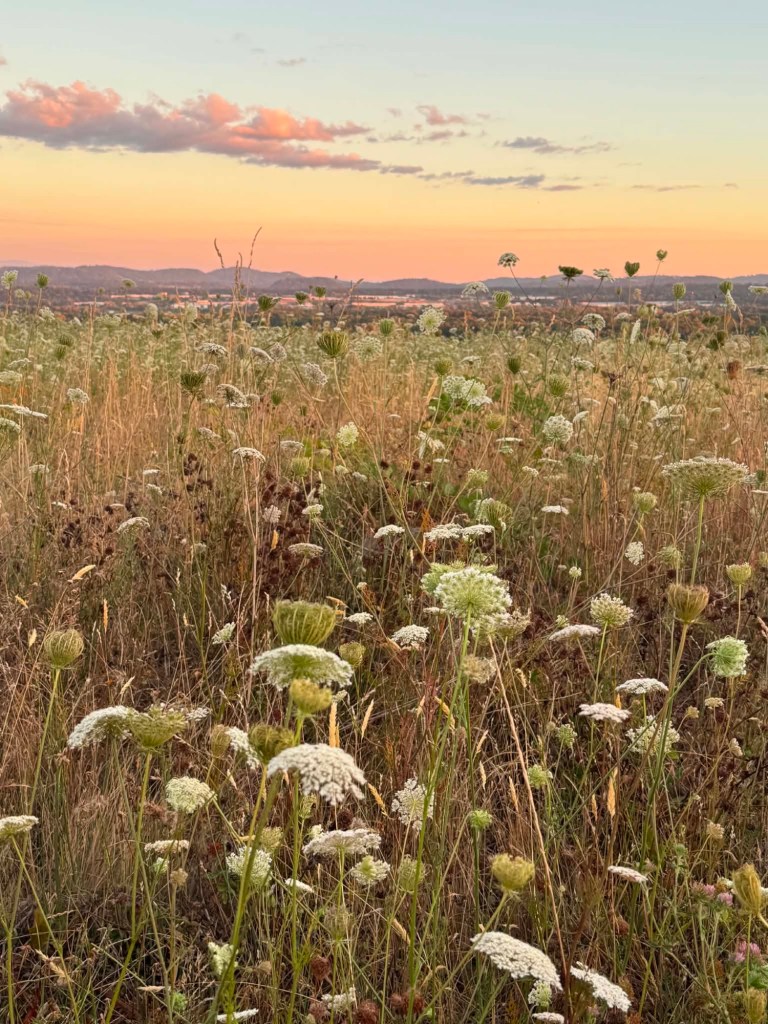
Photo by a friend in Washington. 28 July 2026.

And Mary said: “My soul proclaims the greatness of the Lord; my spirit rejoices in God my Savior… He has mercy on those who fear him in every generation. He has shown the strength of his arm, and has scattered the proud in their conceit. He has cast down the mighty from their thrones and has lifted up the lowly. He has filled the hungry with good things, and the rich he has sent away empty. He has come to the help of his servant Israel for he has remembered his promise of mercy, the promise he made tonour fathers, to Abraham and his children forever” (Luke 1:46-47, 50-55).

The Magnificat is the summary of the Christ Mary carried in her womb and heart throughout her life that she is referred to as the Ark of the New Covenant as seen by John in heaven in the first reading.

The Magnificat as a song of the Blessed Mother was borne out of long reflections and hard questionings about self and the world in the light of God’s works. Mary like Paul in the second reading experienced God’s saving power in Jesus because both were so open to the working of the Holy Spirit, searching deep within by constantly examining, asking the right questions.

That is why silence is important in every prayer period when we learn to completely trust God especially when our questions are very unsettling, even disturbing.

As a priest for 28 years and hospital chaplain these past five years, I have noticed older people along with those sick and dying spending a lot of their time asking about eternity. That’s why many of them go to confession so often. It must be difficult and amazing at the same time. Sometimes when I look into their eyes, there seems to be an intensity that they could pierce through dark clouds and thick curtains that maybe, just maybe, enable them to catch a glimpse of eternity that result in a remarkable peace within them that we too can feel.

It is when we ask the difficult, essential questions that we are able to arrive at the real truth about life and our very self that ultimately lead us to God and to heaven in Jesus Christ.

“The Assumption of the Virgin” painting by Italian Titian (1516-1518) from en.wikipedia.org.

The assumption of Mary is part of Christ’s gospel. And the good news is that it is a truth and reality we can arrive at here and now, not later when we die for God loves us so much as Paul tells us in the second reading.

In being the first and model disciple of Jesus, Mary is also the first to reap the fruits of Christ’s resurrection by being assumed into heaven body and soul, free of any pains and sorrows in her “death”.

We too rejoice with Mary in celebrating this Solemnity of her Assumption into heaven, hoping and trusting that eventually all our pains and sufferings shall pass away when we die, when Jesus comes again at the end of time to assume us body and soul into heaven in perfect union with God our Father in him, with him, and through him.

Before ending this reflection, we find it most opportune to remind everyone to stop the practice of keeping a little ash of their beloved’s cremated remains in their pendants or in their homes. This is contrary to our teaching on the resurrection of the dead, of the dogma of the Assumption of Mary. It is because of this assurance that we too like Mary shall be assumed into heaven body and soul that the remains of the dead shall be preserved intact in utmost respect and care according to the norms of the Church. Not the crazy beliefs propagated by movies and crematories primarily for profits. Most of all, exorcists have been reminding us too of the negative effects to the dead and to the living by keeping their ashes no matter how little they may be. God bless everyone!

Photo by author, St. Michael Retreat House, Antipolo City, 16 June 2026.

Rejoicing in the Lord

Lord My Chef Daily Recipe for the Soul, 15 August 2025
Friday, Solemnity of the Assumption of the Blessed Virgin Mary
Revelation 11:19, 12:1-6, 10 ><}}}*> 1 Corinthian 15:20-27 ><}}}*> Luke 1:39-56
“The Assumption of the Virgin” by Italian Renaissance painter Titian completed in 1518 for the main altar of Frari church in Venice. Photo from wikidata.org.
Thank you,
Most Blessed Virgin Mary
for being our Mother
and most of all,
our model disciple
in your Son Jesus Christ.
As we celebrate today
the Solemnity of your Assumption
into heaven,
we also celebrate our blessed
assurance and hope
that someday
we too may join you with God
body and soul
if we remain one and united
in Jesus Christ our Savior.
Pray for me,
O Blessed Mother
that I too may rejoice in God
for all that he does for me
while seeing my lowliness
not my pride.

Mary set out and travelled to the hill country in haste to a town of Judah, where she entered the house of Zechariah and greeted Elizabeth (Luke 1:39-40).

Pray for me,
Blessed Mother
to go in haste
filled with joy
and excitement in the Lord,
determined and committed
to the mission to proclaim
the coming of our Savior Jesus Christ;
pray for me, dear Mary
to go in haste
filled with joy
and excitement in the Lord
for his love for me I have to share
with everyone like you;
pray for me,
Blessed Mother
to go in haste
celebrating the Christ's
presence and coming,
our fulfillment in him.

When Elizabeth heard Mary’s greeting, the infant leaped in her womb, and Elizabeth, filled with the Holy Spirit, cried out in a loud voice and said, “Blessed are you among women, and blessed is the fruit of your womb…Blessed are you who believed that what was spoken to you by the Lord would be fulfilled.” And Mary said: “My soul proclaims the greatness of the Lord; my Spirit rejoices in God my Savior” (Luke 1:41-42, 45-47).

Dear Jesus,
forgive me when I am filled
with pride,
doubts,
and mistrust in you
that slow me
from sharing
you with others and
the world;
fill me with humility
like Mary,
that I may sing too
a magnificat to you,
singing your saving grace
because every time
we rejoice in you
and your works in us
that is when we experience
heaven
our ultimate end
when in body and soul
we shall celebrate you
with Mary our Mother too.
Amen.

Fr. Nicanor F. Lalog II
Our Lady of Fatima University
Valenzuela City
(lordmychef@gmail.com) 
Photo from shutterstock.com

Stop “overthinking” to be a good Samaritan

Lord My Chef Sunday Recipe, 13 July 2025
Fifteenth Sunday in Ordinary Time, Cycle C
Deuteronomy 30:10-14 ><}}}*> Colossians 1:15-20 ><}}}*> Luke 10:25-37
Photo by author, Katmon Nature Sanctuary & Beach Resort, Infanta, Quezon, 17 March 2023.

Jesus continues his journey to Jerusalem with his disciples, teaching us with some important things “to do” following the questions of some people along the way.

Last Sunday Jesus taught us the five do’s and five don’ts of discipleship; today, he teaches us what we must do to inherit eternal life with the parable of the good Samaritan.

There was a scholar of the law who stood up to test Jesus and said, “Teacher, what must I do to inherit eternal life?” Jesus said to him, “What is written in the law? How do you read it?” He said in reply, “You shall love the Lord, your God, with all your heart, with all your being, with all your strength, and with all your mind, and your neighbor as yourself.” He replied to him, “You have answered correctly; do this and you will live.” But because he wished to justify himself, he said to Jesus, “And who is my neighbor?” Jesus replied, “A man fell victim to robbers as he went down from Jerusalem to Jericho.” (Luke 10:25-30)

First thing we notice is our similarity with the scholar of the law who already knew the answer to the question “what must I do to inherit eternal life?” We know deep in our hearts the answer and like in the gospel, we have felt Jesus affirming us many times like the lawyer. But, Jesus wants us to revisit his parable of the Good Samaritan this Sunday to realize its meaning as we continue to imitate the lawyer with the same question “who is my neighbor?”

But because he wished to justify himself, 
he said to Jesus,
"And who is my neighbor?"
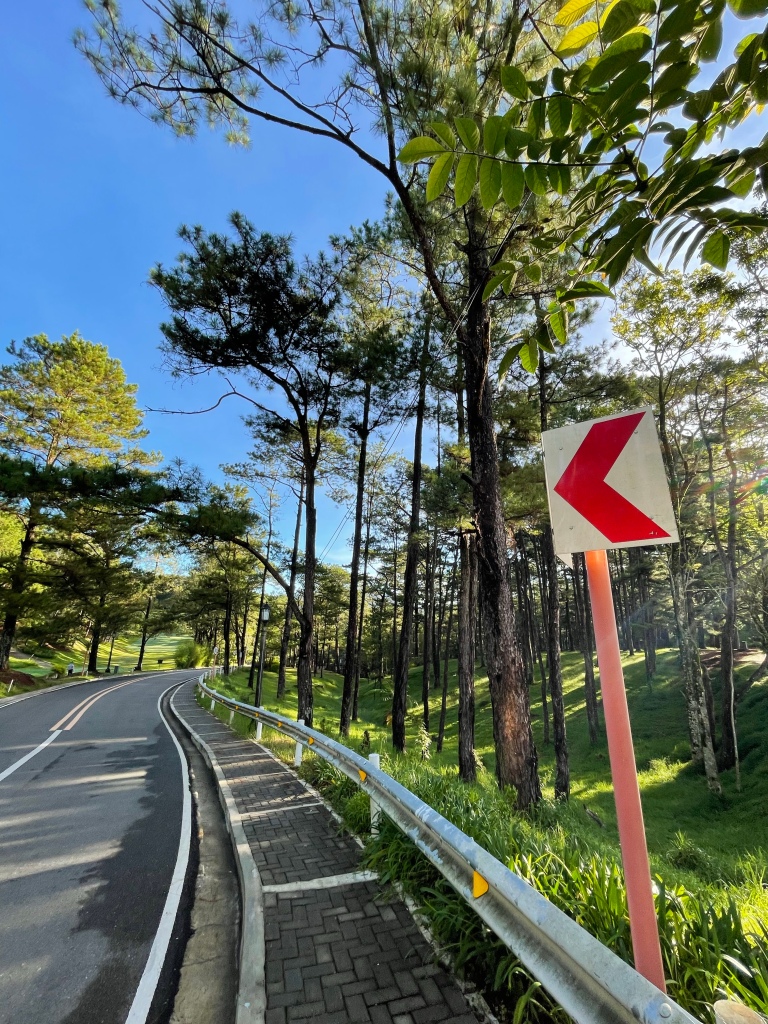
Photo by author, Grand Canyon Woods, Batangas, March 2025.

The Filipino translation gives us a better picture of the lawyer justifying himself, “Sa hangad ng eskriba na huwag siyang lumabas na kahiya-hiya, tinanong niya uli si Jesus, ‘Sino naman ang aking kapwa?'”

See how Jesus did not give a straightforward answer but situated the lawyer including us today into something very concrete so that we stop thinking more and start feeling more. That was the problem with the scholar of the law and with us today: we analyze everything that we have become “over thinkers” but not necessarily “critical thinkers”. We know so many things about our faith but, we still ask for more clarifications because we think more than feel more.

As a chaplain giving recollections and talks to our students, I have seen many young people today are over thinkers but not critical thinkers. I always remind them that critical thinking is about comprehension and analysis of data and information gathered. Over thinking is different. It is not of the mind but of the heart because overthinking is lack of trust. It is a vice when we worry a lot – over think – because we lack trust with others and with ourselves. And ultimately with God!

Photo by author, Camp John Hay, Baguio City, 12 July 2023.

The scholar of the law was overthinking when he asked “who is my neighbor?” because for them at that time, their neighbors were just their fellow Jews. Sad to say, until now our society remains stratified into categories of people like ice cream – the old rich and famous as “all-time favorites”, the recent rich and popular as “flavor of the month” and the ordinary folks as “dirty ice cream” or sorbetes cheaply sold in carts pushed usually by old men.

Of course we know everyone is our neighbor or whoever needs us. But the problem with this all-encompassing view is that it leads us to casuistic argumentation, a kind of over thinking like when we start citing exceptions and excuses or alibis. That is why Jesus used the characters of a priest and Levite who were examples of holiness vis-a-vis a Samaritan who was an enemy of the Jews at that time.

The priest and the Levite passed by the victim of robbery to maintain the Jewish purity law of not touching a corpse to perform their tasks and duties in the temple, both were “overthinking” of their rites and rituals than the dying person. Holiness for Jesus is beyond names and titles but more of the heart seeing and feeling the other person like the Samaritan who alone acted out of his good naturedness as a person, even beyond giving first aid to the robbery victim.

From forbes.com, 2019.

Many times we are like the priest and Levite when we come up with many arguments like “do I not have any other obligation” or “does it really fall on me personally” and so on and so forth when confronted in real life with some people so badly injured or in need of attention.

We overthink with what would happen if we personally get involved with somebody in trouble that people these days are more quick in pulling out cellphones to record an accident and mishap instead of doing something to help.

We over think like the lawyer in the gospel, forgetting to feel more of the other person. That is why in answering his question, Jesus threw it back to him him in another form that is more personal and experiential, “Which of these three, in your opinion, was neighbor to the robbers’ victim?”

Photo by author, 2019.

St. Therese of the Child Jesus wrote in her journal more than a hundred years ago, “I have understood that true greatness is found not in the name but in the soul.”

Beautiful! If we would just look more into our heart, into our soul, we find Jesus, we find our true self, and we find everyone our neighbor to be loved and respected, cared and understood. This is what Moses is telling us in the first reading that the Lord and his commandment are right there in our hearts.

That is exactly what the scholar of the law felt after hearing the story of the good Samaritan that he forgot all labels and categories, answering Jesus’ question with, “The one who treated him with mercy.” There is no need to justify ourselves, of who we are, or even ask who is our neighbor. Everyone is our neighbor because everyone is a brother and sister in Christ; hence, no need to ask that question at all!

But, there is still something deeper to this. When Jesus ended their conversation with the instruction to “Go and do likewise”, the Lord is telling us this Sunday that whenever we encounter a person in need of help, regardless of who she/he is, let us put ourself in that person’s place for it is them – not us – who shall recognize us whether we acted as neighbor to them, or saw them as neighbor!

Photo by Mr. Chester Ocampo, UST Senior High School Building, 2019.

Recall those moments we were down when those dearest to us abandoned us and of all people, the least we expected were the ones who acted as neighbor to us. It is when we are down and low when we come to recognize our neighbor, not when we are up and able, when we feel proud asking what must I do to gain eternal life.

Stop all these over thinking. Simply remember and find Jesus in every person who is the “image of the invisible God” who “reconciled all things for him”(Col.1:15, 20) for he alone is our truest neighbor always present when needed most. Amen. Have a blessed week ahead, everyone! Fr. Nicanor F. Lalog II, Our Lady of Fatima University, Valenzuela City (lordmychef@gmail.com).

Timeless

The Lord Is My Chef Daily Recipe for the Soul by Fr. Nicanor F. Lalog II
Friday, Memorial of St. Vincent de Paul, Priest, 27 September 2024
Ecclesiastes 3:1-11 <*((((>< + ><))))*> Luke 9:18-22
Photo by Mr. Howie Severino of GMA7 News in Taal, Batangas, 2018.

There is an appointed time for everything, and a time for every affair under the heavens. He (God) has made everything appropriate to its time, and has put the timeless into their hearts, without men’s ever discovering, from beginning to end, the work which God has done (Ecclesiastes 3:1, 11).

How lovely
and mysterious
are your words today,
God our Father;
you have appointed time
for everything,
making everything appropriate
to its time,
and has put the timeless
into our hearts.
We live and move
in time,
through time
measured and taken
in various ways
seen in the past,
the present,
and the future;
there is the inescapable
dimension and reality
we keep on freezing momentarily,
hoping to go back in the past
while we are so eager
to know what is to happen
next in the future.
Let Jesus Christ 
your Son reign in our hearts
that we may always live
in the present moment of
every here and now,
the timeless in our hearts
with our fervent loving service
to you through others;
like St. Vincent de Paul,
let us be rooted in you,
Jesus, living in the present,
lovingly serving the poor
and needy among us;
but most of all,
make our hearts
attuned in you, Jesus,
in prayer to experience
the timeless
even right here
in this life.
Amen.
Photo by Vincenzo Malagoli on Pexels.com

Praying to always “re-member”

The Lord Is My Chef Daily Recipe for the Soul by Fr. Nicanor F. Lalog II
Thursday, All Souls' Day, 02 November 2023
Wisdom 3:1-9 ><]]]]'> Romans 6:3-9 ><]]]]'> John 6:37-40
Photo by author, Jesuit Cemetery, Sacred Heart Novitiate, Novaliches, QC, 21 March 2023.
As we remember today
all our departed loved ones
awaiting entry into your holy presence
O God in heaven, 
we pray too that we may
always remember 
your call for us to be good,
for us to work for justice
and truth,
for us to always remember
there is death,
there is judgment.
We are beings of forgetfulness,
Lord, and what a wonderful gift you
have given us with "re-membereing" -
for making someone long gone
still a part, a "member again" 
of the present
when we who are living 
in the "here" and "now"
remember them in our
prayers and sacrifices,
most of all, in our good deeds
because love, after all,
can reach in the afterlife!
The best way to
remember is to live
in the present moment
in Christ Jesus 
who had assured us
of our salvation, that 
not one of us he would lose
but raise to life on the last
day (John 6:39);
while here on earth, 
may we start purifying ourselves
in your loving service, Lord,
to others, whether they are
in this life or in the afterlife 
inasmuch as our lives 
are connected with 
one another to eternity;
and so, we pray for them,
we hope for them,
because we love them
in YOU, Jesus,
with YOU, Jesus,
and through YOU, Jesus
as we hope it is never too late
nor is it in vain to touch
their hearts wherever
they may be.
Amen.