Asking the right question

Lord My Chef Daily Recipe for Soul by Fr. Nicanor F. Lalog II
Saturday, Nineteenth Week in Ordinary Time, Year II
Solemnity of the Assumption of the Blessed Virgin Mary, 15 August 2026
Revelation 11:19; 12:1-6, 10 ><}}}*> 1 Corinthians 15:20-27 ><}}}*> Luke 1:39-56
Photo by Ann H on Pexels.com

One significant lesson I learned in journalism and in life is that we are known by the questions we ask, not by our answers that are often wrong. When we ask the right question – especially if it is not misleading to our own assumptions – the problem or issue at hand is already half solved. 

It doesn’t really matter if we don’t get answers right away; many times the answers to our questions come or “unfold” as we move on in life. Some answers come to us later in life or after the death of a loved one. Or, maybe they would be answered in the afterlife.

Just keep asking. As one newspaper says, be an inquirer.

But, why start our reflection on asking question on this Solemnity of the Assumption of the Blessed Virgin Mary?
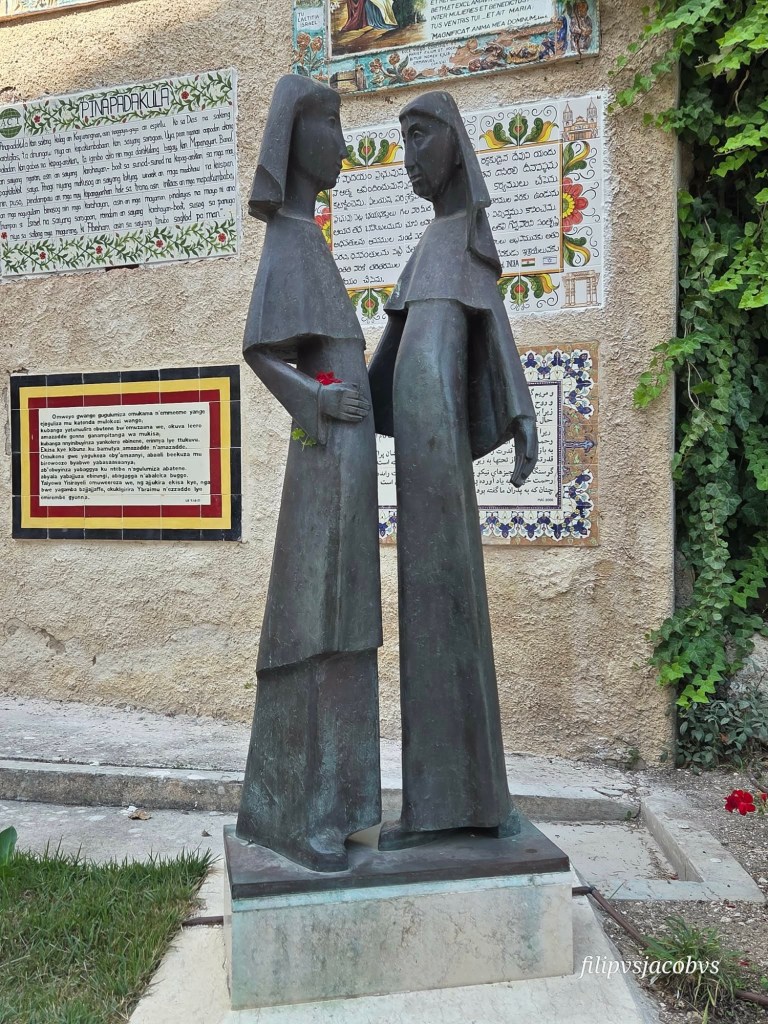
Photo by Ar. Philip Santiago, Church of the Visitation, Israel, 2024.

I was struck by how Elizabeth greeted Mary in her visitation with a question:

“And how does this happen to me that the mother of my Lord should come to me?” (Luke 1:43)

Actually, before Elizabeth asked that question at the Visitation, Mary was the first to ask the difficult question after the Annunciation to her by Archangel Gabriel, “How can this be, since I have no relations with a man?” (Lk.1:34).

In saying “yes” to God’s invitation at the Annunciation all the way to following Jesus to the Calvary and awaiting the coming of the Holy Spirit at Pentecost, Mary is the model disciple of the Lord, the “doer of the Word” in whom we see all that we can become through the power of God despite our human doubts and weaknesses. And many questions.

When Jesus was born, Mary must have so many questions but rather “kept all these things , reflecting on them in her heart” (Lk.2:19). Then when Jesus was thirteen years and got lost in Jerusalem after their pilgrimage, Mary asked anew a difficult question to him, “Son, why have you done this to us? Yur father and I have been looking for you with great anxiety” (Lk.2:48).

“The Finding of the Saviour in the Temple” painting by William Holman Hunt (1860), from en.wikipedia.org.

Mary asked the difficult questions always. And most likely, she had kept so many other questions in her heart especially when Jesus suffered, died and was buried. She was never afraid to ask questions to God because she believed, constantly seeking the truth who is her Son Jesus Christ.

On this solemnity of Mary’s assumption when we are reminded of the supreme truth of our own resurrection and assumption into heaven at the end of time when Christ comes again, we are likewise encouraged to keep asking the important questions we are often afraid to ask and confront in life like, would I make it to heaven? Or, the perennial question we ask if there is really God or if there is really heaven and hell and purgatory? 

See how the most essential questions in life that we ask albeit with fear or hesitations pertain to things of the soul, of eternity, of spirituality. These are questions that spring from our inner deeper self that indicate our origin who is God that even the greatest scientists throughout history admitted and respected like Albert Einstein.

Very often, the answers to these questions unfold in our hearts, in our lives, in the present moment. That is why Mary responded to Elizabeth’s question and praise with a song praising God for all his wondrous works she had experienced and realized in her life:

Photo by a friend in Washington. 28 July 2026.

And Mary said: “My soul proclaims the greatness of the Lord; my spirit rejoices in God my Savior… He has mercy on those who fear him in every generation. He has shown the strength of his arm, and has scattered the proud in their conceit. He has cast down the mighty from their thrones and has lifted up the lowly. He has filled the hungry with good things, and the rich he has sent away empty. He has come to the help of his servant Israel for he has remembered his promise of mercy, the promise he made tonour fathers, to Abraham and his children forever” (Luke 1:46-47, 50-55).

The Magnificat is the summary of the Christ Mary carried in her womb and heart throughout her life that she is referred to as the Ark of the New Covenant as seen by John in heaven in the first reading.

The Magnificat as a song of the Blessed Mother was borne out of long reflections and hard questionings about self and the world in the light of God’s works. Mary like Paul in the second reading experienced God’s saving power in Jesus because both were so open to the working of the Holy Spirit, searching deep within by constantly examining, asking the right questions.

That is why silence is important in every prayer period when we learn to completely trust God especially when our questions are very unsettling, even disturbing.

As a priest for 28 years and hospital chaplain these past five years, I have noticed older people along with those sick and dying spending a lot of their time asking about eternity. That’s why many of them go to confession so often. It must be difficult and amazing at the same time. Sometimes when I look into their eyes, there seems to be an intensity that they could pierce through dark clouds and thick curtains that maybe, just maybe, enable them to catch a glimpse of eternity that result in a remarkable peace within them that we too can feel.

It is when we ask the difficult, essential questions that we are able to arrive at the real truth about life and our very self that ultimately lead us to God and to heaven in Jesus Christ.

“The Assumption of the Virgin” painting by Italian Titian (1516-1518) from en.wikipedia.org.

The assumption of Mary is part of Christ’s gospel. And the good news is that it is a truth and reality we can arrive at here and now, not later when we die for God loves us so much as Paul tells us in the second reading.

In being the first and model disciple of Jesus, Mary is also the first to reap the fruits of Christ’s resurrection by being assumed into heaven body and soul, free of any pains and sorrows in her “death”.

We too rejoice with Mary in celebrating this Solemnity of her Assumption into heaven, hoping and trusting that eventually all our pains and sufferings shall pass away when we die, when Jesus comes again at the end of time to assume us body and soul into heaven in perfect union with God our Father in him, with him, and through him.

Before ending this reflection, we find it most opportune to remind everyone to stop the practice of keeping a little ash of their beloved’s cremated remains in their pendants or in their homes. This is contrary to our teaching on the resurrection of the dead, of the dogma of the Assumption of Mary. It is because of this assurance that we too like Mary shall be assumed into heaven body and soul that the remains of the dead shall be preserved intact in utmost respect and care according to the norms of the Church. Not the crazy beliefs propagated by movies and crematories primarily for profits. Most of all, exorcists have been reminding us too of the negative effects to the dead and to the living by keeping their ashes no matter how little they may be. God bless everyone!

Photo by author, St. Michael Retreat House, Antipolo City, 16 June 2026.

Our song, our music – our self

Lord My Chef Simbang Gabi Recipe for the Soul by Fr. Nicanor F. Lalog II
Monday, Simbang Gabi-VII, 22 December 2025
1 Samuel 1:24-28 <*((((>< + ><))))*> Luke 1:46-56
Photo by author, Church of Visitation, Ein-Karem, Israel, 2017.

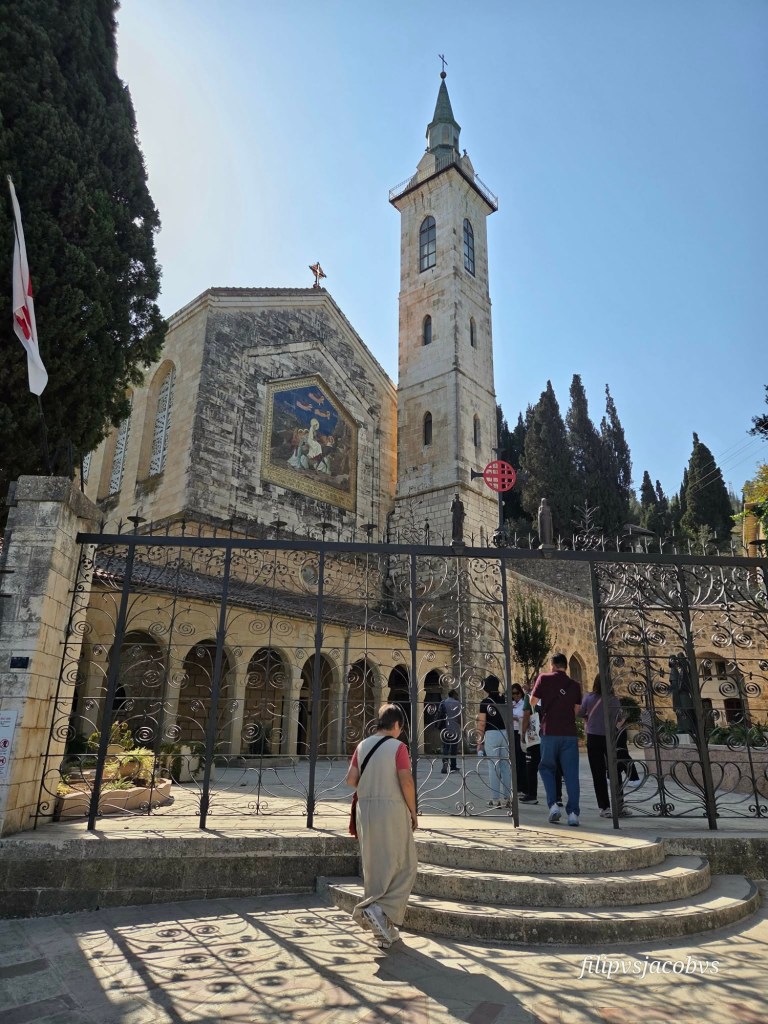
One of the most beautiful and touching sites in the Holy Land I have always loved is the Church of the Visitation at Ein-Karem outside Jerusalem where Mary visited her cousin Elizabeth.

It sits atop of a hill and there’s no other way to get there except by foot due to the narrow road but, it is worth all the effort for anyone going up there with the beautiful scenes all the way with cool breeze soothing your face and lovely flowers delighting your eyes and senses. It somehow gives every pilgrim a taste of the great love and joy of Mary pregnant with out Lord Jesus Christ visiting her cousin Elizabeth on the sixth month of her pregnancy with John the Baptist.

Photo by Ar. Philip Santiago, Church of Visitation, the Holy Land, October 2025.

Perhaps we could say the Visitation was the first Christmas party in history as Luke tells us today how Mary rejoiced in God singing the Magnificat after Elizabeth praised her:

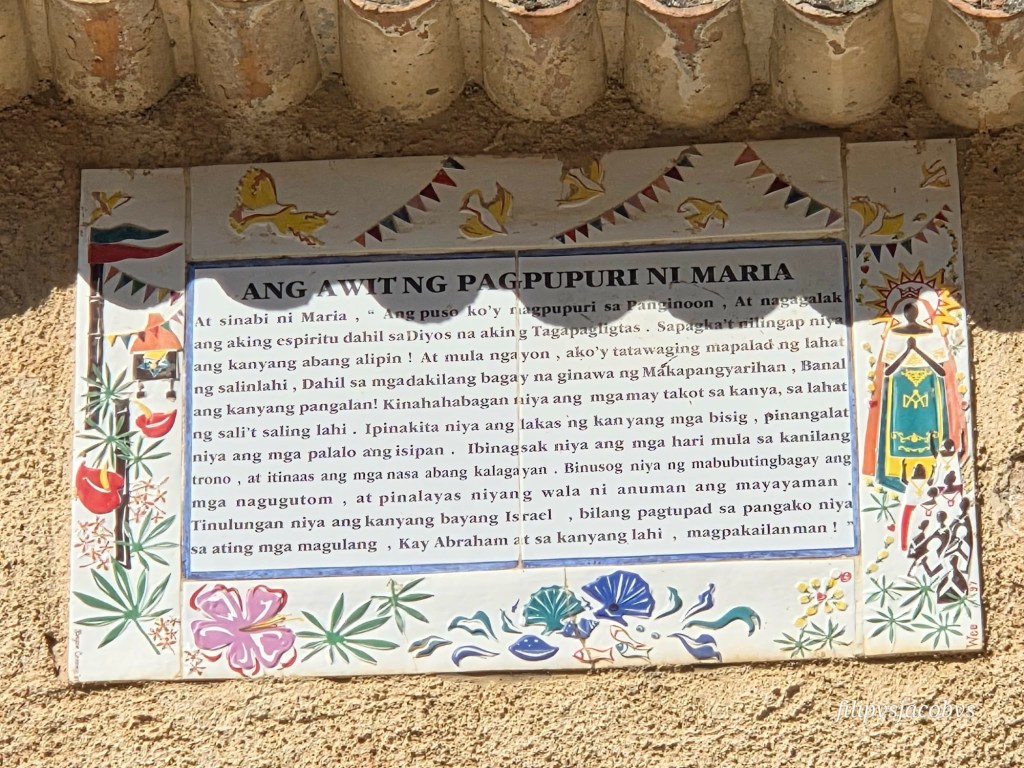
“My soul proclaims the greatness of the Lord, my spirit rejoices in God my savior.  For he has looked upon his lowly servant.  From this day, all generations will call me blessed:  the Almighty has done great things for me, and holy is his Name.  He has mercy on those who fear him in every generation.  He has shown the strength of his arm, and has scattered the proud in their conceit.  He has cast down the mighty from their thrones and has lifted up the lowly.  He has filled the hungry with good things, and the rich he has sent away empty.  He has come to the help of servant Israel, for he has remembered his promise of mercy, the promise he made to our fathers, to Abraham and to his children forever” (Luke 1:46-55).

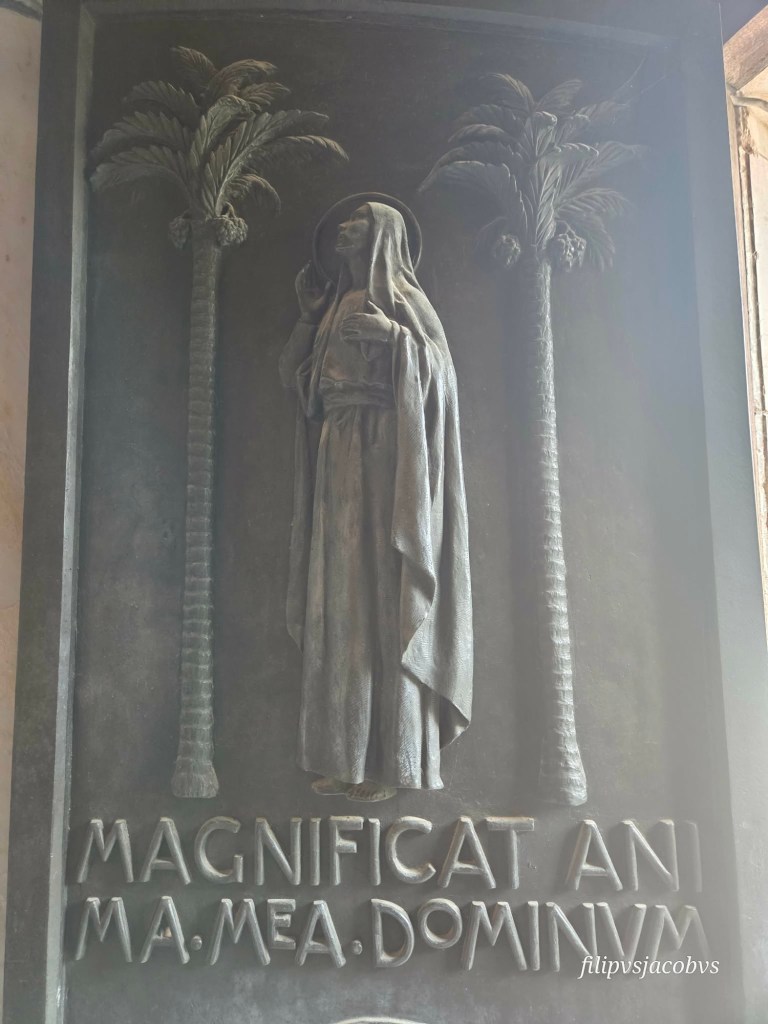
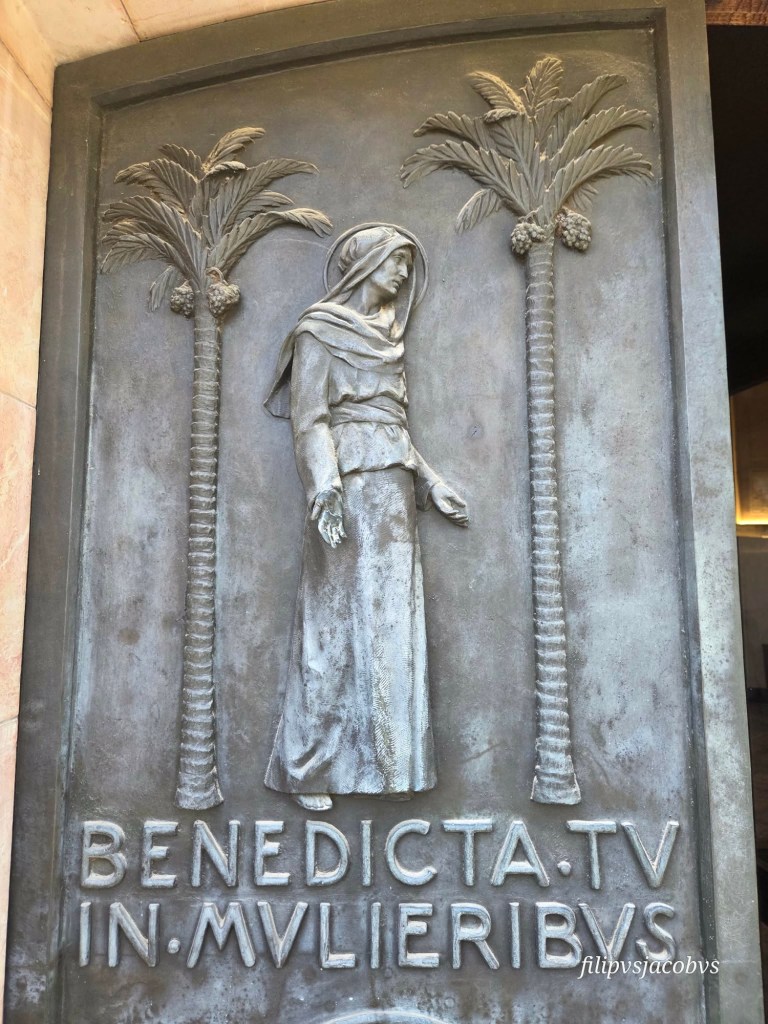
Aside from this beautiful bronze statues of Mary and Elizabeth at the patio of the Church of the Visitation are the translations of the Magnificat in different languages, including in our very own Filipino which is one of the most popular songs we often sing in our Masses.

Photo by Ar. Philip Santiago, Church of Visitation, the Holy Land, October 2025.

But, do we really realize the meaning of this song of Mary?

Actually, the Magnificat was composed by Luke that he placed on the lips of Mama Mary. It is part of his artistry, of putting songs on the lips of some of his Christmas characters like Zechariah after John’s circumcision (the Benedictus) and later on Simeon (Nunc Dimittis) at the Presentation of Jesus in the temple.

Why? Because singing, like dancing, is the highest expression of our feelings to the one we love. Mothers sing lullabies to their infants, suitors compose and sing songs to their beloved, and we Filipinos sing and dance in whatever mood we are wherever we may be! There is always music in us from the simple gesture of washing the dishes, ironing of clothes to driving and taking a shower. When we sing and dance, we not only show what’s inside us but most of all who we are!

Photo by Ar. Philip Santiago, Church of Visitation, the Holy Land, October 2025.

In singing the Magnificat which St. Luke patterned after a similar song by Hannah at the birth of her son the Prophet Samuel who’s story we heard in the first reading, Mother Mary expressed her joy and gratitude in the nearness of God among us not only with the coming birth of her Son Jesus Christ but also through her!

The late Fr. Raymond Brown, one of the great biblical scholars of our time noted in his classic “Birth of the Messiah” that Mary as the first Christian is teaching us in her Magnificat the essential task of every disciple of the Lord which is, after hearing the word of God and accepting it, we must share it with others, not by simply repeating it but by interpreting it so that people can see it truly as the good news

Here we wish to mention something we have read recently about singing and dancing that the best singer or best dancer is one who can listen or hear – and fill the silent gaps in every piece of music. That’s amazing because singing and dancing are not about having super beautiful voice or precise steps. Singing and dancing are more of attitude, of claiming and owning a piece of music as yours. That’s why it is called an interpretation or as young people these days refer to as “cover”.

As we have mentioned earlier, one of the most popular Mass songs in the country is Mary’s Magnificat called Ang Puso Ko’y Nagpupuri but does it reflect our spirituality as a Christian nation?

Photo by Ar. Philip Santiago, Church of Visitation, the Holy Land, October 2025.

Have you noticed how this 2025 that we heard so little of Mr. Jose Mari Chan his Christmas in Our Hearts?

I feel sorry for Mr. Chan when suddenly this 2025 he is more heard and seen in the McDonald’s commercial shouting “George!” to a fellow senior citizen. We as a nation momentarily forgot about Mr. Chan’s classic line “whenever I see girls and boys selling lanterns” because we as a nation is so disgusted with the ghost project scams of flood controls. We could not even emphatize with the family of the former Undesecretary of DPWH who had died of an apparent suicide because of the “breadth and depth and height” of their corruption running into trillions of pesos. They have cheated on us big time and we really wonder why the big “congtractors” and senators are not yet in jail?

But God has been so good to us this Christmas that we can all sing with conviction the Magnificat for indeed, “the Almighty has done great things for us” like putting into jail in a far away land the former president who called God as stupid not once nor twice but multiple times on television. That is aside from ordering the bloodiest anti-drug campaign he shamelessly likened to Hitler’s Holocaust of Jews in World War II.

The Lord invites us to make this 2025 as the last Christmas we allow corrupt and inept people get elected, that we finally put an end to political dynasty, and stop the stupidity and callousness of people in government who set a budget of 500pesos for people to enjoy noche buena.

Photo by Ar. Philip Santiago, Church of Visitation, the Holy Land, October 2025.

This Christmas let us sing like Mary, as faithful disciple of Christ, sharing Jesus, always Jesus and only Jesus in singing the Magnificat in our daily witnessing to the Gospel, making Jesus come in our life of loving service to everyone especially those in need. Let us actively cooperate with Jesus like Mary his Mother to make these lines a living reality in our midst – “he has mercy on those who fear him in every generation, showing the strength of his arm by scattering the proud in their conceit, casting down the mighty from their thrones, lifting up the lowly, filling the hungry with good things, sending the rich away empty, coming to the help of Israel, for he has remembered his promise of mercy”.

More than a song and hymn, the Magnificat reveals us as the signs of the Christ, the Emmanuel, God-is-with-us! Amen. A blessed week ahead of everyone!