Lord My Chef Daily Recipe for Soul by Fr. Nicanor F. Lalog II
Saturday, Nineteenth Week in Ordinary Time, Year II
Solemnity of the Assumption of the Blessed Virgin Mary, 15 August 2026
Revelation 11:19; 12:1-6, 10 ><}}}*> 1 Corinthians 15:20-27 ><}}}*> Luke 1:39-56

One significant lesson I learned in journalism and in life is that we are known by the questions we ask, not by our answers that are often wrong. When we ask the right question – especially if it is not misleading to our own assumptions – the problem or issue at hand is already half solved.
It doesn’t really matter if we don’t get answers right away; many times the answers to our questions come or “unfold” as we move on in life. Some answers come to us later in life or after the death of a loved one. Or, maybe they would be answered in the afterlife.
Just keep asking. As one newspaper says, be an inquirer.
But, why start our reflection on asking question on this Solemnity of the Assumption of the Blessed Virgin Mary?
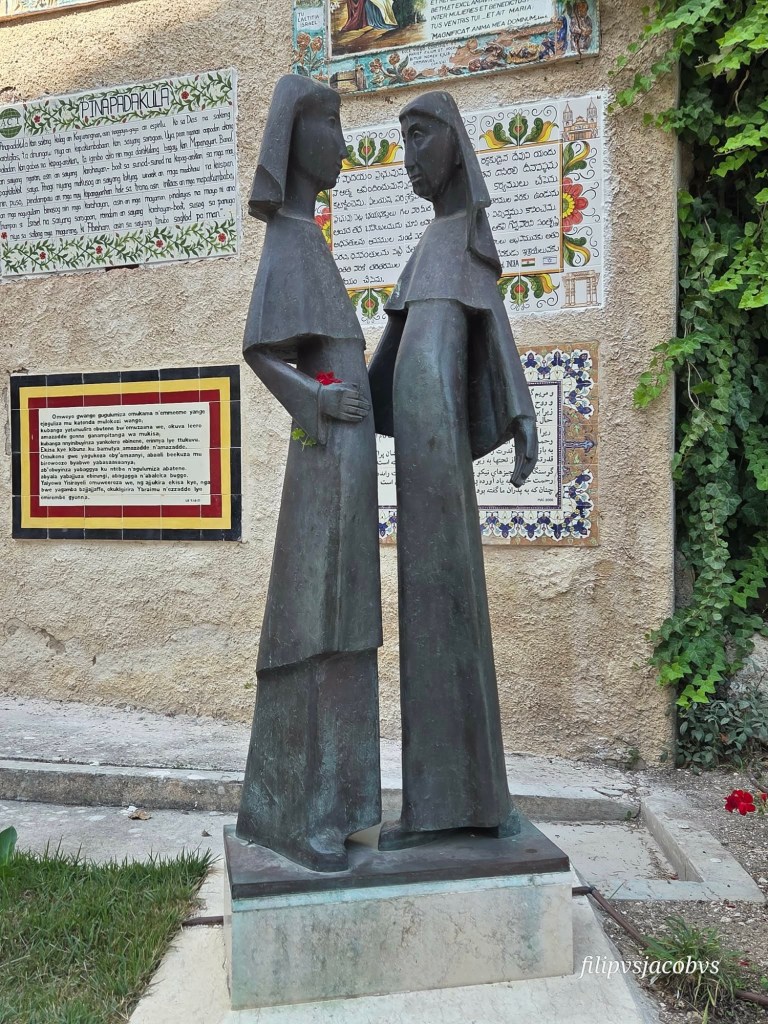
I was struck by how Elizabeth greeted Mary in her visitation with a question:
“And how does this happen to me that the mother of my Lord should come to me?” (Luke 1:43)
Actually, before Elizabeth asked that question at the Visitation, Mary was the first to ask the difficult question after the Annunciation to her by Archangel Gabriel, “How can this be, since I have no relations with a man?” (Lk.1:34).
In saying “yes” to God’s invitation at the Annunciation all the way to following Jesus to the Calvary and awaiting the coming of the Holy Spirit at Pentecost, Mary is the model disciple of the Lord, the “doer of the Word” in whom we see all that we can become through the power of God despite our human doubts and weaknesses. And many questions.
When Jesus was born, Mary must have so many questions but rather “kept all these things , reflecting on them in her heart” (Lk.2:19). Then when Jesus was thirteen years and got lost in Jerusalem after their pilgrimage, Mary asked anew a difficult question to him, “Son, why have you done this to us? Yur father and I have been looking for you with great anxiety” (Lk.2:48).

Mary asked the difficult questions always. And most likely, she had kept so many other questions in her heart especially when Jesus suffered, died and was buried. She was never afraid to ask questions to God because she believed, constantly seeking the truth who is her Son Jesus Christ.
On this solemnity of Mary’s assumption when we are reminded of the supreme truth of our own resurrection and assumption into heaven at the end of time when Christ comes again, we are likewise encouraged to keep asking the important questions we are often afraid to ask and confront in life like, would I make it to heaven? Or, the perennial question we ask if there is really God or if there is really heaven and hell and purgatory?
See how the most essential questions in life that we ask albeit with fear or hesitations pertain to things of the soul, of eternity, of spirituality. These are questions that spring from our inner deeper self that indicate our origin who is God that even the greatest scientists throughout history admitted and respected like Albert Einstein.
Very often, the answers to these questions unfold in our hearts, in our lives, in the present moment. That is why Mary responded to Elizabeth’s question and praise with a song praising God for all his wondrous works she had experienced and realized in her life:

And Mary said: “My soul proclaims the greatness of the Lord; my spirit rejoices in God my Savior… He has mercy on those who fear him in every generation. He has shown the strength of his arm, and has scattered the proud in their conceit. He has cast down the mighty from their thrones and has lifted up the lowly. He has filled the hungry with good things, and the rich he has sent away empty. He has come to the help of his servant Israel for he has remembered his promise of mercy, the promise he made tonour fathers, to Abraham and his children forever” (Luke 1:46-47, 50-55).
The Magnificat is the summary of the Christ Mary carried in her womb and heart throughout her life that she is referred to as the Ark of the New Covenant as seen by John in heaven in the first reading.
The Magnificat as a song of the Blessed Mother was borne out of long reflections and hard questionings about self and the world in the light of God’s works. Mary like Paul in the second reading experienced God’s saving power in Jesus because both were so open to the working of the Holy Spirit, searching deep within by constantly examining, asking the right questions.
That is why silence is important in every prayer period when we learn to completely trust God especially when our questions are very unsettling, even disturbing.
As a priest for 28 years and hospital chaplain these past five years, I have noticed older people along with those sick and dying spending a lot of their time asking about eternity. That’s why many of them go to confession so often. It must be difficult and amazing at the same time. Sometimes when I look into their eyes, there seems to be an intensity that they could pierce through dark clouds and thick curtains that maybe, just maybe, enable them to catch a glimpse of eternity that result in a remarkable peace within them that we too can feel.
It is when we ask the difficult, essential questions that we are able to arrive at the real truth about life and our very self that ultimately lead us to God and to heaven in Jesus Christ.

The assumption of Mary is part of Christ’s gospel. And the good news is that it is a truth and reality we can arrive at here and now, not later when we die for God loves us so much as Paul tells us in the second reading.
In being the first and model disciple of Jesus, Mary is also the first to reap the fruits of Christ’s resurrection by being assumed into heaven body and soul, free of any pains and sorrows in her “death”.
We too rejoice with Mary in celebrating this Solemnity of her Assumption into heaven, hoping and trusting that eventually all our pains and sufferings shall pass away when we die, when Jesus comes again at the end of time to assume us body and soul into heaven in perfect union with God our Father in him, with him, and through him.
Before ending this reflection, we find it most opportune to remind everyone to stop the practice of keeping a little ash of their beloved’s cremated remains in their pendants or in their homes. This is contrary to our teaching on the resurrection of the dead, of the dogma of the Assumption of Mary. It is because of this assurance that we too like Mary shall be assumed into heaven body and soul that the remains of the dead shall be preserved intact in utmost respect and care according to the norms of the Church. Not the crazy beliefs propagated by movies and crematories primarily for profits. Most of all, exorcists have been reminding us too of the negative effects to the dead and to the living by keeping their ashes no matter how little they may be. God bless everyone!