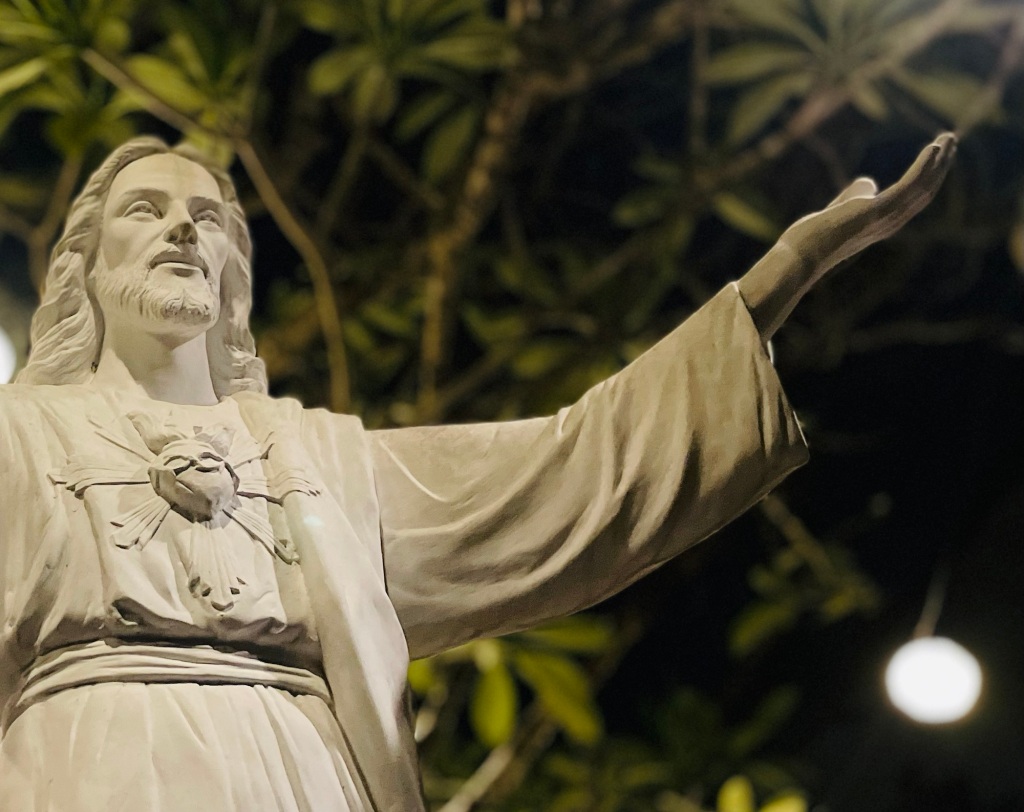
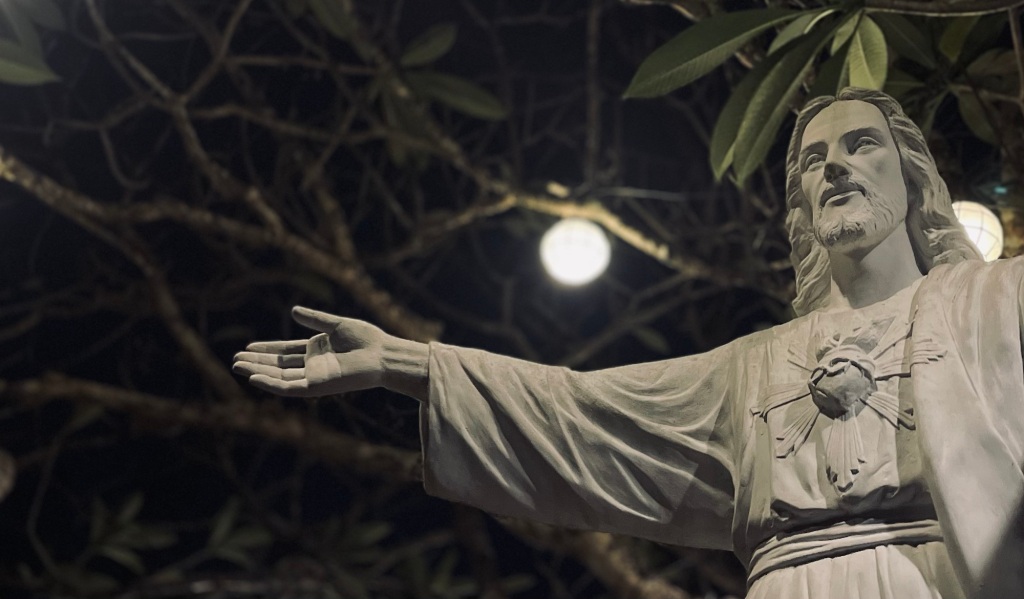
Immaculate Conception, Intimacy of God

Lord My Chef Daily Recipe for the Soul by Fr. Nicanor F. Lalog II
Monday, Solemnity of the Immaculate Conception, 08 December 2025
Genesis 3:9-15, 20 ><}}}}*> Ephesians 1:3-6, 11-12 ><}}}}*> Luke 1:26-38
“Cestello Annunciation” by Botticelli painted in 1490; from en.wikipedia.org.

We praise and thank God today on this Solemnity of the Immaculate Conception of Mary that formally kicked off the process of the fulfillment of his promised salvation in Jesus born by the Virgin Mother.

According to our official Church teaching called dogma, Mary was conceived by her mother St. Anne without any stain of original sin through the merits of Jesus Christ our Savior. Mary has to be pure and clean because she would bear the Son of God who is perfect and spotless.

God chose Mary to be the Mother of Jesus not because of her having any special traits but purely out of God’s goodness “who has blessed us in Christ with every spiritual blessing in the heavens” (Eph.1:3).

Hence, this feast reminds us too to imitate the Blessed Virgin in saying “yes” to God’s invitation to cooperate in his wonderful plans of bringing Jesus into this world so darkened by sin that has left us broken and fragmented from each other. Rejoice, therefore, because everyday, God sends us his angel to greet us with “Hail, full of grace! The Lord is with you” (Lk.1:26), inviting us into an intimacy with him like Mary.

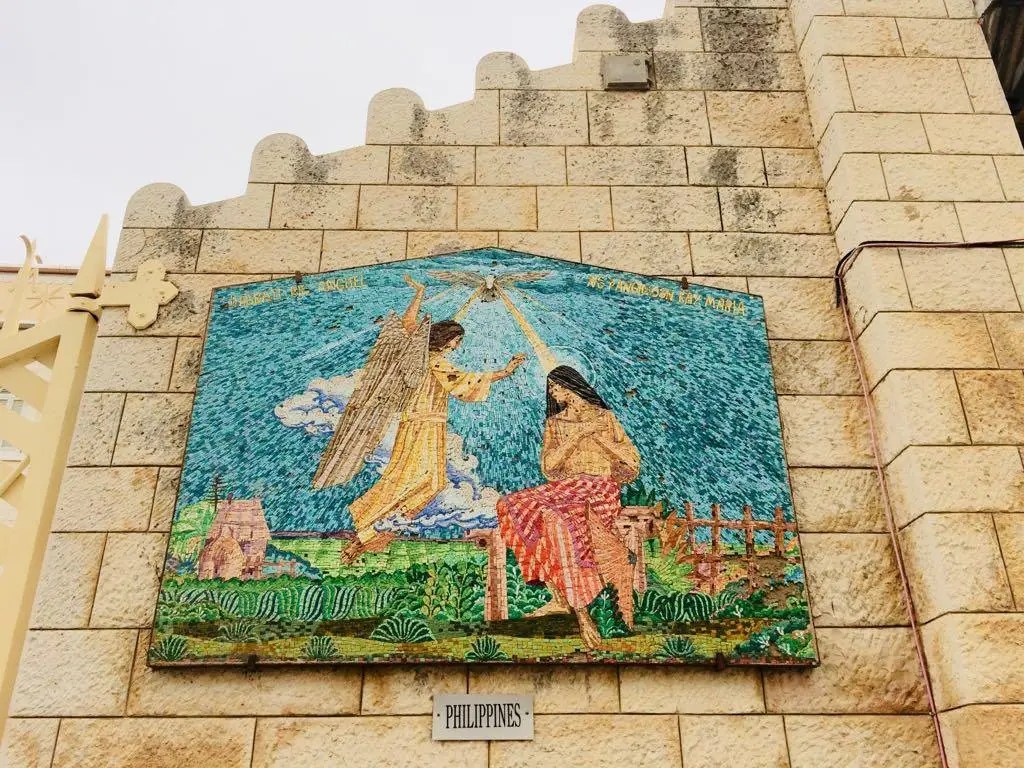
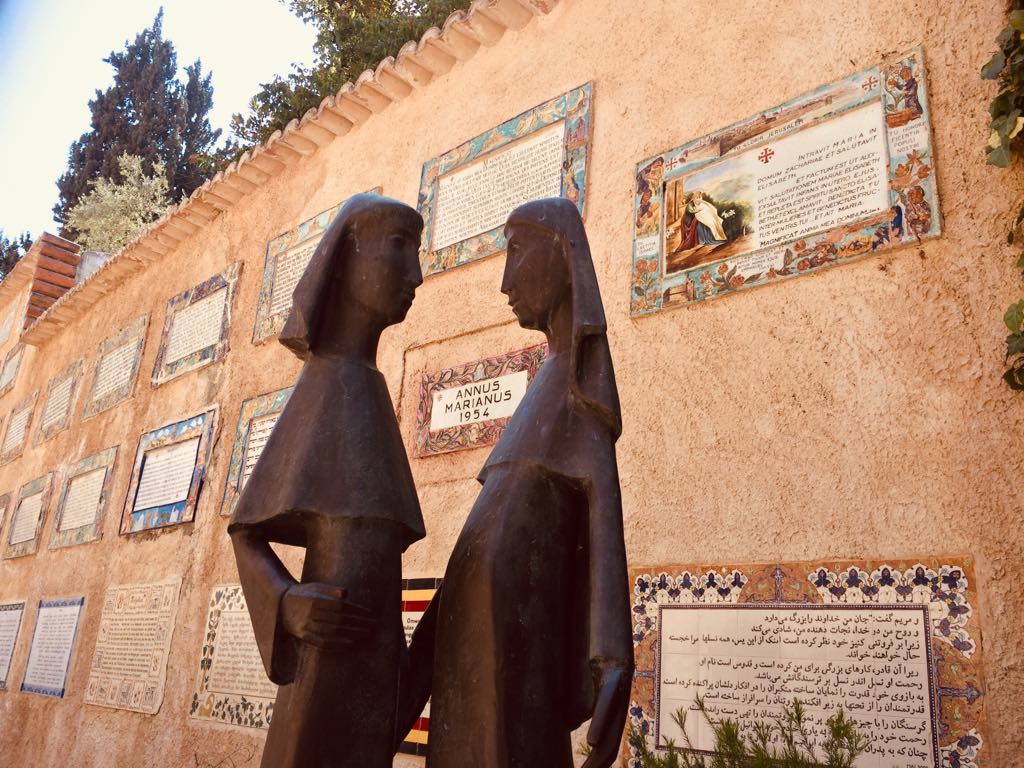
Photo by author, left side of the facade of the Basilica of the Annunciation in Nazareth, Holy Land, May 2019.

Intimacy is more than being close with another; it is an expression of love that is willing to sacrifice, to suffer and get hurt for the sake of the beloved.

God was the first to express his intimacy with us not just by expressing his immense love for us in words by the prophets in the Old Testament but by sending us his Son Jesus Christ who became human like us in everything except sin. Actually, God does not need to become human like us to save us but he chose to be one of us because he loves us so much. As an expression of his intimacy and solidarity with us, Jesus suffered and died on the Cross while going through every pain and hurt we go through in life like grief and sadness in losing a friend, betrayal by a friend, abandonment by friends, no to mention being terrified, going hungry and thirsty. Jesus became like us so that we may become like God – intimately loving him through others.

Actually, God does not need us but he chose to love us, to be with us, to be intimate with us because he loves us so much. God remains God even without us. When we do not pray, when we do not go to Mass on Sundays, when we are bad and not good, God is still God. It is us humans who are lessened when we turn away from from God.

That’s the intimacy of God with us.

How about us, are we willing to be intimate with God in Jesus Christ?

Sadly, many people “create” and “force” intimacy which is a grace, a gift of God freely given to everyone. Like friendship, we cannot force intimacy into someone not meant to be. And like friendship too, intimacy begins in Christ, blooms in Christ.

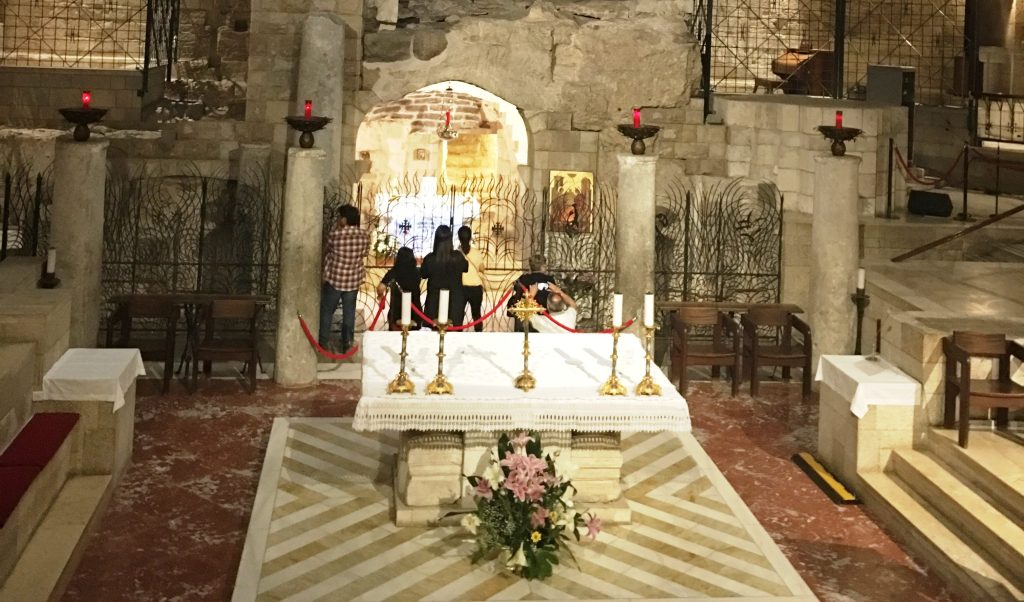
Photo by author, chapel beneath the Basilica of the Annunciation in Nazareth; see those pilgrims praying behind iron grills at the back of the sanctuary which is the site where the Angel announced to Mary the birth of Jesus Christ.

Underneath the Basilica of the Annunciation in Nazareth is a chapel near the very site where the angel is believed to have appeared to Mary to announce the coming of the Savior. At the back of the sanctuary of this chapel is that holy site of the Annunciation enclosed by iron grills with an altar table at the center with the declaration in Latin, Verbum Caro Hic Factum Est (The Word became flesh here).

Mary’s intimacy with God began long before the Annunciation to her by the Angel cultivated in her prayer life. Every time I pray this scene of the Annunciation, I always imagine Mary deeply absorbed in prayer. Most likely, she must be praying about her coming wedding to Joseph. Luke and Matthew were both consistent about their status as being “betrothed to each other” when God announced through the Angel the birth of the Christ.

Photo by author, close up of the Annunciation site beneath the Basilica of the Annunciation in Nazareth; written on the altar table that says in Latin, “The Word became flesh here.”

Imagine the excitement and joy of two faithful Jews getting married soon when suddenly the Angel appeared to them on separate occasions and diverse situations to announce God’s plan of sending his own Son Jesus Christ for the salvation of the world?

It must have been most painful to both Mary and Joseph but as being truly faithful and loving of God, they both agreed to the Divine plan! And that is the great sign of their immense love for God – eventually for each other. Moreover, in saying yes to God, both Mary and Joseph showed the kind of intimacy they have with the Divine.

Let us focus on the intimacy of Mary with God on this Solemnity of the Immaculate Conception found in our gospel account of the Annunciation.

Photo by Rev. Fr. Gerry Pascual of Iba, Zambales at Santuario di Greccio, Rieti, Italy in 2019.

Then the angel said to her, “Do not be afraid, Mary, for you ahve found favor with God. Behold, you will conceive in your womb and bear a son, and you shall name him Jesus (Luke 1:30-31).

Notice that in many scenes and prayers about the Blessed Virgin Mary, we find the prominence of her “womb” like here in the Annunciation and when Elizabeth praised her during her Visitation as “blessed is the fruit of your womb” (Lk.1:42).

In Hebrew, the word for womb is “racham, rachamin” which is their word too for “mercy” because for them, God’s mercy comes from his innermost being. Hence, whenever the Jews speak of mercy of God, they point their fingers downward into the womb or uterus and moves it upward to the heart to indicate the flow of mercy of God from his innermost being expressed in love which is he’s very being and core.

This is the reason the Church Fathers translated mercy into “misericordia” from the Latin verb to move or to stir – “misereor” – and word for heart “cor” that literally means “to move or to stir one’s heart”. It is more than a feeling like compassion; mercy is deeper as it encompasses one’s being leading to intimacy that is a communion or oneness with others which is also intimacy.

Photo by author, Church of the Visitation, Ein-Karem, Israel, May 2017.

Where there is love, there is always intimacy with the lover willing to bear all pains and hurts for the beloved. And vice versa. Like Jesus. Then Mary who was willing to sacrifice her wedding and marriage to Joseph by being the Mother of the Son of God.

But why? Because we have experienced too that true joy comes only when there is giving of self, when there is willingness to let go and suffer. At the Last Supper, Jesus described joy as like a mother in the pangs of childbirth when she goes through a lot of pains and worries and fears almost like dying but once the baby is delivered, joy happens because she had brought forth a new life into the world.

True joy is having the firm belief that no matter what happens even in the worst scenarios, God would never leave nor forsake us. Joy happens when we find new life, new directions because there is another person willing to remain with us, assuring us we are never alone. That again is intimacy when you feel not alone especially in the most trying times.

Without intimacy with God and another person, there can be no true joy because no one would dare to take risks in this life like mothers. This is what modern women are missing when they see childbearing more as a chore or a burden or a suffering they can always avoid than self-giving borne out of love which happens in the context of an intimacy. No wonder too that sex has been so trivialized, reduced to an activity and act instead of as a gift of self because there is no more responsibility and intimacy. We cannot have lasting and meaningful relationships without intimacy.

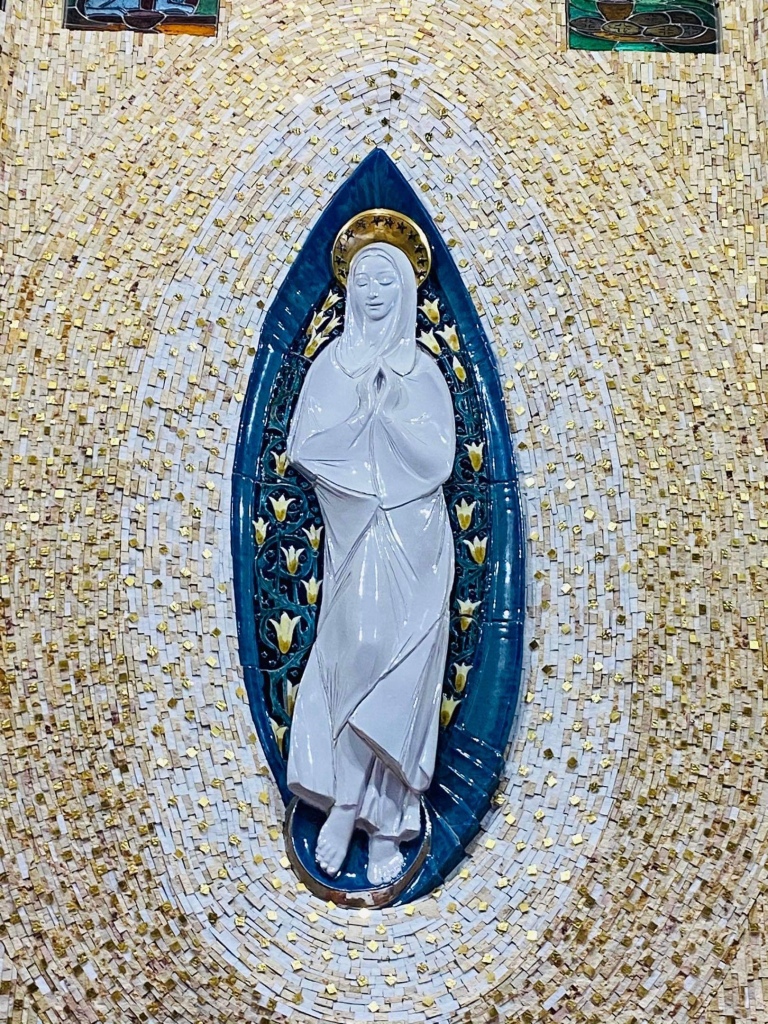
Photo by author, 2021.

On this Solemnity of the Immaculate Conception, we are reminded of God’s mercy and intimacy with us, of his loving relationship with us that continues in Christ Jesus with Mary.

Let us nurture this beautiful relationship with God that flows and bears fruit in our relationships with one another.

Like Mary, may we finally say yes to God into an intimate relationship with him through our selflessness. Like Mary, we are blessed and full of grace. The joy awaiting far outweighs the pains and sufferings we shall go through in our gift of self in our relationships. Have no fear for Jesus had suffered first before us so that we can love and be intimate like him. Amen. Have a blessed week.

Ang “masamang balita” ng Jollibee sa Visita Iglesia

Lawiswis ng Salita ni P. Nicanor F. Lalog II, Ika-10 ng Abril 2025
Larawan kuha ng may-akda.

Noong isang taon ko pa ito ibig ilathala nang aking makita sa harapan ng aming simbahan, ang Pambansang Dambana ng Birhen ng Fatima dito sa Valenzuela ang karatula ng pambansang bubuyog ukol sa Visita Iglesia. Sa aking panlasa, hindi bagay, hindi match ang mix na ito. Hindi ito “mabuting balita” ayon sa Jollibee.

Ako man po ay maka-Jollibee. Paborito ko ang kanilang palabok, pangalawa lamang ang Chicken Joy at pangatlo ang Champ bagaman ayoko po ng pagkaing mayroong pinya kaya inaalis ko ito sa dambuhala nilang langhap-sarap na burger.

Subalit tuwing mga Mahal na Araw lalo na noong isang taon, ako ay nalulungkot sa Jollibee. Marahil pati ang langit at maaring lumuluha sa lungkot ang mga anghel tuwing nakikita si Jollibee masayang-masaya kung Biyernes Santo kasi masama sa panlasa ang kanilang kampanya sa Visita-Iglesia.

Hindi yata Katoliko si Jollibee tulad ng karamihan sa ating mga Pilipino bagamat mayroong ilan silang mga tinadahan na binasbasan at minimisahan ng obispo at mga pari tuwing pinasisinayangan at nagdiriwang ng anibersaryo.

Larawan mula sa Facebook.

Noong isang araw aking nakita ang post sa Facebook ng maraming taong-simbahan kasama ilang mga pari na pinupuri ang Jollibee sa kanilang advertisement ng Visita Iglesia sa mga simbahan sa buong kapuluan kasama na kanilang mga tindahan mayroong mapa ng simbahang maaring puntahan upang manalangin at mag-peregrinasyon (pilgrimage po) kasama na ang pinaka-malapit sa kainan ng Jollibee. Marami ang pumuri sa Jollibee sa naturang kampanya. Sabi ng isang uploader, “Kudos kay Jollibee ah.. very catholic.”

Sorry po. Hindi po yata tama ang inyong caption. Sa unang tingin, tila maganda pero kung susuriin natin, mali. Hindi po ito Catholic practice dahil ito ay salungat sa hiling sa atin ng Simbahan noon pa mang simula na magkaroon ng pagsasakripisyo tuwing panahon ng Kuwaresma at mga Mahal na Araw.

Sa katunayan, ang turo ng Simbahan ay mag-ayuno tuwing Miyerkules ng Abo at Biyernes Santo bilang pagninilay at pakikiisa sa pagpapakasakit at pagkamatay ni Jesu-Kristo doon sa krus mahigit dalawang libong taon na ang nakalipas. Totoo na hindi na mamatay si Jesus at hindi naman nating kailangang malungkot at malumbay sa mga panahong ito ngunit, paano tayo makapagninilay at dasal ng taos kung nasa isip natin ang pagsasaya ng pagkain ng masasarap tuwing Mahal na Araw o Biyernes Santo?

Ipagpaumanhin po ninyo lalo ng mga kaibigan ko sa Jollibee, malinaw na ang kanilang Visita-Iglesia campaign ay commercialization ng ating banal na tradisyon at gawaing Katoliko. Sa halip na makatulong ang Jollibee kasama na ang iba pang mga fastfood chain na mayroong Lenten special meals sa paggunita ng mga Mahal na Araw na maranasan man lamang nating mga Filipino muli ang tunay na diwa ng Paskuwa ng Panginoong Jesus, ito ay kanilang winawasak. Hindi nga po tayo dapat kumain bilang bahagi ng panawagang mag-ayuno o fasting tuwing Miyerkules ng Abo at Biyernes Santo. Ito ang hindi batid ng mga fastfood chain: tuwing sasapit ang Kuwaresma, palagi silang nag-aalok ng fish sandwich at iba pang pagkaing walang karne bilang bahagi ng fasting (edad 18-59) at abstinence.


Nasaan na ang panawagang mag-sakripisyo para sa mga banal na gawain ng Kuwaresma at mga Mahal na Araw tulad ng Visita Iglesia kung ang hahantungan ay Jollibee o mga fastfood?

Inuulit ko po na wala tayong layuning siraan ang Jollibee na naghatid ng maraming karangalan sa ating bayan lalo na sa larangan ng pagkain at negosyo kung saan ay inilampaso ng isang bubuyog ang dambuhalang McDonalds ng Amerika pati na sa ibang bahagi ng Asya. Sa larangang ito ng panahon ng Kuwaresma at mga Mahal na Araw, sa aking pananaw ay lumabis ang Jollibee sa kanilang gimik na Visita-Iglesia. Sa katunayan, mayroon ako nabasa sa ibang bahagi na tinatawag nila itong “Bee-sita Iglesia.” Wala po sa hulog at pokus ang kanilang kampanya na tila mayroong pagkapagano dahil malapit na itong maging idolatry. Hindi magtatagal, baka ang darasalin na ng mga bata ay “Jollibee to the Father and to the Son and the Holy Spirit…”

Ang pinakamasakit sa lahat ay makita ang mga fastfood chain tuwing Biyernes Santo na umaapaw sa mga tao – daig pa mga simbahan – na tila wala na yatang pagpapahalaga sa pagpapakasakit at pagkamatay ni Jesus para sa atin.

Batid ko po na pakaunti ng pakaunti ang mga mananampalataya na hindi na nag-aabstinensiya at ayuno tuwing Biyernes Santo. Magiging malala pa ito sa ganitong uri ng kampanya ng Jollibee tuwing Visita-Iglesia. HIndi ba sila maaring mangilin kung Biyernes Santo man lang? O, kahit mula alas-dose ng tanghali ng Biyernes Santo hanggang alas-singko ng hapon sa paglabas ng prusisyon? Hintayin man lamang sana ng mga fastfood chain at restaurant na “malibing” ang Panginoon bago sila magbukas ng tindahan nila.

Hindi ba malaking kabalintunaang makita sa araw ng ating pagninilay sa mga hirap ng Panginoong Jesu-Kristo ay naroon pa rin ang pagsasaya ng mga tao na para tayong mga pagano kumakain at nagsasaya?

Ang mga Mahal na Araw ay inilalaan upang magnilay ng taos sa ginawang pagliligtas sa atin ng Panginoon. Hindi naman natin ikamamatay ang hindi pagkain sa Jollibee ng isang raw lang tulad ng Biyernes Santo sa buong taon. At lalo namang hindi ipaghihirap at ikalulugi ng Jollibee sa sila man ay mangilin man lamang tuwing Biyernes Santo. Amen.

Larawan kuha ng may-akda, Kapilya ng Sacred Heart Novitiate, Novaliches, QC, 17 Marso 2025.

Marriage, a choice & a gift of Christ

Quiet Storm by Fr. Nicanor F. Lalog II, 15 July 2024
Photo by Irina Iriser on Pexels.com

It is very disappointing that the recent statement of the CBCP on divorce was so unusually soft, trying to balance everything like walking on a thin line, very cautious of not stepping on whoever’s feet or hurting their feelings.

What is most sad is how this statement so watered down unlike the bishops’ previous pronouncements in the last elections supporting a candidate. It is so frustrating for us Catholics when our bishops have repeatedly crossed boundaries getting into partisan politics supporting many election candidates when on this part of our nation’s history they are tepid in standing by the Lord’s flock under attack by fierce and intense pro-divorce lawmakers and supporters. This is the crucial moment when our bishops should rally us more in defending our stand against divorce being the last country where it is still illegal.

We shall have another piece on that later as we continue today our sharing of our past wedding homilies we hope can help you be clarified why we must oppose the divorce bill. Of course, we cannot impose our stand against divorce but we make it clear to everyone why we are against it. After all, it is an informed choice we make guided by the grace of God and the Holy Spirit.

Here is our homily at the wedding at the Manila Cathedral on January 16, 2006 of our very good friend from UST’s the Varsitarian, Dra. Chona T. Capulong and Mr. Stephen Kemp of Kansas.


Photo by Pixabay on Pexels.com

Twenty three years ago and less than 50 pounds today, our friend and former managing editor Chona had a column at the Varsitarian called “Choice Cuts.”

I will never forget her column with its very catchy title, so well written and most of all, more than 20 years later today, the gospel she had chosen for her wedding speaks about choosing, about choices, Jesus told his disciples, “It was not you who chose me, but I who chose and appointed you to go and bear fruit that will remain…” (John 15:16).

Today we are so blessed to have been called and chosen by Chona and Stephen to be present in this most joyous day of their lives when they pledge their love for each other before God and His people. Let me stress on those words of Jesus saying how we are all “called and chosen to bear fruit.”

So beautiful.

Photo by Pixabay on Pexels.com

God calling and choosing us to bear fruit. The all-knowing God making a choice for us and should we be glad and grateful for that!?

When God calls and chooses us, He does not remove our freedom which is the ability to choose what is good, not simply whatever you want. What happens is that when God calls and chooses us, this gift of freedom is actually enhanced because the Ultimate Good shows us what’s best for us.

That God choosing us rather than us choosing Him is evidently true in friendships and marriage. Chona is from this city of Manila, thousands of kilometers from Wichita, Kansas where Stephen comes from.

How they have met and be in love is a long story; what matters is the choice made by God for them and how they cooperated in that choice.

Most often, whenever we make a choice, it is oriented towards success and triumph. We always make it a point that it would be advantageous for us and most of all, easy and convenient because as much as possible, we want lesser problems and lesser risks.

Being successful, whether in life or in marriage or in business is characterized and based on strength and powers, of how we are able to control situations and bend them to our own advantage. It is about power.

On the other hand, when God makes a choice for us, it is different.

When God makes a choice for us, it is always difficult and never convenient, slow and time-consuming. Most of all, God’s choice always entails sacrifices from our part because, it is so good that we have to be emptied first in order to receive such a beautiful gift like marriage.

When God makes a choice for us, it is always based on our weakness and vulnerabilities. God is not concerned with our being “successful” but more with being fruitful because in this life, especially in marriage, it does not really matter what or how much we have achieved but what have we become.

We may have all the wealth and power in the world, all the success but, what have we become?

Have we been more loving, more forgiving, more understanding, more generous, more honest, more faithful?

Bearing fruit is different from being successful in the sense that when God makes the choices for us, He makes us into better persons, becoming the best husband or best wife or the best person in the world. This He does by letting us come to terms with our own weaknesses and vulnerabilities, emptying ourselves of these impurities and being filled by God’s goodness and holiness.

Being fruitful in marriage means being able to understand and accept, even own because of love the shortcomings of a spouse or of those around us. Being fruitful in life or in marriage is being able to bear all the pains and hardships of life because like in gardening, it is the constant pruning of trees and plants that lead to more blossoms and fruits. It is being like Jesus Christ who willingly accepted His Cross because of His great love for us. He did not remove the Cross but made it holy instead.

Photo by Joseph Kettaneh on Pexels.com

Chona and Stephen, this wedding is already a fruit of that call and choosing by Jesus on you. After so many pains and hurts as well as sacrifices from both of you, this day had finally come for both of you to stand before the altar of God and offer yourselves to His plans and choices. This is not the end but the beginning of more pains and hurts and sacrifices.

I am not scaring you, Chona and Stephen; however, may this wedding be an assurance for for both of you that, although there would be more problems and difficulties and trials waiting for you along the way of your married life, be assured of the great glory and fruitful life ahead for both of you.

Continue to cooperate with God’s choices for you by leading a life of faith, hope and love rooted in prayers. Jesus had called and chosen you, Chona and Stephen; Jesus would always be with you because He knows what’s best for you. Amen.


Stephen died a few years ago before the COVID pandemic but our friend Chona had remained firm in her faith in God, raising their daughter into a lovely young lady she is now. Last week, Chona told me how proud and happy she is her daughter is going to take her college abroad, away from her!

So glad that despite her fears as a mother, she had allowed her daughter to study abroad, believing, of course, it is God’s choice for her to eventually become a better woman someday. May we be faithful not only in our duties and responsibilities but especially with the people entrusted to us by God whom He had chosen to become parts of our lives.

Sacred Heart, love language of God

The Lord Is My Chef Daily Recipe for the Soul by Fr. Nicanor F. Lalog II
Friday, Solemnity of the Most Sacred Heart of Jesus-B, 07 June 2024
Hosea 11:1, 3-4, 8-9 ><}}}*> Ephesians 3:8-12, 14-19 ><}}}*> John 19:31-37

You must be wondering why this photo of a quote from Tom Hanks’ 1994 character Forrest Gump on the Solemnity of the Most Sacred Heart of Jesus. What’s with shoes and the Sacred Heart of Jesus? Let me explain…

Last Tuesday while checking on my Facebook, I saw the post of a former seminarian who said, “Buying us shoes has been the love language of my parents to us… It will not change.” Posted below were photos of him buying two kids with new pairs of shoes.

How I admired him for being a father to those less fortunate kids! And that’s why I remembered Forrest Gump too who said how his mother used to tell him that shoes tell a lot about people, “Where they are going. Where they been.”

There’s something special with our feet, with the shoes we wear. Or do not wear. One is clear, though: our feet being at the lowest part of our body are most cared when we are growing up but later forgotten though overworked. That is why, it is so wonderful to go back to those days of childhood when our parents used to buy us with new pair of shoes, of how they would stoop down to help us fit the right ones for us. Just like God who is a Father to each one of us!

Thus says the Lord: when Israel was a child I loved him, out of Egypt I called my son. Yet it was I who taught Ephraim to walk, who took them in my arms; I drew them with human cords, with bands of love; I fostered them like one who raises an infant to his cheeks; Yet, though I stooped to feed my child, they did not know that I was their healer.

Hosea 11:1, 3-4
Photo by Pixabay on Pexels.com

That’s the tenderness of God, so Fatherly to us in taking care of us, teaching us to walk, taking us to his arms, lovingly raising us to his cheeks while we burst in laughter. Try reading that whole quotation to include the second verse skipped by our lectionary today, the more you can feel God’s tenderness. And our sinfulness.

Thus says the Lord: When Israel was a child I loved him, out of Egypt I called my son.  The more I called them, the farther they went away from me.

Hosea 11:1-2

Is it not this is how our love relationship is with our parents and family including God?

When we were kids, we loved running to our parents, taking pride for being their son or daughter, always clinging to their big hands. Or, like couples at their early years in marriage who seem to be inseparable and always together. Then, as years passed by as we find new friends and new relationships, we drift apart from our parents or spouse, including God.  And worst, we drive them away, even feeling ashamed of them especially when they come near us with their gestures of love and concern. But, when problems arise like betrayal and infidelity, failures and losses, we return to our parents or to our original spouse or family, and most especially to God, rediscovering their genuine love that is so tender and very comforting again:  “I took you in my arms, drew you with human cords with bands of love. I fostered you like one who raises an infant to his cheeks; yet, though I stooped to feed you my child, you did not know I am your healer” (Hos.11:3-7).

From GettyImages.com.

That “stooping down” by God He had spoken to Hosea hundreds of years earlier took its deepest plunge when He sent us Jesus Christ His Son as our Savior by dying on the Cross. In fact, Jesus literally “stooped down” on the night He was betrayed when He washed the feet of His disciples to portray to them the depth of His love for us all.

From His birth to His passion and death, Jesus Christ, therefore, is the Father’s love language.

This was very evident on Good Friday as John narrated how the soldiers broke the legs of the other two thieves crucified with Jesus to hasten their death; but, when they saw Jesus “already dead, they did not break his legs, but one soldier thrust his lance into his side, and immediately blood and water flowed out. For this happened so that the Scripture passage might be fulfilled: Not a bone of it will be broken. And again another passage says: They will look upon him whom they have pierced” (Jn.19:33-34, 36-37).

Jesus Christ is the Father’s love language to us all because His death on the Cross is the most tender moment of love in history when our God who personally loves us by becoming like us in everything except sin loved us until the last drop of His blood because we are His beloved brothers and sisters in His loving and faithful Father in heaven we have always deserted in our many sins. 

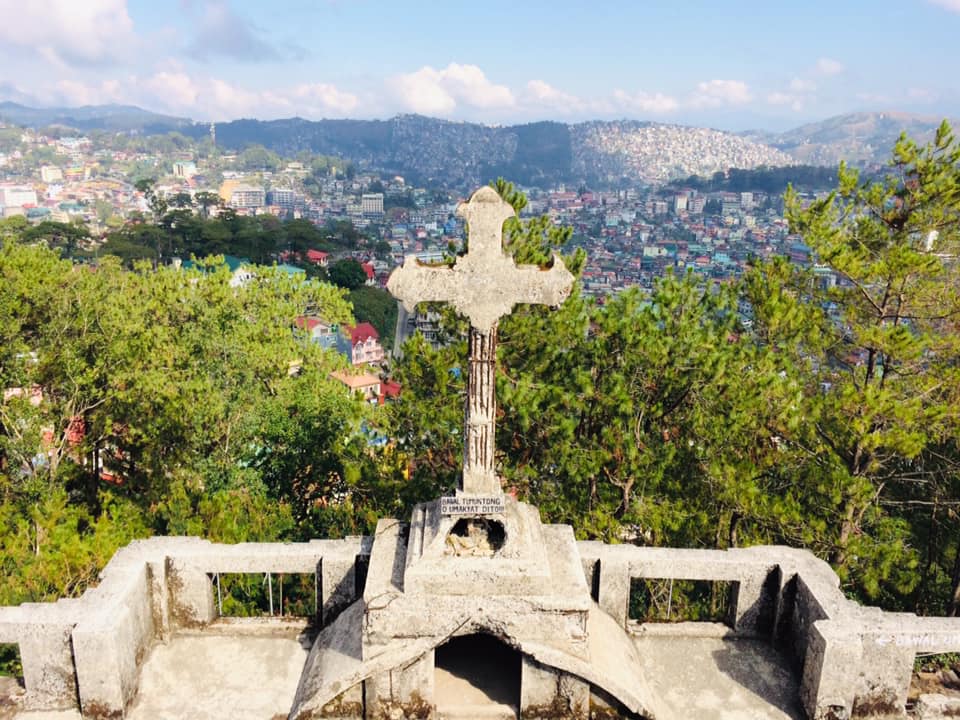
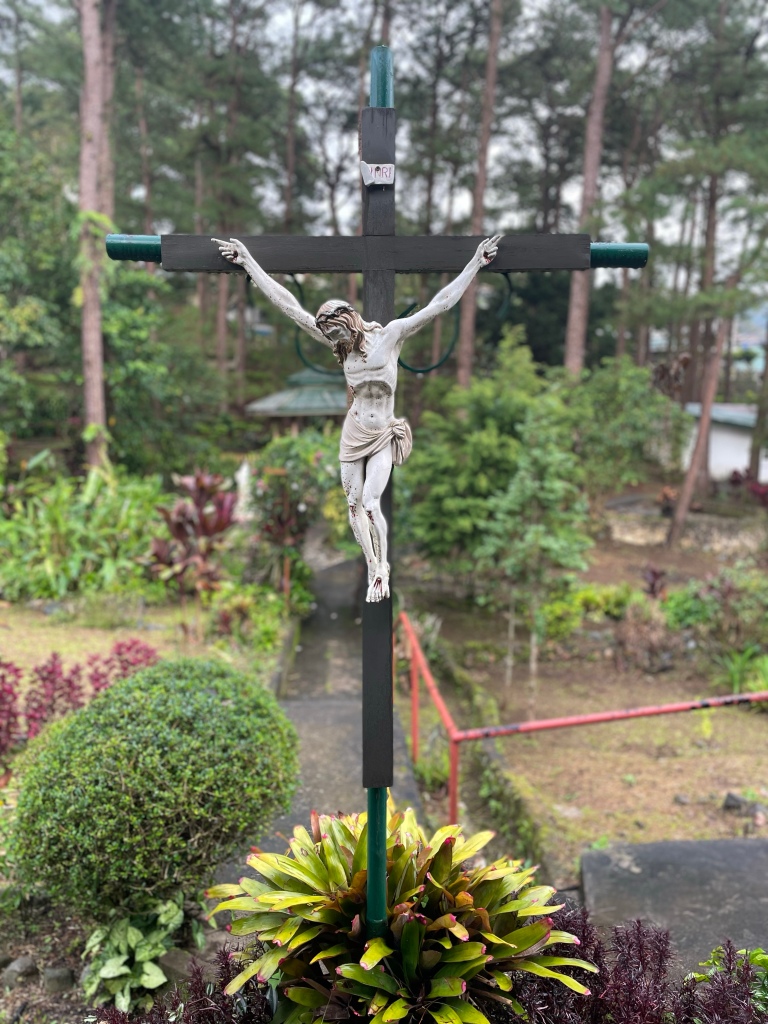
Photo by author, Baguio City, 2023.

Indeed, when blood and water flowed out from His pierced side on the Cross, the ocean of Divine Mercy flowed out for us, forgiving our most grievous sins, regardless of our many weaknesses. 

In His Most Sacred heart, Jesus is inviting us to have tender moments with Him, to have the same “love language” of sacrifice and giving of self for others so that “He may dwell also in our hearts through faith so that once we are rooted and grounded in His love, we may have the strength to comprehend the breadth and length and height and depth of His love that surpasses knowledge and be filled with the fullness of God”(Eph.3:17-19). 

Unlike us humans, God makes no mistakes in loving.  He remains faithful to us with His love, even “allowing” us often to sin and commit mistakes so that eventually, when we hit rock bottom, we rediscover Him and His love that is so real and so personal. 

That is why we must heed St. Paul’s admonition in the second reading to be “rooted and grounded in His love” because human love is always imperfect.  Only God can love us perfectly in Christ Jesus who offered Himself on the Cross to fulfill what we have failed since the beginning – that is, to love God and others.

Photo by author, Sacred Heart Novitiate, Novaliches, QC, 20 March 2024.

Today we complete the series of three Solemnities in Ordinary Time right after the great season of Easter:  Trinity, Body and Blood of Christ, and now, the Most Sacred Heart of Jesus.  All three Solemnities tell us how great is this God we believe in, someone so immense and powerful, yet so loving and so gentle; most of all, a God so personal that He is much like us but at the same time so different from us.

This Solemnity of the Sacred Heart of Jesus is an occasion for us to meditate deeply on how God touches us in the most intimate manner when He stooped down in Christ through the Cross to experience His love and mercy so that we could make others feel that too. 

Like John who witnessed everything on the Cross, we need to see more with the eyes of faith the realities of God’s immense love for us who gave His Son Jesus as the new Lamb offered for our many sins and that is why, in accordance with the Jewish law and with the Old Testament, not one of His bones were broken on the Cross. May we learn to stoop down like God in Jesus by looking down to our feet by first examining our hearts as we pray, Jesus meek and humble heart make my heart like thine! Amen.  

Photo by author, Sacred Heart Novitiate, Novaliches, QC, 20 March 2024.

Marriage as path to heaven, sign of the living God

The Lord Is My Chef Daily Recipe for the Soul by Fr. Nicanor F. Lalog II
Wednesday, Memorial of St. Boniface, Bishop & Martyr, 05 June 2024
2 Timothy 1:1-3, 6-12 <*((((>< + ><))))*> Mark 12:18-27
Photo by author, Sacred Heart Novitiate, Novaliches, QC, 20 March 2024.
Thank you so much,
dear Jesus for your words
today that shed light again
to this issue about divorce:
of how resurrection is real because
God is very much alive,
very much present with us
and in us!

Jesus said to them, “Are you not misled because you do not know the Scriptures or the power of God? When they rise from the dead, they neither marry nor are given in marriage, but they are like the angels in heaven. As for the dead being raised, have you not read in the Book of Moses, in the passage about the bush, how God told him, I am the God of Abraham, the God of Isaac, and the God of Jacob? He is not God of the dead but of the living. You are greatly misled.

Mark 12:24-27
Most of all,
you have shown us too how
marriage is a path towards heaven:
man and woman marry in this life
for a taste of heaven,
to work for heaven,
to try making this imperfect world
a heaven, your dwelling;
we pray for all couples
especially those going through
crises these days
to heed St. Paul's words to
Timothy, "to stir into flame
the gift of God" they have received
on their wedding day before
your altar:

For God did not give us a spirit of cowardice but rather of power and love and self-control. So do not be ashamed of your testimony to our Lord, not to me, a prisoner for his sake; but bear your share of hardship for the Gospel with the strength that comes from God.

2 Timothy 1:7-8
Remind us that life
is always difficult
because there is always
the cross we have to carry;
however, let it sink into us too
that the cross is meant to make
us better and stronger,
that every sacrifice and
mortification we make is not to lose
life but actually to gain it more,
to have it more fully!
Most of all, every perseverance
to love and to forgive,
to be kind and be caring
happen all in your grace, O God;
in this age of instants
when every difficulty has become
a door to escape and exit from problems,
let us not be ashamed of the
real stuff that truly makes
life meaningful
by suffering and dying
in You, dear Jesus;
in this time of serious attacks
against marriage,
may we remember the words
of your servant St. Boniface
"Let us be neither dogs
that do not bark
nor silent onlookers
nor paid servants
who run away before the wolf.
Instead,
let us be careful shepherds
watching over Christ's
flock."

May we stand for what
is true and good,
O Lord,
not only in words but
especially in deeds,
witnessing your Gospel.
Amen.
Photo by author, Ubihan Island, Meycauyan City, December 2021.