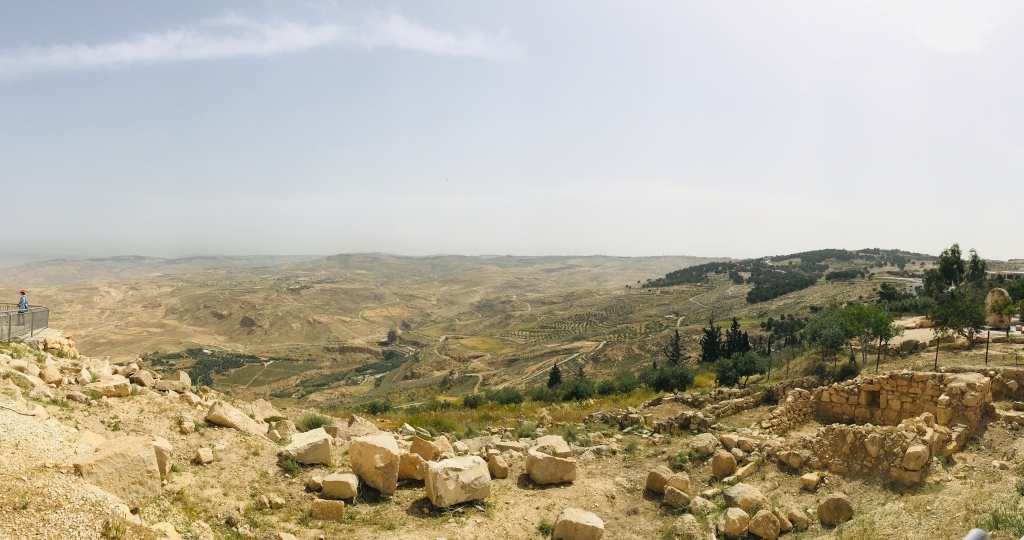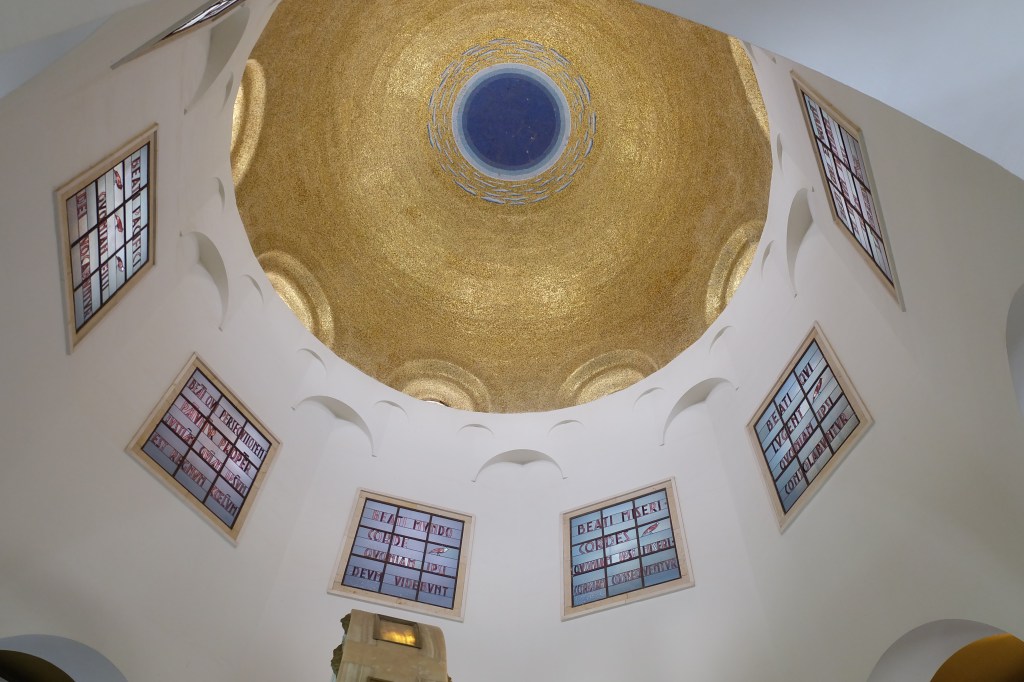
Lent is arising, not being afraid

40 Shades of Lent by Fr. Nicanor F. Lalog II
Second Sunday in Lent-A, 05 March 2023
Genesis 12:1-4 >+< 2 Timothy 1:8-10 >+< Matthew 17:1-9
Photo by author, sunrise at Taal Lake, 08 February 2023.

Something so personal has happened with me this past week. It is something that is still unfolding, making me realize so many things in my life and ministry that as I continue to reflect on the death last Sunday of our elderly priest, Msgr. Vicente Manlapig, at the Fatima University Medical Center where I serve as its chaplain.

I was out when told about Msgr. Manlapig’s passing shortly before 3PM. It was the First Sunday of Lent. After saying a prayer for him, it suddenly dawned upon me that he was the second elderly priest I had taken cared of who also died in this blessed Season of Lent. The first was Msgr. Macario Manahan who died 16 March 2014, the Second Sunday of Lent at that time. I was with him when he died that afternoon as he lived very near my former parish assignment.

What a tremendous blessing God has given me to have attended to their spiritual needs preparing them for their deaths, of how life indeed is a daily Lent preparing for Easter when we have to go through many difficult series of temptations and sufferings that lead us to our transfiguration (https://lordmychef.com/2023/02/27/deaths-in-lent/).

It is the very path of life and death of every disciple of Jesus, from temptations in the wilderness to transfiguration on the high mountain. It is something we all have to go through in Christ, with Christ and through Christ.

Jesus took Peter, James and John his brother, and led them up a high mountain by themselves. And he was transfigured before them; his face shone like the sun and his clothes became white as light. And behold, Moses and Elijah appeared to them, conversing with him. Then Peter said to Jesus in reply, “Lord, it is good that we are here…” While he was still speaking, behold, a bright cloud cast a shadow over them, then from the cloud came a voice that said, “This is my beloved Son, with whom I am well pleased; listen to him.” When the disciples heard this, they fell prostrate and were very much afraid. But Jesus came and touched them, saying, “Rise, and do not be afraid.” And when the disciples raised their eyes, they saw no one else but Jesus alone. As they were coming down from the mountain, Jesus charged them, “Do not tell the vision to anyone until the Son of Man has been raised from the dead.”

Matthew 17:1-4, 5-9
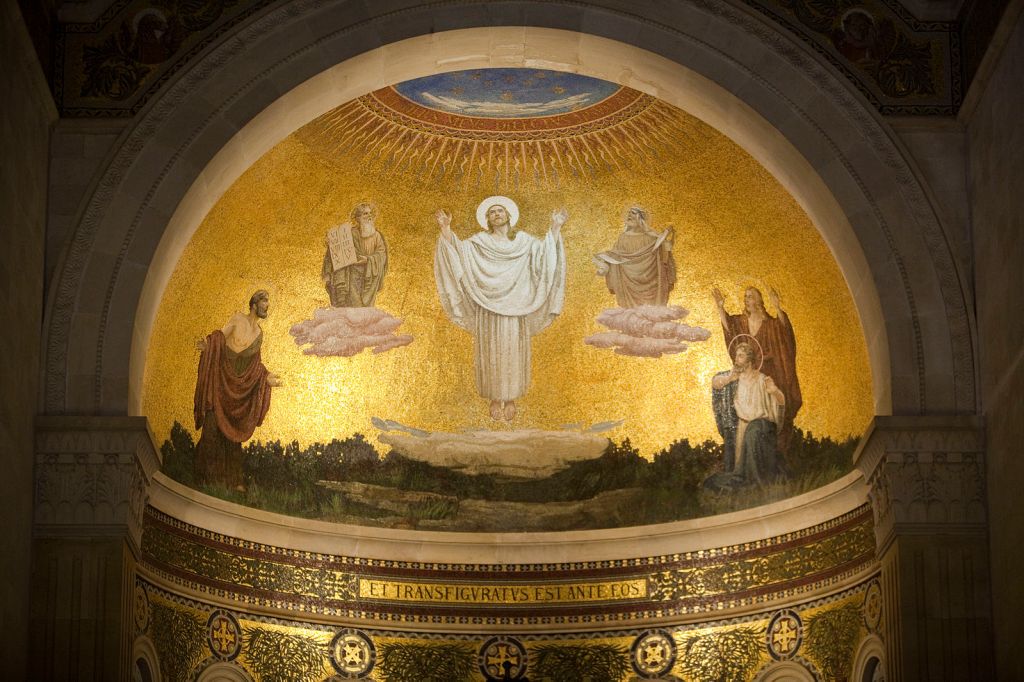
Photo from commons.wikimedia.org of mosaic inside the Basilica of the Transfiguration on Mt. Tabor, Israel.

Unlike Luke’s account that was set in the context of a prayer, Matthew’s version of the transfiguration of Jesus Christ illuminates the Lenten pilgrimage of the Church that is the tragedy of the Cross being seen always in the perspective of the Easter radiance. It is the oneness and inseparability of Christ’s divinity and glory with the Cross through which we get to know Jesus correctly.

Recall that the transfiguration happened after Peter’s confession of Jesus as “the Messiah, the Son of the living God” at Caesarea Philippi (Mt.16:16) where Jesus also made the first prediction of his passion, death and resurrection. From that day on, Jesus began instilling into the Twelve his conditions of discipleship, “Whoever wishes to come after me must deny himself, take up his cross and follow me” (Mt. 16:24). It was a very difficult lesson for them to learn and accept that triggered Judas to betray Jesus. The remaining disciples would only fully appreciate it after the Easter event with the help of the Holy Spirit on Pentecost.

That is why the transfiguration was actually some sort of a “teaching aid” for this most difficult lesson of his disciples when Jesus gave Peter, James and John a glimpse of his coming glory after his pasch. See that very clearly, Matthew recorded Christ’s instruction not to tell the “vision” to anyone until Easter; the transfiguration did happen and was seen by everyone there as Matthew used the word vision to describe it.

Like the three disciples, many of us are given with this unique privilege by Jesus to have a glimpse and vision of Easter, of glory when we join him on the Cross with our own sufferings and trials and when we accompany those in severe tests in life like the sick and dying.
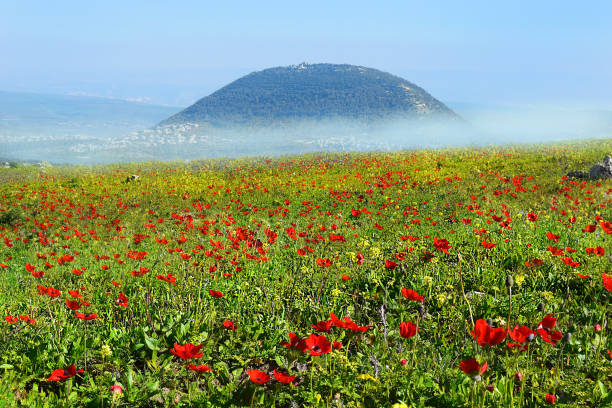
Photo from iStockphoto.com of Mount Tabor in Israel where Jesus is believed to have transfigured.

Amid the pain and hurts we go through or see in others, we “see” Jesus, we feel Jesus, we experience Jesus.

Many times like Peter we speak and do things without really thinking well about them because we are overwhelmed by the experience as well as the vision and sight.

And most of the time, the sight and experiences are very frightening when God speaks to us, telling us to listen to Jesus his Son, to simply obey him and trust him.

Here we have a deepening of our reflection last Sunday of the need to fix our eyes on Jesus son that we may not fall into temptations and sin. Many times we do not see everything clearly but if we close our eyes and have faith in Christ, things get clearer until it is him alone do we see with us especially after passing over a turmoil or a test in life. Like the first man and woman, our eyes are misled by so many things that look so good but not good at all. In fact, there are things that look bad that could really be good after all like pains and sufferings in life!

In the second reading, St. Paul tells us through St. Timothy to “bear your share of hardship for the gospel with the strength that comes from God” (2 Tim. 1:8) which matches directly the instruction in the voice heard during the transfiguration, “This is my beloved Son, with whom I am well pleased; listen to him” (Mt. 17:5). After the transfiguration, everything that Jesus would tell his disciples and everyone that include us today is his coming passion, death and resurrection as well as the conditions of discipleship we mentioned earlier. God wants us to listen and follow his Son Jesus Christ to the Cross in order to join him in the glory of Easter.

We are transfigured and transformed into better persons by our pains and sufferings. That is the irony and tragedy of this age: we have everything like gadgets and money and other resources to make lives easier and comfortable but we have become more lost and alienated, empty and no direction in life. There cannot be all glory without sorrow; no Easter Sunday without Good Friday.

Lent is a journey back home to God who wants us all to share in his glory through Jesus Christ’s passion, death and resurrection. It is a blessed season we are reminded to always arise in Christ, to have courage and be not fearful of failures because right now, we are already assured of victory and glory in Jesus. Let us ascend with him the high mountain of sacrifices and hard work, of prayers and patience, mercy and forgiveness to be transfigured and glorified like him. Let us imitate Abraham in the first reading to respond to this call by God with faith and hope, obedience and perseverance. Amen. Have blessed and transformative week ahead.
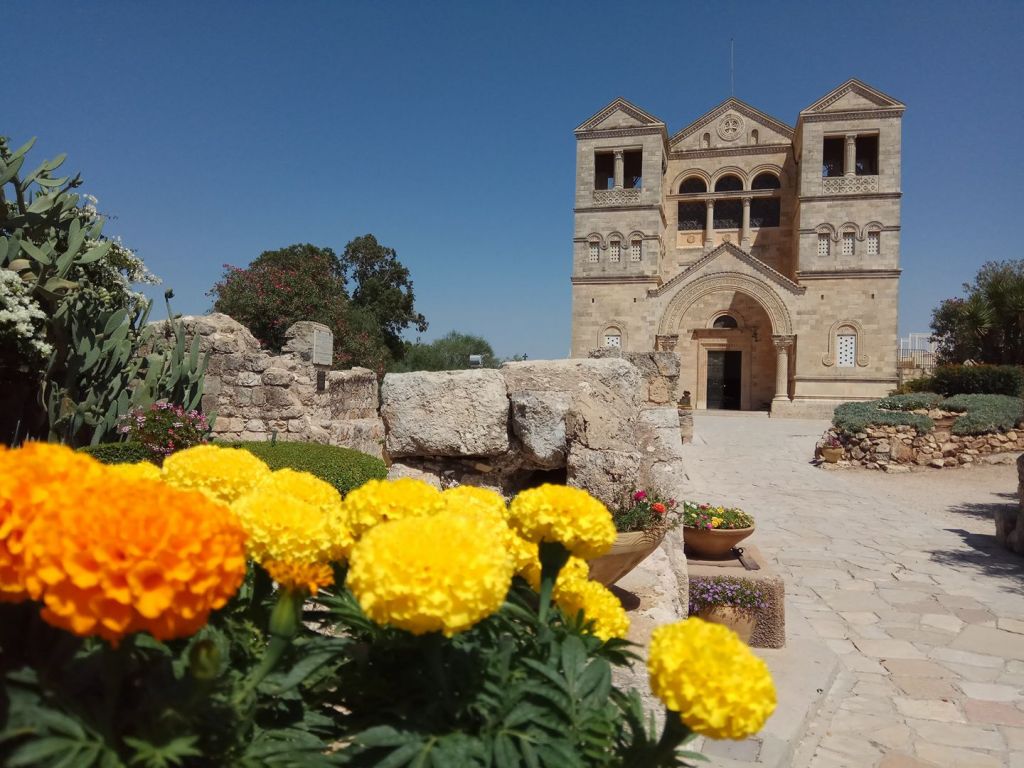
Photo from custodia.org of Basilica of the Transfiguration on Mt. Tabor, Israel.

Christmas, our being & mission

The Lord Is My Chef Simbang Gabi Recipe by Fr. Nicanor F. Lalog II
Saturday in the Third Week of Advent, Day 2 of Christmas Novena, 17 December 2022
Genesis 49:2, 8-10     ><}}}}*> + ><}}}}*> + ><}}}}*>     Matthew 1:1-17
Photo by author, 2021.

Beginning today, we shift our focus in our Christmas preparations into the second phase of Advent, of looking back to the first coming of Jesus Christ when he was born in Bethlehem more than 2000 years ago.

The birth and origin of Jesus has always been an issue to many people then and now. It was the main reason he was put to death for the case of “blasphemy” because his enemies at that time refused to accept he is the Son of God, the fulfillment of the promises in the Old Testament, of him coming from the lineage of King David.

Until now, people continue to question his origin with so many others insisting Jesus is not God, that he is only human.

That is why all four evangelists began their gospel accounts by first establishing his identity and roots with Matthew doing a very superb job by starting right away with the genealogy of Jesus Christ.

The book of the genealogy of Jesus Christ, the son of David, the son of Abraham. Abraham became the father of Isaac, Isaac the father of Jacob, Jacob the father of Judah and his brothers. Judah became the father of Perez and Zerah, whose mother was Tamar. Perez became the father of Hezron, Hezron the father of Ram….

Matthew 1:1-3
Photo by author, November 2022.

For the early Christians, it was very important to first establish the origin of our Lord because his roots reveal his very being and mission – that indeed, he is the Christ, the promised one of God since the beginning sent to save us from sin and bring us back into one with the Father.

The same is very true with us. Unless we know our roots, our origins, we will always have those confusions in life like identity crisis and meaning of existence. All these problems about gender identity, drug addictions, teenage pregnancies, depressions and so many others are basically due to lack of our knowing of ourselves, of our being. How can we go on with our life journey and mission if we are not even sure of ourselves, of who we are, of our grounding, of where we came from?

When I was a newly ordained priest assigned to a school in Malolos, at first I felt so mad at seeing how our young people behaved, their lack of discipline and sense of responsibilities. But after three months in school, I realized that the question we should be asking even until now is not why are the young acting that way today but, “where are their parents”?

Now that I am assigned as a university chaplain, the more I see this reality so true, even at its worst and ugly faces of the many burdens and sufferings our young people have to bear and contend with right in their homes – incest and physical abuses, absentee parents and separated parents or single parents made more difficult by poverty that many of them even go without breakfast or decent meal on many occasions every week.

Now more than ever, the school has become truly the home of every student because they have no home, no parents and no love to come home to! They prefer hanging out anywhere including school and get into drugs and other vices at a young age because nobody cares for them except their equally lost peers. Many practically live in the internet and social media because nobody is around to interact with them at home.

Many young people are lost simply because their parents are lost too. They have all kinds of issues because they do not know who they are and where they are going to. They have low self-confidence and low self-esteem, depressive and yes, almost everyone contemplates committing suicide even once because they could not find meaning in their lives anymore.


... human love is imperfect,
only God can love us perfectly.

So sad, so disheartening.

This past week, I have been hearing confessions of our students who poured out everything to the point of crying. What is so moving for me was how they still professed their love for their parents and siblings despite their pains and sufferings.

After listening to them – sometimes crying with them – I tell them that human love is imperfect, only God can love us perfectly. For sure, I tell them that their parents must have also come from so many pains and hurts in their lives, even broken homes too like theirs. Widen your perspectives, I tell them. And keep your hearts wide open to God, to welcome Jesus who comes daily in our lives especially in the most trying time.

This is the meaning of all those names in Jesus Christ’s genealogy – he is so like us with many imperfect relatives and family like quarrelsome siblings, single-parents, prostitutes, unfaithful kings and husbands, illegitimate children, and probably all those things we describe or label as “dysfunctional family”.

Deep within every name is a real person, broken and sinful, hurting and lost just like us yet, loved and saved by God in Jesus Christ. All of them remind us we all came from God like Jesus and with him, in him and through him, we shall all come home to God our true Father.

Every time I administer Baptism, I remind parents to shower their children with love especially in their formative years from infancy to early teens while singing to them a few lines from James Taylor’s “Shower the People with Love” to make my point.

Recently I found in my Facebook feeds from one of the sites I follow a beautiful story and shared it on my wall, saying, “Ito ang tunay na pag-ibig” (this is true love):

From Facebook, The Language Nerds, 13 December 2022.

Our being is from God who is love. Therefore, our mission too is love. Just like Jesus Christ. That is the meaning of all those names in the genealogy of Jesus Christ. The very same meaning we shall find when we trace our own roots, when we do our family tree to find our being and mission.

This is the grace of Christmas 2022 – after two years in the pandemic with so many restrictions, we are celebrating face-to-face to personally experience one another again. Most of all, to personally experience of being loved and loving again.

Christmas is essentially a story of our first love – God – who comes to us face-to-face. Even its preparation as we have seen in the Lord’s genealogy, of God coming to us in our imperfections and weaknesses happened face-to-face in the context and spirit of love, a love that covers a multitude of sins, welcomes everyone, ready to forgive and celebrate life.

Let us see and welcome God in our hearts by rekindling that love we have always have. And upon finding him there, may we also find him in the face of everyone we meet, especially those closest to us, our family and relatives. Let us pray:

Lord Jesus Christ,
thank you for coming to us;
thank you for showing us that
like us, you came from very 
dysfunctional family too!
Thank you for assuring us
that despite our many imperfections,
sins and weaknesses,
you still come and even more present
in our hurts and wounds.
Let us find you where we are,
right here in our brokenness 
and darkness so that in the process,
we may also show you to others
lost in their many sufferings and pains.
You have given us yourself, Jesus,
let me give you to others 
in love and kindness,
in my mere presence.
Amen.
Photo by author, November 2022.

Advent is God’s consolation

The Lord Is My Chef Daily Recipe for the Soul by Fr. Nicanor F. Lalog II
Wednesday in the Second Week of Advent, Memorial of St. Ambrose, 07 December 2022
Isaiah 40:25-31   ><]]]]'> +><]]]]'> + ><]]]]'>   Matthew 11:28-30
Photo by author, 02 December 2022.
How wonderful are your words
this second week of Advent,
God our loving Father:
Monday you reminded us to
strengthen each other,
Tuesday you asked us to comfort
one another,
today, you console us
with this part of Isaiah's 
"Book of Consolation":

Why, O Jacob, do you say, and declare, O Israel, “My way is hidden from the Lord, and my right is disregarded by my God?” Do you not know or have you not heard? The Lord is the eternal God, creator of the ends of the earth. He does not faint nor grow weary, and his knowledge is beyond scrutiny. He gives strength to the fainting; for the weak he makes vigor abound.

Isaiah 40:27-29
Forgive me, loving Father,
in those times I doubted you,
when I complained to you as if 
I am entitled; looking back to those
trying times when I felt alone and
abandoned, struggling and fighting
by myself, silently crying unknown to
anyone, there was YOU always with me,
standing by my side, defending me,
fighting my battles,
even carrying me when I am lost
and defeated.
Indeed, you never left me,
I was never alone for you have 
always been with me - con solare -
one with me in my pains and sorrows,
trials and sickness; in Christ Jesus,
you chose to suffer and die to be one with me
- con solare - by helping us carry our yoke,
giving us rest in you you, 
making it lighter and 
easier to carry.
Like St. Ambrose,
teach us to speak your words
of wisdom to those in darkness,
to appreciate also your silence
so we may be instruments of your
consolation to those feeling alone
to assure them you are one with us
when darkness surrounds us.
Amen.
Photo by author, 02 December 2022.

Advent is for comforting

The Lord Is My Chef Daily Recipe for the Soul by Fr. Nicanor F. Lalog II
Tuesday in the Second Week of Advent, 06 December 2022
Isaiah 40:1-11     ><000'> + ><000'> + ><000'>     Matthew 18:12-14
Comfort food
Comfort zone
Comfort room!
How funny these days
things and ideas are supposed
to comfort us but in reality do not.
Thank you very much, dearest
God our Father, for this gift of
the Advent Season when you
truly comfort us again.

Comfort, give comfort to my people, says your God. Speak tenderly to Jerusalem, and proclaim to her that her service is at an end, her guilt is expiated; indeed, she has received from the hand of the Lord double for all her sins. A voice cries out: In the desert prepare the way of the Lord! Make straight in the wasteland a highway for our God!

Isaiah 40:1-3
Like your words yesterday,
today's prophecy by Isaiah 
are very comforting:  to comfort,
from the words "cum" and "fortis"
that mean "with strength" means
exactly that - give strength, make
strong again!
Nothing can truly give us strength
no one can truly give us comfort
except you, our loving Father,
who "had expiated all our sins"
and "given us double for all our sins" 
in the coming of Jesus Christ, 
our Good Shepherd.
Make us realize, Father,
that nothing and no one can truly
comfort us in the truest sense -
soothe and heal our pains,
allow us to cry and be our true selves,
most of all, give us strength to go on
with life again amid all the pains and
sorrows except Jesus Christ.
Let us be like Jesus the Good Shepherd
to others in pain due to sickness
and hurts in life, giving them comfort,
by helping them find direction and 
meaning in life,
joy and peace,
someone to listen to them
and be a companion in this
life journey and most of all,
find you again in themselves,
in their giftedness as persons
to be renewed and be strong again.
Amen.

Hold on to God

The Lord Is My Chef Daily Recipe for the Soul by Fr. Nicanor F. Lalog II
Thursday, Memorial of St. Andrew Dung-Lac & Companion Martyrs, 24 November 2022
Revelation 18:1-2, 21-23; 19:1-3, 9   ><}}}*> + ><}}}*> + ><}}}*>   Luke 21:20-28
As we get closer to the end
of this liturgical year,
we get more excited with 
Advent and Christmas;
please help us, Lord Jesus,
to see more at the moment 
the meaning of the end of this
calendar, the end of time,
the end of everything that would
be renewed in you.
Many of us are so blessed
with family and friends,
jobs and education
that after two years.
we are looking forward
to a face-to-face
Christmas;
but, keep us aware
and conscious of the many others,
definitely more than most of us
who have lost so much these
past years of the pandemic;
many have lost loved ones,
until now have not moved on yet
with their lives, grieving in pain
made worst with other losses like
jobs, careers, business and livelihood;
many are still facing so many forms
of sufferings and trials in life
as individuals and communities;
we pray for them, Lord Jesus.

But when these signs begin to happen, stand erect and raise your heads because your redemption is at hand.

Luke 21:28
Help us, Lord, 
in our lives to witness 
the strength and courage
in you to forge on in life's many trials
and difficulties so that those deep 
in trouble may be encouraged to believe
and trust more in you;
more than our words of encouragement,
help us to show in our actions
and commitment to others
that always in this life,
God and good have the final say.
Amen.

Praying for those in tears

The Lord Is My Chef Daily Recipe for the Soul by Fr. Nicanor F. Lalog II
Thursday, Memorial of  St. Elizabeth of Hungary, Religious, 17 November 2022
Revelations 5:1-10   ><))))*> + ><))))*> + ><))))*>   Luke 19:41-44
Photo by Pixabay on Pexels.com
Lord Jesus Christ,
today I pray for those who cry,
for those who weep,
especially those who
are shedding tears
in silence.
You yourself wept over
Jerusalem when you saw it
for its hardness of her heart,
in rejecting you, O Lord,
as the Christ, our Savior:
"As Jesus drew near,
he saw the city and wept over it,
saying, 'If this day you only knew
what makes for peace ---
but now it is hidden from
your eyes'" (Luke 19:41-42).
Thank you, dear Jesus,
in making our tears blessed
that cleanse us inside,
washes away our guilt
and other dirt,
pains and sins
and everything not nice 
from the past
to fill us with your joy
and life!
But most of all, Jesus,
thank you for suffering,
dying, and rising for us
that every time we cry and weep,
when there are tears rolling
down our cheeks,
we feel assured of your 
loving presence
in times of grief and sadness,
failures and disappointments,
sickness and death
because in your pasch,
you have triumphed not only
over sin and evil here on earth
but also assured us of entrance 
into heaven as seen by John:

I shed many tears because no one was found worthy to open the scroll or to examine it. One of the elders said to me, “Do not weep. The lion of the tribe of Judah, the root of David, has triumphed, enabling him to open the scroll with its seven seals.”

Revelation 5:4-5
Praise and glory to you,
dear Jesus, the lion of the tribe of Judah,
the root of David,
the Lamb who was slain and
found worthy to save us
and lead us back to the Father,
now and forevermore.
Amen.

Imitating Job

The Lord Is My Chef Daily Recipe for the Soul by Fr. Nicanor F. Lalog II
Tuesday, Memorial of St. Vincent de Paul, Priest, 27 September 2022
Job 3:1-3, 11-17, 20-23   ><000'> + ><000'> + ><000'>   Luke 9:51-56
Photo by author, Makati skyline from Antipolo, August 2022.
Thank you again,
dear God our loving Father
in keeping us safe from the 
powerful super typhoon that
hit us Sunday evening;
most of all, thank you in giving
us that faith within us like Job
when we go through storms in
life, sometimes so violent and
devastating like the real ones.
Bless us, O God, to be like Job:
to have that grace of crying out
our hearts, of venting out our pains
and even anger when like him,
we curse the day but never you:

Job opened his mouth and cursed his day. Job spoke out and said: Perish the day on which I was born, the night when they said, “The child is a boy!” Why did I not perish at birth, come forth from the womb and expire?

Job 3:1-2, 3
Help us realize, dear Father,
these little "deaths" we go through
daily in life like sickness and loss of
loved ones are the realities of life
itself that prepare us for our eternal
union in you that would surely come
on our Death with a big D;
we are indeed "being-towards-death"
beginning on the day of our birth when
we have to cry out loud and kick hard
to be alive! 
It is through our pains and sufferings
that we become truly human,
when we feel with others in 
empathy and sympathy,
when we stay with others
in consolation,
when we strive to be like
Jesus in raising up others
by being "resolutely determined
to journey to Jerusalem" (Lk.9:51)
to face death that have inspired saints
like your servant Vincent de Paul
who worked so hard for the sick, 
the abandoned, and the poor,
inspiring other saints in the 
process!
We pray for everyone 
going through darkness,
battered by storms in life
to keep their faith,
that it is okay to cry and
complain because it is really
difficult; most of all, 
remind us, Jesus, that
without pains and 
sufferings in this world,
then this life would be
so dull, even meaningless
because that is when we
are totally by ourselves,
utterly selfish because we can
only find life's meaning in others,
never in our selves.
Amen.

True joy

The Lord Is My Chef Daily Recipe for the Soul by Fr. Nicanor F. Lalog II
Friday in the Sixth Week of Easter, 27 May 2022
Acts 18:9-18     ><}}}}*> + <*{{{{><     John 16:20-23
Photo by Mr. Jim Marpa at Carigara Market, Leyte, 2018.
Today, Lord Jesus Christ,
you describe true joy in you,
scary yet so wonderful:

Jesus said to his disciples: “Amen, amen, I say to you, you will weep and mourn, while the world rejoices; you will grieve, but your grief will become joy. When a woman is in labor, she is in anguish because her hour has arrived; but when she has given birth to a child, she no longer remembers the pain because of her joy that a child has been born into the world.”

John 16:20-21
Joy is like a woman in labor,
in anguish because her hour has arrived
but after giving birth to a child, she 
remembers no more the pain because
of her joy of bringing forth a child into
the world!
I wonder, dear Lord, in this time
when childbearing has become a major
issue with some women insisting on
their rights, refusing to bear a child,
that less and less people are also 
experiencing true joy; we have come
to trust ourselves more than God that
many are so afraid of having children,
thinking it would lead to more joy when
ironically it had led to fewer joys in 
their lives!
Joy is completely trusting in you, God,
in your providence and protection like 
St. Paul who was so fruitful - and surely, 
joyful - at his stay in Corinth because of his
complete trust in Jesus; no harm really
ever happened to him!  How sad these days
when those in the pro-choice movement
focus more on the minority having problems in
childbearing than on the majority who make it
through all the pains and joys of giving birth.
Joy is more than happiness; it is a complete
trust and confidence in you, dear Jesus 
that even if things turn to worst, 
you will never abandon us until the end 
for you alone is our joy dwelling within us
in our hearts.  Amen.

Lent is trusting God’s promises

40 Shades of Lent by Fr. Nicanor F. Lalog II
Monday in the Fourth Week of Lent, 28 March 2022
Isaiah 65:17-21   <*[[[[>< + ><]]]]*>   John 4:43-54
Photo by author, view of Israel from Mt. Nebo in Jordan, May 2019.
How sweet are to the ears
your words today, O God our
loving Father, when you promised
to create new heavens and
a new earth, when the things of
the past shall not be remembered
or come to mind, when there shall 
always be rejoicing and happiness.

No longer shall there be in it an infant who lives but a few days, or an old man who does not round out his full lifetime; he dies a mere youth who reaches but a hundred years, and he who fails of a hundred shall be thought accursed. They shall live in the houses they build, and eat the fruit of the vineyards they plant.

Isaiah 65:20-21
Sana now na, Lord!
Sanaol, God!
But I know you are speaking
not in literal sense though that
time would surely happen when
we experience no more pain and
sufferings nor crying and wailing
nor death of any infant nor of anyone
less before 100 years of age.
Yes, I know Father
this life will always be filled
with pains and sufferings,
trials and tribulations but these
are meant to make us stronger
and more trusting to your coming
to us in Jesus Christ; give us the
grace to be wholly committed
to you in Jesus, in your words
like that royal official from Capernaum
for it is only in our total trust in you
can we experience peace 
and healing that only you
can give in Christ while in these
troubled earth.  Amen.

Beatitudes of Jesus, attitudes of his disciples

The Lord Is My Chef Sunday Recipe for the Soul by Fr. Nicanor F. Lalog II
Sunday Week VI-C in Ordinary Time, 13 February 2022
Jeremiah 17:5-8 ><}}}}*> 1 Corinthians 15:12, 16-20 ><}}}}*> Luke 6:17, 20-26
Photo by author, monastery inside the compound of the Church of Beatitudes, the Holy Land, 2019.

From the shores of Lake Gennesaret in Capernaum, Jesus now takes us to the plains for his first series of teachings called “sermon on the plains”. In Matthew’s gospel, it is called “sermon on the mount” due to his different emphasis and audience, his fellow Jews while Luke situated it on the plains based on his own focus directed to gentiles or non-Jews.

But, whether it was on the mount or on the plains, one thing remains clear: Jesus taught important lessons specifically for his disciples called the Beatitudes.

Last Sunday Jesus called his first four disciples to become “fishers of men” and as he travelled preaching along the shores of Galilee, they grew to Twelve in number.

On the night before this scene of sermon on the plains, Jesus went up a hill with the Twelve to pray before appointing them as Apostles. It was the first “face-to-face” class of the Twelve with the Beatitudes labelled as Discipleship 101.

And raising his eyes toward his disciples he said: Blessed are you who are poor for the kingdom of God is yours. Blessed are you who are now hungry for you will be satisfied. Blessed are you who are now weeping, for you will laugh. Blessed are you when people hate you, and when they exclude and insult you, and denounce your name as evil on account of the Son of Man. Rejoice and leap for joy on that day! Behold, your reward will be great in heaven. But woe to you who are rich, for you have received your consolation. Woe to you who are filled now for you will be hungry. Woe to you who laugh now, for you will grieve and weep. Woe to you when all speak well of you, for their ancestors treated the false prophets in this way.”

Luke 6:20-26
Photo by author, Church of the Beatitudes, the Holy Land, 2019.

Beatitudes, the meaning of discipleship

The Beatitudes tell us the meaning of discipleship, of not simply following Jesus but making a choice, taking a stand to be like him. Each “blessedness” is actually Christ who is described as the poor, the hungry, the weeping, and the hated.

Again we find in the Beatitudes of Jesus the contrasts and contradictions we have reflected three Sundays ago when he was rejected by his own folks at a synagogue in Nazareth (see https://lordmychef.com/2022/01/29/living-loving-amid-contradictions/).

See the set of “Blessed” followed by a corresponding set of “woes”, giving us a hint that the Beatitudes were patterned by Jesus to Jeremiah’s pronouncements to the people we heard in the first reading,

“Cursed is the man who trusts in human beings, who seeks his strength in flesh, whose heart turns away from the Lord. Blessed is the who trusts in the Lord, whose hope is the Lord. He is like a tree planted beside the waters that stretches out its roots to the stream: it fears not the heat when it comes, its leaves stay green; in the year of drought it shows no distress, but still bears fruit.”

Jeremiah 17:5, 7-8

Both in Jeremiah and in the Beatitudes by Jesus, there is the promise of blessings in the future; however, it is not something we only hope to achieve in the future but something realized in the present IF we trust in the Lord.

Photo by author, pilgrims entering the Church of the Beatitudes, 2019.

More than a promise of hope in a future glory, the Beatitudes by Jesus are directions every disciple must take as path in life, guides or criteria in discerning the will of God for us in this life. It is said that the word beatitude is from “be attitude” or the attitudes of a disciple.

That gesture of the Lord looking up to his disciples that include us today while teaching the Beatitudes indicates his recognition of our present situation by speaking in the present tense with “Blessed are you who are now poor, hungry, weeping and hated”.

Are we not feeling poor and hungry, actually weeping and hated in this intensely heated politics in the country where everyone seems to be lacking reason and shame, everyone going insane and worst, salaula (filthy) without any sense of shame at all?

At the same time, all those pronouncements of having the Kingdom of God, of being satisfied, of laughing, and of being rewarded greatly in heaven are not things we get in the future if we suffer now; these we can NOW have amid our sufferings when we are one in Jesus Christ.

The saints have shown us in their lives most especially St. Paul how while being poor, hungry, weeping and hated they have experienced fulfillment and joy at the same time. We ourselves have proven them right that with St. Paul we can “boast” like him, “Therefore, I am content with weaknesses, insults, hardships, persecutions, and constraints, for the sake of Christ; for when I am weak, then I am strong” (2 Cor. 12:10).

The key is union in Jesus Christ because the Beatitudes not only reveal to us his very person but also his Paschal Mystery of Passion, Death and Resurrection. It is therefore an imperative that every disciple must be immersed in Christ because discipleship is the imitation of Christ. Again, we borrow from St. Paul who said, “It is no longer I who live, but Christ who lives in me” (Gal.2:20).

Photo by author, dome of the Church of Beatitudes, the Holy Land, 2019.

Woes of not following Jesus

Contrary to claims by many philosophers and filosofong tasyo alike who are atheists and anti-Church, God is not a sadomasochist who delights in seeing his people suffer and die. Nothing bad can come from God for God is love (1 Jn. 4:8).

Unbelievers continue to question God, most especially Jesus and his Beatitudes that are clearly about sufferings with its apparent dislike or rejection of wealth and fame like what Jesus spoke of the woes in the second part of his Beatitudes.

There is nothing wrong with being rich, being filled, of laughing and being spoken well by others per se; in fact, these are all good in themselves. However, Jesus spoke of them as woes based on the pattern we have seen from Jeremiah’s pronouncements in the first reading: “Cursed is the man who trusts in human beings, who seeks his strength in flesh, whose heart turns away from the Lord.”

See how Jesus was more “soft” and gentle in his woes than God in Jeremiah’s instruction to the people that was so harsh, saying “cursed” is the man who trusts in human beings, whose heart turns away from the Lord.

Photo by author, altar in the Church of Beatitudes, 2019.

But here we find its true context too: it is a warning sign, a reminder of the dangers that can happen to anyone who trusts in himself more and turns away from God.

Here we find something truly happening in the future – not now – unlike in the Beatitudes wherein the future blessings are experienced in the present moment if we suffer in communion with Christ.

Very clear in Jeremiah and in the woes of Jesus, turning away from God surely leads to disaster because it is the opposite path of blessings.

At the same time, since God does not punish, the woes by Jesus are not a condemnation of those who are rich, filled, laughing and well spoken of others. His woes are not expressions of hatred nor hostilities but warning against the dangers of being so proud, of being filled with one’s self, of playing god because it is the path to destruction. Or even perdition as we shall see later this year in the parable of Lazarus and the rich man found only in Luke’s gospel.

The Greeks have a more precise term for that called hubris – an excessive pride and defiance of the gods that leads to one’s nemesis. Clearly, God does not punish nor condemn anyone of us. It is always our choice that we are lost and end in woes, as Shakespeare immortalized in the words of Cassius in Julius Caesar,

"The fault, dear Brutus, 
is not in our stars 
But in ourselves, 
that we are underlings".

Have a blessed week ahead, everyone. God bless you all. Amen.