Easter is new existence in Christ

The Lord Is My Chef Easter Recipe by Fr. Nicanor F. Lalog II
Second Sunday in Easter, Divine Mercy Sunday, 07 April 2024
Acts 4:32-35 ><))))*> 1 John 5:1-6 ><))))*> John 20:19-31
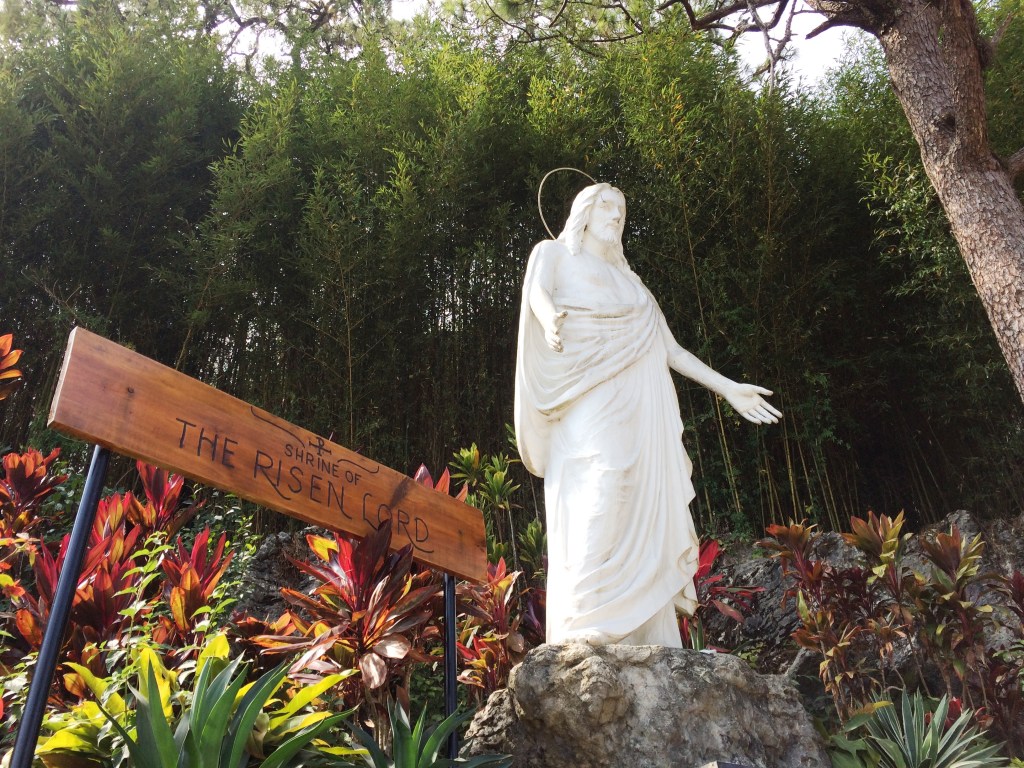
Photo by author, Mirador Jesuit Retreat House, Baguio City, 2018.

We celebrate today the Octave – eighth day – of Easter which coincides with the Feast of Divine Mercy. Both Christmas and Easter observe an octave signifying eternity because when you count from Easter Sunday to this Sunday, there are actually eight, not seven days. That is why there is no such thing as weekend for us Christians because the week never ends but continues on and on every Sunday.

And that is also the mystery, beauty and reality of Jesus Christ’s Resurrection that according to Pope Benedict XVI, “a life that opens up a new dimension of human existence” (Jesus of Nazareth, Part Two, p. 244).
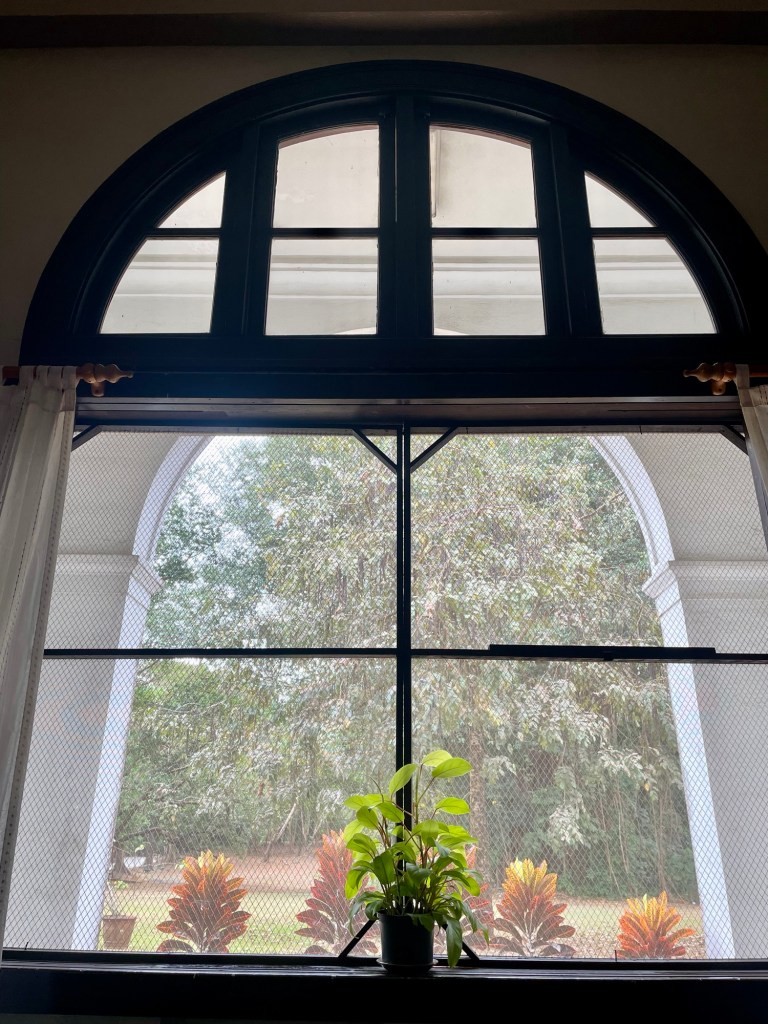
Photo by author, view the refectory, Sacred Heart Novitiate, Novaliches, QC, 18 March 2024.

From now on, nothing can hold us nor keep us locked in sadness and grief, suffering and misery as well as sin and death because in rising from the dead, Jesus had opened up for us new possibilities in the future not only in eternal life but right here on earth.

Like the apostles on that same evening of Easter, we also find it so difficult to grasp and understand, even believe and explain right away though we could feel and experience deep down within us that Jesus is risen.

On the evening of that first day of the week, when the doors were locked, where the disciples were, for fear of the Jews, Jesus came and stood in their midst and said to them, “Peace be with you.” When he had said this, he showed them his hands and his side. The disciples rejoiced when they saw the Lord. Jesus said to them again, “Peace be with you. As the Father has sent me, so I send you.” And when he had said this, he breathed on them and said to them, “Receive the Holy Spirit.”

John 20:19-22
Photo by author, dusk at Sacred Heart Novitiate, 20 March 2024.

Since Sunday we have the prevalence of darkness and emptiness in our Easter stories, reminding us how often that it is in the darkness of our lives when we find light, when in the midst of emptiness when there is fullness.

This Sunday we find the presence of Jesus but still in an unusual manner. There was still darkness for it was night but more than that was the darkness within each disciple who locked themselves inside the Upper Room for fears from Jewish officials who might arrest and put them to death like Jesus.

Many times in life we feel locked in, imprisoned in some situations, feeling resigned as there is no way out from our troubles and miseries but through faith in Jesus, out of nowhere and without any explanation at all, we find ourselves extricated from our inescapable situations.

When my youngest sister was diagnosed with cancer the other year, she told me how she prayed on the eve of her surgery asking God to simply give her the grace to accept whatever the results of her tests would be. But after her surgery, it turned out her cancer was at its earliest stage that required no treatment at all except constant medical checkups! Last February on her major checkup again, doctors found no traces of cancer in her while her surgery had healed so well.

Hope is not positive thinking that things could get better; in fact, to hope is even to expect things to get worst like when the disciples were hiding in fear, expecting to be arrested too. Or my sister resigning to God her fate, just asking for the grace to accept she had cancer.

But it was in that darkness when Christ came and brought light to His disciples and my sister and our family. Strangely enough, it was after seeing the wounds of Jesus when they rejoiced because that proved that the Lord had risen. It was in my sister’s cancer we found ourselves together more in love and care for each other.

In life, our wounds will remain with us but most important of all for Easter to lead us into new existence in Christ, we must first remain in Him and with one another amid our wounds and darkness around us. And for us to remain or stay in Jesus with each other, we must first come.

Now a week later his disciples were again inside and Thomas was with them. Jesus came, although the doors were locked, and stood in their midst… Then he said to Thomas, “Put your finger here and see my hands”… Thomas answered and said to him, “My Lord and my God!” Jesus said to him, “Have you come to believe because you have seen me?”

John 20:26, 27, 28-29
Caravaggio’s painting “The Incredulity of St. Thomas” (1602) from en.wikipedia.org.

My dear friends, while praying over the gospel this week, this line by the Lord kept on echoing within me. And every time it would echo, the Lord shortened the sentence like these:

“Have you come to believe because you have seen me?”

“Have you come to believe because…?”

“Have you come to believe…?”

“Have you come…?”

Before we can stay and remain in the Lord, we must first come. Like Thomas.

What he had asked as proofs to believe in the Lord’s Resurrection were not really doubts to be taken negatively. John referred to him being known as Didymus for Twin. We were the ones who gave him that nickname Doubting Thomas. Like us, there are times we feel at a loss like Thomas with our faith and with ourselves when extraordinary things happen to us. It was not that he did not believe but in fact, he wanted to believe more. That is why he came the following Sunday.

Though I have always loved Caravaggio’s paintings, I don’t think Thomas ever touched the Lord’s wounds. Thomas must have been overwhelmed with the presence of Jesus that all he could say was “my Lord and my God” which we repeat during consecration of the bread and wine into Christ’s Body and Blood.

Photo by Ka Ruben, Easter Vigil 2024, National Shrine of Our Lady of Fatima, Valenzuela City.

Easter leads us into community life centered in the Eucharist. See how since Sunday when Jesus appeared to Mary Magdalene, He instructed her to tell Simon Peter and others of His Resurrection; after appearing to Cleopas and companion on the road to Emmaus, they hurried back to Jerusalem to proclaim the good news of seeing the risen Lord at the breaking of bread; and while they were together which would be the gospel next Sunday, Jesus appeared to them again as a community.

In His rising to life, Jesus brought us together, fellow wounded healers to heal each other, to remain with each other amid our poverty and sufferings because together in Christ, that is when we open new dimensions in existence, in living as a community. We grow into an I-Thou person from the selfish ego. That is what the first reading is telling us in how “the community of believers was of one heart and mind, and no one claimed that any of his possession was his own, but they had everything in common” (Acts 4:32).

It is the risen Lord who comes and stays among us in darkness and woundedness whenever we come and reach out to others like Thomas in the gospel. Even in our doubts, Jesus comes for us to believe more in Him. That is when great things start to happen, many so unbelievable and too deep for words. Basta.

That is why St. John Paul II rightly made the eighth day in Easter as the feast of Divine Mercy too because it is the love of God poured out to us in Jesus Christ’s suffering and death on the Cross when Blood and Water flowed out from His heart as an ocean of mercy for us. This is the love of God John was reflecting in the second reading that was too deep for words to explain except that it is the power that also “conquers the world” (1 Jn.5:3-4). Like St. Faustina in her Diary number 163, let us also pray:

"Help me, 
O Lord,
that my heart may be merciful"
by being more loving,
by coming
and remaining in Jesus
among our brothers and sisters
in their many darkness
and emptiness
and wounds in life.
Like You,
Lord Jesus,
let me come
to reach out
to those in doubts
to be Your very proof
of Your having risen
from the dead.
Amen.
“Is It Over” by Ronnie Milsap (1983)

The Lord Is My Chef Sunday Music, 31 March 2024
Photo by author, Sacred Heart Novitiate, Novaliches, QC, 20 March 2024.

Blessed happy Easter everyone! We take a melancholic love song on this day of celebrating the triumph of love in Jesus Christ’s Resurrection because Easter is a continuing journey with Him, in Him and through Him amid darkness and emptiness in life (https://lordmychef.com/2024/03/30/easter-is-signs-scripture-together-always/).

Like the story of that first Easter morning while still dark when Mary Magdalene and later Simon Peter with the beloved disciple found the tomb of Jesus empty except for His burial cloths neatly folded to indicate the Lord’s rising from the dead, Ronnie Milsap’s 1983 hit Is It Over speaks a lot of the essence of Easter about faith in the love of Jesus Christ.

Milsap’s Is it Over invites his beloved to sincerely search her heart to get over her former relationship so that theirs would flourish and grow; in the same manner, we need to get over our Good Fridays in order to experience the glory of Easter Sundays in life.

Is it over, are you really over him
Is it over, or will you take him back again
If it’s over you can let his memory in
Come on over, we’ll let our love begin.

You say you can’t count the times that he’s hurt you
And he’s hurt you for the last time
Now you say I’m the one that you’re needing
But is the need in your heart or just in your mind.

Is it over, are you really over him
Is it over, or will you take him back again
If it’s over you can let his memory in
Come on over, we’ll let our love begin.

Like Jesus calling us every day in our lives to come over to Him by leaving behind our past hurts, Is it Over tells on the need to move on in life, to embrace the present by learning from the past. Most of all, of the need to confront one’s true self in the heart, not just in the mind in order to move on in life.

Milsap’s music and voice are uniquely refreshing that sound very Easter perhaps due to his personal experiences. Born partially blind and abandoned by his mother after birth, Milsap grew up in poverty with his grandparents in the Smoky Mountains of North Carolina. Despite his handicap and poverty, he was found exceptionally brilliant and talented even while in his early childhood when he was sent to a school for the blind at the age of five where he developed his musical talent at age seven. He was later sent to Governor Moorehead to formally begin studies in classical music. It was there in his early teens when Mislap learned to play several musical instruments and chose to master the piano.

At age 14, Milsap became totally blind after being slapped on his left eye by one of the houseparents but that never affected his pursuits in learning as well as music. He was able to finish college through scholarships and was already in law school as a full scholar when he decided to leave to concentrate in music in 1964.

He met his wife Joyce Reeves in one of their gigs the following year, got married and remained together until her death in 2021 due to cancer. They had a son, Ronald who died in 2019 aged 49 apparently due to a medical condition

Is It Over follows the style of Milsap’s earlier and biggest breakthrough in 1977, It Was almost Like a Song that topped the Billboard charts in many categories. Both songs are very popular among us Filipinos who are certified romantics.

Now aged 81, Milsap remains active in the music scene as a composer, collaborating with some of the biggest names in the industry. His life is a beautiful example of the Easter glory amid many darkness and emptiness. Although officially retired, it isn’t over yet for Mislap as he continues to record and busies himself with a podcast as well as an amateur radio enthusiast.

Here now is Milsap’s lovely song, Is It Over.

From YouTube.com

Pag-ibig at kaganapan ng buhay

Lawiswis ng Salita ni P. Nicanor F. Lalog II, Ika-26 ng Marso 2024
Ika-anim na Huling Wika ni Jesus
Larawan kuha ni G. Chester Ocampo, kapilya ng Immaculate Conception Seminary, Guiguinto, Bulacan, 30 November 2015.

May isang mangkok doon na puno ng maasim na alak. Itinubog nila rito ang isang espongha, ikinabit sa sanga ng isopo at idiniit sa Kanyang bibig. Nang masipsip ni Jesus ang alak ay Kanyang sinabi, “NAGANAP NA!” Iniyukayok Niya ang Kanyang ulo at nalagot ang Kanyang hininga.

Juan 19:29-30

Kung minsan ako ay nalulungkot tuwing Huwebes Santo kapag natutuon ang pansin ng mga tao sa rito ng paghuhugas ng pari sa mga paa ng ilang mananampalataya. Tunay na kakaibang eksena at karanasan iyon sa mga tao ngunit ang totoo, hindi naman talagang bahagi ng Misa ng Huwebes Santo ang naturang paghuhugas ng mga paa na puwede namang hindi ganapin.

Ang tunay na lundo ng Banal na Misa ng Huwebes Santo ay naroon sa bahagi ng Ebanghelyong nagsasaad ng diwa ng paghuhugas ni Jesus sa mga paa ng kanyang mga alagad:

Bisperas na ng Paskuwa. Alam ni Jesus na dumating na ang panahon ng kanyang paglisan sa sanlibutang ito upang bumalik sa Ama. Mahal niya ang kanyang mga tagasunod na nasa sanlibutan, at ngayo’y ipakikita niya kung hanggang saan ang kanyang pag-ibig sa kanila.

Juan 13:1

Hanggang saan nga ba ang pag-ibig sa atin ni Jesus?

Hanggang sa wakas. O, end sa Inggles. Ngunit kapag sinabi nating hanggang sa wakas, parang mayroong hangganan ang pag-ibig natin kaya ang pahayag na ginamit sa pagkakasalin ay “ipakikita niya kung hanggang saan ang kanyang pag-ibig sa kanila.”

Mas mainam ang pagkakasalin sa Inggles ng huling pangungusap na nagsabing “He loved his own in the world and he loved them to the end.” Mula sa salitang Griyego na telos ang katagang wakas o end sa Inggles. Nguni’t salungat sa madalas nating isipin ang “wakas” bilang hangganan dahil ang telos ay nagpapahiwatig ng direksiyon at hahantungan na kaganapan o perfection. Hindi lang pagtigil at paghinto ang wakas o end.

Kaya naman nang sabihin ni Jesus doon sa Krus na “naganap na”, ang pakahulugan Niya ay ang kaganapan ng Kanyang misyon na mahalin tayong lahat hanggang sa wakas na siyang tinutukoy ng pahayag sa simula ng kanilang Paskuwa, “at ngayo’y ipakikita niya kung hanggang saan ang kanyang pag-ibig sa kanila” sa paghuhugas ng kanilang mga paa na ang kaganapan ay sa Kanyang kamatayan sa Krus kinabukasan ng araw ng Biyernes.

Ipinamalas sa atin ni Jesus ng buong-buo at ganap sa Kanyang pagkamatay sa Krus ang pag-ibig ng Ama para sa atin batay sa Kanyang sinabi kay Nicodemus, “Gayon na lamang ang pag-ibig ng Diyos sa sanlibutan, kaya ibinigay niya ang kanyang bugtong na Anak” (Jn.3;16).

Kung tutuusin ay hindi naman kailangang mamatay si Jesus sa Krus upang tayo ay maligtas ngunit pinili pa rin Niya ito bilang tanda ng Kanyang pagmamahal sa ating lahat. Kaya naman dito rin nating makikita ang magandang kahulugan ng pagmamahal na hindi lamang basta pagtupad sa mga kautusan o pagiging mabuti sa kapwa. Sa kabuuan nito, ang pagmamahal ay pagiging-ganap ng ating buhay. Love is the perfection of life, ayon kay Thomas Merton, isang mongheng Amerikano noong araw.

Kapag tayo ay nagmamahal, tayo ay nagiging ganap tulad ng Diyos! Kaya, basta magmahal lang ng magmahal hanggang masaktan dahil hindi iyan mauubos tulad ng Diyos.

Mga minamahal, yamang gayon kadakila ang pag-ibig ng Diyos sa atin, dapat din tayong mag-ibigan. Walang taong nakakita sa Diyos kailanman, ngunit kung tayo’y nag-iibigan, nasa atin siya at nagiging ganap sa atin ang kanyang pag-ibig.

1 Juan 4:11-12

Mula sa unang sulat ding iyan ni San Juan, ating matutunghayan ang pahayag niya na ang Diyos ay pag-ibig na ayon sa dating Santo papa Benedicto XVI sa kanyang unang encyclical na Deus Caritas est, ito ang pinaka-malalim na pahayag tungkol sa Diyos na hindi matatagpuan sa ibang relihiyon maliban lamang sa Kristiyanidad.

Photo by Paco Montoya on Pexels.com

Mga ginigiliw ko, Diyos lang ang makapagmamahal sa atin ng ganap. Tanging si Jesus lang ang makapagmamahal sa atin ng ganap na Kanyang pinatunayan doon sa Krus.

Palagi kong sinasabi, “human love is always imperfect” kaya hayaan nating punan ni Jesus, gawin Niyang ganap at buo ang ating pagmamahal na palaging kapos at kulang. Maari itong mangyari kapag tayo nagsimulang magparaya at magpatawad, magbigay ng walang hinihintay na kapalit, manahimik kesa kumibo at humaba pa usapan. Tanggapin natin at angkinin mga sakit at sugat natamo natin sa imperfect love ng pamilya at kaibigan o sino pa man.

Tularan natin si Jesus na nagpakasakit at naghandog ng buhay sa Krus dahil sa pag-ibig.

Manalangin tayo para sa mga minamahal natin at sa nagmamahal sa atin sa kabila ng ating mga imperfection:

Panginoong Jesu-Kristo,
sana makapagmahal din ako
tulad Mo hanggang kamatayan;
sana masabi ko rin sa wakas tulad Mo
"naganap na";
patawarin po Ninyo ako
sa maraming pagkakataon
na hindi pa rin tapos
at patuloy pa rin sa pagnanana
ng mga sugat kong natamo
sa imperfect na pagmamahal ng kapwa
kaya hindi ako maka-move on
dahil nilalamon akong buhay ng mga sugat
at alaalang ito kaya hindi ako lumago
at maging ganap sa Iyo.
O Kristo Jesus,
patawarin po Ninyo ako
at turuang magpatawad
dahil sa pagpapatawad
kami tunay na nagmamahal
ng ganap tulad Mo.
Amen.

Pinawi ni Jesus ating uhaw sa Krus

Lawiswis ng Salita ni P. Nicanor F. Lalog II, 25 Marso 2024
Ikalimang Huling Wika ni Jesus
Larawan kuha ni Dean Mon Macatangga ng Our Lady of Fatima University, Valenzuela, 2023.

Pagkatapos nito, alam ni Jesus na naganap na ang lahat ng bagay; at bilang katuparan ng Kasulatan ay sinabi niya, “NAUUHAW AKO!” May isang mangkok doon na puno ng maasim na alak. Itinubog nila rito ang isang espongha, ikinabit sa sanga ng isopo at idiniit sa kanyang bibig.

Juan 19:28-29

Ito ang ikalawang pagkakataon na si Jesus ay nauhaw na bukod tanging makikita lamang natin sa ikaapat na ebanghelyo. Unang nauhaw si Jesus nang Siya ay makiinom sa babaeng Samaritana sa balon ni Jacob sa bayan ng Sychar sa Samaria (Jn.4:7). Sa tagpong iyon naganap ang napaka-gandang usapan sa pagitan ng nauuhaw nating Panginoon at ng babaeng Samaritana nauuhaw sa Diyos, sa pag-ibig at habag.

Mahirap ang mauhaw. Hindi tulad ng gutom na maaring idaan sa tulog. Tiyan lang ang kumakalam kapag tayo ay gutom ngunit kapag tayo nauhaw, dama ng buong katawan ang panghihina. Ramdam na ramdam at nanunuot sa laman at buto ating pagkauhaw. Kaya naman, malalim ang kahulugan ng pagiging uhaw na maaring hindi lamang sa tubig kungdi sa iba pang mahahalagang bagay kailangan ng ating kalooban.

Pagmasdan at damang-dama pagkatao tulad natin ni Jesus nang sabihin Niyang “Ako’y nauuhaw” higit pa sa tubig kungdi ang Kanyang pagkauhaw sa ating pagmamahal at pansin.

Alalahaning sa Ebanghelyo ayon kay San Juan, ang tubig ang isa sa mga pangunahing tanda ni Jesus bilang Kristo. Doon sa kasalan sa Cana nang gawin alak ni Jesus ang mga sinalok na tubig sa banga una Siyang nakilala bilang Kristo. Pagkatapos nito ang sumunod na eksena ang pagbisita sa gabi ng Pariseong si Nicodemo kay Jesus na noon unang binanggit ang tungkol sa pagbinyag o pagsilang muli sa tubig at espiritu (Jn.3:5). Sumunod na eksena doon ang paghingi ni Jesus ng tubig sa babaeng Samaritan kung saan Siya ay nagpakilala bilang “buhay na tubig” (Jn.4:10).

Sa pagsasabi ni Jesus doon sa Krus na Siya ay nauuhaw, Kanyang ipinahahayag di lamang ang pagkauhaw sa tubig kungdi higit pa! Kay laking kahangalan nang bigyan Siya ng ordinaryong alak ng isang sundalong Romano upang mainom. At madalas ay ganoon din tayo kay Jesus na nangakong “ang uminom ng tubig na ibibigay ko ay hindi na muling mauuhaw. Ito ay magiging isang bukal sa loob niya, babalong, at magbibigay sa kanya ng buhay na walang hanggan” (Jn.4:14).

Maliwanag higit pa sa tubig kungdi pag-ibig at malasakit ang kinauuhaw ni Jesus doon sa Krus. Noon at hanggang ngayon.

Si Jesus ang nauuhaw na misis at ina sa pagmamahal at kalinga ng kanyang taksil na kabiyak at mga lapastangang anak na walang iniisip kungdi kanilang mga sarili.

Si Jesus ang nauuhaw na mister at ama na OFW nasa ibang bahagi ng mundo na walang inaasam-asam kungdi ang mga simpleng tawag at texts ng pamilya na papawi ng kanyang pagod at lungkot.

Si Jesus ang nauuhaw na lolo at lola na pakiramdam ay nag-iisa at nawawala dahil sa Alzheimer’s o sa stroke na walang pumpansin sa loob mismo ng kanilang tahanan.

Si Jesus ang nauuhaw na kabataan naghahanap ng panahon at malasakit ng magulang at mga kapatid upang magkaroon ng direksiyon ang buhay, higit pa sa mga binibigay sa kanilang mga gadgets, damit at mga salapi.

Si Jesus ang nauuhaw na maaring katabi mo ngayon naghahanap ng papansin sa kanya, na ngingiti sa kanya at magpaparamdam na siya ay welcomed at, masarap mabuhay!

Huwag nating tularan ang mga sundalong Romano o ang babaeng Samaritana na naghagilap ng mineral water para kay Jesus na naroroon sa bawat taong nakakasalamuha natin.

Ang pinakamainam at masarap na tubig nating maiaalok sa sino mang nauuhaw ay nanggagaling sa kaibuturan ng ating puso at kaluluwa kung saan nanahan si Jesus sa atin na puno ng habag at pag-ibig. Mauhaw tayo kay Jesus dahil tanging Siya lamang makapapawi at makatitighaw sa ating pagka-uhaw.

Manaling tayo.

Minamahal kong Panginoong Jesus,
patawarin po Ninyo ako
kapag pinapawi ko aking pagka-uhaw
sa kung ano-anong alok ng mundo
na kadalasan lalo lamang ako
nauuhaw,
tuyot,
at hungkag;
punuin mo ako ng IYONG SARILI
upang higit KITA na maibahagi
sa kapwa ko nauuhaw
dahil IKAW lamang
ang makakapawi
sa aming pagkauhaw
sa kahulugan
at kaganapan
ng buhay.
Amen.

“Is It You?” by Lee Ritenour (1981)

The Lord Is My Chef Sunday Music by Fr. Nicanor F. Lalog II, 17 March 2024
Photo by Paco Montoya on Pexels.com

It is the final Sunday in Lent as we enter its final week with temperatures soaring into the 30’s as we get into the heat of summer in the country. To soothe us in our Sunday feature, we have chosen Lee Ritenour’s classic smooth jazz Is It You? from his 1981 album Rit.

An American jazz-guitarist, Ritenour is considered as one of the great movers in the jazz scene since the late 1960’s until now, being a part of so many groups and individual musicians in producing great music and tunes that unknown to many of us have were surely delighted and even uplifted.

Is It You? is one of those music by Ritenour with Eric Tagg doing the vocals as well as co-writing it along with Bill Champlin.

So characteristic of Ritenour’s jazz experiments fusing it with rock and pop, Is It You? speaks of a man’s feelings of doubts amid strong convictions of being ready to love a woman he is asking if she too is ready; hence, the question, Is It You?

Someone’s just outside, knocking at my door
A stranger, somebody unknown
Someone’s in my dreams, can’t get it off my mind, yeah
I’m tired of being alone
Someone’s trying to find an easy way inside
Come on, I’m right here at home, right at home
Is it you?
Is it you?
Is it you?
Is it you, you, you?
Who’s that deep inside me, sneaking around my heart?
Are you somebody in love?
Show me what you’re doing and tell me who you are
Hey, I’m ready for love, for love
Is it you?
Is it you?
Is it you?
Is it you, you, you?
If it’s you, come out in the open
You don’t need to hide your love
If it’s you, you know I’m hoping
‘Cause it’s way too late to run away
Don’t run away from love, my love
Is it you?
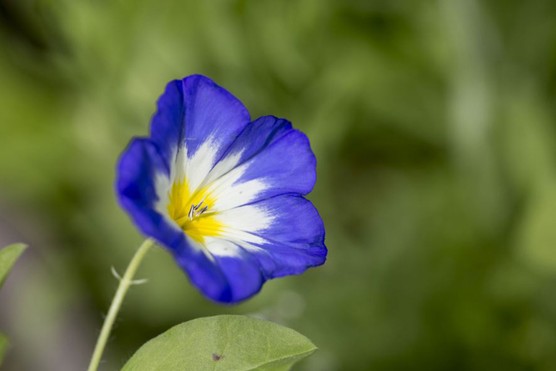
Photo of a convolvulus tricolor from BBC Gardeners World Magazine.

Many times we felt that way too that despite the uncertainties we feel, there is that strong thrust from within to dare step forward and make the move to find out like Ritenour if is it you?

In some ways, it must have been the feeling too of those Greek converts in Jerusalem that Palm Sunday who asked Philip if they could see Jesus. They too had that strong feeling towards Jesus after hearing the many good things about himself, his teachings and his miracles. When they said they wanted to see Jesus, it was more than seeing him literally because the Lord was never in hiding. The Greeks, like us and Ritenour in his song, were seeking something more, something deeper, something about faith (https://lordmychef.com/2024/03/16/lent-is-believing-in-order-to-see-jesus/).

There lies the beauty of life, of following Jesus: while the world tells us that to see is to believe, Jesus tells us that to believe so we would see; the world tells us to enjoy life without inhibitions one’s enjoyment, Jesus tells us that it is in dying that we truly live.

Both happens when we dare to ask, when we dare to step forward and take the plunge, of giving one’s self in love. To ask of seeing Jesus, of seeing somebody special, of asking if is it you is also believing in him or the other person.

Believe. And you shall see that indeed, it is you, Jesus!

Here is Lee Ritenour with Eric Tagg.

From Youtube.com

Why are violets blue?

Quiet Storm by Fr. Nicanor F. Lalog II, 12 March 2024
Photo by Skyler Ewing on Pexels.com
When we were growing up
discovering the power of love,
these nursery rhymes
were so sublime
we used to find
every Valentine's
without knowing why
"Roses are red,
Violets are blue,
Sugar is sweet.
So are you.
And I love you!"
Photo by Paco Montoya on Pexels.com
Red means love
but what about blue
that has become violet too?
Late have I known
as a chaplain to kids
and grown ups too
when I Googled that
violets mean simplicity,
humility and modesty
that to give a violet
close to blue is to say
"I love you too!"
Photo by Natalie Bond on Pexels.com
In this blessed season of Lent
when everything is violet
a shade akin to blue
to keep things subdued
as we try to imbue
virtues and values
of repentance and
contrition for sins,
of patience and perseverance,
of sacrifice and alms-giving
that lead to a sharing of self in love
like Jesus Christ did a long time ago.
True,
violets are blue,
hue of God's mercy
for me and you;
as we go through
this journey in Lent
hear my plea to you,
Jesus:
"Roses are red,
violets are blue;
let your Lent come true
because I love you too!"
Amen.
Photo by Pixabay on Pexels.com

Lent is acceptance

40 Shades of Lent by Fr. Nicanor F. Lalog II
Friday, Memorial of St. John of God, Religious, 08 March 2024
Hosea 14:2-10 ><]]]]]'> + ><]]]]]'> + ><]]]]]'> Mark 12:28-34
Photo of convolvulus sabatius from frustratedgardener.com
Your words today,
dear Father,
led me back to the
Monday reflection of another
blogger about the word
"acceptance":

“Acceptance” can be seen as a passive word suggesting that we just put up with something we cannot change.

On the other hand, it can be a positive condition in our spirituality by which we prepare ourselves to hospitably receive that which we had not expected. Such positive acceptance suggests a non-judgmental, wise, and discerning heart. 

Sr. Renee Yann, RSM, https://lavishmercy.com/2024/03/03/accepted/
Why are we so fond,
O God, of doing anything
except precisely what you want
us to do?
Why can't we just accept
your words,
your plans,
or your instructions
we always disregard,
"hoping" there could be
something better?

Forgive us, Father,
when even in the
quagmire of sin and evil,
we keep resisting you,
refusing to accept
your suggestions;
let us learn
beginning this Lent
when to just stop
and simply accept
you and your words.
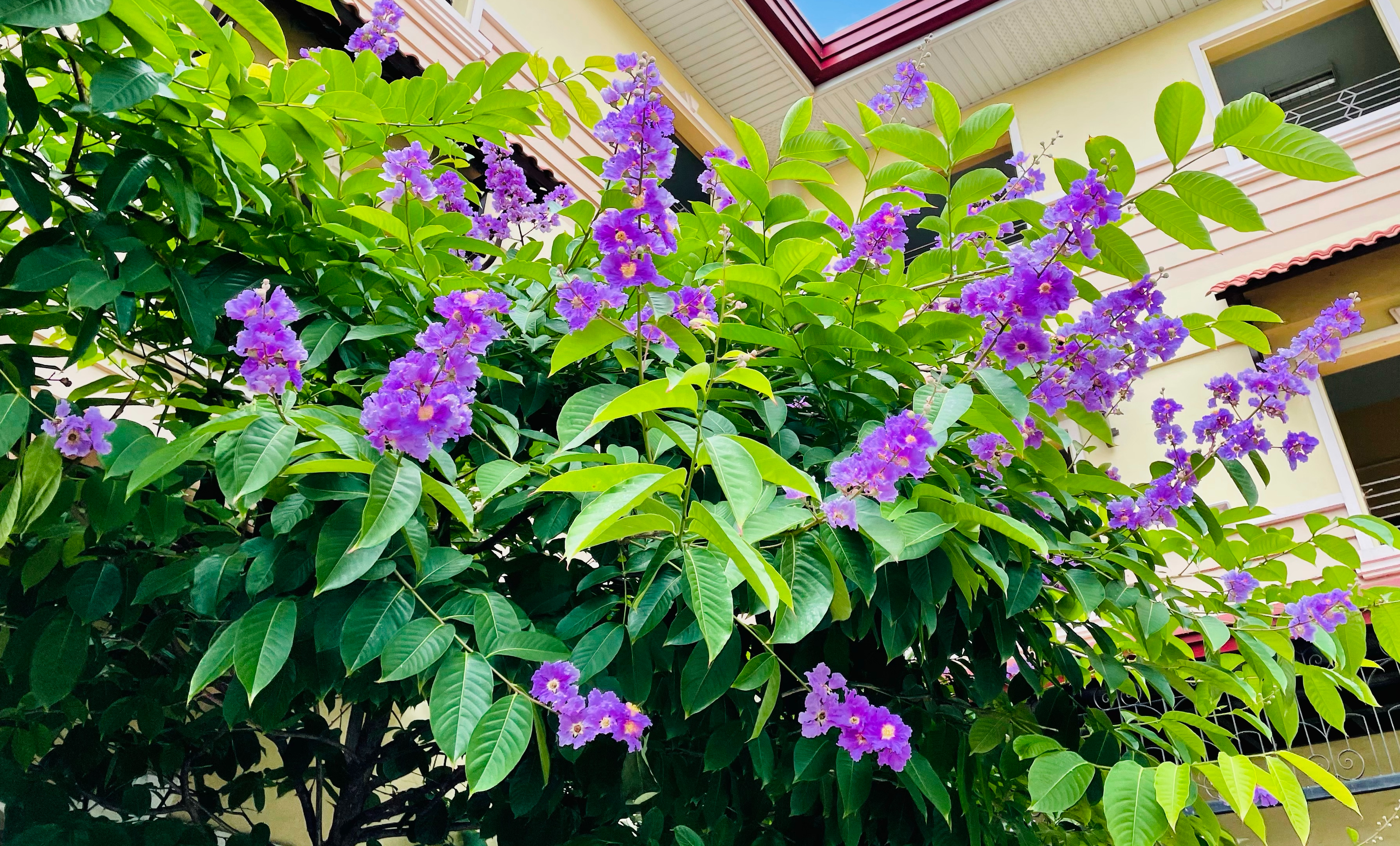
Photo by author, Banaba Tree, 2020.

Thus says the Lord: Return, O Israel, to the Lord, your God; you have collapsed through your guilt. Take with you words, and return to the Lord; say to him, “Forgive all iniquity, and receive what is good, that we may render as offerings the bullocks from our stalls.”

Hosea 14:2-3
Draw us closer to you,
Lord Jesus Christ and your
kingdom by accepting
the basic truth of our faith
that the love of God is
always the love of others;
help us realize
life is more than searching
for what is the best
possible condition
or situation we can have
but to accept our whereabouts
where we can give our best selves
to you through others
to make this world a
better one.
'
Everything, O Lord,
begins in finding you
within each of us
so we may find you in others
especially the sick and
the weakest like St. John of God
who simply accepted
everything that came to his life
as coming from you;
it is in our acceptance
of you, O Lord,
that we begin to lovingly serve
you in others because that is
also when we are able to relate
our lives
with your Church,
with the world,
with our callings;
it is in accepting these
that we become
"not far
from the Kingdom
of God."
Amen.
Photo of a convolvulus tricolor from BBC Gardeners World Magazine.

“You’ve Lost That Lovin’ Feelin'” by The Righteous Brothers (1964)

The Lord Is My Chef Sunday Music by Fr. Nicanor F. Lalog II, 03 March 2024
Photo by author, Sacred Heart Novitiate, Novaliches, QC, 2018.

Our 40-day Lenten journey gets more intense this Sunday with the gospel scene where Jesus cleansed the Temple in Jerusalem to signify the need for us to recover our zeal for God who is also our first love (https://lordmychef.com/2024/03/02/lent-is-the-zeal-of-jesus/).

In a similar manner, we picked the intensely passionate 1964 hit You’ve Lost That Lovin’ Feelin’ by The Righteous Brothers matching today’s Sunday gospel as it tells us the similar teaching of Jesus Christ, of how we have lost our zeal for God and the need to bring it back for our own good.

Of course, You’ve Lost That Lovin’ Feelin’ is a love song with its usual sprinklings of sensuality but its sublimity and accuracy in describing the common experiences of love going bad have made it as the most-played song in American radio and television – perhaps even the world – in the 20th century. It is also the most successfully covered song by artists, including by our favorite Hall & Oates who must literally heed the song’s message after their falling apart as musicdom’s dynamic duo of all time.

Written by music producer Phil Spector with some help from Barry Mann and Cynthia Weil, You’ve Lost That Lovin’ Feelin’ as a ballad is soulfully penetrating with the contrasting vocal ranges of Bill Medley’s bass-baritone voice and Bobby Hatfield’s tenor that enabled them to create a distinctive sound as a duet.

This perfect blending of their voices is felt, not just heard in You’ve Lost That Lovin’ Feelin’ that is a kind of music that can disturb and awaken one’s callous conscience to put it in order. Or have it cleansed as Jesus did in the Temple when he drove out the oxen and sheep, overturned the tables of money changers and drove the doves away being sold.

Notable also is the song’s slow opening – and video – with Medley’s deep voice so hauntingly cool but not scary at all but simply disarming, making it perhaps the most coveted style in singing.

You never close your eyes anymore when I kiss your lips
And there’s no tenderness like before in your fingertips
You’re trying hard not to show it
But baby, baby I know it

You lost that lovin’ feelin’
Whoa, that lovin’ feelin’
You lost that lovin’ feelin’
Now it’s gone, gone, gone, whoa-oh

All in all, here is a most beautiful music, so universal as a language in its melody and lyrics that reminds us that love is not everything; love is more than a feeling but a decision we have to nurture and deepen in order to grow and mature. And bloom.

Most of all, to remain rooted in our first love of all, in God who gives us the zeal, the spark to keep it burning. Have lovin’ week ahead, everyone.

From YouTube.com

Life is where we stand not where we sit

40 Shades of Lent by Fr. Nicanor F. Lalog II
Thursday, Feast of St. Peter's Chair, 22 February 2024
1 Peter 5:1-4 <*{{{{>< + + + ><}}}}*> Matthew 16:13-19
Photo by author, Chapel of the Holy Family, Sacred Heart Novitiate, Novaliches, 2018.
My Lord Jesus,
on this Feast of St. Peter's Chair
when the Church's authority
especially of the Pope and bishops
is put into question,
even challenged,
you remind us also your priests
that “the primacy of Peter
symbolized by his chair atop
the magnificent altar at the Vatican
is the primacy of faith
and the primacy of love”

(Pope Benedict XVI,
"Images of Hope",
Ignatius Press, 2006).
These beautiful words by your
servant Pope Benedict XVI
remind us too that discipleship
and life itself are about where we stand
not about where we are seated;
make us realize, dear Jesus,
that like St. Peter and all the saints
who served you faithfully in love,
we need to make a stand as witnesses
of your gospel values of love and justice,
mercy and kindness;
no one can truly be your disciple nor
be fruitful in life by remaining
seated comfortably by the roadside;
let us do our mission not profession,
be concerned with persons not programs,
focused on ministry and services
not in perks and positions.
May we remain standing by your Cross,
Jesus, even when the world prefers
to avoid pains and sufferings,
sacrifices and sharing,
inefficiencies and waiting.
Amen.
Photo by author, Chapel of the Holy Family, Sacred Heart Novitiate, Novaliches, 2018.

Lent is allowing God do his work in us

40 Shades of Lent by Fr. Nicanor F. Lalog II
Wednesday in the First Week of Lent, 21 February 2024
Jonah 3:1-10 ><}}}}*> + ><}}}}*> + ><}}}}*> Luke 11:29-32
Photo by Ms. Ria De Vera, somewhere in Alberta, Canada, 17 February 2024.
God our Father,
in this Season of Lent,
let us take one step backward
to let you do your work
in us,
among us.
We have been so used
to our expertise
and knowledge
that we seem to know
everything,
even better than you
like Jonah.

Allow us to take
"sackcloth and ashes"
like the people of Nineveh
to transcend our habits
by taking the back seat this time,
limiting ourselves to your
simple instructions
as we try to believe in you
and others too.

Jonah began his journey through the city, and had gone but a single day’s walk announcing, “Forty days more and Nineveh shall be destroyed,” when the people of Nineveh believed God; they proclaimed a fast and all of them, great and small, put on sackcloth.

Jonah 3:4-5
Continue to speak to us
even harshly like Jesus
in the gospel,
calling us an "evil generation"
seeking signs of your
presence in Christ;
very often,
we need to be shaken
deep inside,
to stop a while
so you can work in us
and among us,
filling us with your
love and mercy
so that we discover
your love and mercy
in us when we are
able to cry like the
psalmist:
"Have mercy on me,
O God,
in your goodness;
in the greatness of your
compassion wipe out my offense.
Thoroughly wash me
from my guilt and of my sin
cleanse me"
(Ps. 51:3-4).
Amen.