The Lord Is My Chef Daily Recipe for the Soul by Fr. Nicanor F. Lalog II
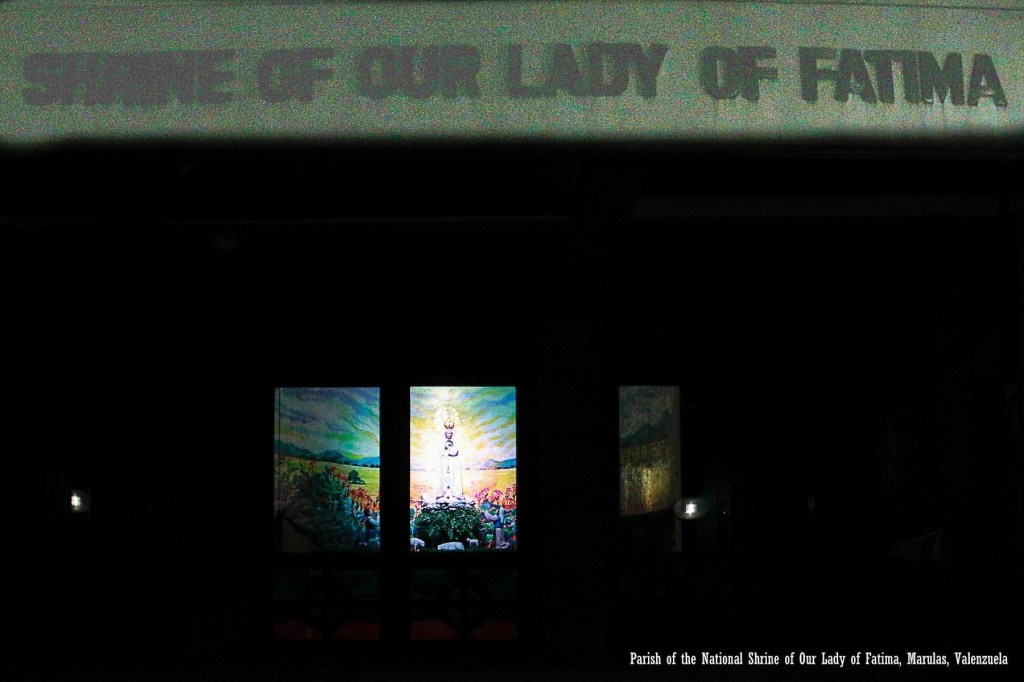
Friday in the Fourth Week of Easter, 13 May 2022, Feast of Our Lady of Fatima
Acts 13:26-33   ><))))*> + <*((((><   John 14:1-6
Photo from the Commission on Social Communications, National Shrine of Our Lady of Fatima, 2020.
Your words today, O Lord Jesus Christ
are so timely, so perfectly meant for us
these days:  "Do not let your hearts be
troubled. You have faith in God; have
faith also in me" (Jn.14:1).
Forgive us, dear Jesus,
in believing so much with ourselves,
forgetting you and God in the process;
help us accept the many realities
in life, help us to move on with life,
and most of all, stop from being
bitter and being unkind with others;
make us realize we cannot have the
truth when we are apart from you.
It is so timely that on this 105th
anniversary of the first apparition
of your Mother the Blessed Virgin Mary
in Fatima, Portugal that our gospel
is very much the same truth she had
revealed to the three children and
to the world:  that you alone, Jesus is
the true reality in this life for you
are "the way and the truth and the life,
that no one comes to the Father
except through you" (Jn.14:6).
It was at Fatima where your Mother
told us how your way is always
accessible and leads to fulfillment,
so unlike our many ways in this world
that change and disappear, sometimes
become obsolete.
It was at Fatima where your Mother
assured us too that there is no other
way nor a secret road in life except you,
dear Jesus.
It was at Fatima where Mary brought us
back to reality of you Lord Jesus that
no one comes to Father except through
you.
Help us dear Jesus,
through our Lady of Fatima,
to return to you again in
the sacraments of Penance
and Eucharist, to trust in you again,
to follow your Person as the way,
the truth, and the life.  Amen.
Photo from the Commission on Social Communications, National Shrine of Our Lady of Fatima, 2020.
Photo by author, sunrise at the Lake of Tiberias (Galilee) in Israel, May 2019.
Our gospel last Sunday spoke of the Risen Lord’s third appearance to his disciples at the Lake of Tiberias. No one, except the beloved disciple recognized Jesus standing at the shore after he had told them to cast their net to the right side of the boat that led to their plentiful catch of fish.
When it was already dawn, Jesus was standing on the shore; but the disciples did not realize that it was Jesus. Jesus said to them, “Children, have you caught anything to eat?” They answered him, “No.” So he said to them, “Cast the net over the right side of the boat and you will find something.” So they cast it, and were not able to pull it in because of the number of fish. So the disciple whom Jesus loved said to Peter, “It is the Lord.” When Simon Peter heard that it was the Lord, he tucked in his garment, for he was lightly clad, and jumped into the sea.
John 21:4-7
Photo by author, sunrise at Lake of Tiberias, May 2017.
I love the way it is narrated. What a wonderful interplay of realities, of John the beloved recognizing Jesus standing at the shore upon seeing the many fish caught in their net!
The story speaks of the beauty of every sunrise many of us seem to take for granted, of how so many of us miss the beautiful sight and silence of the morning. It is a story of every new day filled not only with promises but in itself a blessing we can surely experience when we first recognize Christ present in us.
That is perhaps one problem with us who always prefer spectacular sights and events to find God.
Unlike sunset, sunrise does not have radiant displays of colors and shades. It is very simple which is the lesson of Easter to us, of how our great God comes to us in the simplest moments of life. Recall too that Jesus was born in the middle of the darkest night of the year when everyone was asleep and rose from the dead very, very early in the morning that no one had seen! And here lies one of the wonderful mysteries in life – the hiddenness of God!
It is in God’s hiddenness that we can find him not because he is hiding but inviting us to be hidden in him too. That is the beauty of sunrise when you have to wake up early to see the beauty of life unfolding, awaiting something we are totally unaware of what is going to happen next. It is easier to wait for the sunset because you have been up and going the whole day; you just have to stop and pause for a while to await the sun going down.
Photo by Ms. Jo Villafuerte, sunrise at Atok, Benguet, September 2019.
Sunrise is different. It is like awaiting a total stranger, compared with sunset after we have befriended the the day about to end.
Every morning when we wake up, we do not know what is in store for us. Some people are excited, others are not while the rest simply got the blues or too lazy to work and study that they would rather sleep more.
Maybe that is why sunrise is more subdued with its hues and shades. Like God, sunrise is so kind, very accommodating with everyone, no spectacular display of colors so that one could buy his own time on whether to go out and move or snuggle more in bed, alone or with somebody else.
Like a beloved someone or God himself, sunrise looks soft and calm, reassuring everyone the day ahead would be just fine for us all.
Its light is so gentle, though bursting filled with life but never insistent to the eyes, so gentle. This we feel in our favorite word and activity every morning – breakfast – which came from the literal “breaking of fast” the night before by the monks in the monasteries. We can feel this gentleness of sunrise in that Christian hymn Morning Has Broken, whether you sing it or listen to Cat Steven’s cover or to its original Gaelic Scottish tune. And along this line, we find sunrise as the sweetest breaking of all in Angela Bofil’s 1981 love song Break It To Me Gently.
Photo by author, sunrise at Camp John Hay, Baguio City, November 2018.
Sometimes, sunrise can be a bit wild, bursting with light that can penetrate one’s soul with its light traveling so fast, eager to cover the whole surrounding with the good news of life coming.
Think of the Beatles’ 1969 Here Comes the Sun with its lovely guitar introduction, assuring everyone, especially your beloved “little darling” that “it’s all right” with “smiles returning to the faces.”
Photo by author, sunrise at Bolinao, Pangasinan, 20 April 2022.
That is the most beautiful part of catching the sunrise when all is silent with you all alone, listening to Jesus whispering, “Little darling, it’s all right” because whatever had happened yesterday, with all your sins and mistakes, are all forgotten and forgiven. Today is a new beginning, like what he told Peter in last Sunday’s gospel when he asked him thrice, “Simon, son of John, do you love me?”
Photo by author, sunrise at Bolinao, Pangasinan, 20 April 2022.
Peter was distressed that Jesus had said to him a third time, “Do you love me?” and he said to him, “Lord, you know everything; you know that I love you.” Jesus said to him, “Feed my sheep… And when he had said this, he said to him, “Follow me.”John 21:17, 19
John 21:17, 19
It is said that whatever one feels in describing the sunrise is one’s perception of love – warm and refreshing, joyful and so alive, filled with hopes and raring to go.
Sunrise is beautiful because it is when we experience closest with our truest self, with those most faithful and loving to us, and most of all, with God, our very root and being. Every morning is the fulfillment of Zechariah’s prophecy of each of us becoming a John the Baptist whose name means “graciousness of God.” This we pray every morning in the Benedictus (cf. Lk.1:68-79):
In the tender compassion of our God
the dawn from on high shall break upon us,
to shine on those who dwell in darkness and the
     shadow of death,
and to guide our feet into the way of peace.
May you be blessed every morning, every day of the week. Amen.
Photo by Ms. Jing Rey Henderson, sunrise at Dumaguete City, Negros Oriental, 27 April 2022.
Lawswis ng Salita ni P. Nicanor F. Lalog II, Ika-07 ng Marso, 2022
Larawan kuha ng may-akda, 2019
Kuwaresma:
nagsisimula Miercules de Ceniza
mga noo'y pinapahiran ng abo
sa anyo ng Krus ni Kristo, paalala
tayo ay markado na yayao -
"Alalahanin sa alabok ika'y nanggaling,
at sa alabok karin babalik" - ngunit,
tinitiyak din ng Krus na hindi magwawakas
pagkaagnas at pagkabulok nitong
ating katawan dahil sa kahuli-hulihan
si Kristo ay babalik upang ibangon tayo
at mabuo mga buto at laman ng kasu-kasuan
mabubuhay magpakailanman
pati katawan kaisa ng kaluluwa.
Sa panahon ng Kuwaresma,
hinihikayat tayong mag-ayuno
at mag-abstinensiya, ipagpaliban
kaginhawahan sa katawan
hindi upang pahirapan ni parusahan
kungdi upang maranasan kapanatilihan
ng Diyos nating banal; tinitiis kagutuman
layaw pinipigilan upang tanging
panaligan at asahan Poong Maykapal;
katawan ay sinasaid upang mawalan
ng laman upang mapunan, mapalitan
ng Espiritung Banal, magkaroon ng puwang
at pitak para sa Diyos at kapwa tao
na ating tinatalikuran at nakakalimutan.
Pagmasdan kabalintunaan
sa gitna ng kasaganaan di lamang
ng pagkain at kagamitan pati ng
mga gawain at maraming kaisipan
hindi maitatanggi ating pagkalugami
sa kadiliman ng kawalan ng kahulugan;
itong ating buhay, araw-araw na Kuwaresma
sa tuwina ipinapaalala pananalangin at
pagtitika, pag-aayuno at paglilimos
sana ating matalos na siyang landas
pabalik sa Diyos na ating hantungan
at pinagmulan, ating kaganapan na
natatagpuan, nararanasan kapag ating
pinapasan Krus ni Hesus na ating kaligtasan.
40 Shades of Lent by Fr. Nicanor F. Lalog II
Thursday after Ash Wednesday, 03 March 2022
Deuteronomy 30:15-20   ><)))*> + <*(((><   Luke 9:22-25
Photo by author, Sonia’s Garden, Tagaytay City, 15 February 2022.
Thank you very much,
dear God our loving Father
for the gift of prayer today:
to pray to you, to remember you
is already a choice for life,
a rejection of death.
Moses said to the people: “I call heaven and earth today to witness against you: I have set before you life and death, the blessing and the curse. Choose life, then, that you and your descendants may live, by loving the Lord, your God, heeding his voice, and holding fast to him. For that will mean life for you, a long life for you to live on the land that the Lord swore he would give to your fathers Abraham, Isaac, and Jacob.”
Deuteronomy 30:19-20
Thank you for the gift of these
40 days of Lent for us to be
conscious again of our decision
to choose life, to choose you;
but, Lord, what is to choose life,
what is to choose YOU?
Then Jesus said to all, “If anyone wishes to come after me, he must deny himself and take up his cross daily and follow me. For whoever wishes to save his life will lose it, but whoever loses his life for my sake will save it. What profit is there for one to gain the whole world yet lose or forfeit himself?”
Luke 9:23-25
Choosing life, choosing YOU
dear God means choosing to love
myself, you, and others;
choosing life, choosing YOU
dear God means choosing the
Cross of Jesus Christ your Son;
how ironic that with love being
the best we can have in life,
it is what we always reject too
as we find it hard to love our very
selves and in the process, love you
and others.
Choosing to love myself is to accept my
giftedness, to see myself as you
see me despite my sins and flaws
yet still loved and forgiven;
to love you, O Lord, means to
enter into a personal relationship
with you, to love whom you love,
to simply love; and to love others is
to love as myself, to find you in them
especially the sick and the poor.
Oh God!  How easy it is to say these
because it is indeed a cross - sometimes
too heavy when I love myself more than
I love you or others;  while we always
choose life and love, in reality we choose
death because we refuse to love like
Jesus who gave his life for our sake
so that we may also love like him.
Send me the Holy Spirit to enlighten
my mind and my heart always so that
in every choice I make beginning
this Lent, may I be more focused with
the "who" or person than the "what" or thing
because it is only in YOU found within me
and in every person I meet that there can
truly be life, love and blessings.  Amen.
40 Shades of Lent by Fr. Nicanor F. Lalog II
Ash Wednesday, 02 March 2022
Joel 2:12-18 ><}}}}*> 2 Corinthians 5:20-6:2 ><}}}}*> Matthew 6:1-6, 16-18
Image from Google.
For the third straight year, we enter the Season of Lent in the most unusual conditions in the world. Perhaps, even surreal. We had in 2020 the start of the COVID-19 pandemic persisting through 2021 up to the present that has altered the way we live and how we look at life.
Just when we felt like “Easter” coming in 2021, there came the stronger Delta variant at around this time that claimed so many lives among us.
Now in 2022 after we have all the vaccines available to put COVID-19 in control with a “tamer” variant Omicron, we have a more serious concern with Russia invading Ukraine.
To a certain degree, it is “good” this had happened at this time when we are starting the Lenten Season with Ash Wednesday that reminds us the question we should be asking is not “where is God” but “where are we, his people”?
It has always been the same question ever since – of “where are we in relation to God” every time there are man-made and natural disasters like wars and famine, epidemics and plagues, or earthquakes, drought and floods.
It is easier to blame God for all of our troubles because he is always silent, never answering us back; but, it is in his silence when we also realize the truth that we are the ones who have drifted apart from God, who have gone lost away from him who is always looking for us, waiting for us to come back.
It is in the silence of God that he is most present especially when we are deep in sin and sufferings.
Even now, says the Lord, return to me with your whole heart, with fasting, and weeping, and mourning; rend your hearts, not your garments, and return to the Lord, your God. For gracious and merciful is he, slow to anger, rich in kindness, and relenting in punishment. Why should they say among the peoples, “Where is their God?” Then the Lord was stirred to concern for his land and took pity on his people.
Joel 2:12-13, 17b-18
From istockphoto.com by Getty Images.
Lent: A coming home to God for us mortals, sinners, and ruined
Lent is a “coming home” to God with Ash Wednesday serving like a porch that leads us inside the “house of God” with each of its five Sundays acting like a door opening us closer and closer into the innermost room where God is.
In the shadows of the war in Ukraine, the COVID-19 pandemic and the heated national elections in our country, let us focus on the practice of giving of ashes every Ash Wednesday which is a gesture often mentioned in the Bible.
Ashes remind us first of all, of our mortality, that we shall all die one day. This is the reason why we priests say “Remember that you are dust and to dust you shall return” (Gen.2:7) while imposing ashes on your foreheads in the form of a cross.
And there lies the good news too of Ash Wednesday: we do not just die, rot and return to ash because at the end of time, we shall all rise again to become whole – body and soul – like Jesus Christ!
From ravenscov.org.
Though we are marked for death, Ash Wednesday reassures us of our resurrection and salvation in Christ signified by the ash in the form of a cross on our foreheads.
Ashes signal our readiness for repentance as expressed in the new formula in the imposition of ashes, “Turn from sin and believe in the Gospel”.
Recall how in the Book of Jonah when the king of Nineveh removed his royal robe, covered himself in sackcloth, and sat in ashes upon hearing Jonah’s preaching as he ordered too his people to do the same that averted the wrath of God.
In the gospels of Matthew and Luke, we find how Jesus lambasted the people of Chorazin and Bethsaida for not repenting upon seeing his mighty deeds, so unlike the pagans at Tyre and Sidon who would have “repented long ago in sackcloth and ashes” (Mt. 11:21 & Lk.10:13).
Ashes also signify ruin, destruction and devastation in life like Job who had lost all precious to him when he said, “(God) He has cast me into the mire; I am leveled with the dust and ashes” (Job 30:19).
It is the most applicable signification of ashes to us today in this time of prolonged pandemic with its deep emotional and psychological impact on everyone trying to grapple with life’s many challenges as we try to start anew almost daily.
The feeling is best described by the Book of Lamentations in the aftermath of the destruction of Jerusalem: “Those accustomed to dainty food perish in the streets; those brought up in purple now cling to the ash heaps” (Lam. 4:5).
Indeed, that ash on our foreheads reminds us of the ruin we are into as an individual, as a nation, as citizens of the world.
How often did we have to shelve and postpone our many plans in life since 2020 due to this pandemic with its recurring surges now worsened by this war at Ukraine launched by Russian president Putin?
We were already sighing in great relief the past weeks with declining cases of COVID when suddenly – to our great disbelief and dismay that this can still happen in the 21st century when Putin invaded Ukraine, casting the world into another grave danger of unimagined proportion.
And lastly, who does not feel ruined after all these years of the pandemic worsened by decadent politics that has gone into an abyss of filth and insanity?
Now more than ever we could feel and experience the “ash heap” we are into with only God who can raise us up and cleanse us again.
Photo by Ms. Jo Villafuerte, 21 February 2022.
Lent is a joyful season!
Contrary to what most people believe, Lent is not all that drab and dry. While its prevailing mood is of sobriety and seriousness in the light of its call for penance, fasting and almsgiving, Lent is a joyful season preparing us to Easter.
St. Paul tells us in the second reading that “now is the day of salvation”:
Brothers and sisters: We are ambassadors for Christ, as if God were appealing through us. We implore you on behalf of Christ, be reconciled to God. Behold, now is the acceptable time; behold, now is the day of salvation.
2 Corinthians 5:20, 6:2
To be reconciled with God who is “gracious and merciful, slow to anger, rich in kindness, and relenting in punishment” begins right inside our hearts when we open it – rend – so it may be cleansed of sins for Jesus to dwell inside again.
Like our reflection last Sunday, it is the truth of the heart that must be expressed on this Ash Wednesday, that must be cleansed and “repaired” after so many beatings and ruins especially these past years (https://lordmychef.com/2022/02/26/taking-jesus-to-the-heart/).
It is the heart that must be strengthened and converted by our lenten practices because its purity is revealed by our very lives, the kind of life we lead, the aura we project even if half of our face is covered by the face mask.
This is the very essence of the Lord’s calls in the gospel to do these practices “in secret”, not be seen by others that it becomes more of a show. It is God whom we must please, not the people; to enter into one’s room is to enter into one’s self to meet God with our true selves, without our usual alibis, of ifs and buts.
From Google.
This is the grace of Lent that begins on this Ash Wednesday: it is God who actually comes to us, to meet us, to work in us in his “mercy and graciousness” so we may experience his loving presence again despite all our sins and troubles.
Life is a daily Lent, a cleansing of our hearts, a repairing of our hearts ruined especially when we have truly loved and ended up being misunderstood and persecuted.
Do not worry, human love is always imperfect; only God can love us perfectly. That is what Ash Wednesday is reminding us, that we are finite and sinful, ruined most of the time but always open to God who never leaves nor forsakes us his children.
In this spirit, let us also not forget that Lent is a journey we take with others, a daily exodus from darkness to light, from sickness to healing, from ruins to newness, from sin to forgiveness and grace.
Photo by author, Lent 2019.
We come home to God together as a people, as a family, as brothers and sisters in Christ.
May our gathering together on this Ash Wednesday be an occasion to free ourselves from the ever-growing threats of individualism that has marked our age with everyone feeling a celebrity, even playing God.
Please don’t forget to practice fasting and abstinence today to create a space for God and for others in your heart.
The Lord Is My Chef Daily Recipe for the Soul by Fr. Nicanor F. Lalog II
Tuesday, Week VIII, Year II in Ordinary Time, 01 March 2022
1 Peter 1:10-16   ><]]]]'> + ><]]]]'> + ><]]]]'>   Mark 10:28-31
Photo by author, pilgrims in the Holy Land preparing to walk, 2019.
Thank you very much,
dear God our loving Father in heaven
for the gift of this brand new month
of March; tomorrow we start the
blessed Season of Lent with
Ash Wednesday; today, you remind
us of your gift of salvation through
your Son Jesus Christ long foreseen
by your prophets of Old.
Today, you call us to move into action
by putting all our hope and confidence
on Christ's gift of salvation:
Therefore, gird up the loins of your mind, live soberly, and set your hopes completely on the grace to be brought to you at the revelation of Jesus Christ. Like obedient children, do not act in compliance with the desires of your former ignorance but, as he who called you is holy, be holy yourselves in every aspect of your conduct, for it is written, “Be holy because I am holy”.
1 Peter 1:13-16
Help us, dear Jesus,
to gird up the loins of our mind -
to be ready for action, especially
if we have to make radical moves
and changes in our lives as witnesses
of your gospel of salvation; help us,
Lord, to overcome our desire to think
only of ourselves, of "what-about-us"
attitude of Peter in the gospel; help us,
Jesus to be holy like you - filled with
the Spirit, living in a world without first
nor last but brothers and sisters relating
with each other in mutual love and care.
Amen.
The Lord Is My Chef Daily Recipe for the Soul by Fr. Nicanor F. Lalog II
Thursday, Week VII, Year II in Ordinary Time, 24 February 2022
James 5:1-6   ><)))*> + ><)))*> + ><)))*>   Mark 9:41-50
Photo by author, salt at the shore of the Dead Sea, Israel, May 2017.
Lord Jesus,
as I prayed your words
today, I remembered our
dear Pope emeritus,
Benedict XVI telling us
in his book "Jesus of
Nazareth, Holy Week"
how Luke strangely recorded
that you "ate salt" with your
disciples in Acts 1:4;
according to this most holy
and learned Pope of modern
time, "Salt is regarded as a
guarantee of durability.  It is a
remedy against putrefaction,
against the corruption that
pertains to the nature of death...
of preserving life" (page 271).
I have always loved that piece of
information and deep reflection by
Pope Benedict XVI that when you,
O Lord, mentioned this most common
commodity in the gospel, I just felt
joy and assurance from you:
Everyone will be salted with fire. Salt is good, but if salt becomes insipid, with what will you restore its flavor? Keep salt in yourselves and you will have peace with one another.
Mark 9:49-50
"Rub" us with your salt,
Jesus, to purify us and make us
durable in being faithful to you
always, never becoming a scandal
for others to commit sin.
Keep us salted, Lord,
always flavorful and tasty,
so alive filled with zest for life
with your presence, with your
love and mercy for others
that truly lead us to peace
and harmony; do not let us be
"corroded" by the world as
St. James warned in the first
reading.  Amen.
The Lord Is My Chef Daily Recipe for the Soul by Fr. Nicanor F. Lalog II
Monday, Memorial of St. Cyril, Bishop and St. Methodius, Monk, 14 February 2022
James 1:1-11   ><]]]]*> + ><]]]]*> + ><]]]]*>   Mark 8:11-13
Photo by Ms. Jo Villafuerte, 2019.
So many people today, O Lord,
are so busy and excited, being
Valentine's day, a day of the heart
when sweethearts speak sweet
nothings, giving flowers to
express their love to their beloved.
I can't blame them, O Lord,
for being taken for a ride in this
highly commercialized world that
has become more stressful;
people have been suffering from
so many forms of difficulties and
trials that for many, they try to
escape momentarily.
Consider it all joy, my brothers and sisters, when you encounter various trials, for you know the testing of your faith produces perseverance. And let perseverance be perfect, so that you may be perfect and complete, lacking in nothing.
James 1:2-4
Teach, O Lord, to consider it true
joy and a blessing in disguise every
trial we go through in life; inasmuch as
we greatly dislike inconvenience and
sufferings, failures and powerlessness,
poverty and sickness, may we recall
yesterday's Beatitudes, that true
blessedness and joy come from going
through these difficulties that bring out
the best in us through time than the
instant gratifications and feel-good
offered by the world.
Grant us the wisdom to appreciate
the trials that come our way, producing
in us the depth and maturity that lead
to fulfillment and perfection; may we
stop looking for outward signs like
those Pharisees who kept on debating
with Jesus without any intentions of
being open to find and accept him.
Amen.
Strictly speaking, today’s Feast of the Presentation of the Lord should be the closing of the Christmas season. It is the 40th day since the birth of Jesus when Mary had completed her days of purification to leave Bethlehem and offer her child with Joseph in the temple in accordance with their law that “every male that opens the womb shall be consecrated to the Lord” (Lk.2:23).
And like Christmas, we find in the Lord’s presentation his Cross looming tall, enlightening us how Jesus and his Cross, joy and suffering, life and death cannot be separated. In Simeon’s Canticle, we find that life’s many contradictions make living wonderful and meaningful, too! (See our Sunday homily, https://lordmychef.com/2022/01/29/living-loving-amid-contradictions/).
He (Simeon) came in the Spirit into the temple; and when the parents brought in the child Jesus to perform the custom of the law in regard to him, he took him in his arms and blessed God, saying: “Now, Master you may let your servant go in peace, according to your word, for my eyes have seen your salvation, which you prepared in sight of all the peoples, a light for revelation to the Gentiles, and glory for your people Israel.”
Luke 2:27-32
Photo by Mr. Raffy Tima of GMA-7 News, March 2020.
“Coming to terms with death is coming to terms with life.”
First thing we realize in this beautiful canticle of Simeon is the true meaning of joy in finding Jesus wherein we learn to befriend death as we come to terms with life and living. It is difficult to explain but evidently, it was pure joy that led Simeon bursting into a song.
St. Paul had a similar experience while in prison which he tried to explain to the Philippians when he wrote, “For to me life is Christ, and death is gain. If I go on living in the flesh, that means fruitful labor for me. And I do not know which I shall choose. I am caught between the two. I long to depart this life and be with Christ, for that is far better. Yet that I remain in the flesh is more necessary for your benefit” (Phil.1:21-24).
Those who have cared and lost a loved one to cancer or any terminal illness have experienced Simeon’s canticle. Remember when our loved ones have finally accepted their fate, when they suddenly become more emotionally stable and even joyful in their dispositions? Unlike before when they were first diagnosed with their illness, they were so afraid, always crying but as they came to embrace the reality, they cried less with a strong sense of courage while we are the ones crying more and most stressed out?
That is because the dying must have seen their direction, their final destination in life.
Like Simeon, they have seen God in the light of Jesus Christ while we who are to be left behind cry more not only due of the pain and sadness of separation but because we do not know where we are going, where we are heading to once our loved ones die. Feel the courage and confidence of Simeon boldly telling God to take him at that instance because he had found “the way, the truth and the life”, Jesus Christ!
Too often, we Filipinos take it as a joke, perhaps laughing to dismiss the topic or cope with the reality that to see God means to die like when we say “gusto nang makita si Lord”. But, that is the truth that Simeon is telling us in today’s gospel which is more “felt” in our own language, “Kunin mo na, Panginoon, ang iyong abang alipin, Ayon sa iyong pangako, Yamang nakita na ng aking mga mata ang iyong pagliligtas” (Lk.2:29-30). Imagine Simeon like the teenagers telling God to take him “now na!”?
Here we find at the presentation of the Lord in the temple how Simeon realized that coming to terms with death is coming to terms with life.
Photo by Ms. Nikki A. Vergara, 2020.
“Coming in the Spirit is living in the presence of God.”
Second thing we find in Simeon’s Canticle is the preeminence of the Holy Spirit in his life. We can never experience and find Jesus without being attuned first with the Holy Spirit who animates us and opens us to Christ’s coming.
Imagine the great crowds of people at the temple on that day, of couples trying to fulfill the law of Moses of purification and presentation of their first-born sons to God. How did Simeon know Joseph and Mary were the parents of Jesus? How was he able to accurately spot and find Jesus is the Messiah amid the many male children being offered on that day at the temple?
“To come in the Spirit” like Simeon is more than being faithful to God; it is having a good and pure heart that is ready to believe and act openly with courage, always looking forward at the fulfillment of what we believe. Coming in the Spirit is being at the right place at the right time when we make things happen than wait, exactly how Luke portrayed Simeon and Anna who both lived in the presence of God! Coming in the Spirit in living in the present moment in God.
Thirdly, we cannot see Christ nor live in the Spirit unless we humbly submit ourselves to God, our Lord and Master. Seeing Christ and living in the Spirit presuppose humility before God – we his creatures, he our Lord and Master.
Most of all, God our origin and our end too!
It is the principle and foundation of life as St. Ignatius of Loyola stressed in his Spiritual Exercises, “El hombre es criado para alabar, hacer reverencia y servir a Dios nuestro Señor, y mediante esto, salvar su anima”, that is, “Man is created to praise and serve God his Lord and Master and by doing this save his soul”.
There is something so beautiful and lovely, so touching in the opening verse of Simeon’s canticle that underscores firmly this basic truth we have always forgotten since the fall of Adam and Eve: “Now, Master you may let your servant go in peace, according to your word, for my eyes have seen your salvation, which you have prepared in sight of all the peoples” (Lk.2:29-31). Every time we sin, we act like Adam and Eve, playing gods, desiring to be like God.
Also known as Nunc Dimittis, Simeon’s canticle echoes the fiat of Mary to God during the Annunciation, expressing his fidelity and humility, his total submission to God. Most of all, it summarizes both the Magnificat of the Blessed Mother and the Benedictus of Zechariah, making Simeon’s Nunc Dimittis the finale in Luke’s Christmas “concert” on the birth of the Messiah.
This is the reason why we sing or recite Nunc dimittis at the end of our Night Prayer called Compline from the Latin completorium for “completion of the waking day”. It is the perfect prayer to close each day as we prepare for the coming brand new day to meet Jesus again, hoping we may be enlightened us in our life’s mission.
Or, if ever we do not wake up the following day, we thank God all the more in making us meet Jesus the past day, eager to finally sing to him our praises in eternity. Amen.
Photo by Mr. Raffy Tima of GMA-7 News, 18 January 2022.
Lawiswis Ng Salita ni P. Nicanor F. Lalog II, Ika-02 ng Pebrero 2022
Kapistahan ng Paghahandog kay Jesus sa Templo
Malakias 3:1-4 ><}}}}*> Hebreo 2:14-18 ><}}}}*> Lucas 2:22-40
Larawan mula sa crossroadinitiative.com.
Ngayon ang ika-40 araw mula ng Pasko ng Pagsilang ng Panginoong Hesus sa Bethlehem, Kapistahan ng Paghahandog sa Kanya sa Templo ng kanyang mga magulang na sina Maria at Jose.
Bukod tangi lamang itong salaysay na matatagpuan sa ebanghelyo ni San Lucas sapagkat ibig niyang ipakita noon sa kanyang mga mambabasa at mga taga-sunod na pumarito si Hesus para sa lahat ng tao, hindi lamang sa mga Hudyo.
Una itong pinagdiwang ng mga Kristiyano sa Jerusalem at lumaganap sa Silangan noong taong 500 kung saan ito tinawag sa wikang Griyego na “Ypapante” na ibig sabihi’y ang “Pagtatagpo” nina Hesus at ng dalawang matanda sa templo na sina Simeon at Anna.
Mula Silangan, umabot ang pagdiriwang na ito sa Europa na nakilala bilang kapistahan din ng Paglilinis ni Maria o “Purification of Mary”. Sa France, nagkaroon ng seremonyas ang mga Kristiyano ng pagbabasbas at pagsisindi ng mga kandila bago pumasok ng simbahan bilang pagkilala kay Hesus na tanglaw ng mundo ayon sa pahayag ni Simeon sa templo, “Liwanag itong tatanglaw sa mga Hentil, At magbibigay-karangalan sa iyong bayang Israel” (Luc. 2:32).
Kaya nang makarating sa Roma ang tradisyong ito noong taong 800, ito rin ang ginawang seremonya ni Papa Sergio I kaya tinagurian itong Candelaria (kandila). Makalipas ang mahigit isang libong taon noong 1962 sa Vatican II, ibinalik sa tunay na pangalan ito bilang Kapistahan ng Paghahandog sa Templo ngunit pinanatili ng mga obispo ang tradisyon ng pagbabasbas at pagsisindi ng mga kandila upang ipakita na si Hesus ang tunay na liwanag sa mundo sa aakay sa atin pabalik sa Diyos.
Kuha ni G. Cristian Pasion, Pasko ng Pagkabuhay, 2021.
Mahalaga na ating mapagnilayang muli at makita sa panahong ito na si Hesus ang tanging liwanag sa ating buhay na tumatanglaw sa gitna ng maraming artipisyal na mga ilaw, mga ilaw na ang binibigyang liwanag ay mga tao at kung sinu-sinong ibig na maging sikat o ibig kilalanin.
Ito yaong mga artipisyal na ilaw ng mga kamera at media na ang pinakikita o ang tinatampok bilang “highlight” ay mga karangyaan, kapangyarihan, katanyagan at mga kapalaluan sa mundo.
Inaanyayahan tayo ng kapistahang ito na tularan sina Simeon at Anna na inabangan buong buhay nila si Hesus na siyang tunay na liwanag ng ating buhay na dapat din nating hanapin, lapitan at sundan.
May isang tao noon sa Jerusalem, ang pangala’y Simeon. Matapat at malapit sa Diyos ang lalaking ito at naghihintay sa katubusan ng Israel. Sumasakanya ang Espiritu Santo na nagpahayag sa kanya na hindi siya mamamatay hangga’t hindi niya nakikita ang Mesiyas na ipinangako ng Panginoon.
Lucas 2:25-26
Bukod sa tanging si San Lucas lamang ang may kuwento ng tagpong ito, mayroon din siyang ginamit na kataga na hindi ginamit ng sinumang manunulat ng Bagong Tipan o maging ng alin mang aklat sa buong Bibliya.
Ito yung salitang naglalarawan kay Simeon bilang , “malapit sa Diyos” na sa Inggles ay “devout”.
Alam na natin yung salitang “righteous” o “matapat” na ginamit din ni San Mateo upang ilarawan si San Jose bilang taong matuwid o banal na tumutupad sa mga batas at alituntunin ng kanilang relihiyon.
Ngunit iyong “malapit” o “devout” sa Inggles o “deboto” sa pangkaraniwang pananalita, tanging si San Lucas lamang ang gumamit niyon sa buong Bibliya. Apat na ulit niya itong ginamit: minsan sa ebanghelyo na ating napakinggan at tatlong ulit sa ikalawang aklat niyang sinulat, Gawa ng mga Apostol.
Mas maliwanag ito sa Inggles nang tawagin ni San Lukas ang mga Hudyong pumunta sa Jerusalem noong Pentecostes bilang mga “devout Jews” o “mga taong palasamba sa Diyos” (Gawa 2:5); tinawag din niyang mga “devout men” o “mga taong may takot sa Diyos” yaong mga naglibing sa ating unang Martir na si San Esteban (Gawa 8:2); at sa pagsasalaysay ni San Pablo ng kanyang pagbabalik-loob, ginamit na salita muli ni San Lucas sa kanyang kuwento upang ilarawan si Ananias bilang “a devout observer of the law” o “taong may takot sa Diyos” (Gawa 22:12).
Alalaong-baga, para kay San Lucas, ang isang “devout” na tao, o wika nga natin deboto ay isang taong malapit sa Diyos dahil siya ay mayroong takot sa Diyos kaya tumutupad sa Kanyang mga utos! Hindi lamang sila matapat o faithful kungdi mayroong malinis na puso at laging handang tumupad ng buong tapang sa kalooban ng Diyos.
Kaya nga sa ating mga Pinoy, ang deboto ay taong malapit, yaong mayroong matalik na ugnayan sa Diyos at sa kapwa!
Sila yaong mga kaibigang maaasahan, mayroong sariling kusa at hindi naghihintay na pagsabihan pa kung ano ang gagawain. Mayroong sariling-palo katulad nina Simeon at Anna na kusang naghihintay, lumalapit sa Diyos at Panginoon.
“Presentation at the Temple” painting ng Italian Renaissance artist Andrea Mantegna noong 1455; hawak ni Mari ang Banal na Sanggol habang si San Jose naman sa gitna ay nakatingin kay Simeon na mayroong balbas na puti. Larawan buhat sa wikipedia.org.
Nadadalisay ang ating pagiging malapit sa Diyos sa isang buhay-panalangin na kung saan mayroong disiplina sa pagdarasal na hindi lamang mga salitang inuusal ng bibig kungdi sinasapuso.
Masdan paanong sinabi ni San Lucas sina Simeon at Anna na palaging nasa templo nananalangin. Higit sa lahat, ang pananalangin ay kaisahan sa Diyos kaya nabatid kaagad ng dalawang matanda na dumating na si Hesus sa pag-uudyok sa kanila ng Espiritu Santo.
Katulad din yan ng pagkakaroon ng matalik na kaibigan: palagi kayong nag-uusap, nagbabahaginan at nag-uunawaan kaya mayroong kaisahan.
Ang pagiging malapit sa Diyos o deboto ay hindi lamang pagaalaga at pagkolekta ng mga imahen at aklat dasalan kungdi pumapaloob sa kalooban ng Diyos na siyang sinasabi ni propeta Malakias sa unang pagbasa na biglang darating ang Panginoon sa kanyang templo na siyang ating mga sarili.
Gayun din naman, ang taong malapit sa Diyos palaging malapit sa kapwa, lalo na sa mga maliliit at nahihirapan sa buhay gaya ng mga may-sakit at kapansanan. Pagmasdan paanong kinilala ni Simeon mga magulang ni Hesus sina Maria at Jose. Binigyan niya ng halaga kanyang mga kapwa-tao hindi lamang ang Panginoong Hesus.
Ang tunay na kaibigang matalik ay yaong naglalapit sa atin sa Diyos at kabutihan, hindi kasalanan at kapahamakan. Nakakatagpo natin si Hesus sa ating mga kapwa tao gaya ng sinasabi ng may-akda ng sulat sa mga Hebreo na ating napakinggan.
Higit sa lahat, ang taong malapit sa Diyos o isang deboto ay puno ng tuwa at kagalakan. Damang-dama ang tuwa at galak nina Simeon at Anna nang makatagpo at makalong si Hesus na sa sobrang tuwa nila sila’y handa nang mamatay.
Iyon ang tunay na palatandaan ng malapit at nakatagpo sa Diyos: puno ng tuwa na anuman ang sapitin sa buhay, hindi niya alintana ang mga takot at pangamba, maging kamatayan sapagkat ito ang maghahatid sa tunay na paglapit at pagbuklod sa Ama kay Kristo Hesus. Amen.
Larawan kuha ng may-akda, Santo Niño Exhibit sa katedral ng Malolos, Enero 2022.
















 lordmychef.com