Lord My Chef Daily Recipe for the Soul, 29 July 2025
Tuesday, Memorial of Sts. Martha, Mary and Lazarus, Siblings
1 John 4:7-16     <'[[[[><  +  ><]]]]'>     John 11:19-27
“The Raising of Lazarus”, 1311 painting by Duccio de Buoninsegna from commons.wikimedia.org
What a beautiful reminder to us,
dear Jesus on this day as we celebrate
the Memorial of the Holy Siblings
Saints Martha, Mary and Lazarus:
the only time they are presented as one
and complete was during the raising of
Lazarus; you were there in their most
sorrowful moment in life as brother and
sisters because you have always been there
with them in good times when they were
all alive and well.
I pray,
dear Jesus,
for all siblings like
Saints Martha, Mary and Lazarus
to remain one as a family after
their parents have been gone;
so many times in such deep sorrow,
we are like Martha telling you Lord,
"if you had been here my brother -
or sister or parents -would not have
died" (John 11:21); but, your response
to her and to us was so rich in meaning
we can only summarize in love,
"your brother will rise... I am the resurrection
and the life; whoever believes in me,
even if he dies, will live, and anyone
who lives and believes in me will never die.
Do you believe this?"
(John 11:23, 25-26)
Help me believe
like Martha,
Jesus;
help me believe by being
more loving and caring
with my family while still alive
and well;
help me believe by being
more understanding
and forgiving,
more kind and sensitive
with my brother or sister
while still alive;
please help, Jesus
 the siblings
at odds with each other,
not talking with each other,
grouping together against each other
because of betrayals
and dishonesty in their share
of inheritance;
help them seek your face
to be more just and loving
because "love is of God"
(1 John 4:7);
let siblings be like
Saints Martha, Mary and Lazarus
be one in you, Jesus
in faith,
hope
and love
while still alive
so that in their death
they remain one in you.
Amen.

Fr. Nicanor F. Lalog II
Our Lady of Fatima University
Valenzuela City
(lordmychef@gmail.com)
An icon of Jesus visiting his friends, the siblings Sts. Lazarus, Mary and Martha. Photo from crossroadsinitiative.com.
Quiet Storm by Fr. Nicanor F. Lalog II, 15 July 2025
From the internet.
Bless me, for I have sinned: this Father is a “dinosaur” so afraid of modern technology, so hesitant even in upgrading my cellphone and laptop. And most of all, always suspicious of messages in social media.
Generally, I am more inclined to mistrust everything in the net. But, something happened this Monday that I feel like changing this attitude.
I have celebrated Mass of the Holy Spirit in our Cabanatuan City campus before noon when I found multiple “message requests” from some people asking if I know their former boss at NEDA, Mr. Joseph T. Lalog, a first cousin we fondly called Kuya Jojo.
My initial reaction was budol. Scam.
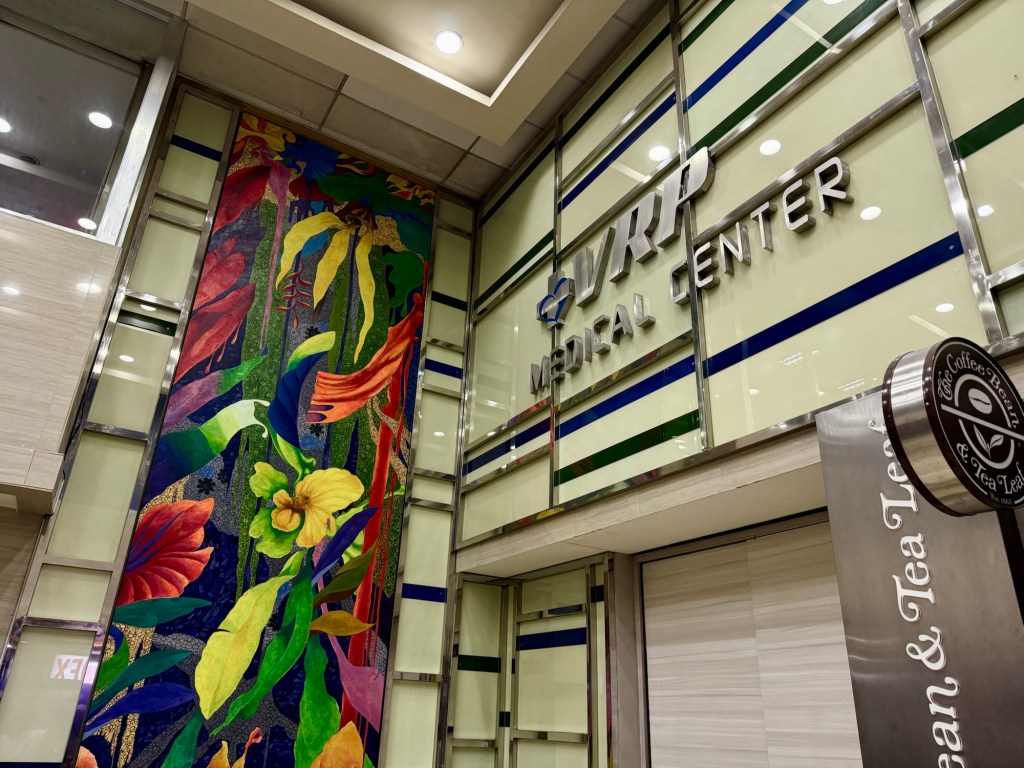
But when I read that he was in the ER of a hospital in EDSA, I prayed and finally hit the number sent to me by a certain Byron to inquire about Kuya Jojo. After a brief introduction, I was told Kuya Jojo had just died after being rushed that morning to the Victor R. Potenciano Medical Center (VRPMC) in EDSA, Mandaluyong City.
Kuya Jojo was allegedly found by a janitress lying on the floor in one of the restrooms of Shangrila Mall morning of July 14, 2025. He was rushed by the mall’s emergency response team to the ER of VRPMC where doctors tried to revive him but later declared as dead around noon that Monday.
The people at the ER checked Kuya Jojo’s contacts in his cellphone and like my initial reaction, his former staff and colleagues at work thought it was also budol until after they have personally called the hospital with some of them going there to verify the report.
That was when Byron and his colleagues at NEDA who were under Kuya Jojo tried reaching out to us by checking his Facebook contact lists of “Lalog” and “Tobias”. And similarly, we all suspected it could be a scam because Kuya Jojo had always been healthy without any vice at all. He was a varsity of the track and field team at De La Salle University where he finished AB Political Science.
What convinced me to set aside my doubts and press that number provided by Byron was his message that my Kuya Jojo would always speak to him about my being a priest. He asked in one of his texts, “kayo po ba si Father Nick pinsan ni Sir Jojo?” With that, I finally felt deep inside this must be true. Not a scam. Or budol.
Mahirap palang maging netizen, mabuhay sa internet.
You know that daily or maybe every second of struggles just to verify and check whether those messages and information in the social media are true or not.
Baka niloloko ka lang? O, ako lang ang OC, takot at duda sa social media?
Ang hirap lalo na sa gitna ng maraming kuwento ng pangloloko at mga budol ng kung sino sino sa social media at internet na kahit kaming mga pari niloloko o ginagamit sa pangbubudol!
At ang pinakamahirap sa lahat – kapag binabanggit na pangalan ng mga taong malapit sa iyo katulad ng pinsan kong buo na si Kuya Jojo. Ang hirap at nakakatakot paniwalaan mga texts na namatay o kung napano na…
That entire stretch of travel from Cabanatuan City to EDSA, I felt being warped between reality and virtual reality, between the net and the real world. What if this is not true? Paano ako?
Aside from those things running in my mind, I was also thinking of my elder relatives. How am I going to break the news? How reliable were those people if they were really the colleagues and staff of my cousin even after I spoke to one of them on phone?
As I thought of my cousin lying on the floor of the CR of the mall, suddenly I remembered last Sunday’s gospel of the good Samaritan. It was like a modern version. My cousin almost dead or already dead on the marble floor of the restroom when a janitress had the courage and mercy to call their emergency response team.
Most of all, of the most kindred souls of Kuya Jojo’s friends and colleagues who never gave up on reaching out to us. They are all the modern good Samaritans who “treated him with mercy” (Lk.10:37).
Photo by author, 14 July 2025.
I arrived 4:30 PM in the hospital where the ER doctor in charge briefed me of Kuya Jojo’s death. Soon Byron arrived and told the doctor my cousin’s medical condition while the funeral service sent by my uncle in Los Baños finally arrived at around 8:00 PM.
At the morgue, I gave the final blessings for Kuya Jojo before being transported to Los Baños where his wake will be held at the Heaven’s Gate Memorial Park in Bgy. Anos. After thanking and blessing Byron and the hospital staff, I booked my ride home as I had earlier sent home our university driver to rest for another trip to our Pampanga campus the following morning.
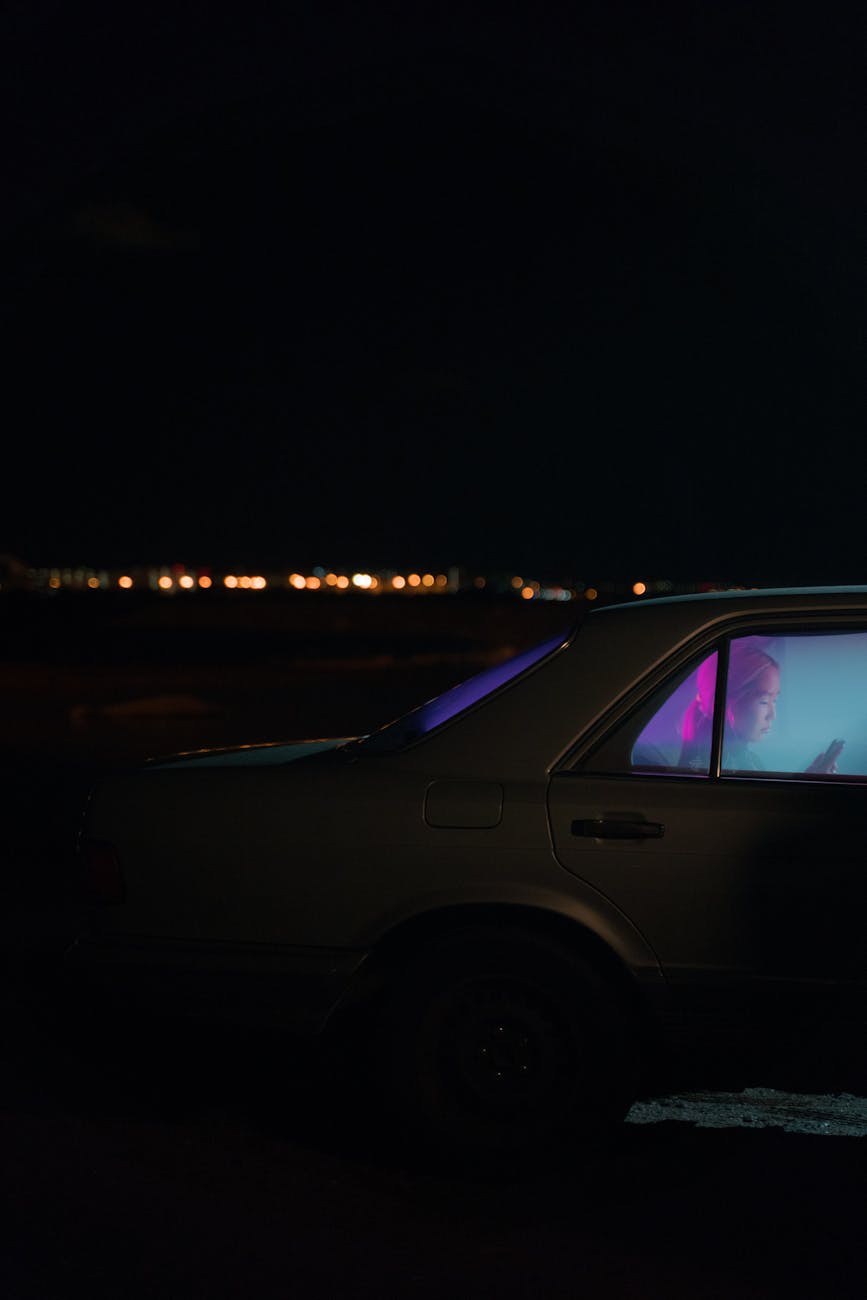
In less than ten minutes I was on board my Grab ride to Valenzuela City, still wondering what had happened that Monday. As I scrolled on my Facebook and Instagram with its bright light filling my ride, I felt a sense of relief that Jesus is very much present in the internet, in social media. St. Paul wrote it so well more than 2000 years ago that “where sin increased, grace overflowed all the more” (Rom. 5:20).
No matter how bad we see the world including the internet these days with its many sins and evil, God assured me that night that there are still far more good people, good Samaritans than evil ones. We simply have to make the right choice always by choosing Jesus who remains “the way, the truth, and the life” (Jn. 14:6). God bless everyone!
*Thank you to the staff and colleagues of the late Joseph T. Lalog at the NEDA. We do not have yet the details of his wake and interment as his sisters are arriving only this Thursday. On behalf of our clan, thank you and may God bless you more!
Quiet Storm by Fr. Nicanor F. Lalog II, 07 July 2025
Photo by author.
For the first time in 25 years since daddy’s passing, I did not deliver any homily during his death anniversary Mass in our home last June 17, 2025. My sisters readily agreed when I told them after the gospel proclamation “hindi na ako mag-homily at baka maiyak lang tayo.”
It was the second time we celebrated daddy’s death anniversary after mommy’s passing last May 7, 2024 but, it was only at that time when I truly felt the deeper realities of both parents being gone, of being “ulilang lubos”.
Perhaps that’s because we have been preoccupied for over two decades with mommy’s grief when dad passed away right on her 61st birthday before dawn of June 17, 2000. We were at a loss how to pacify her with such a surreal date for the two most loving couple we have known first hand. During my dad’s wake, we have to warn everybody not to mention anything about mom’s birthday.
From then on, mommy practically stopped celebrating her birthday even when she turned 70, 75, and 80 as we threw small gatherings at home for her siblings and friends but she would always remind us all not to forget it was also daddy’s death anniversary.
That is why I have always dreaded the days approaching June 17 because I felt sad for her. I thought after her death last year, it would be different because we would no longer see mommy sad on her birthday mourning dad’s death. I told myself, “hindi na malulungkot si mommy… hindi na rin kami malulungkot.”
But I was wrong.
Hindi na nga malungkot ang mommy ko ngayon pero ako naman ang malungkot – malungkot na malungkot. Noon ngang araw ng Linggo bago mag-June 17, naalala ko ang mommy at daddy bigla kaya naluha ako sa bahagi ng Ama Namin noong aming Misa sa Dambana.Wala na sila dito. Iyon una ko nadama, ulila na nga kami at saka pa lamang naisip ko magkasama na sila sa buhay na walang hanggan.
Indeed, the pains of losing our loved ones never decrease through time but actually increase. Those pains will remain until we are reunited with them in death and eternity.
There are pains in life meant to remain, that cannot be removed like a hole or a scar in our hearts not to burden nor hurt us but to uplift us actually. These wounds keep us in persevering in love to keep our relationships alive with those left behind after the deaths of our loved ones like parents or children. These wounds enable our hearts to sing of faith, hope and love in God all merciful who would one day unite us all together as one family after our days on this earth. These pains make us see the very thin line separating us from eternity, telling us that life goes on among us even after death. They open our eyes to see beyond, to have visions of the future.
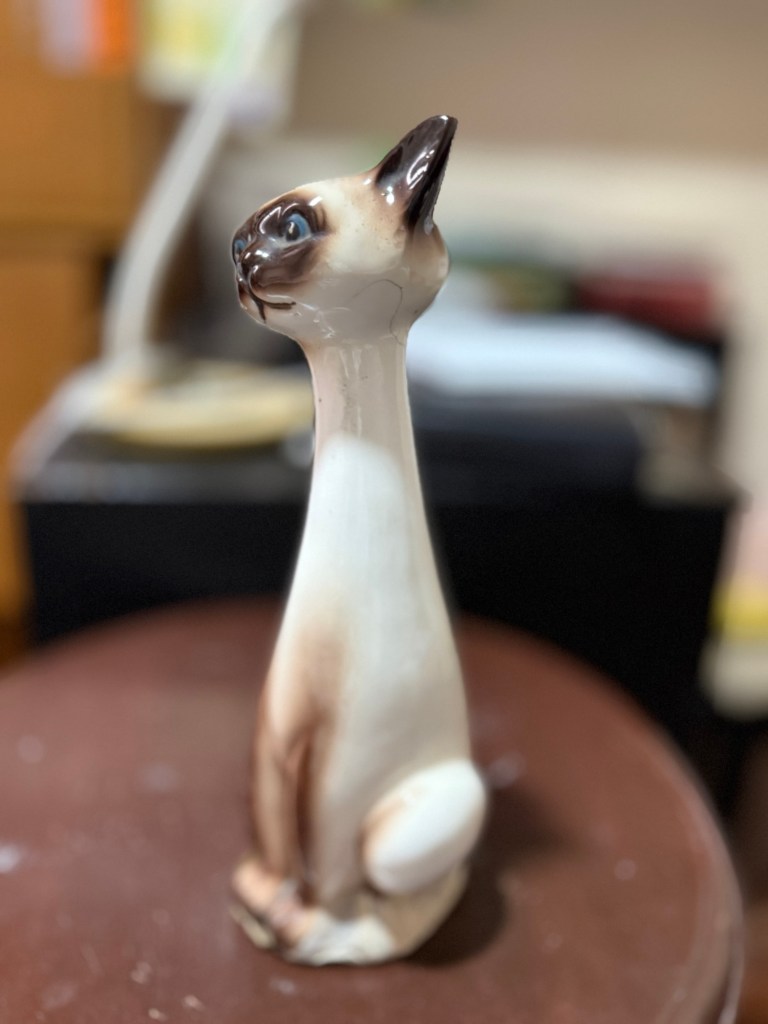
Photo by author, my mom’s kitty bank, 10.5 inches to the tip of ears.
While these things were running through me during our family dinner that night, my brother presented to me mommy’s “kitty bank” which is older than I am, 61 years old. It is one of her most cherished possessions she truly took great care as far as I can remember.
I have been thinking about it recently if it were still around though I never had any interest with it when growing up as a child except that I enjoyed counting the rare coins inside mostly dating back to the American occupation with the usual designs of the US flag and an eagle.
That evening on dad’s 25th death anniversary that could have been mom’s 86th birthday if she were still alive today, I felt a very strong attraction with that “kitty bank” whose face seemed to be speaking to me.
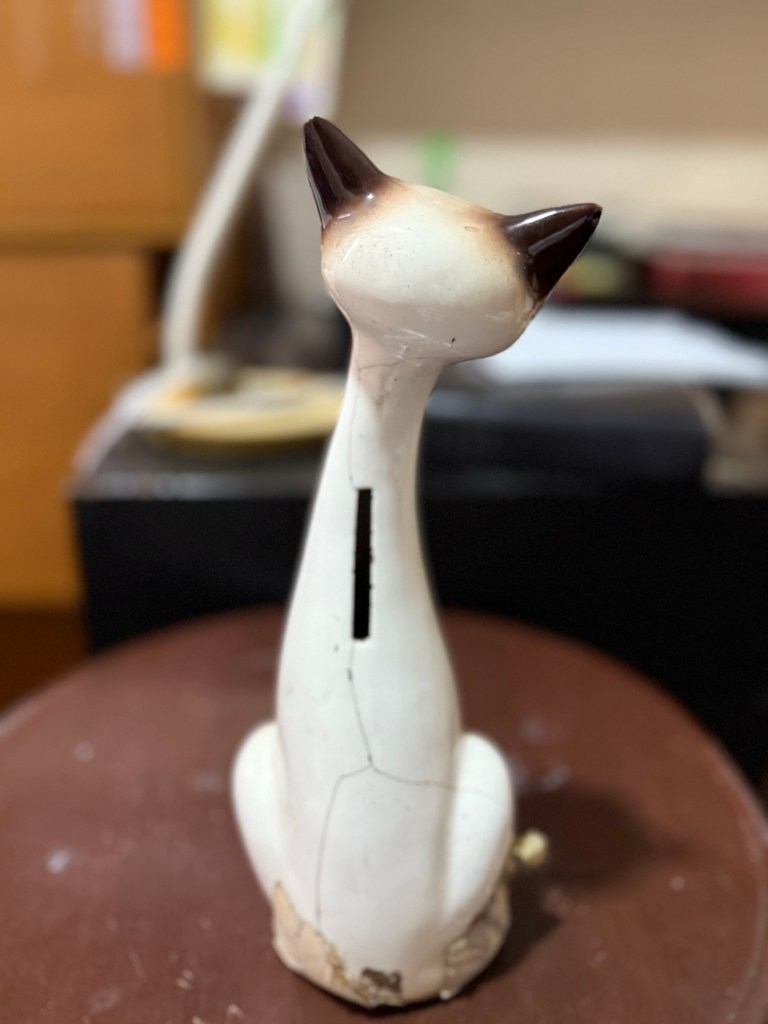
Photo by author, my mom’s kitty bank, circa 1964.
As I held it closer to see its many fissures and tapes following the wear and tear of over 60 years, I saw mommy again, of how she loved us and life so much, especially cats, dogs and fish, and most of all, plants- being a certified tita herself. Our house may be small but mommy lovingly took care of her pets and plants, always talking with them even after having a stroke.
Like the cat with its nine lives, death is never the end but the prelude to new life or, more lives hereafter.
And that is the nobility and giftedness of every mother – even after they are gone, they continue to bring forth and nurture life. God bless everyone… and the cats.
Quiet Storm by Fr. Nicanor F. Lalog II, 22 April 2025
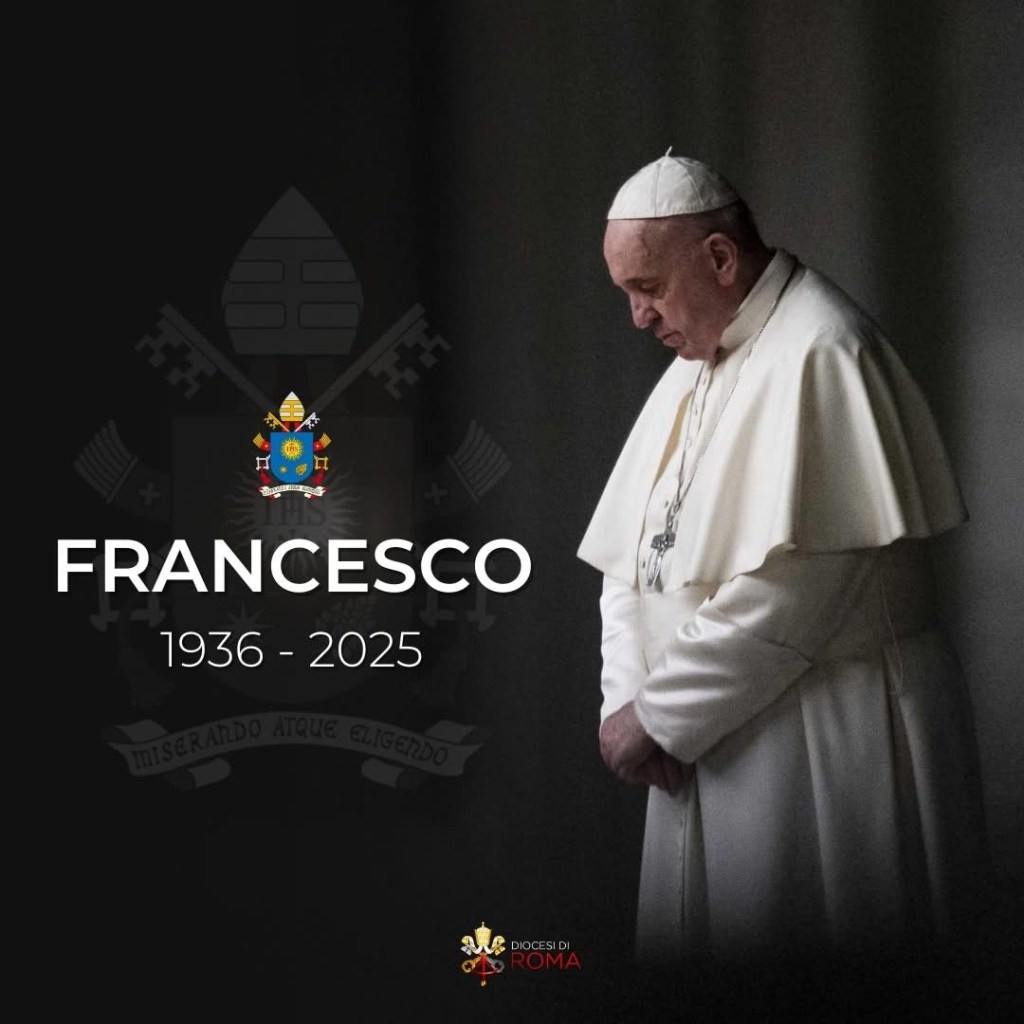
Easter is God surprising us with every death of a loved one as a testament of the Resurrection of his Son and our Lord Jesus Christ. What a big surprise this afternoon right after Easter, we all heard the news of the death of the Holy Father, Pope Francis.
Of course, there was the sadness and surprise of the news but deep within us as the news sank deeper is the joy of his being with God in eternity.
The first Pope from South America, Cardinal Jorge Mario Bergoglio of Buenos Aires, Argentina broke many traditions in the papacy first when he picked a name never been used by his predecessors, choosing instead a non-priest saint known for simplicity and humility, St. Francis of Assisi.
When he was presented to the city and the world (Urbi et Orbi) as the new Pontiff, instead of blessing those present at St. Peter’s Square, Pope Francis announced first his request for prayers from the people before blessing them eventually as every new Pope would do.
Yesterday at his Easter Message to the people, Pope Francis spoke about death and eternal life, of how “the Risen Christ fills us with the certainty that we too are called to share in the life that knows no end, when the clash of arms and the rumble of death will be heard no more.” In life, Pope Francis faced head on the many problems of secularism and materialism in the world, becoming the voice of the poor and the marginalized with mercy of God as one of his major themes in his papacy.
During the COVID pandemic of 2020.
Personally, his most defining moment as a Pope happened during his special Message at the height of the pandemic in 2020 when despite his age and frailty, he walked through the empty St. Peter Square with courage and determination, faith and hope to lead us in prayers and love in crossing the turbulent sea of life amid the storm of COVID virus.
In life, Pope Francis proved to us like his two predecessor St. John Paul II and Benedict XVI the truth and reality of God amid a world that has continued to refuse his very existence and relevance.
In dying, Pope Francis showed us too like his two predecessors that death is in fact a blessing because it is a sharing in the Resurrection of Jesus Christ especially when you die in Easter.
St. John Paul II died on April 02, 2005 in the Easter Octave, the eve of Divine Mercy Sunday while Pope Benedict XVI died on the eve of the new year in December 31, 2022 during the octave of Christmas.
Octave refers to the eight day celebration of the major Solemnities of Easter and Christmas to remind us of its depth and meaning that cannot be grasp in just one day of the actual feast. Moreover, the eighth day or octave is actually signifies eternity: from Sunday to Saturday of every week we have seven days; octave as the eighth day is heaven.
How lovely that on Easter Sunday at the balcony of the Vatican, Pope Francis gave his blessings to the urbi et orbi anew to be his final one – consciously or unconsciously as he stepped onto the threshold of eternal life. It was his final homily too that was most eloquent, blessing us all in the “Name of the Father and of the Son and of the Holy Spirit.”
Thank you for blessing us, Pope Francis – Lolo Kiko – in life and in death. Amen.
Lord My Chef Sunday Recipe for the Soul by Fr. Nicanor F. Lalog II
Easter Sunday of the Lord's Resurrection, 20 April 2025
Sunrise and flowers at Angels’ Hills, Tagaytay City, Holy Saturday, 19 April 2025.
A blessed happy Easter to everyone! The joy of Easter is God surprising us of Christ’s Resurrection as our resurrection too even in the midst of emptiness and darkness of this life here on earth.
Surprisingly, it is only now that it occurred to me after 27 years as priest how our Holy Week readings began and ended with the women disciples of Jesus honoring his death. Actually, the readings of Holy Week and Easter do not change except for the three cycles of Easter Vigil and the two Masses of Easter.
On Holy Monday we heard the gospel about Mary of Bethany recognizing the coming sacrifice of Jesus by pouring “a liter of costly perfumed oil made from genuine aromatic nard” on the feet of the Lord and then dried them with her hair that “the house was filled with the fragrance of the oil” (Jn. 12:3). Last night and this morning we heard from Luke and John how Mary of Magdala with other women went to the tomb “early in the morning, while it was still dark” to anoint Christ’s body with oil but found him nowhere!
Here is our God of surprises at work; but, unlike those funny and annoying surprises from the pranks we see on TikTok and social media, God’s surprises are real, so true, and so touching because they are life-changing which began in that Easter morning!
Illustration of the empty tomb of Jesus.
Mary Magdalene at Easter.
Mary Magdalene and another woman on the way to the tomb of Jesus early Sunday morning.
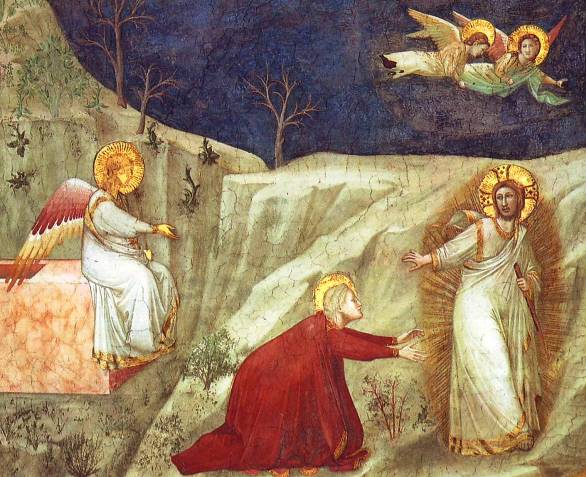
Jesus appearing to Mary Magdalene on Easter morning.
During my recent annual retreat, my spiritual director asked me to pray and write the blessings I have received in the past twelve months. After five days of praying, I listed only six but they were mostly ordinary things I have taken for granted in life except the fourth one – my mother’s death last May 7.
I was surprised when that came to my prayers because it was painful and difficult time for me. So many things have changed in my life since mommy left us and there lies the paradox and mystery of life and death. It was in her dying when I felt anew so close to God.
First, God surprised me with the tremendous outpouring of love and support from so many people during her wake. Second, despite the grief and depression that followed a few months later, I still felt so blessed and closest to God with the unique intensity of the relationships we keep and instilled by our mom which we have taken for granted all these years. And third, I have experienced and realized how death is profoundly good in so many ways because it was after mommy’s death when I found the answers to my many questions about life. With her death, the more I appreciated the grace of my father’s sudden death 25 years ago right on her birthday.
That is the grace and surprise of Easter: in Christ’s dying and rising to life, death has become a blessing to us all as we have come to share in his glorious resurrection too.
Despite that feeling of emptiness within and in our homes, of the irrevocable reality they are gone forever never to join us in our meals and bonding like Christmas, of never hearing their voices again nor be able to hug and embrace them can be shattering, the angel’s reminder to Mary Magdalene and companion women at the empty tomb echoes in our hearts too: “Why do you seek the living one among the dead? He is not here, but he has been raised. Remember what he said to you while he was still in Galilee, that the Son of Man must be handed over to sinners and be crucified, and rise on the third day.” And they remembered his words (Luke 24:5-8).
Photo by author, Mirador Jesuit Retreat House, Baguio City, 2017.
Every deceased loved one is a testament of Easter, of Christ’s resurrection because they all assure us they are alive and living, never to die again like Jesus. That feeling of somehow seeing them again is a tension borne out of the reality of Easter as supranatural and non-logical. Hence, the call for us like Mary Magdalene to always remember!
Remember!
Not only the painful Good Friday but most of all the words of Christ, the experiences with Christ, the love and hope of Christ there in our hearts. Every time we remember the words and memories of our deceased loved ones, they too point us to the realities of Christ’s resurrection. Jesus and our loved ones will always be one of us, among us.
The word remembering literally means to make a person and an event a “member” of the present moment again, that is, “RE” + “MEMBER”.
That is the greatest surprise of Easter – in the Resurrection of Jesus, there has now come a bond among us all, both living and deceased that cannot be broken, that continues today and hereafter.
That is what Peter was telling his fellow Jews on Pentecost Sunday, asking everyone to remember the words and life of Jesus Christ for that is where we find the surprising moments of life we never realized because we took them for granted.
That is why Paul tells us in the second reading to “seek what is above” – the spiritual things and not the material things because that is where we truly belong. That is where we experience again in the most unique and surprising way the presence of Jesus and of our deceased loved ones.
Great surprises happen on the unseen realms of realities giving meaning to what we see and perceive and feel. In that moment we are surprised that we are suddenly enlightened of why deaths and loss happen because there is something better, more real about to unfold. That moment is a hairline between the temporal and eternal when we get a rare glimpse and taste of the Lord risen, of heaven itself.
Photo by author, Mary of the Poor, Sacred Heart Novitiate, Novaliches, QC, 17 March 2025.
When my mother died last May, I must confess how I had to swallow many of the homilies I have shared in the past because they are so far from the realities of losing a loved one. That is when we realize too the great surprising truth of how death makes us more whole than before. We feel transformed when what we know and what we feel become one and integrated. It is like the feeling of “a basta!” in Tagalog.
Our task and mission is to be like Mary Magdalene, to proclaim the Lord is risen, to awaken everyone of the many surprising moments of God with us in Jesus which we have taken for granted.
Not every death is the same but all deaths are one in Jesus Christ – a grace, a blessing, a reminder of Easter, of our own resurrection. Now, right here.
With mommy’s death last year, now I have realized too why Jesus appeared first to women on Easter and that is because they, especially mothers have the most intimate link with us here on earth. The umblical cord is never cut off because mothers are the first to believe in their children, the first to believe in God that is why they are our first catechists too. Women and mothers especially are the most intimate persons that they have visions that go beyond sights, enabling them to be surprised most often. Has God ever surprised you in unexpected ways like Easter? Or death and loss? Amen.
From Facebook, 04 April 2021: “There is an urgency to announce the Joy, the joy of the Risen Lord.”
Quiet Storm by Fr. Nicanor F. Lalog II, 03 February 2025
Photo from the Presentation Chapel of the Basilica of the National Shrine of the Immaculate Conception in Washington DC.
Every night before going to bed, we priests and religious along with some laypeople pray the Compline or Night Prayer of the Liturgy of the Hours. From the Latin completus, the Compline completes the daily prayers of the Church.
It is also my most favorite since our seminary days when we chanted Simeon’s Canticle which we heard proclaimed in yesterday’s gospel in the celebration of the Feast of the Lord’s Presentation.
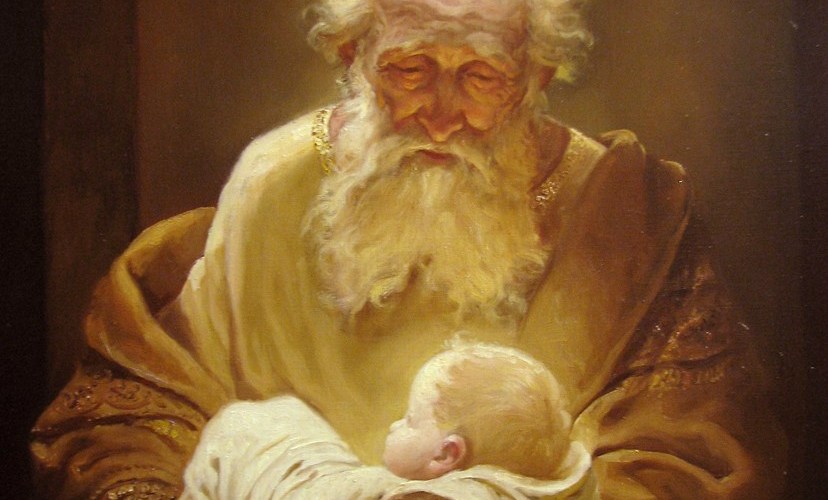
He (Simeon) came in the Spirit into the temple; and when the parents brought in the child Jesus to perform the custom of the law in regard to him, he took him in his arms and blessed God, saying: “Now, Master you may let your servant go in peace, according to your word, for my eyes have seen your salvation, which you prepared in sight of all the peoples, a light for revelation to the Gentiles, and glory for your people Israel” (Luke 2:27-32).
A painting of Simeon with the Child Jesus from the dailyprayerblog.blogspot.com
The Simeon Moment
is befriending death
as we find Jesus Christ.
The “Simeon Moment” is when we are like Simeon in realizing that nothing matters most in this life except God found within us and those closest to us like family and friends whom we would never trade for anybody and anything. It is finding true joy in Christ alone that we are able to befriend death like St. Francis of Assisi who called death a “cousin”.
According to Luke, God had promised Simeon that he would not die until he had seen the promised Messiah (Christ). All his life, Simeon prayed and offered sacrifices at the temple in Jerusalem awaiting the coming of Christ – and he was not disappointed even if it took so long! That is why, he burst into a song which we now pray every night because that is when we experience in the stillness of the darkness within and outside us that only Jesus and always Jesus who fulfills us.
Those who have cared and lost a loved one to cancer or any terminal illness have experienced that “Simeon Moment”. Remember when our loved ones have finally accepted their fate, when they suddenly become more emotionally stable and even joyful in their dispositions? Unlike before when they were first diagnosed with their illness, they were so afraid, always crying but as they came to embrace the reality, they cried less with a strong sense of courage while we are the ones crying more and most stressed out?
Photo by author, November 2024.
That is because the dying must have seen their their final destination in life, Jesus Christ. Like Simeon during the presentation at the temple after seeing and holding in his hands so close to himself the Holy Infant, we find the dying so calm and peaceful during their final hours because they have seen or were already in the presence of the Lord.
Like Simeon, they were silently joyful in Christ’s presence while we who were left behind cried not only due to the pain and sadness of separation but because we do not know where we are going, where we are heading unlike our departed loved ones.
Feel the courage and confidence of Simeon boldly telling God to “take him” at that instance because he had found Jesus Christ. Its Filipino translation says it so well, “Kunin mo na, Panginoon, ang iyong abang alipin, ayon sa iyong pangako, yamang nakita na ng aking mga mata ang iyong pagliligtas (Lk.2:29-30).”
We Filipinos often take it as a joke, always laughing to dismiss the topic or cope with the reality that to see God literally means to die like when we say “gusto nang makita si Lord”. But, that was how Simeon really felt because he had literally seen the Son of God, as if telling him to take him “now na!” because the Simeon Moment is therefore we have that realization within us that coming to terms with death is coming to terms with life, and vice versa.
Photo from crossroadinitiative.com.
The Simeon Moment
is living in the Holy Spirit
Wherever is Jesus Christ, there is always the Holy Spirit. We will never find Christ and have the Simeon Moment unless we are attuned first with Holy Spirit who animates us and opens us to Christ’s coming.
Imagine the great crowds of people at the temple on that day, of couples trying to fulfill the law of Moses of purification and presenting their first-born son to God. How did Simeon know Joseph and Mary were the parents of the Christ? How was he able to accurately spot and find Jesus is the Messiah amid the many male children being offered on that day at the temple?
“To come in the Spirit” like Simeon is more than being faithful to God; it is having a good and pure heart that is ready to believe and act openly with courage, always looking forward at the fulfillment of what we believe. Coming in the Spirit is being at the right place at the right time when we make things happen than wait, exactly how Luke portrayed Simeon and Anna who both lived in the presence of God! Coming in the Spirit is living in the present moment in God.
We cannot see Christ nor live in the Spirit unless we humbly submit ourselves to God, our Lord and Master. Seeing Christ and living in the Spirit presuppose humility before God – we His creatures, He our Lord and Master.
Most of all, our origin and our end too!
It is the principle and foundation of life as St. Ignatius of Loyola stressed in his Spiritual Exercises, “El hombre es criado para alabar, hacer reverencia y servir a Dios nuestro Señor, y mediante esto, salvar su anima”, that is, “Man is created to praise and serve God his Lord and Master and by doing this save his soul”.
There is something so beautiful and lovely, so touching in the opening verse of Simeon’s canticle that underscores firmly this basic truth we have always forgotten since the fall of Adam and Eve when he asked God to take him after seeing the Christ. Every time we sin, we act like Adam and Eve, playing gods, desiring to be like God.
Also known as Nunc Dimittis, Simeon’s canticle echoes the fiat of Mary to God during the Annunciation, expressing his fidelity and humility, his total submission to God. Most of all, it summarizes both the Magnificat of the Blessed Mother and the Benedictus of Zechariah, making Simeon’s Nunc Dimittis the finale in Luke’s Christmas “concert” on the birth of the Messiah.
This is the reason why we chant Nunc dimittis at the end of our Night Prayer. It is the perfect prayer to close each day as we prepare for the coming new day to meet Jesus again, hoping we may be enlightened in our life’s mission expressed by the antiphon we recite before and after chanting it, “Protect us Lord as we stay awake; watch over us as we sleep that awake we may keep watch with Christ and asleep rest in his peace”.
Or, if ever we ever do not wake up the following day, we still thank God all the more in making us meet Jesus the past day, eager to finally sing to him our praises in eternity with Night Prayer’s final blessing, “May the Lord grant us a restful night and a peaceful death”.
The Simeon Moment is a grace and gift Jesus gives us daily not only for the dying but to everyone of us seeking Him, awaiting Him like Simeon. And like Simeon, we are assured that anyone who seeks and awaits God is never disappointed. Have a blessed day in Christ Jesus! Amen.
Photo by author, sunrise bursting through thick fogs over Taal Lake in Bgy. Dayap Itaas, Laurel, Batangas, 17 January 2025.
The Lord Is My Chef Daily Recipe for the Soul by Fr. Nicanor F. Lalog II
Tuesday in the Thirty-fourth Week of Ordinary Time, Year II, 26 November 2024
Revelation 14:14-19     <*((((><  +  ><))))*>     Luke 21:5-11
Photo by author, San Antonio, Zambales, 19 October 2024
It happens so often,
Lord Jesus Christ -
just as when we are enjoying
something like a vacation,
exactly at that moment too
when it ends or, at least,
its coming end is felt and realized?
While some people were speaking about how the temple was adorned with costly stones and votive offerings, Jesus said, “All that you see here – the days will come when there will not be left a stone upon another stone that will not be thrown down.” Then they asked him, Teacher, when will this happen? And what sign will there be when all these things are about to happen?” (Luke 21:5-7)
What a paradox,
a mystery so beautiful
that inspires us to live more fully
than sulk with life's sure endings
like what your words tell us today:
I, John, looked and there was a white cloud, and sitting on the cloud one who looked like a son of man, with a gold crown on his head and a sharp sickle in his hand (Revelation 14:14).
Endings are beginnings,
Lord; everything and everyone
shall end in order to begin anew;
despite the destruction,
endings happen to build up
new beginnings,
to signal another start.
Teach us, dear Jesus,
to be ready always,
to prepare for our endings
by living fully,
celebrating life
in your love that
banishes all fears
like death and
endings.
Amen.
The Lord Is My Chef Sunday Recipe for the Soul by Fr. Nicanor F. Lalog II
Thirty-Third Sunday in Ordinary Time, Cycle B, 17 November 2024
Daniel 12:1-3 ><}}}}*> Hebrews 10:11-14, 18 ><}}}}*> Mark 13;24-32
Photo by author, the Mount of Olives as seen from the Temple of Jerusalem, May 2019.
We are now at the penultimate Sunday of our Church calendar ending on the Solemnity of Christ the King next week to usher in the four Sundays of Advent before Christmas. That is why every 33rd Sunday, we hear Jesus speaking about the end of everything to usher in new beginnings in Him.
Jesus said to his disciples: “In those days after that tribulation the sun will be darkened, and the moon will not give its light, and the stars will be falling from the sky, and the powers in the heavens will be shaken. And then they will see ‘the Son of Man coming in the clouds’ with great power and glory, and then he will send out the angels and gather his elect from the four winds, from the end of the earth to the end of the sky” (Mark 13:24-27).
After spending a day of teaching at the Temple wherein the Twelve were so impressed with its beauty, Jesus warned them of its impending destruction, explaining it further as they proceeded to rest on Mount of Olives overlooking Jerusalem below with the magnificent Temple.
No, Jesus was not a “KJ” at all.
Jesus was simply telling His disciples including us today of life’s natural cycles of endings and beginnings. Actually, long before Jesus came, people have always been preoccupied with thoughts of the “end of the world” – with or without God – which persist to these days.
Jesus reminds us this Sunday that indeed, the world is going to end but, it is not just a catastrophic end destroying everything. It is an end with a direction, to God and eternal life. It is an end we have to joyously await and prepare for as a new beginning in Jesus Christ.
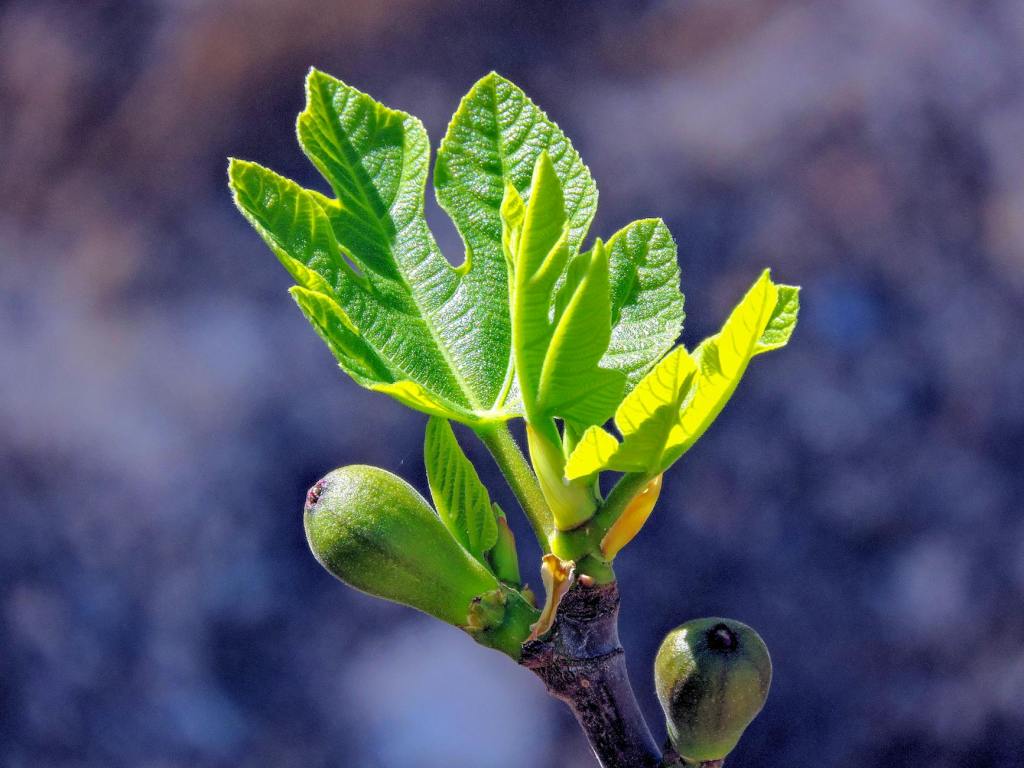
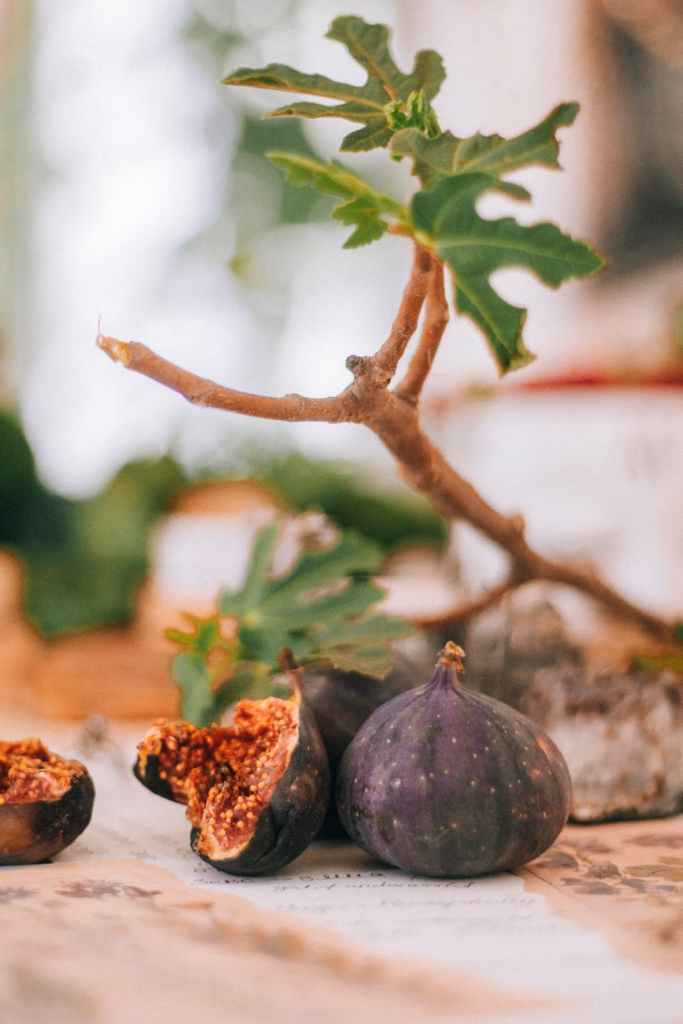
“Learn a lesson from the fig tree. When its branch becomes tender and sprouts leaves, you know that summer is near. In the same way, when you see these things happening, know that he is near, at the gates… But of that day or hour, no one knows, neither the angels in heaven, nor the Son, but only the Father” (Mark 13:28-29, 32).
"Learn a lesson from the fig tree."
Again, Jesus spoke here in parable which is also the word for “lesson” in Mark’s original Greek writing of the gospel. A parable is a simple story with a deep, profound reality and lesson. That is why Jesus used it so often just like here a few days before His Pasch.
And this is the lesson or parable of the fig tree that Jesus spoke of: most of the trees in Jerusalem are evergreen that keep their leaves all year round despite the changing of season while fig trees are deciduous that shed their leaves in winter and summer. This changing condition made the fig tree a perfect parable about the end of the world that Jesus was speaking of – an end of the season to usher in a new one!
In theology, we call this study of the “end” or “last” things as eschatology. There are two kinds of last things in life that we deal in eschatology: our individual end in our death (particular) and the parousia which is the Second Coming of Jesus Christ at the end of the world (general).
Of course, it is always fearful to think of both endings. We hate endings because they are good byes. However, we know deep inside ourselves too that despite that “sweet, sweet sorrow” of every ending comes also a more wonderful hello, a more amazing new beginning. In reality, there are no endings but more beginnings: when children move out of the home to study, they begin their adult life in college; later on, they leave home for good to get married to start a family of their own. Life is a cycle of beginnings and ends that goes on and on and on.
The trick is really to learn the lesson of the fig tree, that is, to live our lives to the fullest in each season and phase, to learn to let go of the past, to savor every present and look forward to every tomorrow. Yes, it is easier said than done but, as we mature and age gracefully in Jesus Christ, we become fulfilled, less stressed amid the many things we are totally unaware and ignorant of what both particular and general endings would bring us.
In presenting to us the parable or lesson of the fig tree regarding the end of our lives or the end of the world – both of which nobody knows when – Jesus is actually encouraging us to live more faithfully in Him and His gospel.
It is useless to know the precise date and hour of both endings nor the exact indications of its imminence; what matters most is that every moment of our lives, we live in Jesus Christ our High Priest who had offered Himself for our salvation (second reading). There is no point in interpreting even visualizing how St. Michael would battle the devil at the end of time; what the prophet Daniel is telling us is how we are assured of victory and salvation in the end if remain faithful to God (first reading).
Live fully by celebrating life. All throughout the year, we have heard Jesus reminding us, assuring us how much He loves us so immensely that is why He became human like us; in His coming, He joined us in all our sufferings except sin to show us that the path back to the Father in heaven is through the path of His Cross.
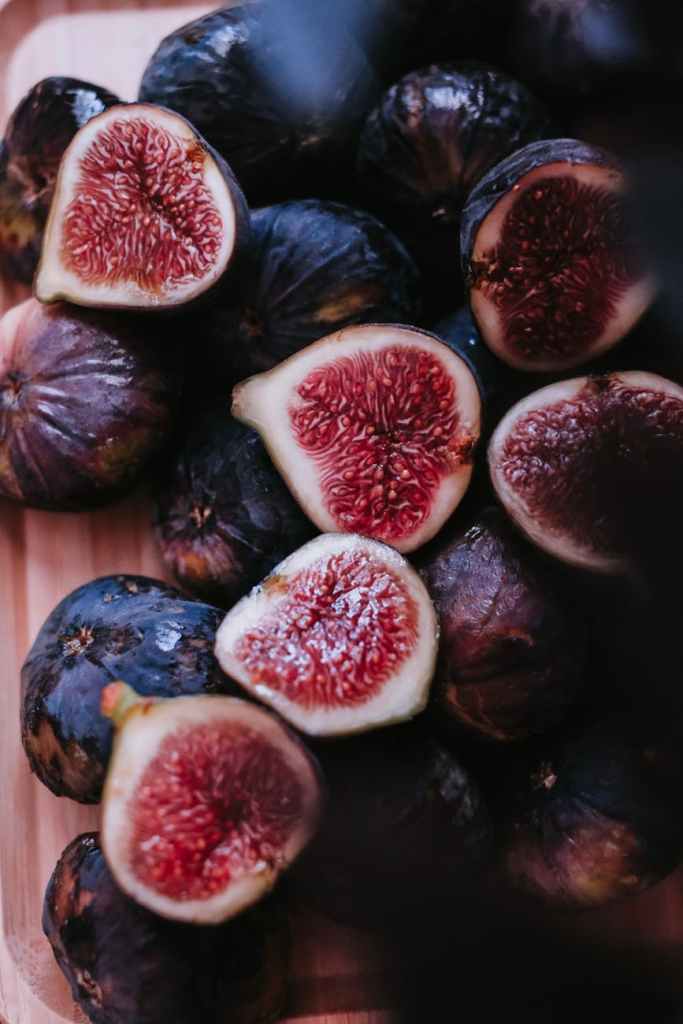
Despite my coming to Israel thrice, I have never tasted a fresh fig but have always loved it even better than dates. Its sweet taste and tiny bits of seeds inside make it always a pleasure to eat. If we can truly learn its lesson, we can end up like figs too – delightfully sweet inside.
I recently bought an electric shave as an early Christmas gift to myself. I really don’t mind seeing my hair including mustache and beard turning grey and white; what bothers me lately is how my skin has become so easily irritated by my razor. Yes, I am getting older with skin sagging and add to that a vision getting blurred that shaving with a razor every morning is no longer fun but short of an agony.
As I examined my new shave set, I remembered a Japanese saying I used to tell young people before in my talks and recollections, “Growing up is nice, but sometimes painful.”
Indeed, growing up is nice – and ageing is even nicer though twice painful sometimes.
Like the fig tree, I can sense losing a lot of myself daily, yet becoming more tender and softer in the process, simpler and more joyful, perhaps. To my fellow 59ers and above, May the Lord Jesus lead us through the end in His loving embrace. Amen.
Quiet Storm by Fr. Nicanor F. Lalog II, 04 November 2024
Photo by author, Nagsasa Cove, San Antonio, Zambales, 19 October2024.
Lately I have noticed my getting delayed of turning calendars in my room. Normally, I would be late for only a day or two but since June, it has sometimes taken even weeks. Worst was September when it was already about to end when I noticed my calendars stuck in August!
There are three calendars in my room: first is the large type given away by hardware stores located at the back of my entrance door which I could read from my bed with its big fonts; second is an average-sized religious calendar with pictures of saints and dates of their feast I keep in the closet so I would see every morning when I put on my clothes; and the third one is a table calendar on my desk where I work. That’s the only one updated and most used but the other two bigger ones, I fear are slowly becoming obsolete to me like the alarm clock (because I always wake up ahead of its alarm).
As I age, calendars along with watches seem to be irrelevant with me.
Personally, it is ironic because I have long kept a sort of relationship with calendars, keeping them along with some planners since college in the 1980’s. I don’t know why. Basta – I love looking at old calendars, giving me that sense of joy within when I literally look back in time, recalling the reminders and important events I have jotted on them decades ago.
But now, sadly as I recall this major change in me, I feel to have lost that “lovin’ feeling” I used to have with calendars that have been replaced, of all things, by medicines.
You read it right. I now reckon time, especially the months not with calendars anymore but with maintenance meds I take daily – 30 days – to keep my sugar, blood pressure and cholesterol in control as well as my prostrate to remain “gentle”. Once a week, usually on a Monday morning, I fill my medicine dispenser with all the meds I will be taking from Sunday to Saturday.
It always funny when I do this weekly ritual like playing sungka: there are times I wonder with some irritation why my meds are getting fewer. That is when I realize the month is almost over and I have to buy again another 30 pieces of my meds for the next 30 days. And that is how I now count the days of each month…
Whenever I would do this ritual, Mitch Albom’s novel “The Time Keeper” comes to mind, reminding me of the value of time we often take for granted. I cannot recall in which part of the novel where one of the characters realized that “the reason God limits our days is to make each one precious.” Very true. It is said that “it is not time that is passing by but you who are passing by” because we cannot bring back time we have wasted with its opportunities to grow and learn, to live and love, to celebrate and laugh.
Lately I have been thinking if I am just going through a phase as I approach the age of 60 that would be in March next year. Is this part of getting old, of maturing?
Most likely.
Photo by author, Nagsasa Cove, San Antonio, Zambales, 19 October2024.
How funny, even stupid how we have kept ourselves busy all our lives, complaining about time when time has always been on our side.
Maybe one of the reasons why elder people mellow as they age is that we are no longer so concerned with time as something separate from us, divided into parts we try to gather and hold because the truth is, time is the reality itself, we are a being-in-time, not distinct from us nor apart, but always our wholeness. It does not really matter if it is the past or the future but always the here and the now, the present.
Time in its entirety is a cosmic reality within us which we cannot fully grasp yet. Not yet. That’s what we call heaven, which is already here but not yet. And achievable. Let me explain.
It seems to me that at the age of 59, our main task in life is to live fully in each moment. Though I would admit I am afraid of dying, death is something we must befriend. Coming to terms with life is coming to terms with death, and vice versa. When that happens, then, we have arrived truly in life. That’s heaven, Just in time. This we experience so well when we truly love as this anonymous saying tells us:
Time is fast for those who rush;
Time is slow for those who wait;
Time is not for those who love.
“Time is not for those who love” is what the Greeks refer to in their other word for time called kairos or “fullness of time”. It is the time of the Lord, when we are one with God in Jesus Christ. It is that moment when everything falls into its right places which I believe is what Paulo Coelho referred to in one of his novels “when the whole universe conspires in your favor.”
The other word for time by the Greeks is kronos from which the word chronology came from to refer to the the succession and measurement of time in seconds, minutes, hours, days, weeks, months and years; kairos is the fullness of time. Again, from Albom’s “The Time Keeper”, there is this line that says, “If you you are measuring life, you are not living it.” Same thing holds true with time; if we keep on measuring it, we shall never have it nor enjoy it.
Photo by author, Nagsasa Cove, San Antonio, Zambales, 19 October2024.
While there in Nagsasa Cove, one of the songs that kept playing at the back of my mind was Steely Dan’s Time Out Of Mind from their 1980 album Gaucho. Despite the critics’ insistence of its strong links with heroin use which I have never tried, it is one of my top favorite songs by the Steely Dan gods, Donald Fagen and the late Walter Becker. Oh how I imagined them telling me this…
Son you better be ready for love
On this glory day
This is your chance to believe
What I've got to say
Keep your eyes on the sky
Put a dollar in the kitty
Don't the moon look pretty
Our world has become so complicated like Facebook. It is all palabas, a show. No meaning nor substance at all because we have been trying to capture and keep time instead of allowing it to capture us, envelop us so we can move more freely with it within to discover more of the outside. No stress, no pressures. No calendars too!
Just time out of mind. Thank you for bearing with me.
Lawiswis ng Salita ni P. Nicanor F. Lalog II, Ika-01 ng Nobyembre 2024
Larawan kuha ng may-akda, Sacred Heart Novitiate, Novaliches, QC, 20 Marso 2024.
Salamuch sa mainit na pagtanggap sa ating nakaraang lathalaing nagpapaliwanag sa ilang mga pamahiin sa paglalamay sa patay.
Sa ating pagsisikap na tuntunin pinagmulan ng mga pamahiin sa paglalamay, nakita rin natin ang kapangyarihan ng mga kaisipan ng tao na mahubog ang kamalayan at kaugalian ng karamihan sa pamamagitan ng mga ito.
Ang nakakatuwa po, mayroon namang praktikal na dahilan sa likod ng maraming pamahiin katulad po ng maraming nagtatanong, bakit daw masamang magwalis kapag mayroong patay?
Larawan kuha ni Fr. Pop dela Cruz, San Miguel, Bulacan, 2022.
Sa mga katulad kong promdi o laki sa probinsiya inabutan ko pa mga kapitbahay naming nakatira sa kubo at mga sinaunang tirahan na mayroong bubong na pawid at silong sa ilalim. Tablang kahoy ang mga sahig kung mayroong kaya at masinsing kinayas na mga kawayan kung hindi naman nakakaangat sa buhay. Ang silong palagi ay lupa din, mataas lang ng kaunti sa kalsada. Bihira naka-tiles noon. Kaya, masama ring ipanhik ng bahay ang tsinelas o bakya o sapatos kasi marumi mga ito.
Masama o bawal magwalis kapag mayroong lamay sa patay kasi nakakahiya sa mga panauhin na nakikiramay – mag-aalikabok sa buong paligid! Liliparin mga lupa at buhangin kasama na mga mikrobyo.
Marumi, sa madaling salita. Kaya ang utos ng matatanda, pulutin mga kalat gaya ng balat ng kendi o butong-pakwan. Noong mamatay Daddy ko, hindi ko matandaan kung tinupad namin pamahiing ito pero hindi ko malimutan paano nilinis ng mga kapit-bahay aming bahay nang ihatid na namin sa huling hantungan aking ama. Bagaman bawal magwalis noong lamay, asahan mo naman puspusang paglilinis ng mga kapit-bahay at kaanak pagkalibing ng inyong patay.
Kapag ako po ay tinatanong kung “naniniwala” sa pamahiin, “hindi” po ang aking sagot kasi iisa lang aking pinaniniwalaan, ang Diyos nating mapagmahal. Tandaan turo ni San Pablo noon sa marami niyang mga sulat, hindi mga ritual at kaugalian nagliligtas sa atin kungdi tanging si Kristo Jesus lamang.
Bakit lamay o "wake"
ang pagbabantay sa patay?
Nakakatawa at marahil mahirap paniwalaan sagot sa tanong na iyan. Ang paglalamay ay hindi pagtulog sa gabi dahil sa mga gawain at gampanin kinakailangang tuparin. Wake ang Inggles nito na ibig sabihin ay “gising” tulad ng awake.
Naglalamay ang mga tao noong unang panahon lalo na sa Europa kapag mayroong namamatay upang matiyak na talagang namatay na nga kanilang pinaglalamayan. Inihihiga ang hinihinalang namatay sa mesa habang mga naglalamay ay nagkakainan at nag-iinuman upang hindi antukin; higit sa lahat, baka sakaling magising at matauhan hinihinalang patay sa kanilang ingay.
Alalahaning wala pang mga duktor noon na maaring magdeklarang pumanaw na ngang tunay ang isang tao; kaya, hindi malayo na may pagkakataong ang mga inaakalang namatay ay nag-comatose lamang. Kapag hindi pa rin nagising sa ingay ng kainan at inuman ng mga naglamay ang patay pagsapit ng bukang-liwayway, ipinapalagay nila noon na tunay na ngang patay iyon at saka pa lamang pag-uusapan ang libing.
Nang maglaon sa paglaganap ng Kristiyanidad, ang lamay na dati ay kainan at inuman, naging panahon ng pagdarasal ngunit hindi rin nawala mga kainan at inuman sa mga lamayan upang huwag antukin. At higit sa lahat, para maraming makiramay na ibig sabihin, mabuting tao namatay.
Mga salita at kaalaman
natutunan dahil sa mga patay...
Heto ngayon ang magandang kuwento mula sa kasaysayan kung paanong napagyaman ng mga tradisyon sa paglalamay ng namatay ang ating mga wika maging kaisipan. Kitang-kita ito sa kulturang banyaga tulad ng mga Inggles.
Nagtataka maraming archaeologists sa ilang mga takip ng kabaong sa Inglatera ay mayroong kalmot ng kuko ng daliri. At maraming bahid ng dugo.
Napag-alaman sa pagsasaliksik na may mga pagkakataong nalilibing mga yumao noon na hindi pa naman talagang patay! Kaya, kapag sila ay nagkamalay o natauhan habang nakalibing, pinagtutulak nila ang takip ng kabaong hanggang sa pagkakalmutin upang makalabas hanggang sa tuluyang mamatay na nga sa libingan.
Kaya naisipan ng mga tao noon na magtalaga ng bantay sa sementeryo lalo na mula alas-diyes ng gabi hanggang pagsikat ng araw na siyang pinagmulan ng katagang graveyard shift – literal na pagtatanod sa sementeryo o “graveyard” upang abangan sakaling mabuhay ang nalibing.
Larawan kuha ng may-akda, libingan ng mga pari at hermanong Heswita sa Sacred Heart Novitiate, Novaliches, QC, ika-20 ng Marso 2024.
Ganito po ang siste: tinatalian ng pisi ang daliri o kamay ng bawat namamatay kapag inilibing. Nakadugtong ang taling ito sa isang kililing o bell sa tabi ng bantay ng sementeryo, yung nasa graveyard shift.
Nakaangat ng kaunti ang takip ng kanyang kabaong at hindi lubusang tinatabunan kanyang libingan upang sakaling magkamalay, tiyak magpipiglas ito sa loob ng kabaong para makalabas… tutunog ang kililing sa gitna ng dilim ng gabi para magising o matawag pansin ng bantay na agad sasaklolo upang hanguin ang buhay na nalibing.
Isipin ninyo eksena sa sementeryo sa kalagitnaan ng dilim ng gabi… at biglang mayroong kikililing? Sinong hindi matatakot sa taong nalibing na biglang nabuhay? Doon nagmula ang salitang dead ringer na ibig sabihin ay isang taong nakakatakot o kakila-kilabot. Ikaw ba namang magtrabao ng graveyard shift sa sementeryo at kalagitnaan ng gabi ay tumunog kililing… marahil magkakaroon ka rin ng tililing sa takot!
Kaugnay din nito, alam ba ninyo na mayroong nakatutuwang kuwento rin ang paglalagay ng lapida sa libingan ng ating mga yumao?
Balikan ang Bagong Tipan ng Banal na Kasulatan na nagsasaad ng isa sa mga pangunahin nating pinananampalatayanan: ang muling pagbabalik ni Jesus o Second Coming of Christ na tinuturing end of the world.
Takot na takot mga unang Kristiyano sa paniniwalang ito na baka wala pa ang Panginoon ay magsibangon kaagad mga naunang namatay sa kanila!
Ang kanilang solusyon, lagyan ng mabigat na batong panakip ang mga libingan tulad ng lapidang marmol upang hindi agad bumangon ang patay bago ang Second Coming of Christ o Parousia.
Isa iyan sa mga dahilan kung bakit sinesemento rin mga puntod at libingan: upang huwag unahan pagbabalik ni Jesus.
Larawan kuha ng may-akda, libingan ng mga pari at hermanong Heswita sa Sacred Heart Novitiate, Novaliches, QC, ika-20 ng Marso 2024.
Kahalagahan ng pagsisimba...
hanggang kamatayan...
bago ilibing.
Mula sa tahanan, dumako naman tayo ngayon sa loob ng simbahan para sa pagmimisa sa mga yumao. Pagmasdan po ninyong mabuti posisyon ng mga kabaong ng mga patay kapag minimisahan.
Kapag po layko ang namatay katulad ng karamihan sa inyo na hindi pari o relihiyoso… pagmasdan ang kanilang paa ay nakaturo sa dambana o altar habang ang ulunan ay nakaturo sa mga tao o nagsisimba.
Kuha ng may-akda, 2018.
Ito ay dahil sa huling sandali ng pagpasok ng sino mang binyagan sa simbahan, siya pa rin ay nagsisimba. Pansinin na nakaturo kayang mga paa sa altar at ulo naman sa pintuan dahil kapag siya ay ibinangon, nakaharap pa rin siya sa altar, nagsisimba, nagdarasal.
Kapag pari naman ang namatay, katulad ko (punta po kayo), ang aming mga paa ay nakaturo sa pintuan ng simbahan at ulo naroon sa direksiyon ng dambana.
Hanggang sa huling pagpasok naming pari sa simbahan bago ilibing, kami ay nagmimisa pa rin ang anyo: nakaharap sa mga tao kung ibabangon mula sa pagkaposisyon ng aming ulo nakaturo sa altar at mga paa sa pintuan.
Larawan kuha ng may akda ng pinakamahal at isa sa matandang sementeryo sa mundo; mga paa ay nakaposisyon sa silangang pintuan ng Jerusalem upang makaharap kaagad ang Mesiyas na inaasahang magdaraan doon kapag dumating. Ang totoo, doon nga dumaaan si Jesus pagpasok ng Jerusalem mahigit 2000 taon na nakalipas.
Salamuch muli sa inyong pagsubaybay sa ating pagninilay at pagpapaliwanag ng ilang mga pamahiin at paniniwala kaugnay ng mga namatay. Ang mahalaga sa lahat ng ito ay patuloy tayong mamuhay sa kabanalan at kabutihan na naka-ugat palagi sa Diyos sa buhay panalangin (prayer life) na ang rurok ay ang Banal na Misa.
Huwag na nating hintayin pa kung kailan patay na tayo ay siyang huling pasok din natin sa simbahan na hindi makasalita ni makarinig o makakita. Tandaan, ang pagsisimba tuwing Linggo ay dress rehearsal natin ng pagpasok sa langit!
Kaya ngayong todos los santos, unahing puntahan ang simbahan upang magsimba. Tiyak makakatagpo natin doon ang ating yumao sa piling ng Diyos, kesa sa sementeryo napuro patay at mga kalansay. Amen.
Larawan kuha ng may-akda, bukang-liwayway sa Camp John Hay, Baguio City, Nobyembre 2018.



















 lordmychef.com