Prayer is what “the Lord said”

Lord My Chef Sunday Recipe for the Soul, 19 October 2025
Twenty-Ninth Sunday in Ordinary Time, Cycle C
Exodus 17:8-13 ><))))*> 2 Timothy 3:14-4:2 ><))))*> Luke 18:1-8
Photo by author, sunrise at Camp John Hay, Baguio City, November 2018.

There are just five more weeks remaining in our current liturgical calendar and soon after the Solemnity of Christ the King on November 23, we shall usher in the new year with the season of Advent on November 30 – the four Sundays before Christmas.

That is why today and next Sunday, as Jesus nears Jerusalem Luke tells us more teachings of the Lord about prayer not found in other gospel accounts, namely, the parables of the unjust judge and persistent widow, and the Pharisee and the tax collector.

Remember that prayer is so central in the message of Luke in his gospel account as well as in the Acts of the Apostles wherein we see Jesus and the early Church always at prayer. For Luke, prayer is more of a relationship with God than a ritual, an expression of our faith in God. Hence, the need to persist in prayer like that widow in today’s parable by Jesus.

Jesus told his disciples a parable about the necessity for them to pray always without becoming weary. He said, “There was a judge in a certain town who neither feared God nor respected any human being. And a widow in that town used to come to him and say, ‘Render a just decision for me against my adversary.’ For a long time the judge was unwilling, but eventually he thought…’because this widow keeps bothering me I shall deliver a just decision for her lest she finally come and strike me.'” (Luke 18:1-5).
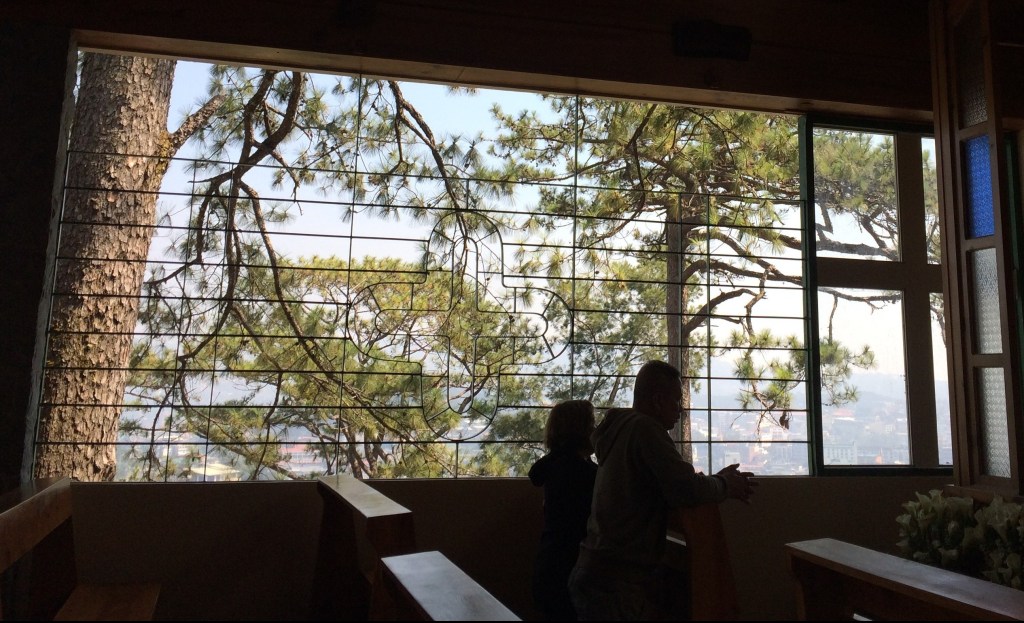
Photo by author, Our Lady of Lourdes Chapel, Baguio City, 2019.

While we are all very familiar with this parable, one thing needs to be clarified: many times we are indeed “persistent” in our prayers like that widow in the Lord’s parable but after a long time of praying, we wonder, even doubt God as nothing seems to happen to our prayers that remain unanswered.

So, what is to persist in prayer like that widow in the Lord’s parable?

The answer lies not entirely in the parable but in the conclusion by Jesus as presented by Luke:

The Lord said, “Pay attention to what the dishonest judge says. Will not God then secure the rights of his chosen ones who call out to him day and night? Will he be slow to answer them? I tell you, he will see to it that justice is done for them speedily. But when the Son of Man comes, will he find faith on earth?” (Luke 18:6-8)

We reflected last Sunday in the healing of the ten lepers that faith is a relationship expressed when we are grateful to God who blesses us as shown by the Samaritan leper healed. This Sunday, Luke deepens that truth that prayer is an expression of faith when he called Jesus as “Lord” at the conclusion of the parable.
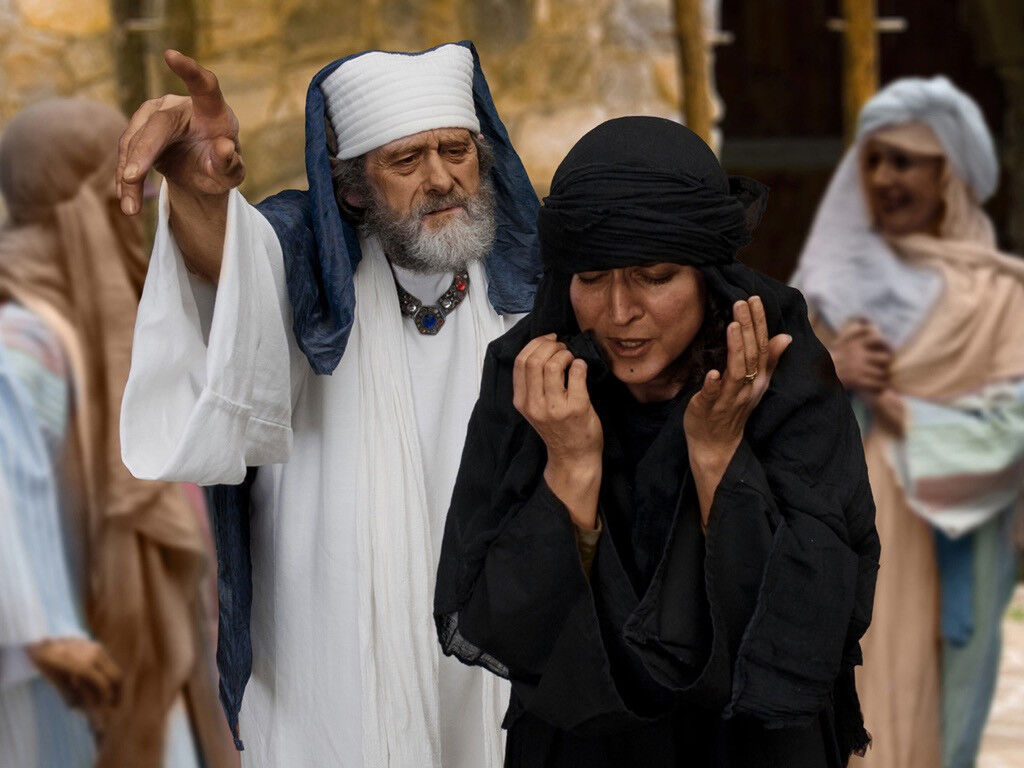
Photo from https://freebibleimages.org/photos/persistent-widow/
The Lord said...

First, we notice him telling us how “The Lord said”. Luke did not simply use his usual style of narration of “Jesus said” because in using the title “Lord”, he gives a solemn tone to the declaration by Jesus at the end of the parable where its lesson actually lies.

Moreover, it is the title “Lord” is what the disciples attributed to the Resurrected Christ; to call Jesus as “Lord” is to have complete faith in him.

Painting of “Parable of the Unjust Judge” by Pieter de Greber (1628) from Web Gallery of Art, http://www.wga.hu.

Second, when Luke wrote “The Lord said” in the conclusion of the parable, he was introducing a revelation to which we must all “pay attention” as the Lord demanded his listeners then. God is more than that unjust judge in the parable because as the Lord said, “he will see to it that justice is done for them speedily.”

Actually, the parable is not about praying unceasingly or persistently to obtain one’s favor because “the Lord said” God does not wait for his “chosen ones who call out to him day and night”; recall how Jesus had said in many instances that even before we ask God in prayers, he already knew what we needed. God is always speaking to us and we merely respond to him when we pray. That is why every time we pray, our prayer is already answered because we have responded to God. But, have we really listened to God in our prayers? This leads us to the important teaching of the Gospel this Sunday.

Third, the most important teaching in that conclusion of the parable of the persistent widow and unjust judge, Jesus our Lord teaches us that God does not only give justice but actually “does justice speedily” or swiftly.

“To do justice” in the Bible means more than rendering a fair judgment like in our courts; in fact, it means differently because “to do justice” biblically means “to justify”, “to renew”, and “to save” as Paul used extensively in his letters.

Therefore, to pray persistently is primarily to pray to be saved or justified. The main lesson of today’s parable is still faith – faith in God who saves us; faith in Jesus Christ our Lord who will come again to lead us to eternal life; and faith that must be reawakened in us always because without it, we cannot find salvation in God nor meaning in this life.

Photo from https://freebibleimages.org/photos/persistent-widow/

We pray not just to have things which God always knows so well even before we ask him. But, why still pray if God knows what we need? Because we do not know what God needs from us which is to pray always for him, to have him because he is our life, our salvation.

That is why we must persist in prayer and never lose heart because the moment we stop praying, the more we get discouraged in life, then we start doubting God and his love for us, his powers and beautiful plans for us. When this happens, everything falls and we alone suffer and lost.

Hence, the Lord’s challenge to each one of us today with his question at the end of the lesson of his parable, “But when the Son of Man comes, will he find faith on earth?”

To persist in prayer is not about wearing God down but of allowing our hearts to clarify our desires until we silently surrender to what God knows is best for us which is salvation, to be with him in eternity.

Since Jesus journeyed to Jerusalem, that has always been the most frequently asked question to him. And where can we find its answers? Right in the Sacred Scriptures as Paul reminded Timothy in the second reading: “All Scripture is inspired by God and is useful for teaching, for refutation, for correction, and for training in righteousness, so that one who belongs to God may be competent, equipped for every good work” (2Tim.3:16-17).

Photo by Mr. Nicko Timbol, Chapel of the Angel of Peace, OLFU-RISE, Valenzuela City, 03 October 2025.

When we fill ourselves with the Word of God, we are filled with God which is basically what holiness is. That is when we live in deep faith in God when our faith becomes so powerful and transformative because it is aligned with God and his Will as we reflected the other Sunday.

Therefore, to persist in prayers is also to align ourselves with God and his plans and agenda when we can declare like St. Paul that “It is no longer I who lives but Christ in me” (Ga. 2:20). As we have always said, prayer does not change things and situations; prayer changes the person primarily to be like Christ, to be faithful to God always.

Life is difficult, often like a battle with many enemies always attacking us. God is always with us, knows our needs so well but it is still us who shall fight the many battles in this life like the Israelites in the first reading. Without faith and prayer, we cannot fight our many battles in life like the Israelites who prevailed over the stronger forces of Amalek. We can only have the advantage in our many struggles and trials in life when we completely place ourselves under the banner of God in Jesus Christ. Amen. have a prayerful and faithful week ahead, everyone. Fr. Nicanor F. Lalog II, Our Lady of Fatima University, Valenzuela City (lordmychef@gmail.com)

When we do not know what “we want”

The Lord Is My Chef Sunday Recipe for the Soul by Fr. Nicanor F. Lalog II
Twenty-ninth Sunday in Ordinary Time, Cycle B, 20 October 2024
Isaiah 53:10-11 ><}}}}*> Hebrews 4:14-16 ><}}}}*> Mark 10:35-45
The Jewish Cemetery of Mount of Olives facing the Eastern Gate of Jerusalem where the Messiah is believed would pass through when He comes, exactly where Jesus entered on Palm Sunday over 2000 years ago (photo by author taken in May 2019).

Jesus Christ’s three predictions of His coming Passion, Death, and Resurrection punctuate Mark’s narration of the Lord’s journey to Jerusalem. They were already fast approaching Jerusalem when Jesus revealed His third prediction of His Pasch to His followers.

According to Mark, the Twelve and the crowd were “amazed and were afraid” after hearing for the third time Christ’s coming Passion, Death, and Resurrection.

Photo by author, Via Dolorosa in Jerusalem, April 2017.

And this was the prevailing mood among the followers of the Lord as they approached Jerusalem; beginning today and next Sunday, Mark reminds us of the need to have a clear sight and understanding of Jesus and His mission so that we may not be blinded by fame and glory in following Him like the brothers James and John:

James and John, the sons of Zebedee, came to Jesus and said to him, “Teacher, we want you to do for us whatever we ask of you.” He replied, “What do you wish me to do for you?” They answered him, “Grant that in your glory we may sit one at your right and the other at your left.” Jesus said to them, “You do not know what you are asking… but to sit at my right or at my left is not mine to give but is for those for whom it has been prepared” (Mark 10:35-38, 40).


Jesus said to them, 
"You do not know what you are asking."

Photo by author, Betania Tagaytay, 2018.

Whoa…! We might all exclaim with some indignation like the other ten Apostles upon hearing this request by James and John, two of the most intimate friends of Jesus with Simon Peter.

Were they trying to ease their worries and fears that they made the request without thinking it so well, a case of mema, me masabi lang? Or, do they really understand nothing at all of the Lord’s teachings especially last Sunday of the need to let go of our possessions to enter eternal life?

Whatever may be the reason, we could just imagine the treachery of the two who left the group behind, trying not to be noticed by the ten, and approached Jesus who was walking ahead. They have both belittled Jesus who reads the minds and the hearts of everyone. And most sad is the fact that many times, we too act like James and John.

Oh yes! We know so well of the sufferings and trials, of the “cup we have to drink and baptism we have to undergo” Jesus told the brothers. Very much like the two, we also know Christ always triumphs! Jesus never fails!

And that’s the crux of the matter here not only with James and John but with us: we bet on Jesus like in gambling casinos for we know Jesus wins all the time, hoping for some rewards following His glory.

James and John like us today believed so much in Jesus that despite His coming Passion and Death, they knew as we do that He would rise again and be King. Long before the Passion of Jesus had begun, still far from entering Jerusalem, James and John were already betting on the success and glory of Christ because they wanted a guarantee of a reward. It was a sort reminding Jesus they have always been with Him since the beginning like Peter last Sunday who bragged about having left everything to follow Him.

Are we not like them? It is the same attitude found among many of us not only in politics and government but even at home, in school and offices, or the church! Be the first to register to make it known how well qualified we are for commendations and rewards simply because of being in the company of every journey or advocacy or struggle.

It is the tragedy that happens even in our faith journey as Christians when we are blinded by so many worldly things about Jesus whom we see merely as a miracle-worker or worst, an ATM who never runs out of cash. We believe in Jesus as the Son of God, all-powerful and merciful who can do everything, especially the impossible as He had assured us last Sunday but many times, we do not know what we are asking like James and John.

When the ten heard this, they became indignant at James and John. Jesus summoned them and said to them, “You know that those who are recognized as rulers over the Gentiles lord it over them, and their great ones make their authority over them felt. But it shall not be with so among you. Rather, whoever wishes to be great among you will be your servant; whoever wishes to be first among you you will be slave of all. For the Son of God did not come to be served but to serve and to give his life as a ransom for many” (Mark 10:41-45).

Photo by author, wailing wall of Jerusalem, May 2019.

Jesus clarifies today with us that His glory has nothing in common whatsoever with those things we gain here on earth by claiming our rights or resorting to undue favors, by competing with others to get the better of them or even push them away or step on them to crush them for us to be on top.

We cannot be Christ’s disciples if we are preoccupied with rewards. We serve Jesus because we love that we want to be with Him in eternal life. And in loving Him, we serve lovingly others without expecting anything in return simply because we love.

See how in calling together the Twelve, Jesus reminded them and us today of His central teaching of becoming like a child, confidently entrusting everything into the Father’s hands, exactly like Him, the Suffering Servant of God referred to by the Prophet Isaiah in the first reading who “gave his life as a ransom for many” (Mk.10:45).

Photo by author, 2021.

Jesus reminds us this Sunday that love alone – like His self-sacrificing love on the Cross – is the basis of our relationships with each other, unlike the world where relations are based on power and domination.

Noteworthy too is the reminder of the author of the Letter to the Hebrews today about Jesus our High Priest who entered the sanctuary of heaven through the Cross so that we may be saved and receive mercy from the Father.

What else do we want Jesus to do for us when He had done everything for our salvation? Let us pray for a clearer vision of Jesus, to always see and find Him in our lives so that we desire only Him and share only Him. And follow Him like the blind Bartimaeus next Sunday. Amen. Have a blessed week ahead!

Facing evil

The Lord Is My Chef Daily Recipe for the Soul by Fr. Nicanor F. Lalog II
Monday in the Fourth Week of Ordinary Time, Year II, 29 January 2024
2 Samuel 15:13-14, 30; 16:5-13  <*((((>< + ><))))*>  Mark 5:1-20
An illustration of the healing of the Gerasenes demoniac from Pinterest.
On this final week of January
as we approach in two weeks the
Season of Lent,
you teach us today,
dear Father with many
lessons about "facing" evil;
at first, I felt evil is always
"confronted", something we always
fight head on but from the
two readings today,
your words tell me O Lord
there are times we just have
to stand firm against evil without
necessarily fighting it out right away
but not condoning it either.

But the king replied: ”What business is it of mine or of yours, sons of Zeruiah, that he curses? Suppose the Lord has told him to curse David; who then will dare say to, ‘Why are you doing this'” Then the king said to Abishai and to all his servants: ”If my own son, who came forth from loins, is seeking my life, how much more might this Benjaminite to do! Let him alone and let him curse, for the Lord has told him to. Perhaps the Lord will look upon my affliction and mae it up to me with benefits for the curses he is uttering this day.”

2 Samuel 16:10-12
Give me, O God, the same
patience of David to accept the
evils happening to me as I am guilty
of so many evils too;
like David, let me be mindful always
of my own evil ways and sins that
definitely will haunt me,
will chase me,
and will charge me later
in recompense for my own
sins too.
There are times, Lord,
that I must accept
how I deserve some evil to befall me
as a result of my own sinfulness
like David.
If ever the evils that come to me
are undeserved,
keep my cool and patience,
as well as goodwill
like Jesus Christ your Son
and our Lord;
after healing the Gerasenes demoniac,
he was driven out from the town
by the people;
many times,
people do not understand
anything at all when evils
befall us and others;
maintain my peace
within me, Lord,
that I may not react against
my accusers like you
especially when they all get it wrong;
let me tower over everyone else
with firm faith in you,
dignity in silence,
and clear conscience
when people wrongly
accuse me of deeds
I am not guilty of
for you alone is my
salvation.
Amen.

The righteousness of God

The Lord Is My Chef Daily Recipe for the Soul by Fr. Nicanor F. Lalog II
Thursday in the Twenty-Eighth Week of Ordinary Time, Year I, 19 October 2023
Romans 3:21-30   ><))))*> + ><))))*> + ><))))*>   Luke 11:47-54
Photo by author, Makati sunset from Antipolo City, August 2022.
Your words today, 
O God, invite us to look
deeper into your "righteousness"
which is beyond measure
for it is your way of being God -
your are kindness,
your are righteousness,
your are uprightness
that you justified us all 
by acquitting us of our sins through
your Son Jesus Christ.
It was not that simple,
Father, when after you have
justified us in Jesus,
you went further in making us 
a new creation in Christ
by setting us free from
the bondage of sin.
And there lies the beauty
and challenge of your righteousness: 
you have made everything possible 
for us to be better persons assured of
heaven but are we willing to take
and treasure that gift that calls 
for commitment and responsibility?

What occasion is there then for boasting? It is ruled out. On what principle: That of works? No, rather on the principle of faith. For we consider that a person is justified by faith apart from the works of law… for God is one and will justify the circumcised on the basis of faith and the uncircumcised through faith.

Romans 3:27-28, 30
Forgive us, God,
for being so proud, 
of putting too much premium
on economic achievements
as benchmark of success;
forgive us for being so proud
of being able to do 
and have everything 
in this world forgetting
that the entire humanity is
utterly dependent on you for
salvation and fulfillment and life;
most of all, that nothing we do is
accomplished apart from your
grace, Father.
Keep us humble and simple,
keenly awaiting Christ's daily coming
so we may walk with him
and lead others to him too
unlike the scribes and Pharisees
who have "taken away the key of
knowledge, refusing to enter 
God's kingdom and worst, stopped
those trying to enter" (Lk. 11:52).
Amen.

God saves

40 Shades of Lent by Fr. Nicanor F. Lalog II
Palm Sunday of the Lord's Passion, 02 April 2023
Isaiah 50:4-7 > + < Philippians 2:6-11 > + < Matthew 27:11-54
Photo by author, Palm Sunday of the Lord’s Passion 2019, Parokya ni San Juan Apostol at Ebanghelista, Bagbaguin, Sta. Maria, Bulacan.

We now enter the holiest week of the year, the height of our Lenten preparations for Easter. What we have today are two ancient celebrations merged by Vatican II in 1963: the blessing of palms practiced in Jerusalem as early as the fourth century and the papal tradition of proclaiming the very long gospel of the Lord’s Passion in Rome about year 500. Hence, the title “Palm Sunday of the Lord’s Passion”.

And it is a beautiful innovation in our liturgy showing us so many truths in our lives like we begin Holy Week with the triumphal entry of Jesus to Jerusalem, leading to the Holy Triduum of Passion and Death on Maundy Thursday and Good Friday into the bursting joy and glory on Easter.

That for me is life itself.

We come into this world in triumph like Jesus with everybody rejoicing with our birth until we grow up, going through a lot of pains and sufferings with little deaths right in the hands of those supposed to love us but always, there is the joy of maturity, of fulfillment in Christ with many Easter moments of triumphs and consolations. Today’s celebrations remind us that while there will always be the disappointing manifestations of sin and evil in life, overall, there is always the immense and immeasurable love of God expressed in Jesus Christ dying on the Cross.

“Ecce Homo” painting by Vicente Juan Masip (1507-1579) from masterapollon.com

Our gospel is very long even in its shorter version. Let us focus on the Lord’s silence from his arrest to His crucifixion.

The Lord God has given me a well-trained tongue, that I might know how to speak to the weary a word that will rouse them. I gave my back to those who beat me, my cheeks to those who plucked my beard; my face I did not shield from buffets and spitting. The Lord God is my help, therefore, I am not disgraced; I have set my face like flint, knowing that I shall not be put to shame.

Isaiah 50:4, 6-7

Jesus is the fulfillment of the so-called Suffering Servant of God in the Book of Isaiah. What is striking is how he claims to have been given with a well-trained tongue but He rarely spoke when tried and crucified, choosing to be silent in the midst of great sufferings. What a great display of love for us!

In a world drowning in a cacophony of sounds and noise with everyone and everything speaking like elevators and cellphones, the more God is silent, waiting for us to stop and listen to Him in Jesus Christ who speaks within us. From Pilate to the soldiers to the Pharisees and priests with their rabid packs of demagogues who ceaselessly mocked Jesus even while slowly dying on the Cross, Jesus remained silent.

Because He loves us.

Because He waits for us to stop and listen.

Because life is more true and fulfilling in silence, not in sounds and noise.

Last Monday we celebrated the Feast of St. Joseph where we heard in the gospel how an angel told him to take Mary as wife with the specific task of naming her child “JESUS” which means “God saves”. See how God gave that specific mission to the most silent man in the Bible, St. Joseph who must have taught Jesus the value of silence!

That is how God saved us in Jesus by remaining silent even on the Cross. If ever He spoke, it was mostly to pray the psalms. In Jesus, God saves us in silence while we are in the din of noises of sin. Oh how we speak a lot these days against God, still putting Him on trial, blaming Him for all the problems and woes we have in our lives and in the world.

Photo by author, August 2020.

Like Pilate and the crowd with their religious leaders, we say a lot about God that are often not true but He never argued nor debated with us just like then because Jesus loves us, because His name means “God saves” and that was exactly the meaning of His silence.

How could be God so demanding as many would claim with His many words of instructions and commandments of things to do and not to do plus warnings against sin just to obey Him when He has always been silent?

Today we are reminded how we talk too much and accomplish so little, even nothing, while Jesus is silent because His name means “God saves”, witnessing it in fact in silent sufferings that was a scandal for many at that time.

Moreover, Jesus showed us today in His sufferings how silence is ultimately the expression of trust in God. When we are able to slow down and be silent in the face of many trials, that is a clear indication of our deep faith and trust in God. People who trust are the most silent because simply wait for their deliverance or salvation. Like Jesus Christ.

Christ Jesus, though he was in the form of God, did not regard equality with God something to be grasped. Rather, he emptied himself, taking the form of a slave, coming in human likeness; and found human in appearance, he humbled himself, becoming obedient to death, even death on a cross.

Philippians 2:6-8
Photo by author, Betania-Tagaytay City, 2018.

More scandalous than the silence of Jesus Christ during His trial was His crucifixion, the supreme expression of His name’s meaning, “God saves”. See how since the fall of Adam and Eve, sin has always been an attempt by humans in becoming like God. There has always been that conscious or unconscious feeling of competition with God whom many see as controlling, manipulative and even power-hungry.

But right there on the Cross, Jesus showed us that indeed, in His very Person how God saves by utterly being weak and powerless.

God saves us in Jesus through the path of powerlessness and weakness, docility and humility, of simplicity before men and before His Father.

That is why even at His triumphal entrance to Jerusalem, He rode a lowly donkey never been used by anyone, a fulfillment of many Old Testament allusions and prophecies that “your king comes to you, meek and riding on an ass, and on a colt, the foal of a beast of burden (donkey)” (Mt. 21:5; Zech. 9:9). His triumphal entry into Jerusalem was the fulfillment of the words of God to his prophets, showing us that indeed, everything Jesus did and said were in accordance with the Father’s will, never on His own.

Photo by author, 2018.

Because His name Jesus means, “God saves”.

What is most beautiful in the reading earlier at the blessing of palms was how Matthew described the Lord’s triumphal entry into Jerusalem – exactly just like the coming of the wise men from the East!

And when he entered Jerusalem the whole city was shaken…

Matthew 21:10

Imagine how a very large crowd welcomed Jesus, spreading their cloaks on the road where He passed, chanting “Hosanna to the Son of David” (Mt.21:9).

Like when Jesus was born and Magis from the East came to Jerusalem inquiring about the newborn king of Israel, they were also shaken! And the irony then at His birth and at His triumphal entry, the learned have refused to recognize Him despite their having all the knowledge and writings available to them.

Is it not the same thing continues to happen to us in our lives, when despite all the kindness and mercy of God, we refuse to recognize His Son’s coming Jesu Christ including the salvation He had gained for us? Where have all the people gone on Sundays? Does God still matter to us? Do we not care at all whenever Jesus comes to us most especially in the Eucharist during the Sunday Mass?

Both the rites of the blessing of palms with the procession and the Mass on this Palm Sunday of the Lord’s Passion are not merely a recalling of a past event, but a making present, a re-membering of Jesus our King triumphantly coming daily – still in silence – to us in the simplicity of bread and wine to become His Body and Blood for us to offer and share in order to experience Him, our Resurrection and Life because His name means “God saves”.

In the Eucharist, Jesus comes to us as “God saves us”, fulfilling us, blessing us.

This Holy Week, especially at the Holy Triduum of Holy Thursday, Good Friday and Easter Vigil, we are reminded of our task to witness to everyone the meaning of the name of Jesus, “God saves” by being present to Him in the Eucharist. Inside the church. With our family. Not in the beach nor a resort unmindful of history’s greatest moment when God saved us from sins by dying on the Cross. Amen. Please, have a meaningful Holy Week to experience the joy of Easter!

Roadtrip, vroom, vroom with Jesus & Zacchaeus, to the Moon!

The Lord Is My Chef Sunday Recipe by Fr. Nicanor F. Lalog II
Thirty-First Sunday in Ordinary Time, Cycle C, 30 October 2022
Wisdom 11:22-12:2 ><000'> 2 Thessalonians 1:11-2:2 ><000'> Luke 19:1-10

You must have heard so many times that rap music called Moon used as background music in almost every video posted on social media. The lyrics and its beat are simply amusing, easy to follow so fitted on everything including this Sunday’s gospel!

Sa'n ka punta?  To the moon
Road trip, vroom, vroom
Skrr, skrr, zoom, zoom
So fake, no room, mga mata namumula
Asan ang trees, nadala mo ba?
Bawal ang tus at peke sa byahe
Kung isa ka d'yan, ika'y bumaba...

Written and performed by a certain Nik Makino, Moon speaks of a young man’s ambition of getting rich through rap music; he is also aware of the fact that his dream is so “high like the sky” with everyone’s eyes prying on him as he strives so hard in working while still young.

I gotta mission, pumunta sa top
Buhay mahirap, gawing masarap
Gawa ng milyon, gamit ang rap 
Iwanan kasama na puro panggap
'Di mo 'ko magets, pangarap ay highs
Singtaas ng jets, tingala sa sky...

I have been asking some young people about the rap and mostly are stunned why I listen and so interested with it especially when I rap it too, saying how they find it so baduy (crass), meaningless or “walang kuwenta” with some calling it as ugly or “pangit”.

And that is how I realized this rap music Moon is so related with this Sunday’s gospel about Zacchaeus the tax collector who climbed a tree to see Jesus while passing by the city of Jericho.

At that time, Jesus came to Jericho and intended to pass through the town. Now a man there named Zacchaeus, who was a chief tax collector and also a wealthy man, was seeking to see who Jesus was; but he could not see him because of the crowd, for he was short in stature. So he ran ahead and climbed a sycamore tree in order to see Jesus, who was about to pass that way. When he reached the place, Jesus looked up and said to him, “Zacchaeus, come down quickly, for today I must stay at your house.” And he came down quickly and received him with joy.

Luke 19:1-6

Again, only Luke has this story about Zacchaeus met by Jesus in Jericho, his final stop before entering the city of Jerusalem for his Passion, Death, and Resurrection.

Keep in mind that Luke’s narration of the Lord’s journey to Jerusalem is more of an inner journey into ourselves than found in maps. What happened in Jericho shows the importance of the events that would take place at Jerusalem when Jesus offered himself for our salvation and how we can participate in his pasch through the example of Zacchaeus who reformed his life.

Unlike the parable last Sunday, here we have a real tax collector named Zacchaeus described by Luke as a “wealthy man”. Notice how Luke described Zacchaeus was “short in stature” which is not only literal but most of all figurative in meaning. Like the publican in last week’s parable by Jesus, tax collectors were despised by Jews at that time who were seen along the ranks of prostitutes as the worst of all sinners because they were not only thieves but also traitors who collaborated with their Roman colonizers.

Calling Zacchaeus as “short in stature” was really something else, that he was nothing at all. That is why he had to exert so much to see Jesus by climbing a sycamore tree. And there lies the beauty of the story, of how God had come in Jesus to meet us and save us.

When they all saw this, they began to grumble, saying, “He has gone to stay at the house of a sinner.” But Zacchaeus stood there and said to the Lord, “Behold, half of my possessions, I shall give to the poor, and if I have extorted anything from anyone I shall repay it four times over.” And Jesus said to him, “Today salvation has come to this house because this man too is a descendant of Abraham. For the Son of Man has come to seek and to save what was lost.”

Luke 19:7-10

This is the most startling move by Jesus in this event at Jericho that is repeated in many instances in Luke’s gospel account to show God’s loving mercy to all sinners who humbly make the efforts to come to him, to see him, and experience his healing and forgiveness.

Luke had repeatedly shown us this unexpected and even shocking gesture of Jesus to everyone – then and now – at how he would favor sinners and bad people like that sinful woman who poured oil on his feet while dining at the home of a Pharisee (Lk. 7:36-50) and Dimas, the “good thief” on the cross to whom he promised paradise (Lk.23:39-43).

Jesus always comes to meet us but are we willing to meet him too like Zacchaeus? How far are we willing to truly embrace and welcome Jesus by letting go of ourselves, of our sins and other possessions?

If we could just have that sense of sinfulness again, we would realize that in this world, we are all small in stature before God. All these titles and wealth that seem to give prestige to us are all temporary and nothing. What God looks in us is our admission of our being small in stature before him, of being powerless like the persistent widow the other Sunday and the publican last week begging his mercy for we are all sinful.

Imagine that beautiful image of Jesus passing through Jericho, coming to our daily lives, making a stop over right in our hearts to stay and dwell. Most of all, see at how Jesus looks up to find us!

I love that gesture of Jesus looking up to us so much. Normally, we are the ones who look up to God up in the sky, heavenwards when asking for his mercy and favors. But there are many times that it is Jesus our Lord and God who looks up to us mere mortals who are so small in stature before him! What happened at Jericho under that sycamore tree was a prefiguration of what would take place at the Last Supper when Jesus washed the disciples’ feet, of how he bowed down before them and looked up while wiping their feet dry. So wonderful! And that happens every day when we go back to him, when we do everything to get out of our way just to go to Mass, most especially to Confessions.

In the first reading, we are reminded how we are nothing before God but he chose to preserve us, to save us because he loves us so much:

“Before the Lord the whole universe is as a grain from a balance, or a drop of morning dew come down upon the earth. But you have mercy on all, because you can do all things; and you overlook the sins of men that they may repent. But you spare all things, because they are yours, O Lord and lover of souls.

Wisdom 11:22-23, 25

There is no doubt about the love of God for us, of his mercy and forgiveness expressed to us in his Son Jesus Christ who comes to us everyday in various events in our lives, in the people we meet and most especially in our individual and communal prayers like the Mass and Sacraments.

Jesus is always passing by and would surely come again as St. Paul assured us in the second reading.

The grace of this final Sunday of October as we go to the last stretch of the Church calendar this coming November is that God gives us freely the grace daily to make the efforts in meeting his Son Jesus. Every day.

Our desire to rise above our present state and status is an expression of that grace within us to become better although many times due to other factors, we misconstrue this in aspiring for material things like wealth and money as the rap Moon tells us. But on a deeper reflection as we continue in our journey in this life, we realize sooner or later that more than the things we can physically have, there are always more precious than these.

Like going to the moon, of being high up there in the sky, being one with God, enjoying his peace and salvation.

Like Zacchaeus and, Nik Makino, let us continue our roadtrip to the Moon in Jesus Christ by being true to ourselves – vroom, vroom, skrr, skrr, zoom, zoom – that we are beloved sinners and children of God.

Tara bumyahe pa-ulap
Sakto 'yung auto ko full tank
Pero kahit maubusan, paangat tayo tutulak
Bawal na muna ang pabigat
Lalo sa byahe na palipad
Kailangan kong makatiyak
Bago magka-edad, 'di na 'ko taghirap
Alam kong marami ang nakamasid
Dama ko marami ang naka-abang
Kung ano 'yung mga kaya kong gawin
Malamang ay 'di nila nagagawa
Kaya siguro lagi nakatingin
Kasi 'yon na lamang magagawa
Inaabangan ako na mawala
Kaso lang ang malala nadapa kakatingala.

Stay safe everyone and dry during these storms. Have a blessed week! Amen.

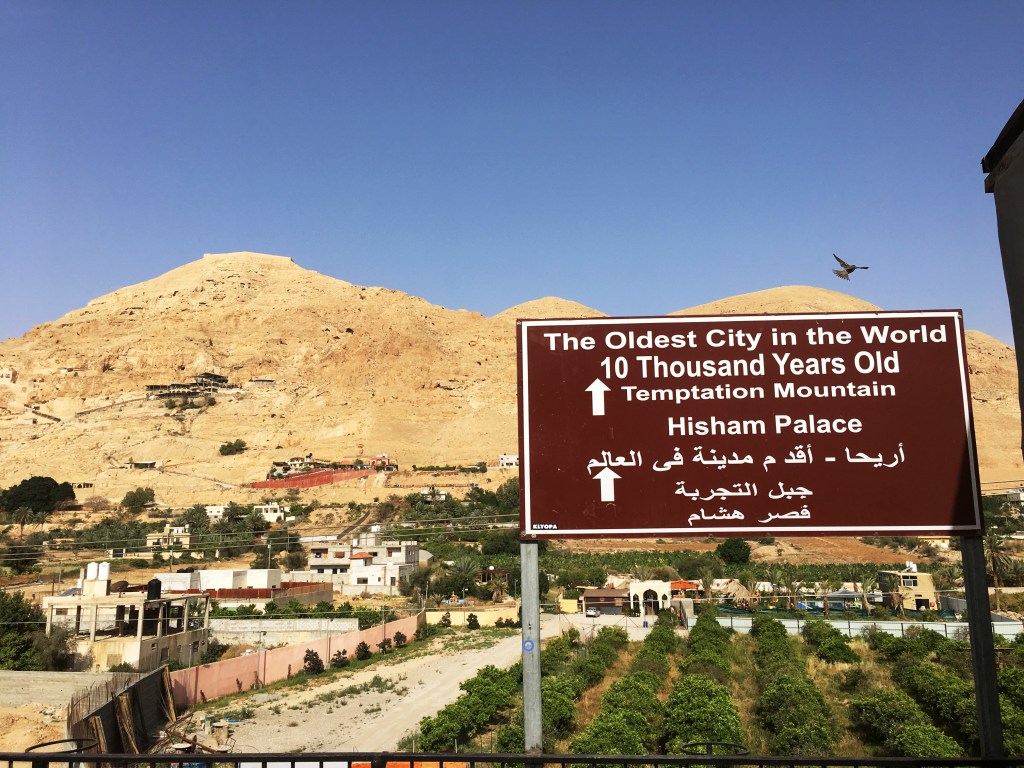
*Photo credits: Moon over the city by Mr. Raffy Tima of GMA-7 News (2022); second and third by the author at Jericho, Israel (2019); fourth and fifth also by author in Tanay and Pililla in Rizal (2021).

Entering through the narrow gate

The Lord Is My Chef Daily Recipe by Fr. Nicanor F. Lalog II
Wednesday in the Thirtieth Week of Ordinary Time, Year II, 26 October 2022
Ephesians 6:1-9   ><]]]]'> + ><]]]]'> + ><]]]]'>   Luke 13:22-30
Photo by author, Baguio Cathedral, 2019.
Bless me, dear Jesus,
and forgive me for being like
that someone in the gospel
who asked you, "Lord, will only
a few people be saved?"
(Luke 13:23); many times
I am that someone in the 
crowd, so eagerly feeling inside
you would answer with a 
resounding "yes" to my 
question, feeling that I am one
of those few who would be
saved because I belong
to your chosen ones,
the ones "who ate and drank
with you, the ones you taught
in the streets" (Luke 13:26).
Forgive me Lord Jesus
for feeling so entitled;
let me realize your Kingdom
is not about affiliations nor
about the company we are with
but more of the path we take
in life, your path of the Cross.

He answered them, “Strive to enter through the narrow gate, for many, I tell you, will attempt to enter but will not be strong enough. After the master of the house has arisen and locked the door, then will you stand outside knocking and saying, ‘Lord, open the door for us.’ He will say to you in reply, ‘I do not know where you are from.”

Luke 13:24-25
Entering heaven,
being a part of your
Kingdom, dear Jesus
is keeping our relationships
Christ-centered that begins
right in the family, to our parents,
of parents to children, of siblings
among each other, and with those
in the household.
How sad, dear Jesus,
when we all desire of heaven
when we make a mess of our
family life when couples are
unfaithful to each other,
when parents wrongly pursue 
wealth not realizing their children 
are their greatest riches, 
when siblings compete with one
another instead of loving each other,
and when children do not care at
all to their parents. 
O Lord Jesus Christ,
as we count the days 
until Christmas,
make us realize you
came to bring salvation
to the world by coming
through the husband and
wife of Joseph and Mary;
when you came to save us,
you opened the narrow gate
to salvation there on the Cross
with your Mother and beloved
disciple standing until the end.
Let us strive to enter
through your narrow gate,
Jesus, that is found first
in our own family.
Amen.

Faithful, grateful, and joyful

The Lord Is My Chef Sunday Recipe for the Soul by Fr. Nicanor F. Lalog II
Twenty-Eighth Sunday in Ordinary Time, Cycle C, 09 October 2022
2 Kings 5:14-27  ><000'>  2 Timothy 2:8-13  ><000'>  Luke 17:11-19
Photo by author, Egypt, May 2019.

Many times in life as we age and look back to our past, we find that our journeys are not geographical at all but more of spiritual ones. No matter how many places we visit or stay, our journeys actually happen within that lead us to our true selves, to others and finally, to God.

This is what St. Luke has been doing every Sunday as he guides us in following Jesus in his itinerary since he “resolutely determined to journey to Jerusalem” last Sunday of June (Lk.9:51, 13th Sunday); the path we have been following is not really geographical but theological in nature.

As Jesus continued his journey to Jerusalem he traveled through Samaria and Galilee. As he was entering a village, ten lepers met him. They stood at a distance from him and raised their voice, saying, “Jesus, Master! Have pity on us!” And when he saw them, he said, “go show yourselves to the priests.” As they were going they were cleansed.

Luke 17:11-14
Photo by author, Egypt, May 2019.

Again, our gospel this Sunday is so brief with many layers of meanings found only in St. Luke. Imagine Jesus going through pagan districts like Samaria where his fellow Jews never dared to go. That is how immense is God’s love for us – even if we undeserving of his love, he sent Jesus to look for us sinners signified by the ten lepers he had healed.

In fact, some exegetes claim the wording for the “ten lepers” who met Jesus should have been “ten men with leprosy” for a more accurate translation of the Greek leproi andres. According to them, St. Luke was emphasizing here that no matter what weaknesses we are afflicted with, we are still the same persons and human beings loved by God. Very often in life, we categorize and define people by their sin and weakness or crime and worst, by illness and defects as seen in our penchant for bansag (Filipino for name calling) like Kardong mandurugas or si Putol or even tabachoy!

St. Luke wants us to see everyone first as a human being, a person so loved by Jesus; whatever weaknesses we have must come later. This I insist during confessions to penitents to never call one’s self as “thief” if you have stolen something nor “liar” if you have lied because we all remain God’s beloved children even if we have sinned.

Photo by author, 2018.

There is no doubt in God’s love for us despite our being “unworthy servants” and being afflicted with leprosy, or whatever. What matters to him is the fact we are his beloved children. That is why in the first reading, God healed Naaman through his prophet Elisha despite his being a pagan and unbeliever. And worst of all, an enemy of Israel being a Syrian army general! St. Paul beautifully expressed this truth about God’s love and mercy in Christ found in our second reading today:

This saying is trustworthy: If we have died with him we shall also live with him; if we persevere we shall also reign with him. But if we deny him he will deny us. If we are unfaithful he remains faithful, for he cannot deny himself.

2 Timothy 2:11-13

What are the other diseases and ailments that make us cry “Jesus, Master! Have pity on us”? These are not literally a disease or sickness like leprosy but may have the same effects of alienation and depression with us like a vice too difficult to kick like drugs and alcohol or may be indifference and racism by others to us or our “self inflicted” ailments of arrogance, self-centeredness, and self-righteousness.

Many times, we hardly notice we are being healed slowly by Jesus of our many infirmities because our faith has never deepened and matured. The Samaritan noticed his healing because of the ten with leprosy, he was the only one truly faithful in awaiting Jesus Christ. He had faith in Jesus and though it was so small or too little, he had that faith nurtured that the moment he saw his skin cleansed, he remembered Jesus right away. As we have reflected last Sunday, faith is a relationship we keep, nurture and strengthen.

And one of them, realizing he had been healed, returned, glorifying God in a loud voice; and he fell at the feet of Jesus and thanked him. He was a Samaritan. Jesus said in reply, “Ten were cleansed, were they not? Where are the other nine? Has none but this foreigner returned to give thanks to God?” Then he said to him, “Stand up and go; your faith has saved you.”

Luke 17:15-19
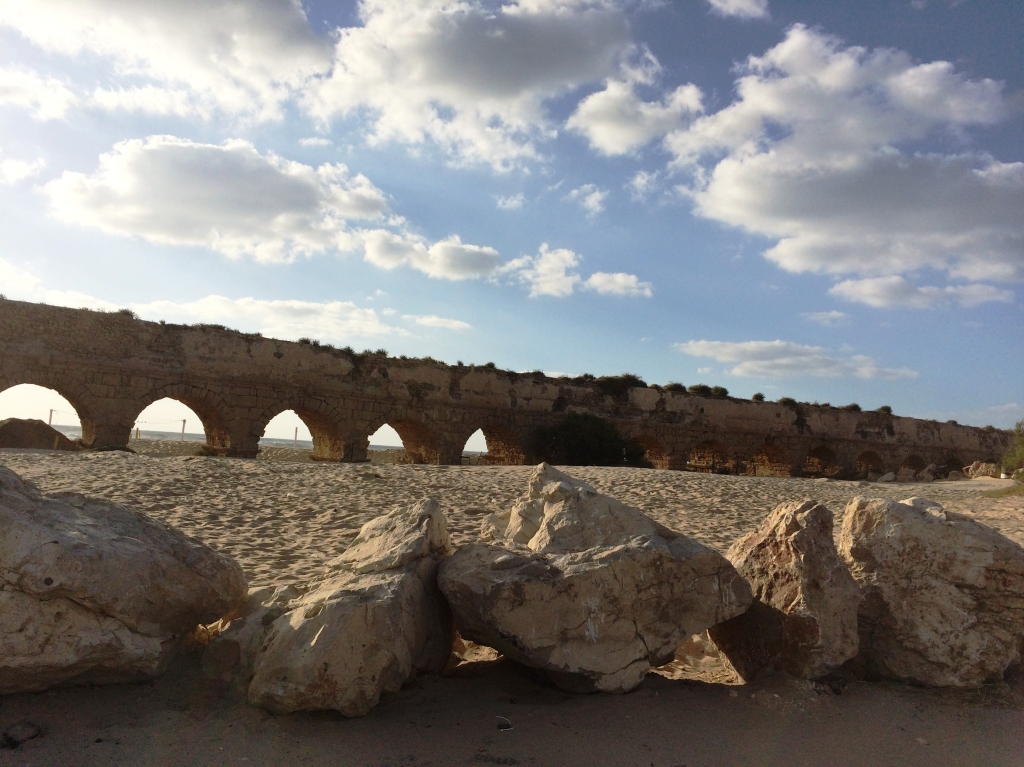
Photo by author, Caesarea, Israel 2017.

The scene is so lovely because the Samaritan healed of leprosy teaches us that grateful people are also faithful – and joyful ones! Faith is a relationship that is nourished by gratitude wherein we not only thank God and other people who have blessed us but also remain with them and in them; hence, we keep on coming back to thank them.

The more grateful we are to God and other people, the more we are blessed, the more we become joyful, and the more our faith is deepened! As we walk in faith in Jesus, experiencing those daily suffering and dying to self, we become more aware too of our rising to new life in him. That is when miracles happen as we return and stay in Jesus to praise and thank him like that Samaritan man healed of his leprosy. Or Naaman who asked to bring home some soil from Israel so he could worship God and nurture his relationship with him in the process.

Photo by author, 2021.

Faith, gratitude, and joy always come together. We experience them every Sunday in the celebration of the Eucharist that means “thanksgiving” in Greek.

The Eucharist is the expression of our faith in God in Jesus Christ that also expresses our gratitude to him for all the blessings he abundantly pours upon us. As the summit of our Christian life, the Eucharist defines our worship and living because it is the only way we can truly express our faith and gratitude to God who wishes only our salvation in his Son Jesus Christ.

In the Eucharist, it is not only the bread and wine that are changed into Body and Blood of Christ but even us who are made perfect in Jesus as his disciples and members of his Body, the Church.

In the Eucharist we experience the joys of being faithful, thankful and joyful because that is where we are saved as we encounter Christ in the most intimate and personal manner in his Body and Blood who slowly transforms us in him as we receive him.

Let us imitate that Samaritan healed by Jesus to always be grateful to Jesus, to finally go back to the Sunday Mass F2F, so that together we may all grow in faith and be joyful for being saved. Amen. Have a blessed week ahead!

The Cross, our door to heaven

The Lord Is My Chef Sunday Recipe for the Soul by Fr. Nicanor F. Lalog II
Palm Sunday of the Passion of the Lord, 10 April 2022
Isaiah 50:4-7  +++  Philippians 2:6-11  +++  Luke 23:1-49
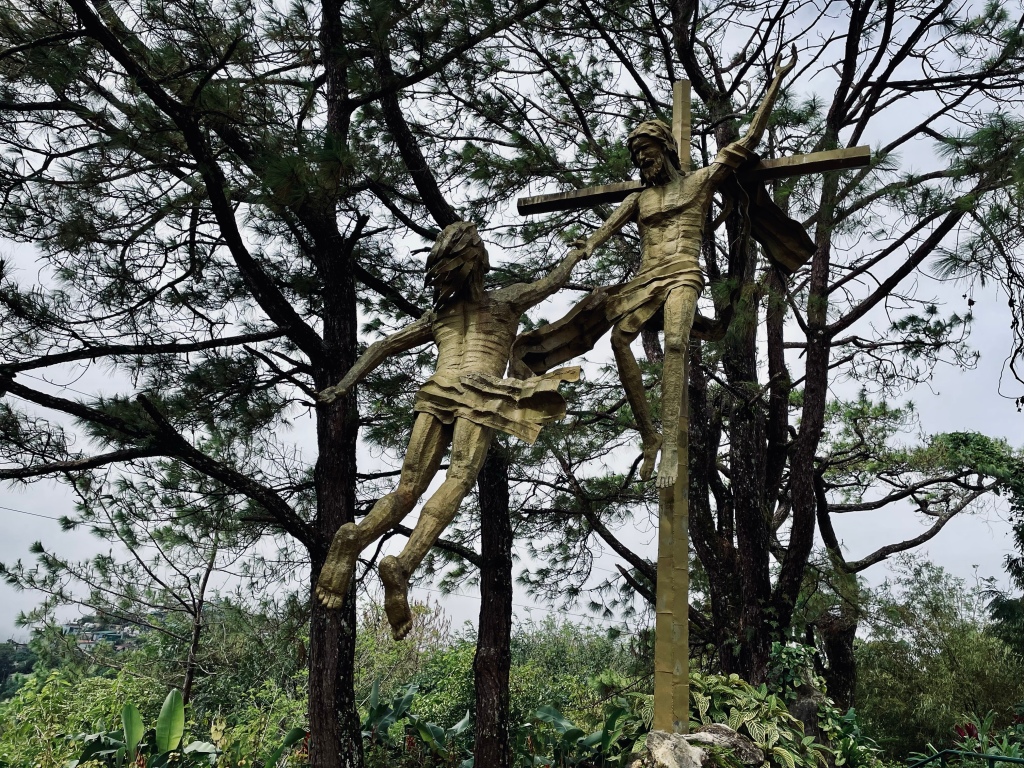
Photo by Mr. Chester Ocampo, ICS Chapel, 2016; sculpture by National Artist Ed Castrillo.

Officially we begin today the Holy Week leading to the Triduum of the Lord with Easter, the Mother of all feasts in the Church. Today we enter the “innermost room” of the house of God our Father after our 40 day journey in Lent.

We are actually celebrating today two distinct rites merged into one, the procession and blessing of palms to commemorate Jesus Christ’s entry into Jerusalem that led to his arrest and crucifixion on Good Friday which we heard in the gospel proclaimed earlier. As early in the fourth century, Christians in Jerusalem have been commemorating the Lord’s entry to Jerusalem from the city gate while a hundred years later, the Pope ushered in the Holy Week in Rome by proclaiming the long gospel we have heard of the Lord’s crucifixion and death. With the reforms of the liturgy in 1963 at Vatican II, these two celebrations were merged as one with the designation as “Palm Sunday in the Passion of the Lord”.

More than a going back to the past, our celebration today reminds us of the ever-newness of Christ’s saving work and love for us while at the same time assuring us of the future that would bring us into the fullness of life in him with the Father in heaven. This we find in the last three words recorded to us by Luke while Jesus was on the Cross.

Photo by author, Chapel of the Holy Family, Sacred Heart Spirituality Center, Novaliches, QC, 2016.

The mercy and forgiveness of God

Then Jesus said, “Father, forgive them, they know not what they do.”

Luke 23:34

Very consistent with his theme of the mercy and forgiveness of God to us as shown the other Sunday in the parable of the merciful father, a.k.a. the parable of the prodigal son, Luke presents to us again this most wondrous and touching trait of God in Christ even while crucified.

Again, only Luke has this detail of Jesus praying forgiveness for his enemies while being reviled and mocked by them on the cross.

It is another example of Luke’s artistry in presenting to us God’s mercy and forgiveness in Christ in a sort of play of words, “Father, forgive them, they know not what they do” as we confront our selves with the question, “what do we really know?”

What do we really know at all that we continue to crucify Jesus today, nailing him on the cross with our many sins as we pretend and assume to know so many things in life?

Until now, we still have wars raging in various parts of the world, and more than half of these conflicts according to studies are ironically due to our different religious beliefs! Until now debates continue as everyone would want to have the power to decide for themselves who shall live and who shall die, from abortions to artificial contraceptives to capital punishment. Until now we pretend to know the truth and yet the more we have shown our ignorance as our problems become more complex than ever leading to more deaths, more disillusions, more anxieties and more emptiness in life.

And right there on the cross, Jesus continues to pray to the Father to forgive us for we do not know what we are doing to pave the way for the conversion of more others like Paul who realized he “acted out of ignorance in my unbelief” (1 Tim. 1:13). In his other book the Acts of the Apostles, Luke tells us how Peter said in a speech to the people how they “acted out of ignorance in putting Jesus to death” (3:17). Here we find Luke driving at the basic truth how so often it is in our sinfulness and “ignorance” that eventually we come to “know” and realize God who is always ready with his unfailing mercy and forgiveness. The key is to emulate Dimas, the good thief crucified at the other side of Jesus on that Good Friday.

Photo by author, Chapel of the Holy Family, Sacred Heart Spirituality Center, Novaliches, QC, 2016.

The promise of Paradise

He replied to him, “Amen, I say to you, today you will be with me in Paradise.”

Luke 23:43

Imagine the evil that men do portrayed by Luke in Christ’s crucifixion, of the relentless insults and mockery by the people on the ground and even up there on the cross when one of those hanging reviled Jesus, saying, “Are you not the Christ? Save yourself and us”(Lk.23:39).

See how we are not contented and satisfied in putting others to shame but would even bury them deeply with insults as we say in Filipino, “baon na baon”. But, all is not lost as there is always a glimmer of hope. especially among the sinners and the ignorant who open themselves to god’s grace like Dimas who rebuked his fellow criminal, reminding him how they deserved the punishment but not Jesus “who has done nothing criminal” (Lk.23:41). It was at that instance when he snatched heaven by telling the Lord, “Jesus, remember me when you come into your kingdom” (Lk.23:42).

And we all know the response of Jesus, “Amen, I say to you, today you will be with me in Paradise.”

What a great God do we really have in Jesus Christ! Despite the pains and sufferings of being nailed on the cross, he not only begged the Father for our forgiveness because we do not know what we are doing but most of all, readily handed our salvation, promising Paradise to anyone who would humbly surrender one’s self to him like Dimas.

See that Jesus was very precise in assuring Dimas and us with Paradise – right at the very moment we are in him, with him on the Cross of pain and suffering, of truth and righteousness – not later when they die nor on Sunday when he rises from the dead but TODAY, right now!

The very moment we open ourselves to accept Jesus Christ our Savior, that is also precisely the very moment he is very present in us and among us. The other moment Luke used the word TODAY to indicate the very moment of here and now was at the birth of Jesus when the angels told the shepherds “For today in the city of David a savior has been born for you who is Messiah and Lord” (Lk.2:11).

What a beautiful reminder to us all of God present among us in every here and now, not yesterday nor tomorrow, but today for indeed our God is “I AM WHO AM”!

Anyone who is always one in Jesus, one with Jesus is assured of Paradise, in fact already entering Paradise, our end and ultimate destination in life. This leads us to the third important words of Jesus on the Cross according to Luke…

Photo by author, Chapel of the Holy Family, Sacred Heart Spirituality Center, Novaliches, QC, 2016.

Coming home to the Father

Jesus cried out in a loud voice, “Father, into your hands I commend my spirit”; and when he had said this he breathed his last.

Luke 23:46

All four evangelists attest in their respective gospel account that Jesus died on the cross at the ninth hour or about 3:00 PM. Most of all, they tell us that Jesus died while praying.

In Luke’s account, Jesus’ final prayer was from Psalm 31:6, “Into your hands I commend my spirit.” As we have mentioned in our previous reflections, Luke presents Jesus always at prayer like during the second Sunday of Lent during his transfiguration; only Luke tells us why Jesus went up that high mountain with his three Apostles in order to pray. Inasmuch as the transfiguration was a prayer moment, the crucifixion is the Lord’s prayer moment par excellence. Recall how we truly learn to “pray” when in deep pain and trials like before a surgery, when we no longer know how to pray or even have forgotten what is prayer all about except that we give ourselves entirely to God and to our doctors.

There on the Cross at his final moments, Jesus never ceased from doing good, always praying, always united and one in his Father in heaven. In commending his spirit into the Father’s hands, Jesus shows us exactly what discipleship is all about: everything we have, all we are are God’s. We have nothing to lay claim as ours in this life and that is the challenge to us daily: to live for God in Jesus through our loving service to others.

In this long passion narrative we heard today is the gospel, the very good news of our salvation as proclaimed by Paul in the second reading of how Jesus gave his total self in love to the Father for us all.

May we keep our eyes and our hearts open to Jesus, relying only in him like the Suffering Servant for he shall never put us to shame. We cannot experience the joy of his Resurrection unless we imitate Simon Cyrene, Dimas, John and the Blessed Virgin Mary in welcoming and following him in our daily life whether in the comforts of Jerusalem or the sorrows of Calvary for that is where we truly enter Paradise with Jesus, in Jesus. On the Cross. Amen.