The Lord Is My Chef Breakfast Recipe for the Soul
Wednesday after the Epiphany of the Lord, 06 January 2021
1 John 4:11-18     <*(((><<   +   >><)))*>     Mark 6:45-52
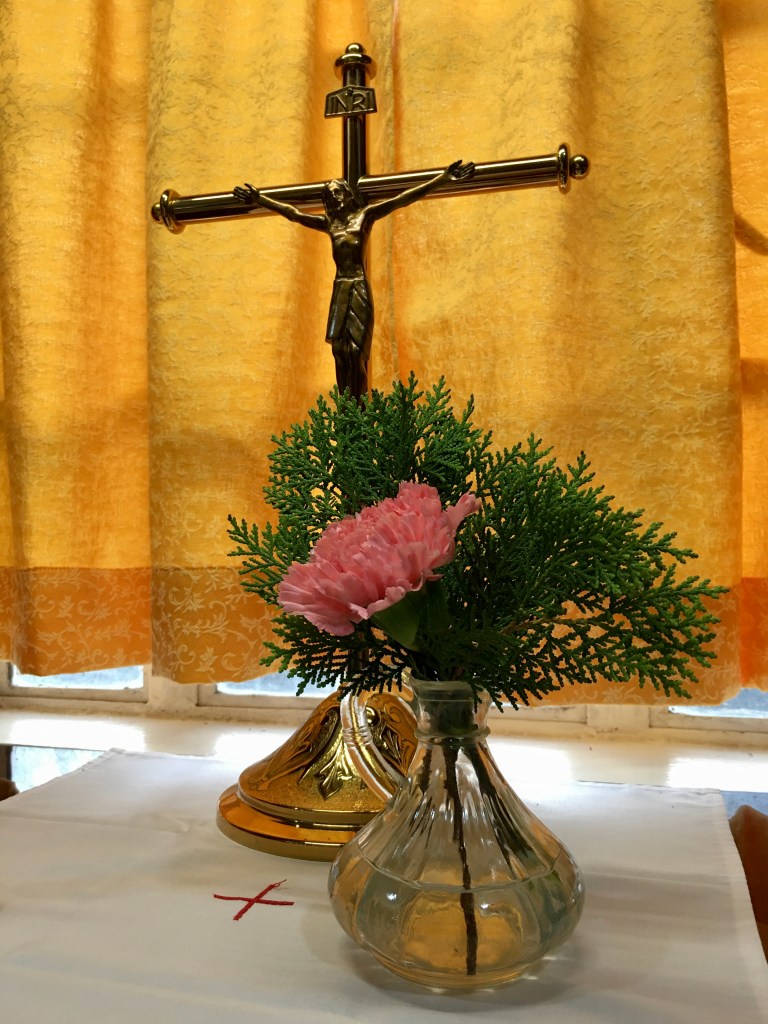
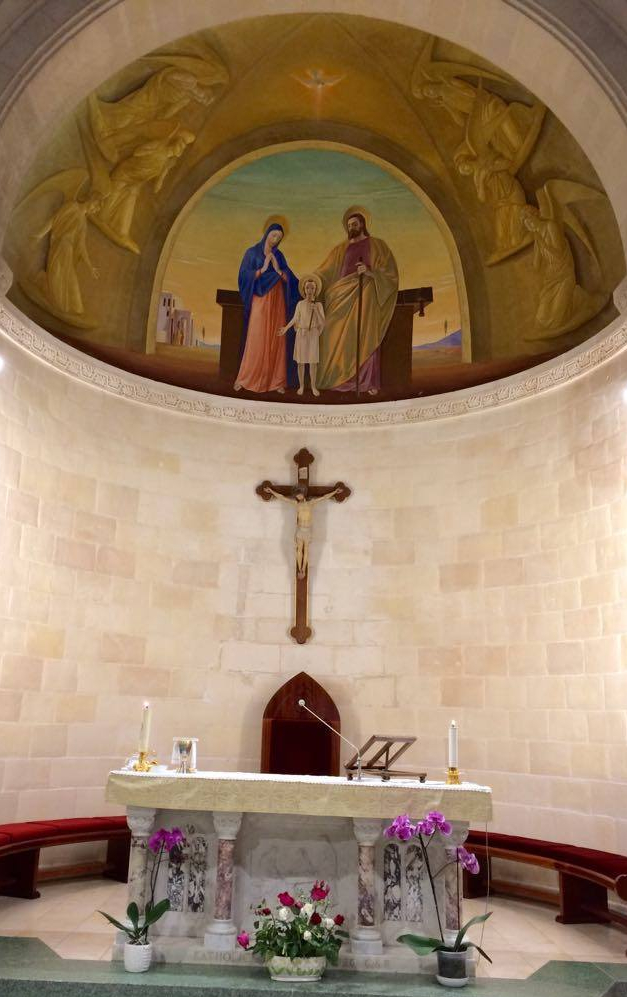
Photo by author, St. Anne’s Catholic Church inside the old Jerusalem, May 2017.
He got into the boat with them and the wind died down. They were completely astounded. They had not understood the incident of the loaves. On the contrary, their hearts were hardened.
Mark 6:51-52
So many times, Lord, our hearts are hardened like your Apostles’: hardened by so many fears and anxieties due to our lack or weak faith in you; hardened by anger and disappointments and failures in the past we cannot let go, festering our hearts and everything we have inside our very selves.
Our hearts are hardened too by our disbelief and doubts, even mistrust in you, dear Lord Jesus. Most of the time, our hearts are hardened when like the Apostles we see only the surface of things that happened, failing to see their deeper meaning, of your immense love and care for us.
Beloved, if God so loved us, we also must love one another. No one has ever seen God. Yet, if we love one another, God remains in us and his love is brought to perfection in us. This is how we know that we remain in him and he in us, that he has given us of his Spirit.
1 John 4:11-13
Our hearts are hardened, dear Jesus, because we have refused to love, love truly from within without the need to always hug and kiss one another or give gifts that eventually add up to the clatter inside our house, office or school.
Sometimes all we need is just a break from the daily grind so we may see and appreciate our loved ones too by opening our hearts to them, caring for those lost, for those having difficulties in life these days.
How wonderful was the beloved disciple to have constructed his sentence in such a holy arrangement, “Beloved, if God so loved us, we also must love one another.”
Instead of loving You, O God who so loved us, he beautifully declared, we also must love one another. To love You, dear God, is to love the person next to me. And the more we love, the more we see Your coming to us, dispelling all our fears in the darkness and storm.
Let our hearts be softened today with your love, Lord, a love that is free and not afraid to reach out to others. Amen.
The Lord Is My Chef Breakfast Recipe for the Soul
Tuesday after the Epiphany of the Lord, 05 January 2021
1 John 4:7-10     >><)))*>  +  <*(((><<     Mark 6:34-44
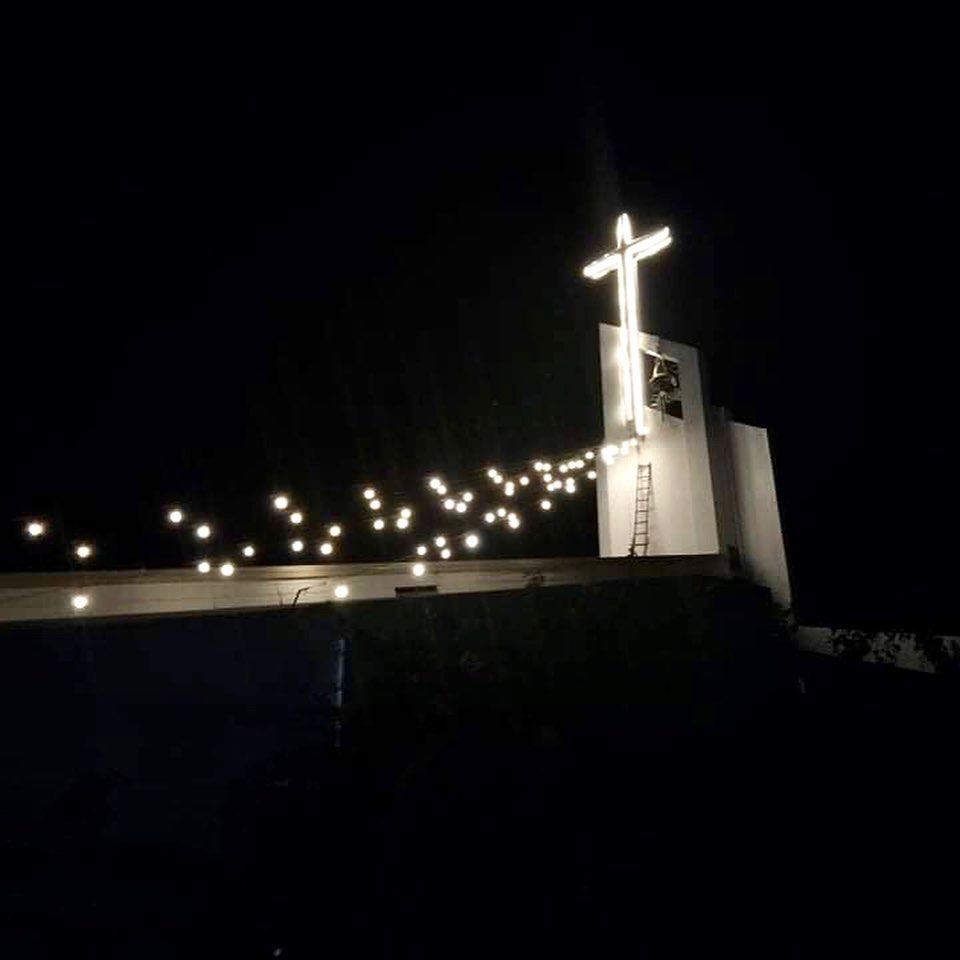
Photo by author, 12 December 2020.
Dearest God our Father:
Today my heart has only two things to say:
First is, “Thank you for being love, for loving me!”
Beloved, let us love one another; because love is of God; everyone who loves is begotten by God and knows God. Whoever is without love does not know God, for God is love.
1 John 4:7-8
Pope Emeritus Benedict XVI wrote in his first encyclical Deus caritas est which was taken from this letter of the beloved disciple, that, what makes Christianity so unique of all other faith is the statement, God is love.
Indeed, in all the stories told about you in the Bible, in all our experiences in life, there is only one thing you have shown and given us from the very beginning that shall continue in eternity — LOVE.
The very coming of your Son Jesus Christ is all because of LOVE. Christmas is a story of love. Epiphany is also love.
It is all love, love, love… dear God! Please open our hearts, our senses to experience this love of yours you continue to pour upon us. Touch our hearts, open our minds, let us stop denying this truth that we are loved by You.
And so, my second prayer to you today is this: as a sign of thanksgiving, let me to share your love. Let me love like Jesus your Son, thinking more of others than myself – so unlike his apostles who wanted to send home the crowd hungry, worried at where to find food for them:
By now it was already late and his disciples approached him and said, “This is a deserted place and it is already very late. Dismiss them so that they can go to the surrounding farms and villages and buy themselves something to eat.”
Mark 6:35-36
Just for me to start thinking and feeling and acting like you when you saw the crowd like sheep without a shepherd (Mk.6:34, 37), worried for their spiritual and material hunger that you taught them so many things and then fed them with food is a good lesson to start loving like you.
O dear Jesus, fill me with your warmth and enthusiasm whenever I would look at you on the Cross so I may pass on the love you have given me to others. Amen.
The Lord Is My Chef Breakfast Recipe for the Soul
by Fr. Nicanor F. Lalog II
Tuesday, Fifth Day in the Octave of Christmas, 29 December 2020
1 John 2:3-11     >><)))*>  +  <*(((><<     Luke 2:22-35
Photo by Mr. Marc Angelo Nicolas Carpio, 06 December 2020.
As we leave 2020 and approach the new year, we pray dear Jesus to let us walk and live in your light of love. Your beloved disciple is right in saying that it is not enough that we know you in our minds, in our intellect; that we must keep most of all your commandments.
Whoever says he is in the light, yet hates his brother, is still in the darkness. Whoever loves his brother remains in the light, and there is nothing in him to cause a fall. Whoever hates his brother is in darkness; he walks in darkness and does not know where he is going because the darkness has blinded his eyes.
1 John 2:9-11
How sad, O Lord, that these days everybody is claiming to be speaking of the truth, of having the light, of knowing you and yet all they do is spread lies and animosities among people, instead of bringing together they draw us apart from each other.
And worst, is how many of those in authorities disregard the laws of the land, selecting only to follow whatever suits their personal needs and agenda.
We pray, O Lord, to please end this darkness looming above us. Enlighten the perpetrators and supporters of all these lies and inanities being spread by those in powers.
Purify us with your light and law of love, of loving like you even if we have to suffer and die for what is true, just, and good.
Give us the courage to abide always in you, sweet Jesus, to remain faithful to what is true and just. Amen.
The Lord Is My Chef Noche Buena Recipe for the Soul
by Fr. Nicanor F. Lalog II
Thursday, Mass at Christmas Eve, 24 December 2020
Isaiah 62:1-5  >><)))*>  Acts 13:16-17, 22-25  >><)))*>  Matthew 1:18-25
Photo by Ms. Jonna S. De Guzman, 06 December 2020.
A blessed Merry Christmas to everyone!
One good thing with this ongoing pandemic is the retrieval and return to the basic meanings of our many traditions, rites and rituals in the Church, beginning with Lent and Easter last summer. The same thing is happening this Christmas Season when we have to accommodate more people amid our health protocols that we have revived the oft-neglected Vigil Mass of the Nativity of the Lord.
It is partly true that our December 25 celebration of Christ’s birth has something to do with the Christianization of some ancient pagan practices in Rome like the “sol invictus” or “invincible sun” introduced in 274 by Emperor Aurelius. When Emperor Constantine rose to power whose mother was Queen Helen or Sta. Elena of our Santacruzan fame, Christianity was finally accepted in Rome giving rise to the new religion and the Church. After the Peace of Constantine of 313, the feast of the Nativity of the Lord replaced the pagan celebration of the sun. Jesus is now seen as the fulfillment of the prophecy as “Sun of justice” (Mal. 3:20) while at the same time, we find in John 8:12 Christ calling himself as “the Light of the world”.
Eventually in Rome developed the three Masses of Christmas: the night Mass referred to as Midnight Mass even if it does not have to be at midnight adapted from the Christian tradition in Bethlehem of having night Mass on January 6, the Epiphany; during the fifth century, the Pope brought this to Rome after the Council of Ephesus but celebrated it on December 24 at the Church of St. Mary Major to stress the divinity and humanity of Jesus Christ. On Christmas Day before dawn, the Pope would go to the Church of Anastasia to celebrate Mass for the anniversary of the Greek colony in Rome where the reading was taken from Luke about the visit of the shepherds to the newborn baby Jesus before celebrating the Mass at St. Peter’s where the reading was taken this time from the Gospel according to John.
Vatican II deemed it right that aside from these three traditional Masses of Christmas to add the Vigil Mass in the afternoon or early evening of the 24th as it has always been customary to have a vigil on the eve of every great feast “to prolong the day” like what we have on Saturday afternoon when we celebrate the Sunday Mass. Unfortunately, the Vigil Mass of Christmas is rarely celebrated due to practical reasons we have the three traditional Masses.
Now we have it again for practical purposes – the very same reason it used to be skipped before – to accommodate the expected large number of people going to Mass every Christmas while we observe the health protocols against COVID-19 that has been rapidly spreading again lately with the season.
It is perhaps providential that we need to celebrate anew this Vigil Mass of Christmas as a beautiful reminder to us not only of the birth of Jesus Christ but also of our own coming and birth. St. John Paul II said in 1995 that “every birthday is a small Christmas because with the birth of every person comes Jesus Christ” (Evangelium Vitae).
A figurine of the Holy Family with St. Joseph taking Baby Jesus while the Blessed Virgin Mary sleeps.
Our genealogy in Jesus and birth from God
For the Vigil Mass, we heard again Matthew’s genealogy of Jesus Christ, tracing the roots of our Lord and Savior from David and Abraham, the two most prominent people of Old Testament: it was to David that God promised from whom will come the eternal king while it was to Abraham who was given the promise of fatherhood to all nations (https://lordmychef.com/2020/12/16/the-problem-with-beginning/).
Recall in our reflection last December 17 how Matthew structured the genealogy of Jesus as well as the history of Israel around David by having three sets of 14 generations from Abraham to David, then from his son and successor Solomon to the Babylonian exile, and from their return to Israel to Christ’s coming.
But here is the more interesting part of the genealogy and history of Jesus by Matthew: with God’s sending of His Son Jesus Christ, there came a shift of focus in the structure of peoples and history from being centered on the imperfect King David to the perfect true King of the universe, Jesus Christ!
Whereas the world had to wait to three sets of fourteen generations to experience redemption and freedom, our lives are now centered and structured on Jesus Christ our eternal King with everyday a new beginning to rise again to new life.
See how from Christ’s day of birth, history became “His story” when our lives are all seen in relation to Him in the way we reckon time as “AD” for Anno Domini as Year of the Lord or “BC” for Before Christ. Lately, historians have preferred to use the initials CE for Christian Era or BCE for Before Christian Era but it is all the same with Jesus as point reference of history and time.
What does it mean to us today as we celebrate the Lord’s birth?
Christmas has given us our new origin with faith in Jesus Christ as our true genealogy for we are all birth from God our Father!
Photo by author, the Nativity Church in Bethlehem, 2019.
We remain as God’s first love
“You shall be called by anew name pronounced by the mouth of the Lord. No more shall men call you “Forsaken”, or your land “Desolate”, but you shall be called “My Delight”, and your land “Espoused”. For the Lord delights in you, and makes your land his spouse. As a young man marries a virgin, your Builder shall marry you; And as a bridegroom rejoices in his bride, so shall your God rejoice in you.”
Isaiah 62:2, 4-5
Our first reading tonight fits perfectly well Matthew’s story of how the birth of Jesus came about, telling us how the angel appeared to Joseph in a dream so he would marry her after explaining her pregnancy was due to the Holy Spirit.
The giving of name in the Bible always means authority that is why God tasked the first man He created to name every creature in paradise. The same is true with our parents giving us names or sweethearts calling us with other names exclusively theirs only like terms of endearment.
But in this part of Isaiah’s prophecy, God once again is demonstrating His all-powerful creativity to give a new breath of life to Israel His chosen people long held in captivity now set to go free, no longer called Forsaken or Desolate but now My Delight and the land Espoused.
In giving His people with new names, God reasserts His taking “possession” of not only Israel but of us all. The original meaning of the word “to espouse” as in “Espoused” found in Is. 62:4 can’t really be translated directly but very close “to possess” which is what a spouse means, the partner being possessed by the other. But possession here is not selfish; in fact, it is more of giving and sharing as indicated by the imagery of wedding, of unity that leads to joy. Recall also how Pope Francis explained in his recent letter “Patris Corde” (With a Father’s Heart) what is to truly “possess” persons based on the virtue of chastity like St. Joseph (https://lordmychef.com/2020/12/17/loving-with-a-fathers-heart-like-st-joseph/).
Tonight on this Vigil Mass we are reminded how the Son of God Jesus Christ came to live among us to remind us and conclude as well God’s covenant with mankind that we are His first love, a love that never dies, a love He continues to renew in us daily.
Like Joseph who gave the name Jesus to the child born by Mary, may we keep in mind and heart that we are from God, that we are His, that we must continue to relate with Him no matter what is our status in life like those imperfect, weak and sinful men and women in Christ’s genealogy.
Let us rejoice this Christmas in our first love too, God, our one and only. Amen.
A blessed Christmas to you!
Photo by Ms. Jonna S. De Guzman, 06 December 2020.
The Lord Is My Chef Simbang Gabi Recipe-3 for the Soul
by Fr. Nicanor F. Lalog II
Friday, Advent Week III, 18 December 2020
Genesis 49:2, 8-10     >><)))*> + >><)))*> + >><)))*>     Matthew 1:1-17
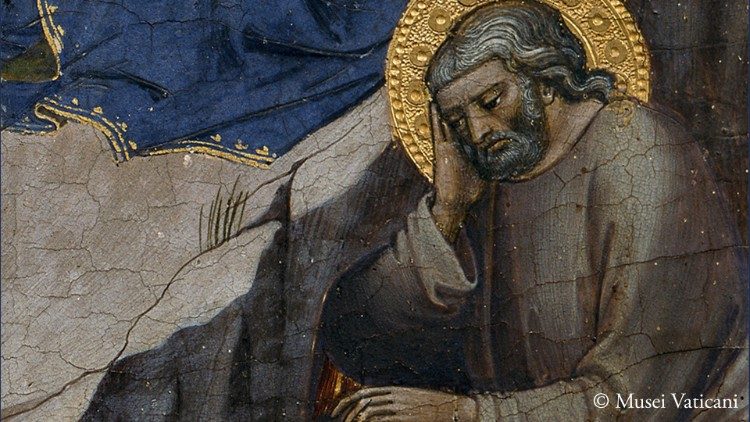
Photo from Vatican News, St. Joseph and the Child Jesus, 14 December 2020.
Today we continue the second part of Matthew’s genealogy that ended yesterday with a marked shift in its structure of begetting: “Eleazar became the father of Matthan, Matthan the father of Jacob, Jacob the father of Joseph, the husband of Mary. Of her was born Jesus who is called the Christ” (Mt.1:15-16).
Matthew now fortifies this fact and conviction that Jesus Christ is the fulfillment of the promise to the Patriarchs, the Son of God who became human like us. See his solemn pronouncement about the coming of Jesus Christ:
This is how the birth of Jesus Christ cam about. When his mother Mary was betrothed to Jospeh, but before they lived together, she was found with child through the Holy Spirit. Joseph her husband, since he was a righteous man, yet unwilling to expose her to shame, decided to divorce her quietly.
Matthew 1:18-19
It is so timely that on this rare occasion when we reflect on Joseph’s role in the coming of Jesus Christ that Pope Francis recently declared December 8, 2020 to December 8, 2021 as the “Year of Saint Joseph” in celebration of the 150th anniversary of the declaration of the beloved saint as Patron of the Universal Church with his Apostolic Letter “Patris Corde” (With a Father’s Heart).
A known devotee of Saint Joseph who popularized in 2015 during his visit to the country the image of the “Sleeping Saint Joseph”, Pope Francis said in writing Patris Corde how the COVID-19 pandemic has helped us see more clearly the importance of “ordinary” people who, though far from the limelight, exercise patience and offer hope every day.
The Holy Father explained that the “ordinary” people like those who kept our lives going especially during the lockdowns resemble Saint Joseph, “the man who goes unnoticed, a daily, discreet and hidden presence,” who nonetheless played “an incomparable role in the history of salvation” (Vatican News, 12 December 2020).
Let us reflect on two beautiful traits of St. Joseph that made him love Jesus and Mary with a father’s heart according to Pope Francis: creatively courageous and being in the shadows.
Photo from Vatican News, 12 December 2020.
Saint Joseph as a creatively courageous father
In describing Joseph as a “creatively courageous father”, Pope Francis showed us his deep devotion to this great saint described by Matthew as a “righteous man” or holy man who obeys the Laws of God.
Having courage is more than being able to do death-defying acts that is more on physical strength; courage is a spiritual virtue, a spiritual strength when we do extraordinary things because of higher ideals and values like love and gaining eternal life in Jesus Christ.
According to Pope Francis, “creative courage emerges especially in the way we deal with difficulties. In the face of difficulty, we can either give up and walk away, or somehow engage with it. At times, difficulties bring out resources we did not even think we had” (Patris Corde, 5).
The word courage is from the Latin “cor” for heart which is the seat of our being. To have courage according to the late Fr. Henri Nouwen means “to speak from the heart, to listen to our heart, and to act from our heart” when we dare to lose ourselves because of love.
A creative person is always someone who is deeply in love with another person or with one’s craft, art, career or whatever passion. See how people so in love become so creative that they can write songs and poems, do wonderful works, and accomplish so many wonderful things.
A “creatively courageous” person like Saint Joseph is someone so deeply in love with Mary and with God: after learning the circumstances surrounding Mary’s pregnancy, Matthew tells us “When Joseph awoke, he did as the angel of the Lord had commanded him and took his wife into his home” (Mt.1:24).
Photo by author, Gaudete Sunday 2020.
Matthew tells us how Saint Joseph from the very start has always been creatively courageous when he decided to quietly divorce Mary after learning of her pregnancy: here we find Saint Joseph not only very courageous to face the bitter truth about Mary having a baby not his but also very creative in the sense that because of his great love for her, he did not want her exposed to extreme shame and public humiliation in breaking the seal of their betrothal.
His love for Mary found ways to spare her all the pains and hurts that may result if found with a baby not his; but after learning the truth, the more we find him creatively courageous when Joseph found so many ways to save Mother and Child from all harm and even death.
See that when Joseph accepted Mary, Jesus came forth to us while at the same time, when Joseph accepted God through the angel as expression of his deep faith and love, he took Mary as wife.
And this is what Pope Francis further explains in Patris Corde that at the end of every account in which Saint Joseph plays a role, the Gospel tells us that he gets up and takes Jesus and Mary who are the most precious treasure of our faith.
Taking Jesus and Mary like Saint Joseph as creatively courageous calls us Christians to always love the Church and the sacraments and charity, and most of all in loving the Church, we also love the poor for whom Jesus came and Mary identified herself with in her Magnificat.
In this time of the pandemic, we are called to creatively courageous in finding Jesus among those people too familiar with us and those so different from us because too often, they are the people we always take for granted, those too close to us and the strangers.
Being creatively courageous in this time of the pandemic means also being more sensitive with others especially in our words and actions that many times lack any sympathy or empathy with those living at the margins like the poor and the sick, those living alone, and those forgotten by families and by society.
Saint Joseph, a father in the shadows
I love the way Pope Francis started his Apostolic Letter about Saint Joseph because it is something very much alike with Matthew’s unique style in beginning his gospel with the genealogy of Jesus: the Holy Father began by citing how Joseph loved Jesus according to the gospels “WITH A FATHER’S HEART” written in all caps!
Pope Francis must be stressing to us these days of the need to have a father’s heart which is also rarely heard because most often, the heart is more associated with the mother. But that is what the world precisely needs now, a father’s heart like that of God our Father.
In every exercise of our fatherhood, we should always keep in mind that it has nothing to do with possession, but is rather a “sign” pointing to a greater fatherhood. In a way, we are all like Joseph: a shadow of the heavenly Father, who “makes his sun rise on the evil and on the good, and sends rain on the just and on the unjust” (Mt 5:45). And a shadow that follows his Son.
Pope Francis, Patris Corde, 7
Photo is painting on acrylic (48×96) by Bulakenyo artist Aris Bagtas called “Luklukan ng Karunungan” (Seat of Wisdom) displayed at the second floor of the Library of the Immaculate Conception Major Seminary at Guiguinto, Bulacan. A lively and beautiful rendition by Aris of Mary teaching her Son Jesus Christ while at the background is Joseph looking at them. Used with permission.
To be with a heart of the father like God’s is to be “most chaste” like Saint Joseph which the Holy Father said is more than a sign of affection but the summation of an attitude that is the opposite of possessiveness.
Chastity is freedom from possessiveness in every sphere of one’s life. Only when love is chaste, is it truly love. A possessive love ultimately becomes dangerous: it imprisons, constricts and makes for misery. God himself loved humanity with a chaste love; he left us free even to go astray and set ourselves against him. The logic of love is always the logic of freedom, and Joseph knew how to love with extraordinary freedom. He never made himself the centre of things. He did not think of himself, but focused instead on the lives of Mary and Jesus.
Pope Francis, Patris Corde
I am so glad that Pope Francis mentioned the need to be “most chaste” as opposite of possessiveness because there is an ongoing crisis in fatherhood among us these days. Not just to biological fathers but also to fathers in the other institutions especially the Church.
Are we not priests in deep trouble with chastity these days not only with the scourge of sexual scandals and misconduct this century but also in how we have been lording it over in our parishes that we have remained an institution seen more in terms of power and control that we have never evolved to Avery Dulles’ other models of the Church like a community of disciples?
Are we not also guilty in the Church like fathers in the family and other institutions who “possessed” those below them, totally forgetting it is the Lord’s vineyard, that we are His stewards tasked to lead our flock to growth and maturity when all we think of is our own prestige and popularity that Jesus Christ is forgotten and put to the sidelights because we feel so good, so great?
In this time of pandemic amid the many temptations of social media, we priests must pause before doing all those online projects to keep in mind that we are shadows of the fatherhood of God, that like Saint Joseph, it is best for us to work in silence and as much as possible be at the background because we remain the shadows of the Son.
Fatherhood in the real and Christian sense is being a shadow not only of God the Father but also of his Son, Jesus Christ. Like John the Baptist, fathers must learn to decrease so that Jesus may increase.
Photo by author of the Chapel of St. Joseph in Nazareth (2017); below is the ancient site of his carpentry shop where Jesus grew up as a child.
Lately I have been dreaming of my late father due to so many problems coming my way. When people ask me about my vocation story, asking how it all started, I have always considered it all began with my dad. He never asked me to become a priest nor even taught me how to pray but I grew up seeing him pray daily before our altar before leaving for work and upon coming home. How I love waking up to the scent burning candles wafting through our home as he always lit candles at the altar and our grotto outside. It was from him that I learned that lesson I taught my students to have a rosary in the pocket so we may pray anywhere, any time.
The only other thing my dad taught me by personally telling me was to study hard so that we could be of service to the people and never a burden to the society.
I think that is the best thing any father can do — to form their children into another shadow of the Lord, not necessarily be like them.
The Lord Is My Chef Sunday Music by Fr. Nick F. Lalog II, 13 December 2020
Photo by author, Tabernacle, Gaudete Sunday, 2020.
Today is Gaudete Sunday, the third week of Advent known as “Rejoice Sunday” when our readings and pink motifs invite us all to rejoice because Jesus is coming.
And so, here we rejoice with some hard hitting old-school music with Daryl Hall and John Oates’ cover of the Spinners’ 1972 hit I’ll Be Around.
Yes, we have always preferred the original and the Spinners really did a good one that made I’ll Be Around now a classic but Hall and Oates really “kicked ass” on this one along with other hit classics from their 2004 album Our Kind of Soul.
I was watching Live from Daryl’s House the other day when their featured guest sang this and right away felt its energy but I still preferred this 2004 cover that featured the the dynamic duo’s kind of old-school music especially the signature guitar riff wrapped up in Daryl’s superb voice and performance.
I’ll Be Around was written by Phil Hurtt who clarified he was not “hurting” (pun intended) or into any emotional transition in composing the lyrics of this song that speak of the undying devotion of a brokenhearted man to his ex-girlfriend, that despite their parting of ways, he assured her that
Whenever you call me, I'll be there
Whenever you want me, I'll be there
Whenever you need me, I'll be there
I'll be around
In our gospel reflection, we have said that life is a perpetual Advent of Jesus – he had come, he will come again at the end of time, and he continues to come to us in our lives, among peoples and events.
And in this perpetual coming of Jesus, he needs us as new John the Baptist who shall guide others because “there is one among you whom you do not recognize” who could be Christ after all!
We find this song joyful, upbeat, and very much like the role of John the Baptist, the Lord’s Precursor and Awakener preparing the way of Jesus Christ even in our own time when this Season of Advent has become a parable of our life (https://lordmychef.com/2020/12/12/advent-a-parable-of-our-life/).
So, let us rejoice amid the pandemic, Jesus continues to come to bless us, to save us!
Uploaded to YouTube by LOGONDOR (83,138 views as of 18 June 2015); [Merlin] Absolute Label Services (on behalf of U-Watch Records); CMRRA, BMI – Broadcast Music Inc., Warner Chappell, PEDL, UNIAO BRASILEIRA DE EDITORAS DE MUSICA – UBEM, LatinAutor – Warner Chappell, Sony ATV Publishing, LatinAutorPerf, and 3 Music Rights Societies
The Lord Is My Chef Breakfast Recipe for Soul by Fr. Nicanor F. Lalog II
Thursday, Memorial of St. Francis Xavier, Missionary, 03 December 2020
Isaiah 26:1-6     >><}}}*>  >><}}}*>  >><}}}*>     Matthew 7:21, 24-27
Photo by Mr. Red Santiago of his son while praying in our Parish, November 2019.
Thank you very much, God our loving Father in continuing to keep us, in gathering us together as family, as friends, as a community despite our many sins and failures, most especially in the midst of these trying times.
Like the remnants of Israel thrown into exile in the first reading, you have gathered us in Jesus Christ as our “strong wall and rampart” (Is.26:1), protecting us, blessing us, befriending us.
Let us not make same old mistake again like your chosen people thrown into Babylonian exile who worshipped you only with lips:
Jesus said to his disciples: “Not everyone who says to me, ‘Lord, Lord,’ will enter the kingdom of heaven, but only the one who does the will of my father in heaven.”
Matthew 7:21
In this Season of Advent, let us rediscover you anew, Jesus, our Lord and Savior. Help us renew our friendship in you by cultivating a prayer life that is consistent because friends always communicate, they always listen and speak to each other.
Sorry, Lord, for ignoring your words for so long, listening more to empty words of media than to your words that are performative or life-changing as Pope emeritus Benedict XVI used to say.
Most of all, friends not only talk and listen — they love each other.
Teach me to be truly wise, dear Jesus, to love more in deeds than in words.
Teach me to have my life founded on you, rooted in your love like St. Francis Xavier whose memorial we celebrate today for having accomplished so much against all odds because of his love for you and for people scattered in the Far East, hungry for your words.
Fill my heart with your love so that like St. Francis Xavier, I may be “stirred to meditate on spiritual realities, to listen actively to what God is saying to me… that I may forget my own desires, my own human affairs and give myself over entirely to God’s will and choice that my heart would cry out: Lord I am here! Send me anywhere you like!” (adapted from a letter by St. Francis Xavier to St. Ignatius).
Quiet Storm by Fr. Nicanor F. Lalog II, 23 November 2020
Photo by author, Christmas decors at Camp John Hay, Baguio City, 2018.
Surely, there will be Christmas this year
despite the pandemic
but there will be less traffic,
less madness in malls and streets
and more praying and silence
in our homes and parishes.
There will be less dinging
of cash registers
and maybe more singing
from the hearts
as we begin to see more
of Jesus in the other
person despite
the face mask.
Surely, there will be Christmas in this time of corona
as there will be more presence
of persons and loved ones
than presents and gifts recycled
or bought without any thoughts;
there will be more crèche
and boughs of greens
so we do not have to be mean
if we do not receive anything.
For so long
we have been receiving gifts
when it is not us celebrating
birthday but the Lord
who only asks for our open hearts.
Photo by author, National Shrine of Our Lady of Mt. Carmel, QC, 2019.
Surely, there will still be Christmas amid COVID-19
when we shall finally be hearing
music celebrating Christ's coming
not cheesy songs masquerading as carols
wishing for every maiden's Prince Charming;
there may be less cheese and ham and wine
for our Christmas dinner
with memories and dreams overflowing
as we gather filled with faith, hope and love;
it does not matter if there are no blinking lights
or even Christmas trees with all the trimmings
or boxes of gifts below or socks hanging
for as long as the glow of Christ's light
and warmth bursting in everyone's hello!
Surely, there will always be Christmas
no matter how favorable or
unfavorable each year
because Christmas
is more than a date to
keep and remember
but an event, a Person
to cherish and welcome,
to follow and imitate,
to care and let grow
within us, among us
the God who became human
 like us so we can be divine
like Him.
Surely there will always be Christmas every year
but after 2020, may our Christmas be for real:
less hugging and kissing
but more loving and caring;
less laughing and merrymaking
but more of rejoicing and comforting;
less having and buying
more giving and sharing;
more sacrificing
more striving
for justice and peace;
less clapping, less "liking", less "trending"
more praying, more kneeling
to Jesus our Savior and everything!  AMEN.
The Lord Is My Chef Breakfast Recipe for the Soul by Fr. Nicanor F. Lalog II
Thursday, Week XXXIII, Year II in Ordinary Time, 19 November 2020
Revelation 5:1-10     >><)))*> + <*(((><<  ||  >><)))*> + <*(((><<     Luke 19:41-44
“Mater Dolorosa” also known as “Blue Madonna” (1616) by Carlo Dolci. Photo from Wikimedia Commons.
Thank you, dear Jesus, in joining me in my tears, in my crying. I have been crying a lot lately for so many reasons. And what a wonderful feeling to cry because so often, it has become my prayers too, even my food for the soul.
In the first reading, St. John “shed many tears because no one was found worthy to open the scroll or to examine it” (Revelation 5:4); while in the gospel, you wept over Jerusalem as you drew near the city for refusing to recognize and accept you as the Messiah (Luke19:41).
In both instances, tears express the deep love within us for one another, an outpouring of love that have become like beads of prayers.
Photo by author, Dominus Flevit (The Lord Wept) Church where Jesus wept over Jerusalem, 2017. Roof is shaped like tears.
Thank you dear Jesus for enabling me to cry like you for it means that my heart is still beating, my heart is aching because it is loving.
Tears do come from ducts near the eyes but they come from the soul longing for you, Lord, forming in the heart, secreted from those many scars left open whenever we give away a part of ourselves to somebody else out of love.
Tears are always a grace from you as they cleanse us inside, clearing our eyes of the many blurs so we may see your face among the persons next to us.
Bless us as we cry, O Lord, that our tears may eventually pave the way for smiles and joys some other day when like your prayer for Jerusalem, we may recognize your visitation in the many trials and tests we endure for our loved ones. Amen.
The Lord Is My Chef Breakfast Recipe for the Soul by Fr. Nicanor F. Lalog II
Friday, Week XXXII, Year II in Ordinary Time, 13 November 2020
2 John 4-9     >><)))*> |\  >><)))*>  ||  >><)))*>     Luke 17:26-37
Photo by author, ICMAS Theologate Chapel, 05 October 2020.
My prayer to you today, O God our loving Father, is simple: thank you very much for the gift of a new day, thank you very much for the warm sunshine amid overcast skies, thank you very much most of all for the gift of life.
Once again you have made us experience your saving hand and protection the other night from the terrifying winds and rains of typhoon Ulysses; then yesterday, everybody was surprised at how fast the waters have risen following widespread floods.
So many of us are asking – not complaining – why all these things happening this year 2020?
Open our hearts, open our eyes and ears to listen and heed your voice amid these calamities happening among us.
Make us more sensitive to the needs and cries of others by living in love and charity, of witnessing the gospel of Jesus Christ your Son instead of entertaining so many “progressive” ideas and thoughts that lead nowhere.
Let us live in love, Lord.
For this is love, that we walk according to his commandments… Many deceivers have gone out into the world, those who do not acknowledge Jesus Christ as coming in the flesh… Look to yourselves that you do not lose what we worked for but may receive a full recompense. Anyone who is so “progressive” as not to remain in the teaching of the Christ does not have God; whoever remains in the teaching has the Father and the Son.
1 John 6,7, 8-9
May these calamities open ourselves to the reality and mystery of Christ’s coming again, of how we must strive to live in love, to see every body not just as a body like vultures but as somebody needing love and attention. Amen.