Blessedness of mourning

Lord My Chef Daily Recipe for the Soul, 01 November 2025
Saturday, Solemnity of All Saints
Revelation 7:2-4, 9-24 ><]]]'> 1 John 3:1-3 ><]]]'> Matthew 5:1-12
Thousands of people arrive to pray at the graves of their relatives at a cemetery during the annual observance of All Saint’s Day in Manila on November 1, 2019. Millions of Filipinos flocked to cemeteries to visit and pray at the graves of their loved ones to mark the holiday. Photo by Ted Aljibe, AFP.

Many are amused even some of us Filipinos why all roads lead to cemeteries during this time of the year to celebrate the Solemnity of All Saints when remembering our departed loved ones actually falls on the following day, November 2.

There’s nothing wrong with this tradition except that people forget celebrating Mass on All Saints’ Day which is the essence of the feast ranked as a Solemnity, the highest in our liturgy. Offer a Mass first for your departed loved ones on November 1 before going to the cemetery!

More than the close connections of All Saints’ Day and All Souls’ Day in its theology and tradition, our celebration of these two feasts collectively referred to as Undas is the classic tension of our experiences of heaven on earth, of the here and not yet, of the mixture of joy and sadness within us when we remember our dead best expressed in our grief and mourning.

When Jesus saw the crowds, he went up the mountain, and after he had sat down, his disciples came to him. He began to teach them, saying: “Blessed are the poor in spirit, for theirs is the kingdom of heaven. Blessed are they who mourn, for they will be comforted” (Matthew 5:1-4).

From forbes.com, 2019.

In a world that thrives and promotes so much fun and merry-making, our second beatitude is difficult to understand or even grasp in this time of faith in a mass-mediated culture.

What is “blessed” with grieving and mourning or crying when you have lost a loved one, like a parent or a child or a friend?

Pope Benedict XVI explained in his book “Jesus of Nazareth” there are two kinds of mourning that the gospels offer us exemplified by the two most extreme of the Apostles, Judas Iscariot who betrayed Jesus and, Simon Peter who denied the Lord thrice (pp.86-89).

Photo by author, Church of St. Anne, Jerusalem, Israel, May 2017.

This first kind of mourning as shown by Judas Iscariot is when one has lost hope, succumbing to the miseries of losing a beloved and becomes mistrustful of love that leads to self-destruction. It is the worst kind of mourning that eats away and destroys man within just like Judas Iscariot who hanged himself (see Matt. 27:3-5).

The second kind of mourning according to Pope Benedict XVI that Jesus must be referring to as “blessed” in his Beatitudes which leads to salvation is when the mourning is caused by an encounter with the truth that leads to conversion like what happened to Simon Peter when he was struck by the gaze of Jesus that he burst into healing tears and cleansed his soul to enable him to begin anew in his life in the Lord (see Lk.22:60-61,62).

This will have its lovely conclusion eight days after Easter before Jesus ascended into heaven when he asked Simon Peter thrice, “Do you love me?” (Jn.21:15ff.) to remind him of that episode that eventually pushed him to follow Christ unreservedly “by taking care of his sheep”. Guided by these thoughts of Pope Benedict XVI, let us see reflect the blessedness of weeping…

Photo by Juan Pablo Serrano on Pexels.com

Blessed are those who weep because that means they have love in their hearts. Deaths and bad news that befall our loved ones sadden us, even jolt us with deep pain that move us to console them, to suffer with them, and to be one with them by reconnecting with them and their loved ones like when we go to a funeral or a wake.

This did not happen with Judas Iscariot. The little love he had in his heart when he realized his sin was completely wiped out when he chose to surrender totally to evil, finding no more hope for forgiveness and reconciliation with Jesus.

Photo by Mr. Jay Javier, September 2024.

Never lose hope in Jesus. Seek that love in your heart. Seek Jesus in that tiny voice telling you to always come home to him. Do not be shy nor ashamed of your loss and failure. Keep that fire of love in Jesus burning.

Do not let grief overcome and consume you, wiping out the embers of love left in your heart with the loss of a loved one. Life goes on in Jesus and in that same love we have in our hearts that surprisingly even grows deeper as we move on after the death of a loved one.

In the recent ghost projects scam by government and elected officials, we too felt the pain of loss too in the billions of pesos stolen from us. We are deeply affected because we love the Philippines; let us keep that love for the country burning within us by taking concrete steps against corruption while preventing opportunists from plunging us into chaos.

Blessed are those who weep because more than the love they have in their hearts, they have been loved first of all. We weep and grieve the death of a beloved family member or relative or friend because of the love they have given us, of the kindness they have shown us, and the care they have lavished upon us.

Photo by Oscar Millu00e1n on Pexels.com

Simon Peter did not merely have love in his heart; he was so loved by Christ!

Luke dramatically described to us how Peter’s eyes met the merciful and loving eyes of Jesus while he was denying the Lord. It must have struck him so hard that immediately he felt contrition for his sin, feeling strongly the need to reform himself and reconnect with the Lord. He could not let the imperfect love he has in his heart to just go to waste that is why when he wept bitterly on that Holy Thursday evening, it was not the end but the beginning of another chapter in his beautiful story of love for Jesus. It was precisely what he meant when he told Jesus at Tiberias, “Lord, you know everything; you know that I love you” (Jn.21:17) – that despite his weaknesses and failures, he loves Jesus, he tries so hard to love Jesus in his little ways.

There’s a saying that “If you have love in your heart, you have been blessed by God; if you have been loved, you have been touched by God.” We are blessed in mourning our departed loved ones because through them, we felt being touched by God. That is why we have to move on after every death – so we may love more those left around us for them to feel God’s loving touch too!

Residents of Hagonoy Bulacan walk their way to flooded portions of premise surrondings St. Anne Parish as they protest this was following exposes of flood control anomalies. The Bulacan has been under scrutiny for receiving multi million worth of flood control projects but still suffers severe flooding. (Photo by Michael Varcas)

Blessed are those who mourn because that is when we actually stand for what is true and good, for what is just and right.

When we weep, it does not mean we have lost; in fact, even in the face of apparent loss like Jesus on the Cross, mourning is the most firm expression of our belief in what is right and just, and what is true and good.

According to Pope Benedict, this blessed mourning that leads to salvation is found at the death of Jesus Christ where his Mother, the Blessed Virgin Mary stood by the foot of his Cross with the beloved disciple and other women (Ibid.,p. 87). At the Cross, Mary showed us that mourning is blessed because it is the strongest expression of our solidarity with Christ, of our going against evil and sin.

In this world when conformity to whatever “everyone is doing” is the rule of the game like corruption, dishonesty, infidelity, and lies, mourning and weeping with the victims of oppression and persecution and corruption too can be our strongest signs of protest and resistance against the prevailing evils of our time. When we weep and mourn for victims of violence and evil, that is when we become God’s instruments of his comfort to his people, when we strengthen them in their pains and sufferings.

To comfort means “to strengthen” – from the Latin cum fortis, “with strength”. When we mourn and stand by those weeping and suffering, we are blessed because that is when we resolve to live and love more like Christ on the Cross.

Photo by Dra. Mai B. Dela Peña, Mt. Carmel, Israel, 2015.

What are your griefs today?

Blessed are you in your weeping not only in having love in your heart but most of all, for being loved. Dwell in the love of God in Jesus Christ like the saints who have gone ahead of us, resisting all evils and temptations to sin for the Lord comforts us his people always. Amen. A blessed All Saints’ Day to you! Fr. Nicanor F. Lalog II, Our Lady of Fatima University, Valenzuela City

*This is based on our previous blog in 2022. Salamuch.

Our hallowed hiddenness

Quiet Storm by Fr. Nicanor F. Lalog II, 31 October 2023

Whether you choose to celebrate Halloween in its truest sense which is the Christian and sacred celebration of All Saints or, the popular and pagan manner that is scary or spooky, November first reminds us always of things that are hidden and not seen.

What is really scary whenever November first approaches is the insistence of so many benighted souls including many Christians who highlight the erroneous pagan practice of dressing evil when halloween literally means “hallowed eve” or “holy evening” before the day set aside for all “holy souls” already in heaven we call “saints”. Any soul who enters heaven is considered a “saint”, that is, holy even if not recognized or canonized by the Church.

Remember the old Our Father translation when we used to say “Hallowed be thy name”? That’s it! Hallowed is the old English for holy. Where people got that idea of halloween as evil is clearly from the devil! And part of that sinister ploy by the devil in making evil funny and acceptable – and visible – is happening in the social media where everything must be seen, shown and exposed. Notice the expression “as seen on TV” to sell and market products while Facebook users brag their rule of thumb “show pictures or it never happened”.

Not everything can be seen and must be seen and shown. Recall how Genesis portrayed Adam and Eve hiding in shame, covering themselves with leaves after eating the forbidden fruit but these days, which could be the second phase of the Fall, men and women are not ashamed at all of their sins and scandals that instead of hiding, they make known to everyone deeds better kept in private, saying words better kept unsaid. They have absolutized the truth, baring all in total disregard of persons’ dignity and unity of the community. We have lost decency because we have also lost our sense of hiddenness, of privacy through silence and stillness.

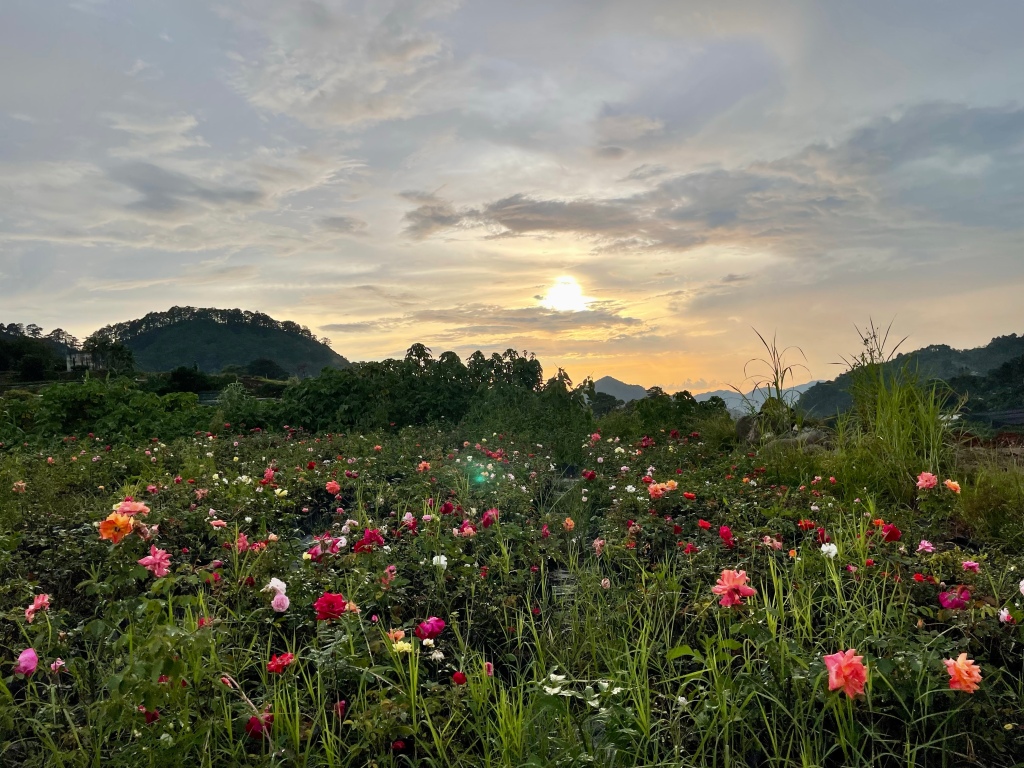
Photo by author, sunrise at the Pacific from Katmon Nature Sanctuary & Beach Resort in Infanta, Quezon, 04 March 2023.

Hiddenness is a sacred presence where each of us can be all by one’s self focused on God who is the root of our being and existence no matter how one may call Him.  St. John Paul II said in one of his writings that God created man first to be alone with Him.  And that is how it will be to each of us in the end: we die alone. With God.

We all have this gift of hiddenness within each one of us. This we experience in our desires to be still, to go to the mountains or anywhere for a retreat or introspection, for some “me” time to rediscover and find one’s self anew. 

Hiddenness is the passageway to the great gifts of silence and stillness that everyone needs to maintain balance in this highly competitive world filled with so much noise where everybody is talking, including cars and elevators.  Compounding the problem of noise within and outside us are the cameras everywhere that entertain us and safeguard our well-being. But, are we really safer these days with all the CCTV’s and Face ID’s we use?

From forbes.com.

Many times, we have actually stripped ourselves of the innate mystery of being human, of the beauty and gift of personhood that some have tried to reveal using the camera but failed because we are beyond seeing. We do not notice how the cameras actually rob us of respect when unconsciously we give ourselves away to the world with our photos and videos spreading far without our knowing. Worst, we have allowed the camera to invade our hiddenness without us realizing that its effects backfire to us as we rarely have the time to analyze the possible outcomes of our photos and videos that usually tend to show what is negative and bad than what is positive and good about us. Our fascination with cameras perfectly capture our Filipino term palabas that literally means “outward”, a mere show without substance inside (loob). As a result of these sounds and images saturating us daily, the more we have become confused and lost because we do not have our grounding or “bearing” found only in hiddenness.

“In our society we are inclined to avoid hiddenness. We want to be seen and acknowledged. We want to be useful to others and influence the course of events. But as we become visible and popular, we quickly grow dependent on people and their responses and easily lose touch with God, the true source of our being. Hiddenness is the place of purification. In hiddenness we find our true selves.”

Fr. Henri Nouwen
Photo by author, Anvaya Cove in Morong, Bataan, July 2023.

We need to regain our hallowed hiddenness if we wish to grow and mature truly as persons – emotionally, psychologically and spiritually.  With the phone and TV always around us even in the church, everybody and everything has become so ordinary and cheap. 

Regaining our hiddenness is learning to put our technology in its proper place to be grounded in God in silence, the one commodity that has become so scarce these days since the invention of the Sony Walkman more than 40 years ago that spawned all these gadgets all over us now.

Silence is the language of God which leads us to Him and to our true selves. Every communication by God is always preceded by silence, something we have refused to learn as the most basic requirement of every communication. No wonder, we quarrel a lot, ending up more confused than ever because we never listen to others in silence. We never dialogue but simply talk, talk, and talk.

Genesis tells us in the beginning when God created everything, there was silence before He said, “Let there be light” while the fourth gospel solemnly tells us, “In the beginning was the Word… And the Word became flesh” (Jn.1:1, 14). Both instances evoke the beauty and majesty of God in grand silence.

All books in the Old Testament especially those of Psalms and of Job teem with many instances of God in silence amid every sunrise and sunset, in the gentle breeze and vast skies and oceans. In the New Testament, all four evangelists reported nothing Jesus said and did in childhood until the age 30 except for his lost and finding in the temple when 12 years old; Jesus was totally silent all those “hidden years” of his life in preparation for his ministry that lasted only three years, accomplishing so much whereas we speak all our lives and still end up empty. Most of all, the evangelists tell us too how Jesus frequently invited his disciples to a deserted place to pray, be silent and rest to be in communion with God his Father.

Hiddenness is God’s mode of presence that cannot be captured nor described in human terms. That is why He is hidden. It is not that God is hiding from us but He is inviting us to be intimately close with Him to exclusively and personally experience Him, be filled with Him.

Photo by Ms. Jo Villafuerte in Atok, Benguet, 01 September 2019.

It was the same thing Jesus did on Easter, remaining hidden from the disciples. When he finally appeared to Mary Magdalene who tried to touch him, Jesus stopped her to signal to her and to us all of the new level of relating with the Risen Lord in hiddenness. In all Easter stories, we are told how the disciples fell silent whenever Jesus appeared to them. In Emmaus, after the breaking of bread, the two disciples finally recognized Jesus who immediately vanished too! Why? Because Jesus wanted his disciples including us today to follow him personally in his hiddenness to find him and ourselves too.

Appearances or images and noise in life are very fleeting. Very often, the most significant moments and insights we have in life are those that come from our long periods of silence, of prayers and soul-searching.

This November 1 and 2 as we remember all those who have left us in this world, let us keep its sacred origins:  All Saints Day for those souls already in heaven and All Souls’ Day for those who have departed but still being purified in the purgatory.  Both dates invite us to “hide” in prayers, in silent remembering to experience God and our departed loved ones in the most intimate and personal manner without the gadgets and things that numb us of their presence. Amen. Have a blessed All Saints’ and All Souls’ Days!

Life is “face-to-face” – on earth and in eternity!

The Lord Is My Chef Daily Recipe for the Soul by Fr. Nicanor F. Lalog II
Tuesday, Commemoration of All the Faithful Departed, 02 November 2021
Wisdom 3:1-9 ><}}}*> Romans 8:31-35, 37-39 ><}}}*> John 14:1-6
Photo by author, November 2020.
God our loving and merciful
Father in heaven, as we commemorate
today all the faithful departed on
this All Souls' Day, my thoughts are
still with this ongoing COVID-19 
pandemic:
Of how I lament the way authorities
continue to insist religious gatherings
as non-essential that despite the many
deaths since last year due to this pandemic,
our people are still denied of the chance to
pay respects to their departed loved ones
in the cemeteries when malls, restaurants,
and public places like tourist destinations
are opened and allowed to operate 
to revive the economy.
How sad, dear God, it is still the money
and the economy that matter for them
than the soul and spiritual needs of people.
But I am also thankful, Father
for the valuable lessons this pandemic
has taught us most especially the value
of every person seen in the beauty
 of "face-to-face" or F2F encounters
we all so desire these days;
due to the pandemic, we have realized
nothing beats face-to-face meetings,
personal and actual relationships
despite the conveniences of online classes
and work from home set ups or any
of those internet transactions. 
How funny, dear God,
now we realize "life is F2F",
face-to-face both here on earth
and in heaven, your best gift to us
to be present and actual with you
and with one another!
And so, through the assuring words
 of your Son Jesus Christ to "Do not let
your hearts be troubled.
  You have faith in God;
 have faith also in me.
In my Father's house
there are many dwelling places"
 (Jn.14:1), we pray for the souls
 of our departed loved ones
 to finally have that grace of seeing you,
merciful God and Father, face-to-face
in your eternal glory in heaven,
and not that soon, we too may join them
in that ultimate F2F, praising you,
thanking you for making us worthy
in Jesus Christ.
And while still here on earth
as we approach the end of 2021,
we pray most earnestly to you, O God,
that slowly we may have the grace
and joy of experiencing anew one another
face-to-face, celebrating life
more meaningfully as we continue
 to learn the harsh lessons of COVID-19.
Amen.
Photo by author, November 2020.

We are never lost

The Lord Is My Chef Breakfast Recipe for the Soul by Fr. Nicanor F. Lalog II
Commemoration of All the Faithful Departed (All Souls' Day), 02 November 2020
Wisdom 3:1-9  >><)))*>|+|>><)))*>  Romans 6:3-4, 8-9  >><)))*> |+| >><)))*>  John 6:37-40
Photo by Pixabay on Pexels.com

Dearest God almighty Father: this All Souls’ Day is so special, so unique for us just like the rest of the other feasts and celebrations we have had so far this 2020 due to COVID-19 pandemic when we do not have much of our rites and rituals and traditions but more of their meaning.

Thank you, Lord, for making us realize and experience the essence and beauty of our celebrations like yesterday’s All Saints’ Day and today’s All Souls’ Day that are both a “festival of hope” – a virtue we have always taken for granted and misconstrued as something like optimism.

Thank you for the gift of hope, loving Father, that even if we feel everything is lost and gone for us, it is never the case with you. In fact, the more we lose ourselves and everything, the more we give up our beloved to death and eternal rest, the more we are all found in you!

In hope, we are assured that you will never reject us when we come to you:

Jesus said to the crowds: “Everything that the Father gives me will come to me, and I will not reject anyone who comes to me, because I came down from heaven not to do my own will but the will of the one who sent me. And this is the will of the one who sent me, that I should not lose anything of what he gave me, but that I should raise it on the last day.”

John 6:37-39

How lovely to keep in mind, Lord, that hope is never empty because to hope is to rely on your promise and fidelity, on your love and compassion, on your mercy and forgiveness; to hope means keeping our ties and relationships with you who is Life itself.

As we remember our departed loved ones, we not only look back to our happy memories with them but most of all look forward into the future in eternal life Jesus promised us all.

May we stop saying we have “lost” a loved one when a beloved dies because we never “lose” anyone even to death as you assured us in the first reading:

The souls of the just are in the hand of God, and no torment shall touch them. They seemed, in the view of the foolish, to be dead; and their passing away was thought an affliction and their going forth from us, utter destruction. But they are in peace.

Wisdom 3:1-3

Teach us to hope always in you by living in Jesus (Rom. 6:8), never to steer away from his ways for that is when we truly get “lost” in life.

Also today, we thank and praise you, Lord Jesus, for not “rejecting” our prayers to spare us from the wrath of yesterday’s super typhoon “Rolly” as it weakened in category while passing through our region last night.

However, we continue to pray for our brothers and sisters in the Bicol region who have suffered so much from the impact of the super typhoon. Enlighten our minds and our hearts on how we can help them rise and start again to recover their material “losses” while at the same time, heal their memories in “losing” their loved ones.

May they find comfort and strength in you that they have not “lost” loved ones but have found you.

And for those injured, may your healing hands touch them, Jesus, be witnesses of hope in you. Amen.

Photo by author, sunrise at Camp John Hay, Baguio City, 2018.

“King of Pain” by The Police (1983)

The Lord Is My Chef Sunday Music, 01 November 2020
Photo by Mr. Jim Marpa, Bohol, 2019.

I have lined up some songs with “heaven” in their titles or lyrics for this Sunday’s celebration of All Saints’ Day and tomorrow’s All Souls’ Day; but, during prayers and reflections, I kept on hearing Sting singing in my head King of Pain which is my most favorite among his long list of great music.

Our celebrations this November first and second are a mixture of joy and mourning, of heaven and sufferings, of life and death. As we remember today those already in heaven and tomorrow pray for those awaiting entrance into heaven, we also remember on these twin dates the death of loved ones.

No matter how much we may extoll the redemptive nature of death not as an end but a beginning of eternal life, we cannot miss the sadness and pain it brings to everyone that is always for a lifetime.

And that is what hope is all about: hope does not remove sadness or pain. When we hope of getting into heaven with our departed loved ones, no matter how blissful heaven may be, we always have to deal with the hurts of losing a parent or a spouse, a sibling or a friend.

To hope means to firmly believe that when things get worst, even unto death, there is Life itself, God remaining in the end, loving us, taking us to his presence in heaven to live life in its fullness in him.

To hope means to face new beginnings in this life amid the pains we have in our hearts from deaths and separations, believing that someday, if not in this life, everything would be whole and perfect again.

That is why I find King of Pain more apt for All Saints’ Day and All Souls’ Day.

Written by Sting in 1982 at the Goldeneye Estate in Jamaica where Ian Fleming wrote his first James Bond novels, King of Pain expresses the inner torments he was going through as an individual at that time — his recent divorce from his first wife and growing misunderstanding with his other two colleagues, Andrew Summers and Stewart Copeland. They eventually parted ways after the release of the Synchronicity album from which King of Pain came in 1983.

The beat, the music and the lyrics seem to be dark and melancholic at first but as you get the feel of the entire song sung by Sting, then you realize it is actually about a man struggling with sadness or even depression, of a man filled with hopes until you realize it is speaking about you as king of pain.

Aren’t we all the king of pain in one or the other?

And as we bear all the pains, we keep on forging on with life, we never resign but keep hoping even for a piece of heaven, of the sun to celebrate life each day until we make it to the Other Side like our departed loved ones.

All in the grace of a loving God. Amen.

Provided to YouTube by Universal Music Group

We are blessed, meant to be saints

The Lord Is My Chef Sunday Recipe for the Soul by Fr. Nicanor F. Lalog II
Solemnity of All Saints, 01 November 2020
Revelation 7:2-4, 9-14   |+|   1 John 3:1-3   |+|   Matthew 5:1-12
“Mary and the Saints” painting by Duccio di Buonoinsegna (1308-1311) from en.wikipedia.org.

Let me begin our reflection on this All Saints’ Day with a joke from the “Language Nerds” on how the past, the present and the future came and appeared in a bar. Everybody was tense.


Our celebrations today and tomorrow deal with “verb tenses” – the past, the present, and the future that somehow converge in the here and now of Jesus Christ our Lord. We call it the tension of the already here but not yet, like God and heaven – both already here but not yet.

All Saints’ Day and All Souls’ Day are two Catholic celebrations so unique and distinctive of our faith that bring to the fore the beautiful tensions of the “here and not yet”, of that convergence of the temporal and eternal in our present lives.

It is something like our Filipino delicacies of tuyo (dried fish) and balut (fermented duck egg): when you smell the aroma of the frying tuyo by your neighbor, you could taste it but if you want to really experience its delight, you have to go to your neighbor and join their meal. Or the balut: is it an egg or a duckling?

In a similar manner, we find in our Gospel today that proverbial question of which came first, the egg or the chicken? Are we blessed because we followed the Beatitudes first or, are we blessed first that we can practice the Beatitudes of Christ?

When Jesus saw the crowds, he went up the mountain, and after he had sat down, his disciples came to him. He began to teach them, saying: “Blessed are the poor in spirit, for theirs is the kingdom of heaven. Blessed are they who mourn, for they will be comforted. Blessed are the meek, for they will inherit the land. Blessed are they who hunger and thirst for righteousness, for they will be satisfied. Blessed are the merciful, for they will be sown mercy. Blessed are the clean of heart, for they will see God. Blessed are….

Matthew 5:1-8
Photo by Pixabay on Pexels.com

We are all blessed

When Jesus preached his sermon on the mount to launch his ministry, he first presented himself — that he is the Christ, the Anointed or Blessed One because he is in fact the Beatitudes: he is the poor in spirit, the merciful and meek, the one with a clean heart.

Inasmuch as the Beatitudes tell us who is Jesus Christ, the Beatitudes also challenge us followers of Jesus to imitate and follow him in being poor in spirit, merciful, and clean of heart.

At first glance, we notice that blessedness seems like a reward given by Jesus after we have imitated him like being blessed after being insulted and persecuted in his name, working for peace and hungering and thirsting for righteousness.

However, the very fact we are able to bear all these sufferings to live the Beatitudes means that we are already blessed.

And that is the truth: in Christ’s Passion, Death, and Resurrection, we have all been blessed by God that we are able to live as his beloved children, now living in his “kingdom of heaven” right here on earth.

Beloved: See what love the Father has bestowed on us that we may be called the children of God. Yet so we are… we are God’s children now; what we shall be has not yet been revealed. We do know that when it is revealed we shall be like him, for we shall see him as he is. Everyone who has this hope based on him makes himself pure, as he is pure.

1 John 3:1, 2-3

Blessedness is who we are as children of God unless we choose to live otherwise.

Blessedness is God’s gift to us that enables us to live according to his will and plans, projecting us further into the future to finally be with him in all eternity in heaven. When we try to live the Beatitudes of Jesus, of going against the tide and flow of the world where power and wealth, popularity and fame are the means life is measured, then that becomes our gift to God.

And that is when we enter into heaven and become saints like what we celebrate today.

According to St. John Paul II, the good news of life is that we all share in the life of God — and that is why we are all blessed.

Our sharing in the life of God makes us blessed.

The difference that we have with the saints is just the tenses: they are now celebrating at present the fullness of their blessedness, of being present before God in all eternity in heaven because they have so well accomplished while living here on earth the works of the Beatitudes of Christ in the past. They have overcome all tests and trials in the past and now having the rewards of full blessedness.

We, on the other hand, though already sharing in the blessed life of God here on earth in the present, still have to face and endure many other trials in the future to perfect ourselves in Christ until we get a final glimpse of him in the afterlife.

Photo by Dr. Mai B. Dela Peña, MD, at Spain, 2018.

Blessedness is a relationship with God.

It is now clear with us that saints are like us who are blessed because we share in the life of God. However, saints enjoy the fullness of this blessedness of being in the very presence of God as a “reward” or a result of their striving with God’s grace to live out the Beatitudes.

Saints now enjoy the eternal presence of God, the fullness of blessedness and fullness of their relationship in God and with God, from earth into heaven.

This is the reason we have a feast for all the saints or those who have gone ahead of us and tried to lead holy lives, living out their blessedness that they now enjoy the eternal presence of God in heaven. They need not be declared by the Church as saints whoever gets into heaven in the presence of God is a saint.

We who are still living here on earth, though blessed as we share in the life of God, cannot be considered as saints yet because we still have to go through a lot of purifications, of tasks in loving.

Again, we see that tension of the here and not yet in this aspect of being saints, of blessedness: heaven is eternal union with God (hell is eternal separation from God); blessedness and heaven are both our relationships with God.

Therefore, the challenge of our blessedness here on earth as seen in the Beatitudes of Jesus is how we maintain and keep that intimate relationship with God that every choice we make is always a choice for life, of choosing to love than hate, to forgive than revenge, to understand and let go.

In the first reading, John tells us of his vision of heaven with great multitude of “saints” or holy men and women “wearing white robes holding palm branches in their hands”. The Lord told him,

“These are the ones who have survived the time of great distress; they have washed their robes and made them white in the blood of the Lamb.”

Revelation 7:14

Although we are extolling in this solemnity all the unnamed saints now in heaven, this is still a feast celebrating the goodness of God, of his immense love for us in blessing us in Jesus Christ who enables us to do good in the power of the Holy Spirit.

As we remember all the Saints, we celebrate also this sharing of God’s life in us for us to be blessed, assuring us of being saints someday!

We are challenged today to live out this blessedness freely given to us by God by being more loving with others specially in this time of COVID-19 as well as when two super typhoons are threatening to slam into some parts of our country this week.


A short note about cemeteries

Sometimes, non-Catholics laugh at us every November first when we troop to the cemeteries to be with our departed loved ones instead of November 2. Despite the closure of cemeteries this week due to COVID-19, many have earlier visited their loved ones in cemeteries while the rest among us would surely do the same once the ban is lifted.

Is there something wrong? NONE. Except for those who just go to cemeteries to drink and have fun without praying and celebrating Mass in their parishes. But there is nothing wrong with our tradition of visiting cemeteries on November first.

In fact, it is a vibrant display of our faith in God because every time we visit the dead on All Saints’ Day, we also presume they are already saints, already in heaven.

Most of all, our coming to the cemeteries on All Saints’ Day is an expression of our hope in heaven while still here on earth.

The cemetery reminds us of hope in the future. In the past when we buried our dead, the cemetery has become the place of our mourning; but, every November first, the cemetery reminds us it is the place of hope where sadness is not really removed but where we find strength and faith that like our departed loved ones, we shall overcome all trials and sufferings here on earth to be one with them in the presence of God in heaven.

That is the good news of All Saints’ Day and All Souls’ Day: we are so blessed by God in Jesus Christ who had opened our access into heaven not only in the future when we die but even now as we mourn – and celebrate the memory of our dead, we already have a taste of eternal life.

May we live out this blessedness God has given us. Amen.