Lord My Chef Daily Recipe for the Soul, 30 September 2025
Tuesday, Memorial of St. Jerome, Priest & Doctor of the Church
Zechariah 8:20-23     <*((((><  +  ><))))*>     Luke 9:51-56
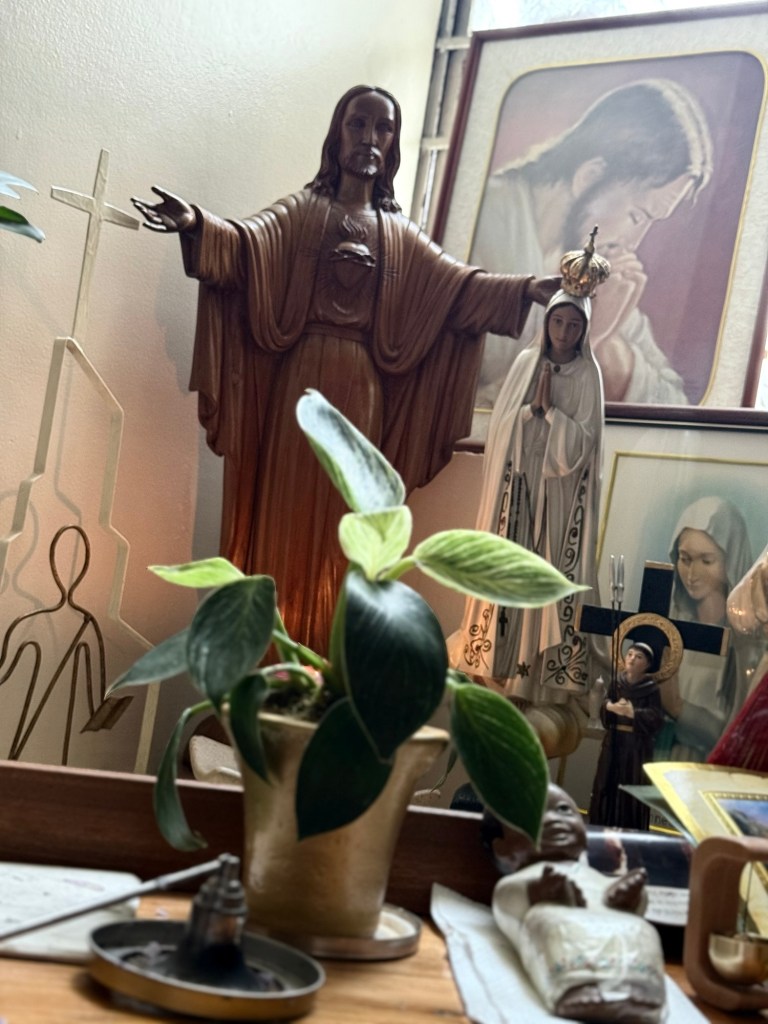
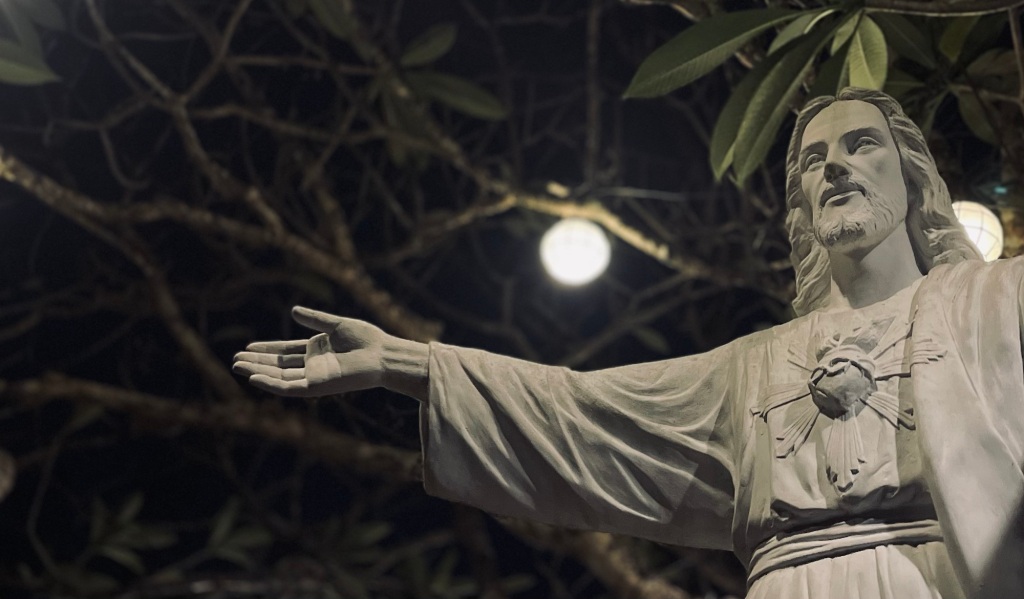
Photo by author, Sacred Heart Novitiate, Novaliches, QC, 19 March 2025.
You were the first,
Lord Jesus Christ,
to teach us to have
the courage to be disliked;
you were the first
to show us true freedom
from what others say
to freely follow what God says;
you were the first
to suffer and die for love,
Lord Jesus Christ
because your being is always clear,
your mission is always clear,
and your love is most clear.
When the days for Jesus to be taken up were fulfilled, he resolutely determined to journey to Jerusalem, and he sent messengers ahead of him. On the way they entered a Samaritan village to prepare for his reception there, but they would not welcome him because the destinations of his journey was Jerusalem. When the disciples James and John saw this, they asked, “Lord, do you want us to call down fire from heaven to consume them?” Jesus turned and rebuked them, and they journeyed to another village (Luke 9:51-56).
You knew very well,
dear Jesus, what awaited you
in Jerusalem yet you "resolutely
determined to journey" there and
when trouble was brewing in a
Samaritan village, you simply
took another route to not waste
energy and time among
the Samaritans.
Grant me the same courage
and freedom, Jesus,
to be disliked,
to be rejected;
teach me to let go
of my past especially
my mistakes and failures,
choosing to be better
than bitter;
keep me anchored in you,
Jesus, of how much you love
me and believe in me so that
I do not have to seek other's
approval except that I am doing
your holy will; most of all,
teach me to be gentle and kind
with myself, that I am not God
who is perfect; like St. Jerome,
let me immerse in your words
to continue following you
despite my imperfections
as Zechariah prophesied.
Amen.

Fr. Nicanor F. Lalog II
Our Lady of Fatima University
Valenzuela City
(lordmychef@gmail.com)
Photo by author, Archdiocesan Shrine of Nuestra Señora De Guia, Ermita, Manila, 28 November 2024.
Lord My Chef Daily Recipe for Soul, 23 July 2025
Wednesday, Memorial of St. Bridget of Sweden, Religious
Exodus 16:1-5, 9-15     <*((((>< + ><))))*>     Matthew 13:1-9
Photo by Fr. Pop Dela Cruz, San Miguel, Bulacan, 2022.
Lord Jesus,
you are the Sower
and your seed is always good:
wherever it falls,
it grows;
most of all,
you are most good
as you never tire
of going out
to sow
your good seed!
“A sower went out to sow… Whoever has ears ought to hear” (Matthew 13:3,9).
“The Sower” painting by Van Gogh from en.wikipedia.org
Open my heart
and my soul, dear Jesus
to listen intently to your
word and be a "rich soil"
like St. Bridget of Sweden
whose devotion to family,
to her people especially the poor
and to Church reforms that led
to the return of the papacy to Rome
proved her to be a seed well sown;
there are times when I am just like
the path where your seeds fell
that fed only the birds;
quite often, I am like the rocky ground
so full of enthusiasm but wanes quickly
when challenges come;
worst of all, Lord Jesus,
free me from the many thorns
that steal me from you
that I stop maturing and growing;
let me be the rich soil who
receives you and your seed:
let your light of truth
and warmth of faith help me grow;
may your hope nourish me
especially when days are dark
and nights are long;
most of all,
water me with your love
and charity
to bear all
and be fruitful.
Amen.

Fr. Nicanor F. Lalog II
Our Lady of Fatima University
Valenzuela City
Lord My Chef Daily Recipe by Fr. Nicanor F. Lalog II
Sacred Heart Novena Day 2, 19 June 2025
Detalye ng painting ng Sacred Heart of Jesus sa Visitation Monastery, Marclaz, France mula sa godongphoto / Shutterstock.
Nakatutuwa itong ating wika. Mabulaklak na kahit hindi ka isang makata minsa’y di sinasadya ika’y nakakatha ng kahit maigsing tula.
Madalas ating mabasa sa mga panitikan at mapakinggan saan man kuwentuhan na tila baga itong puso ay nagsasalita gayong wala naman itong bibig. Mismo ang Panginoong Jesus noon ay nagsabi na “ano man ang bukambibig, siyang laman ng dibdib” (Mt.12:34 at Lk.6:45) upang ipakita ang pagkakadugtong ng puso at bibig tulad ng kaisahan nito sa ating kamay batay sa pagninilay kahapon.
Samakatwid, nangungusap nga itong ating puso. At iyan ang ibig kong pagnilayan ngayong ikalawang araw ng ating pagsisiyam para sa Dakilang Kapistahan ng Kamahal-Mahalang Puso ni Jesus. Ito ang sinasaad sa ating napakinggan ngayong araw na bahagi ng pangangaral ni Jesus sa mga tao mula sa kanyang sermon sa bundok.
“Sa pananalangin ninyo’y huwag kayong gagamit ngn napakaraming salita, gaya ng ginagawa ng mga Hentil. Ang akala nila’y pakikinggan sila ng Diyos dahil sa dami ng kanilang salita. Huwag ninyo silang tutularan. Sapagkat alam na ng inyong Ama ang inyong kinakailangan bago pa man ninyo hingin sa kanya. Ganito kayo mananalangin: ‘Ama naming nasa langit, sambahin nawa ang pangalan mo'” (Mateo 6:7-9).
Isa sa mga madalas na itanong sa akin ng mga mag-aaral dito sa Our Lady of Fatima University bilang kanilang chaplain ay alin daw ba ang dapat nilang pakinggan, sigaw ng puso o sigaw ng isipan?
Palagi kong tugon sa kanila ay ang pabirong paalala na unahin nilang pakinggan lagi ang sigaw ng kanilang mga magulang.
Pagkaraan ng ilang tawanan, saka ko binabalik sa kanila ang tanong sa ibang anyo naman: humihiyaw nga ba ang puso gayong ang pagtibok nito ay napakahina? Hindi kaya sa pakikipag-usap sa atin nitong ating puso, ang ibig nito ay taimtim na pakikinig dahil kung ito ay mangusap, madalas ay pabulong.
Larawan kuha ng may-akda, Atok, Benguet, 27 Disyembre 2024.
Mag-imagine tayo kunwari ay naroon tayo sa bundok sa sermon ni Jesus. Siguradong malakas ang tinig niya sa pangangaral ngunit sa aking pakiwari mayroong indayog ang kanyang pananalita na kung saan minsan-minsan marahil siya ay bumubulong katulad nitong sa pagtuturo niya kung paano tayo mananalangin. Mahigpit ang kanyang bilin na huwag tutularan mga Hentil na napakaraming sinasabi sa Diyos sa pakiwaring sila ay pakikinggan. Hindi natin kailangang maging maingay at daanin sa dami ng sinasabi ang Diyos bagkus higit na mainam ang pananahimik upang mapakinggan sinasabi sa atin ng Diyos. Sinabi na ni Jesus na alam ng Diyos ating pangangailangan bago pa man tayo dumulog sa kanya sa pagdarasal. Kaya tayo nagdarasal ay upang pakinggan kalooban ng Diyos.
Kaya gumagamit ng stethoscope mga duktor at nurse kasi nga mahina ang tinig ng puso natin. At yon ang unang kinakailangan sa pananalangin – katahimikan upang Diyos ay mapakinggan!
Kung ang puso man ay humihiyaw, marahil wala na tayong masyadong alitan at mga kaguluhan dahil tiyak ating maririnig at mapapakinggan bawat pintig ng puso na iisa ang sinasabi kungdi ang tayo ay magmahal nang tunay. Ito ang buod ng “Ama Namin” at lahat ng mga panalangin. Ang pag-ibig ng Diyos sa ating lahat na ating tinutugunan ng pagmamahal sa ating kapwa dito sa lupang ibabaw lalo na sa pagpapatawad sa kanilang pagkakasala sa atin.
Sa Kamahal-Mahalang Puso ni Jesus, doon ay malinaw na inihahayag ang dakilang pag-ibig ng Diyos sa ating lahat ngunit walang nakikinig dahil mas nahahalina ang marami sa malalakas at maiingay na tinig ng daigdig. Ito yung ikinalulungkot ni San Pablo sa mga taga-Corinto sa unang pagbasa ngayon dahil napakadali nilang nalinlang at napasunod sa mga kakaibang turo ng ibang nangangaral sa kanila. Katulad din natin ngayon na maraming nagpapaniwala at nahahalina sa mga kung anu-anong kaisipan ng mundo gaya ng new age at wokism at iba pang mga ideya na wala nang pakialam sa Diyos at moralidad gaya ng relativism na siyang sanhi ng paniniwala sa same sex marriage at abortion.
Larawan kuha ng may-akda sa Liputan, Meycauayan, Bulacan, 31 Disyembre 2022.
Imagine din natin na first time napakinggan ang panalanging “Ama Namin.” Malamang pabulong at marahang binigkas ni Jesus ang mga titik ng panalanging ito upang tumimo ng higit sa puso at kalooban ng mga tagapakinig.
Kakaibang kaisipan noon iyon sa mga Hudyo sapagkat ang Diyos sa pagkakaalam nila ay makapangyarihan at hindi maaabot doon sa langit. Ngunit kay Jesus, malapit ang Diyos tulad ng sino mang ama sa lupa. Isang personal at mapagmahal na parang tao ang Diyos na pinakilala ni Jesus sa kanila at maging sa atin ngayon kaya mas malamang ay malumanay na malumanay ang pagbigkas ni Jesus lalo ng “Ama naming nasa langit” dahil puno ng pagmamahal at pag-galang. Hindi ba noong una tayong ma-in love ay tahimik din tayo? Hindi natin pinagsasabi yung pers lab natin?
Ayon sa mga dalubhasa sa bibliya, mas mahaba ang tala ni San Mateo sa pagtuturo ni Jesus ng “Ama namin” kesa sa bersiyon ni San Lukas; layunin anila ni San Mateo na ituro ang ating disposisyon sa pananalangin habang si San Lukas naman ang tuon ay naroon sa laman ng ating dasal.
Sa madaling sabi, pagmamahal ang disposisyon nating dapat sa pananalangin di lamang ng “Ama namin” kungdi mismo sa ating pakikipag-ugnayan sa kapwa na siyang paghahayag ng ating ugnayan sa Diyos.
Ang Ama namin at lahat ng pananalangin ay paghahayag ng ugnayan kaya ang mga ito ay dinarama, nilalasap dahil ito ay isang karanasan na pinaninindigan at pinatutunayan sa mabubuting gawa.
Noong bata pa tayo at wala pang kamuwang-muwang sa mga kalokohan at kasamaan ng mundo, napakadali nating napapakinggan bulong ng puso na magmahal, makipag-bati, magsorry, magsabi ng please at thank you, at maging mabuting tao. Subalit sa ating pagtanda, atin nang tinuturuan ang puso natin ng sariling kagustuhan na dapat laging sundin at pakinggan. Magsinungaling kung kinakailangan.
Masaklap na bunga nito ang ating pagkakawatak-watak. Hindi maramdaman ang ating ugnayan dahil maraming ayaw nang magmahal, ayaw nang kilalanin bawat isa bilang kapatid at kapwa sa iisang Ama nating Diyos.
Ngayong ikalawang araw sa ating pagnonobena sa Sacred Heart, matuto tayong muli na manahimik at makinig sa tinig at pintig ng puso natin upang muli tayong makiniig sa Diyos na Ama natin. Kapag muli nating ninamnam ang katotohanang ito, mapagtatanto na rin natin ang ating kapatiran sa iisang Ama kay Kristong kapatid natin.
Sa ating panahong napaka-ingay at kay dami-daming nag-aagawan sa ating atensiyon upang pakinggan at sundin, marahil ay humihiyaw na nga itong puso natin ng pabulong dahil hirap na itong maiahon ang katotohanan ng pag-ibig na ating ibinaon. Pagmasdan paanong palaging kalakip ng debosyon sa Mahal na Puso ni Jesus ang pagtitika sa mga kasalanan at pagbabalik-loob sa Diyos at kapwa. Kasi nga, ang magkasala ay hayagang pagtanggi natin na magmahal. Iyon ang salita at pangungusap tuwina ng puso – magmahal, magmahal, at magmahal pa rin! Manalangin tayo:
O Jesus na mayroong
maamo at mapagkumbabang Puso,
Gawin Mong ang puso nami'y
matulad sa Puso Mo!
Amen.
40 Shades of Lent by Fr. Nicanor F. Lalog II
Tuesday, First Week in Lent, 11 March 2025
Isaiah 55:10-11     + + +     Matthew 6:7-15
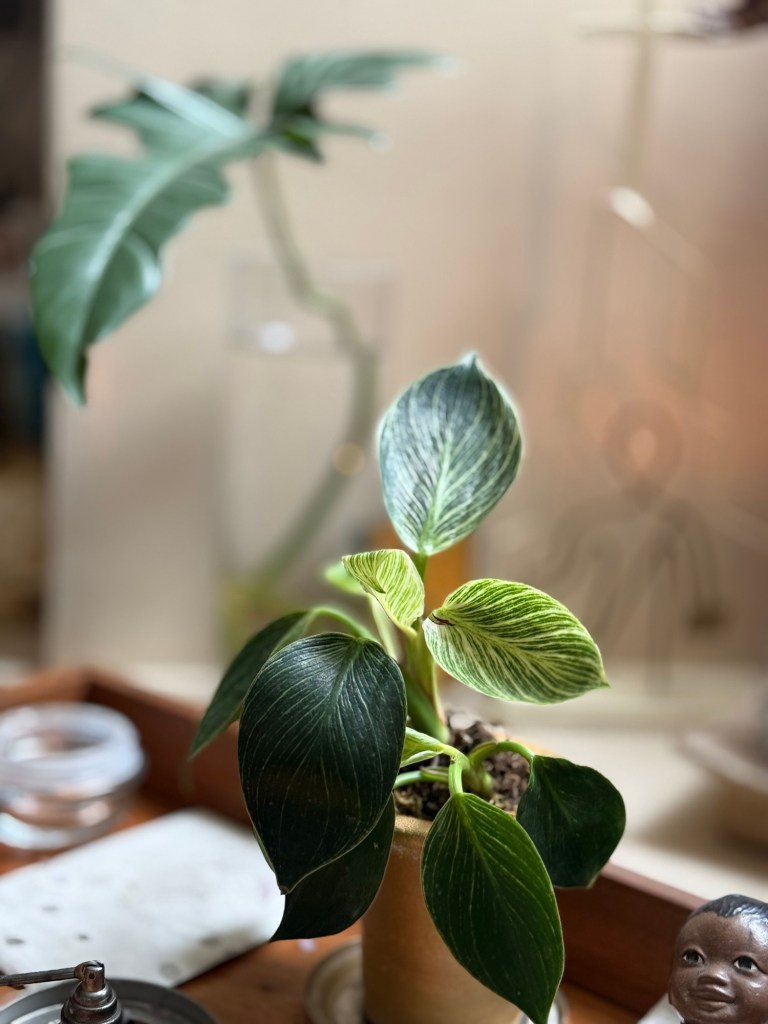
Photo by author, 10 March 2025.
How lovely,
dear Jesus that every time
I receive a plant or flower from anyone,
automatically I offer them to you
on my prayer altar;
and here now,
my newest plant "abloom"
with my prayer today!
Thus says the Lord: Just as from the heavens the rain and snow come down and do not return there till they have watered the earth, making it fertile and fruitful, giving seed to him who sows and bread to him who eats, so shall my word be that goes forth from my mouth. It shall not return to me void, but shall do my will, achieving the end for which I send it (Isaiah 55:10-11).
Photo by author, 10 March 2025.
In a few days
I am turning 60 years old
and in a month,
I shall have been a priest for 28 years;
in all those years, Lord,
it is prayer that has sustained me,
that has nourished me,
that has always been my life
even many times I never
knew it;
you have nurtured me in prayers
that at first was like a chore
taught to me by my parents
that later like a rain -
sometimes an outpour,
many times a drizzle,
and most often just a dew
to keep me moist.
Photo by author, 10 March 2025.
Keep me fertile like
the soil, Jesus,
and keep my leaves green
even without flowers
or fruit;
just keep me soaked
in your words,
gently, subtly and
intimately to quench
my thirst for you,
for meaning,
for life
that in the end,
I come and open myself
daily to God in your prayer,
saying,
"our Father".
Amen.
The Lord Is My Chef Sunday Recipe for the Soul by Fr. Nicanor F. Lalog II
Eighth Sunday in Ordinary Time, Cycle C, 02 March 2025
Sirach 27:4-7 ><}}}}*> 1 Corinthians 15:54-58 ><}}}}*> Luke 6:39-45
The last time we have celebrated the eighth Sunday in Ordinary Time Cycle C was in 2001 when just like this year, the Season of Lent started late in March. In fact, the other last two Sundays of sixth and eighth in Cycle C were last celebrated in 2010 and 2007, respectively.
It is worth noting this because as Jesus delivered his Sermon on the Plain, we find that contrary to claims by many in this modern time, the teachings of Christ are actually taken directly from life as he reveals to us the truth in our hearts. Two Sundays ago, Jesus taught us the paradoxical happiness of our lives, of being poor, hungry, weeping, and maligned than rich, filled, laughing and well-spoken of; last Sunday, he taught us of the need to love truly that is rooted in God by loving without measure, loving even our enemies.
This Sunday, Jesus tells us something we often debate about as it usually puts us into a bind even a quandary on what to say and do.
Jesus told his disciples a parable, “Can a blind person guide a blind person? Will not both fall into a pit? Why do you notice the splinter in your brother’s eye, but do not perceive the wooden beam in your own eye? How can you say to your brother, ‘Brother, let me remove that splinter in your eye,’ when you do not even notice the wooden beam in your own eye? You hypocrite! Remove the wooden beam from your eye first; then you will see clearly to remove the splinter in your brother’s eye” (Luke 6:39, 41-42).
Photo by author, Hidden Valley Springs Resort, Calauan, Laguna, 20 February 2025.
Very often in many instances, most of us choose to be quiet than speak out against evil and other irregularities among us and in our society because of this teaching of the Lord. Many are afraid to notice the splinter in the brother’s eye lest they too might have a wooden beam blocking their views of themselves.
And that is why, evil persists everywhere that eventually, many of us become silent partners in the many sins happening around us which is very far from the demands of Jesus for us to choose what is right and good, to always make a stand for him even on the Cross.
See the flow of the Sermon on the Plain, of how Jesus is first of all never condemning nor judgmental of anyone. We have reflected his four “woes” were actually invitations for the rich et alii to change their ways in life, to think more of things that do not pass like wealth and other material things.
Secondly, last Sunday, Jesus directed our intentions into our hearts, to probe our hearts and find his grace of supernatural or divine love poured in there so that we can love selflessly without measure like him.
This Sunday, Jesus still directs us into our hearts, to examine whether we are truly his disciple or a hypocrite as someone who says something yet does the opposite. It is not opposite his exhortation last week for us to be merciful like God our Father rather a challenge to examine what we practice, our Christian praxis.
“A good tree does not bear rotten fruit, nor does a rotten tree bear a good fruit. For every tree is known by its own fruit. For people do not pick figs from thornbushes, nor do they gather grapes from brambles. A good person out of the store of goodness in his heart produces good, but an evil person out of a store of evil produces evil; for from the fullness of the heart the mouth speaks” (Luke 6:43-45).
Photo by Mr. Lorenzo Atienza, leftmost section of the stained glass at the National Shrine of Our lady of Fatima in Valenzuela City, 25 February 2025.
It is clearly a lesson in holiness, in integrity of every disciple! Do we walk our talk? The most basic norm of morality is that what we know in our mind and what we feel in our heart is what we say and therefore what we do.
Where are we now? Everybody is speaking about corruption while the devils celebrate everywhere as we are all entangled in all forms of corruption not only in the streets and government offices but even in our homes, in schools and offices and yes, right inside the church in many parishes.
Now we come full circle with Christ’s opening to his parable, Can a blind person guide a blind person? And this is what is now happening in the world, in our lives, in our country and in our parishes. Nobody would want to speak because nobody would want to examine one’s heart and follow the path of Jesus.
It is in our deeds that one is recognized as a true disciple. Let us not forget that. And let us not be afraid to examine constantly the value of our many ways and practices.
Photo by author, St. Paul Spirtuality Center, Pico, La Trinidad, Benguet, 05 January 2025.
One of the famous bishops and saint both recognized by the Eastern and Western Churches is St. John Chrysostom who served as Archbishop of Constantinople until the early 400’s. He is called the “golden mouthed” because of his gift in eloquence most true in his witnessing Christ, always meaning what he said like in this homily that sounds so 2025:
The Church is in an extremely critical state, and you think that all is going well. The fact is that we are plunged into countless sins, and we do not even know it!
You wonder why. We hav e churches, money, and everything else. There are places for assembly, people come there everyday; surely this is not nothing?
But it is not thus that we judge the state of the Church. Then how?, you ask.
Whether we lead a truly Christian life. Whether everyday we make ourselves spiritually more rich, bearing fruit, whether great or small; if we are not content simply with flfilling the law and expediting our religious duties.
Who is a better person, after having frequented the church all month?
This is what we must look for! After all, even what appears to be a good action is only a bad action, when one does not follow it up… If we bring nothing to fruition through it, it would be better to stay home (from Days of the Lord, vol. 6, page 62).
Photo by Mr. Lorenzo Atienza, 25 February 2025.
The kind of life we lead is the final test of our discipleship, the proof of what is in our hearts. St. Francis of Assisi used to tell his followers whenever they would preach to use only their mouth if necessary. Our actions speak louder than our words.
This is the biggest problem in the Church today: our lack of credibility as bishops and priests when our lives are far from what we say and teach.
God shared with us his power of the words. In the Bible, we find how his words and his being are always one since the story of creation into the coming of Jesus Christ who could heal with just mere words being the word who became flesh.
This is the whole point of Ben Sirach in our first reading this Sunday, reminding us that inasmuch as the potter knows the quality of his work after it has passed through fire, the same thing is most true with our words. We have to harness and master our speech, our words so that we walk what we talk.
We master our power of the words in our prayer life as St. Paul assured us in today’s second reading how in the Lord our labor is not in vain (1 Cor. 15:58). Let us pray to the Holy Spirit especially this Sunday as we approach the Season of Lent with Ash Wednesday. Let us keep our zeal for Christ not nonly for his words and teachings but most especially in his life and witnessing. Amen.See you at Ash Wednesday.
Campus Ministry, Our Lady of Fatima University, Valenzuela City.
The Lord Is My Chef Daily Recipe for the Soul by Fr. Nicanor F. Lalog II
Friday, Sixth Week in Ordinary Time, Year I, 21 February 2025
Genesis 11:1-9     <'[[[[><  +  ><]]]]'>     Mark 8:34-9:1
What a blessed Friday,
Lord Jesus!
You are still with us,
about to cross the week
into another new set of
seven days but,
here you are again
reminding us
of our journey
that's not to a party
and all fun
but to the Cross:
Jesus summoned the crowd with his disciples and said to them, “Whoever wishes to come after me must deny himself, take up his cross, and follow me. For whoever wishes to save his life will lose it, but whoever loses his life for my sake and that of the Gospel will save it” (Mark 8:34-35).
As I prayed on this scene,
Jesus,
I could hear both the murmuring
and deafening silence
of people in the crowd
especially when you spoke
of denying, losing one's self
and that dreaded Roman
punishment, the cross!
But, yes, Jesus,
even deep down in me,
I felt at a loss...
OK na sana Lord ang lahat,
bakit may paglimot pa ng sarili
at pagpapasan ng krus?
Forgive me,
Jesus for being so used
to your words without really
appreciating them,
masticating them enough
to extract their meaning
and timeliness;
many times,
I have that attitude of the
the Tower of Babel
when all we want is to be on top,
to be in control
that is why you confused
them with many languages at that time
because we always forget
you speak only one language
in Jesus:
the language of love
by self-giving,
by self-sacrifice,
by being one in you in
the Holy Spirit.

Take us to the streets,
Jesus, to keep your words
your language
lived and spoken
especially among
the poor
and suffering.
Amen.
Photographer: Veejay Villafranca/Bloomberg via Getty Images
The Lord Is My Chef Daily Recipe for the Soul by Fr. Nicanor F. Lalog II
Tuesday, Fourth Week in Ordinary Time, Year I, 04 February 2025
Hebrews 12:1-4     ><]]]]'>  +  ><]]]]'>  +  ><]]]]'>     Mark 5:21-43
Photo by author, sunrise at the Sea (Lake) of Galilee, the Holy Land, 18 May 2019.
When Jesus had crossed again in the boat to the other side, a large crowd gathered around him, and he stayed close to the sea (Mark 5:21).
Lord Jesus Christ:

How lovely to hear
this story of your frequent crossing
of the sea to the other side
to reach out to more people
hungry and thirsty
for your words that comfort
and forgive, ease one's burdens
and most especially
for your healing touch.

You always come to us,
Jesus, reaching out to us
when all we have to do is follow
you and as much as possible,
be near you to touch you
like that sick woman
who touched your
clothe after Jairus
had begged you to come
to touch his sick and dying
daughter.
That's all we have to do:
follow you,
be near you,
and touch you;
but, of the large
crowd there like today,
only one dared to touch you;
only one father
had the courage to ask you
to come and lay your hands
on his daughter.
Photo by Dra. Mylene A. Santos, MD in France, 2023.
Give me Jesus
the courage to come to you,
to get near you
and touch you
with faith
and desire to meet you,
to speak to you,
to be with you;
take away my fears
of leaving the safety
of the sidewalks,
of walking the main street
that leads to your Cross
when in fact,
it was you who have
paid the price for me
by dying on the Cross.
Let the words
of the author of the Letter
to the Hebrews sink in me,
"In your struggle against sin
you have not yet resisted
to the point of shedding
 blood" (12:4)
because I am
 always afraid,
always hesitant
in following you,
in touching you.
Touch me, Jesus
so I may cross the sea
with you despite the storm
and giant waves;
touch me, Jesus
so I may cross the street
and walk beside you
in your arduous journey;
touch me, Jesus
so I may stand with you
at your Cross.
Amen.
Photo by author, Sacred Heart Novitiate, Novaliches, QC, 20 March 2024.
The Lord Is My Chef Sunday Recipe for the Soul by Fr. Nicanor F. Lalog II
Third Sunday in Ordinary Time, Cycle C, 26 January 2025
Nehemiah 8:2-4, 5-6, 8-10 ><}}}*> 1 Corinthians 12:12-30 ><}}}*> Luke 1:1-4; 4:14-21
Doctors tell us that prolonged periods of sitting can lead to many health issues like increased risks of heart disease, diabetes, certain cancers, obesity as well as depression. They have been sounding the alarm for several decades with the rise of “couch potatoes” and now had worsened as we get tied to our seats due to continuous use of computers and other gadgets.
Along with this worsening scenario of our prolonged sitting is the growing “competition” among us these days – consciously or unconsciously – for our places of seat in jeepneys and buses or airplanes, in classrooms and offices, on dining tables, in meeting rooms and in churches. People are so concerned where to be seated not realizing that what really matters in life is where we stand than where we sit!
The verb “to stand” evokes firmness and stability not only in the physical sense but also emotionally and spiritually speaking. Very close to it is the word “stance” that indicates our “stand”, of where we “stand” with our beliefs and convictions regarding issues. Before the coming of social media where we often make our stand while seated, there were placards calling us to “make a stand”.
In this age when most people prefer to sit than to stand as well as kneel to pray, our Sunday readings today are very timely as they teem with the words and images of standing for God.
He came to Nazareth, where he had grown up, and went according to his custom into the synagogue on the sabbath day. He stood up to read and was handed a scroll of the prophet Isaiah. He unrolled the scroll and found the passage where it was written… (Luke 4:16-17).
“Jesus Unrolls Book In the Synagogue” painting by James Tissot (1886-1894), brooklynmuseum.org
We now dive into the Sunday Ordinary Time with Luke giving us a glimpse of how Jesus spent a typical sabbath day proclaiming the word of God by first “standing to read.”
It was not the first time Jesus stood to read as He always stood teaching and preaching to the people. Jesus was a man who literally stood for the Father, stood for what is true and good, stood for what is just and fair. Most of all, He stood for all of us that He died on the Cross.
This Sunday as He launched His public ministry in His hometown Nazareth in Galilee, Jesus made it clear that He is the “word who became flesh” as He stood to read the scripture, claiming what He proclaimed from the Prophet Isaiah:
“The Spirit of the Lord is upon me, because he has anointed me to bring glad tidings to the poor. He has sent me to proclaim liberty to captives and recovery of sight to the blind, to let the oppressed go free, and to proclaim a year acceptable to the Lord” (Luke 4:18-19).
Imagine present there. More than being spellbind, there must have been that feeling of fulfillment, of the true reality unfolding as Jesus clearly stood by the word of God because He is the word who became flesh.
Our Filipino word paninindigan evokes it so well like in Pinanindigan ni Jesus ang kanyang ipinahayag (Jesus stood by what He proclaimed). From its root tindig which is “to stand” in English, paninindigan is conviction. Jesus spoke with such conviction and authority that those in the synagogue were amazed with Him. Interestingly, our Filipino synonym for paninindigan is pangatawanan which is from the root katawan or “body” in English. Pangatawanan ang salita is to stand by one’s word, like Pinangatawanan ni Jesus ang Kanyang sinabi (Jesus stood by what He said).
See how our readings this Sunday are so interesting, so beautiful especially for us in the Philippines because the words of “standing” and “body” are related, capturing in our own language discipleship in Christ, our standing for Jesus and His gospel.
“Jesus Unrolls Book In the Synagogue” painting by James Tissot (1886-1894), brooklynmuseum.org
At the end of this scene in the synagogue, Luke told us how Jesus declared as He sat that His words were “fulfilled in your hearing” which amazed the people because Christ “walked the talk” even before this took place.
Anyone wishing to have any kind of fulfillment in life has to first make a stand for whatever he believes in. To walk the talk, one has to stand first. Nothing gets fulfilled by sitting. We have to make a stand for everything and everyone we care and love most.
Like Jesus, we can only bring glad tidings to the poor by standing by their side, standing with them to uplift them. In the same manner, liberty for captives and recovery of sight to the blind can only happen standing, by actually being present with them and never remotely from a distant office or setting where we are comfortably seated. The oppressed can only go free as we proclaim a jubilee like this 2025 when we stand for justice and truth instead of simply affixing our “like” to some posts “standing” for whatever causes.
Photo by author, ambo in our Chapel of the Angel of Peace, RISE Tower, Our Lady of Fatima University, Valenzuela City, 25 December 2024.
In the first reading we find the priest Ezra standing as he proclaimed the words of God from a book recovered after their exile from Jerusalem.
Ezra convinced the people so well in his proclamation of the scriptures that people cried and bowed their heads before finally prostrating themselves to God because they felt and experienced the Scriptures as so true.
The words “standing” and “stood” were repeated thrice to underscore not only the physical posture taken by Ezra and Nehemiah but most of all to indicate their emotional and spiritual bearings.
Going back to our gospel scene, see how before narrating to us Jesus in the synagogue, the Church had rightly chosen to include for this third Sunday the prologue of Luke where he laid down the reason for writing his gospel account – so that we “may realize the certainty of the teachings” about the Christ. In writing his prologue, Luke naturally sat but in mentioning that word “certainty”, he tells us a lot of standing he had to make in completing his two-volume work, the gospel and the Acts.
Here we find that like all the evangelists and saints for that matter, they spent much time standing than sitting, second only perhaps to kneeling or praying.
There is a beautiful prayer attributed to St. Teresa of Avila called “Christ has no body” which goes this way, “Christ has no body but yours, no hands, no feet on earth but yours.”
Can we make a stand for Jesus, stand with Jesus, and stand like Jesus to be His body as St. Paul explained to us in the second reading?
“Brothers and sisters: As a body is one though it has many parts, and all the parts of the body, though many, are one body, so also Christ… Now the body is not a single part, but many” (1 Corinthians 12:12, 14).
Photo by author, Chapel of Angel of Peace, RISE Tower, Our Lady of Fatima University, Valenzueal City, June 2024.
As we embark into this long journey of Ordinary Time with Luke as our guide every Sunday, may we do the work of Jesus by standing along with our fellow believers and disciples.
Together let us make that collective stand for truth and justice, for decency and reason in this time when people are so fragmented, held captive by so many thoughts and beliefs propagated from the arrogant chairs of entitlement by some lazy minds influencing the world remotely. Together we stand and experience life as it is in Jesus Christ, even at His Cross.Amen. Have a blessed week ahead as we close January 2025!
The Lord Is My Chef Daily Recipe for the Soul by Fr. Nicanor F. Lalog II
Simbang Gabi-5 Homily, 20 December 2024
Isaiah 7:10-14     <*((((><  +  ><))))*>     Luke 1:26-38
Photo by Mr. Boy Cabrido, National Shrine of Our Lady of Mt. Carmel, QC, 16 December 2024.
Last Monday at the start of Simbang Gabi, one of our priests became viral when at the recessional of their Mass while the choir was joyfully singing “Pasko na! Pasko na!”, he sarcastically sang “Hindi pa! Hindi pa!”
Many people laughed at the viral video with some commenting that Father was right because it wasn’t Christmas yet while a liturgist advised choirs to check the many choices of Advent songs now available online. But, sad to say, the people missed the whole point of the incident.
What our brother-priest did was not funny at all in putting to shame his own choir members and most of all, in destroying the solemnity of the Mass.
And the problem was not really the choir at all but the priest himself. What the priest did at the end of the Mass was a self-indictment of his lack of formation for his choir members and of any dialogue at all.
Photo by author, Advent in previous parish, 2018.
Advent is a dialogue between God and humans that led to the presence of God among us in Jesus Christ on Christmas. It is a process that continues in our own time as we are all called to be open to God and with others for dialogue like Mary in the annunciation of Christ’s birth by Archangel Gabriel.
Dialogue is more than conversing to improve relationships among people in a community or organization but a way of being with others as opposed to a way of thinking through issues and problems only. Dialogue is being present with others, of giving one’s self to feel and listen and experience the other person.
Luke shows us in his second Christmas story today how this true meaning of dialogue between God and Mary happened.
In the sixth month, the angel Gabriel was sent from God to a town of Galilee called Nazareth, to a virgin betrothed to a man named Joseph, of the house of David, and the virgin’s name was Mary. And coming of her, he said, “Hail, full of grace! Then Lord is with you.” But she was greatloy troubled at what was said and pondered what sort of greeting this might be. Then the angel said to her, “Do not be afraid, Mary, for you have found favor with God… But Mary said to the angel, “How can this be, since I have no relations with a man?” And the angel said to her in reply, “The Holy spirit will come upon you, and the power of the Most High will overshadow you. Therefore the child to be born will be called holy, the Son of God. And behold, Elizabeth, your relative, has also conceived a son in her old age, and this is the sixth month for her who was called barren; for nothing will be impossible for God” (Luke 1:26-30, 34-37).
“Cestello Annunciation” by Botticelli painted in 1490; from en.wikipedia.org.
See the artistry and genius of Luke as a storyteller. Yesterday he presented to us the annunciation of the birth of John the Baptist to his father Zechariah while incensing the Holy of Holies in the temple of Jerusalem.
Notice the great differences in the flow of conversations and dialogue in the two annunciations narrated by Luke. Both Zechariah and Mary were troubled at the coming of the angel. And who would not be in a such unprecedented event? However, there is one minute detail we find in Luke’s narration of the two annunciations that reveal something so big and deep in meaning.
According to Luke, “Zechariah was troubled by what he saw, and fear came upon him” (Lk. 1:12) while Mary “was greatly troubled at what was said and pondered what sort of greeting this might be” (Lk. 1:29). Both were troubled which is normal but their reactions differed so great with Zechariah becoming proud while Mary was humbled.
I believe that it was more than their age and differences in social status that Zechariah was simply “troubled” while Mary was “greatly troubled” but it was largely due to their dispositions and openness to God.
Zechariah was proud of his stature and of his intelligence, trying to take hold and control of everything that is why he was seized with fear. When he told the angel, “How shall I know this? For I am an old man, and my wife is advanced in years” (Lk.1:18), Zechariah was troubled and fearful because he felt challenged as a priest much respected in the community, choosing to stand proud of his position and intelligence as if having a child is all an effort of man and woman alone! There was no dialogue as Zechariah was proud that is why he was made mute by the angel. He had forgotten all about God!
Photo by author, Basilica of the Annunciation, Nazareth, Israel, May 2019.
Compare Mary’s reaction to the annunciation, “But she was greatly troubled at what was said and pondered what sort of greeting this might be.”
Luke always portrayed Mary as the listener and doer of the word, the one who ponders at the words spoken to her not only by the angel here but later at the birth of Jesus those spoken by the shepherds, then by Simeon at the Presentation and by Jesus Himself at the wedding in Cana. Mary has always been open to dialogue, to feeling the other person conversing with her. She was not concerned only with the news and information but with the persons involved.
In that sense, there is her remarkable humility and great courage at the same time. True humility is not really about being submissive but most of all being filled with courage, not with fear. Mary as the very young virgin from a poor family in a town nobody gave importance stood fearless before the angel as she took hold of herself to ponder on the words spoken to her. Despite the very unprecedented moment with an angel, Mary had that inner engagement with the words she had just heard without any violent reactions.
Photo by author, December 2018.
Unlike Zechariah, Mary was the one actually in control of herself and of her emotions. The Jedi Master Yoda of Star Wars said it so well, “fear leads to anger, anger leads to destruction”. Zechariah was afraid of losing power and control but Mary was not bothered at all. In fact, she faced the challenge head on, reflecting deep in her what is this going on? Am I awake, is this a dream would most likely be the words playing in her mind and heart. Mary had presence as she tried to feel the angel and later God that no wonder, Jesus came to her womb and we have Christmas!
The humility and courage of Mary became more evident when she said to the angel, “How can this be, since I have no relations with a man?”
She was not afraid at all to be become the Mother of God! There was already her willingness to submit, as if telling the angel, “OK let’s do it but tell me how?” whereas Zechariah was argumentative, trying to escape responsibilities? Such was the attitude too of Ahaz in the first reading, denying he won’t test God when in fact he had already aligned with other kings in the region as he feared the invading enemies near his borders.
It was at this moment when the good news became most closest to us through Mary when the angel explained of the coming of the Holy Spirit, of how the power of God would overshadow her, assuring her that nothing is impossible with God.
How wonderful is this scene for us to emulate Mary so that we experience Christmas daily in our lives, not only of God coming but being present in us and among us. Can we dare to be open before God like Mary? Have a blessed Friday!
Photo by author, Fatima Avenue, Valenzuela City, December 2024.
The Lord Is My Chef Sunday Recipe for the Soul by Fr. Nicanor F. Lalog II
Twenty-eighth Sunday in Ordinary Time, Cycle B, 13 October 2024
Wisdom 7:7-11 ><}}}}*> Hebrews 4:12-13 ><}}}}*> Mark 10:17-30
Lately in my prayers I have felt so drawn on the “face” of Jesus, trying to imagine and feel how He looked at the various people He met in the gospel accounts. Most of all, of how Jesus looks at us too (https://lordmychef.com/2024/10/09/to-his-face/).
Consider our gospel this Sunday that shows us how Jesus has that “look of love” to everyone. No matter how bad and sinful we may be, He is full of love and mercy, compassion and joy in seeing us. The problem is often the way we look at Him like that man who approached Him as well as the disciples conversing with Him who were all so much like us.
Photo by Mr. Jim Marpa, 2019.
As Jesus was setting out on a journey, a man ran up, knelt down before him, and asked him, “Good teacher, what must I do to inherit eternal life?” Jesus answered him, “Why do you call me good? No one is good but God alone. You know the commandments…” He replied and said to him, “Teacher, all of these I have observed from my youth.” Jesus, looking at him, loved him and said to him, “You are lacking in one thing. Go, sell what you have, and give to the poor and you will have treasure in heaven; then come, follow me.” At that statement his face fell, and he went away sad, for he had many possessions.
Jesus looked around and said to his disciples, “How hard it is for those who have wealth to enter the kingdom of God!” The disciples were amazed at his words. So Jesus again said to them in reply, “Children, how hard it is to enter the kingdom of God!” It is easier for a camel to pass through the eye of the needle than for one who is rich to enter the kingdom of God.” They were exceedingly astonished and said among themselves, “Then who can be saved?” Jesus looked at them and said, “For human beings it is impossible, but not for God. All things possible for God” (Mark 10:17-27).
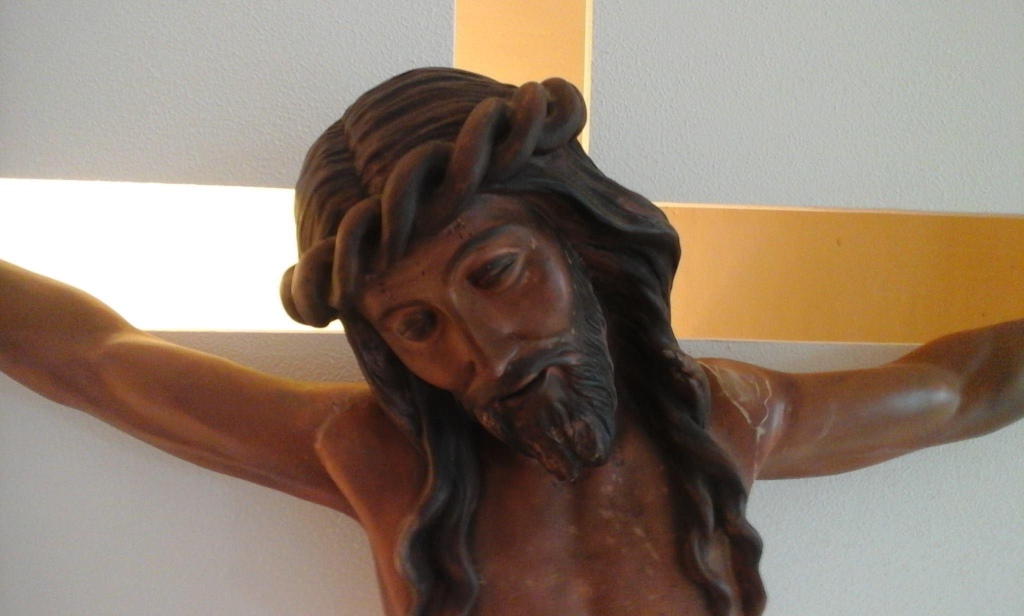
Photo by author, Sacred Heart Novitiate, Novaliches, QC, 20 March 2024.
Jesus, looking at him, loved him...
his face fell, went away sad,
for he had many possessions.
We readily identify with this man because all of us have the same question deep in our hearts to Jesus, wondering there must be more to keeping the commandments, of being good, of a better way to get into eternal life that is not necessarily a shortcut.
In fact, we have to rejoice, dear friends if we ask the same question because it is a grace that can only come from God, so unlike the Pharisees who asked Jesus last Sunday on the legality of divorce because they wanted to “test” Him. See how Jesus like last week brought us all back to the Sacred Scriptures, the very word of God expressing His will in human terms. The question was a sincere longing for God like the Psalmist, “Your testimonies are my delight; they are my counsellors”; “I observe your precepts and testimonies; all my ways are before you” (Ps. 119:24, 168).
Jesus looked at the man with love because He saw a great opening for more grace in him that is why He told him to sell everything he had, give it to the poor and follow Him. At that moment, like most of us, his face fell and went away sad because he had many possessions.
Are we not this man too who can’t look at Jesus with the same love because we probably love somebody or something else than Him found among those in the margins of our lives?
Photo by author, Sacred Heart Novitiate, Novaliches, QC, 20 March 2024.
Jesus looked around...
the disciples were amazed.
If Jesus did not care at all and has no love for those around Him, He would have not looked around after that man had left. Here is the lovely thing with Jesus: His look is always filled with love for us His disciples, a look so penetrating, so luminous because He is divine.
What is amazing is not only that it is difficult for us to enter the kingdom of God due to our many attachments, sinfulness and weaknesses, but, despite all these, Jesus still speaks to us, conversing with us because He simply loves us so much! Jesus never looks on qualifications but instead qualifies His call so we can follow Him. Most of all, look at Him too!
Consider the amazing grace for us to remain in Jesus, albeit hiding that question in our hearts so afraid to ask because we know His answer would be so unexpected like in this scene and yet, here is Jesus looking around, looking at us with love sincerely telling us it is not easy at all. Remember the bread of life discourse of how Jesus talked straight because He was sincere and truthful to us that it is difficult to follow Him to the Cross which is what discipleship is all about. Just keep following Jesus, keep looking at Him no matter what!
Photo by Mr. Jay Javier, Quiapo Traslacion 2020.
Jesus again said to them...
they were exceedingly astonished.
Wow…! See the style of Mark who was not contented in writing how astonished the disciples were by describing them as “exceedingly astonished”. See his attention to details, so wonderful and beautiful because what is exceedingly astonishing is Jesus Christ’s love for us, not just His words!
Here, Jesus was already telling the disciples what would happen on Good Friday, of how Jesus would do everything for us all – that is, in doing the impossible that is only possible with God because He loves us so much.
Like what St. Paul had extensively reiterated to the Galatians in the weekday readings last week, Jesus did everything for us to be saved. Salvation is a gift, a pure grace from God. It is never our work; stop playing God, or a Messiah! There is nothing we can really do to be saved except to be like a child as Jesus had reiterated these past two Sundays.
To be like a child is to completely trust Jesus every step of the way especially on His way to Jerusalem. Now we see the importance of having that child-like attitude to belong in the kingdom of God as Jesus identified what await His disciples in following Him: “houses and brothers and sisters and mothers and children and lands, with persecutions, and eternal life in the age to come”(Mark 10:30).
Photo by Mr. Jim Marpa, 2019.
Don’t be sad now. Mark had a purpose in writing the persecutions that await every disciple of Jesus because these shall purify us, give more depth and meaning to our lives and existence.
Mark knew so well how everyone is like the author of the Book of Wisdom who lived in a time similar with ours with all the affluence around us that deep inside us we still feel and know for sure that life is more than comfort and pleasures. He knew too the story of King Solomon like us so blessed with that consciousness that more than the material wealth and fame the world offers us, what matters most in life is wisdom to discern what is right and good.
These are difficult indeed for us, like getting married threatened by divorce then and now; but, again Jesus proposes an ideal, inviting us to remain in Him in prayers. After all, Jesus is the word of God who became flesh is “living and effective” among us found in the Sacred Scriptures (second reading) to guide us closer to Him.
Let us not worry because Jesus had done everything for us to be saved. Stay in the Lord, and let our face shine with His love! Keep looking at Jesus who looks at us full of love today and always. Have a blessed week ahead!