The Lord Is My Chef Daily Recipe for the Soul by Fr. Nicanor F. Lalog II
Wednesday, Memorial of St. Josephine Bakhita, Virgin, 08 February 2023
Genesis 2:4-9, 15-17 ><000'> ><000'> + <'000>< <'000>< Mark 7:14-23
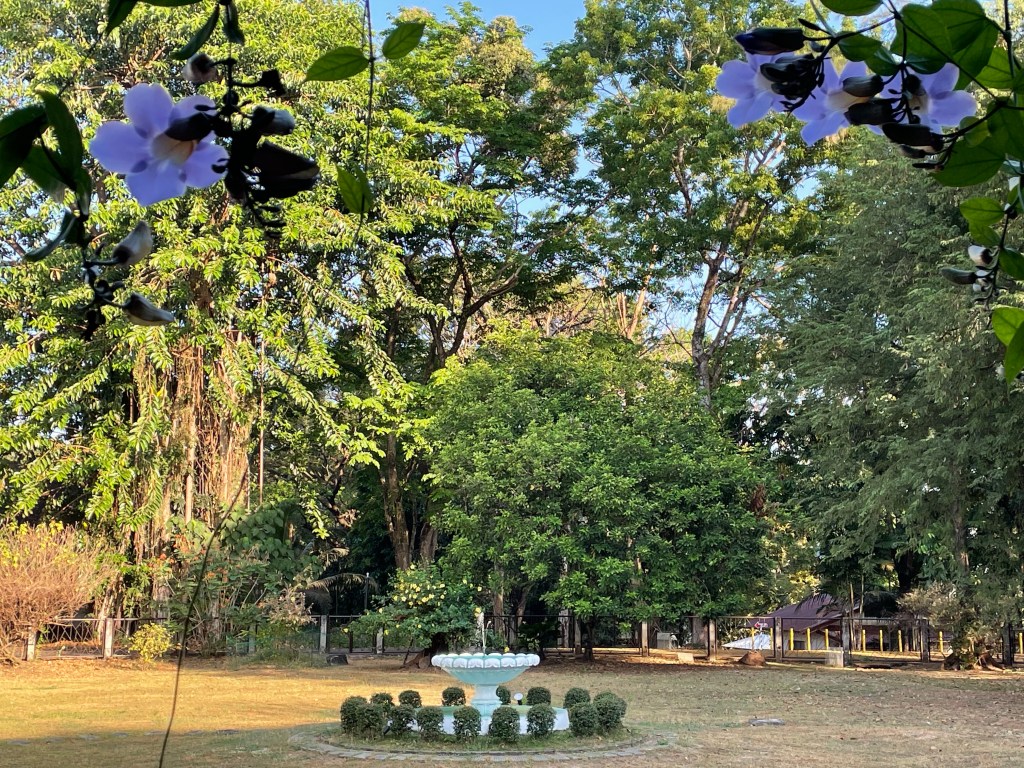
Photo by author, 01 February 2023, La Mesa Dam Eco Park seen from OLFU-QC, Lagro, QC.
On this middle of the week,
I pray to you dear God our Father,
that I may keep you at the center of my life
always inasmuch as you have made us humans
the center of all your creation.
At the time when the Lord God made the earth and the heavens while as yet there was no field shrub on earth and no grass of the field had sprouted, the Lord God formed man out of the clay of the ground and blew into his nostrils the breath of life, and so man became a living being.
Genesis 2:4-5, 7
How lovely it is, O God,
to keep in mind in this other
creation story in Genesis that
you created us humans first as
"center" of your creation!
Equally lovelier, O God,
is the imagery of man you have
settled in the garden of Eden,
creating him in your image and likeness
endowed with the most wondrous gift
of freedom which is at the "center"
of our humanity, right in our hearts.
Alas, O God!
Instead of remaining at the center
with you and in you, we prefer
creating our own "center",
moving away from you and from each other;
forgive us in making our hearts,
our very center, dirty with sin and evil.
Jesus summoned the crowd again and said to them, “Hear me, all of you, and understand. From the within the man, from his hearts, come evil thoughts, unchastity, theft, murder, adultery, greed, malice, deceit, licentiousness, envy, blasphemy, arrogance, folly. All these evils come from within and they defile.”
Mark 7:14, 21-23
Reign in our hearts, dear Jesus;
may you be center of our lives!
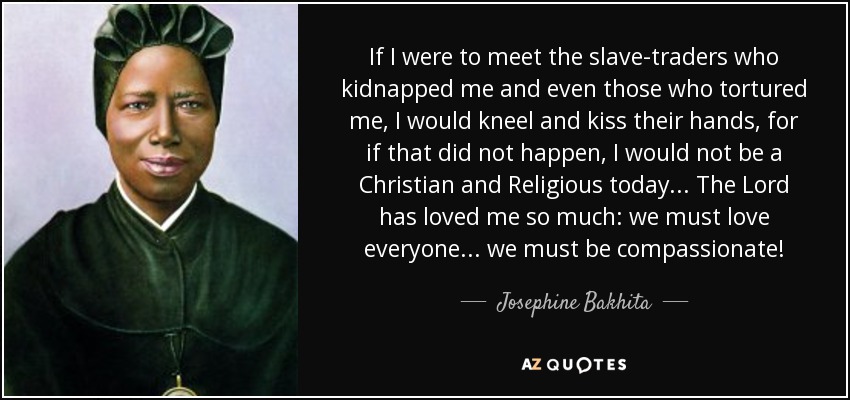
Like St. Josephine Bakhita who went
through so much pain and sufferings as
child when she was sold as a slave in Sudan
that in the process she had forgotten her name,
she was able to keep her sanity and
regained her dignity as a person
until she converted to Catholicism
and eventually became a nun
because she found you, Jesus,
as the center of her life, even forgiving
those who have tortured and maltreated her.
Her redemption from a life of slavery
and constant sufferings proved that indeed,
we are the center of your creation, O Lord,
that you hear our pleas
and come to save us
if we remain centered in you too.
Amen.
The Lord Is My Chef Sunday Recipe for the Soul by Fr. Nicanor F. Lalog II Sunday in the Fourth Week of Ordinary Time, Year A, 29 January 2023 Zephaniah 2:3, 3:12-13 ><}}}*> 1 Corinthians 1:26-31 ><}}}*> Matthew 5:1-12
Photo by author, 2020.
Blessedness is a very contentious term for us Filipinos. Very often, we equate blessedness with being rich and wealthy like having a lot of money, a beautiful house, and the latest car model as well as clothes and gadgets. Being blessed sometimes means being lucky or fortunate like winning the lotto or having a child graduating in college or getting promoted in one’s job.
In the Visitation, Elizabeth defined for us the true meaning of being blessed like Mary as someone who believed that what the Lord had promised her would be fulfilled (Lk.1:45). Blessedness is essentially a spiritual reality than a material one; however, it implies that being blessed results from doing something good like being faithful to God.
Today in our gospel from Matthew, Jesus shows us that blessedness is still a spiritual reality than a material one but, it is more of a being – like a status in Facebook – than of doing.
Most of all, being blessed is not being in a good situation or condition when all is well and everything proceeding smoothly in life; blessedness according to Jesus at his sermon on the mount is when we are on the distaff side of life like being poor, being hungry, being persecuted and insulted – being like him!
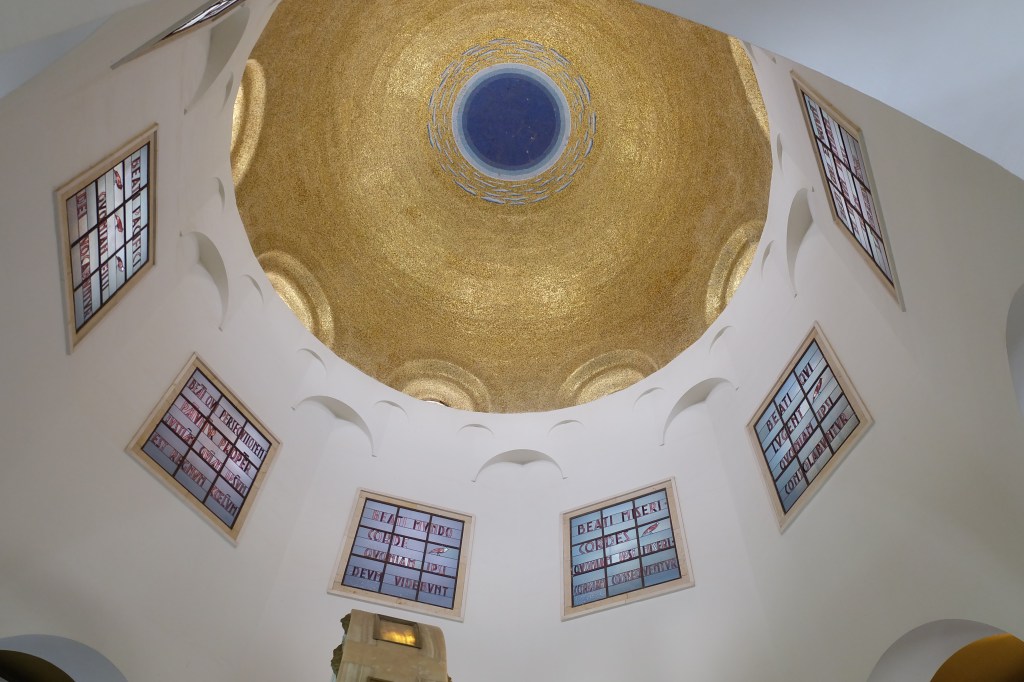
Photo by author, Church of the Beatitudes, Israel, 2019.
“Blessed are the poor in spirit, for theirs is the kingdom of heaven. Blessed are they who mourn, for they will be comforted. Blessed are the meek, for they will inherit the land. Blessed are they who hunger and thirst for righteousness, for they will be satisfied. Blessed are the merciful, for they will be shown mercy. Blessed are the clean of heart, for they will see God. Blessed are the peacemakers, for they will be called children of God. Blessed are they who are persecuted for the sake of righteousness, for theirs is the kingdom of heaven. Blessed are you when they insult and persecute you and utter every kind of evil against you falsely because of me. Rejoice and be glad, for your reward will be great in heaven.”
Matthew 5:3-12
After going around the shores of Galilee, preaching and healing the people, Jesus went up a mountain upon seeing crowds were following him. They were mostly poor people with deep faith in God, hoping and trusting only in him for their deliverance called the anawims.
They were in painful and difficult situations, maybe like many of us, fed up with the traffic and rising costs of everything, fed up with the corruption among public officials and most of all, disillusioned with our priests and bishops!
Then, Jesus called them blessed.
Now, please consider that it is more understandable and normal to say that after being persecuted or after losing a loved one, after all these sufferings that people would be blessed, that the kingdom of God would be theirs.
But, that is not the case with the beatitudes whereby Jesus called them already blessed now, right in their state of being poor, being persecuted, being maligned!
Keep in mind that Matthew’s audience were his fellow Jewish converts to Christianity. By situating Jesus on the mountain preaching his first major discourse, Matthew was reminding his fellow Jewish converts of their great lawgiver, Moses who stood on Mount Sinai to give them the Ten Commandments from God.
However, in the sermon on the mount, Matthew was presenting Jesus not just as the new Moses but in fact more than Moses because Jesus himself is the Law. His very person is what we follow that is why we are called Christians and our faith is properly called Christianity so unlike other religions that are like philosophies or any other -ism.
To understand the beatitudes, one has to turn and enter into Jesus Christ for he is the one truly poor in spirit, meek, hungry and thirsty, merciful, clean of heart, who was persecuted, died but rose again and now seated at the righthand of the Father in heaven. Essentially, the Beatitudes personify Jesus Christ himself. Those who share what he had gone through while here on earth, those who identify with him in his poverty and meekness, mercy and peace efforts, and suffering and death now share in his blessedness.
Therefore, the Beatitudes are paths to keeping our relationship with Jesus Christ who calls us to be like him – poor, hungry and thirsty, meek, clean of heart and persecuted. The Beatitudes are not on the moral plane like the Decalogue that tells us what to do and not to do. Have you ever used the Beatitudes as a guide in examining your conscience when going to Confessions? Never, because the Beatitudes are goals in life to be continuously pursued daily by Christ’s disciples.
Photo by author, Church of the Beatitudes, Israel, 2017.
The Beatitudes are more on the spiritual and mystical plane of our lives that when we try imitating Jesus in his being poor and merciful, meek and clean of heart, then we realize and experience blessedness as we learn the distinctions between joy and happiness, being fruitful and successful.
That is when we find fulfillment while still here on earth amid all the sufferings and trials we go through because in the beatitudes we have Jesus, a relationship we begin to keep and nurture who is also the Kingdom of God. Of course, we experience its fullness in the afterlife but nonetheless, we reap its rewards while here in this life.
As we have noted at the start, we must not take the beatitudes in their material aspect but always in the spiritual meaning. This we find in the first beatitude, Blessed are the poor in spirit, for theirs is the kingdom of heaven.
Actually, this first beatitude is the very essence of all eight other blessedness. Everything springs forth from being poor in spirit, of having that inner attitude and disposition of humility before God. We cannot be merciful and meek, nor pure of heart nor peacemakers unless we become first of all poor in spirit like Jesus, who, “though he was in the form of God, did not regard equality with God something to be grasped. Rather he emptied himself, taking the form of a slave, coming in human likeness and humbled himself” (Phil. 2:6-7, 8).
The prophet Zephaniah showed us in the first reading that poverty in the Old Testament does not only define a social status but more of one’s availability and openness to God with his gifts and calls to us to experience him and make him known. Experience had taught us so well that material poverty is one of life’s best teacher as it leads us to maturity and redemption best expressed in the Cross of Jesus Christ.
In this sense, the beatitude is also the “be-attitude” of every disciple who carries his cross in following Christ. See that each beatitude does not refer to a different person; every disciple of Jesus goes through each beatitude if he/she immerses himself/herself in Christ. That is why last week Jesus preached repentance which leads to conversion. Notice that the beatitudes of Christ are clearly opposite and contrary to the ways of the world as St. Paul tells us in the second reading with God calling the weak and lowly to manifest his power and glory.
Many times in life, we fail to recognize our blessedness when we are so focused with what we are going through, with our work and duties and obligations. This Sunday, Jesus takes us up on the mountain, in the celebration of the Holy Eucharist for us to see ourselves blessed and loved right in the midst of our simplicity and bareness, sufferings and pains. Stop for a while. Find Christ in all your troubles or darkness in life. If you do not find Jesus in your labors and burdens, you are just punishing yourself. If you find Christ because you see more the face of other persons that you become merciful, you work for peace, you mourn and bear all insults and persecution… then, you must be loving a lot. Therefore, you are blessed! Amen.
Have a blessed week ahead!
Photo by author, Church of the Beatitudes, Israel, 2017.
The Lord Is My Chef Daily Recipe for the Soul by Fr. Nicanor F. Lalog II
Wednesday in the First Week of Ordinary Time, Year I, 11 January 2023
Hebrews 2:14-18 ><]]]]'> + ><]]]]'> + ><]]]]'> Mark 1:29-39
Photo by Dr. Mylene A. Santos, MD, 2022 in France.
Lord Jesus,
allow me to imitate today
your Apostles Simon and Andrew,
James and John in "immediately
telling you" (Mk. 1:30)
of how sick and down with all kinds
of problems our own family members
and relatives, friends and everyone
going through trials in life;
come, Lord Jesus, "grasp their hands"
like Simon's mother-in-law
and "help them up" (Mk.1:31).
Because he himself was tested through what he suffered, he is able to help those who are being tested.
Hebrews 2:18
At this very moment,
Lord Jesus, I pray for those
going through their medical
exams - please calm them,
assure them of your presence;
accompany too, dear Jesus,
those going through dialysis,
chemotherapy,
surgery, and other medical procedures
for their ailments;
comfort and console those
living separately who have to endure
the pains and troubles of worrying
their loved ones going through
difficulties in far and distant lands;
touch and ease the pains of those
who have experienced failures
and disappointments, even frustrations
to assure them that it is better to be
fruitful than successful in life;
uplift, O Lord, those with sagging
spirits in being good,
in being holy,
in being honest and true,
in being faithful and just;
touch them, Jesus,
pat their shoulders
that they may forge on
with you in being good.
Amen.
The Lord Is My Chef Daily Recipe for the Soul by Fr. Nicanor F. Lalog II
Tuesday in the First Week of Ordinary Time, Year I, 10 January 2023
Hebrews 2:5-12 ><000'> + ><000'> + ><000'> Mark 1:21-28
Photo by author, Nasugbu, Batangas, 06 January 2023.
Today we begin the Ordinary Time
in our liturgical calendar; please do not
let us be misled, O God our Father,
taking these days for granted,
of thinking ordinary as bland,
or usual
or nothing special;
make us realize that ordinary
means something about order,
of being orderly,
of being the rule
and ordo.
Make us see like the psalmist
the beauty of what is ordinary:
"O Lord, our Lord,
how glorious is your name
over all the earth!
What is man that you should be
mindful of him, or the son of man
that you should care for him?
You have made him little less
than the angels, and crowned him
with glory and honor.
You have given him rule over
the works of your hands,
putting all things under his feet"
(Responsorial Psalm 8:2, 5, 6-7).
Our loving God,
you have made Jesus your Son
and our Lord so ordinary like us
to be one with us in our sufferings
and pains, even death, so that in his
resurrection we may share in his
extraordinary glory; Jesus is able to
help us because he has become ordinary
like us that is why, let us embrace
wholeheartedly our humanity
including our frailty
to be one in Jesus.
Cleanse us, dear Jesus,
of our impurities,
of our sins,
of our narrow-mindedness
and biases that make us
resist your holiness found
in ordinariness like that
unclean spirit possessing
a man in the synagogue;
let us not stop in just admiring,
of being astonished with your
words and works and wonders;
let us submit ourselves to your
authority, Lord Jesus, beginning
with the most ordinary things in life
like listening and putting into practice
your words and teachings so we may
experience your extraordinary
healing and presence.
Amen.