Quiet Storm by Fr. Nicanor F. Lalog II, 26 May 2025
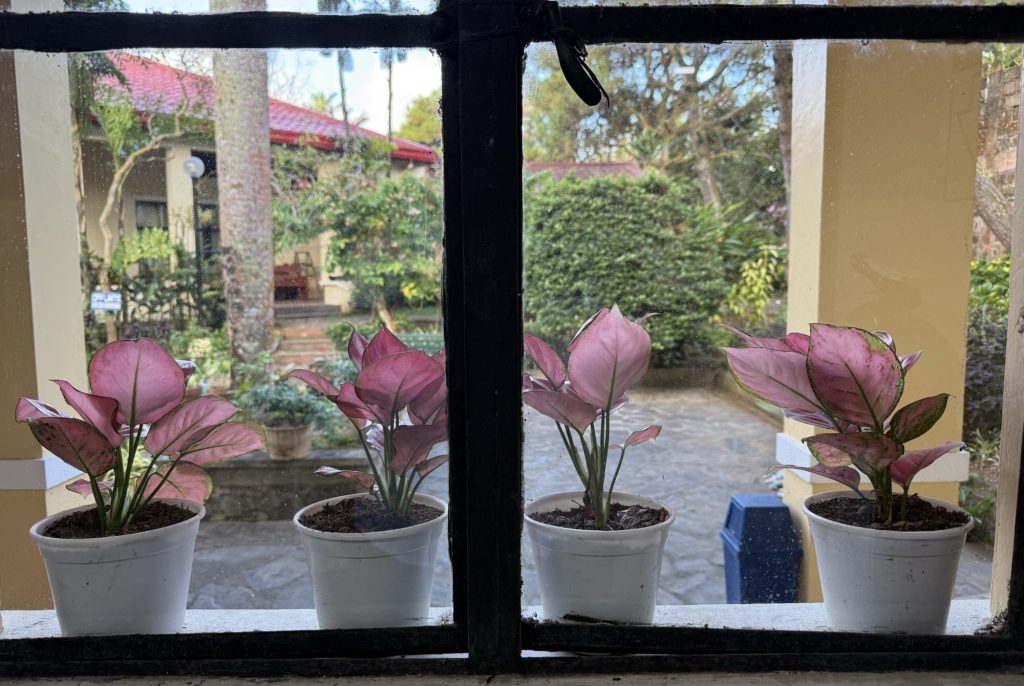
Photo by author, Northern Blossoms Farm, Atok, Benguet, 26 December 2024.
Human love is imperfect; only God can love us perfectly.
Many times we get disappointed with our loved ones for not loving us enough or not loving us at all when in fact, they do love us! They come in different forms like strict parents or teachers, an OFW who has to leave his/her loved ones behind for better earnings so the children can go to good schools or an eager-beaver colleague who sometimes gets to our nerves for the things he/she does for us not to irritate us but to help us actually. And yes, parents who give away their children in the belief they can have a better future if they grow up not with them.
We all want to love perfectly or be loved perfectly but that is not possible because we humans are not perfect. We err, miscalculate situations and misjudge persons. Many times, we do not understand nor comprehend situations for we cannot know everything right away nor at all.
The good news is, the more we realize the imperfections of our love, that is when we are perfected, when we become better persons, when we actually become more loving with others by being patient and understanding, kind and forgiving. Our efforts to love though imperfect shall perfect us.
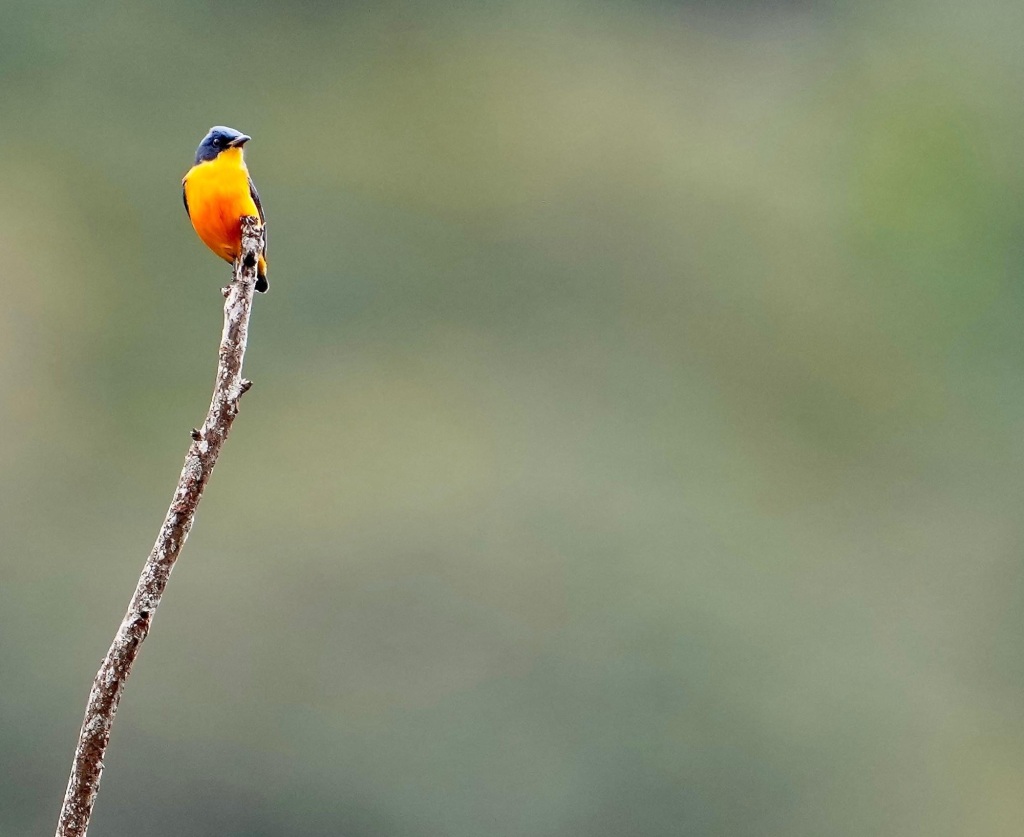
Photo by author, Northern Blossoms Farm, Atok, Benguet, 26 December 2024.
It is in our imperfect love we also learn how to sacrifice and let go because we love. The beloved disciple of Jesus wrote that “No one has ever seen God. Yet, if we love one another, God remains in us, and his love is brought to perfection in us(1 John 4:12). Every time we are bothered, when we feel guilty of not loving much or not being loved, chill. Be patient. And wait for everything to clear up. There must have been a breakdown in communication or too much presumptions on anyone’s part. Be open. Most of all, even if you felt not loved or no one loves, keep loving. For as long as we love, we grow. We mature.
Love, love, love!
It is the most potent force in the universe. We came into being because of love. We live to love. For as long as there is love, we shall not perish.
Stop loving, then we die.
Photo by author, Sakura Farm, Atok, Benguet, 26 December 2024.
When we do not love, that is when we perish because we no longer hope and believe in anyone nor anything. That is the end.
St. Paul said it perfectly, “So faith, hope, and love remain, these three; but the greatest of these is love” (1 Cor. 13:13). After we have died, only love remains in heaven: we do not need faith nor hope because love is everything we believe and hope. Even those we leave behind will just keep on loving that life will continue until we all come together in eternity. Still loving.
Hence, love cannot be defined. Love is infinite and can only be described. And though it is imperfect in human terms, our expressions of love has no limits. That is why, “tis better to have loved and lost than never to have loved at all” (Lord Alfred Tennyson in 1849). Bow. To love.
Photo by author, Angels’ Hills Retreat and Spirituality Center, Tagaytay City, 18 April 2025.
Lawiswis ng Salita ni P. Nicanor F. Lalog II, Ika-10 ng Abril 2025
Larawan kuha ng may-akda.
Noong isang taon ko pa ito ibig ilathala nang aking makita sa harapan ng aming simbahan, ang Pambansang Dambana ng Birhen ng Fatima dito sa Valenzuela ang karatula ng pambansang bubuyog ukol sa Visita Iglesia. Sa aking panlasa, hindi bagay, hindi match ang mix na ito. Hindi ito “mabuting balita” ayon sa Jollibee.
Ako man po ay maka-Jollibee. Paborito ko ang kanilang palabok, pangalawa lamang ang Chicken Joy at pangatlo ang Champ bagaman ayoko po ng pagkaing mayroong pinya kaya inaalis ko ito sa dambuhala nilang langhap-sarap na burger.
Subalit tuwing mga Mahal na Araw lalo na noong isang taon, ako ay nalulungkot sa Jollibee. Marahil pati ang langit at maaring lumuluha sa lungkot ang mga anghel tuwing nakikita si Jollibee masayang-masaya kung Biyernes Santo kasi masama sa panlasa ang kanilang kampanya sa Visita-Iglesia.
Hindi yata Katoliko si Jollibee tulad ng karamihan sa ating mga Pilipino bagamat mayroong ilan silang mga tinadahan na binasbasan at minimisahan ng obispo at mga pari tuwing pinasisinayangan at nagdiriwang ng anibersaryo.
Larawan mula sa Facebook.
Noong isang araw aking nakita ang post sa Facebook ng maraming taong-simbahan kasama ilang mga pari na pinupuri ang Jollibee sa kanilang advertisement ng Visita Iglesia sa mga simbahan sa buong kapuluan kasama na kanilang mga tindahan mayroong mapa ng simbahang maaring puntahan upang manalangin at mag-peregrinasyon (pilgrimage po) kasama na ang pinaka-malapit sa kainan ng Jollibee. Marami ang pumuri sa Jollibee sa naturang kampanya. Sabi ng isang uploader, “Kudos kay Jollibee ah.. very catholic.”
Sorry po. Hindi po yata tama ang inyong caption. Sa unang tingin, tila maganda pero kung susuriin natin, mali. Hindi po ito Catholic practice dahil ito ay salungat sa hiling sa atin ng Simbahan noon pa mang simula na magkaroon ng pagsasakripisyo tuwing panahon ng Kuwaresma at mga Mahal na Araw.
Sa katunayan, ang turo ng Simbahan ay mag-ayuno tuwing Miyerkules ng Abo at Biyernes Santo bilang pagninilay at pakikiisa sa pagpapakasakit at pagkamatay ni Jesu-Kristo doon sa krus mahigit dalawang libong taon na ang nakalipas. Totoo na hindi na mamatay si Jesus at hindi naman nating kailangang malungkot at malumbay sa mga panahong ito ngunit, paano tayo makapagninilay at dasal ng taos kung nasa isip natin ang pagsasaya ng pagkain ng masasarap tuwing Mahal na Araw o Biyernes Santo?
Ipagpaumanhin po ninyo lalo ng mga kaibigan ko sa Jollibee, malinaw na ang kanilang Visita-Iglesia campaign ay commercialization ng ating banal na tradisyon at gawaing Katoliko. Sa halip na makatulong ang Jollibee kasama na ang iba pang mga fastfood chain na mayroong Lenten special meals sa paggunita ng mga Mahal na Araw na maranasan man lamang nating mga Filipino muli ang tunay na diwa ng Paskuwa ng Panginoong Jesus, ito ay kanilang winawasak. Hindi nga po tayo dapat kumain bilang bahagi ng panawagang mag-ayuno o fasting tuwing Miyerkules ng Abo at Biyernes Santo. Ito ang hindi batid ng mga fastfood chain: tuwing sasapit ang Kuwaresma, palagi silang nag-aalok ng fish sandwich at iba pang pagkaing walang karne bilang bahagi ng fasting (edad 18-59) at abstinence.
Nasaan na ang panawagang mag-sakripisyo para sa mga banal na gawain ng Kuwaresma at mga Mahal na Araw tulad ng Visita Iglesia kung ang hahantungan ay Jollibee o mga fastfood?
Inuulit ko po na wala tayong layuning siraan ang Jollibee na naghatid ng maraming karangalan sa ating bayan lalo na sa larangan ng pagkain at negosyo kung saan ay inilampaso ng isang bubuyog ang dambuhalang McDonalds ng Amerika pati na sa ibang bahagi ng Asya. Sa larangang ito ng panahon ng Kuwaresma at mga Mahal na Araw, sa aking pananaw ay lumabis ang Jollibee sa kanilang gimik na Visita-Iglesia. Sa katunayan, mayroon ako nabasa sa ibang bahagi na tinatawag nila itong “Bee-sita Iglesia.” Wala po sa hulog at pokus ang kanilang kampanya na tila mayroong pagkapagano dahil malapit na itong maging idolatry. Hindi magtatagal, baka ang darasalin na ng mga bata ay “Jollibee to the Father and to the Son and the Holy Spirit…”
Ang pinakamasakit sa lahat ay makita ang mga fastfood chain tuwing Biyernes Santo na umaapaw sa mga tao – daig pa mga simbahan – na tila wala na yatang pagpapahalaga sa pagpapakasakit at pagkamatay ni Jesus para sa atin.
Batid ko po na pakaunti ng pakaunti ang mga mananampalataya na hindi na nag-aabstinensiya at ayuno tuwing Biyernes Santo. Magiging malala pa ito sa ganitong uri ng kampanya ng Jollibee tuwing Visita-Iglesia. HIndi ba sila maaring mangilin kung Biyernes Santo man lang? O, kahit mula alas-dose ng tanghali ng Biyernes Santo hanggang alas-singko ng hapon sa paglabas ng prusisyon? Hintayin man lamang sana ng mga fastfood chain at restaurant na “malibing” ang Panginoon bago sila magbukas ng tindahan nila.
Hindi ba malaking kabalintunaang makita sa araw ng ating pagninilay sa mga hirap ng Panginoong Jesu-Kristo ay naroon pa rin ang pagsasaya ng mga tao na para tayong mga pagano kumakain at nagsasaya?
Ang mga Mahal na Araw ay inilalaan upang magnilay ng taos sa ginawang pagliligtas sa atin ng Panginoon. Hindi naman natin ikamamatay ang hindi pagkain sa Jollibee ng isang raw lang tulad ng Biyernes Santo sa buong taon. At lalo namang hindi ipaghihirap at ikalulugi ng Jollibee sa sila man ay mangilin man lamang tuwing Biyernes Santo. Amen.
Larawan kuha ng may-akda, Kapilya ng Sacred Heart Novitiate, Novaliches, QC, 17 Marso 2025.
Quiet Storm by Fr. Nicanor F. Lalog II, 18 March 2025
While I was processing my many realizations and lessons about perspectives and point of view (POV) following our team-building activities over the weekend, the venue’s architecture fascinated me, particularly its solid design of the staircase. I felt they all conveyed to me the very thoughts percolating in me that day of how our perspectives affect our communications, for better or for worst (https://lordmychef.com/2025/03/17/on-the-road-to-my-60th-perspectives-and-pov/).
Where we stand on the staircase is our POV – above on top, at the middle stop or at the bottom part. But how we look at the staircase reveals our perspectives, either we are looking up from or looking down to the floor that can have different impact with others.
The perspectives and views from that experience in Canyon Woods Resort Club in Batangas remained with me until Monday when I arrived at the Sacred Heart Novitiate in Novaliches where I have been going on my personal retreat since 2016.
Stairs at the new Blessed Peter Faber Hall.
It was another lesson in perspectives. They were the same stairs that have been there for almost 75 years with some younger at 30 years which I have seen and walked on the past nine years but it was only now that I have recognized their unique beauty.
And lessons.
Stairs at the main and oldest building at the Sacred Heart Novitiate leading to its chapel at the second floor.
Things change greatly when we see them from the top and from below. The same sights can evoke fear and dangers, or joy of being challenged to climb the flight of stairs.
View from top upon exit from the chapel, same stairs, different perspective.
Perspectives also change especially when we use the modern apps in cameras and phone cameras today like the iPhone 16 I am using lately.
Access ramp at the Faber Hall directly leading to the modern Chapel of the Holy Family.
One can change perspectives by simply editing a photo to change its “mood” to soften or strengthen its impact. Or, change its color to the traditional Black & White I have always loved.
B&W photos evoke simplicity and mystery at the same time. They converse with viewers as if inviting you to provide the “colors”. See the “ironing board” or plantsahan under the stairs that remind us of home.
Our focus and point-of-view convey different perspectives of the same objects as seen from different angles. In this shot below of the side stairs to the dorms at the second and third floors of the Blessed Faber Building are very inviting as if leading you to light or enlightenment that is primarily the reason of most people going on recollections and retreats here.
There is the sense of openness, of opening to God too not only with emphasis on the light that falls on each step but also in revealing the back or bottom part of the stairs, there is the perspective of courage to bare what’s inside. Or underneath. A sense of sincerity.
What’s in a stairway? There were the stairs that caught my attention in Batangas because it was my first time to be there at Canyon Woods Resort Club.
But, here again in my “happy place”, my “Bethel” where like Jacob I “wrestle” with God in prayers every year? Why my attention?
Blame it partly to my anticipation for the coming Netflix documentary on Led Zeppelin whose masterpiece Stairway to Heaven had made a tremendous impact on me as a child growing up in the 1970’s.
During that time, I have heard older people saying rock music was of the devil but I wondered why, if Led Zeppelin was diabolic, were they singing something about the heaven like Stairway to Heaven?
Stairs to the second floor dorm of the Sacred Heart Novitiate, 17 March 2025.
Later on in Grade 5 and 6 in the late 70’s, I heard our religion teachers that included nuns at St. Paul College-Bocaue spoke about Jacob’s dream of a “stairway to heaven”.
Immediately, I realized rock music isn’t bad at all!
And so, after classes I would come home early enough ahead of my father so that I could listen to DZRJ-AM that played all the classic and modern rock music of that time along with Juan Dela Cruz Band and other Pinoy rakistas.
A cozy resting place for souls trying to reach heaven at the mezzanine room of a spiritual director, Sacred Heart Novitiate, Novaliches, QC, 17 March 2025.
Good that I did not listen to some aunts who insisted that I could not become a priest if I followed rock music which did not hinder at all my listening to God about my priestly calling. In 1998, I was ordained priest while still rockin and rollin’ with Led Zep, Steely Dan and other rock bands.
As a priest turning sigisty (60) soon and 27 years in the ministry, my perspective on stairs have evolved: as a priest, my job is to lead others to heaven – whatever song they may be singing. God bless everyone!
On this first Sunday in Lent, we find our Lord Jesus Christ led into the desert by the Holy Spirit after his baptism at Jordan for forty days to pray and later tempted by the devil. It is exactly the picture of our daily life wherein the closer we come to God, the more we strive to be good and holy, the more we are intensely tempted by the devil.
Indeed, life is a daily Lent of spiritual battles with the devil and as we enter the first Sunday of this 40-day journey, Jesus reminds us we too can overcome this temptations if we remain in God by taking into heart his words that give life.
Of course, Jesus was tempted by the devil not just thrice but many times until his crucifixion; however, turn your attention my dear friend to the first and third temptations that are very similar:
The devil said to him, “If you are the Son of God, command this stone to become bread.” Jesus answered him, “It is written, One does not live by bread alone” ….. Then he led him to Jerusalem, made him stand on the parapet of the temple, and said to him, “If you are the Son of God, throw yourself down from here, for it is written: He will command his angels concerning you, to guard you, and: With their hands they will support you, lest you dash your foot against a stone.” Jesus said to him in reply, “It also says, You shall not put the Lord, your God, to the test” (Luke 4:3-4, 9-12).
In this scene that comes right after the baptism of Jesus at Jordan by John the Baptist, Luke wants us to see how the devil would always challenge the identity of Jesus Christ, “If you are the Son of God.”
Recall that after his baptism while praying, the heaven opened with the Holy Spirit descending on him in the form of a dove with a voice declaring “You are my beloved Son; with you I am well pleased” (Lk. 3:22). Everyday the devil tempts us too in that way, always challenging us with the same line, “if you are the Child of God, do this, do that” as if our identity is on doing than being.
In our baptism, we have become the beloved children of God in Christ which is our identity and being that is an inherent gift from God no one can take away which the devil works so hard to destroy. The devil’s devious line of challenging us “if you are the child of God” to prove ourselves by doing certain actions is designed to wear us off and eventually for us to self-destruct for not keeping up with the demands of the world and of others.
Our worth is not found in what we can do; we are worthy because God made us in his own image and likeness, giving us the unique identity as his beloved children in Jesus Christ. Even when we get old and sick in the future, not able to do anything worthwhile for the economy or the family, we remain worthy and valuable in God’s eyes.
Photo by author, Sakura Farm, Atok, Benguet, 27 December 2024.
Like Jesus we face intense spiritual battle with the devil daily, tempting us in various ways with desires for wealth and fame, power and pleasures. He tempts us in our personal and professional lives, in our relationships with God and with others, even with our very selves with long lists of things to do to prove our worth.
Remember, the devil tempts us not just to sin but ultimately to destroy our lives by separating us from our grounding, our root who is God our Father.
The devil’s dare to Jesus that “If you are the Son of God… turn this stone into bread” is echoed daily in our own temptations when the evil one through people aided by the consumerist culture ask us to prove our worth by doing many things without any regard to the values of life and human person, or the importance of virtues and spirituality.
When the devil repeated the same line of temptation to Jesus “If you are the Son of God… throw yourself down from the parapet of the temple”, the same trick is played on us by the world luring us to forget morals, to disregard traditions that in the process we already deny the value of life and persons by pushing the crazy, modern ideas of relativism and wokism.
How sad in this world today when everyday we are dared to prove our worth in doing not realizing that our worth remains even if we can’t do so much. That is why youth and strength are glorified while sickness, disability and old age are frowned upon these days simply because we can’t do as much, including life in its earliest and weakest stage in the mother’s womb. Our worth as a person is in our being, not doing.
It is so crazy that eventually we have replaced life with lifestyles, while persons are degraded as objects and commodities to be possessed than loved and cherished. In our desire to prove our worth with everything we can do and accomplish, we end up more empty and lost in the process, reduced to nothingness.
Now see the ways of Jesus which is the theme of Lent every year – conversion of sinners, a return to God our Father by trusting his words again as our source of life and being.
When Jesus answered the devil that man does not live by bread alone, the Lord is inviting us to have a more wholistic view on life, on those hidden and not seen, on the mysterious that makes us experience life more not just skin-deep but within no one can snatch nor steal. In a world so amazed with big, spectacular things, the truth remains that the most wonderful things in life are those found within our hearts and lips, those words that build and comfort us as St. Paul tells us in the second reading.
In the third temptation, Jesus thwarted the devil completely when he declared you must not put God to the test. It is a clear reminder for us to keep in mind always that we are the creatures not the creator, telling us all those vain attempts of playing God since time immemorial have gone to nothing.
We can’t just do anything nor everything in this world and in this life. All of the mysteries around us and within us are not meant to be solved but simply accepted and embraced, allowing ourselves to be wrapped in God to find him deep inside us that in itself a vast universe of beauty and majesty.
This is what Moses was telling the people in the wilderness as they prepared to enter the Promised Land. See how the first reading is like a dream sequence, of the many beautiful scenarios that could happen once they entered the Promised Land. Moses was telling his people and us today to be ready with God’s many surprises if we abide in him and trust him. No need to test God nor play God because we are all covered in God’s grace!
This first Sunday, Jesus invites us back to the wilderness of our lives to be still, to rest in God, to trust his words as we experience and appreciate our giftedness in him even if we can no longer move and do things because more than anything else in this world, each of us is precious in God’s sight and presence. Amen. Have a blessed week! Keep yourself hydrated this summer.
Photo by Dra. Mylene A. Santos, MD, somewhere in Palawan, 2023.
40 Shades of Lent by Fr. Nicanor F. Lalog II Ash Wednesday, 05 March 2025 Joel 2:12-18 ><}}}*> 2 Corinthians 5:20-6:2 ><}}}*> Matthew 6:1-6, 16-18
Life is a daily Lent, a journey towards Easter.
We go through a pasch everyday like Jesus Christ’s Passion, Death and Resurrection when we “pass over” from sin into grace, from darkness into light, from death into life.
Life is a daily Lent because everyday, we go through an “exodus” from another day to the next new day, from sunset to sunrise. However, Lent as a journey is about direction, not destination. This we find clearly at the start of our 40-day journey of Lent with Ash Wednesday.
“Even now, says the Lord, return to me with your whole heart, with fasting, and weeping, and mourning; Rend your hearts, not your garments, and return to the Lord, your God” (Joel 2:12-13).
It is strange that while Jesus Christ asked us in the gospel to “Take care not to perform righteous deeds in order that people may see them; otherwise, you will have no recompense from your heavenly Father” (Mt.6:1), what we are doing this Ash Wednesday is exactly the opposite!
Alam na this… that if you meet anyone with ashes on his/her forehead, definitely he/she is a Catholic who had gone to Mass or at least had observed Ash Wednesday.
There are some who would surely be teased by friends as being too serious as they practice abstinence by avoiding meat today and on Fridays this Lent. Most likely too, many would be giving alms today in the collections for the poor in the parishes all because for the reason it is Ash Wednesday.
These three pillars of Lent – prayer, fasting and alms-giving are not only meant for this Season that lasts only for 40 days but something we are hoped to practice the whole year through until we are slowly transformed into the likeness of Jesus Christ.
The purpose of Jesus in asking us in the gospel to do these all in secret is to avoid falling into the trap of the people of His time who flaunted to everyone their prayer, fasting and alms-giving, forgetting God in the process because focus had been on them. And yes, it continues among us that we have religiosity without spirituality, devotion without evangelization.
Moreover, to practice these in secret is actually to enter into our very selves, into our hearts where God dwells, where we meet Him personally.
Our Lenten journey becomes a direction when we take it into our hearts, when we open and rend our hearts to let Jesus come and dwell within by letting Him empty us of our pride to be filled with His humility, justice and love.
Lent then becomes a direction leading us not only to daily Easter but ultimately to our eternal salvation not just in heaven or any “place” but to be one with the Person of God Himself and the persons along the way we shall meet with whom we are called by Christ to be one with in Him.
Therefore, Lent as a direction is an inner transformation as companions in Christ.
In this age of WAZE and GPS, we can easily seek directions to a particular destination. Problem with being focused more on destination is we miss the fun and adventure of every journey. When we reach our destination, what do we do?
We cross out from our list of travel goals every destination that we make and start looking for new places to visit until we have been to every place on earth that we plan to visit the Moon and Mars next! Eventually we get tired with travels and after covering so many distances and destination, we still feel lacking and incomplete. There is no more destination to go to that we confront ourselves with the existential question, is this really what I need most in life? Is this all?
To see life more as a direction means to find its meaning in God that we keep on maturing, we keep on sustaining our journey in Him and with Him. It does not matter wherever He leads me or where I go or stay because what matters most is I am in and with God.
Lent is entering God in and through Jesus Christ. It is going back to Him, staying in Him and with Him in love. This is the reason why we fast, we empty ourselves even our sights and other senses so that we become more sensitive to God’s presence. There are no flowers, no decors, no Alleluia, no Gloria in the church and liturgy. Everything is bare essential so we are not distracted in finding and following God right in our hearts.
Recall the first time you truly fell in love, when truly loved that you literally see and hear even smell your beloved everywhere and in everyone. You always thought it is your beloved whom you saw walking or speaking somewhere but it wasn’t really she! Akala mo lang…
When we truly love, the time and place are not important because all we have are the here and the now together.
Oh how easy to say we love God or somebody! But if we try to probe deeper into ourselves, we find that we have not truly loved God or anyone that much because in many instances, we always prevail over them. We choose our own will than God’s or our beloved’s.
That is when we sin as we turn away from God and our beloved. To sin is not just to break laws and turn away from God and our beloved but ultimately a refusal to love which is actually losing one’s direction in life.
Lent is the wonderful season of finding again our direction in life, our true love, God. Love needs no justifications. And we can only love persons, not things. Hence the need for oneness, for reconciliation as St. Paul asked us in the second reading to be “reconciled with God” (2 Cor.5:20).
Working together, then, we appeal to you not to receive the grace of God in vain. For he says: In an acceptable time I heard you, and on the day of salvation I helped you. Behold, now is a very acceptable time; behold, now is the day of salvation (2 Corinthians 6:1-2).
Now is the best time to find our life direction in God in our personal and communal worship and practices this Lent. When you find your direction, you find God, yourself and others. And that is when you find joy and peace which is Easter, the direction of every Lent and life. Amen.
Quiet Storm by Fr. Nicanor F. Lalog II, 05 February 2025
Photo by author, Cathedral of St. Catherine of Alexandria, Dumaguete City, 07 November 2024.
Discipline is a word so misunderstood these days that too often, it is frowned upon or even feared by many. In this age of so much “freedom” without any regard to “responsibility”, discipline has become its main casualty.
Discipline has very interesting origins. From the Latin verb discere which is to learn or to follow, its noun is disciplina for teaching or learning from which came the word discipulus for disciple, a follower or a pupil. Hence, a person of discipline is one who follows or obeys teachings.
The more disciplined a person is, the more free a person becomes!
As we have mentioned at the start, due to the wrong perception of “freedom” these days as the ability to do whatever one wants, many see discipline as suppression of freedom. But what is most true is its opposite – the more disciplined a person is, the more free the person becomes!
Photo by author, sunrise at St. Paul Spirituality Center, Pico, La Trinidad, Benguet, 06 January 2025.
When we discipline ourselves in every aspect of our lives like in food and drink intake, in using our time wisely, in budgeting our money and resources among other things, the more we become free to many other things in life. Remove discipline and do whatever you like in your life, eventually you become “unfree” because definitely you will miss your responsibilities and obligations like studies in school and duties at home and the office.
Freedom is never absolute. It has always been limited to choosing and doing what is good. When freedom is abused, it can lead us into being not free at all.
Likewise, some people think discipline is temporary and optional. Many believe that discipline is just for kids and young people who ought to follow their parents and elders. What about adults following their superiors and those above them in the natural and social hierarchy of things and relationships? This perhaps explain the reason why there is a growing complaint against young people lacking respect to elders and those in authority.
Discipline is a life-long process, the one sure thing we would need even rely upon so much as we age and get old. Discipline is imposed and taught in our younger age so that we would mature, grow and develop as persons. It is a lifelong process, a habit, a good that we keep on doing until we die. Or, even if we get old and sick, discipline is our North Star, the Polaris within ourselves especially when everything is dark, when we seem lost in life. Discipline enables us to succeed and be fulfilled in life. Find any bum and surely you shall find no discipline at all; but, you can never find a successful person without any discipline.
“Jesus Unrolls Book In the Synagogue” painting by James Tissot (1886-1894), brooklynmuseum.org
Our Lord Jesus Christ is the most perfect example of a disciplined person, of leading a disciplined life. All evangelists tell us how Jesus always went to the synagogue on a sabbath to worship and to preach. Most of all, Jesus always prayed early in the morning or later in the evening in some deserted place. These were all forms of discipline He must have learned from His parents Mary and Joseph who were both portrayed in the gospels as devout Jews, both with high degrees of discipline in life even before Christ was born.
Prayer after all is a discipline, something we have to cultivate that leads to a loving relationship with God and with others too! And here we find the deeper reality of discipline which is not just a human effort and endeavor. Discipline is the work of God, His gift and grace to each one of us to have fulfillment in life
Discipline is not just a human effort; discipline is the work of God too!
Brothers and sisters: You have also forgotten the exhortation addressed to you as children: My son, do not disdain the discipline of the Lord or lose heart when reproved by him; for whom the Lord loves, he disciplines; he scourges every son he acknowledges. Endure your trials as “discipline”… At the time, all discipline seems a cause not for joy but for pain, yet later it brings the peaceful fruit of righteousness to those who are trained by it (Hebrews 12:5-7, 11).
Photo by author, St. Scholastica Spirituality Center, Tagaytay, August 2024.
How I wish parents would still use that analogy by the author of the Letter to the Hebrews regarding discipline. When we were growing up, our parents would always explain to us after scolding us due to misdemeanor or a mistake that it was to discipline us in doing what is right or what is good.
This is something so evident these days, when you hear the older folks saying how life was more orderly before because of discipline unlike today. And one may find this lack of discipline everywhere – in public places not only home, including in churches. Partly to be blamed for that is us, the older folks who have stopped teaching discipline to kids and the youth.
Lately I have been seeing many of my former students in elementary and high school. I have always known many of them hated me when in school because I was a strict teacher (and priest). Including many of our teachers too! That is why whenever we talked about their school days, I always asked them to forgive me for making their lives so difficult as I demanded excellence and precision in their studies and most of all, discipline at all times like cleanliness in their clothing and bearing, order and silence in classrooms, and of course, proper decorum inside the church.
At the wedding of one of my former student with his classmates in January 2020.
Surprisingly, they always ended up thanking me for the discipline I have taught and instilled in them that according to them led to their success in both their personal and professional life. Many of them have their family of their own now with some living overseas. It brings me so much joy with some tears when they tell me how they have taught their own children of the discipline I drilled in them about studies and reading, of prayer, and of simply being the very best for God in everything. It is the same thing with some of our teachers who have remained some of my dearest friends today with some living and working abroad. In fact, they claimed that it was my “terroristic discipline” that greatly prepared them for their lives and work in foreign lands and cultures.
We need to discipline ourselves for God’s grace to work in us. And remember, grace builds on nature – that’s the beauty of discipline: the more we practice it, the more blessed we become! It is a built-in app or program God has installed in each of us. Use it extensively by switching it on always. In case there’s a glitch, still, switch it on and surely it would work. As always. Have a disciplined week ahead.
Quiet Storm by Fr. Nicanor F. Lalog II, 03 February 2025
Photo from the Presentation Chapel of the Basilica of the National Shrine of the Immaculate Conception in Washington DC.
Every night before going to bed, we priests and religious along with some laypeople pray the Compline or Night Prayer of the Liturgy of the Hours. From the Latin completus, the Compline completes the daily prayers of the Church.
It is also my most favorite since our seminary days when we chanted Simeon’s Canticle which we heard proclaimed in yesterday’s gospel in the celebration of the Feast of the Lord’s Presentation.
He (Simeon) came in the Spirit into the temple; and when the parents brought in the child Jesus to perform the custom of the law in regard to him, he took him in his arms and blessed God, saying: “Now, Master you may let your servant go in peace, according to your word, for my eyes have seen your salvation, which you prepared in sight of all the peoples, a light for revelation to the Gentiles, and glory for your people Israel” (Luke 2:27-32).
A painting of Simeon with the Child Jesus from the dailyprayerblog.blogspot.com
The Simeon Moment is befriending death as we find Jesus Christ.
The “Simeon Moment” is when we are like Simeon in realizing that nothing matters most in this life except God found within us and those closest to us like family and friends whom we would never trade for anybody and anything. It is finding true joy in Christ alone that we are able to befriend death like St. Francis of Assisi who called death a “cousin”.
According to Luke, God had promised Simeon that he would not die until he had seen the promised Messiah (Christ). All his life, Simeon prayed and offered sacrifices at the temple in Jerusalem awaiting the coming of Christ – and he was not disappointed even if it took so long! That is why, he burst into a song which we now pray every night because that is when we experience in the stillness of the darkness within and outside us that only Jesus and always Jesus who fulfills us.
Those who have cared and lost a loved one to cancer or any terminal illness have experienced that “Simeon Moment”. Remember when our loved ones have finally accepted their fate, when they suddenly become more emotionally stable and even joyful in their dispositions? Unlike before when they were first diagnosed with their illness, they were so afraid, always crying but as they came to embrace the reality, they cried less with a strong sense of courage while we are the ones crying more and most stressed out?
Photo by author, November 2024.
That is because the dying must have seen their their final destination in life, Jesus Christ. Like Simeon during the presentation at the temple after seeing and holding in his hands so close to himself the Holy Infant, we find the dying so calm and peaceful during their final hours because they have seen or were already in the presence of the Lord.
Like Simeon, they were silently joyful in Christ’s presence while we who were left behind cried not only due to the pain and sadness of separation but because we do not know where we are going, where we are heading unlike our departed loved ones.
Feel the courage and confidence of Simeon boldly telling God to “take him” at that instance because he had found Jesus Christ. Its Filipino translation says it so well, “Kunin mo na, Panginoon, ang iyong abang alipin, ayon sa iyong pangako, yamang nakita na ng aking mga mata ang iyong pagliligtas (Lk.2:29-30).”
We Filipinos often take it as a joke, always laughing to dismiss the topic or cope with the reality that to see God literally means to die like when we say “gusto nang makita si Lord”. But, that was how Simeon really felt because he had literally seen the Son of God, as if telling him to take him “now na!” because the Simeon Moment is therefore we have that realization within us that coming to terms with death is coming to terms with life, and vice versa.
Photo from crossroadinitiative.com.
The Simeon Moment is living in the Holy Spirit
Wherever is Jesus Christ, there is always the Holy Spirit. We will never find Christ and have the Simeon Moment unless we are attuned first with Holy Spirit who animates us and opens us to Christ’s coming.
Imagine the great crowds of people at the temple on that day, of couples trying to fulfill the law of Moses of purification and presenting their first-born son to God. How did Simeon know Joseph and Mary were the parents of the Christ? How was he able to accurately spot and find Jesus is the Messiah amid the many male children being offered on that day at the temple?
“To come in the Spirit” like Simeon is more than being faithful to God; it is having a good and pure heart that is ready to believe and act openly with courage, always looking forward at the fulfillment of what we believe. Coming in the Spirit is being at the right place at the right time when we make things happen than wait, exactly how Luke portrayed Simeon and Anna who both lived in the presence of God! Coming in the Spirit is living in the present moment in God.
We cannot see Christ nor live in the Spirit unless we humbly submit ourselves to God, our Lord and Master. Seeing Christ and living in the Spirit presuppose humility before God – we His creatures, He our Lord and Master.
Most of all, our origin and our end too!
It is the principle and foundation of life as St. Ignatius of Loyola stressed in his Spiritual Exercises, “El hombre es criado para alabar, hacer reverencia y servir a Dios nuestro Señor, y mediante esto, salvar su anima”, that is, “Man is created to praise and serve God his Lord and Master and by doing this save his soul”.
There is something so beautiful and lovely, so touching in the opening verse of Simeon’s canticle that underscores firmly this basic truth we have always forgotten since the fall of Adam and Eve when he asked God to take him after seeing the Christ. Every time we sin, we act like Adam and Eve, playing gods, desiring to be like God.
Also known as Nunc Dimittis, Simeon’s canticle echoes the fiat of Mary to God during the Annunciation, expressing his fidelity and humility, his total submission to God. Most of all, it summarizes both the Magnificat of the Blessed Mother and the Benedictus of Zechariah, making Simeon’s Nunc Dimittis the finale in Luke’s Christmas “concert” on the birth of the Messiah.
This is the reason why we chant Nunc dimittis at the end of our Night Prayer. It is the perfect prayer to close each day as we prepare for the coming new day to meet Jesus again, hoping we may be enlightened in our life’s mission expressed by the antiphon we recite before and after chanting it, “Protect us Lord as we stay awake; watch over us as we sleep that awake we may keep watch with Christ and asleep rest in his peace”.
Or, if ever we ever do not wake up the following day, we still thank God all the more in making us meet Jesus the past day, eager to finally sing to him our praises in eternity with Night Prayer’s final blessing, “May the Lord grant us a restful night and a peaceful death”.
The Simeon Moment is a grace and gift Jesus gives us daily not only for the dying but to everyone of us seeking Him, awaiting Him like Simeon. And like Simeon, we are assured that anyone who seeks and awaits God is never disappointed. Have a blessed day in Christ Jesus! Amen.
Photo by author, sunrise bursting through thick fogs over Taal Lake in Bgy. Dayap Itaas, Laurel, Batangas, 17 January 2025.
Quiet Storm by Fr. Nicanor F. Lalog II, 24 October 2024
Photo by Maria Tan, ABS-CBN News, 27 July 2024.
Classes are still suspended due to severe tropical storm Kristine. While scrolling through Facebook, I chanced upon a funny post supposed to be the cry of many employees. And teachers as well:
"We are trained to work under pressure but, please, not in low pressure."
As we come to close October dedicated worldwide as “Teachers’ Month”, my thoughts are into this most noble profession of teaching during these two days of the storm, of how blessed I am to have been taught by selfless teachers and mentors now also a teacher myself being assigned 26 years ago in a school, now as a chaplain in the university.
I never dreamt of becoming a teacher for I am not the studious type – always the certified crammer, forever classified as “under-achiever” from elementary to graduate school. The only subjects I really loved were literature, social studies, and history.
But what a tremendous blessing from God my being assigned in a school and now a university, of meeting and working with teachers who have taught me so many valuable lessons in life and my ministry. Many of them have become some of my truest friends. Most of all, the academe opened my eyes to the wonderful ministry of teaching, of forming young people, of finding Jesus, bringing Jesus in the classroom.
Photo from wikipediacommons.org of Christ’s washing of feet of Apostles at Monreale Cathedral in Palermo, Italy.
Every time I give talks and recollections/retreats to teachers, I first remind them of the fact that when Jesus Christ came to the world more than 2000 years ago, He chose to be a teacher.
Jesus was never born to the class of priests and scholars of the scriptures nor any other professions like the physicians and accountants of His time except for a while, He worked with His foster-father St. Joseph as a carpenter. This alone is every teacher’s primary source of pride and honor in being called by Jesus to teach like Him.
From Gettyimages.com.
So when he had washed their feet and put his garments back on and reclined at the table again, he said to them, “Do you realize what I have done for you? You call me ‘teacher’ and ‘master,’ and rightly so, for indeed I am. If I, therefore, the master and teacher, have washed your feet, you ought to wash one another’s feet. I have given you a model to follow, so that as I have done for you, you should also do” (John 13:12-15).
Unlike the teachers of His time, Jesus as a teacher was not for “hire” who got paid for His teachings. Jesus taught not for money but in fulfillment of His mission. He taught more than lessons in life but gave His very life to others.
And that is where the nobility of the teaching profession lies.
The best teachers are the ones who teach life by giving and sharing their very lives like Jesus Christ, our Good and Model Teacher. Teaching is both a mission and a vocation, a call. That is why there can never be a “pay” or “compensation” enough for teachers because they share life. What they teach cannot be quantified nor measured like in number of sales or length of roads built. Like Jesus, teachers give everything, never apiece. When a teacher repeats or elaborates a lesson, he/she cannot charge it as overtime or get an extra pay for their extra efforts in guiding students.
Jesus teaching his disciples, a painting by James Tissot from commons.wikimedia.org.
The true reward of every teacher is to find one’s students so fruitful in life! The more fruitful and successful they are, the more rewarding for us teachers. Now I know the feeling of parents having a son growing into a fine gentleman or a daughter blooming into a fine lady and woman.
For me, I feel so proud when I learn my students reaching great heights in life and in their careers like reading their works published here and abroad, even speaking other languages as professors and lecturers, diplomats, OFW’s and responsible parents raising great children with hobbies so varied making me wish I could be young again to join them. Our greatest joy as teachers is when our students are most joyful. They do not have to be rich and famous. Basta joyful with a loving wife or husband, lovely kids, fruitful life.
Photo from amazon.com.
During the fourth century in Carthage, a Deacon and catechist named Deogratias asked St. Augustine for some tips on teaching catechumens or people being prepared for Baptism.
A very talented teacher himself, St. Augustine wrote at length the methods and many other tips of teaching to Deogratias that these were compiled into a book now a Christian classic called “De Catechizandis de Rudibus” (On Instructing Beginners in Faith).
St. Augustine gave practical tips like first identifying the kind of audience or students so that the catechist and teacher may adjust his/her approach in teaching. He then told Deogratias to always narrate stories from the Bible, especially the creation, the lives of the great men and women in the Old Testament, and most of all, the many gospel scenes of Jesus Christ’s own teachings and parables.
At the end of the very long book of instructions, St. Augustine reminded Deogratias that the “catechist/teacher is always the lesson himself/herself.”
So true and beautiful!
The teacher is the lesson himself/herself because no book nor experiment nor equation will suffice to open the mind and heart of any student when the very person of the teacher is closed or worst, incongruent with wisdom and knowledge, virtues and life.
A true teacher is a witness of Jesus Christ, of how the Lord had transformed him/her into a better person now teaching others to grow and mature in life. A teacher is one who walks the talks, exactly what St. Pope Paul VI wrote in 1975, “Modern man listens more willingly to witnesses than to teachers, and if he does listen to teachers, it is because they are witnesses” (Evangelii Nuntiandi #41).
A true teacher as a lesson himself/herself is one who does not complicate but simplifies life, one who knows when to stop and be contented with what we have.
A true teacher is one who opens the minds and hearts of students to have that drive and passion to learn and find not just answer to questions but also to explore possibilities of finding meaning in life amid the many mysteries and unsolved problems that surround us.
A true teacher is one who does not compete with his/her students but journeys with them as companion, someone who breaks “bread” – life – with them.
A true teacher is one who sets students free from their many fears in life, showing them courage to tackle problems and situations, one who is not afraid to cry when sad and hurt, but always ready to smile and laugh with life’s simple joys and pleasures or kababawan.
A true teacher is one who shows students the realities of life such as failures and mistakes not as obstacles but launching pads for new lessons in life.
Photo by author, September 2024.
The teacher as the lesson himself/herself is one who brings out the giftedness of every student as a beautiful lesson in themselves too for others to learn.
The teacher as a lesson himself/herself need not be perfect, does not need to know an answer to all questions nor everything but someone who celebrates life, values life as a gift from God meant to be shared with others.
Think of your favorite teacher or unforgettable teacher. Most likely, she or he is the one who shares life with you. Thank a teacher today in sharing us, giving us his/her life especially during storms, when we are under low pressure areas. God bless all the teachers!
The Lord Is My Chef Daily Recipe for the Soul by Fr. Nicanor F. Lalog II Friday, Memorial of St. Andrew Kim Tae-gon & Companion Martyrs, 20 September 2024 1 Corinthians 15:12-20 <8{{{{>< + ><}}}}8> Luke 8:1-3
Photo by author in Bolinao, Pangasinan, 2022.
"And if Christ has not been raised, then empty too is our preaching; empty, too, your faith"....
and empty too is our life!
St. Paul's words to the Corinthians echo so well in our own time when many of us believers live as though there will be no resurrection of the dead; so many of us believers today see life limited only to this temporal world that we indulge in everything that is material and pleasing, avoiding all pains and sufferings, simply subscribing to that dictum to drink and be merry for tomorrow we shall die.
Forgive us, Jesus, when we see life's fullness is found only in things and pleasures of the world that we forget the truth that life is empty without your Cross because it leads us to Resurrection each day like the sunrise; life is empty when we have more of the world and less of God whose ultimate reality is in the resurrection and life everlasting.
Grant us the grace of those holy women who followed you in your ministry, giving up everything they have especially their sinful past because in you they found and experienced resurrection; most of all, like the more than 100 martyrs of Korea whom we remember today, let us bear our cross of witnessing to you and your gospel, Jesus, so that people may realize that truly, life is most meaningful most fulfilled only in you. Amen.
St. Andrew Kim Taegon, first Korean priest with his lay associate St. Paul Chong Hasan with 113 other Koreans died as martyrs between 1839 and 1867.
Quiet Storm by Fr. Nicanor F. Lalog II, 27 August 2024
Photo of St. Monica from the cover of the book “St. Monica Club: How to Wait, Hope and Pray For Your Fallen-away Loved Ones by Maggie Green, Sophia Institute Press, 2019.
Today we celebrate the Memorial of St. Monica, mother of St. Augustine. She has always been associated with her son Augustine who is considered as one of the great saints of the Church with so much impact in our theology and almost every Catholic teaching. It was through the prayers and many sacrifices by St. Monica that St. Augustine was converted to Christianity who eventually became a priest then later as Bishop and Doctor of the Church. That is why during the Vatican II reforms of the liturgy, her memorial celebration was moved from May 4 to August 27, a day before St. Augustine’s memorial too.
Next to the Blessed Virgin Mary, St. Monica is perhaps the best example of motherhood beyond compare. Patron saint not only of wives and mothers, St. Monica is also the Patroness of those seeking patience and victims of abuse.
Most probably, stories about her suffering in silence in being married to an abusive and philandering pagan husband named Patricius were “overextended” to the extent we Filipinos got a very wrong impression of a “martyr” as being a wife who willingly bears without complaints the abuses by her husband.
St. Monica was very far from that kind of “martyr” but was in fact a “martyr” to the truest sense of its meaning from the Greek word martyria that means to witness Jesus Christ. Witnessing for Christ by bearing sufferings does not mean allowing one’s self to be abused freely by anyone; witnessing for Christ is primarily living a life centered on Jesus in prayers that flow into good works and holiness. Martyrdom is overcoming evil with goodness that is why many times, it ends with death – but, it is not as a defeat but as a triumph that leads to conversion of sinners and unbelievers, exactly how Christianity spread before and until now wherever Christians are persecuted.
According to St. Augustine’s own account in his book Confessions, although domestic abuse was prevalent during their time, their ill-tempered father never beat their mother. Her daily prayers especially her frequent going to the Mass with so many acts of charities to the poor irritated their father Patricius and yet led him to respect St. Monica. Eventually, her prayer life that found expressions in her almsgiving and kindness to everyone won the heart of Patricius, calmed his violent tendencies until he finally converted to Christianity before his death.
Before calming and converting her husband, St. Monica first won over her equally difficult to deal with mother-in-law! So, for those having problems with in-laws, St. Monica is the go-to saint for you!
But it is not that easy at all. We need to do the efforts, to cultivate a prayer life and allow God to work in us in order to grow in faith, hope, and love as well as the virtues especially patience. All these aspects of her faith flowed in her remaining so sweet and gentle despite her problematic husband and three children (whom Patricius refused to be baptized as Christians) that she was able to exercise a good influence over abused wives and suffering mothers who were so moved by St. Monica’s example.
Now here is the funny thing that most likely mothers and wives today would surely laugh at – St. Monica’s advise: “If you can master your tongue, not only do you run less risk of being beaten, but perhaps you may even, one day, make your husband better.”
Huwag daw po kuda nang kuda, mga Nanay at mga Misis…
Having spent most of my 26 years as a priest ministering to students and young people (exactly 17 years and counting), I used to tell them how often our mothers’ nagging is actually their love language; they may be saying a lot even without thinking at all but that’s because they love us, they care for us. That is why I find it amazing, so prophetic when Filipino mothers speak the same thing when children come home, hurt and beaten after not listening to their words of caution: “Sinasabi ko na nga ba…!”
Photo from shutterstock.com
Many times, mothers are prophetic; listen to whatever they may be saying because so often, they tell the truth. About us or of then people we go out with.
One thing I miss these days after my mom’s death in May are her words of love and wisdom as well as her nagging with accompanying threats (tatamaan ka sa akin or lalayasan ko kayo). Psychologists say that is wrong for parents to threaten their kids. I don’t really know but from my own experience those were perfectly examples of tough love that made us strong.
Now Mommy or Mamu as we called her since becoming a grandma is gone, no one reminds us or nags us anymore. And the worst part of that is, you have no one to make sumbong. We have lost somebody willing listen to all of our kuda.
That I think makes every mother to suffer a lot because they keep so many of her children’s pains and hurts, including anger and complaints in their hearts: many times they explain but we refuse to listen, accusing her of bias and favoritism. There are times she would say “hayaan mo na lang anak”… she would be talking and talking again of many things.
Every Nanay is a Sta. Monica, suffering in silence because she has always been loving us in silence. Truly, when a mother dies, our links are never cut off from her as if the umbilical cord remains intact. And wireless up to heaven. How funny that we complain often our our mother’s nagging and endless talking but when she becomes silent, we miss her. Now because we are sure she loves us so much.
Sharing with you this most beautiful tribute of four brothers to their Nanay I found last night in the internet now with 4M views. Pray for all mothers today, thank God for their great gift of life.